Showing 4420 items matching "1967. | government policy - self determination."
-
Ballarat Heritage ServicesPrint - Printmaking
... His working life was full of adventure and he worked for different enterprises in the Alice Springs/Yuendumu area, finally settling at Yuendumu in 1967. In all of his travels and jobs over his whole working life, he escaped the growing Central Desert art movement. ...His working life was full of adventure and he worked for different enterprises in the Alice Springs/Yuendumu area, finally settling at Yuendumu in 1967. In all of his travels and jobs over his whole working life, he escaped the growing Central Desert art movement. ...Shorty Jangala Robertson (c1930s-2014) Born Jila (Chilla Well). A large soakage clay pan near Yuendumu, approx 300kms north west of Alice Springs in Central Australia. He lived a nomadic with his family having virtually no contact with white people during his youth but remembers leaving Jila for Mt Theo 'to hide' from being shot. His father died at Mt Theo and then with his mother he moved to the new settlement of Yuendumu. His working life was full of adventure and he worked for different enterprises in the Alice Springs/Yuendumu area, finally settling at Yuendumu in 1967. In all of his travels and jobs over his whole working life, he escaped the growing Central Desert art movement. It was not until much later in his life that he began to paint. Shorty Jangala Robertson uses strong colour of colour to depict his Dreamings, which include Ngapa (Water), Watiyawarnu (Acacia), Yankirri (Emu) and Pamapardu (Flying Ant). He continued to live at Yuendumu with his family until his passing in 2014. Colour sugarlift acquatint of fruit bats, printed in colour inks, from multiple stencils. The work features cross hatching (rarrk).Signed with an Xaboriginal, shorty jangala robertson -
Uniting Church Archives - Synod of VictoriaBW photo, Undated
... In 1956 he became the first Professor of Ecclesiastical History at Manchester University before moving to Wesley House as Principal in 1967. The following year he combined that appointment with the Dixie Professorship of Ecclesiastical History at Cambridge and a Fellowship at Emmanuel College. ...In 1956 he became the first Professor of Ecclesiastical History at Manchester University before moving to Wesley House as Principal in 1967. The following year he combined that appointment with the Dixie Professorship of Ecclesiastical History at Cambridge and a Fellowship at Emmanuel College. ...E Gordon Rupp, 1910-1986, was one of the leading historians of his generation, specialising in the Protestant Reformation (particularly Luther) and eighteenth-century England. After a degree in history at King’s College, London he prepared for ministry at Wesley House from 1933 to 1937. After further study in Strasbourg and Basel and a period of circuit ministry he taught at Richmond College from 1947 to 1952, when he became a lecturer in Divinity at Cambridge University, taking his Doctorate in Divinity in 1955. In 1956 he became the first Professor of Ecclesiastical History at Manchester University before moving to Wesley House as Principal in 1967. The following year he combined that appointment with the Dixie Professorship of Ecclesiastical History at Cambridge and a Fellowship at Emmanuel College. He retired from Wesley House in 1974 and from the Professorship three years later. He published extensively and was an active ecumenist, one of the founders of the Cambridge Theological Federation, a member of the Central Committee of the World Council of Churches and an official Observer at the Second Vatican Council. He was elected President of the Methodist Conference in 1968 and was made a Fellow of the British Academy in 1970.Rev. Professor E. Gordon Rupp, head and shoulders portrait, wearing clerical collar and dark coat.Rev. Professor E. Gordon Rupp; Office of Public Affairs, Drew University, New Jerseyrev. professor gordon rupp; english protestant historian -
Federation University Historical CollectionCostume, Ballarat School of Mines Blazer, 1930-50s
... The tertiary division provided higher education courses such as mining engineering, geology, education and business studies, while the technical division provided such programs as wool classing, plumbing and bricklaying.It remained in that form until the 1967 when it was split into three institutions, Ballarat School of Industries, Ballarat Technical School, and Ballarat Institute of Advanced Education. ...The tertiary division provided higher education courses such as mining engineering, geology, education and business studies, while the technical division provided such programs as wool classing, plumbing and bricklaying.It remained in that form until the 1967 when it was split into three institutions, Ballarat School of Industries, Ballarat Technical School, and Ballarat Institute of Advanced Education. ...The School of Mines was established in 1870 in Ballarat, making it Australia's third oldest tertiary institution. Redmond Barry was its first president, and he was involved in the creation of university degree level courses for the school. The School of Mines was divided into a tertiary division and a technical division. The tertiary division provided higher education courses such as mining engineering, geology, education and business studies, while the technical division provided such programs as wool classing, plumbing and bricklaying.It remained in that form until the 1967 when it was split into three institutions, Ballarat School of Industries, Ballarat Technical School, and Ballarat Institute of Advanced Education. They remained three entities until 1976. Ballarat Institute of Advanced Education merged into Ballarat College of Advanced Education. The Ballarat School of Industries and Ballarat Technical School merged into the School of Mines and Industries, Ballarat (SMB) in 1976. Several entities merged or had arrangements with SMB. In 1994, a memo of understanding (MOU) was signed between SMB and the Ararat Technical School, which was founded in 1969. Then, in 1998, SMB and the Horsham-based Wimmera Institute of TAFE (1984), dating back to 1882, merged into the University of Ballarat to create a larger University. Green woollen, unlined blazer with embroidered emblem on breast pocket. The edges are bound including the three pockets and the sleeve cuff 9 cm from the edge. There are three green buttons at the front. The internal edges are bound and there is tape stitched to the inside where the top of the side and breast pockets are stitched. Embroidered patch on breast pocket. Makers woven tags.ballarat school of mines, blazer, coat of arms, school uniform, costume, textiles -
Federation University Historical CollectionCostume, Ballarat School of Mines Blazer, c1935, 1930-40s
... The tertiary division provided higher education courses such as mining engineering, geology, education and business studies, while the technical division provided such programs as wool classing, plumbing and bricklaying.It remained in that form until the 1967 when it was split into three institutions, Ballarat School of Industries, Ballarat Technical School, and Ballarat Institute of Advanced Education. ...The tertiary division provided higher education courses such as mining engineering, geology, education and business studies, while the technical division provided such programs as wool classing, plumbing and bricklaying.It remained in that form until the 1967 when it was split into three institutions, Ballarat School of Industries, Ballarat Technical School, and Ballarat Institute of Advanced Education. ...The School of Mines was established in 1870 in Ballarat, making it Australia's third oldest tertiary institution. Redmond Barry was its first president, and he was involved in the creation of university degree level courses for the school. The School of Mines was divided into a tertiary division and a technical division. The tertiary division provided higher education courses such as mining engineering, geology, education and business studies, while the technical division provided such programs as wool classing, plumbing and bricklaying.It remained in that form until the 1967 when it was split into three institutions, Ballarat School of Industries, Ballarat Technical School, and Ballarat Institute of Advanced Education. They remained three entities until 1976. Ballarat Institute of Advanced Education merged into Ballarat College of Advanced Education. The Ballarat School of Industries and Ballarat Technical School merged into the School of Mines and Industries, Ballarat (SMB) in 1976. Several entities merged or had arrangements with SMB. In 1994, a memo of understanding (MOU) was signed between SMB and the Ararat Technical School, which was founded in 1969. Then, in 1998, SMB and the Horsham-based Wimmera Institute of TAFE (1984), dating back to 1882, merged into the University of Ballarat to create a larger University. Green woollen, mostly unlined (apart from the upper back and sleeves) blazer with embroidered emblem on breast pocket. The edges are bound including the three pockets and the sleeve cuff 9 cm from the edge. There are three green buttons at the front. The internal edges are overlocked and there is a panel stitched to the inside where the top of the side pockets are stitched. Embroidered patch on breast pocket.ballarat school of mines, blazer, coat of arms, costume, textiles -
Federation University Historical CollectionCostume, Stadium Gear, SMB Windcheater, 1970-80s
... The tertiary division provided higher education courses such as mining engineering, geology, education and business studies, while the technical division provided such programs as wool classing, plumbing and bricklaying.It remained in that form until the 1967 when it was split into three institutions, Ballarat School of Industries, Ballarat Technical School, and Ballarat Institute of Advanced Education. ...The tertiary division provided higher education courses such as mining engineering, geology, education and business studies, while the technical division provided such programs as wool classing, plumbing and bricklaying.It remained in that form until the 1967 when it was split into three institutions, Ballarat School of Industries, Ballarat Technical School, and Ballarat Institute of Advanced Education. ...The School of Mines was established in 1870 in Ballarat, making it Australia's third oldest tertiary institution. Redmond Barry was its first president, and he was involved in the creation of university degree level courses for the school. The School of Mines was divided into a tertiary division and a technical division. The tertiary division provided higher education courses such as mining engineering, geology, education and business studies, while the technical division provided such programs as wool classing, plumbing and bricklaying.It remained in that form until the 1967 when it was split into three institutions, Ballarat School of Industries, Ballarat Technical School, and Ballarat Institute of Advanced Education. They remained three entities until 1976. Ballarat Institute of Advanced Education merged into Ballarat College of Advanced Education. The Ballarat School of Industries and Ballarat Technical School merged into the School of Mines and Industries, Ballarat (SMB) in 1976. Several entities merged or had arrangements with SMB. In 1994, a memo of understanding (MOU) was signed between SMB and the Ararat Technical School, which was founded in 1969. Then, in 1998, SMB and the Horsham-based Wimmera Institute of TAFE (1984), dating back to 1882, merged into the University of Ballarat to create a larger University.Bottle green, size 18 poly cotton machine knit windcheater with yellow SMB name. It has knit rib fabric at the bottom, neck and cuffs.Printed in yellow - SMB, logo and School of Mines and Industries Ballaratwindcheater, costume, uniform, textiles -
Geoffrey Kaye Museum of Anaesthetic HistoryDecorative object - Goblet, Desmond Clen-Murphy, 1975
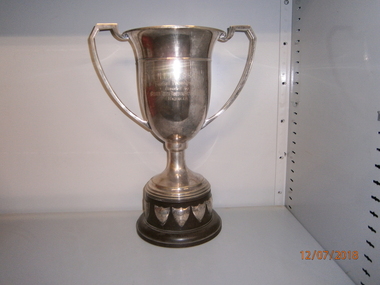
... The Burnell-Jose Visiting Professorship commenced in Adelaide in 1975 in honor of Mary Burnell, the first woman Dean of the Faculty from 1966 to 1967 and the first woman President of the Australian Society of Anaesthetists in 1955. ...The Burnell-Jose Visiting Professorship commenced in Adelaide in 1975 in honor of Mary Burnell, the first woman Dean of the Faculty from 1966 to 1967 and the first woman President of the Australian Society of Anaesthetists in 1955. ...Dr. Dai Davies presented this Goblet as a gift to the Faculty as the first appointed Burnell-Jose visiting Professor, Postgraduate Committee in Medicine, S.A. May - June 1976. At the time, Dr Davies was the Consultant Anaesthetist St George's Hospital, London and during this event was elected to Honorary Fellowship of the Faculty of Anaesthestists, Royal Australasian College of Surgeons. The Burnell-Jose Visiting Professorship commenced in Adelaide in 1975 in honor of Mary Burnell, the first woman Dean of the Faculty from 1966 to 1967 and the first woman President of the Australian Society of Anaesthetists in 1955. Very few women had assumed major anesthesia roles in the world during this period. The Goblet's provenance is supported by an original booklet, which certifies its origin from Chichester Cathedral (1075), Sussex, England. In 1975, a limited edition of 600 goblets were commissioned by the Dean and Chapter of Chichester Cathedral, Reverend Walter Hussey, to commemorate the ninth century of the Foundation. This Goblet is number 46 of the edition and the booklet is signed by Walter Hussey. The Goblet is historically associated with Chichester Cathedral and Walter Hussey, who was a great patron of the arts during the 1970's.Solid silver, with pure gold overlaying the modeled stem and interior of the cup. Trefoil shaped goblet cup with tapering profile. The stem is supported by a sheaf of wheat and bird design. The goblet came in its own case with a booklet of authenticity. [central base] NUMBER / 46 / OF A LIMITED EDITION / OF 600 MADE BY ORDER OF / THE DEAN AND CHAPTER / TO COMMEMORATE / THE NINTH CENTENARY OF / THE FOUNDATION OF / CHICHESTER CATHEDRAL / IN 1075 / AURUM / DCM [and hallmarks of the Worshipful Company of Goldsmiths] •[around base] D.M. DAVIES / ADELAIDE 1976dr davies, dai, burnell, mary, chichester cathedral, burnell-jose visiting professor, murphy, desmond-clen, hussey, walter, ninth century of the foundation of chichester cathedral -
Geelong Football ClubGraham Polly Farmer
... Geelong was never out of the finals during his League career Total Brownlow Medal votes: 57 Premiership team selection: 1963 Captain: 57 matches (1965-67) Runner-up in Brownlow Medal count: 1963 (equal) Club Best & Fairest: 1963, 1964 Runner-up in club B&F count: 1966, 1967 Fourth in club B&F count: 1965 Ninth in club B&F count: 1962 (equal) Coach: 1973-75 Australian Football Hall of Fame Legend (1996) AFL Team of the Century selection (ruck) Indigenous Team of the Century selection (ruck: captain) GFC Team of the Century selection (ruck) GFC Hall of Fame inductee (2002) GFC Hall of Fame Legend GFC Life Membership (1974) Career span: 1962-67 Total matches: Premiership 101, Interstate 6 Total goals: Premiership 65, Interstate 6 Finals matches: 9 Finals goals: 2 Last senior match: Grand Final, 1967 v Richmond at the MCG Coach: 1973-75 Information provided by Geelong Football Club Historian Col Hutchinson...Geelong was never out of the finals during his League career Total Brownlow Medal votes: 57 Premiership team selection: 1963 Captain: 57 matches (1965-67) Runner-up in Brownlow Medal count: 1963 (equal) Club Best & Fairest: 1963, 1964 Runner-up in club B&F count: 1966, 1967 Fourth in club B&F count: 1965 Ninth in club B&F count: 1962 (equal) Coach: 1973-75 Australian Football Hall of Fame Legend (1996) AFL Team of the Century selection (ruck) Indigenous Team of the Century selection (ruck: captain) GFC Team of the Century selection (ruck) GFC Hall of Fame inductee (2002) GFC Hall of Fame Legend GFC Life Membership (1974) Career span: 1962-67 Total matches: Premiership 101, Interstate 6 Total goals: Premiership 65, Interstate 6 Finals matches: 9 Finals goals: 2 Last senior match: Grand Final, 1967 v Richmond at the MCG Coach: 1973-75 Information provided by Geelong Football Club Historian Col Hutchinson Black timber frame with gold inlay, white mounting card, text, black and white photo print, perspex. ...Graham ‘Polly’ Farmer Born: 10/03/1935 From: East Perth (WA) Height: 191cm Weight: 94kg Natural kicking foot: Left Guernsey number: 5 First senior match: Round 1, 1962 v Carlton at Princes Park Many people believe that he became the Cats’ greatest player in his relatively short six-season career. Arriving to play at Geelong in a blaze of publicity at the age of 27, his participation in the 1962 intra-club practice matches attracted unprecedented spectator interest. Despite suffering a severe knee injury in the opening minutes of his first League match, he immediately demonstrated his wide range of skills. He is regarded as the greatest handpassing exponent in the history of football and was one of the first players to use it as a method of attack. Frequently he achieved distances of 30 to 40 metres with hand passes to team-mates in better position. His ruck work was also quite revolutionary. He developed the technique of leaping for the ball slightly earlier than his opponents and gaining a 'ride' higher into the air. Often he would, in preference to a conventional tap-out, roll the ball down one arm and handpass to a team-mate running past He developed this technique with Bill Goggin in particular. Geelong was never out of the finals during his League career Total Brownlow Medal votes: 57 Premiership team selection: 1963 Captain: 57 matches (1965-67) Runner-up in Brownlow Medal count: 1963 (equal) Club Best & Fairest: 1963, 1964 Runner-up in club B&F count: 1966, 1967 Fourth in club B&F count: 1965 Ninth in club B&F count: 1962 (equal) Coach: 1973-75 Australian Football Hall of Fame Legend (1996) AFL Team of the Century selection (ruck) Indigenous Team of the Century selection (ruck: captain) GFC Team of the Century selection (ruck) GFC Hall of Fame inductee (2002) GFC Hall of Fame Legend GFC Life Membership (1974) Career span: 1962-67 Total matches: Premiership 101, Interstate 6 Total goals: Premiership 65, Interstate 6 Finals matches: 9 Finals goals: 2 Last senior match: Grand Final, 1967 v Richmond at the MCG Coach: 1973-75 Information provided by Geelong Football Club Historian Col HutchinsonBlack timber frame with gold inlay, white mounting card, text, black and white photo print, perspex. Black and gold text at the top of the display reads -Geelong Football Club-. More text at the bottom reads -Graham 'Polly' Farmer / Hand-balling through a car window-. The image depicts Farmer wearing a suit and hand passing a football towards the camera through a car window. -
Melton City LibrariesArchive, Edna and Bon Barries Fire Brigade Archives, 2010
... VL3 LY Radio Base became the Group Headquarters was established in 1967. By 1970 the Brigades were: Melton, Rockbank, Sydenham, Toolern Vale, Diggers Rest, Truganina, and Werribee. ...VL3 LY Radio Base became the Group Headquarters was established in 1967. By 1970 the Brigades were: Melton, Rockbank, Sydenham, Toolern Vale, Diggers Rest, Truganina, and Werribee. ...In the 1950s with the introduction two-way HF and later VHF very high frequency radio sets. Melton Rural Fire Brigade was part of the Bacchus Marsh Group. Radio sets where located in the Melton Fire Truck, and in the house of the Barrie family at Ferris Road. This was an ideal location to observe a 360 degree view in all directions when smoke appeared on the horizon. An antenna was erected beside the house. The set OX 7 was located in the kitchen and monitored 24 hours by the family. When an electrical fire occurred at the junction of the electricity to the house there was time to radio the fire station and summons the men working in the paddocks, thus saving the house from possible destruction. With the introduction of UHF – ultra high frequency Vinten Radios the signal was clearer and static and interference lessened and radio traffic became easier to read, and reduced noise levels in the household. VL3 LY Radio Base became the Group Headquarters was established in 1967. By 1970 the Brigades were: Melton, Rockbank, Sydenham, Toolern Vale, Diggers Rest, Truganina, and Werribee. In 1974 when the family moved to First Avenue, another antenna and a small building were erected adjacent to the residence and used to house the equipment, maps. Radio traffic consisted of regular schedule times and communication with adjoining groups of brigades such as Bacchus Marsh, Mt Macedon and Little River Groups. Many of the brigade and group base radios were situated in private residences and operated primarily by fire fighters wives who held the position of Communications Officer, either registered as a brigade member or informally. Edna was never registered as an operational brigade member but operated informally as an assistant to her husband Bon. She was however a member of the Melton Fire Brigade Ladies Auxiliary from its inception in 1968, a non-operational position. Edna kept up to date with radio procedure following the 1967 handbook; preparing maps, plotting compass points and taking notes on weather forecasts from the SA Border and Western District. Daily notes were taken in anticipation of fire warnings. These log books and daily radio traffic were incidental to the regular radio schedules. Emergency turnouts noted, burning off times and predicted location of smoke. In the summer fire season all TBF (total fire ban days were recorded.) In times of emergency the Barrie family assisted Bon the base radio operator to plot the position and location of fire trucks and to help clarify garbled radio traffic, keep notes and make telephone calls. These log books are held in the EE and EW Family Archive. Items selected by Wendy Barrie for viewing Melton Fire Brigade celebrationsemergency services, local identities -
Port Melbourne Historical & Preservation SocietyDocument - Sale Notices, Relating to properties in Port Melbourne, "Sale Notices", 1960 - 1979
... (.01) prior to 30.09 1962 (.02) 1.10.1962 to 30.09.1963 (.03) 1963/64 (.04) 01.10.1964 to 30.09.1965 ; A-F (.05) 01.10.1964 to 30.09.1965 ; G-Z (.06) 01.10.1965 to 30.09.1966 (.07) 1966 to 1967 (.08) 01.10.1967 to 30.09.1968 (.09) 1968 to 1969, A-G (.10) 1968 to 1969, H-Z (.11) 01.10.1969 to 30.09.1970, A-K (.12) 01.10.1969 to 30.09.1970, L-Z (.13) 01.10.1970 to 30.09.1971, A-L (.14) 01.10.1970 to 30.09.1971, M-Z (.15) 01.10.1972 to 30.09.1973, A-H (.16) 01.10.1972 to 30.09.1973, I-Z (.17) 01.10.1973 to 30.09.1974, A-G... (.01) prior to 30.09 1962 (.02) 1.10.1962 to 30.09.1963 (.03) 1963/64 (.04) 01.10.1964 to 30.09.1965 ; A-F (.05) 01.10.1964 to 30.09.1965 ; G-Z (.06) 01.10.1965 to 30.09.1966 (.07) 1966 to 1967 (.08) 01.10.1967 to 30.09.1968 (.09) 1968 to 1969, A-G (.10) 1968 to 1969, H-Z (.11) 01.10.1969 to 30.09.1970, A-K (.12) 01.10.1969 to 30.09.1970, L-Z (.13) 01.10.1970 to 30.09.1971, A-L (.14) 01.10.1970 to 30.09.1971, M-Z (.15) 01.10.1972 to 30.09.1973, A-H (.16) 01.10.1972 to 30.09.1973, I-Z (.17) 01.10.1973 to 30.09.1974, A-G "Sale Notices" Document Sale Notices, Relating to properties in Port Melbourne ...Index of each volume was carried out by Margaret Bride 2013 and Jack Bolt 2017/18.29 thick volumes of letters, forms, memoranda, etc. sent to the Building and Rates Departments of the former City of Port Melbourne by property owners, law firms and others. The items concern matters relating to properties and mostly are part of the process of putting a property up for sale. Those realting to a particular property are generally grouped together and are usually arranged in alphabetical order of streets. The volumes extend from early 1960s to late 1979. They have card front and back covers, metal holders and taped spines . (.01) prior to 30.09 1962 (.02) 1.10.1962 to 30.09.1963 (.03) 1963/64 (.04) 01.10.1964 to 30.09.1965 ; A-F (.05) 01.10.1964 to 30.09.1965 ; G-Z (.06) 01.10.1965 to 30.09.1966 (.07) 1966 to 1967 (.08) 01.10.1967 to 30.09.1968 (.09) 1968 to 1969, A-G (.10) 1968 to 1969, H-Z (.11) 01.10.1969 to 30.09.1970, A-K (.12) 01.10.1969 to 30.09.1970, L-Z (.13) 01.10.1970 to 30.09.1971, A-L (.14) 01.10.1970 to 30.09.1971, M-Z (.15) 01.10.1972 to 30.09.1973, A-H (.16) 01.10.1972 to 30.09.1973, I-Z (.17) 01.10.1973 to 30.09.1974, A-Glocal government - city of port melbourne, built environment - domestic -
Bendigo Historical Society Inc.Document - DOCUMENTS: RELATING TO BENDIGO COGNAC DISTILLERY AND 'THUNDER' BREWERY
... Lucan St Brewery, Thunders Sandhurst Brewery, Thunder A & Co., Tankard Malting Co., Bendigo Cognac Distillery, Alpine Brewing Co., (latter note has names of some proprietors); c. handwritten three-page letter/note from Cyril Michelsen to ''John'' relating to ''an excellent story'' with some ''added facts'' - the distillery operated back in 1858; quarry for the stone used in the building - a ''stadium' of the North Bendigo State School; old home named ''Stoneleigh'; d. three paged handwritten article/note titled ''The World of the Past and Present'' Feb. 1967 (no author) - description of the site with details of the vats and walls as existing at that time....Lucan St Brewery, Thunders Sandhurst Brewery, Thunder A & Co., Tankard Malting Co., Bendigo Cognac Distillery, Alpine Brewing Co., (latter note has names of some proprietors); c. handwritten three-page letter/note from Cyril Michelsen to ''John'' relating to ''an excellent story'' with some ''added facts'' - the distillery operated back in 1858; quarry for the stone used in the building - a ''stadium' of the North Bendigo State School; old home named ''Stoneleigh'; d. three paged handwritten article/note titled ''The World of the Past and Present'' Feb. 1967 (no author) - description of the site with details of the vats and walls as existing at that time. ...Documents relating to Bendigo Cognac Distillery and 'Thunder' Brewery - a. Text of article ''It slowly fades away'' - previously catalogued, see Mosaic # 6548 and #2860. Relates to demolition of house at 45 Lucan Street. One handwritten annotation - the word ''rafters'' has ''bearers'' written above it; b. page (no author or date) with seven dates 1859 - 1908 with the names of different firms operating from site - mention of Glasgow and Thunder, Thunder & Co. Lucan St Brewery, Thunders Sandhurst Brewery, Thunder A & Co., Tankard Malting Co., Bendigo Cognac Distillery, Alpine Brewing Co., (latter note has names of some proprietors); c. handwritten three-page letter/note from Cyril Michelsen to ''John'' relating to ''an excellent story'' with some ''added facts'' - the distillery operated back in 1858; quarry for the stone used in the building - a ''stadium' of the North Bendigo State School; old home named ''Stoneleigh'; d. three paged handwritten article/note titled ''The World of the Past and Present'' Feb. 1967 (no author) - description of the site with details of the vats and walls as existing at that time.Mr Cyril Michelsonbuildings, commercial, thunders brewery -
Moorabbin Air MuseumArchive (Item) - Box WP7 Prowse Collection See details under Description Section
... Turbomeca leaflet Airvan leaflet (12 copies) Flight Computer - US Army Airforces RAAF Defence Instruction AAP 7214-003-4-11 Instrument Systems - IPB Sleigh News Dec 78 Jindivik Project Production Bulletins - Various Flight Manual - Jindivik Mk 3A ASTA Jindivik Mk 4 Enhancement GAF Report - Airborne Approach Aid, Part 1 and Part 2 Airborne Approach Aid - J Henshall Report - Integration of The Office of Defence Production Overview: Boeing Military Aircraft Company - 1985 MPC 75 Catalogue CSIRO Aerodynamics Tech Memo 57 CSIRO Wing Suction Memo 21 F/A-18 Hornet Roll-out Ceremony Nov 1984 OTIK ASW System Market Study GAC - 100 Commercial Transport 1967 Allison Gas Turbine Brochure GAF Bonding Capabilities Allison Gas Turbine 250 Model (6 copies) DOT Operational Notes on Visual Range Turbomeca Promotional Catalogue GAF Promotional Pack AT-50 Jet Instrument Flying Trainer Manual Journey Into Nowhere - D.O.T. ...Turbomeca leaflet Airvan leaflet (12 copies) Flight Computer - US Army Airforces RAAF Defence Instruction AAP 7214-003-4-11 Instrument Systems - IPB Sleigh News Dec 78 Jindivik Project Production Bulletins - Various Flight Manual - Jindivik Mk 3A ASTA Jindivik Mk 4 Enhancement GAF Report - Airborne Approach Aid, Part 1 and Part 2 Airborne Approach Aid - J Henshall Report - Integration of The Office of Defence Production Overview: Boeing Military Aircraft Company - 1985 MPC 75 Catalogue CSIRO Aerodynamics Tech Memo 57 CSIRO Wing Suction Memo 21 F/A-18 Hornet Roll-out Ceremony Nov 1984 OTIK ASW System Market Study GAC - 100 Commercial Transport 1967 Allison Gas Turbine Brochure GAF Bonding Capabilities Allison Gas Turbine 250 Model (6 copies) DOT Operational Notes on Visual Range Turbomeca Promotional Catalogue GAF Promotional Pack AT-50 Jet Instrument Flying Trainer Manual Journey Into Nowhere - D.O.T. ... -
National Vietnam Veterans Museum (NVVM)Photograph, Gibbons, Denis, Briefing Denis Gibbons
... A black and white photograph of Tonkin Gulf, North Vietnam 25th May 1967 Lt Stanley L Masterton briefs Australian War Correspondent, Denis Gibbons, during his visit to the Australian Guided Missile Destroyer HMAS Hobart. the briefing is taking place on the flag deck, where a large set of signal flags are visible in a ready use locker behind them. the ship, was at that time engaging, with ship to shore gunfire, a major "choke point" (an area where the North Vietnamese were preparing war supplies to be shipped to their units in South Vietnam) at the township of "Vinh". ...HMAS Hobart Lt Stanley L Masterton Denis Gibbons Vinh Hainan Island Haiphong Harbour Gibbons Collection Catalogue Tonkin Gulf Australian War Correspondent Australian Guided Missile Destroyer Photograhp Enemy Fire Australian War memorial negative: Navy 13503 A black and white photograph of Tonkin Gulf, North Vietnam 25th May 1967 Lt Stanley L Masterton briefs Australian War Correspondent, Denis Gibbons, during his visit to the Australian Guided Missile Destroyer HMAS Hobart. the briefing is taking place on the flag deck, where a large set of signal flags are visible in a ready use locker behind them. the ship, was at that time engaging, with ship to shore gunfire, a major "choke point" (an area where the North Vietnamese were preparing war supplies to be shipped to their units in South Vietnam) at the township of "Vinh". ...Denis Gibbons (1937 – 2011) Trained with the Australian Army, before travelling to Vietnam in January 1966, Denis stayed with the 1st Australian Task Force in Nui Dat working as a photographer. For almost five years Gibbons toured with nine Australian infantry battalions, posting compelling war images from within many combat zones before being flown out in late November 1970 after sustaining injuries. The images held within the National Vietnam Veterans Museum make up the Gibbons Collection.A black and white photograph of Tonkin Gulf, North Vietnam 25th May 1967 Lt Stanley L Masterton briefs Australian War Correspondent, Denis Gibbons, during his visit to the Australian Guided Missile Destroyer HMAS Hobart. the briefing is taking place on the flag deck, where a large set of signal flags are visible in a ready use locker behind them. the ship, was at that time engaging, with ship to shore gunfire, a major "choke point" (an area where the North Vietnamese were preparing war supplies to be shipped to their units in South Vietnam) at the township of "Vinh". Hobart was expecting, at any moment, counted battery fire from North Vietnamese coastal batteries after radar stations on Hainan Island, Near Haiphong Harbour and at Vinh had locked onto Horart's position with very accurate triangular positioning. Lt Masterton was informing Gibbons of the incoming enemy fire and was worried he (Gibbons) was not wearing a helment, gibbons, most respectfully advised Lt Masterton that he could not operate his cameras with a helmet on. Hobart immediately turned and saled, very rapidly, out to sea as the counter battery fire commencedAustralian War memorial negative: Navy 13503hmas hobart, lt stanley l masterton, denis gibbons, vinh, hainan island, haiphong harbour, gibbons collection catalogue, tonkin gulf, australian war correspondent, australian guided missile destroyer, photograhp, enemy fire -
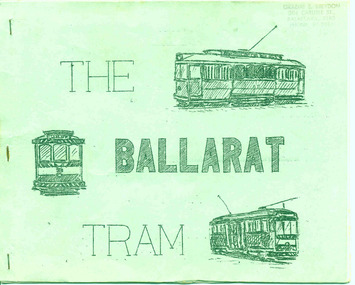
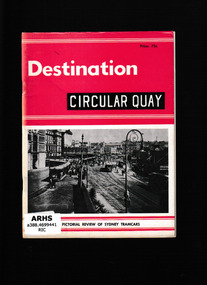
Ballarat Tramway MuseumBook, Jack Richardson, "Destination Circular Quay", 1958
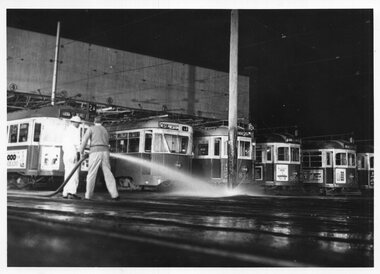
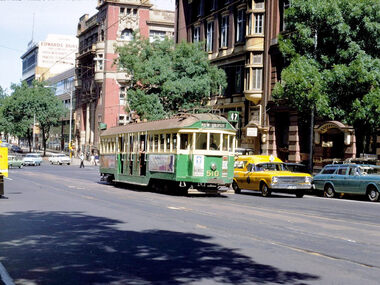
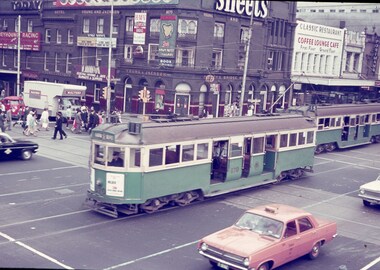
... Includes many photographs. .1 - Book - 56 pages + card cover, printed on semi gloss paper, centre stapled, with two colour covers - as for above. Printed 1967. Has a map of the Sydney system on the inside or the rear cover. ...Includes many photographs. .1 - Book - 56 pages + card cover, printed on semi gloss paper, centre stapled, with two colour covers - as for above. Printed 1967. Has a map of the Sydney system on the inside or the rear cover. ...Forty page book including paper covers titled "Destination Circular Quay" edited by Jack Richardson, in association with N.L. Chinn and R.L. Young and published by Traction Publications, Destination Series No. 3 in 1958. Briefly details the tramways in Sydney operated by the Department of Government Transport, details each class of passenger rolling stock, with photographs, experimental cars, trailers, specialist cars, works trams, trolley buses, tram car ferry, Moore Park junction arrangements, notes re the Sydney Harbour Bridge, a map of the network in the near CBD area of Sydney and on the rear cover, a map of Sydney. Provides information on the South Pacific Electric Railway (reference Australian Electric Transport Museum), and other publications of Traction Publications. See htd1307i2.pdf for a scan of the book. Includes many photographs. .1 - Book - 56 pages + card cover, printed on semi gloss paper, centre stapled, with two colour covers - as for above. Printed 1967. Has a map of the Sydney system on the inside or the rear cover. The rear cover has a list of publications of the publisher. See htd1307i2.pdf for a scan of the book.On the front cover in black ink "Ex ARHS Archives Vic"trams, tramways, sydney, nswgt, tramcars -
Sunshine and District Historical Society IncorporatedMagazine - Ken Porter Collection - Massey Ferguson - Sunshine Outlook Magazine, 1998
... 4748.01 - Ken Porter Collection - Massey Ferguson - Sunshine Outlook Magazine Vol 1 No 1 December 1961 4748.02 - Ken Porter Collection - Massey Ferguson - Sunshine Outlook Magazine Vol 1 No 2 March 1962 4748.03 - Ken Porter Collection - Massey Ferguson - Sunshine Outlook Magazine Vol 1 No 3 June 1962 4748.04 - Ken Porter Collection - Massey Ferguson - Sunshine Outlook Magazine Vol 1 No 4 September 1962 4748.05 - Ken Porter Collection - Massey Ferguson - Sunshine Outlook Magazine Vol 1 No 5 December 1962 4748.06 - Ken Porter Collection - Massey Ferguson - Sunshine Outlook Magazine Vol 1 No 6 March 1963 4748.07 - Ken Porter Collection - Massey Ferguson - Sunshine Outlook Magazine Vol 1 No 7 June 1963 4748.08 - Ken Porter Collection - Massey Ferguson - Sunshine Outlook Magazine Vol 1 No 7 September 1963 4748.09 - Ken Porter Collection - Massey Ferguson - Sunshine Outlook Magazine Vol 1 No 8 December 1963 4748.10 - Ken Porter Collection - Massey Ferguson - Sunshine Outlook Magazine Vol 1 No 10 March 1964 4748.11 - Ken Porter Collection - Massey Ferguson - Sunshine Outlook Magazine Vol 1 No 10 June 1964 4748.12 - Ken Porter Collection - Massey Ferguson - Sunshine Outlook Magazine Vol 1 No 12 September 1964 4748.13 - Ken Porter Collection - Massey Ferguson - Sunshine Outlook Magazine Vol 1 No 13 December 1964 4748.14 - Ken Porter Collection - Massey Ferguson - Sunshine Outlook Magazine Vol 1 No 14 March 1965 4748.15 - Ken Porter Collection - Massey Ferguson - Sunshine Outlook Magazine Vol 1 No 15 June 1965 4748.16 - Ken Porter Collection - Massey Ferguson - Sunshine Outlook Magazine Vol 1 No 16 September 1965 4748.17 - Ken Porter Collection - Massey Ferguson - Sunshine Outlook Magazine Vol 1 No 17 December 1965 4748.18 - Ken Porter Collection - Massey Ferguson - Sunshine Outlook Magazine Vol 1 No 18 March 1966 4748.19 - Ken Porter Collection - Massey Ferguson - Sunshine Outlook Magazine Vol 1 No 19 June 1966 4748.20 - Ken Porter Collection - Massey Ferguson - Sunshine Outlook Magazine Vol 1 No 20 September 1966 4748.21 - Ken Porter Collection - Massey Ferguson - Sunshine Outlook Magazine Vol 1 No 21 December 1966 4748.22 - Ken Porter Collection - Massey Ferguson - Sunshine Outlook Magazine Vol 1 No 22 March 1967 4748.23 - Ken Porter Collection - Massey Ferguson - Sunshine Outlook Magazine Vol 1 No 23 June 1967 4748.24 - Ken Porter Collection - Massey Ferguson - Sunshine Outlook Magazine Vol 1 No 24 September 1967 4748.25 - Ken Porter Collection - Massey Ferguson - Sunshine Outlook Magazine Vol 1 No 25 December 1967 4748.26 - Ken Porter Collection - Massey Ferguson - Sunshine Outlook Magazine Vol 1 No 26 March 1968 4748.27 - Ken Porter Collection - Massey Ferguson - Sunshine Outlook Magazine Vol 1 No 27 June 1968 4748.28 - Ken Porter Collection - Massey Ferguson - Sunshine Outlook Magazine Vol 1 No 28 September 1968 4748.29 - Ken Porter Collection - Massey Ferguson - Sunshine Outlook Magazine Vol 1 No 29 December 1968 4748.30 - Ken Porter Collection - Massey Ferguson - Sunshine Outlook Magazine Vol 1 No 35 June 1970...Massey Ferguson Sunshine Harvester Works Kennrth "Ken" Porter 4748.01 - Ken Porter Collection - Massey Ferguson - Sunshine Outlook Magazine Vol 1 No 1 December 1961 4748.02 - Ken Porter Collection - Massey Ferguson - Sunshine Outlook Magazine Vol 1 No 2 March 1962 4748.03 - Ken Porter Collection - Massey Ferguson - Sunshine Outlook Magazine Vol 1 No 3 June 1962 4748.04 - Ken Porter Collection - Massey Ferguson - Sunshine Outlook Magazine Vol 1 No 4 September 1962 4748.05 - Ken Porter Collection - Massey Ferguson - Sunshine Outlook Magazine Vol 1 No 5 December 1962 4748.06 - Ken Porter Collection - Massey Ferguson - Sunshine Outlook Magazine Vol 1 No 6 March 1963 4748.07 - Ken Porter Collection - Massey Ferguson - Sunshine Outlook Magazine Vol 1 No 7 June 1963 4748.08 - Ken Porter Collection - Massey Ferguson - Sunshine Outlook Magazine Vol 1 No 7 September 1963 4748.09 - Ken Porter Collection - Massey Ferguson - Sunshine Outlook Magazine Vol 1 No 8 December 1963 4748.10 - Ken Porter Collection - Massey Ferguson - Sunshine Outlook Magazine Vol 1 No 10 March 1964 4748.11 - Ken Porter Collection - Massey Ferguson - Sunshine Outlook Magazine Vol 1 No 10 June 1964 4748.12 - Ken Porter Collection - Massey Ferguson - Sunshine Outlook Magazine Vol 1 No 12 September 1964 4748.13 - Ken Porter Collection - Massey Ferguson - Sunshine Outlook Magazine Vol 1 No 13 December 1964 4748.14 - Ken Porter Collection - Massey Ferguson - Sunshine Outlook Magazine Vol 1 No 14 March 1965 4748.15 - Ken Porter Collection - Massey Ferguson - Sunshine Outlook Magazine Vol 1 No 15 June 1965 4748.16 - Ken Porter Collection - Massey Ferguson - Sunshine Outlook Magazine Vol 1 No 16 September 1965 4748.17 - Ken Porter Collection - Massey Ferguson - Sunshine Outlook Magazine Vol 1 No 17 December 1965 4748.18 - Ken Porter Collection - Massey Ferguson - Sunshine Outlook Magazine Vol 1 No 18 March 1966 4748.19 - Ken Porter Collection - Massey Ferguson - Sunshine Outlook Magazine Vol 1 No 19 June 1966 4748.20 - Ken Porter Collection - Massey Ferguson - Sunshine Outlook Magazine Vol 1 No 20 September 1966 4748.21 - Ken Porter Collection - Massey Ferguson - Sunshine Outlook Magazine Vol 1 No 21 December 1966 4748.22 - Ken Porter Collection - Massey Ferguson - Sunshine Outlook Magazine Vol 1 No 22 March 1967 4748.23 - Ken Porter Collection - Massey Ferguson - Sunshine Outlook Magazine Vol 1 No 23 June 1967 4748.24 - Ken Porter Collection - Massey Ferguson - Sunshine Outlook Magazine Vol 1 No 24 September 1967 4748.25 - Ken Porter Collection - Massey Ferguson - Sunshine Outlook Magazine Vol 1 No 25 December 1967 4748.26 - Ken Porter Collection - Massey Ferguson - Sunshine Outlook Magazine Vol 1 No 26 March 1968 4748.27 - Ken Porter Collection - Massey Ferguson - Sunshine Outlook Magazine Vol 1 No 27 June 1968 4748.28 - Ken Porter Collection - Massey Ferguson - Sunshine Outlook Magazine Vol 1 No 28 September 1968 4748.29 - Ken Porter Collection - Massey Ferguson - Sunshine Outlook Magazine Vol 1 No 29 December 1968 4748.30 - Ken Porter Collection - Massey Ferguson - Sunshine Outlook Magazine Vol 1 No 35 June 1970 A collection of Massey Ferguson Sunshine Outlook Magazines from 1961 to 1970 Magazine Ken Porter Collection - Massey Ferguson - Sunshine Outlook Magazine ...4748.01 - Ken Porter Collection - Massey Ferguson - Sunshine Outlook Magazine Vol 1 No 1 December 1961 4748.02 - Ken Porter Collection - Massey Ferguson - Sunshine Outlook Magazine Vol 1 No 2 March 1962 4748.03 - Ken Porter Collection - Massey Ferguson - Sunshine Outlook Magazine Vol 1 No 3 June 1962 4748.04 - Ken Porter Collection - Massey Ferguson - Sunshine Outlook Magazine Vol 1 No 4 September 1962 4748.05 - Ken Porter Collection - Massey Ferguson - Sunshine Outlook Magazine Vol 1 No 5 December 1962 4748.06 - Ken Porter Collection - Massey Ferguson - Sunshine Outlook Magazine Vol 1 No 6 March 1963 4748.07 - Ken Porter Collection - Massey Ferguson - Sunshine Outlook Magazine Vol 1 No 7 June 1963 4748.08 - Ken Porter Collection - Massey Ferguson - Sunshine Outlook Magazine Vol 1 No 7 September 1963 4748.09 - Ken Porter Collection - Massey Ferguson - Sunshine Outlook Magazine Vol 1 No 8 December 1963 4748.10 - Ken Porter Collection - Massey Ferguson - Sunshine Outlook Magazine Vol 1 No 10 March 1964 4748.11 - Ken Porter Collection - Massey Ferguson - Sunshine Outlook Magazine Vol 1 No 10 June 1964 4748.12 - Ken Porter Collection - Massey Ferguson - Sunshine Outlook Magazine Vol 1 No 12 September 1964 4748.13 - Ken Porter Collection - Massey Ferguson - Sunshine Outlook Magazine Vol 1 No 13 December 1964 4748.14 - Ken Porter Collection - Massey Ferguson - Sunshine Outlook Magazine Vol 1 No 14 March 1965 4748.15 - Ken Porter Collection - Massey Ferguson - Sunshine Outlook Magazine Vol 1 No 15 June 1965 4748.16 - Ken Porter Collection - Massey Ferguson - Sunshine Outlook Magazine Vol 1 No 16 September 1965 4748.17 - Ken Porter Collection - Massey Ferguson - Sunshine Outlook Magazine Vol 1 No 17 December 1965 4748.18 - Ken Porter Collection - Massey Ferguson - Sunshine Outlook Magazine Vol 1 No 18 March 1966 4748.19 - Ken Porter Collection - Massey Ferguson - Sunshine Outlook Magazine Vol 1 No 19 June 1966 4748.20 - Ken Porter Collection - Massey Ferguson - Sunshine Outlook Magazine Vol 1 No 20 September 1966 4748.21 - Ken Porter Collection - Massey Ferguson - Sunshine Outlook Magazine Vol 1 No 21 December 1966 4748.22 - Ken Porter Collection - Massey Ferguson - Sunshine Outlook Magazine Vol 1 No 22 March 1967 4748.23 - Ken Porter Collection - Massey Ferguson - Sunshine Outlook Magazine Vol 1 No 23 June 1967 4748.24 - Ken Porter Collection - Massey Ferguson - Sunshine Outlook Magazine Vol 1 No 24 September 1967 4748.25 - Ken Porter Collection - Massey Ferguson - Sunshine Outlook Magazine Vol 1 No 25 December 1967 4748.26 - Ken Porter Collection - Massey Ferguson - Sunshine Outlook Magazine Vol 1 No 26 March 1968 4748.27 - Ken Porter Collection - Massey Ferguson - Sunshine Outlook Magazine Vol 1 No 27 June 1968 4748.28 - Ken Porter Collection - Massey Ferguson - Sunshine Outlook Magazine Vol 1 No 28 September 1968 4748.29 - Ken Porter Collection - Massey Ferguson - Sunshine Outlook Magazine Vol 1 No 29 December 1968 4748.30 - Ken Porter Collection - Massey Ferguson - Sunshine Outlook Magazine Vol 1 No 35 June 1970massey ferguson, sunshine harvester works, kennrth "ken" porter -
Bendigo Military MuseumMixed media - SCRAPBOOK BENDIGO RSL, 1963 - 1974
... The article refers to Mrs Doreen Crawford having spent 12 years as Assistant Secretary at the Bendigo RSL Memorial Hall until 1967, on leaving this job she took on a Visiting Officers role with Legacy in McKenzie Street Bendigo where she be looking after and visiting approximately 200 War Widows in their own homes as well as Homes & Hospitals. ...The article refers to Mrs Doreen Crawford having spent 12 years as Assistant Secretary at the Bendigo RSL Memorial Hall until 1967, on leaving this job she took on a Visiting Officers role with Legacy in McKenzie Street Bendigo where she be looking after and visiting approximately 200 War Widows in their own homes as well as Homes & Hospitals. ...This is the final 4 pages of the Scrap book Cat No 8225. Page 17. The article refers to Mrs Doreen Crawford having spent 12 years as Assistant Secretary at the Bendigo RSL Memorial Hall until 1967, on leaving this job she took on a Visiting Officers role with Legacy in McKenzie Street Bendigo where she be looking after and visiting approximately 200 War Widows in their own homes as well as Homes & Hospitals. Page 18 & 19. The two photos re building sites pertain to the construction of the War Widows Flats in Kangaroo Flat about 1971/72. Page 20a. The B & W photo shows the completed War Widows Flats in Kangaroo Flat in 1973. This was a project by the War Veterans Homes Trust and the Bendigo RSL. Page 20b. The article is re the newly installed Bendigo RSL President Jack Plant receiving a Life Membership in 1974 from Robert Temple immediate past President. The article goes on to outline Jack Plants RSL work with the RSL, he first joined the RSL in Chinkapook in 1944, Committee and President Raywood RSL 1956 - 1958. Refer Cat No 8129P for his Bendigo RSL involvement.Four pages from a Spiroflex sketch pad. Page 17. Article with a photo of a female as main item. Page 18. B & W photo of a building under construction. page 19. B & W photo of cleared ground with building beginnings. Page 20. one B & W photo showing several buildings in a row. Article with two persons re award of Life membership.On page 17 in blue pen, "Advertiser 11.9.76", page 18 in blue pen, "War Widows Flats at Kangaroo Flat"brsl, smirsl, scrap book -
Port of EchucaBlack and white photograph, 1973 or 1974
... By 1958 it was reported that she was moored above Renmark and not working. In 1967 she was sunk by vandals. In 1968 she was bought by Bill and Norm Collins. ...By 1958 it was reported that she was moored above Renmark and not working. In 1967 she was sunk by vandals. In 1968 she was bought by Bill and Norm Collins. ...The P.S Pevensey was built in 1910 in Moama by the Permewan Wright Co. Initially she was a barge, called the Mascotte, but by May 1911 she had been converted into the P.S.Pevensey. Initially the P.S.Pevensey was used as for transporting wool from the Murrumbidgee River Stations. In 1932 the P.S Pevensey carried the largest load of wool ever from the Murrumbidgee River. This record was 2600 bales of wool. She was destroyed by fire at Koraleigh Landing later in 1932, but was soon rebuilt.By 1939 she was running a regular service between Morgan and Mildura. By 1958 it was reported that she was moored above Renmark and not working. In 1967 she was sunk by vandals. In 1968 she was bought by Bill and Norm Collins. They refloated her, restored her and moored her at Mildura. The City of Echuca bought the P.S. Pevensey from the Collins Family in 1973, for $20,000. The P.S. Pevensey came to Echuca Wharf in July 1973 along with Kevin Hutchinson OA., a shipwright who stayed with the P.S. Pevensey for the rest of his life. The P.S Pevensey currently works as a Tourist paddle steamer taking cruises from the Echuca Wharf every day. (Ref. Parsons, R. "Ships of the Inland Rivers. P. 116.)This photograph is significant because it shows the wharf in 1973, being converted into a Tourist precinct. The roof of the cargo shed is being repaired. The P.S Pevensey is tied up to the wharf and looks as if it needs more repairs. The buildings in the background are still used as business venues. The Shamrock Hotel can be seen in High Street. A train can also be seen parked on the wharf.A black and white rectangular photograph of the P.S Pevensey tied up at Echuca Wharf during a high river probably taken in 1973 or 1974.On the Bond Store in Murray Esplanade can be seen the words SHACKELL. On the front of the building can be seen the words "Panel & Paint."p.s pevensey, echuca wharf, hutchinson, kevin, collins, norm, collins, bill, city of echuca -
Eltham District Historical Society IncPhotograph, Ward House (1950-1968)
... Image 12 Ward House built by owner 1950 Partly destroyed by fire in 1967 Rebuilt in 1968 re-using original mudbricks The Alistair Knox Collection The Alistair Knox Collection is a series of mounted enlarged photos of mud brick houses and related subjects. ...Eltham District Historical Society Inc 728 Main Rd Eltham melbourne Image 12 Ward House built by owner 1950 Partly destroyed by fire in 1967 Rebuilt in 1968 re-using original mudbricks The Alistair Knox Collection The Alistair Knox Collection is a series of mounted enlarged photos of mud brick houses and related subjects. ...Image 12 Ward House built by owner 1950 Partly destroyed by fire in 1967 Rebuilt in 1968 re-using original mudbricks The Alistair Knox Collection The Alistair Knox Collection is a series of mounted enlarged photos of mud brick houses and related subjects. The collection is understood to have been put together by Alistair Knox although it is the work of several unacknowledged photographers. For some years it was held by the Building Department of the former Eltham Shire Council and was then passed to our Society for safekeeping. Some of the photos have been used in Knox's books and from time to time some of them have been part of various historical displays. As far as we know there has not been a public display of the whole collection which numbers about forty photographs. The collection has been copied on to slides for the purpose of this meeting and to be retained as part of the Society's pictorial collection. Alistair Knox 1912 - 1986 is acknowledged as the founder of Eltham's mud brick building movement. Many of the buildings shown in the collection are of his design and he was also involved with the construction of several of them. Others are the work of his contemporaries and associates such as Peter Glass, Gordon Ford, and John Harcourt. (EDHS Newsletter No. 145 July 2002)Handwritten notes in pencil re details of building, year of construction, owner, designer, builder, etcalistair knox design, houses, mud brick construction, ward house, alistair knox collection -
Flagstaff Hill Maritime Museum and VillageTool - Auger, Robert Sorby, First half of the 20th Century
... In addition to manufacturing tools, they also diversified into the manufacture of crucible steel for tool manufacture. From circa 1860-1967, the Sorby factory in Sheffield was known as the “Kangaroo Works”. ...In addition to manufacturing tools, they also diversified into the manufacture of crucible steel for tool manufacture. From circa 1860-1967, the Sorby factory in Sheffield was known as the “Kangaroo Works”. ...A scotch eye auger is perfect for quickly making holes in dry or wet wood for making chairs, stools, and any number of woodworking projects. The scotch eye serves as a peg gauge and whatever peg you make to go into the hole should fit into the augers eye. Robert Sorby & Sons: The forbearer's of Robert Sorby had been cutlers in the Sheffield region of England, dating from the mid 17th century. Robert Sorby and Sons were registered in Sheffield in 1828 as a manufacturer of edge tools, saws, scythes and hay knives. In addition to manufacturing tools, they also diversified into the manufacture of crucible steel for tool manufacture. From circa 1860-1967, the Sorby factory in Sheffield was known as the “Kangaroo Works”. The Kangaroo Brand of tools was made by Robert Sorby & Sons. During the 19th century, they had a large trade in Australasia. By the early 20th century, they were manufacturing carving tools, planes and plane irons, circular saws, wood saws, butchers saws and cleavers, garden tools, pruning knives, coopers’ knives, bricklayers tools and joiners tools. In 1923 Robert Sorby & Sons was bought by Sheffield company Hattersley and Davidson. They are today one of the few remaining British tool manufacturers.The company has a long tradition of making edged tools for various uses and exporting them to Australia, however the subject item was probably made from the early 20th century up until 1967 when the company stopped exporting to Australia.Scotch Eye Auger, Double Twist with Lead Screw, square shaft, socket set at right angleRob Sorbey Sheffield stamped on shaft with Kangaroo trade markflagstaff hill, warrnambool, flagstaff-hill, flagstaff-hill-maritime-museum, maritime-museum, shipwreck-coast, flagstaff-hill-maritime-village, ring auger, carpenders tools, hole drilling, rob sorby & sons -
Federation University Historical CollectionObject, Stokes & Sons Pty Ltd, Ballarat School of Mines Badge, c1930s
... The technical division provided such programs as wool classing, plumbing and bricklaying. In 1967, it was split into three separate institutions, Ballarat School of Industries, Ballarat Technical School, and Ballarat Institute of Advanced Education. ...The technical division provided such programs as wool classing, plumbing and bricklaying. In 1967, it was split into three separate institutions, Ballarat School of Industries, Ballarat Technical School, and Ballarat Institute of Advanced Education. ...This badge was used by Hester Clara Darby, teacher at the Ballarat School of Mines. Hester joined the staff of SMB as an assistant to senior Commercial classes in April 1916. On 01 February 1921 she was appointed a lecturer in Commercial Correspondence and Office Routine. She taught the 'Touch' Method of typing, Commercial Correspondence, Shorthand and Office Routine. Tertiary education at Ballarat began with the establishment of the School of Mines in 1870, making it Australia's third oldest tertiary institution. Classes began in surveying, mathematics, chemistry and a decade later they included metallurgy, assaying and geology. The technical division provided such programs as wool classing, plumbing and bricklaying. In 1967, it was split into three separate institutions, Ballarat School of Industries, Ballarat Technical School, and Ballarat Institute of Advanced Education. Then in 1976 the Ballarat Institute of Advanced Education became into Ballarat College of Advanced Education. The Ballarat School of Industries and Ballarat Technical School became the School of Mines and Industries, Ballarat (SMB). In 1998, the Ballarat School of Mines and Industries and the Horsham-based Wimmera Institute of TAFE merged with the University of Ballarat. The university merged with Monash University's Gippsland (Churchill) campus in 2013 and the merged schools are now the Federation University AustralialBallarat School of Mines Badge made of gold coloured metal with blue and green enamel.On face - Ballarat School of Mines, Ingenio Effodere Opesballarat school of mines badge, badge, coat of arms, hester clara darby, hester darby -
Federation University Art CollectionWork on paper - Digital Prints, Gilson, Deanne, 'Wadawurrung Axe Heads 1-4' by Deanne Gilson, 2011
... Dr Deanne GILSON (1967- ) Country: Wadawurrung Deanne Gilson is a Federation University alumni, and an award-winning multi-disciplinary artist. ...Federation University Art Collection Artworks are displayed at Federation University Australia campuses at Ballarat, Gippsland (Churchill), Stawell and Horsham. goldfields Dr Deanne GILSON (1967- ) Country: Wadawurrung Deanne Gilson is a Federation University alumni, and an award-winning multi-disciplinary artist. ...Dr Deanne GILSON (1967- ) Country: Wadawurrung Deanne Gilson is a Federation University alumni, and an award-winning multi-disciplinary artist. Her practice draws its inspiration from ‘Ancestral marks’ and design on cultural objects found in museum archives and family oral histories. Deanne’s practice seeks to interrogate the colonial legacy of settlement and the western hegemonic systems of class, race and representation in historical photographs that were imposed on her Ancestors. Her work also explores the matriarchal role through her feminist perspectives, looking at the history of marriage and the oppressive function it has played within her family. Deanne has completed the following educationala achievements. 2014 – 2015 Masters by Research (Visual Art), Deakin University Geelong 2013 Graduate Diploma in Education Secondary, Federation University 2011 Certificate IV in Aboriginal Contemporary Art & Craft 2010 Cultural Heritage Management Course, Lakes Entrance 1 Week 2007 – 2010 Graduated, Bachelor of Visual Arts with Honours, University of Ballarat 1984 Diploma of Art, School of Mines & Industries TAFE This item is part of the Federation University Art Collection. The Art Collection features over 2000 works and was listed as a 'Ballarat Treasure' in 2007.This work depicts an axehead found on Wadawurrung country and is a responce to workign alongside archeologists untertaking land surveys of her ancestral lands and the visual documentaiton of artefcts.art, artwork, deanne gilson, gilson, wadawurrung, stone axe, aboriginal, alumni -
Stawell Historical Society IncPhotograph, Wimmera Flour Mill during Demolition -- Coloured
... The Victorian Oat Growers Pool took over on July 1st, 1967. Trading under the name of Wimmera Flower Mill as a subsidiary company. ...The Victorian Oat Growers Pool took over on July 1st, 1967. Trading under the name of Wimmera Flower Mill as a subsidiary company. ...Various colour photos of Wimmera Flour Mill at time it was being demolished. Note roof being dismantled. Rail line in foreground. Willaim Frayne founded the Wimmera Flour Mill on a site in Taylor Street (beside the railway line) Stawell 1876. When Willian Frayne dies 1899 his son George took over the mill. The mill continued to be a propriety company until early 1966, when it was sold to the Victorian Mill Owners. The sale was forced because of the lack of export markets. A factor which affected most country mills. The Victorian Oat Growers Pool took over on July 1st, 1967. Trading under the name of Wimmera Flower Mill as a subsidiary company. Later years it sold clipped and graded seed, oats, stockfeed for poultry, pigs and dairy cattle and all types of crushed grain. The original Frayne homestead still stands behind where the Mill stood facing Frayne Street. In 2007 during our "Collection Review" the four smaller colour photos, which were donated by Mr. Mick Walsh, 52 Patrick St Stawell were very similar to the bigger photo in the file 139.6e.139-6 a-d & e Coloured photographs showing various views of the Wimmera Flour Mill or Grain Handling Corporation building in progress of being demolished. There is a red brick building with a tiled roof in these coloured photos. The rail line is shown in foreground of 139-6 e. Our records on the data base show 139-6e to be a black & white photo but the same photo in the office folder is an enlarged colour photograph. Grain Handing Corporation stawell industry -
Wangaratta RSL Sub BranchPhotograph - Framed Photograph, Peter Cardwell
... On the 5/1/1966 he joined the RAN as a junior recruit HMAS Leeuwin W.A. On 1/1/1967 he joined HMAS Yarra - Far East Strategic Reserve and Vietnam. ...On the 5/1/1966 he joined the RAN as a junior recruit HMAS Leeuwin W.A. On 1/1/1967 he joined HMAS Yarra - Far East Strategic Reserve and Vietnam. ...Peter was born on 16/4/1950 at Corryong before moving to Barnawatha, Wodonga then Wangaratta in 1963. On the 5/1/1966 he joined the RAN as a junior recruit HMAS Leeuwin W.A. On 1/1/1967 he joined HMAS Yarra - Far East Strategic Reserve and Vietnam. Arriving back in Australia on 1/1/1968 he was posted to HMAS Watson in NSW. In 1969 he volunteered for submarine training in the UK at HMS Dolphin (Gosport). Joined HMS/m Onyx (3rd squadron at Faslane Scotland (Garelock Head) (HMS Neptune) On returning to Australia in 1971 posted to HMAS Platypus and HMAS/m Otway. In 1973 Peter was posted to HMAS Sydney - later decommissioned - then HMAS Torrens. Following the Royal Tour Pacific Islands in 1974 he joining the Naval Police in 1975 specialising in Fire fighting. Peter was discharged whilst still in hospital from the RAN in 1983 following a serious motor cycle accident in 1982. In 1984 on his return to Wangaratta he rejoined the RSL and held the office of Secretary for 10 years and Welfare/Pensions Officer for 22 years. In 2012 in recognition of his long service he was appointed Life Member of the RSL.Brown timber look frame inner edge gold painted with photograph of male wearing service medalsPeter L CARDWELL Appointed Life Member of the RSL in December 2012peter cardwell, wangaratta rsl, ran -
Wodonga & District Historical Society IncPhotograph - Fred Rochow Railways Collection - Livestock Special, c1923 - 1940
... In 1940 it was renumbered as K149 The locomotive was eventually scrapped on Thursday, 12th October 1967....In 1940 it was renumbered as K149 The locomotive was eventually scrapped on Thursday, 12th October 1967. Fred Rochow Railways Collection - Livestock Special Photograph Fred Rochow Railways Collection - Livestock Special ...The Fred Rochow Railways Collection incorporates photos related to the operation of the Wodonga Railway Station including different types of trains and railways staff C. 1930 – 1990. It was donated to the Wodonga Historical Society by Fred Rochow, a railwayman who spent many years based in Wodonga. He joined the Victorian Railways on 17th June l947 and retired in 1988. For some time, he was a member of the Australian Federated Union of Locomotive Enginemen and served a term as a member of the Trades Hall Council. He had an extensive knowledge of the struggles that took place to achieve better conditions for railway workers. Fred worked for many years as a fireman and then worked his way up the ranks to driver, experiencing many changes from the days of steam locomotives through to diesel trains, locomotives and even the modern XPT train. He worked throughout Victoria at different stages of his career, with his final working years focused on the northeast of Victoria and the Albury to Melbourne line. After his retirement, Fred continued to share his love of steam miniature trains with the community.This collection has local and statewide significance as it captures images of trains, locomotives and personnel who operated the railway services in Wodonga and throughout Northeast Victoria. The railways played a critical role in opening up Victoria and connecting Australia for trade, business, social communication and transport.A livestock special being hauled by Locomotive K109 passing over a high trestle bridge between Bullion and Darbyshire on the Cudgewa Line. Cudgewa Line -The Cudgewa railway line opened in stages between 1889 and 1921. The first section from Wodonga to Huon opened on 10 September 1889. It was extended to Bolga on 18 July 1890, Tallangatta on 24 July 1891, Shelley on 13 June 1916 (the highest station in Victoria), Beetomba on 10 April 1919 and Cudgewa on 5 May 1921. The line had 1 in 30 grades and trestle bridges that have been heritage listed. In 1919, the line was used to carry materials for the construction of Hume Weir, and three years later a spur line connecting Ebden to the weir was opened. In the 1960s, Cudgewa became the railhead of materials for the Snowy Mountains Scheme. The last passenger service from Wodonga to Tallangatta ran on 30 September 1961 The turntable and passenger platform at Cudgewa were abolished in 1976. The K class was a branch line steam locomotive that ran on Victorian Railways in Australia from 1922 to 1979 Locomotive K190 entered service on Saturday, 30th June 1923. In 1940 it was renumbered as K149 The locomotive was eventually scrapped on Thursday, 12th October 1967.railways wodonga, fred rochow, wodonga railwaymen, cudgewa rail line, trestle bridges -
Moorabbin Air MuseumDocument (item) - Roger Alder Collection See Description for list of items
... Sachet Royal Victorian Aero Club - Plane Talk magazines. 1967 - 1969. Book Flying with Lady Luck by Dick Sudlow. ...Sachet Royal Victorian Aero Club - Plane Talk magazines. 1967 - 1969. Book Flying with Lady Luck by Dick Sudlow. ... -
Queenscliffe Maritime MuseumPhotograph - Queenscliff Lifeboat under sail, 06 March 1926
... Some of the vessels and calls for help the lifeboat attended were: 1960 - Army Commandos lost in the Rip 1967 - The search for the late Prime Minister Harold Holt 1974 - The last attendance to a vessel was to the Brisbane Trader which was on fire The shed which housed the lifeboat is located on the Queenscliff 'New' or 'Steamer' Pier (built in 1884). ...Some of the vessels and calls for help the lifeboat attended were: 1960 - Army Commandos lost in the Rip 1967 - The search for the late Prime Minister Harold Holt 1974 - The last attendance to a vessel was to the Brisbane Trader which was on fire The shed which housed the lifeboat is located on the Queenscliff 'New' or 'Steamer' Pier (built in 1884). ...The Lifeboat Queenscliffe was built in Adelaide and commenced service at Queenscliff in 1926. She was taken out of service in 1976 by the Marine Board of Victoria and subsequently offered to the Borough of Queenscliffe for care and display. The Lifeboat is listed on the Australian Register of Historic Vessels (ARHV). To view the classification follow the link to the Queenscliffe page on the ARHV site. During her 50 years of service the Queenscliffe attended many calls for assistance both inside and outside the Heads. Some of the vessels and calls for help the lifeboat attended were: 1960 - Army Commandos lost in the Rip 1967 - The search for the late Prime Minister Harold Holt 1974 - The last attendance to a vessel was to the Brisbane Trader which was on fire The shed which housed the lifeboat is located on the Queenscliff 'New' or 'Steamer' Pier (built in 1884). This shed includes the internal section of the slipway used to launch and retrieve the lifeboat. The external slipway and some other structures associated with the lifeboat shed have been removed. Originally fitted with two masts, the stern mast being removed in the 1960's. A retractable centre plate was used when under sail. Delivered with an 80 hp Wayburn petrol motor which was later replaced by a 72 hp Gardiner diesel. Top speed of 7.5 knots and a range of 350 miles.Photograph of lifeboat Queenscliff at sea under sailQueenscliffelifeboat, a. macfarlane & sons -
Federation University Historical CollectionCostume - Blazer, Ballarat School of Mines Honor Blazer, 1955, c1955
... The tertiary division provided higher education courses such as mining engineering, geology, education and business studies, while the technical division provided such programs as wool classing, plumbing and bricklaying.It remained in that form until the 1967 when it was split into three institutions, Ballarat School of Industries, Ballarat Technical School, and Ballarat Institute of Advanced Education. ...The tertiary division provided higher education courses such as mining engineering, geology, education and business studies, while the technical division provided such programs as wool classing, plumbing and bricklaying.It remained in that form until the 1967 when it was split into three institutions, Ballarat School of Industries, Ballarat Technical School, and Ballarat Institute of Advanced Education. ...Graham Willey was a School of Mines Ballarat student from 1953-55. He was awarded the 1955 Honour Blazer. The School of Mines was established in 1870 in Ballarat, making it Australia's third oldest tertiary institution. Redmond Barry was its first president, and he was involved in the creation of university degree level courses for the school. The School of Mines was divided into a tertiary division and a technical division. The tertiary division provided higher education courses such as mining engineering, geology, education and business studies, while the technical division provided such programs as wool classing, plumbing and bricklaying.It remained in that form until the 1967 when it was split into three institutions, Ballarat School of Industries, Ballarat Technical School, and Ballarat Institute of Advanced Education. They remained three entities until 1976. Ballarat Institute of Advanced Education merged into Ballarat College of Advanced Education. The Ballarat School of Industries and Ballarat Technical School merged into the School of Mines and Industries, Ballarat (SMB) in 1976. Several entities merged or had arrangements with SMB. In 1994, a memo of understanding (MOU) was signed between SMB and the Ararat Technical School, which was founded in 1969. Then, in 1998, SMB and the Horsham-based Wimmera Institute of TAFE (1984), dating back to 1882, merged into the University of Ballarat to create a larger University.This three quarter lined, 3 buttoned, bottle green woolen blazer is edged in black twill piping and has a SMB badge on pocket "XVII ATH. XI Honor 1955 S.R.C." The 2 side pockets are also edged in the black twill and there is a trim of the twill 8.3cm from the sleeve cuff. The breast pocket has a top binding of yellow and green diagonal stripes. Cloth label - Messer & Opie Ballarat On embroidered badge "Incenio Effodore Opes", "XVII ATH XI Honor 1955 S.R.C."blazer, honor blazer, harold john hassell, smb, school of mines ballarat, graham willey, costume, textiles, coat of arms -
Eltham District Historical Society IncNegative - Photograph, Harry Gilham, Memorial for Clem and Nina Christesen, Eltham Cemetery, Victoria, 1 Aug 2007
... Christesen In Loving Memory Of Clement Byrne 1911 - 2003 Beloved husband of Nina Mikhailovna Christesen and Nina Mikhailovna 1911 - 2001 Beloved wife of Clement Byrne Christesen also In Memoriam Captain Mikhail Ivanovich Maximoff 1885 - 1967 Tatiana Semenovna Maximoff 1888 - 1979...Christesen In Loving Memory Of Clement Byrne 1911 - 2003 Beloved husband of Nina Mikhailovna Christesen and Nina Mikhailovna 1911 - 2001 Beloved wife of Clement Byrne Christesen also In Memoriam Captain Mikhail Ivanovich Maximoff 1885 - 1967 Tatiana Semenovna Maximoff 1888 - 1979 Eltham Cemetery Gravestones Memorials Captain Mikhail Ivanovich Maximoff Clem Christesen Clement Byne Christesen Nina Mikhailovna Christesen Tatiana Semenovna Maximoff 35mm colour negative Kodak Gold GC 400-9 6 film strips, 1 of 25 frames Memorial for Clem and Nina Christesen, Eltham Cemetery, Victoria Negative Photograph Harry Gilham ...Russian-born Nina Christesen (nee Maximoff) is regarded as the pioneer of Russian academic studies in Australia. In 1946 she became a lecturer in Russian at Melbourne University, and in 1947 established the Department of Russian Language and Literature, remaining its head until her retirement in 1977. In 1987 she was made a Member of the Order of Australia. Nina was married to Clem Christesen, founder and editor of the respected (if left-leaning) literary magazine "Meanjin". They lived at "Stanhope" in Peter Street, Eltham. Visitors included writers Patrick White and Xavier Herbert, painters Arthur Boyd and Clifton Pugh, and historians Manning Clark and Geoffrey Blainey. In 1955, both Nina and Clem were interrogated by the Petrov Royal Commission on suspicion of being Communist sympathisers, which they reputedly rebutted wittily. Nina died in 2001 and Clem in 2003. They are buried together at Eltham Cemetery. There is also a memorial to Nina at the Eltham Living and Learning Centre, in the form of a bluestone amphitheatre with a floor of hand-painted tiles. Christesen In Loving Memory Of Clement Byrne 1911 - 2003 Beloved husband of Nina Mikhailovna Christesen and Nina Mikhailovna 1911 - 2001 Beloved wife of Clement Byrne Christesen also In Memoriam Captain Mikhail Ivanovich Maximoff 1885 - 1967 Tatiana Semenovna Maximoff 1888 - 1979eltham cemetery, gravestones, memorials, captain mikhail ivanovich maximoff, clem christesen, clement byne christesen, nina mikhailovna christesen, tatiana semenovna maximoff -
Eltham District Historical Society IncPhotograph, Peter Pidgeon, Memorial for Clem and Nina Christesen, Eltham Cemetery, Victoria, 5 April 2021
... Christesen In Loving Memory Of Clement Byrne 1911 - 2003 Beloved husband of Nina Mikhailovna Christesen and Nina Mikhailovna 1911 - 2001 Beloved wife of Clement Byrne Christesen also In Memoriam Captain Mikhail Ivanovich Maximoff 1885 - 1967 Tatiana Semenovna Maximoff 1888 - 1979...Christesen In Loving Memory Of Clement Byrne 1911 - 2003 Beloved husband of Nina Mikhailovna Christesen and Nina Mikhailovna 1911 - 2001 Beloved wife of Clement Byrne Christesen also In Memoriam Captain Mikhail Ivanovich Maximoff 1885 - 1967 Tatiana Semenovna Maximoff 1888 - 1979 eltham cemetery gravestones heritage excursion clem christesen clement byne christesen nina mikhailovna christesen captain mikhail ivanovich maximoff tatiana semenovna maximoff Born Digital Memorial for Clem and Nina Christesen, Eltham Cemetery, Victoria Photograph Photograph Peter Pidgeon ...Russian-born Nina Christesen (nee Maximoff) is regarded as the pioneer of Russian academic studies in Australia. In 1946 she became a lecturer in Russian at Melbourne University, and in 1947 established the Department of Russian Language and Literature, remaining its head until her retirement in 1977. In 1987 she was made a Member of the Order of Australia. Nina was married to Clem Christesen, founder and editor of the respected (if left-leaning) literary magazine "Meanjin". They lived at "Stanhope" in Peter Street, Eltham. Visitors included writers Patrick White and Xavier Herbert, painters Arthur Boyd and Clifton Pugh, and historians Manning Clark and Geoffrey Blainey. In 1955, both Nina and Clem were interrogated by the Petrov Royal Commission on suspicion of being Communist sympathisers, which they reputedly rebutted wittily. Nina died in 2001 and Clem in 2003. They are buried together at Eltham Cemetery. There is also a memorial to Nina at the Eltham Living and Learning Centre, in the form of a bluestone amphitheatre with a floor of hand-painted tiles. Christesen In Loving Memory Of Clement Byrne 1911 - 2003 Beloved husband of Nina Mikhailovna Christesen and Nina Mikhailovna 1911 - 2001 Beloved wife of Clement Byrne Christesen also In Memoriam Captain Mikhail Ivanovich Maximoff 1885 - 1967 Tatiana Semenovna Maximoff 1888 - 1979Born Digitaleltham cemetery, gravestones, heritage excursion, clem christesen, clement byne christesen, nina mikhailovna christesen, captain mikhail ivanovich maximoff, tatiana semenovna maximoff -
Federation University Art CollectionCeramic, Bryan Trueman, [Platter] by Bryan Trueman, 08/1982
... He toured the east coast of America in 1967-8, then returned to England where he started to train himself in Ceramics. ...He toured the east coast of America in 1967-8, then returned to England where he started to train himself in Ceramics. ...Bryan TRUEMAN (13 November 1941- ) Born Derbyshire, England worked in Australia 1975–1992 Bryan Trueman studied at Blackpool School of Art in 1962, undertaking Postgraduate studies at Manchester College of Art in 1963. He toured the east coast of America in 1967-8, then returned to England where he started to train himself in Ceramics. Migrating to Australia in 1975 Bryan Trueman lectured at Caulfield Institute of Technology, Melbourne. In 1982 he opened a studio in Warrandyte, Victoria. Bryan Trueman was a visiting lecturer to the Gippsland Institute of Advanced Education c1982. He is particularly well-known for his painterly use of glazes to depict the Australian landscape, using the platter as the base form. Bryan Trueman was a visiting lecturer to the Gippsland Centre for Art and Design in 1982. This work is part of the Jan Feder Memorial Ceramics Collection. Jan Feder was an alumna of the Gippsland Campus who studied ceramics on the campus. She passed away in the mid 1980s. Her student peers raised funds to buy ceramic works in her memory. They bought works from visiting lecturers who became leading ceramic artists around the world, as well as from many of the staff who taught there. Wheel thrown stoneware platter, with colourful landscape glaze.Bryan Trueman Aug '82ceramics, bryan trueman, gippsland campus, artists, artwork, jan feder memorial ceramics collection, landscape -
Nillumbik Shire CouncilCeramic (tiles): Tom SANDERS, Untitled, c. 1970s early
... Murals created during the second half of the 1960s and into the 70s can/could previously be found at Southland Shopping Centre in Cheltenham, Melbourne (1968) - now demolished, the National Mutual Centre, Melbourne (1964-5) - now demolished, Dee Why Library, Sydney (1966), Woden Valley High School, ACT (1967), Tullamarine Airport, Melbourne (1969, 1970), Perth Concert Hall (1971) and University of Melbourne (1975) (with John Olsen). ...Murals created during the second half of the 1960s and into the 70s can/could previously be found at Southland Shopping Centre in Cheltenham, Melbourne (1968) - now demolished, the National Mutual Centre, Melbourne (1964-5) - now demolished, Dee Why Library, Sydney (1966), Woden Valley High School, ACT (1967), Tullamarine Airport, Melbourne (1969, 1970), Perth Concert Hall (1971) and University of Melbourne (1975) (with John Olsen). ...Sanders was a well-known local potter who worked for a time with David Boyd at the Martin Boyd Pottery, before returning to Melbourne where he had some association with Arthur Boyd, at the pottery in Murrumbeena. Sanders set up a studio in Eltham in the early 1950s and made the first of a series of architectural ceramic murals with painter and print maker Lawrence Daws in 1956. After returning from his travels in Europe to Australia in 1964, he began to work solely on creating ceramic murals. Murals created during the second half of the 1960s and into the 70s can/could previously be found at Southland Shopping Centre in Cheltenham, Melbourne (1968) - now demolished, the National Mutual Centre, Melbourne (1964-5) - now demolished, Dee Why Library, Sydney (1966), Woden Valley High School, ACT (1967), Tullamarine Airport, Melbourne (1969, 1970), Perth Concert Hall (1971) and University of Melbourne (1975) (with John Olsen). Sanders has worked with many of Australia’s pre-eminent painters and ceramicists including Fred Williams and John Olsen. In 2015 Nillumbik Shire Council will be installing a mural by Sanders, donated by Tom and his family before Tom passed away in 2009, for the redevelopment of the Eltham Town Square. During the 1970s Sanders produced a number of tapestry designs. Highly respected artist and one time local resident Hilary Jackman worked with Sanders developing and adapting his tile designs to be translated into silk tapestries that were made in Japanese Mills of Kawashima Orimono in Kyoto. They were displayed in the big Hall in the NGV. Sanders gave these tiles to Jackman as payment for her work. The tapestries are based on abstract designs and have a cotton warp, and silk weft. The tiles are similar to Sanders’ other mural works such as Wall of the Moon (Homage to Miro) and the mural located in the Perth Concert Hall. It’s clear that Sanders was inspired by the Spanish surrealist artist Joan Miro from the 1930s in both philosophy and style. Miro’s work is quite playful, symbolic and imaginative. Miro’s preference for painting like this was “to express contempt for conventional painting methods, which he saw was a way of supporting a bourgeois society”. He "famously declared an "assassination of painting" in favor of upsetting the visual elements of established painting.” Three earthenware tiles, embossed with an abstract linear design. N/A