
Showing 706 items matching "australian troops"
-
 Monbulk RSL Sub Branch
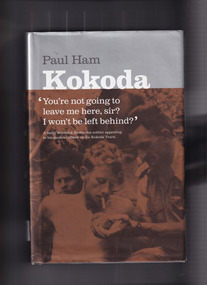
Book, Paul Ham, Kokoda, 2004
... Based on extensive research in Australia and Japan, and including previously unpublished documents, Kokoda intimately relates the stories of ordinary soldiers in 'the world's worst killing field', and examines the role of commanders in sending ill-equipped, unqualified Australian troops into battles that resulted in near 100 per cent casualty rates. ...For the first time ever, the compelling story of the infamous Kokoda Track campaign has been told from both sides of the conflict. In a unique and balanced portrayal, renowned journalist Paul Ham recounts both the Australian and Japanese perspectives of the events on the hellish Papuan jungle trail where thousands fought and died during World War II. Based on extensive research in Australia and Japan, and including previously unpublished documents, Kokoda intimately relates the stories of ordinary soldiers in 'the world's worst killing field', and examines the role of commanders in sending ill-equipped, unqualified Australian troops into battles that resulted in near 100 per cent casualty rates. It was a war without mercy, fought back and forth along 90 miles (145 km) of river crossings, steep inclines and precipitous descents, with both sides wracked by hunger and disease, and terrified of falling into enemy hands. Defeat was unthinkable: the Australian soldier was fighting for his homeland against an unyielding aggressor; the Japanese ordered to fight to the death in a bid to conquer 'Greater East AsiaIndex, bib, ill, p.602.non-fictionFor the first time ever, the compelling story of the infamous Kokoda Track campaign has been told from both sides of the conflict. In a unique and balanced portrayal, renowned journalist Paul Ham recounts both the Australian and Japanese perspectives of the events on the hellish Papuan jungle trail where thousands fought and died during World War II. Based on extensive research in Australia and Japan, and including previously unpublished documents, Kokoda intimately relates the stories of ordinary soldiers in 'the world's worst killing field', and examines the role of commanders in sending ill-equipped, unqualified Australian troops into battles that resulted in near 100 per cent casualty rates. It was a war without mercy, fought back and forth along 90 miles (145 km) of river crossings, steep inclines and precipitous descents, with both sides wracked by hunger and disease, and terrified of falling into enemy hands. Defeat was unthinkable: the Australian soldier was fighting for his homeland against an unyielding aggressor; the Japanese ordered to fight to the death in a bid to conquer 'Greater East Asiaworld war 1939 – 1945 – campaigns – kokoda, world war 1939-1945 - campaigns - south west pacific -
 Monbulk RSL Sub Branch
Book, Suzanne Wellborn, Bush heroes : a people, a place, a legend, 2002
... But that morning, by climbing the cliffs under a hail of Turkish bullets, they won a permanent place in Australia's most celebrated national legend. At Gallipoli that was all any of the attacking troops won." ...More than one quarter of the Australian soldiers chosen to land on Gallipoli at dawn on 25 April 1915 were Western Australians. Four years later, only one in four of them had escaped death or severe injury. But that morning, by climbing the cliffs under a hail of Turkish bullets, they won a permanent place in Australia's most celebrated national legend. At Gallipoli that was all any of the attacking troops won." "The British and French, whose armies also suffered heavy losses at the Dardanelles, regarded the campaign as nothing but a humiliating military disaster best forgotten. In Australia Gallipoli was hailed as 'the proving of a nation's soul' and the day of the landing became sacred.Index, bibliography, notes, ill, maps, p.240.non-fictionMore than one quarter of the Australian soldiers chosen to land on Gallipoli at dawn on 25 April 1915 were Western Australians. Four years later, only one in four of them had escaped death or severe injury. But that morning, by climbing the cliffs under a hail of Turkish bullets, they won a permanent place in Australia's most celebrated national legend. At Gallipoli that was all any of the attacking troops won." "The British and French, whose armies also suffered heavy losses at the Dardanelles, regarded the campaign as nothing but a humiliating military disaster best forgotten. In Australia Gallipoli was hailed as 'the proving of a nation's soul' and the day of the landing became sacred.world war 1914-1918 - campaigns - gallipoli, australian army - soldiers - western australia -
 Monbulk RSL Sub Branch
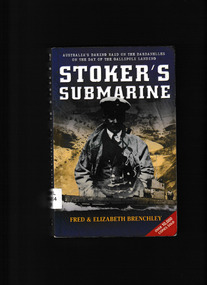
Book, Harper Collins et al, Stoker's submarine, 2003
... Few Australians even know their country had a submarine at Gallipoli, much less that it achieved daring feats, sank an enemy craft, and possibly played a pivotal role in Anzac troops staying on the beachhead for eight months." ...On 25 April 1915 - the day the Anzacs landed at Gallipoli - Lieutenant Commander Dacre Stoker set out as captain of the Australian submarine AE2 on a mission to breach the treacherous Dardanelles Strait with the intention of disrupting Turkish supply lines to the isolated Gallipoli peninsula. Facing dangerous currents, mines and withering enemy fire, Stoker and his men succeeded where British and French submarines had come to grief." "Stoker's achievement meant much in military terms, and even more emotionally in boosting the morale of embattled Allied troops. But what was proclaimed at the time as 'the finest feat in submarine history' has since sunk into oblivion. Few Australians even know their country had a submarine at Gallipoli, much less that it achieved daring feats, sank an enemy craft, and possibly played a pivotal role in Anzac troops staying on the beachhead for eight months." "Now, finally, Stoker's Submarine tells the story of a remarkable naval hero and the men under his command. And the AE2 itself, still lying intact on the floor of the Sea of Marmara, is celebrated as the most tangible relic of Australia's role at Gallipoli, the crucible of nationhood.Index, bibliography, notes, ill. (some col.), maps, ports, p.318.non-fictionOn 25 April 1915 - the day the Anzacs landed at Gallipoli - Lieutenant Commander Dacre Stoker set out as captain of the Australian submarine AE2 on a mission to breach the treacherous Dardanelles Strait with the intention of disrupting Turkish supply lines to the isolated Gallipoli peninsula. Facing dangerous currents, mines and withering enemy fire, Stoker and his men succeeded where British and French submarines had come to grief." "Stoker's achievement meant much in military terms, and even more emotionally in boosting the morale of embattled Allied troops. But what was proclaimed at the time as 'the finest feat in submarine history' has since sunk into oblivion. Few Australians even know their country had a submarine at Gallipoli, much less that it achieved daring feats, sank an enemy craft, and possibly played a pivotal role in Anzac troops staying on the beachhead for eight months." "Now, finally, Stoker's Submarine tells the story of a remarkable naval hero and the men under his command. And the AE2 itself, still lying intact on the floor of the Sea of Marmara, is celebrated as the most tangible relic of Australia's role at Gallipoli, the crucible of nationhood.world war 1914-1918 - campaigns - gallipoli, gallipoli campaign - naval operations, submarine ae2 -
 Monbulk RSL Sub Branch
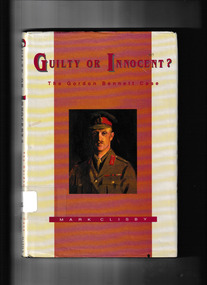
Book, Mark Clisby, Guilty or innocent? : the Gordon Bennett case, 1992
... world war 1939-1945 - campaigns - singapore capitulations - military Many Australians, in a typically Australian fashion, recall Gordon Bennett as "the bloke who shot through and left his troops at Singapore". ...Many Australians, in a typically Australian fashion, recall Gordon Bennett as "the bloke who shot through and left his troops at Singapore". Whether this is a fair assessment or not, there is no doubt that General Gordon Bennett's escape from Singapore in February 1942 left an ineradicable mark on Australia's military and legal history, and that the rights and wrongs of his actions will be debated forever.Index, bibliography, notes, ill, p.134.non-fictionMany Australians, in a typically Australian fashion, recall Gordon Bennett as "the bloke who shot through and left his troops at Singapore". Whether this is a fair assessment or not, there is no doubt that General Gordon Bennett's escape from Singapore in February 1942 left an ineradicable mark on Australia's military and legal history, and that the rights and wrongs of his actions will be debated forever. world war 1939-1945 - campaigns - singapore, capitulations - military -
 Monbulk RSL Sub Branch
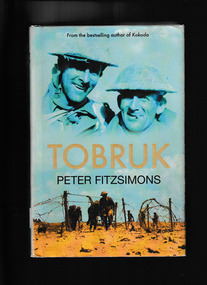
Book, Harper Collins, Tobruk, 2006
... World war 1939 – 1945 – Campaigns – North Africa Siege of Tobruk Peter FitzSimons, Australia's most beloved popular historian, focuses on one of the seminal moments in Australian history: the Battle of tobruk in 1941, in which more than 15 000 Australian troops - backed by British artillery - fought in excruciating desert heat through eight long months, against Adolf Hitler's formidable Afrika Korps. ...Peter FitzSimons, Australia's most beloved popular historian, focuses on one of the seminal moments in Australian history: the Battle of tobruk in 1941, in which more than 15 000 Australian troops - backed by British artillery - fought in excruciating desert heat through eight long months, against Adolf Hitler's formidable Afrika Korps. During the dark heart of World War II, when Hitler turned his attention to conquering North Africa, a distracted and far-fl ung Allied force could not give its all to the defence of Libya. So the job was left to the roughest, toughest bunch that could be mustered: the Australian Imperial Force. the AIF's defence of the harbour city of tobruk against the Afrika Korps' armoured division is not only the stuff of Australian legend, it is one of the great battles of all time, as against the might of General Rommel and his Panzers, the Australians relied on one factor in particular to give them the necessary strength against the enemy: mateship. Drawing on extensive source material - including diaries and letters, many never published before - this extraordinary book, written in Peter FitzSimons' highly readable style, is the definitive account of this remarkable chapter in Australia's historyIndex, bibliography, notes, ill, maps, p.580.non-fictionPeter FitzSimons, Australia's most beloved popular historian, focuses on one of the seminal moments in Australian history: the Battle of tobruk in 1941, in which more than 15 000 Australian troops - backed by British artillery - fought in excruciating desert heat through eight long months, against Adolf Hitler's formidable Afrika Korps. During the dark heart of World War II, when Hitler turned his attention to conquering North Africa, a distracted and far-fl ung Allied force could not give its all to the defence of Libya. So the job was left to the roughest, toughest bunch that could be mustered: the Australian Imperial Force. the AIF's defence of the harbour city of tobruk against the Afrika Korps' armoured division is not only the stuff of Australian legend, it is one of the great battles of all time, as against the might of General Rommel and his Panzers, the Australians relied on one factor in particular to give them the necessary strength against the enemy: mateship. Drawing on extensive source material - including diaries and letters, many never published before - this extraordinary book, written in Peter FitzSimons' highly readable style, is the definitive account of this remarkable chapter in Australia's historyworld war 1939 – 1945 – campaigns – north africa, siege of tobruk -
 Monbulk RSL Sub Branch
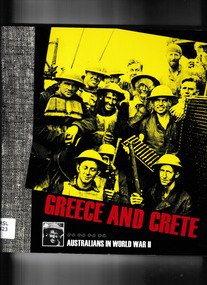
Book, Dept. of Veterans' Affair, Greece and Crete, 2011
... In March 1941, British support became a reality when a military expedition called 'Lustre Force', which included Australian troops, was dispatched to Greece from Egypt. ...more than 60,000 British and Dominion servicemen and women ... fought in Greece between November 1940 and May 1941, among them some 17,000 Australians and 16,700 New Zealanders. ...During World War II Greek independence was once again threatened. In October 1940, seeking to make Italy the master of the eastern Mediterranean, Benito Mussolini's armies invaded Greece, only to find themselves beaten back by the Greeks. Unfortunately for Greece, this setback for his Italian ally made the German leader, Adolf Hitler, turn his attention to the possible danger to Germany's ambitions from the Greeks, particularly if they should seek support from Britain. In March 1941, British support became a reality when a military expedition called 'Lustre Force', which included Australian troops, was dispatched to Greece from Egypt. ...more than 60,000 British and Dominion servicemen and women ... fought in Greece between November 1940 and May 1941, among them some 17,000 Australians and 16,700 New Zealanders. What circumstances had brought these men and women from half a world away to the aid of the Greeks?Ill, maps, p.220.non-fictionDuring World War II Greek independence was once again threatened. In October 1940, seeking to make Italy the master of the eastern Mediterranean, Benito Mussolini's armies invaded Greece, only to find themselves beaten back by the Greeks. Unfortunately for Greece, this setback for his Italian ally made the German leader, Adolf Hitler, turn his attention to the possible danger to Germany's ambitions from the Greeks, particularly if they should seek support from Britain. In March 1941, British support became a reality when a military expedition called 'Lustre Force', which included Australian troops, was dispatched to Greece from Egypt. ...more than 60,000 British and Dominion servicemen and women ... fought in Greece between November 1940 and May 1941, among them some 17,000 Australians and 16,700 New Zealanders. What circumstances had brought these men and women from half a world away to the aid of the Greeks?world war 1939 – 1945 – campaigns – greece, world war 1939-1945 - pictorial works - australia -
 Monbulk RSL Sub Branch
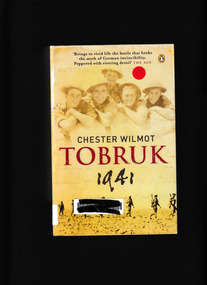
Book, Penguin, Tobruk 1941, 2009
... For eight months the Australian Imperial Forces defended the North African coastal fortress, battling almost unbeatable odds in the dust and the heat of the Libran desert. Under the command of General Morshead, the troops ...March 1941. The Allied forces have suffered one brutal defeat after another. For Hitler's forces the conquest of Egypt, and the rich oil fields of the Middle East, lie next on the horizon. All that stand in their way are a few Australian brigades defending a town called Tobruk. For eight months the Australian Imperial Forces defended the North African coastal fortress, battling almost unbeatable odds in the dust and the heat of the Libran desert. Under the command of General Morshead, the troops used unorthodox methods and sheer grit to withstand the superior might of General Rommel's elite 'Afrika KorpsIndex, maps, p.414.non-fictionMarch 1941. The Allied forces have suffered one brutal defeat after another. For Hitler's forces the conquest of Egypt, and the rich oil fields of the Middle East, lie next on the horizon. All that stand in their way are a few Australian brigades defending a town called Tobruk. For eight months the Australian Imperial Forces defended the North African coastal fortress, battling almost unbeatable odds in the dust and the heat of the Libran desert. Under the command of General Morshead, the troops used unorthodox methods and sheer grit to withstand the superior might of General Rommel's elite 'Afrika Korpsworld war 1939 – 1945 – campaigns – north africa, siege of tobruk 1941 -
 Monbulk RSL Sub Branch
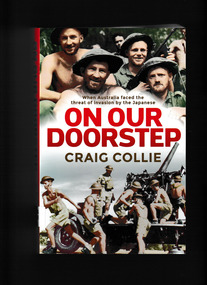
Book, Allen & Unwin, On our doorstep : when Australia faced the threat of invasion by the Japanese, 2020
... Meanwhile, as Australian prime minister John Curtin was battling with Winston Churchill to get troops back from overseas to defend their homeland, he was also positioning to ensure the United States would be there with us to fend off the approaching enemy. ...By March 1942, the Japanese had steamrolled through Malaya, laid siege to Singapore, and bombed Darwin with the same ferocity they had dealt Pearl Harbor. Nothing could stop them. Their next step was inevitable, surely: the invasion and occupation of Australia. Meanwhile, as Australian prime minister John Curtin was battling with Winston Churchill to get troops back from overseas to defend their homeland, he was also positioning to ensure the United States would be there with us to fend off the approaching enemy. And at home, people pitched in as best they could and in any way to frustrate the invader. They all played their part, torn between 'she'll be right' and near panic. On Our Doorstep is the story of how Australia and Australians - the government, the military and the people - prepared to face this calamity, and the events that persuaded them of its probability. In the end, Japan found it had stretched itself beyond the reliability of its supply line, but had it ever intended to invade Australia?Index, bibliography, notes, ill, map, p.404.non-fictionBy March 1942, the Japanese had steamrolled through Malaya, laid siege to Singapore, and bombed Darwin with the same ferocity they had dealt Pearl Harbor. Nothing could stop them. Their next step was inevitable, surely: the invasion and occupation of Australia. Meanwhile, as Australian prime minister John Curtin was battling with Winston Churchill to get troops back from overseas to defend their homeland, he was also positioning to ensure the United States would be there with us to fend off the approaching enemy. And at home, people pitched in as best they could and in any way to frustrate the invader. They all played their part, torn between 'she'll be right' and near panic. On Our Doorstep is the story of how Australia and Australians - the government, the military and the people - prepared to face this calamity, and the events that persuaded them of its probability. In the end, Japan found it had stretched itself beyond the reliability of its supply line, but had it ever intended to invade Australia?world war 1939 – 1945 – campaigns – south west pacific, australia - politics and government - 1939-1945 -
 Monbulk RSL Sub Branch
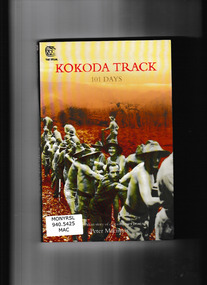
Book, Black Dog Books, Kokoda track : 101 days : an Australian story of extraordinary bravery, 2007
... Australian army - 39th Battalion An extraordinary story of a small force defeating a much larger one. It is the tale of 550 men of the 39th Militia Battalion. In eight short and brutal weeks, these soldiers slowed, and eventually stopped the advance of 6000 experienced Japanese troops. ...An extraordinary story of a small force defeating a much larger one. It is the tale of 550 men of the 39th Militia Battalion. In eight short and brutal weeks, these soldiers slowed, and eventually stopped the advance of 6000 experienced Japanese troops.Index, bibliography, ill, maps, p.179.non-fictionAn extraordinary story of a small force defeating a much larger one. It is the tale of 550 men of the 39th Militia Battalion. In eight short and brutal weeks, these soldiers slowed, and eventually stopped the advance of 6000 experienced Japanese troops.world war 1939 – 1945 – campaigns – kokoda, australian army - 39th battalion -
 Monbulk RSL Sub Branch
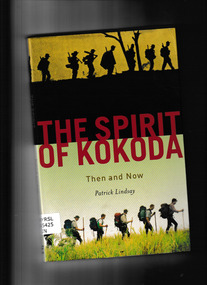
Book, Hardie Grant Book, The spirit of Kokoda : then and now, 2002
... Australia lost its innocence in 1942. Japan had conquered Asia and the Pacific,and were at our doorstep. Our finest troops ...Australia lost its innocence in 1942. Japan had conquered Asia and the Pacific,and were at our doorstep. Our finest troops were fighting in the Middle East. All that stood between the Japanese onslaught and our homeland was a handful of 18-year-old militia troops who had never fired a shot in angerIndex, bibliography, notes, ill, maps, p.193.non-fictionAustralia lost its innocence in 1942. Japan had conquered Asia and the Pacific,and were at our doorstep. Our finest troops were fighting in the Middle East. All that stood between the Japanese onslaught and our homeland was a handful of 18-year-old militia troops who had never fired a shot in angerworld war 1939 – 1945 – campaigns – kokoda, kokoda track papua new guinea -
 Monbulk RSL Sub Branch
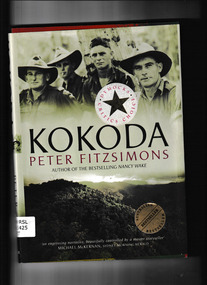
Book, Hachette, Kokoda, 2008
... In the muddy, treacherous mountains of Papua New Guinea, a small force of young Australian soldiers - some of them still teenagers - are up against highly trained, experienced Japanese troops. ...Kokoda, 1942. In the muddy, treacherous mountains of Papua New Guinea, a small force of young Australian soldiers - some of them still teenagers - are up against highly trained, experienced Japanese troops. Many believed that the all-conquering Imperial Japanese Army was unstoppable. But this is the story of how these brave young Aussies faced up to some of the world's best soldiers on a narrow, precarious jungle track - and defeated them.Index, bibliography, notes, ill, maps, p.479.non-fictionKokoda, 1942. In the muddy, treacherous mountains of Papua New Guinea, a small force of young Australian soldiers - some of them still teenagers - are up against highly trained, experienced Japanese troops. Many believed that the all-conquering Imperial Japanese Army was unstoppable. But this is the story of how these brave young Aussies faced up to some of the world's best soldiers on a narrow, precarious jungle track - and defeated them.world war 1939 – 1945 – campaigns – kokoda, kokoda track 1942 -
 Monbulk RSL Sub Branch
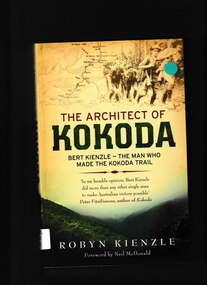
Book, Robyn Kienzle, The architect of Kokoda: Bert Kienzle - the man who made the Kokoda trail, 2011
... His role in building the Kokoda trail ensured that troops in Papua New Guineareceived the food, munitions and medical support they needed kienzle herbert thompson 1905-1988 kokoda trail (papua new guinea) Biography of Bert Kienzle who established a trail across the Owen Stanley ranges. Index, bibliography, ill (plates), p.327. The architect of Kokoda: Bert Kienzle - the man who made the Kokoda trail Book Robyn Kienzle Hachette Australia ...Biography of Bert Kienzle who established a trail across the Owen Stanley ranges.Index, bibliography, ill (plates), p.327.non-fictionBiography of Bert Kienzle who established a trail across the Owen Stanley ranges.kienzle herbert thompson 1905-1988, kokoda trail (papua new guinea) -
 Monbulk RSL Sub Branch
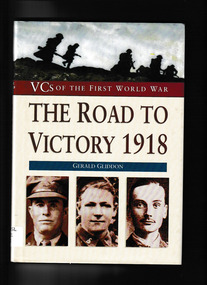
Book, Gerald Gliddon, VCs of the First World War: road to victory 1918, 2000
... troops and equipment substantially; the morale of the German Army was sinking as it failed to deliver the desired 'knock out blow'; and Haig found a new confidence, firmly believing that the Allies could at last push the Germans out of France and Belgium. This volume of the best-selling 'VCs of the First World War' series covers the fifty days of the Allied advance from 8 August to 26 September 1918. Arranged chronologically, it tells the story of the 64 VC winners during this period. The recipients came from any countries including Britain, Canada, Australia ...By August 1918 fortune was on the side of the Allies: America was increasing its contribution of troops and equipment substantially; the morale of the German Army was sinking as it failed to deliver the desired 'knock out blow'; and Haig found a new confidence, firmly believing that the Allies could at last push the Germans out of France and Belgium. This volume of the best-selling 'VCs of the First World War' series covers the fifty days of the Allied advance from 8 August to 26 September 1918. Arranged chronologically, it tells the story of the 64 VC winners during this period. The recipients came from any countries including Britain, Canada, Australia and New Zealand: some never lived to know that they had been awarded to their extraordinary bravery, while others returned home to face an uncertain future. This is their story.index, bibliography, ill, maps, p.210non-fictionBy August 1918 fortune was on the side of the Allies: America was increasing its contribution of troops and equipment substantially; the morale of the German Army was sinking as it failed to deliver the desired 'knock out blow'; and Haig found a new confidence, firmly believing that the Allies could at last push the Germans out of France and Belgium. This volume of the best-selling 'VCs of the First World War' series covers the fifty days of the Allied advance from 8 August to 26 September 1918. Arranged chronologically, it tells the story of the 64 VC winners during this period. The recipients came from any countries including Britain, Canada, Australia and New Zealand: some never lived to know that they had been awarded to their extraordinary bravery, while others returned home to face an uncertain future. This is their story.world war 1914-1918 - personal narratives, world war 1914-1918 - victoria cross -
 Monbulk RSL Sub Branch
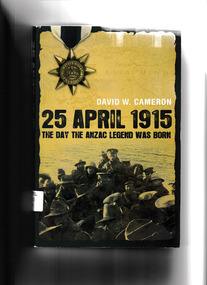
Book, David W Cameron, 25 April 1915: The day the ANZAC legend was born, 2007
... On the 25th of April 1915 Australian troops landed on the Gallipoli Peninsula in what is now called Anzac Cove. ...A detailed account of what happened to the Australian, New Zealand and Turkish troops on the beaches and hills of the Gallipoli peninsula on that fateful day - the day the ANZAC legend was born. On the 25th of April 1915 Australian troops landed on the Gallipoli Peninsula in what is now called Anzac Cove. They rushed from the beach up to Plugge's Plateau into Australian military history suffering many casualties on the way. Just after midday troops from New Zealand landed at Gallipoli and together the Australians and New Zealanders created the Anzac legend. It was the events of this first day that set the course of the whole battle leading to the evacuation of the Anzac troops in December 1915. This is the story of that day telling the Australian, New Zealand and Turkish side of what was to become a tragedy for all three countries and an ultimate triumph for Turkey. It concludes with the visit of Charles Bean, the official Australian war correspondent, to the peninsula in 1919 as part of the Australian Historical mission to organise the burial of the dead that had lain exposed to the elements for the last four years, and to the formation of the cemeteries that are today visited by thousands. About the Author : Dr David Cameron is a biological anthropologist who has written several books. In early 2003 he conducted a preliminary survey of the Anzac Gallipoli battlefields and held numerous discussions with Turkish and Australian government officials about conservation issues relating to the Anzac area. He became interested in the actual landing and decided to write this book.--publisher. A detailed account of what happened to the Australian, New Zealand and Turkish troops on the beaches and hills of the Gallipoli peninsula on that fateful day - the day the ANZAC legend was born.Index, bibliography, notes, maps, ill, p.324.non-fictionA detailed account of what happened to the Australian, New Zealand and Turkish troops on the beaches and hills of the Gallipoli peninsula on that fateful day - the day the ANZAC legend was born. On the 25th of April 1915 Australian troops landed on the Gallipoli Peninsula in what is now called Anzac Cove. They rushed from the beach up to Plugge's Plateau into Australian military history suffering many casualties on the way. Just after midday troops from New Zealand landed at Gallipoli and together the Australians and New Zealanders created the Anzac legend. It was the events of this first day that set the course of the whole battle leading to the evacuation of the Anzac troops in December 1915. This is the story of that day telling the Australian, New Zealand and Turkish side of what was to become a tragedy for all three countries and an ultimate triumph for Turkey. It concludes with the visit of Charles Bean, the official Australian war correspondent, to the peninsula in 1919 as part of the Australian Historical mission to organise the burial of the dead that had lain exposed to the elements for the last four years, and to the formation of the cemeteries that are today visited by thousands. About the Author : Dr David Cameron is a biological anthropologist who has written several books. In early 2003 he conducted a preliminary survey of the Anzac Gallipoli battlefields and held numerous discussions with Turkish and Australian government officials about conservation issues relating to the Anzac area. He became interested in the actual landing and decided to write this book.--publisher. A detailed account of what happened to the Australian, New Zealand and Turkish troops on the beaches and hills of the Gallipoli peninsula on that fateful day - the day the ANZAC legend was born. world war 1914-1918 - campaigns - gallipoli, australian army - anzac corps -
 Monbulk RSL Sub Branch
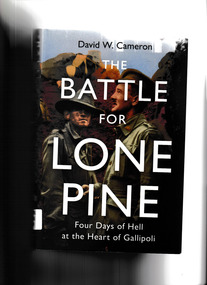
Book, David W Cameron, The battle for Lone Pine: Four days of hell at the heart of Gallipoli, 2012
... Australia's Anzacs in the intense four days of fighting, in pursuit of a flawed strategy to distract Turkish forces from larger incursions, which themselves failed. David W. Cameron has pulled together first-hand accounts from the men and women involved (including from the Turkish army) to detail what transpired and to follow some of their personal stories throughout the ordeal. By including the stories of non-combatants, such as engineers, nurses, sappers, commanders and more, he not only gives due credit to those who labored in support of the troops ...Surprisingly, as we near the 100th anniversary of the legendary Gallipoli campaign, this is the first book solely dedicated to one of its key battles - that at Lone Pine, where Australian and Turkish soldiers fought an ultimately futile battle that claimed thousands of lives in incredibly close quarters. Seven Victoria Crosses were earned by Australia's Anzacs in the intense four days of fighting, in pursuit of a flawed strategy to distract Turkish forces from larger incursions, which themselves failed. David W. Cameron has pulled together first-hand accounts from the men and women involved (including from the Turkish army) to detail what transpired and to follow some of their personal stories throughout the ordeal. By including the stories of non-combatants, such as engineers, nurses, sappers, commanders and more, he not only gives due credit to those who labored in support of the troops, but provides a wider understanding of the mammoth undertaking of such warfare. Many Australians travel to the Lone Pine Memorial and Cemetery each year to commemorate Anzac Day and remember the fallen - this work of popular history highlights the fate of those who fought on the very ground where they gather. Most Australian have heard of Lone Pine. Too few know why. Over four days in August 1915, Australians and Turks were thrown into some of the fiercest fighting of the war, on a small plateau in Gallipoli known as Lone Pine. Thousands of lives were lost. Seven of Australia's nine Gallipoli VCs were earned during brutal hand-to-hand combat in dark tunnels and in trenches just metres apart, bombarded by terrifying volleys of grenades. The Battle for Lone Pine is the first book devoted to this cornerstone of the Anzac legend, drawing on unforgettable first-hand accounts scratched into diaries and letters home. The stories of the diggers, as well as the engineers, nurses, sappers, commanders and more, provide an invaluable record of the battle and serve as moving testimony to their courage in appalling conditions. Today, pine trees are planted in remembrance around Australia. In Gallipoli, the Lone Pine Cemetery and Memorial attracts large crowds to commemorate Anzac Day. David W. Cameron's absorbing history reveals the fate of those who fought on the ground where they gather. 'David Cameron not only leads the way for the battalions of books on Australia in World War I to come in the next six years, he sets a standard for authors to emulate'Index, bibliography, notes, ill, p.349.non-fictionSurprisingly, as we near the 100th anniversary of the legendary Gallipoli campaign, this is the first book solely dedicated to one of its key battles - that at Lone Pine, where Australian and Turkish soldiers fought an ultimately futile battle that claimed thousands of lives in incredibly close quarters. Seven Victoria Crosses were earned by Australia's Anzacs in the intense four days of fighting, in pursuit of a flawed strategy to distract Turkish forces from larger incursions, which themselves failed. David W. Cameron has pulled together first-hand accounts from the men and women involved (including from the Turkish army) to detail what transpired and to follow some of their personal stories throughout the ordeal. By including the stories of non-combatants, such as engineers, nurses, sappers, commanders and more, he not only gives due credit to those who labored in support of the troops, but provides a wider understanding of the mammoth undertaking of such warfare. Many Australians travel to the Lone Pine Memorial and Cemetery each year to commemorate Anzac Day and remember the fallen - this work of popular history highlights the fate of those who fought on the very ground where they gather. Most Australian have heard of Lone Pine. Too few know why. Over four days in August 1915, Australians and Turks were thrown into some of the fiercest fighting of the war, on a small plateau in Gallipoli known as Lone Pine. Thousands of lives were lost. Seven of Australia's nine Gallipoli VCs were earned during brutal hand-to-hand combat in dark tunnels and in trenches just metres apart, bombarded by terrifying volleys of grenades. The Battle for Lone Pine is the first book devoted to this cornerstone of the Anzac legend, drawing on unforgettable first-hand accounts scratched into diaries and letters home. The stories of the diggers, as well as the engineers, nurses, sappers, commanders and more, provide an invaluable record of the battle and serve as moving testimony to their courage in appalling conditions. Today, pine trees are planted in remembrance around Australia. In Gallipoli, the Lone Pine Cemetery and Memorial attracts large crowds to commemorate Anzac Day. David W. Cameron's absorbing history reveals the fate of those who fought on the ground where they gather. 'David Cameron not only leads the way for the battalions of books on Australia in World War I to come in the next six years, he sets a standard for authors to emulate'world war 1914-1918 - campaigns - gallipoli, gallipoli campaign - battles - lone pine -
 Monbulk RSL Sub Branch
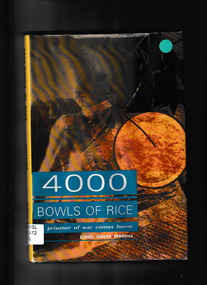
Book, Allen & Unwin, Four thousand bowls of rice : a prisoner of war comes home, 1993
... Australians and Americans captured by the Japanese during World War II toiled and died to build the Bridge over the River Kwai. Respected military historian Linda Goetz Holmes tells the story of one man's survival in Japanese labor camps during WWII. Amazing photographs, taken secretly by other prisoners, chronicle this dark history of Allied troops ...Over 60,000 Australians and Americans captured by the Japanese during World War II toiled and died to build the Bridge over the River Kwai. Respected military historian Linda Goetz Holmes tells the story of one man's survival in Japanese labor camps during WWII. Amazing photographs, taken secretly by other prisoners, chronicle this dark history of Allied troops in the Pacific theatre of war.Index, bibliography, notes, ill, p.179.non-fictionOver 60,000 Australians and Americans captured by the Japanese during World War II toiled and died to build the Bridge over the River Kwai. Respected military historian Linda Goetz Holmes tells the story of one man's survival in Japanese labor camps during WWII. Amazing photographs, taken secretly by other prisoners, chronicle this dark history of Allied troops in the Pacific theatre of war.world war 1939 – 1945 - prisons and prisoners – australia, burma thailand railway -
 Monbulk RSL Sub Branch
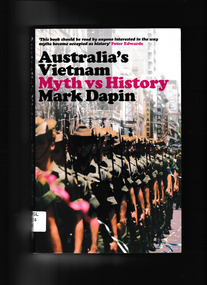
Book, NewSouth Publishing, Australia's Vietnam : myth vs history, 2019
... From army claims that every national serviceman was a volunteer; and the level of atrocities committed by Australian troops; to the belief there were no welcome home parades until the late 1980s and returned soldiers were met by angry protesters. ...Why everything you think you know about Australia's Vietnam War is wrong. When Mark Dapin first interviewed Vietnam veterans and wrote about the war, he swallowed (and regurgitated) every misconception. He wasn't alone. In Australia's Vietnam, Dapin reveals that every stage of Australia's commitment to the Vietnam War has been misunderstood, misinterpreted and shrouded in myth. From army claims that every national serviceman was a volunteer; and the level of atrocities committed by Australian troops; to the belief there were no welcome home parades until the late 1980s and returned soldiers were met by angry protesters. Australia's Vietnam is a major contribution to the understanding of Australia's experience of the war and will change the way we think about memory and military history.Index, notes, p.231.non-fictionWhy everything you think you know about Australia's Vietnam War is wrong. When Mark Dapin first interviewed Vietnam veterans and wrote about the war, he swallowed (and regurgitated) every misconception. He wasn't alone. In Australia's Vietnam, Dapin reveals that every stage of Australia's commitment to the Vietnam War has been misunderstood, misinterpreted and shrouded in myth. From army claims that every national serviceman was a volunteer; and the level of atrocities committed by Australian troops; to the belief there were no welcome home parades until the late 1980s and returned soldiers were met by angry protesters. Australia's Vietnam is a major contribution to the understanding of Australia's experience of the war and will change the way we think about memory and military history.vietnam war 1961-1975 – australian involvement, vietnam war 1961-1975 – history -
 Monbulk RSL Sub Branch
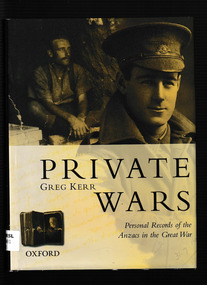
Book, Greg Kerr, Private wars : personal records of the Anzacs in the Great War, 2000
... It retraces the journey of Australian troops from Gallipoli in 1915 to the final penetration of the Hindenburg Line in 1918. ...Private Wars: Personal Records of the Anzacs in the Great War offers a new perspective on Australia's engagement in the twentieth century's bloodiest war. It retraces the journey of Australian troops from Gallipoli in 1915 to the final penetration of the Hindenburg Line in 1918. Although the author summarises the general strategic course of the war and the success or otherwise of each campaign, his primary concern is with the personal factor - the human burden of combat and its aftermathIll, index, p.306.non-fictionPrivate Wars: Personal Records of the Anzacs in the Great War offers a new perspective on Australia's engagement in the twentieth century's bloodiest war. It retraces the journey of Australian troops from Gallipoli in 1915 to the final penetration of the Hindenburg Line in 1918. Although the author summarises the general strategic course of the war and the success or otherwise of each campaign, his primary concern is with the personal factor - the human burden of combat and its aftermathaustralian army - anzac corps, soldiers - australia - biographies -
 Monbulk RSL Sub Branch
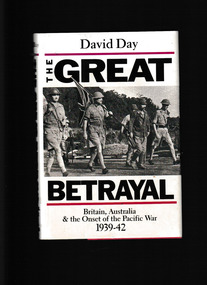
Book, Angus and Robertson, The great betrayal : Britain, Australia and the onset of the Pacific War, 1939-42, 1988
... And, at the most crucial time in Australia's history, Churchill tried to prevent substantial American forces from being sent to the pacific, and even attempted to delay the repatriation of Australian troops needed for defence. Thus Britain deliberately left Australia at the mercy of Japan, using her to divert and delay the Japanese thrust westwards towards India and the Middle East... ...The ignominious fall of Singapore to the Japanese in February 1942 marked the climax of the greatese crisis in Anglo-Australian relations - Britain's inexcusable betrayal of Australia in time of war. Until World War II, Australia had always rushed to the Imperial colours, confident that just as Australian blood was shed for the Mother Country, so too would British Blood be in the defence of Australia. But in 1939 Australia lay wide open to attack, her defences practically non-existent, and she was reluctant to commit her meagre forces overseas. Her objections were overcome, however, by an unequivocal British promise to protect her from a Japanese attack, so she sent troops and ships to the northern hemisphere, leaving Singapore naval base as the cornerstone of her own defence policy. Britain's promise to defend Australia was made with little concern for the possibility of its ever being implemented and, certainly, in 1939 a direct threat to Australia looked unlikely. During 1940 and 1941, however, the threat from Japan increased, while Britain's ability to counter it weakened. Yet the British government resisted calls to strengthen the Far Eastern Defence, continually reassuring Australia that the Japanese threat would not materialize and that, even if it did, Britain could still contain it. Then the inconceivable happened: in December 1941 the Japanese decimated the US fleet at Pearl Harbour and in early 1942 took Singapore, leaving Australia suddenly in immediate peril. But the oft-repeated promise to defend the Dominion came to nought. And, at the most crucial time in Australia's history, Churchill tried to prevent substantial American forces from being sent to the pacific, and even attempted to delay the repatriation of Australian troops needed for defence. Thus Britain deliberately left Australia at the mercy of Japan, using her to divert and delay the Japanese thrust westwards towards India and the Middle East...[inside front and back cover]. This compelling and controversial book reveals how in 1942 Churchill, in an attempt to delay an attack on India, left Australia at the mercy of the Japanese by trying to prevent American forces being sent to the Pacific. Drawing on a wealth of sources, including many previously unavailable to historians, David Day exposes a saga of empty promises and asks serious questions about the past and future relationship between Britain and Australia. Collapse summaryIndex, p.388.non-fictionThe ignominious fall of Singapore to the Japanese in February 1942 marked the climax of the greatese crisis in Anglo-Australian relations - Britain's inexcusable betrayal of Australia in time of war. Until World War II, Australia had always rushed to the Imperial colours, confident that just as Australian blood was shed for the Mother Country, so too would British Blood be in the defence of Australia. But in 1939 Australia lay wide open to attack, her defences practically non-existent, and she was reluctant to commit her meagre forces overseas. Her objections were overcome, however, by an unequivocal British promise to protect her from a Japanese attack, so she sent troops and ships to the northern hemisphere, leaving Singapore naval base as the cornerstone of her own defence policy. Britain's promise to defend Australia was made with little concern for the possibility of its ever being implemented and, certainly, in 1939 a direct threat to Australia looked unlikely. During 1940 and 1941, however, the threat from Japan increased, while Britain's ability to counter it weakened. Yet the British government resisted calls to strengthen the Far Eastern Defence, continually reassuring Australia that the Japanese threat would not materialize and that, even if it did, Britain could still contain it. Then the inconceivable happened: in December 1941 the Japanese decimated the US fleet at Pearl Harbour and in early 1942 took Singapore, leaving Australia suddenly in immediate peril. But the oft-repeated promise to defend the Dominion came to nought. And, at the most crucial time in Australia's history, Churchill tried to prevent substantial American forces from being sent to the pacific, and even attempted to delay the repatriation of Australian troops needed for defence. Thus Britain deliberately left Australia at the mercy of Japan, using her to divert and delay the Japanese thrust westwards towards India and the Middle East...[inside front and back cover]. This compelling and controversial book reveals how in 1942 Churchill, in an attempt to delay an attack on India, left Australia at the mercy of the Japanese by trying to prevent American forces being sent to the Pacific. Drawing on a wealth of sources, including many previously unavailable to historians, David Day exposes a saga of empty promises and asks serious questions about the past and future relationship between Britain and Australia. Collapse summary worls war 1939-1945 - diplomatic history, australia - foreign relations - britain -
 Monbulk RSL Sub Branch
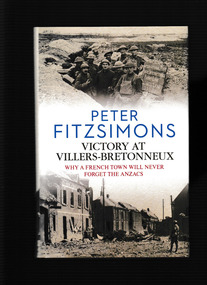
Book, Penguin Random House Australia Pty Ltd, Victory at Villers-Bretonneux : why a French town will never forget the Anzacs, 2016
... For nigh on two weeks, the plan works brilliantly.The Germans are able to advance without check, as the exhausted British troops flee before them, together with tens of thousands of French refugees. In desperation, the British commander, General Douglas Haig, calls upon the Australian soldiers to stop the German onslaught and save Villers-Bretonneux. ...It's early 1918, and after four brutal years, the fate of the Great War hangs in the balance. On the morning of 21 March 1918, the Kaiserschlacht (the Kaiser's battle) is launched. The biggest set-piece battle the world has ever seen. Across a 45-mile front, no fewer than two million German soldiers hurl themselves at the Allied lines, with the specific intention of driving all the way through to the town of Villers-Bretonneux, where their artillery can rain down shells on the key train hub of Amiens, thus throttling the Allied supply lines. For nigh on two weeks, the plan works brilliantly.The Germans are able to advance without check, as the exhausted British troops flee before them, together with tens of thousands of French refugees. In desperation, the British commander, General Douglas Haig, calls upon the Australian soldiers to stop the German onslaught and save Villers-Bretonneux. If the Australians can hold the line, the very gate to Amiens, then the Germans will not win the war. Arriving at Villers-Bretonneux just in time, the Australians launch a vicious counter-attack that hurls the enemy back the first time. And then, on Anzac Day 1918, when the town falls after all to the British defenders, it is again the Australians who are called on to save the day, the town, and the entire battle - even the warIndex, ill, bib, maps, p.764.It's early 1918, and after four brutal years, the fate of the Great War hangs in the balance. On the morning of 21 March 1918, the Kaiserschlacht (the Kaiser's battle) is launched. The biggest set-piece battle the world has ever seen. Across a 45-mile front, no fewer than two million German soldiers hurl themselves at the Allied lines, with the specific intention of driving all the way through to the town of Villers-Bretonneux, where their artillery can rain down shells on the key train hub of Amiens, thus throttling the Allied supply lines. For nigh on two weeks, the plan works brilliantly.The Germans are able to advance without check, as the exhausted British troops flee before them, together with tens of thousands of French refugees. In desperation, the British commander, General Douglas Haig, calls upon the Australian soldiers to stop the German onslaught and save Villers-Bretonneux. If the Australians can hold the line, the very gate to Amiens, then the Germans will not win the war. Arriving at Villers-Bretonneux just in time, the Australians launch a vicious counter-attack that hurls the enemy back the first time. And then, on Anzac Day 1918, when the town falls after all to the British defenders, it is again the Australians who are called on to save the day, the town, and the entire battle - even the war -
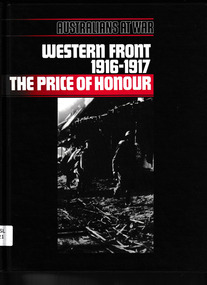 Monbulk RSL Sub Branch
Book, John Laffin, Western front 1916-191: The price of honour, 1987
... World war 1914-1918 - Australian involvement World War 1914-1918 - Campaigns - France Australian troops fighting in France between 1916 and 1917 Index, bib, ill, maps, p.163. ...Australian troops fighting in France between 1916 and 1917Index, bib, ill, maps, p.163.non-fictionAustralian troops fighting in France between 1916 and 1917world war 1914-1918 - australian involvement, world war 1914-1918 - campaigns - france -
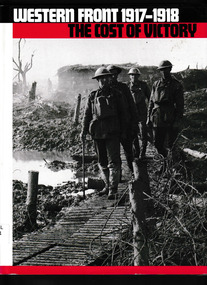 Monbulk RSL Sub Branch
Book, John Laffin, Western front 1917-1918: The cost of victory, 1988
... World war 1914-1918 - Australian involvement World War 1914-1918 - Campaigns - France Australian troops fighting in France between 1917 and 1918 Index, bib, ill, maps, p.163. ...Australian troops fighting in France between 1917 and 1918Index, bib, ill, maps, p.163.non-fictionAustralian troops fighting in France between 1917 and 1918world war 1914-1918 - australian involvement, world war 1914-1918 - campaigns - france -
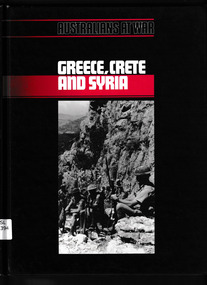 Monbulk RSL Sub Branch
Book, John Laffin, Greece, Crete, Syria, 1989
... World War 1939-1945 - Australian involvement World War 1939-1945 - Campaigns - Greece World War 1939-1945 - Campaigns - Crete and Syria Australian troops fighting in Greece, Crete and Syria during World War II Index, bib, ill, maps, p.163. ...Australian troops fighting in Greece, Crete and Syria during World War IIIndex, bib, ill, maps, p.163.non-fictionAustralian troops fighting in Greece, Crete and Syria during World War IIworld war 1939-1945 - australian involvement, , world war 1939-1945 - campaigns - greece, world war 1939-1945 - campaigns - crete and syria -
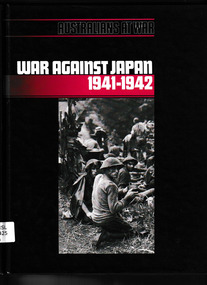 Monbulk RSL Sub Branch
Book, Time Life Books, War against Japan 1941-1942, 1988
... World War 1939-1945 - Australian involvement World War 1939-1945 - Campaigns - Pacific area Australian troops fighting against Japan in 1941 and 1942 Index, bib, ill, maps, p.163. ...Australian troops fighting against Japan in 1941 and 1942Index, bib, ill, maps, p.163.non-fictionAustralian troops fighting against Japan in 1941 and 1942world war 1939-1945 - australian involvement, world war 1939-1945 - campaigns - pacific area -
 Monbulk RSL Sub Branch
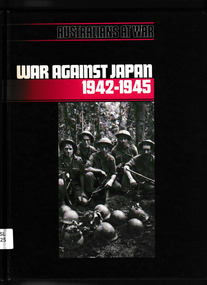
Book, Time Life Books, War against Japan 1942-1945, 1989
... World War 1939-1945 - Australian involvement World War 1939-1945 - Campaigns - Pacific area Australian troops fighting against Japan in 1941 and 1942 Index, bib, ill, maps, p.163. ...Australian troops fighting against Japan in 1941 and 1942Index, bib, ill, maps, p.163.non-fictionAustralian troops fighting against Japan in 1941 and 1942world war 1939-1945 - australian involvement, world war 1939-1945 - campaigns - pacific area -
 Monbulk RSL Sub Branch
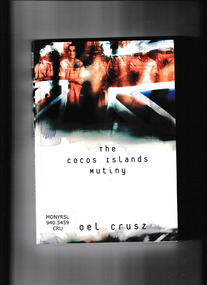
Book, Fremantle Arts Centre Press, The Cocos Islands mutiny, 2001
... Australia's north-west coast attempted to arrest their British commanding officer and compel him to surrender to the Japanese. One soldier was killed and another wounded, but the mutiny failed and seven men were condemned to death. Ultimately three soldiers were hung, becoming the only Commonwealth troops ...A significant World War Two mutiny took place on the night of 8 May 1942 in a lonely atoll in the Indian Ocean in a setting of intrigue, rebellion and the blood and tears of war. Japanese naval forces were at the peak of their southward thrust." "While the battle of the Coral Sea raged, gunners of the Ceylon Garrison Artillery on the Cocos (Keeling) Islands off Australia's north-west coast attempted to arrest their British commanding officer and compel him to surrender to the Japanese. One soldier was killed and another wounded, but the mutiny failed and seven men were condemned to death. Ultimately three soldiers were hung, becoming the only Commonwealth troops to be executed for mutiny in World War TwoBib, ill, maps, p.248.non-fictionA significant World War Two mutiny took place on the night of 8 May 1942 in a lonely atoll in the Indian Ocean in a setting of intrigue, rebellion and the blood and tears of war. Japanese naval forces were at the peak of their southward thrust." "While the battle of the Coral Sea raged, gunners of the Ceylon Garrison Artillery on the Cocos (Keeling) Islands off Australia's north-west coast attempted to arrest their British commanding officer and compel him to surrender to the Japanese. One soldier was killed and another wounded, but the mutiny failed and seven men were condemned to death. Ultimately three soldiers were hung, becoming the only Commonwealth troops to be executed for mutiny in World War Twomutiny, world war 1939-1945 - sri lanka -
 Bendigo Historical Society Inc.
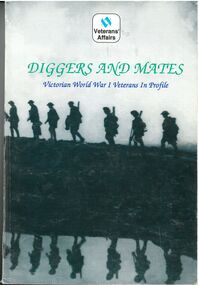
Book - "Diggers And Mates. Victorian World War 1 Veterans In Profile.", 1995
... Australian Government Publishing Service in 1995. Contains a collection of the experiences and insights of many of Victoria's then surviving World war 1 veterans. Soft cover book with image of 'Supporting Troops...Australian Government Publishing Service in 1995. Contains a collection of the experiences and insights of many of Victoria's then surviving World war 1 veterans. Soft cover book with image of 'Supporting Troops ...John Henry Lockett OAM (22 January 1891 – 25 May 2002) was the oldest man ever in Australia when he died aged 111 years, 123 days. As one of the last surviving veterans of World War I, he was acclaimed as a national hero during the last decade of his life. Lockett was born in the small Victorian town of Waanyarra, near Bendigo. He left school aged nine to work on a local farm. Later, he worked for his uncles in the Mallee. On 24 March 1916, he travelled to Mildura to enlist in the Australian Imperial Force. He served in France with the 38th Battalion, earning promotion to sergeant and was discharged on 20 September 1919. https://en.wikipedia.org/wiki/Jack_Lockett After the war, Jack returned to The Mallee and selected a 640 acres (260 ha) block of land in Linga, Victoria, deciding to make his living as a farmer. In 1923, he married Maybell Ingwerson and they had four children together. In 1963, the couple retired to Bendigo in 1953, leaving the farmland (which now covered more than 130,000 acres (53,000 ha), in the care of their children and grandchildren. "Diggers And mates. Victorian World War 1 Veterans In Profile." Compiled by Kylie McKenzie. Preamble by Con Sciacca, Minister for Veterans' Affairs. Foreward by Brian Flynn, Deputy Commissioner for Veterans' Affairs. Produced by the Commonwealth Department of Veteran's Affairs, Melbourne. Printed by the Australian Government Publishing Service in 1995. Contains a collection of the experiences and insights of many of Victoria's then surviving World war 1 veterans. Soft cover book with image of 'Supporting Troops of the 1st Australian Division photographed on a duckboard track near Ypres, Belgium, 1917. Titles printed in Green and dark blue. Vererans' Affairs logo in centre at top of front cover. Book includes service particulars of each service person, personal particulars of person, and image(s) of service person at time of publication (1995) and whilst in service. Includes an article on Jack Lockett - serviceman 43 as presented in book . jack lockett, world war 1 -
 Victorian Interpretive Projects Inc.
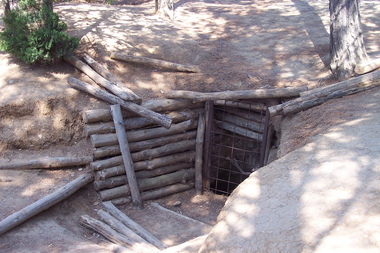
Photograph - Colour, Gaida Stevens, World War One Tunnel Entrance, Lone Pine, Gallipoli, 2015, 2015
... At 5.30 pm on 6 August 1915, the Australian artillery barrage lifted and from concealed trenches in no man’s land the 1st Australian Brigade charged towards the Turkish trenches. The troops paused on reaching the Turkish trenches, finding that many were covered by timber roofs. ...At 5.30 pm on 6 August 1915, the Australian artillery barrage lifted and from concealed trenches in no man’s land the 1st Australian Brigade charged towards the Turkish trenches. The troops paused on reaching the Turkish trenches, finding that many were covered by timber roofs. ...Lone Pine was an action that featured one of the most famous assaults of the Gallipoli campaign. The attack was planned as a diversion for the Australian and New Zealand units that were to breakout from the Anzac perimeter by capturing the heights of Chunuk Bair and Hill 971. At 5.30 pm on 6 August 1915, the Australian artillery barrage lifted and from concealed trenches in no man’s land the 1st Australian Brigade charged towards the Turkish trenches. The troops paused on reaching the Turkish trenches, finding that many were covered by timber roofs. Some fired, bombed and bayoneted from above, some found their way inside and others ran on past to the open communications and support trenches behind. Others advanced as far as "the Cup" which was where Turkish support units were located and from where the Turks counter-attacked. By nightfall, most of the enemy front line was in Australian hands and outposts had been established in former Turkish communication trenches. The Australian Engineers dug a safe passage across no man’s land so that reinforcements could enter the captured positions without being exposed to Turkish fire. Having captured the Turkish trenches, the Australians now tried to hold what they had taken while the Turks desperately and determinedly tried to throw the Australians out. From nightfall on 6 August until the night of 9 August a fierce battle ensued underground in the complex maze of Turkish tunnels. The Australians succeeded in drawing the whole of the immediate Turkish reserve. Six Australian battalions suffered nearly 2,300 killed and wounded at Lone Pine. Seven Australians were awarded the Victoria Cross, the highest number ever awarded to an Australian division for one action.(http://www.awmlondon.gov.au/battles/lone-pine)Entrance to a tunnel at Lone Pine, Gallipoli. gallipoli, world war one, tunnel, mmm -
 Monbulk RSL Sub Branch
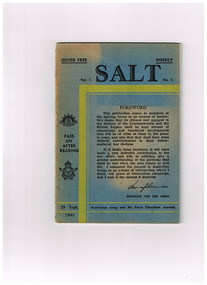
Journal, Melbourne : Army Education Service, SALT (Australian Army and Air Force Education Journal), 1941-1946
... The journal was sent to all areas where Australian troops were located. My father told me that the journal acquired it’s name because of the limited editions allocated to the various groups, the saying “pass the salt” became the norm." vol.1941-1946. ill SALT (Australian Army and Air Force Education Journal) Journal Melbourne : Army Education Service ...These journals were donated by Max Feldman. He has contributed the following comments. "My father, Julius Feldmann was the chief writer, Jock Hector wrote the overseas stuff under the pseudonym Ö Pip” änd the local news was written by MacLaren Gordon. The editor was Hume Dow who subsequently became Dean of the English faculty at Melbourne Uni. The journal was sent to all areas where Australian troops were located. My father told me that the journal acquired it’s name because of the limited editions allocated to the various groups, the saying “pass the salt” became the norm."vol.1941-1946. illnon-fictionThese journals were donated by Max Feldman. He has contributed the following comments. "My father, Julius Feldmann was the chief writer, Jock Hector wrote the overseas stuff under the pseudonym Ö Pip” änd the local news was written by MacLaren Gordon. The editor was Hume Dow who subsequently became Dean of the English faculty at Melbourne Uni. The journal was sent to all areas where Australian troops were located. My father told me that the journal acquired it’s name because of the limited editions allocated to the various groups, the saying “pass the salt” became the norm."military education - australia, education and war - journals -
 Monbulk RSL Sub Branch
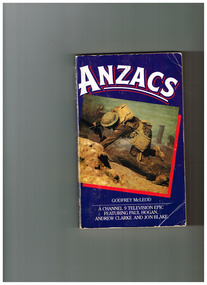
Book, Methuen, Anzacs, 1985
... World War 1914-1918 - Australian involvement World War 1914-1918 - Campaigns - France Fictional account of Australian troops in France during World war II Ill, p.218. ...Fictional account of Australian troops in France during World war IIIll, p.218.fictionFictional account of Australian troops in France during World war IIworld war 1914-1918 - australian involvement, world war 1914-1918 - campaigns - france
