
Showing 633 items matching "radio australia"
-
 Robin Boyd Foundation
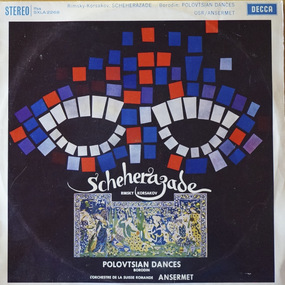
Audio - Recording, Decca (The Decord Record Company Limited)
... Australia) Limited, Sydney. L'orchestre de la Suisse Romande with Choeur Des Jeunes and Choeur De Radio Lausanne, Conductor Ernest Ansermet and Andre Charlet....Australia) Limited, Sydney. L'orchestre de la Suisse Romande with Choeur Des Jeunes and Choeur De Radio Lausanne, Conductor Ernest Ansermet and Andre Charlet. ...The Boyds purchased their record player and sound system from Thomas’s in Melbourne. Patricia Boyd (later Davies) was very interested in opera and was later appointed to the Board of the Australian Opera.Scheherazade - Polovtsian Dances. LP 33RPM vinyl, Catalogue Number: SXLA 2268, Paper packaging, plastic sleve, 1 Vinyl disc, cover notes, no author listed, made in Australia, distributed by EMI (Australia) Limited, Sydney. L'orchestre de la Suisse Romande with Choeur Des Jeunes and Choeur De Radio Lausanne, Conductor Ernest Ansermet and Andre Charlet.lp, sound recording -
 Robin Boyd Foundation
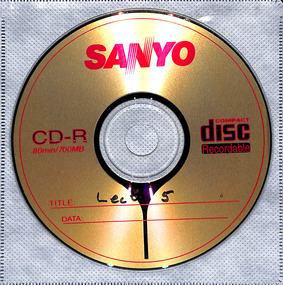
Audio - CD, Robin Boyd
... 'Artificial Australia' consisted of five lectures given by Robin Boyd in 1967 on the Australian Broadcasting Commission radio. The lectures were (1) Creative Man in a Frontier Society, (2) The Architecture of Ideas, (3) Integrity in the Artificial Object, (4) The Environmental Arts in Australia. (5) The Australian Myth in the Modern World. ...'Artificial Australia' consisted of five lectures given by Robin Boyd in 1967 on the Australian Broadcasting Commission radio. The lectures were (1) Creative Man in a Frontier Society, (2) The Architecture of Ideas, (3) Integrity in the Artificial Object, (4) The Environmental Arts in Australia. (5) The Australian Myth in the Modern World. ...This is Boyer lecture 5 of 'Artificial Australia' by Robin Boyd. 'Artificial Australia' consisted of five lectures given by Robin Boyd in 1967 on the Australian Broadcasting Commission radio. The lectures were (1) Creative Man in a Frontier Society, (2) The Architecture of Ideas, (3) Integrity in the Artificial Object, (4) The Environmental Arts in Australia. (5) The Australian Myth in the Modern World. Sanyo CDboyer lecture, artificial australia, robin boyd -
 Robin Boyd Foundation
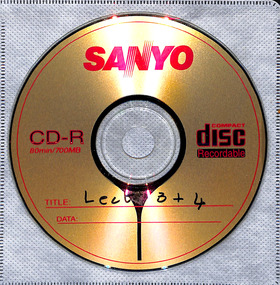
Audio - CD, Robin Boyd
... Artificial Australia was the title of a five Boyer lectures given by Robin Boyd in 1967 on the Australian Broadcasting Commission radio. The lectures were (1) Creative Man in a Frontier Society, (2) The Architecture of Ideas, (3) Integrity in the Artificial Object, (4) The Environmental Arts in Australia. (5) The Australian Myth in the Modern World....Artificial Australia was the title of a five Boyer lectures given by Robin Boyd in 1967 on the Australian Broadcasting Commission radio. The lectures were (1) Creative Man in a Frontier Society, (2) The Architecture of Ideas, (3) Integrity in the Artificial Object, (4) The Environmental Arts in Australia. (5) The Australian Myth in the Modern World. ...This contains Lecture 3 (28 min 56 sec) and Lecture 4 (28 min 32 sec) of the series Artificial Australia by Robin Boyd. Artificial Australia was the title of a five Boyer lectures given by Robin Boyd in 1967 on the Australian Broadcasting Commission radio. The lectures were (1) Creative Man in a Frontier Society, (2) The Architecture of Ideas, (3) Integrity in the Artificial Object, (4) The Environmental Arts in Australia. (5) The Australian Myth in the Modern World.Sanyo CDboyer lecture, artificial australia, robin boyd -
 Robin Boyd Foundation
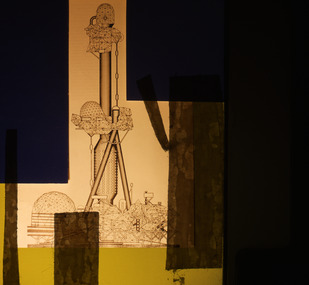
Slide, Robin Boyd, 1967
... The indoor exhibits covered aspects of Australian art and culture, architecture, industrial design and scientific innovation, such as the Snowy Mountains Hydro-Electric Power Scheme, the Parkes radio telescope, the design of Canberra, and the Australian way of life....The indoor exhibits covered aspects of Australian art and culture, architecture, industrial design and scientific innovation, such as the Snowy Mountains Hydro-Electric Power Scheme, the Parkes radio telescope, the design of Canberra, and the Australian way of life. ...Robin Boyd was appointed Exhibits Architect for the Australian Pavilion at Expo ‘67 in Montreal. The garden outside the pavilion featured a sculptural pool, a coral display, animal pool, a pit for kangaroos and Eucalypts and other native plants. The indoor exhibits covered aspects of Australian art and culture, architecture, industrial design and scientific innovation, such as the Snowy Mountains Hydro-Electric Power Scheme, the Parkes radio telescope, the design of Canberra, and the Australian way of life.Colour slide in a mount. Drawing of Archigram proposal for Montreal Expo '67 Tower (Unbuilt). (Architect: Archigram/Peter Cook.)Made in Australia / 28 / JUN 67M1 / Encircled 19 (Handwritten)expo 67, montreal, robin boyd, slide -
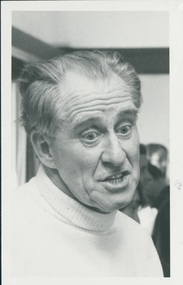 Uniting Church Archives - Synod of Victoria
Bw photo, Undated
... radio to listen to a game. In later years, Perkins developed Alzheimer's and his home became his haven until two weeks before his death. Harvey Perkins is survived by Jill, children Mary, Ro, David, Marguerite, Anna, Harvey and Kate and their partners, 13 grandchildren and two great-grandchildren. Jean died in 1981. (Obituary in the SMH by David Perkins) Rev. Harvey Perkins; Methodist Minister; Christian Conference of Asia; Australian ...Harvey Perkins was a Methodist minister and a peacemaker throughout his life of service and social activism. He knew the certainty that without justice there can be no peace, within, or between, communities and nations. He was greatly influenced by ''liberation theology'' and framed his life of thought, analysis and action on the teachings of the Bible. He was also a visionary in working closely with Asian churches on ecumenical and social justice issues in a way that anticipated by decades the closer relationships Australia now enjoys with Asia. He understood that any form of intervention altered the power relationship within a community and often challenged the dominant social interests in the post-colonial Asian countries. He knew any form of aid had to empower its recipients and be based on a partnership of equality. In the early 1960s, Perkins was an opponent of the war in Indochina and conscription in Australia and played an important role in activating congregations to protest against the war. His keen intelligence, knowledge of history and analytical skills demolished the false foundation on which the US and its allies entered the war and he organised medical and social work teams in South Vietnam and Laos to help refugees and displaced persons. In the 1970s Perkins played an important role in ''decolonising'' and devolving power in the Methodist Church missions in Aboriginal Australia and the Pacific Islands by analysing power structures and relationships through what he had learnt in Asia. Harvey Perkins and his twin sister, Jean, were born in Tasmania on January 29, 1919, children of Leslie Perkins and his wife, Doris (nee Cook). Leslie was a Methodist minister and Harvey and Jean's childhood was spent in parishes in urban and rural areas of Tasmania and Victoria. The family saw the grinding poverty and desperate human need wrought by the Depression as a ceaseless tide of people came knocking at the door of the local parsonage for help. In 1941, Perkins enlisted as an officer in the Australian Navy and served in the Pacific theatre until 1946. To his children, he explained his justification as being the real threat of invasion but it was a war that altered the direction of his life. On discharge he abandoned his completed studies at Melbourne University in law and commerce and studied for a degree in divinity. He was active in the World Student Christian Federation and in 1949, was ordained into the Methodist Church. A few years later, Perkins travelled to a World Student Christian Federation conference in Canada, on his way to study in Cambridge, and met an expatriate, Jill McCrory. They married in 1953. After Cambridge, Perkins returned to Australia and served as a minister in the Mitcham area of the growing Melbourne outer suburbs until 1956, when he was appointed General Secretary of the Australian Council of Churches and director of the Inter-Church Aid and Refugee World Service. From 1968 to 1971, Perkins worked with the East Asian Christian Conference and then took a position with the World Council of Churches in Geneva with its Commission on Churches Participation in Development. He returned to Australia in 1973 to a position with the Methodist Board of Missions and then returned to the Christian Conference of Asia in 1976 and relocated to Singapore for several years. Before retiring in 1984 he worked with the Uniting Church Board of Social Responsibility. In retirement Perkins continued to work in the Dee Why parish, enjoying preaching, leading study groups and working as a pastor in a local community. Along with his work, Perkins had a lifelong passion for AFL and his beloved team North Melbourne. Wherever he was in the world he could be found fiddling with a short-wave radio to listen to a game. In later years, Perkins developed Alzheimer's and his home became his haven until two weeks before his death. Harvey Perkins is survived by Jill, children Mary, Ro, David, Marguerite, Anna, Harvey and Kate and their partners, 13 grandchildren and two great-grandchildren. Jean died in 1981. (Obituary in the SMH by David Perkins) Head and shoulders portrait of Rev. Harvey PerkinsRev. Harvey Perkinsrev. harvey perkins; methodist minister; christian conference of asia; australian council of churches -
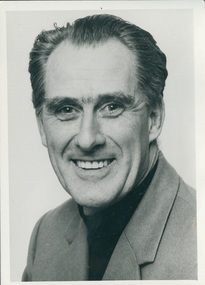 Uniting Church Archives - Synod of Victoria
BW photo, Undated
... radio to listen to a game. In later years, Perkins developed Alzheimer's and his home became his haven until two weeks before his death. Harvey Perkins is survived by Jill, children Mary, Ro, David, Marguerite, Anna, Harvey and Kate and their partners, 13 grandchildren and two great-grandchildren. Jean died in 1981. (Obituary in the SMH by David Perkins) Rev. Harvey Perkins; Methodist Minister; Christian Conference of Asia; Australian ...Harvey Perkins was a Methodist minister and a peacemaker throughout his life of service and social activism. He knew the certainty that without justice there can be no peace, within, or between, communities and nations. He was greatly influenced by ''liberation theology'' and framed his life of thought, analysis and action on the teachings of the Bible. He was also a visionary in working closely with Asian churches on ecumenical and social justice issues in a way that anticipated by decades the closer relationships Australia now enjoys with Asia. He understood that any form of intervention altered the power relationship within a community and often challenged the dominant social interests in the post-colonial Asian countries. He knew any form of aid had to empower its recipients and be based on a partnership of equality. In the early 1960s, Perkins was an opponent of the war in Indochina and conscription in Australia and played an important role in activating congregations to protest against the war. His keen intelligence, knowledge of history and analytical skills demolished the false foundation on which the US and its allies entered the war and he organised medical and social work teams in South Vietnam and Laos to help refugees and displaced persons. In the 1970s Perkins played an important role in ''decolonising'' and devolving power in the Methodist Church missions in Aboriginal Australia and the Pacific Islands by analysing power structures and relationships through what he had learnt in Asia. Harvey Perkins and his twin sister, Jean, were born in Tasmania on January 29, 1919, children of Leslie Perkins and his wife, Doris (nee Cook). Leslie was a Methodist minister and Harvey and Jean's childhood was spent in parishes in urban and rural areas of Tasmania and Victoria. The family saw the grinding poverty and desperate human need wrought by the Depression as a ceaseless tide of people came knocking at the door of the local parsonage for help. In 1941, Perkins enlisted as an officer in the Australian Navy and served in the Pacific theatre until 1946. To his children, he explained his justification as being the real threat of invasion but it was a war that altered the direction of his life. On discharge he abandoned his completed studies at Melbourne University in law and commerce and studied for a degree in divinity. He was active in the World Student Christian Federation and in 1949, was ordained into the Methodist Church. A few years later, Perkins travelled to a World Student Christian Federation conference in Canada, on his way to study in Cambridge, and met an expatriate, Jill McCrory. They married in 1953. After Cambridge, Perkins returned to Australia and served as a minister in the Mitcham area of the growing Melbourne outer suburbs until 1956, when he was appointed General Secretary of the Australian Council of Churches and director of the Inter-Church Aid and Refugee World Service. From 1968 to 1971, Perkins worked with the East Asian Christian Conference and then took a position with the World Council of Churches in Geneva with its Commission on Churches Participation in Development. He returned to Australia in 1973 to a position with the Methodist Board of Missions and then returned to the Christian Conference of Asia in 1976 and relocated to Singapore for several years. Before retiring in 1984 he worked with the Uniting Church Board of Social Responsibility. In retirement Perkins continued to work in the Dee Why parish, enjoying preaching, leading study groups and working as a pastor in a local community. Along with his work, Perkins had a lifelong passion for AFL and his beloved team North Melbourne. Wherever he was in the world he could be found fiddling with a short-wave radio to listen to a game. In later years, Perkins developed Alzheimer's and his home became his haven until two weeks before his death. Harvey Perkins is survived by Jill, children Mary, Ro, David, Marguerite, Anna, Harvey and Kate and their partners, 13 grandchildren and two great-grandchildren. Jean died in 1981. (Obituary in the SMH by David Perkins) Head and shoulders portrait of the Rev. Harvey Perkins. Photo taken some years before the photo of him in F524 -9Rev. Harvey Perkinsrev. harvey perkins; methodist minister; christian conference of asia; australian council of churches -
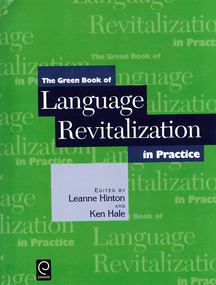 Victorian Aboriginal Corporation for Languages
Book, Leanne Hinton, The green book of Language revitalization in practice, 2008
... Australian Example /? Ken Hale The Arapaho Language /? Ken Hale 23. Reflections on the Arapaho Language Project, or When Bambi Spoke Arapaho and Other Tales of Arapaho Language Revitalization Efforts /? Stephen Greymorning Irish /? Ken Hale 24. Continuity and Vitality: Expanding Domains through Irish-Language Radio...Australian Example /? Ken Hale The Arapaho Language /? Ken Hale 23. Reflections on the Arapaho Language Project, or When Bambi Spoke Arapaho and Other Tales of Arapaho Language Revitalization Efforts /? Stephen Greymorning Irish /? Ken Hale 24. Continuity and Vitality: Expanding Domains through Irish-Language Radio ...1. Language Revitalization: An Overview /? Leanne Hinton 2. Diversity in Local Language Maintenance and Restoration: A Reason For Optimism /? Anna Ash, Jessie Little Doe Fermino and Ken Hale 3. Federal Language Policy and Indigenous Languages in the United States /? Leanne Hinton 4. "... To Help Assure the Survival and Continuing Vitality of Native American Languages" /? Robert D. Arnold 5. Language Planning /? Leanne Hinton Introduction to the Pueblo Languages /? Leanne Hinton 6. Native Language Planning: A Pilot Process in the Acoma Pueblo Community /? Christine P. Sims 7. The Key To Cultural Survival: Language Planning and Revitalization in the Pueblo de Cochiti /? Regis Pecos and Rebecca Blum-Martinez The Navajo Language: I /? Ken Hale 8. Navajo Head Start Language Study /? Paul R. Platero 9. Introduction to Revitalization of National Indigenous Languages /? Leanne Hinton Introduction to the Welsh Language /? Leanne Hinton 10. Welsh: A European Case of Language Maintenance /? Gerald Morgan Introduction to the Maori Language /? Ken Hale 11. Te Kohanga Reo: Maori Language Revitalization /? Jeanette King An Introduction to the Hawaiian Language /? Leanne Hinton 12. The Movement to Revitalize Hawaiian Language and Culture /? Sam L. No'Eau Warner 13. "Mai Loko Mai O Ka 'I'ini: Proceeding from a Dream": The 'Aha Punana Leo Connection in Hawaiian Language Revitalization /? William H. Wilson and Kauanoe Kamana 14. Teaching Methods /? Leanne Hinton The Karuk Language /? Leanne Hinton 15. Teaching Well, Learning Quickly: Communication-Based Language Instruction /? Terry Supahan and Sarah E. Supahan The Navajo Language: II /? Ken Hale 16. Tsehootsooidi Olta'gi Dine Bizaad Bihoo'aah: A Navajo Immersion Program at Fort Defiance, Arizona /? Marie Arviso and Wayne Holm 17. The Master-Apprentice Language Learning Program /? Leanne Hinton 18. Linguistic Aspects of Language Teaching and Learning in Immersion Contexts /? Ken Hale 19. New Writing Systems /? Leanne Hinton An Introduction to Paiute /? Leanne Hinton and Ken Hale 20. Language Revitalization in the San Juan Paiute Community and the Role of a Paiute Constitution /? Pamela Bunte and Robert Franklin 21. Audio-Video Documentation /? Leanne Hinton Australian Languages /? Ken Hale 22. Strict Locality in Local Language Media: An Australian Example /? Ken Hale The Arapaho Language /? Ken Hale 23. Reflections on the Arapaho Language Project, or When Bambi Spoke Arapaho and Other Tales of Arapaho Language Revitalization Efforts /? Stephen Greymorning Irish /? Ken Hale 24. Continuity and Vitality: Expanding Domains through Irish-Language Radio /? Colleen Cotter The Mono Language /? Ken Hale 25. On Using Multimedia in Language Renewal: Observations from Making the CD-ROM Taitaduhaan /? Paul V. Kroskrity and Jennifer F. Reynolds 26. Can the Web Help Save My Language? /? Laura Buszard-Welcher 27. Training People to Teach Their Language /? Leanne Hinton Inuttut and Innu-aimun /? Ken Hale 28. The Role of the University in the Training of Native Language Teachers: Labrador /? Alana Johns and Irene Mazurkewich Languages of Arizona, Southern California, and Oklahoma /? Leanne Hinton 29. Indigenous Educators as Change Agents: Case Studies of Two Language Institutes /? Teresa L. McCarty, Lucille J. Watahomigie and Akira Y. Yamamoto /? [et al.] The Navajo Language: III /? Ken Hale 30. Promoting Advanced Navajo Language Scholarship /? Clay Slate 31. Sleeping Languages: Can They Be Awakened? /? Leanne Hinton 32. The Use of Linguistic Archives in Language Revitalization: The Native California Language Restoration Workshop /? Leanne Hinton The Ohlone Languages /? Leanne Hinton 33. New Life for a Lost Language /? Linda Yamane.Maps, b&w photographs, tables, word listslanguage policy, language planning, language maintenance, language revitalization, language immersion, language literacy, media and technology, language education and training, sleeping languages, navajo, arapaho -
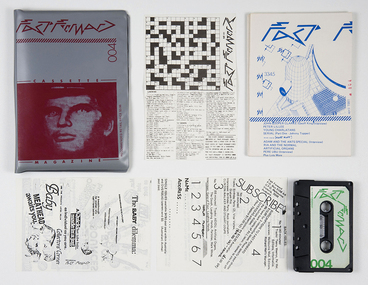 RMIT Design Archives
Mixed media - Magazines, Fast Forward, number 4, April 1981
... radio station 3RRR and Milne ran the successful independent record label Au Go Go Records. Michael Trudgeon joined them as the designer for the magazine. Each issue comprised a cassette tape interspersed with music and was packaged with printed artwork. The magazine was distributed in record shops for $3.50. Thirteen issues were produced between November 1980 and October 1982. Regular contributors included Jeff Holland, who created elaborate sound collages which were combined with elaborate illustrations in the booklet that accompanied the audio cassette. Many ground breaking Australian...radio station 3RRR and Milne ran the successful independent record label Au Go Go Records. Michael Trudgeon joined them as the designer for the magazine. Each issue comprised a cassette tape interspersed with music and was packaged with printed artwork. The magazine was distributed in record shops for $3.50. Thirteen issues were produced between November 1980 and October 1982. Regular contributors included Jeff Holland, who created elaborate sound collages which were combined with elaborate illustrations in the booklet that accompanied the audio cassette. Many ground breaking Australian ...Fast Forward was an audio-cassette based music magazine conceived and edited by Bruce Milne and Andrew Maine. Both had music programs on radio station 3RRR and Milne ran the successful independent record label Au Go Go Records. Michael Trudgeon joined them as the designer for the magazine. Each issue comprised a cassette tape interspersed with music and was packaged with printed artwork. The magazine was distributed in record shops for $3.50. Thirteen issues were produced between November 1980 and October 1982. Regular contributors included Jeff Holland, who created elaborate sound collages which were combined with elaborate illustrations in the booklet that accompanied the audio cassette. Many ground breaking Australian bands were first published on Fast Forward tapes including Hunters and Collectors. An international audience was first exposed to music from Australian bands including Laughing Clowns, the Go-Betweens, Rowland Howard’s ‘Shivers’ as performed by The Young Charlatans, The Scientists, the M Squared label, Dead Can Dance and Pel Mel’s ‘No Word from China’ recorded as a ‘demo’. Fast Forward was the world’s first audio-cassette music magazine. As the magazine’s presence and reputation grew, international acts began to submit material for publication including The Cure. Interview subjects included Nick Cave, The Cure’s, Robert Smith, Mark E Smith of The Fall, and the manager of The Clash.Cassette magazine in vinyl cover. Contents includes one magazine, one audio cassette, one crossword, one subscription pamphlet, and one pamphlet titled 'The Kmart Herald'.music, design, magazines -
 Robin Boyd Foundation
Slide, Robin Boyd, 1967
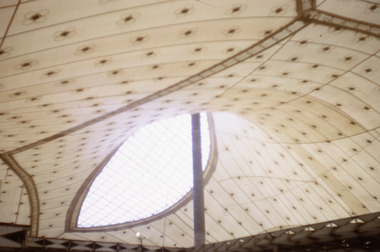
... The indoor exhibits covered aspects of Australian art and culture, architecture, industrial design and scientific innovation, such as the Snowy Mountains Hydro-Electric Power Scheme, the Parkes radio telescope, the design of Canberra, and the Australian way of life....The indoor exhibits covered aspects of Australian art and culture, architecture, industrial design and scientific innovation, such as the Snowy Mountains Hydro-Electric Power Scheme, the Parkes radio telescope, the design of Canberra, and the Australian way of life. ...Robin Boyd was appointed Exhibits Architect for the Australian Pavilion at Expo ‘67 in Montreal. The garden outside the pavilion featured a sculptural pool, a coral display, animal pool, a pit for kangaroos and Eucalypts and other native plants. The indoor exhibits covered aspects of Australian art and culture, architecture, industrial design and scientific innovation, such as the Snowy Mountains Hydro-Electric Power Scheme, the Parkes radio telescope, the design of Canberra, and the Australian way of life.Colour slide in a mount. West German Pavilion, Montreal Expo '67, Canada. (Architects: Frei Otto and Rolf Gutbrod.)Made in Australia / 3 / APR 67M4 / Encircled 28 (Handwritten)expo 67, montreal, robin boyd, slide -
 Robin Boyd Foundation
Book, Robin Boyd, The Boyer Lectures 1967: Artificial Australia, 1967
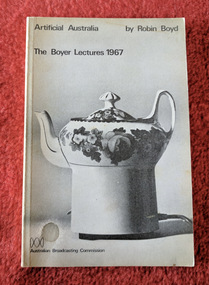
... Boyer Australia social issues scientific issues cultural issues Walsh St library Publication of Boyd's Boyer Lecture Radio series Softcover The Boyer Lectures 1967: Artificial Australia Book Robin Boyd Australian Broadcasting Commission ...SoftcoverPublication of Boyd's Boyer Lecture Radio seriesboyer, australia, social issues, scientific issues, cultural issues, walsh st library -
 Robin Boyd Foundation
Document - Script, Robin Boyd, The Flying Dogtor. Episode 38, 1963
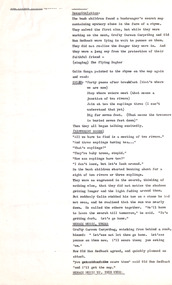
... Meanwhile, Granny Goanna worried that the children had not returned home and she radioed The Flying Dogtor. The Flying Dogtor" series was broadcast on Australian Television Network (later becoming the Seven Network) between February and April 1964 (see item D254 for schedule). ...The bush children were following a mysterious map leading to a bushranger's hidden treasure when they were attacked by Crafty Carson Carpetbag and Old Man Redback. The map fell out of Colin's pocket and was pulled into the bushes. Meanwhile, Granny Goanna worried that the children had not returned home and she radioed The Flying Dogtor.The Flying Dogtor" series was broadcast on Australian Television Network (later becoming the Seven Network) between February and April 1964 (see item D254 for schedule).Typewritten, carbon copy, foolscap, 2 pagesPage 1: top of page, episode number and title cut offthe flying dogtor, robin boyd, crawford productions, manuscript -
 Robin Boyd Foundation
Slide, Robin Boyd, 1967
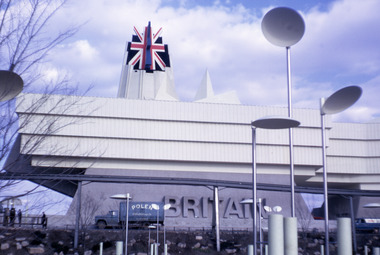
... The indoor exhibits covered aspects of Australian art and culture, architecture, industrial design and scientific innovation, such as the Snowy Mountains Hydro-Electric Power Scheme, the Parkes radio telescope, the design of Canberra, and the Australian way of life....The indoor exhibits covered aspects of Australian art and culture, architecture, industrial design and scientific innovation, such as the Snowy Mountains Hydro-Electric Power Scheme, the Parkes radio telescope, the design of Canberra, and the Australian way of life. ...Robin Boyd was appointed Exhibits Architect for the Australian Pavilion at Expo ‘67 in Montreal. The garden outside the pavilion featured a sculptural pool, a coral display, animal pool, a pit for kangaroos and Eucalypts and other native plants. The indoor exhibits covered aspects of Australian art and culture, architecture, industrial design and scientific innovation, such as the Snowy Mountains Hydro-Electric Power Scheme, the Parkes radio telescope, the design of Canberra, and the Australian way of life.Colour slide in a mount. British Pavilion, Expo '67, Montreal, Canada. (Architect: Sir Basil Spence, Bonnington & Collins)Made in Australia / 26 / MAY 67M6 / 17 (Handwritten)expo 67, montreal, robin boyd, slide -
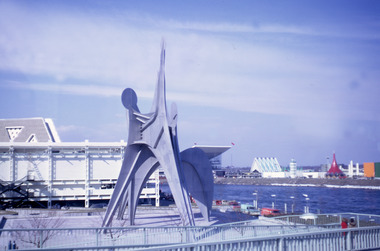 Robin Boyd Foundation
Slide, Robin Boyd, 1967
... The indoor exhibits covered aspects of Australian art and culture, architecture, industrial design and scientific innovation, such as the Snowy Mountains Hydro-Electric Power Scheme, the Parkes radio telescope, the design of Canberra, and the Australian way of life....The indoor exhibits covered aspects of Australian art and culture, architecture, industrial design and scientific innovation, such as the Snowy Mountains Hydro-Electric Power Scheme, the Parkes radio telescope, the design of Canberra, and the Australian way of life. ...Robin Boyd was appointed Exhibits Architect for the Australian Pavilion at Expo ‘67 in Montreal. The garden outside the pavilion featured a sculptural pool, a coral display, animal pool, a pit for kangaroos and Eucalypts and other native plants. The indoor exhibits covered aspects of Australian art and culture, architecture, industrial design and scientific innovation, such as the Snowy Mountains Hydro-Electric Power Scheme, the Parkes radio telescope, the design of Canberra, and the Australian way of life.Colour slide in a mount. "Three Discs (The Man)" Sculpture, Expo '67, Montreal, Canada. (Architect: Alexander Calder.)Made in Australia / 3 / MAY 67M6expo 67, montreal, robin boyd, slide -
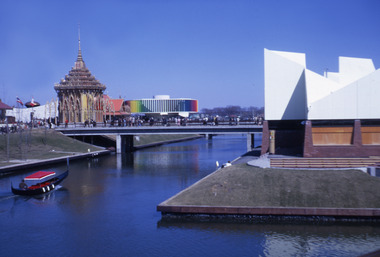 Robin Boyd Foundation
Slide, Robin Boyd, 1967
... The indoor exhibits covered aspects of Australian art and culture, architecture, industrial design and scientific innovation, such as the Snowy Mountains Hydro-Electric Power Scheme, the Parkes radio telescope, the design of Canberra, and the Australian way of life....The indoor exhibits covered aspects of Australian art and culture, architecture, industrial design and scientific innovation, such as the Snowy Mountains Hydro-Electric Power Scheme, the Parkes radio telescope, the design of Canberra, and the Australian way of life. ...Robin Boyd was appointed Exhibits Architect for the Australian Pavilion at Expo ‘67 in Montreal. The garden outside the pavilion featured a sculptural pool, a coral display, animal pool, a pit for kangaroos and Eucalypts and other native plants. The indoor exhibits covered aspects of Australian art and culture, architecture, industrial design and scientific innovation, such as the Snowy Mountains Hydro-Electric Power Scheme, the Parkes radio telescope, the design of Canberra, and the Australian way of life.Colour slide in a mount. Colour slide in a mount. Gondola, Thailand Pavilion (background left), African Place (foreground right, Architect: John Andrews), Expo '67, Montreal, Canada Made in Australia / 26 / MAY 67M6 / 19 (Handwritten)expo 67, montreal, robin boyd, slide -
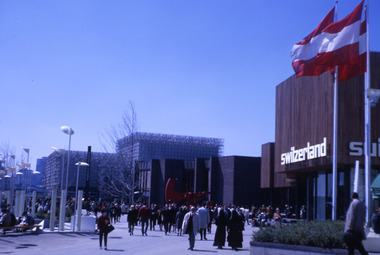 Robin Boyd Foundation
Slide, Robin Boyd, 1967
... The indoor exhibits covered aspects of Australian art and culture, architecture, industrial design and scientific innovation, such as the Snowy Mountains Hydro-Electric Power Scheme, the Parkes radio telescope, the design of Canberra, and the Australian way of life....The indoor exhibits covered aspects of Australian art and culture, architecture, industrial design and scientific innovation, such as the Snowy Mountains Hydro-Electric Power Scheme, the Parkes radio telescope, the design of Canberra, and the Australian way of life. ...Robin Boyd was appointed Exhibits Architect for the Australian Pavilion at Expo ‘67 in Montreal. The garden outside the pavilion featured a sculptural pool, a coral display, animal pool, a pit for kangaroos and Eucalypts and other native plants. The indoor exhibits covered aspects of Australian art and culture, architecture, industrial design and scientific innovation, such as the Snowy Mountains Hydro-Electric Power Scheme, the Parkes radio telescope, the design of Canberra, and the Australian way of life.Colour slide in a mount. Swiss Pavilion (Foreground), Dutch Pavilion (Background), Montreal Expo '67, Canada. (Architect: Wout Eijkelenboom.)Made in Australia / 6 / MAY 67M6 / 21 (Handwritten)expo 67, montreal, robin boyd, slide -
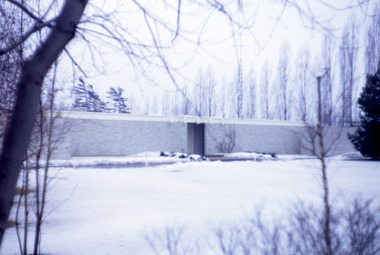 Robin Boyd Foundation
Slide, Robin Boyd, 1967
... The indoor exhibits covered aspects of Australian art and culture, architecture, industrial design and scientific innovation, such as the Snowy Mountains Hydro-Electric Power Scheme, the Parkes radio telescope, the design of Canberra, and the Australian way of life....The indoor exhibits covered aspects of Australian art and culture, architecture, industrial design and scientific innovation, such as the Snowy Mountains Hydro-Electric Power Scheme, the Parkes radio telescope, the design of Canberra, and the Australian way of life. ...Robin Boyd was appointed Exhibits Architect for the Australian Pavilion at Expo ‘67 in Montreal. The garden outside the pavilion featured a sculptural pool, a coral display, animal pool, a pit for kangaroos and Eucalypts and other native plants. The indoor exhibits covered aspects of Australian art and culture, architecture, industrial design and scientific innovation, such as the Snowy Mountains Hydro-Electric Power Scheme, the Parkes radio telescope, the design of Canberra, and the Australian way of life.Colour slide in a mount. Unknown location, possibly Montreal, CanadaMade in Australia / 14 / APR 67M4expo 67, montreal, robin boyd, slide -
 Robin Boyd Foundation
Slide, Robin Boyd, 1967
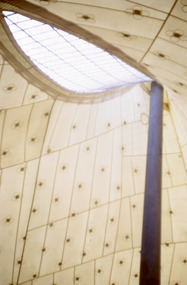
... The indoor exhibits covered aspects of Australian art and culture, architecture, industrial design and scientific innovation, such as the Snowy Mountains Hydro-Electric Power Scheme, the Parkes radio telescope, the design of Canberra, and the Australian way of life....The indoor exhibits covered aspects of Australian art and culture, architecture, industrial design and scientific innovation, such as the Snowy Mountains Hydro-Electric Power Scheme, the Parkes radio telescope, the design of Canberra, and the Australian way of life. ...Robin Boyd was appointed Exhibits Architect for the Australian Pavilion at Expo ‘67 in Montreal. The garden outside the pavilion featured a sculptural pool, a coral display, animal pool, a pit for kangaroos and Eucalypts and other native plants. The indoor exhibits covered aspects of Australian art and culture, architecture, industrial design and scientific innovation, such as the Snowy Mountains Hydro-Electric Power Scheme, the Parkes radio telescope, the design of Canberra, and the Australian way of life.Colour slide in a mount. West German Pavilion, Expo '67, Montreal, Canada. (Architects: Frei Otto and Rolf Gutbrod). Made in Australia / 2 / APR 67M4expo 67, montreal, robin boyd, slide -
 Robin Boyd Foundation
Slide, Robin Boyd, 1967
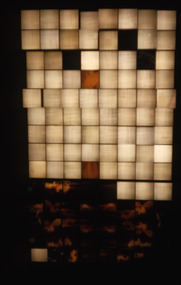
... The indoor exhibits covered aspects of Australian art and culture, architecture, industrial design and scientific innovation, such as the Snowy Mountains Hydro-Electric Power Scheme, the Parkes radio telescope, the design of Canberra, and the Australian way of life....The indoor exhibits covered aspects of Australian art and culture, architecture, industrial design and scientific innovation, such as the Snowy Mountains Hydro-Electric Power Scheme, the Parkes radio telescope, the design of Canberra, and the Australian way of life. ...Robin Boyd was appointed Exhibits Architect for the Australian Pavilion at Expo ‘67 in Montreal. The garden outside the pavilion featured a sculptural pool, a coral display, animal pool, a pit for kangaroos and Eucalypts and other native plants. The indoor exhibits covered aspects of Australian art and culture, architecture, industrial design and scientific innovation, such as the Snowy Mountains Hydro-Electric Power Scheme, the Parkes radio telescope, the design of Canberra, and the Australian way of life.Colour slide in a mount. Unknown location, Montreal Expo '67, CanadaMade in Australia / 15 / MAY 67M6 / 32 (handwritten)expo 67, montreal, robin boyd, slide -
 Robin Boyd Foundation
Slide, Robin Boyd, 1967
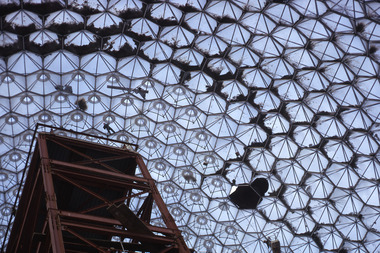
... The indoor exhibits covered aspects of Australian art and culture, architecture, industrial design and scientific innovation, such as the Snowy Mountains Hydro-Electric Power Scheme, the Parkes radio telescope, the design of Canberra, and the Australian way of life....The indoor exhibits covered aspects of Australian art and culture, architecture, industrial design and scientific innovation, such as the Snowy Mountains Hydro-Electric Power Scheme, the Parkes radio telescope, the design of Canberra, and the Australian way of life. ...Robin Boyd was appointed Exhibits Architect for the Australian Pavilion at Expo ‘67 in Montreal. The garden outside the pavilion featured a sculptural pool, a coral display, animal pool, a pit for kangaroos and Eucalypts and other native plants. The indoor exhibits covered aspects of Australian art and culture, architecture, industrial design and scientific innovation, such as the Snowy Mountains Hydro-Electric Power Scheme, the Parkes radio telescope, the design of Canberra, and the Australian way of life.Colour slide in a mount. Inside the United States of America Pavilion, Montreal Expo '67, Canada. (Architect: Buckminster Fuller.)Made in Australia / 15 / FEB 67M2expo 67, montreal, robin boyd, slide -
 Robin Boyd Foundation
Slide, Robin Boyd, 1967
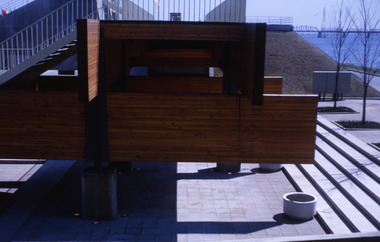
... The indoor exhibits covered aspects of Australian art and culture, architecture, industrial design and scientific innovation, such as the Snowy Mountains Hydro-Electric Power Scheme, the Parkes radio telescope, the design of Canberra, and the Australian way of life....The indoor exhibits covered aspects of Australian art and culture, architecture, industrial design and scientific innovation, such as the Snowy Mountains Hydro-Electric Power Scheme, the Parkes radio telescope, the design of Canberra, and the Australian way of life. ...Robin Boyd was appointed Exhibits Architect for the Australian Pavilion at Expo ‘67 in Montreal. The garden outside the pavilion featured a sculptural pool, a coral display, animal pool, a pit for kangaroos and Eucalypts and other native plants. The indoor exhibits covered aspects of Australian art and culture, architecture, industrial design and scientific innovation, such as the Snowy Mountains Hydro-Electric Power Scheme, the Parkes radio telescope, the design of Canberra, and the Australian way of life.Colour slide in a mount. Montreal Expo '67, CanadaMade in Australia / 10 / MAY 67M8expo 67, montreal, robin boyd, slide -
 Robin Boyd Foundation
Slide, Robin Boyd, 1967
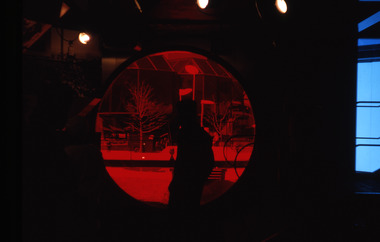
... The indoor exhibits covered aspects of Australian art and culture, architecture, industrial design and scientific innovation, such as the Snowy Mountains Hydro-Electric Power Scheme, the Parkes radio telescope, the design of Canberra, and the Australian way of life....The indoor exhibits covered aspects of Australian art and culture, architecture, industrial design and scientific innovation, such as the Snowy Mountains Hydro-Electric Power Scheme, the Parkes radio telescope, the design of Canberra, and the Australian way of life. ...Robin Boyd was appointed Exhibits Architect for the Australian Pavilion at Expo ‘67 in Montreal. The garden outside the pavilion featured a sculptural pool, a coral display, animal pool, a pit for kangaroos and Eucalypts and other native plants. The indoor exhibits covered aspects of Australian art and culture, architecture, industrial design and scientific innovation, such as the Snowy Mountains Hydro-Electric Power Scheme, the Parkes radio telescope, the design of Canberra, and the Australian way of life.Colour slide in a mount. Unknown location at Montreal Expo '67, CanadaMade in Australia / 21 / MAY 67M6expo 67, montreal, robin boyd, slide -
 Robin Boyd Foundation
Slide, Robin Boyd, 1967
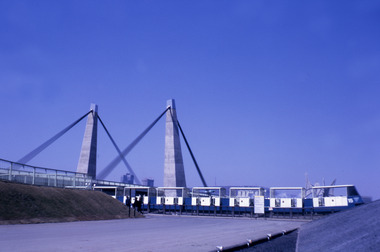
... The indoor exhibits covered aspects of Australian art and culture, architecture, industrial design and scientific innovation, such as the Snowy Mountains Hydro-Electric Power Scheme, the Parkes radio telescope, the design of Canberra, and the Australian way of life....The indoor exhibits covered aspects of Australian art and culture, architecture, industrial design and scientific innovation, such as the Snowy Mountains Hydro-Electric Power Scheme, the Parkes radio telescope, the design of Canberra, and the Australian way of life. ...Robin Boyd was appointed Exhibits Architect for the Australian Pavilion at Expo ‘67 in Montreal. The garden outside the pavilion featured a sculptural pool, a coral display, animal pool, a pit for kangaroos and Eucalypts and other native plants. The indoor exhibits covered aspects of Australian art and culture, architecture, industrial design and scientific innovation, such as the Snowy Mountains Hydro-Electric Power Scheme, the Parkes radio telescope, the design of Canberra, and the Australian way of life.Colour slide in a mount. Montreal Expo '67, CanadaMade in Australia / 9 / MAY 67M6expo 67, montreal, robin boyd, slide -
 Robin Boyd Foundation
Slide, Robin Boyd, 1967
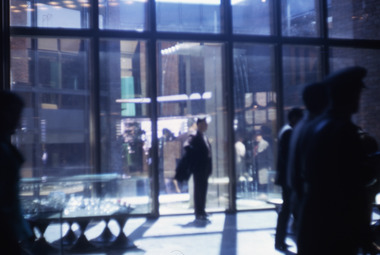
... The indoor exhibits covered aspects of Australian art and culture, architecture, industrial design and scientific innovation, such as the Snowy Mountains Hydro-Electric Power Scheme, the Parkes radio telescope, the design of Canberra, and the Australian way of life....The indoor exhibits covered aspects of Australian art and culture, architecture, industrial design and scientific innovation, such as the Snowy Mountains Hydro-Electric Power Scheme, the Parkes radio telescope, the design of Canberra, and the Australian way of life. ...Robin Boyd was appointed Exhibits Architect for the Australian Pavilion at Expo ‘67 in Montreal. The garden outside the pavilion featured a sculptural pool, a coral display, animal pool, a pit for kangaroos and Eucalypts and other native plants. The indoor exhibits covered aspects of Australian art and culture, architecture, industrial design and scientific innovation, such as the Snowy Mountains Hydro-Electric Power Scheme, the Parkes radio telescope, the design of Canberra, and the Australian way of life.Colour slide in a mount. Unknown location at Montreal Expo '67, CanadaMade in Australia / 5 / MAY 67M6expo 67, montreal, robin boyd, slide -
 Robin Boyd Foundation
Slide, Robin Boyd, 1967
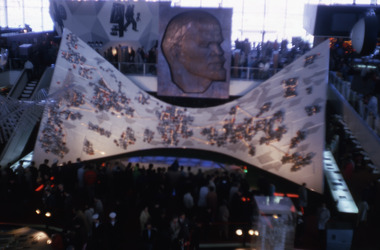
... The indoor exhibits covered aspects of Australian art and culture, architecture, industrial design and scientific innovation, such as the Snowy Mountains Hydro-Electric Power Scheme, the Parkes radio telescope, the design of Canberra, and the Australian way of life....The indoor exhibits covered aspects of Australian art and culture, architecture, industrial design and scientific innovation, such as the Snowy Mountains Hydro-Electric Power Scheme, the Parkes radio telescope, the design of Canberra, and the Australian way of life. ...Robin Boyd was appointed Exhibits Architect for the Australian Pavilion at Expo ‘67 in Montreal. The garden outside the pavilion featured a sculptural pool, a coral display, animal pool, a pit for kangaroos and Eucalypts and other native plants. The indoor exhibits covered aspects of Australian art and culture, architecture, industrial design and scientific innovation, such as the Snowy Mountains Hydro-Electric Power Scheme, the Parkes radio telescope, the design of Canberra, and the Australian way of life.Colour slide in a mount. Interior of Soviet Union Pavilion, Expo '67, Montreal, Canada (Architect: Mikhail Posokhin)Made in Australia / 33 / MAY 67M6expo 67, montreal, robin boyd, slide, russian pavilion -
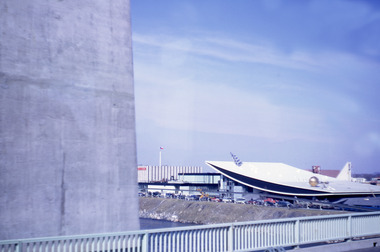 Robin Boyd Foundation
Slide, Robin Boyd, 1967
... The indoor exhibits covered aspects of Australian art and culture, architecture, industrial design and scientific innovation, such as the Snowy Mountains Hydro-Electric Power Scheme, the Parkes radio telescope, the design of Canberra, and the Australian way of life....The indoor exhibits covered aspects of Australian art and culture, architecture, industrial design and scientific innovation, such as the Snowy Mountains Hydro-Electric Power Scheme, the Parkes radio telescope, the design of Canberra, and the Australian way of life. ...Robin Boyd was appointed Exhibits Architect for the Australian Pavilion at Expo ‘67 in Montreal. The garden outside the pavilion featured a sculptural pool, a coral display, animal pool, a pit for kangaroos and Eucalypts and other native plants. The indoor exhibits covered aspects of Australian art and culture, architecture, industrial design and scientific innovation, such as the Snowy Mountains Hydro-Electric Power Scheme, the Parkes radio telescope, the design of Canberra, and the Australian way of life.Colour slide in a mount. Italian Pavilion, Montreal Expo '67, CanadaMade in Australia / 2 / MAY 67M6expo 67, montreal, robin boyd, slide -
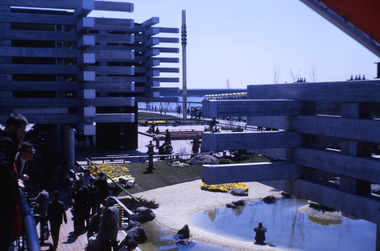 Robin Boyd Foundation
Slide, Robin Boyd, 1967
... The indoor exhibits covered aspects of Australian art and culture, architecture, industrial design and scientific innovation, such as the Snowy Mountains Hydro-Electric Power Scheme, the Parkes radio telescope, the design of Canberra, and the Australian way of life....The indoor exhibits covered aspects of Australian art and culture, architecture, industrial design and scientific innovation, such as the Snowy Mountains Hydro-Electric Power Scheme, the Parkes radio telescope, the design of Canberra, and the Australian way of life. ...Robin Boyd was appointed Exhibits Architect for the Australian Pavilion at Expo ‘67 in Montreal. The garden outside the pavilion featured a sculptural pool, a coral display, animal pool, a pit for kangaroos and Eucalypts and other native plants. The indoor exhibits covered aspects of Australian art and culture, architecture, industrial design and scientific innovation, such as the Snowy Mountains Hydro-Electric Power Scheme, the Parkes radio telescope, the design of Canberra, and the Australian way of life.Colour slide in a mount. Japanese Pavilion, Expo '67, Canada, Montreal (Architect: Yoshinobo Ashihara.) See also item S0109.Made in Australia / 4 / MAY 67M6 / 37 Handwrittenexpo 67, montreal, robin boyd, slide -
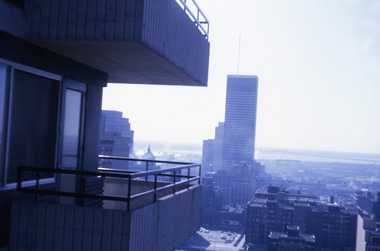 Robin Boyd Foundation
Slide, Robin Boyd, 1967
... The indoor exhibits covered aspects of Australian art and culture, architecture, industrial design and scientific innovation, such as the Snowy Mountains Hydro-Electric Power Scheme, the Parkes radio telescope, the design of Canberra, and the Australian way of life....The indoor exhibits covered aspects of Australian art and culture, architecture, industrial design and scientific innovation, such as the Snowy Mountains Hydro-Electric Power Scheme, the Parkes radio telescope, the design of Canberra, and the Australian way of life. ...Robin Boyd was appointed Exhibits Architect for the Australian Pavilion at Expo ‘67 in Montreal. The garden outside the pavilion featured a sculptural pool, a coral display, animal pool, a pit for kangaroos and Eucalypts and other native plants. The indoor exhibits covered aspects of Australian art and culture, architecture, industrial design and scientific innovation, such as the Snowy Mountains Hydro-Electric Power Scheme, the Parkes radio telescope, the design of Canberra, and the Australian way of life.Colour slide in a mount. CIBC Tower (1962), Montreal, Canada. (The image was taken from the Stanley Tower Apartments.). (Architect: Peter Dickinson.)Made in Australia / 28 / MAY 67M6 / Encircled 23 (Handwritten)expo 67, montreal, robin boyd, slide -
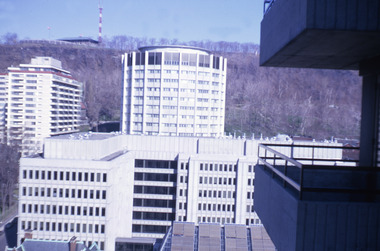 Robin Boyd Foundation
Slide, Robin Boyd, 1967
... The indoor exhibits covered aspects of Australian art and culture, architecture, industrial design and scientific innovation, such as the Snowy Mountains Hydro-Electric Power Scheme, the Parkes radio telescope, the design of Canberra, and the Australian way of life....The indoor exhibits covered aspects of Australian art and culture, architecture, industrial design and scientific innovation, such as the Snowy Mountains Hydro-Electric Power Scheme, the Parkes radio telescope, the design of Canberra, and the Australian way of life. ...Robin Boyd was appointed Exhibits Architect for the Australian Pavilion at Expo ‘67 in Montreal. The garden outside the pavilion featured a sculptural pool, a coral display, animal pool, a pit for kangaroos and Eucalypts and other native plants. The indoor exhibits covered aspects of Australian art and culture, architecture, industrial design and scientific innovation, such as the Snowy Mountains Hydro-Electric Power Scheme, the Parkes radio telescope, the design of Canberra, and the Australian way of life.Colour slide in a mount. McIntyre Medical Building, McGill University, Montreal, Canada. (The image was taken from the Stanley Tower Apartments.). (Architect: Janet MacTavish.)Made in Australia / 27 / MAY 67M6expo 67, montreal, robin boyd, slide -
 Robin Boyd Foundation
Slide, Robin Boyd, 1967
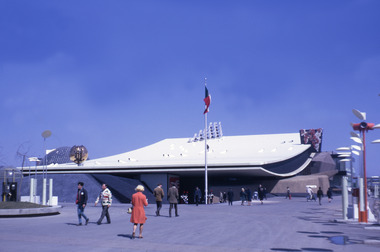
... The indoor exhibits covered aspects of Australian art and culture, architecture, industrial design and scientific innovation, such as the Snowy Mountains Hydro-Electric Power Scheme, the Parkes radio telescope, the design of Canberra, and the Australian way of life....The indoor exhibits covered aspects of Australian art and culture, architecture, industrial design and scientific innovation, such as the Snowy Mountains Hydro-Electric Power Scheme, the Parkes radio telescope, the design of Canberra, and the Australian way of life. ...Robin Boyd was appointed Exhibits Architect for the Australian Pavilion at Expo ‘67 in Montreal. The garden outside the pavilion featured a sculptural pool, a coral display, animal pool, a pit for kangaroos and Eucalypts and other native plants. The indoor exhibits covered aspects of Australian art and culture, architecture, industrial design and scientific innovation, such as the Snowy Mountains Hydro-Electric Power Scheme, the Parkes radio telescope, the design of Canberra, and the Australian way of life.Colour slide in a mount. Italian Pavilion, Expo '67, Montreal, Canada. (Architect: J Faugeron)Made in Australia / 8 / MAY 67M6 / 34 (Handwritten)expo 67, montreal, robin boyd, slide -
 Robin Boyd Foundation
Slide, Robin Boyd, 1967
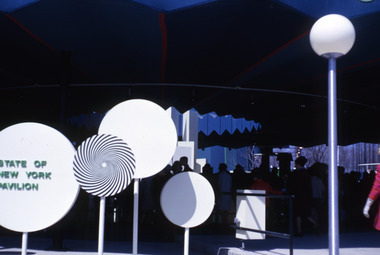
... The indoor exhibits covered aspects of Australian art and culture, architecture, industrial design and scientific innovation, such as the Snowy Mountains Hydro-Electric Power Scheme, the Parkes radio telescope, the design of Canberra, and the Australian way of life....The indoor exhibits covered aspects of Australian art and culture, architecture, industrial design and scientific innovation, such as the Snowy Mountains Hydro-Electric Power Scheme, the Parkes radio telescope, the design of Canberra, and the Australian way of life. ...Robin Boyd was appointed Exhibits Architect for the Australian Pavilion at Expo ‘67 in Montreal. The garden outside the pavilion featured a sculptural pool, a coral display, animal pool, a pit for kangaroos and Eucalypts and other native plants. The indoor exhibits covered aspects of Australian art and culture, architecture, industrial design and scientific innovation, such as the Snowy Mountains Hydro-Electric Power Scheme, the Parkes radio telescope, the design of Canberra, and the Australian way of life.Colour slide in a mount. State of New York Pavilion, Montreal Expo '67, CanadaMade in Australia / 1 / MAY 67M6 / 38 (Handwritten)expo 67, montreal, robin boyd, slide
