
Showing 2642 items matching "work book"
-
 Ringwood and District Historical Society
Negative, Photographic negatives from Archie and Ruby Harker Collection April 1958
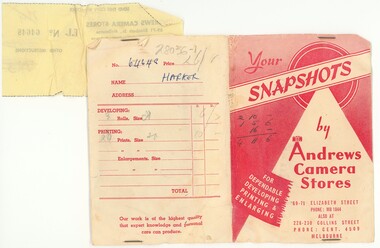
... book. From Greg Coker: In August 2023, RDHS asked Greg Coker to scan a set of negatives. He was able to work out, through various notes, that the pictures were taken by J A Harker of 9 Grange St, Mont Albert in the mid 50s to the mid 60s. ...book. From Greg Coker: In August 2023, RDHS asked Greg Coker to scan a set of negatives. He was able to work out, through various notes, that the pictures were taken by J A Harker of 9 Grange St, Mont Albert in the mid 50s to the mid 60s. ...Archir Harker was married to Ruby Wilson and mentioned in the "Wielands of Heathmont "book. From Greg Coker: In August 2023, RDHS asked Greg Coker to scan a set of negatives. He was able to work out, through various notes, that the pictures were taken by J A Harker of 9 Grange St, Mont Albert in the mid 50s to the mid 60s. Most of the film was 9cm X 6cm B&W negatives. All pictures have been cropped and where appropriate, put through a light filter. They have been scanned at 1600ppi resulting in ~3meg B&W shots (~5meg for the half dozen colour shots). The Harkers certainly liked their hiking – they were ahead of their time. Images scanned from packet of negatives with name of Harker, and receipt dated April 1958. From Andrews Camera Store. (1 copy of each negative ordered) After scanning in 2023 by Greg Coker, the negatives were disposed and just the packet retained. Some photos may be duplciated in other VC Harker/Weiland family records if the original prints were donated. Greg's comments: 1958 – Original Negatives. Marysville Holiday. April 58 was when these were developed, as there was a note on the packet. There is a picture at the top of Woods Point that identifies Marysville.Your Snapshots, by Andrews Camera Stores, 69-71 Elizabeth St, Melbourne. For Dependable Developing Printing and Enlarging. -
 Ringwood and District Historical Society
Negative, Photographic negatives from Archie and Ruby Harker Collection - Early 1960's
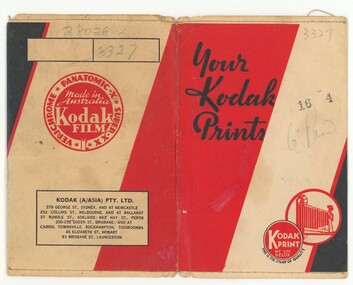
... book. From Greg Coker: In August 2023, RDHS asked Greg Coker to scan a set of negatives. He was able to work out, through various notes, that the pictures were taken by J A Harker of 9 Grange St, Mont Albert in the mid 50s to the mid 60s. ...book. From Greg Coker: In August 2023, RDHS asked Greg Coker to scan a set of negatives. He was able to work out, through various notes, that the pictures were taken by J A Harker of 9 Grange St, Mont Albert in the mid 50s to the mid 60s. ...Archir Harker was married to Ruby Wilson and mentioned in the "Wielands of Heathmont "book. From Greg Coker: In August 2023, RDHS asked Greg Coker to scan a set of negatives. He was able to work out, through various notes, that the pictures were taken by J A Harker of 9 Grange St, Mont Albert in the mid 50s to the mid 60s. Most of the film was 9cm X 6cm B&W negatives. All pictures have been cropped and where appropriate, put through a light filter. They have been scanned at 1600ppi resulting in ~3meg B&W shots (~5meg for the half dozen colour shots). The Harkers certainly liked their hiking – they were ahead of their time. Images scanned from Kodak Print packet of negatives, undated. After scanning in 2023 by Greg Coker, the negatives were disposed and just the packet retained. Some photos may be duplicated in other VC Harker/Weiland family records if the original prints were donated. Greg's comments: Early 60s – Original Negatives. Best guess in terms of the date – Mrs Harker looks a touch older. Pictures of Mrs Harker at home with their cat and some mountain ranges, perhaps the other side of the Dandenong’s. Your Kodak Prints -
 Ringwood and District Historical Society
Negative, Photographic negatives from Archie and Ruby Harker Collection - Early 1960's Seaside holiday and mountain views
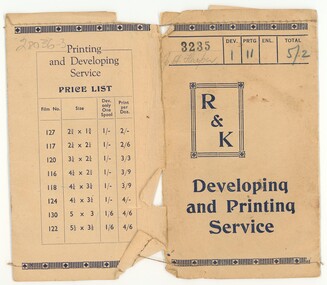
... book. From Greg Coker: In August 2023, RDHS asked Greg Coker to scan a set of negatives. He was able to work out, through various notes, that the pictures were taken by J A Harker of 9 Grange St, Mont Albert in the mid 50s to the mid 60s. ...book. From Greg Coker: In August 2023, RDHS asked Greg Coker to scan a set of negatives. He was able to work out, through various notes, that the pictures were taken by J A Harker of 9 Grange St, Mont Albert in the mid 50s to the mid 60s. ...Archir Harker was married to Ruby Wilson and mentioned in the "Wielands of Heathmont "book. From Greg Coker: In August 2023, RDHS asked Greg Coker to scan a set of negatives. He was able to work out, through various notes, that the pictures were taken by J A Harker of 9 Grange St, Mont Albert in the mid 50s to the mid 60s. Most of the film was 9cm X 6cm B&W negatives. All pictures have been cropped and where appropriate, put through a light filter. They have been scanned at 1600ppi resulting in ~3meg B&W shots (~5meg for the half dozen colour shots). The Harkers certainly liked their hiking – they were ahead of their time. Images scanned from R&K Developing and Printing Services packet of negatives, undated. After scanning in 2023 by Greg Coker, the negatives were disposed and just the packet retained. Some photos may be duplicated in other VC Harker/Weiland family records if the original prints were donated. Greg's comments: Early 60s – Original Negatives. Sea side holiday and valley views The date is best guess. Mrs Harker looks around the same age as the 1958 set. There is a prominent lighthouse in shot – that may help identify where the holiday was. I suspect the valley may be near it. Reverse of packet includes Printing and Developing Price List -
 Ringwood and District Historical Society
Negative, Photographic negatives from Archie and Ruby Harker Collection - Mid 1950's Mountains - possibly Grampians
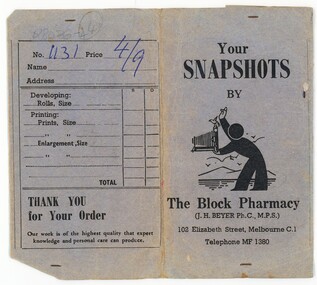
... book. From Greg Coker: In August 2023, RDHS asked Greg Coker to scan a set of negatives. He was able to work out, through various notes, that the pictures were taken by J A Harker of 9 Grange St, Mont Albert in the mid 50s to the mid 60s. ...book. From Greg Coker: In August 2023, RDHS asked Greg Coker to scan a set of negatives. He was able to work out, through various notes, that the pictures were taken by J A Harker of 9 Grange St, Mont Albert in the mid 50s to the mid 60s. ...Archir Harker was married to Ruby Wilson and mentioned in the "Wielands of Heathmont "book. From Greg Coker: In August 2023, RDHS asked Greg Coker to scan a set of negatives. He was able to work out, through various notes, that the pictures were taken by J A Harker of 9 Grange St, Mont Albert in the mid 50s to the mid 60s. Most of the film was 9cm X 6cm B&W negatives. All pictures have been cropped and where appropriate, put through a light filter. They have been scanned at 1600ppi resulting in ~3meg B&W shots (~5meg for the half dozen colour shots). The Harkers certainly liked their hiking – they were ahead of their time. Images scanned from The Block Pharmacy packet of negatives, undated. After scanning in 2023 by Greg Coker, the negatives were disposed and just the packet retained. Some photos may be duplicated in other VC Harker/Weiland family records if the original prints were donated. Greg's comments: Mid 50s – Original B&W negatives; Seems to be a set of holiday snaps in mountain country – the Grampians I think. Your Snapshots by The Block Pharmacy (J.H. Beyer Ph.C, M.P.S.), 102 Elizabeth Street, Melbourne C1. Telephone MF 1380 -
 Ringwood and District Historical Society
Negative, Photographic negatives from Archie and Ruby Harker Collection - Early 1950's to Mid 1960's, B&W and Colour
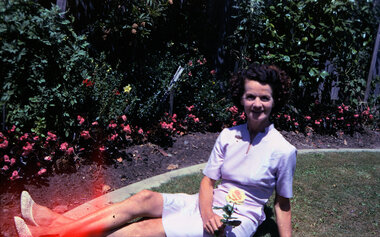
... book. From Greg Coker: In August 2023, RDHS asked Greg Coker to scan a set of negatives. He was able to work out, through various notes, that the pictures were taken by J A Harker of 9 Grange St, Mont Albert in the mid 50s to the mid 60s. ...book. From Greg Coker: In August 2023, RDHS asked Greg Coker to scan a set of negatives. He was able to work out, through various notes, that the pictures were taken by J A Harker of 9 Grange St, Mont Albert in the mid 50s to the mid 60s. ...Archir Harker was married to Ruby Wilson and mentioned in the "Wielands of Heathmont "book. From Greg Coker: In August 2023, RDHS asked Greg Coker to scan a set of negatives. He was able to work out, through various notes, that the pictures were taken by J A Harker of 9 Grange St, Mont Albert in the mid 50s to the mid 60s. Most of the film was 9cm X 6cm B&W negatives. All pictures have been cropped and where appropriate, put through a light filter. They have been scanned at 1600ppi resulting in ~3meg B&W shots (~5meg for the half dozen colour shots). The Harkers certainly liked their hiking – they were ahead of their time. Images scanned from Kodakl packet of negatives, undated. After scanning in 2023 by Greg Coker, the negatives and packet were. Some photos may be duplicated in other VC Harker/Weiland family records if the original prints were donated. Greg's comments: Early 50s to Mid 60s – Original colour & B&W negatives Largest packet of negatives with multiple sets clearly combined in this one envelop These were made up of: - 8 colour 9X6cm negatives – late 60s - ~40 B&W 9X6cm negatives – Early - late 50s - 3 large B&W 12x9cm negatives – Mid 50s Most of the pictures in this set are portraits pictures of Mr or Mrs Harker. Many in the front and back yards of 9 Grange street, Mont Albert. A few negatives of Phillip Island here also (Identified the Nobbies). Kodacolor Prints. -
 Ringwood and District Historical Society
Photograph, Bob Oke, Ringwood Scouts, at work at Victorian Railways
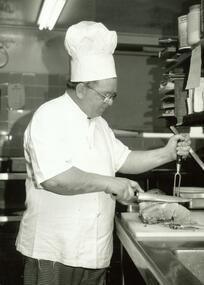
... book. Wife of Bob (Robert William) Oke. Both Ida and Bob were heavily involved in the Scout movement, as were Bob's parents - Corrie and Ruby (Guides) Oke, who both lived in Old Lilydale Road, East Ringwood. Bob Oke, Ringwood Scouts, at work ...Scanned on 30th January, 2008 from Ida Oke's albums. Ida lives in East Ringwood and also contributed to the East Ringwood Recollections book. Wife of Bob (Robert William) Oke. Both Ida and Bob were heavily involved in the Scout movement, as were Bob's parents - Corrie and Ruby (Guides) Oke, who both lived in Old Lilydale Road, East Ringwood. -
 Orbost & District Historical Society
book, The Ways of Many Waters, 1899
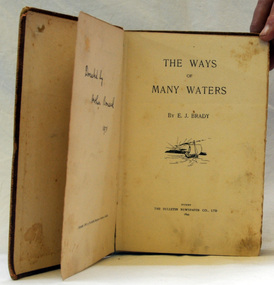
... book of poetry by E. J. Brady was originally published by the Bulletin Newspaper Company (Sydney) in 1899,Later it was reprinted by Thomas C. Lothian (Melbourne) in 1909, and by the Standard Publishing Company (Melbourne) in 1913.] E. J. Brady was an Australian poet. He was born at Carcoar, New South Wales, and was educated both in the United States and Sydney. He worked...book of poetry by E. J. Brady was originally published by the Bulletin Newspaper Company (Sydney) in 1899,Later it was reprinted by Thomas C. Lothian (Melbourne) in 1909, and by the Standard Publishing Company (Melbourne) in 1913.] E. J. Brady was an Australian poet. He was born at Carcoar, New South Wales, and was educated both in the United States and Sydney. He worked ...This book of poetry by E. J. Brady was originally published by the Bulletin Newspaper Company (Sydney) in 1899,Later it was reprinted by Thomas C. Lothian (Melbourne) in 1909, and by the Standard Publishing Company (Melbourne) in 1913.] E. J. Brady was an Australian poet. He was born at Carcoar, New South Wales, and was educated both in the United States and Sydney. He worked as a wharf clerk, a farmer, and journalist, and edited both rural and city newspapers This book is culturally important as Edwin James Brady represented the Bulletin school of the 1890s. The Bulletin was very popular with rural bush workers and selectors and became known as ‘the bushman’s bible’. It encouraged contributions of poetry, short stories and cartoons from its readerswho included miners, shearers and timber-workers from all over Australia. Some of this content was high quality and many of Australia’s important writers had their start with The Bulletin which became know as the ‘Bulletin School’ of literature.A small 155 pp fabric covered brown book with a very faded picture of a boat sailing toward a sunset on the front cover.poetry literature brady-edwin-james the-ways-of-the-waters -
 Orbost & District Historical Society
book, Butler & Tanner, The Land of the Sun, 1924
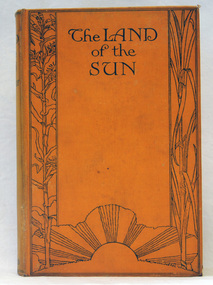
... worked as a wharf clerk, a farmer, and journalist, and edited both rural and city newspapers. Brady established a writers' and artists' colony at Mallacoota, in 1909, and he continued to live there until his death in 1952. E. J. Brady was a leading figure of Australian literature. He has an association with Mallacoota, a small town in the East Gippsland region of Victoria, Australia. Brady-Edwin-James book ...This is the author's account of life in Northern Queensland. Edwin James Brady was an Australian poet. He was born at Carcoar, New South Wales, and was educated both in the United States and Sydney. He worked as a wharf clerk, a farmer, and journalist, and edited both rural and city newspapers. Brady established a writers' and artists' colony at Mallacoota, in 1909, and he continued to live there until his death in 1952. E. J. Brady was a leading figure of Australian literature. He has an association with Mallacoota, a small town in the East Gippsland region of Victoria, Australia. A 303 pp book with a hard back cloth covered bright orange cover. It is titled in black print " The Land of the Sun" and has black print illustrations of crops and the sun. It contains black/white plates and a fold-out map of Queensland.brady-edwin-james book--the-land-of-the-sun queensland-northern -
 Orbost & District Historical Society
book, Gippsland For Tourists, 1938
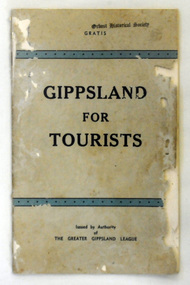
... In the Gippsland Times newspaper on June 1 1936 there is a report of a meeting of the Greater Gippsland League at which the production of this book was mentioned as"a method of marking the Gippsland Centenary. TOURIST BOOK-LET. The work of -Messrs A. Gilchrist and A. ...In the Gippsland Times newspaper on June 1 1936 there is a report of a meeting of the Greater Gippsland League at which the production of this book was mentioned as"a method of marking the Gippsland Centenary. TOURIST BOOK-LET. The work of -Messrs A. Gilchrist and A. ...This is the 2nd edition. In the Gippsland Times newspaper on June 1 1936 there is a report of a meeting of the Greater Gippsland League at which the production of this book was mentioned as"a method of marking the Gippsland Centenary. TOURIST BOOK-LET. The work of -Messrs A. Gilchrist and A. B. Cooper in connection with the preparation of a tourist booklet was warmly commended and a minute of appreciation placed on record." This group seems to have been a group of Gippsland citizens interested in the progress of Gippsland and any government action in the area. This meeting was held at Maffra. This tourist guide is a contemporary record of tourism promotion in Gippsland.A thin 48 pp booklet with a grey cover. The title, "GIPPSLAND FOR TOURISTS" is inside two blue, black bordered, bands. The print is navy. ath efoot of the page is "Issued by Authority of the Greater Gippsland League". At the top is "Gratis". at top of front cover - "Orbost Historical Society" stampedgippsland-tourism greater-gippsland-league -
 Orbost & District Historical Society
school book, 1943
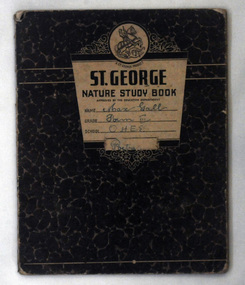
... this book was used by Max Gall when a student at Orbost Higher Elementary School. he was in Form 111 and the book was his poetry book. This item is representative of students' work in the 1940's and is useful for comparison in the development of education in Victoria. education-orbost exercise-book-poetry gall-max on front : " Max Gall Form 111 O.H.S.Poetry" An exercise with a mottled brown cover - a St George exercise book - with a knight on a horse at the top. ...this book was used by Max Gall when a student at Orbost Higher Elementary School. he was in Form 111 and the book was his poetry book.This item is representative of students' work in the 1940's and is useful for comparison in the development of education in Victoria.An exercise with a mottled brown cover - a St George exercise book - with a knight on a horse at the top. It has hand - written details ," Max Gall Form 111 O.H.S.Poetry"on front : " Max Gall Form 111 O.H.S.Poetry"education-orbost exercise-book-poetry gall-max -
 Orbost & District Historical Society
book, C 1930's
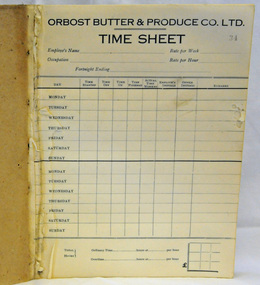
... book. Some of the front pages have been torn off.The back page, p 100, has been filled in. Each page is printed with "ORBOST BUTTER & PRODUCE CO LTD." at the top with details of the employee, pay rates and hours worked to be hand-written....book. Some of the front pages have been torn off.The back page, p 100, has been filled in. Each page is printed with "ORBOST BUTTER & PRODUCE CO LTD." at the top with details of the employee, pay rates and hours worked to be hand-written. book Orbost Butter & Produce Company ...The Orbost Butter and Produce Co Ltd was registered on June 1st 1893. The site of the factory was purchased at a cost of five pounds from Mr James Cameron. (See In Times Gone By - Deborah Hall) The Orbost Butter and Produce Co. Ltd was registered on June 1st 1893 and was an important source of income to the Orbost district.A time sheet book. Some of the front pages have been torn off.The back page, p 100, has been filled in. Each page is printed with "ORBOST BUTTER & PRODUCE CO LTD." at the top with details of the employee, pay rates and hours worked to be hand-written.orbost-butter--produce-company -
 Orbost & District Historical Society
school text book, Thomas Nelson & Sons, Royal Readers No V1, 1895
... (info. from http://education.qld.gov.au) This book as an example of school work in the early 20th century. ...The Royal Readers had been prepared especially for Victorian schools and featured some Australian content. The authors made great use of the natural world as well as incidents and common daily events to attract children to the stories. Teachers were encouraged to teach children not only the 'art of reading' but also a 'love of reading'. Illustrations were used effectively to attract children 'through the eye' to the stories and to help them understand same. They were used extensively in Victorian schools as well as in other states. However, during the 1890s and especially the early 1900s, governments came under increasing pressure to change the reading books again because these books did not reflect the rapid scientific advances in the 1890s. Royal Readers date quickly when a new syllabus was introduced in 1905. Education materials were to be relevant to children's daily lives with a demand for greater local content. (info. from http://education.qld.gov.au)This book as an example of school work in the early 20th century. It reflects the the way reading was taught, to young children in Victoria. It reflects the changes in education in East Gippsland and is a useful comparison tool for literacy teaching. A small book with a blue fabric cover. It is titled Royal Readers No V1 and is a part of a series of Royal Readers.inside cover - E.A. Stephenson, Longford.education-texts schools-reading royal-readers -
 Orbost & District Historical Society
accounts ledger, 1908
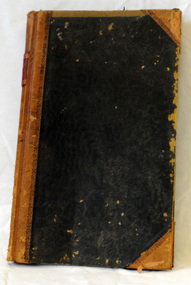
... work they would receive a payment. When they died funeral benefits would be paid and the widow and children would be cared for. It was a form of local insurance for hard times. This was a time of 'look after yourself' as the Colonial Governments did not provide pensions or benefits. When Dr James Kerr came to be Orbost's first residential doctor, he was sponsored by M.U.I.O.O.F. This item reflects those times. on spine on red felt/suede in gold lettering - NIGHT BOOK ...Friendly Societies were founded in the Australian Colonies in the mid-19th Century by immigrants from England who had been members in Societies which dated back to the 18th Century. Like all working people these immigrants experienced sickness, accidents, unemployment, death and burial. They needed help of like fellows to tide their families over these times. So they formed a branch of one of the Friendly Societies back in the mother country. The idea was to make fixed contributions to a fund and when they were off work they would receive a payment. When they died funeral benefits would be paid and the widow and children would be cared for. It was a form of local insurance for hard times. This was a time of 'look after yourself' as the Colonial Governments did not provide pensions or benefits. When Dr James Kerr came to be Orbost's first residential doctor, he was sponsored by M.U.I.O.O.F. This item reflects those times. A ledger/cash book with a blue and tan fabric cover. on spine on red felt/suede in gold lettering - NIGHT BOOK -
 Orbost & District Historical Society
book, 1928-1933
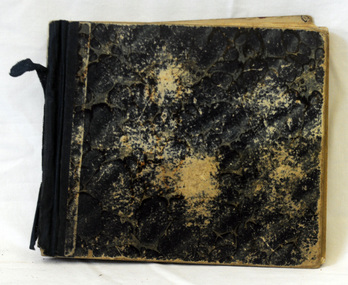
... work they would receive a payment. When they died funeral benefits would be paid and the widow and children would be cared for. It was a form of local insurance for hard times. This was a time of 'look after yourself' as the Colonial Governments did not provide pensions or benefits. This item reflects those times. M.U.I.O.O.F. friendly-society A small hard cover blue book ...Manchester Unity Independent Order of Oddfellows (MUIOOF) had its origins in Manchester, England. It was established in Melbourne on 7 December 1840 when Augustus Greeves, a member of the MUIOOF in England, migrated to Australia and formed the first friendly society. In 1840 Manchester Unity IOOF was founded in Victoria.Friendly Societies were founded in the Australian Colonies in the mid-19th Century by immigrants from England who had been members in Societies which dated back to the 18th Century. Like all working people these immigrants experienced sickness, accidents, unemployment, death and burial. They needed help of like fellows to tide their families over these times. So they formed a branch of one of the Friendly Societies back in the mother country. The idea was to make fixed contributions to a fund and when they were off work they would receive a payment. When they died funeral benefits would be paid and the widow and children would be cared for. It was a form of local insurance for hard times. This was a time of 'look after yourself' as the Colonial Governments did not provide pensions or benefits. This item reflects those times. A small hard cover blue book holding certificates of M.O.O.O.F. members.m.u.i.o.o.f. friendly-society -
 Orbost & District Historical Society
book, 1939
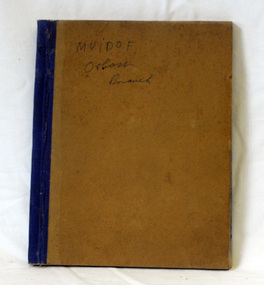
... work they would receive a payment. When they died funeral benefits would be paid and the widow and children would be cared for. It was a form of local insurance for hard times. This book ...Friendly Societies were founded in the Australian Colonies in the mid-19th Century by immigrants from England who had been members in Societies which dated back to the 18th Century. Like all working people these immigrants experienced sickness, accidents, unemployment, death and burial. They needed help of like fellows to tide their families over these times. So they formed a branch of one of the Friendly Societies back in the mother country. The idea was to make fixed contributions to a fund and when they were off work they would receive a payment. When they died funeral benefits would be paid and the widow and children would be cared for. It was a form of local insurance for hard times. This book was used in a time of 'look after yourself' as the Colonial Governments did not provide pensions or benefits. This item reflects those times.A brown book with ablue spine. It contains pink paper copies of correspondence from M.U.I.O.O.F. (Manchester Unity Independent Order of Oddfellows)on front cover - handwritten in pen "M.U.I.O.O.F Orbost Branch"m.u.i.o.o.f. friendly-society manchester-unity -
 Orbost & District Historical Society
book, Rules of the Manchester Unity, 1909
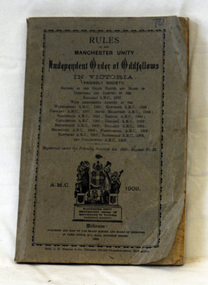
... work they would receive a payment. When they died funeral benefits would be paid and the widow and children would be cared for. It was a form of local insurance for hard times. This book ...This item probably belonged to Albert Coulson a farmer of Brodribb. Friendly Societies were founded in the Australian Colonies in the mid-19th Century by immigrants from England who had been members in Societies which dated back to the 18th Century. Like all working people these immigrants experienced sickness, accidents, unemployment, death and burial. They needed help of like fellows to tide their families over these times. So they formed a branch of one of the Friendly Societies back in the mother country. The idea was to make fixed contributions to a fund and when they were off work they would receive a payment. When they died funeral benefits would be paid and the widow and children would be cared for. It was a form of local insurance for hard times. This book was used in a time of 'look after yourself' as the Colonial Governments did not provide pensions or benefits. This item reflects those times.A small grey book with the Manchester Unity Independent Order of Oddfellows. At the bottom of the cover in black print is the society's Coat of Arms showing a woman holding a child with two children beside her. On the right is a woman holding an anchor with her arm around a woman holding a cross. There is an images of a group of people holding a scroll beside a reclining lion."Brother A.H.J. Coulto was initiated a member of the Loyal Orbost Lodge 8 Sept 1909" -
 Orbost & District Historical Society
book, 1924
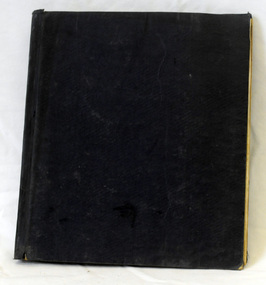
... work they would receive a payment. When they died funeral benefits would be paid and the widow and children would be cared for. It was a form of local insurance for hard times. This item was used in a time of 'look after yourself' as the Colonial Governments did not provide pensions or benefits. This item reflects those times. M.U.I.O.O.F. friendly-society accounts-book ...Friendly Societies were founded in the Australian Colonies in the mid-19th Century by immigrants from England who had been members in Societies which dated back to the 18th Century. Like all working people these immigrants experienced sickness, accidents, unemployment, death and burial. They needed help of like fellows to tide their families over these times. So they formed a branch of one of the Friendly Societies back in the mother country. The idea was to make fixed contributions to a fund and when they were off work they would receive a payment. When they died funeral benefits would be paid and the widow and children would be cared for. It was a form of local insurance for hard times. This item was used in a time of 'look after yourself' as the Colonial Governments did not provide pensions or benefits. This item reflects those times.An account book for M.U.I.O.O.F. (Manchester Unity Independent Order of Oddfellows ). It has a dark blue fabric cover. It contains hand-written accounts.m.u.i.o.o.f. friendly-society accounts-book -
 Orbost & District Historical Society
book, 1922
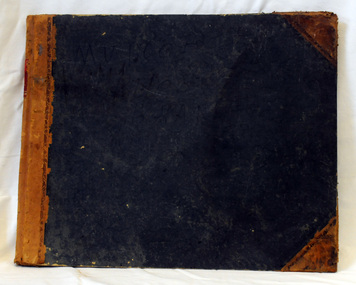
... work they would receive a payment. When they died funeral benefits would be paid and the widow and children would be cared for. It was a form of local insurance for hard times. This item was used in a time of 'look after yourself' as the Colonial Governments did not provide pensions or benefits and reflects those times. A very large cash book ...Friendly Societies were founded in the Australian Colonies in the mid-19th Century by immigrants from England who had been members in Societies which dated back to the 18th Century. Like all working people these immigrants experienced sickness, accidents, unemployment, death and burial. They needed help of like fellows to tide their families over these times. So they formed a branch of one of the Friendly Societies back in the mother country. The idea was to make fixed contributions to a fund and when they were off work they would receive a payment. When they died funeral benefits would be paid and the widow and children would be cared for. It was a form of local insurance for hard times. This item was used in a time of 'look after yourself' as the Colonial Governments did not provide pensions or benefits and reflects those times.A very large cash book with a blue fabric cover , a brown spine and edges. -
 Orbost & District Historical Society
book, Record of Sickness, 1900
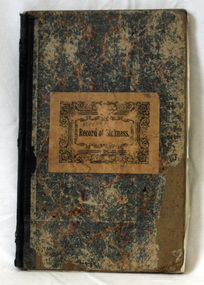
... book was used by the Orbost Manchester United Independent Order of Oddfellows. Friendly Societies were founded in the Australian Colonies in the mid-19th Century by immigrants from England who had been members in Societies which dated back to the 18th Century. Like all working people these immigrants experienced sickness, accidents, unemployment, death and burial. They needed help of like fellows to tide their families over these times. So they formed a branch of one of the Friendly Societies back in the mother country. The idea was to make fixed contributions to a fund and when they were off work...book was used by the Orbost Manchester United Independent Order of Oddfellows. Friendly Societies were founded in the Australian Colonies in the mid-19th Century by immigrants from England who had been members in Societies which dated back to the 18th Century. Like all working people these immigrants experienced sickness, accidents, unemployment, death and burial. They needed help of like fellows to tide their families over these times. So they formed a branch of one of the Friendly Societies back in the mother country. The idea was to make fixed contributions to a fund and when they were off work ...This book was used by the Orbost Manchester United Independent Order of Oddfellows. Friendly Societies were founded in the Australian Colonies in the mid-19th Century by immigrants from England who had been members in Societies which dated back to the 18th Century. Like all working people these immigrants experienced sickness, accidents, unemployment, death and burial. They needed help of like fellows to tide their families over these times. So they formed a branch of one of the Friendly Societies back in the mother country. The idea was to make fixed contributions to a fund and when they were off work they would receive a payment. When they died funeral benefits would be paid and the widow and children would be cared for. It was a form of local insurance for hard times. This record book was created in a time of 'look after yourself' as the Colonial Governments did not provide pensions or benefits. This item reflects those times.A hard back book with a red and blue mottled cover and a dark blue spine. On the front cover is a large brown rectangular label with "Record of Sickness" in black print inside an ornate black frame.on label - handwritten above title - "M.U.I.O.O.F."m.u.i.o.o.f. friendly-societies book-keeping -
 Orbost & District Historical Society
book, 1936
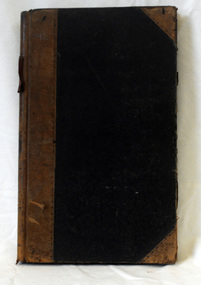
... work they would receive a payment. When they died funeral benefits would be paid and the widow and children would be cared for. It was a form of local insurance for hard times. This account book ...This book contains M.U.I.O.O.F. (Manchester Unity Independent Order Of Oddfellows) accounts of the Orbost group. Friendly Societies were founded in the Australian Colonies in the mid-19th Century by immigrants from England who had been members in Societies which dated back to the 18th Century. Like all working people these immigrants experienced sickness, accidents, unemployment, death and burial. They needed help of like fellows to tide their families over these times. So they formed a branch of one of the Friendly Societies back in the mother country. The idea was to make fixed contributions to a fund and when they were off work they would receive a payment. When they died funeral benefits would be paid and the widow and children would be cared for. It was a form of local insurance for hard times. This account book was used in a a time of 'look after yourself' as the Colonial Governments did not provide pensions or benefits. This item reflects those times.A hard back book with a blue cover and a brown spine.on spine on red flock in gold lettering "NIGHT BOOK:m.u.i.o.o.f.friendly-societies -
 Orbost & District Historical Society
book, 1936
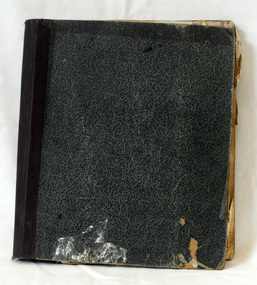
... work they would receive a payment. When they died funeral benefits would be paid and the widow and children would be cared for. It was a form of local insurance for hard times. This was a time of 'look after yourself' as the Colonial Governments did not provide pensions or benefits. This item reflects those times. friendly-society M.U.I.O.O.F. accounts A hard back book ...This book was used byb the Orbost branch of M.U.I.O.O.F. (Manchester Unity Order of Oddfellows)Friendly Societies were founded in the Australian Colonies in the mid-19th Century by immigrants from England who had been members in Societies which dated back to the 18th Century. Like all working people these immigrants experienced sickness, accidents, unemployment, death and burial. They needed help of like fellows to tide their families over these times. So they formed a branch of one of the Friendly Societies back in the mother country. The idea was to make fixed contributions to a fund and when they were off work they would receive a payment. When they died funeral benefits would be paid and the widow and children would be cared for. It was a form of local insurance for hard times. This was a time of 'look after yourself' as the Colonial Governments did not provide pensions or benefits. This item reflects those times.A hard back book with a green / blue mottled cover with a brown binding. It includes a receipt book with no cover. It holds M.I.U.O.O.F. (Manchester Unity Order of Oddfellows) accounts.friendly-society m.u.i.o.o.f. accounts -
 Orbost & District Historical Society
minute book, 1886
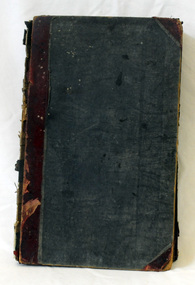
... work they would receive a payment. When they died funeral benefits would be paid and the widow and children would be cared for. It was a form of local insurance for hard times. This was a time of 'look after yourself' as the Colonial Governments did not provide pensions or benefits. This item reflects those times. A large thick hard back minute book ...This minute book was used by the Orbost branch of M.U.I.O.O.F. (Manchester Unity Order of Oddfellows)Friendly Societies were founded in the Australian Colonies in the mid-19th Century by immigrants from England who had been members in Societies which dated back to the 18th Century. Like all working people these immigrants experienced sickness, accidents, unemployment, death and burial. They needed help of like fellows to tide their families over these times. So they formed a branch of one of the Friendly Societies back in the mother country. The idea was to make fixed contributions to a fund and when they were off work they would receive a payment. When they died funeral benefits would be paid and the widow and children would be cared for. It was a form of local insurance for hard times. This was a time of 'look after yourself' as the Colonial Governments did not provide pensions or benefits. This item reflects those times.A large thick hard back minute book used by M.U.I.O.O.F. ( Manchester Unity Order of Oddfellows). It has a blue cover with a red spine. -
 Ringwood and District Historical Society
Book, Maree Allen, The Labourers' Friends - Maree G.Allen, RSM, 1989
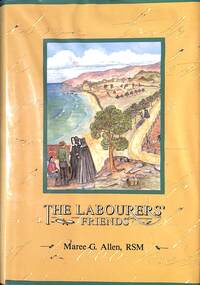
... Hard cover book with photographs, letters, diaries, memoirs and interviews documenting the work of the Sisters of Mercy from Perth in 1846, spreading to Melbourne then throughout Victoria and Tasmania. ...Hard cover book with photographs, letters, diaries, memoirs and interviews documenting the work of the Sisters of Mercy from Perth in 1846, spreading to Melbourne then throughout Victoria and Tasmania. ...Hard cover book with photographs, letters, diaries, memoirs and interviews documenting the work of the Sisters of Mercy from Perth in 1846, spreading to Melbourne then throughout Victoria and Tasmania. Lilydale chapter includes references to Our Lady of Perpetual Succour, Ringwood, Victoria. -
 Ringwood and District Historical Society
Book, Edcation Department, The Education Department's Record Of War Service, Victoria - 1914-1919, Circa 1920s
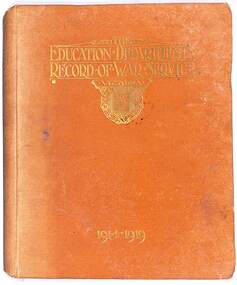
... Tan hard cover book with gold embossed title, compiled as a record of the work done by the schools of the Education Department of Victoria to assist the national cause during the years of the Great War....Tan hard cover book with gold embossed title, compiled as a record of the work done by the schools of the Education Department of Victoria to assist the national cause during the years of the Great War. ...Tan hard cover book with gold embossed title, compiled as a record of the work done by the schools of the Education Department of Victoria to assist the national cause during the years of the Great War.This book, published to keep before teachers and children examples of service and sacrifice in a great cause, is presented to the Ringwood School. It should be kept in an honored place as a source of guidance and inspiration for successive generations. -
 Ringwood and District Historical Society
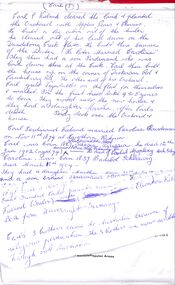
Work on paper, Hand written and typed notes on Heathmont Railway Station 1889-1927 by Pat Talbot used in the book "Wielands of Heathmont"
... Hand written and typed notes on Heathmont Railway Station 1889-1927 by Pat Talbot used in the book "Wielands of Heathmont" Work on paper ...These notes were used extensively in the book the "Wielands of Heathmont", pages 18 and 19, written by Pat Talbot and her husband Don. The notes tell how in 1922 a Railway League was formed with Herman Pump as chairman. The Wieland brothers used their horses and plough in 1926 to help build the Heathmont station. Pat was the-great -Granddaughter of Carl Wieland. The notes also include the Heathmont Information League. Short history typed and handwritten of Heathmont Railway station 1889-1927 among other notes for the Wieland history.written by Pat Talbot (nee Wieland). Large pad of note pages. -
 Ringwood and District Historical Society
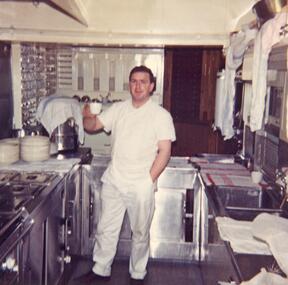
Photograph, Bob Oke at work at Victorian Railways, Ringwood Scouts
... book. Wife of Bob (Robert William) Oke. Both Ida and Bob were heavily involved in the Scout movement, as were Bob's parents - Corrie and Ruby Oke, who both lived in Old Lilydale Road, East Ringwood. Bob Oke at work ...Scanned on 30th January, 2008 from Ida Oke's albums. Ida lives in East Ringwood and also contributed to the East Ringwood Recollections book. Wife of Bob (Robert William) Oke. Both Ida and Bob were heavily involved in the Scout movement, as were Bob's parents - Corrie and Ruby Oke, who both lived in Old Lilydale Road, East Ringwood. -
 Ringwood and District Historical Society
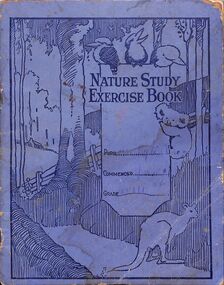
Work on paper, Nature Study Exercise Grade v111 name Wilson on the back c. 1930s (Part of the Wieland collection)
... Blue covered book with black stenciled picture of gum tree , koala , kangaroo and kookaburras.All pages filled with hand writing and drawn pictures In ink on back the name Wilson. Nature Study Exercise Grade v111 name Wilson on the back c. 1930s (Part of the Wieland collection) Work on paper ...Ruby Wilson was related to the Wieland family through the marriage of her sister Amy Ellen Thelma to Stanley Wieland.Blue covered book with black stenciled picture of gum tree , koala , kangaroo and kookaburras.All pages filled with hand writing and drawn pictures In ink on back the name Wilson. -
 Ringwood and District Historical Society
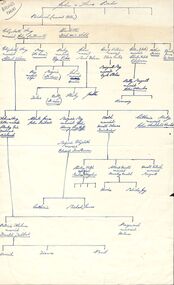
Work on paper, Family tree of Catherine Ruby Wilson Included in the Wieland's of Heathmont book Written by Don and Pat Talbot 2008
... Family tree of Catherine Ruby Wilson Included in the Wieland's of Heathmont book Written by Don and Pat Talbot 2008 Work on paper ...Catherine Ruby Wilson married Archie Harker and this family tree was found in his papers.Hand written family tree of the Bakers and Wilsons. -
 Ringwood and District Historical Society
Work on paper, Draft of 'Wielands of Heathmont' History of the family. Published 2008 by Don Talbot and Pat Talbot
... book. Draft of 'Wielands of Heathmont' History of the family. Published 2008 by Don Talbot and Pat Talbot. Work ...The Wieland family were orcharding pioneers in Ringwood., Carl Ferdinand Wieland arrived in Heathmont in 1872 where he took up 50 acres, 37 perches of Crown Land.for the cost of 49 pounds.Typed pages , photographs,family group records all collected for the book. -
 Ringwood and District Historical Society
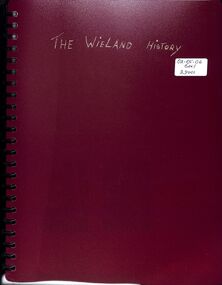
Work on paper, Copies of Photographs, certificates, titles for The Wieland of Heathmont History, published 2008
... book. Copies of Photographs, certificates, titles for The Wieland of Heathmont History, published 2008 Work on paper ...material for Wieland bookMaroon spiral binder with photographs, cerificates , hand written family trees collected for the published book.
