
Showing 197 items matching " formal event"
-
 Eltham District Historical Society Inc
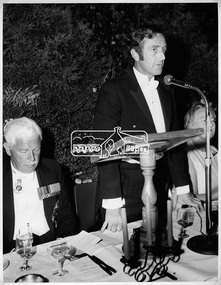
Photograph, Shire of Eltham Centenary Dinner, 6 Apr 1971
... event was held in the West Riding Hall, Petrie Park Community Centre, Montmorency. This photo forms part of a collection of photographs gathered by the Shire of Eltham for their centenary project book, "Pioneers and Painters: 100 years of the Shire of Eltham" by Alan Marshall (1971). The collection of over 500 images is held in partnership between Eltham District Historical Society and Yarra Plenty Regional Library (Eltham Library) and is now formally ...Shire President Cr. G.C. Dreverman speaks at the Shire of Eltham centenary dinner. Governor Sir Rohan Delacombe is seated beside him. The event was held in the West Riding Hall, Petrie Park Community Centre, Montmorency. This photo forms part of a collection of photographs gathered by the Shire of Eltham for their centenary project book, "Pioneers and Painters: 100 years of the Shire of Eltham" by Alan Marshall (1971). The collection of over 500 images is held in partnership between Eltham District Historical Society and Yarra Plenty Regional Library (Eltham Library) and is now formally known as 'The Shire of Eltham Pioneers Photograph Collection.' It is significant in being the first community sourced collection representing the places and people of the Shire's first one hundred years.Digital imagesepp, shire of eltham pioneers photograph collection, shire of eltham, shire of eltham centenary, official dinner, centenary celebrations, cr. g.c. dreverman, sir rohan delacombe, petrie park community centre montmorency -
 Eltham District Historical Society Inc
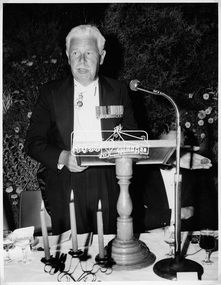
Photograph, Shire of Eltham Centenary Dinner; His Excellency Major General Sir Rohan Delacombe, K.C.M.G., K.C.V.O., K.B.E., C.B., D.S.O., D.St.J., Governor of Victoria, 6 April 1971, 6 Apr 1971
... Governor Sir Rohan Delacombe speaks at the formal Shire of Eltham Centenary Dinner. The event was held in the West Riding Hall, Petrie Park Community Centre, Montmorency. ...Governor Sir Rohan Delacombe speaks at the formal Shire of Eltham Centenary Dinner. The event was held in the West Riding Hall, Petrie Park Community Centre, Montmorency. ...Governor Sir Rohan Delacombe speaks at the formal Shire of Eltham Centenary Dinner. The event was held in the West Riding Hall, Petrie Park Community Centre, Montmorency. This photo forms part of a collection of photographs gathered by the Shire of Eltham for their centenary project book," Pioneers and Painters: 100 years of the Shire of Eltham" by Alan Marshall (1971). The collection of over 500 images is held in partnership between Eltham District Historical Society and Yarra Plenty Regional Library (Eltham Library) and is now formally known as 'The Shire of Eltham Pioneers Photograph Collection.' It is significant in being the first community sourced collection representing the places and people of the Shire's first one hundred years.Digital imagesepp, shire of eltham pioneers photograph collection, shire of eltham, shire of eltham centenary, official dinner, centenary celebrations, sir rohan delacombe, speech, talk -
 Eltham District Historical Society Inc
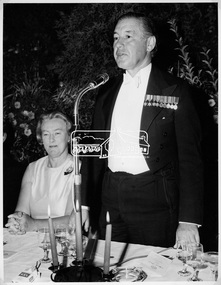
Photograph, Shire of Eltham Centenary Dinner, 6 Apr 1971
... Hamer, E.D., M.P., Chief Secretary of Victoria speaking at the formal dinner to celebrate the Shire of Eltham's centenary. The event was held in the West Riding Hall, Petrie Park Community Centre, Montmorency. ...Hamer, E.D., M.P., Chief Secretary of Victoria speaking at the formal dinner to celebrate the Shire of Eltham's centenary. The event was held in the West Riding Hall, Petrie Park Community Centre, Montmorency. ...Lady Joyce Delacombe with The Hon. R.J. Hamer, E.D., M.P., Chief Secretary of Victoria speaking at the formal dinner to celebrate the Shire of Eltham's centenary. The event was held in the West Riding Hall, Petrie Park Community Centre, Montmorency. This photo forms part of a collection of photographs gathered by the Shire of Eltham for their centenary project book, "Pioneers and Painters: 100 years of the Shire of Eltham" by Alan Marshall (1971). The collection of over 500 images is held in partnership between Eltham District Historical Society and Yarra Plenty Regional Library (Eltham Library) and is now formally known as 'The Shire of Eltham Pioneers Photograph Collection.' It is significant in being the first community sourced collection representing the places and people of the Shire's first one hundred years.Digital imagesepp, shire of eltham pioneers photograph collection, shire of eltham, shire of eltham centenary, official dinner, centenary celebrations, the hon. r.j. hamer, lady delacombe, speech, talk -
 Eltham District Historical Society Inc
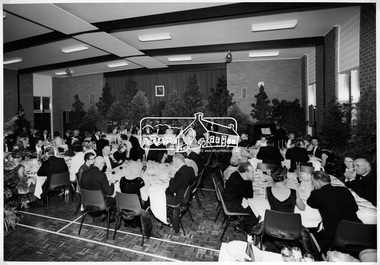
Photograph, Shire of Eltham Centenary Dinner, 6 Apr 1971
... event was held in the West Riding Hall, Petrie Park Community Centre, Montmorency. This photo forms part of a collection of photographs gathered by the Shire of Eltham for their centenary project book ,"Pioneers and Painters: 100 years of the Shire of Eltham" by Alan Marshall (1971). The collection of over 500 images is held in partnership between Eltham District Historical Society and Yarra Plenty Regional Library (Eltham Library) and is now formally ...Guests seated at the Shire of Eltham Centenary Dinner in 1971. The tables dressed in white tablecoths surrounded by a display of greenery. The event was held in the West Riding Hall, Petrie Park Community Centre, Montmorency. This photo forms part of a collection of photographs gathered by the Shire of Eltham for their centenary project book ,"Pioneers and Painters: 100 years of the Shire of Eltham" by Alan Marshall (1971). The collection of over 500 images is held in partnership between Eltham District Historical Society and Yarra Plenty Regional Library (Eltham Library) and is now formally known as 'The Shire of Eltham Pioneers Photograph Collection.' It is significant in being the first community sourced collection representing the places and people of the Shire's first one hundred years.Digital imagesepp, shire of eltham pioneers photograph collection, shire of eltham, shire of eltham centenary, official dinner, centenary celebrations, henry petrie community centre montmorency -
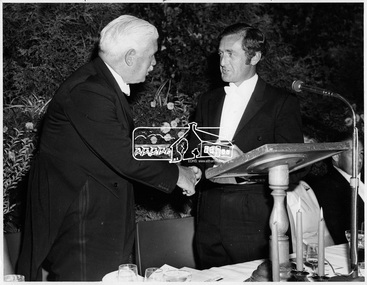 Eltham District Historical Society Inc
Photograph, Shire of Eltham Centenary Dinner, 6 Apr 1971
... event was held in the West Riding Hall, Petrie Park Community Centre, Montmorency. This photo forms part of a collection of photographs gathered by the Shire of Eltham for their centenary project book, "Pioneers and Painters: 100 years of the Shire of Eltham" by Alan Marshall (1971). The collection of over 500 images is held in partnership between Eltham District Historical Society and Yarra Plenty Regional Library (Eltham Library) and is now formally ...Cr. G. C. Dreverman presenting a silver centenary medal to His Excellency Major General Sir Rohan Delacombe, Governor of Victoria at the Shire of Eltham Centenary Dinner in 1971. The event was held in the West Riding Hall, Petrie Park Community Centre, Montmorency. This photo forms part of a collection of photographs gathered by the Shire of Eltham for their centenary project book, "Pioneers and Painters: 100 years of the Shire of Eltham" by Alan Marshall (1971). The collection of over 500 images is held in partnership between Eltham District Historical Society and Yarra Plenty Regional Library (Eltham Library) and is now formally known as 'The Shire of Eltham Pioneers Photograph Collection.' It is significant in being the first community sourced collection representing the places and people of the Shire's first one hundred years.Digital imagesepp, shire of eltham pioneers photograph collection, shire of eltham, shire of eltham centenary, official dinner, centenary celebrations, cr. g.c. dreverman, sir rohan delacombe -
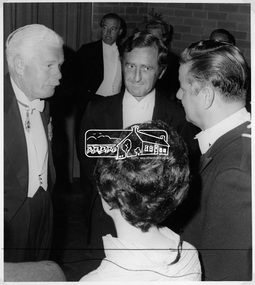 Eltham District Historical Society Inc
Photograph, Shire of Eltham Centenary Dinner, 6 Apr 1971
... event was held in the West Riding Hall, Petrie Park Community Centre, Montmorency. This photo forms part of a collection of photographs gathered by the Shire of Eltham for their centenary project book, "Pioneers and Painters: 100 years of the Shire of Eltham" by Alan Marshall (1971). The collection of over 500 images is held in partnership between Eltham District Historical Society and Yarra Plenty Regional Library (Eltham Library) and is now formally ...His Excellency Major General Sir Rohan Delacombe, Governor of Victoria at the Shire of Eltham Centenary Dinner in 1971 with Cr. G. C. Dreverman, Cr Glover and Mrs Glover. The Premier, Mr Hamer can be seen in the background. The event was held in the West Riding Hall, Petrie Park Community Centre, Montmorency. This photo forms part of a collection of photographs gathered by the Shire of Eltham for their centenary project book, "Pioneers and Painters: 100 years of the Shire of Eltham" by Alan Marshall (1971). The collection of over 500 images is held in partnership between Eltham District Historical Society and Yarra Plenty Regional Library (Eltham Library) and is now formally known as 'The Shire of Eltham Pioneers Photograph Collection.' It is significant in being the first community sourced collection representing the places and people of the Shire's first one hundred years.Digital imagesepp, shire of eltham pioneers photograph collection, shire of eltham, shire of eltham centenary, official dinner, centenary celebrations, cr. g.c. dreverman, sir rohan delacombe, cr. glover, mrs. glover -
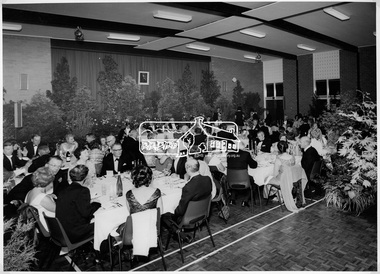 Eltham District Historical Society Inc
Photograph, Shire of Eltham Centenary Dinner, 6 Apr 1971
... event was held in the West Riding Hall, Petrie Park Community Centre, Montmorency. This photo forms part of a collection of photographs gathered by the Shire of Eltham for their centenary project book, "Pioneers and Painters: 100 years of the Shire of Eltham" by Alan Marshall (1971). The collection of over 500 images is held in partnership between Eltham District Historical Society and Yarra Plenty Regional Library (Eltham Library) and is now formally ...Guests seated at the Shire of Eltham Centenary Dinner in 1971. The tables dressed in white tablecoths surrounded by a display of greenery. The event was held in the West Riding Hall, Petrie Park Community Centre, Montmorency. This photo forms part of a collection of photographs gathered by the Shire of Eltham for their centenary project book, "Pioneers and Painters: 100 years of the Shire of Eltham" by Alan Marshall (1971). The collection of over 500 images is held in partnership between Eltham District Historical Society and Yarra Plenty Regional Library (Eltham Library) and is now formally known as 'The Shire of Eltham Pioneers Photograph Collection.' It is significant in being the first community sourced collection representing the places and people of the Shire's first one hundred years.Digital imagesepp, shire of eltham pioneers photograph collection, shire of eltham, shire of eltham centenary, official dinner, centenary celebrations, petrie park community centre montmorency -
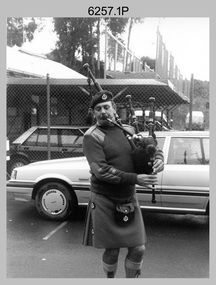 Bendigo Military Museum
Photograph - 2/4 RAR Pipes and Drums at the Army Survey Regiment, Fortuna, Bendigo, c1990
... Although the reason for their visit is unknown there were several events held at the time commemorating the 75th anniversary of the formation of the Royal Australian Survey Corps, such as the Freedom of Entry to the City of Bendigo Parade, an Open Day, visits by the Prime Minister Hon. RJ Hawke and the Chief of the General Staff, the opening of the new printing press building Wayzgoose Hall on Corps Day and formal...Although the reason for their visit is unknown there were several events held at the time commemorating the 75th anniversary of the formation of the Royal Australian Survey Corps, such as the Freedom of Entry to the City of Bendigo Parade, an Open Day, visits by the Prime Minister Hon. RJ Hawke and the Chief of the General Staff, the opening of the new printing press building Wayzgoose Hall on Corps Day and formal ...These four photographs were taken during a 2/4 RAR Pipes and Drums visit to the Army Survey Regiment, Fortuna Villa, Bendigo probably in 1990. Although the reason for their visit is unknown there were several events held at the time commemorating the 75th anniversary of the formation of the Royal Australian Survey Corps, such as the Freedom of Entry to the City of Bendigo Parade, an Open Day, visits by the Prime Minister Hon. RJ Hawke and the Chief of the General Staff, the opening of the new printing press building Wayzgoose Hall on Corps Day and formal Officer and SGTs Mess Dinners.These four photographs were taken during a 2/4 RAR Pipes and Drums visit to the Army Survey Regiment, Fortuna Villa, Bendigo probably in 1990. The black & white photographs were printed on photographic paper and are part of the Army Survey Regiment’s Collection. The photographs were scanned at 300 dpi. .1) - Photo, black & white, c1990, unidentified 2/4 RAR Pipes and Drums Sergeant-Major .2) - Photo, black & white, c1990, unidentified 2/4 RAR Pipes and Drums personnel .3) - Photo, black & white, c1990 L to R: RSM WO1 Neville Stone, CO LTCOL Rene van den Tol, unidentified 2/4 RAR Pipes and Drums Sergeant-Major. .4) - Photo, black & white, c1990, L to R: CO LTCOL Rene van den Tol, unidentified 2/4 RAR Pipes and Drums Sergeant-Major .1P to .4P – no annotationsroyal australian survey corps, rasvy, army survey regiment, army svy regt, fortuna, asr -
 Bendigo Historical Society Inc.
Photograph - Wedding party, McKenzie Family Collection, August 2024
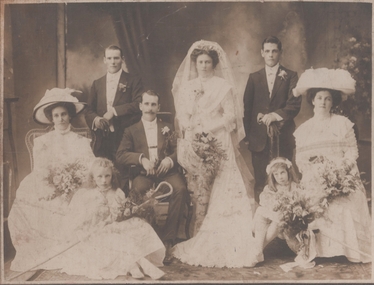
... BHS Collection history social event Formal sepia photograph of a wedding party with bride and groom, two bridesmaids and best men; and two young girls; unknown date. ...BHS CollectionFormal sepia photograph of a wedding party with bride and groom, two bridesmaids and best men; and two young girls; unknown date. Photograph credited on the card mount to W. William Kelly, Mitchell Street, Bendigo. history, social event -
 Bendigo Historical Society Inc.
Newspaper - Fortuna Article - "Lansell Family Reunion", Nov 03 1997
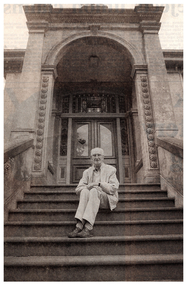
... Nearly 300 descendants of the Lansell family gathered in Bendigo for a reunion, organized after months of planning and outreach led by Wendy Caldwell. The event included a formal dinner attended by 250 family members and a large barbecue at Fortuna, the family's historic home. ...Nearly 300 descendants of the Lansell family gathered in Bendigo for a reunion, organized after months of planning and outreach led by Wendy Caldwell. The event included a formal dinner attended by 250 family members and a large barbecue at Fortuna, the family's historic home. ...Nearly 300 descendants of the Lansell family gathered in Bendigo for a reunion, organized after months of planning and outreach led by Wendy Caldwell. The event included a formal dinner attended by 250 family members and a large barbecue at Fortuna, the family's historic home. George Lansell, known as the "quartz king of Bendigo," was a leading goldmine owner who settled in Bendigo during the gold rush and established the family home at Fortuna in 1871. The Lansell family lived at Fortuna until 1935, and the property served as a central location for the reunion. George Lansell was recognized for his generosity and business success, notably providing financial support for Bendigo landmarks such as the Alexandra Fountain and Rosalind Park Cascades. He also donated the pendant that is part of the mayoral chain.Family Legacy. The reunion allowed family members, including the oldest attendee Stanley Budds (grandson of George's sister), to reconnect and celebrate their shared heritage.Fortuna Restoration Article - "Lansell Family Reunion" - The Bendigo Advertiser Monday Nov 03 1997- Author Susan Turpie This item contains the following: 11217.9a Black and White Photo of 95 year old Stanley Budds, grandson of George Lansell's sister Susan Budds (nee Lansell) was the oldest family member to attend the weekend reunion 11217.9b Part of page 3 - Lansell Family Reunionnon-fictionbendigo, fortuna, stan budds, george lansell -
 Victoria Police Museum
Photograph (Victoria Police), Police Officers on dinner event, 1920s
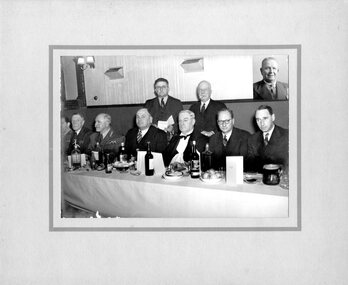
... event. On the far left, possibly former Chief Commissioner Thomas Blamey, on army uniform. Other men are in formal suits, younger looking one in glasses faces the camera cheerfully. 2 men standing on the back, one with piece of paper and the other smoking a cigarette....event. On the far left, possibly former Chief Commissioner Thomas Blamey, on army uniform. Other men are in formal suits, younger looking one in glasses faces the camera cheerfully. 2 men standing on the back, one with piece of paper and the other smoking a cigarette. ...Black and white photograph mounted on grey frame. Passport 3x4 photograph stuck on top right of larger photograph - middle age men, unknown. 9 men on photograph are in dinner event. On the far left, possibly former Chief Commissioner Thomas Blamey, on army uniform. Other men are in formal suits, younger looking one in glasses faces the camera cheerfully. 2 men standing on the back, one with piece of paper and the other smoking a cigarette.Handwritten: EP 1victoria police museum, police officers, police academy, police force, victorian police association, police council, blamey, thomas, chief commissioner, sir thomas blamey; chief commissioner of police -
 Bendigo Historical Society Inc.
Document - ILLUMINATED ADDRESS TO PETER SMALLEY ESQ, 29 August 1917
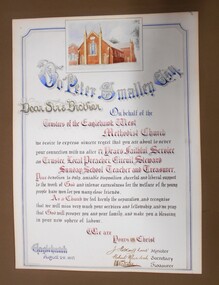
... formal certificate was presented to Mr Peter Smalley on 29 August 1917, on behalf of the church trust as a token of esteem and recognition for his service to the church. At the time, Smalley held the significant lay position of Circuit Steward within the Methodist administration at the Eaglehawk West Methodist Church. Peter Smalley was a well-known local figure in the Eaglehawk area near Bendigo, Victoria. He worked as a jeweller and was the son of a prominent local resident. The Eaglehawk West Methodist Church was a central hub for the local community, hosting various events...formal certificate was presented to Mr Peter Smalley on 29 August 1917, on behalf of the church trust as a token of esteem and recognition for his service to the church. At the time, Smalley held the significant lay position of Circuit Steward within the Methodist administration at the Eaglehawk West Methodist Church. Peter Smalley was a well-known local figure in the Eaglehawk area near Bendigo, Victoria. He worked as a jeweller and was the son of a prominent local resident. The Eaglehawk West Methodist Church was a central hub for the local community, hosting various events ...This formal certificate was presented to Mr Peter Smalley on 29 August 1917, on behalf of the church trust as a token of esteem and recognition for his service to the church. At the time, Smalley held the significant lay position of Circuit Steward within the Methodist administration at the Eaglehawk West Methodist Church. Peter Smalley was a well-known local figure in the Eaglehawk area near Bendigo, Victoria. He worked as a jeweller and was the son of a prominent local resident. The Eaglehawk West Methodist Church was a central hub for the local community, hosting various events such as musical competitions and "Band of Hope" meetings.Address to Peter Smalley. Esq. Coloured print of Methodist Church. Eaglehawk West. Text reads: 'To Peter Smalley Esq. Dear Sir & Brother on behalf of the Trustees of The Eaglehawk West Methodist Church after 17 years faithful service as Trustee. Local Preacher. Circuit Steward. Sunday School Teacher and Treasurer' Signed by J.Polkinghorne - Minister. Robert Murdoch - Secretary. D.Wetistu - Treasurer. Dated 29 August, 1917.certificate, illuminated address, peter smalley, methodist church, eaglehawk west -
 Ithacan Historical Society
Photograph, Ithacan Ball, 1957
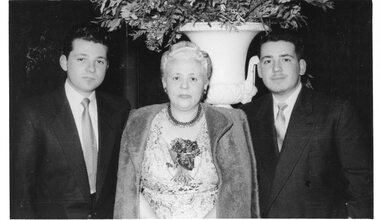
... The annual ball has been a regular and popular social event on the Ithacan Club calendar since the 1950s, where members and their families and friends have an enjoyable night. A black and white photograph with a surrounding white border of a lady and two young men standing in front of a large white urn at a formal function. ...Anastasia Coutsouvelis with her two sons, 20 year old Speros and 17 year old George attended the Ithacan Ball in 1957. The function was held at the Exhibition Building in Carlton.The annual ball has been a regular and popular social event on the Ithacan Club calendar since the 1950s, where members and their families and friends have an enjoyable night. A black and white photograph with a surrounding white border of a lady and two young men standing in front of a large white urn at a formal function. -
 Ithacan Historical Society
Photograph, Social function
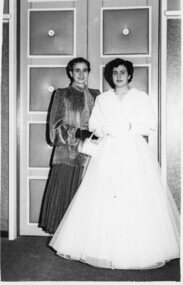
... Rini Sikiotis (nee Varvarigos) and her daughter Leah at a formal function, most likely an Ithacan ball, which was an annual event on the club's social calendar. ...Rini Sikiotis (nee Varvarigos) and her daughter Leah at a formal function, most likely an Ithacan ball, which was an annual event on the club's social calendar. ...Rini Sikiotis (nee Varvarigos) and her daughter Leah at a formal function, most likely an Ithacan ball, which was an annual event on the club's social calendar. A black and white photograph with a white border of two ladies in evening dress standing in front of a double doorway. -
 Ithacan Historical Society
Photograph, Ithacan Ball, 1954
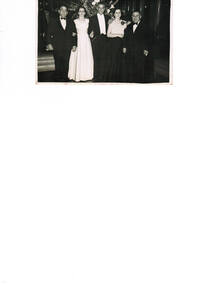
... The Ithacan Ball has been a popular event on the annual calendar of the Ithacan Philanthropic Society for many years. A black and white photograph of two ladies and three men in formal dress at a function. ...The family group were attending the 1954 annual Ithacan Ball. Pictured are sisters Aspasia and Vicky (nee Raftopoulos) together with their father and husbands. L-R: Mr Raftopoulos (Klapatsouras), Vicky and Michael Black, Aspasia and Anastasios Flocas. The Ithacan Ball has been a popular event on the annual calendar of the Ithacan Philanthropic Society for many years.A black and white photograph of two ladies and three men in formal dress at a function. -
 Buninyong & District Historical Society
Photograph - Photograph Buninyong Townhall supper room interior, Interior of Buninyong Townhall supper room
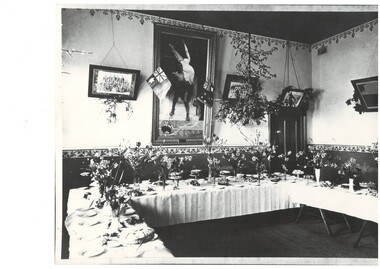
... An interior view of Buninyong Townhall supper room c 1919 decorated for an event to commemorate soldiers returning from World War 1 This photograph shows Buninyong Townhall supper room to celebrate the return of local Soldiers from World War 1 World War 1 Flags Buninyong Town Hall Supper Room Town Hall supper room possibly return of soldiers 1st World War A black and white photograph of Buninyong Townhall supper room prepared for a formal occasion. ...An interior view of Buninyong Townhall supper room c 1919 decorated for an event to commemorate soldiers returning from World War 1This photograph shows Buninyong Townhall supper room to celebrate the return of local Soldiers from World War 1A black and white photograph of Buninyong Townhall supper room prepared for a formal occasion.Town Hall supper room possibly return of soldiers 1st World Warworld war 1, flags, buninyong town hall supper room -
 Port Melbourne Historical & Preservation Society
Document - Naming of Olive's Corner, Nov 1999
... event. Judging panel (Cr Julian Hill, Bruce McKeon and Pat Grainger) met 8.11.1999 to decide winner. Parks and Gardens Memorials Olive ZAKHAROV Julian HILL Bruce McKEON Pat GRAINGER Judge has indicated in green ink the eliminations, finalists etc. Eight pages used in judging the 1999 naming competition for the reserve at Bay and Liardet Streets that through this process became known as 'Olives Corner' (or more formally, Olive Zakharov's corner'). ...City of Port Phillip instigated the competition re the 'no-name' plaza in October 1999, and the winner was announced 14 Nov at the PMH&PS's 'Lee-ar-day Days' event. Judging panel (Cr Julian Hill, Bruce McKeon and Pat Grainger) met 8.11.1999 to decide winner.Eight pages used in judging the 1999 naming competition for the reserve at Bay and Liardet Streets that through this process became known as 'Olives Corner' (or more formally, Olive Zakharov's corner'). Includes list of entries and copies of all written submissions. Short listing of judges indicated. .09 nomination form to COPP .10 thank you condolence card .11 "Quick reads' newspaper column on Olive's cornerJudge has indicated in green ink the eliminations, finalists etc.parks and gardens, memorials, olive zakharov, julian hill, bruce mckeon, pat grainger -
 Narre Warren and District Family History Group
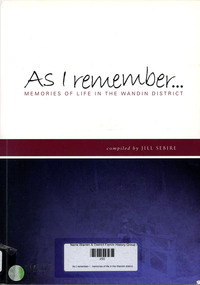
Book, Jill Sebire, As I remember-- : memories of life in the Wandin district, 2006
... This is not a formal history, though it covers many of the milestones of the community's growth since European settlement in the 1860s. Instead, it highlights the events ...Beenak Road, Wandin Hall, the Stringybark Creek, Clements' shop, Wandin Yallock State School... all names that spark vivid memories for anyone who has lived in or around Wandin in Victoria's Yarra Valley. Jill Sebire invited a wide cross-section of 'locals' to share their memories of community and family life. The result is a rich and entertaining group of personal stories. This is not a formal history, though it covers many of the milestones of the community's growth since European settlement in the 1860s. Instead, it highlights the events, people and places that have stayed fresh in the writers' minds. 'As I Remember ..' ensures that these memories can be enjoyed into the future. Anyone who has lived in a small community will recognise many of the characters and activities. For those who have a connection with the Wandin district. 'As I Remember...' will bring back the sights and sounds of Saturday night dances, the annual trip to the beach, the Easter sports at the Wandin Recreation Ground, fruit-picking, football and cricket matches, and perhaps even the night the Rechabite Hall burnt down.(back cover)non-fictionBeenak Road, Wandin Hall, the Stringybark Creek, Clements' shop, Wandin Yallock State School... all names that spark vivid memories for anyone who has lived in or around Wandin in Victoria's Yarra Valley. Jill Sebire invited a wide cross-section of 'locals' to share their memories of community and family life. The result is a rich and entertaining group of personal stories. This is not a formal history, though it covers many of the milestones of the community's growth since European settlement in the 1860s. Instead, it highlights the events, people and places that have stayed fresh in the writers' minds. 'As I Remember ..' ensures that these memories can be enjoyed into the future. Anyone who has lived in a small community will recognise many of the characters and activities. For those who have a connection with the Wandin district. 'As I Remember...' will bring back the sights and sounds of Saturday night dances, the annual trip to the beach, the Easter sports at the Wandin Recreation Ground, fruit-picking, football and cricket matches, and perhaps even the night the Rechabite Hall burnt down.(back cover)wandin (vic.), wandin yallock state school -
 Ithacan Historical Society
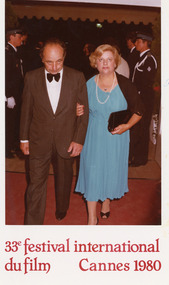
Photograph, Stathi & Kassiani Raftopoulos at Canne Film Festival, 1980
... A coloured photograph of a couple in formal attire arriving at an event....A coloured photograph of a couple in formal attire arriving at an event. Stathi & Kassiani Raftopoulos at Canne Film Festival Photograph ...The photo is of Stathi and Kassiani Raftopoulos arriving at the at 33rd Festival International du Film Cannes in 1980. Stathi was passionate about the motion picture industry and was instrumental in bringing Greek cinema to Australia. At one stage the Cosmopolitan Motion Pictures company, in which he was a partner, operated 12 picture theatres across inner suburban Melbourne screening Greek films. Because of his active interest in the film industry it is no surprise that he attended film festivals.The screening of Greek films at the Cosmopolitan cinemas provided a key source of entertainment to the large post WWII Greek immigrant population living in inner suburban Melbourne. Stathi's promotion of Greek films in Melbourne helped to establish greater interest in foreign films across the city. Cosmopolitan cinemas were the first to screen Indian films in Melbourne.A coloured photograph of a couple in formal attire arriving at an event.33rd. FESTIVAL INTERNATIONAL/ DU FILM CANNES 1980.cannes film festival -
 Ithacan Historical Society
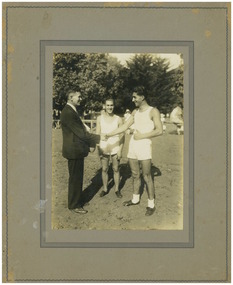
Photograph, Ithacan picnic, race winners, late 1930s
... event of the annual Ithacan Club picnic. He is shaking hands with George Mavrokefalos (Black). Gentleman in the centre is unknown. Andreas Papadopoulos was a foundation member of the Ithacan Philanthropic Society in 1916 and secretary on the first Executive Committee. He recorded the minutes in 'katharevousa', the formal...event of the annual Ithacan Club picnic. He is shaking hands with George Mavrokefalos (Black). Gentleman in the centre is unknown. Andreas Papadopoulos was a foundation member of the Ithacan Philanthropic Society in 1916 and secretary on the first Executive Committee. He recorded the minutes in 'katharevousa', the formal ...The president, Andreas Papadopoulos, is congratulating the winners of the men's open, race a feature event of the annual Ithacan Club picnic. He is shaking hands with George Mavrokefalos (Black). Gentleman in the centre is unknown. Andreas Papadopoulos was a foundation member of the Ithacan Philanthropic Society in 1916 and secretary on the first Executive Committee. He recorded the minutes in 'katharevousa', the formal Greek language used in the judicial system, official documents, newspaper and publications at the time. He served as president from 1934-1939. A sepia photograph mounted on a grey board with a darker grey border. Two men dressed in light shorts and singlets and standing in a sports ground, are being congratulated by a man dressed in a dark suit.Written on the back: AGP - 7 -
 Bendigo Military Museum
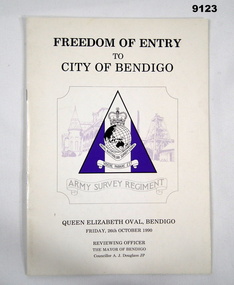
Booklet - Army Survey Regiment - Freedom of Entry to City of Bendigo 1990, Army Survey Regiment, Oct 1990
... In contemporary times, Freedom of Entry is a formal honor bestowed by local governments on military units, allowing them to march through the streets with swords drawn, drums beating, and colors flying. This event...In contemporary times, Freedom of Entry is a formal honor bestowed by local governments on military units, allowing them to march through the streets with swords drawn, drums beating, and colors flying. This event ...Freedom of Entry is a ceremonial privilege granted to military units, allowing them to march through a city or town with full military honors, symbolizing trust and community ties. Freedom of Entry has its roots in military traditions dating back to ancient Rome, where soldiers were not allowed to enter the city without permission due to concerns about maintaining order. This practice evolved over centuries, particularly after the English Civil War, when loyal military units were granted the right to enter cities as a mark of honor and trust. In contemporary times, Freedom of Entry is a formal honor bestowed by local governments on military units, allowing them to march through the streets with swords drawn, drums beating, and colors flying. This event typically includes a ceremonial parade, where the unit is challenged by local authorities, symbolizing the community's recognition of the military's service and commitment. The granting of Freedom of Entry represents the highest civic honor a city can confer on a military unit. It strengthens the bond between the military and the local community, acknowledging the unit's historical ties and contributions. Events celebrating Freedom of Entry often draw large crowds, showcasing community support for the armed forces. The Certificate of Freedom of Entry to Bendigo was granted to A.H.Q Survey Regt in 1970. Signed by JCH Jeffrey, Mayor. This was a great honor to be granted to the unit and this booklet records the exercising of that privilege on 26 October 1990. This booklet records the senior Officers of the Royal Australian Survey Corps and their appointments and dates of service as well as the unit members participating in the Freedom of Entry Parade that was held on the Queen Elizabeth Oval, Bendigo. The Reviewing Officer was Cr AJ Douglass JP the Mayor of the City of Greater Bendigo. The Army Survey Regiment exercised its Freedom of Entry with ceremonial parades in 1970, 1977, 1980, 1985, 1990, 1995 and finally in 1996 when the Unit was disbanded. Because of the importance and amount of information, the entire booklet has been scanned at 200dpi and then made into a 3.54 Mb video that runs for about 4 minutes. Pause the video if you wish to read the entire contents of a single page.Laminated cardboard cover, black & white print. On front cover at R top corner RASvy emblem in colour. 20 pages, coloured photo of the Director of Military Survey Colonel DG Swiney MBE on p2. Coloured photo of CO Lt Col Rene Van den Tol on p4, coloured photo of Mayor of the City of Greater Bendigo Cr AJ Douglas JP on p6. Contents cover the history of dignitaries, the Freedom of Entry Certificate & program of service followed by a list of Senior Survey Corps Officers and the dates that they served followed by a nominal roll of the Unit parade attendees. Held at Queen Elizabeth Oval on Friday 26 October 1990. The entire booklet has been scanned at 200dpi and then made into a 3.54 Mb video that runs for about 4 minutes. Pause the video if you wish to read the entire contents of a single page.books-military, civic mementoes-presentations, military history-army, royal australian survey corps, rasvy, fortuna, army survey regiment, army svy regt -
 Great Stupa of Universal Compassion
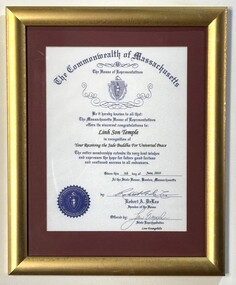
Certificate (item) - Certificate from the Commonwealth of Massachusetts congratulating the Linh Son Temple, Worcester, MA in recognition of receiving the Jade Buddha, 05/06/2010
... This certificate, presented on 05/06/2010 at Linh Son Temple in Worcester, Massachusetts, formally recognises the temple for hosting the Jade Buddha and acknowledges the event’s spiritual significance to the local community. ...The Jade Buddha for Universal Peace, the largest Buddha carved from gemstone-quality jade in the world, is the centrepiece of the Great Stupa of Universal Compassion in Bendigo, Australia. Standing 2.5 metres tall and weighing 4 tonnes, this priceless Buddhist statue toured over 120 cities across 20 countries from 2009 to 2018, inspiring peace in families, schools, and communities worldwide. After attracting an estimated 12 million visitors, it returned to the Great Stupa in May 2018, where it continues to be a potent symbol of peace.This certificate, presented on 05/06/2010 at Linh Son Temple in Worcester, Massachusetts, formally recognises the temple for hosting the Jade Buddha and acknowledges the event’s spiritual significance to the local community.jade buddha, memorabilia, great stupa archive -
 Ballarat Tramway Museum
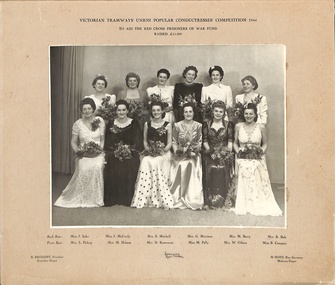
Photograph - Most Popular Conductress - Melbourne Town Hall Ball, Adamson - photographers, 31/8/1944
... formal photograph at the ball. Has the name of the ladies, underneath. Back Row Miss J Lake Miss J McCurdy Mrs. S. Mitchell - Ballarat Mrs G. Morrison Mrs. M Berry Mrs R. Bale Front Row Mrs L. Pickup Mrs. M. Holmes Mrs D. Rosewarne Miss M. Pelly Mrs. W. Gibson - Preston Depot, mother of donor. Miss B, Campara list on the photo are: Preseident - R. Broadby - Essendon Depot Hon Secretary - H. Nott - Malvern Depot See Item 8818 for the Ball Programme. Yields information about the Most Popular Conductress Competition entrants. Most Popular Conductress tramways Red Cross event ...Photograph - commercial print of the "Victorian Tramways Union Popular Conductresses Competition" entrants ball in 31/8/1944. Features 12 ladies standing or seated for a formal photograph at the ball. Has the name of the ladies, underneath. Back Row Miss J Lake Miss J McCurdy Mrs. S. Mitchell - Ballarat Mrs G. Morrison Mrs. M Berry Mrs R. Bale Front Row Mrs L. Pickup Mrs. M. Holmes Mrs D. Rosewarne Miss M. Pelly Mrs. W. Gibson - Preston Depot, mother of donor. Miss B, Campara list on the photo are: Preseident - R. Broadby - Essendon Depot Hon Secretary - H. Nott - Malvern Depot See Item 8818 for the Ball Programme.Yields information about the Most Popular Conductress Competition entrants.Photograph - mounted on a sheet of heavy card with nail marks on the rear from being in a frame.most popular conductress, tramways, red cross, event, conductresses -
 St Kilda Historical Society
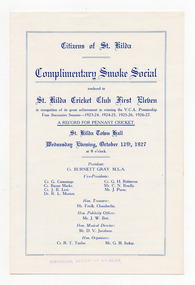
Ephemera - Special event program, Complimentary Smoke Social, 1927
... A smoke social was a predominantly Australian form of male only social event in the late nineteenth and early twentieth century, until about the 1940s, where men would gather to smoke. Smoke socials were often coupled with a formal dinner, an annual general meeting or a musical revue and were run by football clubs, charitable organizations, civic organizations, trade unions, and governments....A smoke social was a predominantly Australian form of male only social event in the late nineteenth and early twentieth century, until about the 1940s, where men would gather to smoke. Smoke socials were often coupled with a formal dinner, an annual general meeting or a musical revue and were run by football clubs, charitable organizations, civic organizations, trade unions, and governments. ...Event at the St Kilda Town Hall in recognition of the St Kilda Cricket Club First Eleven winning the VCA Premiership in four successive seasons - 1923-24, 1924-25, 1925-26, 1926-27. Details of the matches are set out on the back of the program. A smoke social was a predominantly Australian form of male only social event in the late nineteenth and early twentieth century, until about the 1940s, where men would gather to smoke. Smoke socials were often coupled with a formal dinner, an annual general meeting or a musical revue and were run by football clubs, charitable organizations, civic organizations, trade unions, and governments.Folded cream coloured paper, printed in bluest kilda cricket club, maynard dakin, j alexander browne, norman bradshaw, fred champion, dave bell, w burrell -
 Ballarat Tramway Museum
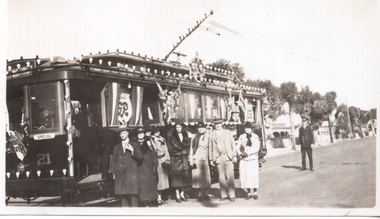
Photograph - Bendigo tram 21 decorated for the 1937 Coronation - launch, 1937
... formal launch. Shows several people standing alongside the tram, which is showing "Special" on an auxiliary board. Has a "GR" insignia on the front and side of the car. An Inspector is standing behind the tram with the driver inside the tram. Yields information about Bendigo tram 21 decorated for the 1937 Coronation event ...Photograph of Bendigo Tram 21, decorated for the 1937 Coronation of King George VI possibly at a formal launch. Shows several people standing alongside the tram, which is showing "Special" on an auxiliary board. Has a "GR" insignia on the front and side of the car. An Inspector is standing behind the tram with the driver inside the tram.Yields information about Bendigo tram 21 decorated for the 1937 Coronation event.Photograph, black and white, with notes on rear.In ink "Coronation 1936" and Ken Magor stamp.tramways, trams, bendigo, tram 21, coronation, decorated trams, launch, bendigo tramway -
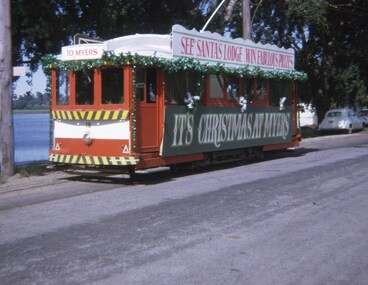 Ballarat Tramway Museum
Slide - 27 mm sq slide/s - set of 6, Andrew Howlett, Myer Christmas tram No. 18 - Wendouree Parade, Dec. 1969
... event in 1969 for the Myer Santa Tram at Mt Pleasant. Ballarat Tramways trams Santa Tram Myer Christmas Trams Decorated Trams Wendouree Parade Barkly St Grant St Mt Pleasant tram 18 tram 11 tram 30 "Duncan St Loop Drummond St" in red ink. Set of 6 Colour slides, Kodak white cardboard mount, developed Nov 1969 of No.18 as the Myer Santa Christmas tram possibly at the time of its formal ...Yields information about the launch or a Santa event in 1969 for the Myer Santa Tram at Mt Pleasant.Set of 6 Colour slides, Kodak white cardboard mount, developed Nov 1969 of No.18 as the Myer Santa Christmas tram possibly at the time of its formal launch and one (Dec 1969) in City Loop. .1 - No. 18 leaving the depot in Wendouree Parade .2 - In Wendouree Parade .3 - No. 11 and 18 crossing - No. 17 has a Twin Lakes sign and Briquettes roof advert .4 - No. 30 and 18 crossing at the Grant St loop with a Mobil service station in the background. .5 - At the Mt Pleasant terminus with a number of people and a Father Christmas - Barkly St .6 - In the City Loop, Dec. 1969 along with another tram. Has the Big W and Dickens stores in the background."Duncan St Loop Drummond St" in red ink.ballarat, tramways, trams, santa tram, myer, christmas trams, decorated trams, wendouree parade, barkly st, grant st, mt pleasant, tram 18, tram 11, tram 30 -
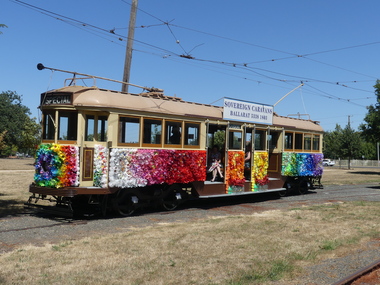 Ballarat Tramway Museum
Photograph - Digital image Set of 23, Warren Doubleday, 24/02/2019 12:00:00 AM
... Set of 23 digital images of the formal launch of the Flower Tram, No. 661 on Sunday 24/2/2019. .01 - Depot .02 .05 Depot Junction .06 - The Mayor Samantha McIntosh .07 - .10 - The Mayor and Pam Waugh the creator of the flowers. .11 - .14 - The event with plenty of flowers. .15 - Peter Waugh in the selfie studio .16 - .18 - Gardens Loop .19 - Peter Winspur in the selfie Studio .20 - depot loop .21 - Depot .22 and ,23 - detail photos...Trams tramways Floral Tram Depot Junction BTM Events Launch tram 661 Set of 23 digital images of the formal launch of the Flower Tram, No. 661 on Sunday 24/2/2019. .01 - Depot .02 .05 Depot Junction .06 - The Mayor Samantha McIntosh .07 - .10 - The Mayor and Pam Waugh the creator of the flowers. .11 - .14 - The event with plenty of flowers. .15 - Peter Waugh in the selfie studio .16 - .18 - Gardens Loop .19 - Peter Winspur in the selfie Studio .20 - depot loop .21 - Depot .22 and ,23 - detail photos Photograph Digital image Set of 23 Warren Doubleday ...Set of 23 digital images of the formal launch of the Flower Tram, No. 661 on Sunday 24/2/2019. .01 - Depot .02 .05 Depot Junction .06 - The Mayor Samantha McIntosh .07 - .10 - The Mayor and Pam Waugh the creator of the flowers. .11 - .14 - The event with plenty of flowers. .15 - Peter Waugh in the selfie studio .16 - .18 - Gardens Loop .19 - Peter Winspur in the selfie Studio .20 - depot loop .21 - Depot .22 and ,23 - detail photostrams, tramways, floral tram, depot junction, btm, events, launch, tram 661 -
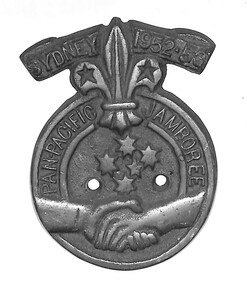 Sunshine and District Historical Society Incorporated
Ephemera - Scouting Pan Pacific Jamboree 1952 Plaque
... The Pan-Pacific Scout Jamborees were pioneering international Scouting events held in the Asia-Pacific region before the formal creation of the Asia-Pacific Scout Region. ...The Pan-Pacific Scout Jamborees were pioneering international Scouting events held in the Asia-Pacific region before the formal creation of the Asia-Pacific Scout Region. ...Scouts from around the world gather for cultural exchange, outdoor activities, leadership development, and global friendship. The Pan-Pacific Scout Jamborees were pioneering international Scouting events held in the Asia-Pacific region before the formal creation of the Asia-Pacific Scout Region. The 1st Pan Pacific Jamboree was held in Frankston, Victoria from 27th December 1934 to 13th January 1935. This plaque is from the 4th Australian Jamboree held at Greystanes, New South Wales. These early jamborees laid the groundwork for the establishment of the Asia-Pacific Scout Region in 1956 Casted embossed metal plaquePan Pacific Jamboree Sydney 1952 - 1953scouting, scouts, jamboree, greystanes -
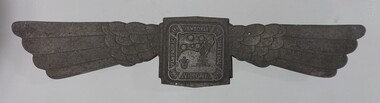 Sunshine and District Historical Society Incorporated
Memorabilia - Scouting Pan Pacific Jamboree 1948 Sign
... The Pan-Pacific Scout Jamborees were pioneering international Scouting events held in the Asia-Pacific region before the formal creation of the Asia-Pacific Scout Region. ...The Pan-Pacific Scout Jamborees were pioneering international Scouting events held in the Asia-Pacific region before the formal creation of the Asia-Pacific Scout Region. ...Scouts from around the world gather for cultural exchange, outdoor activities, leadership development, and global friendship. The Pan-Pacific Scout Jamborees were pioneering international Scouting events held in the Asia-Pacific region before the formal creation of the Asia-Pacific Scout Region. The 1st Pan Pacific Jamboree was held in Frankston, Victoria from 27th December 1934 to 13th January 1935. This plaque is from the 3rd Australian Jamboree held at Yarra Brae, Wonga Park, Victoria which was held between the 29th December 1949 to 9th January 1949. These early jamborees laid the groundwork for the establishment of the Asia-Pacific Scout Region in 1956 Casted embossed metal sign that can be mounted to a circular postPan Pacific 1948 Jamboree Yarrabrae Victoriascouting, scouts, jamboree, yarra brae -
 Sunshine and District Historical Society Incorporated
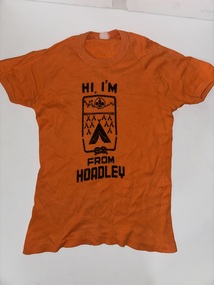
Clothing - Hi, I'm from Hoadley T-Shirt
... While there isn’t a formal “Hoadley Area” in Sunshine today, the name is most prominently associated with the Hoadley Hide—a major Venturer Scout event. ...While there isn’t a formal “Hoadley Area” in Sunshine today, the name is most prominently associated with the Hoadley Hide—a major Venturer Scout event. ...The Hoadley Area in Scouting refers to a regional designation within Scouts Victoria, named in honour of Charles Hoadley, a pioneering Antarctic explorer and influential figure in Australian Scouting. While there isn’t a formal “Hoadley Area” in Sunshine today, the name is most prominently associated with the Hoadley Hide—a major Venturer Scout event. Sunshine, Deer Park, St. Albans and Brimbank Scout Troops are part of the Hoadley Area. 🧭 Charles Hoadley’s Legacy - Charles Hoadley (1887–1947) was a geologist on Douglas Mawson’s Australasian Antarctic Expedition and later became Chief Commissioner of Scouts Victoria. - He championed youth leadership, bushcraft, and adventure-based learning. - The Hoadley Hide was named in his honour and began in the 1950s as a way to challenge Venturers in navigation and initiative. 🏕️ Sunshine & Hoadley Hide - Sunshine-area Venturer Units (including Sunshine, Deer Park, and Brimbank District) have long participated in Hoadley Hide events. - Teams from Sunshine have: - Competed under creative patrol names - Won awards for initiative and teamwork - Contributed staff and Rover support - The event is often held in bushland areas like Castlemaine, Mataranka, or Tallarook, but Sunshine units travel statewide to participate. 🗂️ Historical Area Structures - In earlier decades, Scouts Victoria was divided into Areas (e.g. Hoadley Area, Baden-Powell Area), which grouped districts for administration and events. - Sunshine is part of a Hoadley-named Area, especially during the 1960s–80s, but these structures have since evolved into Regions and Districts. Orange Size 14 t-shirt with black textHi, I'm from Hoadley T-Shirtscouting, scouts, cubs
