
Showing 97 items matching "ladies wear"
-
 Flagstaff Hill Maritime Museum and Village
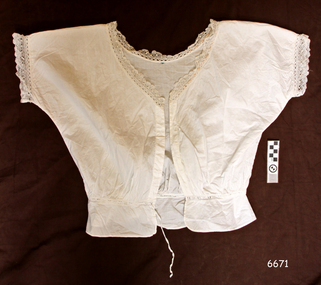
Clothing - Camisole, Late 19th century
... wear. Flagstaff Hill Maritime Museum and Village Maritime Museum Maritime Village Warrnambool Great Ocean Road Southwest Victoria Victorian era women’s underwear ladies’ underwear undergarment under-structure 1900s undergarments 19th-century undergarment women’s clothing women’s fashion lingerie 19th century handmade clothing handmade lace hand-worked lace camisole Paton family Trefnant Yangery Women's camisole, short sleeves and drawstring peplum waist. ...This handmade women’s camisole features hand-worked lace yoke and trim and a drawstring peplum waist. It is one of seven handmade items of white cotton underwear, all made with beautiful needlework and embroidery skill. The lingerie once belonged to the donor’s great-grandmother’s family, the Paton family of ‘Trefnant’, Yangery, in southwest Victoria. The collection of women’s late-19th-century undergarments is an example of clothing that women would include in their wardrobes. The garments add to the study of the evolution of women's fashions and practicality for the early Australian settlers. The fine linen fabric and the careful needlework in these handmade garments and hand-worked lace trims reflect the maker’s dedication to making even serviceable garments beautiful to look at and wear. Women's camisole, short sleeves and drawstring peplum waist. Handmade from white cotton fabric, with hand-worked lace sleeve tips, collar and waist trim. Front closure.flagstaff hill maritime museum and village, maritime museum, maritime village, warrnambool, great ocean road, southwest victoria, victorian era, women’s underwear, ladies’ underwear, undergarment, under-structure, 1900s undergarments, 19th-century undergarment, women’s clothing, women’s fashion, lingerie, 19th century, handmade clothing, handmade lace, hand-worked lace, camisole, paton family, trefnant, yangery -
 Ringwood and District Historical Society
Document - Property Rental Records, Midway Arcade Tenancies, Ringwood, Victoria - 1956-60
... Wear Shop 6 – Rona Industries Pty Ltd … Sewing Machines & Frock Materials Shop 7 – J. & B. Russo … Greengrocers Shop 8 – W. H. Oliver … Butcher Shop 9 – Rankin & Pyke / C. O. Isbel … Cake Shop Shop 10 – W. Hanlon & J. Owen (Owen Radio) … Radio & Electrical Shop 11 – H. F. Gill (Faye French) … Ladies...Wear Shop 6 – Rona Industries Pty Ltd … Sewing Machines & Frock Materials Shop 7 – J. & B. Russo … Greengrocers Shop 8 – W. H. Oliver … Butcher Shop 9 – Rankin & Pyke / C. O. Isbel … Cake Shop Shop 10 – W. Hanlon & J. Owen (Owen Radio) … Radio & Electrical Shop 11 – H. F. Gill (Faye French) … Ladies ...Nine pages of yellowed handwritten notes and typed carbon copies summarising tenancies and rental arrangements for shops and offices in with Midway Arcade, 145-147 Whitehorse Road, Ringwood for various occupancies - 1956-60.Agents: C.E. Carter & Son Summary of Tenant Lists (sic.) Shop 1 – V. Gordon & H. Kwong) … Cafe Shop 2 – B. T. Purser / L. C. Bartling … Shoe Shop Shop 3 – N. Maller … Chemist Shop 4 – Mrs J. A. Davies / C. H. Garrett & Sons … Home Furnishings Shop 5 – Mrs C. E. Peacock & Mrs C. M. Pullen / L. E. Gibson ... Children’s Wear Shop 6 – Rona Industries Pty Ltd … Sewing Machines & Frock Materials Shop 7 – J. & B. Russo … Greengrocers Shop 8 – W. H. Oliver … Butcher Shop 9 – Rankin & Pyke / C. O. Isbel … Cake Shop Shop 10 – W. Hanlon & J. Owen (Owen Radio) … Radio & Electrical Shop 11 – H. F. Gill (Faye French) … Ladies Beauty Salon Shop 12 – W. Hall … Corsetry Salon Shop 13 – C. H. Garrett & Sons ("Checkles") … Frock Shop Shop 14 – J. W. Gillespie / Alexanders … Tailor & Mercer Shop 15 – Alexanders … Mens Clothing Store Office 1 – F. D. Ray & Assoc. / M. A. Gibson … Accountant Office 2 – E. L. Moran … Solicitor Office 3 – Aust. Pastoral Equipment Co. / Progress Press … Pastoral Equipment / Printing Office 4 – D. R. James & Johnston … Solicitors Office 5 & 6 – Geoffrey Baker / J. Johnston … Solicitor Office 7 – T. W. Peters & D. Lush … Dentist Office 8 – Dunn & Schroder / Hillcrest Constructions … Real Estate / Builders Office 9 – J. Crittenden & C. S. Pascoe / Whitaker … Accountants Office 10 – Strobel Construction Pty Ltd / D. J. Hughes … Solicitor Office 11 – L. H. Reid … Drafting Office Office 12, 13 & 14 – Department of the Interior … Government Office Office 15 – H. S. Dixon …Solicitor -
 Ringwood and District Historical Society
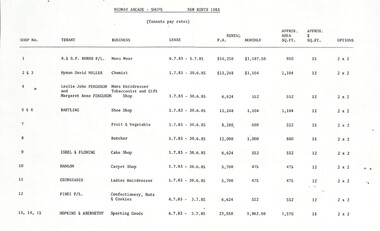
Document - Property Rental Records, Midway Arcade Tenancy, Ringwood, Victoria - New Rents 1983 (Tenants pay rates)
... Burns P/L – Mens Wear Shops 2 & 3 – Hyman David Maller – Chemist Shop 4 – Leslie & Margaret Ferguson – Mens Hairdresser, Tobacconist & Gifts Shops 5 & 6 – Bartling – Shoe Shop Shop 7 – (No name listed) – Fruit & Vegetable Shop 8 – (No name listed) – Butcher Shop 9 – Isbel & Fleming – Cake Shop Shop 10 – Hanlon – Carpet Shop Shop 11 – Georgiadis – Ladies Hairdresser Shop 12 – Pindi P/L – Confectionery, Nuts & Cookies Shops 13, 14 & 15 – Hopkins & Abernethy – Sporting Goods OFFICES Offices 1 & 15 – Dixon Office 2 – Hopkins & Abernethy Office 3 – Maller Office 4 – Downie Offices 5 & 6 – Carew & Counsel Office 7 – Peters & Lush Offices 8 & 10 – Cook Office 9 – James Offices 11, 12, 13 & 14 – Scotcoop Nominees P/L...Burns P/L – Mens Wear Shops 2 & 3 – Hyman David Maller – Chemist Shop 4 – Leslie & Margaret Ferguson – Mens Hairdresser, Tobacconist & Gifts Shops 5 & 6 – Bartling – Shoe Shop Shop 7 – (No name listed) – Fruit & Vegetable Shop 8 – (No name listed) – Butcher Shop 9 – Isbel & Fleming – Cake Shop Shop 10 – Hanlon – Carpet Shop Shop 11 – Georgiadis – Ladies Hairdresser Shop 12 – Pindi P/L – Confectionery, Nuts & Cookies Shops 13, 14 & 15 – Hopkins & Abernethy – Sporting Goods OFFICES Offices 1 & 15 – Dixon Office 2 – Hopkins & Abernethy Office 3 – Maller Office 4 – Downie Offices 5 & 6 – Carew & Counsel Office 7 – Peters & Lush Offices 8 & 10 – Cook Office 9 – James Offices 11, 12, 13 & 14 – Scotcoop Nominees P/L 2xA3 pages in table format showing Midway Arcade’s commercial and office rental structure in 1983 - Lease period, Rental per annum and monthly, Approximate area in square feet, Approximate $ per square foot. ...2xA3 pages in table format showing Midway Arcade’s commercial and office rental structure in 1983 - Lease period, Rental per annum and monthly, Approximate area in square feet, Approximate $ per square foot.SHOPS Shop 1 – R. & S.P. Burns P/L – Mens Wear Shops 2 & 3 – Hyman David Maller – Chemist Shop 4 – Leslie & Margaret Ferguson – Mens Hairdresser, Tobacconist & Gifts Shops 5 & 6 – Bartling – Shoe Shop Shop 7 – (No name listed) – Fruit & Vegetable Shop 8 – (No name listed) – Butcher Shop 9 – Isbel & Fleming – Cake Shop Shop 10 – Hanlon – Carpet Shop Shop 11 – Georgiadis – Ladies Hairdresser Shop 12 – Pindi P/L – Confectionery, Nuts & Cookies Shops 13, 14 & 15 – Hopkins & Abernethy – Sporting Goods OFFICES Offices 1 & 15 – Dixon Office 2 – Hopkins & Abernethy Office 3 – Maller Office 4 – Downie Offices 5 & 6 – Carew & Counsel Office 7 – Peters & Lush Offices 8 & 10 – Cook Office 9 – James Offices 11, 12, 13 & 14 – Scotcoop Nominees P/L -
 Kiewa Valley Historical Society
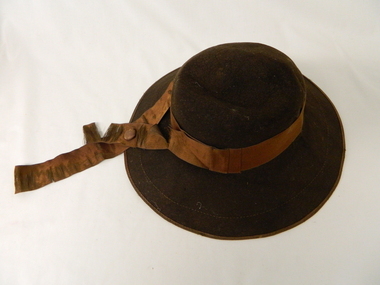
Hat Child's Felt, Circa mid 1900's
... wear social head dress church hats 6 and one quarter (size tag). Unreadable crest / monogram Brown child's all felt hat size 6 1/4. A broad brim with a lighter brown velvet ribbon head band. Head band has a crossover to the left front with 100 mm extension flowing over the brim. The top of the inside of the head pocket is lined with a soft silk fabric. Hat Child's Felt unknown ladies ...This brown wool felt hat with a broad brim was, by its style, used by a adolescent child for church services. This was worn in a period where church services on Sunday was an important weekly ritual by the whole family. Special (church only) dresses and hats were worn not only to show respect to the church but also part of expected community mores relating to religious beliefs. This behavioural pattern was more entrench in the rural communities than within larger cities. The closeness of smaller rural communities is the main factor regarding social norms. The visible standing within the community was uppermost. The period pre 2000 was a more coheasive family environment ( due to greater intra family activities) which provided better communication and family activities.This "church styled" hat is very significant to the rural lifestyle and its mores. It clearly demonstrates the coheasive force that religion has on the Valley population. The closeness that the semi isolation (at this time) brought about by the Valley's physical land formation and the poor roads within the valley brought families closer together. Not turning up for important social functionsw was duely noted by all (and frowned upon). Mrs E. Fisher lived at Mongan's Bridge in the Kiewa Valley.Brown child's all felt hat size 6 1/4. A broad brim with a lighter brown velvet ribbon head band. Head band has a crossover to the left front with 100 mm extension flowing over the brim. The top of the inside of the head pocket is lined with a soft silk fabric.6 and one quarter (size tag). Unreadable crest / monogramchildren's head wear, social head dress, church hats -
 Kiewa Valley Historical Society
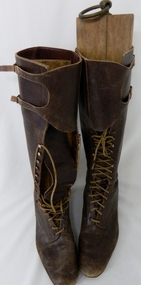
Boots Riding Women's, Circa 1950's
... ladies riding boots. cattle mustering footwear. rural footwear. cattlemen. bogong high plains. roper family. horses. These brown "knee high" lady riding boots, are fastened by long "boot" laces which go from the base of the "fastening" position to a boot height of 22 cm. At the top end of the boot is a leather flap which crosses the front section of the boot and is fastened to the outside leg region by two straps. These provide the wearer ...This pair of "adjustable" boots came from the 1950's era in which the majority of footwear was either locally manufactured or imported from England or Europe. Quality hard wearing leather was a rural necessity especially for the cattle mustering activity in the Kiewa Valley and the Bogong High Plains region. The late 1900's provided a cheaper made riding boot from Asia, however many rural based riders still prefer an Australian made boot. The better quality (stronger stitching) of Australian boots is the main considerations of "stock horse riders". In 1947 a scientific research project started to provide an impact analysis of any damage to alpine vegetation by cattle grazing in the Alpine regions incorporating the Bogong High Plains area. This monitoring is the longest running ecological study ever undertaken in Australia. From this study, compelling evidence was presented to the Victorian Government to cease cattle grazing in the Alpine regions including the Bogong High Plains. All grazing was banned by the Victorian Government in 2005. Recreational horse riding within the Bogong High Plains is still permitted.These pair of women's riding boots are very significant to the Kiewa Valley as the boots were worn by one of the descendants of a pioneer family living and operating a cattle station before the SEC Hydro Electricity Scheme opened up the semi remote rural location in the 1950's. These boots were worn during the annual six weeks (approx.) mustering of cattle in the Bogong High Plains location (Victorian Alps region). The owner of these boots was Clare Roper, part of the Roper Family who built a "lodging" hut on the "High Plains" for accommodating riders during the periods (up to six weeks) when controlling grazing cattle during the summer muster seasons. It was unusual for women in the early to mid 1900's to go up on the High Plains to join the muster, which Clare Roper often did. These boots have high historical significance and good interpretive capacity.These brown "knee high" lady riding boots, are fastened by long "boot" laces which go from the base of the "fastening" position to a boot height of 22 cm. At the top end of the boot is a leather flap which crosses the front section of the boot and is fastened to the outside leg region by two straps. These provide the wearer with an adjustable tie. The boot has a "tongue" of 22 mm long. The boot has six pairs of metal boot lace "hooks" and eight pairs of boot lace "eyelets".ladies riding boots. cattle mustering footwear. rural footwear. cattlemen. bogong high plains. roper family. horses. -
4th/19th Prince of Wales's Light Horse Regiment Unit History Room
Medal, Elizabeth II Coronation 1953
... A total of 138,214 medals were issued, including: 11,561 to Australians 12,500 to Canadians Ladies awarded the medal can wear it on their left shoulder with the ribbon tied in the form of a bow. ...A total of 138,214 medals were issued, including: 11,561 to Australians 12,500 to Canadians Ladies awarded the medal can wear it on their left shoulder with the ribbon tied in the form of a bow. ...The Queen Elizabeth II Coronation Medal was a commemorative medal made to celebrate the coronation of Queen Elizabeth II. For Coronation and Jubilee medals, the practice up until 1977 was that the authorities in the United Kingdom decided on a total number to be produced, then allocated a proportion to each of the Commonwealth countries and Crown dependencies and other possessions of the Crown. The award of the medals was then at the discretion of the government of each territory, which was left free to decide who got a medal and why. A total of 138,214 medals were issued, including: 11,561 to Australians 12,500 to Canadians Ladies awarded the medal can wear it on their left shoulder with the ribbon tied in the form of a bow. The medals were issued without inscription except for the 37 issued to the British Mount Everest Expedition. These were engraved MOUNT EVEREST EXPEDITION on the rim.Miniature medal with ribbon. The full size medal is a circular, silver medal, 1.25 inches in diameter. The obverse features a crowned effigy of Queen Elizabeth II, in a high-collared ermine cloak and wearing the collar of the Garter and Badge of the Bath, and facing right. There is no raised rim and no legend. The reverse shows the Royal Cypher EIIR surmounted by a large crown. The legend around the edge reads QUEEN ELIZABETH II CROWNED 2nd JUNE 1953. The dark red ribbon is 1.25 inches (32 mm) wide, with two narrow dark blue stripes (0.09375 inches {3/32"} wide) in the centre (0.0625" apart) and narrow white stripes (0.0625") at each edge. medal elizabeth coronation -
 Bendigo Historical Society Inc.
Photograph - HILDA HILL COLLECTION: BLACK AND WHITE PHOTOS, 1925
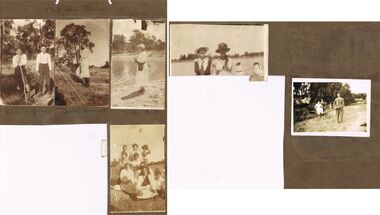
... 'Babe' Noonan contemplating hatless and wearing a white dress and dark stockings, Bill Hill (lady) by lake wears round top hat with the front brim turned up white dress highlights on the lapels black belt with a black bag attached columbine pattern on her stockings standing on dam bank background is forested area. Family Group 'The Push' made up of 7 young ladies...'Babe' Noonan contemplating hatless and wearing a white dress and dark stockings, Bill Hill (lady) by lake wears round top hat with the front brim turned up white dress highlights on the lapels black belt with a black bag attached columbine pattern on her stockings standing on dam bank background is forested area. Family Group 'The Push' made up of 7 young ladies ...Hilda Hill Collection.Series of Black & White Photos Hill Family & Friends Total 5 Photos. Clem & Jim out bush, both boys are wearing dark coloured shorts and long socks boy on left has white stripes at top of the socks with braces white shirts bottom right corner shows a piece of barb fence wire. 'Babe' Noonan contemplating hatless and wearing a white dress and dark stockings, Bill Hill (lady) by lake wears round top hat with the front brim turned up white dress highlights on the lapels black belt with a black bag attached columbine pattern on her stockings standing on dam bank background is forested area. Family Group 'The Push' made up of 7 young ladies and 4 boys one of which wears a hat one girl is dressed in black all others are in white on girl is wearing a hat with another on the ground beside her girl front right has a s part black bag hanging around her neck. Hilda Hill on 2 steel wheeled apparatus with long shaft at the front being held by a man dressed in grey suit with white shirt and dark tie another man is standing rear right of the girl also wearing grey suit white shirt and dark tie, Mid left side shows a heavy wheeled cart loaded with full bags at Summer Hill March 8, 1925. rear background has large willow tree, right background shows corner of large shed and haystack Also noted in pencil -At The Pines 1919. There is also a photo of two ladies facing the camera both wearing hats one light and the other dark colours lady on left is wearing dark jacket over a white dress lady on right wearing white dress and long tress forward over her shoulder two other ladies have their backs to the camera both wearing white one has black sash at her waist and head coverings, The venue appears to be a large dam and background shows far shore and bushland.Hilda Hill Personal Collectionaustralia, history, post war life -
 Bendigo Historical Society Inc.
Photograph - HILDA HILL COLLECTION: BLACK AND WHITE PHOTOS, 1919-1924
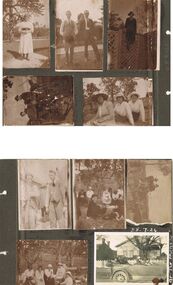
... Group of men and women enjoying a picnic two of the men are seated and both wear dark hats and dark suits with white shirts and dark ties, all of the ladies are wearing hats white blouses, one a light coloured skirt and other 2 dark skirts, bush setting with hill in background, Hibernian Picnic 1919. ...Group of men and women enjoying a picnic two of the men are seated and both wear dark hats and dark suits with white shirts and dark ties, all of the ladies are wearing hats white blouses, one a light coloured skirt and other 2 dark skirts, bush setting with hill in background, Hibernian Picnic 1919. ...Black & White Photographs Series of 10 depicting life for the Hill Family in 1919, young lady standing near large tree wearing a white dress with black waist sash and dark stockings rear background shows the gable roof and 4 chimneys all behind a large hedge, Durvol December 14 1919 In garden setting man on left wearing grey trousers and what appears to be a bag attached via a string to his waist, grey waistcoat white shirt and dark tie, other gentleman is wearing a dark suit white shirt and dark tie,background shows a hedge and tops of trees, a gable roofed building looms above hedge to centre right, Durvol December 14 1919. Dark photo shows a young lady sitting at the top of a trellis fence, she is wearing dark clothing, her blouse has a white collar, hat with bow above her right shoulder, background shows the tops of two trees, Durvol August 1919. 1 man dressed in dark suit and hat, one boy sitting on the seat, both boys are wearing dark clothing and the boy standing is also wearing long dark socks and boots, the large two wheeled carriage, to the right is a gable roofed shed and top right background a large tree branch, Durvol August 3 1919. 3 ladies seated on the ground first lady on left wears a large brimmed hat with light coloured clothing, other 2 ladies are wearing white blouses and dark skirts each with a light coloured hats. 3 men 2 facing the camera and the other facing to the rear, the front 2 are wearing grey trousers and waistcoats man on right has dark tie and smoking a pipe, man facing the rear wears a hat and grey suit, gable roof of a building is in the background November 29 1919. Group of men and women enjoying a picnic two of the men are seated and both wear dark hats and dark suits with white shirts and dark ties, all of the ladies are wearing hats white blouses, one a light coloured skirt and other 2 dark skirts, bush setting with hill in background, Hibernian Picnic 1919. Four wheeled carriage drawn by one dark horse, the two passengers are dressed in dark suits and hats, a whip is mounted in the front foot well, right background is a standing lady dressed in a white blouse and dark skirt, also tree in left background, 25 July 1924. Group of ladies seated two wearing light coloured hats and all wearing white blouses four are in dark skirts, background is wooded area right background is a post and rail fence, Hibernian Picnic 1919. Old vehicle with five passengers, two ladies in the front one driving and a man and two more ladies in the rear seat, all are wearing dark clothing, gabled roof house in background with white picket fence, left background shows another gable roofed building two chimneys dark appearance.Hilda Hill Personal Collectionaustralia, history, post war life -
 Bendigo Historical Society Inc.
Photograph - HILDA HILL COLLECTION: BLACK AND WHITE PHOTOS, 1921-1924
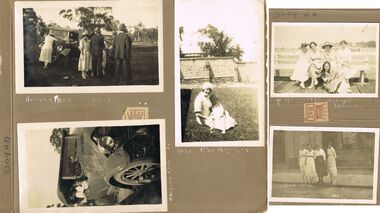
... Posing for photo after a swim Queenscliff February 1921, four ladies dressed in white two wearing hats 1 boater1 broad brimmed, Dressed For Dinner on a Sunday Rita, Dora, Doreen and Zita, two on left are dressed in white one with black band at waist, third girl wears a white blouse and dark skirt girl at right white top and patterned dress, all appear to have necklaces date unknown, Leisure time at Hanging Rock 1923, Five men all in dark suits with white shirts and hats, four ladies two wearing white dresses one with large brimmed hat another hidden by a man dress has circular pattern, two vehicles of the same make canvas roofs no side curtains, note small circular windows at back, Hanging rock 1 January 1923, background large trees. ...Posing for photo after a swim Queenscliff February 1921, four ladies dressed in white two wearing hats 1 boater1 broad brimmed, Dressed For Dinner on a Sunday Rita, Dora, Doreen and Zita, two on left are dressed in white one with black band at waist, third girl wears a white blouse and dark skirt girl at right white top and patterned dress, all appear to have necklaces date unknown, Leisure time at Hanging Rock 1923, Five men all in dark suits with white shirts and hats, four ladies two wearing white dresses one with large brimmed hat another hidden by a man dress has circular pattern, two vehicles of the same make canvas roofs no side curtains, note small circular windows at back, Hanging rock 1 January 1923, background large trees. ...Combination Sepia and Black & White Photos Total 5 dated from 1921-1924 depicting life for the Hill family at that time. Posing for photo after a swim Queenscliff February 1921, four ladies dressed in white two wearing hats 1 boater1 broad brimmed, Dressed For Dinner on a Sunday Rita, Dora, Doreen and Zita, two on left are dressed in white one with black band at waist, third girl wears a white blouse and dark skirt girl at right white top and patterned dress, all appear to have necklaces date unknown, Leisure time at Hanging Rock 1923, Five men all in dark suits with white shirts and hats, four ladies two wearing white dresses one with large brimmed hat another hidden by a man dress has circular pattern, two vehicles of the same make canvas roofs no side curtains, note small circular windows at back, Hanging rock 1 January 1923, background large trees. Nurse in all white nursing Rosa also dressed in white in the grounds of the Bendigo Base Hospital 1924. Two girls one in drivers seat and other in back-seat both dressed in white another persons left hand on the back door of the car Hanging Rock 1 January 1923.Hilda Hill Personal Collectionaustralia, history, post war life -
 Bendigo Historical Society Inc.
Photograph - HILDA HILL COLLECTION: BLACK AND WHITE PHOTO, 1919-1924
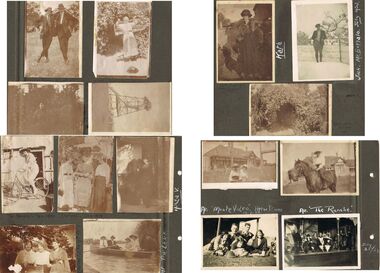
... ladies are all in light coloured clothing and also wearing large brimmed hats. Kath wearing a black dress with a fox skin stole and holding a large bag in her right hand in garden setting, left background is a corrugated iron fence with wooden top rail, to the right is the wall of a building, September 1919 'the Ranche'. Jack wearing a black coat and jodhpurs with a white high neck jumper leaning on a wire and netting farm type fence, Mt. Buffalo July 1923. Photo of a 'Rosebower' in a garden corner, right shows part of a picket fence, wear...ladies are all in light coloured clothing and also wearing large brimmed hats. Kath wearing a black dress with a fox skin stole and holding a large bag in her right hand in garden setting, left background is a corrugated iron fence with wooden top rail, to the right is the wall of a building, September 1919 'the Ranche'. Jack wearing a black coat and jodhpurs with a white high neck jumper leaning on a wire and netting farm type fence, Mt. Buffalo July 1923. Photo of a 'Rosebower' in a garden corner, right shows part of a picket fence, wear ...Hilda Hill Collection. Combination of Sepia and Black & White Photos. (Total 16.) two men with arms on each others shoulders, both with legs crossed, background shows large group of people and large trees, Hibernian Picnic November 19th 1919. Elderly lady holding two bird cages with birds therein standing in front of large flowering bush, the lady is dressed in all white and her hat lies on the ground in front of her, the hat appears to have flowers on the brim. Mrs Mc'Rosebower' October 1919. Hilda V. Standing with a background of shrubbery, wearing a dark dress, photo not very clear, 'The Ranche' March 1921. The Pinnacle One Tree Hill, people on the top lookout area and the wooden staircase for access, note the iron roof at the first level to provide shelter at ground level, April 1920. Lady on a ladies bicycle, dressed in geometric patterned dress, in front of an old shed with a corrugated iron roof. The bicycle has a front and rear mudguard, 'The Ranche' January 1920. Three ladies, the lady on the left is wearing a white dress with a black belt and holding in her right hand a small bag with a handle, the middle lady is wearing a dress of another colour with three strips of material at different levels on the front and holding her hands at her waist, also wearing lace up boots, lady to the right is wearing a white blouse and a dark skirt and her hands behind her back, background is garden, 'Durvol' December 1919. Photo of young girl dressed in black standing next to a small bush with her back to a house exterior wall, to the left is a white wall, NO Details.Three ladies standing beneath a large tree arm in arm, left girl is wearing a white top with a black belt and dark skirt, Centre girl is wearing a white top and dark skirt, girl at right wearing coloured? Dress with matching sash belt,'Durvol' December 19th 1919. Two men and three ladies in a rowing boat on lake Weeroona, both men are wearing dark suits and hats, the ladies are all in light coloured clothing and also wearing large brimmed hats. Kath wearing a black dress with a fox skin stole and holding a large bag in her right hand in garden setting, left background is a corrugated iron fence with wooden top rail, to the right is the wall of a building, September 1919 'the Ranche'. Jack wearing a black coat and jodhpurs with a white high neck jumper leaning on a wire and netting farm type fence, Mt. Buffalo July 1923. Photo of a 'Rosebower' in a garden corner, right shows part of a picket fence, wear and tear indicates that a gate may be in the fence accessible through the bower, October 1919. Two ladies holding tennis racquets, dressed in white blouses with one dark dress and the other a lighter shade sitting on stool inside a netted tennis court, both ladies are wearing large brimmed hats, background is a house with a water tank on the left end, three decorative chimneys, tiled roof, decorative panelling below the guttering, 'Kilmuir' October 1919. Lady on dark coloured horse, the lady is wearing a white blouse and jodhpurs and a large brimmed hat, background is house showing a bow window three chimneys and a small portion of the decorative fretwork below the gutter line of the verandah, 'Kilmuir' October 1919. Two young men dressing collar and tie one wearing a coat and three young ladies reclining on the ground, girl on the left is wearing a light coloured dress white blouse and cardigan, middle girl wearing a short sleeved top, right lady is wearing white blouse and dark coat, in foreground there appears to be a pudding meat and a wine bottle, left edge another male can be partially seen lying on the ground with a bottle in his left hand, at 'Monte Video' after dinner 18 July 1924. Ten people sitting and standing on a veranda, 'The Ranche', celebrating an event, small 4 wheel table with food, person front left holding a white cup and saucer, July 1924.australia, history, victoria post war touring boom, http://www.yourbrisbanepastandpresent.com/2012_02_01_archive.html -
 Bendigo Historical Society Inc.
Photograph - HILDA HILL COLLECTION: BLACK AND WHITE PHOTOS, 1917-1922
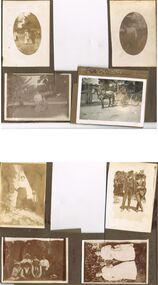
... Horse & 4 wheeled Gig, man seated wears a dark suit with white shirt and dark tie, horse appears to be a grey colour, background shows bull nose veranda roof and part of a house gable, tree in framework on nature strip. Nell wearing a dark skirt and white top, right hand touching a shrub, white structure in the background, 'The Ranch' Eppalock November 1918. Botanical Gardens group photo, six young ladies...Horse & 4 wheeled Gig, man seated wears a dark suit with white shirt and dark tie, horse appears to be a grey colour, background shows bull nose veranda roof and part of a house gable, tree in framework on nature strip. Nell wearing a dark skirt and white top, right hand touching a shrub, white structure in the background, 'The Ranch' Eppalock November 1918. Botanical Gardens group photo, six young ladies ...Series of Black & White Photos Total 8 Hill Family & Friends during the final years of World War I and into the touring boom of the 1920s. Lady dressed in all white, with dark coloured scarf over her shoulder, parasol in her right hand, in conversation with The Dean January 28th 1918.Oval photo of young girl dressed in dark skirt and white blouse in bush setting with trees in background, photo not very clear, 'Durvol' Kyneton 1918. Mollie & Babe Railway Reserve Kyneton, girl in light coloured dress reclining on the ground, other girl in kneeling position wears dark skirt and white blouse, palm tree to the left background, further back is paling fence, shrubbery to the right background, 1918. Horse & 4 wheeled Gig, man seated wears a dark suit with white shirt and dark tie, horse appears to be a grey colour, background shows bull nose veranda roof and part of a house gable, tree in framework on nature strip. Nell wearing a dark skirt and white top, right hand touching a shrub, white structure in the background, 'The Ranch' Eppalock November 1918. Botanical Gardens group photo, six young ladies, one wearing a vertical striped dress, three wear dark dresses with white blouses, two wear white blouses and dark skirts, one black hat and three light coloured, light hat in right foreground, January 1919. Jack & Mick in dark suits, white shirts, striped ties, shrubbery in the background, long trousers 'The Ranch' Eppalock January 14th 1917. two young ladies in all white, one holding a hat, young boy in dark clothing white shirt and dark tie, holding long stick, large shrub in the background, 'The Pines' Kyneton January 1919.Hilda Hill Personal Collectionaustralia, history, post war life -
 Bendigo Historical Society Inc.
Photograph - HILDA HILL COLLECTION: BLACK AND WHITE PHOTOS, 1917-1918
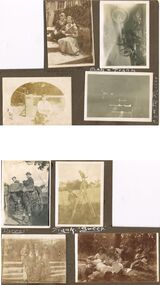
... Six young ladies , three standing and three seated on a white wooden railing fence, all dressed in lightly coloured outer wear, some showing white blouses Kyneton Mineral Springs 27th September 1918. ...Six young ladies , three standing and three seated on a white wooden railing fence, all dressed in lightly coloured outer wear, some showing white blouses Kyneton Mineral Springs 27th September 1918. ...Series of Black & White Photos Hill Family & Friends Life During The Final Years of The First World War. Hilda Hill and another, seated on steps , background building weatherboard construction and glass windows,girl at rear wearing dark dress with check scarf around her neck, girl at front wearing a lighter colour dress and white blouse, and medal on ribbon around her neck, S.H.L.C. November 1917. Jack & Frank, both dressed in dark suits white shirts and dark ties, man standing outside of vehicle with right arm resting on the car and one foot on the running board, with the family car, dark colour with wooden spoke wheels. Francie, wearing dark skirt and white blouse & the dog, kneeling in front of a netting fence with top rail, background is corrugated iron shed wall. Easter 1918. Man in dark suit white shirt and dark tie holding a tennis racquet over his head, brick wall to left and doorway, on the verandah of 'The Ranche' property. Horse & Gig, man and boy seated on the gig and boy standing behind all dressed dark clothing, man wearing a hat, boy at rear wearing shorts and long socks with boots, to right gable roof shed, 'Durvol' property Kyneton Victoria Australia. Frank & Sweep the dog up a ladder, high paling fence in right background. Six young ladies , three standing and three seated on a white wooden railing fence, all dressed in lightly coloured outer wear, some showing white blouses Kyneton Mineral Springs 27th September 1918. Group of four young ladies all dressed in white and wearing broad brimmed hats, two men one sitting and one lying on the ground, man at rear white shirt and dark tie with broad brimmed hat, man at front, dark trousers and white shirt with dark waistcoat, no person has been identified in this photo, In the shade Hanging Rock?Hilda Hill Personal Colllectionaustralia, history, post war life -
 Bendigo Historical Society Inc.
Photograph - HILDA HILL COLLECTION: BLACK AND WHITE PHOTOS, 1922
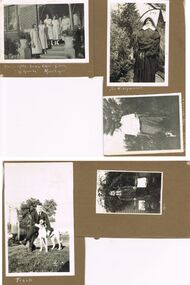
... Ladies Day Out: Alma, Kitty, Lorna Claire & Eileen, all the ladies are dressed in white, lady at front wears dark stockings others are wearing white stockings and shoes, first two are standing on the steps and the others are on the verandah, two stone pillars with garden pots on them, Window of house to the left and curtains hanging inside, 'The Ranche' March 1922. ...Ladies Day Out: Alma, Kitty, Lorna Claire & Eileen, all the ladies are dressed in white, lady at front wears dark stockings others are wearing white stockings and shoes, first two are standing on the steps and the others are on the verandah, two stone pillars with garden pots on them, Window of house to the left and curtains hanging inside, 'The Ranche' March 1922. ...Series of Black & White Images depicting life for the Hill Family and Friends During 1922 Post War Boom. Total 5 Photos. Ladies Day Out: Alma, Kitty, Lorna Claire & Eileen, all the ladies are dressed in white, lady at front wears dark stockings others are wearing white stockings and shoes, first two are standing on the steps and the others are on the verandah, two stone pillars with garden pots on them, Window of house to the left and curtains hanging inside, 'The Ranche' March 1922. (Aunt Mabel) Sister M. Alphonsus, dressed in dark habit with rosary hanging from her waist, arms crossed, standing in archway covered with vine, to right a spire can be seen. Uncle Percy in South America with Fox Terrier, holding a gun in his left hand, garden setting with palm trees. Frank, dressed in black suit white shirt and dark tie with his hands around a Hound Dog enjoying some R&R. Ken with his tennis racquet, in his dark coloured uniform white shirt and dark tie, standing between two chairs holding a tennis racquet and ball, both chairs have a white cloth backing, left chair with object on seat and large vase on the ground, trellis to the right, weatherboard to the left and shrub.Hilda Hill Personal Collectionaustralia, history, post war life -
 Bendigo Historical Society Inc.
Photograph - HILDA HILL COLLECTION: BLACK AND WHITE PHOTOS, 1919
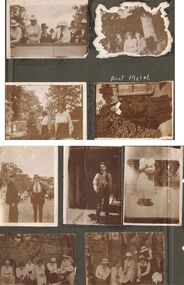
... Overexposed photo of girl dressed in white, wearing a pinafore apron, White blouse, dark stockings, holding a mixing bowl and a spoon in her right hand, Durvol 14 December 1919. group of ladies, three in all white three in dark skirts and white blouses, two ladies have dark coloured hats and one other three wear white hats, November 12 1919. ...Overexposed photo of girl dressed in white, wearing a pinafore apron, White blouse, dark stockings, holding a mixing bowl and a spoon in her right hand, Durvol 14 December 1919. group of ladies, three in all white three in dark skirts and white blouses, two ladies have dark coloured hats and one other three wear white hats, November 12 1919. ...Series of Black & White Images depicting the life of the Hill Family and their friends during the year 1919. Total 9 photos. The Annual Hibernian Picnic Axedale Nail Driving Competition H. Hill Awarded 2nd Prize November 12, 1919. Threesome two males and one female, one male dressed in a dark suit white shirt and dark tie other wearing grey suit white shirt and dark tie, lady in the middle wearing a white dress with a dark sash at her waist, seated on the ground next to a large tree trunk and more shrubbery in background, under the shade of the trees Durvol property Kyneton Victoria Australia December 14 1919. Group of young ladies standing in a garden setting, lady at left wearing a dark dress and other two wearing white dresses and dark skirts, background shows picket fence with hedge covering parts , light post and wiring, driveway iron gates and letter box beside gate post Durvol December 19 1919. Aunt Mabel in her habit at 'The Ranche' January 1919. Two gentlemen, D. & E., dressed in dark suits with white shirts and dark ties, one showing a hint of braces and also has his hands in pockets, number of people in the background wearing varying combinations of white and dark clothing, tent peak, to the left small section of a gable roof on a structure, Hibernian picnic November 12 1919. Young man standing on wooden floor wearing waistcoat with double watch chain and dark trousers, right rear is a steel lounge covered with cushions, to the left is a verandah post, 'The Ranche' November 1919. Overexposed photo of girl dressed in white, wearing a pinafore apron, White blouse, dark stockings, holding a mixing bowl and a spoon in her right hand, Durvol 14 December 1919. group of ladies, three in all white three in dark skirts and white blouses, two ladies have dark coloured hats and one other three wear white hats, November 12 1919. Another group of young ladies, and two males, two ladies in all white, three young ladies in dark dresses with white collars, upturned cup on post, two males are dressed in dark suits and hats, both wear white shirts and dark ties, man on right is holding a white cloth with a teacup on top, large tree trunks in background and sloping ground, November 12 1919.Hilda Hill Private Collectionaustralia, history, post war life -
 Bendigo Historical Society Inc.
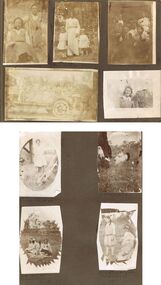
Photograph - HILDA HILL COLLECTION: BLACK AND WHITE PHOTOS, 1918
... Two ladies in foreground both wearing white, one also wears black hat and scarf, to left on stump is a light coloured hat and white coat, background has girl dressed in white blouse and dark skirt and further back can be seen more people, Hibernian Picnic 13 November 1918. ...Two ladies in foreground both wearing white, one also wears black hat and scarf, to left on stump is a light coloured hat and white coat, background has girl dressed in white blouse and dark skirt and further back can be seen more people, Hibernian Picnic 13 November 1918. ...Series of black and white photos depicting The Hill family and friends during the post war years. Total number 9 photos. Two young ladies one seated in a deck chair and the other to the right standing with her right arm on the back of the chair, both girls wearing pinafores and white blouses at Brighton January 1918. Mog and two small girls all wearing white standing in front of a wooden structure and garden in background, Bendigo 1918. group of four girls and four boys, three of the girls are dressed in white and the fourth in a darker colour, one of the boys is wearing a white shirt and waistcoat two of them are in white shirts, two in middle background are indistinct, 17 Clive road January 1918. Double exposure gives the outline of a car in front of a white picket fence, right foreground at rear of car there is a group of adults and children that is indistinct for details, St Patrick's procession 1918 and family car. Rosa in light coloured dress with white collar, garden setting 'Moorilim' October 1918.Unnamed girl 'a Vision' wearing a white dress sitting on a wooden stump that is part of a building support, to left is a man in dark waistcoat and trousers with a white shirt sitting on the ground with his back to an axle with two large wheels, and a building support, Hibernian Picnic Axedale November 13 1918. Two ladies in foreground both wearing white, one also wears black hat and scarf, to left on stump is a light coloured hat and white coat, background has girl dressed in white blouse and dark skirt and further back can be seen more people, Hibernian Picnic 13 November 1918. 'three Merry maids' sitting on blanket on the ground two dressed in full white and third white top and dark dress, more people in the far background, Hibernian picnic Axedale 13 November 1918. Mrs Cavagna and Carmy, young girl dressed white dress with black belt and long white socks and black shoes, seated lady in white dress and dark hat with black veil, number of people in the far background, Hibernian picnic 13 November 1918.Hilda Hill Personal Collectionaustralia, history, post war life -
 Bendigo Historical Society Inc.
Clothing - LYDIA CHANCELLOR COLLECTION: SHOES
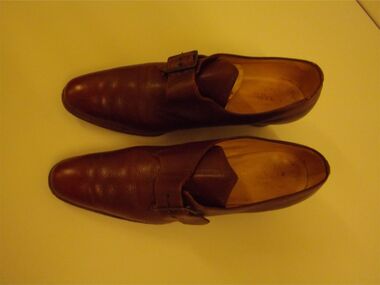
... COSTUME ACCESSORIES Footwear accessories shoes Lydia Chancellor collection shoes fashion costume costume accessories foot wear foot wear accessories A shoebox containing a pair of ladies brown leather high heeled shoes with strap and buckle on the top. ...A shoebox containing a pair of ladies brown leather high heeled shoes with strap and buckle on the top. One end of the box contains the words 'Bedggood friendly footwear 45-51 33/6 'good company all day long.' The other end has the words, ' R.O. Henderson's Bendigo. Navy. Pinched court. Size 4. Shape marina. Price 33/6. Each shoe is stuffed with a cream knee high sock.costume accessories, footwear accessories, shoes, lydia chancellor, collection, shoes, fashion, costume, costume accessories, foot wear, foot wear accessories -
 Bendigo Historical Society Inc.
Magazine - HANRO COLLECTION: HANRO AUTUMN-WINTER CATALOGUE 1963, 1963
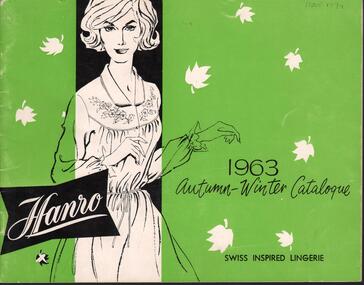
... Each page has sketches of ladies in nightgowns, night dressers, Pyjamas, Vests, Panties, Spencers and Children's wear. ...Each page has sketches of ladies in nightgowns, night dressers, Pyjamas, Vests, Panties, Spencers and Children's wear. ...The Hanro company was established in Switzerland in 1884. In 1926 a site in Hargreaves Street Bendigo, behind the School of Mines, was purchased to establish the Bendigo Knitting Mills, a subsidiary of Hanro. The managing director was Charles Handerchin who came from Switzerland. The company was delisted from the Australian Stock Exchange in 1963 when it was taken over by John Brown Industries.Hanro Autumn-Winter Catalogue 1963: On card with a lime green background and in black ink is white autumn leaves scattered across the page. Off to the left is a sketch of a lady in a dressing gown that has long sleeves with ruffled edges, draw in the waist with a ribbon decorative bodice with flowers and a collar. On the left in a star shaped banner printed in white on a black back ground is *Hanro*. On the right is *1963 Autumn-Winter Catalogue. Swiss Inspired Lingerie. The catalogue is of gloss paper with advertising inside the first page. Each page has sketches of ladies in nightgowns, night dressers, Pyjamas, Vests, Panties, Spencers and Children's wear. Each item has an item number, description, size and colour. On the back cover of lime green back ground is white autumn leaves scattered around. In a white star shaped banner is *Hanro in black print and to the side (Aust) Knitting Mills Ltd. Underneath is the sales offices addressed and phone numbers in each state.. At the bottom is *The Quality is a Proud Tradition*. Box 116ACambridge Press, Bendigobook, magazine, catalogue, hanro. catalogue. cambridge press, bendigo -
 Bendigo Historical Society Inc.
Magazine - HANRO COLLECTION: HANRO SPRING-SUMMER CATALOGUE 1962, 1962
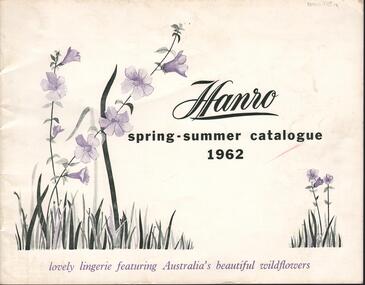
... Inside the catalogue on white gloss paper are sketches of ladies wearing matching Negligee/Night set, night wear, Pyjamas, Petticoats, Vests Briefs, scanties', Panties, Bed Jackets, half slips, house coats and spencers. ...Inside the catalogue on white gloss paper are sketches of ladies wearing matching Negligee/Night set, night wear, Pyjamas, Petticoats, Vests Briefs, scanties', Panties, Bed Jackets, half slips, house coats and spencers. ...The Hanro company was established in Switzerland in 1884. In 1926 a site in Hargreaves Street Bendigo, behind the School of Mines, was purchased to establish the Bendigo Knitting Mills, a subsidiary of Hanro. The managing director was Charles Handerchin who came from Switzerland. The company was delisted from the Australian Stock Exchange in 1963 when it was taken over by John Brown Industries.Hanro Spring-Summer Catalogue 1962: The cover is of card with a white background and black, green and mauve print. Printed on the cover in black is *Hanro* Spring-Summer Catalogue 1962* To the left is green leaves with mauve wild flowers on two stems and to the right side corner is also green leaves and two stems of mauve wild flowers. Underneath in mauve print is *lovely lingerie featuring Australia's beautiful wildflowers. Inside the cover is advertising the line. Inside the catalogue on white gloss paper are sketches of ladies wearing matching Negligee/Night set, night wear, Pyjamas, Petticoats, Vests Briefs, scanties', Panties, Bed Jackets, half slips, house coats and spencers. Each item has a number, description, size and colour. The back page has advertising. A green paper sheet has been inserted with the retail selling price list with item number size range and price. Over the page has the trade price, item number size etc. On the back cover on a white background is a box with a back border and *Hanro* printed inside along with the Sales Office, address and phone number in each State. Box 116ACambridge Press, Bendigobook, magazine, catalogue, hanro. catalogue. cambridge press, bendigo -
 Bendigo Historical Society Inc.
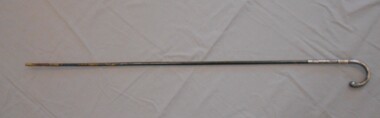
Accessory - MAGGIE BARBER COLLECTION: LADIES WALKING CANE, 1920's
... ladies walking cane On base of longer metal 935…. Object. Finely tapered wooden cane- .7 cm diameter at base and .9 cm at base of metal handle. The rounded top, forming a handle is metal and while some numbers are visible,I do not think that there is a hallmark to indicate silver No 935 and some indistinguishable letters. The metal extends around the handle and 10.5 cm down the cane. A 2.5 cm wide ''bracelet'' of a different metal encircles the cane, over the top of the darker metal. The cane has a covering of black paint, which is showing wear ...Object. Finely tapered wooden cane- .7 cm diameter at base and .9 cm at base of metal handle. The rounded top, forming a handle is metal and while some numbers are visible,I do not think that there is a hallmark to indicate silver No 935 and some indistinguishable letters. The metal extends around the handle and 10.5 cm down the cane. A 2.5 cm wide ''bracelet'' of a different metal encircles the cane, over the top of the darker metal. The cane has a covering of black paint, which is showing wear and tear. The cane has a 2.7 cm metal tip-possibly brass. This is engraved with two fine metal rings.On base of longer metal 935….costume accessories, female, ladies walking cane -
 Warrnambool and District Historical Society Inc.
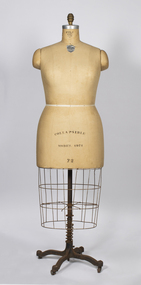
Functional object - Dressmaker's model, Wolf Form and Co. (New York), 1971
... ladies' clothing made at the factory. David Fletcher Jones (1895-1977) served in World War One and in the 1920s set up as a travelling hawker selling drapery in Western Victoria. In 1924 he opened a men's wear...ladies' clothing made at the factory. David Fletcher Jones (1895-1977) served in World War One and in the 1920s set up as a travelling hawker selling drapery in Western Victoria. In 1924 he opened a men's wear ...This dressmaker's model has been made by a New York firm (1971 model) and comes from the Fletcher Jones Factory in Warrnambool. It would have been used for making and displaying ladies' clothing made at the factory. David Fletcher Jones (1895-1977) served in World War One and in the 1920s set up as a travelling hawker selling drapery in Western Victoria. In 1924 he opened a men's wear shop in Warrnambool and manufactured in sute. In 1946 a Fletcher Jones shop opened in melbourne and in 1948 a factory was established in Warrnambool with a new company, Fletcher Jones and Staff begun in 1951. The company initially specialized in men's trousers but later expanded into both men's and women's clothing. It became an Australia-wide company known throughout the country until it ceased in 2011 and the Warrnambool factory buildings were sold.This dressmaker's model is of considerable interest as a memento of the Fletcher Jones and Staff Company, founded in Warrnambool, employing many local people for a great number of years and known throughout Australia for its quality products and pioneering business model as a founder and staff co-operative.This is a dressmaker's model with the body section (bust and torso) having a fabric cover over a wooden core. The top section is bronze-coloured with a silver rim. Beneath the body section is a wire frame and a metal base on castors. The castors are rusty and the fabric is broken in places. Collapsible model 1971 22 WOLF FORM Registered perfect model forms N Y 140 5th Avefletcher jones and staff, fletcher jones factory warrnambool, warrnambool history -
 Warrnambool and District Historical Society Inc.
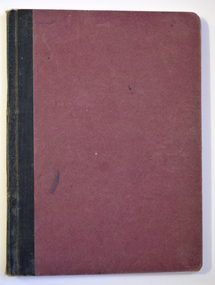
Book - Hospital Auxiliary Minute Book, Secretary of Allans Forest Red Cross Hospital Auxiliary, 1925-1930
... wear. The hospital would provide tins of fat for the ladies to make the soap. ...wear. The hospital would provide tins of fat for the ladies to make the soap. ...This book contains the Minutes and financial details from the Allans Forest Red Cross Hospital Auxiliary from 1925 to 1930. Allans Forest is a small locality on the Great Ocean Road about three kilometres from the township of Allansford on the eastern fringe of Warrnambool. The Hospital Auxiliary was formed as an extension of the Allansford group in 1925 to provide support for the Warrnambool and District Hospital. The group raised funds with dances and jumble sales and donated to the hospital such items as groceries (especially home made jams and soaps), hospital linen and baby wear. The hospital would provide tins of fat for the ladies to make the soap. This exercise book is of interest as a memento of the activities of a small group in a small settlement in the Warrnambool area nearly a hundred years ago. It shows the reliance in the past of a town hospital on local groups to provide basic items such as food and linen.This is an exercise book with a dark red cardboard cover and black binding on the spine. The pages have ruled black lines and handwritten entries in ink. Some pages are blank.Allan's Forest Red Cross Hospital Auxiliaryallans forest, warrnambool and district hospital, allans forest red cross -
 Warrnambool and District Historical Society Inc.
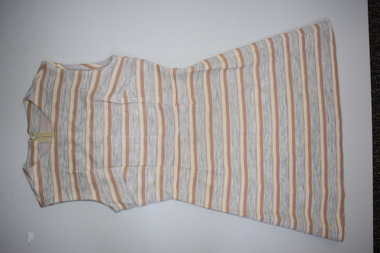
Dress, Jacket, 1960s-70s
... wear and would perhaps have been worn with a hat, gloves and high heels. This ensemble is retained as an example of a women’s outfit worn in the 1960s and 70s. It will be useful for display. Ladies ...This ensemble would have been worn early in the second half of the 20th century. It would have been worn on special occasions rather than for everyday wear and would perhaps have been worn with a hat, gloves and high heels. This ensemble is retained as an example of a women’s outfit worn in the 1960s and 70s. It will be useful for display. This is a cotton wove dress and jacket in matching material. The pattern has bands width-ways and is in grey, brown and cream colouring. The dress is sleeveless with a rounded neckline and a zip at the back. The skirt section is slightly flared. The jacket has short sleeves and finishes at the waistline. The jacket has four buttons and a small collar.ladies fashions -
 Chiltern Athenaeum Trust
Clothing - Pair of gloves and an umbrella/parasol cover, Unknown
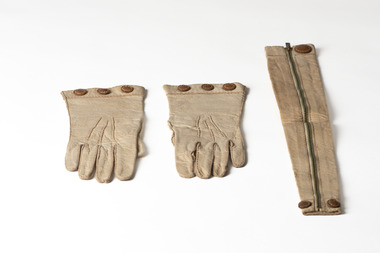
... Although particular styles for evening-wear gloves altered throughout the 20th Century, the classic neutral leather glove was a staple throughout Australian ladies' fashion during this time. ...Although particular styles for evening-wear gloves altered throughout the 20th Century, the classic neutral leather glove was a staple throughout Australian ladies' fashion during this time. ...Ladies’ gloves were an essential part of life in the 1840s to 1900 Victorian era, regardless of class most ladies wore gloves. The glove design, material, and fit would hint at a lady's status, despite their hands being covered. A shorter style of glove would have been used for daytime wear, along with the matching parasol cover and would be matched to the owner's outfit. Leather was a material often used since the 1900s, however when WWI hit the price of leather gloves increased and many resorted to cheaper materials for their accessories. Although particular styles for evening-wear gloves altered throughout the 20th Century, the classic neutral leather glove was a staple throughout Australian ladies' fashion during this time. The need for gloves and parasol cover however disappeared in the 1960s when gloves were only used in the winter months as a practicality rather than a fashion accessory.The leather gloves and parasol cover indicate the owner was wealthy and was able to spend money on good quality accessories. This may have been due to the fact that Chiltern was a gold-rush town and would have had some wealthy families living there from the late 19th Century. The leather items are a symbol of such wealth and social signifiance in the rural town of Chiltern.Gloves: Beige colour with brown hand stitched detail on the upper hand - 3 lengths. Brown stitched all around with finger gussets. Three brown leather button detail to the upper cuff (actual leather circular pieces meant to resemble buttons, hand stitched in beige). Umbrella/parasol cover: Same soft leather as gloves and detail, metal zip along the length and tapered to one end. Two leather circular pieces meant to resemble buttons, one missing at the top). chiltern, leather, leather gloves, leather parasol cover, parasol, parasol cover, gloves, wealth, gold rush, chiltern athenaeum museum, chiltern gold rush -
Clunes Museum
Clothing - LADIES NIGHTIE
... MARRIED TO THOMAS FAWCETT CLOTHING NIGHT WEAR HAND MADE WHITE COTTON FULL LENGTH LADIES NIGHT DRESS WITH 3/4 LENGTH SLEEVES. ...THE NIGHTIE BELONGED TO MRS ALICE EVELYN FAWCETT (NEE STANTON). BORN 4/6/1862 DIED 20/5/1951. MARRIED TO THOMAS FAWCETTWHITE COTTON FULL LENGTH LADIES NIGHT DRESS WITH 3/4 LENGTH SLEEVES. LACE TRIM ON SLEEVES AND LACE BODICEclothing, night wear, hand made -
 Brighton Historical Society
Coat, Dustcoat, c.1948
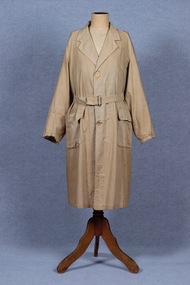
... ladies’ hairdresser and Hughes’ grocer. In 1950 Hughes’ grocery store was between a service station and the Commercial Bank on what had been renamed Nepean Highway. The business was sold to G. S. Maynard, grocer, sometime before 1960. dustcoat occupational dress grocer hughes grocery store brighton frederick alister jennings Garment label reads: APEX (RLG.) Dust Coat DEPT. MYER STORE for MEN. MELBOURNE & ADELAIDE Unlined dustcoat of beige cotton. Fastens centre front with three brown plastic buttons. Two large patch pockets. Separate cloth belt with metal buckle. Signs of wear ...Dust coat worn by Mr Frederick Alister Jennings when he managed a family grocery store circa 1948 at 510 Point Nepean Road, East Brighton. Frederick was born at Nagambie, Victoria in 1909 and died in Brighton in 1979. He was the son of Hugh Edwin Jennings and Alice Constance Warren. He married Margaret Jean Hughes in 1934 and served in the Second World War. He lived at 1 Valda Grove Brighton. Frederick was a commercial traveller as well as his time spent managing the store in Point Nepean Road. It is believed this coat dates from his time at the store c1948 - 1955. The store was owned for many years by his father-in-law W. G. Hughes and was one of a group of shops near the corner of Centre Road. In 1944-45 the group of shops included Fletcher’s fuel merchants, a haberdasher, butcher, fruiterer, grocer, Brighton East post office, a ladies’ hairdresser and Hughes’ grocer. In 1950 Hughes’ grocery store was between a service station and the Commercial Bank on what had been renamed Nepean Highway. The business was sold to G. S. Maynard, grocer, sometime before 1960.Unlined dustcoat of beige cotton. Fastens centre front with three brown plastic buttons. Two large patch pockets. Separate cloth belt with metal buckle. Signs of wear and mending. .1 - coat .2 -beltGarment label reads: APEX (RLG.) Dust Coat DEPT. MYER STORE for MEN. MELBOURNE & ADELAIDEdustcoat, occupational dress, grocer, hughes grocery store, brighton, frederick alister jennings -
 Ballarat Tramway Museum
Photograph - Black & White Photograph/s, State Electricity Commission of Victoria (SECV), late 1940's
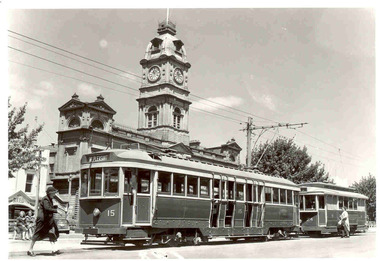
... Two ladies are sitting on a seat with Reid's mens wear shop in the background. ...Two ladies are sitting on a seat with Reid's mens wear shop in the background. ...Yields information about one of the first two maximum traction bogie trams in Ballarat in October 1945 after it had been repainted for use in Ballarat by the SEC and a little photographed single truck tram No. 24. Also has pedestrians in view.Black and White photograph, No. 15 and 24 at the city stop, corner of Lydiard and Sturt Sts, with the Town Hall in the background. No 15 has the destination of Mt Pleasant. Two ladies are sitting on a seat with Reid's mens wear shop in the background. Two other ladies are walking in front of the trams. See also Reg item 3805 for a similar photograph from another angle. No. 15 2nd bogie tram to arrive, 10/1945. Renumbered to No. 36 in 1953. Presumed photo taken during 1940's. See Keith Kings, The Ballarat Tramways, page 36 and The Golden City and its tramways. Additional large prints added 21/3/2021.tramways, trams, bogie trams, town hall, city, tram 15, tram 24 -
 Melbourne Legacy
Photograph - Photo
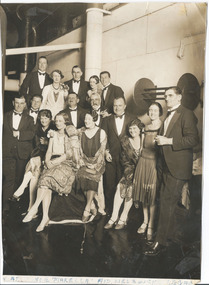
... ladies dresses it could be in the 1930s, making it a very early Legacy photo. The caption 'Marella' could the name of a ship. There was a ship called Marella that was a Burns Philp Line steamer that typically sailed to and from Singapore in the 1930s. An early photo of Legatees at a social function. legatee function founding legatee Written on white border "V AT DANCE 'MARELLA' AID, MELBOURNE LEGACY" in blue pen. Stamped on the back "Kodak Print" in purple ink. Black and white photo of 9 men and 7 women in evening wear ...Appears to be a group of Legatees enjoying an evening function, it appears to be on board a ship. From the ladies dresses it could be in the 1930s, making it a very early Legacy photo. The caption 'Marella' could the name of a ship. There was a ship called Marella that was a Burns Philp Line steamer that typically sailed to and from Singapore in the 1930s.An early photo of Legatees at a social function.Black and white photo of 9 men and 7 women in evening wear.Written on white border "V AT DANCE 'MARELLA' AID, MELBOURNE LEGACY" in blue pen. Stamped on the back "Kodak Print" in purple ink.legatee function, founding legatee -
 Vision Australia
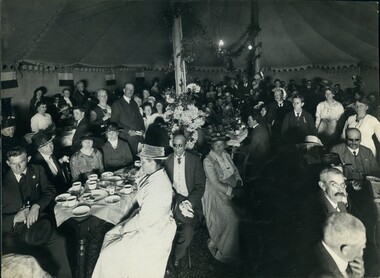
Photograph - Image, Association for the Advancement of the Blind social function, 1900-1930
... The men are dressed in three piece suits with ties and the ladies have floor length dresses and most wear hats. Two men wear darkened glasses. ...The men are dressed in three piece suits with ties and the ladies have floor length dresses and most wear hats. Two men wear darkened glasses. ...A large number of people sit at tables inside a tent/marquee. The men are dressed in three piece suits with ties and the ladies have floor length dresses and most wear hats. Two men wear darkened glasses. Vines and flowers are strung around the two tent poles in the centre,, with one vine attaching both poles and holding a Christmas bell shape between them. On the tables sit cups and small plates, with larger empty plates possibly holding sandwiches or slices, suitable for a garden party event. No people have been identified, although in an associated letter, Phyl Matthews puts forth that that one man is not her grandfather.B/W photograph of group having tea inside a tentassociation for the advancement of the blind, phyllis matthews -
 Federation University Art Collection
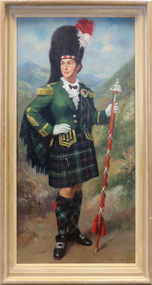
Painting - Artwork - Painting, Portrait of Margaret Bennett: Drum Major of the Ballarat Ladies Pipe Band
... Framed portrait of Margaret Bennett as the Drum Major of the Ballarat Ladies' School of Mines. She wears tartan, blazer and a bearskin hat, and holds a mace....At times Margaret Bennett was a life model for Geoff Mainwaring. ballarat ladies pipe band margaret bennett drum major geoffrey mainwaring alumni available margaret reynolds tartan Framed portrait of Margaret Bennett as the Drum Major of the Ballarat Ladies' School of Mines. She wears tartan, blazer and a bearskin hat, and holds a mace. ...Drum Major Margaret Bennett (formerly Reynolds) attended Ballarat Teachers' College in 1949. She was Drum Major for the Ballarat Ladies Pipe Band from 1950-1975. At times Margaret Bennett was a life model for Geoff Mainwaring. Framed portrait of Margaret Bennett as the Drum Major of the Ballarat Ladies' School of Mines. She wears tartan, blazer and a bearskin hat, and holds a mace.ballarat ladies pipe band, margaret bennett, drum major, geoffrey mainwaring, alumni, available, margaret reynolds, tartan -
 Sunbury Family History and Heritage Society Inc.
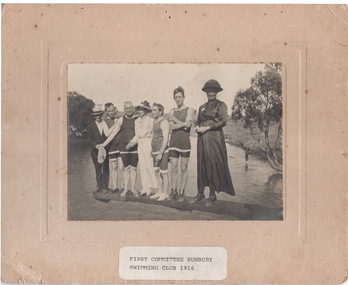
Photograph, Sunbury Swimming Club
... Four men are dressed in swim wear and two ladies are in full length dresses. A man standing on the end of the board is wearing a suit. ...Four men are dressed in swim wear and two ladies are in full length dresses. A man standing on the end of the board is wearing a suit. ...This is a photograph of the first committee of the Sunbury Swimming Club which was formed in 1916. The club used the pool at The Nook near Eadie Street. The area had shade trees, a drink fountain, seats, change rooms and diving boards. In 1966 an Olympic size swimming pool was opened in LIgar Street, as a result of a whole community effort. The site at The Nook became a popular passive recreation area.The pool at The Nook was a popular meeting place for Sunbury residents in the hot summer months for fifty years A non-digital sepia photograph backed onto a beige board of seven people standing on a diving board that is over a natural water hole. Four men are dressed in swim wear and two ladies are in full length dresses. A man standing on the end of the board is wearing a suit. sunbury swimming club, the nook, swimming, sporting clubs
