
Showing 91 items matching "united states air force"
-
 Moorabbin Air Museum
Manual (Item) - USAAF part indexes, AAF Numerical Part Number Index for Property Classification Volume 3 of 9
... United States Army Air Force...United States Army Air Force AAF Numerical Part Number Index for Property Classification Volume 3 of 9 Manual USAAF part indexes ...United States Army Air Force -
 National Vietnam Veterans Museum (NVVM)
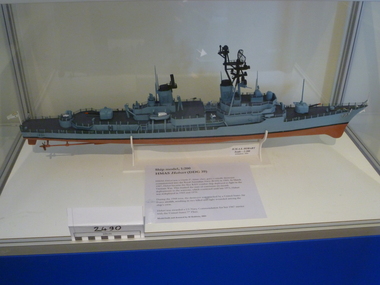
Model - A Scaled Model of HMAS Hobart (DDG 39), HMAS Hobart (DDG 39), 2004 (Approximate)
... This marked the start of consistent in six-month deployments to the warzone, which continued until late 1971; Hobart was redeployed in 19620 and 1970 During 1968, the destroyer was attacked by a United States Air Force aircraft, resulting in two killed and eight wounded among ship's crew. ...This marked the start of consistent in six-month deployments to the warzone, which continued until late 1971; Hobart was redeployed in 19620 and 1970 During 1968, the destroyer was attacked by a United States Air Force aircraft, resulting in two killed and eight wounded among ship's crew. ...A ship model with ratio of 1:200 of HMAS Hobart (DDG39). The highest part is in black, main body is grey and bottom of the ship is peprika. The ship is on a white stand and kept in glassShip model, 1:200 HMAS Hobart (DDG 39) HMAS Hobart was Charles F Adams class, guided missile destroyer commissioned into the Royal Australian Navy (RAN) in 1965. In march 1967, Hobart become the first RAN combat ship deployed to fight in the Vietnam War. This marked the start of consistent in six-month deployments to the warzone, which continued until late 1971; Hobart was redeployed in 19620 and 1970 During 1968, the destroyer was attacked by a United States Air Force aircraft, resulting in two killed and eight wounded among ship's crew. Hobart was awarded a US Navy Commendation for her 1967 service with the United States 7th Fleet.model, model - combat ship, hmas hobart, royal australian navy, ran, us navy commendation, u.s. 7th fleet, guided missile destroyer -
 Lara RSL Sub Branch
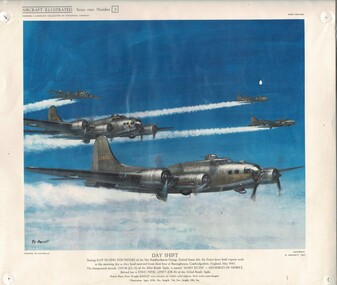
Coloured Print of Boeing B.17F Flying Fortress, Day Shift
... Boeing B.17F Flying Fortresses of the 91st Bombardment Group, United States 8th Air Force leave vapour trails in the morning sky as they head eastward from their base at Bassingbourn, Cambridgeshire, England, May 1943. ...Boeing B.17F Flying Fortresses of the 91st Bombardment Group, United States 8th Air Force leave vapour trails in the morning sky as they head eastward from their base at Bassingbourn, Cambridgeshire, England, May 1943. ...A rectangular Coloured Print of a group of Boeing B.17F's Boeing B.17F Flying Fortresses of the 91st Bombardment Group, United States 8th Air Force leave vapour trails in the morning sky as they head eastward from their base at Bassingbourn, Cambridgeshire, England, May 1943. The foreground aircraft, 229536 (LL-A) of the 401st Bomb SQN. is named "Mary Ruth"- Memories of mobile. Behind her is "Stric Nine, 229475 (OR-R) of the 322nd Bomb SQN. Power Plant: Four Wright R1820-97 nine cylinder air cooled radial engines. Each turbo-supercharged. Dimensions: Span 103ft 9in, Length: 74ft 9in, Height: 19ft 1in. -
4th/19th Prince of Wales's Light Horse Regiment Unit History Room
Flag, 173rd Airborne Brigade (US)
... Air Base and to close with and destroy or capture the enemy. This was in fact the first operational ground force formed under the ANZUS Defence Treaty. ANZUS was a mutual defence treaty signed in 1951 between Australia, New Zealand and the United States of America. ...Air Base and to close with and destroy or capture the enemy. This was in fact the first operational ground force formed under the ANZUS Defence Treaty. ANZUS was a mutual defence treaty signed in 1951 between Australia, New Zealand and the United States of America. ...173 AIRBORNE BRIGADE (SEPARATE) US ARMY 1 RAR BATTLE GROUP BIEN HOA 1965-1966 On May 5, 1965, the Brigade deployed to South Viet Nam as the first US Army ground combat unit in that war. Upon arrival, the 1st Battalion of the Royal Australian Regiment (1 RAR) and a battery from New Zealand (161Royal NZ Artillery) were attached to the Brigade -- making the 173d Airborne the only multi-national combat unit in the war. Initially headquartered in Bien Hoa, the Brigade operated in the four provinces around Saigon. (Xuan Loc, Long Khanh, Phuoc Long & Phuoc Tuy), but (in its roll as a "Fire Brigade") also went to the Central Highlands (Pleiku / Kontum) to fight Viet Cong. The 173d also conducted constant operations against the southern stronghold of the VC Main Force in the legendary Iron Triangle in War Zone D. The brigade was organized as a balanced airborne combat force consisting of two infantry battalions, an artillery battalion, a support battalion, an engineer company, a cavalry troop, an armour company, and a headquarters company. Upon activation, it became the first and only separate airborne brigade in the United States Army. This was the beginning of a long series of "Firsts" for the Brigade. On 5 May 1965, it became the first US Army ground combat unit committed to the war in South Vietnam, where further organizational changes were to take place. Australians attached to the Brigade were: 1st Battalion, of the Royal Australian Regiment (I RAR) and support troops of the 4/19th Prince of Wales Light Horse Regiment (1Troop), 105 Field Battery Royal Australian Artillery, 161 Field Battery Royal New Zealand Artillery, 3 Field Troop Royal Australian Engineers, 161 Reconnaissance Flight, Royal Australian Army Air Corps, 1st Australian Logistical Support Company. The Brigade's two infantry battalions, the First Battalion of the 503' Infantry (1/503`d) and the Second Battalion, of the 503`d Infantry (2/503`) and the attached Australians of 1 RAR constituted the infantrymen available to the Brigade. Their mission was to protect the Bien Hoa Air Base and to close with and destroy or capture the enemy. This was in fact the first operational ground force formed under the ANZUS Defence Treaty. ANZUS was a mutual defence treaty signed in 1951 between Australia, New Zealand and the United States of America. In 1965 the spirit of this treaty appeared as 173d Airborne Brigade (Sep) a tri-national brigade. The only such tri-national fighting force formed during the Vietnam War. On deployment to South Vietnam in 1965, 1 Troop A Squadron, 4th/19th Prince of Wales's Light Horse Regiment was part of the US 173rd Airborne Brigade combat group. Flag, two colours divided vertically, hoist half mid blue, fly half red. Badge of 173rd Airborne Brigade (730 x 490 mm) in centreflag, 173rd airborne, south vietnam -
 Monbulk RSL Sub Branch
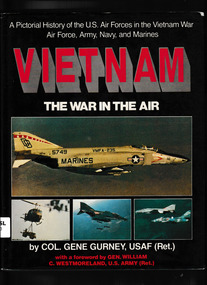
Book, Sidgwick and Jackson, Vietnam, the war in the air : a pictorial history of the U.S. air forces in the Vietnam War, Air Force, Army, Navy and Marines, 1985
... Vietnam war - 1961-1975 - Aerial operations - United States Vietnam war - 1961-1975 - History This book covers US aerial operations from the first entrance of US planes to the evacuation of POW's in 1973 Index, ill, maps, p.227. Vietnam, the war in the air : a pictorial history of the U.S. air forces in the Vietnam War, Air Force ...This book covers US aerial operations from the first entrance of US planes to the evacuation of POW's in 1973Index, ill, maps, p.227.non-fictionThis book covers US aerial operations from the first entrance of US planes to the evacuation of POW's in 1973vietnam war - 1961-1975 - aerial operations - united states, vietnam war - 1961-1975 - history -
 Monbulk RSL Sub Branch
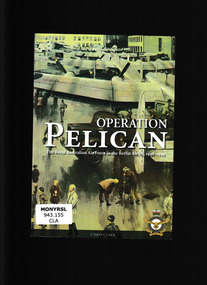
Book, Air Power Development Centre, Operation Pelican : The RAAF in the Berlin Airlift, 1948-1949, 2008
... United States of America found themselves opposed to their former wartime ally, the Soviet Union, over matters regarding control of the capital of the defeated Nazi German regime. When the Soviets imposed a blockade of the city, the Allies had no option but to begin flying in the necessities of life for the two million inhabitants of the zones under their administration. Thus began the first large-scale humanitarian airlift in history. When Britain turned for support to its Dominion partners, the transport element of the Royal Australian Air Force ...In 1948 Britain, France and the United States of America found themselves opposed to their former wartime ally, the Soviet Union, over matters regarding control of the capital of the defeated Nazi German regime. When the Soviets imposed a blockade of the city, the Allies had no option but to begin flying in the necessities of life for the two million inhabitants of the zones under their administration. Thus began the first large-scale humanitarian airlift in history. When Britain turned for support to its Dominion partners, the transport element of the Royal Australian Air Force had recently ceased flying a regular courier service for Australian occupation forces involved in garrisoning another defeated Axis power of World War II, Japan - this role having been handed over to a commercial airline. By September 1948 an unnumbered Australian squadron had joined other RAAF transport crews already engaged as part of the massive allied undertaking. To the Americans the fifteen-month-long operation was codenamed Vittles, while the British called it Plainfare. But to the Royal Australian Air Force personnel involved, the Berlin Airlift was known as Pelican. Here the story is told of the events that made the airlift necessary, what the undertaking entailed and the part that Australians played in it, as well as the outcome and achievements of Operation Pelican.Ill, maps, p.82.non-fictionIn 1948 Britain, France and the United States of America found themselves opposed to their former wartime ally, the Soviet Union, over matters regarding control of the capital of the defeated Nazi German regime. When the Soviets imposed a blockade of the city, the Allies had no option but to begin flying in the necessities of life for the two million inhabitants of the zones under their administration. Thus began the first large-scale humanitarian airlift in history. When Britain turned for support to its Dominion partners, the transport element of the Royal Australian Air Force had recently ceased flying a regular courier service for Australian occupation forces involved in garrisoning another defeated Axis power of World War II, Japan - this role having been handed over to a commercial airline. By September 1948 an unnumbered Australian squadron had joined other RAAF transport crews already engaged as part of the massive allied undertaking. To the Americans the fifteen-month-long operation was codenamed Vittles, while the British called it Plainfare. But to the Royal Australian Air Force personnel involved, the Berlin Airlift was known as Pelican. Here the story is told of the events that made the airlift necessary, what the undertaking entailed and the part that Australians played in it, as well as the outcome and achievements of Operation Pelican.cold war - history, berlin airlift 1948-1949 -
 National Vietnam Veterans Museum (NVVM)
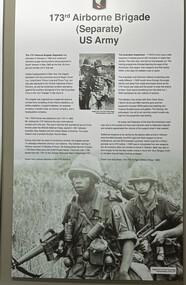
Poster - Information Board 173 Airborne Brigade (Separate) US Army, 173 Airborne Brigade (Separate) US Army
... Force...Iron Triangle...War Zone D...ANZUS Defence Treaty...Australia...New Zealand...United States Of America...Bien Hoa Air...1RAR 173rd Airborne Brigade Bien Hoa Saigon Xuan Loc Long Khanh Phuoc Long Province Phuoc Tuy Province Central Highlands Viet Cong Main Force Iron Triangle War Zone D ANZUS Defence Treaty Australia New Zealand United States Of America Bien Hoa Air Base Killed in Action Medals of Honor Distinguished Service Cross Silver Star Purple Heart 9mm Owen Guns 7.62mm Self Loading Rifle M60 Machine Gun M26 Grenade M72 Light Anti-Tank Weapon M79 Grenade Launcher Gun Slingers Club Image from the First Three Years Pictorial History of the 173rd Describes the history of 173 Airbourne and service of 1RAR with the 173 Airbourne Brigade. ...Describes the history of 173 Airbourne and service of 1RAR with the 173 Airbourne Brigade. There are two photographs, both with the title "Image from The First three Years Pictorial history of the 173rd" See media file for more informationImage from the First Three Years Pictorial History of the 173rd1rar, 173rd airborne brigade, bien hoa, saigon, xuan loc, long khanh, phuoc long province, phuoc tuy province, central highlands, viet cong main force, iron triangle, war zone d, anzus defence treaty, australia, new zealand, united states of america, bien hoa air base, killed in action, medals of honor, distinguished service cross, silver star, purple heart, 9mm owen guns, 7.62mm self loading rifle, m60 machine gun, m26 grenade, m72 light anti-tank weapon, m79 grenade launcher, gun slingers club -
 National Vietnam Veterans Museum (NVVM)
Award - Cloth badge, C. 1968
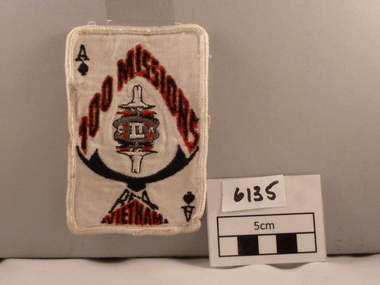
... Air Force...052363...12th Tactical Reconnaissance Squadron...US Air Force...United States...Air Force 052363 served in Vietnam from 26 May 1968 until 20 November 1968. He spent most of his tour detached to the 12th Tactical Reconnaissance Squadron, US Air Force. He was made an Officer of the Order of Australia (AO) in June 1989 for his service to the RAAF as Air Officer Commanding, Support Command. For his service with the USAF, Alan Reed was awarded the United States...His final rank with the Air Force was Air Vice Marshal and his last posting was with Headquarters, Australian Force Vietnam (RAAF Element) Cloth badge Alan Reed Royal Australian Air Force 052363 12th Tactical Reconnaissance Squadron US Air Force United States Distinguished Flying Cross Air Vice Marshall Allan Reed Squadron Leader Alan Reed Pilot Australian Force Headquarters RAAF Officer of the Order of Australia Ace of Spades insignia. ...Squadron Leader Alan Reed from the Royal Australian Air Force 052363 served in Vietnam from 26 May 1968 until 20 November 1968. He spent most of his tour detached to the 12th Tactical Reconnaissance Squadron, US Air Force. He was made an Officer of the Order of Australia (AO) in June 1989 for his service to the RAAF as Air Officer Commanding, Support Command. For his service with the USAF, Alan Reed was awarded the United States Distinguished Flying Cross with oak leaf cluster. His final rank with the Air Force was Air Vice Marshal and his last posting was with Headquarters, Australian Force Vietnam (RAAF Element) Rectangular woven cloth badge signifying '100 Missions in Vietnam' white, red and black.Ace of Spades insignia.cloth badge, alan reed, royal australian air force, 052363, 12th tactical reconnaissance squadron, us air force, united states distinguished flying cross, air vice marshall allan reed, squadron leader alan reed, pilot, australian force headquarters, raaf, officer of the order of australia -
 National Vietnam Veterans Museum (NVVM)
Award - Cloth badge, C.1968
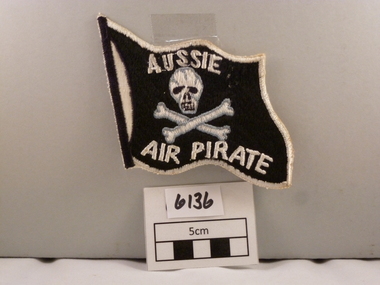
... Air Force...052363...Squadron Leader Alan Reed...Pilot...Headquarters...Australian Force Vietnam...RAAF Element...12th Tactical Reconnaissance Squadron...Officer of the Order of Australia...AO...United States...Air Force 052363 served in Vietnam from 26 May 1968 until 20 November 1968. He spent most of his tour detached to the 12th Tactical Reconnaissance Squadron, US Air Force. He was made an Officer of the Order of Australia (AO) in June 1989 for his service to the RAAF as Air Officer Commanding, Support Command. For his service with the USAF, Alan Reed was awarded the United States...Air Force 052363 served in Vietnam from 26 May 1968 until 20 November 1968. He spent most of his tour detached to the 12th Tactical Reconnaissance Squadron, US Air Force. He was made an Officer of the Order of Australia (AO) in June 1989 for his service to the RAAF as Air Officer Commanding, Support Command. For his service with the USAF, Alan Reed was awarded the United States ...Squadron Leader Alan Reed from the Royal Australian Air Force 052363 served in Vietnam from 26 May 1968 until 20 November 1968. He spent most of his tour detached to the 12th Tactical Reconnaissance Squadron, US Air Force. He was made an Officer of the Order of Australia (AO) in June 1989 for his service to the RAAF as Air Officer Commanding, Support Command. For his service with the USAF, Alan Reed was awarded the United States Distinguished Flying Cross with oak leaf cluster. His final rank with the Air Force was Air Vice Marshal and his last posting was with Headquarters, Australian Force Vietnam (RAAF Element) Woven cloth badge black, white & grey, flag shaped.Aussie Air Pirate.Skull and Cross Bones .cloth badge, alan reed, alan raymond reed, royal australian air force, 052363, squadron leader alan reed, pilot, headquarters, australian force vietnam, raaf element, 12th tactical reconnaissance squadron, officer of the order of australia, ao, united states distinguished flying cross -
 National Vietnam Veterans Museum (NVVM)
Ephemera, Order Of Service, Alan Reed funeral
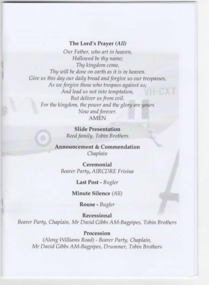
... Air Force 052363 served in Vietnam from 26 May 1968 until 20 November 1968. He spent most of his tour detached to the 12th Tactical Reconnaissance Squadron, US Air Force. He was made an Officer of the Order of Australia (AO) in June 1989 for his service to the RAAF as Air Officer Commanding, Support Command. For his service with the USAF, Alan Reed was awarded the United States...Air Force 052363 served in Vietnam from 26 May 1968 until 20 November 1968. He spent most of his tour detached to the 12th Tactical Reconnaissance Squadron, US Air Force. He was made an Officer of the Order of Australia (AO) in June 1989 for his service to the RAAF as Air Officer Commanding, Support Command. For his service with the USAF, Alan Reed was awarded the United States ...Squadron Leader Alan Reed from the Royal Australian Air Force 052363 served in Vietnam from 26 May 1968 until 20 November 1968. He spent most of his tour detached to the 12th Tactical Reconnaissance Squadron, US Air Force. He was made an Officer of the Order of Australia (AO) in June 1989 for his service to the RAAF as Air Officer Commanding, Support Command. For his service with the USAF, Alan Reed was awarded the United States Distinguished Flying Cross with oak leaf cluster. His final rank with the Air Force was Air Vice Marshal and his last posting was with Headquarters, Australian Force Vietnam (RAAF Element) 8-page Order of Service for the funeral of Vice Marshal (Retd) Alan Reed, 19 August 2022alan reed, squadron leader, 12th tactical, us air force, air vice marshal -
 National Vietnam Veterans Museum (NVVM)
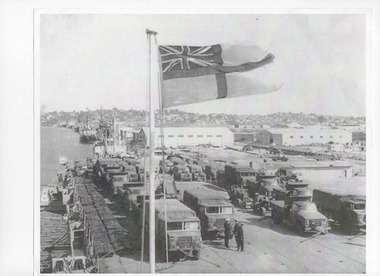
Photograph - HMAS Sydney in Brisbane
... Air Force 052363. He served in Vietnam from 26 May 1968 until 20 November 1968, and spent most of his tour detached to the 12th Tactical Reconnaissance Squadron, US Air Force. He was made an Officer of the Order of Australia (AO) in June 1989 for his service to the RAAF as Air Officer Commanding, Support Command. For his service with the USAF, Alan Reed was awarded the United States...Air Force 052363. He served in Vietnam from 26 May 1968 until 20 November 1968, and spent most of his tour detached to the 12th Tactical Reconnaissance Squadron, US Air Force. He was made an Officer of the Order of Australia (AO) in June 1989 for his service to the RAAF as Air Officer Commanding, Support Command. For his service with the USAF, Alan Reed was awarded the United States ...From the collection of Squadron Leader Alan Reed of the Royal Australian Air Force 052363. He served in Vietnam from 26 May 1968 until 20 November 1968, and spent most of his tour detached to the 12th Tactical Reconnaissance Squadron, US Air Force. He was made an Officer of the Order of Australia (AO) in June 1989 for his service to the RAAF as Air Officer Commanding, Support Command. For his service with the USAF, Alan Reed was awarded the United States Distinguished Flying Cross with oak leaf cluster. His final rank with the Air Force was Air Vice Marshal and his last posting was with Headquarters, Australian Force Vietnam (RAAF Element). A photograph of HMAS Sydney loaded ready to sail from Brisbane 1965 for Vung Tau, Vietnam hmas sydney, vungtau ferry, brisbane wharf -
 National Vietnam Veterans Museum (NVVM)
Photograph
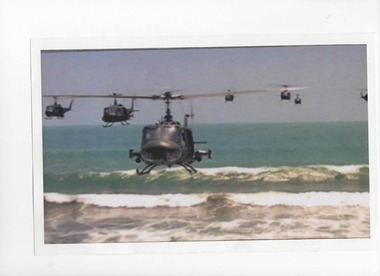
... Air Force 052363. He served in Vietnam from 26 May 1968 until 20 November 1968, who spent most of his tour detached to the 12th Tactical Reconnaissance Squadron, US Air Force. He was made an Officer of the Order of Australia (AO) in June 1989 for his service to the RAAF as Air Officer Commanding, Support Command. For his service with the USAF, Alan Reed was awarded the United States...Air Force 052363. He served in Vietnam from 26 May 1968 until 20 November 1968, who spent most of his tour detached to the 12th Tactical Reconnaissance Squadron, US Air Force. He was made an Officer of the Order of Australia (AO) in June 1989 for his service to the RAAF as Air Officer Commanding, Support Command. For his service with the USAF, Alan Reed was awarded the United States ...From the collection of Squadron Leader Alan Reed from the Royal Australian Air Force 052363. He served in Vietnam from 26 May 1968 until 20 November 1968, who spent most of his tour detached to the 12th Tactical Reconnaissance Squadron, US Air Force. He was made an Officer of the Order of Australia (AO) in June 1989 for his service to the RAAF as Air Officer Commanding, Support Command. For his service with the USAF, Alan Reed was awarded the United States Distinguished Flying Cross with oak leaf cluster. His final rank with the Air Force was Air Vice Marshal and his last posting was with Headquarters, Australian Force Vietnam (RAAF Element) Colour image of seven helicopters flying in formation over South Vietnam alan reed, squadron leader, 12th tactical, us air force, air vice marshal, helicopters, huey, helicopter -
 National Vietnam Veterans Museum (NVVM)
Document, Certificate of Combat Service
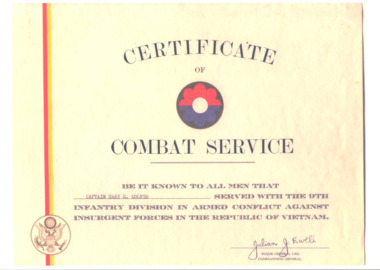
... United States...FLT LT G.G. Cooper...Gary Cooper (Flgt Lt.)...0219964...Flight Lieutenant...Air pilots...Distinguished Flying Cross...Australian Force...Air Force as a pilot. He was awarded the Distinguished Flying Cross, Garry served in Vietnam with the Headquarters, Australian Force Vietnam (RAAF Element) from April 1968 to January 1969 Certificate Certificate of Combat Service United States FLT LT G.G. ...This item was donated by Garry Gordon Cooper (0219964) who was a Flight Lieutenant with the Royal Australian Air Force as a pilot. He was awarded the Distinguished Flying Cross, Garry served in Vietnam with the Headquarters, Australian Force Vietnam (RAAF Element) from April 1968 to January 1969A copy of a Certificate of Combat Service. There is an insignia between Certificate and Combat Service. Under Combat Service reads Be it known to all men that Captain Gary G. Cooper served with the 9th Infantry Division in Armed conflict against insurgent forces in the Republic of Vietnam. Under this is the signature of Julian J Ewell - Major General USA. Commanding General Down the left hand side there is a red and yellow stripe with an US insignia near the bottom. The background of the certificate is in a beige marbled effect.certificate, certificate of combat service, united states, flt lt g.g. cooper, gary cooper (flgt lt.), 0219964, flight lieutenant, air pilots, distinguished flying cross, australian force vietnam, raaf, 9th infantry division, republic of vietnam, royal australian air foce, headquarters, flight lieutenant garry gordon cooper -
 National Vietnam Veterans Museum (NVVM)
Document, United States of America, The Distinguished Flying Cross
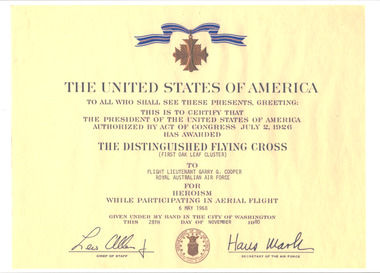
... Force Vietnam...RAAF...United States Of America...Royal Australian Air...On A4 gloss paper is the details from the United States of America of the Distinguished Flying Cross which was awarded to Flight Lieutenant Garry G. Cooper from Royal Australian Air Force for Heroism While Participating in Aerial Flight on the 6 May 1968. ... Of America Royal Australian Air Force Flight Lieutenant Garry Gordon Cooper Headquarters On A4 gloss paper is the details from the United States of America of the Distinguished Flying Cross which was awarded to Flight Lieutenant Garry G. ...This item was donated by Garry Gordon Cooper (0219964) who was a Flight Lieutenant with the Royal Australian Air Force as a pilot. He was awarded the Distinguished Flying Cross, Garry served in Vietnam with the Headquarters, Australian Force Vietnam (RAAF Element) from April 1968 to January 1969On A4 gloss paper is the details from the United States of America of the Distinguished Flying Cross which was awarded to Flight Lieutenant Garry G. Cooper from Royal Australian Air Force for Heroism While Participating in Aerial Flight on the 6 May 1968. See photograph for more information on this award. The details are in black on a yellow background. There is a copy of a medal at the top of the document and it is signed by the Chief of Staff and Secretary of the Air Force. photocopy, flt lt g.g. cooper, garry cooper, 0219964, pilot, distinguished flying cross, australian force vietnam, raaf, united states of america, royal australian air force, flight lieutenant garry gordon cooper, headquarters -
 National Vietnam Veterans Museum (NVVM)
Document - US Gallantry report, United States of America
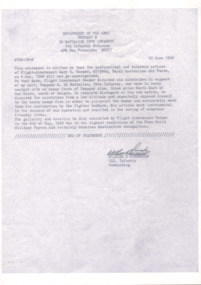
... Cooper Garry Cooper William L Forrester Infantry Commanding 0219964 Pilot Distinguished Flying Cross Australian Force Vietnam RAAF Royal Australian Air Force Flight Lieutenant Garry Gordon Cooper Headquarters On A4 paper is a copy from the Department of the Army, Company B, 3D Battalion, 39th Infantry, 9th Infantry Division, APO San Francisco 96371. See the photograph for the details of the letter. It is signed by William L Forrester, 1LT, Infantry Commanding. Document US Gallantry report United States ...This item was donated by Garry Gordon Cooper (0219964) who was a Flight Lieutenant with the Royal Australian Air Force as a pilot. He was awarded the Distinguished Flying Cross, Garry served in Vietnam with the Headquarters, Australian Force Vietnam (RAAF Element) from April 1968 to January 1969On A4 paper is a copy from the Department of the Army, Company B, 3D Battalion, 39th Infantry, 9th Infantry Division, APO San Francisco 96371. See the photograph for the details of the letter. It is signed by William L Forrester, 1LT, Infantry Commanding.department of the army, company b, 3d battalion, 39th infantry, 9th infantry division, apo san francisco, flt lt g.g. cooper, garry cooper, william l forrester, infantry commanding, 0219964, pilot, distinguished flying cross, australian force vietnam, raaf, royal australian air force, flight lieutenant garry gordon cooper, headquarters -
 National Vietnam Veterans Museum (NVVM)
Document, United States of America, Recommendation For Decoration for the Distinguished Flying Cross
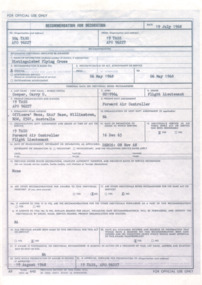
... Air Force RAAF Base Williamstown Forward Air Controller Lt. Col James T. Patrick USAF Commander Flight Lieutenant Garry Gordon Cooper Headquarters a 3 X A4 page document for Recommendation for Decoration for Flight Lieutenant Cooper, Garry G. who was based at the Officer's mess, RAAF Base, Williamstown in NSW, Pages two and three describe the reason for the recommendation (see photos for the full story). The document is signed by James T. Patrick, Lt Col, USAF Commander on the 19th July 1968. Recommendation For Decoration for the Distinguished Flying Cross Document United States ...This item was donated by Garry Gordon Cooper (0219964) who was a Flight Lieutenant with the Royal Australian Air Force as a pilot. He was awarded the Distinguished Flying Cross, Garry served in Vietnam with the Headquarters, Australian Force Vietnam (RAAF Element) from April 1968 to January 1969a 3 X A4 page document for Recommendation for Decoration for Flight Lieutenant Cooper, Garry G. who was based at the Officer's mess, RAAF Base, Williamstown in NSW, Pages two and three describe the reason for the recommendation (see photos for the full story). The document is signed by James T. Patrick, Lt Col, USAF Commander on the 19th July 1968.recommendation for decoration, flt lt g.g. cooper, cooper garry gordon, 0219964, pilot, distinguished flying cross, australian force vietnam, raaf, royal australian air force, raaf base, williamstown, forward air controller, lt. col james t. patrick, usaf, commander, flight lieutenant garry gordon cooper, headquarters -
 National Vietnam Veterans Museum (NVVM)
Book, Savage, David, Through the wire: action with the SAS in Borneo and the Special Forces in Vietnam. (Copy 2)
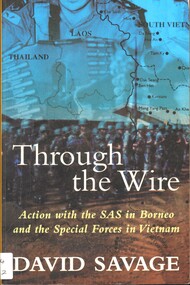
... Air Service Regiment (Australian Army)...United States. Army. Special Forces...Green Berets...Mike Force...Australian Army Training Team Vietnam Special Air Service Regiment (Australian Army) United States. Army. Special Forces Green Berets Mike Force The Montagnards The United States Special Forces, the Green Berets were often regarded as the elite of the American forces and their mobile strike force, the "Mike Force' , was considered the elite of these. ...The United States Special Forces, the Green Berets were often regarded as the elite of the American forces and their mobile strike force, the "Mike Force' , was considered the elite of these.The United States Special Forces, the Green Berets were often regarded as the elite of the American forces and their mobile strike force, the "Mike Force' , was considered the elite of these.australia. army. australian army training team, vietnam, special air service regiment (australian army), united states. army. special forces, green berets, mike force, the montagnards -
 National Vietnam Veterans Museum (NVVM)
Book, Nguyen, Cao Ky, How We Lost the Vietnam War (Copy 2), 2002
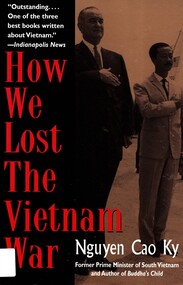
... Vietnam War 1961-1975 -- United States Prime ministers -- Vietnam -- Biography Vietnam -- Politics and government -- 1945-1975 Nguyen CAO KY Fall of Saigon Republic of Vietna Republic of Vietnam A former Air Force pilot and general, Nguyen Cao Ky, born in 1930 was prime minister of the Republic of South Vietnam from 1965 to 1967 and vice president from 1967 to 1971. ...A former Air Force pilot and general, Nguyen Cao Ky, born in 1930 was prime minister of the Republic of South Vietnam from 1965 to 1967 and vice president from 1967 to 1971. He elped write the constitution of Vietnam and helped oversee the first free elections in that country. Upon the fall of Saigon, Ky and family fled to the United States.The author is a former Prime Minister of South Vietnam.A former Air Force pilot and general, Nguyen Cao Ky, born in 1930 was prime minister of the Republic of South Vietnam from 1965 to 1967 and vice president from 1967 to 1971. He elped write the constitution of Vietnam and helped oversee the first free elections in that country. Upon the fall of Saigon, Ky and family fled to the United States.vietnam war, 1961-1975 -- united states, prime ministers -- vietnam -- biography, vietnam -- politics and government -- 1945-1975, nguyen cao ky, fall of saigon, republic of vietna, republic of vietnam -
 National Vietnam Veterans Museum (NVVM)
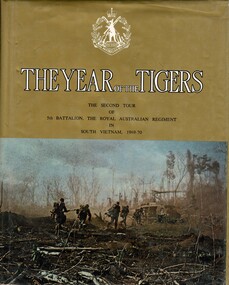
Book, Battle, Captain M.R. ed, The Year of the Tigers: The Second Tour of 5th Battalion, The Royal Australian Regiment in South Vietnam, 1969-70. (Copy 2)
... United States...South Vietnamese...Royal Australian Air Force...Vietnam War 5 RAR Australian Army Armed Forces of the United States South Vietnamese Royal Australian Air Force Phuoc Tuy Province On the 15th February, 1969, 5 RAR returned to South Vietnam for its second tour of operations. ...On the 15th February, 1969, 5 RAR returned to South Vietnam for its second tour of operations.On the 15th February, 1969, 5 RAR returned to South Vietnam for its second tour of operations. vietnam war, 5 rar, australian army, armed forces of the united states, south vietnamese, royal australian air force, phuoc tuy province -
 National Vietnam Veterans Museum (NVVM)
Photograph, Captain John White, AATTV, arrives in Vietnam, January 1968, 1/01/1968 12:00:00 AM
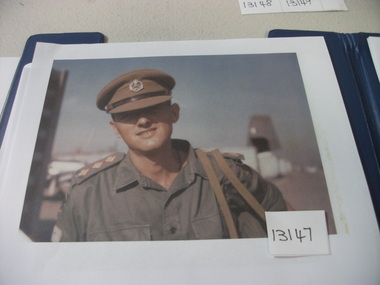
... force comprised mainly of indigenous highlanders, trained by United States Special Forces. They also brought with them two mortars and their crews. At 3.15am on 10 May 1968 some members of the CIDG chose to assist the NVA to attack the fort instead of supporting Mike Force, and close hand to hand fighting followed, along with grenade attacks and heavy machine gun fire. Air...force comprised mainly of indigenous highlanders, trained by United States Special Forces. They also brought with them two mortars and their crews. At 3.15am on 10 May 1968 some members of the CIDG chose to assist the NVA to attack the fort instead of supporting Mike Force, and close hand to hand fighting followed, along with grenade attacks and heavy machine gun fire. Air ...Captain John E D White, Australian Army Training Team in Vietnam (AATTV) took over command of 11 Mobile Strike Force (Mike Force) Company in Da Nang, Vietnam, in February 1968. He was 26 years old. The 2 NVA Division was moving from Laos into South Vietnam and his mission was to establish contact with the division and trace its movements south. In mid-March the company was air lifted to the Special Forces camp of Kham Duc, near the Laotian border. They used an old French Foreign Legion fort as a temporary base from which patrols could be sent out. White called it Ngok Tavak after a nearby mountain. Initially, patrols failed to find the enemy, but in late April a patrol clashed with the enemy. At the same time, White received intelligence that the NVA division was closing in. At night they could hear explosions in the distance heading toward them. White decided their best chance was to leave the fort and take to the jungle to adopt guerrilla tactics. However, in the meantime a platoon of United States Marine Corps artillery arrived bringing with them two howitzers and a stockpile of ammunition. To abandon the fort was to abandon the guns. White contacted Da Nang, explaining the predicament, and was ordered to remain where he was. A Civilian Irregular Defense Group (CIDG) platoon was sent to reinforce his numbers. This was a para military force comprised mainly of indigenous highlanders, trained by United States Special Forces. They also brought with them two mortars and their crews. At 3.15am on 10 May 1968 some members of the CIDG chose to assist the NVA to attack the fort instead of supporting Mike Force, and close hand to hand fighting followed, along with grenade attacks and heavy machine gun fire. Air support offered a brief respite from the NVA attack, and some NVA forces were pushed back outside the perimeter by counter attacks, but at 9am White contacted Da Nang to advise that his position was untenable. A second attack was imminent and they could not withstand it, so they would have to withdraw. The wounded were evacuated by helicopter (under orders from Major Mai, the NVA had not attacked the previous medical helicopters that collected the wounded under the cover of air strikes) and at 1pm the rest of the force evacuated east, into the jungle. The NVA did not notice their withdrawal, and continued mortar attacks on the fort for another ninety minutes. Seven kilometres from the fort White called for a helicopter withdrawal of his forces. The force was successfully lifted to Kham Duc and then Da Nang. (Credit AWM)Coloured image of John (Jed) White, aged 26 arriving at Tan Son Nhut Airport in full uniform, bag straps over left shoulder. Close- up of chest and head with plane visible in the background.AWM - p 11058,001capt john (jed) white, aattv, battle of ngok tavak -
 National Vietnam Veterans Museum (NVVM)
Photograph, Leadership group the day before the Battle of Ngok Tavak, 9/05/1968 12:00:00 AM
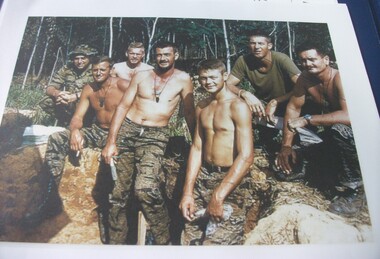
... force comprised mainly of indigenous highlanders, trained by United States Special Forces. They also brought with them two mortars and their crews. At 3.15am on 10 May 1968 some members of the CIDG chose to assist the NVA to attack the fort instead of supporting Mike Force, and close hand to hand fighting followed, along with grenade attacks and heavy machine gun fire. Air...force comprised mainly of indigenous highlanders, trained by United States Special Forces. They also brought with them two mortars and their crews. At 3.15am on 10 May 1968 some members of the CIDG chose to assist the NVA to attack the fort instead of supporting Mike Force, and close hand to hand fighting followed, along with grenade attacks and heavy machine gun fire. Air ...Captain John E D White, Australian Army Training Team in Vietnam (AATTV) took over command of 11 Mobile Strike Force (Mike Force) Company in Da Nang, Vietnam, in February 1968. He was 26 years old. The 2 NVA Division was moving from Laos into South Vietnam and his mission was to establish contact with the division and trace its movements south. In mid-March the company was air lifted to the Special Forces camp of Kham Duc, near the Laotian border. They used an old French Foreign Legion fort as a temporary base from which patrols could be sent out. White called it Ngok Tavak after a nearby mountain. Initially, patrols failed to find the enemy, but in late April a patrol clashed with the enemy. At the same time, White received intelligence that the NVA division was closing in. At night they could hear explosions in the distance heading toward them. White decided their best chance was to leave the fort and take to the jungle to adopt guerrilla tactics. However, in the meantime a platoon of United States Marine Corps artillery arrived bringing with them two howitzers and a stockpile of ammunition. To abandon the fort was to abandon the guns. White contacted Da Nang, explaining the predicament, and was ordered to remain where he was. A Civilian Irregular Defense Group (CIDG) platoon was sent to reinforce his numbers. This was a para military force comprised mainly of indigenous highlanders, trained by United States Special Forces. They also brought with them two mortars and their crews. At 3.15am on 10 May 1968 some members of the CIDG chose to assist the NVA to attack the fort instead of supporting Mike Force, and close hand to hand fighting followed, along with grenade attacks and heavy machine gun fire. Air support offered a brief respite from the NVA attack, and some NVA forces were pushed back outside the perimeter by counter attacks, but at 9am White contacted Da Nang to advise that his position was untenable. A second attack was imminent and they could not withstand it, so they would have to withdraw. The wounded were evacuated by helicopter (under orders from Major Mai, the NVA had not attacked the previous medical helicopters that collected the wounded under the cover of air strikes) and at 1pm the rest of the force evacuated east, into the jungle. The NVA did not notice their withdrawal, and continued mortar attacks on the fort for another ninety minutes. Seven kilometres from the fort White called for a helicopter withdrawal of his forces. The force was successfully lifted to Kham Duc and then Da Nang. (Credit AWM)Coloured image of 7 soldiers (5 shirtless) posed on the edge of a foxhole with jungle in background. L-R Willie Swicegood (USA), John White (AATTV-Aus), Ken Benway (USA), Frank Lucas (Aust), Clay Aitkins (USA), Glenn Miller (USA), Don Cameron (Aust)john white, aattv, battle of ngok tavak -
 National Vietnam Veterans Museum (NVVM)
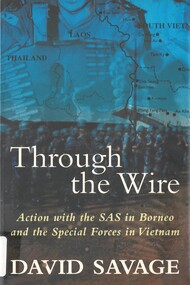
Book, Savage, David, Through the Wire: Action with the SAS in Borneo and the Special Forces in Vietnam. (Copy 1)
... Air Service Regiment (Australian Army)...United States. Army. Special Forces...Green Berets...SAS...Mike Force...Australian Army Training Team Vietnam Special Air Service Regiment (Australian Army) United States. Army. Special Forces Green Berets SAS Mike Force The Montagnards David Savage The United States Special Forces, the Green Berets were often regarded as the elite of the American forces and their mobile strike force, the "Mike Force' , was considered the elite of these. ...The United States Special Forces, the Green Berets were often regarded as the elite of the American forces and their mobile strike force, the "Mike Force' , was considered the elite of these.The United States Special Forces, the Green Berets were often regarded as the elite of the American forces and their mobile strike force, the "Mike Force' , was considered the elite of these.australia. army. australian army training team, vietnam, special air service regiment (australian army), united states. army. special forces, green berets, sas, mike force, the montagnards, david savage -
 National Vietnam Veterans Museum (NVVM)
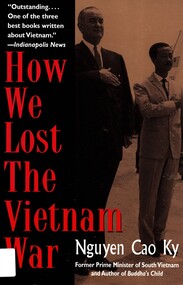
Book, Nguyen, Cao Ky, How We Lost The Vietnam War (Copy 1), 2002
... Vietnam War 1961-1975 -- United States Prime ministers -- Vietnam -- Biography Vietnam -- Politics and government -- 1945-1975 Nguyen CAO KY Fall of Saigon Republic of Vietnam A former Air Force pilot and general, Nguyen Cao Ky, born in 1930 was prime minister of the Republic of South Vietnam from 1965 to 1967 and vice president from 1967 to 1971. ...A former Air Force pilot and general, Nguyen Cao Ky, born in 1930 was prime minister of the Republic of South Vietnam from 1965 to 1967 and vice president from 1967 to 1971. He elped write the constitution of Vietnam and helped oversee the first free elections in that country. Upon the fall of Saigon, Ky and family fled to the United States.The author is a former Prime Minister of South Vietnam.A former Air Force pilot and general, Nguyen Cao Ky, born in 1930 was prime minister of the Republic of South Vietnam from 1965 to 1967 and vice president from 1967 to 1971. He elped write the constitution of Vietnam and helped oversee the first free elections in that country. Upon the fall of Saigon, Ky and family fled to the United States.vietnam war, 1961-1975 -- united states, prime ministers -- vietnam -- biography, vietnam -- politics and government -- 1945-1975, nguyen cao ky, fall of saigon, republic of vietnam -
 National Vietnam Veterans Museum (NVVM)
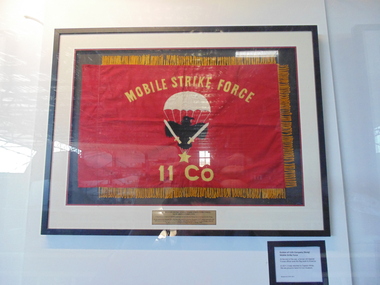
Banner - Banner, framed, 11 Co (Nung)
... force comprised mainly of indigenous highlanders, trained by United States Special Forces. They also brought with them two mortars and their crews. At 3.15am on 10 May 1968 some members of the CIDG chose to assist the NVA to attack the fort instead of supporting Mike Force, and close hand to hand fighting followed, along with grenade attacks and heavy machine gun fire. Air...force comprised mainly of indigenous highlanders, trained by United States Special Forces. They also brought with them two mortars and their crews. At 3.15am on 10 May 1968 some members of the CIDG chose to assist the NVA to attack the fort instead of supporting Mike Force, and close hand to hand fighting followed, along with grenade attacks and heavy machine gun fire. Air ...Captain John E D White, Australian Army Training Team in Vietnam (AATTV) took over command of 11 Mobile Strike Force (Mike Force) Company in Da Nang, Vietnam, in February 1968. He was 26 years old. The 2 NVA Division was moving from Laos into South Vietnam and his mission was to establish contact with the division and trace its movements south. In mid-March the company was air lifted to the Special Forces camp of Kham Duc, near the Laotian border. They used an old French Foreign Legion fort as a temporary base from which patrols could be sent out. White called it Ngok Tavak after a nearby mountain. Initially, patrols failed to find the enemy, but in late April a patrol clashed with the enemy. At the same time, White received intelligence that the NVA division was closing in. At night they could hear explosions in the distance heading toward them. White decided their best chance was to leave the fort and take to the jungle to adopt guerrilla tactics. However, in the meantime a platoon of United States Marine Corps artillery arrived bringing with them two howitzers and a stockpile of ammunition. To abandon the fort was to abandon the guns. White contacted Da Nang, explaining the predicament, and was ordered to remain where he was. A Civilian Irregular Defense Group (CIDG) platoon was sent to reinforce his numbers. This was a para military force comprised mainly of indigenous highlanders, trained by United States Special Forces. They also brought with them two mortars and their crews. At 3.15am on 10 May 1968 some members of the CIDG chose to assist the NVA to attack the fort instead of supporting Mike Force, and close hand to hand fighting followed, along with grenade attacks and heavy machine gun fire. Air support offered a brief respite from the NVA attack, and some NVA forces were pushed back outside the perimeter by counter attacks, but at 9am White contacted Da Nang to advise that his position was untenable. A second attack was imminent and they could not withstand it, so they would have to withdraw. The wounded were evacuated by helicopter (under orders from Major Mai, the NVA had not attacked the previous medical helicopters that collected the wounded under the cover of air strikes) and at 1pm the rest of the force evacuated east, into the jungle. The NVA did not notice their withdrawal, and continued mortar attacks on the fort for another ninety minutes. Seven kilometres from the fort White called for a helicopter withdrawal of his forces. The force was successfully lifted to Kham Duc and then Da Nang. (Credit AWM)Black framed glass covered flag. Red material with gold fringe, gold writing with Blackbird in the centre with parachute holding 2 white swords standing on a gold star. 11Co. in gold underneath. Gold plaque mounted under the flag.GUIDON OF 11 COY (NUNG) MOBILE STRIKE FORCE (MIKE FORCE) /5th SF GROUP, 1 CORPS, SVN/ A Significant number of AATTV personnel served with this Nung Company based in Da Nang./ At the end of the Vietnam War, this flag was taken by a former US SF officer and held until/ when it was given to former Captain John "Jed" White (AATTV), CO 11 Coy (Nung), who led/ the MIKE Forces at the Battle of Ngok Tavak on 10 May 1968.battle of ngok tavak, mobile strike force, nung, john white -
 National Vietnam Veterans Museum (NVVM)
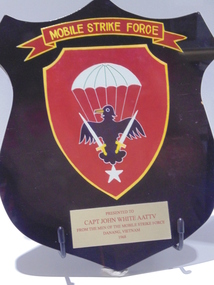
Plaque, Mobile Strike Force Shield
... force comprised mainly of indigenous highlanders, trained by United States Special Forces. They also brought with them two mortars and their crews. At 3.15am on 10 May 1968 some members of the CIDG chose to assist the NVA to attack the fort instead of supporting Mike Force, and close hand to hand fighting followed, along with grenade attacks and heavy machine gun fire. Air...force comprised mainly of indigenous highlanders, trained by United States Special Forces. They also brought with them two mortars and their crews. At 3.15am on 10 May 1968 some members of the CIDG chose to assist the NVA to attack the fort instead of supporting Mike Force, and close hand to hand fighting followed, along with grenade attacks and heavy machine gun fire. Air ...Captain John E D White, Australian Army Training Team in Vietnam (AATTV) took over command of 11 Mobile Strike Force (Mike Force) Company in Da Nang, Vietnam, in February 1968. He was 26 years old. The 2 NVA Division was moving from Laos into South Vietnam and his mission was to establish contact with the division and trace its movements south. In mid-March the company was air lifted to the Special Forces camp of Kham Duc, near the Laotian border. They used an old French Foreign Legion fort as a temporary base from which patrols could be sent out. White called it Ngok Tavak after a nearby mountain. Initially, patrols failed to find the enemy, but in late April a patrol clashed with the enemy. At the same time, White received intelligence that the NVA division was closing in. At night they could hear explosions in the distance heading toward them. White decided their best chance was to leave the fort and take to the jungle to adopt guerrilla tactics. However, in the meantime a platoon of United States Marine Corps artillery arrived bringing with them two howitzers and a stockpile of ammunition. To abandon the fort was to abandon the guns. White contacted Da Nang, explaining the predicament, and was ordered to remain where he was. A Civilian Irregular Defense Group (CIDG) platoon was sent to reinforce his numbers. This was a para military force comprised mainly of indigenous highlanders, trained by United States Special Forces. They also brought with them two mortars and their crews. At 3.15am on 10 May 1968 some members of the CIDG chose to assist the NVA to attack the fort instead of supporting Mike Force, and close hand to hand fighting followed, along with grenade attacks and heavy machine gun fire. Air support offered a brief respite from the NVA attack, and some NVA forces were pushed back outside the perimeter by counter attacks, but at 9am White contacted Da Nang to advise that his position was untenable. A second attack was imminent and they could not withstand it, so they would have to withdraw. The wounded were evacuated by helicopter (under orders from Major Mai, the NVA had not attacked the previous medical helicopters that collected the wounded under the cover of air strikes) and at 1pm the rest of the force evacuated east, into the jungle. The NVA did not notice their withdrawal, and continued mortar attacks on the fort for another ninety minutes. Seven kilometres from the fort White called for a helicopter withdrawal of his forces. The force was successfully lifted to Kham Duc and then Da Nang. (Credit AWM)A wooden shield painted grey/black celebrating the 40th Anniversary of the Battle of Ngok Tavak. There are three messages from mates written in black on the back. The shield was presented to Capt John (Jed) White.Presented to Captain John White, AATTV from the men of the Mobile Strike Force, Danang, Vietnam, 1968.mobile strike force, capt john (jed) white, shield, battle of ngok tavak -
 National Vietnam Veterans Museum (NVVM)
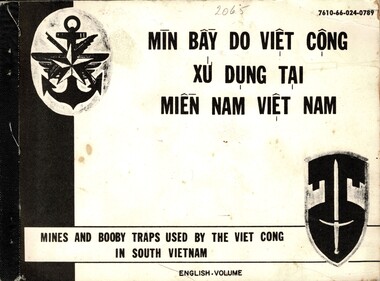
Booklet, United States Army, Mines And Booby Traps Used By The Viet Cong in South Vietnam. (Copy 1), 1965
... Air Force. Tony served with No 9 Squadron in vietnam from April 1969 to April 1970. United States - Armed Forces - Service manuals Mines and Booby Traps Viet Cong Booklet John Anthony (Tony) Wheal 0316300 Flying Officer Flying Officer John Anthony (Tony) Wheal No 9 SQN A cream and black coloured cardboard cover with black information on the front. ...This booklet was donated by John Anthony (Tony) Wheal, 0316300 who was a pilot with the Royal Australian Air Force. Tony served with No 9 Squadron in vietnam from April 1969 to April 1970.A cream and black coloured cardboard cover with black information on the front. Top right hand corner reads 7610-66-024-0789. The context in the middle are written in Vietnamese with the English version at the bottom of the page. There are two insignias on the cover. The booklet has a black material binding down the spine.united states - armed forces - service manuals, mines and booby traps, viet cong, booklet, john anthony (tony) wheal, 0316300, flying officer, flying officer john anthony (tony) wheal, no 9 sqn -
 National Vietnam Veterans Museum (NVVM)
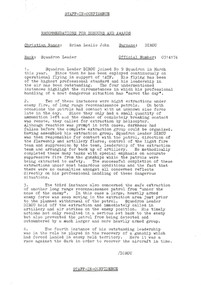
Document, Recommendation for Honours and Awards: Squadron Leader Brian Leslie John Dirou
... Air Force...Squadron Leader Brian Leslie John Dirou...0314174...Air pilots...RAAF...9 Squadron...Distinguished Flying Cross...United States...He was awarded the Distinguished Flying Cross (DFC) by the United States of America Armed Forces Royal Australian Air Force Squadron Leader Brian Leslie John Dirou 0314174 Air pilots RAAF 9 Squadron Distinguished Flying Cross United States of America Armed Forces 104 Signal Squadron SAS Trooper David Fisher 2787344 Trooper Royal Australian Infantry Corps 2nd Special Air Service Squadon 3rd Special Air Service Squadron SAS Nui Chua Chan (Hill 837) US Army 53 Sig Bn Radio Site 152 Sig Det Comcen Nui Dat 1961-1975 -- Missing in action - Australia Cpl Richard "Rick" Talbot Male 43806 Royal Australian Corps of Signals Signalman David "Murf" Joseph Murphy 1733914 Australian National Serviceman Signalman John "Dinga" William Bell 39415 US Army 53rd Signal Battalion Operation Aussies Home A Photocopy of the recommendations for honours and awards for Squadron Leader Brian Leslie John Dirou. ...This item was donatedby Squadron Leader Brian Leslie John Dirou (03141740 who was a pilot with the Royal Australian Airforce who performed general duties. Suadron Leader Dirou served in Vitnam with No 9 Squadron from March 1968 to June 1969 and June 1971 to Oct 1971. He was awarded the Distinguished Flying Cross (DFC) by the United States of America Armed Forces A Photocopy of the recommendations for honours and awards for Squadron Leader Brian Leslie John Dirou. See medial files for full story.royal australian air force, squadron leader brian leslie john dirou, 0314174, air pilots, raaf, 9 squadron, distinguished flying cross, united states of america armed forces, 104 signal squadron, sas trooper david fisher, 2787344, trooper, royal australian infantry corps, 2nd special air service squadon, 3rd special air service squadron, sas, nui chua chan (hill 837), us army 53 sig bn radio site, 152 sig det comcen, nui dat, 1961-1975 -- missing in action - australia, cpl richard "rick" talbot male, 43806, royal australian corps of signals, signalman david "murf" joseph murphy, 1733914, australian national serviceman, signalman john "dinga" william bell, 39415, us army 53rd signal battalion, operation aussies home -
 National Vietnam Veterans Museum (NVVM)
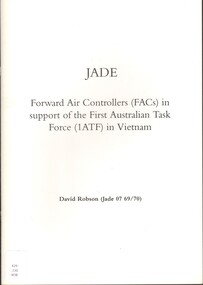
Booklet, Robson, David, JADE: Forward Air controllers (FACs) in support of the First Australian Task Force (1ATF) in Vietnam
... Air Controller...1st Australian Task Force...Cessna O-2A...Aerial reconnaissance -- United States...Forward Air Controller 1st Australian Task Force Cessna O-2A Aerial reconnaissance -- United States Vietnam War 1961-1975 -- Aerial operations American A brief history of FAC aircraft in Vietnam & in particular, The Cessna O-2A. ...A brief history of FAC aircraft in Vietnam & in particular, The Cessna O-2A.forward air controller, 1st australian task force, cessna o-2a, aerial reconnaissance -- united states, vietnam war, 1961-1975 -- aerial operations, american -
 National Vietnam Veterans Museum (NVVM)
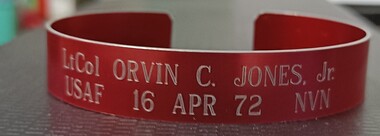
Ceremorial Object - Bracelet, Missing in Action (MIA) - Lt. Col. Orvin C. Jones Jr. USAF 16 Apr 72 NVN. VA
... Air Force...17th Wild Weasel Squadron...388th Tactical Fighter Wing...MIA - United States...Air Force promoted Capt Jones to the rank of Lieutenant Colonel (Lt Col). Today, Lieutenant Colonel Jones is memorialized on the Courts of the Missing at the National Memorial Cemetery of the Pacific. His name is also inscribed along with all his fallen comrades on the Vietnam Veterans Memorial Wall in Washington, DC. Bracelet Jones Orvin C. Jr. Lt. Col. US Air Force 17th Wild Weasel Squadron 388th Tactical Fighter Wing MIA - United States ...Captain Orvin Clarence Jones Jr., who joined the U.S. Air Force from Virginia, was a member of the 17th Wild Weasel Squadron, 388th Tactical Fighter Wing. He was a crew member aboard 'suntan 02? when it went missing, and was lost with the aircraft. His remains were never recovered. After the incident, the Air Force promoted Capt Jones to the rank of Lieutenant Colonel (Lt Col). Today, Lieutenant Colonel Jones is memorialized on the Courts of the Missing at the National Memorial Cemetery of the Pacific. His name is also inscribed along with all his fallen comrades on the Vietnam Veterans Memorial Wall in Washington, DC.Red coloured aluminium MIA USAF bracelet.Lt. Col. Orvin C. Jones Jr. USAF 16 Apr 72 NVN. VA.bracelet, jones, orvin c. jr. lt. col., us air force, 17th wild weasel squadron, 388th tactical fighter wing, mia - united states, missing in action -
 Tramways/East Melbourne RSL Sub Branch - RSL Victoria Listing id: 27511
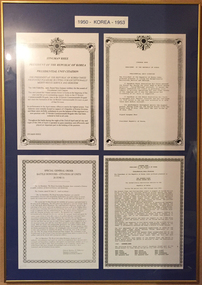
Memorabilia - Framed Citation for KOREA, 1950 - KOREA - 1953
... air force...3rd battalion royal australian regiment...7th fleet united states...Top Left - 16th Field Regiment, Royal New Zealand Artillery for Meritorious Service and Heroism Top Right - 77 Squadron Royal Australian Air Force for Meritorious Service and Heroism Bottom Left - 3rd Battalion Royal Australian Regiment for deserved honour and distinction Botton Right - 7th Fleet, United States Navy for Meritorious Service...korea korean war syngman rhee 16th field regiment royal new zealand artillery 77 squadron royal australian air force 3rd battalion royal australian regiment 7th fleet united states navy citation Four framed pages detailing Citations given to units after the Korean Conflict. ...Four framed pages detailing Citations given to units after the Korean Conflict. Top Left - 16th Field Regiment, Royal New Zealand Artillery for Meritorious Service and Heroism Top Right - 77 Squadron Royal Australian Air Force for Meritorious Service and Heroism Bottom Left - 3rd Battalion Royal Australian Regiment for deserved honour and distinction Botton Right - 7th Fleet, United States Navy for Meritorious Servicekorea, korean war, syngman rhee, 16th field regiment royal new zealand artillery, 77 squadron royal australian air force, 3rd battalion royal australian regiment, 7th fleet united states navy, citation
