
Showing 1170 items matching " sunday schools"
-
 Sunshine and District Historical Society Incorporated
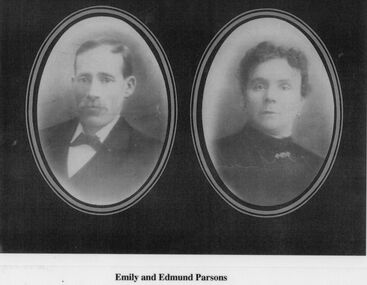
Photograph - Parsons family photos, circa 1891 & onwards
... 8 photographs of the Parsons family of Sunshine including Edmund and Joe Parsons families Also extension of family with the Howard Francis and Dudgeon families Also photograph of St Marks Church Sunday School pupils 1908 The Flynn and Parsons families are an interesting contrast Both arrived in the Brimbank area at Braybrook Junction in 1891 Both had children at the new state school However there were many differences Thomas flynn was headteacher of the new school He taught in the area until 1912 and then moved away His son John went on to become an ordained minister and eventually Flynn of the Inland founder of the Flying Doctor Service Eddmund Parsons was a horsehair manufacturere and his sons and grandsons continued his very specialised business Descendants of Emily and Edmund Parsons still live in the Sunshine area today...Edmund Parsons 8 photographs of the Parsons family of Sunshine including Edmund and Joe Parsons families Also extension of family with the Howard Francis and Dudgeon families Also photograph of St Marks Church Sunday School pupils 1908 The Flynn and Parsons families are an interesting contrast Both arrived in the Brimbank area at Braybrook Junction in 1891 Both had children at the new state school However there were many differences Thomas flynn was headteacher of the new school He taught in the area until 1912 and then moved away His son John went on to become an ordained minister and eventually Flynn of the Inland founder of the Flying Doctor Service Eddmund Parsons was a horsehair manufacturere and his sons and grandsons continued his very specialised business Descendants of Emily and Edmund Parsons still live in the Sunshine area today Parsons family photos Photograph Parsons family photos ...Photos were part of the Family Focus display by Mrs Olwen Ford for the Brimbank City Festival, March 1998.8 photographs of the Parsons family of Sunshine including Edmund and Joe Parsons families Also extension of family with the Howard Francis and Dudgeon families Also photograph of St Marks Church Sunday School pupils 1908 The Flynn and Parsons families are an interesting contrast Both arrived in the Brimbank area at Braybrook Junction in 1891 Both had children at the new state school However there were many differences Thomas flynn was headteacher of the new school He taught in the area until 1912 and then moved away His son John went on to become an ordained minister and eventually Flynn of the Inland founder of the Flying Doctor Service Eddmund Parsons was a horsehair manufacturere and his sons and grandsons continued his very specialised business Descendants of Emily and Edmund Parsons still live in the Sunshine area todayedmund parsons -
 Uniting Church Archives - Synod of Victoria
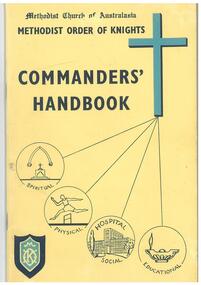
Book - Handbook, Methodist Department of Christian Education, Methodist Order of Knights Commanders' Handbook, 1957
... Alex Bray was a Sunday School teacher and spoke to his class of the Knights of the Round Table. ...Alex Bray was a Sunday School teacher and spoke to his class of the Knights of the Round Table. ...This book with a foreward by Ivan W Alcorn, Governor-General, and an introduction by W K Hocking was prepared by the General Court of Australasia of the Methodist Order of Knights. It has the following chapters: I. Brief history of the order II. Objects, control and organisation III. How to establish a court IV. Order of meeting for Pages' Court V. Merit badge tests VI. Badge presentation service VII. Service of Dedication for Officers VIII. Bibliography The Methodist Order of Knights was the official youth organisation of the Methodist Church of Australasia. It originated in Hurstville, NSW, on the 4th October 1914 by the then Mr and later Rev Alex Bray. Alex Bray was a Sunday School teacher and spoke to his class of the Knights of the Round Table. In 1917 the Order of Knights was officially recognised by the Sunday School Dept of the NSW Methodist Conference. Courts spread thoroughout Australia. In 1927 the High Court of NSW called for designs for a badge and in 1929 the General Conference of the Methodist Church of Australasia recognised the Order as an approved Organisation. In 1938 the Senior Section was organised into Degrees of Sincerity, Service and Sacrifice; the Junior Section into Pages' Degree with advancement to Esquire. In 1954 the Junior Section was reorganised into two groups: Pages 8 to 11 years and Esquires 12 to 15 years. The Knight's Motto: "Live Pure, Speak True, Right Wrong, Follow Christ the King, else wherefore born?" Courts of the Order: General Conference Department of the Christian Education - General Court - Provincial High Court - District Court - Local Court - Senior Court - Intermediate Court - Junior Court . Regalia: All members of the Intermediate and Senior Courts wore regalia consisting of a cloth shield superimposed by a cross of light and dark blue ribbons, and supported by a cloth collar. Esquire and Degree of Sincerity regalia: White collar and white shield. Degree of Service regalia: Green collar and shield. Degree of Sacrifice: Scarlet collar and shield. District Court regalia: Blue collar and gold shield. High Court regalia: Gold collar and purple sheild. General Court regalia: Purple collar and shield. Officers of the local courts wore their symbols as part of their regalia. MOK 239.1 46 page handbook' The cover has the Methodist Order of Knights symbol, 1957. MOK 239.2 has the W.F.Davies D.R.C. written on the top right of the cover. methodist order of knights, ivan w alcorn, w k hocking -
 Uniting Church Archives - Synod of Victoria
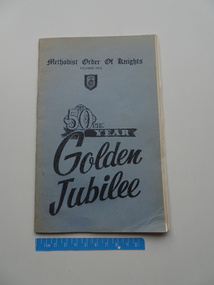
Booklet, Methodist Order of Knights 50th year golden jubliee
... Alex Bray was a Sunday School teacher and spoke to his class of the Knights of the Round Table. ...Alex Bray was a Sunday School teacher and spoke to his class of the Knights of the Round Table. ...This booklet commemorates 50 years of the Methodist Order of Knights. It has a message from the Founder, A.W.Bray; lists past Knight Commanders of Hurstville No 1 Court "Sir Lancelot"; the order of morning service at Hurstville for Golden Jubliee Sunday, 4 October 1964 and a message from F Trafford Walker, Superintendent of the Hurstville Circuit. The Methodist Order of Knights was the official youth organisation of the Methodist Church of Australasia. It originated in Hurstville, NSW, on the 4th October 1914 by the then Mr and later Rev Alex Bray. Alex Bray was a Sunday School teacher and spoke to his class of the Knights of the Round Table. In 1917 the Order of Knights was officially recognised by the Sunday School Dept of the NSW Methodist Conference. Courts spread thoroughout Australia. In 1927 the High Court of NSW called for designs for a badge and in 1929 the General Conference of the Methodist Church of Australasia recognised the Order as an approved Organisation. In 1938 the Senior Section was organised into Degrees of Sincerity, Service and Sacrifice; the Junior Section into Pages' Degree with advancement to Esquire. In 1954 the Junior Section was reorganised into two groups: Pages 8 to 11 years and Esquires 12 to 15 years. The Knight's Motto: "Live Pure, Speak True, Right Wrong, Follow Christ the King, else wherefore born?" Courts of the Order: General Conference Department of the Christian Education - General Court - Provincial High Court - District Court - Local Court - Senior Court - Intermediate Court - Junior Court . Regalia: All members of the Intermediate and Senior Courts wore regalia consisting of a cloth shield superimposed by a cross of light and dark blue ribbons, and supported by a cloth collar. Esquire and Degree of Sincerity regalia: White collar and white shield. Degree of Service regalia: Green collar and shield. Degree of Sacrifice: Scarlet collar and shield. District Court regalia: Blue collar and gold shield. High Court regalia: Gold collar and purple sheild. General Court regalia: Purple collar and shield. Officers of the local courts wore their symbols as part of their regalia.Blue covered booklet celebrating the 50th year, golden jubliee, of the Methodist Order of Knights founded in 1914. Twenty-eight typewritten pages with a central double glossy pages of photographs. The booklet is held together with three staples.methodist order of knights, alec w bray, f trafford walker, hurstville methodist church -
 Orbost & District Historical Society
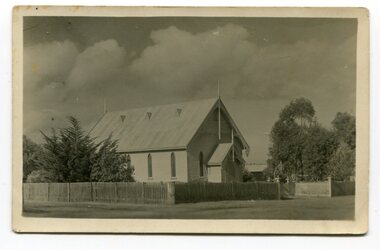
black and white photograph, Empire Post Cards, C 1940s
... (from Newsletter 90 Margaret Smith) In 1928 the Sunday School hall was added to the church. Mr R.P. ...(from Newsletter 90 Margaret Smith) In 1928 the Sunday School hall was added to the church. Mr R.P. ..."The first Presbyterian Church service was conducted at the Orbost Station Homestead in 1885, during a visit by Sir William Clarke, who was accompanied by two ministers. The organist was resident Grace Jennings Carmichael. Services were later held in Mr J. W. Borland’s shop and the Mechanics Hall. In 1887, the land on which the church now stands was purchased from Mr James Hossack snr, for £50 ($100). The trustees were Mr John, Peter and Hugh Cameron, Mr John A Watt and Mr James Hossack Jnr. Timber from Richardson’s Tabbara Mill was used by builder Mr R. P. Cameron and at a cost of £311.3.7 ($622) the church was opened January 9th 1898." (from Newsletter 90 Margaret Smith) In 1928 the Sunday School hall was added to the church. Mr R.P. Cameron was the contractor for both the manse and the church. The first communion service was held on July 17 1892. the Presbyterian Church was commenced in Orbost in 1855 when the Reverend Chas Attwood was settled in pastoral charge.This is a pictorial record of the Presbyterian Church in Orbost as it was in the mid 20th century. It is now the Orbost Uniting Church hall, known as St Andrews Hall,A black /white postcard photograph of the Orbost Presbyterian Church, a wooden structure with a wooden picket fence at the front and trees on right and left sides. on back - " H Gap, Presbyterian Church Orbost"presbyterian-church-orbost religion -
 Linton and District Historical Society Inc
Photograph, Mary Hitchins, 1884-1971
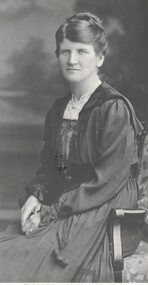
... "Mrs Mary (Molly) Hitchins, formerly a school teacher, who drove a mad headed grey horse in a gig some two or three miles to the local hall, was our Sunday School teacher. Although she was Presbyterian, she arranged and taught all Protestant denominations, and left a wonderful heritage of dedication to all those who came under her influence. ..."Mrs Mary (Molly) Hitchins, formerly a school teacher, who drove a mad headed grey horse in a gig some two or three miles to the local hall, was our Sunday School teacher. Although she was Presbyterian, she arranged and taught all Protestant denominations, and left a wonderful heritage of dedication to all those who came under her influence. ...Mary Jane Rankin was born in 1884 to parents Ewen and Anna Rankin (née Woods). She was a pupil teacher at Linton State School, and later was Head Teacher at Happy Valley State School. She played tennis, sang in the Presbyterian Church choir and was involved in community organisations such as the CWA throughout her life. In 1918 Mary Rankin married Ed Hitchins, the manager of the Linton branch of the Bank of New South Wales. "Mrs Mary (Molly) Hitchins, formerly a school teacher, who drove a mad headed grey horse in a gig some two or three miles to the local hall, was our Sunday School teacher. Although she was Presbyterian, she arranged and taught all Protestant denominations, and left a wonderful heritage of dedication to all those who came under her influence. She had married after many years as a school teacher, and had no children of her own." Jack Fletcher, in 'My Early Days' - recollections in Fletcher family file.Mary Hitchins, née Mary Rankin, 1884-1971mary rankin, mary hitchins -
 City of Greater Bendigo - Civic Collection
Domestic object - Silver tea set, Martin, Hall & Co (Richard Martin & Ebenezer Hall), 1876
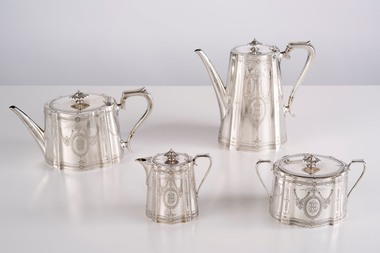
... Mayor Harkness is best known for abolishing liquor from the Town Hall and replacing the Mayor's Ball with a Monster Sunday School Picnic for children which took place in Ravenswood in 1883 and was attended by 15,000 people. ...Mayor Harkness is best known for abolishing liquor from the Town Hall and replacing the Mayor's Ball with a Monster Sunday School Picnic for children which took place in Ravenswood in 1883 and was attended by 15,000 people. ...Mayor Harkness is best known for abolishing liquor from the Town Hall and replacing the Mayor's Ball with a Monster Sunday School Picnic for children which took place in Ravenswood in 1883 and was attended by 15,000 people. Abraham Harkness arrived in Victoria in 1857 aged 28. He was initially successful in his search for gold and after a return trip to England in 1862 returned to Bendigo where he opened a general store and then a foundry manufacturing mining machinery. He stood for council from in 1880 and was elected a further eight times over the next twenty years. Cr Harkness served as Mayor in 1882, 1897 and 1898. His son Andrew became Mayor in 1908-09. Abraham Harkness married Jane Elizabeth Noble in Bendigo in1864 and together they had six sons and five daughters. Abraham died in 1912 and Jane in 1927. This elegant silver service was gifted to Mrs Harkness by her husband the Mayor in remembrance of the event and then gifted back to the City by their grandson Vern Harkness.Four piece Victorian tea and coffee silver service consisting of tall coffee pot, tea pot, two handled covered sugar basin and covered cream jug. Oval, chamfered shaped base tapering at top. Bodies are decorated with foliate decoration and central finial entwined with cartouche which holds either the Bendigo Coat of Arms, or the entwined initials J E H except the large coffee pot which has engraved dedication to Mayoress Harkness instead of the Coat of Arms. Insulated handles on pots. 0432.1 Coffee pot 0432.2 Teapot 0432.3 Sugar Pot 0432.4 Cream Jug Stamped back top left of each part and inside lids - Makers Mark: Martin, Hall & Co (Richard Martin & Ebenezer Hall). Hallmarks; (Lion) sterling silver, (Panther head) London Assay Office, (Women's head in left profile) duty paid, (A)1876 on coffee pot, (G) 1882 on other three pieces.mayor harkness, mayoress harness, jane noble -
 Melton City Libraries
Photograph, Myers family members at Uniting Church, 1986
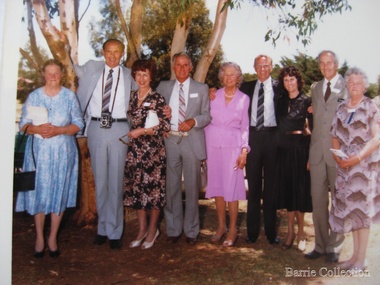
... The Uniting Church (originally the Scots Presbyterian Church) was built 1865-67) and adjacent former Church Hall / Sunday School (built 1938), Yuille Street, Melton. ...The Uniting Church (originally the Scots Presbyterian Church) was built 1865-67) and adjacent former Church Hall / Sunday School (built 1938), Yuille Street, Melton. ...The Uniting Church (originally the Scots Presbyterian Church) was built 1865-67) and adjacent former Church Hall / Sunday School (built 1938), Yuille Street, Melton. The adjacent former church hall, now kindergarten facility. The Uniting Church and former church hall are historically significant at a Local level (AHC A4). It was built after Melton’s ‘United’ church and school, erected by Protestant denominations in 1857 in an effort to share resources in the pioneering era, was replaced by individual churches in the 1860s. The church became the home of and is expressive of the union of the Methodist and Presbyterian churches, begun in Melton from the early 1970s, and formally concluded by the formation of the Uniting Church of Australia in 1977. The new additions and functions of the church are expressive of the increase in Melton’s population especially in the 1970s, and the changing nature of the parish’s ministry. The church is one of only three remaining nineteenth century churches, and one of only two remaining bluestone churches, in the Shire of Melton. Information from Shire of Melton Heritage Study Stage 2 Volume 6 David Moloney 2007 At the opening of the new extension to the churchlocal identities, churches -
 Kew Historical Society Inc
Plan, Melbourne & Metropolitan Board of Works : Borough of Kew : Detail Plan No.1565, 1905
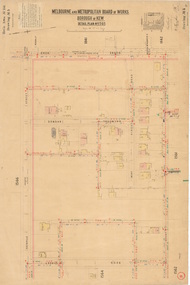
... In 1883, the Church’s Sunday School celebrated its silver anniversary....In 1883, the Church’s Sunday School celebrated its silver anniversary. ...The Melbourne and Metropolitan Board of Works (MMBW) plans were produced from the 1890s to the 1950s. They were crucial to the design and development of Melbourne's sewerage and drainage system. The plans, at a scale of 40 feet to 1 inch (1:480), provide a detailed historical record of Melbourne streetscapes and environmental features. Each plan covers one or two street blocks (roughly six streets), showing details of buildings, including garden layouts and ownership boundaries, and features such as laneways, drains, bridges, parks, municipal boundaries and other prominent landmarks as they existed at the time each plan was produced. (Source: State Library of Victoria). This plan forms part of a large group of MMBW plans and maps that was donated to the Society by the Mr Poulter, City Engineer of the City of Kew in 1989. Within this collection, thirty-five hand-coloured plans, backed with linen, are of statewide significance as they include annotations that provide details of construction materials used in buildings in the first decade of the 20th century as well as additional information about land ownership and usage. The copies in the Public Record Office Victoria and the State Library of Victoria are monochrome versions which do not denote building materials so that the maps in this collection are invaluable and unique tools for researchers and heritage consultants. A number of the plans are not held in the collection of the State Library of Victoria so they have the additional attribute of rarity.Original survey plan, issued by the MMBW to a contractor with responsibility for constructing sewers in the area identified on the plan within the Borough of Kew. The plan was at some stage hand-coloured, possibly by the contractor, but more likely by officers working in the Engineering Department of the Borough and later Town, then City of Kew. The hand-coloured sections of buildings on the plan were used to denote masonry or brick constructions (pink), weatherboard constructions (yellow), and public buildings (grey). MMBW Plan No.1565 is an example of a plan where a number of streets have been created since the area was surveyed, or in other cases renamed. The plan shows those streets that were bordered by Ross Street, Mount Street, Sackville Street and Burke Road. Since 1905, Mawson Street has been created and Mont Albert Road renamed as Dean Street. Named houses on the plan include ‘Tyrol’, ‘Glengorse’, ‘Theodore Villa’, ‘Arncliffe’, ‘Ballynira’ and ‘Hazeldene’. The plan also shows a Wesleyan Church in Sackville Street. In 1883, the Church’s Sunday School celebrated its silver anniversary.melbourne and metropolitan board of works, detail plans, mmbw 1565, cartography -
 Warrnambool and District Historical Society Inc.
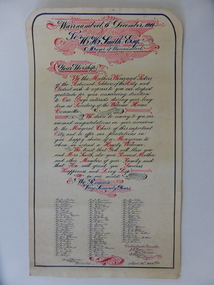
Document, Illuminated Address H. H. Smith esq
... Smith also was a tireless worker for the Methodist Church as an office bearer and a Sunday School teacher. Smith was also Vice President in 1937 of the first Warrnambool & District Historical Society. ...Smith also was a tireless worker for the Methodist Church as an office bearer and a Sunday School teacher. Smith was also Vice President in 1937 of the first Warrnambool & District Historical Society. ...This illuminated address was given to H.H.Smith, the Warrnambool Mayor, for his work with soldiers returning to Warrnambool and district during and after World War One. On the same occasion Smith was also given an armchair by the mothers, sisters and wives of Warrnambool returning soldiers. Henry Huntingdon Smith (1857-1941) started his own bakery business in 1885, firstly near the corner of Fairy and Koroit Streets and later building his own shop at the corner of Lava and Fairy Streets (Monaghans Pharmacy today). Smith was one of the most admired men in Warrnambool in the first half of the 20th century. He was a Warrnambool Councillor from 1918 to 1937 (Mayor for two terms) and served continuously on the Warrnambool Hospital Committee for 39 years. He visited patients at the Hospital twice a week. He took a particular interest in the welfare of returning soldiers and it was said that there was not a returned man or woman whom Smith did not greet on his return to the district. Smith also was a tireless worker for the Methodist Church as an office bearer and a Sunday School teacher. Smith was also Vice President in 1937 of the first Warrnambool & District Historical Society. This document is of particular interest as it is a good example of the type of illuminated address produced during the early years of the 20th century. It also shows clearly the respect and love that Warrnambool people had for Henry Smith, a great volunteer worker in the community. This is a piece of cream-coloured parchment paper with a margin ruled in black ink and handwriting in blue and black ink surrounded by red ornamental scrolls and flourishes. The paper has an address to H.H.Smith and is followed by 74 names and the date (1920). The paper is inserted into a piece of red leather cloth. This has folded edges and an ornamental gold pattern around the front edges and a gold border around the back edges. There are two holes at the top of the folder and these have metal surrounds. The backing folder is rounded at the top edges. ‘Warrnambool, 6th December 1919. To H.H. Smith Esq., Mayor of Warrnambool – We, the Mothers, Wives and Sisters of the Returned Soldiers of this City and District wish to express to you our deepest gratitude for your unswerving devotion to Our Boys interests during your long term as Secretary of the Welcome Home Committee’ (etc etc)henry huntingdon smith, world war one, history of warrnambool -
 Eltham District Historical Society Inc
Document - Folder, Macmillan, Donald
... Later Hugh carried mail from South Yan Year (now Mernda) to Arthurs Creek School (also the post office); he was Sunday School teacher at the Arthurs Creek Methodist Church. ...Later Hugh carried mail from South Yan Year (now Mernda) to Arthurs Creek School (also the post office); he was Sunday School teacher at the Arthurs Creek Methodist Church. ...Donald MacMillan (widower) with his six children eft Inverness, Scotland, in 1849, and worked as a shepherd on Plenty River property of Captain Aneas McPerson, under the manager Thomas Walker. MacMillan married again and son Hugh was born 1860, first of another six children. They lived at Morang but, in 1866, selected land at Arthurs Creek. Hugh and his sister Ann attended the Hazel Glen School. Later Hugh carried mail from South Yan Year (now Mernda) to Arthurs Creek School (also the post office); he was Sunday School teacher at the Arthurs Creek Methodist Church. Hugh married Helena Heatley from New Zealand who managed the farm after Hugh died, growing fruit and vegetables, carted by wagon to the Victoria Market. Their firstborn was Ken. Contents Newspaper article: "Donald MacMillan - a romantic", Diamond Valley News, 29 October 1985, pp30-31; history of MacMillan family. Newspaper article: "An alternative road to happiness", Diamond Valley News, 29 October 1985, p29; Mic Webb's travels and philosophy, now living at Hurstbridge.Newspaper clippings, A4 photocopies, etcdonald macmillan, plenty river victoria, captain aneas mcpherson, thomas walker, morang victoria, arthurs creek victoria, ann macmillan, hazel glen school victoria, south yan yean victoria, mernda victoria, arthurs creek school victoria, arthurs creek methodist church, malcolm macmillan, helena macmillan nee heatley, ken macmillan, mic webb, hurstbridge learning co-op, hurstbridge victoria, cottlesbridge victoria, st andrews victoria -
 Eltham District Historical Society Inc
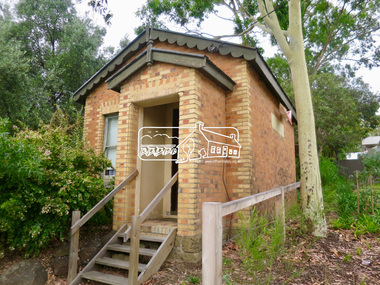
Photograph, Jim Connor, Former C.B.A. Bank, 14 Jan 2017
... Recent uses have included a meeting room, Sunday School and Opportunity Shop. It is currently used as a storage for the Combined churches opportunity shop which is located in the United church extension beside this location. ...Recent uses have included a meeting room, Sunday School and Opportunity Shop. It is currently used as a storage for the Combined churches opportunity shop which is located in the United church extension beside this location. ...The Former Commonwealth Bank of Australia branch forms part of the Eltham Gateway and the Little Eltham precinct and is located near 804 Main Road, Eltham. It is a significant building and registered on the Victorian Heritage Register. The bank was built in 1878. It is a one-room, bichromatic brick building. Imagine your bank only being open for one morning a week! These were the hours of the Commercial Bank’s Eltham branch early in the 20th century and customers were quite content. The bank stored gold from the Eltham/Research mining areas. It is famous for its bullet holes. These were the result of a hold up in 1949, in which a nervous youth opened an account in the name of John Henderson, then walked to the door and spun around pulling out a pistol he fired into the cedar bench but fled empty handed and was apprehended later, receiving a two year sentence. The Bank was purchased by the Methodist Church in 1954. (The Eltham church is right adjacent). Recent uses have included a meeting room, Sunday School and Opportunity Shop. It is currently used as a storage for the Combined churches opportunity shop which is located in the United church extension beside this location. Tomorrow's history documented todayeltham, jim connor collection, main road, eltham gateway, cba bank, opportunity shop -
 Bendigo Historical Society Inc.
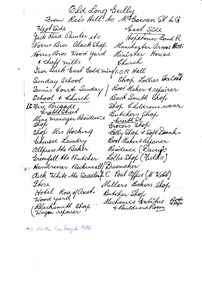
Document - LONG GULLY HISTORY GROUP COLLECTION: OLD LONG GULLY FROM RAE'S HILL TO MCGOWAN ST
... West Side - Jack Read Painter etc, Norris Bros Black Shop, Norris Bros Wood Yard & Chaff Mills, Iron Bark East Gold Mine, Sunday School, Tennis Courts Sunday School & Church, LG Fire Brigade, Creeth Street, Mine Managers Residence, Shop, Shop Mrs Hocking, Chinese Laundry, Allpress the Baker, Greenfell the Butcher, Hairdresser Beckinsall was the Fire Brigade Hotel, Dick White the Saddler, Store, Hotel Rose of Australia, Woodyard, Blacksmith Shop Wagon Repairer, Hotel Kocks (Pioneer Hotel), 2 China Shops owned by Chinese, Hotel Silver mines Hotel, Police Station, Grocers Shop (per? ...West Side - Jack Read Painter etc, Norris Bros Black Shop, Norris Bros Wood Yard & Chaff Mills, Iron Bark East Gold Mine, Sunday School, Tennis Courts Sunday School & Church, LG Fire Brigade, Creeth Street, Mine Managers Residence, Shop, Shop Mrs Hocking, Chinese Laundry, Allpress the Baker, Greenfell the Butcher, Hairdresser Beckinsall was the Fire Brigade Hotel, Dick White the Saddler, Store, Hotel Rose of Australia, Woodyard, Blacksmith Shop Wagon Repairer, Hotel Kocks (Pioneer Hotel), 2 China Shops owned by Chinese, Hotel Silver mines Hotel, Police Station, Grocers Shop (per? ...Titled Old Long Gully From Rae's Hill to McGowan St. LG. West Side - Jack Read Painter etc, Norris Bros Black Shop, Norris Bros Wood Yard & Chaff Mills, Iron Bark East Gold Mine, Sunday School, Tennis Courts Sunday School & Church, LG Fire Brigade, Creeth Street, Mine Managers Residence, Shop, Shop Mrs Hocking, Chinese Laundry, Allpress the Baker, Greenfell the Butcher, Hairdresser Beckinsall was the Fire Brigade Hotel, Dick White the Saddler, Store, Hotel Rose of Australia, Woodyard, Blacksmith Shop Wagon Repairer, Hotel Kocks (Pioneer Hotel), 2 China Shops owned by Chinese, Hotel Silver mines Hotel, Police Station, Grocers Shop (per? Reef Mine Hotel) E Bryant, Mine Windmill, Church Residence, Minister. East Side - Hopetoun Band R, Manchester Arms Hotel, Minister House, Church, IOR Hall, Shop Lollies Icecream, Boot Maker & Repairer, Back Smith Shop, Shop Childrens Wear, Butchers Shop, Creeth Street, Grocers Shop, Lolly Shop & Soft Drinks, Boot Maker & Repairer, Residence (Davey's), Lollie Shop (Fields), Dressmaker, LG Post Office (M Webb), Millars Bakers Shop, Butcher Shop, Mechanics Institute Books & Paper & Billiard Room, Connell the Baker, Dr SElby, Pentreath Organ Builder & Tuner, Blacksmith Shop, Hexagon Toilet, Kocks Machine Shop, Kocks Mine Office, Kocks Material Shop, Police Station, Dyson's Dam Warm waer, Air Station, Mine Battery stone crusher 80 head approx, Kocks Mine, Needle Mine. Some notes written at the end - Norm Shotples used to have Barber Shop - he has gone to Queensland, Violet Street started off as the German School, Wells Street used to run through Victorian Consol ? the other side, Comet Hill would like a visit. Contact Helen Gorlay at Violet Street would line to some video. Alan has good info on the Long Gully School. Betty has book. Views of Bendigo. Frank Cusack - Bendigo Trust. Bendigo School Hisking? School, Violet Street. Older levels lo?ing at Architecture.bendigo, history, long gully history group, the long gully history group - old long gully from rae's hill to mcgowan st, jack read, norris bros, iron bark east gold mine, long gully fire brigade, mrs hicking, allpress, greenfell, beckinsall, dick white, rose of australia, hopetoun band r, manchester arms hotel, ior hall, davey's, fields, m webb, millars, mechanics institute & billiard room, kocks pioneer hoel, silver mines hotel, e bryant, windmill mine, pere? reef mine hotel, connell, dr selby, pentreath, kocks machine shop, kocks mine office, kocks material shop, dyson's dam, kocks mine, needle mine, norm shotples, german school, victoria consols, helen gorlay, long gully school, frank cusack, bendigo trust -
 Uniting Church Archives - Synod of Victoria
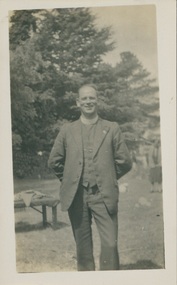
Photograph, Rev. Ron Albiston, Undated c.1940s
... From a young age he held positions within the local church, was secretary of the East Kew Congregational Church at the age of 16, as well as superintendent of the Sunday School from the age of 15. Ron was supported during his life and ministry by his wife of 63 years, Dorothy. ...From a young age he held positions within the local church, was secretary of the East Kew Congregational Church at the age of 16, as well as superintendent of the Sunday School from the age of 15. Ron was supported during his life and ministry by his wife of 63 years, Dorothy. ...The Rev. Ronald W Albiston 28/9/1919–16/08/2006 was educated at Melbourne Boys' High School, the Victorian Congregational College and the University of Melbourne. From a young age he held positions within the local church, was secretary of the East Kew Congregational Church at the age of 16, as well as superintendent of the Sunday School from the age of 15. Ron was supported during his life and ministry by his wife of 63 years, Dorothy. He was ordained at Northcote Congregational Church on 21 December 1942. His ministry was exercised in Northcote/Clifton Hill (1942–45), Yarrawonga and associated district (1945–50), Ballarat Dawson Street and "Zion" Sebastopol (1950–68), and Rockdale Congregational, Sydney, later Uniting (1968–83). Due to ill health, Ron retired on the 30th of April 1983. He was President of the Australian Council of Churches from 1971 to 1973, President of the Congregational Union of NSW from 1973 to 1975. As a member of the Joint Planning Committee he was involved in the development of the Uniting Church and inaugural Chairperson. Following union, he was a member and later Chairman of the Board of Social Responsibility. He was instrumental in founding the Mayflower Village for the Aged, the Rockdale Community Aid Service, and helped form the St George Community Conference.The Rev. Ronald W Albiston 28/9/1919–16/08/2006 was educated at Melbourne Boys' High School, the Victorian Congregational College and the University of Melbourne. From a young age he held positions within the local church, was secretary of the East Kew Congregational Church at the age of 16, as well as superintendent of the Sunday School from the age of 15. Ron was supported during his life and ministry by his wife of 63 years, Dorothy. He was ordained at Northcote Congregational Church on 21 December 1942. His ministry was exercised in Northcote/Clifton Hill (1942–45), Yarrawonga and associated district (1945–50), Ballarat Dawson Street and "Zion" Sebastopol (1950–68), and Rockdale Congregational, Sydney, later Uniting (1968–83). Due to ill health, Ron retired on the 30th of April 1983. He was President of the Australian Council of Churches from 1971 to 1973, President of the Congregational Union of NSW from 1973 to 1975. As a member of the Joint Planning Committee he was involved in the development of the Uniting Church and inaugural Chairperson. Following union, he was a member and later Chairman of the Board of Social Responsibility. He was instrumental in founding the Mayflower Village for the Aged, the Rockdale Community Aid Service, and helped form the St George Community Conference.The Rev. Ronald W Albiston 28/9/1919–16/08/2006 was educated at Melbourne Boys' High School, the Victorian Congregational College and the University of Melbourne. From a young age he held positions within the local church, was secretary of the East Kew Congregational Church at the age of 16, as well as superintendent of the Sunday School from the age of 15. Ron was supported during his life and ministry by his wife of 63 years, Dorothy. He was ordained at Northcote Congregational Church on 21 December 1942. His ministry was exercised in Northcote/Clifton Hill (1942–45), Yarrawonga and associated district (1945–50), Ballarat Dawson Street and "Zion" Sebastopol (1950–68), and Rockdale Congregational, Sydney, later Uniting (1968–83). Due to ill health, Ron retired on the 30th of April 1983. He was President of the Australian Council of Churches from 1971 to 1973, President of the Congregational Union of NSW from 1973 to 1975. As a member of the Joint Planning Committee he was involved in the development of the Uniting Church and inaugural Chairperson. Following union, he was a member and later Chairman of the Board of Social Responsibility. He was instrumental in founding the Mayflower Village for the Aged, the Rockdale Community Aid Service, and helped form the St George Community Conference.Informal B & W photo of the Rev. Ron Albiston. Albiston is standing, hands clasped behind back, smiling into the camera. He's dressed in a suit with clerical collar and waistcoat. The photo has been taken outdoors, possibly at a picnic."Rev. Ron Albiston"albiston, ron, congregational minister -
 Uniting Church Archives - Synod of Victoria
Commemorative Plate, 1907
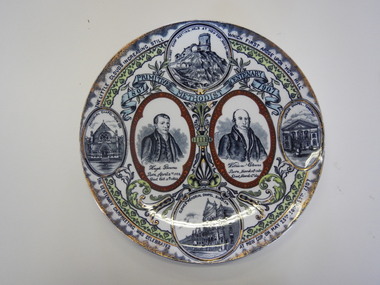
... Congregational ... 607,682. Sunday Schools 4,209. Teachers 61,275. Scholars 477,114. ...Congregational ... 607,682. Sunday Schools 4,209. Teachers 61,275. Scholars 477,114. ...In 1823 the membership of the Primitive Methodist church in the UK was 33,000. Forty years later, in 1863, membership had grown to half a million making it the third largest religious group after Anglican and Wesleyan Methodist. Primitive Methodism came to Australia in 1840. Source: https://www.movements.net/blog/2016/02/08/lessons-from-the-primitive-methodists-dave-price.htmlCH019.1 - Primitive Methodist white commemorative plate with grey, green, brown and gold illustrations and text. Images: Top: "First camp meeting, held at Mow Cop, May 31 1907". Right side: "Jubilee Chapel, Tunstall". Left side: "Memorial Chapel Mow Cop". Bottom:" Clowes Memorial Chapel, Burslem". Centre: "Hugh Bourne. Born April 3rd 1772. Died Oct 11th 1852" "William Cowes Born march 12th 1780 Died March 2nd 1858". The is text around the rim of the plate: "The little clouds increasing still which first arose upon Mow Hill" "The Centenary Camp Meeting was celebrated at Mow Cop on May 26th & 27th 1907". The back of the plate gives church statistics: "Truly What Hath God Wrought. Chapels & Preaching places 4,905. Ministers 1,153. Local Preachers 16,209. Church Members 210,173. Congregational ... 607,682. Sunday Schools 4,209. Teachers 61,275. Scholars 477,114. Value of Property 4,958,978 pounds. CH019.2 - Same as CH019.1 in white, blue and gold. CH019.3 - Same as CH019.1 with more gold and colour. The wording around the rim is the same but differently placed."1807 PRIMITIVE METHODIST CENTENARY 1907"primitive methodist, primitive methodist jubliee chapel tunstall, mow cop, bourne, hugh, clowes, william -
 Sunshine and District Historical Society Incorporated
Mixed media - Mary Harrison nee Paul Collection, 1920 - 1940
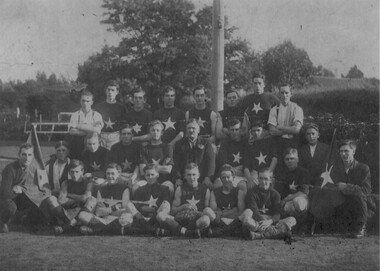
... Various photos and documents held by Mrs Mary Harrison relating to the Paul family and their social activities in Sunshine 1 Sunshine Stars Football Team 1921 taken in Sunshine Gardens 2 Sunshine Girls Technical School 1935 3 Female employees at ICI Ammo 4 Female employees at ICI Ammo 5 Moiler family from Ararat late 1890s at Ararat 6 Frank Paul and his dog at Ridley Street home 7 Sunshine Junior Football team at Selwyn Park Jim Searle coach 8 Paul family car outside Libbis Garage Cnr Devonshire Road and Dawson Street 9 Guide and Brownie Leaders Sunshine Guides 10 3rd Sunshine Brownie Pack 11 Sunshine Technical School Form 2 EF 1945 12 Baptist Girls club c1938 13 Petrol coupons World War II 14 Sunshine Presbyterian Church Sunday School c1950 15 McIntyre Road Sunshine North Overpass...Mary Harrison Mary Paul History Various photos and documents held by Mrs Mary Harrison relating to the Paul family and their social activities in Sunshine 1 Sunshine Stars Football Team 1921 taken in Sunshine Gardens 2 Sunshine Girls Technical School 1935 3 Female employees at ICI Ammo 4 Female employees at ICI Ammo 5 Moiler family from Ararat late 1890s at Ararat 6 Frank Paul and his dog at Ridley Street home 7 Sunshine Junior Football team at Selwyn Park Jim Searle coach 8 Paul family car outside Libbis Garage Cnr Devonshire Road and Dawson Street 9 Guide and Brownie Leaders Sunshine Guides 10 3rd Sunshine Brownie Pack 11 Sunshine Technical School Form 2 EF 1945 12 Baptist Girls club c1938 13 Petrol coupons World War II 14 Sunshine Presbyterian Church Sunday School c1950 15 McIntyre Road Sunshine North Overpass Mary Harrison nee Paul Collection Mixed media Mary Harrison nee Paul Collection ...Various photos and documents held by Mrs Mary Harrison relating to the Paul family and their social activities in Sunshine 1 Sunshine Stars Football Team 1921 taken in Sunshine Gardens 2 Sunshine Girls Technical School 1935 3 Female employees at ICI Ammo 4 Female employees at ICI Ammo 5 Moiler family from Ararat late 1890s at Ararat 6 Frank Paul and his dog at Ridley Street home 7 Sunshine Junior Football team at Selwyn Park Jim Searle coach 8 Paul family car outside Libbis Garage Cnr Devonshire Road and Dawson Street 9 Guide and Brownie Leaders Sunshine Guides 10 3rd Sunshine Brownie Pack 11 Sunshine Technical School Form 2 EF 1945 12 Baptist Girls club c1938 13 Petrol coupons World War II 14 Sunshine Presbyterian Church Sunday School c1950 15 McIntyre Road Sunshine North Overpassmary harrison, mary paul, history -
 Eltham District Historical Society Inc
Photograph - Digital Photograph, Alan King, St Matthew's Church and Hall, Panton Hill, 27 March 2008
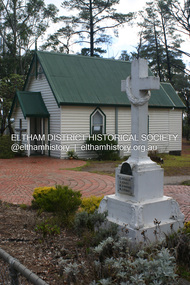
... The building was also used for Sunday School, a school and a hall.1 The St Matthew’s Church and hall at the corner of Church Road and Kangaroo Ground-St Andrews Road, were built in the early 20th century in the standard rectangular style of the times. ...The building was also used for Sunday School, a school and a hall.1 The St Matthew’s Church and hall at the corner of Church Road and Kangaroo Ground-St Andrews Road, were built in the early 20th century in the standard rectangular style of the times. ...St. Matthew's Church has historic significance as the town's church and physical and social focus for the community. The standard design buildings are good examples and important streetscape elements. The war memorial cross is the area's monument to the 20th century wars and its modest scale in comparison with the granite Eltham and towered Kangaroo Ground memorials illustrates the lack of affluence in the town and surrounding area. The grouping of church, school, store and post office is typical of country villages throughout Victoria. The Radiata Pine plantings are significant as an intact line of shelterbelt planting typical of the early 20th century. (Bick Study 1992) Covered under Heritage Overlay, Nillumbik Planning Scheme. Published: Nillumbik Now and Then / Marguerite Marshall 2008; photographs Alan King with Marguerite Marshall.; p63 Panton Hill’s first church services were held in a simple building made of paling timber, opposite the Hotel de France. The building was also used for Sunday School, a school and a hall.1 The St Matthew’s Church and hall at the corner of Church Road and Kangaroo Ground-St Andrews Road, were built in the early 20th century in the standard rectangular style of the times. The intact belt of Radiata Pines was common at that time. The war memorial concrete cross is the area’s monument for the 20th century wars. It is much more modest than those in Eltham, and particularly in Kangaroo Ground, demonstrating those townships’ comparative affluence.2 Early settler J Hughes, who donated the land to the Church of England, was the first to be married at St Matthews when he married Rachel Coutie. In later life he became a minister of religion.3 One much-liked preacher was George Hollow, who with his sister playing the harmonium, conducted church services at Panton Hill, St Andrews and Christmas Hills, for many years.This collection of almost 130 photos about places and people within the Shire of Nillumbik, an urban and rural municipality in Melbourne's north, contributes to an understanding of the history of the Shire. Published in 2008 immediately prior to the Black Saturday bushfires of February 7, 2009, it documents sites that were impacted, and in some cases destroyed by the fires. It includes photographs taken especially for the publication, creating a unique time capsule representing the Shire in the early 21st century. It remains the most recent comprehenesive publication devoted to the Shire's history connecting local residents to the past. nillumbik now and then (marshall-king) collection, panton hill, st matthew's church, panton hill war memorial -
 Uniting Church Archives - Synod of Victoria
Photograph, Mitiamo UC Centenary & Rev. V. Raymond Hicks 11/11/1984, 11/11/1984
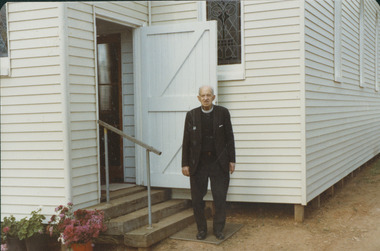
... The centenary weekend began with an old fashioned tea meeting and concert. The Sunday school hall housed a comprehensive display of photos and historical records dating back to the Bible Christian days of 1884. ...The centenary weekend began with an old fashioned tea meeting and concert. The Sunday school hall housed a comprehensive display of photos and historical records dating back to the Bible Christian days of 1884. ...Victor Raymond Hicks (11/8/1903–19/11/1995) born at Ballarat. Trained at Otira and accepted as candidate for the ministry in 1927. Ordained 1934. Married Lillian Harvey, 4 children. Appointments to Mitiamo, Matimuk, Woomelang, Wodonga, Kerang, Springvale, Brunswick, North Fitzroy, Geelong West, Kyneton and Brown Hill (Ballarat). Chaplaincy in WW2 and at Box Hill hospital. The article about the Mitiamo church: "Fifty years ago the Rev. Raymond Hicks was minister at Mitiamo as it celebrated its Golden Jubilee. He returned for the centenary this year and powerfully preached on 'Lengthen your cords, and strengthen your stakes' (Isaiah 54:2). He spoke of the great need of the church today to have a passion to lead men and women to Christ. Also sharing in the service were the Rev. Ray Scholl, a Mitiamo member before entering the ministry, and present minister, the Rev. M. Thalheimer. The centenary weekend began with an old fashioned tea meeting and concert. The Sunday school hall housed a comprehensive display of photos and historical records dating back to the Bible Christian days of 1884. Mrs Thirza Phelan has researched and written the church history. FOOTNOTE: The first minister, Mitiamo's the Rev. Daniel Daley, preached at the Golden Jubilee service—Mr Hicks has followed an ancient tradition."Colour photograph of Rev. V. Raymond Hicks standing outside the front of a wooden church porch.C&N identification.rev raymond hicks, home missionary, methodist ministry, otira -
 Stawell Historical Society Inc
Photograph, Deep Lead Methodist Church with Children, Congregation & Rev F C Bremer -1927 to 1930 - 6 Photos
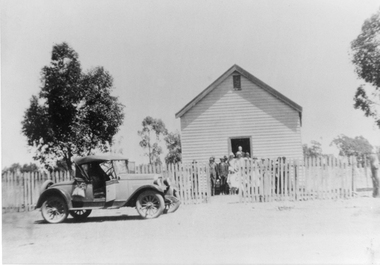
... At this time Methodist Church services were conducted there; Sunday school was also held there until about 1936. ...At this time Methodist Church services were conducted there; Sunday school was also held there until about 1936. ...Deep Lead Church (Methodist) A set of six photos taken between 1927 and 1930. The site where this weather board church was situated is directly opposite the brick Deep Lead school on the Western Highway. The sugar gums still remain. At previous times other denominations used the building. 113 Methodist Weatherboard church, Deep Lead with people in the doorway. Out the front is a car parked in front of a picket fence. Printed on back of photo "These photographs were taken between 1927 & 1930. At this time Methodist Church services were conducted there; Sunday school was also held there until about 1936. The church building was sold to the Anderson Family of Dadswell's Bridge and rebuilt into a private home". 113.01 Group of children. Back row Amy Rogers (Cray), Laura Rogers (Raeburn), Annie Rogers (Richards). Middle row Thelma Cray, Sylvia Cray (North), Alf Cray, Jack or George Cray, Charlie Bennett. Front row Pat Bennett (Peacock), Kit Wilson (Richards), Laurie Bennett, Lesley Bennett, Ken Bennett, Neil Bennett. 113.02 Deep Lead Service March 1930. Included in the photo are the following, Kit Wilson (Richards), Ruth Allen, Madge Hutley, Nell Lemin. 113.03 Congregation outside church with picket fence on the left. 113.04 Rev. F.C. Bremer Methodist Minister pictured with car. 113.05 last Methodist Service Deep Lead March 1930. Set of six black & white photographs. 113- Wooden church with people in the doorway & car in front of the picket fence. 113.01 group of children trees in the background. 113.02 group of 4 women standing at side of church. 113.03 group of people standing out the front of the church. 113.04 Minister in dust coat standing by car. 113.05 group of people stand in front of church. -
 City of Greater Bendigo - Civic Collection
Memorabilia - Invitation and Event Program, City of Bendigo, Reception, 1897
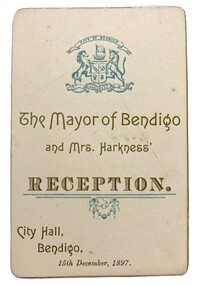
... Mayor Harkness is best known for abolishing liquor from the Town Hall and replacing the Mayor's Ball with a Monster Sunday School Picnic for children which took place in Ravenswood in 1883 and was attended by 15,000 people. ...Mayor Harkness is best known for abolishing liquor from the Town Hall and replacing the Mayor's Ball with a Monster Sunday School Picnic for children which took place in Ravenswood in 1883 and was attended by 15,000 people. ...Mayor Harkness is best known for abolishing liquor from the Town Hall and replacing the Mayor's Ball with a Monster Sunday School Picnic for children which took place in Ravenswood in 1883 and was attended by 15,000 people. Abraham Harkness arrived in Victoria in 1857 aged 28. He was initially successful in his search for gold and after a return trip to England in 1862 returned to Bendigo where he opened a general store and then a foundry manufacturing mining machinery. He stood for council from in 1880 and was elected a further eight times over the next twenty years. Cr Harkness served as Mayor in 1882, 1897 and 1898. His son Andrew became Mayor in 1908-09. Abraham Harkness married Jane Elizabeth Noble in Bendigo in1864 and together they had six sons and five daughters. Abraham died in 1912 and Jane in 1927. Town Halls serve many purposes. Symbolically they are an outward expression of a City’s prosperity while practically serving as an administration hub, a place to showcase industry and agriculture, host grand balls and royal visits and administer law and order. The Bendigo Town Hall has proudly served its citizens and played a vital role in nearly every major decision and event that has shaped the City. In the early years it included spaces for Surveyors, Engineers, Town Treasurer, Clerk of Courts, council meeting rooms and a separate office for the Mayor.Blue and gold printed invitation for Christmas Reception held at the City hall, Bendigo on 15th December 1897 by Mayor and Mrs Harkness. Front design features the Bendigo Coat of Arms, inside left message reads 'The Mayor of Bendigo and Mrs. Harkness wish the Citizens the Compliments of the Season - 15th December 1897'. Music program printed on right hand side and bird motif with 'Christmas, 1897 on the back of the invitationcity of bendigo town hall, mayoral reception, mayor harkness, mayoress harkness -
 Bendigo Historical Society Inc.
Newspaper - ANZAC COLLECTION: NEWSPAPER CLIPPING RE ENLISTMENT FOR WWI, 2nd August, 2014
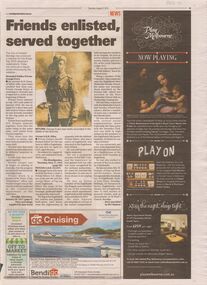
... Of the Loyal Catherine lodge, M.U., Odd fellows band , Comrade's class connected with the Eaglehawk West Methodist Sunday School, Church Choir ,Lawn party , and the swastika club, esteem of the Eaglehawk mechanics institute, Foundry man at the Austral Drill foundry at Eaglehawk. ...Of the Loyal Catherine lodge, M.U., Odd fellows band , Comrade's class connected with the Eaglehawk West Methodist Sunday School, Church Choir ,Lawn party , and the swastika club, esteem of the Eaglehawk mechanics institute, Foundry man at the Austral Drill foundry at Eaglehawk. ...Newspaper clipping Bendigo Advertiser Saturday August 2 2014.Articles of friends who enlisted for WWI together. Private George Every, son of W. H. Every enlisted in July 1915, and sailed for Egypt in January 1916, and his imminent return home wounded. Private S. H. R. Elliott No. 782, K.I.A. April 25 1915, aged 28 years. Son of the late Mr. & Mrs George Elliott of Peg leg Road Eaglehawk, enlisted in August 1914 and embarked from Melbourne. N. S. Draper enlisted at the same time. Sydney Elliott was a member of the Eaglehawk Fire Brigade, Rifle club and was chosen to do sniping duty. G. Of the Loyal Catherine lodge, M.U., Odd fellows band , Comrade's class connected with the Eaglehawk West Methodist Sunday School, Church Choir ,Lawn party , and the swastika club, esteem of the Eaglehawk mechanics institute, Foundry man at the Austral Drill foundry at Eaglehawk. He had one sister, Mrs W. Graham, of Peg leg Road and five brothers - Messrs George & Abe, Bootmakers of Eaglehawk, Fred of Vine Street Bendigo, William of Farnsworth Street Eaglehawk,Stanley of Eaglehawk, and well know in musical circles and as choirmaster at St. Pauls Church Bendigo.military, world war 1, bendigo soldiers -
 Bendigo Historical Society Inc.
Book - GLEAMS FROM THE GOLDEN CITY BY FRED P. MORRIS 1908
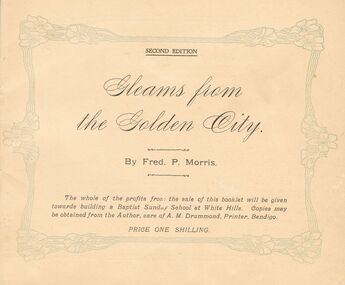
... ...Baptist Sunday School...On front page: The whole of the profits from the sale of this booklet will be given towards building a Baptist Sunday School at White Hills. Copies may be obtained from the author, care of A.M. ...BOOK Fred Morris Baptist Sunday School White Hills Second Edition of ''Gleams from the Golden City'' by Fred P. ...Second Edition of ''Gleams from the Golden City'' by Fred P. Morris. Price one shilling. On front page: The whole of the profits from the sale of this booklet will be given towards building a Baptist Sunday School at White Hills. Copies may be obtained from the author, care of A.M. Drummond, Printer, Bendigo. On Page 2 a dedication to those two venerable servants of God who have influenced my life The Rev. W.C. Tayler of White Hills and Abraham Harkness, Esq. of Golden Square. Acknowledgment is made to the following subscribers who have helped in publication expenses: His Worship the Mayor of Bendigo (Cr. A. Harkness), Sir John Quick, Senato McColl, Hon Joseph Sternberg, Dr. W.J. Long, Dr. J. McIntyre Eadie, Messrs. Barkly Heyett, J. M. Griffiths (Melbourne), J. S. Stewart, C. H. Davis, Vernon Rymer, H. Holmes, A. Dunstan, A. Bush, S.H. McGowan, and I.E. Dyason and Mrs. Thomson (Hamilton). White Hills Bendigo November 1908. On Page 3 a Dedication: Dear Mr. Morris, I wish you success in your effort to further the cause of our Lord Jesus Christ, your friend Charles W. Alexander.book, fred morris, baptist sunday school, white hills -
 Ballarat Heritage Services
Document - Photocopy, First Names Wesleyan Ballarat 1853, 1853
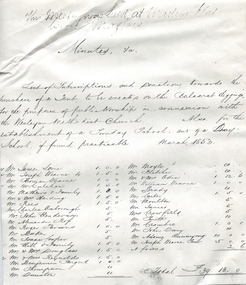
... Also for the establishment of a Sunday School and of a Day School if found practicable. ...Also for the establishment of a Sunday School and of a Day School if found practicable. ...A copy of a white piece of paper with creases photocopiedThis meeting was held at Winters' Flat below Magpie List of subscriptions and donations towards the purchase of a Tent to be erected on the Balaarat [sic] diggings, for the purposes of public worship in connexion with the Wesleyan Methodist Church. Also for the establishment of a Sunday School and of a Day School if found practicable. March 1853 Mr James Jones, Mr Joseph Wearne, Mr Thomas Wearne, Mr McCulchan, Mr Mathews and family, Mr & Mrs Harding, Mr Rees, Mr Charles Axborough, Mr John Henderson, Mr Alexander Ross, Mr Roger Parsons, Mr Baker, Mr Isaac Cooper, Mr Hill & family, Mr & Mrs Douglass, Mr & Mrs Reynolds, Mr Benjamin Sargent, Mr Thompson, Mr Dunstan, Mr Moyle, Mr Fletcher, Mr & Mrs Odie [sic], Mr William Wearne, Mr Brady, Mr Carter, Mr Moulton, Mr James, Mrs Crowfield, Mr Smith, Mr Crombie, Mr John Day, or Davy, Mr Adams, Buninyong, Mr Joseph Wearne, ?, A friendjames jones, mr joseph wearne, mr thomas wearne, mr mcculchan, mr mathews and family, mr & mrs harding, mr rees, mr charles axborough, mr john henderson, mr alexander ross, mr roger parsons, mr baker, mr isaac cooper, mr hill & family, mr & mrs douglass, mr & mrs reynolds, mr benjamin sargent, mr thompson, mr dunstan, mr moyle, mr fletcher, mr william wearne, mr brady, mr carter, mr moulton, mr james, mrs crowfield, mr smith, mr crombie, mr john day, or davy, mr adams, buninyong, oddie, mr and mrs oddie -
 Christ Church Anglican Parish of Warrnambool
Memorial Window: Rev Canon Samuel McGEORGE, St. Michael
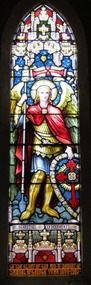
... On December 4th 1904, Canon McGeorge opened the new Church and Sunday School in Koroit St, East Warrnambool, of which he had established. ...On December 4th 1904, Canon McGeorge opened the new Church and Sunday School in Koroit St, East Warrnambool, of which he had established. ...Samuel McGeorge was born in Belfast, Ireland in 1850. He was trained for the ministry at Moore College, Sydney. He was Vicar in Ararat for 10 years prior to coming to Warrnambool in 1899, to become the 3rd Vicar of the Parish. He was inducted on June 1st by Bishop Cooper. He showed a deep regard for the welfare and happiness of his parishioners. Christ Church progressed well under his charge. He suffered a very painful and distressing illness which forced him to obtain leave of absence from his clerical duties, but he continued to visit and encourage the sick and sorrowing. On December 4th 1904, Canon McGeorge opened the new Church and Sunday School in Koroit St, East Warrnambool, of which he had established. It was opened as a Mission Hall. It was to become St. George's and the first recorded service was on February 11th 1906. He preached his last sermon at Christ Church on Dec 4th before illness prevented him performing his duties. He resigned from the Vicariate shortly before his death in Warrnambool on December 16th, 1905. The stained glass window in the north wall of the second nave was a gift of many parishioners. Depicting St. Michael, it was erected in memory of Rev Canon McGeorge, and was unveiled by Dean Parkyn on December 23rd, 1906. His widow Mrs Emma McGeorge, remained an active church worker until her death in 1933. The Lych gate at the Koroit Street entrance was built with a bequest from her.Stained glass lancet window, north wall, north nave, depicting Saint Michael, the arch-angel Michael.Saint Michael. To the Glory of God and in memory of/ Samuel McGeorge Vicar 1899 - 1903 -
 Eltham District Historical Society Inc
Photograph, Peter Pidgeon, Grave of David George and Elizabeth Clark, Eltham Cemetery, Victoria, 5 April 2021
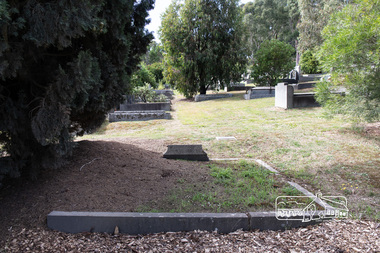
... He found that the Clarks were of good moral and religious character (David taught Sunday School at St. Margaret's later on) and gave them his endorsement despite some perceived technical shortcomings. ...He found that the Clarks were of good moral and religious character (David taught Sunday School at St. Margaret's later on) and gave them his endorsement despite some perceived technical shortcomings. ...David George Clark was the first and longest-serving headmaster at Eltham State School No. 209 (Eltham Primary) in Dalton Street, Eltham. David (then aged 26) and his sister Catherine first established their ‘private’ school which began in 1855 and was held in the Wesleyan Chapel in Henry Street, a slab built, shed-like building on land acquired by the Church in January 1855. Parents lobbied the Government to establish an official school, and a School Inspector came out to investigate. He found that the Clarks were of good moral and religious character (David taught Sunday School at St. Margaret's later on) and gave them his endorsement despite some perceived technical shortcomings. In 1856 a small stone building of 40 feet by 16 feet was erected on the school's present site at the corner of Main Road and Dalton Street. Half of the building was the school, the other half was the residence of David and Catherine and their mother, also Catherine. It appears that they were well respected by the local community: David constantly battled with the authorities to have facilities (such as toilets) at the school improved. As enrolment gradually increased, over-crowding became an issue. As well, David married Elizabeth in 1863. Needing to move out of the schoolhouse, in 1866 the Clarks bought a block of land in Metery Road next to the school and built the house "Shoestring" (which still exists albeit with significant modifications). Catherine retired in 1887 followed by David in 1889 after a period of ill health and was succeeded as Head Teacher by John Brown. David died in 1911 and is buried with his wife Elizabeth in Eltham Cemetery. In Loving Memory Of D. G. & E. ClarkBorn Digitaleltham cemetery, gravestones, david george clark, elizabeth clark, eltham primary school, eltham wesleyan chapel, state school no. 209 -
 Wodonga & District Historical Society Inc
Album - Rev. Alexander Sutherland Bremner
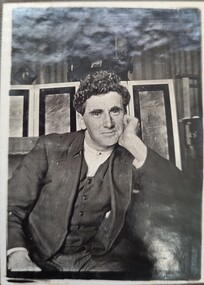
... As a mark of respect, a hall was erected at the back of the Wodonga Presbyterian Church in High Street to serve as a kindergarten and Sunday School. It was officially opened on Sunday 6th November 1921 and named Bremner Hall....As a mark of respect, a hall was erected at the back of the Wodonga Presbyterian Church in High Street to serve as a kindergarten and Sunday School. It was officially opened on Sunday 6th November 1921 and named Bremner Hall. ...Alexander Sutherland Bremner was born in Lyster, Scotland in about 1890. He migrated to South Australia and by 1914 was stationed in Mount Gambier as a missionary in connection with St Andrew’s Presbyterian Church. At that stage he was a student of Divinity. He moved to Victoria and served in Beech Forest and Kyabram. After three years in Kyabram, Reverend Bremner transferred to Wodonga in April 1919. Although only in Wodonga for two years, Reverend Bremner quickly became highly regarded in the community for the compassion he brought to his calling. He was particularly concerned about the welfare of boys in Wodonga and became involved in the Scouts as well as establishing the Wodonga Boys’ Club. Although the Boys’ Club had been formed through the Church it was open to all local boys. Tragedy struck on 20th November 1920 when Reverend Bremner was accompanying a group of boys on an outing to the Wodonga Creek. In order to stop the boys from entering a deep water hole he positioned himself on a log between it and the shallower water. Unfortunately he slipped off the log himself and fell into the waterhole. He was unable to swim and despite the best efforts of one of the boys to rescue him, he drowned. To add further to the tragedy, his fiancé was on her way to Wodonga by train to visit Reverend Bremner for the weekend. She could not be advised of his death before arriving at the station where she expected him to be waiting. As a mark of respect, a hall was erected at the back of the Wodonga Presbyterian Church in High Street to serve as a kindergarten and Sunday School. It was officially opened on Sunday 6th November 1921 and named Bremner Hall.This album is significant because it documents the service and untimely death of a highly regarded Minister of the Presbyterian Church in Wodonga.A small brown photo album containing photos and newspaper articles chronicling the drowning of Reverend Alexander Sutherland Bremner in Wodonga.reverend a.s. bremner, presbyterian church, bremner hall -
Surrey Hills Historical Society Collection
Work on paper - Vertical File, Methodist Uniting Church
... Surrey Hills Methodist Sunday School programme 21st Anniversary. April 1909 (booklet) 4. n/a 5. n/a 6. ...Surrey Hills Methodist Sunday School programme 21st Anniversary. April 1909 (booklet) 4. n/a 5. n/a 6. ...Methodist / Uniting Church 1. Surrey Hills Centenary Methodist Church Newsletter 80th Anniversary issue. October 1967 (1 page) 2. Surrey Hills Uniting Church history (1 page) undated printed 19.3.2010 3. Surrey Hills Methodist Sunday School programme 21st Anniversary. April 1909 (booklet) 4. n/a 5. n/a 6. Canterbury Circuit – The Methodist Preacher’s plan May – July 1939 (8 page booklet) 7. Surrey Hills Methodist Church Thanksgiving Service Program (28.9.1975 (as entered Uniting Church) (8 pages) 8. Surrey Hills Uniting Church Newsletter September 1975 double sided 4 x 2 (8 pages) 9. Surrey Hills Uniting Church Newsletter 18.9.1983 (double sided 1 page) 10. Article from SHNN No. 5 Aug/Sept 1983 (1 page) 11. “Welcome to Valonia” from SHNN No. 20 Feb/Mar 1986 (1 page) 12. “Celebrating a Centenary” from SHNN No. 29 Aug/Sept 1987 (2 copies) 13. “With a Voice of Singing” from SHNN NO. 48 Oct/Nov 1990 (1 page) 14. Surrey Hills Uniting Church ‘Alerter’ Dec 1993 (24 pages) 15. “Surrey Hills Historical Society Meetings” from SHNN No. 106 June/July 2000 (1 page) 16. “Local Church Celebrates Indigenous Heritage” from SHNN No. 123 Apr/May 2003 (1 page) methodist uniting church -
 Orbost & District Historical Society
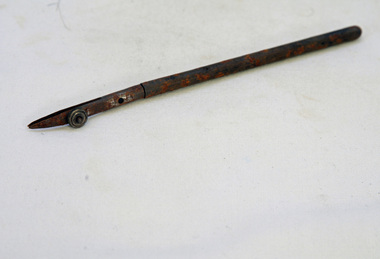
display cabinet and tools
... She towed vessels in and out through the Snowy river entrance and was also used for social functions such as Sunday School picnics. She was the main means of transport for imports and exports on the Snowy River for almost 30 years. ...She towed vessels in and out through the Snowy river entrance and was also used for social functions such as Sunday School picnics. She was the main means of transport for imports and exports on the Snowy River for almost 30 years. ...This display was put together by the Curlip Committee and used as promotion in the shed during the construction of Curlip 11 A community project, this boat was constructed out of local hardwood timbers utilizing the traditional skills of wooden boat builders and is powered by a steam engine. Paddle Steamer Curlip II is a replica of an historic paddle steamer of the Snowy River, in Far East Gippsland, Victoria. The original Paddle Steamer Curlip was built by Sam Richardson and his sons Mark, Albert and Frank, at their sawmill at Tabbara, a pioneering settlement on the Brodribb River, a tributary of the Snowy River. The keel was laid on 14th October 1889 and PS Curlip was launched in 1890. The name “ Curlip” is derived from the indigenous name for the area where Tabbara is located and includes land to the east of the Snowy and Brodribb Rivers towards Cape Conran. PS Curlip was registered in 1893 and the Passenger Certificate issued on 30th January 1903 to Captain Alan Richardson by the Marine Board of Victoria entitled her to carry 25 passengers and only 10 passengers when engaged in towage service. Two children under 12 years of age to be reckoned as one passenger. PS Curlip towed five barges at a time, traveling upstream as far as Bete Bolong, 20 km upstream of the mouth to collect produce to be transferred to schooners near Marlo. She towed vessels in and out through the Snowy river entrance and was also used for social functions such as Sunday School picnics. She was the main means of transport for imports and exports on the Snowy River for almost 30 years. The Curlip era ended abruptly on Friday 28th February when a flash flood carried her and 2 barges down river and out to sea, where she washed ashore at Marlo and broke up.More than eighty years after the original Paddle Steamer Curlip was wrecked at sea, the Orbost community launched a replica which it hoped would draw tourists to the region. The P.S. Curlip II, is based on drawings of the original Curlip that made its home in the Snowy and Brodribb Rivers of East Gippsland in the 1890s and early 1900s, It took six years of planning and hundreds of hours of volunteer work from the local community.A display cabinet containing tools and sundry items related to the Paddle Steamer Curlip. (More information on individual items in Catalogue 1400-1600)p.s.curlip richardson-samuel boat-building-tools transport -
 Williamstown Historical Society Inc
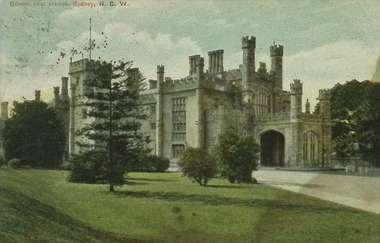
Postcard - Alice Evans Postcard Collection, Government House, Sydney, N.S. W, 1905-1909
... She was an active and well known member of the Welsh Church and Sunday School on Ferguson Street and enjoyed singing and playing in local concerts. ...She was an active and well known member of the Welsh Church and Sunday School on Ferguson Street and enjoyed singing and playing in local concerts. ..."Dear Alice" Is a collection of 142 Postcards from Australia and around world, almost all of which are addressed to Miss Alice Evans, No. 2 Cox Gardens, Williamstown, dated between 1905 - 1909. These postcards form part of a collection found in the ceiling of No. 2 Cox Gardens by a local builder and carpenter Gordon Peterson. Peterson was contracted to demolish the house in the mid 1970's. The cards were held in the Estate of Gordon Peterson, along with a photo of the cottage, before demolition until donation to the historical society by his descendants in 2024. Alice Edith Evans was born in Williamstown in 1885 to parents Benjamin Samuel Evans (1833-1900), a bootmaker from Ruabon, Denbighshire, Wales and Catherine (nee Jones) (1850-1915) from Eaglehawk, near Castlemaine. Alice had three older step sisters, and two younger brothers, Benjamin and Samuel, who sadly died in infancy. Alice’s father, Benjamin, had been married previously, his wife dying during childbirth, leaving him with three daughters to care for. After leaving school, Alice was employed as a clerk with Trevor Jones & Co. (real estate agents), until her declining health prevented her from working. She was an active and well known member of the Welsh Church and Sunday School on Ferguson Street and enjoyed singing and playing in local concerts. Well known in the community, a Grand Benefit Concert was organised in her honour on 9th April, 1910, at the Mechanics Institute, Williamstown. Hosted by Mayor Cr. Wymark, the event featured a delightful program of musical performances, showcasing both individual talents and the Carlton Club Choir. Tragically, Alice passed away due to the effects of her illness on 3rd December 1910, at the age of just 25. She is buried in Williamstown Cemetery. The postcards, written between 1905 to 1909, illustrate the social history of residents and everyday life at the turn of the century, using postcards as a means of communication.Part of a collection of 142 Postcards.This colour postcard is of Government House, Sydney, N.S.WGovernment House, Sydney, N.S.Walice evans postcards, postcard, government house -
 Williamstown Historical Society Inc
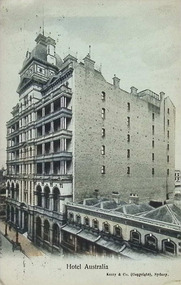
Postcard - Alice Evans Postcard Collection, Hotel Australia, Sydney, 31/08/1909
... She was an active and well known member of the Welsh Church and Sunday School on Ferguson Street and enjoyed singing and playing in local concerts. ...She was an active and well known member of the Welsh Church and Sunday School on Ferguson Street and enjoyed singing and playing in local concerts. ..."Dear Alice" Is a collection of 142 Postcards from Australia and around world, almost all of which are addressed to Miss Alice Evans, No. 2 Cox Gardens, Williamstown, dated between 1905 - 1909. These postcards form part of a collection found in the ceiling of No. 2 Cox Gardens by a local builder and carpenter Gordon Peterson. Peterson was contracted to demolish the house in the mid 1970's. The cards were held in the Estate of Gordon Peterson, along with a photo of the cottage, before demolition until donation to the historical society by his descendants in 2024. Alice Edith Evans was born in Williamstown in 1885 to parents Benjamin Samuel Evans (1833-1900), a bootmaker from Ruabon, Denbighshire, Wales and Catherine (nee Jones) (1850-1915) from Eaglehawk, near Castlemaine. Alice had three older step sisters, and two younger brothers, Benjamin and Samuel, who sadly died in infancy. Alice’s father, Benjamin, had been married previously, his wife dying during childbirth, leaving him with three daughters to care for. After leaving school, Alice was employed as a clerk with Trevor Jones & Co. (real estate agents), until her declining health prevented her from working. She was an active and well known member of the Welsh Church and Sunday School on Ferguson Street and enjoyed singing and playing in local concerts. Well known in the community, a Grand Benefit Concert was organised in her honour on 9th April, 1910, at the Mechanics Institute, Williamstown. Hosted by Mayor Cr. Wymark, the event featured a delightful program of musical performances, showcasing both individual talents and the Carlton Club Choir. Tragically, Alice passed away due to the effects of her illness on 3rd December 1910, at the age of just 25. She is buried in Williamstown Cemetery. The postcards, written between 1905 to 1909, illustrate the social history of residents and everyday life at the turn of the century, using postcards as a means of communication.This forms part of a collection of 142 Postcards. This is Hotel Australia.Hotel Australiaalice evans postcards, hotel australia -
 Williamstown Historical Society Inc
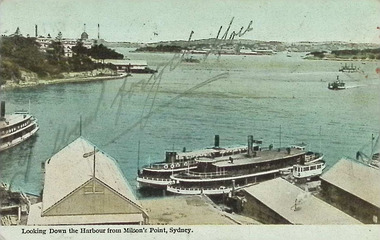
Postcard - Alice Evans Postcard Collection, Looking down the Harbour (Sydney), from Milson’s Point, 1905
... She was an active and well known member of the Welsh Church and Sunday School on Ferguson Street and enjoyed singing and playing in local concerts. ...She was an active and well known member of the Welsh Church and Sunday School on Ferguson Street and enjoyed singing and playing in local concerts. ..."Dear Alice" Is a collection of 142 Postcards from Australia and around world, almost all of which are addressed to Miss Alice Evans, No. 2 Cox Gardens, Williamstown, dated between 1905 - 1909. These postcards form part of a collection found in the ceiling of No. 2 Cox Gardens by a local builder and carpenter Gordon Peterson. Peterson was contracted to demolish the house in the mid 1970's. The cards were held in the Estate of Gordon Peterson, along with a photo of the cottage, before demolition until donation to the historical society by his descendants in 2024. Alice Edith Evans was born in Williamstown in 1885 to parents Benjamin Samuel Evans (1833-1900), a bootmaker from Ruabon, Denbighshire, Wales and Catherine (nee Jones) (1850-1915) from Eaglehawk, near Castlemaine. Alice had three older step sisters, and two younger brothers, Benjamin and Samuel, who sadly died in infancy. Alice’s father, Benjamin, had been married previously, his wife dying during childbirth, leaving him with three daughters to care for. After leaving school, Alice was employed as a clerk with Trevor Jones & Co. (real estate agents), until her declining health prevented her from working. She was an active and well known member of the Welsh Church and Sunday School on Ferguson Street and enjoyed singing and playing in local concerts. Well known in the community, a Grand Benefit Concert was organised in her honour on 9th April, 1910, at the Mechanics Institute, Williamstown. Hosted by Mayor Cr. Wymark, the event featured a delightful program of musical performances, showcasing both individual talents and the Carlton Club Choir. Tragically, Alice passed away due to the effects of her illness on 3rd December 1910, at the age of just 25. She is buried in Williamstown Cemetery. The postcards, written between 1905 to 1909, illustrate the social history of residents and everyday life at the turn of the century, using postcards as a means of communication.This forms part of a collection of 142 Postcards. This coloured postcard is Looking down the Harbour (Sydney), from Milson’s Point.Looking down the Harbour (Sydney), from Milson’s Point.alice evans postcards, postcards, sydney harbour
