
Showing 1527 items matching "educational"
-
 Federation University Historical Collection
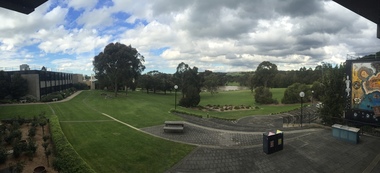
Photograph, Clare Gervasoni, Federation University Gippsland Campus, 2017, 03/10/2017
... The University’s commitment to educational and social equity, teaching excellence, research distinction, environmental sustainability and regional capacity building has enabled it to develop in a way that draws on its proud heritage to inform its future. ...The University’s commitment to educational and social equity, teaching excellence, research distinction, environmental sustainability and regional capacity building has enabled it to develop in a way that draws on its proud heritage to inform its future. ...Federation University Australia was established on 1 January 2014. Formerly known as the University of Ballarat, its enabling legislation was the University of Ballarat Amendment (Federation University Australia) Act 2013. On 1 January 2014, the University of Ballarat amalgamated with the Monash University Gippsland Campus to form Federation University Australia. The Gippsland Campus also had a long lineage dating back to 1928 with the establishment of the Yallourn Technical School which became a predecessor institution to the Gippsland College of Advanced Education formed in 1968. In 1990, it was renamed the Monash University College and in 1993 became the Gippsland Campus of Monash University. In 2016, Federation University Australia announced plans to take possession, over a two-year period, of Monash’s Berwick Campus in the south-east corridor of Melbourne. Federation University Australia, or FedUni, is headquartered in Ballarat and offers programs in Higher Education and Vocational Education and Training to regional Victoria and beyond. The University’s commitment to educational and social equity, teaching excellence, research distinction, environmental sustainability and regional capacity building has enabled it to develop in a way that draws on its proud heritage to inform its future. Its regional character sets a framework for the University’s priorities but does not constrain it from serving wider community interests, nationally and internationally. The name Federation University Australia was chosen to convey the scope and capacity of an expanded regional university with a federated network of campuses. Colour panoramic photorgraph of the Federation University Gippsland Campus.federation university, gippsland campus, churchill campus -
 Federation University Historical Collection
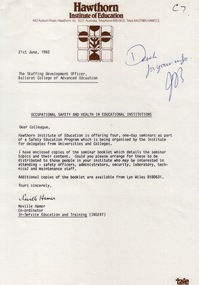
Programme - Programme - Seminar, VIOSH: Hawthorn Institute of Education; Occupational Health and Safety Seminar, 1983
... The Seminar centres around Occupational Safety and Health in Educational Institutions. Speakers include James Coe, Eric Wigglesworth, Derek Viner, A Giles, J Welch, G Carter and Tony Morgan. ...The Seminar centres around Occupational Safety and Health in Educational Institutions. Speakers include James Coe, Eric Wigglesworth, Derek Viner, A Giles, J Welch, G Carter and Tony Morgan. ...Victorian Institute of Occupational Safety and Health (VIOSH) Australia is the Asia-Pacific centre for teaching and research in occupational health and safety (OHS) and is known as one of Australia's leaders on the field. VIOSH has a global reputation for its innovative approach within the field of OHS management. VIOSH had its first intake of students in 1979. At that time the Institution was known as the Ballarat College of Advanced Education. In 1990 it became known as Ballarat University College, then in 1994 as University of Ballarat. It was 2014 that it became Federation University. Hawthorn Institute of Education information on four, one-day seminars as part of a Safety Education Program. This was sent to Ballarat College of Advanced Education along with other Institutions. The Seminar centres around Occupational Safety and Health in Educational Institutions. Speakers include James Coe, Eric Wigglesworth, Derek Viner, A Giles, J Welch, G Carter and Tony Morgan. Topics include Ergonomics in the Workplace, Accident Investigation Techniques, Emergency Preparedness, Flammability and Toxicity of Chemicals. VIOSH Australia students are safety managers, senior advisors and experienced OHS professionals. They come from all over Australia and industry. Students are taught active research and enquiry; rather than textbook learning and a one-size fits all approach. VIOSH accepts people into the Graduate Diploma of Occupational Hazard Management who have no undergraduate degree - on the basis of extensive work experience and knowledge. Eleven A4 sheets of coloured paper - each colour indicates different seminar day.Hawthorn Institute of Education letterhead sign ature of Neville Hamer - co-ordinator, In-Service Education and Training Comment in blue pen. viosh, victorian institute of occupational safety and health, safety education program, one-day seminars, occupational safety and health, james coe, eric wigglesworth, derek viner, a giles, j welch, g carter, tony morgan, ergonomics in the workplace, accident investigation techniques, emergency preparedness, flammability and toxicity of chemicals -
 Federation University Historical Collection
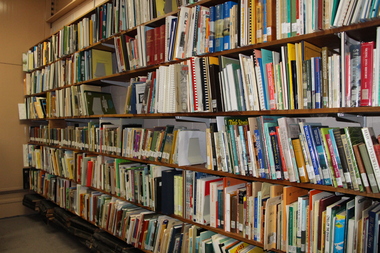
Photograph, Federation University Centre for Gippsland Studies, 2016, 12/05/2016
... The University’s commitment to educational and social equity, teaching excellence, research distinction, environmental sustainability and regional capacity building has enabled it to develop in a way that draws on its proud heritage to inform its future. ...The University’s commitment to educational and social equity, teaching excellence, research distinction, environmental sustainability and regional capacity building has enabled it to develop in a way that draws on its proud heritage to inform its future. ...Federation University Australia was established on 1 January 2014. Formerly known as the University of Ballarat, its enabling legislation was the University of Ballarat Amendment (Federation University Australia) Act 2013. On 1 January 2014, the University of Ballarat amalgamated with the Monash University Gippsland Campus to form Federation University Australia. The Gippsland Campus also had a long lineage dating back to 1928 with the establishment of the Yallourn Technical School which became a predecessor institution to the Gippsland College of Advanced Education formed in 1968. In 1990, it was renamed the Monash University College and in 1993 became the Gippsland Campus of Monash University. In 2016, Federation University Australia announced plans to take possession, over a two-year period, of Monash’s Berwick Campus in the south-east corridor of Melbourne. Federation University Australia, or FedUni, is headquartered in Ballarat and offers programs in Higher Education and Vocational Education and Training to regional Victoria and beyond. The University’s commitment to educational and social equity, teaching excellence, research distinction, environmental sustainability and regional capacity building has enabled it to develop in a way that draws on its proud heritage to inform its future. Its regional character sets a framework for the University’s priorities but does not constrain it from serving wider community interests, nationally and internationally. The name Federation University Australia was chosen to convey the scope and capacity of an expanded regional university with a federated network of campuses. Photographs of the Centre for Gippsland Studies located at the Churchill campus of Federation University.centre for gippsland studies, churchill campus, gippsland campus, grsc, gippsland campus collection -
 Sunshine and District Historical Society Incorporated
Photograph (collection) - St. Albans High School Photographic Collection
... The school remains a major educational institution in Melbourne’s west, with over 1,600 students today. ...The school remains a major educational institution in Melbourne’s west, with over 1,600 students today. ...Collection of St. Albans High School class photographs, newsletters, houses. This collection has been split into separate catalog numbers and is stored at different locations as per the individual catalog numbersst. albans high school, st. albans secondary college, main road east, st. albansst. albans high school, st. albans secondary college, main road east, st. albans -
 Sunshine and District Historical Society Incorporated
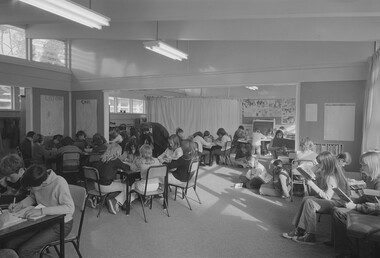
Photograph - St. Albans Primary School Photographs
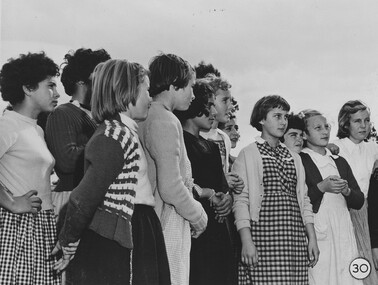
... Albans Primary School continues to operate on its original site and remains a key part of the educational landscape of Melbourne’s western suburbs....Albans Primary School continues to operate on its original site and remains a key part of the educational landscape of Melbourne’s western suburbs. ...The St. Albans State School, now the St. Albans Primary School opened in 1889 and is one of the oldest continuously operating schools in Melbourne’s western suburbs. The school was founded by early farming families shortly after the suburb itself was created by Alfred Padley and the Cosmopolitan Land & Banking Co. around the railway line. Local families needed a permanent school to replace informal or church-based teaching arrangements and this school was built. St. Albans grew dramatically after WWII due to migrant settlement and with industrial expansion in Sunshine, Tottenham, and Braybrook. The school was expanded with additional classrooms, specialist rooms (art, library, music) and larger playgrounds and assembly areas. By the 1960s–70s, the state School was a major multicultural school serving a rapidly growing suburb. For more than a century, the school has been central to migrant education, local civic life, community events and fetes The school has tight partnerships with the St. Albans High School and other local institutions. The school remains one of the longest running institutions in the district. St. Albans Primary School received its current name in 1970, when the Victorian Education Department changed all “State School” names to “Primary School.” St. Albans Primary School continues to operate on its original site and remains a key part of the educational landscape of Melbourne’s western suburbs.st. albans primary school, west esplanade, st. albans, st. albans state school -
 Sunshine and District Historical Society Incorporated
Photograph - St. Albans State School Photographs
... Albans Primary School continues to operate on its original site and remains a key part of the educational landscape of Melbourne’s western suburbs....Albans Primary School continues to operate on its original site and remains a key part of the educational landscape of Melbourne’s western suburbs. ...The St. Albans State School, now the St. Albans Primary School opened in 1889 and is one of the oldest continuously operating schools in Melbourne’s western suburbs. The school was founded by early farming families shortly after the suburb itself was created by Alfred Padley and the Cosmopolitan Land & Banking Co. around the railway line. Local families needed a permanent school to replace informal or church-based teaching arrangements and this school was built. St. Albans grew dramatically after WWII due to migrant settlement and with industrial expansion in Sunshine, Tottenham, and Braybrook. The school was expanded with additional classrooms, specialist rooms (art, library, music) and larger playgrounds and assembly areas. By the 1960s–70s, the state School was a major multicultural school serving a rapidly growing suburb. For more than a century, the school has been central to migrant education, local civic life, community events and fetes The school has tight partnerships with the St. Albans High School and other local institutions. The school remains one of the longest running institutions in the district. St. Albans Primary School received its current name in 1970, when the Victorian Education Department changed all “State School” names to “Primary School.” St. Albans Primary School continues to operate on its original site and remains a key part of the educational landscape of Melbourne’s western suburbs.These photographs show how multicultural the school had become after the post WW2 migrant boom.st. albans primary school, west esplanade, st. albans, st. albans state school -
 Sunshine and District Historical Society Incorporated
Administrative record - Sunshine Primary School 2024 Annual Report, Victoria State Government Department of Education, 2025
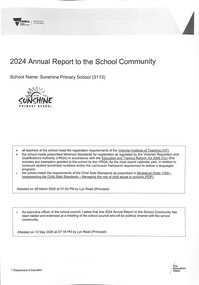
... Sunshine Primary School fosters an environment where children share responsibility for their own learning and where all community members work together to ensure all students maximise every educational opportunity possible. Sunshine Primary School enjoys a productive partnership with the local Deer Park / Sunshine school network, working together to build a resilient and productive learning community for all. ...Sunshine Primary School fosters an environment where children share responsibility for their own learning and where all community members work together to ensure all students maximise every educational opportunity possible. Sunshine Primary School enjoys a productive partnership with the local Deer Park / Sunshine school network, working together to build a resilient and productive learning community for all. ...Established in 1891, Sunshine Primary School (SPS) is located in the City of Brimbank, west of Melbourne. The local community is diverse in its socio-economic and cultural backgrounds with approximately 42% of the school's students having a language background other than English. Sunshine Primary School has 24 equivalent full-time staff: 2 Principal class, 16 teachers and 8 Education Support staff. The school is driven by strong values and the belief that every student can achieve success. The school culture is focused on ensuring effective and enriched learning for all students through individualised instruction. There is a focus on continuous improvement which is based on research to ensure effective teaching and learning and to improve student learning outcomes. Sunshine Primary School fosters an environment where children share responsibility for their own learning and where all community members work together to ensure all students maximise every educational opportunity possible. Sunshine Primary School enjoys a productive partnership with the local Deer Park / Sunshine school network, working together to build a resilient and productive learning community for all. Together we work as a community of practice to share curriculum ideas and strategies to improve the outcomes for the students in the Deer Park/Sunshine area. The network is continuing to support our focus on improving student learning outcomes in student learning, health and wellbeing.2024 Annual Report to the School Community School Name: Sunshine Primary School (3113)sunshine primary school, hampshire road, sunshine -
 Melbourne Legacy
Photograph, HDC Camp 1992, 1991
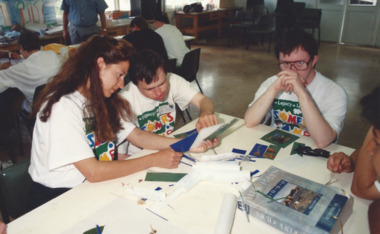
... Every month Legacy's handicapped dependents are invited to go on outings or take part in recreational and educational activities. These programmes aim to develop independence and thus lessen the need for reliance on others for simple routine functions. ...Every month Legacy's handicapped dependents are invited to go on outings or take part in recreational and educational activities. These programmes aim to develop independence and thus lessen the need for reliance on others for simple routine functions. ...Photos from a camp for handicapped dependents in January 1992. These photos show craft activities. One photo shows Chief Executive Terry Walsh with the children. Also a photo of a participant with the label 'Sharon proudly shows off her room'. Other photos from the camp are at 01561, 01562, 01563 and 01564. Some appeared in the newsletter in March 1992. The article mentions that the annual camps run for two weeks at Somers Camp (believed to be Somers School Camp). It is a wonderful gathering of Junior Legatees, Legatees, and dedicated helpers. 50 Legatees attended this camp with the personal attention almost one-to-one. With ages ranging from 22 to into the 60s, Legacy has to ensure it caters for the differing needs. Legatees headed by Camp Chief, Jim Hammon and Chairman of the Handicapped Dependents Committee, Merv Tickell, were supported by two Camp Co-Ordinators and 50 helpers known as 'leaders'. Many of the leaders are people in the workforce wishing to give something back to the community. Junior Legatees are organised into groups. They participate in horse-riding, swimming, golfing, strawberry picking, and many other activities. Every month Legacy's handicapped dependents are invited to go on outings or take part in recreational and educational activities. These programmes aim to develop independence and thus lessen the need for reliance on others for simple routine functions. Photos were in a scrapbook of photos spanning 1983 to 1992.A record of the type of activities Legacy provided for the handicapped dependents of the Legacy families. Colour photo x 6 of a HDC camp, a label and an article in the newsletter.Handwritten in blue pen 'HDC Camp -Somers / Jan 1992 / Camp Chief: L/ J Hammon / Co-ordinator Julien Hardy-Smith / PhotoEric Wadsworth / 51 J/Ls'junior legatee outing, hdc, somers camp -
 Melbourne Legacy
Photograph, HDC Camp 1992, 1992
... Every month Legacy's handicapped dependents are invited to go on outing for take part in recreational and educational activities. These programmes aim to develop independence and thus lessen the need for reliance on others for simple routine functions. ...Every month Legacy's handicapped dependents are invited to go on outing for take part in recreational and educational activities. These programmes aim to develop independence and thus lessen the need for reliance on others for simple routine functions. ...Photos from a camp for handicapped dependents in January 1992. These photos show different camp activities, including arts and craft, eating meals, cleaning up in the kitchen and outside activities. Some appeared in the newsletter in March 1992. The article mentions that the annual camps run for two weeks at Somers Camp (believed to be Somers School camp). It is a wonderful gathering of Junior Legatees, Legatees, and dedicated helpers. 50 Legatees attended this camp with the personal attention almost one-to-one. With ages ranging from 22 to into the 60s, Legacy has to ensure it caters for the differing needs. Legatees headed by Camp Chief, Jim Hammon and Chairman of the Handicapped Dependents Committee, Merv Tickell, were supported by two Camp Co-Ordinators and 50 helpers known as 'leaders'. Many of the leaders are people in the workforce wishing to give something back to the community. Junior Legatees are organised into groups. They participate in horse-riding, swimming, golfing, strawberry picking, and many other activities. Every month Legacy's handicapped dependents are invited to go on outing for take part in recreational and educational activities. These programmes aim to develop independence and thus lessen the need for reliance on others for simple routine functions. Other photos from the camp are at 01560, 01561, and 01562 and 01564. Photos were in a scrapbook of photos spanning 1983 to 1992.A record of the type of activities Legacy provided for the handicapped dependents of the Legacy families. Black and white photo x 3 of a HDC camp, a label and an article in the newsletter.Handwritten in blue pen 'HDC Camp -Somers / Jan 1992 / Camp Chief: L/ J Hammon / Co-ordinator Julien Hardy-Smith / Photo Eric Wadsworth / 51 J/Ls'junior legatee outing, somers camp -
 Melbourne Legacy
Photograph, HDC Camp 1992, 1992
... Every month Legacy's handicapped dependents were invited to go on outings or take part in recreational and educational activities. These programmes aim to develop independence and thus lessen the need for reliance on others for simple routine functions. ...Every month Legacy's handicapped dependents were invited to go on outings or take part in recreational and educational activities. These programmes aim to develop independence and thus lessen the need for reliance on others for simple routine functions. ...Photos from a cam for handicapped dependents in January 1992. These photos show different camp activities, including arts and craft, eating meals, cleaning up in the kitchen and outside activities. Some appeared in the newsletter in March 1992. The article mentions that the annual camps run for two weeks at Somers Camp (believed to be Somers School Camp). It is a wonderful gathering of Junior Legatees, Legatees, and dedicated helpers. 50 Legatees attended this camp with the personal attention almost one-to-one. With ages ranging from 22 to into the 60s, Legacy has to ensure it caters for the differing needs. Legatees headed by Camp Chief, Jim Hammon and Chairman of the Handicapped Dependents Committee, Merv Tickell, were supported by two Camp Co-Ordinators and 50 helpers known as 'leaders'. Many of the leaders are people in the workforce wishing to give something back to the community. Junior Legatees are organised into groups. They participate in horse-riding, swimming, golfing, strawberry picking, and many other activities. Every month Legacy's handicapped dependents were invited to go on outings or take part in recreational and educational activities. These programmes aim to develop independence and thus lessen the need for reliance on others for simple routine functions. Other photos from the camp are at 01560, 01561, 01562 and 01563. Photos were in a scrapbook of photos spanning 1983 to 1991.A record of the type of activities Legacy provided for the handicapped dependents of the Legacy families. Black and white photo x 2 of a HDC camp, a label and an article in the newsletter.Handwritten in blue pen 'HDC Camp -Somers / Jan 1992 / Camp Chief: L/ J Hammon / Co-ordinator Julien Hardy-Smith / Photo Eric Wadsworth / 51 J/Ls'junior legatee outing, somers, somers camp -
 Flagstaff Hill Maritime Museum and Village
Book - Fictional Story, John Masefield, Martin Hyde The Dukes Messenger, 1928 to 1949
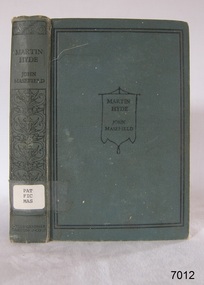
... Wells Gardner, Darton & Co. was a prominent British publishing firm specialising in children's literature, young adult fiction, and educational and religious texts. The firm was formed in 1859 when William Wells Gardner partnered with Joseph William Darton. ...Wells Gardner, Darton & Co. was a prominent British publishing firm specialising in children's literature, young adult fiction, and educational and religious texts. The firm was formed in 1859 when William Wells Gardner partnered with Joseph William Darton. ...Martin Hyde, the Duke's Messenger is a historical novel set in the late 17th century, following a young boy named Martin Hyde as he moves from a carefree childhood in rural Suffolk into a web of intrigue in London. Orphaned young, Martin goes to live with his uncle in London, where he becomes tangled up in royal conspiracies and secret missions. After his father's death in 1685, the 12-year-old goes to live with his uncle and eventually becomes messenger for James Scott, Duke of Monmouth, as Monmouth tries to build support for his claim to the English throne after the death of Charles II. It's often compared to Robert Louis Stevenson's Treasure Island or Kidnapped a boy's-own adventure that takes Martin overseas and eventually back to England to take part in the Monmouth Rebellion of 1685, with a rival working for the Crown whom he has to outwit. A reviewer also notes a small, restrained love-story thread Martin's messenger rival turns out to be a girl in disguise which nudges the book slightly outside the standard boys'-adventure genre of its era.Hard cover book. Martin Hyde “The Dukes Messenger” Author: John Masefield Publisher: Wells Gardner Darton & Co Date: 1928 to 1949 Further Information: Blue Cloth hardcover with lettering and patterning to spine in black. Publisher Logo to front cover with title & authors name. The spine has a Library label with an inscription.fictionMartin Hyde, the Duke's Messenger is a historical novel set in the late 17th century, following a young boy named Martin Hyde as he moves from a carefree childhood in rural Suffolk into a web of intrigue in London. Orphaned young, Martin goes to live with his uncle in London, where he becomes tangled up in royal conspiracies and secret missions. After his father's death in 1685, the 12-year-old goes to live with his uncle and eventually becomes messenger for James Scott, Duke of Monmouth, as Monmouth tries to build support for his claim to the English throne after the death of Charles II. It's often compared to Robert Louis Stevenson's Treasure Island or Kidnapped a boy's-own adventure that takes Martin overseas and eventually back to England to take part in the Monmouth Rebellion of 1685, with a rival working for the Crown whom he has to outwit. A reviewer also notes a small, restrained love-story thread Martin's messenger rival turns out to be a girl in disguise which nudges the book slightly outside the standard boys'-adventure genre of its era.warrnambool, shipwrecked-coast, flagstaff-hill, flagstaff-hill-maritime-museum, maritime-museum, shipwreck-coast, flagstaff-hill-maritime-village, shipwrecked-artefact, martin hyde the dukes messenger, john masefield, book, warrnambool mechanics’ institute, pattison collection, warrnambool library, ralph eric pattison, corangamite regional library service, warrnambool city librarian, mechanics’ institute library, victorian library board, warrnambool books and records, warrnambool children’s library -
 Flagstaff Hill Maritime Museum and Village
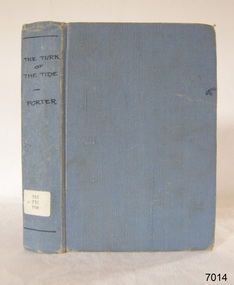
Book - Fictional Story, Eleanor Hodgman Porter, The Turn of The Tide, Between 1915-1920s
... The firm initially built its reputation publishing educational textbooks, foreign language dictionaries, and classical literature. ...The firm initially built its reputation publishing educational textbooks, foreign language dictionaries, and classical literature. ...The Turn of the Tide (1908) is The Story of How Margaret Solved Her Problem. It is the direct sequel to Eleanor Hodgman Porter's debut novel, Cross Currents (1907). The plot follows Margaret Kendall, a young girl who was lost as a small child and spent four years living in the harsh, impoverished city slums. The story opens as Margaret is reunited with her wealthy mother at their country estate, "Five Oaks." While she is overjoyed to be back in a loving, comfortable home, Margaret struggles with severe culture shock and guilt. She cannot forget the suffering street children and impoverished friends she left behind in the slums. The narrative explores her personal growth, social class divisions, and her determination to use her family's privilege to help improve the lives of the less fortunate.Hard cover book. The Turn of the Tide Author: Eleanor Hodgman Porter Publisher: George G Harrap & Co Date: Between 1915-1920s. Further Information: Light blue Cloth hardcover with no publication lettering only hand written title in black texter to spine. The spine has a Library label with an inscription.fictionThe Turn of the Tide (1908) is The Story of How Margaret Solved Her Problem. It is the direct sequel to Eleanor Hodgman Porter's debut novel, Cross Currents (1907). The plot follows Margaret Kendall, a young girl who was lost as a small child and spent four years living in the harsh, impoverished city slums. The story opens as Margaret is reunited with her wealthy mother at their country estate, "Five Oaks." While she is overjoyed to be back in a loving, comfortable home, Margaret struggles with severe culture shock and guilt. She cannot forget the suffering street children and impoverished friends she left behind in the slums. The narrative explores her personal growth, social class divisions, and her determination to use her family's privilege to help improve the lives of the less fortunate.warrnambool, shipwrecked-coast, flagstaff-hill, flagstaff-hill-maritime-museum, maritime-museum, shipwreck-coast, flagstaff-hill-maritime-village, shipwrecked-artefact, book, the turn of the tide, eleanor h porter, warrnambool mechanics’ institute, pattison collection, warrnambool library, ralph eric pattison, corangamite regional library service, warrnambool city librarian, mechanics’ institute library, victorian library board, warrnambool books and records, warrnambool children’s library -
 Flagstaff Hill Maritime Museum and Village
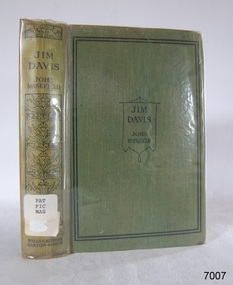
Book - Fictional Story, John Masefield, Jim Davis, 1912-1220s
... Wells Gardner, Darton & Co. was a prominent British publishing firm specialising in children's literature, young adult fiction, and educational and religious texts. The firm was formed in 1859 when William Wells Gardner partnered with Joseph William Darton. ...Wells Gardner, Darton & Co. was a prominent British publishing firm specialising in children's literature, young adult fiction, and educational and religious texts. The firm was formed in 1859 when William Wells Gardner partnered with Joseph William Darton. ...Jim Davis is a classic British sea-adventure novel written for young adults. Set along the Devon coast of England in 1812, the story follows a twelve-year-old orphan named Jim Davis. While exploring local caves and coastlines, Jim inadvertently stumbles upon a ring of night-riders and smugglers led by a fierce, charismatic captain named Marah. To protect their operational secrets, the smugglers kidnap Jim and take him to sea. The novel details his reluctant adventures aboard smuggling luggers, evasions of the coastguard, skirmishes, and his eventual effort to escape and return to civilian life.Hard cover book. Jim Davis Author: John Masefield Publisher: Wells Gardner Darton & Co Date: 1912-1920s Further Information: Green Cloth hardcover with lettering and patterning to spine in black. The spine has a Library label with an inscription.fictionJim Davis is a classic British sea-adventure novel written for young adults. Set along the Devon coast of England in 1812, the story follows a twelve-year-old orphan named Jim Davis. While exploring local caves and coastlines, Jim inadvertently stumbles upon a ring of night-riders and smugglers led by a fierce, charismatic captain named Marah. To protect their operational secrets, the smugglers kidnap Jim and take him to sea. The novel details his reluctant adventures aboard smuggling luggers, evasions of the coastguard, skirmishes, and his eventual effort to escape and return to civilian life.warrnambool, shipwrecked-coast, flagstaff-hill, flagstaff-hill-maritime-museum, maritime-museum, shipwreck-coast, flagstaff-hill-maritime-village, shipwrecked-artefact, book, jim davis, john masefield, warrnambool mechanics’ institute, pattison collection, warrnambool library, ralph eric pattison, corangamite regional library service, warrnambool city librarian, mechanics’ institute library, victorian library board, warrnambool books and records, warrnambool children’s library -
 Flagstaff Hill Maritime Museum and Village
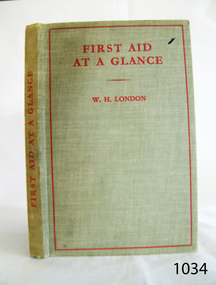
Book - Reference Medical/First Aid, William H. London, First Aid At A Glance, 1939
... With the outbreak of World War II in late 1939, they pivoted heavily into printing military handbooks, educational materials, and civil defence manuals to support the Australian war effort and home front preparedness....With the outbreak of World War II in late 1939, they pivoted heavily into printing military handbooks, educational materials, and civil defence manuals to support the Australian war effort and home front preparedness. ...Published on the eve of World War II in 1939, First Aid at a Glance is a compact, highly practical emergency manual. Designed as a concise summary for quick reference during crisis situations, it covers core civil defence and emergency medical topics such as the treatment of wounds, severe bleeding, and shock. Other subjects covered in this publication are fracture immobilisation and bandaging techniques, resuscitation and drowning intervention, and the management of casualties in public, industrial, or home settings.Hard cover book, First Aid at a Glance Author: William H. London Publisher: Angus & Robertson, Sydney, Australia Date: 1939 Further Information: Green cloth covered hardback volume with title in rednon-fictionPublished on the eve of World War II in 1939, First Aid at a Glance is a compact, highly practical emergency manual. Designed as a concise summary for quick reference during crisis situations, it covers core civil defence and emergency medical topics such as the treatment of wounds, severe bleeding, and shock. Other subjects covered in this publication are fracture immobilisation and bandaging techniques, resuscitation and drowning intervention, and the management of casualties in public, industrial, or home settings.flagstaff hill, warrnambool, shipwrecked-coast, flagstaff-hill, flagstaff-hill-maritime-museum, maritime-museum, shipwreck-coast, flagstaff-hill-maritime-village, first aid at a glance, book, william london, w.r. angus -
 Vision Australia
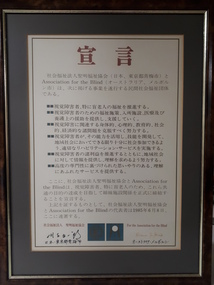
Ceremonial object - Image, Proclamation, 1985
... Proclamation Whereas the Association for the Blind, Melbourne, Australia & The Seimei Association for the Welfare of the Aged Blind Inc, Oume City, Japan, are organisations which: - promote the welfare of people who are blind or visually impaired especially the elderly; - provide welfare programs, accomodation, medical and nursing assistance, and support to people who are blind or visually impaired; - strive to overcome problems associated with blindness, whether physical, psychological, educational, social or economic; - provide appropriate rehabilitation services to enable people to use their capabilities and to develop their skills so that they can participate as fully as possible in the community; - promote the interests of people who are blind or visually impaired and provide information to the general community; and - provide at all times services to a high professional standard with a spirit of care and understanding. ...Association for the Blind Proclamation Whereas the Association for the Blind, Melbourne, Australia & The Seimei Association for the Welfare of the Aged Blind Inc, Oume City, Japan, are organisations which: - promote the welfare of people who are blind or visually impaired especially the elderly; - provide welfare programs, accomodation, medical and nursing assistance, and support to people who are blind or visually impaired; - strive to overcome problems associated with blindness, whether physical, psychological, educational, social or economic; - provide appropriate rehabilitation services to enable people to use their capabilities and to develop their skills so that they can participate as fully as possible in the community; - promote the interests of people who are blind or visually impaired and provide information to the general community; and - provide at all times services to a high professional standard with a spirit of care and understanding. ...Copies of the Proclamation of understanding between the Association for the Blind and the Seimei Association for the Welfare of Aged Blind, Inc., in both English and Japanese. These agreements were a symbol of the exchanges of each organisation, and the growing trend of agencies to link more to compatriots overseas as telecommunications improved.2 digital images of memorandum of understanding between Association for the Blind, Melbourne, Australia & The Seimei Association for the Welfare of the Aged Blind IncProclamation Whereas the Association for the Blind, Melbourne, Australia & The Seimei Association for the Welfare of the Aged Blind Inc, Oume City, Japan, are organisations which: - promote the welfare of people who are blind or visually impaired especially the elderly; - provide welfare programs, accomodation, medical and nursing assistance, and support to people who are blind or visually impaired; - strive to overcome problems associated with blindness, whether physical, psychological, educational, social or economic; - provide appropriate rehabilitation services to enable people to use their capabilities and to develop their skills so that they can participate as fully as possible in the community; - promote the interests of people who are blind or visually impaired and provide information to the general community; and - provide at all times services to a high professional standard with a spirit of care and understanding. Therefore let is be known publicly that the Association for the Blind and The Seimei Association for the Welfare of Aged Blind, Inc. formally establish a sister organisation relationship for the attainment of these common aspirations for people who are blind or visually impaired, especially the elderly. In Witness Thereof the Association for the Blind & The Seimei Association for the Welfare of the Aged Blind, Inc. cause their representatives to set their hands hereto on the 8th June, 1985. (Diana Jones) For the Association for the Blind, Melbourne Australia (signature) For The Seimei Association for the Welfare of the Aged Blind, Inc., Oume City, Tokyo, Japanseimei association for the welfare of aged blind inc., association for the blind -
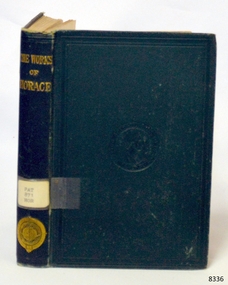 Flagstaff Hill Maritime Museum and Village
Book - Lyrical Poems, Samuel Lee (Translator), The Works of Horace, 1890
... Lonsdale became widely known in the Victorian educational landscape for his collaborative work with Samuel Lee. ...Lonsdale became widely known in the Victorian educational landscape for his collaborative work with Samuel Lee. ...The original author of this work was Quintus Horatius Flaccus, one of the leading Roman lyric poets during the time of Augustus Caesar (1st century BCE). This volume features the complete surviving works of Horace, rendered entirely into English prose. It includes his famous Odes, or lyrical poems, as well as his earlier poems on politics and social issues of the time. It also features his Satires, which offer humorous commentaries on Roman life, and his Epistles, or letters in verse, which include his highly influential work on literary criticism, the Ars Poetica (or The Art of Poetry).The Works of Horace Author: James Lonsdale and Samuel Lee Publisher: Macmillan And Co Date: 1890 Further Information: non-fictionThe original author of this work was Quintus Horatius Flaccus, one of the leading Roman lyric poets during the time of Augustus Caesar (1st century BCE). This volume features the complete surviving works of Horace, rendered entirely into English prose. It includes his famous Odes, or lyrical poems, as well as his earlier poems on politics and social issues of the time. It also features his Satires, which offer humorous commentaries on Roman life, and his Epistles, or letters in verse, which include his highly influential work on literary criticism, the Ars Poetica (or The Art of Poetry).flagstaff hill, warrnambool, shipwrecked coast, flagstaff hill maritime museum, maritime museum, shipwreck coast, flagstaff hill maritime village, great ocean road, book, pattison collection, warrnambool library, warrnambool mechanics’ institute, ralph eric pattison, corangamite regional library service, warrnambool city librarian, mechanics’ institute library, victorian library board, warrnambool books and records, warrnambool children’s library, the works of horace, samuel lee, james lonsdale, latin translated text -
 Flagstaff Hill Maritime Museum and Village
Book - A Fictional story, Jack London, The Faith of Men, 1904
... After WWII the company shifted focus toward educational publishing, and Heinemann's educational unit grew into an independent company in 1961. ...After WWII the company shifted focus toward educational publishing, and Heinemann's educational unit grew into an independent company in 1961. ...The Faith of Men, and Other Stories (1904) is Jack London's fourth short story collection, gathering eight tales largely set against the backdrop of the Klondike Gold Rush and the far north the milieu that made London famous. The collection includes the title story "The Faith of Men," along with others such as "Too Much Gold," "The Marriage of Lit-lit," "The Story of Jees Uck," and "The One Thousand Dozen." As with much of London's northern fiction, the stories explore themes of survival, endurance, greed, loyalty, and the clash between "civilised" and Indigenous or frontier codes of conduct hallmarks of the naturalist style he became known for.Hard cover book. The Faith of Men Author: Jack London Publisher: William Heinemann Ltd Date: 1904 Further Information: Brick-red cloth boards, gilt/black spine lettering. Small 8vo format, roughly 246 pages. William Heinemann publisher's device on the title page, and referenced in bibliographies as BAL 11878 / Woodbridge 27fictionThe Faith of Men, and Other Stories (1904) is Jack London's fourth short story collection, gathering eight tales largely set against the backdrop of the Klondike Gold Rush and the far north the milieu that made London famous. The collection includes the title story "The Faith of Men," along with others such as "Too Much Gold," "The Marriage of Lit-lit," "The Story of Jees Uck," and "The One Thousand Dozen." As with much of London's northern fiction, the stories explore themes of survival, endurance, greed, loyalty, and the clash between "civilised" and Indigenous or frontier codes of conduct hallmarks of the naturalist style he became known for.warrnambool, shipwrecked-coast, flagstaff-hill, flagstaff-hill-maritime-museum, maritime-museum, shipwreck-coast, flagstaff-hill-maritime-village, shipwrecked-artefact, book, the faith of men, jack london, warrnambool mechanics’ institute, pattison collection, warrnambool library, ralph eric pattison, corangamite regional library service, warrnambool city librarian, mechanics’ institute library, victorian library board, warrnambool books and records, warrnambool children’s library -
 Flagstaff Hill Maritime Museum and Village
Book - Collection of Fictional Stories, Jack London, When God Laughs, 1912-1940s
... After WWII the company shifted focus toward educational publishing, and Heinemann's educational unit grew into an independent company in 1961. ...After WWII the company shifted focus toward educational publishing, and Heinemann's educational unit grew into an independent company in 1961. ...When God Laughs, and Other Stories is Jack London's eleventh collection of short fiction, originally published in 1911 (by Mills & Boon in the UK) when London was about thirty-five and roughly at the midpoint of his career. It gathers twelve stories he had mostly written as quick, paying magazine work, and the quality is famously uneven hack pieces sit alongside some of his finest short fiction. Jack London lived beyond his income for much of his writing career, and to pay his bills he often produced 'immediately remunerative short fiction for the magazines'. In 1911 he pulled twelve of these into one volume. The collection takes its name from the opening story, about a couple who try in vain to sustain an intensely idealistic romance against the erosion of time and human inconstancy, and the book as a whole explores themes London was known for: survival in hostile environments, humanity's rawest instincts, and worker exploitation under industrial capitalism. Unlike much of London's earlier Klondike centred work, this collection is set largely in Polynesia and the South Seas, reflecting his voyages aboard the Snark in the years just before.Hard cover book. When God Laughs Author: Jack London Publisher: Reprint Publisher Unclear Possibly Heinemann Date: 1912-1940s Further Information: A plain dark green cloth binding with the title and author stamped in flat white/silver block lettering "WHEN GOD / LAUGHS" over "JACK LONDON." There's no gilt decoration, no illustrated boards, and no dust jacket. fictionWhen God Laughs, and Other Stories is Jack London's eleventh collection of short fiction, originally published in 1911 (by Mills & Boon in the UK) when London was about thirty-five and roughly at the midpoint of his career. It gathers twelve stories he had mostly written as quick, paying magazine work, and the quality is famously uneven hack pieces sit alongside some of his finest short fiction. Jack London lived beyond his income for much of his writing career, and to pay his bills he often produced 'immediately remunerative short fiction for the magazines'. In 1911 he pulled twelve of these into one volume. The collection takes its name from the opening story, about a couple who try in vain to sustain an intensely idealistic romance against the erosion of time and human inconstancy, and the book as a whole explores themes London was known for: survival in hostile environments, humanity's rawest instincts, and worker exploitation under industrial capitalism. Unlike much of London's earlier Klondike centred work, this collection is set largely in Polynesia and the South Seas, reflecting his voyages aboard the Snark in the years just before.warrnambool, shipwrecked-coast, flagstaff-hill, flagstaff-hill-maritime-museum, maritime-museum, shipwreck-coast, flagstaff-hill-maritime-village, shipwrecked-artefact, book, when god laughs, jack london, warrnambool mechanics’ institute, pattison collection, warrnambool library, ralph eric pattison, corangamite regional library service, warrnambool city librarian, mechanics’ institute library, victorian library board, warrnambool books and records, warrnambool children’s library -
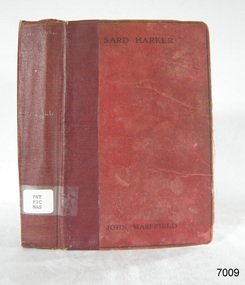 Flagstaff Hill Maritime Museum and Village
Book - Fictional Story, John Masefield, Sard Harker, 1924
... After WWII the company shifted focus toward educational publishing, and Heinemann's educational unit grew into an independent company in 1961. ...After WWII the company shifted focus toward educational publishing, and Heinemann's educational unit grew into an independent company in 1961. ...The novel centres on Chanticleer "Sard" Harker, a serious, stoic first mate aboard the trading ship Pathfinder. While anchored off the coast of the fictionalised South American nation of Santa Barbara a recurring setting in Masefield's fiction Harker experiences a vivid, recurring dream predicting that a woman named Doña Margherita Luisa Rosa is in grave danger. Driven by a strict sense of duty and premonition, Harker goes ashore to track down the estate where she is staying to deliver a warning. This decision plunges him into an extraordinary physical ordeal: separated from his ship and framed for murder, Harker must trek through hostile jungles, arid deserts, treacherous swamps, and rugged mountain passes while battling corrupt local officials, bandits, and a sinister occultist/cult leader named Don Hirsch Gomez.Hard cover book. Sard Harker Author: John Masefield Publisher: William Heinemann Ltd Date: 1924 Further Information: Red Cloth hardcover with lettering and patterning to spine in black. The spine has a Library label with an inscription.fictionThe novel centres on Chanticleer "Sard" Harker, a serious, stoic first mate aboard the trading ship Pathfinder. While anchored off the coast of the fictionalised South American nation of Santa Barbara a recurring setting in Masefield's fiction Harker experiences a vivid, recurring dream predicting that a woman named Doña Margherita Luisa Rosa is in grave danger. Driven by a strict sense of duty and premonition, Harker goes ashore to track down the estate where she is staying to deliver a warning. This decision plunges him into an extraordinary physical ordeal: separated from his ship and framed for murder, Harker must trek through hostile jungles, arid deserts, treacherous swamps, and rugged mountain passes while battling corrupt local officials, bandits, and a sinister occultist/cult leader named Don Hirsch Gomez.warrnambool, shipwrecked-coast, flagstaff-hill, flagstaff-hill-maritime-museum, maritime-museum, shipwreck-coast, flagstaff-hill-maritime-village, shipwrecked-artefact, book, sard harker, john masefield, warrnambool mechanics’ institute, pattison collection, warrnambool library, ralph eric pattison, corangamite regional library service, warrnambool city librarian, mechanics’ institute library, victorian library board, warrnambool books and records, warrnambool children’s library -
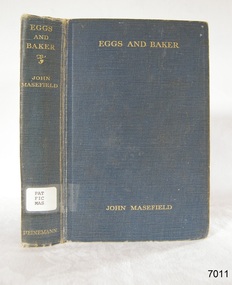 Flagstaff Hill Maritime Museum and Village
Book - Fictional Story, John Masefield, Eggs and Baker or ( The Days Of Trial), 1936
... After WWII the company shifted focus toward educational publishing, and Heinemann's educational unit grew into an independent company in 1961. ...After WWII the company shifted focus toward educational publishing, and Heinemann's educational unit grew into an independent company in 1961. ...Eggs and Baker, or The Days of Trial (1936) is a novel by the English poet and Poet Laureate John Masefield, best known for verse ('Sea-Fever', The Everlasting Mercy) and children's classics like The Box of Delights and The Midnight Folk, published the previous year. The story is set inland in Masefield's imagined English county of Tatchester/Condicote his recurring fictional geography, also used in The Box of Delights. The plot centres on a long-running trial of two men one a 'half-wit' accused of shooting and killing a gamekeeper while poaching. The real protagonist, though, is a baker who is losing business and standing in the community because of his socialist sympathies, and who takes up the accused men's cause at real cost to himself. A contemporary Kirkus review called it 'a totally unexpected book from Masefield, and a disappointing one', and wondered whether it was intended as 'a spoof on the law, or a serious commentary on problems of justice'.Hard cover book. Eggs & Baker or The Days of Trial Author: John Masefield Publisher: William Heinemann Ltd Date: 1936 Further Information: Navy blue cloth with pictorial end papers hardcover with lettering and patterning to spine in black. The spine has a Library label with an inscription.fictionEggs and Baker, or The Days of Trial (1936) is a novel by the English poet and Poet Laureate John Masefield, best known for verse ('Sea-Fever', The Everlasting Mercy) and children's classics like The Box of Delights and The Midnight Folk, published the previous year. The story is set inland in Masefield's imagined English county of Tatchester/Condicote his recurring fictional geography, also used in The Box of Delights. The plot centres on a long-running trial of two men one a 'half-wit' accused of shooting and killing a gamekeeper while poaching. The real protagonist, though, is a baker who is losing business and standing in the community because of his socialist sympathies, and who takes up the accused men's cause at real cost to himself. A contemporary Kirkus review called it 'a totally unexpected book from Masefield, and a disappointing one', and wondered whether it was intended as 'a spoof on the law, or a serious commentary on problems of justice'.warrnambool, shipwrecked-coast, flagstaff-hill, flagstaff-hill-maritime-museum, maritime-museum, shipwreck-coast, flagstaff-hill-maritime-village, shipwrecked-artefact, masefield, john, eggs and baker, john masefield, warrnambool mechanics’ institute, pattison collection, warrnambool library, ralph eric pattison, corangamite regional library service, warrnambool city librarian, mechanics’ institute library, victorian library board, warrnambool books and records, warrnambool children’s library -
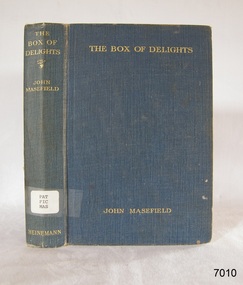 Flagstaff Hill Maritime Museum and Village
Book - A Fictional Story, John Masefield et al, The Box of Delights, 1935
... After WWII the company shifted focus toward educational publishing, and Heinemann's educational unit grew into an independent company in 1961. ...After WWII the company shifted focus toward educational publishing, and Heinemann's educational unit grew into an independent company in 1961. ...The Box of Delights is a children's fantasy novel by John Masefield, a sequel to The Midnight Folk, first published in 1935. Kay Harker is returning from boarding school when he finds himself mixed up in a battle to possess a magical box which allows the owner to shrink in size, to fly swiftly, to go into the past and to experience the magical wonders contained within. He's opposed by a wizard named Abner Brown and his gang of disguised bandits and witches masquerading as clergymen, and aided by talking animals, most memorably the cat Nibbins. It's a Christmas story at heart, steeped in English folklore, magic, and the atmosphere of a snowy Midlands winter.Hard cover book. The Box of Delights Author: John Masefield Illustrator: Judith Masefield Publisher: William Heinemann Ltd Date: 1935 Further Information: Navy blue cloth with pictorial end papers hardcover with lettering and patterning to spine in black. The spine has a Library label with an inscription. fictionThe Box of Delights is a children's fantasy novel by John Masefield, a sequel to The Midnight Folk, first published in 1935. Kay Harker is returning from boarding school when he finds himself mixed up in a battle to possess a magical box which allows the owner to shrink in size, to fly swiftly, to go into the past and to experience the magical wonders contained within. He's opposed by a wizard named Abner Brown and his gang of disguised bandits and witches masquerading as clergymen, and aided by talking animals, most memorably the cat Nibbins. It's a Christmas story at heart, steeped in English folklore, magic, and the atmosphere of a snowy Midlands winter.warrnambool, shipwrecked-coast, flagstaff-hill, flagstaff-hill-maritime-museum, maritime-museum, shipwreck-coast, flagstaff-hill-maritime-village, shipwrecked-artefact, book, the box of delights, john masefield, warrnambool mechanics’ institute, pattison collection, warrnambool library, ralph eric pattison, corangamite regional library service, warrnambool city librarian, mechanics’ institute library, victorian library board, warrnambool books and records, warrnambool children’s library -
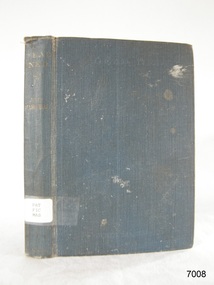 Flagstaff Hill Maritime Museum and Village
Book - Fictional Story, John Masefield, Dead Ned, 1938
... After WWII the company shifted focus toward educational publishing, and Heinemann's educational unit grew into an independent company in 1961. ...After WWII the company shifted focus toward educational publishing, and Heinemann's educational unit grew into an independent company in 1961. ...The full title for Dead Ned is The Autobiography of a Corpse Who Recovered Life Within the Coast of Dead Ned and Came to What Fortune You Shall Hear. The novel follows a young doctor who is hanged for a murder he did not commit, is rescued just in time, and rushed out of the country on a slave ship. The novel is an 18th-century-set adventure about a wrongly accused medical student, Ned Mansell. While he's aboard the slave ship, the story follows his journey as he is saved from the gallows at the last minute by friends who send him off to hide as a doctor on the vessel. It has a sequel, Live and Kicking Ned (1939), a seafaring novel about the African slave trade that continues the 1938 story.Hard cover book. Dead Ned Author: John Masefield Publisher: William Heinemann Ltd Date: 1938 Further Information: Green Cloth hardcover with lettering and patterning to spine in black. The spine has a Library label with an inscription.fictionThe full title for Dead Ned is The Autobiography of a Corpse Who Recovered Life Within the Coast of Dead Ned and Came to What Fortune You Shall Hear. The novel follows a young doctor who is hanged for a murder he did not commit, is rescued just in time, and rushed out of the country on a slave ship. The novel is an 18th-century-set adventure about a wrongly accused medical student, Ned Mansell. While he's aboard the slave ship, the story follows his journey as he is saved from the gallows at the last minute by friends who send him off to hide as a doctor on the vessel. It has a sequel, Live and Kicking Ned (1939), a seafaring novel about the African slave trade that continues the 1938 story.warrnambool, shipwrecked-coast, flagstaff-hill, flagstaff-hill-maritime-museum, maritime-museum, shipwreck-coast, flagstaff-hill-maritime-village, shipwrecked-artefact, book, dead ned, john masefield, warrnambool mechanics’ institute, pattison collection, warrnambool library, ralph eric pattison, corangamite regional library service, warrnambool city librarian, mechanics’ institute library, victorian library board, warrnambool books and records, warrnambool children’s library -
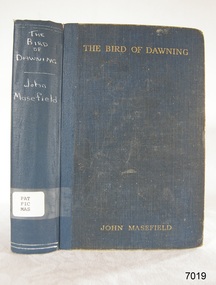 Flagstaff Hill Maritime Museum and Village
Book - Fictional Story, John Masefield, The Bird of Dawning, 1933 to 1939
... After WWII the company shifted focus toward educational publishing, and Heinemann's educational unit grew into an independent company in 1961. ...After WWII the company shifted focus toward educational publishing, and Heinemann's educational unit grew into an independent company in 1961. ...The Bird of Dawning (1933) is a sea-adventure novel about the clipper ship Black gauntlet, which is racing home from China to London when she's struck at night by a passing steamer. Only about half the crew sixteen men escape into a lifeboat before she goes down. The 22-year-old second mate, Cruiser Trewsbury, takes command of the survivors and leads them on a roughly 700-mile open-boat voyage to the island of Fayal in the Azores, fighting sharks, dwindling water and food, a leaking boat, and the threat of mutiny along the way. Partway through, the survivors come across an abandoned, dismasted clipper still afloat and Cruiser gets the chance to jury-rig her and sail her home himself, turning survival into a race against time.Hard cover book. The Bird of Dawning Author: John Masefield Publisher: William Heinemann Ltd Date: 1933 to 1939 Further Information: Blue Cloth hardcover with lettering and patterning to spine in gilt. Front cover with title & authors name in gilt. The spine has a Library label with an inscription.fictionThe Bird of Dawning (1933) is a sea-adventure novel about the clipper ship Black gauntlet, which is racing home from China to London when she's struck at night by a passing steamer. Only about half the crew sixteen men escape into a lifeboat before she goes down. The 22-year-old second mate, Cruiser Trewsbury, takes command of the survivors and leads them on a roughly 700-mile open-boat voyage to the island of Fayal in the Azores, fighting sharks, dwindling water and food, a leaking boat, and the threat of mutiny along the way. Partway through, the survivors come across an abandoned, dismasted clipper still afloat and Cruiser gets the chance to jury-rig her and sail her home himself, turning survival into a race against time.warrnambool, shipwrecked-coast, flagstaff-hill, flagstaff-hill-maritime-museum, maritime-museum, shipwreck-coast, flagstaff-hill-maritime-village, shipwrecked-artefact, martin hyde the dukes messenger, john masefield, book, warrnambool mechanics’ institute, pattison collection, warrnambool library, ralph eric pattison, corangamite regional library service, warrnambool city librarian, mechanics’ institute library, victorian library board, warrnambool books and records, warrnambool children’s library -
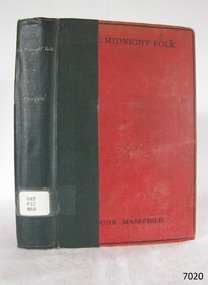 Flagstaff Hill Maritime Museum and Village
Book - Fictional Story, John Masefield, The Midnight Folk, 1930-1940
... After WWII the company shifted focus toward educational publishing, and Heinemann's educational unit grew into an independent company in 1961. ...After WWII the company shifted focus toward educational publishing, and Heinemann's educational unit grew into an independent company in 1961. ...The Midnight Folk (first published in 1927) is a celebrated fantasy novel for young readers written by John Masefield. The story centres on a young, lonely orphan named Kay Harker, who lives in a country house guarded by his stern governess. Kay learns that his great-grandfather, Captain Harker, lost a valuable treasure—the plunder of the Santa Barbara—that was entrusted to him. Kay sets out on a quest to locate the lost treasure. Guided by his cat, Nibbins, and an assortment of talking animals, witches, goblins, and nocturnal creatures (the titular 'Midnight Folk'), Kay journeys through magical, dream-like realms. The story seamlessly weaves together British folklore, nautical high adventure, piracy, and childhood wonder.Hard cover book. The Midnight Folk Author: John Masefield Publisher: William Heinemann Ltd Date: 1930-1940 Further Information: Two-tone quarter binding dark green/black spine and quarter shelf-back with red cloth sides, with hand-lettered ink text on the spine "The Midnight Folk / Masefield"). The spine has a Library label with an inscription.fictionThe Midnight Folk (first published in 1927) is a celebrated fantasy novel for young readers written by John Masefield. The story centres on a young, lonely orphan named Kay Harker, who lives in a country house guarded by his stern governess. Kay learns that his great-grandfather, Captain Harker, lost a valuable treasure—the plunder of the Santa Barbara—that was entrusted to him. Kay sets out on a quest to locate the lost treasure. Guided by his cat, Nibbins, and an assortment of talking animals, witches, goblins, and nocturnal creatures (the titular 'Midnight Folk'), Kay journeys through magical, dream-like realms. The story seamlessly weaves together British folklore, nautical high adventure, piracy, and childhood wonder.warrnambool, shipwrecked-coast, flagstaff-hill, flagstaff-hill-maritime-museum, maritime-museum, shipwreck-coast, flagstaff-hill-maritime-village, shipwrecked-artefact, book, the midnight folk, john masefield, warrnambool mechanics’ institute, pattison collection, warrnambool library, ralph eric pattison, corangamite regional library service, warrnambool city librarian, mechanics’ institute library, victorian library board, warrnambool books and records, warrnambool children’s library -
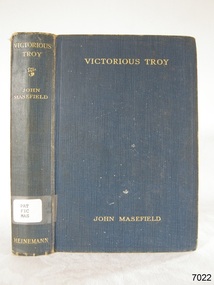 Flagstaff Hill Maritime Museum and Village
Book - Fictional Story, John Masefield, Victorious Troy or The Hurrying Angel, 1935
... After WWII the company shifted focus toward educational publishing, and Heinemann's educational unit grew into an independent company in 1961. ...After WWII the company shifted focus toward educational publishing, and Heinemann's educational unit grew into an independent company in 1961. ...Victorious Troy or The Hurrying Angel (first published in 1935) is a dramatic maritime novel by John Masefield. Set in 1922, the story takes place aboard a full-rigged grain ship—the Hurrying Angel—sailing from Melbourne, Australia, back to the UK across the South Pacific. Deep in the ocean, the ship is hit by a catastrophic cyclone. The storm dismasts the vessel, kills or incapacitates the captain and senior officers, and leaves the ship in perilous condition. The hero of this novel is eighteen-year-old senior apprentice Dick Pomfret, who is forced to take command. Through sheer grit, seamanship, and leadership, Dick clears the wreckage, constructs a jury-rig mast, and navigates the battered ship towards safety. Grounded in Masefield's real-life young adult experiences aboard merchant sailing ships, the novel is celebrated for its technical accuracy, vivid descriptions of rough seas, and authentic nautical terminology.Hard cover book. Victorious Troy or The Hurrying Angel Author: John Masefield Publisher: William Heinemann Ltd Date: 1935 Further Information: First edition with original publisher's blue cloth binding with gold foil/gilt lettering on both the front board ("VICTORIOUS TROY / JOHN MASEFIELD") and the spine. The spine has a Library label with an inscription.fictionVictorious Troy or The Hurrying Angel (first published in 1935) is a dramatic maritime novel by John Masefield. Set in 1922, the story takes place aboard a full-rigged grain ship—the Hurrying Angel—sailing from Melbourne, Australia, back to the UK across the South Pacific. Deep in the ocean, the ship is hit by a catastrophic cyclone. The storm dismasts the vessel, kills or incapacitates the captain and senior officers, and leaves the ship in perilous condition. The hero of this novel is eighteen-year-old senior apprentice Dick Pomfret, who is forced to take command. Through sheer grit, seamanship, and leadership, Dick clears the wreckage, constructs a jury-rig mast, and navigates the battered ship towards safety. Grounded in Masefield's real-life young adult experiences aboard merchant sailing ships, the novel is celebrated for its technical accuracy, vivid descriptions of rough seas, and authentic nautical terminology.warrnambool, shipwrecked-coast, flagstaff-hill, flagstaff-hill-maritime-museum, maritime-museum, shipwreck-coast, flagstaff-hill-maritime-village, shipwrecked-artefact, book, victorious troy, the hurrying angel, john masefield, warrnambool mechanics’ institute, pattison collection, warrnambool library, ralph eric pattison, corangamite regional library service, warrnambool city librarian, mechanics’ institute library, victorian library board, warrnambool books and records, warrnambool children’s library -
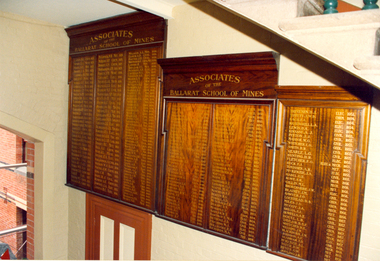 Federation University Historical Collection
Honour Boards, Boards Listing Associates of the Ballarat School of Mines
... In 1883 the Ballarat School of Mines made some changes in order to make better use of the services of the teachers and to extend "as far as practicable the special educational advantages already afforded" by the School. ...In 1883 the Ballarat School of Mines made some changes in order to make better use of the services of the teachers and to extend "as far as practicable the special educational advantages already afforded" by the School. ...In 1883 the Ballarat School of Mines made some changes in order to make better use of the services of the teachers and to extend "as far as practicable the special educational advantages already afforded" by the School. One of the changes was the introduction of a three years course of training under the professors to qualify students for the following three professions: Analyst and Metallurgist, Electrician, and Geologist and Mining Surveyor. The Council was to confer the distinction of Associate. (Warren Perry, The School of Mines and Industries, Ballarat, 1984, p77) Students who took single subjects or pursued such courses as those for certificate of either mine manager or assayer were not required to pass an entrance examination. Students who wished to qualify for an associateship in once of the courses were expected to have a general education of matriculation standard and to have attended all the prescribed courses of instruction unless they were able to produce to the satisfaction of the School's Board of Examiners evidence of having attained elsewhere the degree of proficiency which was required in any particular subject or subjects. (Warren Perry, The School of Mines and Industries, Ballarat, 1984, p177) Ballarat School of Mines Associateships have been conferred since 1894 on candidates who had passed the prescribed examinations in one or other of the following three courses: Geology, Metallurgy and Mining engineering. Each of these three courses had an additional, but optional, fourth year of study. The prescribed subjects of study for an Associateship were set out in 'The Calendar of the Ballarat School of Mines' in each year. (Warren Perry, The School of Mines and Industries, Ballarat, 1984, p177)A number of timber boards with gold lettering. The list names in date order of when they became an Associates of the Ballarat School of Mines.ballarat school of mines, ballarat school of mines associate, associate of the ballarat school of mines, lonie, jennifer drummond, jill blee, jilian norton, zig plavina, associate boards -
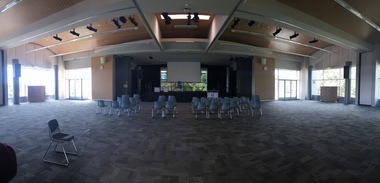 Federation University Historical Collection
Photograph, Clare Gervasoni, Federation University Gippsland Campus Auditorum, 2016, 03/10/2016
... The University’s commitment to educational and social equity, teaching excellence, research distinction, environmental sustainability and regional capacity building has enabled it to develop in a way that draws on its proud heritage to inform its future. ...The University’s commitment to educational and social equity, teaching excellence, research distinction, environmental sustainability and regional capacity building has enabled it to develop in a way that draws on its proud heritage to inform its future. ...Federation University Gippsland Campus was formerly a Monash University campus. The Auditorium was opened on 09 June 2009 by Professor David de Kretser AC, Governor of Victoria. Federation University Australia was established on 1 January 2014. Formerly known as the University of Ballarat, its enabling legislation was the University of Ballarat Amendment (Federation University Australia) Act 2013. On 1 January 2014, the University of Ballarat amalgamated with the Monash University Gippsland Campus to form Federation University Australia. The Gippsland Campus also had a long lineage dating back to 1928 with the establishment of the Yallourn Technical School which became a predecessor institution to the Gippsland College of Advanced Education formed in 1968. In 1990, it was renamed the Monash University College and in 1993 became the Gippsland Campus of Monash University. In 2016, Federation University Australia announced plans to take possession, over a two-year period, of Monash’s Berwick Campus in the south-east corridor of Melbourne. Federation University Australia, or FedUni, is headquartered in Ballarat and offers programs in Higher Education and Vocational Education and Training to regional Victoria and beyond. The University’s commitment to educational and social equity, teaching excellence, research distinction, environmental sustainability and regional capacity building has enabled it to develop in a way that draws on its proud heritage to inform its future. Its regional character sets a framework for the University’s priorities but does not constrain it from serving wider community interests, nationally and internationally. The name Federation University Australia was chosen to convey the scope and capacity of an expanded regional university with a federated network of campuses. Colour panoramic photograph of the Federation University Gippsland Campus Auditorum.churchill campus, gippsland campus, buildings, auditorium, david de kretser, richard larkins, helen bartlett -
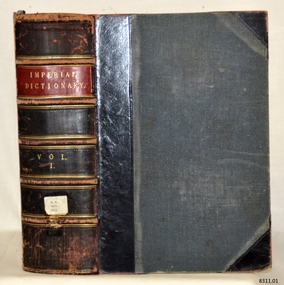 Flagstaff Hill Maritime Museum and Village
Book - Reference Dictionary/Scientific/Technological, John Ogilvie, The Imperial Dictionary English Technological and Scientific Vol 1, 1861
... Blackie & Son specialized in high-volume, beautifully bound, and heavily illustrated educational, religious, and reference texts. They were pioneers in the "subscription" model of selling books, delivering large works in affordable instalments to working-class and middle-class households. ...Blackie & Son specialized in high-volume, beautifully bound, and heavily illustrated educational, religious, and reference texts. They were pioneers in the "subscription" model of selling books, delivering large works in affordable instalments to working-class and middle-class households. ...The Imperial Dictionary was a massive, progressive undertaking designed to be a bridge between a traditional language dictionary and a comprehensive technical encyclopedia. John Ogilvie built the text upon the foundation of Noah Webster’s famous American Dictionary. However, Ogilvie dramatically expanded it to include thousands of new terms born from the Industrial Revolution. It heavily prioritized the vocabulary of engineering, medicine, manufacturing, chemistry, and the arts, alongside a vast array of distinct Scottish and provincial British terms that Webster had omitted.The Imperial Dictionary English Technological and Scientific Vol 1 Author: John Ogilvie Publisher: Blackie & Son Ltd Date: 1861 Further Information: Black cloth hardcover with a brown leather spine, title lettering in gold. The spine has a Library label with an inscription.non-fictionThe Imperial Dictionary was a massive, progressive undertaking designed to be a bridge between a traditional language dictionary and a comprehensive technical encyclopedia. John Ogilvie built the text upon the foundation of Noah Webster’s famous American Dictionary. However, Ogilvie dramatically expanded it to include thousands of new terms born from the Industrial Revolution. It heavily prioritized the vocabulary of engineering, medicine, manufacturing, chemistry, and the arts, alongside a vast array of distinct Scottish and provincial British terms that Webster had omitted.flagstaff hill, warrnambool, shipwrecked coast, flagstaff hill maritime museum, maritime museum, shipwreck coast, flagstaff hill maritime village, great ocean road, book, pattison collection, warrnambool library, warrnambool mechanics’ institute, ralph eric pattison, corangamite regional library service, warrnambool city librarian, mechanics’ institute library, victorian library board, warrnambool books and records, warrnambool children’s library -
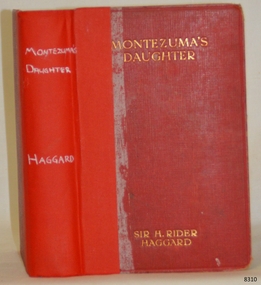 Flagstaff Hill Maritime Museum and Village
Book - Fictional Novel, H Rider Haggard, author, Montezumas Daughter, 1893
... By the late nineteenth century, under the name Longmans, Green, and Co., the firm had established an incredible reputation for publishing both high-profile educational literature and the finest contemporary fiction. ...By the late nineteenth century, under the name Longmans, Green, and Co., the firm had established an incredible reputation for publishing both high-profile educational literature and the finest contemporary fiction. ...Montezuma’s Daughter (1893) is an epic Victorian adventure and historical fiction novel set during the sixteenth-century Spanish conquest of the Aztec Empire. The story is narrated in the first person by an elderly Englishman, Thomas Wingfield, reflecting on the tumultuous journey of his youth. After his Spanish mother is murdered by his malicious cousin, Juan de Garcia, Thomas embarks on a quest for vengeance. His pursuit takes him across Europe, through a brush with the Spanish Inquisition, and onto a ship bound for the New World. Following a shipwreck and capture, Thomas finds himself in Mexico, where he is initially slated for Aztec human sacrifice. He is ultimately spared, rises to high status among the Aztecs, and marries Princess Otomie, the daughter of Emperor Montezuma. The narrative reaches its emotional and historical peak as Thomas fights alongside the Aztecs against Hernán Cortés during the brutal siege and fall of Tenochtitlan. Prior to its book release, the novel was serialised in the British weekly newspaper The Graphic between July and November of 1893. Longmans, Green, and Co. published the official first book edition in London on November 13, 1893, printing an initial run of 10,000 copies.Montezumas Daughter Author: H Rider Haggard Publisher: Longmans Green Date: 1893 A novel in a red, hard covered book with a reinforced spine with a handwritten title, front cover has gold embossed title. Inscriptions include stickers and a stamp. It is part of the Pattison Collection.fictionMontezuma’s Daughter (1893) is an epic Victorian adventure and historical fiction novel set during the sixteenth-century Spanish conquest of the Aztec Empire. The story is narrated in the first person by an elderly Englishman, Thomas Wingfield, reflecting on the tumultuous journey of his youth. After his Spanish mother is murdered by his malicious cousin, Juan de Garcia, Thomas embarks on a quest for vengeance. His pursuit takes him across Europe, through a brush with the Spanish Inquisition, and onto a ship bound for the New World. Following a shipwreck and capture, Thomas finds himself in Mexico, where he is initially slated for Aztec human sacrifice. He is ultimately spared, rises to high status among the Aztecs, and marries Princess Otomie, the daughter of Emperor Montezuma. The narrative reaches its emotional and historical peak as Thomas fights alongside the Aztecs against Hernán Cortés during the brutal siege and fall of Tenochtitlan. Prior to its book release, the novel was serialised in the British weekly newspaper The Graphic between July and November of 1893. Longmans, Green, and Co. published the official first book edition in London on November 13, 1893, printing an initial run of 10,000 copies.flagstaff hill, warrnambool, shipwrecked coast, flagstaff hill maritime museum, maritime museum, shipwreck coast, flagstaff hill maritime village, great ocean road, book, pattison collection, warrnambool library, warrnambool mechanics’ institute, ralph eric pattison, corangamite regional library service, warrnambool city librarian, mechanics’ institute library, victorian library board, warrnambool books and records, warrnambool children’s library, montezumas daughter, h rider haggard, longmans green and co., thomas longman, paternoster row london, free library -
 Flagstaff Hill Maritime Museum and Village
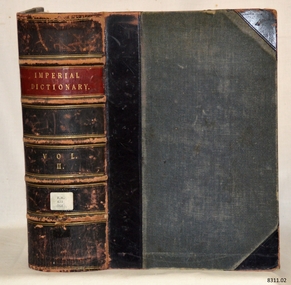
Book - Reference Dictionary/Scientific/Technological, John Ogilvie, The Imperial Dictionary English Technological and Scientific Vol 2, 1861
... Blackie & Son specialized in high-volume, beautifully bound, and heavily illustrated educational, religious, and reference texts. They were pioneers in the "subscription" model of selling books, delivering large works in affordable instalments to working-class and middle-class households. ...Blackie & Son specialized in high-volume, beautifully bound, and heavily illustrated educational, religious, and reference texts. They were pioneers in the "subscription" model of selling books, delivering large works in affordable instalments to working-class and middle-class households. ...The Imperial Dictionary was a massive, progressive undertaking designed to be a bridge between a traditional language dictionary and a comprehensive technical encyclopedia. John Ogilvie built the text upon the foundation of Noah Webster’s famous American Dictionary. However, Ogilvie dramatically expanded it to include thousands of new terms born from the Industrial Revolution. It heavily prioritized the vocabulary of engineering, medicine, manufacturing, chemistry, and the arts, alongside a vast array of distinct Scottish and provincial British terms that Webster had omitted.The Imperial Dictionary English Technological and Scientific Vol 2 Author: John Ogilvie Publisher: Blackie & Son Ltd Date: 1861 Further Information: Black cloth hardcover with a brown leather spine, title lettering in gold. The spine has a Library label with an inscription.non-fictionThe Imperial Dictionary was a massive, progressive undertaking designed to be a bridge between a traditional language dictionary and a comprehensive technical encyclopedia. John Ogilvie built the text upon the foundation of Noah Webster’s famous American Dictionary. However, Ogilvie dramatically expanded it to include thousands of new terms born from the Industrial Revolution. It heavily prioritized the vocabulary of engineering, medicine, manufacturing, chemistry, and the arts, alongside a vast array of distinct Scottish and provincial British terms that Webster had omitted.flagstaff hill, warrnambool, shipwrecked coast, flagstaff hill maritime museum, maritime museum, shipwreck coast, flagstaff hill maritime village, great ocean road, book, pattison collection, warrnambool library, warrnambool mechanics’ institute, ralph eric pattison, corangamite regional library service, warrnambool city librarian, mechanics’ institute library, victorian library board, warrnambool books and records, warrnambool children’s library
