
Showing 204 items matching " staircases"
-
 Kew Historical Society Inc
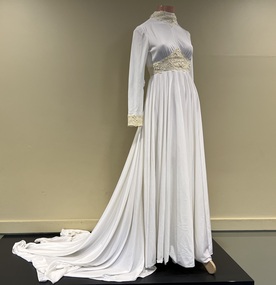
Clothing - Wedding dress, The House of Franke, Stuart, c.1975
... Walking down the staircase at the Windsor Hotel in Melbourne felt very grand; a memory I still hold today. ...Walking down the staircase at the Windsor Hotel in Melbourne felt very grand; a memory I still hold today. ...At 5pm on 2 May 1975 at Christ Church, Hawthorn, the wedding took place between Kathryn Gwynn Marx of Mason Street, Hawthorn, and William Peter Reeve of Mountain Grove, Kew. The bride's dress was purchased from the 'House of Franke, Stuart', 612 Glenferrie Road, Hawthorn, a very popular place in the 1970s for brides. Kathryn was educated at Ruyton Girls' School with Margaret Franke so it was a nice connection. Margaret's family business had been in operation since 1926. I loved my wedding dress. It was soft and comfortable to wear and kept me warm on the May evening. It was elegant and I knew I would never get the chance to wear something with a long train again. Walking down the staircase at the Windsor Hotel in Melbourne felt very grand; a memory I still hold today. (Kate Reeve, 2022) [Note: Two photos and a newspaper article which are viewable in the image carousel are held in the donation file]Strong local provenance to Hawthorn, Kew and Boroondara due to owner and retailer. It is a representative example of wedding dresses sold in the 1970s. The wedding dress is made of fine soft white jersey with guipure lace around the neckline, wrists and bodice. The long train has three small discreet loops along the hemline which can be slipped onto a finger for a draped effect giving ease of movement for dancing etc. A satin trimmed veil covered the length of the train and was secured on the head with a satin coronet. White leather shoes were worn. The bouquet Phalaenopsis orchids. (Note: the veil and shoes were not part of the donation)Label: Franke Stuart / Hawthornfashion & design - 1970s, wedding dresses, kate reeve, peter reeve, franke stuart, retailers - glenferrie road - hawthorn (vic.) -
 Kew Historical Society Inc
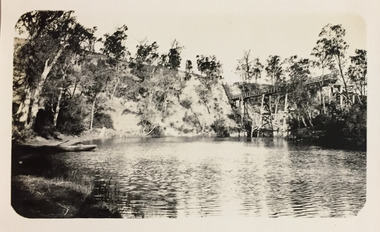
Photograph - Zig-Zag Bridge, 1924
... At the Studley Park end, the bridge descended via a staircase to reach the much lower bank. ...At the Studley Park end, the bridge descended via a staircase to reach the much lower bank. Photograph Zig-Zag Bridge ...Henry Beater Christian (1886-1962) , was a descendant of one of the earliest settler families in Kew. Employed at the Kew Asylum as a 'public servant', he was a skilled amateur photographer, photographing numerous scenes in Kew and on his travels around Victoria. The majority of his photographs date from 1916 to 1929. His finest photographs are housed in two photograph albums. Digital copy of a photograph from page 8 of the 47-page photograph album containing 261 gelatinous silver images, loaned by Diane Washfold with permission given to digitise and hold a copy in our collection. This photograph reveals how the photographer, Henry Christian, positioned himself to take the photograph from the angle in which he was interested. A skilled canoeist, an empty canoe is on the left of the photo that he apparently he used to access his vantage point. His subject, the Zig-Zag Bridge linked the grounds of the Yarra Bend and Kew Asylums. The wooden bridge was constructed in the 1870s and lasted through numerous floods until its destruction in 1929. A horizontal structure, one climbed steps to reach the higher Yarra Bend bank. At the Studley Park end, the bridge descended via a staircase to reach the much lower bank. "Zig-Zag Bridge"henry beater christian (1886-1962), landscape photography, kew (vic.) — yarra river, christian-washfold collection, photograph albums, zig-zag bridge -
 Kew Historical Society Inc
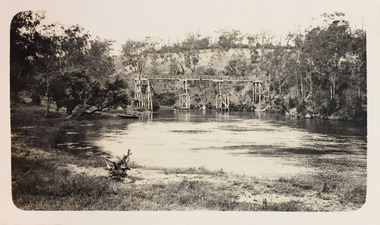
Photograph - Zig-Zag Bridge, 1924
... A horizontal structure, the walkway was reached via a wooden staircase on the Studley Park end. The steps were requires due to the different levels of the banks on this stretch of the river. ...A horizontal structure, the walkway was reached via a wooden staircase on the Studley Park end. The steps were requires due to the different levels of the banks on this stretch of the river. ...Henry Beater Christian (1886-1962) , was a descendant of one of the earliest settler families in Kew. Employed at the Kew Asylum as a 'public servant', he was a skilled amateur photographer, photographing numerous scenes in Kew and on his travels around Victoria. The majority of his photographs date from 1916 to 1929. His finest photographs are housed in two photograph albums. Digital copy of a photograph from page 8 of the 47-page photograph album containing 261 gelatinous silver images, loaned by Diane Washfold with permission given to digitise and hold a copy in our collection. This photograph reveals how the photographer, Henry Christian, positioned himself to take the photograph from the angle in which he was interested. A skilled canoeist, an empty canoe is on the left bank that he apparently he used to access his vantage point. His subject, the Zig-Zag Bridge linked the grounds of the Yarra Bend and Kew Asylums. The wooden bridge was constructed in the 1870s and lasted through numerous floods until its destruction in 1929. A horizontal structure, the walkway was reached via a wooden staircase on the Studley Park end. The steps were requires due to the different levels of the banks on this stretch of the river. "Zig-Zag Bridge"henry beater christian (1886-1962), landscape photography, kew (vic.) — yarra river, christian-washfold collection, photograph albums, zig-zag bridge -
 Kew Historical Society Inc
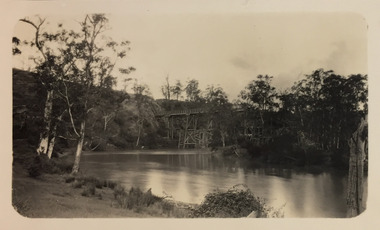
Photograph - Zig-Zag Bridge, 1924
... A horizontal structure, the walkway was reached via a wooden staircase on the Studley Park side. The steps were requires due to the different levels of the banks on this stretch of the river. ...A horizontal structure, the walkway was reached via a wooden staircase on the Studley Park side. The steps were requires due to the different levels of the banks on this stretch of the river. ...Henry Beater Christian (1886-1962) , was a descendant of one of the earliest settler families in Kew. Employed at the Kew Asylum as a 'public servant', he was a skilled amateur photographer, photographing numerous scenes in Kew and on his travels around Victoria. The majority of his photographs date from 1916 to 1929. His finest photographs are housed in two photograph albums. Digital copy of a photograph from page 8 of the 47-page photograph album containing 261 gelatinous silver images, loaned by Diane Washfold with permission given to digitise and hold a copy in our collection. This photograph reveals how the photographer, Henry Christian, positioned himself to take the photograph from the angle in which he was interested. A skilled canoeist, an empty canoe is on the left bank that he apparently he used to access his vantage point. His subject, the Zig-Zag Bridge linked the grounds of the Yarra Bend and Kew Asylums. The wooden bridge was constructed in the 1870s and lasted through numerous floods until its destruction in 1929. A horizontal structure, the walkway was reached via a wooden staircase on the Studley Park side. The steps were requires due to the different levels of the banks on this stretch of the river. "Zig-Zag Bridge"henry beater christian (1886-1962), landscape photography, kew (vic.) — yarra river, christian-washfold collection, photograph albums, zig-zag bridge -
 Kew Historical Society Inc
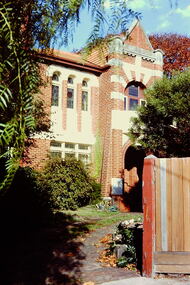
Slide - House, cnr Fellows and Barry Streets, 1979
... Internally a grand entry hall with inglenook, staircase and gallery follow the Arts and Crafts quality of the exterior. ...Internally a grand entry hall with inglenook, staircase and gallery follow the Arts and Crafts quality of the exterior. ...One of a group of slides taken by members of the Society of built heritage in Kew in 1979-80. The selection of subject matter reflects the priorities of the period. The colour of some slides has degraded. This particular slide is of 'Fairholme' on the corner of Barry and Fellows Street. The building is listed by the National Trust (Victoria). The citation on the Historic Buildings Register states: 'Fairholme is of State architectural significance as a distinctive free Romanesque Revival residence. Built in two stages, 1889 for solicitor Edward Smart and early this century for importer, J K Meritt, the singular architectural character of Fairholme is achieved by combining window bays and groups of windows with a two-storey gabled porch. The deliberate and distinctively asymmetrical composition is emphasised by Art Nouveau pressed cement detailing (coprosma) on a bowed balcony and the two-storey timber verandah, which is typical of the Edwardian period. The architects were Reed, Henderson & Smart (1889) and C Gordon McCrae (c 1900-1). Internally a grand entry hall with inglenook, staircase and gallery follow the Arts and Crafts quality of the exterior. Classified: 17/03/1993'The slides represent a snapshot in time of built architecture in Kew, much of which has changed in the forty-plus period since they were created. 35mm colour transparency (slide) of 'Fairholme' (1889) on the north-east corner of the intersection of Fellows and Barry Streets, Kew. The photo was developed in May 1979.barry street -- kew (vic.), fellows street -- kew (vic.), historic houses -- kew (vic.), architects -- reed henderson & smart, architectural styles -- romanesque revival, j k merritt -
 The Beechworth Burke Museum
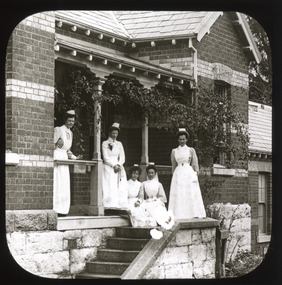
Photograph - Lantern Slide, c1900
... This image shows 5 nurses of Mayday Hills Mental Asylum gathered on the porch and staircase of a building. Beechworth has a long history of nursing, beginning with the establishment 3 medical facilities in the mid-1800s, the Ovens District Hospital (opened in 1857), the Ovens Benevolent Asylum (opened in 1863), and the Mayday Hills Hospital (opened in 1867). ...This image shows 5 nurses of Mayday Hills Mental Asylum gathered on the porch and staircase of a building. Beechworth has a long history of nursing, beginning with the establishment 3 medical facilities in the mid-1800s, the Ovens District Hospital (opened in 1857), the Ovens Benevolent Asylum (opened in 1863), and the Mayday Hills Hospital (opened in 1867). ...This image shows 5 nurses of Mayday Hills Mental Asylum gathered on the porch and staircase of a building. Beechworth has a long history of nursing, beginning with the establishment 3 medical facilities in the mid-1800s, the Ovens District Hospital (opened in 1857), the Ovens Benevolent Asylum (opened in 1863), and the Mayday Hills Hospital (opened in 1867). Lantern slides, sometimes called 'magic lantern' slides, are glass plates on which an image has been secured for the purpose of projection. Glass slides were etched or hand-painted for this purpose from the Eighteenth Century but the process became more popular and accessible to the public with the development of photographic-emulsion slides used with a 'Magic Lantern' device in the mid-Nineteenth Century. Photographic lantern slides comprise a double-negative emulsion layer (forming a positive image) between thin glass plates that are bound together. A number of processes existed to form and bind the emulsion layer to the base plate, including the albumen, wet plate collodion, gelatine dry plate and Woodburytype techniques. Lantern slides and magic lantern technologies are seen as foundational precursors to the development of modern photography and film-making techniquesThis glass slide is significant because it provides insight into Beechworth's social amenities and religious infrastructure in the late Nineteenth Century. It is also an example of an early photographic and film-making technology in use in regional Victoria in the time period.Thin translucent sheet of glass with a square image printed on the front and framed in a black backing. It is held together by metals strips to secure the edges of the slide.burke museum, beechworth, lantern slide, slide, glass slide, plate, burke museum collection, photograph, monochrome, nurses, nursing, mayday hill hospital -
 Ballarat Heritage Services
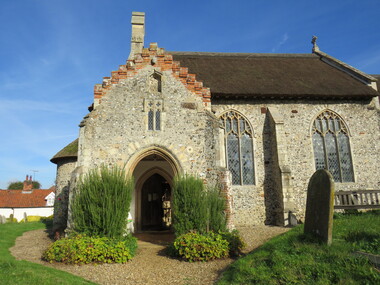
Photograph - Digital Photograph, St Lawrence Church, Ingworth, England, October 2016
... This was reached by a staircase, the remains of which can be seen near the pulpit. ...This was reached by a staircase, the remains of which can be seen near the pulpit. ...The base of the round tower dates back to the 11th century around the time of the Norman Conquest. It collapsed in 1822. In the 15th century the benches in the south aisle were constructed, originally without backs. The screen now painted brown was painted in colours during the Middle Ages. There is practically no stained glass in this church except for a small Flemish 15th century panel in the east window and a tiny head in the window in the south aisle of the nave. Evidence of the destructive work of the Reformers can be seen on the font where chisel marks can be seen, and the removal of a rood beam or loft. This was reached by a staircase, the remains of which can be seen near the pulpit. The pulpit is part of a 17th century three-decker. The hour glass used to time sermons is still in place near the pulpit. There are a few personal memorials in the church. Ingworth has for centuries been a village run b the people living in it. Many of them now lie in the churchyard, while at least one member of the Harmer family from Baconsthorpe and Ingworth emigrated to Australia, settling in Victoria. Information extracted from booklet researched and written by Valerie Belton.st lawrence church, ingworth, england -
 Bendigo Historical Society Inc.
Booklet - Fortuna Villa Tour Guide, abt 2013
... Stained glass, elaborate ceilings, grand cedar and blackwood staircase, solid marble baths, extensive acid-etched glasswork (conservatory) are some of the architectural features that contribute to the outstanding ‘feel’ of the structure. ...Stained glass, elaborate ceilings, grand cedar and blackwood staircase, solid marble baths, extensive acid-etched glasswork (conservatory) are some of the architectural features that contribute to the outstanding ‘feel’ of the structure. ...In 1871, the Villa and the associated ‘180 Mine’ on the New Chum Reef was bought by George Lansell who had become successful in his gold mining interests and investments. With his continuing success in deep mining, Lansell undertook major extensions to his home, and in fact continued this expansion and decoration of Fortuna until his death almost 40 years later. Fortuna Villa remains remarkably intact as a house even though it has served as a busy workplace for 65 years. Stained glass, elaborate ceilings, grand cedar and blackwood staircase, solid marble baths, extensive acid-etched glasswork (conservatory) are some of the architectural features that contribute to the outstanding ‘feel’ of the structure. The Fortuna grounds cover some 7.57 ha. and feature an ornamental lake, garden, a ‘Roman-Bath’ and the ‘Pompeii Fountain’. The original quartz-crushing battery building, stables and coach house remain close to the main villa. The magnificent villa itself is the aspirational centerpiece to this remarkable property. It is set in botanic-style gardens featuring established trees. George Lansell’s historic talisman has hosted some iconic characters itself, including leaders and diplomats, Dame Nellie Melba and even HRH the Prince of Wales and the Duke of Edinburgh.Fortuna Villa Tour Guide, seven pages - Photos, History and guide with description for each room or aspect. Chronology on back cover.history, bendigo, fortuna, george lansell -
 Kiewa Valley Historical Society
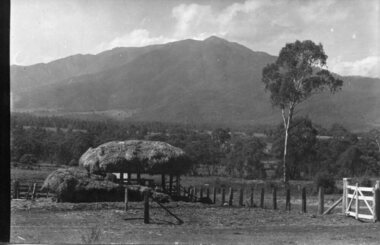
Photograph - Mt Bogong - Tawonga, 06/05/1937
... Emergency shelter is also available at Bivouac Hut on the Staircase Spur, and at Cleve Cole, above Camp Creek on the broad ridge to the south of the summit, and Michells Hut on the Eskdale Spur. ...Emergency shelter is also available at Bivouac Hut on the Staircase Spur, and at Cleve Cole, above Camp Creek on the broad ridge to the south of the summit, and Michells Hut on the Eskdale Spur. ...Mount Bogong located in the Alpine National Park and part of the Victorian Alps of the Great Dividing Range, is the highest mountain in Victoria, Australia, at 1,986 metres (6,516 ft) above sea level. The Big River separates the massif of the mountain from the Bogong High Plains to the south. From the nearby town of Mount Beauty to its summit, Mount Bogong rises more than 1,600 metres (5,200 ft), thus making it one of the highest peaks in Australia not only in terms of its elevation above sea level, but also in terms of actual base-to-summit prominence. Mount Bogong is a popular backcountry skiing mountain through winter but only has snow for the mid winter-spring months. It is around 30 kilometres (19 mi) by road and walking track or 12 kilometres (7.5 mi) direct to Mount Beauty. Falls Creek and Mount Hotham ski resorts are also nearby. Camping is relatively safe below the tree line but the summit ridgeline is very exposed. Emergency shelter is also available at Bivouac Hut on the Staircase Spur, and at Cleve Cole, above Camp Creek on the broad ridge to the south of the summit, and Michells Hut on the Eskdale Spur. Mt Bogong is a popular recreational venue in the Kiewa Valley for back country skiing and bush walking and is a favourite with sightseers and popular subject for photographersBlack and white photograph of Mt bogong taken from Tawonga - Thursday May 6th, 1937Handwritten on back of photograph. Thursday May 6th, 1937. Mt Bogong Tawongamt bogong, tawonga, kiewa valley -
 Melbourne Tram Museum
Film - Compact Diskette with video, National Film & Sound Archive Australia, "Opening of the Prahran", May. 2010
... Video from film by Johnson and Gibson, titled the "Opening Prahran and Malvern Tramway " features people speaking from a spiral staircase, trams No. 1, 2 and 3 running out of the depot, 12 in Glenferrie Road, lots of people views, horse drawn bus 6 with Mayor, 6 with Mayor getting off, single track, driver. ...Video from film by Johnson and Gibson, titled the "Opening Prahran and Malvern Tramway " features people speaking from a spiral staircase, trams No. 1, 2 and 3 running out of the depot, 12 in Glenferrie Road, lots of people views, horse drawn bus 6 with Mayor, 6 with Mayor getting off, single track, driver. ...Compact Diskette with video (DVD), titled "Opening of the Prahran" - in a black plastic case with a black back and insert of the National Film & Sound Archive Australia, titled "Opening of the Prahran". Gives information on the client, length and date of transfer. Video from film by Johnson and Gibson, titled the "Opening Prahran and Malvern Tramway " features people speaking from a spiral staircase, trams No. 1, 2 and 3 running out of the depot, 12 in Glenferrie Road, lots of people views, horse drawn bus 6 with Mayor, 6 with Mayor getting off, single track, driver. Second film with countdown strip as for above. Same as chapter 3 of Reg item 925. Has copyright restrictions. .2 - three A4 sheets, stapled in the top left hand corner and folded into 8. Located within the CD folder. Gives details of the National Film & Sound Archive Australia, Usage agreement, contact names, approved use, fees, acceptance by Colin Tyrus of Yarra trams and a schedule of materials.trams, tramways, pmtt, opening, yarra trams, malvern depot, centenaries, films -
 Ballarat Heritage Services
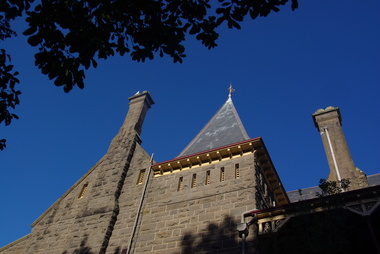
Photograph - Image - Colour, Clare Gervasoni, Bishop's Palace Ballarat Featuring Chimneys and Roof Line, Ballarat, 2014, 23/02/2014
... The original heritage-listed gold lead stencilled paintwork that can be seen in the front entry and on the staircase walls at Bishops Palace was replicated in the Royal Exhibition Building. ...The original heritage-listed gold lead stencilled paintwork that can be seen in the front entry and on the staircase walls at Bishops Palace was replicated in the Royal Exhibition Building. ...Bishops Palace was built in 1877 as the home for the first Catholic Bishop of Ballarat. Designed by Melbourne architect, Joseph Reed, of Reed and Barnes, it was built by George Broom at a cost of £6,000. Reed and Barnes also designed Melbourne’s State Library, Ripponlea Estate and the Melbourne Royal Exhibition Building. The original heritage-listed gold lead stencilled paintwork that can be seen in the front entry and on the staircase walls at Bishops Palace was replicated in the Royal Exhibition Building. The original property was 140 squares set on 11 acres of gardens and took up an entire block of Sturt Street. This was on scale with the importance of Ballarat as a gold-mining centre at the time. Bishop's Palace is of architectural, aesthetic and historical significance to the State of Victoria. The two-storey bluestone mansion is an impressive example of 19th-century Gothic architecture with an unusual design. It retains many of its original features, including lead stencilled paintwork, cornices, ceiling roses, fixtures and fittings. Since sold by the Catholic Church the Bishops Palace has undergone a number of transformations in its lifetime, from the home of the first Bishop to a private residence, and today, as a luxurious accommodation, wedding and events venue. The grounds were subdivided over the years, and the property is now surrounded by four of the original 11 acres of gardens. It opened its doors to the public in 2019.Colour image of the bluestone Bishop's Palace, and it's cast iron lace.architecture, garden, bishop's palace, cast iron lace, cast iron, catholic church -
 Bendigo Historical Society Inc.
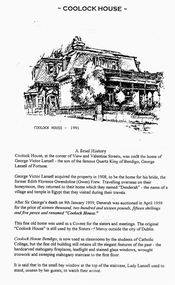
Document - Coolock or Denderah House - A brief History and Auction, 1959 and 1991
... The building retains elegant historical features such as hand-carved mahogany fireplaces, leadlight and stained glass windows, wrought ironwork, and a sweeping mahogany staircase. A notable anecdote is that Lady Lansell would watch guests arrive from a small bay window at the top of the staircase. ...The building retains elegant historical features such as hand-carved mahogany fireplaces, leadlight and stained glass windows, wrought ironwork, and a sweeping mahogany staircase. A notable anecdote is that Lady Lansell would watch guests arrive from a small bay window at the top of the staircase. ...Coolock House, on the corner of View and Valentine Streets in Bendigo has a rich history marked by notable ownership and varied uses. Acquired in 1908 by George Victor Lansell, son of Bendigo's famous "Quartz King" George Lansell, as a home for himself and his bride, Edith Florence Gwendoline (Gwen) Frew. The couple named the house "Denderah" after a village and temple in Egypt they visited on their honeymoon. After Sir George's death in January 1959, the property was auctioned and renamed "Coolock House." It Served as a convent for the Sisters of Mercy and as a venue for meetings. The original "Coolock House" name is also associated with a Sisters of Mercy house outside Dublin. Currently, Coolock House is used as classrooms for Catholic College students in Bendigo. The building retains elegant historical features such as hand-carved mahogany fireplaces, leadlight and stained glass windows, wrought ironwork, and a sweeping mahogany staircase. A notable anecdote is that Lady Lansell would watch guests arrive from a small bay window at the top of the staircase. Coolock House remains a significant heritage building, blending its storied past with ongoing educational use. 1959 AUCTION The auction catalog (24 pages) and sale notice for the estate of the late Sir George Lansell, held at his residence "Denderah" in Bendigo on April 7th and 8th, 1959. The auction was conducted by Sandhurst and Northern District Trustees Limited and Agency Company Executors, as executors of George Victor Lansell's will. The property and its contents were offered for sale over two days, with viewing available the day before. The freehold property was specifically offered at 3 p.m. on April 7th. Highest bidder for each lot is the purchaser; disputes resolved by the auctioneer.25% deposit required immediately after winning a lot; full payment and removal by April 10th. The catalog lists hundreds of lots, including: Fine furniture (antique satinwood, mahogany, walnut, oak, Chippendale, French Buhl, etc.) Artworks (oil paintings, watercolors, prints, miniatures) Decorative items (marble sculptures, ormolu, cloisonné, porcelain, silverware)Household goods (rugs, curtains, carpets, kitchenware, linen, glassware) Collectibles (books, musical instruments, clocks, sporting goods, firearms) Garden and outdoor items (garden seats, pot plants, tools)Staff quarters and utility items (beds, wardrobes, kitchen equipment) Several pieces by renowned makers (Waring and Gillow, London) Unique items such as an exhibition French ornamental bedroom suite made for the Paris Exposition of 1880, and items from the "Fortuna" collection A wide range of silver and crystal tableware, antique carpets, and rare collectiblesStructure and Organization The catalog is organized by room and area (Drawing Room, Dining Room, Study, Bedrooms, Hall, Yard, Kitchen, Staff Quarters, etc.), with each lot described in detail.Coolock House - A brief History and Auction This item contains the following document: 11217.59a A black and white brochure of Coolock House in 1991 with a brief history and a sketch of the house 11217.59b The auction catalog (24 pages) and sale notice for the estate of the late Sir George Lansell, held at his residence "Denderah" in Bendigo on April 7th and 8th, 1959. The auction was conducted by Sandhurst and Northern District Trustees Limited and Agency Company Executors, as executors of George Victor Lansell's willnon-fictionbendigo, fortuna, george lansell, coolck house, denderah, denderah auction, george victor lansell, edith lansell, edith frew, catholic college, sisters of mercy -
 Bendigo Historical Society Inc.
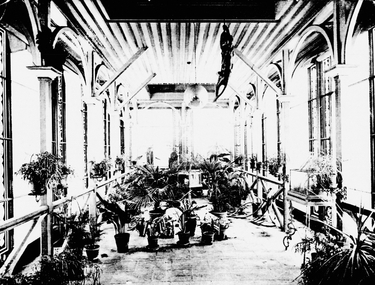
Photograph - Fortuna - Photos (Photo-copies) of Furnished Rooms, Abt 1900
... Fortuna - Photos (Photo-copies) of Furnished Rooms This item contains the following 12 documents: 11217.76a Black and White photo of the Gymnasium, a man standing between the horizontal bars and another behind sitting on the exercise bench 11217.76b Black and White photo of a living room with chairs and small table 11217.76c Black and White photo of the conservatory with pot plants 11217.76d Black and White photo of a music room with piano, chairs and a coffee table 11217.76e Black and White photo of a bedroom with sofa, chair and iron framed bed 11217.76f Black and White photo of the games room complete with Billiard Table 11217.76g Black and White photo of the living room, the walls adorned with painting and photographs 11217.76h Black and White photo of the family bedroom, with a child's bed and a large four-poseter with curtains 11217.76i Black and White photo of possibly the function or ballroom 11217.76j Black and White photo of a small room or elcove for quiet conversations 11217.76k Black and White photo of the staircase and statue 11217.76l Black and White photo of the conservatory...The relationship between mining and domestic areas and the. close proximity of the two is considered rare to Australian domestic building of that time. bendigo fortuna george lansell fortuna furnishings Fortuna - Photos (Photo-copies) of Furnished Rooms This item contains the following 12 documents: 11217.76a Black and White photo of the Gymnasium, a man standing between the horizontal bars and another behind sitting on the exercise bench 11217.76b Black and White photo of a living room with chairs and small table 11217.76c Black and White photo of the conservatory with pot plants 11217.76d Black and White photo of a music room with piano, chairs and a coffee table 11217.76e Black and White photo of a bedroom with sofa, chair and iron framed bed 11217.76f Black and White photo of the games room complete with Billiard Table 11217.76g Black and White photo of the living room, the walls adorned with painting and photographs 11217.76h Black and White photo of the family bedroom, with a child's bed and a large four-poseter with curtains 11217.76i Black and White photo of possibly the function or ballroom 11217.76j Black and White photo of a small room or elcove for quiet conversations 11217.76k Black and White photo of the staircase and statue 11217.76l Black and White photo of the conservatory Photograph Fortuna - Photos (Photo-copies) of Furnished Rooms ...Theodore Ballerstedt originally purchased the Fortuna site from the Crown in 1857. The firstimprovements at Fortuna were undertaken by the Ballerstedt family and consisted of a small mill and house. At the peak of the mining era (c.1860s) Fortuna was central to the deep alluvial gold mining operations of Bendigo. In 1871 Theodore Ballerstedt sold the house, mine and associated works to George Lansell 'The Quartz King'. During his time at Fortuna, Lansell owned 13 mines and directed a further 73 in Bendigo. The primary building on the site is the Fortuna Villa. With the wealth Lansell generated from gold mining he funded the continuous expansion of the Villa and surrounding grounds. The Villa is built in a number of architectural styles, namely Victorian Italianate and Victorian Free Classical, with Federation influences. The surrounding landscape featured up to seven decorative lakes in the early 1870s, including one larger lake which still remains today. The former lakes were originally used as disposal points for tailings produced in the gold processing activities at the site. Heritage investigations note that the uniqueness of Fortuna lies in the mixture of architectural styles of the Villa. The relationship between mining and domestic areas and the. close proximity of the two is considered rare to Australian domestic building of that time.Fortuna - Photos (Photo-copies) of Furnished Rooms This item contains the following 12 documents: 11217.76a Black and White photo of the Gymnasium, a man standing between the horizontal bars and another behind sitting on the exercise bench 11217.76b Black and White photo of a living room with chairs and small table 11217.76c Black and White photo of the conservatory with pot plants 11217.76d Black and White photo of a music room with piano, chairs and a coffee table 11217.76e Black and White photo of a bedroom with sofa, chair and iron framed bed 11217.76f Black and White photo of the games room complete with Billiard Table 11217.76g Black and White photo of the living room, the walls adorned with painting and photographs 11217.76h Black and White photo of the family bedroom, with a child's bed and a large four-poseter with curtains 11217.76i Black and White photo of possibly the function or ballroom 11217.76j Black and White photo of a small room or elcove for quiet conversations 11217.76k Black and White photo of the staircase and statue 11217.76l Black and White photo of the conservatorynon-fictionbendigo, fortuna, george lansell, fortuna furnishings -
 Ringwood and District Historical Society
Document - Auction Flyer and Investment Report, Midway Arcade 145-147 Maroondah Highway, Ringwood, Victoria - 1997
... Located at first floor are 13 office suites accessible via two internal staircases and which are located around a central atrium. ...Located at first floor are 13 office suites accessible via two internal staircases and which are located around a central atrium. ...Wire-bound A4 size 25-page investment report and double-sided colour notice advertising on site auction of Midway Arcade at 1pm on Wednesday 10th December 1997. Selling Agents - Carter Real Estate, 128 Maroondah Highway Ringwood 3134, Tel: 9870-6211 and Fitzroys, 367 Collins Street Melbourne 3000 Tel: 9275-7777.Investment Report Executive Summary Extract: Property: Midway Arcade, 145-147 Maroondah Highway, Ringwood. Location: The property commands a prominent location on Maroondah Highway opposite the Ringwood Railway Station and adjacent to the Eastland Shopping Centre and car park with surrounding tenants incorporating a variety of major financial institutions and recognised retailers. Building Description: The building comprises a two-storey mixed use development incorporating 14 shops within a retail arcade at ground floor with excellent frontage to both Maroondah Highway and Civic Place at the rear. Located at first floor are 13 office suites accessible via two internal staircases and which are located around a central atrium. Building Area: 1,533.41 m2 approx. Site Area: 1,284 m2 (13,819 sq.ft.) approx. Lease Details: The property is being offered subject to the existing lease terms and conditions with a passing net annual rental of $171,940.65. Method of Sale: Public Auction - Wednesday, 10th December, 1997 at 1:00p.m. on site. Terms: 10% deposit, balance 60 days. -
Emerald Museum & Nobelius Heritage Park
Photograph - Group portrait, Unknown photographer, 1990s
... Part of an open, wooden staircase can be seen to the right and behind the men....Part of an open, wooden staircase can be seen to the right and behind the men. ...This photograph shows the style of clothing worn by middle aged men at an informal meeting in the 1990s.This is a rectangular, black and white photograph printed on matte paper. The photograph depicts 3 adult males standing together in a room. It is a full length photograph of the 3 males. It appears that the photograph was taken with a flash as there are dark shadows behind each man and the room seems dim. There is a shorter man to the left of the photograph and he is shaking hands with the man in the middle of the three. From left to right the first man has dark hair. He is wearing a white, long sleeved shirt and a chequered tie. His trousers are mid- coloured with a belt, shoes are dark. The next man has dark hair and he is wearing an open necked shirt over which is a dark vee necked, long sleeved jumper. His trousers are light coloured, shoes are dark. This man has a moustache. The last of the 3 men is the tallest. He is wearing a white open necked shirt and belted mid- coloured trousers. His shoes are dark. This man has medium coloured hair. He seems to be holding some papers in his right hand. None of the men are smiling. They appear to be standing in front a table that is covered by a white cloth. Part of an open, wooden staircase can be seen to the right and behind the men.1990s, clothing -
 Federation University Historical Collection
Photograph - Art class photograph, Drawing from the Antique, 1920, c1920
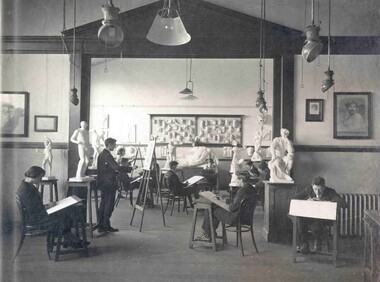
... The interior of the building features a carved wooden staircase and cast iron ceiling vents. The rear drawing studios could be made into one large studio by opening panelled timber doors. ...The interior of the building features a carved wooden staircase and cast iron ceiling vents. The rear drawing studios could be made into one large studio by opening panelled timber doors. ...The large plaster Illisos depicted in the back of this image is still held by Federation University Australia. The Ballarat Technical Art School (No. 10) was part of the Ballarat School of Mines and was established in 1907. After conducting classes in various locations around Ballarat a custom built art school was erected on the site of the former Ballarat Circuit Court House, previously used as the initial building of the Ballarat School of Mines. Examples of drawings undertaken by students, as well as some plaster castes are held in the University of Ballarat Historical Collection. The Ballarat Technical art School is the oldest continuous Tertiary Art School in Australia. Sir Alexander Peacock opened the new Ballarat Technical Art School building in July 1915. It cost 10,000 pounds and was constructed by the Public Works Department from plans drawn by the then Art School Principal, Herbert H. Smith. The building contractors were Messrs Gower and Eddards. According to the SMB Annual Report of 1914 'the internal upholstering and fittings have all been carried out in Australian timbers, with Queensland maple largely used throughout.' The building could be described as federation-art deco in style. It features sandstone insertion with sandstone string coursing. The base of the building is rusticated sandstone. The building is functional in design with large metal windows in the south wall to ensure good light into the studios. The northern wall has standard double hung windows. The interior of the building features a carved wooden staircase and cast iron ceiling vents. The rear drawing studios could be made into one large studio by opening panelled timber doors. This opening features classical plaster pilasters with a pediment above. (http://guerin.ballarat.edu.au/curator/buildings/technical_art_school.shtml) Black and white mounted photograph showing eleven students of the Ballarat School of Mines Technical Art School drawing from plaster models of human bodies in various poses and of various scales. The students are in a room of the Ballarat Technical Art School which was custom built for teaching art. The image was reproduced in the 1920 Ballarat School of Mines Students' Magazine. drawing, ballarat school of mines, ballarat technical art school, art studio, plaster caste, gribble building, illisos, hercules, drawing from the antique, visual arts -
Bendigo Historical Society Inc.
Document - Fortuna Article - Handout Notes for a Tour, 1990s
... Reception Room: Served as the initial gathering space for guests, with a bay window added in 1875.Decorative elements like pressed metal ceilings, a cut glass skylight, and parquetry were likely added around 1895. Staircase: Made of cedar and blackwood, added in 1888 to access a new third floor, and remodeled in 1907. ...Reception Room: Served as the initial gathering space for guests, with a bay window added in 1875.Decorative elements like pressed metal ceilings, a cut glass skylight, and parquetry were likely added around 1895. Staircase: Made of cedar and blackwood, added in 1888 to access a new third floor, and remodeled in 1907. ...Here are the key points from the document on Fortuna Villa and its grounds: Music Room: Originally the main drawing room, featuring an ornate decorative ceiling and stained glass windows with musical inscriptions. The room was expanded in 1904, with earlier renovations enclosing an open colonnade in the 1890s. Conservatory: Built in 1876 after Lansell's European trip, showcasing high-quality etched glass and Italian design.Features rare glasswork, including Ruby Flashed Seedless French Antique glass and acid-etched panels with mining, Australian, and heraldic motifs. Reception Room: Served as the initial gathering space for guests, with a bay window added in 1875.Decorative elements like pressed metal ceilings, a cut glass skylight, and parquetry were likely added around 1895. Staircase: Made of cedar and blackwood, added in 1888 to access a new third floor, and remodeled in 1907. Features an upper balcony intersecting a large stained leadlight window. Bedrooms: Main bedrooms are located off a central passage, each with its own bathroom equipped with marble baths and cedar cabinetry.Pompeii Fountain: Constructed in 1879 as a scale replica of the Great Fountain in Pompeii, inspired by Lansell's travels.Includes statues, water features, and a Roman column with a statue, considered unique in Australia and possibly worldwide. Crushing Battery: A 30-head stamper battery built in 1874 for mining, attached to the villa's northern end.The chimney and machinery were removed in the 1940s, but the structure remains largely intact, now used as a printing press. These points highlight the architectural, artistic, and historical significance of Fortuna Villa and its associated features.Fortuna Article - Handout Notes for a Tour, by the Australian Government Department of defence support group This item contains the following document: 11217.61a A glossy coloured page A3 document of Fortuna lower floor and Ground Floor, which lists tha main points of the Villa and includes plans of the two floors.non-fictionbendigo, fortuna, george lansell, george victor lansell -
Bendigo Historical Society Inc.
Legal record - George Lansell's Fortuna Renovations, 1875
... For carpenters work in Mrs Lansell's Billiard Room 11217.83c Plans from Vahland and Getzschmann for doors, windows and the staircase 11217.83d General Terms and Condition form W. ...For carpenters work in Mrs Lansell's Billiard Room 11217.83c Plans from Vahland and Getzschmann for doors, windows and the staircase 11217.83d General Terms and Condition form W. ...Emil Mauermann, from Hainewalde in the south-east of Saxony, worked in Bendigo from 1886 to 1894, initially working for Vahland before establishing his own architecture office in 1887. Later he and his German wife moved to Western Australia, where he worked for many years. It is thought likely that he had a significant influence on Vahland’s design for the Colonial Bank in View Street. Many German immigrant architects worked in Bendigo in the 19th century, e.g. Mauermann, Nicolai, Bosselmann and Lehmann, but the two biggest names are Carl Wilhelm Vahland and Robert Getzschmann, who had a considerable effect on the appearance of Bendigo. Vahland was trained as an architect at the Baugewerkschule (School of Building) at Holzminden on the River Weser, not far from his hometown of Nienburg, also on the Weser. Vahland came from a family of builders. At 27, not long after completing his studies, he emigrated to Australia, arriving in Melbourne in September 1854 on the San Francisco. He went to the Bendigo goldfields but had no luck finding gold. For a while he built gold-washing cradles for the alluvial diggers and then started his Australian architectural career which lasted nearly 50 years. Robert Getzschmann, another German, had arrived in Victoria in 1849 and moved to Bendigo in 1857. In 1858 Vahland and Getzschmann established a partnership and opened an architectural office in Pall Mall, Bendigo. This partnership of Vahland and Getzschmann designed many churches, banks, schools, hotels, theatres and private homes in Bendigo, and designed buildings in a wide surrounding area, reaching up into southern NSWLegal Records of George Lansell's Fortuna This item contains the following documents: 11217.83a Legal Records of George Lansell's Fortuna - Contract with L. Mauermann, Architect for Alterations and additions of a mansard story to the private residence of George Lansell's esq, Sandhurst. A mansard roof is a distinctive, multi-sided roof with two distinct slopes on each side. Icludes notes and plans of the additions to the building 11217.83b General Terms and Condition form W. Beebe, Architect, Mitchell Street , Bendigo. For carpenters work in Mrs Lansell's Billiard Room 11217.83c Plans from Vahland and Getzschmann for doors, windows and the staircase 11217.83d General Terms and Condition form W. Beebe, Architect, Mitchell Street , Bendigo. For excavations, brick, stone and concrete work in Mrs Lansell's Billiard Room 11217.83e General Terms and Condition form W. Beebe, Architect, Mitchell Street , Bendigo. For concrete work in Mrs Lansell's Billiard Room 11217.83f General Terms and Condition form W. Beebe, Architect, Mitchell Street , Bendigo. For eplumbing work in Mrs Lansell's Billiard Room 1893 11217.83g plans and notes on the additions and alterations Nov 1890 11217.83h Plans from Vahland and Getzschmann for front elevation of the buiding 1875 11217.83i Tender 03 July 1871 by R.A. Love to erect a tower at Fortuna, includes plansnon-fictionbendigo, fortuna, george lansell, fortuna alterations -
 Federation University Historical Collection
Photograph, Clare Gervasoni, Ballarat School of Mines Technical Art School, c2008, c2008
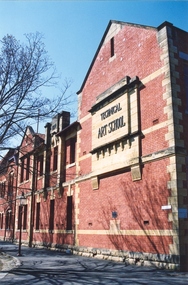
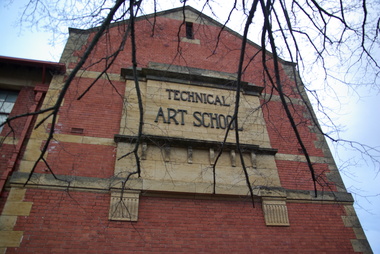
... The interior of the building features a carved wooden staircase and cast iron ceiling vents. The rear drawing studios can be made into one large studio by opening panelled timber doors. ...The interior of the building features a carved wooden staircase and cast iron ceiling vents. The rear drawing studios can be made into one large studio by opening panelled timber doors. ...The former Ballarat Circuit Court Building, later the first building of the Ballarat School of Mines, was demolished to make way for a new custom built Art School building. Sir Alexander Peacock opened the Ballarat Technical Art School in July 1915. It cost 10,000 pounds and was constructed by the Public Works Department from plans drawn by the then Art School Principal, Herbert H. Smith. The building contractors were Messrs Gower and Eddards. According to the SMB Annual Report of 1914 'the internal upholstering and fittings have all been carried out in Australian timbers, with Queensland maple largely used throughout.' Before this building was constructed art and craft classes were held in various buildings around Ballarat. The building could be described as federation-art deco in style. It features sandstone insertion with sandstone string coursing. The base of the building is rusticated sandstone. The relief stone panel on the front with the words "Technical Art School" features stone pilaster brackets and corbels. In the centre front can be seen rectangular sandstone pediment with decorative stonework incorporating the date of construction. The windows in the lower floor feature five supporting keystones whereas the upper windows have sandstone lintels. The building also features decorative cast iron downpipes. The entrance on the northern side has attractive leadlight glazing in an art deco style. Above the door a miner's lamp and pick are featured in the design. The building is functional in design with large metal windows in the south wall to ensure good light into the studios. The northern wall has standard double hung windows. The interior of the building features a carved wooden staircase and cast iron ceiling vents. The rear drawing studios can be made into one large studio by opening panelled timber doors. This opening features classical plaster pilasters with a pediment above.Colour photographs of a double storey, red brick building built - the Ballarat Technical Art School, a division of the Ballarat School of Minesballarat school of mines, ballarat technical art school, architecture, art, gribble building -
 Federation University Historical Collection
Artwork, other - Artwork, Artwork from the Ballarat School of Mines Students' Magazine, 1934, 1934
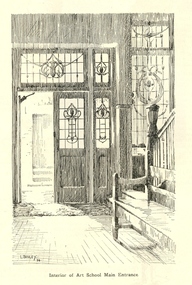
... The interior of the building features a carved wooden staircase and cast iron ceiling vents. The rear drawing studios can be made into one large studio by opening panelled timber doors. ...The interior of the building features a carved wooden staircase and cast iron ceiling vents. The rear drawing studios can be made into one large studio by opening panelled timber doors. ...Sir Alexander Peacock opened the Ballarat Technical Art School in July 1915. It cost 10,000 pounds and was constructed by the Public Works Department from plans drawn by the then Art School Principal, Herbert H. Smith. The building contractors were Messrs Gower and Eddards. According to the SMB Annual Report of 1914 'the internal upholstering and fittings have all been carried out in Australian timbers, with Queensland maple largely used throughout.' Before this building was constructed art and craft classes were held in various buildings around Ballarat. The building could be described as federation-art deco in style. It features sandstone insertion with sandstone string coursing. The base of the building is rusticated sandstone. The relief stone panel on the front with the words "Technical Art School" features stone pilaster brackets and corbels. In the centre front can be seen rectangular sandstone pediment with decorative stonework incorporating the date of construction. The windows in the lower floor feature five supporting keystones whereas the upper windows have sandstone lintels. The building also features decorative cast iron downpipes. The entrance on the northern side has attractive leadlight glazing in an art deco style. Above the door a miner's lamp and pick are featured in the design. The building is functional in design with large metal windows in the south wall to ensure good light into the studios. The northern wall has standard double hung windows. The interior of the building features a carved wooden staircase and cast iron ceiling vents. The rear drawing studios can be made into one large studio by opening panelled timber doors. This opening features classical plaster pilasters with a pediment above. This building is now the Gribble Building on the Federation University Australia SMB Campus.Artwork by students of the Ballarat Technical Art School from the 1934 Ballarat School of Mines Students' Magazine .1) Stairs to the Ballarat Junior Technical School from Grant Street .2) Caricatures by Nornie Gude .3) work by Colin S. Hunt .4) A girl and a rooster by Gilda Gude .5) Self Portrait .6) Main entrance to the Ballarat Technical Art School by Lorna Bailey .7) Artwork from the magazineballarat technical art school, gribble building, gribble, stained glass, white flat, hopwood, bailey, gude, ballarat junior technical school, visual arts -
 Federation University Historical Collection
Photograph, Clare Gervasoni, Ballarat School of Mines Technical Art School, c2008, 29/07/2020
... The interior of the building features a carved wooden staircase and cast iron ceiling vents. The rear drawing studios can be made into one large studio by opening panelled timber doors. ...The interior of the building features a carved wooden staircase and cast iron ceiling vents. The rear drawing studios can be made into one large studio by opening panelled timber doors. ...The former Ballarat Circuit Court Building, later the first building of the Ballarat School of Mines, was demolished to make way for a new custom built Art School building. Sir Alexander Peacock opened the Ballarat Technical Art School in July 1915. It cost 10,000 pounds and was constructed by the Public Works Department from plans drawn by the then Art School Principal, Herbert H. Smith. The building contractors were Messrs Gower and Eddards. According to the SMB Annual Report of 1914 'the internal upholstering and fittings have all been carried out in Australian timbers, with Queensland maple largely used throughout.' Before this building was constructed art and craft classes were held in various buildings around Ballarat. The building could be described as federation-art deco in style. It features sandstone insertion with sandstone string coursing. The base of the building is rusticated sandstone. The relief stone panel on the front with the words "Technical Art School" features stone pilaster brackets and corbels. In the centre front can be seen rectangular sandstone pediment with decorative stonework incorporating the date of construction. The windows in the lower floor feature five supporting keystones whereas the upper windows have sandstone lintels. The building also features decorative cast iron downpipes. The entrance on the northern side has attractive leadlight glazing in an art deco style. Above the door a miner's lamp and pick are featured in the design. The building is functional in design with large metal windows in the south wall to ensure good light into the studios. The northern wall has standard double hung windows. The interior of the building features a carved wooden staircase and cast iron ceiling vents. The rear drawing studios can be made into one large studio by opening panelled timber doors. This opening features classical plaster pilasters with a pediment above.Colour photograph of a sandstone detail on a double storey, red brick building - the Ballarat Technical Art School, a division of the Ballarat School of Minesballarat school of mines, ballarat technical art school, architecture, art, gribble building -
 Bendigo Historical Society Inc.
Newspaper - Fortuna Article - "Fortuna Opens its Doors", Mar 30 1996
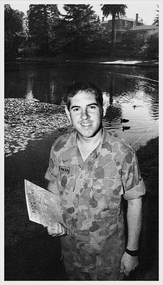
... The homestead includes notable features like a grand entrance hall, glassroom, main staircase, Pompeii fountain, and a Roman bath.The house is known for its eclectic Victorian architecture, with many styles incorporated based on Lansell's preferences. ...The homestead includes notable features like a grand entrance hall, glassroom, main staircase, Pompeii fountain, and a Roman bath.The house is known for its eclectic Victorian architecture, with many styles incorporated based on Lansell's preferences. ...Despite a report suggesting otherwise, tours of the historic Fortuna house in Bendigo will not cease when the Army Topographic Support Establishment (ATSE) takes over from the Army Survey Regiment. Both Army representatives and ATSE management confirm that public access and tours will remain unchanged. A mistaken news story led to a surge in tour attendance, with numbers tripling as people rushed to visit before the supposed closure. Recent tours have seen up to 70 visitors, including interstate travelers and descendants of the Lansell family. Fortuna is a 140-year-old house with deep ties to Bendigo's history.Originally owned by Christopher and Theodore Ballerstedt (1855–1871), it is most famously associated with the Lansell family, particularly George Lansell, a prominent gold mine owner known as the "Quartz King." The Army initiated tours 20 years ago to connect with the local community and showcase the building and the regiment's work.The tours provide an opportunity for the public to interact with soldiers and learn about their activities. After the death of George Lansell's wife, a symbolic procession with an empty coffin protested poor mine ventilation and miners' health conditions, highlighting social issues of the time.The document shares anecdotes from tours, such as Lansell's purchase of goats from local children, illustrating his character and the community's relationship with him. The homestead includes notable features like a grand entrance hall, glassroom, main staircase, Pompeii fountain, and a Roman bath.The house is known for its eclectic Victorian architecture, with many styles incorporated based on Lansell's preferences. Guided tours cover the complete history of Fortuna Villa and the Lansell family, lasting about three and a half hours on Sundays.Bookings are available by phone.Recent Military UpdatesThe Army will remain at the Fortuna site, though the military side will move out and soldiers will be reassigned or enter the workforce.Fortuna Restoration Article - "Fortuna Opens its Doors" - Bendigo Advertiser Sat Mar 30 1996 - Author Nicole Ferrie This item contains the following: 11217.2a Black and White Photo of one of the tour guides - Lance Cpl Richard Arman in the Fortuna Gardens 11217.2b Black and White Photo of one of the tour guides - Lance Cpl Richard Arman on the balcony 11217.2c Part of page 2 - Fortuna Open its Doors 11217.2d Part of page 2 - Fortuna Open its Doorsnon-fictionbendigo, fortuna, army tropographic support establishment -
 Parks Victoria - Point Hicks Lightstation
Weights
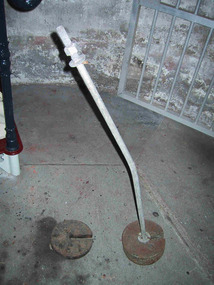
... It was usual for systems to move inside a tube extending up to the top, but in this case the tower’s cast iron spiral staircase, which is supported on cantilever cast iron brackets set into the concrete wall, spiralled around the space in which they moved. ...It was usual for systems to move inside a tube extending up to the top, but in this case the tower’s cast iron spiral staircase, which is supported on cantilever cast iron brackets set into the concrete wall, spiralled around the space in which they moved. ...A small number of heavy cast iron weights and two rods remain at the Point Hicks. The weights and rods were part of the original clockwork mechanism that was fitted beneath the lens to keep the kerosene-fuelled light turning. They were attached to a cable or chains and moved vertically in similar fashion to the way weights move on grandfather clocks. As the weight fell, the optic clock was driven and the lens was turned. To keep the clock turning, the weight needed to be wound back up to the top of its travel. The cables and weights in this lighthouse were visible as they moved through the length of the tower up to the lantern room. It was usual for systems to move inside a tube extending up to the top, but in this case the tower’s cast iron spiral staircase, which is supported on cantilever cast iron brackets set into the concrete wall, spiralled around the space in which they moved. Lighthouse keepers had the arduous job of having to constantly wind the clock to keep the light active, and at least two keepers needed to observe a strict roster of hours. When electric motors were invented, all of this became redundant and the motors were able to turn the optic for as long as there was power to drive them. In December 1964, the original 1890 Chance Bros kerosene-fuelled light and clockwork mechanism were replaced by small electric motor, and the number of keepers reduced to two. The six circular weights and rods originate from the obsolete system and may have been part of a larger set. Wilsons Promontory retains seven of its original set of ten weights, all of which are detached from the tower’s weight tube. Cape Schanck has a set of fourteen weights remaining in situ as well as another four detached weights, which have inscriptions . One weight is displayed in the lantern room at Cape Otway. The Point Hicks weights have first level contributory significance for the insights they provide into the superseded technology and operations of a late nineteenth century lighthouse. They are well provenanced and are significant for their historic value as part of the lightstation’s Chance Brothers optical system installed in 1890.PHLS0005.1 Round cast iron weight with flat base used for lens clock-work mechanism attached to a bent metal rod. PHLS0005.2 Removable round cast iron weight with flat base used for lens clock-work mechanism stored above the other weight. -
 Falls Creek Historical Society
Photograph - Jack Maddison Leading horses on the Bogong High Plain
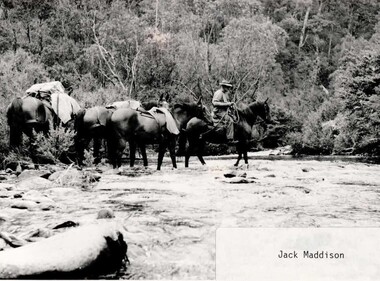
... It later became known as Maddison's Hut. Staircase Spur walking track at Bogong was formerly known as Maddison’s Track as it is the path once used by the Maddison family to drive their cattle on to the high plains. ...It later became known as Maddison's Hut. Staircase Spur walking track at Bogong was formerly known as Maddison’s Track as it is the path once used by the Maddison family to drive their cattle on to the high plains. ...The images in the Bogong Village Collection were displayed in Bogong Jack’s Tavern for over 20 years and were donated to the Falls Creek Museum when the Tavern closed in 2021. In 1939, the State Electricity Commission of Victoria established a field headquarters at Bogong to house workers and their families for the Kiewa Hydroelectric Scheme which ran from the 1930s to the 1960s. The workmen's camp was originally started with tents and was called Junction Camp. By 1947, the village supported 300 workers and their families. It included 40 houses, a hostel for single staff, a post office, a police station, a medical centre, and a primary school. The staff hostel was known as Kiewa House. At the completion of the Scheme, in the 1960s, the village was opened to public/tourism use. In 1968 the Victorian Education Department acquired the camp buildings and four houses from the State Electricity Commission of Victoria to establish an Outdoor Education Centre which operated for over 50 years. The Kiewa Hydroelectric Scheme was privatized in the 1990s and sold to Southern Hydro, before being acquired by AGL in 2005. In 2023 the Grollo Group signed a 73 year sublease on Bogong Village and has plans for its redevelopment as a workers’ village. John Maddison and his wife Mary Padman emigrated from London to Australia in 1850 with their five sons. Jack (John James William Maddison) was one of their great grandsons. In 1877 Jack’s grandfather George Maddison selected land between the East and West Kiewa branches of the Kiewa River - known as the "Island". It is now known as Mount Beauty. The Maddison family built Aertex Hut at the top of T Spur at Mt. Bogong for use when grazing cattle. It later became known as Maddison's Hut. Staircase Spur walking track at Bogong was formerly known as Maddison’s Track as it is the path once used by the Maddison family to drive their cattle on to the high plains. These images are significant because they feature the son of a pioneering family on the Bogong High Plains.A black and white photograph of Jack Maddison leading horses on the Bogong High Plains.bogong alpine village, bogong high plains, maddison family mt beauty, maddison's hut, aertex hut, -
 Melbourne Tram Museum
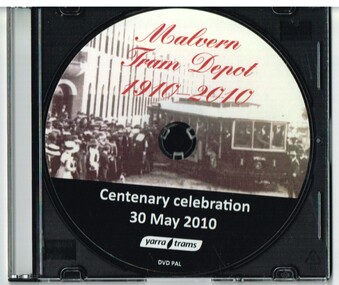
Film - Compact Diskette with video, Yarra Trams, "Malvern Tram Depot Centenary Celebration 30 May 2010", Jun. 2010
... Chapter 3 - "Archive footage" - running time 3 mins, footage thanks to National Film and Sound Archive, titled the "Opening Prahran and Malvern Tramway " features people speaking from a spiral staircase, trams No. 1, 2 and 3 running out of the depot, 12 in Glenferrie Road, lots of people views, 6 with Mayor, 6 See also Reg Item 2450 for a Yarra Trams labelled copy of the first chapter. ...Chapter 3 - "Archive footage" - running time 3 mins, footage thanks to National Film and Sound Archive, titled the "Opening Prahran and Malvern Tramway " features people speaking from a spiral staircase, trams No. 1, 2 and 3 running out of the depot, 12 in Glenferrie Road, lots of people views, 6 with Mayor, 6 See also Reg Item 2450 for a Yarra Trams labelled copy of the first chapter. ...Compact Diskette with video (DVD), titled "Malvern Tram Depot Centenary Celebration 30 May 2010" - in a clear covered plastic case with a black back. Chapter 1 - "Celebrations" running time 5mins, 40secs, gives an introduction to the PMTT, Yarra trams celebrations, includes interview with Craig Tooke (COTMA), Ian Stimpson of Bendigo trams, images of 44 and 84 running in and out of the depot, speech by Michel Masson, CEO of Yarra Trams, Brian Tee, Parliamentary Secretary for Transport, historic footage of the 1910 Opening of Malvern depot. Chapter 2 - "News Footage" - running time 4mins 15 secs, ABC News excerpts, channel 9 and channel 7 news broadcasts for that night features an interview with Darren Hutchesson, Craig Tooke, Roderick Smith, Allan Pollard and Michel Masson. Chapter 3 - "Archive footage" - running time 3 mins, footage thanks to National Film and Sound Archive, titled the "Opening Prahran and Malvern Tramway " features people speaking from a spiral staircase, trams No. 1, 2 and 3 running out of the depot, 12 in Glenferrie Road, lots of people views, 6 with Mayor, 6 See also Reg Item 2450 for a Yarra Trams labelled copy of the first chapter. See also Reg Item 2451 for a copy of chapter 2. See also Reg Item 2452 for the original version ex the Archive along with the paperwork re use.trams, tramways, pmtt, opening, yarra trams, malvern depot -
 Flagstaff Hill Maritime Museum and Village
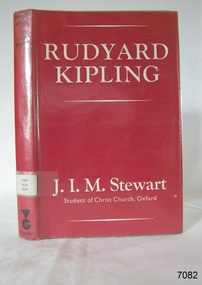
Book - Biography, John Innes Mackintosh Stewart, Rudyard Kipling, 1966
... Stewart, he published critical works on Shakespeare, Joyce, Peacock, Hardy, and Kipling, plus "Eight Modern Writers" (1963) for the Oxford History of English Literature, and a quintet of Oxford novels titled "A Staircase in Surrey" (1974–8). He wrote his autobiography, "Myself and Michael Innes", in 1987. ...Stewart, he published critical works on Shakespeare, Joyce, Peacock, Hardy, and Kipling, plus "Eight Modern Writers" (1963) for the Oxford History of English Literature, and a quintet of Oxford novels titled "A Staircase in Surrey" (1974–8). He wrote his autobiography, "Myself and Michael Innes", in 1987. ...J. I. M. Stewart's "Rudyard Kipling" is a critical biography covering Kipling's Childhood, Schooldays, Indian Years, and Indian writings such as The Conquest of London and The Light That Failed, Vermont, New Horizons, From the Jungle Books to Rewards and Fairies, Stalky and Others, The Mature Craftsman, and Verse. There is a conclusion, followed by a bibliography of Kipling's principal publications. The physical work runs to 190 pages and includes a list of "Published works of Rudyard Kipling referred to in this work". Reference sources describe the volume quite plainly as "a biographical and critical study of Kipling's writing and his personality." It traces Kipling's life from his 1865 Bombay birth through his Indian journalism career, his sudden London fame, and on to his controversial later reputation as his political views started to draw criticism.Hard cover book. Rudyard Kipling Author: John Innes Mackintosh Stewart Publisher: Victor Gollancz Limited Date: 1966 Further Information: Red Cloth hardcover with dust cover lettering to cover & spine in white on red background. The spine has a Library label with an inscription.non-fictionJ. I. M. Stewart's "Rudyard Kipling" is a critical biography covering Kipling's Childhood, Schooldays, Indian Years, and Indian writings such as The Conquest of London and The Light That Failed, Vermont, New Horizons, From the Jungle Books to Rewards and Fairies, Stalky and Others, The Mature Craftsman, and Verse. There is a conclusion, followed by a bibliography of Kipling's principal publications. The physical work runs to 190 pages and includes a list of "Published works of Rudyard Kipling referred to in this work". Reference sources describe the volume quite plainly as "a biographical and critical study of Kipling's writing and his personality." It traces Kipling's life from his 1865 Bombay birth through his Indian journalism career, his sudden London fame, and on to his controversial later reputation as his political views started to draw criticism.shipwrecked-coast, flagstaff-hill, flagstaff-hill-maritime-museum, warrnambool, maritime-museum, shipwreck-coast, flagstaff-hill-maritime-village, shipwrecked-artefact, book, pattison collection, warrnambool library, warrnambool mechanics’ institute, ralph eric pattison, corangamite regional library service, warrnambool city librarian, mechanics’ institute library, victorian library board, warrnambool books and records, warrnambool children’s library, rudyard kipling, john innes mackintosh stewart -
 Parks Victoria - Point Hicks Lightstation
Weights
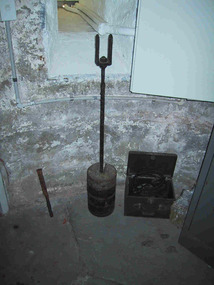
... It was usual for systems to move inside a tube extending up to the top, but in this case the tower’s cast iron spiral staircase, which is supported on cantilever cast iron brackets set into the concrete wall, spiralled around the space in which they moved. ...It was usual for systems to move inside a tube extending up to the top, but in this case the tower’s cast iron spiral staircase, which is supported on cantilever cast iron brackets set into the concrete wall, spiralled around the space in which they moved. ...A small number of heavy cast iron weights and two rods remain at the Point Hicks Lightstation. These weights comprise one rod with a forked top and four circular weights attached to the bottom of the shaft. The weights and rods were part of the original clockwork mechanism that was fitted beneath the lens to keep the kerosene‐fuelled light turning. They were attached to a cable or chains and moved vertically in similar fashion to the way weights move on grandfather clocks. As the weight fell, the optic clock was driven and the lens was turned. To keep the clock turning, the weight needed to be wound back up to the top of its travel. The cables and weights in this lighthouse were visible as they moved through the length of the tower up to the lantern room. It was usual for systems to move inside a tube extending up to the top, but in this case the tower’s cast iron spiral staircase, which is supported on cantilever cast iron brackets set into the concrete wall, spiralled around the space in which they moved. Lighthouse keepers had the arduous job of having to constantly wind the clock to keep the light active, and at least two keepers needed to observe a strict roster of hours. When electric motors were invented, all of this became redundant and the motors were able to turn the optic for as long as there was power to drive them. In December 1964, the original 1890 Chance Bros kerosene‐fuelled light and clockwork mechanism were replaced by small electric motor, and the number of keepers reduced to two. The six circular weights and rods originate from the obsolete system and may have been part of a larger set. Wilsons Promontory retains seven of its original set of ten weights, all of which are detached from the tower’s weight tube. Cape Schanck has a set of fourteen weights remaining in situ as well as another four detached weights, which have inscriptions. One weight is displayed in the lantern room at Cape Otway. The image shows four of the clockwork weights attached to a rod with a forked top. They were part of the original clockwork mechanism that was fitted beneath the lens to keep the kerosene‐fuelled light turning. The Aldis lamp in its case sits on the floor next to the weights. Source: Parks Victoria.The Point Hicks weights have first level contributory significance for the insights they provide into the superseded technology and operations of a late nineteenth century lighthouse. They are well provenanced and are significant for their historic value as part of the lightstation’s Chance Brothers optical system installed in 1890. Four circular metal weights are stored on a metal rod with a forked section at the top. The weights have a cut out section which allows the weights to be removed easily. -
 Eltham District Historical Society Inc
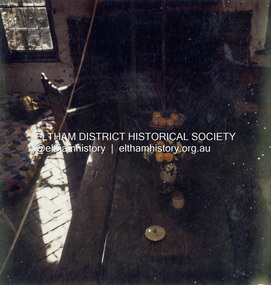
Colour Print, David Taylor, Interior, Peter Garner Mudbrick Studio, c.1976
... The present owner has advised (4 May 2025) the spiral staircase was removed prior to their taking possession of the property....The present owner has advised (4 May 2025) the spiral staircase was removed prior to their taking possession of the property. ...Mudbrick cottage, heritage listed, Lillies on Brougham Street Peter Garner Mud Brick Studio Victorian Heritage Database Listed https://vhd.heritagecouncil.vic.gov.au/places/55317 From Shire of Eltham Heritage Study (Bick 1992) Cultural Significance: Constructed by Peter Garner when he was just 16 years old, this studio exemplifies the highly creative structures erected in the Shire of Eltham during the I960s and 1970s and the social movement behind them, both of which Eltham is well known for. The Garner studio is one of the two finest small examples of these structures anywhere in the Municipality and is distinguished by the quality of its fittings, also all designed and made by Peter Garner. Sharing the common use of mud brick and second-hand materials, these structures reflect the physical involvement (and individual creativity) of their owners, often, as in Garner' s case, through building the building and making all of its fittings and artworks. The tree branch framed spiral stair and wrought metalwork are particularly fine. History: Arthur F. Munday who was associated with the Montsalvat Artists' Colony, subdivided a property bounded by Maria Street (now Main Road) and Brougham Street in 1964. The largest portion, three acres of land facing Brougham Street in Lot 2, was sold to Leslie and Lenore Garner. A sketch in Lodge Plan 65141 drawn at the time of the subdivision showed that the southern part of the land was subject to flooding. By 1967 a brick house with an iron roof and outbuildings had been constructed for the Garners and Peter Garner's separate studio followed in 1969. DESCRIPTION: Studio Style Eltham style. Design unique. Plan rectangular; living room occupies northern two thirds, with kitchen in remainder and bedroom on top of the kitchen. A store adjoins the kitchen. Single storey with attic bedroom; living room has a cathedral ceiling. Walls adobe (solid single skin mud brick), bluestone chimney. Roof gabled with eaves, corrugated iron clad. Features are the modest size, living room into which the front door opens directly, exposed mud brick walls internally, fireplace, most unusual spiral stair and small gallery off the bedroom, herringbone brick floor, log faced internal doorway that separates kitchen and living room, timber lined ceiling, exposed truss, the various second-hand windows and their placement and the outbuilding. Also the kitchen doorway, adzed table and benches, fireplace high relief metal panel and other art works are features and all were presumably made by Peter Garner, following the ethic of the time. The present owner has advised (4 May 2025) the spiral staircase was removed prior to their taking possession of the property.david taylor collection, eltham, 62 brougham street, peter garner adobe studio -
 Eltham District Historical Society Inc
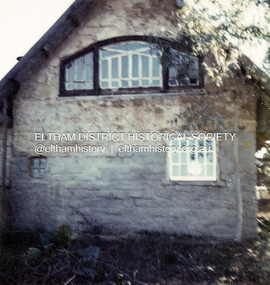
Colour Print, David Taylor, Exterior, Peter Garner Mudbrick Studio, c.1976
... The present owner has advised (4 May 2025) the spiral staircase was removed prior to their taking possession of the property....The present owner has advised (4 May 2025) the spiral staircase was removed prior to their taking possession of the property. ...Mudbrick cottage, heritage listed, Lillies on Brougham Street Peter Garner Mud Brick Studio Victorian Heritage Database Listed https://vhd.heritagecouncil.vic.gov.au/places/55317 From Shire of Eltham Heritage Study (Bick 1992) Cultural Significance: Constructed by Peter Garner when he was just 16 years old, this studio exemplifies the highly creative structures erected in the Shire of Eltham during the I960s and 1970s and the social movement behind them, both of which Eltham is well known for. The Garner studio is one of the two finest small examples of these structures anywhere in the Municipality and is distinguished by the quality of its fittings, also all designed and made by Peter Garner. Sharing the common use of mud brick and second-hand materials, these structures reflect the physical involvement (and individual creativity) of their owners, often, as in Garner' s case, through building the building and making all of its fittings and artworks. The tree branch framed spiral stair and wrought metalwork are particularly fine. History: Arthur F. Munday who was associated with the Montsalvat Artists' Colony, subdivided a property bounded by Maria Street (now Main Road) and Brougham Street in 1964. The largest portion, three acres of land facing Brougham Street in Lot 2, was sold to Leslie and Lenore Garner. A sketch in Lodge Plan 65141 drawn at the time of the subdivision showed that the southern part of the land was subject to flooding. By 1967 a brick house with an iron roof and outbuildings had been constructed for the Garners and Peter Garner's separate studio followed in 1969. DESCRIPTION: Studio Style Eltham style. Design unique. Plan rectangular; living room occupies northern two thirds, with kitchen in remainder and bedroom on top of the kitchen. A store adjoins the kitchen. Single storey with attic bedroom; living room has a cathedral ceiling. Walls adobe (solid single skin mud brick), bluestone chimney. Roof gabled with eaves, corrugated iron clad. Features are the modest size, living room into which the front door opens directly, exposed mud brick walls internally, fireplace, most unusual spiral stair and small gallery off the bedroom, herringbone brick floor, log faced internal doorway that separates kitchen and living room, timber lined ceiling, exposed truss, the various second-hand windows and their placement and the outbuilding. Also the kitchen doorway, adzed table and benches, fireplace high relief metal panel and other art works are features and all were presumably made by Peter Garner, following the ethic of the time. The present owner has advised (4 May 2025) the spiral staircase was removed prior to their taking possession of the property.david taylor collection, eltham, 62 brougham street, peter garner adobe studio -
 Bendigo Historical Society Inc.
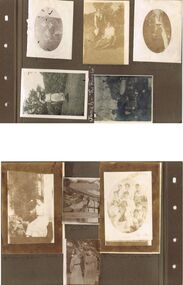
Photograph - HILDA HILL COLLECTION: BLACK AND WHITE PHOTOS, 1918-1920
... Ettie seated on a staircase and holding a dog, lady is wearing a broad brimmed hat, One Tree Hill April 18 1920. ...Ettie seated on a staircase and holding a dog, lady is wearing a broad brimmed hat, One Tree Hill April 18 1920. ...Hilda Hill Collection. Black & White Photos of Hill Family Total 9. Three girls at SHLC 1918 with white sashes and medallions, dark clothing with white collars, background is garden scene , photo has over exposure problem which gives a lighter print, 24 September 1918, could it be a ladies college of education? Al standing wearing white blouse and dark dress holding a white hat standing and Gert sitting and holding a white hat in front of a bush wearing a white blouse and a light coloured skirt, background is forested area, 'The Pines' January 9th 1919. Claire dressed in dark dress and wearing a white hat with her hands together, oval photo, 'The Ranche', October 23 1918. Jonah wearing a hat and white dress with colourful hemline standing before a large hedge holding a parasol, large tree background left, 'The Ranche'. Three boys and two dogs All boys dressed in dark coats and shorts long socks two of the boys are on their haunches, Background is a gabled roof and 2 chimneys, white fence, between two of the boys is a water tap on a medium height pipe, Durvol December 1919. Moll Noonan seated on a round backed chair wearing a white dress, right background shows the side of a building, at knee level sis a broad leafed plant, other shrubbery in the background, 'The Ranche' November 1918. Ettie seated on a staircase and holding a dog, lady is wearing a broad brimmed hat, One Tree Hill April 18 1920. Two ladies in lightly coloured dresses standing in a garden setting, lady on left has a black sash waistband, Durvol December 1919 . Group of seven girls and 4 boys, all of the girls are dressed in white, front girl has black neck accessory, 'The Pines' January 9 1919 No. 7 Reservoir.Hilda Hill Personal Collectionaustralia, history, post war life
