
Showing 146 items matching "mr love"
-
 St Kilda Historical Society
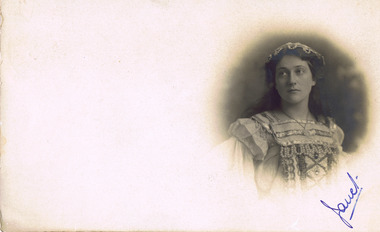
Photograph, Janet Morgan
... Hope you have recovered from Saturday. With love, Janet. Mr G Morgan, C of Smith & Emmerton Collins Street City...Hope you have recovered from Saturday. With love, Janet. Mr G Morgan, C of Smith & Emmerton Collins Street City Sepia postcard, unmounted, original, good condition Janet Morgan Photograph ...Sepia postcard, unmounted, original, good conditionOn back: Dear Cecil This is the photo. Please don't laugh at it! I can't help it, it is my misfortune to have a face like this. Hope you have recovered from Saturday. With love, Janet. Mr G Morgan, C of Smith & Emmerton Collins Street City -
 Stawell Historical Society Inc
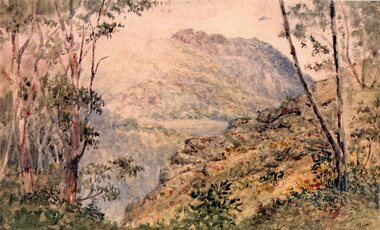
Photograph, "To Know Him Was To Love Him." --- Colour Photo of the Watercolour painting by Mr Will J Rees
... "To Know Him Was To Love Him." --- Colour Photo of the Watercolour painting by Mr Will J Rees...."To Know Him Was To Love Him." --- Colour Photo of the Watercolour painting by Mr Will J Rees. ...Photo of Will Rees Watercolour (1905) Looking East from Stoney CreekColour photo of reduced water colour. Halls Gap, Grampians Mountains, Victoria; looking east from Stoney Creek. Painted 1905. From the estate of Mrs Jean Hughes.stawell -
![An account of the English colony in New South Wales : with remarks on the dispositions, customs, manners, &c. of the native inhabitants of that country, to which are added, some particulars of New Zealand / compiled, by permission, from the Mss. of Lieutenant-Governor King by David Collins [Volume 1]](/media/collectors/550653872162f11fb04854aa/items/575ba01ad0cdd1229c1f675d/item-media/57600f26d0cdd11990766530/item-fit-380x285.jpg?cb=6) Kew Historical Society Inc
Kew Historical Society IncBook, State Libraries of South Australia, An account of the English colony in New South Wales : with remarks on the dispositions, customs, manners, &c. of the native inhabitants of that country, to which are added, some particulars of New Zealand (Vol.1), 1971
... Love George [Rogers] [Adelaide : Libraries Board of South Australia, 1971] 2 v. : maps (part col.), plates (part col.) ; 28 cm. Facsimile of: London : T. Cadell jun. and W. Davies, 1798. Includes an account of a voyage performed by Captain Flinders and Mr ...[Adelaide : Libraries Board of South Australia, 1971] 2 v. : maps (part col.), plates (part col.) ; 28 cm. Facsimile of: London : T. Cadell jun. and W. Davies, 1798. Includes an account of a voyage performed by Captain Flinders and Mr. Bass abstracted from the journal of Mr. Bass. Volume 1non-fictionnew south wales - descriptions and travel, new zealand - descriptions and travel -
 Royal District Nursing Service (now known as Bolton Clarke)
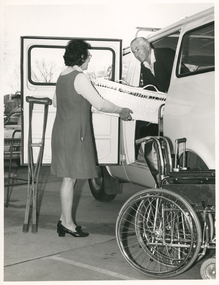
Photograph - Photograph, black and white, Barry Sutton, 1973
... loved ones in their home. In the 1970s RDNS employed a Physiotherapist who taught RDNS staff the correct transferring techniques, including the use of a hoist when this became available. RDNS staff taught and used these techniques in patient’s homes to undertake safe transfer of the patient and to reduce physical strain on RDNS Sisters and family members. Each RDNS Centre had a room or shed where equipment for loan was kept, and Headquarters also kept additional equipment which could be transported to Centres as required. rdns royal district nursing service rdns equipment rdns uniform sister betty harris mr ...The photograph is taken in the car park at Royal District Nursing Service ( RDNS) Headquarters, 452 St. Kilda Rd, Melbourne. Sr. Harris is assisting to load the bassinet and the other nursing equipment into the RDNS Van for Mr. Pincher to deliver to the appropriate RDNS Centre or to patient's homes. In 1971 the Commission shop donated a Van to Royal District Nursing Service (RDNS), to be used by the Maintenance crew for delivery of equipment and transporting goods and documents between RDNS Centres and Headquarters. It was also used for transporting Maintenance staff, and the equipment they required, to do maintenance work at RDNS Centres as needed. The Commission Van was kept at the RDNS Service Centre at Chessell Street, South Melbourne. From the founding of the Melbourne District Nursing Society (MDNS), in 1885, known as the Royal District Nursing Service (RDNS) from 1966, equipment was loaned and demonstrated to patients, and their family members, to enable them to care for their loved ones in their home. In the 1970s RDNS employed a Physiotherapist who taught RDNS staff the correct transferring techniques, including the use of a hoist when this became available. RDNS staff taught and used these techniques in patient’s homes to undertake safe transfer of the patient and to reduce physical strain on RDNS Sisters and family members. Each RDNS Centre had a room or shed where equipment for loan was kept, and Headquarters also kept additional equipment which could be transported to Centres as required.On the left of the black and white photograph is Royal District Nursing (RDNS), Sister Betty Harris, who is standing side-on in front of the open door of a white Van. She wears glasses, has dark curled hair, and is smiling, as she has her arms outstretched with her right hand under a white bassinet as she passes it to Mr. Pincher who is standing in and leaning out of the opening of the Van. Mr. Pincher has wavy light colour hair and is smiling at Sr. Harris as he is holding the other end of the bassinet. He is wearing a dark cardigan over a white shirt. On the far left of the photograph, part of an RDNS car is seen and in front of this part of a walking frame. A pair of wooden crutches lean against the open Van door and a wheelchair and a 4 pronged stick are to the right of Sr. Harris. Behind them part of the Van with part of a window in its upper area are seen. Sr. Harris is wearing her RDNS uniform of a light grey skivvie under a darker V neck tunic style frock.rdns, royal district nursing service, rdns equipment, rdns uniform, sister betty harris, mr pincher -
 Carlton Football Club
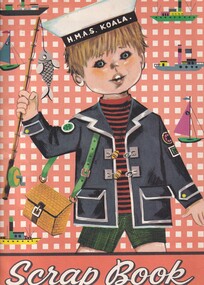
Scrap Book, Dedicated to Carlton Player John Goold
... Mr Elegance’ by leading football commentator Lou Richards. Supporters and team-mates however, called him ‘Rags’ or ‘Ragsy,’ because of his involvement in the clothing, or ‘rag’ trade. Goold first came under notice as an outstanding junior athlete at Melbourne Grammar School. A true all-round sportsman, he shone at tennis, athletics, football and cricket. He was also a keen horseman who loved ...John Goold double Premiership PlayerA scrap Book dedicated to twice Premiership Player 1968 - 1970 John Goold Career : 1963 - 1970 Debut : Round 7, 1963 vs Footscray, aged 21 years, 338 days Carlton Player No. 754 Games : 108 Goals : 3 Last Game : Grand Final, 1970 vs Collingwood, aged 29 years, 90 days Guernsey No. 11 Height : 184 cm (6 ft ½ in.) Weight : 76 kg (12 stone, 0 lbs.) DOB : June 27, 1941 Premiership Player 1968, 1970 Carlton Hall of Fame All Australian 1966 A brilliant, flamboyant, two-time Premiership player for Carlton during the Barassi years in the ‘swingin’ sixties,’ John William Crosbie Goold became almost as famous for his dapper appearance off the field, as for his exploits on it. At the height of his football career, he was also a prominent ladies fashion designer – which led to him being dubbed ‘Mr Elegance’ by leading football commentator Lou Richards. Supporters and team-mates however, called him ‘Rags’ or ‘Ragsy,’ because of his involvement in the clothing, or ‘rag’ trade. Goold first came under notice as an outstanding junior athlete at Melbourne Grammar School. A true all-round sportsman, he shone at tennis, athletics, football and cricket. He was also a keen horseman who loved the game of polo and the rough and tumble of fox hunting. While at school he was a fervent Melbourne supporter, but strangely, never had much confidence in his football ability. “If I thought I was good enough, I would certainly have gone to Melbourne,” he said many years later. “But I honestly didn’t think I would ever amount to anything in this game. Cricket and tennis were the games that really interested me.’ However, after graduating from MGS, Goold went home to Healesville to star in the Bloods’ 1962 Yarra Valley Football Association Premiership team – an achievement that brought tempting offers from more than one VFL club. “Incentives were offered elsewhere,” he recalled, “but I gravitated to Carlton – partly because the deep blue of their guernsey attracted me, but mostly because of the good advice I got from people who even then were longsighted enough to predict that big things were ahead for this club.” The Blues were confident enough in Goold’s potential to offer him the guernsey number 11 previously worn with distinction by the likes of Jack Hale, Jim Knight, Ron Hines and Laurie Kerr, and his first senior game came in round 7, 1963 against Footscray at the Western Oval. He played on a half-forward flank alongside Brownlow Medallists Gordon Collis and John James on that Saturday afternoon, and kicked his first career goal in an 8-point win. Little did he know though, that it would be another six seasons before he would again experience the thrill of sending a football spinning between the big posts, because his future lay in defence. By his own admission, Goold struggled to find his feet in VFL football during his first two seasons, until the shock appointment of Ron Barassi as captain-coach of Carlton in 1965 began steering his career back on track. “I think you could say that 1965 was my first year of League football,” he said, “That’s the way I felt - that’s the way I reacted to Barassi.” Under Barassi, Goold rapidly developed into a superb running half-back flanker. Tenacious, and an often freakish high mark, he was unmistakable on the field thanks to his mane of dark hair, his loping running style and somewhat awkward kicking action. Furthermore, he had boundless courage. There is no doubt that he would have played many more games had he not been regularly pole-axed under the high ball – a fact he later freely admitted. “I was always getting knocked out,” he said, “and spent half my bloody time in hospital.” In the second half of 1965, an injury to centre half-back Gordon Collis forced Barassi to use Goold in the key defensive post. While it curtailed his rebounding instincts somewhat, ‘Ragsy’ rose to the challenge and rarely lowered his colours. Testament to his improvement, he finished third behind John Nicholls and Sergio Silvagni in Carlton’s 1965 Best and Fairest award, and followed up by being selected in the Victorian team for the 1966 Hobart Carnival. There, he had a superb series in which he was runner-up to West Australian Barry Cable in voting for the Tassie Medal, and capped it off by being named on a half-back flank in the All Australian team. Barassi’s influence at Carlton bore fruit in his third year, when the Blues returned to finals football at last. Richmond, Carlton, Geelong and Collingwood fought out the 1967 Premiership, and Ragsy Goold won the hearts of the Carlton faithful with two lion-hearted performances. Although Carlton was knocked out of contention by successive losses to Richmond and Geelong, Goold was tireless throughout both games, and it was obvious that he thrived on the added pressure of finals football. Precisely twelve months later, the bitter taste of those defeats was washed away when Barassi’s Blues edged out Essendon by 3 points in the 1968 Grand Final, and ended 21 years of despair at Princes Park. To win Carlton’s ninth VFL flag, the Blues had had to defeat the minor premier Bombers twice during the finals – and did so, thanks to a watertight defence led by Goold, and a dominant ruck division headed by John Nicholls. In round 5, 1969, Carlton hosted South Melbourne at Princes Park in a match significant for a number of reasons. As he regularly did, Ron Barassi swung his team around prior to the opening bounce, and Goold found himself in the unaccustomed role of ruck-rover. While the Blues set about establishing a good break on the scoreboard, Ragsy relished the freedom to kick two first half goals - his first majors for 78 games. Just before half-time however, he was flattened in a pack, concussed again, and replaced during the long break by Barry Gill. Alex Jesaulenko was substituted at the same time – by a shy, ambitious youngster named Bruce Doull, making his senior debut for Carlton in guernsey number 4. In September, 1969 the Navy Blues began their third straight finals campaign with an impressive 6-goal Semi Final win over Collingwood in front of more than 108,000 fans at the MCG. A fortnight later, Richmond stunned the flag favourites with a withering last quarter in the Grand Final, and knocked Carlton out of the Premiership race again at the last hurdle. Half-way through the year, Carlton's club doctor discovered that Goold had been playing with shin splints in both of his lower legs. The pain they caused was considerable, but Ragsy soldiered on and held down centre half-back throughout the season. John Goold’s VFL career at Carlton culminated in the fabled 1970 Grand Final triumph over Collingwood. What is not so well known is that Ragsy was only cleared to play in that game on the morning of the match. After narrowly losing to Collingwood in the second Semi Final, the Navy Blues destroyed St Kilda by 62 points in the Preliminary Final, and earned another shot at the Magpies in the decider. But one of Carlton’s problems was that Goold had been kicked on a shin against St Kilda, causing a burst blood vessel and serious swelling. Despite the best efforts of the club medical staff, Ragsy had only a slim chance of playing in the Grand Final right up until game day, when his worried coach reluctantly allowed him to take his place in the side. Later, Barassi justified his decision by saying that in his opinion, a less than fully fit Goold was still worth his place in the team. By half time in the Grand Final however, he was probably questioning that judgement - because Carlton had been totally outplayed, and trailed an impressive, cohesive Collingwood by 44 points. Therefore, Carlton’s magnificent comeback – orchestrated by Barassi, and sparked by the fairytale exploits of 19th man Ted Hopkins – is one of the greatest of all football stories. Against enormous odds, the Navy Blues fought their way back into the contest, and eventually, rolled over the top of the frantic Magpies to snatch victory by 10 points in the last few minutes of the match. Hopkins ended up with four goals, Barassi was hailed a genius, and Ragsy Goold was carted off to hospital immediately after the game to have further urgent treatment. While there, he decided that there was no better time to end his VFL career – especially because his burgeoning business interests were demanding more and more of his time. In the years after his football career ended, John Goold created a remarkably successful business empire. In 1971 he sold his fashion label and took up farming at Mortlake in western Victoria, where he coached the local football team for three seasons. Later, he formed a diversified pastoral company, and purchased a magnificent complex called Ballangeich Run at nearby Ellerslie. While his passion for farming and livestock grew, he began breeding top quality polo ponies, and represented Australia in international competition. During the 1997 and 1998 seasons, John's son Ed Goold played reserve grade football for Carlton. MEMORIES.... Ragsy Goold; the name stirs memories form my long ago childhood. Ragsy, with his unique kicking style, where he'd hold the ball (always a drop punt - in a time when the drop kick and the torpedo punt still reigned supreme) at the point of the ball, elbows bent and he'd lavishly drop the ball, his right arm then flinging back and up dramatically. That was the thing about Ragsy (so named because he worked in the clothing, or 'rag' trade), he was always dramatic. He always ensured his ankle guards and wrist guard were glowing white to match the great white CFC monogram he wore proudly on his chest, and with his long flowing locks, cut a dynamic figure through a young boy's mind. Ragsy was my idol. I loved his dashes from half back, his long accurate drop punts, most of all I loved his flair for the game. Ragsy played the game as an entertainer as well as a sportsman - he leapt high to punch or mark, and always seemed to have a bit of the thoroughbred about him - which is probably why after he retired, he took up fox chasing, polo, and riding his beloved thoroughbreds across the paddocks and over the fences of his property, I think he may have even represented Australia at the sport – really, that’s sort of how he played as a footballer. All sinewy muscle, long legs and famous leaps for the saving punch. Ragsy was part of the great backline that helped revive Carlton's fortunes. Legendary players Wes Lofts, Ian Collins, Kevin 'Racehorse' Hall, Vinnie Waite among them. All great teams have a great defence and the defence that Ragsy was an integral part of was no different. Where others provided the biffo, the muscle or the defensive pressure, Ragsy provided the dash, the flair, the sense of adventure that all great backlines must have. AND MORE.... I have had many favourite players while following the Blues, but there will always be a special spot for Ragsy Goold - running the lines, all long hair and flashing white guards. As a young man I moved to Carlton and began acting in a place called one-c-one. One night after a play, I was walking home. It was winter, and I was wearing my favouritte overcoat, a genuine ankle length tweed affair I had picked up in an Op Shop in Oakleigh for three dollars. As I strutted across Lygon Street, a deep male voice behind me called, 'hey laddie, how much for the overcoat?' I turned, and there was my childhood idol, Ragsy Goold, two beautiful women in tow, smiling and waiting for my answer. I loved that coat too much to part with it, even to Ragsy, so I shook my head - and he smiled, then walked off. I stood for a moment in the middle of the street shaking my head in disbelief. Ragsy bloody Goold had just offered to buy my overcoat! I knew at that point, as a young man of about twenty three, that life was going to be full of surprises and very entertaining - a bit like John ‘Ragsy’ Goold. ONE MORE.... A cold, wet day in the mid 1960's at the MCG and Victoria were playing South Australia (?) The ball that day was like a piece of soap, with players finding it impossible to mark. Just before half time a long kick sailed toward the mud heap that was the centre of the ground, and the pack rose to meet it. From this group of players an arm shot straight up, and the ball instantly came to a dead stop. The footy stuck in the player's palm as if the hand was coated in Tarzan's Grip. After all these years, it's the only recollection I have of that match, and that player was 'Mr. Elegance' John Goold. HUMOROUS HUNGRY.... Former opponent Richmond's Kevin Bartlett on Radio SEN in 2012 received a phone call from John. After the call Kevin told his listeners how "Mr Elegance" would always be dressed in a nice suit, shirt-tie and highly polished shoes. He then cracked a joke saying something like; "You know, John was so 'posh' that he used to play football wearing a cravat!" Milestones 50 Games: Round 15, 1967 vs Melbourne 100 Games: Round 13, 1970 vs Geelong Career Highlights 1965 - Percy Bentley Trophy - 3rd Best & Fairest 1966 - 5th Best & Fairest 1967 - Maurie Sankey Memorial Trophy - 4th Best & Fairest (on count back) 1968 - Premiership Player 1970 - 7th Best & Fairest 1970 - Premiership PlayerFoolscap Scrap Book -
 Melton City Libraries
Postcard, Postcards from Fred and Mattie Myers, 1909-1914
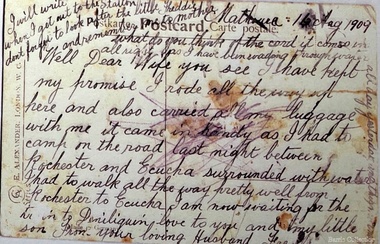
... Love to you and my little son Fred. From you loving Husband Fred Written along the top and side of the card. what do you think if the card comes in all right as I have been wading through water all day yesterday and this might be …? will write when I get to the Station, don’t forget to look after the little Freddie and remember me to mother. Post Card: 1909 - view across the Flat from the Creek looking to the Presbyterian Church in the distance with some small dwellings in the foreground. To Mr...Love to you and my little son Fred. From you loving Husband Fred Written along the top and side of the card. what do you think if the card comes in all right as I have been wading through water all day yesterday and this might be …? will write when I get to the Station, don’t forget to look after the little Freddie and remember me to mother. Post Card: 1909 - view across the Flat from the Creek looking to the Presbyterian Church in the distance with some small dwellings in the foreground. To Mr ...Post Card: Melton Railway Station 1909 Mattie to Fred My Dear Fred I received your letter and the L2 10/- I was very pleased to hear that I could write again. You say you will come home after the last shead. I should think so. I had a letter from E Jenkins so I am going down to see her next week we call the baby Fernie now I hope you will agree. Dear Fern has got the whooping cough. Written on the side: I suppose you will be away four weeks yet. Love from Mattie will write on Sunday. This letter appears to be connected with the post card Barwonleigh Saturday October 1908 handwriting My Dear Mattie I received your letter and was sorry to hear of our dear little babys misfortune how did it happen do you know what was the cause of it Mrs Watts must be a blind old fool not to have known what it was when you took him to her the first time poor dear you must be worried to death with all this trouble tell me what the doctor thinks of the rupture. I do hope dear he will get over this all right you must be nearly dead going without sleep for so long I had a bit of misfortune myself on Thursday the machine locked and jumped out of my hand and stuck in my bone I kept on working but it was very painful as all the holding is done with the..next page ..knee the boss also has been chipping a good deal this week he says the next time he has occasion to speak to me I will have to go he is very particular. I would like to go through if possible even if I do a lot less. I have about sixteen hundred done up to now and would get another nine hundred if I was let alone but I suppose we will live lovie even if I go do you know if they are full handed at Eynesbury if I thought I could get a week there I would cut myself out here quick. Well dear lovie I am sending you a couple of pounds as I suppose you will want it to get a truss. I don’t think they are very expensive and hope things will find this better with you. Well my dear love I must close with fond love for you and baby from your loving Husband Fred Post Card: 16 Aug 1909 - Mathoura The card depicts a small sailing boat laden with blue flowers. Well Dear Wife you see I have kept my promise. I rode all the way up here and also carried all my luggage with me it came in handy as I had to camp on the road last night between Rochester and Echuca surrounded by water. I had to walk all the way pretty well from Rochester to Echuca. I am now waiting for the train to Deniliquin. Love to you and my little son Fred. From you loving Husband Fred Written along the top and side of the card. what do you think if the card comes in all right as I have been wading through water all day yesterday and this might be …? will write when I get to the Station, don’t forget to look after the little Freddie and remember me to mother. Post Card: 1909 - view across the Flat from the Creek looking to the Presbyterian Church in the distance with some small dwellings in the foreground. To Mr Fred Myers Wandook Stn Denniliquin NSW Dear Fred, received your letter I am sorry to hear you are having such wet weather I will write a letter tomorrow baby is better With Love from M Post Card: 1910 Postmark Stamp 1d Aug 12 1910 Moama NSW Melton postmark stamped Aug 25? Hare Street, looking south Echuca Mrs F Myers, Melton P O Vic Dear Mattie, Just a line to let you know I got here all right I go to Pericotta tonight and to Cobran to morrow best love to all from yours Fred Letter Cobran Stn Via Deniliquin N.S.W. Sunday 21st Aug extract I am having a good time here, a good cook and the best of everything no fires to light or kettles to boil just get up and wire in… plenty hard work the sheep are pretty tough but much better than Wandook. I am well among them here we had a little rain on Friday but not enough to stop us so we have got one full week in .. the weather is lovely. I have been basking in the sunshine mainly in the morning and feel strong and fit a as fiddle, they are a grand lot of men here I only knew one out of the lots but know them all pretty well now, we have a bit of a concert here every nights almost there are a few good singers here and we also had a phonograph up from the station with all the latest records we have two dancers among ourselves very boisterous affairs indeed thy do make the dust fly. I have not ventured to take part in it and don’t think I will either. I get enough dancing all day long and besides I have to furnish the music you ought to see them going when I rattle up the concertina. Letter Cobran Stn via Deniliquin Thursday Sept 1st 1910 [abbreviated] My Dear Mattie, I received your welcome letter today. I though I was never going to get one as it was Sunday fortnight when I wrote to you but we only the mail here twice a week so it takes a long time to write and get an answer. I also got a reply from Eynesbury and a favourable reply it starts on the 13th Oct. …. I have 800 sheep shorn up to date and am fifth among about 30 men. I am sending two more [Ls] this time which I drew on Saturday. I don’t like sending too much more this time as there is a chance of it going astray and it is not very easily earned…. Things must be humming in Melton with all them babies coming and people getting married… I suppose we will be having new neighbours soon. If Mr Watts is selling out he was getting more property then he could keep. I hope you will soon have rain…. you will have to watch our little boy the dear little rascal he must be getting very cute opening the gates he will be tumbling into the tank …. I love to think of the happy times we have had together and hope that we will love one another to the end .. the mail will not leave here until Monday Love to you dear wife and baby Fred Post Card: – I Cling to you like Ivy Cobran September 18th 1910 Fred awaits a letter from Mattie I still have three weeks here yet.. I am sending L2 tell if you got the other 1L 1911 Letters Fred to Mattie October Spring Plains Oct 1911 Mia Mia Post Office I had a great job to catch the train at Diggers Rest as after I turned off the Keilor Rd it was very way and muddy and I had to walk a lot of the way and got there just in time. I came right into Redesdale by the train and stopped there last night… they had heavy rain on thursday up here and a tremendous fall of hail which covered the ground over a foot deep. There are only 4 shearers here yet.. I saw some of the sheep they look very rough and big so there will be no big tallies done, the men are saying he is giving 2s per hundred extra, so that will help a little. We are going to start Cobran via Deniliquin. Post Card: three scenes of Mathoura 10/9/1914 EB on a photo copy 10/9/12 ? Mathoura Thursday Dear Mattie, Just a line to let you know I got up here all right. I rode the seat out of my trousers. I have done 100 miles on the bike. I met none of the old hands this time so will go out on my own… Your loving husband Fred, did Marjie miss me at all. Post Card: Cobran 15th Sept 1912 Hearts and intertwined flowers and little envelope he has written Marjorie …just a line to let you know I will cut out here Friday next in find, we have had two falls of rain since I wrote and it has bean blowing a hurricane for couple of days and may blow up again however if we are delayed I will send you a card Wednesday I am longing to see you and the two little kiddies again…. Fred Copy only Golf Hill Sep 26th Cut out 31 Oct Total 2332 1913 Post Card: Scene View Street, Bendigo August 1913 Mathoura Tuesday My Dear Mattie Just a line to let you know I got up here all right. Teddy Ginger and another couple of chaps on the way ……. Letter Cobran Sunday Aug 7th 1913 My Dear Mattie Just a line to let you know that weather permitting we will cut out here about Thursday morning….I have not got any more shearing here. I have not heard from the other place…. Expect me about Friday …. I suppose Freddie and Marjie will be glad to see me, Marjie will climb all over me. I will be glad to se you all again you will have a fortnight before Golf Hill starts. I see in the Express you sent that Annie McPherson of (Dunvegan) is engaged to Len Farrell, she appears to be going to take no risks with him she wont let him slip through her hands like the banker did…… Fred Post Card: 1914 Garland of roses Warrambeen Stn Shelford PO October 14th 1914 Birthday wishes. Post Card: Love’s Golden Chain Golf Hill Tuesday Oct 17 1914 Birthday wishes [ this one might be a different year] Letter Cobran Wed 2nd Sept 1914 My Dear Mattie, I received your welcome letter today and also the papers which were very acceptable as we don’t get many papers here we only get see one at odd times as we get none for the hut this year.. I have not seen a bit of butter since I left home as it is too dear for us for sinners here. Poor Marjie had a cold.. so the little kid wants to go to the war, she must think it is good like a picnic. We had light rain on Monday as usual only half a day’s shearing in the shed so that is all we done this week, we took a vote 9 to 6 no shearing so nothing till to morrow morning Thursday so there is still a good fortnights shearing to do, will do nothing Saturday polling day as we have to go 13 miles is near Services where I was last year so we will want the full day 50 men to vote and some will probably have to walk to get there, all solid for Labour. I have just had an interval for lunch, pudding, yeast buns and rock cakes… We are doing nothing but eating and sleeping this week. Fred I am sending L1 in this which will do you till I come back if I keep drawing up I will have none when I finish so make the most of it. Post Card: Two doves with violets 1915 Cobran Wed 18th Sept [could be 1912] Sorry to tell you we are delayed with rain so will not be home till next week… only 3 days of shearing to do…. expect me about the middle of next week….I wish I was with you now and the dear little ones Fred Post Card: Iris Flowers Barwonleigh Stn Tuesday Oct 14th 1918 Happy birthday greetings from Fred Post Card: Irrigation channel Swan Hill 5 Year not shown Swan Hill Tuesday night Just a few lines to let you know I got this far all right. I had to walk nearly all the way to Gisborne and got there last night and took the train here today. It has been raining all the way between Gisborne and here. Moulamein tomorrow. I think it will be another case of walking as it is wet here no metal roads all mud. best love to yourself and the little ones and also mother. will write Sunday Post Card: The White Man’s Burden.The writing on the back rubbed out Mattie has written, I was weighed and I am 8 stone 10 pounds. 14 Post Cards, some have the original dates, others have the date added later by Martha. Two envelopes, one with addressed to Melton postmark Moule, stamp torn off, the other Cards from my dear Fred. The letters and the notebooks can be cross checked according the their contents. Italics show the dates added by Mattie local identities -
 Melton City Libraries
Document, West Melton: A preview of tomorrow, c.1969
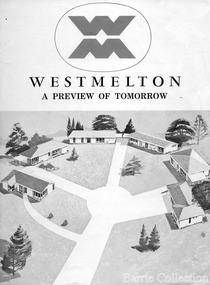
... Allen, described as a ‘housewife’, said she and her husband chose to move to Westmelton because of ‘the quality homes ... and we both love the clean, fresh, natural environment that surrounds us’. Similarly, Mr W. ...Allen, described as a ‘housewife’, said she and her husband chose to move to Westmelton because of ‘the quality homes ... and we both love the clean, fresh, natural environment that surrounds us’. Similarly, Mr W. ..."In April 1969, the first major residential development in Melton began with the release of 148 homes for purchase. This was the first stage of a staggered release of a planned 30,000 homes for 100,000 people by 1990. The development, called Westmelton Satellite City, was described as ‘a preview of tomorrow’.101 It was the first estate built in a ‘modern’ style, with curved streets, and dozens of culs de sac. Westmelton was also the first major development in Victoria to build all the supply lines to the houses – including electricity and telephone lines – underground. The six different home designs in Westmelton were ‘specially designed for the future’, and with allotments ten feet wider than regulations required, there was plenty of ‘space for gracious living’ and for a family swimming pool. The developers of this new estate were active in promoting Westmelton as a new community within the Shire of Melton. By 1971, the Westmelton City News reported that Ian McIntosh, General Manager of Westmelton, had given away $100,000 on behalf of the company ‘to aid community projects’. This included a $72,000 donation towards building a community centre in Westmelton, and $25,000 for the shire’s Olympic-sized swimming pool. Ian McIntosh and his family moved to Melton and Ian said he was ‘very much aware of the needs of [the] Westmelton community’. By the end of 1971, Westmelton was home to 100 new families. The modern residences were obviously an appealing drawcard, but so was the country feel that characterised Melton. Mrs C. Allen, described as a ‘housewife’, said she and her husband chose to move to Westmelton because of ‘the quality homes ... and we both love the clean, fresh, natural environment that surrounds us’. Similarly, Mr W. Coxhead, insurance consultant, moved to Westmelton because of the ‘clean, fresh country air’. Accountant Mr B. Swanton echoed their sentiments, describing Westmelton as ‘far enough away from the industrial pollution carried over Melbourne suburbs by prevailing westerly winds’. The new development attracted an increasing number of young, professional couples and families, representing the beginning of a significant shift from the predominantly rural and farming community of the district’s past. The Westmelton development had four different ‘neighbourhoods’ designed to cater to a variety of different lifestyle needs. Westmelton was the first to be established, followed by Brookfield, which offered ‘superb land in a rustic setting’. Brookfield Acres offered ‘wide open spaces with lots of room for a pool and even a tennis court’ on huge one-acre blocks, while Westlake was an innovative development with ‘different sized homesites’ and ‘lakeside living’.Westmelton was the first of many residential developments that would come to play a huge role in shaping the shire in the decades to follow".A marketing brochure for the Westmelton Satellite City developmentlocal significant events, council -
 Melton City Libraries
Newspaper, Oral History Day, 1992
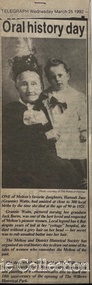
... I loved my work meeting everybody and most people had horse and jinkers and when the elderly would come in there would be Mr Tom Morrow, he only had one arm and Mrs Dunn came from Bulman’s road in their horse and jinker. ...I loved my work meeting everybody and most people had horse and jinkers and when the elderly would come in there would be Mr Tom Morrow, he only had one arm and Mrs Dunn came from Bulman’s road in their horse and jinker. ...Mary Tolhurst M&DHS - March 29th Dunvegan Willows Park Melton 1992 Ladies Oral History Day Graham Minns President Ray Radford MC Sound recording transfer to CD 2011 by Tom Wood Edited typescript by Wendy Barrie 2013 I was born in Rockbank, and when I was five years old moved to Toolern Vale and started and finished school there. Toolern Vale only consisted of the Store, Post Office and shop, where you could buy your fodder, and pollard supplies, the Hall, the little Church and the bluestone School. The School changed shape three times from the 1800s[1869] til the time I went there. There was four generations of my family that went there and it was destroyed by fire in 1965. Marjorie nee Myers Butler. Yes, I remember along with it your lovely Ronisch piano. Mary, quite true! Marj what you say about the Ronisch piano. When I came the age to learn music my mum and dad couldn’t really afford it, but still what parents do for their children. They had Marj go along with them and pick this lovely Ronisch piano. It was known round the district. Everyone commented about the loss that lovely piano. After leaving school it was war time, 1939, then it was work, When I was 7 year old I was put out into the cow yard. In 1940 when the soldiers were going away our milk was confiscated it had to go to Bacchus Marsh. It used to go the Sunbury to be brine cooled and then go to Melbourne. Then they took it then to the Lifeguard Milk Factory at Bacchus Marsh. It had to go as condensed milk to the soldiers. This year is 50 years of the Land Army. I was an unofficial Land Army but they still kept check on me. I went onto married life and I followed the cows right through [howls of laughter] and we went on until the 1965 fire. That’s when we got out of the cows. Marjorie asks, was Granny Watts your grandmother or great grandmother? Mary: She was my great grandmother, the midwife of Melton. The 1965 fire started ¾ of a mile above our place, Frank Ryan’s sheds were burnt and his house was saved, then it wiped the School out, the Hall, the Church the Post Office and Store and little house that was Charlie Charlton’s in the early days. Mrs Wilson’s place was saved by the Fire Brigade by pulling boards off the side, and from there it went over the hill and it was stopped at the Rockbank Railway Station. If it had of got over the railway they said it would have gone into Werribee. A lot was burnt out in that strip. Mary nee Nixon Collins: 18 houses burnt that day. Audience question, did Melton get burnt that day? Ray: No. It came down through the Toolern Vale road and cut across about a mile and a half from the cross roads at Toolern Vale from north westerly to the south east and cut through over the Keilor road. Mary: It came in across the creek at Funstons in Toolern, then through Jim Minns. Dorothy was it your place then [nee Knox Beaty] to Ken Beatty’s and from there it went through to Doug McIntosh’s and to Cockbills and the wind changed and it came across to the railway line, and that is where they stopped it. [the cause of the fire was controversial, they had been burning off the night before and there was some talk of someone starting it. It was very hot and very strong wind, it was a terrible day] Ray: When the fire went through McIntosh’s they had a haystack on the north side of their house and the haystack got caught and the fire burnt a hole through the side of the house and the boys pyjamas on the bed. The house was saved. It came through like and express train roaring at you, I was at McIntosh’s when it went roaring past. You couldn’t see, dust and ash and tremendous heat. The fire started about 12 o’clock Jack [husband] said to me, fire, I said where, where? Just up the road, what have I got to do? and he went out and he had gone to the fire and left me. I tried to get the animals and I put out buckets of water, putting the buckets of water out saved my life. Chas Jones and another friend of his came in and they picked up the buckets of water, I thought I had better get out because the fire was on the haystack up the paddock and when I went to go out through the north side of the house and couldn’t get out, I’ll go through the front gate so I went around the other side of the house. I got caught there and Chassy Jones and his friend came round carrying the bucket of water and I panicked. He threw the bucket of water over me. Well that is what saved my life because I was damp, whenever we tried to leave the ball of fire came over me and over my shoulder and my hair was scorched. Chassy Jones lost his truck and Keith Watt his big truck because he had the water tank on it and they couldn’t get out of the yard. Granny Watt’s house, the first private hospital had condemned and Jack and I pulled it down and had it moved up to Toolern and had it in the yard a fortnight and it was all burnt and we didn’t get the shed we wanted. Every 13 years right up until Ash Wednesday fires, there has always been fire close at hand. The 1952 fire went down the back of the house, the 1965 fire took the house, and the house that I live in now, it is the third house that has been on that spot. When the Hunters owned it, Mrs Hunter was nearly burnt in her bed. They had a 13 roomed house. In 1924 the house burnt down, and there was another house was built there and that was the one that burnt down. Edna: So Mary built a brick veneer house. Marjorie: like the three little pigs [laughter] Collins - Mary M &DHS - March 29th 1992 Ladies oral history day at Dunvegan, Willows Park Melton. Graham Minns President Ray Radford MC Sound recording transferred to CD 2011 Edited typescript by Wendy Barrie 2013 Mary Collins nee Nixon born in Terang 1907 down in the Western District and we shifted to Melton when I was 5 and a half then I started school here in Melton, and spent all my school life at Melton State School, next to the Church of England, it’s called the Primary School now. I got my Qualifying and Merit Certificate then I left School because there wasn’t a High School. When I was 16 I got and job in the Melton Post Office and I worked there, I was the first girl in Melton to deliver the mail, and worked on the telephone and the Bank business. Mrs Ross and myself behind the counter, there were about 500 – 600 people in the Shire at that time and now when I go into the new Post Office there is 36,000 here there’s still 2 people behind the counter [laughter from the audience] and wait in a queue right out to the door. Times haven’t changed much have they! There was a manual telephone and you had to ring the handle, and there were eight subscribers when I went there and when I left there were 46 I had coaxed that number to join the telephone, even the police station didn’t have the phone on. The two Hotels and the two Chaff mills and Mr Ernie Barrie, Parkers the butcher, the Shire Office was No 8, and the Police house was next to the Courthouse on the corner. They were number 9. I can remember a lot of the numbers still. The Post Office was the Agency for the Commonwealth Bank [comment from audience member] I used to do the Bank business too, I left after four years there, mother wasn’t very well. The Inspector who used to come up to the Post Office asked me if I would take up casual Post Mistress and to go around the different districts but I refused and when Mrs Ross’s holidays were due I was the replacement. I wasn’t 21. I loved my work meeting everybody and most people had horse and jinkers and when the elderly would come in there would be Mr Tom Morrow, he only had one arm and Mrs Dunn came from Bulman’s road in their horse and jinker. They were elderly I would see them pull up out the front and quickly get their mail and run out to them because they didn’t have to get out of the jinker to tie up their horse. If someone had a baby in arms I would tear out and hold the baby while they got down. Mrs Ross was very very strict. I had to sweep the Post Office, she had a couple of mats and there would be a threepence or a sixpence under the mats show she knew whether I lifted the mat, I was whether I was honest or not. Graham: How much were your wages? I got 27/7 pence a week for a 52 hour week. I had to work every holiday except Good Friday and Christmas Day and even when it was Monday holiday I always had to go to work from 9am - !0 am, the Post Office was always open. In the winter I had to wait until twenty past six in case there were any telegrams to deliver. I delivered them on a push bike. One time Tom Barrie told me this years afterwards. I used to go home for lunch. We lived on the Keilor road and I used to ride my bike home. On the hot days the boys used to go and swim in the swimming pool down near a turn in the creek there was a hole where the boys would swim in the nude, they didn’t have any bathers and they didn’t have any watches in those days. Tom Barrie said they always used to watched for me as I was always about 3 minutes past 1, my lunch hour was from 1-2. One particular day they missed seeing me and swam on, and of course they were all late for school when they got back and were all kept in a night. I did get a fortnight holiday. I loved my work and I knew everyone in the district right from Toolern Vale to the Marsh and everybody at Melton South. Did you listen into conversations on the Switchboard? Oh no. [laughter] Melton did not have electricity then. I had to fill the lamps everyday with kerosene. The Staughton Memorial was outside the Post Office. It had four posts with the chain looped around it, and that’s where the people used to tie up their horses. Marjorie nee Myers Butler comments about sitting and swinging on the chains. Mr Fred Coburn lit the acetylene gas light in the Memorial. It was the only streetlight in Melton. There was no electricity until 1939. Ray Radford comments about another gas street light which was on the corner of Station road. [later] Mary passes around her school photos. Mary mentions the names of those who have passed away, Maisie McDonald, ,Marian Wraith, Hilda McCreey, and Valda McDonald. I have written the names on the back. Marjorie comments about Marie Jongebloed and Greta are the only two girls left out of big family of ten I think there were [hesitates] 4 or 5 girls and the rest were boys. Mary. Flora Woodley, Dorrie Flynn and Margaret McDonald are still alive. They are my age we were all born about 1907. Marjorie points out herself in a later photo [1921 and 1922 School ] Mary mentions the name Walsh and identyfies following names, the Parker boys, Ken Beaty, Malc and Linda Cameron, Maisie Mc Donald, Ted Radford, George Nixon, Norman Minns, he was later the Shire Secretary of Werribee. One of the Woodley girls. [Maisie Arthur] Marjorie: Rosie Shearwood, June Whiting Mary. Lily Mc Donald, she has passed away. Isabel Harrison nee Tinkler, she lives at Werribee, Doreen Rogers, Marjorie Walker, Jess McIntosh, Mary Gillespie. Mr Malone was the Junior teacher Mr Roe and Miss Cooke. Fred Myers, my sister [Elizabeth] and the year was 1921. Myers (Barrie) School Photo Collection. Many of the names were identified at the 1970 Centenary of Melton State School No. 430. Edna Barrie organised, compiled and typed the lists to accompany these photos for the year 1921. The 1922 photo shows the higher grades. Ladies Oral History Day event held by Melton and District Historical Society, article featured in the Telegraphlocal identities, local special interest groups -
![Photograph - c. 1900s, [Illegible], Rock of Ages in Statuary and Song, c.1900s](/media/collectors/5423a8ba2162f1155cc09d2a/items/542cca6a2162f1124caadfb6/item-media/542cccd72162f1124caaf841/item-fit-380x285.jpg?cb=6) Expression Australia
Expression AustraliaPhotograph - c. 1900s, [Illegible], Rock of Ages in Statuary and Song, c.1900s
... Mr E. J. Watkins. The Grouping of Living Statuary with the limelight thrown upon them from either side, motionless as marble figures, but with the life and love and adoration in their eyes and on their faces, formed the most beautiful objects we have ever beheld. ...Mr E. J. Watkins. The Grouping of Living Statuary with the limelight thrown upon them from either side, motionless as marble figures, but with the life and love and adoration in their eyes and on their faces, formed the most beautiful objects we have ever beheld. ...Deaf women dressed in white flowing robes were typically used by the Society at meetings and lectures giving a performance in living statuary. This photograph is a depiction from Rock of Ages in Statuary and Song described in a review by the Spectator - the words of the hymn softly sung by the Cornish Choir to an exquisitely delicate organ accompaniment by Mr E. J. Watkins. The Grouping of Living Statuary with the limelight thrown upon them from either side, motionless as marble figures, but with the life and love and adoration in their eyes and on their faces, formed the most beautiful objects we have ever beheld. The Audience looked and listened in breathless silence and many eyes were glistening with tears.This photo is significant as a studio photograph of Deaf women who performed 'living statuar'y at many of the lectures and meetings held in the early years of the 20th century by the Adult Deaf and Dumb Society of Victoria ; possibly introduced by Ernest Abraham to add drama to the occasion.A5 black and white photograph on a cardboard frame. The photograph features five women in robes surrounding a cross."City Chambers / 114 Elizabeth Street / Melbourne" Signature of photographer or studio name illegible. -
 Kew Historical Society Inc
Photograph - Second World War Memorial, Kew Library, c.1960
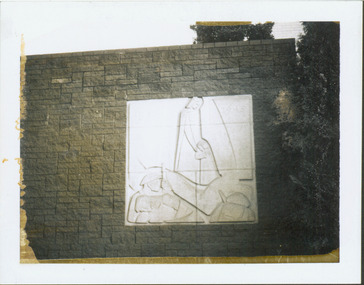
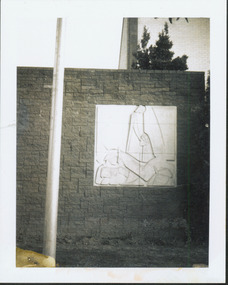
... Mr. George Allen, sculptor, submitted the winning design and through the contribution of a generous bequest of the late Mrs. Annie Anderson, a former resident of Kew, the Municipal Office was able to commission this gentleman’s work. The memorial is mounted on a wall of granite blocks and carved in Sydney Freestone, depicting a scene of war and loved...Mr. George Allen, sculptor, submitted the winning design and through the contribution of a generous bequest of the late Mrs. Annie Anderson, a former resident of Kew, the Municipal Office was able to commission this gentleman’s work. The memorial is mounted on a wall of granite blocks and carved in Sydney Freestone, depicting a scene of war and loved ...George Henry Allen (8 February 1900 – 12 October 1972) was an Australian sculptor and teacher, an official war artist in the latter years of the Second World War. He served as an official war artist with the rank of lieutenant from December 1943, working at Port Moresby and the Australian War Memorial, retired February 1945. The plaque by George Allen on the exterior wall of the north side of Kew Library commemorating WW2 was funded by a bequest from the late Mrs Annie Anderson.One of two black and white snapshots (polaroid photos) of George Allen's sculpture at Kew Library. Mavis Rolley wrote about the memorial in 1980 as: This impressive piece of Sculpture, a memorial to the sacrifice of those who served in the Second World War, was completed in 1960 to coincide with the One Hundred Centenary Year of the City of Kew, and was unveiled on Anzac Day of that year by the Hon. A.G. Rylah, Chief Secretary, Deputy Premier of Victoria. Mr. George Allen, sculptor, submitted the winning design and through the contribution of a generous bequest of the late Mrs. Annie Anderson, a former resident of Kew, the Municipal Office was able to commission this gentleman’s work. The memorial is mounted on a wall of granite blocks and carved in Sydney Freestone, depicting a scene of war and loved ones at home.war memorials -- kew (vic.), memorials -- world war 2. -- kew (vic.), george henry allen, artworks -- kew library -
 Kew Historical Society Inc
Photograph - Second World War Memorial, Kew Library, c.1960
... Mr. George Allen, sculptor, submitted the winning design and through the contribution of a generous bequest of the late Mrs. Annie Anderson, a former resident of Kew, the Municipal Office was able to commission this gentleman’s work. The memorial is mounted on a wall of granite blocks and carved in Sydney Freestone, depicting a scene of war and loved...Mr. George Allen, sculptor, submitted the winning design and through the contribution of a generous bequest of the late Mrs. Annie Anderson, a former resident of Kew, the Municipal Office was able to commission this gentleman’s work. The memorial is mounted on a wall of granite blocks and carved in Sydney Freestone, depicting a scene of war and loved ...George Henry Allen (8 February 1900 – 12 October 1972) was an Australian sculptor and teacher, an official war artist in the latter years of the Second World War. He served as an official war artist with the rank of lieutenant from December 1943, working at Port Moresby and the Australian War Memorial, retired February 1945. The plaque by George Allen on the exterior wall of the north side of Kew Library commemorating WW2 was funded by a bequest from the late Mrs Annie Anderson.One of two black and white snapshots (polaroid photos) of George Allen's sculpture at Kew Library. Mavis Rolley wrote about the memorial in 1980 as: This impressive piece of Sculpture, a memorial to the sacrifice of those who served in the Second World War, was completed in 1960 to coincide with the One Hundred Centenary Year of the City of Kew, and was unveiled on Anzac Day of that year by the Hon. A.G. Rylah, Chief Secretary, Deputy Premier of Victoria. Mr. George Allen, sculptor, submitted the winning design and through the contribution of a generous bequest of the late Mrs. Annie Anderson, a former resident of Kew, the Municipal Office was able to commission this gentleman’s work. The memorial is mounted on a wall of granite blocks and carved in Sydney Freestone, depicting a scene of war and loved ones at home.war memorials -- kew (vic.), memorials -- world war 2. -- kew (vic.), george henry allen, artworks -- kew library -
 Kew Historical Society Inc
Photograph - Bennett Family Gathering, 22 Harp Road
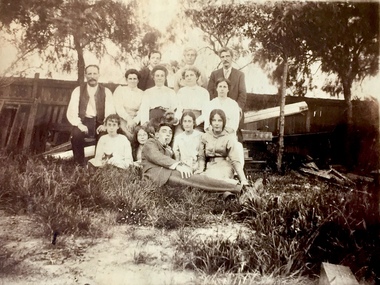
... Mr Laurie Bennett presented the Kew Historical Society with a number of photographs and postcards from the estate of his mother Eileen Mary Bennett (nee Clark). His mother was the daughter of Lawrence FH Clark(?-1946) and Mary Clark (?-1925) of 22 Harp Road, East Kew, in whose yard the photograph was taken. A year before the donation occurred a notice appeared in the Canberra Times stating that: "BENNETT, Eileen Mary. — May 8th at Tuross Heads, N.S.W. Late of 22 Harp Rd, East Kew, (Vic). Dearly loved...Mr Laurie Bennett presented the Kew Historical Society with a number of photographs and postcards from the estate of his mother Eileen Mary Bennett (nee Clark). His mother was the daughter of Lawrence FH Clark(?-1946) and Mary Clark (?-1925) of 22 Harp Road, East Kew, in whose yard the photograph was taken. A year before the donation occurred a notice appeared in the Canberra Times stating that: "BENNETT, Eileen Mary. — May 8th at Tuross Heads, N.S.W. Late of 22 Harp Rd, East Kew, (Vic). Dearly loved ...In 1980, Mr Laurie Bennett presented the Kew Historical Society with a number of photographs and postcards from the estate of his mother Eileen Mary Bennett (nee Clark). His mother was the daughter of Lawrence FH Clark(?-1946) and Mary Clark (?-1925) of 22 Harp Road, East Kew, in whose yard the photograph was taken. A year before the donation occurred a notice appeared in the Canberra Times stating that: "BENNETT, Eileen Mary. — May 8th at Tuross Heads, N.S.W. Late of 22 Harp Rd, East Kew, (Vic). Dearly loved wife of the late Harold Bennett, loved mother and mother in law of Laurie and Shirley (Melbourne), Kevin and Doreen (Canberra), grandmother of Linda, Stephen, Paul, Gabrielle, Peter, Mark and Jon."Part of a large collection of photographs and postcards in the collectionFamily portrait of members of the Bennett family of 22 Harp Road, East Kew. laurie bennett, eileen mary bennett, eileen mary clark -
 Kew Historical Society Inc
Photograph - High Street, Kew East
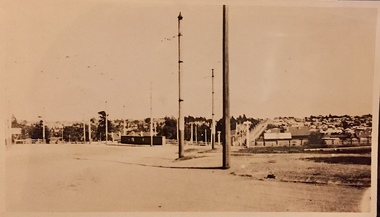
... Mr Laurie Bennett presented the Kew Historical Society with a number of photographs and postcards from the estate of his mother Eileen Mary Bennett (nee Clark). His mother was the daughter of Lawrence FH Clark(?-1946) and Mary Clark (?-1925) of 22 Harp Road, East Kew, in whose yard the photograph was taken. A year before the donation occurred a notice appeared in the Canberra Times stating that: "BENNETT, Eileen Mary. — May 8th at Tuross Heads, N.S.W. Late of 22 Harp Rd, East Kew, (Vic). Dearly loved...Mr Laurie Bennett presented the Kew Historical Society with a number of photographs and postcards from the estate of his mother Eileen Mary Bennett (nee Clark). His mother was the daughter of Lawrence FH Clark(?-1946) and Mary Clark (?-1925) of 22 Harp Road, East Kew, in whose yard the photograph was taken. A year before the donation occurred a notice appeared in the Canberra Times stating that: "BENNETT, Eileen Mary. — May 8th at Tuross Heads, N.S.W. Late of 22 Harp Rd, East Kew, (Vic). Dearly loved ...In 1980, Mr Laurie Bennett presented the Kew Historical Society with a number of photographs and postcards from the estate of his mother Eileen Mary Bennett (nee Clark). His mother was the daughter of Lawrence FH Clark(?-1946) and Mary Clark (?-1925) of 22 Harp Road, East Kew, in whose yard the photograph was taken. A year before the donation occurred a notice appeared in the Canberra Times stating that: "BENNETT, Eileen Mary. — May 8th at Tuross Heads, N.S.W. Late of 22 Harp Rd, East Kew, (Vic). Dearly loved wife of the late Harold Bennett, loved mother and mother in law of Laurie and Shirley (Melbourne), Kevin and Doreen (Canberra), grandmother of Linda, Stephen, Paul, Gabrielle, Peter, Mark and Jon."Part of a large collection of photographs and postcards in the collection. This dated photograph allows the researcher to identify development by 1916 in Kew and East Kew.High Street, Kew East in 1916 looking west. "High Street, East kew, near rail bridge."laurie bennett, eileen mary bennett, eileen mary clark -
 Kew Historical Society Inc
Photograph - Yarra in Flood - Belford & Kilby Farms, 1903
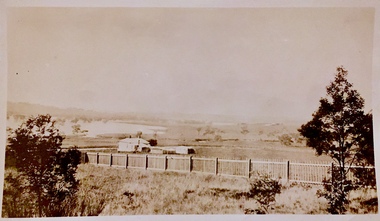
... Mr Laurie Bennett presented the Kew Historical Society with a number of photographs and postcards from the estate of his mother Eileen Mary Bennett (nee Clark). His mother was the daughter of Lawrence FH Clark(?-1946) and Mary Clark (?-1925) of 22 Harp Road, East Kew, in whose yard the photograph was taken. A year before the donation occurred a notice appeared in the Canberra Times stating that: "BENNETT, Eileen Mary. — May 8th at Tuross Heads, N.S.W. Late of 22 Harp Rd, East Kew, (Vic). Dearly loved...Mr Laurie Bennett presented the Kew Historical Society with a number of photographs and postcards from the estate of his mother Eileen Mary Bennett (nee Clark). His mother was the daughter of Lawrence FH Clark(?-1946) and Mary Clark (?-1925) of 22 Harp Road, East Kew, in whose yard the photograph was taken. A year before the donation occurred a notice appeared in the Canberra Times stating that: "BENNETT, Eileen Mary. — May 8th at Tuross Heads, N.S.W. Late of 22 Harp Rd, East Kew, (Vic). Dearly loved ...In 1980, Mr Laurie Bennett presented the Kew Historical Society with a number of photographs and postcards from the estate of his mother Eileen Mary Bennett (nee Clark). His mother was the daughter of Lawrence FH Clark(?-1946) and Mary Clark (?-1925) of 22 Harp Road, East Kew, in whose yard the photograph was taken. A year before the donation occurred a notice appeared in the Canberra Times stating that: "BENNETT, Eileen Mary. — May 8th at Tuross Heads, N.S.W. Late of 22 Harp Rd, East Kew, (Vic). Dearly loved wife of the late Harold Bennett, loved mother and mother in law of Laurie and Shirley (Melbourne), Kevin and Doreen (Canberra), grandmother of Linda, Stephen, Paul, Gabrielle, Peter, Mark and Jon."Part of a large collection of photographs and postcards in the collectionPanoramic photographic positive of North Kew where the Belford and Kilby Farms were located on the south side of the Yarra River. This photo, donated in 1980 by Laurie Bennett is the original of the two identical photos in the collection.laurie bennett, eileen mary bennett, eileen mary clark, floods -- yarra -- 1903 -
 Melbourne Tram Museum
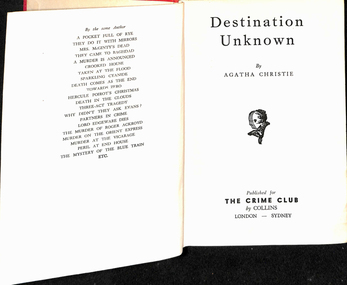
Book, Agatha Christie, "Destination unknown", 1954
... Mr Aristides, for financial rather than political ends. He has lured the world's best young scientists to it with various deceptions so that he can later sell their services back to the world's governments and corporations for a huge profit. She falls in love...Mr Aristides, for financial rather than political ends. He has lured the world's best young scientists to it with various deceptions so that he can later sell their services back to the world's governments and corporations for a huge profit. She falls in love ...Book, hard cover, 12 sections, sewn with end papers, 210 pages, titled "Destination unknown", written by Agatha Christie, published by The Crime Club, 1954. Has the stamp of the Footscray Tramway Library, asking it to be returned within 14 days inside the front cover and in many places throughout the book, along with Number "606" on the inside front cover and on the spine of the book. The book was part of a library run by the depot staff to provide materials during broken shifts and to take home. From Wikipedia - accessed 26/12/2019: Plot summary Hilary Craven, a deserted wife and bereaved mother, is planning suicide in a Moroccan hotel, when she is asked by British secret agent Jessop to undertake a dangerous mission as an alternative to taking an overdose of sleeping pills. The task, which she accepts, is to impersonate the wife of Thomas Betterton, a nuclear scientist who has disappeared and may have defected to the Soviet Union. Soon she finds herself in a group of oddly-assorted travellers being transported to the unknown destination of the title. The destination turns out to be a secret scientific research facility disguised as a modern leper colony and medical research center at a remote location in the Atlas Mountains. The scientists are well-treated, but they are not allowed to leave the facility, and they are locked in secret areas deep inside the mountain whenever government officials and other outsiders visit. Hilary Craven successfully passes herself as Betterton's wife Olive, because he is miserable and wants desperately to escape. Hilary discovers that the facility was built by the fabulously wealthy and somewhat villainous Mr Aristides, for financial rather than political ends. He has lured the world's best young scientists to it with various deceptions so that he can later sell their services back to the world's governments and corporations for a huge profit. She falls in love with Andrew Peters, a handsome young American who was in the group with her on their journey to the facility. With the help of clues she has left along the way, Jessop eventually locates and rescues her and the others held there. Peters turns out also to be on a mission, intent on bringing Betterton to justice for the murder of his first wife. Betterton, revealed to also be a scientific fraud who plagiarized his work, is arrested. Hilary no longer wants to die, and she and Peters are free to begin their life together.On the top of the first page "13/3" indicating the price, "m/arz"? on the bottom left hand corner and inside the front cover the label of "Robertson & Mullens Ltd" booksellers.trams, tramways, footscray depot, libraries, novels, personnel, crews, shifts -
 Mont De Lancey
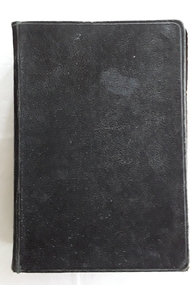
Book - The Holy Bible - The Revised Version, Oxford University Press, 1949
... Mr and Mrs J.H. Lord standing a garden. There is a small card attached with photo hinges with the inscription 'Love and Congratulations for the 50th Anniversary 13 - 6 - 1951 Annette and Neville'.' ...Mr and Mrs J.H. Lord standing a garden. There is a small card attached with photo hinges with the inscription 'Love and Congratulations for the 50th Anniversary 13 - 6 - 1951 Annette and Neville'.' ...A Holy Bible containing the Old and New Testaments with six coloured biblical maps at the back.A black hardcover Holy Bible, Revised Version, Oxford printed in gold lettering on the spine with five raised black lines across. The pages have worn gilt edges and there is a self bookmark included. 286p. It contains the Old and New Testament. At the back there are six coloured maps of the biblical locations. The title page has a glued in black and white photograph of Mr and Mrs J.H. Lord standing a garden. There is a small card attached with photo hinges with the inscription below. Mr and Mrs J.H. Lord is written by hand in black ink below the photograph. The back cover is mended with a wide strip of white cotton material.non-fictionA Holy Bible containing the Old and New Testaments with six coloured biblical maps at the back.religious books, bibles -
 Linton and District Historical Society Inc
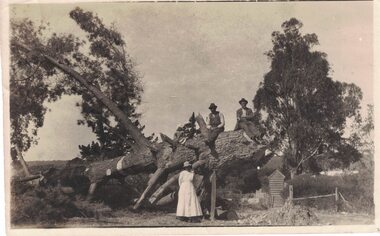
Photograph, Members of Hyatt and Grigg Families with Fallen Tree, circa 1920
... On reverse: "Dear Edgar and Ethel / Just a snap of our big pine / Ida is the one nearest the / limb the other is Mr Greig & / Mollie Norrris & another chap / the tree is 44 years old & 52 ft / high. love from us all / at Linton / May"....Marian (May) Hyatt née Nicholls Ida Hyatt Mary (Mollie) Norris William Michael Grigg On reverse: "Dear Edgar and Ethel / Just a snap of our big pine / Ida is the one nearest the / limb the other is Mr Greig & / Mollie Norrris & another chap / the tree is 44 years old & 52 ft / high. love from us all / at Linton / May". ...This photograph was sent by May (Marian) Hyatt, née Nicholls, to her brother and sister-in-law Edgar and Ethel Nicholls. May's note on the back of the photo identifies the children as "Ida" (Ida Hyatt, May's daughter) and "Mollie Norris". It also identifies a "Mr Greig", probably William Michael Grigg, who lived near the Hyatt family on Geelong Road, Linton. (Mollie Norris, a daughter of Lilian Violet ('Cis') Grigg and her husband Gerald Norris, was W.M. Grigg's granddaughter.)Black and white photograph which shows a very large pine tree that has either been felled or has fallen. Two small girls wearing sun-hats are sitting on top of the fallen trunk, along with two men, who are also wearing hats. A woman wearing a long dress and a hat is standing in front of the tree.On reverse: "Dear Edgar and Ethel / Just a snap of our big pine / Ida is the one nearest the / limb the other is Mr Greig & / Mollie Norrris & another chap / the tree is 44 years old & 52 ft / high. love from us all / at Linton / May".marian (may) hyatt née nicholls, ida hyatt, mary (mollie) norris, william michael grigg -
 Linton and District Historical Society Inc
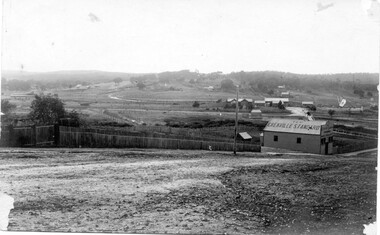
Photograph, Empire Post Card, Postcard showing the Grenville Standard building, 1909
... Mr Tom Bennett house butcher. The slaughter house is among the trees in the background. Note where the 'Law' is at the post office. I would like to see this enlarged. I think this photo is special because it shows the turntable where the trains used to turn before the rail went thru to Skipton which I remember all the [illegible] being made so many people working in Linton. As kids we loved...Mr Tom Bennett house butcher. The slaughter house is among the trees in the background. Note where the 'Law' is at the post office. I would like to see this enlarged. I think this photo is special because it shows the turntable where the trains used to turn before the rail went thru to Skipton which I remember all the [illegible] being made so many people working in Linton. As kids we loved ...Written on envelope attached: "This was sent to Aunty Mill from Aunty Grace. This photo was taken from our back gate opposite the post office. Miss Magan(?) was PM. The old Grenville Standard office run by Mr Adams. The little houses on the hill behind one was Mr Terrett a tailor who made the band uniforms. Mr Tom Bennett house butcher. The slaughter house is among the trees in the background. Note where the 'Law' is at the post office. I would like to see this enlarged. I think this photo is special because it shows the turntable where the trains used to turn before the rail went thru to Skipton which I remember all the [illegible] being made so many people working in Linton. As kids we loved to watch as the train came out facing a different way. The railway station master's house Mr Thompson was the SM. The old Grenville Standard office run by Mr Adams." Note: "Aunty Mill" = Amelia (Millie) Bennett, afterwards Millie Allen. "Aunty Grace" = Grace Bennett, afterwards Grace Wishart.Black and white postcard of Grenville Standard building with railway station and station master's house in background.On postcard: "Linton 30.6.09 [=1909] Dear Mill, you will be surprised at -- postcard and so soon. I forgot when writing, I wanted to ask you if Percy could get me a few dolls at wholesale price we are to have a bazaar for the church, and want to make something on our purchases. Let me know soon and I will get the money and quantity etc. required. Yours sincerely, Grace".grenville standard [newspaper], linton railway station, buildings, grace bennett afterwards grace wishart, amelia (millie) bennett afterwards millie allen -
 Linton Mechanics Institute and Free Library Collection
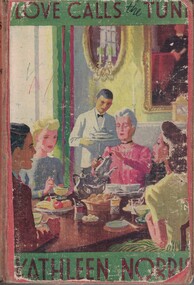
Book - Novel, Norris, Kathleen, Love calls the tune, First published 1945 (this edition 1949)
... Mr John Rigby, c/o Mrs ------- (illegible), 93 Arthur Circle, Canberra". 189 p. : orange cover, title and author's name printed in black on spine. Section of original dust jacket pasted to front, with image showing a family having tea - an older woman is pouring into cups from a silver teapot, while a waiter or servant stands behind her with a tureen on a tray. Two young women and a young man are also at the table, on which there are dishes of fruit, scones, jam etc. Publisher's summary of the plot, cut from dust jacket, is pasted to front end paper. Love ...Romance fiction. A 'modern' woman experiences conflict between her career and marriage.189 p. : orange cover, title and author's name printed in black on spine. Section of original dust jacket pasted to front, with image showing a family having tea - an older woman is pouring into cups from a silver teapot, while a waiter or servant stands behind her with a tureen on a tray. Two young women and a young man are also at the table, on which there are dishes of fruit, scones, jam etc. Publisher's summary of the plot, cut from dust jacket, is pasted to front end paper.fictionRomance fiction. A 'modern' woman experiences conflict between her career and marriage.fiction, romance, kathleen norris -
 Flagstaff Hill Maritime Museum and Village
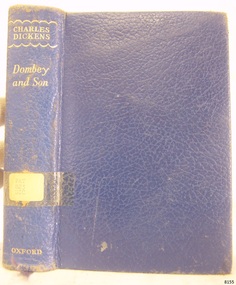
Book - A Fictional Story, Charles Dickens et al, Dombey and Son, 1930s to 1950
... Mr. Dombey, who values business and inheritance above affection, and on Florence, the daughter he cannot properly love because she is not the son he wanted. ...Charles Dickens (1812–1870) was one of the great English novelists of the Victorian era, famous for vivid characters, social criticism, and stories that were first published in serial form. He began as a journalist, rose to enormous popularity during his lifetime, and wrote major works such as Oliver Twist, David Copperfield, and Great Expectations. “Dombey and Son” is about Paul Dombey, a proud London businessman obsessed with having a son to inherit his firm. The story follows the emotional damage this causes to his neglected daughter Florence and to his family generally. It is one of Dickens’s major middle period novels and is often read as a critique of money, social ambition, industrial modernity, and damaged family life. The plot centres on Mr. Dombey, who values business and inheritance above affection, and on Florence, the daughter he cannot properly love because she is not the son he wanted. The novel shows the consequences of emotional blindness through illness, death, failed marriage, betrayal, and eventual partial reconciliation. In broad terms, it is a novel about pride, grief, commercial values, and the human cost of treating people like assets.Hard Cover edition, Dombey and Son. Author: Charles Dickens. Publisher: Oxford University Press, London. Date: 1930s-1950 reprinted Oxford literary edition. Original first published in 1848 (See note section this document for more information on Edition). Blue leather hardcover, Spine has Author and Title in gold lettering. The spine has a Library label and no Volume information.fictionCharles Dickens (1812–1870) was one of the great English novelists of the Victorian era, famous for vivid characters, social criticism, and stories that were first published in serial form. He began as a journalist, rose to enormous popularity during his lifetime, and wrote major works such as Oliver Twist, David Copperfield, and Great Expectations. “Dombey and Son” is about Paul Dombey, a proud London businessman obsessed with having a son to inherit his firm. The story follows the emotional damage this causes to his neglected daughter Florence and to his family generally. It is one of Dickens’s major middle period novels and is often read as a critique of money, social ambition, industrial modernity, and damaged family life. The plot centres on Mr. Dombey, who values business and inheritance above affection, and on Florence, the daughter he cannot properly love because she is not the son he wanted. The novel shows the consequences of emotional blindness through illness, death, failed marriage, betrayal, and eventual partial reconciliation. In broad terms, it is a novel about pride, grief, commercial values, and the human cost of treating people like assets.book, the old curiosity shop, charles dickens, shipwrecked-coast, flagstaff-hill, flagstaff-hill-maritime-museum, warrnambool, maritime-museum, flagstaff-hill-maritime-village, pattison collection, warrnambool library, warrnambool mechanics’ institute, ralph eric pattison, corangamite regional library service, warrnambool city librarian, mechanics’ institute library, victorian library board, warrnambool books and records, warrnambool children’s library, great ocean road, hard times for these times -
 Vision Australia
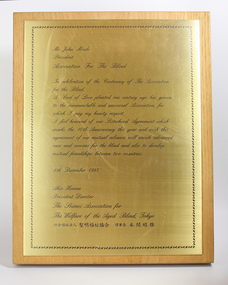
Ceremonial object - Image, Engraved letter for centenary celebrations, 1995
... Mr John Moule President Association for the Blind In celebration of the Centenary of The Association for the Blind. A Seed of Love...Association for the Blind Mr John Moule President Association for the Blind In celebration of the Centenary of The Association for the Blind. A Seed of Love ...To honour the 100th anniversary of the founding of the Association for the Blind (then Association for the Advancement of the Blind), sister organisation Seimei Association for the Aged Blind sent this plaque.1 digital image of metal letter to AFB from Seimei Association for the Welfare of the Aged BlindMr John Moule President Association for the Blind In celebration of the Centenary of The Association for the Blind. A Seed of Love planted one century ago has grown to the commendable and universal Association for which I pay my hearty respect. I feel honored of our Sisterhood Agreement which marks the 10th Anniversary this year and wish this agreement of our mutual reliance will enrich advanced care and services for the blind and also to develop mutual friendships between two countries. 8th December 1995 Akio Honma President Director The Seimei Association for The Welfare of the Aged Blind, Tokyo (Japanese characters)seimei association for the welfare of aged blind inc., association for the blind -
 Department of Energy, Environment and Climate Action
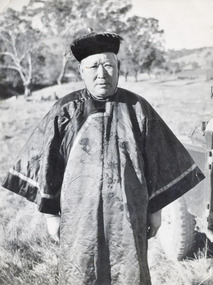
Chinese clothing once owned by Bill Ah Chow
... Bill loved to tell embellished campfire stories and often claimed to be a descendant of Chinese Royalty, but his family believes the robes were more likely picked up from a second-hand shop in Little Bourke Street in the 1940s. In 2018 the Chinese Museum in Melbourne gave this advice. Mr...Bill loved to tell embellished campfire stories and often claimed to be a descendant of Chinese Royalty, but his family believes the robes were more likely picked up from a second-hand shop in Little Bourke Street in the 1940s. In 2018 the Chinese Museum in Melbourne gave this advice. Mr ...These are the Chinese robes that belonged to Forests Commission fireguard and builder of Moscow Villa - Bill ah Chow. Every organisation has a handful of colourful characters, and the Commission had its share, but Bill remains one of its enduring legends. After Bill's death in 1967, the robes were safely kept by Bill's daughter, Rose, until she died in 1993. The robes then passed to Bill's granddaughter, Janice, and were also highly prized. Janice wrote a book about Bill and Moscow Villa in 2019. After much deliberation, the family felt the retired foresters were better positioned to keep Bill's story alive. Bill loved to tell embellished campfire stories and often claimed to be a descendant of Chinese Royalty, but his family believes the robes were more likely picked up from a second-hand shop in Little Bourke Street in the 1940s. In 2018 the Chinese Museum in Melbourne gave this advice. Mr. Ah Chow is dressed in a way that imitates a Mandarin or official of the Qing Dynasty. His hat looks like a mandarin style hat, a Qing dynasty official’s headwear, although it’s quite unlikely that he was actually a Mandarin. The button atop the hat usually indicated the wearer’s rank. His robe fastens up to the neck with buttons, which is typical of Manchurian style men’s clothing of the Qing dynasty also. He is not wearing a rank badge, which denoted official status. This kind of garment was also normally worn with a separate collar, which Mr. Ah Chow is not wearing in any of these pictures.Chinese clothing including robes, bear skin hat, silk trousers and slippers -
 Flagstaff Hill Maritime Museum and Village
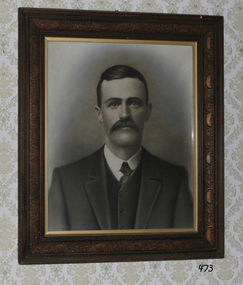
Photograph - Portrait, pre 1915
... Mr Frank Wicking (1877-1915): Frank Wicking was born on July 19, 1877, at Garvoc, western Victoria, the sixth child of Thomas and Emma Wicking's ten children. Frank loved...Mr Frank Wicking (1877-1915): Frank Wicking was born on July 19, 1877, at Garvoc, western Victoria, the sixth child of Thomas and Emma Wicking's ten children. Frank loved ...Mr Frank Wicking (1877-1915): Frank Wicking was born on July 19, 1877, at Garvoc, western Victoria, the sixth child of Thomas and Emma Wicking's ten children. Frank loved the outdoors and was a beekeeper, gardener and sketch artist. He worked as a labourer around the district, including at a local quarry. He passed away at only 37 years of age, leaving his wife, Mary, with three children aged 13 to 4 years. One of the children was Thomas Allen Wicking (1907-1995). He passed away on December 13, 1915, aged 37, and was buried in the Warrnambool Cemetery, southwest Victoria. The photograph is a historical record of Frank Wiking, a locally born quarry worker. He was born in the mid-19th century, to pioneers Thomas and Emma Wicking, and father of local historian, Tom Wicking.Photograph of a male adult, mounted behind glass, in a wooden frame with a carved, decorative border featuring trees, and a gold coloured inner border. The subject is Mr Frank Wicking (1877-1915).flagstaff hill, flagstaff hill maritime museum and village, warrnambool, maritime museum, maritime village, great ocean road, shipwreck coast, historic photograph, frank wicking, tom wicking, quarry worker, thomas allen wicking, thomas wicking, emma wicking, mary wicking, garvoc, victorian pioneer, beekeeper, sketch artist, gardener -
 Stawell Historical Society Inc
Photograph, Bridal party and family in front of Phillips House "Newington Villa" in Lower Main Street Stawell
... Love. stawell houses W.J. Chapman Stawell On the back of photo copy - 12 Bessie Lilian Neil, 13 Winifred Langsford, 13a Jean Langsford, 14, Bride Trissitian Vawdrey Phillips, 19, Gride groom Malcom Neil, 16, Mr Langsford. ...Wedding Bridal party and family in front of house owned by Phillips, Lower Main Street, Stawell. The wedding was on the 21.04.1921. House built for J.W.J. Gutierriz. Architect was R.A. Love. Black and white photograph of a group of people, possible a wedding standing outside a decorative entrance to a home. Also a small black and white photo, written on the back - "Wedding Malcolm and Trissitian Phillips 21/4/1921 Photo Newington Villa" Photo copy has numbers from 1 to 29 on each person. On the back - 12 Bessie Lilian Neil, 13 Winifred Langsford, 13a Jean Langsford, 14, Bride Trissitian Vawdrey Phillips, 19, Gride groom Malcom Neil, 16, Mr Langsford. W.J. Chapman Stawell On the back of photo copy - 12 Bessie Lilian Neil, 13 Winifred Langsford, 13a Jean Langsford, 14, Bride Trissitian Vawdrey Phillips, 19, Gride groom Malcom Neil, 16, Mr Langsford. On the back of smaller photo - "Wedding Malcolm and Trissitian Phillips 21/4/1921 Photo Newington Villa" stawell houses -
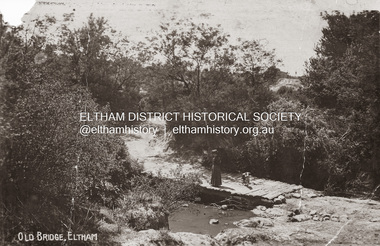 Eltham District Historical Society Inc
Photograph, Old Bridge, Kaylock's Crossing, Brougham Street, Eltham, c.1895
... Mr Weller of Kangaroo Ground who commenced work in February 1923 on a higher-level timber trestle bridge. Work was slowed due to illness of the contractor and the accidental death of a man in March 1923 following the collapse of the bank after he had jumped into a hole that had just been blasted. The bridge was completed around July 1923 at which point the old structure was pulled up, marking what was described in the ‘Advertiser’ newspaper as the passing of an old and well-loved...Mr Weller of Kangaroo Ground who commenced work in February 1923 on a higher-level timber trestle bridge. Work was slowed due to illness of the contractor and the accidental death of a man in March 1923 following the collapse of the bank after he had jumped into a hole that had just been blasted. The bridge was completed around July 1923 at which point the old structure was pulled up, marking what was described in the ‘Advertiser’ newspaper as the passing of an old and well-loved ...Brougham Street was created in Josiah Holloway's 1851 subdivision of Little Eltham. It was one of several east-west streets shown on the subdivision plan as crossing the Diamond Creek. The western part was named Wellington Street on the subdivision plan but was later changed to conform with the name of the eastern part as acknowledgement of the continuity of the street. It is not known when the first bridge was constructed in Brougham Street however it was certainly mentioned at Council’s meeting of 2 June 1884 as being in a dangerous state of repair. This photo (c.1895) of an old bridge shows a very low-level simple log girder bridge crossing the creek at a right angle and so the approaches involved bends in the road alignment. This bridge was generally known as Kaylocks Bridge or Kaylock’s Crossing after the owner of the adjoining land. It was most likely built from around the mid-1850s, or a crossing of some fashion established as Richard George Kaylock, butcher of Little Eltham and his wife Emily Ann settled there in 1854. His property was in Wellington Street (now Brougham Street) and apparently extended across the Diamond Creek. The land on the western side of the creek was farmed, the house being on the eastern side. Kaylock's Bridge formed part of the original coach road to Eltham and in 1922 was described as an "old rustic bridge". Its low level and insubstantial construction made it susceptible to flood damage, necessitating frequent closures until repairs could be carried out. In September 1922, Council called for tenders for a new timber bridge to be constructed at Kaylock’s crossing. An engineering assessment carried out for the Council by Macleod Consulting at the time of the replacement suggested that the construction details indicate that it was in the 1900s, however this dating could possibly have been the result of numerous repairs undertaken over the years to flood damage. The tender was awarded to Mr Weller of Kangaroo Ground who commenced work in February 1923 on a higher-level timber trestle bridge. Work was slowed due to illness of the contractor and the accidental death of a man in March 1923 following the collapse of the bank after he had jumped into a hole that had just been blasted. The bridge was completed around July 1923 at which point the old structure was pulled up, marking what was described in the ‘Advertiser’ newspaper as the passing of an old and well-loved landmark in the district. In April 1924 the approach to Kaylocks bridge was washed away during the heavy flooding that destroyed the Main Road bridge. The western side was repaired, and an extra span was added to the eastern side using timber from the destroyed Main Road bridge. The bridge was again severely damaged four months later in August 1924 When a lack of finances delayed repairs to the Bridge Street bridge in 1931 (also referred to as Obelisk Bridge at the time), traffic had to detour via Brougham Street for some time. Local residents feared that the Bridge Street bridge might never reopen. Kaylocks Bridge was constantly subject to damage by floods. In the 1934 flood it was submerged by two feet of water. In more recent times the bridge was again severely damaged by flooding and repairs made. A new bridge and adjoining footbridge were constructed in 2009. - Research by Peter Pidgeon, EDHS, July 2026 Part of a slide show presentation "Bridges & Waterways of the Shire" by Russell Yeoman to the 13 September 1989 Society meeting. The presentation included slides of historic photos from the Shire of Eltham Pioneers collections as well as several recent views.Photo of earliest known crossing of the Diamond Creek at brougham StreetPostcard photo printbrougham street, eltham, wellington street, kaylocks bridge, bridge, diamond creek (creek) -
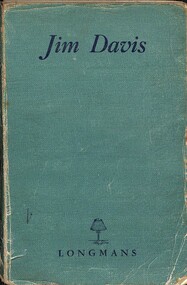 Sunshine and District Historical Society Incorporated
Book - Jim Davis, John Masefield, 1947
... Sunshine Technical School Derby Road Sunshine John Willaton A book of a series of books that will lead to wider horizons by awakening a love of good books, and by providing a key to the tresures of the world's best thought. Front Cover - Jim Davis Longmans First Page - Handwritten From Mr. j. ...A book of a series of books that will lead to wider horizons by awakening a love of good books, and by providing a key to the tresures of the world's best thought.Green hard covered book with black text on front cover.non-fictionA book of a series of books that will lead to wider horizons by awakening a love of good books, and by providing a key to the tresures of the world's best thought.sunshine technical school, derby road, sunshine, john willaton
