
Showing 281 items matching "church bible"
-
 Warrnambool and District Historical Society Inc.
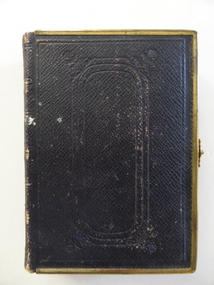
Book, Bible (in Welsh), 1868
... Bible to the Warrnambool and District Historical Society. They were both members of the Society. This book is of great importance as a beautiful memento of the 19th century when the Welsh Calvinistic tradition was strong in the Warrnambool district and a Gaelic church was operating in Woodford and services in Gaelic services were held regularly in Warrnambool. ...This Welsh Bible belonged to Ellen Hughes who was Welsh-speaking and the daughter of a farmer from Caernarfonshire, Wales. In 1874 she married William Jones of Warrnambool and became a stepmother to Robert Jones who was to become the owner of the property The Union, near Woolsthorpe. Robert’s daughters, Gwen and Edna Jones, gave this Bible to the Warrnambool and District Historical Society. They were both members of the Society. This book is of great importance as a beautiful memento of the 19th century when the Welsh Calvinistic tradition was strong in the Warrnambool district and a Gaelic church was operating in Woodford and services in Gaelic services were held regularly in Warrnambool. This is a hard cover book with a brown leather cover with gold metal edging and a gold clasp. The cover has embossed patterns on the front back and spine. The pages have gilt edges. The text is in the Welsh language and is presented in two columns per page. There is one blue stamp of the Warrnambool and District Historical Society on the first page. The inscription is handwritten in black ink. ‘Presented to Miss Ellen Hughes by her wellwishers Hugh and Kate Pritchard, Llanfairfechan, July 14th 1871’ ellen hughes, gaelic church, woodford, history of warrnambool, the union -
 Warrnambool and District Historical Society Inc.
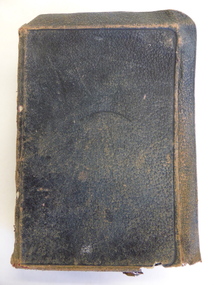
Book, The Comprehensive Teachers' Bible, 1890s
... Bible was owned by John Glasgow, a Wangoom farmer. His father, Robert, settled in Blackwood Hill near Wangoom in the 1850s. John Glasgow was a celebrated cheesemaker who won many prizes locally and overseas and a Warrnambool Shire Councillor from 1880 to 1886 and from 1892 to 1906. He was a Sunday School teacher at the Wangoom Presbyterian Church...Bible was owned by John Glasgow, a Wangoom farmer. His father, Robert, settled in Blackwood Hill near Wangoom in the 1850s. John Glasgow was a celebrated cheesemaker who won many prizes locally and overseas and a Warrnambool Shire Councillor from 1880 to 1886 and from 1892 to 1906. He was a Sunday School teacher at the Wangoom Presbyterian Church ...This Bible was owned by John Glasgow, a Wangoom farmer. His father, Robert, settled in Blackwood Hill near Wangoom in the 1850s. John Glasgow was a celebrated cheesemaker who won many prizes locally and overseas and a Warrnambool Shire Councillor from 1880 to 1886 and from 1892 to 1906. He was a Sunday School teacher at the Wangoom Presbyterian Church for 50 years and an Elder for 42 years. The book contains the names and birth dates of the extended Glasgow family. The surnames include Linnett, Glasgow, Coulstock and Anderson.This Bible is of considerable interest because of its connection to the John Glasgow and other members of his family. This is a leather-covered book with gold lettering on the spine. The cover overlaps the pages for extra protection. The pages are gilt-edged. One page has come apart from the binding and several other pages are partly detached from the spine. All the inscriptions are hand-written in black ink. One is a religious verse which has been pasted on to the inside of the front cover and on another page are listed the names and birth dates of 18 members of the Glasgow extended family. The book and cover are very tatty and stained. ‘Mr J. Glasgow, Wangoom, 26.7.99’ john glasgow, wangoom presbyterian church, history of warrnambool, cheesemaking in the warrnambool district -
 Warrnambool and District Historical Society Inc.
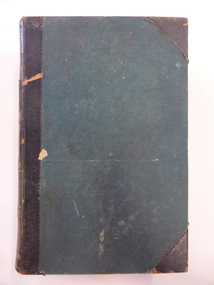
Book, The Holy Bible - Clarke's Commentary Vol 2 Joshua-Esther, 1838
... Bible commentaries. It was a 30 year project for the writer, Adam Clarke. He was the great uncle of Daniel Clarke, a 19th century resident of Warrnambool. Daniel Clarke, as a social worker for the Anglican Church...Bible commentaries. It was a 30 year project for the writer, Adam Clarke. He was the great uncle of Daniel Clarke, a 19th century resident of Warrnambool. Daniel Clarke, as a social worker for the Anglican Church ...This book is one volume of a series of six volumes of Bible commentaries. It was a 30 year project for the writer, Adam Clarke. He was the great uncle of Daniel Clarke, a 19th century resident of Warrnambool. Daniel Clarke, as a social worker for the Anglican Church, established the Framlingham Aboriginal Reserve in the 1860s. For thirty years he was a prominent businessman in Warrnambool as a photographer and artist. He is well-known today for his paintings of Tower Hill and the Hopkins River mouth. This book is retained not only because of its antiquarian value but also because of its link with Daniel Clarke, important in Warrnambool’s 19th century history. This is a hard cover book with a black leather spine and black leather trimming on the cover edges. The cover is green with gold lettering and ornamentation on the spine. The pages have a mottled blue and brown pattern on the edges. The cover is a little torn and stained. adam clarke, daniel clarke, bible commentary -
 Warrnambool and District Historical Society Inc.
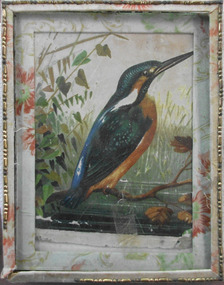
Print, Relic from St John’s Fire, Pre 1920
... Some items were salvaged including vestry furnishings and church register. A bible which had been given to the Church in 1895 was rescued by an unknown young man whose identity remained a mystery until1976 when a Mr Stan Williams of Ballarat told his story. ...A small card at the back of the picture reads,’ This Picture was a teaching aid used in St. John’s Kinderg S.S and was found in the Church Ruins after the fire in July 1920 by Nancy McC(Absalom). Later framed by Grandma. St. John’s Presbyterian Church was built in 1875 and was burned down July 21st 1920. A volunteer fireman Mr T Spicer discovered the fire and despite the prompt arrival of the fire brigade, after an hour only the walls and tower remained. Some items were salvaged including vestry furnishings and church register. A bible which had been given to the Church in 1895 was rescued by an unknown young man whose identity remained a mystery until1976 when a Mr Stan Williams of Ballarat told his story. The Church was rebuilt in 1922. The event of this fire remains one of the most significant in the history of Warrnambool. Framed print of kookaburra on branch in natural setting. The bird is coloured blue, green and tan. Background is in muted greens. The light wooden frame is covered in fabric in pinks and green. A patterned metal edge sits atop the fabric. On back of picture, ‘ From Grandmother to Nancy on her 5th Birthday, Aug 20th 1920. This is a relic of the burning of St John’s Church July 21st 1920. Picked up by Nancy and framed by E Black.” warrnambool, st.john's presbyterian church, st john's fire warrnambool, st john's fire relic -
 Kiewa Valley Historical Society
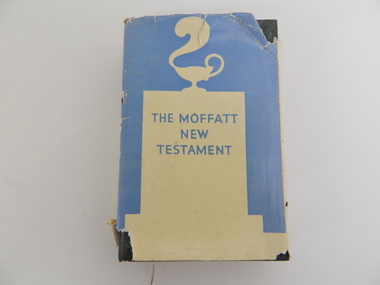
Bible, Bible Moffat, 1935
... This Christian Bible by Professor James Moffatt from the United Free Church College in Glasglow Scotland was at a time when translated Christian bibles(Greek to English) were being review as to the accuracy of their translated words. ...This Christian Bible by Professor James Moffatt from the United Free Church College in Glasglow Scotland was at a time when translated Christian bibles(Greek to English) were being review as to the accuracy of their translated words. ...This Christian Bible by Professor James Moffatt from the United Free Church College in Glasglow Scotland was at a time when translated Christian bibles(Greek to English) were being review as to the accuracy of their translated words. This period was in the early 1900's specifically during and between the two major World Wars of 1914-18 and 1939-45 and also covering the Great Depression(1939). All these periods were ones of death, destruction and "loss of faith". Bibles which provided greater clarity of better times ahead flourished. This book offered its readers hope for the future (in terrible times). The regions that it covered were those who belonged to the Christian Faith. The significance of this bible to the Kiewa Valley is that it provides an insight of those Christians living in a semi remote rural region at the period in Australian history where forces outside of this area were placing hardships which were "foreign" to them, as a family and as a community. The major Christian religions within the Kiewa Valley were either of the Catholic or English Protestant teachings. These groups still remain the dominant ones well into the 2nd Millennium. Spiritual relief to overcome harsh rural setbacks is not just specific to the Australian rural sector but is also global. With the influx of migrant workers from the war torn European nations (after WWII) a broader coverage of Christian and other faiths developed. A "positive" saying, when crops failed and bush fires and river floods sprang up, rallied the faithful "with God's help" This hard covered bible consists of six pages of preamble including title, publishing details, printer and author's preface. The book has 388 pages of black print. Relevant reference lines are notated by numbers on the left side of the page. On the front dust cover is a cream silhouette against a light blue backdrop highlighting a smoking "Aladdin's" Arabic oil lamp on a cenotaph. The hard cover has a embossed emblem of a lantern with a plume of smoke rising from the spout. This is all encapsulated by a circle. The spine also has this emblem. On the dust jacket, front "THE MOFFATT NEW TESTAMENT", and the back cover has blue writing on a cream background. On the spine, at the top "JAMES MOFFATT" below this a white on blue silhouette of "Alalddin's lamp" below this is (in blue letters against a light blue background " THE NEW TESTAMENT A NEW TRANSLATION" On inside cover a signature "Clare Roper". The hard cover has marked in red print "THE NEW TESTAMENT ANEW TRANSLATION MOFFAT" christian bible, prayer, new testament, religion, faith. -
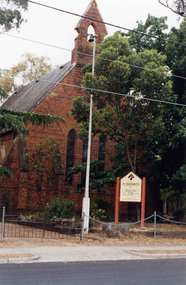 Eltham District Historical Society Inc
Photograph, Margaret Ball, St Margaret's, 81 Pitt Street, Eltham, c. June 1999, 1999
... Bible Street, between Cecil Street to the north and south to Dalton Street were photographed in late 1999. Not all of the houses could be photographed; some because the garden or trees blocked the view of the house, others because of rubbish or cars were in the way, some because people were working on the house or in the gardens at the time. eltham houses streets margaret ball (pre 1960s houses) collection pitt street st margaret's anglican church Colour photographic print St Margaret's, 81 Pitt Street, Eltham, c. ...The Margaret Ball (Pre 1960s Houses) Collection was a personal project initiated to mark the year 2000 and arose as a result of the disappearance of many pre-1960s parts of Eltham due to development. Approximately 200 pre-1960s style houses that were left in Eltham between Main Road and east to Bible Street, between Cecil Street to the north and south to Dalton Street were photographed in late 1999. Not all of the houses could be photographed; some because the garden or trees blocked the view of the house, others because of rubbish or cars were in the way, some because people were working on the house or in the gardens at the time.Colour photographic print eltham, houses, streets, margaret ball (pre 1960s houses) collection, pitt street, st margaret's anglican church -
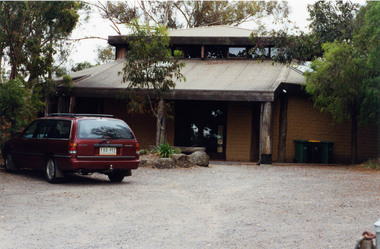 Eltham District Historical Society Inc
Photograph, Margaret Ball, St Margaret's mudbrick hall, 83 Pitt Street, Eltham, c. June 1999, 1999
... Bible Street, between Cecil Street to the north and south to Dalton Street were photographed in late 1999. Not all of the houses could be photographed; some because the garden or trees blocked the view of the house, others because of rubbish or cars were in the way, some because people were working on the house or in the gardens at the time. eltham houses streets margaret ball (pre 1960s houses) collection pitt street st margaret's anglican church Colour photographic print St Margaret's mudbrick hall, 83 Pitt Street, Eltham, c. ...The Margaret Ball (Pre 1960s Houses) Collection was a personal project initiated to mark the year 2000 and arose as a result of the disappearance of many pre-1960s parts of Eltham due to development. Approximately 200 pre-1960s style houses that were left in Eltham between Main Road and east to Bible Street, between Cecil Street to the north and south to Dalton Street were photographed in late 1999. Not all of the houses could be photographed; some because the garden or trees blocked the view of the house, others because of rubbish or cars were in the way, some because people were working on the house or in the gardens at the time.Colour photographic print eltham, houses, streets, margaret ball (pre 1960s houses) collection, pitt street, st margaret's anglican church -
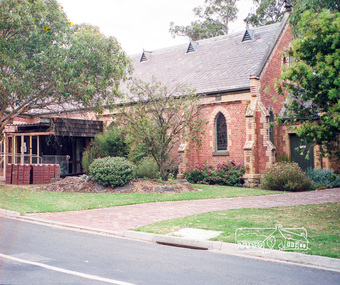 Eltham District Historical Society Inc
Photograph, Margaret Ball, Uniting Church, 5 John Street, Eltham, Nov-Dec 1999, 1999
... Bible Street, between Cecil Street to the north and south to Dalton Street were photographed in late 1999. Not all of the houses could be photographed; some because the garden or trees blocked the view of the house, others because of rubbish or cars were in the way, some because people were working on the house or in the gardens at the time. eltham houses streets margaret ball (pre 1960s houses) collection john street uniting church Kodak GC 400-6 Roll of 35mm colour negative film, 7 strips Uniting Church, 5 John Street, Eltham, Nov-Dec 1999 Photograph Margaret Ball ...The Margaret Ball (Pre 1960s Houses) Collection was a personal project initiated to mark the year 2000 and arose as a result of the disappearance of many pre-1960s parts of Eltham due to development. Approximately 200 pre-1960s style houses that were left in Eltham between Main Road and east to Bible Street, between Cecil Street to the north and south to Dalton Street were photographed in late 1999. Not all of the houses could be photographed; some because the garden or trees blocked the view of the house, others because of rubbish or cars were in the way, some because people were working on the house or in the gardens at the time.Roll of 35mm colour negative film, 7 stripsKodak GC 400-6eltham, houses, streets, margaret ball (pre 1960s houses) collection, john street, uniting church -
 Bendigo Military Museum
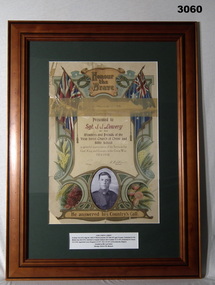
Certificate - MEMBERS AND FRIENDS VIEW STREET CHURCH, FRAMED, Post WW1
... Presented to Sgt J J LOWERY by the Members and Friends of the View Street Church of Christ and Bible School in grateful appreciation of his services for God, King and Country in the Great War 1914 - 1918” Bottom centre on white label: JOHN JOSEPH LOWERY “Enlisted 16.6.1915 Regt No 1926 3rd Reinforcements 22 Batt AIF aged 18. ...Presented to Sgt J J LOWERY by the Members and Friends of the View Street Church of Christ and Bible School in grateful appreciation of his services for God, King and Country in the Great War 1914 - 1918” Bottom centre on white label: JOHN JOSEPH LOWERY “Enlisted 16.6.1915 Regt No 1926 3rd Reinforcements 22 Batt AIF aged 18. ...John Joseph LOWERY Regt No 1926 enlisted in the AIF 3rd Reinforcements, 22nd Batt on 16.6.1915 aged 18. Embarked for Egypt 26.8.1915, taken on strength Gallipoli 25.10.1915. Hospitalised 23.12.1915 frost bite to feet. Embarked for France 19.3.1916, promoted T/Cpl 1.2.1917, promoted L/Cpl 2.5.1917, promoted L/Sgt 21.8.1917. KIA Belgium 2.10.1917. Refer Cat No 2564P.Wooden frame, green border around certificate, glass front, centre is a photo of a soldier.Document: “Honour the Brave. Presented to Sgt J J LOWERY by the Members and Friends of the View Street Church of Christ and Bible School in grateful appreciation of his services for God, King and Country in the Great War 1914 - 1918” Bottom centre on white label: JOHN JOSEPH LOWERY “Enlisted 16.6.1915 Regt No 1926 3rd Reinforcements 22 Batt AIF aged 18. Embarked for the Middle East 26.8.1915. Admitted to hospital Gallipoli with frostbite 15.12.1915 Embarked for France 19.3.1916. Appointed Lance Sergeant 2.5.1917. KIA 2.10.1917 at Broodseinde, Belgium. Donated by Mrs Lyla Sutton” Bendigo District RSL Museum civic mementos - certificates, religion - christian, military history -
 Warrnambool and District Historical Society Inc.
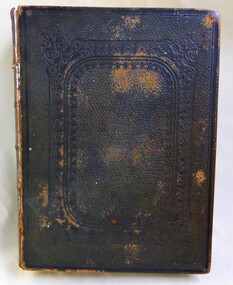
Book - The Holy Bible, 1860
... A King James version of the Bible presented to the Allansford Congregation in 1881 by J H Atkinson who was a chemist from 1848 to 1876 on the corner of Sackville and Bank Streets Port Fairy . In January 1878 he opened a pharmacy in partnership with Warrell in the Apothecaries Hall in Timor Street. Rev. Swinburn was an assistant at St Paul’s Church...St Paul’s Church, Allansford opened in 1882 and this donation would have been one of the earliest donations to the congregation. allansford st paul's allansford j h atkinson rev swinburn bible 1881 Presented to the Church of England Allansford by J.H Atkinson, Warrnambool, September 1881. ...A King James version of the Bible presented to the Allansford Congregation in 1881 by J H Atkinson who was a chemist from 1848 to 1876 on the corner of Sackville and Bank Streets Port Fairy . In January 1878 he opened a pharmacy in partnership with Warrell in the Apothecaries Hall in Timor Street. Rev. Swinburn was an assistant at St Paul’s Church in 1880.St Paul’s Church, Allansford opened in 1882 and this donation would have been one of the earliest donations to the congregation.Olive green/ brown leather cover with imprinted rectangular pattern on front and back covers. Spine has Holy Bible in gold lettering. It has dark blue ribbon page marker and gold on edges of pages.Presented to the Church of England Allansford by J.H Atkinson, Warrnambool, September 1881. Also letter from Mr Atkinson to Rev. Swinburn.allansford, st paul's allansford, j h atkinson, rev swinburn, bible, 1881 -
 Warrnambool and District Historical Society Inc.
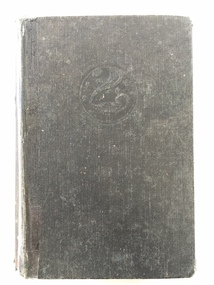
Book, Hodder and Staughton, The New Testament A New Translation - Moffatt, 1934
... The new testament is the second part of the Bible and records the teachings of Christ through the four gospels as well as the Acts of the Apostles and letters of St Paul as well as book of Revelations. It is commonly used as a book of inspiration and study within all Christian Churches. this is a new translation by James Moffatt. ...The new testament is the second part of the Bible and records the teachings of Christ through the four gospels as well as the Acts of the Apostles and letters of St Paul as well as book of Revelations. It is commonly used as a book of inspiration and study within all Christian Churches. this is a new translation by James Moffatt. ...The new testament is the second part of the Bible and records the teachings of Christ through the four gospels as well as the Acts of the Apostles and letters of St Paul as well as book of Revelations. It is commonly used as a book of inspiration and study within all Christian Churches. this is a new translation by James Moffatt. This particular copy was presented to James Cook in 1940 by the Hamilton Church of Christ Sunday School. The Cook family was also connected with the Warrnambool Church of Christ.This item has only a tenuous connection to Warrnambool and its history but is retained because of its connection to the Cook family.Dark grey cloth covered card cover with symbol of lamp in circle on front cover. Title in red on spine of book. 388 pagesPresented to James Cook from the Church of Christ Sunday School Hamilton February 1940warrnambool, church of christ sunday school, cook family, james cook -
 Eltham District Historical Society Inc
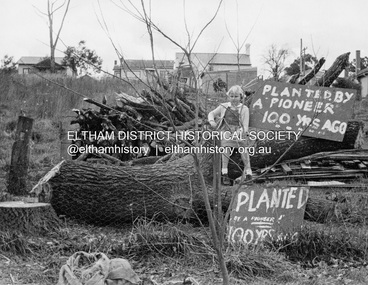
Photograph - Black and White Print, George W. Bell, Tree Protest, Franklin Street, Eltham, 1956
... Bible Street looking north, around number 91. Looking up the hill in a northerly direction, the house on the left is George Stebbing's original cottage at 88 Pitt Street, built around 1861. Little is recorded of this early Eltham builder and we have no picture of him. He arrived from England in August 1857 and settled at Eltham after a short period at Kangaroo Ground. His occupation is often listed as a farmer but he built a number of important buildings between 1860 and 1880. Those remaining include Shillinglaw Cottage (c.1858), St. Margaret’s Church...Bible Street looking north, around number 91. Looking up the hill in a northerly direction, the house on the left is George Stebbing's original cottage at 88 Pitt Street, built around 1861. Little is recorded of this early Eltham builder and we have no picture of him. He arrived from England in August 1857 and settled at Eltham after a short period at Kangaroo Ground. His occupation is often listed as a farmer but he built a number of important buildings between 1860 and 1880. Those remaining include Shillinglaw Cottage (c.1858), St. Margaret’s Church ...This was a protest that came about when some S.E.C. workers cut down two 100-year old Oak trees in Franklin Street. We have examined aerial photos from February 1956 and two large trees are present near where number 91 is today and were gone in a January 1960 image. Alistair Knox wrote about their protest against the depradations of the State Electricty Commission in his 1980 book, We are what we stand on, pp48-49. You can read about online at https://alistairknox.org/chapters/45 “Protest against the depradations of the State Electricity Commission 1956” - Alistair Knox (1980), We are what we stand on, pp48-49 “The fact that the number of trees in central Eltham has more than doubled since 1945 is an indication of how universal and powerful the movement has been. Eltham was fighting the S.E.C. and other government authorities in the 40's and 50's over the retention of indigenous trees. In the Christmas season of 1956 our conflict with them came to a dramatic confrontation that made headline news in all the daily papers for a week. It started in the Herald, was repeated in the Sun and taken up by the Age two days later. After four days, it was appearing in the New York Times.” “Some S.E.C. workers cut down two 100-year-old oak trees in Franklin Street. The inner Eltham community launched a frontal attack on bureaucratic bungling and arrogance that they have never forgotten.” “When the chairman of the Commission delivered his New Year's speech some weeks later, he emphasised that the commission's first responsibility was to protect trees. This was the antithesis of their previous attitude. For many years to come, tree-lopping Commission workers always pretended they were not there when our small explosive group passed by. With Council assistance, we also carried out free native tree plantings on the nature strips of most roads in the Central Riding in the l 950's, when the rhododendron and the gladioli flanked by pampas grass and flowering fruit trees were still being introduced into the most 'desirable' eastern suburbs.” The protest involved personalities such as Matcham Skipper; Lesley Martin; Alistair and Margot Knox and youn Hamish; Jack, Susan, Mavis and Laurel Gill; Hal Peck; Tim Burstall and Gordon Ford The location is about halfway between Main Road and Bible Street looking north, around number 91. Looking up the hill in a northerly direction, the house on the left is George Stebbing's original cottage at 88 Pitt Street, built around 1861. Little is recorded of this early Eltham builder and we have no picture of him. He arrived from England in August 1857 and settled at Eltham after a short period at Kangaroo Ground. His occupation is often listed as a farmer but he built a number of important buildings between 1860 and 1880. Those remaining include Shillinglaw Cottage (c.1858), St. Margaret’s Church (1860), Uniting Church (formerly Methodist Church 1880) and his house at 88 Pitt Street (1861). This photo was possibly used in a presentation by Russell Yeoman to the 10 November 2004 Society meeting on "Significant Trees, Wildflowers and Local Gardens" - Research by Peter Pidgeon, EDHS, June 2026 Black and white print on photo paper Also black and white slide copy of print Mount - white 7 dots (Technodia Italy)trees, eltham, protests, george w bell collection, significant tree, alistair knox, george w. bell collection, gordon ford, hal peck, hamish knox, jack gill, laurel gill, lesley martin, margot knox, matcham skipper, mavis gill, stebbing cottage, susan gill, tim burstall -
 Kiewa Valley Historical Society
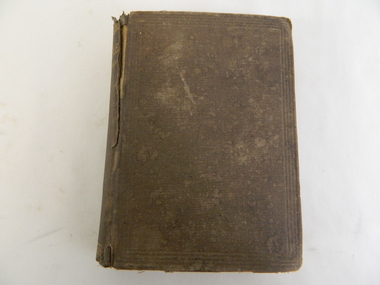
Book - Religious Education, The Holy Bible
... bible...ewen wallace...kergunyah...church...The Holy Bible was used in Sunday School at the Kergunyah Presbyterian Church. Sunday school was held in a little 16 foot square wooden building which came from Rocky Valley after it was no longer needed there. ...Religion: Presbyterian Church at Kergunyah, in the Kiewa Valley, celebrates its 125th anniversary in 2015 after being handed over to the Uniting Church in the 1970s. religion bible ewen wallace kergunyah church presbyterian sunday school religious education First page - back of - torn - ..' ...The Holy Bible was used in Sunday School at the Kergunyah Presbyterian Church. Sunday school was held in a little 16 foot square wooden building which came from Rocky Valley after it was no longer needed there. Ewen Wallace's father initiated and organised the move. C 2011 the building was knocked down because of white ants. The Presbyterian Church will be 125 years old in 2015.Historical: Religious Education: This book was used by the students at Kergunyah Presbyterian Church, Sunday School classes. Religion: Presbyterian Church at Kergunyah, in the Kiewa Valley, celebrates its 125th anniversary in 2015 after being handed over to the Uniting Church in the 1970s.Small, thick, hard covered brown book. Front cover has an embossed border of 4 lines. Spine - in gold - top and bottom thick decorated line. Top - in gold - title under which 'Revised Edition' . At Bottom 'Oxford'. Cover and 1st leaf is black and torn in half vertically at front. Pages are very thin.First page - back of - torn - ..'ah Church' written in pencil. (Presumably 'Kerguny" is the part of the word missing because torn off.religion, bible, ewen wallace, kergunyah, church, presbyterian, sunday school, religious education -
 Kiewa Valley Historical Society
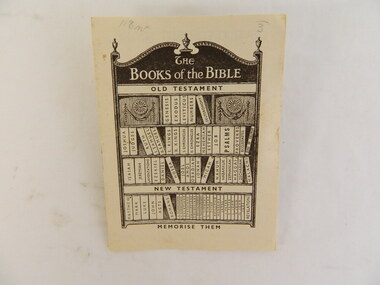
Book - Religious Education, The Books of the Bible
... bible...ewen wallaace...kergunyah...sunday school...presbyterian church...Religion: Presbyterian Church at Kergunyah, in the Kiewa Valley, celebrates its 125th anniversary in 2015 after being handed over to the Uniting Church in the 1970s. religion old testament new testament bible ewen wallaace kergunyah sunday school presbyterian church In pencil on cover top left '118mx', top right 3 (pence) Very small thin yellowish book with drawing, in black, of a gate on which is the title at the top, 'Old Testament' on the next 'shelf'. ...Students attended Sunday School classes at the Kergunyah Presbyterian Church. Sunday school was held in a little 16 foot square wooden building which came from rocky Valley after it was no longer needed there. Ewen Wallace's father initiated and organised the move. C2011 the building was knocked down because of white ants. The Presbyterian Church will be 125 years old in 2015.Historical: Religious Education: This book was used by students who attended the Sunday School classes at Kergunyah Presbyterian Church. Religion: Presbyterian Church at Kergunyah, in the Kiewa Valley, celebrates its 125th anniversary in 2015 after being handed over to the Uniting Church in the 1970s.Very small thin yellowish book with drawing, in black, of a gate on which is the title at the top, 'Old Testament' on the next 'shelf'. Then 3 shelves of books with titles (of the Old Testament) then 'New Testament on the next 'shelf'. Then 1 shelf with lots of books with titles (of the New Testament). Underneath the 'gate' are the words, also in black, "Memorise Them"In pencil on cover top left '118mx', top right 3 (pence)religion, old testament, new testament, bible, ewen wallaace, kergunyah, sunday school, presbyterian church -
 Kiewa Valley Historical Society
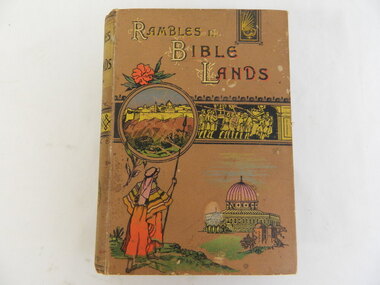
Book - Religious Education, Rambles in Bible Lands by Rev. Richard Newton, D.D
... bible...kergunyah...sunday school...sabbath school...ewen wallace...presbyterian church...church bottom left. Title in black with gold background on spine. Rambles in Bible Lands by Rev. ...Students attended Sunday School classes at the Kergunyah Presbyterian Church. Sunday school was held in a little 16 foot square wooden building which came from Rocky Valley after it was no longer needed there. Ewen Wallace's father initiated and organised the move. C2011 the building was knocked down because of white ants. The Presbyterian Church will be 125 years old in 2015. Historical: Religious Education: This book was used by students who attended the Sunday School classes at Kergunyah Presbyterian Church. Religion: Presbyterian Church at Kergunyah, in the Kiewa Valley, celebrates its 125th anniversary in 2015 after being handed over to the Uniting Church in the 1970s.Brown hard covered book with coloured pictures. Title at top - 1st letter of each word R,B,L is decorated & in gold followed by black print shaded in red. Circular picture seemingly behind it and coming out across the book (gold figures, black background). Shepherd in colour bottom right and church bottom left. Title in black with gold background on spine.(Kergunyah Sabbath School / Library) stamp on inside front cover and back coverreligion, bible, kergunyah, sunday school, sabbath school, ewen wallace, presbyterian church -
 Frankston RSL Sub Branch
Memorabilia - Book, New Testament
... This edition was published by the British and Foreign Bible Society, London in 1885, printed by Oxford University Press. The first page is stamped by the Thames Church Mission, instituted in 1844. ...CHURCH MISSION", "INSTITUTED 1844" and "30, New Bridge St., E.C." Small pocket book size New Testament with a glossy black, embossed, hard cover. This edition was published by the British and Foreign Bible ...Small pocket book size New Testament with a glossy black, embossed, hard cover. This edition was published by the British and Foreign Bible Society, London in 1885, printed by Oxford University Press. The first page is stamped by the Thames Church Mission, instituted in 1844. This was carried by WW1 serviceman J D H Wilson, service number 608, 12th Btn., AIF. Known as 'Jack' he landed at Gallipoli early on the morning of 25th April, 1915. Wilson, who was wounded in the foot at the landing was embarked on the 28th April to recuperate in England after a foot amputation. The first page has an oval shaped stamped inscription with the following "THAMES CHURCH MISSION", "INSTITUTED 1844" and "30, New Bridge St., E.C." -
 J. Ward Museum Complex
Book - Sermons, or Homilies - circa. 1861, Select Homilies
... The founders were also members of the Church Missionary Society (founded 1799) and the British and Foreign Bible Society (founded 1804). ...On May 20 1812, a group of Church of England evangelical clergy & laity met in The Freemasons' Tavern in Great Queen Street, London, to form "The Prayer Book and Homily Society." The founders were also members of the Church Missionary Society (founded 1799) and the British and Foreign Bible Society (founded 1804). The purpose of this Society was to print and distribute the Book of Common Prayer (1662) in English and in other languages, as needed by missionaries; and also to publish "The Book of Homilies" which is referred to in "The Thirty-Nine Articles of Religion" as a source of the foundational doctrine of the Church of England by law established. The Society published the Prayer Book in at least 12 languages and seems to have been at the peak of its activity in 1828-1833. The Homilies were only published in English and in editions without the critical apparatus. http://pbs1928.blogspot.com/2003/01/prayer-book-homily-society.htmlThe book has a dark green and brown leather hardback cover. There are also water stains and what appears to be mould growth. The cover has an Imprinted border around the edges of the title. The spine is torn at the top and bottom. A page is torn out between front cover and introduction page. The pages have stains from use and some foxing. On May 20 1812, a group of Church of England evangelical clergy & laity met in The Freemasons' Tavern in Great Queen Street, London, to form "The Prayer Book and Homily Society." The founders were also members of the Church Missionary Society (founded 1799) and the British and Foreign Bible Society (founded 1804). The purpose of this Society was to print and distribute the Book of Common Prayer (1662) in English and in other languages, as needed by missionaries; and also to publish "The Book of Homilies" which is referred to in "The Thirty-Nine Articles of Religion" as a source of the foundational doctrine of the Church of England by law established. The Society published the Prayer Book in at least 12 languages and seems to have been at the peak of its activity in 1828-1833. The Homilies were only published in English and in editions without the critical apparatus. http://pbs1928.blogspot.com/2003/01/prayer-book-homily-society.htmlreligion, religious text, sermons, homilies -
 Bendigo Historical Society Inc.
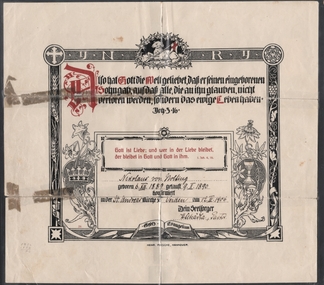
Certificate - Peter Ellis Collection - Confirmation Certificate, 12.4.1906
... confirmation into church Certificate Peter Ellis Collection - Confirmation Certificate in German for Nicholas Von Nolling, born 6/12/1889, baptised 9/2/1906, confirmed on 12/04/1906. German certificate has two quotations from the bible ...Peter Ellis Collection - Confirmation Certificate in German for Nicholas Von Nolling, born 6/12/1889, baptised 9/2/1906, confirmed on 12/04/1906. German certificate has two quotations from the bible (untranslated). Connection to Peter Ellis unknown, signed by the German Pastor. Certificate has been folded three times, and taped together prior to being laminated. Red and black printing on cream coloured card.confirmation into church, certificate -
 Bendigo Historical Society Inc.
Document - LONG GULLY HISTORY GROUP COLLECTION: SOME HISTORICAL INFORMATION
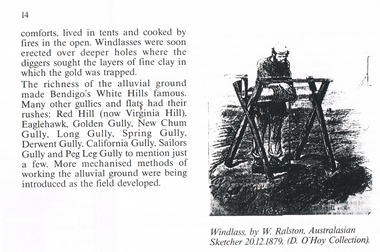
... ... Bible Christian Church...s Loyal Darling Bible Christian Church California Hill Wesleyan Methodist Church Saint Jude's Anglican Church Quartz Mining E N Emmett Jonathan Harris Haris' Claim J Hustler George Rowe Batchelder La Trobe Library Cave Amos New Chum Line of Reef Edward Nucella Emmett Bendigo City Council All Saints William Westgarth Latham and Watson Hustler's Line of Reef Bell and Irons Ballerstedt and Son Young and Company Nicholas and Bassit Ensor Thomas Carpenter Quartz Crusher Goldfields and Mineral Districts of Victoria Richard Pope Daniel Webster Mine Isaac Dyason Old Chum Mine North Old Chum Mine Young Chum Mine George Lansell Lazarus Silicosis of the lungs Eaglehawk Brass Band Victoria Hotel Mr Williams Eaglehawk Branch of the Australian Natives Association Loyal Catherine Lodge Mr James Odd Fellows in the Loyal Catherine Lodge Branch No 4935 Richard harvey Thomas Harvey Moonta Copper Mines harvey Town National Trust of Australia Eaglehawk Tree Lovers Society Saint Mungo's Methodist Church Clark's Beehive battery World War 1 Kee-Young Lady Barkly Hotel Prankhurst Bull Family Cousin Jack St Augustine's Myers Nicholls John O'Brien Around the Boree Log the Rev Dean hayes St Kilian's Bendigo Amalgamated Goldfields (B.A.G.) ...BHS Collection12 photocopied pages. Page four has acknowledgements, Page five mentions Pen-Portraist by Raly Wallace and Kevin Vallence, Page 14 mentions some rich areas: White Hills, Red Hill (now Virginia Hill), Eaglehawk, Golden Gully, New Chum Gully, Long Gully, Spring Gully, Derwent Gully, California Gully, Sailors Gully and Peg Leg Gully. There are two sketches on the page: Windless, by W. Ralston, Australasian Sketcher 20/12/1879 (D O'Hoy Collection) and a sketch of some miners in a tent with some mining equipment in front of it. There are two men in front of a fire at the front of the tent. Page 16 has a sketch of an old brick house with iron lace on the veranda and a picket fence at the front. Page 17 mentions the school and some Friendly Societies and Church. Page 22 mentions Quartz Mining. There is a Lithograph of a Quartz outcrop, New Chum Gully 1852 by George Rowe and a View of Surface Workings 1861, a Batchelder Photo. Page 23 mentions Edward Nucella Emmett, a pioneer gold digger who became involved in many important public issues. Page 25 mentions Company Mining and Crushing. It has a sketch of a Primitive Quart Crusher. Page 37 Mentions Richard Pope, a Miner who tramped from job to job in Bendigo and eventually followed the rush to Broken Hill. Page 38 mentions the Eaglehawk Brass Band and Friendly Societies in Eaglehawk. Page 39 is headed Miner's Cottage. It mentions stone miners' cottages. Page 40 has a sketch of a Georgian Style Sandstone Cottage Harvey Town. Page 41 mentions men sweeping the road to get gold, Bull Family grocery shop and a blacksmith. Page 42 is headed St. Augustine's. Page 43 has a sketch of St. Augustine's Church. Page 59 is headed Bendigo Amalgamated Goldfields (B.A.G.) Edward Clarence Dyason was largely behind a new company set up in 1917 to work the Bendigo field in an entirely new way. (B.A.G.) wished to take over all existing mining companies, and place them under a single management structure.bendigo, history, long gully history group, the long gully history group - some historical information, mr l hooley, mr l bennetts, mr w watson, mr w heraud, mr d m davies, mr w perry, mr h harvey, mr a llewellyn, mr e oates, chook temple by mr alan llewellyn, mr f cusack, tracey ipsen, ray wallace, bendigo field naturalists' club, eaglehawk tree lovers' society, bendigo historical society, university of melbourne, kevin vallence, monash university, bendigo technical college, south australian writer's fellowship, windlass, w ralston, australasian sketcher 20.12.1879, d o'hoy, mechanics institute, california gully school, bell topper hill, i.o.r. (rechabites), cobden tent, refuge tent, sutton tent, m.u.i.o.o.f.'s loyal darling, bible christian church, california hill wesleyan methodist church, saint jude's anglican church, quartz mining, e n emmett, jonathan harris, haris' claim, j hustler, george rowe, batchelder, la trobe library, cave, amos, new chum line of reef, edward nucella emmett, bendigo city council, all saints, william westgarth, latham and watson, hustler's line of reef, bell and irons, ballerstedt and son, young and company, nicholas and bassit, ensor, thomas carpenter, quartz crusher, goldfields and mineral districts of victoria, richard pope, daniel webster mine, isaac dyason, old chum mine, north old chum mine, young chum mine, george lansell, lazarus, silicosis of the lungs, eaglehawk brass band, victoria hotel, mr williams, eaglehawk branch of the australian natives association, loyal catherine lodge, mr james, odd fellows in the loyal catherine lodge branch no 4935, richard harvey, thomas harvey, moonta copper mines, harvey town, national trust of australia, eaglehawk tree lovers society, saint mungo's methodist church, clark's beehive battery, world war 1, kee-young, lady barkly hotel, prankhurst, bull family, cousin jack, st augustine's, myers, nicholls, john o'brien, around the boree log, the rev dean hayes, st kilian's, bendigo amalgamated goldfields (b.a.g.), edward clarence dyason, r h s abbott, hercules and energetic, south new moon, new chum goldfields, central red white and blue consolidated, brown john, the life and times of long gully, bendigo press, val white, megan snoop -
 Bendigo Historical Society Inc.
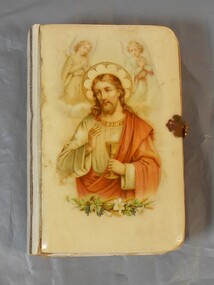
Book - German Bible
... The first Lutheran Church was built in 1865 and there were also two German schools. German Bible Religion Small bible with hard cover, possibly bakelite/plastic. ...There was a large influx of German miners to the Bendigo gold fields and they mainly focussed on deep quartz mining. German enclaves existed at Diamond Hill, New Chum Gully, Victoria Hill, Ironbark and in the Whipstick area. The first Lutheran Church was built in 1865 and there were also two German schools. Small bible with hard cover, possibly bakelite/plastic. The cover has an image of Jesus with and angel above each of his shoulders and plants at the bottom of the image. Pages of bible have gold edging. There is a metal clasp to lock. The back is plain and a creamy color.german, bible, religion -
 Bendigo Historical Society Inc.
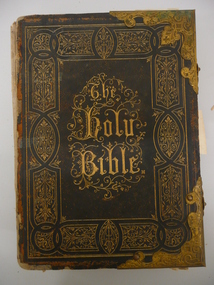
Book - ABBOTT FAMILY BIBLE, 1866
... Bible of Alexander Tamlyn Roberts & Elizabeth Ann (Abbott) Contains family history & colour prints. Inscription reads Alexander Tamlyn Roberts born Newlyn Cornwall February 15th 1839, wife Elizabeth Ann London June 3rd 1847 married April 18th 1866 at St.Peters church Eaglehawk Bendigo....Bible of Alexander Tamlyn Roberts & Elizabeth Ann (Abbott) Contains family history & colour prints. Inscription reads Alexander Tamlyn Roberts born Newlyn Cornwall February 15th 1839, wife Elizabeth Ann London June 3rd 1847 married April 18th 1866 at St.Peters church Eaglehawk Bendigo. ...Abbott collection old leather bound Bible with brass corners & clasp, family Bible of Alexander Tamlyn Roberts & Elizabeth Ann (Abbott) Contains family history & colour prints. Inscription reads Alexander Tamlyn Roberts born Newlyn Cornwall February 15th 1839, wife Elizabeth Ann London June 3rd 1847 married April 18th 1866 at St.Peters church Eaglehawk Bendigo.personal effects, religious, bible -
 Bendigo Historical Society Inc.
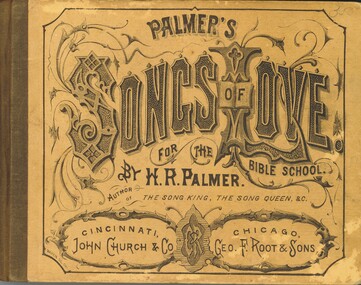
Book - PALMERS SONGS OF LOVE FOR THE BIBLE SCHOOL, 1885
... Palmers Songs of Love for the Bible School, published by John Church & Co Cincinnati & Geo F Root & sons Chicago. ...BOOKS Music religion H.R.Palmer Palmers Songs of Love for the Bible School, published by John Church & Co Cincinnati & Geo F Root & sons Chicago. ...Palmers Songs of Love for the Bible School, published by John Church & Co Cincinnati & Geo F Root & sons Chicago. Written inside front cover in ink 'G.A.Pethard Ballarat 1885.'H.R.Palmerbooks, music, religion -
 Invermay Local History Association
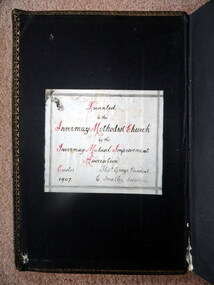
Bible, London: British and Foreign Bible Society
... Church by the Invermay Mutual Improvement Association, Easter 1907. Thos. Crago, President and E. Smalley, Secretary. Embossed leather bound volume featuring hand tooled decoration in inside edges front and back. Paper featuring inscription glued to inside front cover. Bible ...Embossed leather bound volume featuring hand tooled decoration in inside edges front and back. Paper featuring inscription glued to inside front cover.Inscribed inside front cover: Presented to the Invermay Methodist Church by the Invermay Mutual Improvement Association, Easter 1907. Thos. Crago, President and E. Smalley, Secretary. -
 Bendigo Historical Society Inc.
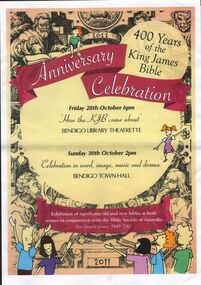
Document - BARBARA MAMOUNEYCOLLECTION: POSTERS ANNIVERSARY CELEBRATION
... Bible, Friday 28th October 6pm 'How the KJB came about' Bendigo Library Theatrette. Sunday 30th October 2pm 'Celebration in word,image,music and drama' Bendigo Town Hall. The second in black and white, Golden Square Uniting Church...church Two posters. The first in colour celebrating 400 years of the King James Bible, Friday 28th October 6pm 'How the KJB came about' Bendigo Library Theatrette. ...Two posters. The first in colour celebrating 400 years of the King James Bible, Friday 28th October 6pm 'How the KJB came about' Bendigo Library Theatrette. Sunday 30th October 2pm 'Celebration in word,image,music and drama' Bendigo Town Hall. The second in black and white, Golden Square Uniting Church 'Pleasant Sunday Afternoon' Sunday May 1st 2.15pm. Celebrating the Cornish heritage at the site of the first Church of the Goldfields. Featuring: The Victorian Cornish Singers, The Bendigo Cornish Choir. Guest of Honour: Ann Trevenen Jenkin (Past Grand Bard of Cornwell).bendigo, church, golden square methodist church -
 Bendigo Historical Society Inc.
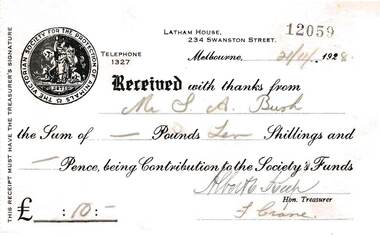
Document - BUSH COLLECTION: COLLECTION OF RECEIPTS (CHARITIES), 1920 - 1930
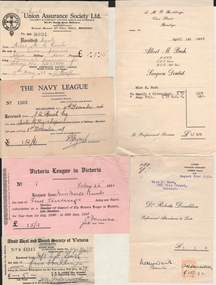
... Bush. 1202.21 Receipts to Charities 1923 – 1930 The Australian Christian World Salvation Army Soldiers’ and Sailors’ Fathers Association of Victoria The Navy League Bendigo Musical, Literary, Elocutionary and Calisthenics Competitions Prayer Union for Israel United Country Fire Brigades Demonstrations St Paul’s Church Building Funds and Church Donations Girl Guides ‘Association The Bendigo Choral Society Distressed Wives and Families Fund Seaside Garden Home for Boys (Phillip Island) Victorian Society for the protection of Animals British and foreign Bible Society Victorian Anti Liquor League and Victorian Prohibition League Burwood Boys’ Home Victorian Band of Hope and Junior Temperance Union Missionary Birthday Band Adult Deaf and Dumb Society of Victoria Returned Sailors and Soldiers Imperial League of Australia Association for the Advancement of the Blind and Home for the Adult Blind Bendigo Church News Birthday Gift to Merle Bush*u...Bush. 1202.21 Receipts to Charities 1923 – 1930 The Australian Christian World Salvation Army Soldiers’ and Sailors’ Fathers Association of Victoria The Navy League Bendigo Musical, Literary, Elocutionary and Calisthenics Competitions Prayer Union for Israel United Country Fire Brigades Demonstrations St Paul’s Church Building Funds and Church Donations Girl Guides ‘Association The Bendigo Choral Society Distressed Wives and Families Fund Seaside Garden Home for Boys (Phillip Island) Victorian Society for the protection of Animals British and foreign Bible Society Victorian Anti Liquor League and Victorian Prohibition League Burwood Boys’ Home Victorian Band of Hope and Junior Temperance Union Missionary Birthday Band Adult Deaf and Dumb Society of Victoria Returned Sailors and Soldiers Imperial League of Australia Association for the Advancement of the Blind and Home for the Adult Blind Bendigo Church News Birthday Gift to Merle Bush*u Document BUSH COLLECTION: COLLECTION OF RECEIPTS (CHARITIES) ...Collection of approximately 87 receipts of various charities supported by S. A. Bush. 1202.21 Receipts to Charities 1923 – 1930 The Australian Christian World Salvation Army Soldiers’ and Sailors’ Fathers Association of Victoria The Navy League Bendigo Musical, Literary, Elocutionary and Calisthenics Competitions Prayer Union for Israel United Country Fire Brigades Demonstrations St Paul’s Church Building Funds and Church Donations Girl Guides ‘Association The Bendigo Choral Society Distressed Wives and Families Fund Seaside Garden Home for Boys (Phillip Island) Victorian Society for the protection of Animals British and foreign Bible Society Victorian Anti Liquor League and Victorian Prohibition League Burwood Boys’ Home Victorian Band of Hope and Junior Temperance Union Missionary Birthday Band Adult Deaf and Dumb Society of Victoria Returned Sailors and Soldiers Imperial League of Australia Association for the Advancement of the Blind and Home for the Adult Blind Bendigo Church News Birthday Gift to Merle Bush*uperson, individual, bush collection - personal -
 Bendigo Historical Society Inc.
Document - DRAFT ARTICLES FOR RHSV (BENDIGO) NEWSLETTER, MAY 1972
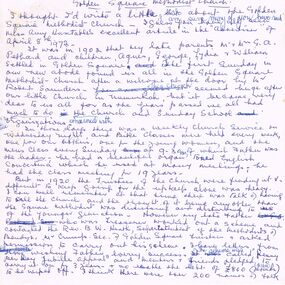
... ''Golden Square Methodist Church'' by Lydia Chancellor - memories of church services, Sunday School and Bible classes. Mention of (Minister?) ...''Golden Square Methodist Church'' by Lydia Chancellor - memories of church services, Sunday School and Bible classes. Mention of (Minister?) ...Draft articles for RHSV (Bendigo) Newsletter, May 1972. 1. ''Golden Square Methodist Church'' by Lydia Chancellor - memories of church services, Sunday School and Bible classes. Mention of (Minister?) Mr Robert Saunders. Also - Rev B W Heath; Mr Crump, Rev Henry Worrall; reference to Jubilee of church in 1923. 2. Article submitted by Mrs E M Checcucci re the 'White Works' (clothing factory making underwear at the top of Wattle Street) - visited by Prince of Wales in 1920; 3. Handwritten and typewritten version of ''Extracts from the 'Sandhurst Library Almanac 1858', published by P M Sparkes, Bookseller and Stationer (four doors from Shamrock Hotel). Names listed of officers of the 40th Foot (Captain's detachment); Location of two cemeteries; Municipal Council of 1858 - Chairman and councillors and meeting times and place; Police Department - names listed of officers of department, Sandhurst Municipality, 'The District' and Eaglehawk Township (names for the last being only on the handwritten copy); 4. Article (w Perry) ''Australian Aboriginals on the Bendigo Gold Field’’ reference to ''King Charlie'' and finding of gold by him (reference to this in the Bendigo Advertiser 1856 & 1857). The gold purchased by a Mr Bannerman; 5. Article on introduction of gas in Bendigo (by I Hendry). Ref to ''Spotlight'' article in Advertiser of Oct 13, 1950. Mention of Mr Dondy (first user of gas in Bendigo); early use and price of gar; poor gas pressure in Eaglehawk; 6. Handwritten article submitted by John O'C Hattam re 'Indian Hawkers in Bendigo': with request to members to join him in further researching this interesting project; mention of accommodation in Hopetoun Street in terrace houses of the same design as Specimen Cottage (''now occupied by ' Glover??? Mills - but referred to in printed Newsletter of April/May 1972 as ''a site occupied by a clothing factory''); mention of hawkers by name - Rajah Singh, Mahonett Betth, Mahonett Shang, Rajah Bouth, Mahoety Bux, Abdul Rahman (last hawker)document, names of bendigo pioneers, bendigo advertiser -
 Bendigo Historical Society Inc.
Document - BUSH COLLECTION: ASSORTED INVOICES/RECEIPTS RE BUSH FAMILY, 1926-1939
... Adult deaf and Dumb Society of Victoria, Union Assurance Society, British and Foreign Bible Society, Victoria League in Victoria, The Church Missionary Society, The Navy League, Victorian Railways Commissioners, The Girl Guides' Association, Robert Batchelor dentist, Albert M. ...Adult deaf and Dumb Society of Victoria, Union Assurance Society, British and Foreign Bible Society, Victoria League in Victoria, The Church Missionary Society, The Navy League, Victorian Railways Commissioners, The Girl Guides' Association, Robert Batchelor dentist, Albert M. ...Assorted invoices/receipts re Bush family. Bendigo and Melbourne business for Mr S Bush & Miss Merle Bush. Receipts from businesses, charities and municipal sources. Adult deaf and Dumb Society of Victoria, Union Assurance Society, British and Foreign Bible Society, Victoria League in Victoria, The Church Missionary Society, The Navy League, Victorian Railways Commissioners, The Girl Guides' Association, Robert Batchelor dentist, Albert M. Bush, Foy and Gibson Pty Ltd, Hartley's, T.S. Glasier & Co, W.H. Osborn Pty Ltd, The Northern Seed Supply, Myer Emporium, William Lunn, Allan & Co, Chaucher Library and Book Shop, State Rivers and Water Supply Commission, City of Bendigo, Bendigo Sewerage Authority, Bendigo Gas Company, Bendigo Electricity Supply and Tramways, Bendigo Electricity Supply, Howard Pty Ltd, R. O. Henderson, Vacuette Company, Sands McDougall Pty Ltd, Colonial Gas Association, Stilwell's, Provincial Motors Pty Ltd.person, family, bush collection (family -
 Bendigo Historical Society Inc.
Book - NO SEPARATION
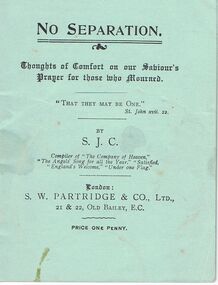
... church and people' No Separation S. J. C. S W Partridge & Co Ltd Saxe Holm Gerald Massey S. S. B. Clifford Harrison Dinah Mulock Craik Lord Houghton Lyman Abbott Longfellow P J Bailey Small, pale green 28 page booklet titled 'No Separation'. Thoughts of Comfort on our Saviour's Prayer for those who mourned. By S. J. C. Printed by S. W. Partridge & Co., Ltd, Old Bailey, E. C. Booklet contains poetry, words of comfort and Bible ...Small, pale green 28 page booklet titled 'No Separation'. Thoughts of Comfort on our Saviour's Prayer for those who mourned. By S. J. C. Printed by S. W. Partridge & Co., Ltd, Old Bailey, E. C. Booklet contains poetry, words of comfort and Bible Quotations.religions, christian, 'church and people', no separation, s. j. c., s w partridge & co ltd, saxe holm, gerald massey, s. s. b., clifford harrison, dinah mulock craik, lord houghton, lyman abbott, longfellow, p j bailey -
 Bendigo Historical Society Inc.
Book - ST JOHN'S PRESBYTERIAN CHURCH, c1972
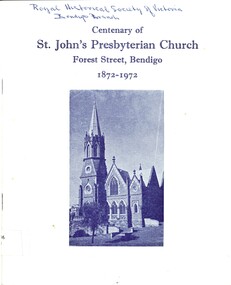
... The history goes on detailing the growth of the organisations in the church; Choir, Sunday School Sunday School Ladies Auxiliary, PWMU, Afernoon Fellowship, Ladies Guild, PGF, Men's Club and Brotherhood, Bible Class, Sporting Clubs, PFA, Mission Band, Creche, Cradle Roll, Board of Management. ...The history goes on detailing the growth of the organisations in the church; Choir, Sunday School Sunday School Ladies Auxiliary, PWMU, Afernoon Fellowship, Ladies Guild, PGF, Men's Club and Brotherhood, Bible Class, Sporting Clubs, PFA, Mission Band, Creche, Cradle Roll, Board of Management. ...Centenary of St. John's Presbyterian Church Forest Street, Bendigo 1872-1972. List of former Ministers of St. John's Church. A brief account of the history of the church is given. Extracts from minutes of Presbytery Church of Castlemaine 2/7/1872 states that they had not yet held any Sabbath Services in Sandhurst a grant not exceeding Twenty Pounds to meet the expenses of such Services necessary to establish a Second Charge in Sandhurst. Services were conducted in the Albion Hall, collections were obtained were liberal, Memorial signed by 104 members and adherents who expressed their desire to be recognized as a Congregation. St. John's first met at the Orderly Room (site of the Art Gallery), then at the Albion Hall (site of the Royal Princess Theatre), they then moved to St. James Hall (now Myer Store). In 1874 a weatherboard church in Forest St. was erected seating 550 persons, and named St. John's Presbyterian Church. It then became known as St John's Free Church and in 1880 it was admitted into the Presbyterian Church of Victoria and named Chalmer's Church. History accounts goes on to explain the further changes which happened within the church to 1972. Many other details have been included in the book such as the costs of the pews the 'Ladies Work Committee', a monthly church paper, Anniversary platform, securing a Manse, the year of the 'black-out', food parcels, the purchase of a building, the pioneering of religious films in church services, renovations, Sunday School, Stewardship Campaign, electronic organ. The history goes on detailing the growth of the organisations in the church; Choir, Sunday School Sunday School Ladies Auxiliary, PWMU, Afernoon Fellowship, Ladies Guild, PGF, Men's Club and Brotherhood, Bible Class, Sporting Clubs, PFA, Mission Band, Creche, Cradle Roll, Board of Management. A list of 'Memorials and Other Gifts Through the Years' from 1904 to 1972. Present 'Office Bearers of the Church'. Photo of present church on front cover, on rear cover is the church erected in 1897. With Indexchurch, centenary, st john's bendigo, st john's presbyterian church forest street bendigo centenary -
Otway Districts Historical Society
portable pulpit or lectern, first decade of 20th Century
... Church. Local Timber by Tom Parsons Esq." A blackwood timber pulpit with folding side panels, designed to be portable. Simple carving on centre front panel, and a lectern stand for Bible or other book. portable pulpit or lectern ...The lectern is said to have been used by John Flynn ('Flynn of the Inland' - 1880 - 1951) when he was stationed in the Beech Forest - Lavers Hill area prior to his being ordained as a minister of the Presbyterian Church. Flynn arrived in Beech Forest in 1903 as a home missionary, and for around two years he conducted services in homes, camps and public halls in the Otways. In 1912 Flynn established the Australian Inland Mission, setting up hospitals and hostels across inland Australia, and inspiring the Royal Flying Doctor ServiceThis item was purported to have been used by Reverend John Flynn for services in various locations during his time in the Otways area prior to his more well know work in inland Australia.A blackwood timber pulpit with folding side panels, designed to be portable. Simple carving on centre front panel, and a lectern stand for Bible or other book. Simple trefoil engraving on centre front panel. Small metal plaque reads "Lectern 1910 Lavers Hill Pres. Church. Local Timber by Tom Parsons Esq."john flynn, churches, pulpit
