
Showing 2447 items matching "williamstown"
-
 Williamstown Historical Society Inc
Postcard - Alice Evans Postcard Collection, 1905-1909
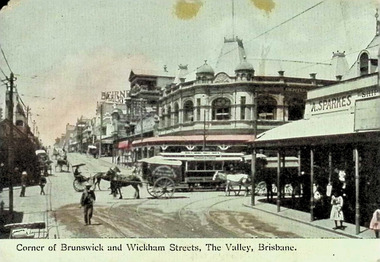
... She is buried in Williamstown Cemetery. ...Alice Edith Evans was born in Williamstown in 1885 to parents Benjamin Samuel Evans (1833-1900), a bootmaker from Ruabon, Denbighshire, Wales and Catherine (nee Jones) (1850-1915) from Eaglehawk, near Castlemaine. ..."Dear Alice" Is a collection of 142 Postcards from Australia and around world, almost all of which are addressed to Miss Alice Evans, No. 2 Cox Gardens, Williamstown, dated between 1905 - 1909. These postcards form part of a collection found in the ceiling of No. 2 Cox Gardens by a local builder and carpenter Gordon Peterson. Peterson was contracted to demolish the house in the mid 1970's. The cards were held in the Estate of Gordon Peterson, along with a photo of the cottage, before demolition until donation to the historical society by his descendants in 2024. Alice Edith Evans was born in Williamstown in 1885 to parents Benjamin Samuel Evans (1833-1900), a bootmaker from Ruabon, Denbighshire, Wales and Catherine (nee Jones) (1850-1915) from Eaglehawk, near Castlemaine. Alice had three older step sisters, and two younger brothers, Benjamin and Samuel, who sadly died in infancy. Alice’s father, Benjamin, had been married previously, his wife dying during childbirth, leaving him with three daughters to care for. After leaving school, Alice was employed as a clerk with Trevor Jones & Co. (real estate agents), until her declining health prevented her from working. She was an active and well known member of the Welsh Church and Sunday School on Ferguson Street and enjoyed singing and playing in local concerts. Well known in the community, a Grand Benefit Concert was organised in her honour on 9th April, 1910, at the Mechanics Institute, Williamstown. Hosted by Mayor Cr. Wymark, the event featured a delightful program of musical performances, showcasing both individual talents and the Carlton Club Choir. Tragically, Alice passed away due to the effects of her illness on 3rd December 1910, at the age of just 25. She is buried in Williamstown Cemetery. The postcards, written between 1905 to 1909, illustrate the social history of residents and everyday life at the turn of the century, using postcards as a means of communication.Part of the collection of 142 Postcards. This coloured image depicts the corner of Brunswick and Wickham Street, The Valley, BrisbaneBrunswick and Wickham Street, The Valley, Brisbanebrisbane, the valley, alice evans postcards -
 Williamstown Historical Society Inc
Postcard - Alice Evans Postcard Collection, 1905-1909
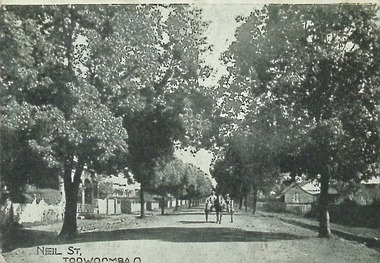
... She is buried in Williamstown Cemetery. ...Alice Edith Evans was born in Williamstown in 1885 to parents Benjamin Samuel Evans (1833-1900), a bootmaker from Ruabon, Denbighshire, Wales and Catherine (nee Jones) (1850-1915) from Eaglehawk, near Castlemaine. ..."Dear Alice" Is a collection of 142 Postcards from Australia and around world, almost all of which are addressed to Miss Alice Evans, No. 2 Cox Gardens, Williamstown, dated between 1905 - 1909. These postcards form part of a collection found in the ceiling of No. 2 Cox Gardens by a local builder and carpenter Gordon Peterson. Peterson was contracted to demolish the house in the mid 1970's. The cards were held in the Estate of Gordon Peterson, along with a photo of the cottage, before demolition until donation to the historical society by his descendants in 2024. Alice Edith Evans was born in Williamstown in 1885 to parents Benjamin Samuel Evans (1833-1900), a bootmaker from Ruabon, Denbighshire, Wales and Catherine (nee Jones) (1850-1915) from Eaglehawk, near Castlemaine. Alice had three older step sisters, and two younger brothers, Benjamin and Samuel, who sadly died in infancy. Alice’s father, Benjamin, had been married previously, his wife dying during childbirth, leaving him with three daughters to care for. After leaving school, Alice was employed as a clerk with Trevor Jones & Co. (real estate agents), until her declining health prevented her from working. She was an active and well known member of the Welsh Church and Sunday School on Ferguson Street and enjoyed singing and playing in local concerts. Well known in the community, a Grand Benefit Concert was organised in her honour on 9th April, 1910, at the Mechanics Institute, Williamstown. Hosted by Mayor Cr. Wymark, the event featured a delightful program of musical performances, showcasing both individual talents and the Carlton Club Choir. Tragically, Alice passed away due to the effects of her illness on 3rd December 1910, at the age of just 25. She is buried in Williamstown Cemetery. The postcards, written between 1905 to 1909, illustrate the social history of residents and everyday life at the turn of the century, using postcards as a means of communication.Part of a collection of 142 Postcards. This b&w image is of Neil Street, Toowoomba, QueenslandNeil Street, Toowoombatoowoomba, neil street, alice evans postcards -
 Williamstown Historical Society Inc
Postcard - Alice Evans Postcard Collection, 1905-1909
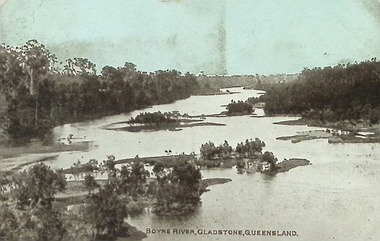
... She is buried in Williamstown Cemetery. ...Alice Edith Evans was born in Williamstown in 1885 to parents Benjamin Samuel Evans (1833-1900), a bootmaker from Ruabon, Denbighshire, Wales and Catherine (nee Jones) (1850-1915) from Eaglehawk, near Castlemaine. ..."Dear Alice" Is a collection of 142 Postcards from Australia and around world, almost all of which are addressed to Miss Alice Evans, No. 2 Cox Gardens, Williamstown, dated between 1905 - 1909. These postcards form part of a collection found in the ceiling of No. 2 Cox Gardens by a local builder and carpenter Gordon Peterson. Peterson was contracted to demolish the house in the mid 1970's. The cards were held in the Estate of Gordon Peterson, along with a photo of the cottage, before demolition until donation to the historical society by his descendants in 2024. Alice Edith Evans was born in Williamstown in 1885 to parents Benjamin Samuel Evans (1833-1900), a bootmaker from Ruabon, Denbighshire, Wales and Catherine (nee Jones) (1850-1915) from Eaglehawk, near Castlemaine. Alice had three older step sisters, and two younger brothers, Benjamin and Samuel, who sadly died in infancy. Alice’s father, Benjamin, had been married previously, his wife dying during childbirth, leaving him with three daughters to care for. After leaving school, Alice was employed as a clerk with Trevor Jones & Co. (real estate agents), until her declining health prevented her from working. She was an active and well known member of the Welsh Church and Sunday School on Ferguson Street and enjoyed singing and playing in local concerts. Well known in the community, a Grand Benefit Concert was organised in her honour on 9th April, 1910, at the Mechanics Institute, Williamstown. Hosted by Mayor Cr. Wymark, the event featured a delightful program of musical performances, showcasing both individual talents and the Carlton Club Choir. Tragically, Alice passed away due to the effects of her illness on 3rd December 1910, at the age of just 25. She is buried in Williamstown Cemetery. The postcards, written between 1905 to 1909, illustrate the social history of residents and everyday life at the turn of the century, using postcards as a means of communication.Part of a collection of 142 Postcards. This coloured image depicts Boyne River, Gladstone, QueenslandBoyne River, Gladstone, Queenslandgladstone, boyne river, queensland, alice evans postcards -
 Williamstown Historical Society Inc
Postcard - Alice Evans Postcard Collection, 1905-1909
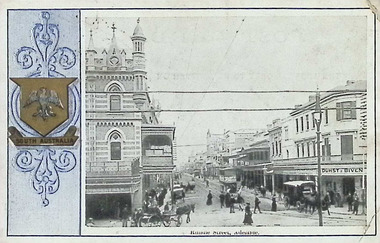
... She is buried in Williamstown Cemetery. ...Alice Edith Evans was born in Williamstown in 1885 to parents Benjamin Samuel Evans (1833-1900), a bootmaker from Ruabon, Denbighshire, Wales and Catherine (nee Jones) (1850-1915) from Eaglehawk, near Castlemaine. ..."Dear Alice" Is a collection of 142 Postcards from Australia and around world, almost all of which are addressed to Miss Alice Evans, No. 2 Cox Gardens, Williamstown, dated between 1905 - 1909. These postcards form part of a collection found in the ceiling of No. 2 Cox Gardens by a local builder and carpenter Gordon Peterson. Peterson was contracted to demolish the house in the mid 1970's. The cards were held in the Estate of Gordon Peterson, along with a photo of the cottage, before demolition until donation to the historical society by his descendants in 2024. Alice Edith Evans was born in Williamstown in 1885 to parents Benjamin Samuel Evans (1833-1900), a bootmaker from Ruabon, Denbighshire, Wales and Catherine (nee Jones) (1850-1915) from Eaglehawk, near Castlemaine. Alice had three older step sisters, and two younger brothers, Benjamin and Samuel, who sadly died in infancy. Alice’s father, Benjamin, had been married previously, his wife dying during childbirth, leaving him with three daughters to care for. After leaving school, Alice was employed as a clerk with Trevor Jones & Co. (real estate agents), until her declining health prevented her from working. She was an active and well known member of the Welsh Church and Sunday School on Ferguson Street and enjoyed singing and playing in local concerts. Well known in the community, a Grand Benefit Concert was organised in her honour on 9th April, 1910, at the Mechanics Institute, Williamstown. Hosted by Mayor Cr. Wymark, the event featured a delightful program of musical performances, showcasing both individual talents and the Carlton Club Choir. Tragically, Alice passed away due to the effects of her illness on 3rd December 1910, at the age of just 25. She is buried in Williamstown Cemetery. The postcards, written between 1905 to 1909, illustrate the social history of residents and everyday life at the turn of the century, using postcards as a means of communication.part of a collection of 142 Postcards. This image depicts Rundle Street, Adelaide, South AustraliaRundle Street, Adelaide, South Australiaadelaide, rundle street, south australia, alice evans postcards -
 Williamstown Historical Society Inc
Postcard - Alice Evans Postcard Collection, 1905-1909
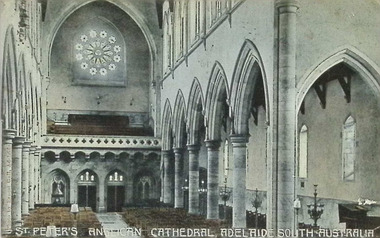
... She is buried in Williamstown Cemetery. ...Alice Edith Evans was born in Williamstown in 1885 to parents Benjamin Samuel Evans (1833-1900), a bootmaker from Ruabon, Denbighshire, Wales and Catherine (nee Jones) (1850-1915) from Eaglehawk, near Castlemaine. ..."Dear Alice" Is a collection of 142 Postcards from Australia and around world, almost all of which are addressed to Miss Alice Evans, No. 2 Cox Gardens, Williamstown, dated between 1905 - 1909. These postcards form part of a collection found in the ceiling of No. 2 Cox Gardens by a local builder and carpenter Gordon Peterson. Peterson was contracted to demolish the house in the mid 1970's. The cards were held in the Estate of Gordon Peterson, along with a photo of the cottage, before demolition until donation to the historical society by his descendants in 2024. Alice Edith Evans was born in Williamstown in 1885 to parents Benjamin Samuel Evans (1833-1900), a bootmaker from Ruabon, Denbighshire, Wales and Catherine (nee Jones) (1850-1915) from Eaglehawk, near Castlemaine. Alice had three older step sisters, and two younger brothers, Benjamin and Samuel, who sadly died in infancy. Alice’s father, Benjamin, had been married previously, his wife dying during childbirth, leaving him with three daughters to care for. After leaving school, Alice was employed as a clerk with Trevor Jones & Co. (real estate agents), until her declining health prevented her from working. She was an active and well known member of the Welsh Church and Sunday School on Ferguson Street and enjoyed singing and playing in local concerts. Well known in the community, a Grand Benefit Concert was organised in her honour on 9th April, 1910, at the Mechanics Institute, Williamstown. Hosted by Mayor Cr. Wymark, the event featured a delightful program of musical performances, showcasing both individual talents and the Carlton Club Choir. Tragically, Alice passed away due to the effects of her illness on 3rd December 1910, at the age of just 25. She is buried in Williamstown Cemetery. The postcards, written between 1905 to 1909, illustrate the social history of residents and everyday life at the turn of the century, using postcards as a means of communication.Part of a collection of 142 Postcards. This image is of the interior of St Peters Anglican Cathedral, Adelaide, South AustraliaSt Peters Anglican Cathedral, Adelaide, South Australiast peters anglican cathedral, adelaide, south australia, alice evans postcards, church -
 Williamstown Historical Society Inc
Postcard - Alice Evans Postcard Collection, 1905-1909
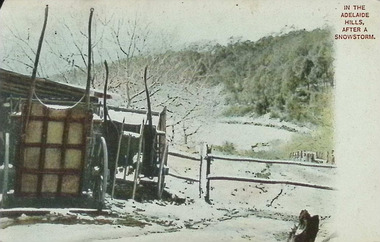
... She is buried in Williamstown Cemetery. ...Alice Edith Evans was born in Williamstown in 1885 to parents Benjamin Samuel Evans (1833-1900), a bootmaker from Ruabon, Denbighshire, Wales and Catherine (nee Jones) (1850-1915) from Eaglehawk, near Castlemaine. ..."Dear Alice" Is a collection of 142 Postcards from Australia and around world, almost all of which are addressed to Miss Alice Evans, No. 2 Cox Gardens, Williamstown, dated between 1905 - 1909. These postcards form part of a collection found in the ceiling of No. 2 Cox Gardens by a local builder and carpenter Gordon Peterson. Peterson was contracted to demolish the house in the mid 1970's. The cards were held in the Estate of Gordon Peterson, along with a photo of the cottage, before demolition until donation to the historical society by his descendants in 2024. Alice Edith Evans was born in Williamstown in 1885 to parents Benjamin Samuel Evans (1833-1900), a bootmaker from Ruabon, Denbighshire, Wales and Catherine (nee Jones) (1850-1915) from Eaglehawk, near Castlemaine. Alice had three older step sisters, and two younger brothers, Benjamin and Samuel, who sadly died in infancy. Alice’s father, Benjamin, had been married previously, his wife dying during childbirth, leaving him with three daughters to care for. After leaving school, Alice was employed as a clerk with Trevor Jones & Co. (real estate agents), until her declining health prevented her from working. She was an active and well known member of the Welsh Church and Sunday School on Ferguson Street and enjoyed singing and playing in local concerts. Well known in the community, a Grand Benefit Concert was organised in her honour on 9th April, 1910, at the Mechanics Institute, Williamstown. Hosted by Mayor Cr. Wymark, the event featured a delightful program of musical performances, showcasing both individual talents and the Carlton Club Choir. Tragically, Alice passed away due to the effects of her illness on 3rd December 1910, at the age of just 25. She is buried in Williamstown Cemetery. The postcards, written between 1905 to 1909, illustrate the social history of residents and everyday life at the turn of the century, using postcards as a means of communication.Part of a collection of 142 Postcards.This coloured image depicts the Adelaide Hills, after a snowstormIn the Adelaide Hills, after a snowstormadelaide hills, snowstorm, south australia, alice evans postcards -
 Williamstown Historical Society Inc
Postcard - Alice Evans Postcard Collection, 1905-1909
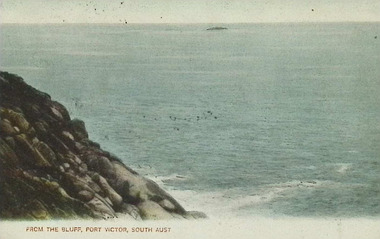
... She is buried in Williamstown Cemetery. ...Alice Edith Evans was born in Williamstown in 1885 to parents Benjamin Samuel Evans (1833-1900), a bootmaker from Ruabon, Denbighshire, Wales and Catherine (nee Jones) (1850-1915) from Eaglehawk, near Castlemaine. ..."Dear Alice" Is a collection of 142 Postcards from Australia and around world, almost all of which are addressed to Miss Alice Evans, No. 2 Cox Gardens, Williamstown, dated between 1905 - 1909. These postcards form part of a collection found in the ceiling of No. 2 Cox Gardens by a local builder and carpenter Gordon Peterson. Peterson was contracted to demolish the house in the mid 1970's. The cards were held in the Estate of Gordon Peterson, along with a photo of the cottage, before demolition until donation to the historical society by his descendants in 2024. Alice Edith Evans was born in Williamstown in 1885 to parents Benjamin Samuel Evans (1833-1900), a bootmaker from Ruabon, Denbighshire, Wales and Catherine (nee Jones) (1850-1915) from Eaglehawk, near Castlemaine. Alice had three older step sisters, and two younger brothers, Benjamin and Samuel, who sadly died in infancy. Alice’s father, Benjamin, had been married previously, his wife dying during childbirth, leaving him with three daughters to care for. After leaving school, Alice was employed as a clerk with Trevor Jones & Co. (real estate agents), until her declining health prevented her from working. She was an active and well known member of the Welsh Church and Sunday School on Ferguson Street and enjoyed singing and playing in local concerts. Well known in the community, a Grand Benefit Concert was organised in her honour on 9th April, 1910, at the Mechanics Institute, Williamstown. Hosted by Mayor Cr. Wymark, the event featured a delightful program of musical performances, showcasing both individual talents and the Carlton Club Choir. Tragically, Alice passed away due to the effects of her illness on 3rd December 1910, at the age of just 25. She is buried in Williamstown Cemetery. The postcards, written between 1905 to 1909, illustrate the social history of residents and everyday life at the turn of the century, using postcards as a means of communication.Part of a collection of 142 Postcards.This coloured image is From the bluff, Port Victor, South Aust.From the bluff, Port Victor, South Aust.port victor, south australia, the bluff, victor harbour, alice evans postcards -
 Williamstown Historical Society Inc
Postcard - Alice Evans Postcard Collection, 1905-1909
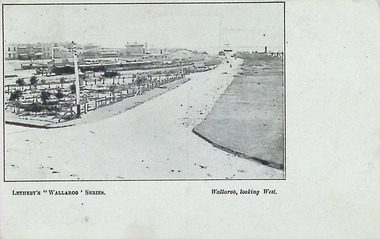
... She is buried in Williamstown Cemetery. ...Alice Edith Evans was born in Williamstown in 1885 to parents Benjamin Samuel Evans (1833-1900), a bootmaker from Ruabon, Denbighshire, Wales and Catherine (nee Jones) (1850-1915) from Eaglehawk, near Castlemaine. ..."Dear Alice" Is a collection of 142 Postcards from Australia and around world, almost all of which are addressed to Miss Alice Evans, No. 2 Cox Gardens, Williamstown, dated between 1905 - 1909. These postcards form part of a collection found in the ceiling of No. 2 Cox Gardens by a local builder and carpenter Gordon Peterson. Peterson was contracted to demolish the house in the mid 1970's. The cards were held in the Estate of Gordon Peterson, along with a photo of the cottage, before demolition until donation to the historical society by his descendants in 2024. Alice Edith Evans was born in Williamstown in 1885 to parents Benjamin Samuel Evans (1833-1900), a bootmaker from Ruabon, Denbighshire, Wales and Catherine (nee Jones) (1850-1915) from Eaglehawk, near Castlemaine. Alice had three older step sisters, and two younger brothers, Benjamin and Samuel, who sadly died in infancy. Alice’s father, Benjamin, had been married previously, his wife dying during childbirth, leaving him with three daughters to care for. After leaving school, Alice was employed as a clerk with Trevor Jones & Co. (real estate agents), until her declining health prevented her from working. She was an active and well known member of the Welsh Church and Sunday School on Ferguson Street and enjoyed singing and playing in local concerts. Well known in the community, a Grand Benefit Concert was organised in her honour on 9th April, 1910, at the Mechanics Institute, Williamstown. Hosted by Mayor Cr. Wymark, the event featured a delightful program of musical performances, showcasing both individual talents and the Carlton Club Choir. Tragically, Alice passed away due to the effects of her illness on 3rd December 1910, at the age of just 25. She is buried in Williamstown Cemetery. The postcards, written between 1905 to 1909, illustrate the social history of residents and everyday life at the turn of the century, using postcards as a means of communication.Part of a collection of 142 Postcards. This image is of Wallaroo, looking WestWallaroo looking westwallaroo, south australia, alice evans postcards -
 Williamstown Historical Society Inc
Postcard - Alice Evans Postcard Collection, 17/04/1906
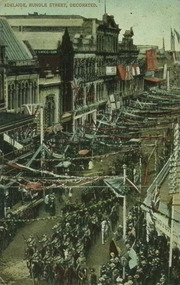
... She is buried in Williamstown Cemetery. ...Alice Edith Evans was born in Williamstown in 1885 to parents Benjamin Samuel Evans (1833-1900), a bootmaker from Ruabon, Denbighshire, Wales and Catherine (nee Jones) (1850-1915) from Eaglehawk, near Castlemaine. ..."Dear Alice" Is a collection of 142 Postcards from Australia and around world, almost all of which are addressed to Miss Alice Evans, No. 2 Cox Gardens, Williamstown, dated between 1905 - 1909. These postcards form part of a collection found in the ceiling of No. 2 Cox Gardens by a local builder and carpenter Gordon Peterson. Peterson was contracted to demolish the house in the mid 1970's. The cards were held in the Estate of Gordon Peterson, along with a photo of the cottage, before demolition until donation to the historical society by his descendants in 2024. Alice Edith Evans was born in Williamstown in 1885 to parents Benjamin Samuel Evans (1833-1900), a bootmaker from Ruabon, Denbighshire, Wales and Catherine (nee Jones) (1850-1915) from Eaglehawk, near Castlemaine. Alice had three older step sisters, and two younger brothers, Benjamin and Samuel, who sadly died in infancy. Alice’s father, Benjamin, had been married previously, his wife dying during childbirth, leaving him with three daughters to care for. After leaving school, Alice was employed as a clerk with Trevor Jones & Co. (real estate agents), until her declining health prevented her from working. She was an active and well known member of the Welsh Church and Sunday School on Ferguson Street and enjoyed singing and playing in local concerts. Well known in the community, a Grand Benefit Concert was organised in her honour on 9th April, 1910, at the Mechanics Institute, Williamstown. Hosted by Mayor Cr. Wymark, the event featured a delightful program of musical performances, showcasing both individual talents and the Carlton Club Choir. Tragically, Alice passed away due to the effects of her illness on 3rd December 1910, at the age of just 25. She is buried in Williamstown Cemetery. The postcards, written between 1905 to 1909, illustrate the social history of residents and everyday life at the turn of the century, using postcards as a means of communication.Part of a collection of 142 Postcards. This coloured image is of Adelaide, Rundle Street, decorated for a celebration/eventAdelaide, Rundle Street, decoratedadelaide, rundle street, south australia, alice evans postcards -
 Williamstown Historical Society Inc
Postcard - Alice Evans Postcard Collection, 1905-1909
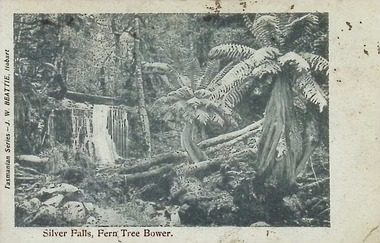
... She is buried in Williamstown Cemetery. ...Alice Edith Evans was born in Williamstown in 1885 to parents Benjamin Samuel Evans (1833-1900), a bootmaker from Ruabon, Denbighshire, Wales and Catherine (nee Jones) (1850-1915) from Eaglehawk, near Castlemaine. ..."Dear Alice" Is a collection of 142 Postcards from Australia and around world, almost all of which are addressed to Miss Alice Evans, No. 2 Cox Gardens, Williamstown, dated between 1905 - 1909. These postcards form part of a collection found in the ceiling of No. 2 Cox Gardens by a local builder and carpenter Gordon Peterson. Peterson was contracted to demolish the house in the mid 1970's. The cards were held in the Estate of Gordon Peterson, along with a photo of the cottage, before demolition until donation to the historical society by his descendants in 2024. Alice Edith Evans was born in Williamstown in 1885 to parents Benjamin Samuel Evans (1833-1900), a bootmaker from Ruabon, Denbighshire, Wales and Catherine (nee Jones) (1850-1915) from Eaglehawk, near Castlemaine. Alice had three older step sisters, and two younger brothers, Benjamin and Samuel, who sadly died in infancy. Alice’s father, Benjamin, had been married previously, his wife dying during childbirth, leaving him with three daughters to care for. After leaving school, Alice was employed as a clerk with Trevor Jones & Co. (real estate agents), until her declining health prevented her from working. She was an active and well known member of the Welsh Church and Sunday School on Ferguson Street and enjoyed singing and playing in local concerts. Well known in the community, a Grand Benefit Concert was organised in her honour on 9th April, 1910, at the Mechanics Institute, Williamstown. Hosted by Mayor Cr. Wymark, the event featured a delightful program of musical performances, showcasing both individual talents and the Carlton Club Choir. Tragically, Alice passed away due to the effects of her illness on 3rd December 1910, at the age of just 25. She is buried in Williamstown Cemetery. The postcards, written between 1905 to 1909, illustrate the social history of residents and everyday life at the turn of the century, using postcards as a means of communication.Part of a collection of 142 Postcards. This b&w image is of Silver Falls, Fern tree bower. Tasmanian Series. J.W. Beattie Series, HobartSilver Falls, Fern tree bower. Tasmanian Series. J.W. Beattie Series, Hobarttasmania, silver falls, hobart, j.w. beattie -
 Williamstown Historical Society Inc
Postcard - Alice Evans Postcard Collection, 12/03/1907
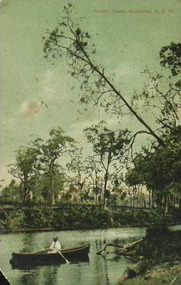
... She is buried in Williamstown Cemetery. ...Alice Edith Evans was born in Williamstown in 1885 to parents Benjamin Samuel Evans (1833-1900), a bootmaker from Ruabon, Denbighshire, Wales and Catherine (nee Jones) (1850-1915) from Eaglehawk, near Castlemaine. ..."Dear Alice" Is a collection of 142 Postcards from Australia and around world, almost all of which are addressed to Miss Alice Evans, No. 2 Cox Gardens, Williamstown, dated between 1905 - 1909. These postcards form part of a collection found in the ceiling of No. 2 Cox Gardens by a local builder and carpenter Gordon Peterson. Peterson was contracted to demolish the house in the mid 1970's. The cards were held in the Estate of Gordon Peterson, along with a photo of the cottage, before demolition until donation to the historical society by his descendants in 2024. Alice Edith Evans was born in Williamstown in 1885 to parents Benjamin Samuel Evans (1833-1900), a bootmaker from Ruabon, Denbighshire, Wales and Catherine (nee Jones) (1850-1915) from Eaglehawk, near Castlemaine. Alice had three older step sisters, and two younger brothers, Benjamin and Samuel, who sadly died in infancy. Alice’s father, Benjamin, had been married previously, his wife dying during childbirth, leaving him with three daughters to care for. After leaving school, Alice was employed as a clerk with Trevor Jones & Co. (real estate agents), until her declining health prevented her from working. She was an active and well known member of the Welsh Church and Sunday School on Ferguson Street and enjoyed singing and playing in local concerts. Well known in the community, a Grand Benefit Concert was organised in her honour on 9th April, 1910, at the Mechanics Institute, Williamstown. Hosted by Mayor Cr. Wymark, the event featured a delightful program of musical performances, showcasing both individual talents and the Carlton Club Choir. Tragically, Alice passed away due to the effects of her illness on 3rd December 1910, at the age of just 25. She is buried in Williamstown Cemetery. The postcards, written between 1905 to 1909, illustrate the social history of residents and everyday life at the turn of the century, using postcards as a means of communication.Part of a collection of 142 Postcards. This colour image depicts Cockle Creek, Newcastle, NSWCockle Creek, Newcastle, NSWnewcastle, new south wales, cockle creek, alice evans postcards -
 Williamstown Historical Society Inc
Postcard - Alice Evans Postcard Collection, 10/1905
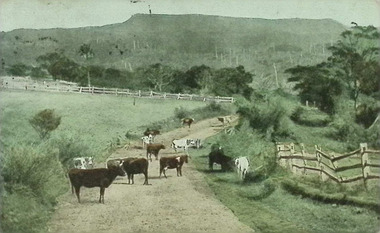
... She is buried in Williamstown Cemetery. ...Alice Edith Evans was born in Williamstown in 1885 to parents Benjamin Samuel Evans (1833-1900), a bootmaker from Ruabon, Denbighshire, Wales and Catherine (nee Jones) (1850-1915) from Eaglehawk, near Castlemaine. ..."Dear Alice" Is a collection of 142 Postcards from Australia and around world, almost all of which are addressed to Miss Alice Evans, No. 2 Cox Gardens, Williamstown, dated between 1905 - 1909. These postcards form part of a collection found in the ceiling of No. 2 Cox Gardens by a local builder and carpenter Gordon Peterson. Peterson was contracted to demolish the house in the mid 1970's. The cards were held in the Estate of Gordon Peterson, along with a photo of the cottage, before demolition until donation to the historical society by his descendants in 2024. Alice Edith Evans was born in Williamstown in 1885 to parents Benjamin Samuel Evans (1833-1900), a bootmaker from Ruabon, Denbighshire, Wales and Catherine (nee Jones) (1850-1915) from Eaglehawk, near Castlemaine. Alice had three older step sisters, and two younger brothers, Benjamin and Samuel, who sadly died in infancy. Alice’s father, Benjamin, had been married previously, his wife dying during childbirth, leaving him with three daughters to care for. After leaving school, Alice was employed as a clerk with Trevor Jones & Co. (real estate agents), until her declining health prevented her from working. She was an active and well known member of the Welsh Church and Sunday School on Ferguson Street and enjoyed singing and playing in local concerts. Well known in the community, a Grand Benefit Concert was organised in her honour on 9th April, 1910, at the Mechanics Institute, Williamstown. Hosted by Mayor Cr. Wymark, the event featured a delightful program of musical performances, showcasing both individual talents and the Carlton Club Choir. Tragically, Alice passed away due to the effects of her illness on 3rd December 1910, at the age of just 25. She is buried in Williamstown Cemetery. The postcards, written between 1905 to 1909, illustrate the social history of residents and everyday life at the turn of the century, using postcards as a means of communication.Part of a collection of 142 Postcards.This coloured image depicts a landscape scene with cows on a roadcows -
 Williamstown Historical Society Inc
Postcard - Alice Evans Postcard Collection, 15/02/1907
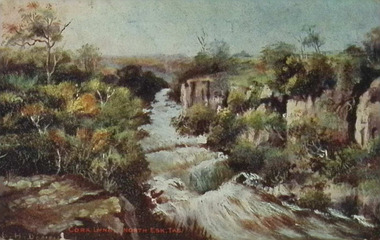
... She is buried in Williamstown Cemetery. ...Alice Edith Evans was born in Williamstown in 1885 to parents Benjamin Samuel Evans (1833-1900), a bootmaker from Ruabon, Denbighshire, Wales and Catherine (nee Jones) (1850-1915) from Eaglehawk, near Castlemaine. ..."Dear Alice" Is a collection of 142 Postcards from Australia and around world, almost all of which are addressed to Miss Alice Evans, No. 2 Cox Gardens, Williamstown, dated between 1905 - 1909. These postcards form part of a collection found in the ceiling of No. 2 Cox Gardens by a local builder and carpenter Gordon Peterson. Peterson was contracted to demolish the house in the mid 1970's. The cards were held in the Estate of Gordon Peterson, along with a photo of the cottage, before demolition until donation to the historical society by his descendants in 2024. Alice Edith Evans was born in Williamstown in 1885 to parents Benjamin Samuel Evans (1833-1900), a bootmaker from Ruabon, Denbighshire, Wales and Catherine (nee Jones) (1850-1915) from Eaglehawk, near Castlemaine. Alice had three older step sisters, and two younger brothers, Benjamin and Samuel, who sadly died in infancy. Alice’s father, Benjamin, had been married previously, his wife dying during childbirth, leaving him with three daughters to care for. After leaving school, Alice was employed as a clerk with Trevor Jones & Co. (real estate agents), until her declining health prevented her from working. She was an active and well known member of the Welsh Church and Sunday School on Ferguson Street and enjoyed singing and playing in local concerts. Well known in the community, a Grand Benefit Concert was organised in her honour on 9th April, 1910, at the Mechanics Institute, Williamstown. Hosted by Mayor Cr. Wymark, the event featured a delightful program of musical performances, showcasing both individual talents and the Carlton Club Choir. Tragically, Alice passed away due to the effects of her illness on 3rd December 1910, at the age of just 25. She is buried in Williamstown Cemetery. The postcards, written between 1905 to 1909, illustrate the social history of residents and everyday life at the turn of the century, using postcards as a means of communication.Part of a collection of 142 Postcards. The colour image is a illustrations of Cora Lynn, North Esk, TasmaniaCora Lynn, North Esk, Tasmanianorth esk, tasmania, alice evans postcards, cora lynn -
 Williamstown Historical Society Inc
Postcard - Alice Evans Postcard Collection, 1905-1909
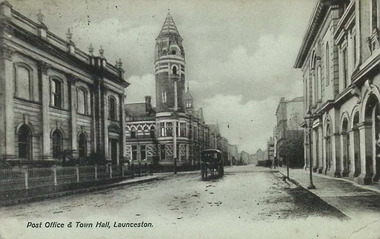
... She is buried in Williamstown Cemetery. ...Alice Edith Evans was born in Williamstown in 1885 to parents Benjamin Samuel Evans (1833-1900), a bootmaker from Ruabon, Denbighshire, Wales and Catherine (nee Jones) (1850-1915) from Eaglehawk, near Castlemaine. ..."Dear Alice" Is a collection of 142 Postcards from Australia and around world, almost all of which are addressed to Miss Alice Evans, No. 2 Cox Gardens, Williamstown, dated between 1905 - 1909. These postcards form part of a collection found in the ceiling of No. 2 Cox Gardens by a local builder and carpenter Gordon Peterson. Peterson was contracted to demolish the house in the mid 1970's. The cards were held in the Estate of Gordon Peterson, along with a photo of the cottage, before demolition until donation to the historical society by his descendants in 2024. Alice Edith Evans was born in Williamstown in 1885 to parents Benjamin Samuel Evans (1833-1900), a bootmaker from Ruabon, Denbighshire, Wales and Catherine (nee Jones) (1850-1915) from Eaglehawk, near Castlemaine. Alice had three older step sisters, and two younger brothers, Benjamin and Samuel, who sadly died in infancy. Alice’s father, Benjamin, had been married previously, his wife dying during childbirth, leaving him with three daughters to care for. After leaving school, Alice was employed as a clerk with Trevor Jones & Co. (real estate agents), until her declining health prevented her from working. She was an active and well known member of the Welsh Church and Sunday School on Ferguson Street and enjoyed singing and playing in local concerts. Well known in the community, a Grand Benefit Concert was organised in her honour on 9th April, 1910, at the Mechanics Institute, Williamstown. Hosted by Mayor Cr. Wymark, the event featured a delightful program of musical performances, showcasing both individual talents and the Carlton Club Choir. Tragically, Alice passed away due to the effects of her illness on 3rd December 1910, at the age of just 25. She is buried in Williamstown Cemetery. The postcards, written between 1905 to 1909, illustrate the social history of residents and everyday life at the turn of the century, using postcards as a means of communication.Part of a collection of 142 Postcards. The image is of the Post Office and Town Hall, Launceston, TasmaniaPost Office and Town Hall, Launceston, Tasmanialaunceston, tasmania, post office, alice evans postcards -
 Williamstown Historical Society Inc
Postcard - Alice Evans Postcard Collection, 1905
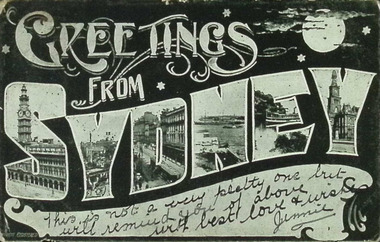
... She is buried in Williamstown Cemetery. ...Alice Edith Evans was born in Williamstown in 1885 to parents Benjamin Samuel Evans (1833-1900), a bootmaker from Ruabon, Denbighshire, Wales and Catherine (nee Jones) (1850-1915) from Eaglehawk, near Castlemaine. ..."Dear Alice" Is a collection of 142 Postcards from Australia and around world, almost all of which are addressed to Miss Alice Evans, No. 2 Cox Gardens, Williamstown, dated between 1905 - 1909. These postcards form part of a collection found in the ceiling of No. 2 Cox Gardens by a local builder and carpenter Gordon Peterson. Peterson was contracted to demolish the house in the mid 1970's. The cards were held in the Estate of Gordon Peterson, along with a photo of the cottage, before demolition until donation to the historical society by his descendants in 2024. Alice Edith Evans was born in Williamstown in 1885 to parents Benjamin Samuel Evans (1833-1900), a bootmaker from Ruabon, Denbighshire, Wales and Catherine (nee Jones) (1850-1915) from Eaglehawk, near Castlemaine. Alice had three older step sisters, and two younger brothers, Benjamin and Samuel, who sadly died in infancy. Alice’s father, Benjamin, had been married previously, his wife dying during childbirth, leaving him with three daughters to care for. After leaving school, Alice was employed as a clerk with Trevor Jones & Co. (real estate agents), until her declining health prevented her from working. She was an active and well known member of the Welsh Church and Sunday School on Ferguson Street and enjoyed singing and playing in local concerts. Well known in the community, a Grand Benefit Concert was organised in her honour on 9th April, 1910, at the Mechanics Institute, Williamstown. Hosted by Mayor Cr. Wymark, the event featured a delightful program of musical performances, showcasing both individual talents and the Carlton Club Choir. Tragically, Alice passed away due to the effects of her illness on 3rd December 1910, at the age of just 25. She is buried in Williamstown Cemetery. The postcards, written between 1905 to 1909, illustrate the social history of residents and everyday life at the turn of the century, using postcards as a means of communication.Part of a collection of 142 Postcards. This b&w image is a collage of images in Greetings from SydneyGreetings from Sydneysydney, new south wales, alice evans postcards -
 Williamstown Historical Society Inc
Postcard - Alice Evans Postcard Collection, 1905-1909
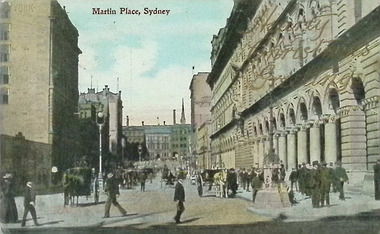
... She is buried in Williamstown Cemetery. ...Alice Edith Evans was born in Williamstown in 1885 to parents Benjamin Samuel Evans (1833-1900), a bootmaker from Ruabon, Denbighshire, Wales and Catherine (nee Jones) (1850-1915) from Eaglehawk, near Castlemaine. ..."Dear Alice" Is a collection of 142 Postcards from Australia and around world, almost all of which are addressed to Miss Alice Evans, No. 2 Cox Gardens, Williamstown, dated between 1905 - 1909. These postcards form part of a collection found in the ceiling of No. 2 Cox Gardens by a local builder and carpenter Gordon Peterson. Peterson was contracted to demolish the house in the mid 1970's. The cards were held in the Estate of Gordon Peterson, along with a photo of the cottage, before demolition until donation to the historical society by his descendants in 2024. Alice Edith Evans was born in Williamstown in 1885 to parents Benjamin Samuel Evans (1833-1900), a bootmaker from Ruabon, Denbighshire, Wales and Catherine (nee Jones) (1850-1915) from Eaglehawk, near Castlemaine. Alice had three older step sisters, and two younger brothers, Benjamin and Samuel, who sadly died in infancy. Alice’s father, Benjamin, had been married previously, his wife dying during childbirth, leaving him with three daughters to care for. After leaving school, Alice was employed as a clerk with Trevor Jones & Co. (real estate agents), until her declining health prevented her from working. She was an active and well known member of the Welsh Church and Sunday School on Ferguson Street and enjoyed singing and playing in local concerts. Well known in the community, a Grand Benefit Concert was organised in her honour on 9th April, 1910, at the Mechanics Institute, Williamstown. Hosted by Mayor Cr. Wymark, the event featured a delightful program of musical performances, showcasing both individual talents and the Carlton Club Choir. Tragically, Alice passed away due to the effects of her illness on 3rd December 1910, at the age of just 25. She is buried in Williamstown Cemetery. The postcards, written between 1905 to 1909, illustrate the social history of residents and everyday life at the turn of the century, using postcards as a means of communication.Part of a collection of 142 Postcards. This coloured image is of Martin Place, SydneyMartin Place, Sydneymartin place, sydney, new south wales, alice evans postcards -
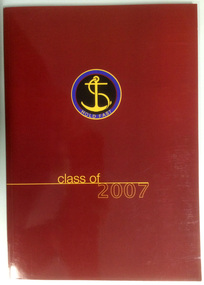 Williamstown High School
Year 12 Yearbook 2007, Class of 2007
... a$ sized year book published by Williamstown High School to commemorate the Year 12 cohort of 2007. 114 pages, the book contains profiles and photographs of most of the year 12 students of 2007. ...williamstown high school 2007 school yearbook year 12 2007 a$ sized year book published by Williamstown High School to commemorate the Year 12 cohort of 2007. 114 pages, the book contains profiles and photographs of most of the year 12 students of 2007. ...a$ sized year book published by Williamstown High School to commemorate the Year 12 cohort of 2007. 114 pages, the book contains profiles and photographs of most of the year 12 students of 2007. Academic, sporting, camp and arts achievements are included as is a look back at this group when they started school at WHS in year 7. Many photographs, some colour are also included. Copy in DVD format also included.williamstown high school, 2007, school yearbook, year 12 2007 -
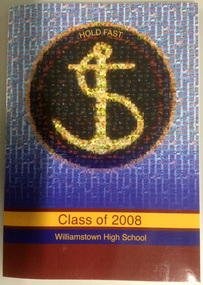 Williamstown High School
Year 12 Yearbook 2008, Class of 2008
... A4 sized coloured card covered book published by Williamstown High School commemorating the 2008 Year 12 cohort. 126 pages the book contains a summary of the Year 12 school year: camps of the last 6 years; debating, sport report, art and theatre, world challenge; student profiles and photographs of most students and teachers. ...williamstown high school 2008 school yearbook year 12 2008 A4 sized coloured card covered book published by Williamstown High School commemorating the 2008 Year 12 cohort. 126 pages the book contains a summary of the Year 12 school year: camps of the last 6 years; debating, sport report, art and theatre, world challenge; student profiles and photographs of most students and teachers. ...A4 sized coloured card covered book published by Williamstown High School commemorating the 2008 Year 12 cohort. 126 pages the book contains a summary of the Year 12 school year: camps of the last 6 years; debating, sport report, art and theatre, world challenge; student profiles and photographs of most students and teachers. Also in DVD format. (2 DVDs in our collectionwilliamstown high school, 2008, school yearbook, year 12 2008 -
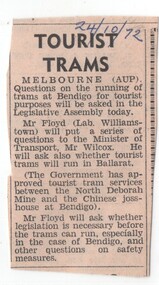 Ballarat Tramway Museum
Newspaper, The Courier Ballarat, "Tourist Trams for Bendigo", 24/10/1972 12:00:00 AM
... Floyd (Labour Williamstown) about the running of the trams in Bendigo for tourists and running of trams in Ballarat. ...Floyd (Labour Williamstown) about the running of the trams in Bendigo for tourists and running of trams in Ballarat. ...Newspaper Clipping possibly from The Courier, Ballarat, 24/10/1972 about questions to be asked in the Legislative Assembly today by Mr. Floyd (Labour Williamstown) about the running of the trams in Bendigo for tourists and running of trams in Ballarat. Item notes that approved the service between the North Deborah mine and the Chinese Joss House. Item possibly from the Courier as it has Ballarat people funeral notices on the rear."24/10/72" in top right hand corner in black ink.trams, tramways, bendigo, parliamentary questions, mr. floyd, mr. v. wilcox -
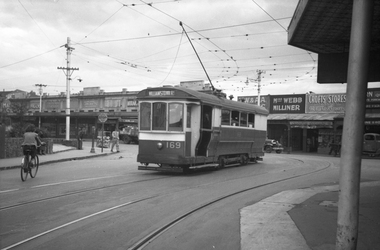 Melbourne Tram Museum
Negative, Wal Jack, 21/04/1945 12:00:00 AM
... Black and white negative, by Wal Jack, of S 169, Williamstown Road turning from Irving St into Nicholson St over the railway line. ...Trams tramways Footscray Nicholson St Irving St Williamstown Road S Class tram 169 Black and white negative, by Wal Jack, of S 169, Williamstown Road turning from Irving St into Nicholson St over the railway line. ...Black and white negative, by Wal Jack, of S 169, Williamstown Road turning from Irving St into Nicholson St over the railway line. In the background are Malvern Cycles, a frock shop, Footscray Fish Shop, Bancroft's Dry cleaners, Moran and Cato, Miss Webb Milliner, Crofts Grocery, A I Brown delivery truck, tram stop sign, fire alarm and a road "Major Stop Road".trams, tramways, footscray, nicholson st, irving st, williamstown road, s class, tram 169 -
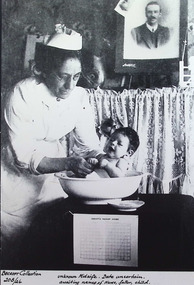 Williamstown Historical Society Inc
Photograph - Unknown nurse weighing a child, c.1920-30's
... The handwritten notes Becroft Collection 208/26 may have originated from the Becroft Family who resided in Williamstown ...The handwritten notes Becroft Collection 208/26 may have originated from the Becroft Family who resided in Williamstown Photograph Unknown nurse weighing a child, c.1920-30's ...The photograph depicts an infant welfare nurse, district nurse, or midwife conducting a baby health examination. Such services became increasingly common across Victoria and Australia from the early 1900s onward, particularly after the establishment of infant welfare programs aimed at reducing infant mortality. The handwritten notes Becroft Collection 208/26 may have originated from the Becroft Family who resided in Williamstown midwife, nurse, infant -
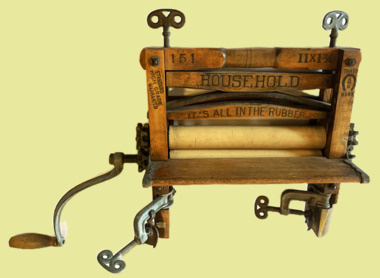 Williamstown Historical Society Inc
Domestic object - Hand clothes wringer or mangle, 1900s
... This hand wringer or mangle was made in the USA in the early 1900s and was used by a householder in Williamstown. Common in laundries before the advent of spin driers, wringers squeezed the water out of clothes and other items after washing to enhance drying. ...This hand wringer or mangle was made in the USA in the early 1900s and was used by a householder in Williamstown. Common in laundries before the advent of spin driers, wringers squeezed the water out of clothes and other items after washing to enhance drying. ...This hand wringer or mangle was made in the USA in the early 1900s and was used by a householder in Williamstown. Common in laundries before the advent of spin driers, wringers squeezed the water out of clothes and other items after washing to enhance drying. They were particularly useful for large or heavy items such as sheets, blankets, or workwear. This smaller wringer was used for smaller items. Wooden framed hand wringer with adjustable rubber rollers. Two wing-nuts screw down on a concave steel spring to increase pressure on laundry items. Winding handle engages cogs to turn rollers in the opposite direction. Two horse shoe shaped clamps (adjustable) to fit on all types of laundry troughs."The American Wringer Co, New York, USA" "‘Household’ ‘Horseshoe Brand’, standard high grade warranted 151 - 11 x 1 3/4. It’s all in the rubber. Horse shoe combination tub clamps will hold wringer securely to galvanised iron fibre or wood tubs. Pat. June ‘98, No. 300 (on adjustable screens), No. 26 on winding handle. No 151" laundry -
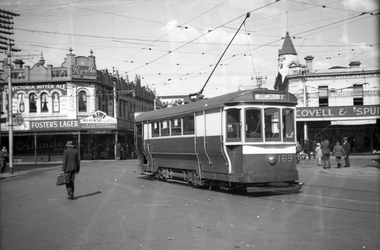 Melbourne Tram Museum
Negative - S169 Droop and Barkly Sts Footscray, Wal Jack, 21/04/1945
... Tram has the destination of Williamstown Road. In the background is A J Burns licensed grocery, store selling Foster's Lager, Victoria Bitter, Reynella Brandy, Kiwi boot polish, and the Majestic Billiard Parlour, Scovell & Spurling clothing store....Trams tramways S Class Footscray Droop St Barkly St Williamstown Road tram 169 Black and white negative. ...Photo by Wal Jack, of tram S 169, turning from Droop St into Barkly St Footscray. Tram has the destination of Williamstown Road. In the background is A J Burns licensed grocery, store selling Foster's Lager, Victoria Bitter, Reynella Brandy, Kiwi boot polish, and the Majestic Billiard Parlour, Scovell & Spurling clothing store.Yields information about the corner of Droop and Barkly Sts Footscray and tram 169 in 1945.Black and white negative.trams, tramways, s class, footscray, droop st, barkly st, williamstown road, tram 169 -
 Port Melbourne Historical & Preservation Society
Poster - Lagoon Confectioners, Lagoon Confection
... The company occupied the premises 191-193 Graham Street Port Melbourne from 1970 to 2000 then moving to a larger premises in Williamstown....The company occupied the premises 191-193 Graham Street Port Melbourne from 1970 to 2000 then moving to a larger premises in Williamstown. Business and Traders - Confectioners Lagoon Confectionery Pty Ltd Bob McQUADE Dean McQUADE Lorraine McQUADE Graham Street Built Environment - Commercial Digital photo in black and white Lagoon Confection Poster Lagoon Confectioners ...Lagoon Confectioners was a family business which commenced in c 1929 opposite the Albert Park Lake, then called "The Lagoon". The McQuade family operated the business until it was sold in 2024 to Darrell Lea Confectioners. The company occupied the premises 191-193 Graham Street Port Melbourne from 1970 to 2000 then moving to a larger premises in Williamstown.Digital photo in black and whitebusiness and traders - confectioners, lagoon confectionery pty ltd, bob mcquade, dean mcquade, lorraine mcquade, graham street, built environment - commercial -
 Sunshine and District Historical Society Incorporated
Audio - Sunshine And District Pioneers Dinner 1987 Audio Tape, 27/11/1987
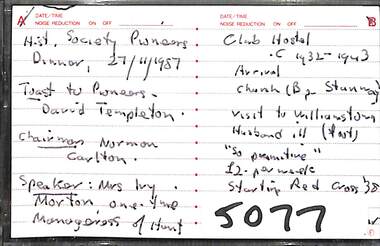
... Historical Society Pioneers Dinner 27/11/1987 Toast to pioneers David Templeton Chairman Norman Parsons Speaker Mrs Ivy Morton one time manageress Hunt Club Hostel 1932 - 1943 Arrival Church (B Stanway) Visit to Williamstown Husband ill (Foot) So primitive 2 pounds per week Starting Red Cross 38...Ivy Morton Melbourne Hunt Club Pioneers Dinner Sunshine and District Historical Society Hunt Club Hotel David Templeton Ballarat Road Deer Park ICI Kororoit Creek Hotel Joseph Harrison Opies Annie McLeod Reverend Alfred Stanway Geoffrey Samble Dulcie Beryl Ross Deer Park Red Cross Deer Park Mothers' Club Richard Richardson Old Kororoit Creek Hotel Deer Park Hotel James Cunningham John Cunningham Barley Mow Hotel Bridget Cunningham Alexander Dixon Thorne Historical Society Pioneers Dinner 27/11/1987 Toast to pioneers David Templeton Chairman Norman Parsons Speaker Mrs Ivy Morton one time manageress Hunt Club Hostel 1932 - 1943 Arrival Church (B Stanway) Visit to Williamstown Husband ill (Foot) So primitive 2 pounds per week Starting Red Cross 38 Audio tape This audio tape has been digitised This audio tape has been transcribed. ...In 1885 the Melbourne Hunt Club moved its operations from Caulfield to Deer Park. As part of this move the Hunt Club built the Hunt Club Hotel as a base for its members, The Hunt Club has been through many iterations since these early days and is currently operating as a community arts centre. This is an audio recording of a guest speaker at the annual Sunshine and District Historical Society's Pioneers Dinner, Mrs Ivy Morton, discussing her experience as a former manager of the Melbourne Hunt Club.Historical Society Pioneers Dinner 27/11/1987 Toast to pioneers David Templeton Chairman Norman Parsons Speaker Mrs Ivy Morton one time manageress Hunt Club Hostel 1932 - 1943 Arrival Church (B Stanway) Visit to Williamstown Husband ill (Foot) So primitive 2 pounds per week Starting Red Cross 38ivy morton, melbourne hunt club, pioneers dinner, sunshine and district historical society, hunt club hotel, david templeton, ballarat road, deer park, ici, kororoit creek hotel, joseph harrison, opies, annie mcleod, reverend alfred stanway, geoffrey samble, dulcie beryl ross, deer park red cross, deer park mothers' club, richard richardson, old kororoit creek hotel, deer park hotel, james cunningham, john cunningham, barley mow hotel, bridget cunningham, alexander dixon thorne -
 Flagstaff Hill Maritime Museum and Village
Functional object - Rowlock, early 20th century
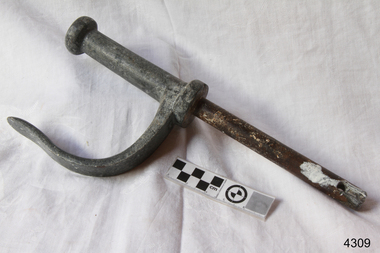
... ...williamstown...It was built at the Government Dockyard in Williamstown, Victoria, along the lines designed by Great Britain's Royal Lifeboat Institution, and included whale back decks fore and aft, mast and centre board, and rudder and tiller hung from the stern post. ...It was built at the Government Dockyard in Williamstown, Victoria, along the lines designed by Great Britain's Royal Lifeboat Institution, and included whale back decks fore and aft, mast and centre board, and rudder and tiller hung from the stern post. ...This row lock was fitted onto the Warrnambool Lifeboat, which is also on-site at Flagstaff Hill Maritime Village. The construction of the lifeboat 'Warrnambool' began 15th September 1909 and was completed almost 12 months later 1st September 1910. It was built at the Government Dockyard in Williamstown, Victoria, along the lines designed by Great Britain's Royal Lifeboat Institution, and included whale back decks fore and aft, mast and centre board, and rudder and tiller hung from the stern post. It could be propelled by both sail and oar. At that time Captain Ferguson was Chief Harbour Master and Mr Beagley was a foreman boat builder. Mr Beagley built the lifeboat with his fellow workmen. It had all the latest improvements in shape, disposition of weight with watertight compartments, and it had space for a large number of people in addition to the crew. It appears that 'H Meiers' whose signature was on the plaque that was found concealed in the hull, was involved with the building of the lifeboat. His signature and the dates of the start and finish of the boat's construction are penciled on the raw timber 'plaque' found in the hull in the early 1990s when the lifeboat was being restored. It is interesting that the 'Melbourne Directory' of 1911, published by Sands and MacDougal, lists McAuley and Meiers, boat builders, Nelson Place foreshore, between Pasco and Parker Streets, Williamstown, It is quite possibly the business of the person whose name is inscribed on the lifeboat plaque. Flagstaff Hill's documentation also mentions that the keel was laid at 'Harry Myers, boat builders, Williamstown, Melbourne the name 'Myers' can also be spelled 'Meiers', which could be the same person as the Meiers in "McAuley and Meiers" (as mentioned in genealogy lines of Myers). The new lifeboat, to be named 'Warrnambool' was brought to town by train and launched at the breakwater on 1st March 1911 using the Titan crane (the old lifeboat built-in 1858, was then returned to Melbourne in 1911). This new lifeboat was stationed at Warrnambool in a shed located at the base of the Breakwater, adjacent to the slipway. The lifeboat ‘Warrnambool’ was similar in size to the old lifeboat but far superior in design, with new sea-going qualities such as greater maneuverability. The ‘self-righting, self-draining’ design was made the vessel difficult to capsize and even if the boat overturned it would right itself to an even keel and the water would drain away. The hull was built of New Zealand Kauri, using double diagonal planking, laid in two layers at right angles, with a layer of canvas and red lead paint between the timbers to help seal the planking. It has plenty of free board. The backbone timbers were made of Jarrah. The Warrnambool lifeboat was one of several rescue boats used at Port Fairy and Warrnambool in the early 1900s. In late 1914 the Warrnambool lifeboat and crew were used to help find what was left of the tragic wreckage of the Antares and were able to discover the body of one of the crewmen. Between 1951 and 1954 the lifeboat was manned under the guidance of Captain Carrington. He held lifeboat practice each month on a Sunday morning, to comply with the Ports and Harbour’s request that lifeboats be ready for action in case of an emergency. In the early 1960’s it ended its service as a lifeboat and was used in Port Fairy as a barge to help dredge the Moyne River. Flagstaff Hill obtained the Warrnambool lifeboat in 1975. In 1984 it was on display at Flagstaff Hill Maritime Village, Warrnambool. On 23rd May 1990, she was lifted from the water and placed in a cradle for restoration. The name 'WARRNAMBOOL could be seen faintly on the lifeboat before it was restored. It was during the restoration that Flagstaff Hill's boat builder discovered the 'plaque' inside the hull. A copy of the blueprint plans has the name “V.E.E. Gotch” printed on it. His advertisement in Footscray’s ‘Independent’ newspaper of Saturday 11th May 1901 states he is “Principal and Skilled member (Naval Architect) to the Court of Marine Inquiry of Victoria and holds classes for naval architectural drawing and arithmetic.” The subject row lock is significant due to its association the Warrnambool Lifeboat which was an integral part of an important service to the local community as a lifesaving vessel for a half-century. One of the lifeboats many achievements was when it was used to help retrieve the body of a shipwrecked crew member of the ship Antares. Rowlock from the Warrnambool Lifeboat.Noneflagstaff hill, warrnambool, shipwrecked-coast, flagstaff-hill, flagstaff-hill-maritime-museum, maritime-museum, shipwreck-coast, flagstaff-hill-maritime-village, lifeboat warrnambool, life boat, life saving vessel, 1910 vessel, port fairy, boat builder plaque, rescue boat, beagley, government dockyard, williamstown, v.e.e. gotch, royal lifeboat institution, captain ferguson, non-capsizeable lifeboat, self-righting lifeboat, antares shipwreck, double diagonal planking, captain carrington, rowlock, lifeboat rowlock -
 Flagstaff Hill Maritime Museum and Village
Functional object - Rowlock, early 20th century
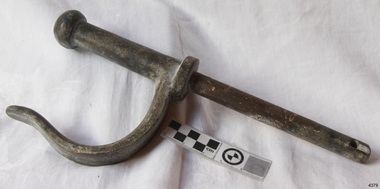
... ...williamstown...It was built at the Government Dockyard in Williamstown, Victoria, along the lines designed by Great Britain's Royal Lifeboat Institution, and included whale back decks fore and aft, mast and centre board, and rudder and tiller hung from the stern post. ...It was built at the Government Dockyard in Williamstown, Victoria, along the lines designed by Great Britain's Royal Lifeboat Institution, and included whale back decks fore and aft, mast and centre board, and rudder and tiller hung from the stern post. ...This row lock was fitted onto the Warrnambool Lifeboat, which is also on-site at Flagstaff Hill Maritime Village. The construction of the lifeboat 'Warrnambool' began 15th September 1909 and was completed almost 12 months later 1st September 1910. It was built at the Government Dockyard in Williamstown, Victoria, along the lines designed by Great Britain's Royal Lifeboat Institution, and included whale back decks fore and aft, mast and centre board, and rudder and tiller hung from the stern post. It could be propelled by both sail and oar. At that time Captain Ferguson was Chief Harbour Master and Mr Beagley was a foreman boat builder. Mr Beagley built the lifeboat with his fellow workmen. It had all the latest improvements in shape, disposition of weight with watertight compartments, and it had space for a large number of people in addition to the crew. It appears that 'H Meiers' whose signature was on the plaque that was found concealed in the hull, was involved with the building of the lifeboat. His signature and the dates of the start and finish of the boat's construction are penciled on the raw timber 'plaque' found in the hull in the early 1990s when the lifeboat was being restored. It is interesting that the 'Melbourne Directory' of 1911, published by Sands and MacDougal, lists McAuley and Meiers, boat builders, Nelson Place foreshore, between Pasco and Parker Streets, Williamstown, It is quite possibly the business of the person whose name is inscribed on the lifeboat plaque. Flagstaff Hill's documentation also mentions that the keel was laid at 'Harry Myers, boat builders, Williamstown, Melbourne the name 'Myers' can also be spelled 'Meiers', which could be the same person as the Meiers in "McAuley and Meiers" (as mentioned in genealogy lines of Myers). The new lifeboat, to be named 'Warrnambool' was brought to town by train and launched at the breakwater on 1st March 1911 using the Titan crane (the old lifeboat built-in 1858, was then returned to Melbourne in 1911). This new lifeboat was stationed at Warrnambool in a shed located at the base of the Breakwater, adjacent to the slipway. The lifeboat ‘Warrnambool’ was similar in size to the old lifeboat but far superior in design, with new sea-going qualities such as greater maneuverability. The ‘self-righting, self-draining’ design was made the vessel difficult to capsize and even if the boat overturned it would right itself to an even keel and the water would drain away. The hull was built of New Zealand Kauri, using double diagonal planking, laid in two layers at right angles, with a layer of canvas and red lead paint between the timbers to help seal the planking. It has plenty of free board. The backbone timbers were made of Jarrah. The Warrnambool lifeboat was one of several rescue boats used at Port Fairy and Warrnambool in the early 1900s. In late 1914 the Warrnambool lifeboat and crew were used to help find what was left of the tragic wreckage of the Antares and were able to discover the body of one of the crewmen. Between 1951 and 1954 the lifeboat was manned under the guidance of Captain Carrington. He held lifeboat practice each month on a Sunday morning, to comply with the Ports and Harbour’s request that lifeboats be ready for action in case of an emergency. In the early 1960’s it ended its service as a lifeboat and was used in Port Fairy as a barge to help dredge the Moyne River. Flagstaff Hill obtained the Warrnambool lifeboat in 1975. In 1984 it was on display at Flagstaff Hill Maritime Village, Warrnambool. On 23rd May 1990, she was lifted from the water and placed in a cradle for restoration. The name 'WARRNAMBOOL could be seen faintly on the lifeboat before it was restored. It was during the restoration that Flagstaff Hill's boat builder discovered the 'plaque' inside the hull. A copy of the blueprint plans has the name “V.E.E. Gotch” printed on it. His advertisement in Footscray’s ‘Independent’ newspaper of Saturday 11th May 1901 states he is “Principal and Skilled member (Naval Architect) to the Court of Marine Inquiry of Victoria and holds classes for naval architectural drawing and arithmetic.” The subject row lock is significant due to its association the Warrnambool Lifeboat which was an integral part of an important service to the local community as a lifesaving vessel for a half-century. One of the lifeboats many achievements was when it was used to help retrieve the body of a shipwrecked crew member of the ship Antares. Rowlock from the Warrnambool Lifeboat.Noneflagstaff hill, warrnambool, shipwrecked-coast, flagstaff-hill, flagstaff-hill-maritime-museum, maritime-museum, shipwreck-coast, flagstaff-hill-maritime-village, lifeboat warrnambool, life boat, life saving vessel, 1910 vessel, port fairy, boat builder plaque, rescue boat, beagley, government dockyard, williamstown, v.e.e. gotch, royal lifeboat institution, captain ferguson, non-capsizeable lifeboat, self-righting lifeboat, antares shipwreck, double diagonal planking, captain carrington, rowlock, lifeboat rowlock -
 Flagstaff Hill Maritime Museum and Village
Functional object - Rowlock, early 20th century
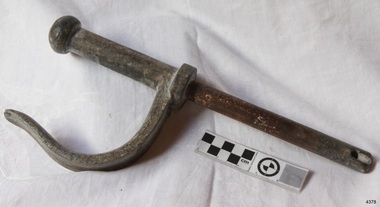
... ...williamstown...It was built at the Government Dockyard in Williamstown, Victoria, along the lines designed by Great Britain's Royal Lifeboat Institution, and included whale back decks fore and aft, mast and centre board, and rudder and tiller hung from the stern post. ...It was built at the Government Dockyard in Williamstown, Victoria, along the lines designed by Great Britain's Royal Lifeboat Institution, and included whale back decks fore and aft, mast and centre board, and rudder and tiller hung from the stern post. ...This row lock was fitted onto the Warrnambool Lifeboat, which is also on-site at Flagstaff Hill Maritime Village. The construction of the lifeboat 'Warrnambool' began 15th September 1909 and was completed almost 12 months later 1st September 1910. It was built at the Government Dockyard in Williamstown, Victoria, along the lines designed by Great Britain's Royal Lifeboat Institution, and included whale back decks fore and aft, mast and centre board, and rudder and tiller hung from the stern post. It could be propelled by both sail and oar. At that time Captain Ferguson was Chief Harbour Master and Mr Beagley was a foreman boat builder. Mr Beagley built the lifeboat with his fellow workmen. It had all the latest improvements in shape, disposition of weight with watertight compartments, and it had space for a large number of people in addition to the crew. It appears that 'H Meiers' whose signature was on the plaque that was found concealed in the hull, was involved with the building of the lifeboat. His signature and the dates of the start and finish of the boat's construction are penciled on the raw timber 'plaque' found in the hull in the early 1990s when the lifeboat was being restored. It is interesting that the 'Melbourne Directory' of 1911, published by Sands and MacDougal, lists McAuley and Meiers, boat builders, Nelson Place foreshore, between Pasco and Parker Streets, Williamstown, It is quite possibly the business of the person whose name is inscribed on the lifeboat plaque. Flagstaff Hill's documentation also mentions that the keel was laid at 'Harry Myers, boat builders, Williamstown, Melbourne the name 'Myers' can also be spelled 'Meiers', which could be the same person as the Meiers in "McAuley and Meiers" (as mentioned in genealogy lines of Myers). The new lifeboat, to be named 'Warrnambool' was brought to town by train and launched at the breakwater on 1st March 1911 using the Titan crane (the old lifeboat built-in 1858, was then returned to Melbourne in 1911). This new lifeboat was stationed at Warrnambool in a shed located at the base of the Breakwater, adjacent to the slipway. The lifeboat ‘Warrnambool’ was similar in size to the old lifeboat but far superior in design, with new sea-going qualities such as greater maneuverability. The ‘self-righting, self-draining’ design was made the vessel difficult to capsize and even if the boat overturned it would right itself to an even keel and the water would drain away. The hull was built of New Zealand Kauri, using double diagonal planking, laid in two layers at right angles, with a layer of canvas and red lead paint between the timbers to help seal the planking. It has plenty of free board. The backbone timbers were made of Jarrah. The Warrnambool lifeboat was one of several rescue boats used at Port Fairy and Warrnambool in the early 1900s. In late 1914 the Warrnambool lifeboat and crew were used to help find what was left of the tragic wreckage of the Antares and were able to discover the body of one of the crewmen. Between 1951 and 1954 the lifeboat was manned under the guidance of Captain Carrington. He held lifeboat practice each month on a Sunday morning, to comply with the Ports and Harbour’s request that lifeboats be ready for action in case of an emergency. In the early 1960’s it ended its service as a lifeboat and was used in Port Fairy as a barge to help dredge the Moyne River. Flagstaff Hill obtained the Warrnambool lifeboat in 1975. In 1984 it was on display at Flagstaff Hill Maritime Village, Warrnambool. On 23rd May 1990, she was lifted from the water and placed in a cradle for restoration. The name 'WARRNAMBOOL could be seen faintly on the lifeboat before it was restored. It was during the restoration that Flagstaff Hill's boat builder discovered the 'plaque' inside the hull. A copy of the blueprint plans has the name “V.E.E. Gotch” printed on it. His advertisement in Footscray’s ‘Independent’ newspaper of Saturday 11th May 1901 states he is “Principal and Skilled member (Naval Architect) to the Court of Marine Inquiry of Victoria and holds classes for naval architectural drawing and arithmetic.” The subject row lock is significant due to its association the Warrnambool Lifeboat which was an integral part of an important service to the local community as a lifesaving vessel for a half-century. One of the lifeboats many achievements was when it was used to help retrieve the body of a shipwrecked crew member of the ship Antares. Rowlock from the Warrnambool Lifeboat.Noneflagstaff hill, warrnambool, shipwrecked-coast, flagstaff-hill, flagstaff-hill-maritime-museum, maritime-museum, shipwreck-coast, flagstaff-hill-maritime-village, lifeboat warrnambool, life boat, life saving vessel, 1910 vessel, port fairy, boat builder plaque, rescue boat, beagley, government dockyard, williamstown, v.e.e. gotch, royal lifeboat institution, captain ferguson, non-capsizeable lifeboat, self-righting lifeboat, antares shipwreck, double diagonal planking, captain carrington, rowlock, lifeboat rowlock -
 Port Melbourne Historical & Preservation Society
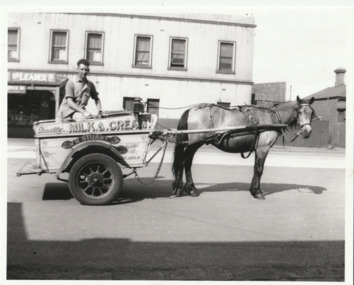
Photograph - William Raeburn STUART on milk float with horse, 'Goatie', Bridge Street, near Ross Street, Port Melbourne, 1930s
... William's parents owned the Gladysdale Diary on the corner of Bridge street and Williamstown Road. The newsagent and Milk Bar on the corner of Ross & Bridge Street is still in operation (2024). ...William's parents owned the Gladysdale Diary on the corner of Bridge street and Williamstown Road. The newsagent and Milk Bar on the corner of Ross & Bridge Street is still in operation (2024). ...'Goatie' was William STUART first horse. William's parents owned the Gladysdale Diary on the corner of Bridge street and Williamstown Road. The newsagent and Milk Bar on the corner of Ross & Bridge Street is still in operation (2024). The Photo was printed from a 620 box Brownie-size negative which was found in a box of negatives taken by the late Mrs M F StuartPhoto of William Raeburn STUART on his two wheeled milk float with horse 'Goatie' standing in Bridge Street near Ross Street, late 1930s-early 40s. In background is the newsagent/milk barbusiness and traders - dairies, transport - horse, william raeburn stuart, gladysdale dairy, business and traders - milkbars, bridge street, ross street, mrs m f stuart -
 Nillumbik Shire Council
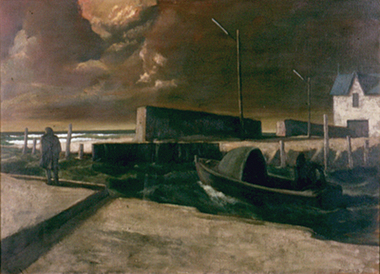
Painting: Rick AMOR (b.1948, Melb. AUS), Rick Amor, Out to Sea, 1993
... His studies of Williamstown and areas around the port fuelled a period of sustained painting in his studio at Dunmoochin. ...His studies of Williamstown and areas around the port fuelled a period of sustained painting in his studio at Dunmoochin. ...Rick Amor was a good friend of three times Archibald Prize winner Clifton Pugh, living and working at Pugh's artist colony Dunmoochin, (Cottles Bridge) during the 1980-1990s. Amor made frequent outdoor painting trips with Pugh. His studies of Williamstown and areas around the port fuelled a period of sustained painting in his studio at Dunmoochin. Amor is an artist of national significance who had lived locally in Dunmoochin (Cottles Bridge) during the time of this work's making. This painting was exhibited/entered into the 1993 Shire of Eltham Art Awards. The work is representative of Amor's style and interest in seascapes as subject matter. Oil on linen, seascape painting. A solitary and motionless male figure in an overcoat stands at the edge of a dock/jetty with his hands in his pockets looking out to sea with his back towards the viewer. A motorised boat is moored close by and a white house with a blue roof can be seen in the distance. The figure is engulfed by the landscape and a resounding sense of desolation. A storm is brewing; the mood forecast by dark, heavy and thick ominous clouds, alternately darkening with the approach of night, a polluted haze and rough seas. In red paint, lower right, signed 'RICK AMOR '93'amor, seascape, painting, personal, boat, dramatic, atmospheric, ekphrasis 2015, dunmoochin
