
Showing 10289 items matching "uniforms."
-
 Linton and District Historical Society Inc
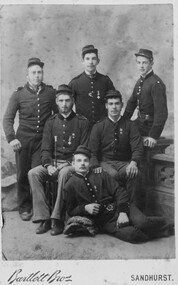
Photograph, Bartlett Bros, View Place, Sandhurst, Linton Fire Brigade Members, circa 1887, 1887
... Sepia photograph of a group of six young men in uniform two standing at back, three seated, one seated on floor....Sepia photograph of a group of six young men in uniform two standing at back, three seated, one seated on floor. ...Sepia photograph of a group of six young men in uniform two standing at back, three seated, one seated on floor."Don't know identities of these taken about 1887. Linton Fire Brigade" / "Mrs E Monti 56-58 Rea St, Shepparton 3630".linton fire brigade, fire fighters -
 Wangaratta High School
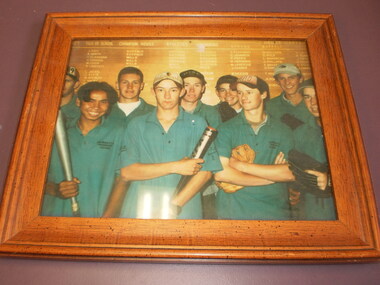
WSC Framed Photo
... Colour photograph of a WSC baseball yeah in green WSC uniforms gathered in front of a large honour board, in a wooden frame...Colour photograph of a WSC baseball yeah in green WSC uniforms gathered in front of a large honour board, in a wooden frame WSC Framed Photo ...Colour photograph of a WSC baseball yeah in green WSC uniforms gathered in front of a large honour board, in a wooden frame -
 Wodonga & District Historical Society Inc
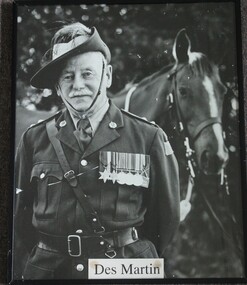
Photograph - Des Martin and his horse
... A black and white photograph of Des Martin in military uniform with his horse. The photo has been mounted in a metal frame....Des Martin Murray Valley Hunt Club 2/2nd Australian Pioneer Battalion Albury Racing Club A black and white photograph of Des Martin in military uniform with his horse. The photo has been mounted in a metal frame. ...This image is one from a series of portraits taken by Rob Elliott to record the character of the Border District through the faces if its identities. Des Martin lived all his life in Wodonga, except for his years of service during World War Two. He was raised on the family property Aherlo in the Huon Creek Valley. In 1937 he joined the 8th Light Horse Regiment but in May 1940 led his Wodonga Troop into the 2/2nd Australian Pioneer Battalion. This Battalion saw service in Syria, Java, New Guinea and Borneo. After the war, Des returned to Aherlo and his horses. He was granted permission by the Victorian Racing Club to participate as an amateur “gentleman” rider. He became the first president of the Victorian Amateur Riders Association and founded the Murray Valley Hunt Club. Des also played a major role in Australia entering an equestrian team in the Melbourne Olympics in 1956 and served as a steward at that event. Des also wrote several publications including “Australia Astride” in 1959, a history of the Albury Racing Club – a Century of Racing, and an historical novel “Many a Mile”. He collaborated with R. M. Williams to develop “Hoofs and Horns” to become a national publication. From 1969 to 1973, Des Martin also wrote a column for the Border Mail newspaper. He was also a member of the RSL for almost 50 years and held several committee positions during that time. Des Martin died on 12 April 1995.This is a portrait of a significant member of the Wodonga community who made an outstanding contribution as a farmer, soldier, horseman, author and member of the RSL and other community organisations.A black and white photograph of Des Martin in military uniform with his horse. The photo has been mounted in a metal frame.des martin, murray valley hunt club, 2/2nd australian pioneer battalion, albury racing club -
 Wodonga & District Historical Society Inc
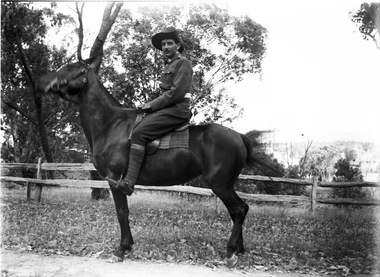
Negative - Haeusler Glass Negatives Collection - Jim O'Brien - pre World War One
... Jim O'Brien mounted on a horse and wearing military uniform....Jim O'Brien mounted on a horse and wearing military uniform. Haeusler Glass Negatives Collection - Jim O'Brien - pre World War One Negative Haeusler Glass Negatives Collection - Jim O'Brien - pre World War One ...The Wodonga Historical Society Haeusler Collection provides invaluable insight into life in late nineteenth and early twentieth century north east Victoria. The collection comprises manuscripts, personal artefacts used by the Haeusler family on their farm in Wodonga, and a set of glass negatives which offer a unique visual snapshot of the domestic and social lives of the Haeusler family and local Wodonga community. The Haeusler family migrated from Prussia (Germany) to South Australia in the 1840s and 1850s, before purchasing 100 acres of Crown Land made available under the Victorian Lands Act 1862 (also known as ‘Duffy’s Land Act’) in 1866 in what is now Wodonga West. The Haeusler family were one of several German families to migrate from South Australia to Wodonga in the 1860s. This digital image was produced from one of the glass negatives that form part of the collection, probably taken by Louis Haeusler (b.1887) with the photographic equipment in the Wodonga Historical Society Haeusler Collection. This item is unique and has well documented provenance and a known owner. It forms part of a significant and representative historical collection which reflects the local history of Wodonga. It contributes to our understanding of domestic and family life in early twentieth century Wodonga, as well as providing interpretative capacity for themes including local history and social history.Digital image created from the Haeusler Glass negative collection. Jim O'Brien mounted on a horse and wearing military uniform.wodonga pioneers, haeusler family, glass negatives, dry plate photography, jim o'brien -
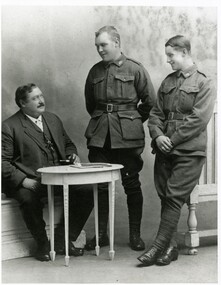 City of Kingston
Photograph - Black and white, c.1917
... The two standing are in military uniforms...The two standing are in military uniforms Photograph Black and white ...Roderick William Mills, known as Saltbush Bill (left) with his sons, James Charles Mills (centre) and John James Mills (right), in London. In 1917 Saltbush Bill travelled from America to London after giving shows in various cities of the US, to spend time with his sons. James and John Mills were serving with the AIF and on leave from the French front in London. Saltbush Bill remained in London for the rest of the war as he was unable to return to Australia. Saltbush Bill, was the inspiration for several poems by A.B. Paterson. Born at Balnarring in 1869, Mills earned the title of Saltbush Bill whilst working on a cattle station in Queensland. On these long droving trips, he learnt the art of cracking stock whips of many different lengths and sizes, a skill that earnt him £100 after a Melbourne saddler, J.K. Jennings, suggested that no man could crack a 65-foot stock whip in three tries. Saltbush Bill succeeded on his first attempt and decided to make a career in entertainment with his skill. Over his career he performed for royalty, travelled and performed extensively overseas and lent his skill to fundraising efforts, particularly during the war. His last concert was given in the Boomerang Hall in Dandenong in 1926.A local resident of the City of Moorabbin, Saltbush Bill was an ambassador for Australia and a literary inspiration to A.B. (Banjo) Paterson. Saltbush Bill, his wife Hannah Louise Porter and their 11 children lived in Old Dandenong Road, Heatherton, where Saltbush Bill and Hannah conducted a market garden for many years. Saltbush Bill is buried in Cheltenham's Pioneer Cemetery.Black and white photograph of three men, one seated behind a table and two standing. The two standing are in military uniformsHandwritten in blue ink: K000733saltbush bill, stock whip, entertainment, heatherton -
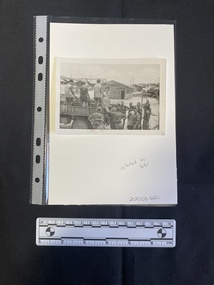 Returned Nurses RSL Sub-branch
Photograph - Black and white photograph, [1960]
... Small black and white photograph depicting a group of men in uniforms on and at the back of a truck. One man is on a bed in the back of the truck....Nurses in warfare Small black and white photograph depicting a group of men in uniforms on and at the back of a truck. One man is on a bed in the back of the truck. ...Recollections of Jan McCarthy: Vung Tau, Vietnam, 1960. A tsunami was warned to be approaching, the hospital had to evacuate in eighteen minutes. The boy in the bed had been eleven hours on the theatre table the previous day and been given thirty pints of blood. He had a gunshot in the leg that took three inches of the femoral artery. A piece was grafted from the lower leg. When he was moved off the table he started to bleed, so they had to go back in and redo. A ramp was put up to the back of the truck to take the whole bed up and keep the boy as still as possible so the graft wouldn't shift again. The tsunami ended up being a no-show. The graft recipient boy was eventually med-evaced back to Australia.Small black and white photograph depicting a group of men in uniforms on and at the back of a truck. One man is on a bed in the back of the truck.nurses in warfare -
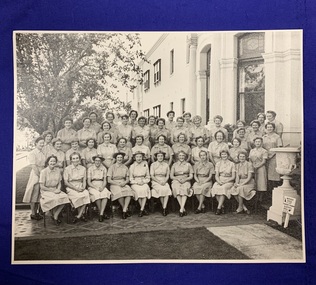 Returned Nurses RSL Sub-branch
Photograph - Photograph on card
... Unframed, printed black and white photograph on card, of 45 women in uniform in 4 tiered rows outside a large building...."20-5-2001 For Maureen White" [Handwritten in biro at the top of the back of the photo] "LATROBE STUDIOS PTY LTD. 151 LATROBE ST MELBOURNE, C1 ... 1986 / REFERENCE NUMBER A41591-9" [Faded purple with ink written negative number, bottom-left back of photo] Unframed, printed black and white photograph on card, of 45 women in uniform in 4 tiered rows outside a large building. ...Unframed, printed black and white photograph on card, of 45 women in uniform in 4 tiered rows outside a large building."20-5-2001 For Maureen White" [Handwritten in biro at the top of the back of the photo] "LATROBE STUDIOS PTY LTD. 151 LATROBE ST MELBOURNE, C1 ... 1986 / REFERENCE NUMBER A41591-9" [Faded purple with ink written negative number, bottom-left back of photo] -
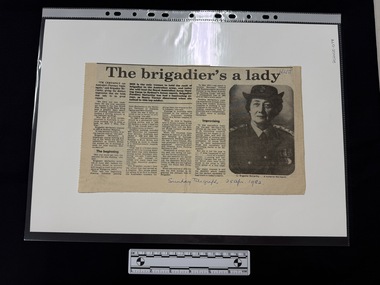 Returned Nurses RSL Sub-branch
Newspaper - Newspaper clipping, Bunty Turner, The brigadier's a lady, [25 April 1982]
... Newspaper clipping with a headline, four columns of text and a black and white portrait photograph of a woman in Australian Army Nurses uniform....WWII World War Two WW2 Perditta Marjorie McCarthy Royal Australian Army Nursing Corps 'WWII' [blue ink in the top right hand corner] 'Sunday Telegraph 25 Apr 1982' [blue ink across the lower border] Newspaper clipping with a headline, four columns of text and a black and white portrait photograph of a woman in Australian Army Nurses uniform. The brigadier's a lady Newspaper Newspaper clipping Bunty Turner [Sunday Telegraph] ...Article about Perditta Marjorie McCarthy's Army nursing career from 1941 until her retirement in 1972, the first female Brigadier in the Australian Army.Newspaper clipping with a headline, four columns of text and a black and white portrait photograph of a woman in Australian Army Nurses uniform.'WWII' [blue ink in the top right hand corner] 'Sunday Telegraph 25 Apr 1982' [blue ink across the lower border]wwii, world war two, ww2, perditta marjorie mccarthy, royal australian army nursing corps -
 Returned Nurses RSL Sub-branch
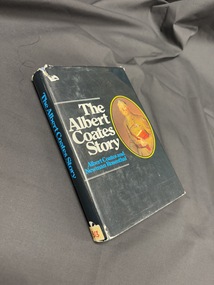
Book, Albert Ernest Coates, The Albert Coates story : The will that found the way, 1977
... Book with a black dustjacket, has a painted portrait of an older man in uniform on cover and white and blue text on cover and spine...[stamp on title page] Book with a black dustjacket, has a painted portrait of an older man in uniform on cover and white and blue text on cover and spine The Albert Coates story : The will that found the way Book Albert Ernest Coates Newman Rosenthal Hyland House Publishing Pty Limited ...'The Albert Coates story is one of heroism, of courage, endurance and service. he is a great civilian as well as a great soldier and the book tells of his contributions to the development of medical studies and services in Melbourne-but the core of the book is his description of three-and-a-half years as a prisoner of the Japanese in Sumatra, Burma and Thailand. Written on scraps of paper of all kinds, toilet paper, anything, in rare moments of solitude between improvising medicines, amputating legs, appealing to the Japanese authorities and administering hospital camps, Albert Coates describes on of history's great feats of medicine. The first and last sections of the book have been written by Newman Rosenthal who also edited the prisoner of war section-so there is continuity of narrative.' [From front dust jacket]Book with a black dustjacket, has a painted portrait of an older man in uniform on cover and white and blue text on cover and spinenon-fiction'The Albert Coates story is one of heroism, of courage, endurance and service. he is a great civilian as well as a great soldier and the book tells of his contributions to the development of medical studies and services in Melbourne-but the core of the book is his description of three-and-a-half years as a prisoner of the Japanese in Sumatra, Burma and Thailand. Written on scraps of paper of all kinds, toilet paper, anything, in rare moments of solitude between improvising medicines, amputating legs, appealing to the Japanese authorities and administering hospital camps, Albert Coates describes on of history's great feats of medicine. The first and last sections of the book have been written by Newman Rosenthal who also edited the prisoner of war section-so there is continuity of narrative.' [From front dust jacket]world war two, wwii, ww2, prisoner of war, japan -
 Returned Nurses RSL Sub-branch
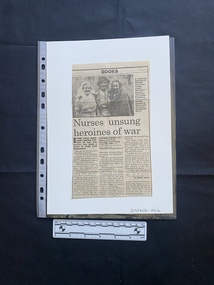
Newspaper - Newspaper clipping, Judith White, Nurses unsung heroines of war, [1988]
... A newspaper clipping of three columns of text with a black and white photo above of three women, two obviously in nurse's uniform...WWII WW2 World War Two Our War Nurses - The History of the Royal Australian Army Nursing Corps 1902-1988 George Medal Banker Island Edith Cavell World War 1 World War One WW1 WWI War Memorial Canberra A newspaper clipping of three columns of text with a black and white photo above of three women, two obviously in nurse's uniform Nurses unsung heroines of war Newspaper Newspaper clipping Judith White ...Our war heroines have always received less attention than their male counterparts, but Dr Rupert Goodman is helping to set the record straight, with the first book to give a comprehensive history of Australia's war nurses. Among those commemorated in the book are the nurses killed or died in action in World War II. Dr Goodman says one of the most outstanding episodes was the sinking of the hospital ship, the Centaur, off Brisbane by a Japanese sub. Of 11 sisters, one survived, Sister Savage and she kept up the morale of the survivors in shark-infested waters for 24 hours. Another was Sister Anderson, who was tending wounded on deck aboard the Empire Star and threw herself over a Digger to protect him from strafing as they were escaping from the fall of Singapore. Or the Banka Island massacre. Twenty three nurses were ordered to march into the sea and were shot dead. Only one survived, Sister Vivian Bullwinkel, after feigning death, she returned to shore tended to a wounded solider, then was captured and became a POW.A newspaper clipping of three columns of text with a black and white photo above of three women, two obviously in nurse's uniformwwii, ww2, world war two, our war nurses - the history of the royal australian army nursing corps 1902-1988, george medal, banker island, edith cavell, world war 1, world war one, ww1, wwi, war memorial, canberra -
 Returned Nurses RSL Sub-branch
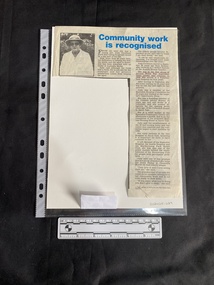
Newspaper - Newspaper clipping, Community work is recognised, [1978]
... A newspaper clipping featuring a blue title, two columns of text and a small black and white photo of a woman in bowls uniform...WW2 WWII OAM Ascot Vale A newspaper clipping featuring a blue title, two columns of text and a small black and white photo of a woman in bowls uniform Community work is recognised Newspaper Newspaper clipping ...After more than forty years of helping the sick, the needy and the aged, Judy Cockburn has been rewarded with an Order of Australia Medal. Judy says she is not one for the limelight and her greatest satisfaction comes from helping the aged. She said that while it can be very emotionally exhausting, she has formed some close relationships over the years. Judy moved to Essendon thirty-five years ago from Sydney after working as a welfare matron at the Austral Bronze foundry. She was in the first group of Australian Army nurses sent overseas in 1939. She served in a Palastine base hospital for four years. After the war Judy did home visits, being on call day and night; was on the Essendon Hospital Committee; worked in the hospital's opportunity shop; was a founding member of the Citizens Advice Bureau; was involved in the opening of Corandirk Hostel and continues to volunteer there; is a relief worker at the Essendon Community Centre; is on the committee of the proposed Marivale Nursing Home; visit patients at the Day Hospital; is a Life Member of the Essendon Hospital, the Austin Hospital and the Maribrnong Park Bowls Club; was involved in the establishment of the Boomerang Club and is a grandmother of six.A newspaper clipping featuring a blue title, two columns of text and a small black and white photo of a woman in bowls uniformww2, wwii, oam, ascot vale -
 Returned Nurses RSL Sub-branch
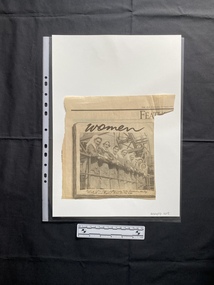
Newspaper - Newspaper clipping, The Age, Women, 19890820
... A newspaper clipping of a large black and white photo of eight women in nurse's uniforms standing along a railing with a caption beneath...Lade Gladys Elva Mole Wilhelmina Edna Goodin Gwendoline Healey Lilian Elaine McPhail Ellen May (Nell) Bryant Nurses in warfare A newspaper clipping of a large black and white photo of eight women in nurse's uniforms standing along a railing with a caption beneath Women Newspaper Newspaper clipping The Age ...Nursing sisters departing on a ship to war.A newspaper clipping of a large black and white photo of eight women in nurse's uniforms standing along a railing with a caption beneathnancy olive logan, iris ruby seller, mary j. lade, gladys elva mole, wilhelmina edna goodin, gwendoline healey, lilian elaine mcphail, ellen may (nell) bryant, nurses in warfare -
 Clunes Museum
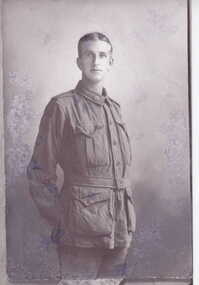
Photograph, CIRCA 1914/18
... ORIGINAL BLACK & WHITE PHOTOGRAPH OF JACK BRENNAN, WEARING A.I.F. UNIFORM - WORLD WAR 1 , LAPEL BADGE, NO CAP....BEST WISHES FROM JACK BRENNAN. 25/5/16 ORIGINAL BLACK & WHITE PHOTOGRAPH OF JACK BRENNAN, WEARING A.I.F. UNIFORM - WORLD WAR 1 , LAPEL BADGE, NO CAP. ...ORIGINAL BLACK & WHITE PHOTOGRAPH OF JACK BRENNAN, WEARING A.I.F. UNIFORM - WORLD WAR 1 , LAPEL BADGE, NO CAP.J. BRENNAN. BEST WISHES FROM JACK BRENNAN. 25/5/16local history, photography, photographs, military -
 Clunes Museum
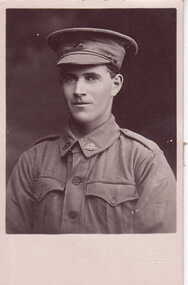
Photograph, CIRCA 1914 / 18
... McALISTER, AUST. UNIFORM. ARMY CAP LAPEL AND CAP RISING SUN BADGES....McALISTER, AUST. UNIFORM. ARMY CAP LAPEL AND CAP RISING SUN BADGES. ...BLACK & WHITE PHOTO OF PTE. J.J. McALISTER, AUST. UNIFORM. ARMY CAP LAPEL AND CAP RISING SUN BADGES.POSTCARD CORRESPONDENCE ADDRESS. ONLY KODAK PTE. J. McALISTER TAKEN ABOUT SIZE 6local history, photography, photographs, military -
 Clunes Museum
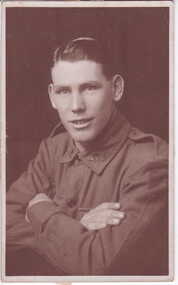
Photograph, CIRCA 1914 - 18
... TYPICAL AUSTRALIAN ARMY UNIFORM RISING SUN BADGES ON COLLAR LAPELS....TYPICAL AUSTRALIAN ARMY UNIFORM RISING SUN BADGES ON COLLAR LAPELS. ...SEPIA TONED PHOTO OF PTE. J.S. CAMPBELL. TYPICAL AUSTRALIAN ARMY UNIFORM RISING SUN BADGES ON COLLAR LAPELS.PTE. J.S. CAMPBELL 2ND A.L.T.M.B. DIED BURIED ATBORRE MILITARY CEMETERY NTH HAZEL BROOK. NORTHERN FRANCE.local history, photography, photographs, military -
 Frankston RSL Sub Branch
Webbing, Belt, No maker discernible, Unknown
... Used with dress uniform for ceremonious purposes....Used with dress uniform for ceremonious purposes. webbing belt dress webbing Written in black ink on the inside "Bretterecker" and the number 360053, possibly a post World War 2 service number. ...Used with dress uniform for ceremonious purposes.An example of the standard issue webbing belt used by Australian service personnel. The name "Bretterecker" and the number 360053, (possibly a post World War 2 service number) is written in black ink on the inside surface of the belt. The belt has been "blackened" for ceremonial use and has brass fittings, the 2 angled buckles normally located on the rear of the belt have been removed. The 1937 pattern equipment (also known as '37 webbing') was an item of military load-carrying equipment. Pattern 37 replaced the 1908 Pattern and 1925 Pattern—on which it was based—and was standard issue for British and Commonwealth troops from its introduction in 1937, throughout World War II, and in the post-war period until it was superseded by 58 pattern webbing. The design was confirmed on 8 June 1938 and wide-scale issue began in 1939. Towards the end of World War II, some 37 Webbing was produced in jungle green for troops fighting in the Pacific Theatre, although purpose-made 44 Pattern Webbing was then introduced for the humid jungle conditions, being lighter in weight, quicker drying, and rot-proofed.[ Although 44 Pattern continued in use with the British Army for jungle warfare in its various post-World War II colonial conflicts, it did not replace 37 Pattern in general service, which was in use up until the introduction of 58 Pattern. However, 37 Pattern was used for ceremonial purposes and still issued to Cadets in the 1990s. 1937 Pattern Webbing was made from cotton webbing, which was waterproofed and dyed before being woven. The fittings were made of stamped brass and it was produced by various manufacturers.Written in black ink on the inside "Bretterecker" and the number 360053, possibly a post World War 2 service number.webbing belt, dress webbing -
 Lara RSL Sub Branch
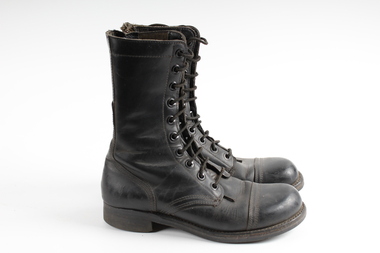
Uniform
... Uniform...Uniform...issued to service personel as part of their uniform....Uniform Uniform ...issued to service personel as part of their uniform.Black boots,calf height with 20 lace holes with laces on each boot.Also a brass zipper on inside of boot leg.PANCO 29 -
 Greensborough Historical Society
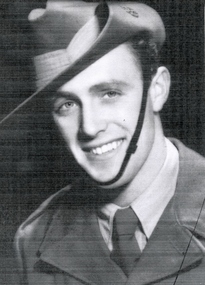
Photograph - Digital image, Trevor Partington in Army, 1958c
... Trevor Partington shown in Army uniform....Trevor Partington shown in Army uniform. trevor partington Digital copy of black and white photograph. ...Trevor Partington shown in Army uniform.Digital copy of black and white photograph.trevor partington -
 Greensborough Historical Society
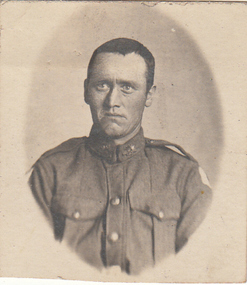
Photograph - Digital image, Charles Marshall et al, Stowell Marshall, 1917_
... This photograph shows Stowell Marshall in uniform....This photograph shows Stowell Marshall in uniform. charles marshall world war 1 stowell marshall No caption on this photograph Digital copy of black and white photograph. ...This photograph shows Stowell Marshall in uniform.Digital copy of black and white photograph. No caption on this photographcharles marshall, world war 1, stowell marshall -
Glenelg Shire Council Cultural Collection
Clothing - Tie, c. 1996
... uniform...PArt of the Glenelg Shire Council uniform...PArt of the Glenelg Shire Council uniform uniform civilian tie male clothing Men's tie, woven and manufactured in Australia with original Glenelg Shire Logo. ...PArt of the Glenelg Shire Council uniformMen's tie, woven and manufactured in Australia with original Glenelg Shire Logo. Tie is navy blue with red, blue green diagonal stripes and GSC logo embroidered in red and green at the wider point end. In original plastic packaginguniform, civilian, tie, male clothing -
 Bendigo Military Museum
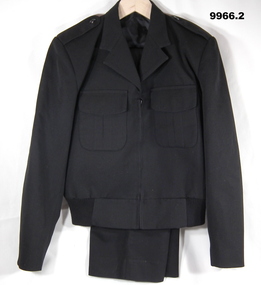
Uniform - SERVICE DRESS, RAN, ADA, 1997
... Uniform...Uniform...Superseded Uniform of a serving member of RAN....Superseded Uniform of a serving member of RAN. Uniform Service Dress RAN Manufacturers label - black ink print. 1. ...Superseded Uniform of a serving member of RAN.Service Dress Bomber Jacket and trousers. 1.& 2. Black colour wool/polyester fabric with black colour polyester fabric lining. Black colour plastic buttons. 1. Bomber Jacket style with collar, shoulder epaulettes, two front patch pockets with button down flap. Fabric and rib n\knit attached waistband. Front closer - metal and plastic zipper. Concealed pocket in lining with manufacturers white cotton fabric label. 2. Trousers - with waistband belt loops, two side pockets and one concealed back pocket. Metal and nylon zipper fly with metal hook and loop and button at waist. Manufacturers white cotton label on back pocket lining. Print illegible. Manufacturers label - black ink print. 1. "ADA/ 1997/ ^/ NSN: 8415.66.143.1561/ WOOL/POLYESTER/ SIZE: 855/ NO/ NAME/ DRY CLEAN ONLY". 2. Illegible.uniform, service dress, ran -
 Bendigo Military Museum
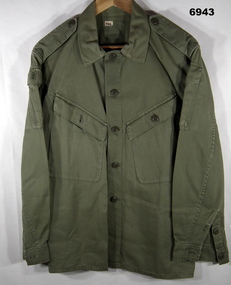
Uniform - SHIRT, ARMY, 1971
... ...Uniform...Uniform...Uniform shirt issued to POLWARTH No. 3178035....Uniform shirt issued to POLWARTH No. 3178035. ...Uniform shirt issued to POLWARTH No. 3178035.Shirt - green colour cotton fabric with collar, long sleeves, shoulder epaulettes, two front pockets with button down flap, green colour plastic buttons, two front pockets with button down flap. Green colour cotton manufacturer's label, with small white label below collar. Army work dress shirt commonly called "GREENS". This shirt has more of an American style. Manufacturer's label information - black ink print (some of print illegible) ?? Pty Ltd/ 1971/ ^/ 8405-66-034-5398/ CHEST & SIZE 44-45?/ NAME/ ARMY NO./ ???" handwritten on label - black ink pen "POLWARTH/ 317803". Small white label - handwritten black ink pen "POL".passchendaele barracks trust, uniform, army workdress, polwarth -
 Bendigo Military Museum
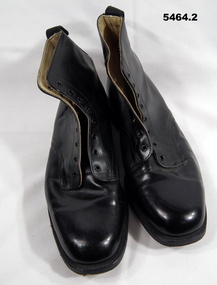
Footwear - BOOTS, RAN, BAXTER FOOTWEAR GROUP
... UNIFORM...Uniform boots belonging to E.D. FORREST...Uniform boots belonging to E.D. FORREST UNIFORM FOOTWEAR PARADE UNIFORM Makers stamp inside boots ‘BAXTER FOOTWEAR GROUP/LEATHER QTR, LINING/112941 42 40 / LEATHER SOLE” STAMP ON SOLE “RAN/LE/MADE IN AUSTRALIA “ Boots- pair black leather RAN Parade ground boots. ...Uniform boots belonging to E.D. FORRESTBoots- pair black leather RAN Parade ground boots. No Laces in eyelets.Makers stamp inside boots ‘BAXTER FOOTWEAR GROUP/LEATHER QTR, LINING/112941 42 40 / LEATHER SOLE” STAMP ON SOLE “RAN/LE/MADE IN AUSTRALIA “uniform, footwear, parade uniform -
 Bendigo Military Museum
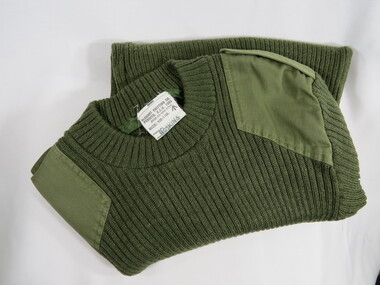
Uniform - PULLOVER - HOWARD GREEN, Elegant Knitting Co, 1985
... Uniform...Uniform item issued to "Rod Hosking"....Uniform item issued to "Rod Hosking". Pullover Howard Green Passchendaele Barracks Trust Rod Hosking ELEGANT KNITTING CO - PENRITH, NSW 1985. 8405-66-093-2704. ...Uniform item issued to "Rod Hosking".Pullover Howard Green with cotton shoulder pads with Velcro epaulettes and sewn on Warrant Officer One patches.ELEGANT KNITTING CO - PENRITH, NSW 1985. 8405-66-093-2704. SIZE: 105-115l.pullover howard green, passchendaele barracks trust, rod hosking -
 Sir Reginald Ansett Transport Museum
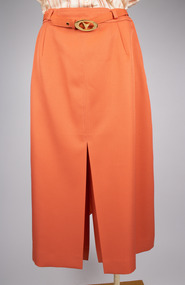
Uniform - Skirt, Sportscraft
... ...uniform...Uniform...This skirt was art of the uniform made by Sportscraft...This skirt was art of the uniform made by Sportscraft sportscraft uniform flight attendant hostess Orange skirt with belt Uniform Skirt Sportscraft ...This skirt was art of the uniform made by SportscraftOrange skirt with beltsportscraft, uniform, flight attendant, hostess -
 Bendigo Military Museum
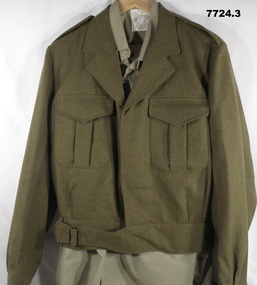
Uniform - JACKET, TROUSERS, SHIRT, BATTLE DRESS, ARMY, Australian Defence Industries, 2. 1990 3. 1988
... Uniform...Uniform...Uniform issued to "P. Green" No. 3204573...Uniform issued to "P. Green" No. 3204573 Uniform Army Battle Dress P. ...Uniform issued to "P. Green" No. 32045731. Jacket, Khaki colour wool serge fabric. Battle Dress style, belted at the waist with metal buckle. Dark green plastic buttons. Collar, shoulder epaulettes, two front pockets with concealed button down flap, sleeve cuffs. Green colour cotton twill fabric lining to waistband. Manufacturers white cotton fabric label - left pocket lining. Removeable tag on inside collar. 2. Trousers, khaki colour wool serge fabric. Battle Dress style with fob pocket, two side pockets, one back pocket with concealed button down flap. Dark green plastic buttons, metal zipper fly. Manufacturers white cotton fabric label - back pocket lining. Green colour polyester lining. 3. Shirt, Khaki colour cotton/polyester long sleeves, with shoulder epaulettes and cream plastic buttons. Two front pockets with button down flaps. Manufacturers white cotton fabric label inside back below collar.Manufacturers information on labels - black ink print. 1. "ADI P/L/ VICTORIA/ 1990/ ^ / 8405-66-025- 6418/BATCH P/ SIZE 102/104L/ ARMY NO./ NAME/DRY CLEAN ONLY/ CREASE UPPER/ HALF OF LAPELS ONLY" 2. "ADI P/L/ SUB-4 VIC 1990/ ^ / 8405-66-025-6183/ BATCH S/ SIZE 84R W.84/ DRY CLEAN ONLY/ RE-PRESS ON ORIGINAL/CREASES SET BY/ SI-RO SET/ MENDING PATCH ATTACHED/ ARMY NO/ NAME" 3. " A.G.C.F./ 1988/ ^/ SIZE 40/84/ 8405-66-088-7098/ SERVICE NO./ NAME/ DO NOT BOIL OR WRING/ MACHINE WASHABLE/ DRIP DRY/ IRON LIGHTLY/ WITH WARM IRON" Handwritten - blue ink pen "3204573/Green" uniform, army, battle dress, p. green -
 Stawell Historical Society Inc
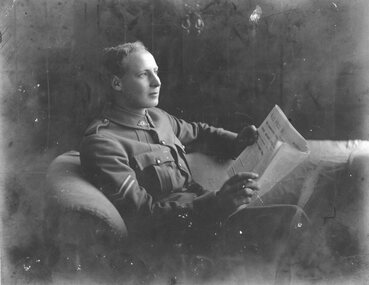
Photograph, Mr Bill Syme in WW1 Uniform -- Studio Portrait
... Mr Bill Syme in WW1 Uniform -- Studio Portrait...Portrait Bill Syme in uniform WW1...Portrait Bill Syme in uniform WW1 Stawell War Mr Bill Syme in WW1 Uniform -- Studio Portrait Photograph ...Portrait Bill Syme in uniform WW1stawell war -
Tatura Irrigation & Wartime Camps Museum
headwear - Beret, German Army Uniform
... German Army Uniform......uniform...German Army Uniform circa WW11...German Army Uniform circa WW11 Worn by German soldier Beret hat headgear uniform German Army Uniform Kahki beret (hat) , band features a badge , kahki diamond with black, white and red bullseye type circle. ...German Army Uniform circa WW11Worn by German soldierKahki beret (hat) , band features a badge , kahki diamond with black, white and red bullseye type circle. Body of beret ( front centre) has the Nazi blue eagle and swastika ensignia. Metal rivet air holes one on each side. Red cotton lining. beret, hat, headgear, uniform, german army uniform -
 Stawell Historical Society Inc
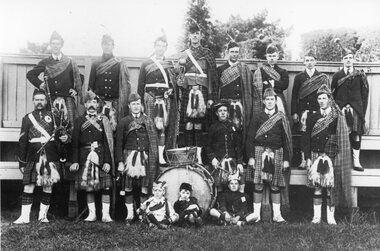
Photograph, Stawell Scottish Pipe Band in uniform
... Stawell Scottish Pipe Band in uniform...Stawell Scottish Pipe Band in uniform...Stawell Scottish Pipe Band in uniform Stawell Entertainment Stawell Scottish Pipe Band in uniform Photograph ...Stawell Scottish Pipe Band in uniformstawell entertainment -
 Stawell Historical Society Inc
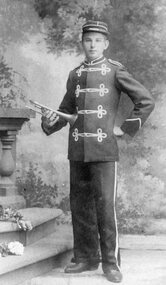
Photograph, Mr W N Cook in Bandsman uniform c1899
... Mr W N Cook in Bandsman uniform c1899...Bandsman W.N. Cook in uniform c1899...Bandsman W.N. Cook in uniform c1899 Stawell Entertainment Mr W N Cook in Bandsman uniform c1899 Photograph ...Bandsman W.N. Cook in uniform c1899stawell entertainment
