
Showing 2292 items matching "review"
-
 Sunshine and District Historical Society Incorporated
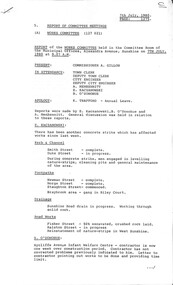
Administrative record - City of Sunshine - Commissioner Mr Alexander Alex George Gillon Collection 1976 - 1982 - Report of committee meetings 7th July 1980, City of Sunshine, 7th July 1980
... Ground the club is disregarding signs elected by Council Report of the Finance Committee Meeting Report of the Town Clerk Staff Matters Transfer of Land Camelot Drive and Main Road West Albanvale Audit Fees 1978/79 Accounts Review of Council's Computer Service Project Cost Analysis for period Ended 2nd June 1980 Report of the Superintendent Traffic & By-Laws Fixing of Registration Fees Dog Act 1970 Dog Act Proposed Development Lost Dogs' Home North Melbourne Report of the City Engineer & Planner Central Library Remote Control Radio for Bookmobile Fleet & Plant Estimates 1980/81 Report of the Planning Committee Meeting 3rd July 1980 First Aid Course Asphalt Seminar Report of the Planning Committee Meeting 7th July 1980 Outdoor staff RDO Christmas Holidays 1980/81 Staughton Street Sunshine Reinstatement of Asphalt Footpath will not proceed at this time Wholesale / Retail Outlet Hampstead Road & Mitchell Street North East Corner Irvine Street Kindergarten Deer Park Neale Road Deer Park Neale Road / President Road Albanvale Signalisation Hampstead Road / Omar Street / Mitchell Street Maidstone...Ground the club is disregarding signs elected by Council Report of the Finance Committee Meeting Report of the Town Clerk Staff Matters Transfer of Land Camelot Drive and Main Road West Albanvale Audit Fees 1978/79 Accounts Review of Council's Computer Service Project Cost Analysis for period Ended 2nd June 1980 Report of the Superintendent Traffic & By-Laws Fixing of Registration Fees Dog Act 1970 Dog Act Proposed Development Lost Dogs' Home North Melbourne Report of the City Engineer & Planner Central Library Remote Control Radio for Bookmobile Fleet & Plant Estimates 1980/81 Report of the Planning Committee Meeting 3rd July 1980 First Aid Course Asphalt Seminar Report of the Planning Committee Meeting 7th July 1980 Outdoor staff RDO Christmas Holidays 1980/81 Staughton Street Sunshine Reinstatement of Asphalt Footpath will not proceed at this time Wholesale / Retail Outlet Hampstead Road & Mitchell Street North East Corner Irvine Street Kindergarten Deer Park Neale Road Deer Park Neale Road / President Road Albanvale Signalisation Hampstead Road / Omar Street / Mitchell Street Maidstone Foolscap sized document. ...Report of Committee Meetings 7th July 1980 Report of Works Committee Meeting Kerb & Channel Smith Street Braybrook completed Duke Street Sunshine in progress Footpath Newman Street Sunshine completed Footpath Norge Street Sunshine completed Footpath Staughton Street Sunshine Street commenced Footpath Braybrook Area gang in Riley Court Drainage Sunshine Road in progress Road Work Fisher Street Maidstone 50% excavated, crush rock laid Road Work Ralston Street Sunshine North in progress Road Work reinstatment of nature strips in Sunshine West Aycliffe Avenue Infant Welfare Centre contractor is now one week over construction period Tennis Pavilion Selwyn Park work has slowed following request from Albion Tennis Club for toughened glass and other extras Depot Workshop Pavilion Pennell Reserve tenders Skinner Reserve situation to be clarified Tree Planting & Pruning gangs in Sunshine West Area Grounds generally cutting of grass is difficult under present wet weather conditions Sassella Park grading has commenced Tree Planting 1981 seedlings are being "pricked" out Playground plans for layouts at the eleven locations is near completion I.C.I. Ground the club is disregarding signs elected by Council Report of the Finance Committee Meeting Report of the Town Clerk Staff Matters Transfer of Land Camelot Drive and Main Road West Albanvale Audit Fees 1978/79 Accounts Review of Council's Computer Service Project Cost Analysis for period Ended 2nd June 1980 Report of the Superintendent Traffic & By-Laws Fixing of Registration Fees Dog Act 1970 Dog Act Proposed Development Lost Dogs' Home North Melbourne Report of the City Engineer & Planner Central Library Remote Control Radio for Bookmobile Fleet & Plant Estimates 1980/81 Report of the Planning Committee Meeting 3rd July 1980 First Aid Course Asphalt Seminar Report of the Planning Committee Meeting 7th July 1980 Outdoor staff RDO Christmas Holidays 1980/81 Staughton Street Sunshine Reinstatement of Asphalt Footpath will not proceed at this time Wholesale / Retail Outlet Hampstead Road & Mitchell Street North East Corner Irvine Street Kindergarten Deer Park Neale Road Deer Park Neale Road / President Road Albanvale Signalisation Hampstead Road / Omar Street / Mitchell Street Maidstonesmith street, braybrook, duke street, newman street, norge street, staughton street, sunshine, riley court, sunshine road, tottenham, fisher street, maidstone, ralston street, sunshine north, aycliffe avenue infant welfare centre, aycliffe avenue, deer park, albion tennis club, selwyn park, selwyn street, albion, pavilion pennell, burke street, skinner reserve, churchill avenue, sassella park, station road, i.c.i. oval, ballarat road, hampstead road, mitchell street, omar street, irvine street kindergarten, irvine street, neale road, president road, albanvale -
 Ballarat Tramway Museum
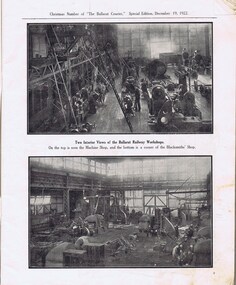
Newspaper, The Courier Ballarat, The Courier, Christmas Number, 1922, Special Issue, Dec. 1922
... Page 17/18 - top half bottom 1/3 of page 21/22 Pages: 9, 70, 71, 75, 87 and 90 imaged. Record reviewed and images of some of the pages added 10-9-2013...Page 17/18 - top half bottom 1/3 of page 21/22 Pages: 9, 70, 71, 75, 87 and 90 imaged. Record reviewed and images of some of the pages added 10-9-2013 The Courier, Christmas Number, 1922, Special Issue. ...Yields information about Ballarat, it businesses, identifies and its locations or environs through photos and advertisements and articles.The body of the "Christmas Number of the Ballarat Courier, Special Edition - December 1922" = coves missing. See attached listing with worksheet for summary of contents. Contains many advertisement for local business houses, photos and fiction and articles , pages 3 - 94 still existing, stapled. Notes on contents of Christmas Number of The Ballarat Courier Special edition, December 19, 1922. Photos Ballarat Association Cricket Team, winners Country championship - 1922 and photo of dinner at Sth Melb. Town Hall by VCA. - p83 Ballarat Golf club, Arch of Victoria and Club House - p63, 65 Ballarat Imperial Football club - league premier- 1922 - p19 Ballarat Miners Turf Club - showing stands and office bearers - p43 Ballarat North Golf Club - p67 Ballarat Town hall - p87 Ballarat Turf Club Office bearers and race finish - p45 Ballarat Yacht club - opening day and yacht race - p89 Black Hill Progress Association, - members and scenes - p33 Eureka Monument - p79 Finish of a race at Miners RC - p45 Head of the Lake and St. Patrick's the winning crew - p47 1.ake Wendouree - boating on (Gardens side - p] 1 Lake Wendouree, rowing and club houses - p28 Lal Lal waterfalls - p61 Lydiard St. View - Railway Station, Cemetery gates, Mining Exchange, Post Office and Banks - p71 National Federation Conference - 1922 - p39 South city Football club, Ballarat Assoc. Premiers 1922 - p25 Sturt and Lydiard St - top photo Town Hall and T&G building, with ESCo tram (pencil note "Tram No- 3 - Peckham Truck" written in - p75. Bottom photo, looking south from Town Hall. The Western Oval during a football match - p23 Victorian Farmers Union Conference, Ballarat 1922 - p37 Victorian Railway photos of various scenes around Victoria: Pages 3, 5, 7, 55, 59 Views of Victoria Park - p91 VR Ballarat Railway Workshops - p9 Advertisements on even numbered pages, featuring in particular: Ballarat Motor Garage - with photos - p88 C.A.V. Willard - storage battery service Stn - p76 with photo. CA Mitaxa - Builder - includes photos of new homes - p38 Coles & Pullham - stock sales - with photos - p86 ESCo - p70 Geo E. Dibble, machinery merchant - includes photos - p26 Geo. Waller - asphalt and carrier - photos of work and buildings Hanrahan's of Ballarat - Garage and stables - p30 J.L.Ridings - dentists, - photos of surgery p14 Longhurst's Bakeries - Mair and Yuille St. Includes Photos. - P84 Preston Motors, Melbourne - The Maxwell Sep Morse - Motor and Carriage builders - photo - p78 St. Patrick's College - photos of students and buildings - p46 State Savings Bank of Vic. - p20 T-J. Brown house remover and general carrier, photo of traction engines - p90 T.J.Haymes - Wallpaper etc. - p33 The Ballarat Co-Op Distribution Society - includes photos - p44 The Hupmobile - McLean Richards Motors - p22 Wallace Butter Factor - p82 Articles Black Hill Progress Association - p35 Damaged pages - cut outs clippings etc. Page 17/18 - top half bottom 1/3 of page 21/22 Pages: 9, 70, 71, 75, 87 and 90 imaged. Record reviewed and images of some of the pages added 10-9-2013p74. Note re tram 33.trams, tramways, ballarat, commerce, ballarat business, sports, science, esco -
 Surrey Hills Historical Society Collection
Work on paper - Vertical File, Arthur William Plaisted
... R/e advertisement 105 Elizabeth Street, Kooyong – Arthur Plaisted’s last residence; designed by him. Weekly Review 22.2.2017 (3 pages). 12. Arthur Plaisted’s registration as an architect, Victoria Gazette, 2.6.1943 (1 page). ...R/e advertisement 105 Elizabeth Street, Kooyong – Arthur Plaisted’s last residence; designed by him. Weekly Review 22.2.2017 (3 pages). 12. Arthur Plaisted’s registration as an architect, Victoria Gazette, 2.6.1943 (1 page). ...Plaisted, Arthur William inventory (1890-1965) 1. Photocopy of photo of Arthur Plaisted & Jessica Capuano on their wedding day 1921 (1 Page). 2. Home occupied by Plaisteds 1920 (1 page) 3. ‘’Enniskillen’’: extract from ‘’A brief cultural history and assessment of cultural heritage significance’’, by Robin Da Costa-Adams February, 2009 (7 pages). 4. Postcard ‘’Save Eniskillen’’ (1 page), undated. 5. Did you know? (1 Page), undated. 6. Letter to Sue Barnett from Robin Adams re heritage. (1 page), 16.1.2010. 7. Hartpury Court complex (1 page), undated. 8. ”The Georgian style will always be popular’’, The Argus, 10.7.1947. (1 page). 9. 4 Turnbull Avenue, Toorak real estate advertisement (2 pages), 2009. 10. Copy of presentation on Arthur Plaisted by Sue Barnett to SHHS meeting. C. 2009.. Also notes on Clive Lord (1905-1979) (2 pages); and John Stevens Gawler (1885-1978) (4 pages), architects. 11. R/e advertisement 105 Elizabeth Street, Kooyong – Arthur Plaisted’s last residence; designed by him. Weekly Review 22.2.2017 (3 pages). 12. Arthur Plaisted’s registration as an architect, Victoria Gazette, 2.6.1943 (1 page). Also Kay and Burton advertisement for his home (undated) (2 pages). 13. A.W. Plaisted 1890-1965 architect: extract from “‘Enniskillen’, McAlpin residence”, by Robin Da Costa-Adams (undated) (9 pages). 14. 4 Burke Road notes (undated) & cutting ‘Mr. A.W. Plaisted’ from New Life, 29.7.1965, source Robin Da Costa-Adams (1 page). 15. Capuano family information including copies of photos, (undated), from Robin Da Costa-Adams (4 pages). 16. A.W. Plaisted 1890-1965 copy of photo, (undated), source Robin Da Costa-Adams (1 page). 17. Map of Plaisted homes in Canterbury (undated) (1 page). 18. A.W. Plaisted registration as an architect and other family and business information, (undated) (3 pages). 19. Copies of 4 photos, source Robin Da Costa-Adams (undated), (2 pages). 20. Advertising for A.W. Plaisted re standing for Melbourne City Council, August, 1941 (1 sheet). 21. ‘The roof – the hat of the house’, The Australian Home Beautiful, 12.2.1926 (5 pages). 22. ‘The roof – the hat of the house’, A Canterbury profile of architect A.W. Plaisted, source Robin Da Costa-Adams 2009 (3 pages including one of photos). 23. Copy photo of ‘The Big Garage, Bairnsdale, note on its history and significance (undated) (2 pages). 24. Advertisements for Shell fuel oil central heating, 1.8.1929, 1.5.1930 and 1.1.1931, The Australian Home Beautiful, assume showing Plaisted homes (3 pages). 25. 2 letters and a note to Sue Barnett from Robin Da Costa-Adams, 1.6.2016 (3 pages). 26. Copy of photo of a house and note from Robin Da Costa-Adams (undated) (2 pages). 27. ‘Did you know … ?’ Robin Da Costa-Adams, SHNN No. 162, October/November 2009 (1 page). arthur william plaisted -
Ringwood and District Historical Society
Memorabilia - Envelope, Packet: Ringwood Methodist Church - Anniversary Pamphlets, Cuttings, Pictures, Hand written notes
... Forward in Faith' Review Stewardship Canvass August 1961. 11 pages outlining the plans for the proposed new Church. 17. ...Forward in Faith' Review Stewardship Canvass August 1961. 11 pages outlining the plans for the proposed new Church. 17. ...Churches - Ringwood Methodist Church3785.1 A hand written notes of the early history of the church. Several to the Town Clerk from the Ringwood Church trust and thr Public health department. 2. Minutes of meeting of the Ringwood Parsonage Trust 1909 and 1910 3. The Record of the Box Hill and Ringwood Methodist Circuits. Hand writen list of members of Ringwood Circuit. 4. Flyer for Back to Ringwood Methodist Church Jubilee, March 9th to 17th. 1929. Letter to Richard Carter from Aub (sic) who was eight years old at the time and can remember the Jubilee 4 Booklets about the Church Also a name tag for Miss V. Watson Assist. Secretary. Several cuttings, one full page spread from the newspaper about the Jubilee. 5. Ringwood Methodist Sunday School Tea and Meeting. Cutting from the Ringwood & Croydon Mail. The Wigley family were greatly represented. 6. Diamond Jubilee 17-28th. March ,1939 Program of Events 7. Six pages of hand written letters from the Methodist Circuit, letter to the Ringwood Councillors inviting them to the Centennary Celebrations of the Church,letter to the Town Clerk from Methodist Sunday School Surrey Hills regarding a picnic in Ringwood. 8. Ringwood United Churchmen's Association syllabus 1937 9. Pamphlet about Sunday Sport and the Christian Duty to Vote. 10.Ringwood Methodist Church news July 1963 11. Two Ringwood Methodist Church pamphlets for the 75th. Anniversary March 17th.-28th. 1954. 12.Copy of lease from the Methodist Church Trust for 30 years to use land in Ringwood 13. Carols by Candlelight (no year) and the Ringwood Methodist Church News March 1958, With memories of Christmas. 14.Pamphlet of the Laying of the Foundation Stone Saturday 18th. May 1963 and two pamphlets of the Opening and Dedication of the Ringwood Methodist church 9th. november 1963. 15.'The Messenger' Journal of the Ringwood Methodist Church December 1963. 16'. Forward in Faith' Review Stewardship Canvass August 1961. 11 pages outlining the plans for the proposed new Church. 17. Foolscap sheet typed with the Evening Service Sunday 6th. December 1970 with the Combined Circuit Choirs .Excerpts from 'The Messiah' 18. 'Recollections of Ringwood Methodism' issued at the celebration of the 98th. Anniversary of the Church 29th. may 1977. Compiled by Alf. Clark 19.Syllabus for the Uniting Church Fellowship Ringwood 1984 20.' Methodist Pioneers in the Croydon Area'. Work in Progress by Rev. Barry Brown 21.two page history of the ' Pipe Organ in the Ringwood Uniting Church' which was built by the Melbourne firm of Geo. Fincham & Sons. Plus a pge with' A Few Facts about the Organ' 22. Two Church Christmas cards (no year). one in envelope -
 Sunshine and District Historical Society Incorporated
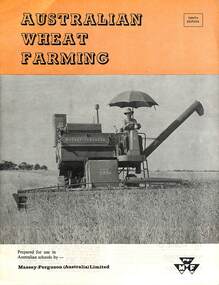
Pamphlet - H.V. McKay Massey Ferguson Miscellaneous Material
... McKay An Agricultural Icon 2904.11 - Massey Ferguson - 1990 Annual Review 2904.12 - British Tractors And Farm Machinery The Green Book 1962 2904.13 - Massey Ferguson - Wyeera Education Centre Product And Sales Training Notes 2904.14 - Massey Ferguson - Hay Tool Handbook 2904.15 - Massey Ferguson - Farwell To Joyce Wright Retirement Presentation 2904.15 - Massey Ferguson - Quarter Century Club Sunshine Dinner Dance 2904.16 - Massey Ferguson - Cane Harvesters For The World 2904.17 - Australian Wheat Poster 2904.18 - Sunshine Farm Implements 2904.19 - Sunshine And Massey Harris The Latest And Best In Farm Machinery 2904.20 - Massey Ferguson - 9th Annual Presentation Dinner 20th May 1970 2904.21 - Massey Ferguson - List Of Quarter Centuary Members 16th October 1997 2904.22 - Massey Ferguson - About Sunshine People Throughout The Commonwealth 2904.23 - Sunshine Harvester Factory - Jim Learmonth (3 Generations Worked At The Harvester Factory) 2904.24 - Howard James Jim Learmonth War Saving Certificate 1941 to 1943 2904.25 - Alexander Robert Learmonth, Harold Backingham, Russell Learmonth & Alice Leamonth 2904.25 - Peter James Learmonth, Alex Learmonth, Russell Alexander Learmonth & Harold Lynton Learmonth 2904.26 - Norman Gooding & John Jack McMillan Vance (WW2 POW) 2904.26 - Norman Gooding & John Jack McMillan Vance (WW2 POW) Back 2904.27 - Ivy Rewell H.V. ...McKay An Agricultural Icon 2904.11 - Massey Ferguson - 1990 Annual Review 2904.12 - British Tractors And Farm Machinery The Green Book 1962 2904.13 - Massey Ferguson - Wyeera Education Centre Product And Sales Training Notes 2904.14 - Massey Ferguson - Hay Tool Handbook 2904.15 - Massey Ferguson - Farwell To Joyce Wright Retirement Presentation 2904.15 - Massey Ferguson - Quarter Century Club Sunshine Dinner Dance 2904.16 - Massey Ferguson - Cane Harvesters For The World 2904.17 - Australian Wheat Poster 2904.18 - Sunshine Farm Implements 2904.19 - Sunshine And Massey Harris The Latest And Best In Farm Machinery 2904.20 - Massey Ferguson - 9th Annual Presentation Dinner 20th May 1970 2904.21 - Massey Ferguson - List Of Quarter Centuary Members 16th October 1997 2904.22 - Massey Ferguson - About Sunshine People Throughout The Commonwealth 2904.23 - Sunshine Harvester Factory - Jim Learmonth (3 Generations Worked At The Harvester Factory) 2904.24 - Howard James Jim Learmonth War Saving Certificate 1941 to 1943 2904.25 - Alexander Robert Learmonth, Harold Backingham, Russell Learmonth & Alice Leamonth 2904.25 - Peter James Learmonth, Alex Learmonth, Russell Alexander Learmonth & Harold Lynton Learmonth 2904.26 - Norman Gooding & John Jack McMillan Vance (WW2 POW) 2904.26 - Norman Gooding & John Jack McMillan Vance (WW2 POW) Back 2904.27 - Ivy Rewell H.V. ...It appears a lot of this collection came from the Learmonth Family2904.01 - Massey Ferguson - Australian Wheat Farming Ninth Edition 2904.02 - Museum Victoria Infosheet - THe H.V. McKay Collection 2904.03 - H.V. McKay - School Assignment By Teresa Micallef 1991 2904.04 - Examine Employee Expectations Of Work At Massey Ferguson Report 2904.05 - Massey Ferguson - Stage 1 Draft Report Cultural Significance December 1985 2904.06 - Massey Ferguson - Site Study Stage 2 Report January 1987 2904.07 - Massey Ferguson - HT140 Ben Pearson Hi Clearance Picker Sprayer Information Sheet 2904.08 - Come And See The City Of The Future Public Inspection At The Sunshine Harvester Site 24th July 1993 2904.09 - Farmyard Relics Identification Guide By Ken Arnold 2904.10 - Sunshine Harvester Works H.V. McKay An Agricultural Icon 2904.11 - Massey Ferguson - 1990 Annual Review 2904.12 - British Tractors And Farm Machinery The Green Book 1962 2904.13 - Massey Ferguson - Wyeera Education Centre Product And Sales Training Notes 2904.14 - Massey Ferguson - Hay Tool Handbook 2904.15 - Massey Ferguson - Farwell To Joyce Wright Retirement Presentation 2904.15 - Massey Ferguson - Quarter Century Club Sunshine Dinner Dance 2904.16 - Massey Ferguson - Cane Harvesters For The World 2904.17 - Australian Wheat Poster 2904.18 - Sunshine Farm Implements 2904.19 - Sunshine And Massey Harris The Latest And Best In Farm Machinery 2904.20 - Massey Ferguson - 9th Annual Presentation Dinner 20th May 1970 2904.21 - Massey Ferguson - List Of Quarter Centuary Members 16th October 1997 2904.22 - Massey Ferguson - About Sunshine People Throughout The Commonwealth 2904.23 - Sunshine Harvester Factory - Jim Learmonth (3 Generations Worked At The Harvester Factory) 2904.24 - Howard James Jim Learmonth War Saving Certificate 1941 to 1943 2904.25 - Alexander Robert Learmonth, Harold Backingham, Russell Learmonth & Alice Leamonth 2904.25 - Peter James Learmonth, Alex Learmonth, Russell Alexander Learmonth & Harold Lynton Learmonth 2904.26 - Norman Gooding & John Jack McMillan Vance (WW2 POW) 2904.26 - Norman Gooding & John Jack McMillan Vance (WW2 POW) Back 2904.27 - Ivy Rewell H.V. McKays Canvas Room Employee 2904.28 - Alexander Robert Learmonth Amalgamated Engineering Union Trade Union Membership Card 2904.29 - H.V. McKay Massey Harris Ferguson - Miscellaneous Material 2904.30 - H.V. McKay Massey Harris Ferguson - Miscellaneous Material 2904.31 - H.V. McKay Massey Harris Ferguson - Miscellaneous Material 2904.32 - H.V. McKay Massey Harris Ferguson - Miscellaneous Material 2904.33 - H.V. McKay Massey Harris Ferguson - Miscellaneous Material 2904.34 - Massey Ferguson Annual Report 1958h.v. mckays massey ferguson, sunshine harvester works -
 Sunshine and District Historical Society Incorporated
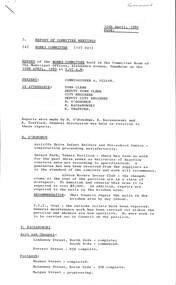
Administrative record - City of Sunshine - Commissioner Mr Alexander Alex George Gillon Collection 1976 - 1982 - Report of committee meetings 15th April 1980, City of Sunshine, 15th April 1979
... Oval fencing of reserve to commence this week Tree Planting of advanced growth trees on Council Reserves commenced Cost to Construct Lacy Street between Cornwall Road and Maribyrnong River Braybrook Report of the Finance Committee Meeting Report of the Town Clerk Proposed Variations to Separate Awards Rates, Sanitary and Interest Statements as at 10th March 1980 Roll Review Possible Acquisition of Additional Property from I.C.I. ...Oval fencing of reserve to commence this week Tree Planting of advanced growth trees on Council Reserves commenced Cost to Construct Lacy Street between Cornwall Road and Maribyrnong River Braybrook Report of the Finance Committee Meeting Report of the Town Clerk Proposed Variations to Separate Awards Rates, Sanitary and Interest Statements as at 10th March 1980 Roll Review Possible Acquisition of Additional Property from I.C.I. ...Report of Committee Meetings 15th April 1980 Report of the Works Committee Meeting Aycliffe Drive Infant Welfare And Pre-School Centre construction proceedings satisfactorily Selwyn Park Tennis Pavilion no work due to Easyflow Concrete Delivery Issues Selwyn Park Albion Rovers Soccer & Athletics Club Change Rooms in a State of Disrepair Kerb & Channel Lindenow Street North Side complete, South Side commenced Kerb & Channel Forrest Street 85% complete Footpath Myamyn Street completed Footpath McLennan Street North Side 50% complete Footpath Morgan Street progressing Drainage Forrest Street progressing but difficult due to other services Road Works Smith Street 85% complete, ready for kerb & channel Nature Strips in Housing Commission area of Sunshine West have been inspected Orama Street Child Care Centre landscaping completed I.C.I. Oval fencing of reserve to commence this week Tree Planting of advanced growth trees on Council Reserves commenced Cost to Construct Lacy Street between Cornwall Road and Maribyrnong River Braybrook Report of the Finance Committee Meeting Report of the Town Clerk Proposed Variations to Separate Awards Rates, Sanitary and Interest Statements as at 10th March 1980 Roll Review Possible Acquisition of Additional Property from I.C.I. Report of the City Engineer & Planner Proposed Traffic Signals under Statcon Programme Ashley Street / Barkly Street Intersection Sunshine Tip Hulett Street Proposed Security Arrangement Matters Arising from the Agenda & Forward Planning Committee Meeting 14th April 1980 Report of the Co-Ordinator of Welfare Services Rate Remission for Pensioners Castley Hall Maintenance Repairs Report of the Chief Health Officer Roberts Crescent Infant Welfare Centre & Ardeer Infant Welfare Centre Community Pediatric Practice Seminar Werribee 21st April 1980 Report of the Superintendent Traffic & By-Laws Disposal of Derelict Vehicles Report of the Municipal Recreation Officer Shooting Gallery Tallintyre Reserve Abutting Hyett Court Report of the City Engineer & Planner Planning Permit Application Shop & Office Extensions Ballarat Road Deer Park Planning Permit Application L.P. Gas Tank Corner Monash Street and Duke Street Sunshine Proposed Subdivision Paw Paw Road and Burgess Road Brooklyn Intersection Cornwall Road and Devonshire Road Sunshine Traffic Lights Depot Workshop Sunshine Cricket Club Cricket Pavilion Dempster Park Hot Water System Report of the Director of Parks & Recreation National Seminar Turf Management 5th to 7th June 1980 Extraordinary Business Report of the City Engineer & Planner Special Use 7 Zone Derrimut Saleyardsaycliffe drive infant welfare and pre-school centre, aycliffe drive, deer park, selwyn park, selwyn street, albion, albion rovers soccer & athletics club, lindenow street, maidstone, myamyn street, mclennan street, morgan street, braybrook, forrest street, smith street, orama street child care centre, orama street, i.c.i. oval, i.c.i., ballarat road, lacy street, cornwall road, maribyrnong river, ashley street, barkly street, footscray west, sunshine tip, hulett street, castley hall, simmie street, sunshine west, roberts crescent infant welfare centre, roberts crescent, ardeer infant welfare centre, tallintyre reserve, hyett court, monash street, duke street, paw paw road, burgess road, brooklyn, devonshire road, sunshine cricket club, dempster park, phoenix street, derrimut saleyards -
 Sunshine and District Historical Society Incorporated
Administrative record - City of Sunshine - Commissioner Mr Alexander Alex George Gillon Collection 1976 - 1982 - Report of committee meetings 5th June 1979, City of Sunshine, 5th June 1979
... Works Hot Mix Cranbourne Avenue, Gerald Street, Boundary Road, Fitzgerald Road and Hulett Street Street Tree Planting 1500 trees have been planted Street Tree Pruning work progressing Bon Thomas Reserve Development levels to be provided to allow spreading of soil Report of the Finance Committee Meeting Report of the Town Clerk Fees The Hub Sports Centre Swimming Pool Instruction Sunshine North Technical School Oval Agreement Traffic Offences Court Fines Estimates Review 1978/79 Report of the Agenda & Forward Planning Committee Meeting Report of the Town Clerk Finalisation of Gooding Street Part Private Street Scheme Report of the Chief Helath Surveyor Environment Protection Authority Draft Noise Control Policy W. ...Works Hot Mix Cranbourne Avenue, Gerald Street, Boundary Road, Fitzgerald Road and Hulett Street Street Tree Planting 1500 trees have been planted Street Tree Pruning work progressing Bon Thomas Reserve Development levels to be provided to allow spreading of soil Report of the Finance Committee Meeting Report of the Town Clerk Fees The Hub Sports Centre Swimming Pool Instruction Sunshine North Technical School Oval Agreement Traffic Offences Court Fines Estimates Review 1978/79 Report of the Agenda & Forward Planning Committee Meeting Report of the Town Clerk Finalisation of Gooding Street Part Private Street Scheme Report of the Chief Helath Surveyor Environment Protection Authority Draft Noise Control Policy W. ...Report of Committee Meetings 5th June 1979 Report of Works Committee Meeting Diamond Avenue Building final completion delayed due to electrician's strike, landscaping cannot commence until sheds erected Bon Thomas Reserve Building final completion delayed due to electrician's strike, landscaping cannot commence until sheds erected Orama Street Child Care Centre completion subject to electrician's strike Highpoint West primary steel frames have been erected Northumberland Road building complete Deer Park Ballarat Road Infant Welfare Centre new tenders being submitted Depot Amenities Block area should be ready for demolition this week Kerb & Channel King Edward Avenue completed, footpath and crossing in progress Drainage Melon Street completed, damaged kerb & channel being reconstructed Drainage Phoenix Street completed, kerb & channel reinstatement in progress Gangs have spent time in many areas correcting minor drainage problems Footpath Hall Street completed Footpath Esmond Street bridge approaches completed Footpath Millers Road commenced Area south of Churchill Avenue progressing Some men were used to make safe the fire damaged building at the Corner of City Place and Sun Crescent (Deneys) C.R.B. Works Martket Road C.R.B. Works Duke Street East Side between McGrath Quarry and Surrey Street C.R.B. Works South Road C.R.B. Works Hot Mix Cranbourne Avenue, Gerald Street, Boundary Road, Fitzgerald Road and Hulett Street Street Tree Planting 1500 trees have been planted Street Tree Pruning work progressing Bon Thomas Reserve Development levels to be provided to allow spreading of soil Report of the Finance Committee Meeting Report of the Town Clerk Fees The Hub Sports Centre Swimming Pool Instruction Sunshine North Technical School Oval Agreement Traffic Offences Court Fines Estimates Review 1978/79 Report of the Agenda & Forward Planning Committee Meeting Report of the Town Clerk Finalisation of Gooding Street Part Private Street Scheme Report of the Chief Helath Surveyor Environment Protection Authority Draft Noise Control Policy W. Pridhams (Aust) Pty Ltd Lots 12 to 16 Merino Street Laverton North Site Objection Report of the Chief By-Laws Officer By-Laws Officers Course Report of the City Engineer Policy of Service Premises in Residential and Industrial Zone Planning Permit Application Subdivision for Shop Purposes Corner Evergreen Avenue and Wintersun Drive Albanvale Planning Permit Application National Bank of Australasia Ltd Bank Extensions Hampshire Road Proposed Signals Deferred Payment of Cost Scheme Report of the Building Surveyor Building on Flood Prone Land Lot 4 Devonshire Road (Nursing Home Site)diamond avenue reserve, diamond avenue, albanvale, bon thomas reserve, quinn street, deer park, orama street child care centre, orama street, highpoint west, northumberland road, sunshine north, deer park ballarat road infant welfare centre, ballarat road, king edward avenue, albion, melon street, braybrook, phoenix street, hall street, sunshine west, esmond street, ardeer, millers road, brooklyn, churchill avenue, sun crescent, city place, deneys, martket road, sunshine, duke street, mcgrath quarry, surrey street, cranbourne avenue, gerald street, boundary road, fitzgerald road, hulett street, the hub, sunshine north technical school, gooding street, st. albans, pridhams, laverton north, evergreen avenue, wintersun drive, hampshire road, devonshire road, merino street -
 Sunshine and District Historical Society Incorporated
Administrative record - City of Sunshine - Commissioner Mr Alexander Alex George Gillon Collection 1976 - 1982 - Report of committee meetings 28th April 1980, City of Sunshine, 29th April 1980
... Thompson Reserve M.M.B.W. still placing soil from rivers other than the Maribyrnong on the lower part of the this reserve Report of the Finance Committee Meeting Proposals in respect of the Internal Coundaries of the Municipality Bairns' Report Board of review Final Report Report of the Town Clerk Relocation of Cashier's Office Sunshine Heated Swimming Pool Meals on Wheels Report of the Co-Ordinator of Welfare Services Purchase of Child Care Centre 90 Murray Street Sunshine West Report of the City Engineer & Planner Heaths Motors Australia Pty Ltf Contract Outdoor Staff Pit Cleaning Gang New Equipment for Traffic Engineering Maintenance Gang Proposed Secuity Arrangement Council Depot Report of the Agenda Committee Meeting Report of the Forward Planning Committee Meeting Approval letter to Sunshine Football Club in respect of the continuation of bingo Reports of Forward Planning Committee to be held on 17th April 1980, 22nd April 1980 & 24th April 1980...Thompson Reserve M.M.B.W. still placing soil from rivers other than the Maribyrnong on the lower part of the this reserve Report of the Finance Committee Meeting Proposals in respect of the Internal Coundaries of the Municipality Bairns' Report Board of review Final Report Report of the Town Clerk Relocation of Cashier's Office Sunshine Heated Swimming Pool Meals on Wheels Report of the Co-Ordinator of Welfare Services Purchase of Child Care Centre 90 Murray Street Sunshine West Report of the City Engineer & Planner Heaths Motors Australia Pty Ltf Contract Outdoor Staff Pit Cleaning Gang New Equipment for Traffic Engineering Maintenance Gang Proposed Secuity Arrangement Council Depot Report of the Agenda Committee Meeting Report of the Forward Planning Committee Meeting Approval letter to Sunshine Football Club in respect of the continuation of bingo Reports of Forward Planning Committee to be held on 17th April 1980, 22nd April 1980 & 24th April 1980 Foolscap sized document. ...Report of Works Committee Meeting Kerb & Channel Lindenow Street Maidstone 75% complete Kerb & Channel Forrest Street Albion 85% complete Footpath McLennan Street Braybrook 45% complete Morgon Street / Margaret Street Braybrook progressing Drainage Smith Street Maidstone complete Drainage Robinsons Road Deer Park 50% complete. Rock slow progress Drainage Forrest Street Albion progressing Road Work Smith Street Maidstone excavated and crush rock laid. Ready for Kerb & Channel Road Work Forrest Street between Adelaide Street & Sydney Street progressing with Kerb & Channel Council Land at north end of Duke Street Sunshine North has been cleaned up Outfall Drain on University Property Mt. Derrimut between Fitzgerald Road and Station Road cleaned up Housing Commission Area Braybrook rains caused flooding Drain Cleaning Machine Out of Order Consideration to be given to laying drains in streets and not in easements Selwyn Park Tennis Pavilion concrete problems overcome. Brick work now completed Aycliffe Avenue Infant Welfare & Pre-School Centre roof being erected this week Gunn Hayball Buildings the contractor is now in liquidation Selwyn Park Albion Rovers Soccer & Athletic Club perusal of the lease indicates that the club is responsible for maintenance Bon Thomas Reserve Drainage No 1 Oval completed. Contour grading of this area 95% complete I.C.I. Oval post and rail fence erected. Games over weekend did not severely damage the ground, Standard of Car Park requires grading Sassella Park reconstruction has commenced Established Trees have been planted in Pollard Gardens. Trees are now being planted in D.F. Thompson Reserve D.F. Thompson Reserve M.M.B.W. still placing soil from rivers other than the Maribyrnong on the lower part of the this reserve Report of the Finance Committee Meeting Proposals in respect of the Internal Coundaries of the Municipality Bairns' Report Board of review Final Report Report of the Town Clerk Relocation of Cashier's Office Sunshine Heated Swimming Pool Meals on Wheels Report of the Co-Ordinator of Welfare Services Purchase of Child Care Centre 90 Murray Street Sunshine West Report of the City Engineer & Planner Heaths Motors Australia Pty Ltf Contract Outdoor Staff Pit Cleaning Gang New Equipment for Traffic Engineering Maintenance Gang Proposed Secuity Arrangement Council Depot Report of the Agenda Committee Meeting Report of the Forward Planning Committee Meeting Approval letter to Sunshine Football Club in respect of the continuation of bingo Reports of Forward Planning Committee to be held on 17th April 1980, 22nd April 1980 & 24th April 1980lindenow street, maidstone, forrest street, albion, mclennan street, morgon street, margaret street, smith street, robinsons road, deer park, adelaide street, sydney street, duke street, sunshine north, mt. derrimut, fitzgerald road, station road, selwyn park, selwyn street, aycliffe avenue infant welfare & pre-school centre, aycliffe avenue, albion rovers soccer & athletic club, bon thomas reserve, quinn street, i.c.i. oval, ballarat road, sassella park, pollard gardens, corio street, sunshine, d.f. thompson reserve, van ness avenue, maribyrnong, sunshine heated swimming pool, murray street child care centre, murray street, sunshine west, sunshine football club -
Moorabbin Air Museum
Document (item) - (SP) GAF Heritage Group Library on Excel DOCUMENTS, FILMS, SLIDES & MISC ITEMS - Iss.1 Access via SharePoint only
... (ex Rob Nash Collection) Malkara Review of Development Activity between March and August 1953. ...Nothing new (ex Rob Nash Collection) GHG 2057 MAM X1312 100 JAW GHG 2057 M Malkara Film 16 Ident 100 Review of Development Activity between March and August 1953. ...(ex Rob Nash Collection) Malkara Review of Development Activity between March and August 1953. ...GAF HERITAGE GROUP LIBRARY CATALOGUE DOCUMENTS, FILMS, SLIDES & MISC ITEMS - Iss.1 COMPILED BY GAF HERITAGE GROUP 17-Apr-26 Jindivik Lists of Pika and Jindivik Trials. Inc. pilot notes. (ex Rob Nash Collection) Malkara (ex Rob Nash Collection) Jindivik A92-38 Flt OK (ex Rob Nash Collection) Jindivik KC 1 A92-5 Initial Jindi Flt attempt. Trolley gyro fail. KC 3 A92-5 Succesful T/O. A/C belly landed 8 miles from Evetts Field (ex Rob Nash Collection) Jindivik A92-50 Blue Jay Radar Ranging. MTS failed at TO. Sortie carried out at 24,00'. Nil Data (A/C skids off runway ??) (ex Rob Nash Collection) Jindivik Mk 1 Landing (ex Rob Nash Collection) Jindivik A92-45 Autopilot 60deg turns @ 35k' Object achieved. A/C failed to respond in pitch ?? Jindivik A92-49 Blue Sky Firing 20k'.Round fired. Successful flight (ex Rob Nash Collection) Malkara S225 1 - 5 (ex Rob Nash Collection) ?? Launch of unknown vehicle (ex Rob Nash Collection) Jindivik B1 flight & landing. Good footage. Inc Meteor chase A/C (ex Rob Nash Collection) Jindivik Trolley Nose wheel test. Possibly Pika (ex Rob Nash Collection) Jindivik Trolley Nose wheel test. Possibly Pika (ex Rob Nash Collection) Jindivik Pika trolley test (ex Rob Nash Collection) Jindivik Mk 2 A92-22 Proving flt Mk 2 A/C. Second Mk2 flt. First flight this A/C . Landing balooned nil damage (ex Rob Nash Collection) Jindivik Jindivik Tonic Tow Target First flight Chase A/C (ex Rob Nash Collection) JBMR Nowra Skyhawks. Air to Air (ex Rob Nash Collection) ?? Unkown guys mucking around. No interest (ex Rob Nash Collection) Malkara Trials shots, Parachute recovery. Colour, good Nomad SloMo of undercarriage drop test (ex Rob Nash Collection) ?? Unknown launcher Jindivik Short clips of Jindi prep.(at JBMR??) (ex Rob Nash Collection) Jindivik Jindivik K 3350 “This Day Tonight” 4min 27 sec (ex Rob Nash Collection) Ikara M6 0.6 scale Tests. SA 2/6 VL103,101,100,47,45,33,1,44,43 & 22 (ex Rob Nash Collection) Nomad Nomad TO & landing trials. B&W Negative (ex Rob Nash Collection) Jindivik Uneventful flight (ex Rob Nash Collection) Jindivik Jindi 80 in wing extention MK 5 Pods. J16/4 (Vinten) (ex Rob Nash Collection) Jindivik Jindi with Tonic Tow (ex Rob Nash Collection) Jindivik J16/2 Vinten. Dirt strip landing?? (ex Rob Nash Collection) Malkara Launcher tests. S222/1 VL3; S222/2; S221/4 (ex Rob Nash Collection) Jindivik ? Unknown instrument panel. (ex Rob Nash Collection) Jindivik Trolley nose wheel. Poor quality (ex Rob Nash Collection) Malkara Publicity film. Similar to "MALKARA Australian short range command-controlled Missile" Sound (ex Rob Nash Collection) Not Used Accessn Num Ikara WRE SA 3/1 790. A Type “M3” PD36. V.L 103, 101, 100, 47, 45, 33, 1, 44, 43, 22 (Ex Mal Crozier Collection - MJC 15) Unknown Unknown missile firing (Ex Mal Crozier Collection - MJC-14) Jindivik Jindi, Meteor, Rapier Anti Aircraft missile (ex Rob Nash Collection) Woomera Shots of Meteor & Victor overflying Evetts field (ex Rob Nash Collection) Jindivik Filmhouse Aniversary Aircore (ex Rob Nash Collection) Malkara Lulworth Malkara Trials Series L13 RDS 76 101 (ex Bob Nash Collection) Jindivik A92-26 Vinten MTS range trial. Partial success. Heavy landing, Nosed over. Major damage (ex Rob Nash Collection) Jindivik Jindivik Dirt strip landing Ginger & Tonic Tow. Under Cessna & Meteor. Colour (ex Rob Nash Collection) Malkara Trials Series 10 RDS 117-130 (ex Rob Nash Collection) Malkara BC 85 Trial S238 S239 S240. Little to see. (ex Rob Nash Collection) Malkara Flight Trials Colour. (ex Rob Nash Collection) Jindivik In flight. Shows wing (Pitch oscillation) flutter?? (ex Rob Nash Collection) Malkara Review of Development Activity between March and August 1953. Significant historical interest. (ex Rob Nash Collection) Malkara VL 49 S223/1/2 Malkara tests at Woomera. Nothing new. (ex Rob Nash Collection) Jindivik 80 inch wing extention. Take off. Flight & landing. (ex Rob Nash Collection) Nomad N24 Flight 20 21 etc B&W negative (ex Rob Nash Collection) Malkara S 253 (725) V22-56 60-62 VL45 VL144 VL120 (ex Rob Nash Collection) Jindivik A92-41 Blue Sky Firing 20k' Successful flt (ex Rob Nash Collection) Jindivik A92-45 autopilot devel MK3 R.S.R 30deg turns. Successful flt (ex Rob Nash Collection) Nomad Nomad N24 in Alice Springs VH-DHU (ex Rob Nash Collection) Jindivik S250/1 K8 Vinten? No interest. (ex Rob Nash Collection) Malkara S242/1 - /3 S243/1-/3 VL 22 Nothing new (ex Rob Nash Collection) Malkara S238 VC 22 S239 VC22 VC 40 S240 241. Nothing new (ex Rob Nash Collection) Malkara Review of Development Activity between March and August 1953. Duplicate of GHG 2047 (ex Rob Nash Collection) Malkara Malkara S252/3 V62 (ex Rob Nash Collection) Malkara S250/3 V22 (ex Rob Nash Collection) Malkara S253-4 V22 V56 V60 V62 (ex Rob Nash Collection) Malkara VL 114 S252/3 (ex Rob Nash Collection) Woomera Images of Service tower at Launch Site 6A (Blue Streak) (Ex Mal Crozier Collection - MJC-14) Jindivik A92-41 Blue Sky Tracking exercise Successful flt. (Ex Mal Crozier Collection - MJC-13) GAF Aerial shots of GAF taken from Nomad. (Ex Mal Crozier Collection - MJC-08) GAF GAF Sheetmetal production. (Ex Mal Crozier Collection - MJC-10) ? Unknown fracture test. (Ex Mal Crozier Collection - MJC-09) Ikara Folding wing test rig. (Ex Mal Crozier Collection - MJC 11) Jindivik In flight Woomera (Ex Mal Crozier Collection - MJC 05) Nomad Demo short TO & landing on dirt & bitumen. Avalon & Canberra. (ex Kevin Kerle Collection - MJC-01) Nomad Roll out Avalon (Ex Mal Crozier Collection - MJC-06) Jindivik Towed target deployment. (Ex Mal Crozier Collection - MJC-07) GAF Sheet metal production methods inc. Hufford Stretch Formers. 11 min. (ex Kevin Kerle Collection MJC-02) GAF Various projects Inc Ikara Nomad. Computer room (ex - Kevin Kerle Collection MJC-04) Mirage Jindivik Avalon Arrival of Mirage first aircraft, Jindi T/O & land at JBMR. (ex Kevin Kerle Collection MJC-03) HaDigitise Target HaDigitise Target deployed from unknown aircraft. (ex R Friedman Collection MJC-22 ) Nomad Early Nomad publicity. Long version.VH-SUR "NOMAD Light Utility Aircraft" (Ex Mal Crozier Collection - MJC-18) Nomad Includes shots of Nomad used by RFDS (Ex Mal Crozier Collection - MJC-17) Jindivik Jindi publicity film. (Ex Mal Crozier Collection - MJC-25) Nomad Roll out, TO & flight. (Ex Mal Crozier Collection - MJC-24) Nomad Transporting fuselage and wings. GAF to Avalon. (Ex Mal Crozier Collection - MJC-26) Nomad VH-SUR Demo flight T/O landing; dirt strip (Ex Mal Crozier Collection -MJC-23) GAF Inc. Nomad & Mirage. Army Nomad A18-312 Silent. Colour faded (Ex Mal Crozier Collection - MJC-27) Ikara (ex Ron Friedman Collection - MJC-19) Woomera Good account of going to Woomera in the 1960's (ex Ron Friedman Collection - MJC 20 ) Turana Audio of the GIMIC and launch of P1-007 at JBMR St George Lighthouse site (ex Geoff Palfreman Collection) Turana Hanger prep. Launch from Light Weight Launcher. Chase A/C. HMAS Swan & hello recovery. Muddy road to lighthouse (ex Geoff Colquhoun Collection) Turana Telemetry; personnel; Hanger & launcher prep (ex Les Jones Collection) Turana (Ex Ian Turner collection) Photo collection Turana trials. Woomera 2 Aug 1971. JB airfield facilities. Jervis Bay Booderee Ridge com facilities. JB trial Nov 1971. JB Low Altitude 1 trial June 1973. St George Lighthouse Turana Slides JB and Sea Trials (ex John Wilson Collection) Turana Slides LA1, 2 & 3 and CEP Trials (ex John Wilson Collection) Nomad Nomad N22 Aerocor Ikara M7 Manufacturing & design team. Wing deployment test rig (ex John Wilson Collection) Ikara M7 Description of folding wing mechanism; launch container; design and preparation of test vehicles. Inc Photos (ex John Wilson Collection) Ikara M7 Collection of photos of M7 Womera trial (ex Ian Turner Collection) Mirage Procedure for painting of first Mirage. Problems. Paint shop conditions. (ex John Wilson Collection) Jindivik Evaluation of various surface finishes on aluminium sheet adjacent to jetpipe. (ex John Wilson Collection) Jindivik Modifications for landing weight of 3500 lb. Analysis and tests (ex John Wilson Collection) Nomad Development of manufacturing process for adhesive bonded sandwich structure incorporating aluminium honeycomb. Quality control. Testing (ex John Wilson Collection) Ikara M3 Evaluation of polycarbonate. Modifications Tests (ex John Wilson Collection) Ikara M6 Nene blower (ARL) tests at various flight conditions (ex John Wilson Collection) GAF Spec for first Autoclave at GAF. 30ft long; 6.5ft dia (ex John Wilson Collection)films, slides & misc items - iss.1 compiled by gaf heritage group, 17-apr-26, project artifact type title extract/comments author date of publication accession number ghg xxxx location item size area of significance entered scanned or digitised comments new/modified description of change, box location box id shelf location by date format link to data file(s) by date, "turana/ikara/, gaf/asta company data" eg. document, report, manual, folder, drawings. film, photo, slide etc "the formal title of the document, report etc, " put more detail in here than just the title. think of the words that people will use to search for and what will need to come up on their search. mon-yy "three letter owner prefix followed by four digits eg ghg 1500, " baa/mam/etc eg ikara 01. column not be filled in until shelf locations are finalised. approx size eg a3, a4 page count other details if useful. films: see note 1 --> eg “historic” or “scientific or research potential” etc. three initials format: 31/12/22 pdf/jpeg url three initials format: 31/12/22, updated archive box no. n, jindivik software trials records lists of pika and jindivik trials. inc. pilot notes. (ex rob nash collection) rob nash ghg 2000 jaw ghg 2000 m, malkara film 35 s39 vl2 (ex rob nash collection) ghg 2001 mam x1310 400 jaw ghg 2001 digitise m data file added, jindivik film 35 ka 18 a92-38 flt ok (ex rob nash collection) jul-55 ghg 2002 mam x1310 600 jaw ghg 2002 copy of baa 2182 m data file added, jindivik film 35 kc 1 & kc 3 kc 1 a92-5 initial jindi flt attempt. trolley gyro fail. kc 3 a92-5 succesful t/o. a/c belly landed 8 miles from evetts field (ex rob nash collection) ghg 2003 mam x1310 800 significant historical jaw ghg 2003 digitise high historical value m, jindivik film 35 ka 57 a92-50 blue jay radar ranging. mts failed at to. sortie carried out at 24, 00'. nil data (a/c skids off runway ??) (ex rob nash collection) mar-56 ghg 2004 mam x1310 600 jaw ghg 2004 m, jindivik film 16 mk 1 landing (ex rob nash collection) ghg 2006 mam x1310 10 jaw ghg 2006 good shots but ghg 2011 better. m, jindivik film 35 ka 53 emu a92-45 autopilot 60deg turns @ 35k' object achieved. a/c failed to respond in pitch ?? feb-56 ghg 2007 mam x1310 50 jaw ghg 2007 see 16 mm version baa 2060 m, jindivik film 35 ka 38 a92-49 blue sky firing 20k'.round fired. successful flight (ex rob nash collection) nov-55 ghg 2008 mam x1310 400 jaw ghg 2008 film in poor condition m, malkara film 16 s225 1 - 5 (ex rob nash collection) jun-58 ghg 2009 mam x1310 65 jaw ghg 2009 momentary shot of launch m, ?? film 16 launch of unknown vehicle (ex rob nash collection) ghg 2010 mam x1310 160 jaw ghg 2010 m, jindivik film 16 b1 flight & landing. good footage. inc meteor chase a/c (ex rob nash collection) ghg 2011 mam x1310 140 jaw ghg 2011 digitise m, jindivik film 16 trolley nose wheel test. possibly pika (ex rob nash collection) ghg 2012 mam x1310 40 jaw ghg 2012 digitise . film shrunk m, jindivik film 16 trolley nose wheel test. possibly pika (ex rob nash collection) ghg 2013 mam x1310 40 jaw ghg 2013 film broken, damaged. shrunk? m, jindivik film 16 pika trolley test (ex rob nash collection) ghg 2014 mam x1310 64 jaw ghg 2014 t good quality. ghg 2021 better. m, jindivik film 35 ka 2 mk 2 a92-22 proving flt mk 2 a/c. second mk2 flt. first flight this a/c . landing balooned nil damage (ex rob nash collection) jul-54 ghg 2015 mam x1310 500 jaw ghg 2015 digitise good vision. m, jindivik film 16 jindivik tonic tow target first flight chase a/c (ex rob nash collection) nov-81 ghg 2016 mam x1310 60 jaw ghg 2016 digitise good shots of tonic tow. lots of waste space. m, jbmr film 16 nowra skyhawks. air to air (ex rob nash collection) ghg 2017 mam x1310 100 jaw ghg 2017 m, ?? film 16 unkown guys mucking around. no interest (ex rob nash collection) ghg 2018 mam x1310 50 jaw ghg 2018 m, malkara film 16 trials shots, parachute recovery. colour, good ghg 2019 mam x1311 300 jaw ghg 2019 digitise splice broken m, nomad film 16 slomo of undercarriage drop test (ex rob nash collection) ghg 2020 mam x1311 400 jaw ghg 2020 very little to see. m, ?? film 16 unknown launcher ghg 2021 mam x1311 350 jaw ghg 2021 m, jindivik film 16 short clips of jindi prep.(at jbmr??) (ex rob nash collection) ghg 2022 mam x1311 30 jaw ghg 2022 not projectionable m, jindivik film 16 jindivik k 3350 “this day tonight” 4min 27 sec (ex rob nash collection) mar-68 ghg 2023 mam x1311 167 jaw ghg 2023 digitise m, ikara film 35 m6 0.6 scale tests. sa 2/6 vl103, 101, 100, 47, 45, 33, 1, 44, 43 & 22 (ex rob nash collection) aug-61 ghg 2024 mam x1311 400 jaw ghg 2024 m, nomad film 35 nomad to & landing trials. b&w negative (ex rob nash collection) ghg 2025 mam x1311 120 jaw ghg 2025 m, jindivik film 35 ka 54 emu uneventful flight (ex rob nash collection) ghg 2026 mam x1311 200 jaw ghg 2026 film shrunk m, jindivik film 35 jindi 80 in wing extention mk 5 pods. j16/4 (vinten) (ex rob nash collection) ghg 2027 mam x1311 300 jaw ghg 2027 digitise - a/c in flight only m, jindivik film 16 jindi with tonic tow (ex rob nash collection) ghg 2028 mam x1310 30 jaw ghg 2028 see also ghg 2016 m, jindivik film 35 j16/2 vinten. dirt strip landing?? (ex rob nash collection) ghg 2029 mam x1311 60 jaw ghg 2029 m, malkara film 16 launcher tests. s222/1 vl3, s222/2, s221/4 (ex rob nash collection) ghg 2030 mam x1311 350 jaw ghg 2030 m, jindivik ? film 16 kc 5 ? unknown instrument panel. (ex rob nash collection) ghg 2031 mam x1311 100 jaw ghg 2031 m, jindivik film 16 ka 22 ? trolley nose wheel. poor quality (ex rob nash collection) ghg 2032 mam x1311 50 jaw ghg 2032 m, malkara film 16 malkara anti-tank missile publicity film. similar to "malkara australian short range command-controlled missile" sound (ex rob nash collection) ghg 2033 mam x1311 400 jaw ghg 2033 film shrunk but good quality images. keep m, not used accessn num ghg 2034 mam unallocated m, ikara film 35 0.6 scale firing wre sa 3/1 790. a type “m3” pd36. v.l 103, 43, 22 (ex mal crozier collection - mjc 15) aug-61 ghg 2035 mam x1311 400 jaw ghg 2035 film in poor condition m, unknown film 35 unknown missile firing (ex mal crozier collection - mjc-14) ghg 2036 mam x1311 200 jaw ghg 2036 m, jindivik film 16 jindi, meteor, rapier anti aircraft missile (ex rob nash collection) ghg 2037 mam x1311 150 jaw ghg 2037 film unprojectable m, woomera film 16 shots of meteor & victor overflying evetts field (ex rob nash collection) ghg 2038 mam x1311 90 jaw ghg 2038 m, jindivik film 16 25th aniversary jbmr filmhouse aniversary aircore (ex rob nash collection) ghg 2039 mam x1311 150 jaw ghg 2039 work print. see baa 2134 m, malkara film 16 lulworth malkara trials series l13 rds 76 101 (ex bob nash collection) sep-52 ghg 2040 mam x1312 400 jaw ghg 2040 m, jindivik film 35 ka 12 a92-26 vinten mts range trial. partial success. heavy landing, nosed over. major damage (ex rob nash collection) apr-55 ghg 2041 mam x1312 400 jaw ghg 2041 digitise m, jindivik film 16 df 85 jindivik dirt strip landing ginger & tonic tow. under cessna & meteor. colour (ex rob nash collection) ghg 2042 mam x1312 400 jaw ghg 2042 digitise m, malkara film 16 trials series 10 rds 117-130 (ex rob nash collection) ghg 2043 mam x1312 400 jaw ghg 2043 digitise m, malkara film 16 bc 85 trial s238 s239 s240. little to see. (ex rob nash collection) ghg 2044 mam x1312 150 jaw ghg 2044 m, malkara film 16 flight trials colour. (ex rob nash collection) aug-59 ghg 2045 mam x1312 350 jaw ghg 2045 splice broken m, jindivik film 16 j 470 in flight. shows wing (pitch oscillation) flutter?? (ex rob nash collection) apr-71 ghg 2046 mam x1311 100 jaw ghg 2046 digitise film damaged ~ 3min m, malkara film 16 ident 101 review of development activity between march and august 1953. significant historical interest. (ex rob nash collection) ghg 2047 mam x1312 400 jaw ghg 2047 digitise m, malkara film 16 vl 49 s223/1/2 malkara tests at woomera. nothing new. (ex rob nash collection) jun-58 ghg 2048 mam x1311 150 jaw ghg 2048 m, jindivik film 35 80 inch wing extention. take off. flight & landing. (ex rob nash collection) ghg 2049 mam x1311 150 jaw ghg 2049 m, nomad film 35 n24 flight 20 21 etc b&w negative (ex rob nash collection) sep-77 ghg 2050 mam x1312 90 jaw ghg 2050 m, malkara film 35 s 253 (725) v22-56 60-62 vl45 vl144 vl120 (ex rob nash collection) ghg 2051 mam x1313 800 jaw ghg 2051 film in poor condition m, jindivik film 35 ka 44 a92-41 blue sky firing 20k' successful flt (ex rob nash collection) dec-55 ghg 2052 mam x1312 800 jaw film in poor condition m, jindivik film 35 ka 43 a92-45 autopilot devel mk3 r.s.r 30deg turns. successful flt (ex rob nash collection) dec-55 ghg 2053 mam x1312 600 jaw film in poor condition m, nomad film 35 nomad n24 in alice springs vh-dhu (ex rob nash collection) ghg 2054 mam x1312 50 jaw ghg 2054 m, jindivik film 35 s250/1 k8 vinten? no interest. (ex rob nash collection) may-62 ghg 2055 mam x1312 80 jaw ghg 2055 m, malkara film 16 s242/1 - /3 s243/1-/3 vl 22 nothing new (ex rob nash collection) sep-60 ghg 2056 mam x1312 100 jaw ghg 2056 m, malkara film 16 s238 vc 22 s239 vc22 vc 40 s240 241. nothing new (ex rob nash collection) ghg 2057 mam x1312 100 jaw ghg 2057 m, malkara film 16 ident 100 review of development activity between march and august 1953. duplicate of ghg 2047 (ex rob nash collection) sep-60 ghg 2058 mam x1313 400 jaw duplicate film film in poor condition m, malkara film 35 firing trial malkara s252/3 v62 (ex rob nash collection) oct-62 ghg 2059 mam x1313 500 jaw ghg 2059 m, malkara film 35 firing trial s250/3 v22 (ex rob nash collection) may-62 ghg 2060 mam x1313 400 jaw ghg 2060 film in poor condition m, malkara film 35 s253-4 v22 v56 v60 v62 (ex rob nash collection) ghg 2061 mam x1313 570 jaw ghg 2061 m, malkara film 35 vl 114 s252/3 (ex rob nash collection) ghg 2062 mam x1313 600 jaw ghg 2062 film in poor condition. broken splices. m, woomera film 35 images of service tower at launch site 6a (blue streak) (ex mal crozier collection - mjc-14) ghg 2063 mam x1313 1 jaw ghg 2063 still images off ghg 2036 only. m, jindivik film 35 ka 37 a92-41 blue sky tracking exercise successful flt. (ex mal crozier collection - mjc-13) nov-55 ghg 2064 mam x1313 400 jaw film in poor condition m, gaf film 16 aerial shots of gaf taken from nomad. (ex mal crozier collection - mjc-08) ghg 2065 mam x1313 100 jaw ghg 2065 digitise m, gaf film 16 facilities gaf sheetmetal production. (ex mal crozier collection - mjc-10) ghg 2066 mam x1313 100 jaw ghg 2066 digitise m, ? film 16 unknown fracture test. (ex mal crozier collection - mjc-09) ghg 2067 mam x1313 100 jaw ghg 2067 m, ikara film 16 m7 folding wing test rig. (ex mal crozier collection - mjc 11) ghg 2068 mam x1313 100 jaw ghg 2068 digitise do not project splices broken m, jindivik film 16 mk 2 in flight woomera (ex mal crozier collection - mjc 05) ghg 2069 mam x1313 100 jaw ghg 2069 m, nomad film 16 publicity demo short to & landing on dirt & bitumen. avalon & canberra. (ex kevin kerle collection - mjc-01) feb-72 ghg 2070 mam x1314 400 jaw ghg 2070 digitise m, nomad film 16 roll out avalon (ex mal crozier collection - mjc-06) ghg 2071 mam x1314 100 jaw ghg 2071 digitise m, jindivik film 16 towed target towed target deployment. (ex mal crozier collection - mjc-07) ghg 2072 mam x1314 100 jaw ghg 2072 digitise m, gaf film 16 production facilities sheet metal production methods inc. hufford stretch formers. 11 min. (ex kevin kerle collection mjc-02) ghg 2073 mam x1314 400 jaw ghg 2073 digitise m, gaf film 16 production facilities various projects inc ikara nomad. computer room (ex - kevin kerle collection mjc-04) ghg 2074 mam x1314 600 jaw ghg 2074 digitise m, mirage jindivik film 16 avalon arrival of mirage first aircraft, jindi t/o & land at jbmr. (ex kevin kerle collection mjc-03) ghg 2075 mam x1314 400 jaw ghg 2075 digitise m, hadigitise target film 16 towed target hadigitise target deployed from unknown aircraft. (ex r friedman collection mjc-22 ) ghg 2076 mam x1314 100 jaw ghg 2076 digitised by mjc m, nomad film 16 nomad publicity early nomad publicity. long version.vh-sur "nomad light utility aircraft" (ex mal crozier collection - mjc-18) commonwealth film unit mar-72 ghg 2077 mam x1314 400 jaw ghg 2077 film yellowed. check for similar versions in baa collection m, nomad film 16 royal flying doctor sevice broken hill includes shots of nomad used by rfds (ex mal crozier collection - mjc-17) ghg 2078 mam x1314 824 jaw available from nfsa title, 32884 m, jindivik film super 8 jindivik - the hunted one jindi publicity film. (ex mal crozier collection - mjc-25) ghg 2079 mam x1314 150 jaw ghg 2079 digital copy exists. also available in other formats. m, nomad film 16 100th nomad roll out, to & flight. (ex mal crozier collection - mjc-24) nov-79 ghg 2080 mam x1314 100 jaw ghg 2080 digital copy exists m, nomad film 16 nomad assembly transporting fuselage and wings. gaf to avalon. (ex mal crozier collection - mjc-26) ghg 2081 mam x1314 100 jaw ghg 2081 digital copy exists. film broken at tail splice. m, nomad film 16 demo flight vh-sur demo flight t/o landing, dirt strip (ex mal crozier collection -mjc-23) feb-72 ghg 2082 mam x1314 300 jaw ghg 2082 digital copy exists m, gaf film 16 family day avalon inc. nomad & mirage. army nomad a18-312 silent. colour faded (ex mal crozier collection - mjc-27) ghg 2083 mam x1314 800 jaw ghg 2083 m, ikara film 8 ikara sea trials (ex ron friedman collection - mjc-19) ghg 2084 mam x1314 250 jaw ghg 2084 mjc m, woomera film 8 woomera trial good account of going to woomera in the 1960's (ex ron friedman collection - mjc 20 ) ghg 2085 mam x1314 250 jaw ghg 2085 mjc m, turana audio cassette jervis bay trial audio of the gimic and launch of p1-007 at jbmr st george lighthouse site (ex geoff palfreman collection) geoff palfreman nov-71 ghg 2086 mam x1314 41 + 31 minutes jaw ghg 2086 g. wilson 0409416246 apr-24 n data file added, turana film 8 jervis bay cep 1 (la2) trial hanger prep. launch from light weight launcher. chase a/c. hmas swan & hello recovery. muddy road to lighthouse (ex geoff colquhoun collection) geoff colquhoun jun-74 ghg 2087 mam x1314 150 ft 9 min jaw ghg 2087 photoq apr-24 n data file added, turana software woomera, jb trials telemetry, personnel, hanger & launcher prep (ex les jones collection) l jones nov-71 ghg 2088 ghg 2088 l jones son aug-23 from l jones 8mm movie n data file added, turana digital photos (ex ian turner collection) photo collection turana trials. woomera 2 aug 1971. jb airfield facilities. jervis bay booderee ridge com facilities. jb trial nov 1971. jb low altitude 1 trial june 1973. st george lighthouse ian turner 1971 to 1973 ghg 2089 approx 200 b&w photos jaw apr-26 ghg 2089, turana slides trials slides jb and sea trials (ex john wilson collection) j wilson ghg 2101 mam x1314 36 jaw ghg 2101 turana jb & sea trials slides jaw apr-24 n data file added, turana slides trials slides la1, 2 & 3 and cep trials (ex john wilson collection) j wilson ghg 2102 mam x1314 30 jaw ghg 2102 turana la 1, 2, 3 & cep slides jaw apr-24 n data file added, nomad photo print vh-fai nomad n22 aerocor ghg 2103 mam x1314 10” x 8” jaw ghg 2103 nomad vh-fai jaw apr-24 n data file added, ikara m7 photo print ikara m7 manufacturing & design team. wing deployment test rig (ex john wilson collection) ghg 2104 mam x1314 10” x 8” jaw ghg 2104 m7 team jaw apr-24 n data file added, ikara m7 software memories of ikara m7 description of folding wing mechanism, launch container, design and preparation of test vehicles. inc photos (ex john wilson collection) j wilson 2016 ghg 2105 ghg 2105 j wilson m7 jaw jun-24 n data file added, ikara m7 software woomera trial collection of photos of m7 womera trial (ex ian turner collection) i turner 1986 ghg 2106 ghg 2106 i turner pics jaw jun-24 n data file added, mirage software external painting of mirage a3-22 procedure for painting of first mirage. problems. paint shop conditions. (ex john wilson collection) j wilson dec-65 ghg 2107 ghg 2107 mirage painting jaw jun-24 n data file added, jindivik software evaluation of heat reflective surfaces for jindivik evaluation of various surface finishes on aluminium sheet adjacent to jetpipe. (ex john wilson collection) j wilson may-66 ghg 2108 ghg 2108 jindi reflective surfaces jaw jun-24 n data file added, jindivik software analysis of the jindivik oleo strut with increased landing weights modifications for landing weight of 3500 lb. analysis and tests (ex john wilson collection) j wilson feb-84 ghg 2109 ghg 2109 jindi increased landing weights jaw jun-24 n data file added, nomad software nomad tank bay door development development of manufacturing process for adhesive bonded sandwich structure incorporating aluminium honeycomb. quality control. testing (ex john wilson collection) j wilson nov-69 ghg 2110 ghg 2110 nomad tank bay doors jaw jun-24 n data file added, ikara m3 software parapac materials evaluation evaluation of polycarbonate. modifications tests (ex john wilson collection) j wilson oct-66 ghg 2111 ghg 2111 m3 parapac jaw jun-24 n data file added, ikara m6 software break-off fairing tests nene blower (arl) tests at various flight conditions (ex john wilson collection) j wilson jan-82 ghg 2112 ghg 2112 m6 break off fairing jaw jun-24 n data file added, gaf software performance specification for autoclave and associated equipment spec for first autoclave at gaf. 30ft long, 6.5ft dia (ex john wilson collection) j wilson nov-68 ghg 2113 ghg 2113 autoclave spec jaw jun-24 n data file added -
 Bendigo Historical Society Inc.
Document - The Victorian Country Volleyball Council (VCVC) Records, 1974 -1985
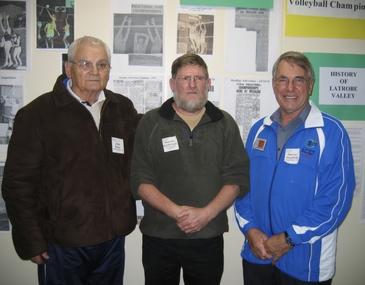
... Later that year, the Volleyball Victoria Country Championships Commission was formed to implement the recommendations of the review and take control of the event into the future. ...Later that year, the Volleyball Victoria Country Championships Commission was formed to implement the recommendations of the review and take control of the event into the future. ...Volleyball has been played in regional Victoria since the early-1960’s. During those early days, most competitions, like the founders of our great sport, were run by, or in conjunction with, the YMCA. Competitions were running at the Ballarat School of Mines and the YMCA’s of Bendigo, Geelong and Warrnambool. In August 1966, an invitation was extended by the Victorian Amateur Volleyball Association to play in the first State-wide event at Monash University. Geelong and Bendigo accepted the invitation with Melbourne represented by Sisu. For Bendigo players at least, this was the first exposure to ‘international rules’, which prevented upward scoops with open hands, introduced an action called a ‘dig’ and seemed to penalise most overhead actions using the fingers as ‘double hits’! Over the next few years, the sport expanded through the YMCA movement with weekly competitions starting up in Ararat, Warrnambool and Latrobe Valley. The Victorian Regional Council of YMCA’s proposed the first Victorian YMCA Championship in Warrnambool on 30th March 1968 with an entry fee of $4.00 per team. The sport continued to grow with additional regional associations affiliating with the Victorian Amateur Volleyball Association (now VVI) who provided the coaching and refereeing assistance needed to raise the standard of play. In 1970, the YMCA Championships started to give way to the Victorian Country Championships with the first ever event held in Bendigo. In 1973, a re-organisation of the VAVA saw the proposal to create separate Victorian Country and Metropolitan Volleyball Councils. The VCVC was established in 1974 and took over the organisation of the Victorian Country Championships. For the next 10-12 years, the Country Championships grew in stature with the inclusion of two divisions for open men and women and junior divisions for boys and girls. Representative teams successfully contested Australian Country Championships between Victoria, South Australia and New South Wales on several occasions. In October 1985, the VCVC voluntarily wound up the Council and handed the responsibility for the Country Championships back to Volleyball Victoria, who by that time had full-time State Executive and Coaching Directors. Since that time, the Long Weekend in June has continued to be the date of the major annual volleyball event for most regional associations, even though in 1986 the Junior Country Championships were wound up in favour of state and national schools events. A number of regional associations have ceased to exist, as have a number of regional tournaments. Regional leagues were created in both the Gippsland and Central, North-West regions, with Gippsland the only one to survive. Some associations have successfully competed in the State League competitions at various times. Following the experience gained by a number of regional administrators working on the Sydney Olympic Games, a proposal to revamp the Victorian Country Championship was put to VVI in early 2002. Later that year, the Volleyball Victoria Country Championships Commission was formed to implement the recommendations of the review and take control of the event into the future. These championships now provide regional players and officials an opportunity to participate in a consistently well-managed event, using many international protocols and a high standard of presentation. Without doubt, this event now ranks as one of the best volleyball events in Australia. Source: 2022 Country Championship regulations The management of the Country Championships by the Victorian Country Championship Commission certainly achieved the objective of raising the standard of presentation, and delivering a consistently high quality event. However, the demands on Host Associations began to take their toll, with several Associations declining the opportunity to host the event due to the high workload. Similarly, the workload of the volunteer Commissioners also took its toll, with the Commission unable to fill casual vacancies. In 2023, the Commission handed the organisation of the Championships back to VVI, who with paid staff, were better equipped to manage the event.This item contains an introduction to the VCVC, a coloured photo of the 50th Anniversary of the Country Championships at Bendigo, 2018. L-R John (Joe) Rosso (Geelong Women's Coach), Malcolm Qualtrough (Life Member Moe, Latrobe Valley, and Volleyball Victoria), Murray Mansfield (Life Member Bendigo, Volleyball Victoria and Volleyball Australia.); and an original Country Championship logo.victorian country volleyball council, vcvc, victorian amateur volleyball association, volleyball victoria -
 Bendigo Historical Society Inc.
Document - The Victorian Country Volleyball Council (VCVC) Meetings, Reports and Correspondence, 1974 -1979
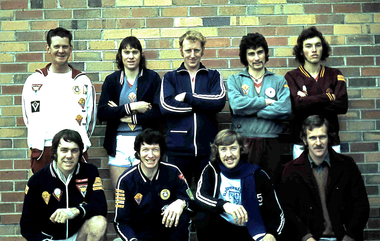
... Later that year, the Volleyball Victoria Country Championships Commission was formed to implement the recommendations of the review and take control of the event into the future. ...Later that year, the Volleyball Victoria Country Championships Commission was formed to implement the recommendations of the review and take control of the event into the future. ...Volleyball has been played in regional Victoria since the early-1960’s. During those early days, most competitions, like the founders of our great sport, were run by, or in conjunction with, the YMCA. Competitions were running at the Ballarat School of Mines and the YMCA’s of Bendigo, Geelong and Warrnambool. In August 1966, an invitation was extended by the Victorian Amateur Volleyball Association to play in the first State-wide event at Monash University. Geelong and Bendigo accepted the invitation with Melbourne represented by Sisu. For Bendigo players at least, this was the first exposure to ‘international rules’, which prevented upward scoops with open hands, introduced an action called a ‘dig’ and seemed to penalise most overhead actions using the fingers as ‘double hits’! Over the next few years, the sport expanded through the YMCA movement with weekly competitions starting up in Ararat, Warrnambool and Latrobe Valley. The Victorian Regional Council of YMCA’s proposed the first Victorian YMCA Championship in Warrnambool on 30th March 1968 with an entry fee of $4.00 per team. The sport continued to grow with additional regional associations affiliating with the Victorian Amateur Volleyball Association (now VVI) who provided the coaching and refereeing assistance needed to raise the standard of play. In 1970, the YMCA Championships started to give way to the Victorian Country Championships with the first ever event held in Bendigo. In 1973, a re-organisation of the VAVA saw the proposal to create separate Victorian Country and Metropolitan Volleyball Councils. The VCVC was established in 1974 and took over the organisation of the Victorian Country Championships. For the next 10-12 years, the Country Championships grew in stature with the inclusion of two divisions for open men and women and junior divisions for boys and girls. Representative teams successfully contested Australian Country Championships between Victoria, South Australia and New South Wales on several occasions. In October 1985, the VCVC voluntarily wound up the Council and handed the responsibility for the Country Championships back to Volleyball Victoria, who by that time had full-time State Executive and Coaching Directors. Since that time, the Long Weekend in June has continued to be the date of the major annual volleyball event for most regional associations, even though in 1986 the Junior Country Championships were wound up in favour of state and national schools events. A number of regional associations have ceased to exist, as have a number of regional tournaments. Regional leagues were created in both the Gippsland and Central, North-West regions, with Gippsland the only one to survive. Some associations have successfully competed in the State League competitions at various times. Following the experience gained by a number of regional administrators working on the Sydney Olympic Games, a proposal to revamp the Victorian Country Championship was put to VVI in early 2002. Later that year, the Volleyball Victoria Country Championships Commission was formed to implement the recommendations of the review and take control of the event into the future. These championships now provide regional players and officials an opportunity to participate in a consistently well-managed event, using many international protocols and a high standard of presentation. Without doubt, this event now ranks as one of the best volleyball events in Australia. Source: 2022 Country Championship regulations The management of the Country Championships by the Victorian Country Championship Commission certainly achieved the objective of raising the standard of presentation, and delivering a consistently high quality event. However, the demands on Host Associations began to take their toll, with several Associations declining the opportunity to host the event due to the high workload. Similarly, the workload of the volunteer Commissioners also took its toll, with the Commission unable to fill casual vacancies. In 2023, the Commission handed the organisation of the Championships back to VVI, who with paid staff, were better equipped to manage the event.This item contains Minutes, Reports of the Council Meetings from 1974 to 1975; it includes the following documents: 11171.2p Colour photo of the 1974 Bendigo YMCA Volleyball Team at the Country Championships in the Latrobe Valley 11171.2a Minutes Inaugral Meeting Warrnambbool Aug 1974 11171.2b Minutes of Meeting Ballarat Sept 1974 11171.2c Minutes of Meeting Warrnambool Mar 1975 11171.2d Minutes of Meeting Ballarat Sept 1975 11171.2d1 Minutes of AGM Ballarat Sept 1975 11171.2e Minutes of AGM Morwell Dec1975 11171.2f Minutes of Meetings Warrnambbol March 1976 11171.2g Minutes of Meetings Warrnambool June 1976 11171.2h Minutes of Meetings Ballarat Sept 1976 11171.2i Minutes of Meetings Warrnambool March 1977 11171.2j Minutes of Meetings St Kilda April 1977 11171.2k Draft Constitution 11171.2l Minutes of Meeting Geelong June 1977 11171.2m Minutes of Meetings Geelong June 1978 11171.2n Minutes of Meetings St Kilda Nov 1978 11171.2o Minutes of Meeting Wangaratta April 1979victorian country volleyball council, vcvc, victorian amateur volleyball association, volleyball victoria -
 Bendigo Historical Society Inc.
Document - The Victorian Country Volleyball Council (VCVC) Correspondence and Reports, 1974
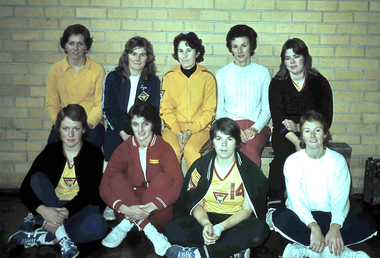
... Later that year, the Volleyball Victoria Country Championships Commission was formed to implement the recommendations of the review and take control of the event into the future. ...Later that year, the Volleyball Victoria Country Championships Commission was formed to implement the recommendations of the review and take control of the event into the future. ...Volleyball has been played in regional Victoria since the early-1960’s. During those early days, most competitions, like the founders of our great sport, were run by, or in conjunction with, the YMCA. Competitions were running at the Ballarat School of Mines and the YMCA’s of Bendigo, Geelong and Warrnambool. In August 1966, an invitation was extended by the Victorian Amateur Volleyball Association to play in the first State-wide event at Monash University. Geelong and Bendigo accepted the invitation with Melbourne represented by Sisu. For Bendigo players at least, this was the first exposure to ‘international rules’, which prevented upward scoops with open hands, introduced an action called a ‘dig’ and seemed to penalise most overhead actions using the fingers as ‘double hits’! Over the next few years, the sport expanded through the YMCA movement with weekly competitions starting up in Ararat, Warrnambool and Latrobe Valley. The Victorian Regional Council of YMCA’s proposed the first Victorian YMCA Championship in Warrnambool on 30th March 1968 with an entry fee of $4.00 per team. The sport continued to grow with additional regional associations affiliating with the Victorian Amateur Volleyball Association (now VVI) who provided the coaching and refereeing assistance needed to raise the standard of play. In 1970, the YMCA Championships started to give way to the Victorian Country Championships with the first ever event held in Bendigo. In 1973, a re-organisation of the VAVA saw the proposal to create separate Victorian Country and Metropolitan Volleyball Councils. The VCVC was established in 1974 and took over the organisation of the Victorian Country Championships. For the next 10-12 years, the Country Championships grew in stature with the inclusion of two divisions for open men and women and junior divisions for boys and girls. Representative teams successfully contested Australian Country Championships between Victoria, South Australia and New South Wales on several occasions. In October 1985, the VCVC voluntarily wound up the Council and handed the responsibility for the Country Championships back to Volleyball Victoria, who by that time had full-time State Executive and Coaching Directors. Since that time, the Long Weekend in June has continued to be the date of the major annual volleyball event for most regional associations, even though in 1986 the Junior Country Championships were wound up in favour of state and national schools events. A number of regional associations have ceased to exist, as have a number of regional tournaments. Regional leagues were created in both the Gippsland and Central, North-West regions, with Gippsland the only one to survive. Some associations have successfully competed in the State League competitions at various times. Following the experience gained by a number of regional administrators working on the Sydney Olympic Games, a proposal to revamp the Victorian Country Championship was put to VVI in early 2002. Later that year, the Volleyball Victoria Country Championships Commission was formed to implement the recommendations of the review and take control of the event into the future. These championships now provide regional players and officials an opportunity to participate in a consistently well-managed event, using many international protocols and a high standard of presentation. Without doubt, this event now ranks as one of the best volleyball events in Australia. Source: 2022 Country Championship regulations The management of the Country Championships by the Victorian Country Championship Commission certainly achieved the objective of raising the standard of presentation, and delivering a consistently high quality event. However, the demands on Host Associations began to take their toll, with several Associations declining the opportunity to host the event due to the high workload. Similarly, the workload of the volunteer Commissioners also took its toll, with the Commission unable to fill casual vacancies. In 2023, the Commission handed the organisation of the Championships back to VVI, who with paid staff, were better equipped to manage the event.This item contains Correspondence of the Council in 1974; it include. the following documents: 11171.3n 1974 Bendigo YMCA Volleyball Team at the Country Championships in the Latrobe Valley. 11171.3a Notices of the Inaugural Meeting Warrnambool Aug 1974 11171.3b Reasons for the creation of the VCVC 11171.3c Letter from Ballarat YMCA Volleyball Association 11171.3d Letters to and from the Latrobe Valley Volleyball Association 11171.3e Letter from the Ararat Volleyball Association 11171.3f Letter to the Latrobe Valley Volleyball Association 11171.3g Agenda of Meeting in Ballarat Sept 1974 11171.3h Letter to the Geelong Amateur Volleyball Asscoiation 11171.3i Letter from the Victorian Amateur Volleyball Association to Warnambool Association 11171.3j Opening Balance of VCVC Account 11171.3k Letter from the Latrobe Valley Volleyball Association 11171.3l Letter from the Geelong Amateur Volleyball Association 11171.3m Guide for the running of the Victorian Country Championshipsvictorian country volleyball council, vcvc, victorian amateur volleyball association, volleyball victoria -
Bendigo Historical Society Inc.
Document - The Victorian Country Volleyball Council (VCVC) Correspondence and Country Chapionship Reports, 1975
... Later that year, the Volleyball Victoria Country Championships Commission was formed to implement the recommendations of the review and take control of the event into the future. ...Later that year, the Volleyball Victoria Country Championships Commission was formed to implement the recommendations of the review and take control of the event into the future. ...Volleyball has been played in regional Victoria since the early-1960’s. During those early days, most competitions, like the founders of our great sport, were run by, or in conjunction with, the YMCA. Competitions were running at the Ballarat School of Mines and the YMCA’s of Bendigo, Geelong and Warrnambool. In August 1966, an invitation was extended by the Victorian Amateur Volleyball Association to play in the first State-wide event at Monash University. Geelong and Bendigo accepted the invitation with Melbourne represented by Sisu. For Bendigo players at least, this was the first exposure to ‘international rules’, which prevented upward scoops with open hands, introduced an action called a ‘dig’ and seemed to penalise most overhead actions using the fingers as ‘double hits’! Over the next few years, the sport expanded through the YMCA movement with weekly competitions starting up in Ararat, Warrnambool and Latrobe Valley. The Victorian Regional Council of YMCA’s proposed the first Victorian YMCA Championship in Warrnambool on 30th March 1968 with an entry fee of $4.00 per team. The sport continued to grow with additional regional associations affiliating with the Victorian Amateur Volleyball Association (now VVI) who provided the coaching and refereeing assistance needed to raise the standard of play. In 1970, the YMCA Championships started to give way to the Victorian Country Championships with the first ever event held in Bendigo. In 1973, a re-organisation of the VAVA saw the proposal to create separate Victorian Country and Metropolitan Volleyball Councils. The VCVC was established in 1974 and took over the organisation of the Victorian Country Championships. For the next 10-12 years, the Country Championships grew in stature with the inclusion of two divisions for open men and women and junior divisions for boys and girls. Representative teams successfully contested Australian Country Championships between Victoria, South Australia and New South Wales on several occasions. In October 1985, the VCVC voluntarily wound up the Council and handed the responsibility for the Country Championships back to Volleyball Victoria, who by that time had full-time State Executive and Coaching Directors. Since that time, the Long Weekend in June has continued to be the date of the major annual volleyball event for most regional associations, even though in 1986 the Junior Country Championships were wound up in favour of state and national schools events. A number of regional associations have ceased to exist, as have a number of regional tournaments. Regional leagues were created in both the Gippsland and Central, North-West regions, with Gippsland the only one to survive. Some associations have successfully competed in the State League competitions at various times. Following the experience gained by a number of regional administrators working on the Sydney Olympic Games, a proposal to revamp the Victorian Country Championship was put to VVI in early 2002. Later that year, the Volleyball Victoria Country Championships Commission was formed to implement the recommendations of the review and take control of the event into the future. These championships now provide regional players and officials an opportunity to participate in a consistently well-managed event, using many international protocols and a high standard of presentation. Without doubt, this event now ranks as one of the best volleyball events in Australia. Source: 2022 Country Championship regulations The management of the Country Championships by the Victorian Country Championship Commission certainly achieved the objective of raising the standard of presentation, and delivering a consistently high quality event. However, the demands on Host Associations began to take their toll, with several Associations declining the opportunity to host the event due to the high workload. Similarly, the workload of the volunteer Commissioners also took its toll, with the Commission unable to fill casual vacancies. In 2023, the Commission handed the organisation of the Championships back to VVI, who with paid staff, were better equipped to manage the event.This item contains Correspondence of the Council in 1975 andreports on the Country Championships for that year; it include. the following documents: 11171.4a Three letters from VAVA Secretary Wolfgang Gollong 11171.4b Letter from Ballarat YMCA Volleyball Association 11171.4c Letter from Swan Hill Volleyball Association 11171.4d Letter from Geelong Amateur Volleyball Association 11171.4e Letter from Latrobe Valley Volleyball Association April 1975 11171.4f Letter from the Ballarat YMCA Volleyball Association 11171.4g Three letters from VAVA Secretary Wolfgang Gollong 11171.4h Letter to Joe Hiller re refereeing at the Country Championships 11171.4i Letter to Eric Hayman President of VAVA re Asian Championships 11171.4j Letter from Ballarat Volleyball re registration of players 11171.4k Letter from Bendigo YMCA Volleyball association list of office bearers 11171.4l Letter from Ballarat Volleyball re rule books 11171.4m Letter from Ballarat re referees for finals 11171.4n Letter from VAVA apology from Eric Hayman 11171.4o 1975 Country Championships Conditions 11171.4p 1975 Country Championships Teams Registration forms 11171.4q 1975 Country Championships Team entry forms 11171.4r Letters from VAVA re State Coaches 11171.4s Treasurer Report Sept 1975 11171.4t Letter to all associations re contact information 11171.4u Telegram from Swan Hill Volleyball 11171.4v Letter to VAVA Secretary re Meeting Wangaratta June 1975 11171.4w Notices from VAVA re Australian Tournaments 11171.4x List of Accommodation for Bendigo Country Championships 11171.4y VCVC Financial Statement 32 Aug 1976 11171.4z Two letters from VAVA Olympic team Appeal and Coaches Course 11171.4aa Agenda VCVC Meetings Morwell Dec 1975 11171.4ab Letter from Ballarat Volleyball re Australian Volleyball Constitution 11171.4ac VCVC List of Executive Contactsvictorian country volleyball council, vcvc, victorian amateur volleyball association, volleyball victoria -
Bendigo Historical Society Inc.
Document - The Victorian Country Volleyball Council (VCVC) Correspondence and Country Championship Reports, 1976
... Later that year, the Volleyball Victoria Country Championships Commission was formed to implement the recommendations of the review and take control of the event into the future. ...Later that year, the Volleyball Victoria Country Championships Commission was formed to implement the recommendations of the review and take control of the event into the future. ...Volleyball has been played in regional Victoria since the early-1960’s. During those early days, most competitions, like the founders of our great sport, were run by, or in conjunction with, the YMCA. Competitions were running at the Ballarat School of Mines and the YMCA’s of Bendigo, Geelong and Warrnambool. In August 1966, an invitation was extended by the Victorian Amateur Volleyball Association to play in the first State-wide event at Monash University. Geelong and Bendigo accepted the invitation with Melbourne represented by Sisu. For Bendigo players at least, this was the first exposure to ‘international rules’, which prevented upward scoops with open hands, introduced an action called a ‘dig’ and seemed to penalise most overhead actions using the fingers as ‘double hits’! Over the next few years, the sport expanded through the YMCA movement with weekly competitions starting up in Ararat, Warrnambool and Latrobe Valley. The Victorian Regional Council of YMCA’s proposed the first Victorian YMCA Championship in Warrnambool on 30th March 1968 with an entry fee of $4.00 per team. The sport continued to grow with additional regional associations affiliating with the Victorian Amateur Volleyball Association (now VVI) who provided the coaching and refereeing assistance needed to raise the standard of play. In 1970, the YMCA Championships started to give way to the Victorian Country Championships with the first ever event held in Bendigo. In 1973, a re-organisation of the VAVA saw the proposal to create separate Victorian Country and Metropolitan Volleyball Councils. The VCVC was established in 1974 and took over the organisation of the Victorian Country Championships. For the next 10-12 years, the Country Championships grew in stature with the inclusion of two divisions for open men and women and junior divisions for boys and girls. Representative teams successfully contested Australian Country Championships between Victoria, South Australia and New South Wales on several occasions. In October 1985, the VCVC voluntarily wound up the Council and handed the responsibility for the Country Championships back to Volleyball Victoria, who by that time had full-time State Executive and Coaching Directors. Since that time, the Long Weekend in June has continued to be the date of the major annual volleyball event for most regional associations, even though in 1986 the Junior Country Championships were wound up in favour of state and national schools events. A number of regional associations have ceased to exist, as have a number of regional tournaments. Regional leagues were created in both the Gippsland and Central, North-West regions, with Gippsland the only one to survive. Some associations have successfully competed in the State League competitions at various times. Following the experience gained by a number of regional administrators working on the Sydney Olympic Games, a proposal to revamp the Victorian Country Championship was put to VVI in early 2002. Later that year, the Volleyball Victoria Country Championships Commission was formed to implement the recommendations of the review and take control of the event into the future. These championships now provide regional players and officials an opportunity to participate in a consistently well-managed event, using many international protocols and a high standard of presentation. Without doubt, this event now ranks as one of the best volleyball events in Australia. Source: 2022 Country Championship regulations The management of the Country Championships by the Victorian Country Championship Commission certainly achieved the objective of raising the standard of presentation, and delivering a consistently high quality event. However, the demands on Host Associations began to take their toll, with several Associations declining the opportunity to host the event due to the high workload. Similarly, the workload of the volunteer Commissioners also took its toll, with the Commission unable to fill casual vacancies. In 2023, the Commission handed the organisation of the Championships back to VVI, who with paid staff, were better equipped to manage the event.This item contains Correspondence of the Council in 1976 and reports on the Country Championships for that year; it includes the following documents: 11171.5a Letter from Swan Hill Volleyball Association President 11171.5b Letter from the ehuca and District YMCA Youth Clubs 11171.5c Letter from VAVA re contact details of country associations 11171.5d Letter from the Swan Hill Volleyball Association 11171.5e Letters to and from the VAVA and VCVC 11171.5f Invoice for Olympic Team Appeal Biros 11171.5g Invoice for Olympic Team Appeal Biros to all Associations 11171.5h Letter to the Echuca and District YMCA Youth Clubs 11171.5i Letter from the Warrnambool Volleyball Association 11171.5j Letter to the VAVA 11171.5k Country Championships, Roster for Referees and Draw 11171.5l Country Championships Team Registrations 1976 11171.5m Voting Slips to approve Albury Wodonga to join the VCVC 11171.5n Letter from Geelong Volleyball association 11171.5o Letter of apology from VAVA for non attendance at the Country Championships 11171.5p Letter from the Goulburn Valley Volleyball Association 11171.5q Letters to and from the Ballarat Volleyball Association 11171.5r Letter to the VAVA Treasurer Mark Perrott 11171.5s Letter from the Geelong Amateur Volleyball Association Registration fees 11171.5t Letter from VAVA Treasurer Mark Perrott 11171.5u Three letters from the VAVA and Department of Youth Sport and recreation 11171.5v Study of Voluntary Workers 11171.5w Letter from Latrobe Valley Volleyball Association 11171.5x Letter from Ballarat Volleyball re their tournament 11171.5y Notice of AGM Sept 1976 at Ballarat 11171.5z Goulburn Valley Volleyball Association Letter Office Bearers 11171.5aa Three letters from the VAVA 11171.5ab Letter from Ballarat Association requesting a referee 11171.5ac Letter from Geelong Volleyball re monies paid 11171.5ad Circular from VAVA Chinese Reciprocal Visitvictorian country volleyball council, vcvc, victorian amateur volleyball association, volleyball victoria -
Bendigo Historical Society Inc.
Document - The Victorian Country Volleyball Council (VCVC) Correspondence and Country Championship Reports, 1977
... Later that year, the Volleyball Victoria Country Championships Commission was formed to implement the recommendations of the review and take control of the event into the future. ...Later that year, the Volleyball Victoria Country Championships Commission was formed to implement the recommendations of the review and take control of the event into the future. ...Volleyball has been played in regional Victoria since the early-1960’s. During those early days, most competitions, like the founders of our great sport, were run by, or in conjunction with, the YMCA. Competitions were running at the Ballarat School of Mines and the YMCA’s of Bendigo, Geelong and Warrnambool. In August 1966, an invitation was extended by the Victorian Amateur Volleyball Association to play in the first State-wide event at Monash University. Geelong and Bendigo accepted the invitation with Melbourne represented by Sisu. For Bendigo players at least, this was the first exposure to ‘international rules’, which prevented upward scoops with open hands, introduced an action called a ‘dig’ and seemed to penalise most overhead actions using the fingers as ‘double hits’! Over the next few years, the sport expanded through the YMCA movement with weekly competitions starting up in Ararat, Warrnambool and Latrobe Valley. The Victorian Regional Council of YMCA’s proposed the first Victorian YMCA Championship in Warrnambool on 30th March 1968 with an entry fee of $4.00 per team. The sport continued to grow with additional regional associations affiliating with the Victorian Amateur Volleyball Association (now VVI) who provided the coaching and refereeing assistance needed to raise the standard of play. In 1970, the YMCA Championships started to give way to the Victorian Country Championships with the first ever event held in Bendigo. In 1973, a re-organisation of the VAVA saw the proposal to create separate Victorian Country and Metropolitan Volleyball Councils. The VCVC was established in 1974 and took over the organisation of the Victorian Country Championships. For the next 10-12 years, the Country Championships grew in stature with the inclusion of two divisions for open men and women and junior divisions for boys and girls. Representative teams successfully contested Australian Country Championships between Victoria, South Australia and New South Wales on several occasions. In October 1985, the VCVC voluntarily wound up the Council and handed the responsibility for the Country Championships back to Volleyball Victoria, who by that time had full-time State Executive and Coaching Directors. Since that time, the Long Weekend in June has continued to be the date of the major annual volleyball event for most regional associations, even though in 1986 the Junior Country Championships were wound up in favour of state and national schools events. A number of regional associations have ceased to exist, as have a number of regional tournaments. Regional leagues were created in both the Gippsland and Central, North-West regions, with Gippsland the only one to survive. Some associations have successfully competed in the State League competitions at various times. Following the experience gained by a number of regional administrators working on the Sydney Olympic Games, a proposal to revamp the Victorian Country Championship was put to VVI in early 2002. Later that year, the Volleyball Victoria Country Championships Commission was formed to implement the recommendations of the review and take control of the event into the future. These championships now provide regional players and officials an opportunity to participate in a consistently well-managed event, using many international protocols and a high standard of presentation. Without doubt, this event now ranks as one of the best volleyball events in Australia. Source: 2022 Country Championship regulations The management of the Country Championships by the Victorian Country Championship Commission certainly achieved the objective of raising the standard of presentation, and delivering a consistently high quality event. However, the demands on Host Associations began to take their toll, with several Associations declining the opportunity to host the event due to the high workload. Similarly, the workload of the volunteer Commissioners also took its toll, with the Commission unable to fill casual vacancies. In 2023, the Commission handed the organisation of the Championships back to VVI, who with paid staff, were better equipped to manage the event.This item contains Correspondence of the Council in 1977 and reports on the Country Championships for that year; it includes the following documents: 11171.6a Letter from the Broken Hill YMCA Volleyball Association re tournament 11171.6b Letter from VAVA re State Coaches costs 11171.6c Circular of Fund Raising Proposals 11171.6d Letter from VAVA re Broken Hill Tournament 11171.6e Letter re amendments to the VAVA constitution 11171.6f Letter from Albury Wodonga wishing to enter the Country Championships 11171.6g Letter from Geelong Volleyball registration for Country Championships 11171.6h Circular - Sale of Rule Books 11171.6i Letter from VAVA re Rothmans Coaches Tour 11171.6j Letter from VAVA Secretary re championships, coaching and etc. 11171.6k VCVC Notice of AGM 11171.6l Letter from Latrobe Valley Volleyball with proposals for running the Country Championships 11171.6m Letters from Swan Hill and Ballarat re country Championships 11171.6n Letter from Goulburn Valley Volleyball 11171.6o Quotation from Waterwheel Press Shepparton 11171.6p Letters from VAVA to VCVC 11171.6q VCVC President's Report 1976-1977 11171.6r Letter from the Goulburn Valley Amateur Volleyball Association 11171.6s Letter from the Ararat and District YMCA Youth Clubs 11171.6t Letter from VAVA re Swan Hill Volleyball Association 11171.6u Letter to VAVA re Horsham and Warracknabeal Volleyball 11171.6v Letter to VCVC from Swan Hill Volleyball 11171.6w Letter from Wanganui Park High School 11171.6x Letter from the Ballarat Association 11171.6y Letter from Goulburn Valley Volleyball re coaching assistance 11171.6z Letter from Mrs Lozenicins re her son Arijs death 11171.6aa Letter from Ballarat Volleyball re Thomas Santamaria Coaching 11171.6ab Letter from Bob Kenter Latrobe Valley Volleyball Association (contact the BHS for details) 11171.6ac Letter from the Australian Volleyball Federation to VCVC President - news 11171.6ad Letter from VAVA to VCVC 11171.6ae Letter from VCVC President re coaching calendar for the year 11171.6af Letter from Wallabies Volleyball Club re Morwell tournament Grand Final 11171.6ag Letter from Goulburn Valley re Under 17 Country Championships 11171.6ah Letter from Warrnambool Association re services of Thomas Santamaria 11171.6ai Wallabies Volleyball Club re Russell Newman elected as Secretary 11171.6aj Letter from the Hamilton Memorial Stadium re their competition 11171.6ak Letter from Bendigo re rules of the Country Chamionships (Contact BHS for details) 11171.6al Letter to albury Wodonga Association re VCVC office bearers 11171.6am Letter from Murray Mansfield accepting his nomination for the VCVC Executive 11171.6an Letter to Tom Stevens Bendigo - thanks for his eork on the VCVC Constitution 11171.6ao Country Chamionships Entry and Registration forms 11171.6ap Procedure and Report on the VCVC 1977 Country Championships 11171.6aq Men's and Women's Volleyball Drawvictorian country volleyball council, vcvc, victorian amateur volleyball association, volleyball victoria -
Bendigo Historical Society Inc.
Document - The Victorian Country Volleyball Council (VCVC) Correspondence and Country Championship Reports, 1978
... Later that year, the Volleyball Victoria Country Championships Commission was formed to implement the recommendations of the review and take control of the event into the future. ...Later that year, the Volleyball Victoria Country Championships Commission was formed to implement the recommendations of the review and take control of the event into the future. ...Volleyball has been played in regional Victoria since the early-1960’s. During those early days, most competitions, like the founders of our great sport, were run by, or in conjunction with, the YMCA. Competitions were running at the Ballarat School of Mines and the YMCA’s of Bendigo, Geelong and Warrnambool. In August 1966, an invitation was extended by the Victorian Amateur Volleyball Association to play in the first State-wide event at Monash University. Geelong and Bendigo accepted the invitation with Melbourne represented by Sisu. For Bendigo players at least, this was the first exposure to ‘international rules’, which prevented upward scoops with open hands, introduced an action called a ‘dig’ and seemed to penalise most overhead actions using the fingers as ‘double hits’! Over the next few years, the sport expanded through the YMCA movement with weekly competitions starting up in Ararat, Warrnambool and Latrobe Valley. The Victorian Regional Council of YMCA’s proposed the first Victorian YMCA Championship in Warrnambool on 30th March 1968 with an entry fee of $4.00 per team. The sport continued to grow with additional regional associations affiliating with the Victorian Amateur Volleyball Association (now VVI) who provided the coaching and refereeing assistance needed to raise the standard of play. In 1970, the YMCA Championships started to give way to the Victorian Country Championships with the first ever event held in Bendigo. In 1973, a re-organisation of the VAVA saw the proposal to create separate Victorian Country and Metropolitan Volleyball Councils. The VCVC was established in 1974 and took over the organisation of the Victorian Country Championships. For the next 10-12 years, the Country Championships grew in stature with the inclusion of two divisions for open men and women and junior divisions for boys and girls. Representative teams successfully contested Australian Country Championships between Victoria, South Australia and New South Wales on several occasions. In October 1985, the VCVC voluntarily wound up the Council and handed the responsibility for the Country Championships back to Volleyball Victoria, who by that time had full-time State Executive and Coaching Directors. Since that time, the Long Weekend in June has continued to be the date of the major annual volleyball event for most regional associations, even though in 1986 the Junior Country Championships were wound up in favour of state and national schools events. A number of regional associations have ceased to exist, as have a number of regional tournaments. Regional leagues were created in both the Gippsland and Central, North-West regions, with Gippsland the only one to survive. Some associations have successfully competed in the State League competitions at various times. Following the experience gained by a number of regional administrators working on the Sydney Olympic Games, a proposal to revamp the Victorian Country Championship was put to VVI in early 2002. Later that year, the Volleyball Victoria Country Championships Commission was formed to implement the recommendations of the review and take control of the event into the future. These championships now provide regional players and officials an opportunity to participate in a consistently well-managed event, using many international protocols and a high standard of presentation. Without doubt, this event now ranks as one of the best volleyball events in Australia. Source: 2022 Country Championship regulations The management of the Country Championships by the Victorian Country Championship Commission certainly achieved the objective of raising the standard of presentation, and delivering a consistently high quality event. However, the demands on Host Associations began to take their toll, with several Associations declining the opportunity to host the event due to the high workload. Similarly, the workload of the volunteer Commissioners also took its toll, with the Commission unable to fill casual vacancies. In 2023, the Commission handed the organisation of the Championships back to VVI, who with paid staff, were better equipped to manage the event.This item contains Correspondence of the Council in 1978 and reports on the Country Championships for that year; it includes the following documents: 11171.7a Circular to Associations - entry forms for Country Championships 11171.7b From Albury Wodonga seeking affiliation with the VCVC 11171.7c VCVC Financial Statement April 14th 1978 11171.7d Report on bulk purchasing of equipment 11171.7e Report on bulk purchasing of equipment 11171.7f Australian Volleyball Federation update on rules 11171.7g Proposed budget for running of 1978 Championships 11171.7h Letter from Bob Kenter Latrobe Valley re Tomas Santamaria Coaching 11171.7i Wangaratta Accomodation list 11171.7j VCVC Financial Statements Nov 1978 11171.7k Final report on bulk purchase of equipment 11171.7l Minutes of AGM at Geelong June 1977 11171.7m Minutes of meeting held at the Mont Matre Motor Inn St Kilda April 1978 11171.7n Application by the Mildura Volleyball Association to join VCVC 11171.7o Letter from Ballarat in a bid to hold the Country Chamionships 11171.7p Goulburn Valley Volleyball report on the country championships 11171.7q Letter from Latrobe Valley asking for copy of the constitution 11171.7r Thank you card on the death of (Eric) Walter Livingstone Hayman 11171.7s Notice of AGM Nov 1978 11171.7t Letter from the Castlemaine Festival asking for an exhibit 11171.7u Letter to VAVA President references to good work done by the coaching director 11171.7v Records Secretary Annual report Nov 1978 11171.7w Ararat Volleyball association asking to join VCVC 11171.7x Letter from Bob Kenter re Coaching Director's program 11171.7y Letter from Kyneton Volleyball Association re affiliation 11171.7z Goulburn Valley Volleyball asking for financial assistance 11171.7aa Australian Volleyball Federation advertisement for Executive Director 11171.7ab Ballarat Volleyball list of office bearers 11171.7ac Letter from tertiary PE student Bendigo asking for information 11171.7ad Letter from tertiary PE student Bendigo asking for information 11171.7ae Letter from the Melbourne Volleyball Council to VCVC 11171.7af Letter from Bruce D. Hulley and Co. - Australian Sports Development Promotion Programme 11171.7ag VCVC Coaching director's Program to Aug 1979victorian country volleyball council, vcvc, victorian amateur volleyball association, volleyball victoria -
Bendigo Historical Society Inc.
Document - The Victorian Country Volleyball Council (VCVC) Correspondence and Country Championship Reports, 1979
... Later that year, the Volleyball Victoria Country Championships Commission was formed to implement the recommendations of the review and take control of the event into the future. ...Later that year, the Volleyball Victoria Country Championships Commission was formed to implement the recommendations of the review and take control of the event into the future. ...Volleyball has been played in regional Victoria since the early-1960’s. During those early days, most competitions, like the founders of our great sport, were run by, or in conjunction with, the YMCA. Competitions were running at the Ballarat School of Mines and the YMCA’s of Bendigo, Geelong and Warrnambool. In August 1966, an invitation was extended by the Victorian Amateur Volleyball Association to play in the first State-wide event at Monash University. Geelong and Bendigo accepted the invitation with Melbourne represented by Sisu. For Bendigo players at least, this was the first exposure to ‘international rules’, which prevented upward scoops with open hands, introduced an action called a ‘dig’ and seemed to penalise most overhead actions using the fingers as ‘double hits’! Over the next few years, the sport expanded through the YMCA movement with weekly competitions starting up in Ararat, Warrnambool and Latrobe Valley. The Victorian Regional Council of YMCA’s proposed the first Victorian YMCA Championship in Warrnambool on 30th March 1968 with an entry fee of $4.00 per team. The sport continued to grow with additional regional associations affiliating with the Victorian Amateur Volleyball Association (now VVI) who provided the coaching and refereeing assistance needed to raise the standard of play. In 1970, the YMCA Championships started to give way to the Victorian Country Championships with the first ever event held in Bendigo. In 1973, a re-organisation of the VAVA saw the proposal to create separate Victorian Country and Metropolitan Volleyball Councils. The VCVC was established in 1974 and took over the organisation of the Victorian Country Championships. For the next 10-12 years, the Country Championships grew in stature with the inclusion of two divisions for open men and women and junior divisions for boys and girls. Representative teams successfully contested Australian Country Championships between Victoria, South Australia and New South Wales on several occasions. In October 1985, the VCVC voluntarily wound up the Council and handed the responsibility for the Country Championships back to Volleyball Victoria, who by that time had full-time State Executive and Coaching Directors. Since that time, the Long Weekend in June has continued to be the date of the major annual volleyball event for most regional associations, even though in 1986 the Junior Country Championships were wound up in favour of state and national schools events. A number of regional associations have ceased to exist, as have a number of regional tournaments. Regional leagues were created in both the Gippsland and Central, North-West regions, with Gippsland the only one to survive. Some associations have successfully competed in the State League competitions at various times. Following the experience gained by a number of regional administrators working on the Sydney Olympic Games, a proposal to revamp the Victorian Country Championship was put to VVI in early 2002. Later that year, the Volleyball Victoria Country Championships Commission was formed to implement the recommendations of the review and take control of the event into the future. These championships now provide regional players and officials an opportunity to participate in a consistently well-managed event, using many international protocols and a high standard of presentation. Without doubt, this event now ranks as one of the best volleyball events in Australia. Source: 2022 Country Championship regulations The management of the Country Championships by the Victorian Country Championship Commission certainly achieved the objective of raising the standard of presentation, and delivering a consistently high quality event. However, the demands on Host Associations began to take their toll, with several Associations declining the opportunity to host the event due to the high workload. Similarly, the workload of the volunteer Commissioners also took its toll, with the Commission unable to fill casual vacancies. In 2023, the Commission handed the organisation of the Championships back to VVI, who with paid staff, were better equipped to manage the event.This item contains Correspondence of the Council in 1979 and reports on the Country Championships for that year; it includes the following documents: 11171.8a Department of Youth Sport and Recreation Courses for 1979 11171.8b From VAVA General Coaches Course Level 2 11171.8c VAVA Executive Officers List 11171.8d Letter from Ballarat asking for promotional posters 11171.8e To Mildura Volleyball re affiliation 11171.8f To Wangaratta Volleyball re costs for Country Championships 11171.8g To all associations re tournament rules and registration fees 11171.8h To all associations re VCVC Meeting March 1979 11171.8i Calendar of events for the VAVA Referee's Commission 11171.8j To VAVA re possible grant for U17 Championships at Wangaratta 11171.8k To Ann Mansfield re Volleyball Equipment stock 11171.8l Estonia Sports Club South Australia notication of annual tournament 11171.8m Country Volleyball Championships Team Entry Form 11171.8n From Geelong Volleyball asking for promotional posters 11171.8o To Kyneton Volleyball information for affiliation 11171.8p Australian Volleyball Federation advertising for coaches 11171.8q Wangaratta Volleyball Executive Details 11171.8r From J. A. Sporting Goods Price list 11171.8s To Horsham Volleyball re affiliation 11171.8t To Ararat Volleyball re affiliation 11171.8u Wangaratta U7 Championship referee's list and accomodation 11171.8v Notice of change of date of General Meeting 11171.8w Latrobe Valley Volleyball Association team colours 11171.8x 1979 Country Championships Shepparton list of accomodation 11171.8y Warrnambool Country Championships Team Entry Form 11171.8z From Goulburn Valley Volleyball contact details 11171.8aa From Kyneton Volleyball deference of affiliation 11171.8ab Notice of General Meeting at Wangaratta 11171.8ac Stawell Volleyball possible affiliation 11171.8ad Men's Volleyball draw 21-22 April 11171.8ae Wangaratta Volleyball U17 Championships Costs and schedule 11171.8af To Stawell Association re affiliation 11171.8ag VCVC Financial Statement 1978-79 11171.8ah VCVC Letter to the Shire of Nathalia 11171.8ai Letter re Fort Street Volleyball Club poaching players 11171.8aj Letter re Fort Street Volleyball Club poaching players 11171.8ak Letter to Coaches Commission re tournament 11171.8al VCVC Notice of general meeting in April 11171.8am VCVC re AGM Dates 1979 11171.8an VCVC re AGM Dates 1979 11171.8ao VCVC re AGM Dates 1979 11171.8ap Letter to Sports Services re design for tracksuit badge 11171.8aq VAVA Minutes of Executive Meeting Nov 1979 11171.8ar Country Championships Shaepparton Report 1979victorian country volleyball council, vcvc, victorian amateur volleyball association, volleyball victoria -
Bendigo Historical Society Inc.
Document - The Victorian Country Volleyball Council (VCVC) Correspondence and Country Championship Reports, 1979
... Later that year, the Volleyball Victoria Country Championships Commission was formed to implement the recommendations of the review and take control of the event into the future. ...Later that year, the Volleyball Victoria Country Championships Commission was formed to implement the recommendations of the review and take control of the event into the future. ...Volleyball has been played in regional Victoria since the early-1960’s. During those early days, most competitions, like the founders of our great sport, were run by, or in conjunction with, the YMCA. Competitions were running at the Ballarat School of Mines and the YMCA’s of Bendigo, Geelong and Warrnambool. In August 1966, an invitation was extended by the Victorian Amateur Volleyball Association to play in the first State-wide event at Monash University. Geelong and Bendigo accepted the invitation with Melbourne represented by Sisu. For Bendigo players at least, this was the first exposure to ‘international rules’, which prevented upward scoops with open hands, introduced an action called a ‘dig’ and seemed to penalise most overhead actions using the fingers as ‘double hits’! Over the next few years, the sport expanded through the YMCA movement with weekly competitions starting up in Ararat, Warrnambool and Latrobe Valley. The Victorian Regional Council of YMCA’s proposed the first Victorian YMCA Championship in Warrnambool on 30th March 1968 with an entry fee of $4.00 per team. The sport continued to grow with additional regional associations affiliating with the Victorian Amateur Volleyball Association (now VVI) who provided the coaching and refereeing assistance needed to raise the standard of play. In 1970, the YMCA Championships started to give way to the Victorian Country Championships with the first ever event held in Bendigo. In 1973, a re-organisation of the VAVA saw the proposal to create separate Victorian Country and Metropolitan Volleyball Councils. The VCVC was established in 1974 and took over the organisation of the Victorian Country Championships. For the next 10-12 years, the Country Championships grew in stature with the inclusion of two divisions for open men and women and junior divisions for boys and girls. Representative teams successfully contested Australian Country Championships between Victoria, South Australia and New South Wales on several occasions. In October 1985, the VCVC voluntarily wound up the Council and handed the responsibility for the Country Championships back to Volleyball Victoria, who by that time had full-time State Executive and Coaching Directors. Since that time, the Long Weekend in June has continued to be the date of the major annual volleyball event for most regional associations, even though in 1986 the Junior Country Championships were wound up in favour of state and national schools events. A number of regional associations have ceased to exist, as have a number of regional tournaments. Regional leagues were created in both the Gippsland and Central, North-West regions, with Gippsland the only one to survive. Some associations have successfully competed in the State League competitions at various times. Following the experience gained by a number of regional administrators working on the Sydney Olympic Games, a proposal to revamp the Victorian Country Championship was put to VVI in early 2002. Later that year, the Volleyball Victoria Country Championships Commission was formed to implement the recommendations of the review and take control of the event into the future. These championships now provide regional players and officials an opportunity to participate in a consistently well-managed event, using many international protocols and a high standard of presentation. Without doubt, this event now ranks as one of the best volleyball events in Australia. Source: 2022 Country Championship regulations The management of the Country Championships by the Victorian Country Championship Commission certainly achieved the objective of raising the standard of presentation, and delivering a consistently high quality event. However, the demands on Host Associations began to take their toll, with several Associations declining the opportunity to host the event due to the high workload. Similarly, the workload of the volunteer Commissioners also took its toll, with the Commission unable to fill casual vacancies. In 2023, the Commission handed the organisation of the Championships back to VVI, who with paid staff, were better equipped to manage the event.This item contains Correspondence of the Council in 1979 and reports on the Country Championships for that year; it includes the following documents: 11171.9a Draft VAVA Constitution 11171.9b VAVA Draft Constitution Changes 11171.9c VAVA Executive meeting April 1979 11171.9d Seymour Amateur Volleyball Association re affiliation 11171.9e VAVA Minutes and Agenda Executive Meeting April 1979 11171.9f Disqualification of Players in Melbourne from all associations 11171.9g Latrobe Valley Volleyball association executive list 11171.9h Country Championships 1979 team entry forms 11171.9i Graham Watson transfer form 11171.9j Volleyball Equipment price list 11171.9k VAVA News to all country associations 11171.9l Swan Hill Association re score pad order 11171.9m Letter from Ararat Student re history of volleyball in Australia 11171.9n Letter to Hamilton Volleyball (Memorial Stadium) - promotional posters 11171.9o Draft No 2 VAVA Constitution 11171.9p From Goulburn Valley Association - referee request 11171.9q To Goulburn Valley Association Requesting Player registration details 11171.9r Letter explaing new VAVA draft constitution 11171.9s Australian Volleyball Federation Secretary's Report 1978-79 11171.9t VAVA Agenda for Sept Executive Meeting 11171.9u VAVA Notice of Executive Meeting Aug 1979 11171.9v Letters from members available for match against south Australia 1-2 Dec 11171.9w Australian Volleyball Federation Mailing List 11171.9x Paperwork for VAVA Executive Meeting Sept 1979 11171.9y VAVA Notice of AGM Nov 1979 11171.9z Bendigo YMCA Volleyball association Executive list 11171.9aa VAVA Executive Meeting Details Oct 1979 11171.9ab VAVA Executive Minutes and notices Nov 1979 11171.9ac Australian Volleyball Federation new National Executive Director 11171.9ad VAVA Request fro secondhand equipment 11171.9ae VAVA Minutes of Special General meeting to amend the constitution 11171.9af Notice of VAVA Executive meeting 11171.9ag The Ray Riordan Sports Admin Newsletter 11171.9ah The Ray Riordan Sports Admin Newsletter 11171.9ai VCVC Minutes of General Meeting April 1979 11171.9aj VCVC General Meeting Notices Nov 1979 11171.9ak VAVA 1979 registration Fees 11171.9al VAVA Minutes of Executive Meeting Feb 1979 11171.9am VAVA Minutes of Executive Meeting March 1979 11171.9an VAVA Proposed Referee Commission 11171.9ao VAVA Survey of Facilities 11171.9ap VAVA Office-bearers 1979 11171.9aq Bendigo Trophy Centre Change of Owners 1978 11171.9ar VAVA Promotional Material Resources 11171.9as VAVA Resource Material 11171.9at Department of Youth Sport and Recreation Training Video Pamphlet 11171.9au VAVA Grants for 1979-80victorian country volleyball council, vcvc, victorian amateur volleyball association, volleyball victoria -
Bendigo Historical Society Inc.
Document - The Victorian Country Volleyball Council (VCVC) Correspondence and Country Championship Reports, 1980
... Later that year, the Volleyball Victoria Country Championships Commission was formed to implement the recommendations of the review and take control of the event into the future. ...Later that year, the Volleyball Victoria Country Championships Commission was formed to implement the recommendations of the review and take control of the event into the future. ...Volleyball has been played in regional Victoria since the early-1960’s. During those early days, most competitions, like the founders of our great sport, were run by, or in conjunction with, the YMCA. Competitions were running at the Ballarat School of Mines and the YMCA’s of Bendigo, Geelong and Warrnambool. In August 1966, an invitation was extended by the Victorian Amateur Volleyball Association to play in the first State-wide event at Monash University. Geelong and Bendigo accepted the invitation with Melbourne represented by Sisu. For Bendigo players at least, this was the first exposure to ‘international rules’, which prevented upward scoops with open hands, introduced an action called a ‘dig’ and seemed to penalise most overhead actions using the fingers as ‘double hits’! Over the next few years, the sport expanded through the YMCA movement with weekly competitions starting up in Ararat, Warrnambool and Latrobe Valley. The Victorian Regional Council of YMCA’s proposed the first Victorian YMCA Championship in Warrnambool on 30th March 1968 with an entry fee of $4.00 per team. The sport continued to grow with additional regional associations affiliating with the Victorian Amateur Volleyball Association (now VVI) who provided the coaching and refereeing assistance needed to raise the standard of play. In 1970, the YMCA Championships started to give way to the Victorian Country Championships with the first ever event held in Bendigo. In 1973, a re-organisation of the VAVA saw the proposal to create separate Victorian Country and Metropolitan Volleyball Councils. The VCVC was established in 1974 and took over the organisation of the Victorian Country Championships. For the next 10-12 years, the Country Championships grew in stature with the inclusion of two divisions for open men and women and junior divisions for boys and girls. Representative teams successfully contested Australian Country Championships between Victoria, South Australia and New South Wales on several occasions. In October 1985, the VCVC voluntarily wound up the Council and handed the responsibility for the Country Championships back to Volleyball Victoria, who by that time had full-time State Executive and Coaching Directors. Since that time, the Long Weekend in June has continued to be the date of the major annual volleyball event for most regional associations, even though in 1986 the Junior Country Championships were wound up in favour of state and national schools events. A number of regional associations have ceased to exist, as have a number of regional tournaments. Regional leagues were created in both the Gippsland and Central, North-West regions, with Gippsland the only one to survive. Some associations have successfully competed in the State League competitions at various times. Following the experience gained by a number of regional administrators working on the Sydney Olympic Games, a proposal to revamp the Victorian Country Championship was put to VVI in early 2002. Later that year, the Volleyball Victoria Country Championships Commission was formed to implement the recommendations of the review and take control of the event into the future. These championships now provide regional players and officials an opportunity to participate in a consistently well-managed event, using many international protocols and a high standard of presentation. Without doubt, this event now ranks as one of the best volleyball events in Australia. Source: 2022 Country Championship regulations The management of the Country Championships by the Victorian Country Championship Commission certainly achieved the objective of raising the standard of presentation, and delivering a consistently high quality event. However, the demands on Host Associations began to take their toll, with several Associations declining the opportunity to host the event due to the high workload. Similarly, the workload of the volunteer Commissioners also took its toll, with the Commission unable to fill casual vacancies. In 2023, the Commission handed the organisation of the Championships back to VVI, who with paid staff, were better equipped to manage the event.This item contains Correspondence of the Council in 1980 and reports on the Country Championships for that year; it includes the following documents: 11171.10a Two day VCVC Conference 1980 11171.10b VCVC Representative Team against South Australian Country Teams 11171.10c Maffra Sale Volleyball Affiliation Correspondence 11171.10d VAVA Notices and Sports Administrators Newsletters 11171.10e VCVC letters re Maffra Sale and Leongatta Volleyball Affiliation 11171.10f VAVA re Use of State Director of Coaching 11171.10g Goulburn Valley Volleyball re concerns over Country Championship Regulations 11171.10h To Mildura Volleyball re affiliation and structure in Australia 11171.10i To Leongatta Volleyball Association acceptance of affiliation 11171.10j VCVC re Maffra Sale Affiliation 11171.10k VAVA Notice of Meeting postponement 11171.10l Goulburn Valley Amateur Volleyball Association application for Country Championships 11171.10m Latrobe Valley Volleyball Association list of office bearers 11171.10n VAVA Treasurer Vacancy 11171.10o VAVA Proposal for appointment of an Executive Director 11171.10p VCVC Re Country Championship finances 11171.10q VCVC Record Secretary's Report Oct 1980 11171.10r VAVA Notice of 1980 AGM 11171.10s VCVC Financial Statements Oct 1980 11171.10t Letter from John Fricons - apology for non attendance 11171.10u Notice of VAVA AGM 13 Dec 1980 11171.10v VAVA re 1981 Calendar of Events 11171.10w VCVC Re Swan Hill Appeal against fine 11171.10x VAVA letter re publicity guide sheet 11171.10y South Australian Volleyball Council re interstate games 11171.10z Ballarat Amateur Volleyball Association Tournament notification 11171.10aa South Australian Volleyball Association appointment of State Executive Director 11171.10ab Bendigo YMCA Volleyball Association list of office bearers 11171.10ac To South Australian Volleyball Association re interstate teams 11171.10ad Secretary financial statement May 1980 11171.10ae Notice of AGM June 1980 11171.10af Secretary Petty Cash Statement 11171.10ag re New VCVC Constitution and By-laws 11171.10ah Entry Form and Info Country Championships 1980 11171.10ai Reports on the U20 Country Championships 1980 11171.10aj Reports on the U17 Country Championships 1980victorian country volleyball council, vcvc, victorian amateur volleyball association, volleyball victoria -
Bendigo Historical Society Inc.
Document - The Victorian Country Volleyball Council (VCVC) Correspondence and Country Championship Reports, 1981
... Later that year, the Volleyball Victoria Country Championships Commission was formed to implement the recommendations of the review and take control of the event into the future. ...Later that year, the Volleyball Victoria Country Championships Commission was formed to implement the recommendations of the review and take control of the event into the future. ...Volleyball has been played in regional Victoria since the early-1960’s. During those early days, most competitions, like the founders of our great sport, were run by, or in conjunction with, the YMCA. Competitions were running at the Ballarat School of Mines and the YMCA’s of Bendigo, Geelong and Warrnambool. In August 1966, an invitation was extended by the Victorian Amateur Volleyball Association to play in the first State-wide event at Monash University. Geelong and Bendigo accepted the invitation with Melbourne represented by Sisu. For Bendigo players at least, this was the first exposure to ‘international rules’, which prevented upward scoops with open hands, introduced an action called a ‘dig’ and seemed to penalise most overhead actions using the fingers as ‘double hits’! Over the next few years, the sport expanded through the YMCA movement with weekly competitions starting up in Ararat, Warrnambool and Latrobe Valley. The Victorian Regional Council of YMCA’s proposed the first Victorian YMCA Championship in Warrnambool on 30th March 1968 with an entry fee of $4.00 per team. The sport continued to grow with additional regional associations affiliating with the Victorian Amateur Volleyball Association (now VVI) who provided the coaching and refereeing assistance needed to raise the standard of play. In 1970, the YMCA Championships started to give way to the Victorian Country Championships with the first ever event held in Bendigo. In 1973, a re-organisation of the VAVA saw the proposal to create separate Victorian Country and Metropolitan Volleyball Councils. The VCVC was established in 1974 and took over the organisation of the Victorian Country Championships. For the next 10-12 years, the Country Championships grew in stature with the inclusion of two divisions for open men and women and junior divisions for boys and girls. Representative teams successfully contested Australian Country Championships between Victoria, South Australia and New South Wales on several occasions. In October 1985, the VCVC voluntarily wound up the Council and handed the responsibility for the Country Championships back to Volleyball Victoria, who by that time had full-time State Executive and Coaching Directors. Since that time, the Long Weekend in June has continued to be the date of the major annual volleyball event for most regional associations, even though in 1986 the Junior Country Championships were wound up in favour of state and national schools events. A number of regional associations have ceased to exist, as have a number of regional tournaments. Regional leagues were created in both the Gippsland and Central, North-West regions, with Gippsland the only one to survive. Some associations have successfully competed in the State League competitions at various times. Following the experience gained by a number of regional administrators working on the Sydney Olympic Games, a proposal to revamp the Victorian Country Championship was put to VVI in early 2002. Later that year, the Volleyball Victoria Country Championships Commission was formed to implement the recommendations of the review and take control of the event into the future. These championships now provide regional players and officials an opportunity to participate in a consistently well-managed event, using many international protocols and a high standard of presentation. Without doubt, this event now ranks as one of the best volleyball events in Australia. Source: 2022 Country Championship regulations The management of the Country Championships by the Victorian Country Championship Commission certainly achieved the objective of raising the standard of presentation, and delivering a consistently high quality event. However, the demands on Host Associations began to take their toll, with several Associations declining the opportunity to host the event due to the high workload. Similarly, the workload of the volunteer Commissioners also took its toll, with the Commission unable to fill casual vacancies. In 2023, the Commission handed the organisation of the Championships back to VVI, who with paid staff, were better equipped to manage the event.This item contains Correspondence of the Council in 1981 and reports on the Country Championships for that year; it include. the following documents: 11171.11a Victorian Country Championships 1981 Entry Forms and Draws 11171.11b Report on Regionalisation by VCVC 11171.11c List of reports to each association 11171.11d VCVC Financial report June to Oct 1981 11171.11e Australian Volleyball Federation Vacancy for a National Coaching Director 11171.11f VCVC List of office bearers 11171.11g VAVA Appointment of Bob Rowe as Executive Director 11171.11h Tracksuit Flashes for Representative teams 11171.11i VAVA re State U15 Girls Trials 11171.11j VAVA re Open Womens Team Selection 11171.11k VAVA re new magazine "Victorian Volleyball" 11171.11l Victorian High Schools' Sports Association re U20 Team selection trials 11171.11m VAVA to Associations re new scale of fees 11171.11n VCVC re Australian Women's Club Championships 11171.11o Mount Gambier Volleyball Association list of office bearers 11171.11p Victorian Country Volleyball Championships 1981 Report 11171.11q Mt Gambier Volleyball Association letters 11171.11r VCVC re Selection of U17 Girls team 11171.11s Letters re U20 Country Championships 11171.11t Report from the VCVC Annual two day Conference 11171.11u Mildura Volleyball association affiliation acceptance letters 11171.11v VAVA re sending out minutes of meetings 11171.11w VAVA re unaffiliated associations 11171.11x VAVA re new scale of registration fees 11171.11y VAVA re State Team Coaching Positions 11171.11z VAVA Minutes of Meeting Dec 1981 11171.11aa VCVC Secretary re affiliate fees and entries for Country Championships 11171.11ab From Mildura and Wangaratta Associations 11171.11ac To Ken Brooks Warrnambool re U20 Country Championship entries 11171.11ad Tracksuit flashes for Moe Country Championships 11171.11ae Draws for Wangaratta U17 Country Championships 11171.11af VAVA Executive Meeting Minutes July 1981 11171.11ag VAVA Executive Meeting Minutes July 1981 11171.11ah VAVA Executive Meeting Minutes August 1981 11171.11ai VAVA Executive Meeting Minutes Sept 1981 11171.11aj VAVA Executive Meeting Minutes Oct 1981 11171.11ak VAVA Executive Meeting Minutes Feb 1981 11171.11al VAVA Executive Meeting Minutes March 1981 11171.11am VAVA Executive Meeting Minutes April 1981 11171.11an VAVA Executive Meeting Minutes May 1981victorian country volleyball council, vcvc, victorian amateur volleyball association, volleyball victoria -
Bendigo Historical Society Inc.
Document - The Victorian Country Volleyball Council (VCVC) Correspondence and Country Championship Reports, 1982
... Later that year, the Volleyball Victoria Country Championships Commission was formed to implement the recommendations of the review and take control of the event into the future. ...Later that year, the Volleyball Victoria Country Championships Commission was formed to implement the recommendations of the review and take control of the event into the future. ...Volleyball has been played in regional Victoria since the early-1960’s. During those early days, most competitions, like the founders of our great sport, were run by, or in conjunction with, the YMCA. Competitions were running at the Ballarat School of Mines and the YMCA’s of Bendigo, Geelong and Warrnambool. In August 1966, an invitation was extended by the Victorian Amateur Volleyball Association to play in the first State-wide event at Monash University. Geelong and Bendigo accepted the invitation with Melbourne represented by Sisu. For Bendigo players at least, this was the first exposure to ‘international rules’, which prevented upward scoops with open hands, introduced an action called a ‘dig’ and seemed to penalise most overhead actions using the fingers as ‘double hits’! Over the next few years, the sport expanded through the YMCA movement with weekly competitions starting up in Ararat, Warrnambool and Latrobe Valley. The Victorian Regional Council of YMCA’s proposed the first Victorian YMCA Championship in Warrnambool on 30th March 1968 with an entry fee of $4.00 per team. The sport continued to grow with additional regional associations affiliating with the Victorian Amateur Volleyball Association (now VVI) who provided the coaching and refereeing assistance needed to raise the standard of play. In 1970, the YMCA Championships started to give way to the Victorian Country Championships with the first ever event held in Bendigo. In 1973, a re-organisation of the VAVA saw the proposal to create separate Victorian Country and Metropolitan Volleyball Councils. The VCVC was established in 1974 and took over the organisation of the Victorian Country Championships. For the next 10-12 years, the Country Championships grew in stature with the inclusion of two divisions for open men and women and junior divisions for boys and girls. Representative teams successfully contested Australian Country Championships between Victoria, South Australia and New South Wales on several occasions. In October 1985, the VCVC voluntarily wound up the Council and handed the responsibility for the Country Championships back to Volleyball Victoria, who by that time had full-time State Executive and Coaching Directors. Since that time, the Long Weekend in June has continued to be the date of the major annual volleyball event for most regional associations, even though in 1986 the Junior Country Championships were wound up in favour of state and national schools events. A number of regional associations have ceased to exist, as have a number of regional tournaments. Regional leagues were created in both the Gippsland and Central, North-West regions, with Gippsland the only one to survive. Some associations have successfully competed in the State League competitions at various times. Following the experience gained by a number of regional administrators working on the Sydney Olympic Games, a proposal to revamp the Victorian Country Championship was put to VVI in early 2002. Later that year, the Volleyball Victoria Country Championships Commission was formed to implement the recommendations of the review and take control of the event into the future. These championships now provide regional players and officials an opportunity to participate in a consistently well-managed event, using many international protocols and a high standard of presentation. Without doubt, this event now ranks as one of the best volleyball events in Australia. Source: 2022 Country Championship regulations The management of the Country Championships by the Victorian Country Championship Commission certainly achieved the objective of raising the standard of presentation, and delivering a consistently high quality event. However, the demands on Host Associations began to take their toll, with several Associations declining the opportunity to host the event due to the high workload. Similarly, the workload of the volunteer Commissioners also took its toll, with the Commission unable to fill casual vacancies. In 2023, the Commission handed the organisation of the Championships back to VVI, who with paid staff, were better equipped to manage the event.This item contains Correspondence of the Council in 1982 and reports on the Country Championships for that year; it include. the following documents: 11171.12a South Australia v Victorian Country Volleyball Side Report 11171.12b VCVC representative Sides and entry forms for the Country Championships 11171.12c VAVA Executive Committee 11171.12d Guide for running the Country Championships 11171.12e Goulburn Valley Volleyball report on Country Championships 11171.12f U20 and U15 Championships reports 11171.12g Report by Chief referee on the 1981 U20 Championships at Warrnambool 11171.12h Notice of VCVC two day conference Oct 1982 11171.12i Bendigo YMCA Volleyball Booklet for the 1982 U20 and U15 Country Championships 11171.12j Montmatre Motor Inn St Kilda re two day conference 11171.12k VCVC Secretary report for Oct two day conference 11171.12l Entry fees for the Open Country Championships 11171.12m To Goulburn Valley Volleyball re Constitution and By-laws 11171.12n Notice of AGM of VCVC at Warrnambool 11171.12o Notice of 1982 Datsun State League in South Australia 11171.12p VAVA Survey on U17 Competitions 11171.12q Maffra Sale Association re insurance for players 11171.12r VAVA re Hamilton non affiliation 11171.12s VCVC Report for the months of July and August 1982 11171.12t ERE Embroidery re team flashes 11171.12u Kanyana Volleyball Club Invitation tournament 11171.12v Invitation to Executive Director and U17 State Coach 11171.12w Request from student re information on volleyball 11171.12x Hamilton Volleyball Association Information 11171.12y ERE Embroidery Account 11171.12z VAVA Notice of AGM March 1982victorian country volleyball council, vcvc, victorian amateur volleyball association, volleyball victoria -
Bendigo Historical Society Inc.
Document - The Victorian Country Volleyball Council (VCVC) Correspondence and Country Championship Reports, 1982
... Later that year, the Volleyball Victoria Country Championships Commission was formed to implement the recommendations of the review and take control of the event into the future. ...Later that year, the Volleyball Victoria Country Championships Commission was formed to implement the recommendations of the review and take control of the event into the future. ...Volleyball has been played in regional Victoria since the early-1960’s. During those early days, most competitions, like the founders of our great sport, were run by, or in conjunction with, the YMCA. Competitions were running at the Ballarat School of Mines and the YMCA’s of Bendigo, Geelong and Warrnambool. In August 1966, an invitation was extended by the Victorian Amateur Volleyball Association to play in the first State-wide event at Monash University. Geelong and Bendigo accepted the invitation with Melbourne represented by Sisu. For Bendigo players at least, this was the first exposure to ‘international rules’, which prevented upward scoops with open hands, introduced an action called a ‘dig’ and seemed to penalise most overhead actions using the fingers as ‘double hits’! Over the next few years, the sport expanded through the YMCA movement with weekly competitions starting up in Ararat, Warrnambool and Latrobe Valley. The Victorian Regional Council of YMCA’s proposed the first Victorian YMCA Championship in Warrnambool on 30th March 1968 with an entry fee of $4.00 per team. The sport continued to grow with additional regional associations affiliating with the Victorian Amateur Volleyball Association (now VVI) who provided the coaching and refereeing assistance needed to raise the standard of play. In 1970, the YMCA Championships started to give way to the Victorian Country Championships with the first ever event held in Bendigo. In 1973, a re-organisation of the VAVA saw the proposal to create separate Victorian Country and Metropolitan Volleyball Councils. The VCVC was established in 1974 and took over the organisation of the Victorian Country Championships. For the next 10-12 years, the Country Championships grew in stature with the inclusion of two divisions for open men and women and junior divisions for boys and girls. Representative teams successfully contested Australian Country Championships between Victoria, South Australia and New South Wales on several occasions. In October 1985, the VCVC voluntarily wound up the Council and handed the responsibility for the Country Championships back to Volleyball Victoria, who by that time had full-time State Executive and Coaching Directors. Since that time, the Long Weekend in June has continued to be the date of the major annual volleyball event for most regional associations, even though in 1986 the Junior Country Championships were wound up in favour of state and national schools events. A number of regional associations have ceased to exist, as have a number of regional tournaments. Regional leagues were created in both the Gippsland and Central, North-West regions, with Gippsland the only one to survive. Some associations have successfully competed in the State League competitions at various times. Following the experience gained by a number of regional administrators working on the Sydney Olympic Games, a proposal to revamp the Victorian Country Championship was put to VVI in early 2002. Later that year, the Volleyball Victoria Country Championships Commission was formed to implement the recommendations of the review and take control of the event into the future. These championships now provide regional players and officials an opportunity to participate in a consistently well-managed event, using many international protocols and a high standard of presentation. Without doubt, this event now ranks as one of the best volleyball events in Australia. Source: 2022 Country Championship regulations The management of the Country Championships by the Victorian Country Championship Commission certainly achieved the objective of raising the standard of presentation, and delivering a consistently high quality event. However, the demands on Host Associations began to take their toll, with several Associations declining the opportunity to host the event due to the high workload. Similarly, the workload of the volunteer Commissioners also took its toll, with the Commission unable to fill casual vacancies. In 2023, the Commission handed the organisation of the Championships back to VVI, who with paid staff, were better equipped to manage the event.This item contains Correspondence of the Council in 1982 and reports on the Country Championships for that year; it include. the following documents: 11171.13a Castlemaine Volleyball association acceptance of affiliation 11171.13b Mildura and Albury Wodonga Minutes of two day conference 11171.13c VAVA Executive Meeting Minutes Feb 1982 11171.13d VAVA Office bearers of the Stawell Volleyball Association 11171.13e VAVA to Albury Wodonga re Open Country Championships at Shepparton 11171.13f VAVA Notice on regionalisation 11171.13g VAVA re Olympic appeal 11171.13h VAVA Minutes o Executive Meeting May 1982 11171.13i VAVA Minutes of executive meeting June 1982 11171.13j VCVC Letter to Secretary re U17 Championships etc. 11171.13k VAVA re planning for future growth 11171.13l To all associations re registratiopn forms for completion 11171.13m To student re international rules book 11171.13n VCVC refund of bond for the country championships 11171.13o From Waveley Sisu Volleball Club re U15 Country Championships 11171.13p VCVC list of office bearers 11171.13q VCVC Claim for petty cah and etc. 11171.13r Letter of complaint from Latrobe Valley re draw for U20 Championships 11171.13s Goulburn Valley re fine for late application U20 Championships 11171.13t Bendigo YMCA Volleyball suggesting rules for eligibility to compete in championships 11171.13u To Warrnambool seeking report on the open country championships 11171.13v To Associations - flashes for representative playersvictorian country volleyball council, vcvc, victorian amateur volleyball association, volleyball victoria -
Bendigo Historical Society Inc.
Document - The Victorian Country Volleyball Council (VCVC) Correspondence and Country Championship Reports, 1984
... Later that year, the Volleyball Victoria Country Championships Commission was formed to implement the recommendations of the review and take control of the event into the future. ...Later that year, the Volleyball Victoria Country Championships Commission was formed to implement the recommendations of the review and take control of the event into the future. ...Volleyball has been played in regional Victoria since the early-1960’s. During those early days, most competitions, like the founders of our great sport, were run by, or in conjunction with, the YMCA. Competitions were running at the Ballarat School of Mines and the YMCA’s of Bendigo, Geelong and Warrnambool. In August 1966, an invitation was extended by the Victorian Amateur Volleyball Association to play in the first State-wide event at Monash University. Geelong and Bendigo accepted the invitation with Melbourne represented by Sisu. For Bendigo players at least, this was the first exposure to ‘international rules’, which prevented upward scoops with open hands, introduced an action called a ‘dig’ and seemed to penalise most overhead actions using the fingers as ‘double hits’! Over the next few years, the sport expanded through the YMCA movement with weekly competitions starting up in Ararat, Warrnambool and Latrobe Valley. The Victorian Regional Council of YMCA’s proposed the first Victorian YMCA Championship in Warrnambool on 30th March 1968 with an entry fee of $4.00 per team. The sport continued to grow with additional regional associations affiliating with the Victorian Amateur Volleyball Association (now VVI) who provided the coaching and refereeing assistance needed to raise the standard of play. In 1970, the YMCA Championships started to give way to the Victorian Country Championships with the first ever event held in Bendigo. In 1973, a re-organisation of the VAVA saw the proposal to create separate Victorian Country and Metropolitan Volleyball Councils. The VCVC was established in 1974 and took over the organisation of the Victorian Country Championships. For the next 10-12 years, the Country Championships grew in stature with the inclusion of two divisions for open men and women and junior divisions for boys and girls. Representative teams successfully contested Australian Country Championships between Victoria, South Australia and New South Wales on several occasions. In October 1985, the VCVC voluntarily wound up the Council and handed the responsibility for the Country Championships back to Volleyball Victoria, who by that time had full-time State Executive and Coaching Directors. Since that time, the Long Weekend in June has continued to be the date of the major annual volleyball event for most regional associations, even though in 1986 the Junior Country Championships were wound up in favour of state and national schools events. A number of regional associations have ceased to exist, as have a number of regional tournaments. Regional leagues were created in both the Gippsland and Central, North-West regions, with Gippsland the only one to survive. Some associations have successfully competed in the State League competitions at various times. Following the experience gained by a number of regional administrators working on the Sydney Olympic Games, a proposal to revamp the Victorian Country Championship was put to VVI in early 2002. Later that year, the Volleyball Victoria Country Championships Commission was formed to implement the recommendations of the review and take control of the event into the future. These championships now provide regional players and officials an opportunity to participate in a consistently well-managed event, using many international protocols and a high standard of presentation. Without doubt, this event now ranks as one of the best volleyball events in Australia. Source: 2022 Country Championship regulations The management of the Country Championships by the Victorian Country Championship Commission certainly achieved the objective of raising the standard of presentation, and delivering a consistently high quality event. However, the demands on Host Associations began to take their toll, with several Associations declining the opportunity to host the event due to the high workload. Similarly, the workload of the volunteer Commissioners also took its toll, with the Commission unable to fill casual vacancies. In 2023, the Commission handed the organisation of the Championships back to VVI, who with paid staff, were better equipped to manage the event.This item contains Correspondence of the Council in 1984 and reports on the Country Championships for that year; it include. the following documents: 11171.15a VAVA Record Secretary's Report 1984 11171.15b VCVC Minutes of two day conference Oct 1984 11171.15c VCVC Open Country Championships report 1984 11171.15d Warrnambool Report U17 State Championships Oct 1984 11171.15e List of Associations enclosing affiliation fees 11171.15f Australian Volleyball Federation re Australian Country Championshipsvictorian country volleyball council, vcvc, victorian amateur volleyball association, volleyball victoria -
Bendigo Historical Society Inc.
Document - The Victorian Country Volleyball Council (VCVC) Correspondence and Country Championship Reports, 1984
... Later that year, the Volleyball Victoria Country Championships Commission was formed to implement the recommendations of the review and take control of the event into the future. ...Later that year, the Volleyball Victoria Country Championships Commission was formed to implement the recommendations of the review and take control of the event into the future. ...Volleyball has been played in regional Victoria since the early-1960’s. During those early days, most competitions, like the founders of our great sport, were run by, or in conjunction with, the YMCA. Competitions were running at the Ballarat School of Mines and the YMCA’s of Bendigo, Geelong and Warrnambool. In August 1966, an invitation was extended by the Victorian Amateur Volleyball Association to play in the first State-wide event at Monash University. Geelong and Bendigo accepted the invitation with Melbourne represented by Sisu. For Bendigo players at least, this was the first exposure to ‘international rules’, which prevented upward scoops with open hands, introduced an action called a ‘dig’ and seemed to penalise most overhead actions using the fingers as ‘double hits’! Over the next few years, the sport expanded through the YMCA movement with weekly competitions starting up in Ararat, Warrnambool and Latrobe Valley. The Victorian Regional Council of YMCA’s proposed the first Victorian YMCA Championship in Warrnambool on 30th March 1968 with an entry fee of $4.00 per team. The sport continued to grow with additional regional associations affiliating with the Victorian Amateur Volleyball Association (now VVI) who provided the coaching and refereeing assistance needed to raise the standard of play. In 1970, the YMCA Championships started to give way to the Victorian Country Championships with the first ever event held in Bendigo. In 1973, a re-organisation of the VAVA saw the proposal to create separate Victorian Country and Metropolitan Volleyball Councils. The VCVC was established in 1974 and took over the organisation of the Victorian Country Championships. For the next 10-12 years, the Country Championships grew in stature with the inclusion of two divisions for open men and women and junior divisions for boys and girls. Representative teams successfully contested Australian Country Championships between Victoria, South Australia and New South Wales on several occasions. In October 1985, the VCVC voluntarily wound up the Council and handed the responsibility for the Country Championships back to Volleyball Victoria, who by that time had full-time State Executive and Coaching Directors. Since that time, the Long Weekend in June has continued to be the date of the major annual volleyball event for most regional associations, even though in 1986 the Junior Country Championships were wound up in favour of state and national schools events. A number of regional associations have ceased to exist, as have a number of regional tournaments. Regional leagues were created in both the Gippsland and Central, North-West regions, with Gippsland the only one to survive. Some associations have successfully competed in the State League competitions at various times. Following the experience gained by a number of regional administrators working on the Sydney Olympic Games, a proposal to revamp the Victorian Country Championship was put to VVI in early 2002. Later that year, the Volleyball Victoria Country Championships Commission was formed to implement the recommendations of the review and take control of the event into the future. These championships now provide regional players and officials an opportunity to participate in a consistently well-managed event, using many international protocols and a high standard of presentation. Without doubt, this event now ranks as one of the best volleyball events in Australia. Source: 2022 Country Championship regulations The management of the Country Championships by the Victorian Country Championship Commission certainly achieved the objective of raising the standard of presentation, and delivering a consistently high quality event. However, the demands on Host Associations began to take their toll, with several Associations declining the opportunity to host the event due to the high workload. Similarly, the workload of the volunteer Commissioners also took its toll, with the Commission unable to fill casual vacancies. In 2023, the Commission handed the organisation of the Championships back to VVI, who with paid staff, were better equipped to manage the event.This item contains Correspondence of the Council in 1984 and reports on the Country Championships for that year; it include. the following documents: 11171.17a Attendance forms for the VCVC two day conference 11171.17b U20 Country Championships Draw and entry information 11171.17c U20 Country Championships Draw and entry information (Contact BHS for Information) 11171.17d State U17 Women's trials 11171.17e VCVC Representative Country Sides 11171.17f VCVC Record Secretary Report 1984 11171.17g VCVC Country Representative U20s side 11171.17h U15 Australian Volleyball Championships Sept 1984 Report 11171.17i A guide to state team management by John Barker VAVA 11171.17j VAVA Financial statements and records 11171.17k Tribunal section of the By-laws 11171.17l VAVA u17 Women's State team selection trials 11171.17m VAVA Red Wine Promotion 11171.17n VAVA Victorian U15 Girls selection trials 11171.17o VAVA National Volleyball League womens draw 11171.17p Australian Volleyball Federation Country Championship Entry Form 11171.17q Executive Director's 1984 Annual report 11171.17r VAVA Notices of Meetings and Financials Jan 1984 11171.17s VAVA Executive Meeting Minutes Feb 1984 11171.17t VAVA Executive Meeting and AGM Minutes March 1984 11171.17u VAVA Executive Meeting April 1984 11171.17v VAVA Executive Meeting May 1984 11171.17w VAVA Executive Meeting June 1984 11171.17x Notice of VAVA Executive Meeting May1984 11171.17y VAVA Executive Officer Bob Rowe report - "planning for the future" 11171.17z VAVA Executive Meeting July 1984 11171.17aa VAVA Executive Meeting Aug 1984 11171.17ab VAVA Executive Meeting Financial Statement Sept 1984 11171.17ac VAVA Executive Meeting Sept 1984 11171.17ad VAVA Executive Meeting Notice Oct 1984 11171.17ae VAVA Special General Meeting Notice Oct 1984 11171.17af VAVA Suspension of a player Sept 1984 - contact BHS for details 11171.17ag VAVA Coaching Commission Appointment of Regional Coachesvictorian country volleyball council, vcvc, victorian amateur volleyball association, volleyball victoria -
Bendigo Historical Society Inc.
Document - The Victorian Country Volleyball Council (VCVC) Correspondence and Country Championship Reports, 1985
... Later that year, the Volleyball Victoria Country Championships Commission was formed to implement the recommendations of the review and take control of the event into the future. ...Later that year, the Volleyball Victoria Country Championships Commission was formed to implement the recommendations of the review and take control of the event into the future. ...Volleyball has been played in regional Victoria since the early-1960’s. During those early days, most competitions, like the founders of our great sport, were run by, or in conjunction with, the YMCA. Competitions were running at the Ballarat School of Mines and the YMCA’s of Bendigo, Geelong and Warrnambool. In August 1966, an invitation was extended by the Victorian Amateur Volleyball Association to play in the first State-wide event at Monash University. Geelong and Bendigo accepted the invitation with Melbourne represented by Sisu. For Bendigo players at least, this was the first exposure to ‘international rules’, which prevented upward scoops with open hands, introduced an action called a ‘dig’ and seemed to penalise most overhead actions using the fingers as ‘double hits’! Over the next few years, the sport expanded through the YMCA movement with weekly competitions starting up in Ararat, Warrnambool and Latrobe Valley. The Victorian Regional Council of YMCA’s proposed the first Victorian YMCA Championship in Warrnambool on 30th March 1968 with an entry fee of $4.00 per team. The sport continued to grow with additional regional associations affiliating with the Victorian Amateur Volleyball Association (now VVI) who provided the coaching and refereeing assistance needed to raise the standard of play. In 1970, the YMCA Championships started to give way to the Victorian Country Championships with the first ever event held in Bendigo. In 1973, a re-organisation of the VAVA saw the proposal to create separate Victorian Country and Metropolitan Volleyball Councils. The VCVC was established in 1974 and took over the organisation of the Victorian Country Championships. For the next 10-12 years, the Country Championships grew in stature with the inclusion of two divisions for open men and women and junior divisions for boys and girls. Representative teams successfully contested Australian Country Championships between Victoria, South Australia and New South Wales on several occasions. In October 1985, the VCVC voluntarily wound up the Council and handed the responsibility for the Country Championships back to Volleyball Victoria, who by that time had full-time State Executive and Coaching Directors. Since that time, the Long Weekend in June has continued to be the date of the major annual volleyball event for most regional associations, even though in 1986 the Junior Country Championships were wound up in favour of state and national schools events. A number of regional associations have ceased to exist, as have a number of regional tournaments. Regional leagues were created in both the Gippsland and Central, North-West regions, with Gippsland the only one to survive. Some associations have successfully competed in the State League competitions at various times. Following the experience gained by a number of regional administrators working on the Sydney Olympic Games, a proposal to revamp the Victorian Country Championship was put to VVI in early 2002. Later that year, the Volleyball Victoria Country Championships Commission was formed to implement the recommendations of the review and take control of the event into the future. These championships now provide regional players and officials an opportunity to participate in a consistently well-managed event, using many international protocols and a high standard of presentation. Without doubt, this event now ranks as one of the best volleyball events in Australia. Source: 2022 Country Championship regulations The management of the Country Championships by the Victorian Country Championship Commission certainly achieved the objective of raising the standard of presentation, and delivering a consistently high quality event. However, the demands on Host Associations began to take their toll, with several Associations declining the opportunity to host the event due to the high workload. Similarly, the workload of the volunteer Commissioners also took its toll, with the Commission unable to fill casual vacancies. In 2023, the Commission handed the organisation of the Championships back to VVI, who with paid staff, were better equipped to manage the event.This item contains Correspondence of the Council in 1985 and reports on the Country Championships for that year; it include. the following documents: 11171.16a Victorian Open Country Championships Report 1985 11171.16b Victorian Open Country Championships Team Entries 1985 - Contact BHS for Details 11171.16c Seymour Volleyball invitation to BBQ 11171.16d VCVC to Australian Volleyball federation re Australian Country Championships 11171.16e To NSW Volleyball association re National Country Championships 11171.16f VAVA Executive List 11171.16g VCVC AGM List of attendees 11171.16h From Rosedale and District Volleyball Apology for AGM 11171.16i From TVA re non attendance at AGM 11171.16j Volleyball Victoria proposal for petrol reimbursements 11171.16k VVI Where did my fees go? 11171.16l VVI Finacial Statement March 1985 11171.16m VVI Financial Statement April 1985 11171.16n ERE Embroidery order 11171.16o To Seymour Volleyball account for trophy engraving 11171.16p Notice of AGM April 1985 11171.16q Bendigo YMCA Volleyball list of executive 11171.16r To all associations re executive lists update 11171.16s South Australian Volleyball requesting feedback 11171.16t Secretary petty cash advance 11171.16u Australain Volleyball Federation re National Country Championships 11171.16v NSW Volleyball association re Australian Country Volleyball Championships 11171.16w Kanyana Volleyball Club re Lightning Spike Cup clash 11171.16x Australian volleyball Federation re regulations 11171.16y Volleyball Victoria Newsletter June 1985 11171.16z VAVA to AVF Change of Address 11171.16aa VAVA Re Asian Qualifying Tournament Oct 1985 11171.16ab Back line spiker and serve rules 11171.16ac List of Country Associations and statistics 11171.16ad Albury Wodonga Association Australian Country Championships Report 11171.16ae NSW Volleyball Association re Wagga Wagga National Country Championships 11171.16af U20 Country Volleyball Championships report 1985 11171.16ah U20 Country Volleyball Championships Team entry forms - contact the BHS for details 11171.16ai VCVC AGM Agenda 11171.16aj VAVA Minutes of Executive Meeting April 1985 11171.16ak VAVA Minutes of Executive Meeting August 1985 11171.16al VAVA Minutes of Executive Meeting March 1985 11171.16am VAVA Minutes of Executive Meeting July1985 11171.16an VAVA Minutes of Executive Meeting June 1985 11171.16ao VAVA Minutes of Executive Meeting May 1985 11171.16ap VAVA Minutes of AGM Meeting April 1985 11171.16aq VAVA Financial Statement Aug 1985 11171.16ar VAVA Executive Meeting Agenda Sept 1985victorian country volleyball council, vcvc, victorian amateur volleyball association, volleyball victoria -
Bendigo Historical Society Inc.
Document - The Victorian Country Volleyball Council (VCVC) Correspondence and Country Championship Reports, 1979
... Later that year, the Volleyball Victoria Country Championships Commission was formed to implement the recommendations of the review and take control of the event into the future. ...Later that year, the Volleyball Victoria Country Championships Commission was formed to implement the recommendations of the review and take control of the event into the future. ...Volleyball has been played in regional Victoria since the early-1960’s. During those early days, most competitions, like the founders of our great sport, were run by, or in conjunction with, the YMCA. Competitions were running at the Ballarat School of Mines and the YMCA’s of Bendigo, Geelong and Warrnambool. In August 1966, an invitation was extended by the Victorian Amateur Volleyball Association to play in the first State-wide event at Monash University. Geelong and Bendigo accepted the invitation with Melbourne represented by Sisu. For Bendigo players at least, this was the first exposure to ‘international rules’, which prevented upward scoops with open hands, introduced an action called a ‘dig’ and seemed to penalise most overhead actions using the fingers as ‘double hits’! Over the next few years, the sport expanded through the YMCA movement with weekly competitions starting up in Ararat, Warrnambool and Latrobe Valley. The Victorian Regional Council of YMCA’s proposed the first Victorian YMCA Championship in Warrnambool on 30th March 1968 with an entry fee of $4.00 per team. The sport continued to grow with additional regional associations affiliating with the Victorian Amateur Volleyball Association (now VVI) who provided the coaching and refereeing assistance needed to raise the standard of play. In 1970, the YMCA Championships started to give way to the Victorian Country Championships with the first ever event held in Bendigo. In 1973, a re-organisation of the VAVA saw the proposal to create separate Victorian Country and Metropolitan Volleyball Councils. The VCVC was established in 1974 and took over the organisation of the Victorian Country Championships. For the next 10-12 years, the Country Championships grew in stature with the inclusion of two divisions for open men and women and junior divisions for boys and girls. Representative teams successfully contested Australian Country Championships between Victoria, South Australia and New South Wales on several occasions. In October 1985, the VCVC voluntarily wound up the Council and handed the responsibility for the Country Championships back to Volleyball Victoria, who by that time had full-time State Executive and Coaching Directors. Since that time, the Long Weekend in June has continued to be the date of the major annual volleyball event for most regional associations, even though in 1986 the Junior Country Championships were wound up in favour of state and national schools events. A number of regional associations have ceased to exist, as have a number of regional tournaments. Regional leagues were created in both the Gippsland and Central, North-West regions, with Gippsland the only one to survive. Some associations have successfully competed in the State League competitions at various times. Following the experience gained by a number of regional administrators working on the Sydney Olympic Games, a proposal to revamp the Victorian Country Championship was put to VVI in early 2002. Later that year, the Volleyball Victoria Country Championships Commission was formed to implement the recommendations of the review and take control of the event into the future. These championships now provide regional players and officials an opportunity to participate in a consistently well-managed event, using many international protocols and a high standard of presentation. Without doubt, this event now ranks as one of the best volleyball events in Australia. Source: 2022 Country Championship regulations The management of the Country Championships by the Victorian Country Championship Commission certainly achieved the objective of raising the standard of presentation, and delivering a consistently high quality event. However, the demands on Host Associations began to take their toll, with several Associations declining the opportunity to host the event due to the high workload. Similarly, the workload of the volunteer Commissioners also took its toll, with the Commission unable to fill casual vacancies. In 2023, the Commission handed the organisation of the Championships back to VVI, who with paid staff, were better equipped to manage the event.This item contains Correspondence of the Council in 1979 and reports on the Country Championships for that year; it includes the following documents: 11171.18a Letter to Tomas Santamaria re South Australian Country Match 11171.18b VCVC Letter to all associations re Expo Displays 11171.18c Letter to Hamilton Volleyball Association Re South Australia Match 11171.18d To the VCVC Senior Squad Members re availability to compete 11171.18e Notice of AGM Nov 1979 11171.18f Letter to Port Augusta re possible interstate challenge 11171.18g Letter to Hamilton Volleyball Association re affiliation 11171.18h Letter to Bob Kenter Latrobe Valley re resignation form VCVC Presidency 11171.18i To Latrobe Valley Volleyball Association regarding trophies for the country championships 11171.18j To the South Australian Country Volleyball Council re championships 11171.18k Letter from the South Australian Country Volleyball Council 11171.18l Letter re Country Championsips 1979 at Shepparton 11171.18m VAVA Secretary's Report 1979 11171.18n VAVA Annual Statements Oct 1979 11171.18o VAVA Executive Meeting Minutes Sept 1979 11171.18p VAVA AGM Minutes Dec 1979 11171.18q VCVC AGM Minutes Dec 1979 11171.18r VCVC Minutes Nov 1978 11171.18s VCVC Secretary's Report 1978-79 11171.18t VCVC Minutes of General Meeting Wangaratta April 1979 11171.18u VCVC Record Secretary's Report 1979 11171.18v To all Associations re Chinese Volleyball Team Visit 11171.18w To all associations re Country Championship Bonds 11171.18x From Bendigo Volleyball Association re costs for the country championships 11171.18y To all associations re annual player registration update 11171.18z VCVC Financial statement 1978-79 11171.18aa First Victorian v South Australia country Championships Report Dec 1979 11171.18ab Bendigo YMCA Volleyball Association re AGM in Bendigo on Dec 09 1979 11171.18ac Australain Volleyball Federation re changes to the constitution 11171.18ad Submission for Veterans Open tournament 1980 11171.18ae Letter from Seymour Amateur Volleyball re AGM Attendance Nov 1979 11171.18af Australian Volleyball Federation re Grading of referees 11171.18ag Ballarat Amateur Volleyball Association request for the country championships 1980 11171.18ah Australian Volleyball Federation re Sports Development Program 1978-79 11171.18ai Shire of Nathalia re new stadium 1979 11171.18aj Bendigo YMCA Association re taking part in the Sports Expo 11171.18ak VAVA to all associations - copy of the Australian Rule Book 11171.18al Official interpretation of Rule 21 11171.18am Official interpretation of Rule 21 11171.18an Submission for Veterans Open Tournament 11171.18ao Schedule for the Olympic Village Aug 1979 11171.18ap VAVA Sports Assistance Program grants 1979-80 11171.18aq Olympic Supporters Club of Australia Campaign 11171.18ar Letter re State Squad Representatives form VAVA 11171.18as Latrobe Valley Volleyball Association re monies owed from Geelong and Wangaratta 11171.18at Re visit by the Chinese Team 11171.18au Latrobe Valley Volleyball Association re visit by the Chinese Team 11171.18av From South Australian Country Volleyball Confirmation of interstate games 11171.18aw From Hamilton Volleyball re interest in affiliation 11171.18ax From Goulburn Valley Volleyball Report on the 1979 Open Country Championships 11171.18ay Letter from Hamilton Volleyball with registration fee 11171.18az VAVA re State Director of Coaching and Women's State Coach 11171.18aaa VCVC Country Championships Goulburn Valley Report 11171.18aab Wangaratta Volleyball U17 Country Chamionships Report 11171.18aac From Bob Kenter President - letter of resignation April 1979victorian country volleyball council, vcvc, victorian amateur volleyball association, volleyball victoria -
Bendigo Historical Society Inc.
Document - The Victorian Country Volleyball Council (VCVC) Correspondence and Country Championship Reports, 1980
... Later that year, the Volleyball Victoria Country Championships Commission was formed to implement the recommendations of the review and take control of the event into the future. ...Later that year, the Volleyball Victoria Country Championships Commission was formed to implement the recommendations of the review and take control of the event into the future. ...Volleyball has been played in regional Victoria since the early-1960’s. During those early days, most competitions, like the founders of our great sport, were run by, or in conjunction with, the YMCA. Competitions were running at the Ballarat School of Mines and the YMCA’s of Bendigo, Geelong and Warrnambool. In August 1966, an invitation was extended by the Victorian Amateur Volleyball Association to play in the first State-wide event at Monash University. Geelong and Bendigo accepted the invitation with Melbourne represented by Sisu. For Bendigo players at least, this was the first exposure to ‘international rules’, which prevented upward scoops with open hands, introduced an action called a ‘dig’ and seemed to penalise most overhead actions using the fingers as ‘double hits’! Over the next few years, the sport expanded through the YMCA movement with weekly competitions starting up in Ararat, Warrnambool and Latrobe Valley. The Victorian Regional Council of YMCA’s proposed the first Victorian YMCA Championship in Warrnambool on 30th March 1968 with an entry fee of $4.00 per team. The sport continued to grow with additional regional associations affiliating with the Victorian Amateur Volleyball Association (now VVI) who provided the coaching and refereeing assistance needed to raise the standard of play. In 1970, the YMCA Championships started to give way to the Victorian Country Championships with the first ever event held in Bendigo. In 1973, a re-organisation of the VAVA saw the proposal to create separate Victorian Country and Metropolitan Volleyball Councils. The VCVC was established in 1974 and took over the organisation of the Victorian Country Championships. For the next 10-12 years, the Country Championships grew in stature with the inclusion of two divisions for open men and women and junior divisions for boys and girls. Representative teams successfully contested Australian Country Championships between Victoria, South Australia and New South Wales on several occasions. In October 1985, the VCVC voluntarily wound up the Council and handed the responsibility for the Country Championships back to Volleyball Victoria, who by that time had full-time State Executive and Coaching Directors. Since that time, the Long Weekend in June has continued to be the date of the major annual volleyball event for most regional associations, even though in 1986 the Junior Country Championships were wound up in favour of state and national schools events. A number of regional associations have ceased to exist, as have a number of regional tournaments. Regional leagues were created in both the Gippsland and Central, North-West regions, with Gippsland the only one to survive. Some associations have successfully competed in the State League competitions at various times. Following the experience gained by a number of regional administrators working on the Sydney Olympic Games, a proposal to revamp the Victorian Country Championship was put to VVI in early 2002. Later that year, the Volleyball Victoria Country Championships Commission was formed to implement the recommendations of the review and take control of the event into the future. These championships now provide regional players and officials an opportunity to participate in a consistently well-managed event, using many international protocols and a high standard of presentation. Without doubt, this event now ranks as one of the best volleyball events in Australia. Source: 2022 Country Championship regulations The management of the Country Championships by the Victorian Country Championship Commission certainly achieved the objective of raising the standard of presentation, and delivering a consistently high quality event. However, the demands on Host Associations began to take their toll, with several Associations declining the opportunity to host the event due to the high workload. Similarly, the workload of the volunteer Commissioners also took its toll, with the Commission unable to fill casual vacancies. In 2023, the Commission handed the organisation of the Championships back to VVI, who with paid staff, were better equipped to manage the event.This item contains Correspondence of the Council in 1980 and reports on the Country Chamionships for that year; it include. the following documents: 11171.19a VAVA Special Executive Meeting Minutes Feb 1980 11171.19b VAVA Special Executive Meeting Minutes Feb 1980 11171.19c VAVA Executive Meeting Minutes Feb 1980 11171.19d VAVA Statement of Account Feb 1980 11171.19e VCVC Meeting Minutes April 1980 11171.19f VAVA Executive Meeting Minutes March 1980 11171.19g VAVA Planning Meeting April 1980 11171.19h VCVC AGM June 1980 11171.19i VAVA Executive Council Meeting May 1980 11171.19j VAVA Executive Council Planning Meeting May 1980 11171.19k VAVA Executive Council Meeting June 1980 11171.19l VAVA Executive Council Meeting May 1980 11171.19m VAVA Executive Council Meeting July 1980 11171.19n VAVA Committee Listings Aug 1980 11171.19o VAVA Financial Statement Oct 1980 11171.19p VCVC two day conference minutes Oct 1980 11171.19q VAVA Executive meeting minutes Nov 1980 11171.19r Colour Map of South Australia showing where Volleyball is played 11171.19s VCVC Meeting minutes Dec 1980 at Moe 11171.19t VAVA Meeting minutes Dec 1980 11171.19u VCVC Letter from Secretary re petty cash 11171.19v Victorian Olympic Council re applicants for Promotions Officer 11171.19w VCVC Letter to the Phillip Island District Amateur Volleyball Association 11171.19x VAVA Victorian U15 Boys Selection Trials 11171.19y VCVC Executive Listings 11171.19z VAVA Volleypak Insurance fundraising scheme 11171.19aa VAVA Victorian U15 girls selection trials 11171.19ab Australia Post Box details 11171.19ac Sports Federation of Victoria Newsletter Feb 1980 11171.19ad VAVA 1980 Calendar 11171.19ae Letter to VCVC President Malcolm Darby re meetings 11171.19af Victorian High Schools' Sports Association selection trials 11171.19ag Sports Federation of Victoria Newsletter for March 11171.19ah Thank you letter from World sports Expo 11171.19ai Rebound Marketing proposal 11171.19aj Kyneton Amateur Volleyball Association Rule Book Request 11171.19ak VAVA to President Malcolm Darby re U17 Country Championships 11171.19al Greater Melbourne Volleyball Council re Veteran Championship 1980 11171.19am Bendigo YMCA Volleyball association registration of team colours 11171.19an Seymour Amateur Volleyball Association re monies owed 11171.19ao VCVC Balance Sheet 1980 11171.19ap VCVC to Secretary from Treasurer re monies outstanding 11171.19aq VCVC Record Secretary's annual report June 1980 11171.19ar VAVA re Personal Accident Cover 11171.19as VAVA Constitution revision Sept 1979 11171.19at U20 Men's Match Report 11171.19au The Sports Adminiastrtion Newsletter April 1980 11171.19av The Sports Adminiastrtion Newsletter May 1980victorian country volleyball council, vcvc, victorian amateur volleyball association, volleyball victoria -
Bendigo Historical Society Inc.
Document - The Victorian Country Volleyball Council (VCVC) Australian Volleyball Federation (AVF) Reports, 1975-80
... Later that year, the Volleyball Victoria Country Championships Commission was formed to implement the recommendations of the review and take control of the event into the future. ...Later that year, the Volleyball Victoria Country Championships Commission was formed to implement the recommendations of the review and take control of the event into the future. ...Volleyball has been played in regional Victoria since the early-1960’s. During those early days, most competitions, like the founders of our great sport, were run by, or in conjunction with, the YMCA. Competitions were running at the Ballarat School of Mines and the YMCA’s of Bendigo, Geelong and Warrnambool. In August 1966, an invitation was extended by the Victorian Amateur Volleyball Association to play in the first State-wide event at Monash University. Geelong and Bendigo accepted the invitation with Melbourne represented by Sisu. For Bendigo players at least, this was the first exposure to ‘international rules’, which prevented upward scoops with open hands, introduced an action called a ‘dig’ and seemed to penalise most overhead actions using the fingers as ‘double hits’! Over the next few years, the sport expanded through the YMCA movement with weekly competitions starting up in Ararat, Warrnambool and Latrobe Valley. The Victorian Regional Council of YMCA’s proposed the first Victorian YMCA Championship in Warrnambool on 30th March 1968 with an entry fee of $4.00 per team. The sport continued to grow with additional regional associations affiliating with the Victorian Amateur Volleyball Association (now VVI) who provided the coaching and refereeing assistance needed to raise the standard of play. In 1970, the YMCA Championships started to give way to the Victorian Country Championships with the first ever event held in Bendigo. In 1973, a re-organisation of the VAVA saw the proposal to create separate Victorian Country and Metropolitan Volleyball Councils. The VCVC was established in 1974 and took over the organisation of the Victorian Country Championships. For the next 10-12 years, the Country Championships grew in stature with the inclusion of two divisions for open men and women and junior divisions for boys and girls. Representative teams successfully contested Australian Country Championships between Victoria, South Australia and New South Wales on several occasions. In October 1985, the VCVC voluntarily wound up the Council and handed the responsibility for the Country Championships back to Volleyball Victoria, who by that time had full-time State Executive and Coaching Directors. Since that time, the Long Weekend in June has continued to be the date of the major annual volleyball event for most regional associations, even though in 1986 the Junior Country Championships were wound up in favour of state and national schools events. A number of regional associations have ceased to exist, as have a number of regional tournaments. Regional leagues were created in both the Gippsland and Central, North-West regions, with Gippsland the only one to survive. Some associations have successfully competed in the State League competitions at various times. Following the experience gained by a number of regional administrators working on the Sydney Olympic Games, a proposal to revamp the Victorian Country Championship was put to VVI in early 2002. Later that year, the Volleyball Victoria Country Championships Commission was formed to implement the recommendations of the review and take control of the event into the future. These championships now provide regional players and officials an opportunity to participate in a consistently well-managed event, using many international protocols and a high standard of presentation. Without doubt, this event now ranks as one of the best volleyball events in Australia. Source: 2022 Country Championship regulations The management of the Country Championships by the Victorian Country Championship Commission certainly achieved the objective of raising the standard of presentation, and delivering a consistently high quality event. However, the demands on Host Associations began to take their toll, with several Associations declining the opportunity to host the event due to the high workload. Similarly, the workload of the volunteer Commissioners also took its toll, with the Commission unable to fill casual vacancies. In 2023, the Commission handed the organisation of the Championships back to VVI, who with paid staff, were better equipped to manage the event.This item contains Correspondence of the Council in 1979 and 1980 and reports from the Australian Volleyball Federation; it include. the following documents: 11171.20a AVF 2nd Oceania Championships New Zealand - National Coach required 1976 11171.20b AVF 2nd Oceania Championships New Zealand - Team Managers required 1976 11171.20c AVF Newsletter 7/75 11171.20d AVF Newsletter 6/75 11171.20e AVF Info sheet 1st Asian Volleyball Championships Aug 1975 11171.20f AVF Statements June 1977 11171.20g AVF Order form for Volleyball publications 11171.20h Notice for Australian Championships Mar-Apr 1975 Albert Park 11171.20i First Asian Volleyball Championships Guidelines 11171.20j AVF By-laws 11171.20k AVF Record Secretary's Report 1976-77 and Executive Meeting Jan 1977 11171.20l AVF Constitution and By-laws 11171.20m AVF Statements 1977 to 1978 11171.20n AVF notices of Rule interpretation from international 11171.20o Executive Meeting Minutes Nov 1979 11171.20p Executive Meeting Minutes June 1980 11171.20q General assembly, Bahrain Report Dec 1979 11171.20r AVF Executive Meeting Feb 1979 11171.20s AVF Executive Meeting March 1979 11171.20t AVF Planning Seminar Feb 1980 11171.20u AVF Discussion Paper by John Ostermweyer, National Executive Director, April 1980 11171.20v Report on australian Tour of Japan National Women's team April 1980 11171.20w Referees Commission Newsletter Jan 1980 11171.20x General Newsletter 1980 11171.20y Bahrain General Assembly Report Dec 1979 11171.20z AVF General Meeting 1980victorian country volleyball council, vcvc, victorian amateur volleyball association, volleyball victoria -
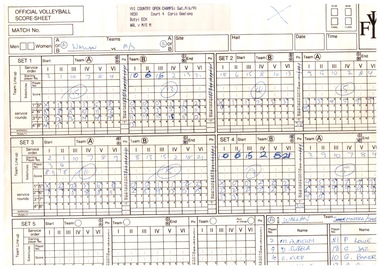 Bendigo Historical Society Inc.
Document - The Victorian Country Volleyball Council (VCVC) Score Sheets for Various Tournaments, 1987-1990
... Later that year, the Volleyball Victoria Country Championships Commission was formed to implement the recommendations of the review and take control of the event into the future. ...Later that year, the Volleyball Victoria Country Championships Commission was formed to implement the recommendations of the review and take control of the event into the future. ...Volleyball has been played in regional Victoria since the early-1960’s. During those early days, most competitions, like the founders of our great sport, were run by, or in conjunction with, the YMCA. Competitions were running at the Ballarat School of Mines and the YMCA’s of Bendigo, Geelong and Warrnambool. In August 1966, an invitation was extended by the Victorian Amateur Volleyball Association to play in the first State-wide event at Monash University. Geelong and Bendigo accepted the invitation with Melbourne represented by Sisu. For Bendigo players at least, this was the first exposure to ‘international rules’, which prevented upward scoops with open hands, introduced an action called a ‘dig’ and seemed to penalise most overhead actions using the fingers as ‘double hits’! Over the next few years, the sport expanded through the YMCA movement with weekly competitions starting up in Ararat, Warrnambool and Latrobe Valley. The Victorian Regional Council of YMCA’s proposed the first Victorian YMCA Championship in Warrnambool on 30th March 1968 with an entry fee of $4.00 per team. The sport continued to grow with additional regional associations affiliating with the Victorian Amateur Volleyball Association (now VVI) who provided the coaching and refereeing assistance needed to raise the standard of play. In 1970, the YMCA Championships started to give way to the Victorian Country Championships with the first ever event held in Bendigo. In 1973, a re-organisation of the VAVA saw the proposal to create separate Victorian Country and Metropolitan Volleyball Councils. The VCVC was established in 1974 and took over the organisation of the Victorian Country Championships. For the next 10-12 years, the Country Championships grew in stature with the inclusion of two divisions for open men and women and junior divisions for boys and girls. Representative teams successfully contested Australian Country Championships between Victoria, South Australia and New South Wales on several occasions. In October 1985, the VCVC voluntarily wound up the Council and handed the responsibility for the Country Championships back to Volleyball Victoria, who by that time had full-time State Executive and Coaching Directors. Since that time, the Long Weekend in June has continued to be the date of the major annual volleyball event for most regional associations, even though in 1986 the Junior Country Championships were wound up in favour of state and national schools events. A number of regional associations have ceased to exist, as have a number of regional tournaments. Regional leagues were created in both the Gippsland and Central, North-West regions, with Gippsland the only one to survive. Some associations have successfully competed in the State League competitions at various times. Following the experience gained by a number of regional administrators working on the Sydney Olympic Games, a proposal to revamp the Victorian Country Championship was put to VVI in early 2002. Later that year, the Volleyball Victoria Country Championships Commission was formed to implement the recommendations of the review and take control of the event into the future. These championships now provide regional players and officials an opportunity to participate in a consistently well-managed event, using many international protocols and a high standard of presentation. Without doubt, this event now ranks as one of the best volleyball events in Australia. Source: 2022 Country Championship regulations The management of the Country Championships by the Victorian Country Championship Commission certainly achieved the objective of raising the standard of presentation, and delivering a consistently high quality event. However, the demands on Host Associations began to take their toll, with several Associations declining the opportunity to host the event due to the high workload. Similarly, the workload of the volunteer Commissioners also took its toll, with the Commission unable to fill casual vacancies. In 2023, the Commission handed the organisation of the Championships back to VVI, who with paid staff, were better equipped to manage the event.This item contains score sheets for various tournaments. It includes the following documents: 11171.21a Victorian Country Volleyball Council (VCVC) Under 17 Championships Swan Hill Score Sheets 1988 11171.21b Volleyball Victoria Inc Scores Sheets Division 1 Women Country Championships at Geelong Sat 9th June to Monday 11th June 1990 at the Corio Leisure Centre 11171.21c Volleyball Victoria Inc Scores Sheets Victorian State U17 Titles at Morwell YMCA May 1990 11171.21d Volleyball Victoria Inc Scores Sheets Victorian State U19 Titles at Warrnambool YMCA July 1990 11171.21e Goulburn Valley Volleyball Associaition Competition Score Sheets 1988 11171.21f Score Sheet Victorian State U15 Titles May 1987 Women Fairhills v Warrnambool at Rusden State College 11171.21g Registration Forms State Under 19 Championships - Contact BHS For Detailsvictorian country volleyball council, vcvc, victorian amateur volleyball association, volleyball victoria -
Bendigo Historical Society Inc.
Document - The Victorian Country Volleyball Council (VCVC) Australian Volleyball Federation (AVF) Newsletters, 1979-80
... Later that year, the Volleyball Victoria Country Championships Commission was formed to implement the recommendations of the review and take control of the event into the future. ...Later that year, the Volleyball Victoria Country Championships Commission was formed to implement the recommendations of the review and take control of the event into the future. ...Volleyball has been played in regional Victoria since the early-1960’s. During those early days, most competitions, like the founders of our great sport, were run by, or in conjunction with, the YMCA. Competitions were running at the Ballarat School of Mines and the YMCA’s of Bendigo, Geelong and Warrnambool. In August 1966, an invitation was extended by the Victorian Amateur Volleyball Association to play in the first State-wide event at Monash University. Geelong and Bendigo accepted the invitation with Melbourne represented by Sisu. For Bendigo players at least, this was the first exposure to ‘international rules’, which prevented upward scoops with open hands, introduced an action called a ‘dig’ and seemed to penalise most overhead actions using the fingers as ‘double hits’! Over the next few years, the sport expanded through the YMCA movement with weekly competitions starting up in Ararat, Warrnambool and Latrobe Valley. The Victorian Regional Council of YMCA’s proposed the first Victorian YMCA Championship in Warrnambool on 30th March 1968 with an entry fee of $4.00 per team. The sport continued to grow with additional regional associations affiliating with the Victorian Amateur Volleyball Association (now VVI) who provided the coaching and refereeing assistance needed to raise the standard of play. In 1970, the YMCA Championships started to give way to the Victorian Country Championships with the first ever event held in Bendigo. In 1973, a re-organisation of the VAVA saw the proposal to create separate Victorian Country and Metropolitan Volleyball Councils. The VCVC was established in 1974 and took over the organisation of the Victorian Country Championships. For the next 10-12 years, the Country Championships grew in stature with the inclusion of two divisions for open men and women and junior divisions for boys and girls. Representative teams successfully contested Australian Country Championships between Victoria, South Australia and New South Wales on several occasions. In October 1985, the VCVC voluntarily wound up the Council and handed the responsibility for the Country Championships back to Volleyball Victoria, who by that time had full-time State Executive and Coaching Directors. Since that time, the Long Weekend in June has continued to be the date of the major annual volleyball event for most regional associations, even though in 1986 the Junior Country Championships were wound up in favour of state and national schools events. A number of regional associations have ceased to exist, as have a number of regional tournaments. Regional leagues were created in both the Gippsland and Central, North-West regions, with Gippsland the only one to survive. Some associations have successfully competed in the State League competitions at various times. Following the experience gained by a number of regional administrators working on the Sydney Olympic Games, a proposal to revamp the Victorian Country Championship was put to VVI in early 2002. Later that year, the Volleyball Victoria Country Championships Commission was formed to implement the recommendations of the review and take control of the event into the future. These championships now provide regional players and officials an opportunity to participate in a consistently well-managed event, using many international protocols and a high standard of presentation. Without doubt, this event now ranks as one of the best volleyball events in Australia. Source: 2022 Country Championship regulations The management of the Country Championships by the Victorian Country Championship Commission certainly achieved the objective of raising the standard of presentation, and delivering a consistently high quality event. However, the demands on Host Associations began to take their toll, with several Associations declining the opportunity to host the event due to the high workload. Similarly, the workload of the volunteer Commissioners also took its toll, with the Commission unable to fill casual vacancies. In 2023, the Commission handed the organisation of the Championships back to VVI, who with paid staff, were better equipped to manage the event.This item contains Newsletters from the Australian Volleyball Federation, and other speorting news; it includes the following documents: 11171.22a Goulburn Valley Volleyball Association Winter Competition 1976 11171.22b Victorian Volleyball Calendar 1982 11171.22c Western Australia Volleyball Association newsletter 1978 11171.22d Volleyball Facilities and Equipment - Australian Volleyball Federation Booklet 11171.22e Australain U15 Volleyball Championship Program Booklet Geelong Aug 1984 11171.22f Geelong Amateur Volleyball Association Rules and by-laws and program 1983 season 11171.22g Ansett Airlines sponsored leaflet for the 1st International Coaches Course Adelaide 1978 11171.22h Sports Coach National Coaching Journal Spring 1979 - 64 pages 11171.22i Sports Coach Australian Coaching Journal Summer 1980 - 52 pages 11171.22j Sports Coach National Coaching Journal Winter 1979 - 56 pages 11171.22k Volleyball Journal March 1979 - Article "Joe Hiller retires with interview" 24 pages 11171.22l Volleyball Journal March 1978 - Article "Interview with Victorian Coach Tomas Satamaria" 20 pages 11171.22m Volleyball Journal Sept 1978 - 24 pages 11171.22n Volleyball Journal Sept 1978 - 24 pages 11171.22o Volleyball Journal Dec 1978 - 24 pages 11171.22p Leaflet promoting Australian Sports Development Programme 11171.22q Volleyball Victoria News June 1985 11171.22r Australian Volleyball News 1985-1987 11171.22s Australian Volleyball News 41/1975 Booklet 11171.22t Australian Volleyball News Jan 1982 11171.22u Journal Documentation Service - Dept. of Youth Sport and Recreation 1979victorian country volleyball council, vcvc, victorian amateur volleyball association, volleyball victoria
