
Showing 2581 items matching "https://11btn.wags.org.au/"
-
 City of Greater Bendigo - Civic Collection
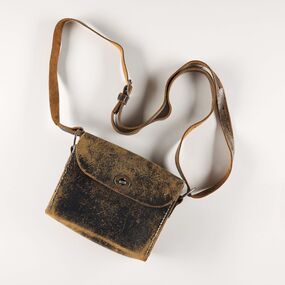
Uniform - Telegram Satchel
... Social telegrams were also encouraged and special pictorial forms and envelopes were designed such as the special purple form and envelope which was used when conveying condolence details during World War 2.(fn. Powerhouse https://collection.powerhouse.com.au/object/163103). ...Social telegrams were also encouraged and special pictorial forms and envelopes were designed such as the special purple form and envelope which was used when conveying condolence details during World War 2.(fn. Powerhouse https://collection.powerhouse.com.au/object/163103). ...Electrical telegraphs were point to point text messaging systems primarily used from the 1840's until the late 20th century. It was the first electrical telecommunications system and were sent by an operator or telegrapher using Morse code. Social telegrams were also encouraged and special pictorial forms and envelopes were designed such as the special purple form and envelope which was used when conveying condolence details during World War 2.(fn. Powerhouse https://collection.powerhouse.com.au/object/163103). There was a brief resurgence in telegraphy during World War I but the decline continued as the world entered the Great Depression years of the 1930s. Although telegraph lines continued to play an important part in distributing news feeds from news agencies post World War 2, the rise of the internet in the 1990s and the widespread installation of the telephones in homes saw the need for telegrams to greatly decline. When the Commonwealth Post and Telegraph Act was passed in June 1902, and a national Postmaster General's Department (the PMG) was established the responsibility for the nation's mail and telephone services fell on Post Offices. The Bendigo Post Office, built in 1887 and situated on Pall Mall was the central distribution centre for receiving and delivering telegrams and continued to deliver communication and postal services until 1997. Now a Visitor Centre, dedicated volunteers at the Post Office continued to demonstrate and educate the public about telegraphic services and the development of this unique form of communication up until 2019 when Covid 19 disrupted every day life, coupled with the death Ted Rankins (the last Post Master and a long term telegraph volunteer at the Post Office). This satchel was used by Junior Postal Workers in Bendigo to carry telegrams which were delivered by bicycle in the early years. Small, rectangle, leather satchel with attached shoulder strap and buckle. Satchel is made of five pieces of leather: two side pieces, one piece which is folded to create the front, bottom, back and flap and two small pieces to hold strap ring. The flap has a single hole through which a metal toggle is inserted to secure the flap closed. Satchel has four metal tabs to secure the top front to the top sides and an internal pocket on inside. The leather strap is attached to the top of the side seams of the satchel with circular metal rings and two metal press studs. Inside flap: Sticker with '540B'bendigo post office, bendigo tourism, city of greater bendigo tourism, making a nation exhibition, post office collection -
 City of Greater Bendigo - Civic Collection
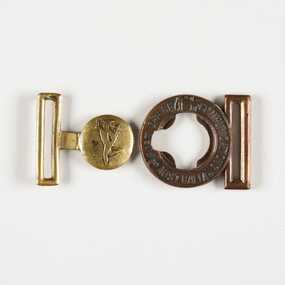
Uniform - Buckle from Telegram Satchel Belt, Post Master General's Department et al
... Social telegrams were also encouraged and special pictorial forms and envelopes were designed such as the special purple form and envelope which was used when conveying condolence details during World War 2.(fn. Powerhouse https://collection.powerhouse.com.au/object/163103). ...Social telegrams were also encouraged and special pictorial forms and envelopes were designed such as the special purple form and envelope which was used when conveying condolence details during World War 2.(fn. Powerhouse https://collection.powerhouse.com.au/object/163103). ...Electrical telegraphs were point to point text messaging systems primarily used from the 1840's until the late 20th century. It was the first electrical telecommunications system and were sent by an operator or telegrapher using Morse code. Social telegrams were also encouraged and special pictorial forms and envelopes were designed such as the special purple form and envelope which was used when conveying condolence details during World War 2.(fn. Powerhouse https://collection.powerhouse.com.au/object/163103). There was a brief resurgence in telegraphy during World War I but the decline continued as the world entered the Great Depression years of the 1930s. Although telegraph lines continued to play an important part in distributing news feeds from news agencies post World War 2, the rise of the internet in the 1990s and the widespread installation of the telephones in homes saw the need for telegrams to greatly decline. When the Commonwealth Post and Telegraph Act was passed in June 1902, and a national Postmaster General's Department (the PMG) was established the responsibility for the nation's mail and telephone services fell on Post Offices. The Bendigo Post Office, built in 1887 and situated on Pall Mall was the central distribution centre for receiving and delivering telegrams and continued to deliver communication and postal services until 1997. Now a Visitor Centre, dedicated volunteers at the Post Office continued to demonstrate and educate the public about telegraphic services and the development of this unique form of communication up until 2019 when Covid 19 disrupted every day life, coupled with the death Ted Rankins (the last Post Master and a long term telegraph volunteer at the Post Office). This belt buckle was used on the leather satchels used by Junior Postal Workers in Bendigo to carry telegrams which were delivered by bicycle in the early years. The buckle is part of the postal collection donated by the Rankins family in memory of Ted Rankins.Circular belt buckle from telegram delivery satchel belt. Inner buckle depicts the Greek deity Hermes who personifies the transmission of information and was adopted as an allegorical representation of the function of postal services. Outer buckle; Post Office / Communications / Australia. Centre top outer buckle; emu, kangaroo and shield Inner buckle; Hermes (left facing)bendigo post office, bendigo tourism, city of greater bendigo tourism, post office collection, ted rankins collection -
 City of Melbourne Libraries
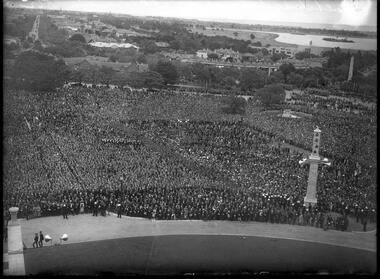
Photograph, Bull, Hugh Jones, 1897-1993, The Multitude before the Shrine at Dedication, 11 November 1934
... Retrieved October 14, 2024, from http://nla.gov.au/nla.news-article205078252...Retrieved October 14, 2024, from http://nla.gov.au/nla.news-article205078252 ceremonies shrine of remembrance armistice day 1930-1939 Photographer notations on slide: "Multitude before Shrine at Dedication 1934 B62". ...“The greatest gathering in Australia” – The Argus, 12 November 1934 On Armistice Day, 11 November 1934, the Dedication Ceremony for the Shrine of Remembrance was held in the Domain, presided over by Prince Henry, the Duke of Gloucester. A crowd of over 300,000 people - about one third of Melbourne's population at the time - attended. Featured in "Newsworthy: Melbourne in photographs 1933-1936" exhibition at East Melbourne Library, October to December 2023. Exhibition caption by project volunteer, Louise McKenzie. Photographer notations on slide: "Multitude before Shrine at Dedication 1934 B62" Description: Massive crowd gathered in southern forecourt of Melbourne's Shrine of Remembrance on 11 November 1934, for its opening dedication by the Duke of Gloucester. There were an estimated 300,000 in attendance (almost one third of Melbourne's population of 1 million). Research by project volunteer, Louise McKenzie: There were an estimated 300,000 people in attendance for the opening dedication of the Shrine of Remembrance on 11 November 1934. This was almost one third of Melbourne's population of 1 million. Age photographer Hugh Bull cleverly captured the massive crowd using two glass plate exposures. This elevated view is captured from the Shrine and takes in the westward area with St Kilda Road trams and mansions, St Kilda Presbyterian Church, the two-storied, curved Princes Terrace, Macpherson Robertson Fountain, South African (Boer) War Memorial, MacRobertson’s Girls High School, Albert Park Lake and Port Phillip Bay. The corresponding eastward view can be accessed via the "Related material link" in the item record. References: WE WILL REMEMBER THEM."--THE MULTITUDE BEFORE THE SHRINE. (1934, November 12). The Age (Melbourne, Vic. : 1854 - 1954), p. 13. Retrieved October 14, 2024, from http://nla.gov.au/nla.news-article205078252Photographer notations on slide: "Multitude before Shrine at Dedication 1934 B62".ceremonies, shrine of remembrance, armistice day, 1930-1939 -
 City of Melbourne Libraries
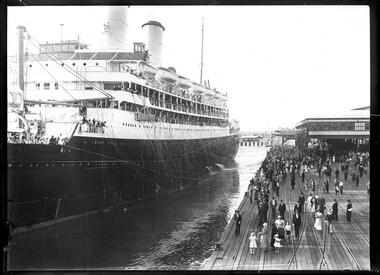
Photograph, Bull, Hugh Jones, 1897-1993, RMS Orford departing from Station Pier, Port Melbourne
... Retrieved October 5, 2023, from http://nla.gov.au/nla.news-article203826897 ...Retrieved September 15, 2023, from http://nla.gov.au/nla.news-article16511535 ARRIVAL OF THE ORFORD (1928, November 30). ...Published: 21 March 1934 The Age p11 Published title: CROWDED TOURIST SHIP WILL CARRY TEST AND DAVIS CUP TEAMS. Published caption: Carrying an exceptionally large number of tourists, business men and prominent sporting personalities, R.M.S. Orford sailed for London yesterday. Over two hundred passengers embarked at Melbourne, and on leaving the Australian coast there will be two thousand persons on board. The Australian Test team will join the vessel at Fremantle and the remaining two Davis Cup representatives will embark at Adelaide. A picture of the Orford taken just as she moved out from Station Pier, Port Melbourne, under her own steam. Trove article identifier: http://nla.gov.au/nla.news-article203826897 Description: Passenger ship about to depart Station Pier, Port Melbourne. Research by project volunteer, Fiona Collyer: The RMS Orford was built by Vickers-Armstrong Shipyard Barrow-in-Furness, Cumbria, England and launched in 1927 by Lady Ryrie, the wife of Sir Granville Ryrie, the Australian Ambassador to the UK. The Orford was owned by the Orient Steam Navigation Ltd and was designed for the mail and passenger service between England and Australia. She was 20,000 tons, 658 ft long, 75 ft across and 80 ft high from water-line to deck. She had eight decks, a swimming pool and cost more than £1,000,000. She could travel at 20 knots – 480 miles a day, a 5 week voyage between Australia and England. There were enough lifeboats to accommodate every person on board. Promoted as a ship of comfort, luxury, speed and grace with spacious, beautifully decorated lounges, smoking-rooms and writing rooms, the SMH 23/11/1928 review said “sitting-rooms where the furniture recreates the air of quiet, exquisite, safe luxury; suites where you may retire from other people, and on a sea voyage other people, even the most charming other people, often begin to resemble one’s worst enemies towards the end of several weeks sea voyaging together”. “Travel like a human being. This is what the great liners give you today. The Orford dining room is enormous (it seated 350 people) the walls sweep up to a white, cool roof supported on decorative pillars. Panels of grey scagliola and carved designs remove the bleak, comfortless air which used to cling to dining-rooms of ships. Everything about them was so wretchedly temporary that you could not enter them without wishing that you stayed at home. They gave you the creeps and indigestion. This room is gay, bright, sunlit, like a luxurious café overlooking the sea.” “You really feel in here that you are a human being and not a piece of cargo endowed with sensation.” The Orford had the punkah louvre system of ventilation which forced draughts through every part of the ship, ensuring “No Ship Smells!!” and avoiding - “… a mayonnaise of all the unpleasant odours generated under heaven. From the hot oil of the engines, from those overheated, bottomless pits below the water-line, from new paint and food, from people perspiring at work, from rope and tar and grease and fruit and wet clothes and tobacco, rises a deplorable incense that lingers unsettlingly in the nostril long after one has left the ship. Those dreadful odours will never rise to torture the senses of passengers who feel that all is over with them.” The modern electric kitchen had a roll making machine capable of producing 2000 rolls for the table an hour and a bread and butter machine which cut the bread into slices and spread the butter in one operation. (The Week – Brisbane 30/11/1928) On 13/10/1928, the Orford made its first voyage to Australia with 520 first class and 1100 3rd class passengers. The name of the passengers embarking and disembarking and their reason for visiting were published in newspapers and the number of migrants for the New Settlers Scheme and the Dreadnought Boys Co program to promote and assist the migration of British youths willing to become farm workers in Australia 1911-1939 were noted too. On the 19th March 1932, RMS Orford featured in the “Parade of Ships” celebrating the official opening of the Sydney Harbour Bridge. Only country people were allowed to book a ticket as a guest on board. The Post Office issued commemorative postage stamps showing the Orford sailing under the bridge. In March 1934, the Orford sailed from Australia to London, via Colombo, Aden, Port Said, Naples, Villefranche, Toulon, Parma, Gibraltar and Channel Port. Amongst the 2000 passengers on board was the Davis Cup Tennis team, tennis champions Joan Hartigan and Nell Hopman, the Australian Test cricket team and British champion swimmer Joyce Cooper. Every day tennis player Harry Hopman and an Australian Press Association reporter radioed through reports on their activities, which included – - Test cricket batsman Len Darling having spend 4 days in his cabin after straining his groin when he slipped over while playing ball tennis in his slippers. - Batsman Bill Brown dancing the fox-trot, displaying footwork similar to the grace he showed at the wicket. - Alluding to the seasickness of Don Bradman and Stan McCabe and how they were making up for meals lost on the Great (very choppy) Australian Bight. - Miss Joan Hartigan discarding her bright blue shorts for brighter blue bathers and being first into the pool. - Bowler Bill O’Reilly being tripped by a passenger on the deck and spending the voyage with bandaged wrists with daily updates of his progress in the press. - Wicketkeeper Ben Barnett’s conjuring tricks and constant whirring movie camera. - Results of the quoits, ball tennis and bridge tournaments. A fancy dress ball was held one night and the cricketers dressed as sheiks and sang “The Riff Song” from the pre-code 1929 operetta film “The Desert Song” starring John Bates as the Red Shadow and Myrna Lay as a native dancing girl. Alan Kippax’s beard blew overboard! Joan Hartigan dressed as Burlington Bertie from the music hall song and Nell Hopman a doll in a box wearing a crinkled paper dress. On arrival at Southampton, while they waited for the gangway to be lowered, Bradman entertained the team at the piano playing popular tunes while the cricketers sang. . In 1935, RMS Orford’s third class accommodation was converted to tourist class. Her passenger capacity was now 468 First Class, 515 tourist class and 440 crew. First saloon from Sydney fares cost for single £76, £82, £88 and Third Class fares were £21, £23, £25. Less than a penny a mile. . In 1936, the Orford embarked the exiled Emperor of Ethiopia, Haile Selassie at Gibraltar on his way to the UK. In 1939, she was requisitioned for Australian government service and on 7/1/1940 she conveyed the first Australian troops to Egypt and was then used to carry French troops from Tamatave, Madagascar to Marseilles. On 1/6/1940 RMS Orford was bombed and set on fire at Marseilles by German aircraft. 14 crew were killed, 25 wounded. In 1947, the wreck was re-floated and broken up at Savona. . . References: R.M.S. ORFORD. (1928, November 23). The Sydney Morning Herald (NSW : 1842 - 1954), p. 14. Retrieved September 15, 2023, from http://nla.gov.au/nla.news-article16511535 ARRIVAL OF THE ORFORD (1928, November 30). The Week (Brisbane, Qld. : 1876 - 1934), p. 21. Retrieved September 15, 2023, from http://nla.gov.au/nla.news-article181126802 CROWDED TOURIST SHIP WILL CARRY TEST AND DAVIS CUP TEAMS. (1934, March 21). The Age (Melbourne, Vic. : 1854 - 1954), p. 11. Retrieved October 5, 2023, from http://nla.gov.au/nla.news-article203826897 Photographer notations on slide: "B19".tennis, ships -
 Melbourne Tram Museum
Functional object - Tramcar component, Boselli Italy, Luminator Texas, Set of six destination indicator equipment that was fitted to Z, Z3 and B class trams, c1975 - 1990's?
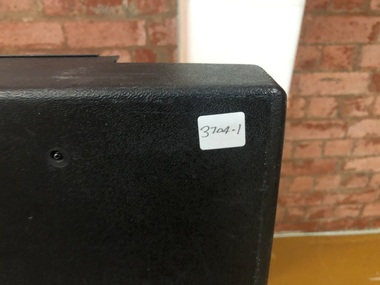
... Luminator made by Luminator Technology Group Texas - see https://www.ltgglobal.com/ access 12/7/2019. ...Luminator made by Luminator Technology Group Texas - see https://www.ltgglobal.com/ access 12/7/2019. ...Set of six destination indicator equipment that was fitted to Z, Z3 and B class trams. .1 - dot matrix type destination sign fitted to the side of a B class tram - set at Preston Depot - serial number 232636 - Luminator type, back cover loose, 180H x 1300W x 100D. See images 3704i1a to e. .2 - dot matrix type route number fitted to the front of a tram, type fitted to B2 class tram, set at 86D, serial number 273644 - Luminator type, marked "163 No", 240H x 350W x 135D. See images 3704i2a to d. .3 - flipper type, side destination type, marked "ex 53" (Z class tram), made in Italy by Boselli has yellow label 37/702S, serial number 40A1603, set to St Kilda Beach and stamped 136 on one flange. 120H x 330W x 165D. See images 3704i3a to c .4 - flipper type, destination box, with markings "B'Wick Flaps", with labels "New" "Universal A flaps" made in Italy by Boselli, serial number 40A6623, set to St Kilda Junc". 210H x 1000W x 1900. See images 3704i4a to d. .5 - flap from an above type box, half of "Richmond" and "South Melb Depot", 970W x 80H. See images 3704i5a to b .6 - controller box, marked "No. 105" on rear, serial number 202311 Luminator, numeric pad, illuminated display and five control buttons made by gulton Luminator division fitted to a B2 tram. See images 3704i6a to b .7 - dot matrix destination sign fitted to the front of a B2 class tram, set to "Not in Service", Serial number 502626 Luminator, 220H x 1300W x 165D, See images 3704i7a to e. Source of items 3 and 4 name based on drawings held by the Museum for the destination signs fitted to Z class trams. Refer to drawing R11-982 as an example. Luminator made by Luminator Technology Group Texas - see https://www.ltgglobal.com/ access 12/7/2019. Imagetrams, tramways, destination indicators, z3 class, transport equipment, z class, b class -
 Ballarat and District Irish Association
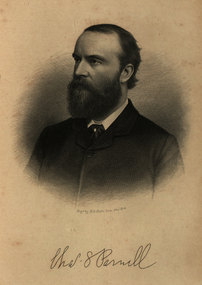
Image, Charles Parnell, c1864, 1864
... Parnell aimed to harness the emotive element, but he and his party preferred for tenant farmers to become freeholders on the land they rented, instead of land being vested in "the people".(http://en.wikipedia.org/wiki/Irish_National_Land_League, accessed 21 January 2014)...Gladstone's government fell soon afterwards.(http://www.bbc.co.uk/history/historic_figures/parnell_charles.shtml, accessed 21 January 2014) The Irish National Land League (Irish: Conradh na Talún) was an Irish political organisation of the late 19th century which sought to help poor tenant farmers. ...Parnell was an Irish nationalist and statesman who led the fight for Irish Home Rule in the 1880s. Charles Stewart Parnell was born on 27 June 1846 in County Wicklow into a family of Anglo-Irish Protestant landowners. He studied at Cambridge University and was elected to parliament in 1875 as a member of the Home Rule League (later re-named by Parnell the Irish Parliamentary Party). His abilities soon became evident. In 1878, Parnell became an active opponent of the Irish land laws, believing their reform should be the first step on the road to Home Rule. In 1879, Parnell was elected president of the newly founded National Land League and the following year he visited the United States to gain both funds and support for land reform. In the 1880 election, he supported the Liberal leader William Gladstone, but when Gladstone's Land Act of 1881 fell short of expectations, he joined the opposition. By now he had become the accepted leader of the Irish nationalist movement. Parnell now encouraged boycott as a means of influencing landlords and land agents, and as a result he was sent to jail and the Land League was suppressed. From Kilmainham prison he called on Irish peasants to stop paying rent. In March 1882, he negotiated an agreement with Gladstone - the Kilmainham Treaty - in which he urged his followers to avoid violence. But this peaceful policy was severely challenged by the murder in May 1882 of two senior British officials in Phoenix Park in Dublin by members of an Irish terrorist group. Parnell condemned the murders. In 1886, Parnell joined with the Liberals to defeat Lord Salisbury's Conservative government. Gladstone became prime minister and introduced the first Irish Home Rule Bill. Parnell believed it was flawed but said he was prepared to vote for it. The Bill split the Liberal Party and was defeated in the House of Commons. Gladstone's government fell soon afterwards.(http://www.bbc.co.uk/history/historic_figures/parnell_charles.shtml, accessed 21 January 2014) The Irish National Land League (Irish: Conradh na Talún) was an Irish political organisation of the late 19th century which sought to help poor tenant farmers. Its primary aim was to abolish landlordism in Ireland and enable tenant farmers to own the land they worked on. The period of the Land League's agitation is known as the Land War. Within decades of the league's foundation, through the efforts of William O'Brien and George Wyndham (a descendant of Lord Edward FitzGerald), the 1902 Land Conference produced the Land (Purchase) Act 1903 which allowed Irish tenant farmers buy out their freeholds with UK government loans over 68 years through the Land Commission (an arrangement that has never been possible in Britain itself). For agricultural labourers, D.D. Sheehan and the Irish Land and Labour Association secured their demands from the Liberal government elected in 1905 to pass the Labourers (Ireland) Act 1906, and the Labourers (Ireland) Act 1911, which paid County Councils to build over 40,000 new rural cottages, each on an acre of land. By 1914, 75% of occupiers were buying out their landlords, mostly under the two Acts. In all, under the pre-UK Land Acts over 316,000 tenants purchased their holdings amounting to 15 million acres (61,000 km2) out of a total of 20 million acres (81,000 km2) in the country. Sometimes the holdings were described as "uneconomic", but the overall sense of social justice was undeniable. (http://en.wikipedia.org/wiki/Irish_National_Land_League, accessed 21 January 2014) The Irish National Land League was founded at the Imperial Hotel in Castlebar, the County town of Mayo, on 21 October 1879. At that meeting Charles Stewart Parnell was elected president of the league. Andrew Kettle, Michael Davitt, and Thomas Brennan were appointed as honorary secretaries. This united practically all the different strands of land agitation and tenant rights movements under a single organisation. The two aims of the Land League, as stated in the resolutions adopted in the meeting, were: ...first, to bring out a reduction of rack-rents; second, to facilitate the obtaining of the ownership of the soil by the occupiers. That the object of the League can be best attained by promoting organisation among the tenant-farmers; by defending those who may be threatened with eviction for refusing to pay unjust rents; by facilitating the working of the Bright clauses of the Irish Land Act during the winter; and by obtaining such reforms in the laws relating to land as will enable every tenant to become owner of his holding by paying a fair rent for a limited number of years. Charles Stewart Parnell, John Dillon, Michael Davitt, and others including Cal Lynn then went to America to raise funds for the League with spectacular results. Branches were also set up in Scotland, where the Crofters Party imitated the League and secured a reforming Act in 1886. The government had introduced the first ineffective Land Act in 1870, then the equally inadequate Acts of 1880 and 1881 followed. These established a Land Commission that started to reduce some rents. Parnell together with all of his party lieutenants, including Father Eugene Sheehy known as "the Land League priest", went into a bitter verbal offensive and were imprisoned in October 1881 under the Irish Coercion Act in Kilmainham Jail for "sabotaging the Land Act", from where the No-Rent Manifesto was issued, calling for a national tenant farmer rent strike which was partially followed. Although the League discouraged violence, agrarian crimes increased widely. Typically a rent strike would be followed by evictions by the police, or those tenants paying rent would be subject to a local boycott by League members. Where cases went to court, witnesses would change their stories, resulting in an unworkable legal system. This in turn led on to stronger criminal laws being passed that were described by the League as "Coercion Acts". The bitterness that developed helped Parnell later in his Home Rule campaign. Davitt's views were much more extreme, seeking to nationalise all land, as seen in his famous slogan: "The land of Ireland for the people of Ireland". Parnell aimed to harness the emotive element, but he and his party preferred for tenant farmers to become freeholders on the land they rented, instead of land being vested in "the people".(http://en.wikipedia.org/wiki/Irish_National_Land_League, accessed 21 January 2014)Image of bearded man known as Charles Stewart Parnellballarat irish, parnell, charles parnell, home rule -
 Flagstaff Hill Maritime Museum and Village
Functional object - Mincer, late 19th or early 20th Century
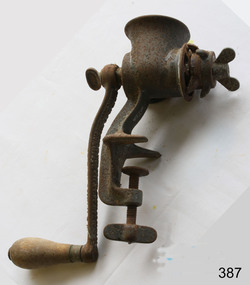
... Some butchers still prefer using a variety of mincer knives. Adapted from: https://brennan-group.com/blogs/news/history-of-the-meat-mincer...Some butchers still prefer using a variety of mincer knives. Adapted from: https://brennan-group.com/blogs/news/history-of-the-meat-mincer The development of the meat mincer enabled both butchers and home cooks to process and grind meat effectively. ...A meat grinder, commonly known as the meat mincer, is used for chopping meat into fine pieces. Alternatively, it can be used for the mixing of raw or cooked meat, fish and vegetables. It is the best way to process meat, and is a widely used piece of equipment by butchers and in the home.. Butchers have been known to use either mincing knives or meat cleavers in the kitchen for years to produce a quantity of minced meat. This was a slow and laborious process. The advent of the meat mincer has not only made the mincing process easier but also faster. The meat mincer has slowly evolved over the years into what it is today. The first meat mixer or meat mincer was invented in the 19th century by a German inventor named Baron Karl Drais. Although some versions of the device date back to much earlier. The oldest form of meat mincer was hand cranked which forced meat through a metal plate with several small holes in it, which resulted in long and thin strands of the meat. The meat was fed into the funnel that was placed at the top of the mixer. This meat would pass through a hand cranked screw conveyor that would squash and mix the meat before passing it through the metal plate. Needless to say, this was again a slow and laborious procedure to follow to produce large quantity of meat. With passage of time, this hand cracked machine became powered by electricity. The meat mincer has a great adaptability and efficiency now. The huge variety in mincer plates allows a butcher to produce different types of minced meat in any shape desired. However, traditional manual meat mincers have not really changed a lot. They are manually operated and made of cast iron, as earlier. They are similar to the original mincer designs, dating back to the early 1900s. Some butchers still prefer using a variety of mincer knives. Adapted from: https://brennan-group.com/blogs/news/history-of-the-meat-mincerThe development of the meat mincer enabled both butchers and home cooks to process and grind meat effectively.Clamp on meat mincer with handle for rotating the mincing apparatus inside.None.flagstaff hill, warrnambool, shipwrecked-coast, flagstaff-hill, flagstaff-hill-maritime-museum, maritime-museum, shipwreck-coast, flagstaff-hill-maritime-village, meat mincer -
 Flagstaff Hill Maritime Museum and Village
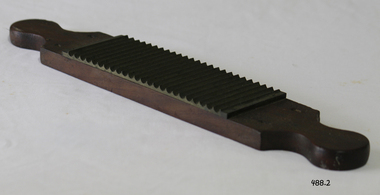
Equipment - Pill Maker Board
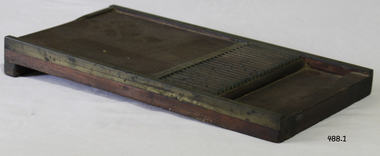
... The grooves on the paddle and the board slice up the pill-mass and, after rolling the thing back and forth a couple of times like a rolling-pin, the circular pills roll off the grooves and into the tray at the bottom. https://galwaycitymuseum.ie/blog/collections-spotlight-victorian-pill-making-machine/?...The grooves on the paddle and the board slice up the pill-mass and, after rolling the thing back and forth a couple of times like a rolling-pin, the circular pills roll off the grooves and into the tray at the bottom. https://galwaycitymuseum.ie/blog/collections-spotlight-victorian-pill-making-machine/? ...Before factory production became commonplace in medicine, dispensing was considered an art and pill machines such as these were a vital component of any chemist’s collection. This machine dates back to the days when your local chemist or apothecary bought, sold, and manufactured all his own drugs and medicines to everybody who lived within the local community. In Victorian times, there was no such thing as off-the-shelf medicine. Every tablet, pill, suppository, ointment, potion, lotion, tincture and syrup to treat anything from a sore throat to fever, headaches or constipation, was made laboriously by hand, by the chemist. Pill machines such as these first appeared in the mid-1700s and quickly became a staple of the Victorian chemist’s shop. A ‘pill mass’ of medicinal powders mixed with a binding agent would be hand-rolled into a pipe on the tile at the back of the machine. This would then be placed across the grooved brass plate and cut into equal-sized pills using the corresponding side of the roller. Once all the necessary ingredients for the pills had been measured and ground with a pestle and mortar a final ingredient was poured in, syrup – this acted as a binding-agent. You could then roll it into a sausage shape. The largest part of the machine is the board. This is set at an angle and is comprised of the rolling surface, the cutting grooves, and the collection-tray. The large flat surface is for rolling out the pill-paste into the sausage shape. This is then rolled towards the brass cutting-grooves. The paddle (the second piece) is flipped over so that the grooves there line up with the grooves on the board. Rollers on the ends of the paddle roll against the brass edges of the board, and they guide the paddle straight across the grooves, taking the pill-mass with it. The grooves on the paddle and the board slice up the pill-mass and, after rolling the thing back and forth a couple of times like a rolling-pin, the circular pills roll off the grooves and into the tray at the bottom. https://galwaycitymuseum.ie/blog/collections-spotlight-victorian-pill-making-machine/?locale=en The collection of medical instruments and other equipment in the Port Medical Office is culturally significant, being an historical example of medicine from late 19th to mid-20th century. Pill making device including a grooved base board and grooved sliding board with two pill moulds.None.flagstaff hill, warrnambool, shipwrecked-coast, flagstaff-hill, flagstaff-hill-maritime-museum, maritime-museum, shipwreck-coast, flagstaff-hill-maritime-village, pills, pill maker, medicine, health -
 Flagstaff Hill Maritime Museum and Village
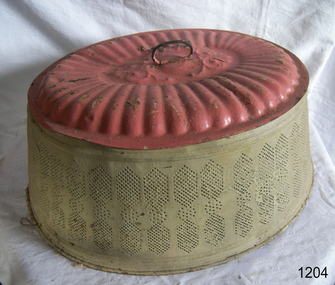
Equipment - Pill Rolling Pin
... The grooves on the paddle and the board slice up the pill-mass and, after rolling the thing back and forth a couple of times like a rolling-pin, the circular pills roll off the grooves and into the tray at the bottom. https://galwaycitymuseum.ie/blog/collections-spotlight-victorian-pill-making-machine/?...The grooves on the paddle and the board slice up the pill-mass and, after rolling the thing back and forth a couple of times like a rolling-pin, the circular pills roll off the grooves and into the tray at the bottom. https://galwaycitymuseum.ie/blog/collections-spotlight-victorian-pill-making-machine/? ...Used as tBefore factory production became commonplace in medicine, dispensing was considered an art and pill machines such as these were a vital component of any chemist’s collection. This machine dates back to the days when your local chemist or apothecary bought, sold, and manufactured all his own drugs and medicines to everybody who lived within the local community. In Victorian times, there was no such thing as off-the-shelf medicine. Every tablet, pill, suppository, ointment, potion, lotion, tincture and syrup to treat anything from a sore throat to fever, headaches or constipation, was made laboriously by hand, by the chemist. Pill machines such as these first appeared in the mid-1700s and quickly became a staple of the Victorian chemist’s shop. A ‘pill mass’ of medicinal powders mixed with a binding agent would be hand-rolled into a pipe on the tile at the back of the machine. This would then be placed across the grooved brass plate and cut into equal-sized pills using the corresponding side of the roller. Once all the necessary ingredients for the pills had been measured and ground with a pestle and mortar a final ingredient was poured in, syrup – this acted as a binding-agent. You could then roll it into a sausage shape. The largest part of the machine is the board. This is set at an angle and is comprised of the rolling surface, the cutting grooves, and the collection-tray. The large flat surface is for rolling out the pill-paste into the sausage shape. This is then rolled towards the brass cutting-grooves. The paddle (the second piece) is flipped over so that the grooves there line up with the grooves on the board. Rollers on the ends of the paddle roll against the brass edges of the board, and they guide the paddle straight across the grooves, taking the pill-mass with it. The grooves on the paddle and the board slice up the pill-mass and, after rolling the thing back and forth a couple of times like a rolling-pin, the circular pills roll off the grooves and into the tray at the bottom. https://galwaycitymuseum.ie/blog/collections-spotlight-victorian-pill-making-machine/?locale=enhe companion item to pill-maker base, item 488.2The collection of medical instruments and other equipment in the Port Medical Office is culturally significant, being an historical example of medicine from late 19th to mid-20th century.Pill making device including a grooved base board and grooved sliding board with two pill mouldsNone.flagstaff hill, warrnambool, shipwrecked-coast, flagstaff-hill, flagstaff-hill-maritime-museum, maritime-museum, shipwreck-coast, flagstaff-hill-maritime-village, pill making, pill mould, medicine, health -
 Flagstaff Hill Maritime Museum and Village
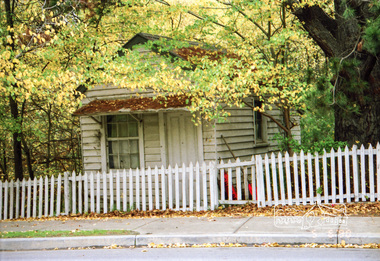
Domestic object - Cover
... Also, there’s no harm in keeping them on during the meal, as it’s easy to pick up the lid, serve yourself more food, then plop it back down, in comparison with wrap, foil, or cloth, which can blow away in the wind, fall into the food, or require two hands for proper recovering. https://www.epicurious.com/expert-advice/covering-your-food-with-a-cloche-is-dramatic-and-useful-article...Also, there’s no harm in keeping them on during the meal, as it’s easy to pick up the lid, serve yourself more food, then plop it back down, in comparison with wrap, foil, or cloth, which can blow away in the wind, fall into the food, or require two hands for proper recovering. https://www.epicurious.com/expert-advice/covering-your-food-with-a-cloche-is-dramatic-and-useful-article The cloche or food cover was, and still is, the perfect way to prevent insects and other small vermin from interfering with and compromising the condition of food, both inside and outdoors. flagstaff hill warrnambool shipwrecked-coast flagstaff-hill flagstaff-hill-maritime-museum maritime-museum shipwreck-coast flagstaff-hill-maritime-village Cloche Food Cover None. ...For most people, a cloche—the dome-shaped covering for a dish that’s removed before serving—is only ever encountered on-screen, likely in the hands of a butler in an English period drama. Not only does the word itself sound haughty (it comes from the French word for bell), it is a fundamentally theatrical object, existing to conceal and reveal food—or on occasion, a severed head. Why, if you’re not an old-timey aristocrat or movie villain, would you have use for a cloche? The answer is bugs. If you’ve ever had the pleasure of eating outside, you’re probably aware that bugs exist, and they often want some of what you’re having. Particularly during the summer and warm weather entices people into alfresco dining, the presence of bugs can be a nuisance for which there’s rarely an elegant solution. Did somebody say elegant? Let’s bring in the cloche. Specifically, let’s talk about a mesh cloche, which is different from the glinting silver semi-sphere discussed earlier. Dome-shaped but made of stiff wire mesh or cloth, this cloche is far from frivolous and is an excellent tool for any outside dining plans. First and foremost, it can keep insects out of your food, saving you from sitting and swatting your hand over the salad to keep flies away. Especially if you’re setting up a large buffet spread of dishes for a family-style meal outdoors, using mesh coverings takes a little bit of the pressure off when it comes to timing: just put the food out there, cloche it, and finish bringing everything else to the table. Also, there’s no harm in keeping them on during the meal, as it’s easy to pick up the lid, serve yourself more food, then plop it back down, in comparison with wrap, foil, or cloth, which can blow away in the wind, fall into the food, or require two hands for proper recovering. https://www.epicurious.com/expert-advice/covering-your-food-with-a-cloche-is-dramatic-and-useful-articleThe cloche or food cover was, and still is, the perfect way to prevent insects and other small vermin from interfering with and compromising the condition of food, both inside and outdoors.Metal oval food cover with decorative pressed tin lid and perforated holes around the side. Metal handle on top. Painted pink on top and green on the side.None.flagstaff hill, warrnambool, shipwrecked-coast, flagstaff-hill, flagstaff-hill-maritime-museum, maritime-museum, shipwreck-coast, flagstaff-hill-maritime-village, cloche, food, cover -
 Eltham District Historical Society Inc
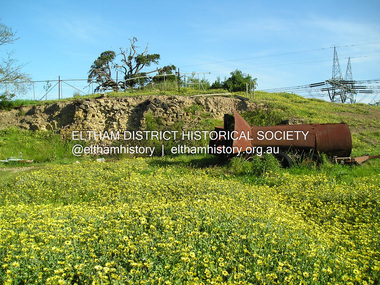
Negative - Photograph, Bootmaker's shop adjacent to Whitecloud Cottage, 701 Main Road, Eltham, 5 June 1990
... Retrieved September 21, 2021, from http://nla.gov.au/nla.news-article56838786 Another reference is recorded in 1932 when Council proposed to drain the adjacent pond due to complaints about mosquitoes. ...Retrieved September 21, 2021, from http://nla.gov.au/nla.news-article56838786 Another reference is recorded in 1932 when Council proposed to drain the adjacent pond due to complaints about mosquitoes. ...One of only three remaining early 20th century shops in the former Little Eltham district. The bootmaker's shop was operated by John Henry (Harry) Clark from about 1930. Clark was originally a photographer along with his brothers William (Will) Charles Clark and Clement Kent Clark. They operated as Clark Bros Photographers based at 25 Thomas Street, Windsor (Prahran) from about 1895 to 1915 at which point the premises was demolished.. Brother Clement died in 1912. From about 1910 Harry was living and working as a photographer in Eltham and was recorded on the electoral rolls as a photographer from 1915 up to and including at least 1928. He boarded with Thekla Jarrold and the Jarrold family in the Jarrold family cottage (Whitecloud). By 1931 he changed his profession to Bootmaker and Thekla Jarrold built him this litrtle shop circa 1930 on the corner of her property next to the family home. He was well regarded by all as a fine leather worker and operated as a Bootmaker from his little shop at least until 1954. He died at St Vincent'e Hospital in Dec 1956. Very little public record exists of Harry in the papers either as a photographer or bootmaker, one incident was reported in 1935 when he witnessed a girl on a bike come crashing down Dalton Street and across Main Road into the pond next to his shop. ELTHAM GIRL THROWN FROM CYCLE (1935, April 26). Advertiser (Hurstbridge, Vic. : 1922 - 1939), p. 1. Retrieved September 21, 2021, from http://nla.gov.au/nla.news-article56838786 Another reference is recorded in 1932 when Council proposed to drain the adjacent pond due to complaints about mosquitoes. Both Harry and Thekla objected to the proposal. The paper reported that Thekla had lived there for 39 years at the time and Harry for 22 withoiut any cause for concern about the pond.Roll of 35mm colour negative film, 7 strips And associated colour print 10 x 15 cmFuji 200 Aeltham, buildings, houses, main road, bootmakers cottage, bootmakers, dalton street, white cloud cottage, jarrold, whitecloud cottage, jarrold cottage, jarrold property -
 Eltham District Historical Society Inc
Photograph, Fay Bridge, Ruins beside the Diamond Creek at Wattle Glen, 13 October 2016
... Heritage Victoria link for the site - https://vhd.heritagecouncil.vic.gov.au/places/12203...Heritage Victoria link for the site - https://vhd.heritagecouncil.vic.gov.au/places/12203 Fay Bridge Collection 2016-10-13 Diamond Creek diamond creek trail Ruins Wattle Glen William Wandless Herbert greenhills Elizabeth Wilson 7 images - born digital Ruins beside the Diamond Creek at Wattle Glen Photograph Photograph Fay Bridge ...The newly constructed Diamond Creek Trail from Diamond Creek to Wattle Glen completed in February 2021 winds around these ruins just pass the high transmission power lines near Herberts Lane and Collard Drive From Jean Verso, Nillumbik Historical Society, 15 April 2021 William Wandless Herbert bought the surrounding 100 acres in 1852. He was a native of Northumberland and the Scottish Borders who arrived in Melbourne in 1847. The house on the top of the mound would have been built not long after he bought the land; the farm was named "Greenhills". He married Elizabeth Wilson, daughter of John Wilson who had been in Diamond Creek since about 1846. Their first child was born in 1854 so there would be some form of dwelling from about that time. They had eight children who all survived to a good age. His will describes the house as part stone and part wood and of four rooms. Nillumbik Historical Society (NHS) believe it was one of the earliest if not the earliest house, in this part of the district. The remains of the stone house foundations are on top of the mound (photos on the VHD page) and the barn walls are on the north and to the east side of the mound. NHS is not sure how much or which part of the surrounding area was covered by the barns but they were large enough to hold dances after the race meetings that were held in the late 1880's on the adjacent creek flats. It would make sense with the lay of the land that they covered some of the ground to the north and east and used for farm storage, packing sheds for their apple and pear orchards and also for supporting the Nillumbik Gold Mine the family worked to the north up the gully. The path that comes down the gully and runs into the trail goes past the mine site which was on the west side of the gully a couple of hundred metres up from the flats. Heritage Victoria link for the site - https://vhd.heritagecouncil.vic.gov.au/places/12203fay bridge collection, 2016-10-13, diamond creek, diamond creek trail, ruins, wattle glen, william wandless herbert, greenhills, elizabeth wilson -
 Eltham District Historical Society Inc
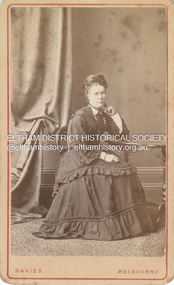
Photograph, Davies & Co, Sarah Shillinglaw, c.1870
... Retrieved December 6, 2022, from http://nla.gov.au/nla.news-article2150744 Davies & Co (William Davies) operated from: 7 Bourke Street East 1867-1869 55 Bourke Street East 1874-1877 55 Bourke Street East as Central Photogrphic Studio (E. ...Retrieved December 6, 2022, from http://nla.gov.au/nla.news-article2150744 Davies & Co (William Davies) operated from: 7 Bourke Street East 1867-1869 55 Bourke Street East 1874-1877 55 Bourke Street East as Central Photogrphic Studio (E. ...Married Charles Aldous 9 Jun 1880. In this picture Sarah does not appear with a wedding ring. Inscribed on reverse with errors [actual] B. 9 Nov. 1855 [9 Nov. 1854] M. 9 Jun. 1880 [Charles Aldous] D. 25 Jan. 1925 aged 71 [ 3 Aug. 1925] ALDOUS.—On the 3rd August, at her residence, 14 Mitchell street, Northcote, Sarah, dearly be- loved wife of Charles, mother of Florrie (Mrs. Beere), Annie (Mrs. Mooney), Percy (deceased, late A.I.F.), Ada (Mrs. Wilson), Alice (de- ceased), Ethel (Mrs. Brien), aged 70 years 9 months. A patient sufferer at rest. Family Notices (1925, August 4). The Argus (Melbourne, Vic. : 1848 - 1957), p. 1. Retrieved December 6, 2022, from http://nla.gov.au/nla.news-article2150744 Davies & Co (William Davies) operated from: 7 Bourke Street East 1867-1869 55 Bourke Street East 1874-1877 55 Bourke Street East as Central Photogrphic Studio (E. Sands Mgr) 1878-1884 73 Bourke Street East 1877 91 Bourke Street East 1864-1868 94 Bourke Street East 1864-1877 98 Bourke Street East 1860-1861 19 Collins Street East 1865-1868 5 Collins Street West 1866-1870 CARTE-DE-VISITE (cdv) 1857-1890 Cartes-de-visite (cdv's) are the most common form of photograph from the nineteenth century, generally measuring two and a half inches by four and an eighth inches (6.3 x 10.5 cm) when mounted, sepia toned, mounted on a card which was generally printed with the photographer's name and address on the back or beneath the portrait. - Frost, Lenore; Dating Family Photos 1850-1920; Valiant Press Pty. Ltd., Berwick, Victoria 1991marg ball collection, 1860-1877, 1870, davies photographer melbourne, pagoda sleeves, sarah aldous (nee shillinglaw 1854-1925), shillinglaw family photo album 2 -
 Eltham District Historical Society Inc
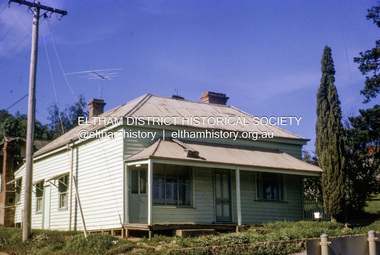
Slide, Old Eltham Bakery and cottage, cnr of York Street and Main Road, Eltham, c.Jul 1974
... Retrieved June 16, 2026, from http://nla.gov.au/nla.news-article60698063 The bakery and shop was run by the Parkes family in the 1940s....Retrieved June 16, 2026, from http://nla.gov.au/nla.news-article60698063 The bakery and shop was run by the Parkes family in the 1940s. bakery eltham main road york street Processed Jul 1974 35 mm colour positive transparency Mount - Kodak Kodachrome Card Old Eltham Bakery and cottage, cnr of York Street and Main Road, Eltham Slide Slide ...The old weatherboard building, possibly dating from the 1860s, comprised a dwelling with a shop in the front room opening off a timber verandah deck which directly fronted the Main Road footpath. At the rear was a brick building of much later date which was for many years used for the bakery. The buildings were demolished in 1979 for construction of flats. The old bakery was one of the earliest stores in Eltham. It was once run by Luther Haley who was evicted when Mrs Burgoyne bought the shop in 1902. Luther built the first shop in the new business district next to the railway station in 1902 (later Staffs general store). It was also the scene of a suspected murder when the baker's wife was found dead at the bottom of the well but that was more urban myth. The unfortunate woman suffered a medical episode resulting in her death and she consequently fell in to the well, so no murder after all. The incident happened in 1898 and the owner and baker was Mr Clement Brown. It was his wife Martha that met her unfortunate demise. A description of her struggle is in the link below. J.N. Burgoyne bought the bakery in 1902 (Mrs Burgoyne was the owner but it seems a lot of men back in those days put their businesses in the names of their wives). The subject of murder first came to light in a newspaper story in 1954 when their son J.J. (Jack) Burgoyne was speaking about the business after it had changed hands to Mr Jim Arnett and family. It was again referenced by Harry Burgoyne (grandson) in 1979 when the bakery was demolished. Seems like what may have been an embellished yarn of old became urban folklore but was simply not true. DEATH IN AN UNDERGROUND TANK. (1898, March 4). Evelyn Observer, and South and East Bourke Record (Vic. : 1882 - 1902), p. 2 (MORNING.). Retrieved June 16, 2026, from http://nla.gov.au/nla.news-article60698063 The bakery and shop was run by the Parkes family in the 1940s.35 mm colour positive transparency Mount - Kodak Kodachrome CardProcessed Jul 1974bakery, eltham, main road, york street -
 Eltham District Historical Society Inc
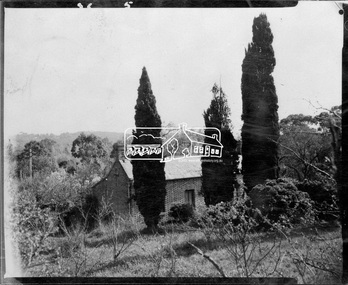
Photograph, John Collins, Shillinglaw Cottage on its original site, 17 Oct. 1963
... Retrieved February 25, 2022, from http://nla.gov.au/nla.news-article56743657). ...Retrieved February 25, 2022, from http://nla.gov.au/nla.news-article56743657). ...Shilinglaw Cottage in its original location on Main Road Eltham with the “Shillllinglaw trees”. This image was taken shortly before its relocation. Believed to be have been taken by John Collins, 17 Oct 1963 as per other images held by the State Library of Victoria Author / Creator: John T Collins 1907-2001 , photographer. J.T. Collins Collection, La Trobe Picture Collection, State Library of Victoria. Shillinglaw Cottage is significant to Eltham’s local history. It is one of the earliest known buildings still in existence. Records suggest that the cottage was built circa 1859 by a man named Cochrane, believed to be Thomas Cochrane, in conjunction with George Stebbings though it is not known what Stebbings’s contribution was. It is made from hand made bricks laid in a Flemish bond pattern. In the 1960s it was marked for demolition to make way for the construction of new council buildings but a community campaign saved the cottage and it was re-located. It is believed Stebbings owned the cottage between 1874 and 1888. According to Margaret Ball’s (2017) book Shillinglaw Family of Eltham 1660-2007, Thomas Cochrane and family lived there from 1867 to 1874 however this is contrary to the records of assessable rates levied by the Eltham District Road Board, established in 1858, which shows Cochrane was the owner occupier (in Little Eltham) of approximately 25 acres of cultivated land and 25 acres of pastureland upon which a hut was sited in 1860. It is suspected that George Stebbings may have acquired the property from Cochrane in 1874 as it is noted that he had a tenant for a period, James Rossiter, who was the editor for the Evelyn Observer in Kangaroo Ground in 1874 (LATE SHIRE OFFICE AT KANGAROO GROUND (1934, February 16). Advertiser (Hurstbridge, Vic. : 1922 - 1939), p. 5. Retrieved February 25, 2022, from http://nla.gov.au/nla.news-article56743657). In 1881 Phillip Shillinglaw became the ratepayer for the cottage though Stebbings retained ownership until 1888 at which time it was transferred to Shillinglaw. This photo forms part of a collection of photographs gathered by the Shire of Eltham for their centenary project book, "Pioneers and Painters: 100 years of the Shire of Eltham" by Alan Marshall (1971). The collection of over 500 images is held in partnership between Eltham District Historical Society and Yarra Plenty Regional Library (Eltham Library) and is now formally known as 'The Shire of Eltham Pioneers Photograph Collection.' It is significant in being the first community sourced collection representing the places and people of the Shire's first one hundred years.Digital image 4 x 5 inch B&W Negsepp, shire of eltham pioneers photograph collection, eltham, shillinglaw cottage, shillinglaw trees, significant tree -
 Eltham District Historical Society Inc
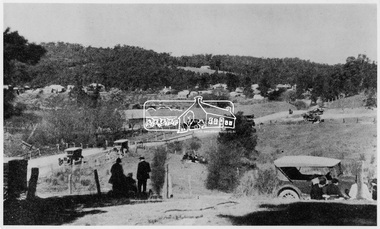
Negative - Photograph, Popular Picnicing at Hurstbridge, c.1925
... It is believed the picture is taken at the northwest corner of the intersection of Wattletree Road and Hurstbridge-Arthurs Creek Road looking southeast towards the township (most likely where the house is located on the property of what is today No. 2 Wattletree Road)- https://goo.gl/maps/VDorwCe1rJJUapjE6 According to a comment by Jean Verso (via @nillumbikcouncil FB page 3 Jan 2020) - "This view is from Wattle Tree Road with Haleys Gully Road to the right and across the creek to William Gray's nursery at Allwood. ...It is believed the picture is taken at the northwest corner of the intersection of Wattletree Road and Hurstbridge-Arthurs Creek Road looking southeast towards the township (most likely where the house is located on the property of what is today No. 2 Wattletree Road)- https://goo.gl/maps/VDorwCe1rJJUapjE6 According to a comment by Jean Verso (via @nillumbikcouncil FB page 3 Jan 2020) - "This view is from Wattle Tree Road with Haleys Gully Road to the right and across the creek to William Gray's nursery at Allwood. ...Picnickers enjoying a Sunday outing near the Wattle Valley Estate at Hurstbridge. Copied from brochure "Wattle Valley Estate". It is believed the picture is taken at the northwest corner of the intersection of Wattletree Road and Hurstbridge-Arthurs Creek Road looking southeast towards the township (most likely where the house is located on the property of what is today No. 2 Wattletree Road)- https://goo.gl/maps/VDorwCe1rJJUapjE6 According to a comment by Jean Verso (via @nillumbikcouncil FB page 3 Jan 2020) - "This view is from Wattle Tree Road with Haleys Gully Road to the right and across the creek to William Gray's nursery at Allwood. The building to the far left looks like Dorset House. The building on the left in the middle distance is still there today and has been used for storage and as a stable/tack room for a number of years." The Wattle Valley Estate was first advertised in August 1925 as weekend building allotments by the Greater Melbourne Land and Development Company. Advertised from £28.10.0 or £60 per block. In August 1926, 30 picked allotments of 60x150 feet were put up for auction Saturday August 14, 1926 with frontages to Valley View Road and Fawkner Crescent advertised in the “Heart of the Glorious Wattle Country” and “Within 15 Minutes of the Newly Electrified Railway Station”. The Advertiser on August 13, 1926 in an article promoting the auction stated “the estate is regarded as one of the best in the district, and will be sold practically without reserve.” It is noted that an advertisement running in The Argus February 22, 1951 offered the remaining 16 blocks for sale at £12.10.0 or £200 the lot. By March 7, the remaining blocks were advertised at £17.10.0 The Wattle Valley Estate took over 20 years to sell and then people could not build on them Cross Ref EDHS_02665 Rose Series Postcard P. 4341, "View at Hurstbridge, Vic." Also, other images from sales brochure SEPP_1055 / 1056This photo forms part of a collection of photographs gathered by the Shire of Eltham for their centenary project book,"Pioneers and Painters: 100 years of the Shire of Eltham" by Alan Marshall (1971). The collection of over 500 images is held in partnership between Eltham District Historical Society and Yarra Plenty Regional Library (Eltham Library) and is now formally known as the 'The Shire of Eltham Pioneers Photograph Collection.' It is significant in being the first community sourced collection representing the places and people of the Shire's first one hundred years.Digital image 4 x 5 inch B&W Neg1925, dorset house, fawkner crescent, haleys gully road, hurstbridge, hurstbridge-arthurs creek road, picnic, postcards, shire of eltham pioneers photograph collection, valley view road, wattle valley estate, wattletree road, exhibition yprl 2019-12 -
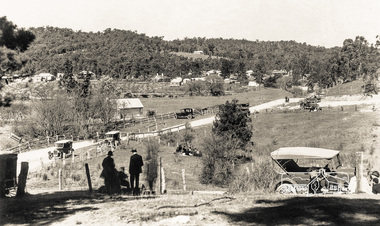 Eltham District Historical Society Inc
Photograph - Postcard, Rose Stereograph Company, View at Hurstbridge, Vic, c.1925
... It is believed the picture is taken at the northwest corner of the intersection of Wattletree Road and Hurstbridge-Arthurs Creek Road looking southeast towards the township (most likely where the house is located on the property of what is today No. 2 Wattletree Road)- https://goo.gl/maps/VDorwCe1rJJUapjE6 According to a comment by Jean Verso (via @nillumbikcouncil FB page 3 Jan 2020) - "This view is from Wattle Tree Road with Haleys Gully Road to the right and across the creek to William Gray's nursery at Allwood. ...It is believed the picture is taken at the northwest corner of the intersection of Wattletree Road and Hurstbridge-Arthurs Creek Road looking southeast towards the township (most likely where the house is located on the property of what is today No. 2 Wattletree Road)- https://goo.gl/maps/VDorwCe1rJJUapjE6 According to a comment by Jean Verso (via @nillumbikcouncil FB page 3 Jan 2020) - "This view is from Wattle Tree Road with Haleys Gully Road to the right and across the creek to William Gray's nursery at Allwood. ...Rose Series Postcard P. 4341 “View at Hurstbridge, Vic.” Picnickers enjoying a Sunday outing near the Wattle Valley Estate at Hurstbridge. Copied from brochure "Wattle Valley Estate". It is believed the picture is taken at the northwest corner of the intersection of Wattletree Road and Hurstbridge-Arthurs Creek Road looking southeast towards the township (most likely where the house is located on the property of what is today No. 2 Wattletree Road)- https://goo.gl/maps/VDorwCe1rJJUapjE6 According to a comment by Jean Verso (via @nillumbikcouncil FB page 3 Jan 2020) - "This view is from Wattle Tree Road with Haleys Gully Road to the right and across the creek to William Gray's nursery at Allwood. The building to the far left looks like Dorset House. The building on the left in the middle distance is still there today and has been used for storage and as a stable/tack room for a number of years." The Wattle Valley Estate was first advertised in August 1925 as weekend building allotments by the Greater Melbourne Land and Development Company. Advertised from £28.10.0 or £60 per block. In August 1926, 30 picked allotments of 60x150 feet were put up for auction Saturday August 14, 1926 with frontages to Valley View Road and Fawkner Crescent advertised in the “Heart of the Glorious Wattle Country” and “Within 15 Minutes of the Newly Electrified Railway Station”. The Advertiser on August 13, 1926 in an article promoting the auction stated “the estate is regarded as one of the best in the district, and will be sold practically without reserve.” It is noted that an advertisement running in The Argus February 22, 1951 offered the remaining 16 blocks for sale at £12.10.0 or £200 the lot. By March 7, the remaining blocks were advertised at £17.10.0 The Wattle Valley Estate took over 20 years to sell and then people could not build on them Cross Ref SEPP_1057, “Popular Picnicing at Hurstbridge” rcopied from Wattle Valley estate sales brochure.Digital file only Postcards scanned from the collection of Michael Aitken on loan to EDHS, 13 Feb 20181925, dorset house, exhibition yprl 2019-12, fawkner crescent, haleys gully road, hurstbridge, hurstbridge-arthurs creek road, michael aitken collection, picnic, postcards, rose stereograph company, shire of eltham pioneers photograph collection, valley view road, wattle valley estate, wattletree road -
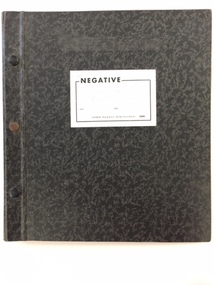 Warrnambool and District Historical Society Inc.
Photo, Negatives Pioneers of Warrnambool & District board, 1975
... For a full list of names go to http://www.warrnamboolhistory.org.au/warrnambool-history/pioneers-board/ ...For a full list of names go to http://www.warrnamboolhistory.org.au/warrnambool-history/pioneers-board/ The Warrnambool pioneer Board is one of those rare items which can claim significance on most if not all of the primary and comparative significance criteria. ...The following extract written by Karen Tyers Warrnambool Family history group explains the journey and background of the Warrnambool Pioneer Board. Warrnambool is fortunate to have a photographic record of some of its pioneers. They are commemorated on the Pioneers’ Board. The Pioneers’ Board with its elaborate frame measures approximately 2 metres by 3 metres and holds 204 photographs of Warrnambool’s early pioneers. In 1907 Edward Vidler, secretary of the Warrnambool & District Progress League and Chamber of Commerce and Industry, invited descendants of those who arrived in Warrnambool before 1860 to send photographs of their pioneer ancestors to commemorate the Diamond Jubilee of Warrnambool’s foundation in 1847. A charge of £1 for each photograph was set. Lillian Foyle of Foyle’s photographic studio, was engaged to colour the photographs and undertake the associated artwork. By December 1907 the honour board was on exhibition in Bernard’s Gallery, Melbourne. Unfortunately Vidler left Warrnambool in 1907 with the honour board expenses unpaid. The Progress League refused to take responsibility for the debt and the honour board remained with Foyle’s Studio for 17 years. In 1922 subscriptions were called for and £43 16s 6d was acknowledged. After a final determined effort was made in 1924, the £100 debt was collected and Charles Foyle, Lillian’s brother, accepted settlement of the debt. On 2 May 1924 the honour board was moved from Foyle’s Studio to the Art Gallery. For many years the honour board was in the entrance passage to the public library. After the library was demolished in 1975 the pictures were removed to the Art Gallery where it was restored by the Director of the Art Gallery, Jack Welsh. The board was later stored in an empty front room at Murweh and the dismantled frame stored in an outbuilding. By 1982 the honour board was in the foyer of the City Council offices. During the renovations of the interior of the council offices in 1997 the honour board was moved to the library where it remained until moved to HeritageWorks in March 2014. For a full list of names go to http://www.warrnamboolhistory.org.au/warrnambool-history/pioneers-board/ The Warrnambool pioneer Board is one of those rare items which can claim significance on most if not all of the primary and comparative significance criteria. As a collection of early pioneers in the district it provides a valuable resource for historians and researchers. It gives light to a social scene in the district much of which can be verified from diaries and other items held by the historical society and also available on websites such as Trove. It has relevance to this day with many family historians enquiring of people included on the board. The collation of the board is a story of great interest in itself. While there are images of 204 men on the board the only reference to a woman is Lillian Foyle the artist who was responsible for much of the artistic work on the board. It compares well in size and quality with a number of montages, and collations of images from around the state of Victoria. It is by no means a complete list of pioneers of the district but there are many well- known ones included. They come from a wide range of backgrounds and as such presents a cross section of our earliest settlers in the district from 1840's to 1860’s.Cardboard folder with black and grey mottled cover with 3 metal studs along spine and white paper label with the word negative printed in black on front cover. Inside is a printed index of pioneers with reference relating to board number and negative number. There are three loose strips of negatives and 20 pages with pockets to hold strips of negatives. Up to page 13 have negatives strips inserted. There are 15 large and one small print of some of the pioneers from the board.This negative album was prepared by John A Welsh MBE JP Dip M Eng Director Warrnambool Art Gallery 1/7/1975 to 11/12/1977.There are a number of grey lead notations possibly corrections against some of the names in the index.warrnambool, warrnambool pioneer board, jack welsh, warrnambool art gallery, pioneers of warrnambool, foyles photography, lillian foyle, bernard framers, w mcaree, -
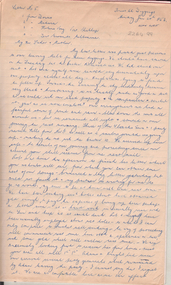 Bendigo Historical Society Inc.
Document - Albert Richardson Collection: John H.W. Pettit letters, 1852 - 1853
... Vocabularies of the Omeo, Norradyeree and Gippsland tribes c 1859 and a list of names of places, rivers and more, in the language of various un-named tribes in Gippsland c1857 occupy pages 148 – 162. (Source: https://indigenous.sl.nsw.gov.au/collection-items/john-h-w-pettit-letters-his-father-england-illustrated-sketches-writer-1852-1868#&gid=1&pid=3) Albert Richardson, the transcriber of the letters, was a long time member of the Bendigo Historical Society. ...Vocabularies of the Omeo, Norradyeree and Gippsland tribes c 1859 and a list of names of places, rivers and more, in the language of various un-named tribes in Gippsland c1857 occupy pages 148 – 162. (Source: https://indigenous.sl.nsw.gov.au/collection-items/john-h-w-pettit-letters-his-father-england-illustrated-sketches-writer-1852-1868#&gid=1&pid=3) Albert Richardson, the transcriber of the letters, was a long time member of the Bendigo Historical Society. ...The three transcribed letters, numbers five, six and seven, are from a series of letters written by John Heithfield Wroth Pettit, 1852 - 1868, to his father in England. Letters five, six and seven are written mainly from the Forest Creek diggings at Castlemaine but also describe his time on the Bendigo goldfield. The full set of Pettit's letters describe his journey out to Australia on the 'Atrevida', his arrival, journey to the diggings, tools and methods used to search for gold during 1853 and his later life experiences working with roads and bridges, primarily in Gippsland area. In October 1854 John Pettit settled at Tarraville where he was employed as a superintendent of works connected with Roads and Bridges, later he set up privately as an architect, builder, land surveyor until September 1856, when he was appointed Assistant Surveyor in the Survey Department in which capacity he selected up a new line of road to the Omeo diggings and laid out townships. In 1862 he set up a business in Sale, Gippsland, as an architect/surveyor (Gippsland Times, 5th September, 1862, page 3). Letters from October 1854 to September 1856 give some information on the people, social life, opossum and kangaroo hunting, mustering cattle etc. Letters after 1856 mainly describe the country, methods of work and life led. Vocabularies of the Omeo, Norradyeree and Gippsland tribes c 1859 and a list of names of places, rivers and more, in the language of various un-named tribes in Gippsland c1857 occupy pages 148 – 162. (Source: https://indigenous.sl.nsw.gov.au/collection-items/john-h-w-pettit-letters-his-father-england-illustrated-sketches-writer-1852-1868#&gid=1&pid=3) Albert Richardson, the transcriber of the letters, was a long time member of the Bendigo Historical Society. He was particularly interested in the mining history of the region and wrote extensively on the mines on the Bendigo field. Thirty seven page handwritten transcription on lined foolscap paper by Albert Richardson of three of John Pettit's letters, numbers five, six and seven. The letters describe John's experiences on the Castlemaine, Bendigo and Ballarat goldfields. Extract from letter number five: 'We have been sinking sev'l holes about have obtained gold enough to pay the expenses of living up here perhaps a little more - it is hard work we usually rise with the Sun and keep at it until dark' John Pettit written in capitals in blue pen, top right hand corner of front pagejohn h.w. pettit, gold, goldmining, castlemaine, forest creek diggings, bendigo, gippsland -
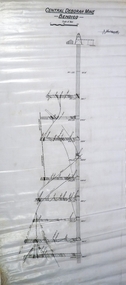 Bendigo Historical Society Inc.
Plan - Central Deborah Gold Mine, 22.10.45
... (Victorian Heritage Database: https://vhd.heritagecouncil.vic.gov.au/places/5996) ...(Victorian Heritage Database: https://vhd.heritagecouncil.vic.gov.au/places/5996) gold mining gold Bendigo Central Deborah Gold Mine transverse Transverse section of Central Deborah Gold Mine, Bendigo. ...CENTRAL DEBORAH GOLD MINE 76 VIOLET STREET BENDIGO, GREATER BENDIGO CITY: The Central Deborah Gold Mine was developed from 1939 and operated as a working mine until 1954. The mine was one of a minority that continued to function during the Second World War. In 1939 the mine boasted a small timber poppet head, boiler steam winch, compressor, blacksmith shop, store, change rooms, and offices. Between 1945-46 the company upgraded the mine with extensions to sheds and the installation of new steam machinery, electric air compressor, steel poppet head, and ore bins. The Central Deborah Gold Mine is historically significant for its ability to demonstrate the tangible and important links to twentieth century quartz mining. It is of outstanding historical significance as the last intact and working example of the 5,500 quartz mines that won Bendigo widespread fame as a gold mining centre. At one time Bendigo had the world’s deepest shafts. Of particular importance are original buildings, fittings and mining machinery that document the mine’s character from 1939 to 1954. (Criterion A) The Central Deborah Gold Mine is archaeologically significant for its ability and potential to illustrate important aspects of early twentieth century mining. The physical evidence at the site has excellent interpretative value and the ability to answer archaeological research questions. (Criterion C) The Central Deborah Gold Mine is significant as a notable and fine example of the class of twentieth century quartz mine. The working machinery—including a Cornish boiler, winding engine and two compressors—comprise one of the few publicly accessible and in situ collections in the State. Central Deborah Company Gold Mine is now a popular tourist mine and a living part of the story of gold mining in Australia. Its historic mining equipment is still functional, and several levels underground are accessible to visitors. (Victorian Heritage Database: https://vhd.heritagecouncil.vic.gov.au/places/5996) Transverse section of Central Deborah Gold Mine, Bendigo. Printed on top in bold black text: ' Central Deborah Mine Bendigo'. Handwritten on plan: J.Caldwell 12.10.45 Plan forms part of the Margaret Roberts Collection.gold mining, gold, bendigo, central deborah gold mine, transverse -
 Bendigo Historical Society Inc.
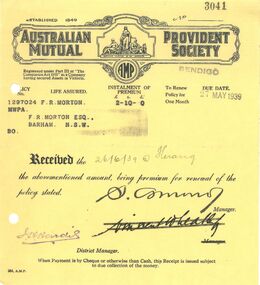
Financial record - INVOICE COLLECTION: The Australian Mutual Provident Society
... https://www.amp.com.au/about-amp/what-we-do "From its humble beginnings in 1849 by offering life insurance as the Australian Mutual Provident Society, AMP has evolved over the past 175 years to be a publicly listed company with over 1.3 million customers and AU$133 billion in assets under management (as at FY23). ...https://www.amp.com.au/about-amp/what-we-do "From its humble beginnings in 1849 by offering life insurance as the Australian Mutual Provident Society, AMP has evolved over the past 175 years to be a publicly listed company with over 1.3 million customers and AU$133 billion in assets under management (as at FY23). ...https://www.amp.com.au/about-amp/what-we-do "From its humble beginnings in 1849 by offering life insurance as the Australian Mutual Provident Society, AMP has evolved over the past 175 years to be a publicly listed company with over 1.3 million customers and AU$133 billion in assets under management (as at FY23). Proudly celebrating 175 years of business in 2024, AMP now helps millions of people in Australia and New Zealand invest, build wealth and retire with confidence." Milestones 1849 – The Australian Mutual Provident Society (AMP) opens for business 1860 – Benjamin Short joins AMP as its first agent 1869 – The National Mutual Life Association of Australasia opens for business 1899 – James Tuscon Thompson joins National Mutual as its first agent 1962 – The iconic AMP building in Sydney's Circular Quay is opened by Prime Minister Robert Menzies 1995 – National Mutual demutualises and lists on the Australian Stock Exchange 1998 – AMP demutualises and lists on the Australian Stock Exchange. AMP Bank opens for business 2000 – AMP plays a major part in the first Olympics of the new century, supporting the Sydney 2000 Olympic Games, the Paralympic Games and the Olympic Torch Relay 2009 – AMP and China Life Group form strategic partnership 2011 – AMP and AXA Asia Pacific (formerly National Mutual) merge. AMP and Mitsubishi UFJ Trust and Banking form strategic partnership 2017 – AMP Capital takes a minority stake in US based real estate investment manager PCCP 2020 – Completed sale of AMP Life insurance business to Resolution Life 2022 – Announced sale of global asset management business, AMP Capital, to focus on AMP’s core businesses in banking and wealth management. 2024 – AMP celebrates 175 years of helping people create their tomorrow10934.35a: No. 3041 A small, square sheet of yellow paper with two clean punch holes on the left side and a perforated edge. The paper is thin, but sturdy. Printed in black ink is the business name and details: Australian Mutual Provident Society established 1849. Policy No. 1297024 The receipt is printed in black ink. Payment due 27 May 1939. Receipt indicates payment received 26 June 1939. Payment listed in British Pounds, totaling 2 pounds 10 shillings. 10934.35b: No. 3861 A small, square sheet of yellow paper with two clean punch holes on the left side and a perforated edge. The paper is thin, but sturdy. Printed in black ink is the business name and details: Australian Mutual Provident Society established 1849. Policy No. 1311528 The receipt is printed in black ink. Payment due 18 Jun 1939. Receipt indicates payment received 26 June 1939. Payment listed in British Pounds, totaling 2 pounds 10 shillings. 10934.35c: No. 1671 A small, square sheet of yellow paper with two clean punch holes on the left side and a perforated edge. The paper is thin, but sturdy. Printed in black ink is the business name and details: Australian Mutual Provident Society established 1849. Policy No. 1311528 The receipt is printed in black ink. Payment due 18 Mar 1939. Receipt indicates payment received 25 March 1939. Payment listed in British Pounds, totaling 2 pounds 10 shillings. 10934.35d: No. 903 A small, square sheet of yellow paper with two clean punch holes on the left side and a perforated edge. The paper is thin, but sturdy. Printed in black ink is the business name and details: Australian Mutual Provident Society established 1849. Policy No. 1297024 The receipt is printed in black ink. Payment due 27 Feb 1939. Receipt indicates payment received 25 March 1939. Payment listed in British Pounds, totaling 2 pounds 10 shillings. 10934.35e: No. 8557 A small, square sheet of yellow paper with two clean punch holes on the left side and a perforated edge. The paper is thin, but sturdy. Printed in black ink is the business name and details: Australian Mutual Provident Society established 1849. Policy No. 1297024 The receipt is printed in black ink. Payment due 27 Dec 1938. Receipt indicates payment received 25 Jan 1939. Payment listed in British Pounds, totaling 2 pounds 10 shillings. 10934.35f: No. 338 A small, square sheet of yellow paper with two clean punch holes on the left side and a perforated edge. The paper is thin, but sturdy. Printed in black ink is the business name and details: Australian Mutual Provident Society established 1849. Policy No. 1311528 The receipt is printed in black ink. Payment due 18 Jan 1939. Receipt indicates payment received 25 Jan 1939. Payment listed in British Pounds, totaling 2 pounds 10 shillings. 10934.35g: No. 365 A small, square sheet of yellow paper with two clean punch holes on the left side and a perforated edge. The paper is thin, but sturdy. Printed in black ink is the business name and details: Australian Mutual Provident Society established 1849. Policy No. 1297024 The receipt is printed in black ink. Payment due 27 Jun 1939. Receipt indicates payment received 25 Feb 1939. Payment listed in British Pounds, totaling 2 pounds 10 shillings. receipt attached to 10934.35j 10934.35h: No. 2321 A small, square sheet of yellow paper with two clean punch holes on the left side and a perforated edge. The paper is thin, but sturdy. Printed in black ink is the business name and details: Australian Mutual Provident Society established 1849. Policy No. 1311528 The receipt is printed in black ink. Payment due 18 April 1939. Receipt indicates payment received 27 April 1939. Payment listed in British Pounds, totaling 2 pounds 10 shillings. receipt is attached to 10934.35i 10934.35i: No. 1697 A small, square sheet of yellow paper with two clean punch holes on the left side and a perforated edge. The paper is thin, but sturdy. Printed in black ink is the business name and details: Australian Mutual Provident Society established 1849. Policy No. 1297024 The receipt is printed in black ink. Payment due 27 Mar 1939. Receipt indicates payment received 27 April 1939. Payment listed in British Pounds, totaling 2 pounds 10 shillings. Attached to 10934.35h 10934.35j: No. 876 A small, square sheet of yellow paper with two clean punch holes on the left side and a perforated edge. The paper is thin, but sturdy. Printed in black ink is the business name and details: Australian Mutual Provident Society established 1849. Policy No. 1311528 The receipt is printed in black ink. Payment due 18 Feb 1939. Receipt indicates payment received 25 Feb 1939. Payment listed in British Pounds, totaling 2 pounds 10 shillings. Attached 10934.35gac morton, amp, australian mutual provident society, insurance -
 National Wool Museum
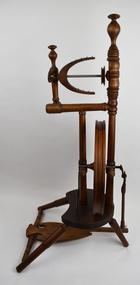
Functional object - Spinning Wheel, Philip Elford, 1976-7
... On my first holiday visit to Bunga, I called into the Jolly Jumbuck Country Craft Centre in Bairnsdale http://jumbukwool.com.au/history. I was entranced by the place and spent the following weeks learning to spin lumpy wool on an Ashford Wheel. ...On my first holiday visit to Bunga, I called into the Jolly Jumbuck Country Craft Centre in Bairnsdale http://jumbukwool.com.au/history. I was entranced by the place and spent the following weeks learning to spin lumpy wool on an Ashford Wheel. ...Jackie Kerin's (donor's) story. In 1973, I was in my late teens and while I’d moved to Sydney from Melbourne, to begin my first year of drama studies at the National Institute of Dramatic Art. My parents had moved to Lake Bunga, a few kilometers north of Lakes Entrance (Victoria). On my first holiday visit to Bunga, I called into the Jolly Jumbuck Country Craft Centre in Bairnsdale http://jumbukwool.com.au/history. I was entranced by the place and spent the following weeks learning to spin lumpy wool on an Ashford Wheel. By the end of the holidays, I had my own Ashford and it travelled with me back to Sydney. After graduation, I returned to Melbourne and the hippy “back to nature” movement was in full swing; there were many shops and galleries selling handmade woollen items and pottery etc. So I found an outlet for my pieces. Sometime in 1976-77, I met a spinner and weaver of Swiss origin (I think) – her name was Ingeborg Guber (not sure of the spelling). She had a small gallery/shop at Brighton Beach where she worked, with her pet duck for company. Ingeborg had an upright Philip Elford wheel; an Australian wheel crafted from Acacia melanoxylon (blackwood). I was smitten and ordered one. I have a memory of Philip driving to Hampton from Ballarat to make the delivery. I used this wheel for years but as time and enthusiasm for spinning waned, the wheel became a decorative item in the house. Then in the 90s, and with my drama training, I set myself up travelling to schools and festivals, museums and galleries as a storyteller. The spinning wheel had a new life accompanying me on my adventures. For many children, familiar with references to spinning in fairy tales, seeing the little Philip Elford upright was magical. The wheel was donated to the National Wool Museum in 2021.Vertical tripod leg spinning wheel. 6 spoke wheel with three bobbins. Inscription “Philip Elford Ballart” can be read in gold text stamped to the base of the wheel. Wording, stamped, gold. Philip / Elford / Ballartspinning wheel, textile production, hobby textiles, aciacia melanoxylon (blackwood) -
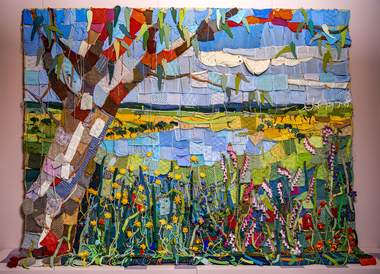 National Wool Museum
Textile - Tapestry, Lisa Kendal et al, WARM, 2016
... More information about the project can be found on the following website. http://www.seam.org.au/warm ...More information about the project can be found on the following website. http://www.seam.org.au/warm warm community textile tapestry knitting community artwork global warming The tapestry is made from 1000+ hand knitted sections stitched together to make an image. ...WARM was a community textile art project that saw over 250 knitters come together to create a beautiful collage tapestry. Made entirely from wool, the artwork contains more than 1000 individual hand knitted sections. The project takes aim at global warming, it highlights both the causes and solutions for us to create a sustainable and safe climate for future generations. Lisa Kendal, the co-creator of the project, said “One of the problems in the world is that we have forgotten how to warm ourselves with wool. We have become too dependent on fossil fuels (for heating)”. This is the key idea surrounding the project. WARM began as two large scale images created by Lars Stenberg. The first image is a landscape scarred by coal mining. The second image is the same landscape only many decades later. Regeneration and regrowth have taken over the landscape and hidden the past coal mine completely. In its place is a beautiful landscape including trees, native flowers, a lake, lots of greenery and wind turbines. From March to the end of August in 2016, knitters worked hard to create the over one thousand pieces that came together to form the final tapestry. The pieces were all designed by Fibre Artist Georgie Nicolson of Tikki Knitting Designs, who converted the second image of the healed landscape into patterns for the 250 plus knitters to follow. These patterns included unusual designs such as gum leaves, trees, native flowers and even the wind turbines. During several days of installation, the knitted pieces were stitched together by Lars Stenberg over a picture of the first image of the operational coal mine. They worked to create the second image of the renewed landscape; like an enormous collage. The WARM project was donated to the National Wool Museum in 2021. It was a much-loved hanging within the Ballarat Hospital for many years before coming to the museum. More information about the project can be found on the following website. http://www.seam.org.au/warm The tapestry is made from 1000+ hand knitted sections stitched together to make an image. In the foreground of this image is a large gum tree that stretches from the bottom left to the top right corner. The trunk of this tree follows the left edge of the tapestry, with foliage from the gum tree spanning its top border. The bottom third of the tapestry is predominantly green grass with yellow, pink and red flowers providing sporadic colour. The middle third encompasses a lake, with orange colours surrounding the banks of the water as opposed to the green grasses of the bottom third. To the right of the lake are wind turbines. The top third of the tapestry is blue sky with white clouds. It also contains the previously described gum tree leaves. Each piece of the tapestry is 100% wool and was hand knitted and stitched together. The Tapestry is accompanied by an oil painting on canvas. It is a painting that matches the tapestry and served as a template for the final tapestry. Finally, the tapestry is accompanied by another pointing on wood board. This final panting is of a coal mine. This is the setting before regeneration and regrowth have reclaimed this site, which is the theme captured in the final tapestry. In the foreground of the coal mine painting is the same gum tree described in the tapestry; however, it is grey and sickle with only 4 leaves visible at the top border, compared to the numerous leaves in the tapestry. Also in the foreground is a broken barb wire fence adding to the unwelcoming nature of the site. The colour scheme of this image is of dark greys and browns. A coal fired power plant can be seen in the final third of the image with four chimneys emitting plumes of smoke into the sky. In front of this power plant is the spiral shape of a coal mine, burrowing deep into the earth’s crust. Inside of the coal mine 3 yellow trucks are seen mining and transporting coal to the top of the mine.warm, community textile tapestry, knitting, community artwork, global warming -
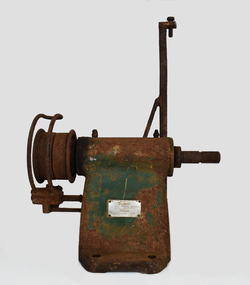 National Wool Museum
Tool - Grinder, 1960-69
... An example of seeing a similar grinder in action can be found on the following link - https://www.youtube.com/watch?v=O7eimI_Gm9o. ...An example of seeing a similar grinder in action can be found on the following link - https://www.youtube.com/watch?v=O7eimI_Gm9o. ...Cooper S.E. Ball Bearing Grinder made and guaranteed by Sunbeam Corporation Limited. Grinders like this example have been made the same since the early 1900s, with this grinder thought to have been produced in the 1960s. It is belt driven, with the other end of the belt being attached to an engine; the same engine that would have powered the overhead shearing equipment in shearing sheds. It was common for shearing teams to bring their own equipment, especially pre-1960 as most shearing sheds were not connected to power, and shearers preferred to work with their own equipment. The engines that powered the shears and grinder were typically fuelled with kerosene or petrol. The large circular disks are attached to the bolt that protrudes from the grinder and fastened tightly with a nut. An example of seeing a similar grinder in action can be found on the following link - https://www.youtube.com/watch?v=O7eimI_Gm9o. Inventor Frederick Wolseley made the world's first commercially successful power-shearing system in Australia in 1888. US company Cooper, which had been founded in 1843 as a maker of sheep dip, began selling Wolseley equipment in the USA in 1895. The Chicago Flexible Shaft Company successfully entered the power-shearing market a few years later and entered a joint venture with Cooper. It set up a branch in Sydney and sold shearing sets, and engines to power them, into the Australian market. In 1921 the US parent company, realising it needed to make products whose sales were not as seasonal as those of shearing equipment, made its first household appliances and branded them Sunbeam. In 1933, changes in exchange rates and taxes led the company to manufacture engines and shearing equipment in Australia via subsidiary Cooper Engineering, which changed its name to Sunbeam in 1946. Although most Australians know of this company as a major manufacturer of household appliances, its rural division flourished and retained the Sunbeam name for shearing equipment even after it was taken over by New Zealand company Tru-Test in 2001. The grinder is formed from a central arch shaped block of green painted metal. Much of this paint has been lost to age, leaving the grinder in a ‘farm used’ condition with much surface oxidation present. On the front of the arch is a specification plate, reading “Cooper S.E. ball bearing grinder. Made and guaranteed by Sunbeam”. At the foot of the arch, three bolt holes are found for securing the grinder to the base of a solid wooden surface. Two of the bolt holes are found on the front of the grinder, with another found on the rear. From the central arch, a bolt protrudes to the right of the grinder. This large bolt is for securing a grinding plate to the grinder. Above the central arch is a pendulum which holds the comb / cutter that is being sharpened. From the pendulum, a large arm extends down (not pictured) to meet and strike the plate spinning at a rapid speed. On the left-hand side of the central arch of the grinder, a wheel is found which a belt is attached to for power. This belt is then attached to a separate engine, spinning the wheel and hence powering the grinder. The wheel is partially covered with a section of protective bent tube, designed to provide protection from the rapidly spinning wheel. Below this wheel is the belt shifter. It is designed to move the protective bent tube from one side of the grinder to the other, to accommodate the grinder in the setup of different shearing sheds. The two separate grinding plates are identical. They have a slight slope for sharpening the comb and cutters in the correct method, with a slight bias towards the base, or “tooth”, of the equipment. The disks have a large central bolt for attaching to the grinder. They have tags on the horizontal axis of the grinding plates, for securing the plates in transportation, and to help with initial alignment when setting up the grinder. The reverse of these grinding plates has the same green painted metal finish found on the grinder. This paint is also in a ‘farm used’ condition, with surface oxidation present. The grinder would be provided from the factory with a comb holder, shifter for securing the grinding plates, emery cloth and emery glue. The emery cloth is what does the actual grinding and is applied to the grinding disks, replacing once well worn. These items can be seen in the final images in the multimedia section, showcasing advertising for this grinder. Plate. Inscribed. “Cooper / S.E. BALL BEARING GRINDER / MADE AND GUARANTEED BY / Sunbeam / CORPORATION LIMITED / SYDNEY MELBOURNE / ADELAIDE BRISBANE ”sheep shearing, shearing equipment, sunbeam, grinder -
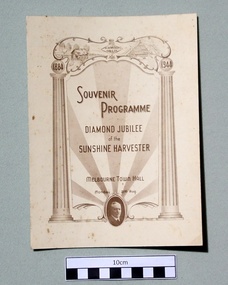 Sunshine and District Historical Society Incorporated
Memorabilia - Souvenir Programme Diamond Jubilee of the Sunshine Harvester at Melbourne Town Hall on Monday 21st August 1944, 1944
... The above information was compiled from the Souvenir Programme, and from The Argus of Tuesday 22 August 1944 which can be viewed at http://nla.gov.au/nla.news-article11357700, and from the Sunshine Advocate of Friday 30 June 1944....The above information was compiled from the Souvenir Programme, and from The Argus of Tuesday 22 August 1944 which can be viewed at http://nla.gov.au/nla.news-article11357700, and from the Sunshine Advocate of Friday 30 June 1944. ...As a youth while working on his father's farm, Hugh Victor McKay became tired of the labour involved in winnowing wheat by hand. In 1884 he built the first machine in the world which did the winnowing in conjunction with the reaping. On Monday 21st August 1944, which coincided with the birthday of the late H. V. McKay, more than 2000 employees and friends of H. V. McKay Massey Harris Pty Ltd were entertained at the Melbourne Town Hall, in celebration of the Diamond Jubilee of the Sunshine Harvester Works.The event was planned to "turn it on for the boys' in a manner befitting the occasion." The compere was Eric Pearce (of later TV newsreader fame) and the entertainment was provided by leading performers of song (W.M.Laird and Mary Miller), of music (John Robertson, W.M.King, and the Sunshine Brass Band), and of humour (Charles Sherman). The accompanists for some of the performances were Betty Miller and Eric Fox. Two films depicting the activities of the Sunshine Works were shown, and the managing director Mr C. N. McKay, was presented with a book by Mr Fred Bult who had 50 years service with the company. The book contained more than 1000 signatures from invited employees who had completed more than 10 years of service, Supper was provided in the Lower Hall, and the MC for dancing to the Synco-Harvesters Dance Band in the Main Hall was James Patrick. The committee which organised the function were Messrs. L.W. King (Chairman), G. Baker, J. Downing, R. Stewart, F. J. Lee, V. Armstrong, F. Fields, J. Aird, G. Wilson, J. G. McKay, T. N. McArthur, and R. Webb, with secretaries Messrs. G. Shaw and D. J. McKay. The above information was compiled from the Souvenir Programme, and from The Argus of Tuesday 22 August 1944 which can be viewed at http://nla.gov.au/nla.news-article11357700, and from the Sunshine Advocate of Friday 30 June 1944.The Souvenir Programme provides a historical record of how the Diamond Jubilee was celebrated, as well as the type of entertainment and the names of the entertainers and other people involved. It also lists the types of dances such as the 'Fox Trot' and the 'Pride of Erin' that were normal entertainment in 1944. The Souvenir Programme is also significant in what it does not tell us. There is absolutely no indication of what would be considered to be a supper for an event like this in 1944, especially in the Melbourne Town Hall. From a historical point of view it would be interesting to know.Beige coloured cardboard document which is folded in two, and has brown coloured printing on three of the four sides. The document provides a detailed list of the entertainment and the presentations held in the Melbourne Town Hall, to celebrate the Diamond Jubilee of the Sunshine Harvester Works.1884 1944 / SOUVENIR PROGRAMME / DIAMOND JUBILEE of the SUNSHINE HARVESTER / MELBOURNE TOWN HALL / Monday 21st Aug.sunshine harvester, diamond jubilee, h. v. mckay, massey harris pty ltd, 21 august 1944, 1884, 1944, melbourne town hall, sunshine harvester works, sunshine harvester, diamond jubilee, h. v. mckay, massey harris pty ltd, 21 august 1944, 1884, 1944, melbourne town hall, sunshine harvester works -
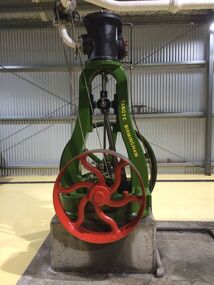 Puffing Billy Railway
Steam Engine - Tangye single cylinder vertical, Circa 1920
... Info about Tangye Bros of Birmingham from Powerhouse Museum https://ma.as/207954 Donated by Malvern City Council in 1969 Of Interest : The Vertical and Horizontal Tangye engines on display are of the design that won a Gold Medallion at the Paris Industrial Exhibition of 1878....Info about Tangye Bros of Birmingham from Powerhouse Museum https://ma.as/207954 Donated by Malvern City Council in 1969 Of Interest : The Vertical and Horizontal Tangye engines on display are of the design that won a Gold Medallion at the Paris Industrial Exhibition of 1878. ...Used by the Malvern city council until 1969 to drive a rock crushing plant. While large horizontal steam engines predominated in major factories, small vertical steam engines like this were the workhorses of industries that had modest power requirements. This reliable little engine, made by leading UK manufacturer Tangye Bros of Birmingham Steam engines had the advantage that any fuel could be used to fire their boilers, but they were less convenient and efficient than internal combustion engines, required operators with higher skill levels, and had lower power to weight ratios. Tangye Limited was founded in 1857 in Birmingham by businessman Richard Tangye (1833-1906) and his mechanic brothers James and Joseph; brothers Edward and George joined them later. Richard was born near Redruth in Cornwall and educated at the Friends School at Sidcot, Somerset, where he became a pupil-teacher. From there he moved to Birmingham to work as a clerk for an engineering firm. In 1856 he started a hardware factor and commission agent business in Birmingham whose customers were mainly Cornish mine-owners in the Redruth district. From 1858 Tangyes concentrated on the manufacture of machinery and secured the sole right to manufacture Weston's differential pulley block (object 2003/45/1). They established their Cornwall Works in the Birmingham suburb of Smethwick in 1864 and soon developed a huge range of products. It was stated that 'there are perhaps no other works in the kingdom so largely employed upon so great a variety of specialities as the Cornwall Works of Messrs Tangye Bros.' The Tangyes attracted creative people to work for them. They wrote: 'We are in a position to offer unusual facilities to Inventors for carrying out their patents.' Info about Tangye Bros of Birmingham from Powerhouse Museum https://ma.as/207954 Donated by Malvern City Council in 1969 Of Interest : The Vertical and Horizontal Tangye engines on display are of the design that won a Gold Medallion at the Paris Industrial Exhibition of 1878.Historic - Industrial Steam Engine Equipmentsingle cylinder vertical Steam Engine made of Cast Iron, (Painted)Tangye Birmingham Builder's number 2462tangye, vertical steam engine, steam engine, puffing billy, stone crushing, george and george, malvern -
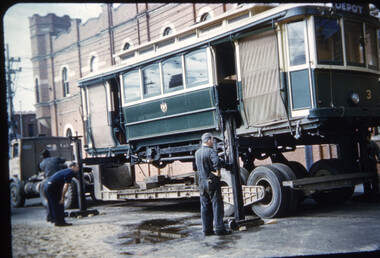 Melbourne Tram Museum
Slide - MMTB, SEC, and VR tramway operations set of 12, Hugh Ballment, 1950s to 1980s
... HBM160 - MMTB Tram 87, c1985, Flemington Rd, Looking toward Haymarket with the flagpole that was erected during 1984 - see https://www.melbourne.vic.gov.au/haymarket-flagpole HBM161 - c1900, Bourke St east from Elizabeth St, from a high viewpoint. ...HBM160 - MMTB Tram 87, c1985, Flemington Rd, Looking toward Haymarket with the flagpole that was erected during 1984 - see https://www.melbourne.vic.gov.au/haymarket-flagpole HBM161 - c1900, Bourke St east from Elizabeth St, from a high viewpoint. ...Set of 12 photos by Hugh Ballment, unless noted, of MMTB, VR, and MTA: HBM152 - MMTB Trams 1, 604, Dec 1974, Preston workshops, cable set 1 on traverser after MMTB work and 604 in background HBM153 - VR Tram 51, 26/5/1954, Black Rock, Terminus with newsagent and beauty salon in the background, see also image HBM170 HBM154 - MMTB Tram 658, 1950s, St Georges Rd, At Miller St HBM155 - MMTB Trams 678, 180, early 1960s, Leeds St, Footscray station, with an X1 leaving for Williamstown Road. In the background is Cummings Chemist advertising Kodak film, along with a group of trammies standing around the Bundy Clock. In the far background, a Laundry and I M Collins advertising Phillips radios and televisions. HBM156 - MMTB Tram 880, 26/05/1954, Swanston St, At Lonsdale St. with dash canopy lighting with destination of route 6 Glen Iris. In the background is a sign advertising Empire Day 24/5/1954, Renwick Pride Printers, Drossous Restaurant, with an advert for Stonyfell wines. HBM157 - MMTB Tram 1041, c9/1973, Spring St, turning into Bourke St soon after issuing to traffic during August 1973 as the dark brown strip on the lower edge of the tram has yet to be painted on it. HBM158 - VR Trams 35, 54, mid to late 1950s, Elwood Depot, In street outside depot HBM159 - MMTB, 1950s, Matthews Ave aerial photo, Lancefield Rd at bottom left. Matthews Ave appears to be unmade. HBM160 - MMTB Tram 87, c1985, Flemington Rd, Looking toward Haymarket with the flagpole that was erected during 1984 - see https://www.melbourne.vic.gov.au/haymarket-flagpole HBM161 - c1900, Bourke St east from Elizabeth St, from a high viewpoint. Telephone pole lines remain in view along with many horse-drawn vehicles. Yields information about Melbourne tram operations, with 1950s to 1980s photos of Melbourne tramways.Kodachrome cardboard and plastic mounts, with notes - set of 12new tramway, preston workshops, tram 880, tram 1041, elwood depot, bourke st, cable trams, tram 35, tram 54, matthews ave, essendon aerodrome, tram 87, flemington road, haymarket, swanston st -
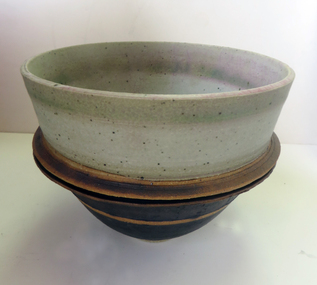 Federation University Art Collection
Ceramic, Robin Welch, Stoneware Bowl by Robin Welch, c1980
... If marooned on a desert island you’d use driftwood.” (https://www.theguardian.com/artanddesign/2019/dec/27/robin-welch-obituary, accessed 23 March 2021)
Initially studying at Penzance School of Art under Michael Leach (son of Bernard Leach) and the Central School of Art, London Robin Welch then worked part-time at the Leach Pottery between 1953 and 1959 before opening his own pottery in London's west end (1960 to 1962). ...If marooned on a desert island you’d use driftwood.” (https://www.theguardian.com/artanddesign/2019/dec/27/robin-welch-obituary, accessed 23 March 2021)
Initially studying at Penzance School of Art under Michael Leach (son of Bernard Leach) and the Central School of Art, London Robin Welch then worked part-time at the Leach Pottery between 1953 and 1959 before opening his own pottery in London's west end (1960 to 1962). ...Robin WELCH ( 23 July 1936-5 December 2019) Born Nuneaton, Warwickshire, England Robin Welch is one of the most highly respected contemporary British potters. The full range of his work includes large vessels with related paintings, fine drawings, and distinctive bowls and vases which explore colour, surface texture, form, detail of edge, and line. He is one of small group of significant British potters who expanded the language of throwing pots on the wheel through post-wheel additions and alteration. This gave his generally cylindrical forms a more organic and sculptural aspect, but their heavily coloured and textured surfaces were as much about painting, too, as Robin sought an integration of the visual disciplines he enjoyed. As he once wrote: “There’s no divide between art or craft. You decide to be an artist and you’ll use anything. If marooned on a desert island you’d use driftwood.” (https://www.theguardian.com/artanddesign/2019/dec/27/robin-welch-obituary, accessed 23 March 2021) Initially studying at Penzance School of Art under Michael Leach (son of Bernard Leach) and the Central School of Art, London Robin Welch then worked part-time at the Leach Pottery between 1953 and 1959 before opening his own pottery in London's west end (1960 to 1962). After a couple of years of world travel, including working in Australia from 1962 to1965 helping Ian Sprague set up his Mungeribar Pottery and exhibiting in Melbourne, Robin Welch returned to England setting up Stadbroke Pottery in Eye, Suffolk in 1965. Apart from his studion work Robnin Welch was a skilled designer for industry including Wedgwood. When not in his Suffolk studio Robin Welch spent much time in Australia where he appreciated the outback’s arid earth, brilliant light, grittier textures and luminous colour. When not in his Suffolk studio Robin Welch spent much time in Australia where he appreciated the outback’s arid earth and brilliant light, its grittier textures and luminous colour, qualities he sought to convey in-the-round and on canvas. Apart from his studion work Robnin Welch was a skilled designer for industry including Wedgwood, Midwinter and Denby.Stoneware bowl with flange. Glazed in white matt crackle with a faint copper red tint. Dry black glazed rim. Gift of the artist.Robin Welch stamped on baseceramics, robin welch, gippsland, gppsland campus, jan feder memorial ceramics collection -
 Federation University Art Collection
Ceramic - Artwork - Ceramics, Stoneware Bowl by Robin Welch, 1980
... If marooned on a desert island you’d use driftwood.” (https://www.theguardian.com/artanddesign/2019/dec/27/robin-welch-obituary, accessed 23 March 2021) Initially studying at Penzance School of Art under Michael Leach (son of Bernard Leach) and the Central School of Art, London Robin Welch then worked part-time at the Leach Pottery between 1953 and 1959 before opening his own pottery in London's west end (1960 to 1962). ...If marooned on a desert island you’d use driftwood.” (https://www.theguardian.com/artanddesign/2019/dec/27/robin-welch-obituary, accessed 23 March 2021) Initially studying at Penzance School of Art under Michael Leach (son of Bernard Leach) and the Central School of Art, London Robin Welch then worked part-time at the Leach Pottery between 1953 and 1959 before opening his own pottery in London's west end (1960 to 1962). ...Robin WELCH ( 23 July 1936-5 December 2019) Born Nuneaton, Warwickshire, England Robin Welch is one of the most highly respected contemporary British potters. The full range of his work includes large vessels with related paintings, fine drawings, and distinctive bowls and vases which explore colour, surface texture, form, detail of edge, and line. He is one of small group of significant British potters who expanded the language of throwing pots on the wheel through post-wheel additions and alteration. This gave his generally cylindrical forms a more organic and sculptural aspect, but their heavily coloured and textured surfaces were as much about painting, too, as Robin sought an integration of the visual disciplines he enjoyed. As he once wrote: “There’s no divide between art or craft. You decide to be an artist and you’ll use anything. If marooned on a desert island you’d use driftwood.” (https://www.theguardian.com/artanddesign/2019/dec/27/robin-welch-obituary, accessed 23 March 2021) Initially studying at Penzance School of Art under Michael Leach (son of Bernard Leach) and the Central School of Art, London Robin Welch then worked part-time at the Leach Pottery between 1953 and 1959 before opening his own pottery in London's west end (1960 to 1962). After a couple of years of world travel, including working in Australia from 1962 to1965 helping Ian Sprague set up his Mungeribar Pottery and exhibiting in Melbourne, Robin Welch returned to England setting up Stadbroke Pottery in Eye, Suffolk in 1965. Apart from his studion work Robnin Welch was a skilled designer for industry including Wedgwood. When not in his Suffolk studio Robin Welch spent much time in Australia where he appreciated the outback’s arid earth, brilliant light, grittier textures and luminous colour. Stoneware bowl on a tall foot. Calcium matt glaze, underglaze colour with underglaze metallic lustre. ceramic, jan feder memorial ceramics collection, robin welch, gippsland campus, mungeribar pottery, stadbroke pottery -
 Federation University Art Collection
Ceramic, Bowl by Robin Welch, 1980
... If marooned on a desert island you’d use driftwood.” (https://www.theguardian.com/artanddesign/2019/dec/27/robin-welch-obituary, accessed 23 March 2021) When not in his Suffolk studio Robin Welch spent much time in Australia where he appreciated the outback’s arid earth and brilliant light, its grittier textures and luminous colour, qualities he sought to convey in-the-round and on canvas. ...If marooned on a desert island you’d use driftwood.” (https://www.theguardian.com/artanddesign/2019/dec/27/robin-welch-obituary, accessed 23 March 2021) When not in his Suffolk studio Robin Welch spent much time in Australia where he appreciated the outback’s arid earth and brilliant light, its grittier textures and luminous colour, qualities he sought to convey in-the-round and on canvas. ...Robin WELCH ( 23 July 1936-5 December 2019) Born Nuneaton, Warwickshire, England Robin Welch is one of the most highly respected contemporary British potters. The full range of his work includes large vessels with related paintings, fine drawings, and distinctive bowls and vases which explore colour, surface texture, form, detail of edge, and line. He is one of small group of significant British potters who expanded the language of throwing pots on the wheel through post-wheel additions and alteration. This gave his generally cylindrical forms a more organic and sculptural aspect, but their heavily coloured and textured surfaces were as much about painting, too, as Robin sought an integration of the visual disciplines he enjoyed. As he once wrote: “There’s no divide between art or craft. You decide to be an artist and you’ll use anything. If marooned on a desert island you’d use driftwood.” (https://www.theguardian.com/artanddesign/2019/dec/27/robin-welch-obituary, accessed 23 March 2021) When not in his Suffolk studio Robin Welch spent much time in Australia where he appreciated the outback’s arid earth and brilliant light, its grittier textures and luminous colour, qualities he sought to convey in-the-round and on canvas. Apart from his studion work Robnin Welch was a skilled designer for industry including Wedgwood, Midwinter and Denby. Initially studying at Penzance School of Art under Michael Leach (son of Bernard Leach) and the Central School of Art, London Robin Welch then worked part-time at the Leach Pottery between 1953 and 1959 before opening his own pottery in London's west end (1960 to 1962). After a couple of years of world travel, including working in Australia from 1962 to1965 helping Ian Sprague set up his Mungeribar Pottery and exhibiting in Melbourne, Robin Welch returned to England setting up Stadbroke Pottery in Eye, Suffolk in 1965.Stoneware bowl with split flange, glazed with matt white, black and a touch of copper red Tobin Welch stamped on basejan feder memorial ceramics collection, ceramics, robin welch, gippsland campus, jan feder
