
Showing 709 items matching "architecture australia"
-
 Bendigo Historical Society Inc.
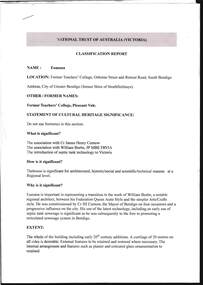
Document - NATIONAL TRUST OF AUSTRALIA(VICTORIA) CLASSIFICATION REPORT, EUMANA
... Australia (Victoria), Classification Report, Eumana, former Teacher's College, Osborne Street and Retreat Road, South Bendigo. The association with Cr. James Henry Curnow, and William Beebe, JP MBE FRVIA, and the introduction of septic tank technology to Victoria. The house is significant for architectural...Australia (Victoria), Classification Report, Eumana, former Teacher's College, Osborne Street and Retreat Road, South Bendigo. The association with Cr. James Henry Curnow, and William Beebe, JP MBE FRVIA, and the introduction of septic tank technology to Victoria. The house is significant for architectural ...Document, National Trust of Australia (Victoria), Classification Report, Eumana, former Teacher's College, Osborne Street and Retreat Road, South Bendigo. The association with Cr. James Henry Curnow, and William Beebe, JP MBE FRVIA, and the introduction of septic tank technology to Victoria. The house is significant for architectural, historic/social and scientific/technical reasons at a Regional level.National Trust of Australia ( Victoria).document, names of bendigo pioneers, eumana -
 Bendigo Historical Society Inc.
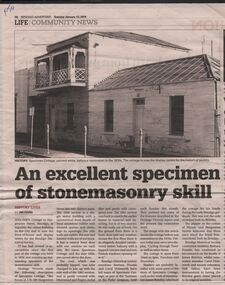
Document - BARBARA MAMOUNEY COLLECTION: NEWSPAPER ARTICLE ON SPECIMEN COTTAGE
... HISTORY Australian bendigo architecture Specimen Cottage Royal Princess Hotel built by James Brierly in 1856 Barbara Proustie Carol Holsworth Newspaper feature from Bendigo Advertiser Tues January 12 2016 and image of Specimen Cottage before restoration in 1970s It was built by stonemason James Brierley for his family Is now the front of house and display centre for The Bendigo Historical Society and is arguably the oldest building in the city with 1856 shown above the front door Near the corner of Hargreaves and Mundy St The building has two parts The 1856 section is single storey with front façade of locally sourced sandstone rubble with dressed quoins and dressings to openings, side walls are of rubble the rear and interior walls are of red brick a central front door a window on either side The roof which was probably hipped, was later joined to the next wall of the 1861 section and is partly covered with Morewood and Rogers metal tiles with partly corrugated iron The 1861 section was built to match the earlier one Across the first floor of the 1861 section is an elegantly detailed cantilevered timber balcony with a hived concave roof and two French windows opening onto it Bendigo Historical Society members Barbara Poustie and Carol Holsworth have led tours of the cottage as part of the 'Summer in the parks' program A plaque on the corner of Hargreaves and Mundy indicates that there once stood the Royal Princess Hotel, also built by Brierley, Bendigo Historical Society members have continued research on the Brierley family Document BARBARA MAMOUNEY COLLECTION: NEWSPAPER ARTICLE ON SPECIMEN COTTAGE ...Newspaper feature from Bendigo Advertiser Tues January 12 2016 and image of Specimen Cottage before restoration in 1970s It was built by stonemason James Brierley for his family Is now the front of house and display centre for The Bendigo Historical Society and is arguably the oldest building in the city with 1856 shown above the front door Near the corner of Hargreaves and Mundy St The building has two parts The 1856 section is single storey with front façade of locally sourced sandstone rubble with dressed quoins and dressings to openings, side walls are of rubble the rear and interior walls are of red brick a central front door a window on either side The roof which was probably hipped, was later joined to the next wall of the 1861 section and is partly covered with Morewood and Rogers metal tiles with partly corrugated iron The 1861 section was built to match the earlier one Across the first floor of the 1861 section is an elegantly detailed cantilevered timber balcony with a hived concave roof and two French windows opening onto it Bendigo Historical Society members Barbara Poustie and Carol Holsworth have led tours of the cottage as part of the 'Summer in the parks' program A plaque on the corner of Hargreaves and Mundy indicates that there once stood the Royal Princess Hotel, also built by Brierley, Bendigo Historical Society members have continued research on the Brierley familyhistory, australian, bendigo, architecture, specimen cottage royal princess hotel built by james brierly in 1856 barbara proustie carol holsworth -
 Bendigo Historical Society Inc.
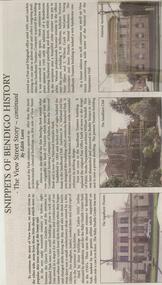
Newspaper - JENNY FOLEY COLLECTION: SNIPPETS OF BENDIGO HISTORY
... The article continues with a description of the more architecturally classical building on this side of View Street, The National Australia Bank building, the Sandhurst Club and the Sandhurst Trustees building. ...The article continues with a description of the more architecturally classical building on this side of View Street, The National Australia Bank building, the Sandhurst Club and the Sandhurst Trustees building. ...BHS CollectionBendigo Weekly from Friday November 2, 2001. Snippets of Bendigo History - The View Street Story - continued by Edith Lunn. This article describes two small buildings between the Queens Victoria garden and the entrance to Rosalind Parks and the Baby Health Centre . The article continues with a description of the more architecturally classical building on this side of View Street, The National Australia Bank building, the Sandhurst Club and the Sandhurst Trustees building. The clip is in a folder.newspaper, bendigo, bendigo weekly -
 Bendigo Historical Society Inc.
Magazine - LYDIA CHANCELLOR COLLECTION: HOME BEAUTIFUL
... HOUSE Private renovation Lydia Chancellor collection gardens gates building building extensions craft handicraft furniture home renovations antiques architecture house plans England Australian homes English homes fireplaces Home Beautiful 1932 onwards A box covered with decorative paper containing articles taken from 'Home Beautiful' 1932 - 1952. ...A box covered with decorative paper containing articles taken from 'Home Beautiful' 1932 - 1952.Home Beautiful 1932 onwardshouse, private, renovation, lydia chancellor, collection, gardens, gates, building, building extensions, craft, handicraft, furniture, home renovations, antiques, architecture, house plans, england, australian homes, english homes, fireplaces -
 Bendigo Historical Society Inc.
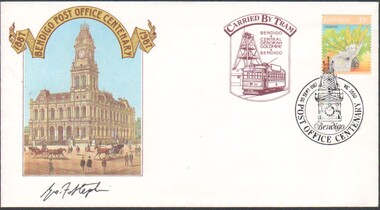
Memorabilia - Bendigo Post Office Centenary envelope
... It was designed by George W Watson in the 2nd Empire architectural style. Bendigo Post Office Australia Day First Day cover Centenary Colour printed envelope - Bendigo Post Office Centenary 1887-1987. ...The Bendigo Post Office was built between 1883 and 1887 by McCulloch and McAlpine. It was designed by George W Watson in the 2nd Empire architectural style.Colour printed envelope - Bendigo Post Office Centenary 1887-1987. Envelope has a 37c stamp with an image of a cockatoo, which has been stamped with a black stamp dated 30 Sept 1987, Vic 3550 - the 'first day" of issue. The envelope was produced by Australia Post to mark the Centenary of the Post Office in Bendigo, and includes a colour image of the Pall Mall frontage of the Post Office building on the corner of Myer Lane and Pall Mall including the Post Office tower and clock.bendigo post office, australia day first day cover, centenary -
 Glen Eira Historical Society
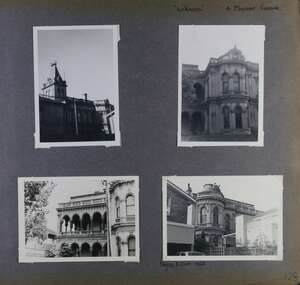
Album - Album page, Labassa, 4 Manor Grove, Circa 1972
... Labassa, Caulfield is of architectural significance as the most prominent example of a small number of houses built in Australia in the French Renaissance style. ...This photograph is part of the Caulfield Historical Album 1972. This album was created in approximately 1972 as part of a project by the Caulfield Historical Society to assist in identifying buildings worthy of preservation. The album is related to a Survey the Caulfield Historical Society developed in collaboration with the National Trust of Australia (Victoria) and Caulfield City Council to identify historic buildings within the City of Caulfield that warranted the protection of a National Trust Classification. Principal photographer thought to be Trevor Hart, member of Caulfield Historical Society. Most photographs were taken between 1966-1972 with a small number of photographs being older and from unknown sources. All photographs are black and white except where stated, with 386 photographs over 198 pages. HISTORY:-- From Victorian Heritage Database citation for Labassa https://vhd.heritagecouncil.vic.gov.au/places/278 as at (26/10/2020) Labassa, Caulfield is one of Melbourne's most lavishly decorated nineteenth century mansions. It resulted from the extensive remodelling in 1890, of an earlier house, known as Sylliott Hill, which was begun in 1862-3 for lawyer, Richard A. Billing. The land at the corner of Balaclava and Orrong Roads was first acquired in 1854 by William Lyall, transferred to his partner, John Mickle, in 1859, who also acquired the adjoining allotment in Balaclava Road, and the three allotments were conveyed to Billing. His first eight-roomed house was extended significantly in 1873 into a twenty-roomed house by architects Crouch and Wilson, who were possibly also responsible for the first house. This reflected Billing's success as a barrister, and he resided at this property until his death in 1882. In 1883 prominent Melbourne businessman, Alexander William Robertson, leased the Sylliott Hill property from Billing's widow, and in 1885 he purchased the adjoining allotment in Balaclava Road. He purchased the Billing's property in 1887 and renamed the 6.31 hectare property, Ontario. In 1889-90, Robertson commissioned the German born architect, John A. B. Koch, to extensively remodel the house into a thirty-five roomed mansion. The existing house was extended and altered, largely resulting in the nineteenth century mansion as it now appears. After Robertson's death in 1896, the house was tenanted until it was eventually sold to the mining millionaire, John Boyd Watson, in 1904. He renamed the property Labassa and carried out repair and re-decoration work to the house. In the early twentieth century, many large estates were subdivided into smaller allotments as the demand for land grew and it became difficult to maintain such large estates. After Watson's death in 1911, portions of the Labassa estate were offered for sale, with Mrs Watson retaining a 1.73 hectare portion containing the house. In 1913 forty-six allotments were auctioned at Labassa Estate, with the formation of Labassa Grove and Ontario Street to the east of the property. Labassa was first recorded as containing flats in 1923 and in the late 1920s, the owner, Robert Hannon, built a red brick block of flats adjacent to the house. Subdivision continued, until the National Trust of Australia (Victoria) purchased the house in 1980 and subsequently purchased adjoining sites, one to the south-east in 1984 (house demolished in 1988) and to the west in 1988. Labassa as it now stands is substantially as it appeared when Koch completed the work in 1890. The original two storey house was transformed into a French Renaissance style mansion, with the addition of a two level L-shaped arcaded verandah and two prominent terminating bays to the south and the east. The building is of unpainted cement render with dressed bluestone plinths, balustraded parapet and steep, slate covered, flat topped mansard roofs behind. A truncated conical roof is a feature of the south bay and a helmeted head is incorporated in the parapet over the east bay. The main south and east facades incorporate many cast cement details, including sculptures, elaborate cornices, swagged Corinthian columns and caryatid consoles flanking the entrance porch, as well as pink marble panels and imitation marble, or scagliola, on curved surfaces. At the rear of the building is a two storey wing and a single storey cottage, the former being connected to the main house by a tower. This section of the house was constructed in 1873. The estate at its peak included stables (1873), conservatory (probably 1890) and a tennis pavilion (probably 1890). All of these outbuildings survive, with the stables and conservatory being converted for residential use after 1922. Internally a range of decorative treatments remain from the late nineteenth century and the early twentieth century, both from the Robertson and Watson periods of occupancy. These include wallpapers, ceiling decoration, chimney pieces, mouldings, joinery and decorative glass. From Victorian Heritage Database citation for H0135 Labassa 2/2A Manor Grove Caulfield North https://vhd.heritagecouncil.vic.gov.au/places/278 as at (26/10/2020) HOW IS IT SIGNIFICANT? Labassa, Caulfield is of architectural, aesthetic and historical significance to the State of Victoria. WHY IS IT SIGNIFICANT? Labassa, Caulfield is of architectural significance as the most prominent example of a small number of houses built in Australia in the French Renaissance style. It is of further note due to the German interpretation of the style and the use of Hellenistic sources, via Germany. It is exceptional for its lavish treatment externally, including marble, scagliola, caryatids, swagged columns, mansard roofs and ornamental cresting. Labassa is of architectural significance as the most important surviving example of German architect, John Koch's domestic work. He undertook a large variety of work in Melbourne, including a number of houses, however Labassa is the most lavish example of his work. Labassa is of aesthetic significance for its outstanding assemblage of late nineteenth and early twentieth century European style interior decoration, which remain remarkably intact. These include a trompe l'oeil ceiling, painted ceilings, embossed imitation leather and other papers, chimney pieces, ceramic tilework, oak parquetry and stained glass, including a tripartite window by Ferguson and Urie, probably dating from the 1873 period. Labassa is of historical significance as an illustrative example of the wealth acquired by a number of prominent Victorian families in the second half of the 19th century. The early development of the property, Sylliott Hill, was due to the wealth acquired by Richard Billing, barrister and fifth Victorian to be appointed Queen's Counsel in 1878. The significant development in 1890 of Ontario, is illustrative of the wealth of Alexander Robertson, a partner in Cobb and Co., a director of Goldsborough Mort & Co., and a pastoral speculator. John B. Watson, whose father had acquired great wealth from the goldfields of Bendigo and subsequently invested in city and country properties, was the third resident to impact on the house, particularly the interiors. The Labassa estate is of historical significance as an illustrative example of the development that occurred in such suburbs as Caulfield in the 1880s due to the land boom, its proximity to Melbourne and the establishment of the Melbourne to Gippsland railway in 1879. It is also illustrative of an estate which succumbed to the pressures of subdividing in the early twentieth century, as properties became difficult to maintain and demand for land close to the city grew. It was typically divided into flats in the 1920s and was used as such for about sixty years. It is of historical significance for its associations with the remnants of the earlier estate which remain extant. These include the stables, conservatory (H2005) and tennis pavilion which all remain on separate sites. Also significant are the remains of early electrical wiring and fittings. Labassa was one of the first houses in Caulfield to be electrified and some of the original wires remain. [Online Data Upgrade Project 2004]Page 128 of Photograph Album with four photographs (two portrait and two landscape) of Labassa.Handwritten: "Labassa" 4 Manor Grove [top right] / Neg 232 8 Oct 1966 [under bottom right photo] / 128 [bottom right]trevor hart, bracketed eaves, slate roof, bay windows, decorative brackets, caulfield north, labassa, richard a. billing, balaclava road, orrong road, sylliott hill, william lyall, crouch and wilson, alexander william robertson, ontario, 1880's, john a. b. koch, mansion, john boyd watson, labassa grove, french renaissance style, l-shaped arcaded verandah, bluestone plinths, balustraded parapet, flat topped mansard roofs, conical roof, elaborate cornices, corinthian columns, caryatid consoles, marble panels, imitation marble, scagliola, tower, conservatory, stables, tennis pavilion, mouldings, decorative glass, caryatids, swagged columns, ornamental cresting, trompe l'oeil ceiling, embossed imitation leather, oak parquetry, stained glass, tripartite window, triple window, ferguson and urie, 1870's, flats, 1920's, electric wiring, 1860's, verandahs, curved windows, arched windows, italianate, terraces, gargoyles, ornamentation, ornate entrance, la bassa, manor grove, st kilda east, victorian, cast iron work, john koch, richard billing, architects, electrification, john mickle, land subdivision, mrs watson, labassa estate, robert hannon, national trust of australia (victoria), sculpture -
 Glen Eira Historical Society
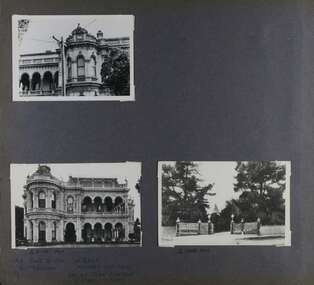
Album - Album page, Labassa, 4 Manor Grove, Circa 1972
... Labassa, Caulfield is of architectural significance as the most prominent example of a small number of houses built in Australia in the French Renaissance style. ...This photograph is part of the Caulfield Historical Album 1972. This album was created in approximately 1972 as part of a project by the Caulfield Historical Society to assist in identifying buildings worthy of preservation. The album is related to a Survey the Caulfield Historical Society developed in collaboration with the National Trust of Australia (Victoria) and Caulfield City Council to identify historic buildings within the City of Caulfield that warranted the protection of a National Trust Classification. Principal photographer thought to be Trevor Hart, member of Caulfield Historical Society. Most photographs were taken between 1966-1972 with a small number of photographs being older and from unknown sources. All photographs are black and white except where stated, with 386 photographs over 198 pages. HISTORY:-- From Victorian Heritage Database citation for Labassa https://vhd.heritagecouncil.vic.gov.au/places/278 as at (26/10/2020) Labassa, Caulfield is one of Melbourne's most lavishly decorated nineteenth century mansions. It resulted from the extensive remodelling in 1890, of an earlier house, known as Sylliott Hill, which was begun in 1862-3 for lawyer, Richard A. Billing. The land at the corner of Balaclava and Orrong Roads was first acquired in 1854 by William Lyall, transferred to his partner, John Mickle, in 1859, who also acquired the adjoining allotment in Balaclava Road, and the three allotments were conveyed to Billing. His first eight-roomed house was extended significantly in 1873 into a twenty-roomed house by architects Crouch and Wilson, who were possibly also responsible for the first house. This reflected Billing's success as a barrister, and he resided at this property until his death in 1882. In 1883 prominent Melbourne businessman, Alexander William Robertson, leased the Sylliott Hill property from Billing's widow, and in 1885 he purchased the adjoining allotment in Balaclava Road. He purchased the Billing's property in 1887 and renamed the 6.31 hectare property, Ontario. In 1889-90, Robertson commissioned the German born architect, John A. B. Koch, to extensively remodel the house into a thirty-five roomed mansion. The existing house was extended and altered, largely resulting in the nineteenth century mansion as it now appears. After Robertson's death in 1896, the house was tenanted until it was eventually sold to the mining millionaire, John Boyd Watson, in 1904. He renamed the property Labassa and carried out repair and re-decoration work to the house. In the early twentieth century, many large estates were subdivided into smaller allotments as the demand for land grew and it became difficult to maintain such large estates. After Watson's death in 1911, portions of the Labassa estate were offered for sale, with Mrs Watson retaining a 1.73 hectare portion containing the house. In 1913 forty-six allotments were auctioned at Labassa Estate, with the formation of Labassa Grove and Ontario Street to the east of the property. Labassa was first recorded as containing flats in 1923 and in the late 1920s, the owner, Robert Hannon, built a red brick block of flats adjacent to the house. Subdivision continued, until the National Trust of Australia (Victoria) purchased the house in 1980 and subsequently purchased adjoining sites, one to the south-east in 1984 (house demolished in 1988) and to the west in 1988. Labassa as it now stands is substantially as it appeared when Koch completed the work in 1890. The original two storey house was transformed into a French Renaissance style mansion, with the addition of a two level L-shaped arcaded verandah and two prominent terminating bays to the south and the east. The building is of unpainted cement render with dressed bluestone plinths, balustraded parapet and steep, slate covered, flat topped mansard roofs behind. A truncated conical roof is a feature of the south bay and a helmeted head is incorporated in the parapet over the east bay. The main south and east facades incorporate many cast cement details, including sculptures, elaborate cornices, swagged Corinthian columns and caryatid consoles flanking the entrance porch, as well as pink marble panels and imitation marble, or scagliola, on curved surfaces. At the rear of the building is a two storey wing and a single storey cottage, the former being connected to the main house by a tower. This section of the house was constructed in 1873. The estate at its peak included stables (1873), conservatory (probably 1890) and a tennis pavilion (probably 1890). All of these outbuildings survive, with the stables and conservatory being converted for residential use after 1922. Internally a range of decorative treatments remain from the late nineteenth century and the early twentieth century, both from the Robertson and Watson periods of occupancy. These include wallpapers, ceiling decoration, chimney pieces, mouldings, joinery and decorative glass.From Victorian Heritage Database citation for H0135 Labassa 2/2A Manor Grove Caulfield North https://vhd.heritagecouncil.vic.gov.au/places/278 as at (26/10/2020) HOW IS IT SIGNIFICANT? Labassa, Caulfield is of architectural, aesthetic and historical significance to the State of Victoria. WHY IS IT SIGNIFICANT? Labassa, Caulfield is of architectural significance as the most prominent example of a small number of houses built in Australia in the French Renaissance style. It is of further note due to the German interpretation of the style and the use of Hellenistic sources, via Germany. It is exceptional for its lavish treatment externally, including marble, scagliola, caryatids, swagged columns, mansard roofs and ornamental cresting. Labassa is of architectural significance as the most important surviving example of German architect, John Koch's domestic work. He undertook a large variety of work in Melbourne, including a number of houses, however Labassa is the most lavish example of his work. Labassa is of aesthetic significance for its outstanding assemblage of late nineteenth and early twentieth century European style interior decoration, which remain remarkably intact. These include a trompe l'oeil ceiling, painted ceilings, embossed imitation leather and other papers, chimney pieces, ceramic tilework, oak parquetry and stained glass, including a tripartite window by Ferguson and Urie, probably dating from the 1873 period. Labassa is of historical significance as an illustrative example of the wealth acquired by a number of prominent Victorian families in the second half of the 19th century. The early development of the property, Sylliott Hill, was due to the wealth acquired by Richard Billing, barrister and fifth Victorian to be appointed Queen's Counsel in 1878. The significant development in 1890 of Ontario, is illustrative of the wealth of Alexander Robertson, a partner in Cobb and Co., a director of Goldsborough Mort & Co., and a pastoral speculator. John B. Watson, whose father had acquired great wealth from the goldfields of Bendigo and subsequently invested in city and country properties, was the third resident to impact on the house, particularly the interiors. The Labassa estate is of historical significance as an illustrative example of the development that occurred in such suburbs as Caulfield in the 1880s due to the land boom, its proximity to Melbourne and the establishment of the Melbourne to Gippsland railway in 1879. It is also illustrative of an estate which succumbed to the pressures of subdividing in the early twentieth century, as properties became difficult to maintain and demand for land close to the city grew. It was typically divided into flats in the 1920s and was used as such for about sixty years. It is of historical significance for its associations with the remnants of the earlier estate which remain extant. These include the stables, conservatory (H2005) and tennis pavilion which all remain on separate sites. Also significant are the remains of early electrical wiring and fittings. Labassa was one of the first houses in Caulfield to be electrified and some of the original wires remain. [Online Data Upgrade Project 2004]Page 129 of Photograph Album with three landscape photographs of Labassa. One of the photographs is of Labassa's drive and gates.Handwritten: 4 JUNE 1910 / SALE JUNE 28 1910 "LA BASSA' / "AUSTRALASIAN" FORMERLY "ONTARIO"/ RES OF JOHN B WATSON / 15 ACRES 3 ROADS [under bottom left photo] / 4 JUNE 1910 [under bottom right photo] / 129 [bottom left]trevor hart, bracketed eaves, intricate lacework, slate roof, bay windows, decorative brackets, caulfield north, labassa, richard a. billing, balaclava road, orrong road, sylliott hill, william lyall, crouch and wilson, alexander william robertson, ontario, 1880's, john a. b. koch, mansion, john boyd watson, labassa grove, french renaissance style, l-shaped arcaded verandah, bluestone plinths, balustraded parapet, flat topped mansard roofs, conical roof, elaborate cornices, corinthian columns, caryatid consoles, marble panels, imitation marble, scagliola, tower, conservatory, stables, tennis pavilion, mouldings, decorative glass, caryatids, swagged columns, ornamental cresting, trompe l'oeil ceiling, embossed imitation leather, oak parquetry, stained glass, tripartite window, triple window, ferguson and urie, 1870's, flats, 1920's, electric wiring, 1860's, verandahs, curved windows, arched windows, italianate, terraces, gargoyles, ornamentation, ornate entrance, la bassa, manor grove, st kilda east, gates, cast iron work, richard billing, architects, john koch, electrification, victorian style, drives, john mickle, land subdivision, mrs watson, labassa estate, robert hannon, national trust of australia (victoria), sculpture -
 Glen Eira Historical Society
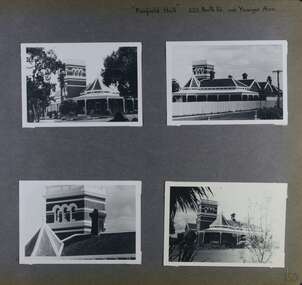
Album - Album page, Fairfield Hall, 225 North Road, Circa 1972
... architectural fashions of the 1890's, evidenced by the use of face brickwork and fretted gables in the Queen Anne manner. It is historically important for the manner in which it demonstrates the lifestyle to which a businessman could aspire during the boom period. trevor hart jenny o'donnell verandah porch tower house tower mansion three storey tower bichromatic brickwork fairfield hall 1890's george jobbins conical roofed projecting corner bay conical roofed bay timber ceilings north road younger avenue frederick wallis curwan curwan italianate queen anne australian homestead arched windows curved windows columned parapet return verandah fairfield estate fairfield street slate roofed red brick polychrome bricks victorian style cast iron work caulfield south maniar house names Handwritten: "Fairfield Hall" 225 North Rd cnr Younger Ave [top right] / 150 [bottom right] Page 150 of Photograph Album with four landscape photographs of Fairfield Hall on North Road. ...This photograph is part of the Caulfield Historical Album 1972. This album was created in approximately 1972 as part of a project by the Caulfield Historical Society to assist in identifying buildings worthy of preservation. The album is related to a Survey the Caulfield Historical Society developed in collaboration with the National Trust of Australia (Victoria) and Caulfield City Council to identify historic buildings within the City of Caulfield that warranted the protection of a National Trust Classification. Principal photographer thought to be Trevor Hart, member of Caulfield Historical Society. Most photographs were taken between 1966-1972 with a small number of photographs being older and from unknown sources. All photographs are black and white except where stated, with 386 photographs over 198 pages. Glen Eira Heritage Management Plan 1996 by Andrew Ward https://www.gleneira.vic.gov.au/media/4777/heritage_mment_plan_vol_3b.pdf (as of 27/01/2021) - p90 An imposing single storeyed Italianate bi-chromatic brick villa with three staged tower surmounting the entry and facetted corner bay with conical roof. White tuckpointed black body bricks are relieved with reds and stucco work. Gable ends are fretted and there is a concave cast iron verandah to the principal elevations.Victorian Heritage Database (as of 27/10/2020) - HO49 225 North Road Caulfield South https://vhd.heritagecouncil.vic.gov.au/places/42426 "Maniar" (?) is a substantial late Victorian Italianate villa with tower and extensive grounds built for Frederick Curwan, an inspector of the National Bank, in 1890. It is aesthetically and historically important. An imposing single storeyed ltalianate bi-chromatic brick villa with three staged tower surmounting the entry and facetted comer bay with conical roof. White tuckpointed black body bricks are relieved with reds and stucco work. Gable ends are fretted and there is a concave cast iron verandah to the principal elevations. It is aesthetically important as an imposing and substantially intact villa residence demonstrating the changing architectural fashions of the 1890's, evidenced by the use of face brickwork and fretted gables in the Queen Anne manner. It is historically important for the manner in which it demonstrates the lifestyle to which a businessman could aspire during the boom period.Page 150 of Photograph Album with four landscape photographs of Fairfield Hall on North Road.Handwritten: "Fairfield Hall" 225 North Rd cnr Younger Ave [top right] / 150 [bottom right]trevor hart, jenny o'donnell, verandah, porch, tower house, tower, mansion, three storey tower, bichromatic brickwork, fairfield hall, 1890's, george jobbins, conical roofed projecting corner bay, conical roofed bay, timber ceilings, north road, younger avenue, frederick wallis curwan, curwan, italianate, queen anne, australian homestead, arched windows, curved windows, columned parapet, return verandah, fairfield estate, fairfield street, slate roofed, red brick, polychrome bricks, victorian style, cast iron work, caulfield south, maniar, house names -
 Glen Eira Historical Society
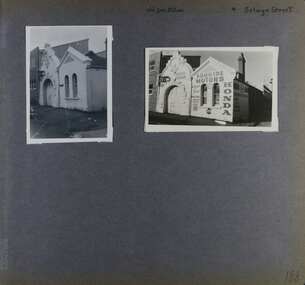
Album - Album page, Old Fire Station, 4 Selwyn Street, Circa 1972
... architecturally significant as a fine example of a late nineteenth century fire station. Constructed shortly after the establishment of the MFB, it displays characteristics of its class of place that remain mostly unchanged from the former Station's historically important period of development and use. A particularly strong element of the Former Elsternwick Fire Station is the large and strikingly-detailed stone horseshoe arch, designed for horse-drawn fire-fighting vehicles, at the street entrance to its fire-engine room. [Criterion D] trevor hart rendered 1890's melbourne metropolitan fire brigade mfb fire-fighting jj webster timber merchants esquire motors car repair australian ...This album was created in approximately 1972 as part of a project by the Caulfield Historical Society to assist in identifying buildings worthy of preservation. The album is related to a Survey the Caulfield Historical Society developed in collaboration with the National Trust of Australia (Victoria) and Caulfield City Council to identify historic buildings within the City of Caulfield that warranted the protection of a National Trust Classification. Principal photographer thought to be Trevor Hart, member of Caulfield Historical Society. Most photographs were taken between 1966-1972 with a small number of photographs being older and from unknown sources. All photographs are black and white except where stated, with 386 photographs over 198 pages. From Victorian Heritage Database citation for H2376 Former Elsternwick Fire Station, 2-4 Selwyn Street Elsternwick - Victorian Heritage Register https://vhd.heritagecouncil.vic.gov.au/places/2645 (as at 21/11/2021) The Former Elsternwick Fire Station was built and commenced operation in 1896. It was one of 32 new fire stations built between 1892 and 1896 by the newly formed Melbourne Metropolitan Fire Brigade ('MFB') to form a comprehensive fire-fighting network across Melbourne. The MFB was established in 1891 as Victoria's government-run fire-fighting service in Melbourne and its growing suburbs. By 1918 motorised fire engine appliances had replaced horse-drawn fire vehicles across the metropolitan area, and the consequently larger areas that fire stations could protect meant the 1896 Elsternwick Fire Station was one of many which was becoming obsolete. The MFB continued to use the Elsternwick Fire Station up until the Station's closure in 1926. From 1927 the former Fire Station was leased by neighbouring timber merchants JJ Webster Pty Ltd who subsequently purchased the property from the MFB in 1934. From 1954 the 'Esquire Motors' car repair business traded at the site, and changes to the former Fire Station building including the complete enclosure of its yard by corrugated steel walls and roofing appear to have been completed in the mid-1950s. In 1990 the Australian Broadcasting Corporation ('ABC') purchased the former Fire Station together with five other adjoining land parcels in Selwyn Street. From that time until 2017 the former Elsternwick Fire Station has been used by the ABC as office and storage space in its Selwyn Street television studio complex.From Victorian Heritage Database citation for H2376 Former Elsternwick Fire Station, 2-4 Selwyn Street Elsternwick - Victorian Heritage Register https://vhd.heritagecouncil.vic.gov.au/places/2645 (as at 21/11/2021) The Former Elsternwick Fire Station is historically significant as one of the 10 remaining fire stations of the original 32 built for the newly established Melbourne Metropolitan Fire Brigade ('MFB') during the four-year period 1892 to 1896. These fire stations were constructed following the establishment in 1891 of the MFB, Victoria's government-run fire-fighting service for metropolitan Melbourne and its growing suburban population. These new stations formed a crucial part of the MFB's fire-fighting network across Melbourne. The Former Elsternwick Fire Station clearly demonstrates the historical development of fire-fighting services in Melbourne, especially the expansion of the newly-formed MFB throughout Melbourne's suburbs during the 1890s. [Criterion A] The Former Elsternwick Fire Station is architecturally significant as a fine example of a late nineteenth century fire station. Constructed shortly after the establishment of the MFB, it displays characteristics of its class of place that remain mostly unchanged from the former Station's historically important period of development and use. A particularly strong element of the Former Elsternwick Fire Station is the large and strikingly-detailed stone horseshoe arch, designed for horse-drawn fire-fighting vehicles, at the street entrance to its fire-engine room. [Criterion D]Page 188 of Photograph Album with two photographs of the old Elsternwick Fire Station.Handwritten: old fire station 4 Selwyn Street [top right] / 188 [bottom right]trevor hart, rendered, 1890's, melbourne metropolitan fire brigade, mfb, fire-fighting, jj webster, timber merchants, esquire motors, car repair, australian broadcasting corporation, abc, selwyn street, brick and stone, asymmetrical facade, anglo-dutch gable, rusticated and smooth-faced limestone, elsternwick fire station, elsternwick, fire station, jj webster pty ltd, motor vehicle repair shops, stone horseshoe arch entrance -
 Glen Eira Historical Society
Letter - ELSTERNWICK POST OFFICE
... Architects Builders architectural features Australia Post Register of Historical Buildings Grey Karen Planning Appeal Board Heritage Overlay No H029 Victorian Government Gazette No. 60 dated 16/07/1986 Historic Building No640 Certificate of Title Volume 5817 Kennan James Harley Nelson Ivor Blake Alison Neale Anne telegraph offices Wardell Ward Andrew Letter ELSTERNWICK POST OFFICE ...This file contains seven items about the significance of this building and how this was established : 1/ Photocopies of a handwritten application (in duplicate) by Walter Kay of Elsternwick dated 13/10/1985 and Rodney H Bush’s dated 16/10/1985 to the Historic Buildings Council to register the former Elsternwick Post Office building, and an original typewritten letter dated 17/10/1985 from the Historic Buildings Council to Caulfield and Historic Society advising them of an application and inviting them to submit relevant information about the building with a copy of application attached. 2/ Six pieces of correspondence between various interested parties (Caulfield Council , Caulfield Historical Society, National Trust, of Australia and Ministry for Planning and Environment on behalf of Historic Buildings Council, Victoria) about the significance of the former Elsternwick Post Office building and the progress of efforts to include it on the Register of Historic buildings. Dated between November 1985 and May 1986. 3/ Two pieces of correspondence between the Caulfield Progress Association and the Caulfield Historical Society dated April and May 1986, regarding the efforts of the Historical Society to save the former Elsternwick Post Office building. 4/ Two pieces of ephemera by the Caulfield Progress Association, one original undated and one photocopy undated in 1986. Both appealing to the public for support to help the former Elsternwick Post Office building and to protest a proposal to demolish it, by Caulfield Council. 5/Original newspaper article dated 07/06/1989 from the Malvern-Caulfield Progress newspaper written by Robert Carmody. The article talks about the approval by the Historic Buildings Council of Caulfield Council’s restoration program of the former Elsternwick Post Office building worth approximately $850,000. The refurbishment would consist of a shop and office space which would then be rented out. Mayor Emil Braun outlines the progress to implement the plans. 6/ Caulfield Conservation Study by Andrew Ward dated September 1994 of former Elsternwick Post Office Building. The building plans for the Elizabethan Style building were approved in 1891. The original timber verandahs were replaced by the present brickworks in circa 1918 rear extensions in 1941-42. Similar Post Offices were built at Kew, Queenscliff and Portarlington. 7/ Computer printout dated 19/03/2010 of Statement of Significance held by the Victorian Heritage database of the former Elsternwick Post Office Building. It was built in 1891 in the ‘Queen Anne’ style. The substantial two story red brick building was set on a bluestone plinth with an ornate façade incorporating cement dressings. There is a brief summary of the settlement and development of the Elsternwick area with mention of how important the building is to the Elsternwick Community. Original date and author is unknown.elsternwick post office, glenhuntly road, elsternwick, riddell parade, office buildings, postal services, caulfield city council, kay walter, regent street, caulfield, bush rodney h, gisborne street, city of caulfield, braun emil councillor, mayors, aylen doug, aylen douglas r, historic buildings council, caulfield historical society, ministry for planning and environment, head stephen, historic buildings act 1981, anderson p, national trust of australia (victoria), public works department, architectural styles, calder g.k. councillor, wills cathie, lyall kerry, marsden john hudson, town clerk, hill douglas, caulfield progress association, caulfield south, glen eira road, hawthorn road, mac neil j.r., neville street, glenhuntly, marten veronika, ballantyne richard, royal historical society of victoria, dunstan don, alfada street south, hardy joan, baird rob, snowball betty, ward andrew, hoddle robert, foot henry, ebden charles hodson, elster, oldham mary kate, english ‘queen anne’ revival style, rifle club, coulson herbert h., fick p.g., railway, city manager, austin g.b. h., architects, builders, architectural features, australia post, register of historical buildings, grey karen, planning appeal board, heritage overlay no h029, victorian government gazette no. 60 dated 16/07/1986, historic building no640, certificate of title volume 5817, kennan james harley, nelson ivor, blake alison, neale anne, telegraph offices, wardell, ward andrew -
 Bendigo Historical Society Inc.
Document - THE AUSTRALIAN SKETCHER 1873 - LAYING THE FOUNDATION STONE OF THE SANDHURST MASONIC HALL
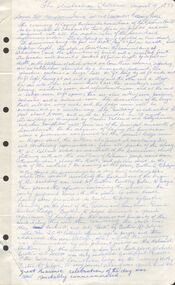
... DOCUMENT Names of bendigo pioneers The Australian Sketcher The Australian Sketcher 1873 Laying the Foundation Stone of the Sandhurst Masonic Hall Mr Vahland Mr Gotzchmann Brother J McIntyre W M Brother Buckley Brother Connolly Golden and Corinthian Grand United Lodge Rev J C McCallagh Brother G P Joseph Handwritten account of the laying of the Foundation Stone of the Sandhurst Masonic Hall. Dimensions and architectural ...Handwritten account of the laying of the Foundation Stone of the Sandhurst Masonic Hall. Dimensions and architectural style are also mentioned as well as the laying of a cylinder containing a scroll in a cavity beneath the stone. Architects were Vahland and Getzschmann.document, names of bendigo pioneers, the australian sketcher, the australian sketcher 1873, laying the foundation stone of the sandhurst masonic hall, mr vahland, mr gotzchmann, brother j mcintyre w m, brother buckley, brother connolly, golden and corinthian grand united lodge, rev j c mccallagh, brother g p joseph -
 Bendigo Historical Society Inc.
Document - VICTORIA HILL - THE BENDIGO DIGGINGS, PRELIMINARY DRAFT FOR BROCHURE
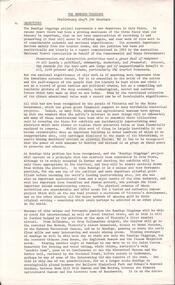
... BHS Collection MINING Marketing victoria hill Victoria Hill The Bendigo Diggings - Preliminary Draft for Brochure Aust National Travel Association Tullamarine Jetport Emu Bottom Homestead Kyneton Historical Museum Chinese Joss House Eaglehawk Museum Whipstick Scrub Cairn Curran Reservoir Castelmaine Historical Museum and Market Hall National Trust Ballarat Hiatorical Park Echuca's Hopwood Gardens Swan Hill Folk Museum Gibson's Mount Alexander No 2 Squatting Run Captain Brown Chief Commissioner Wright Hustler's Reef Thomas Hustler Mining Board Drainage of Reefs Act 1862 First World War Bendigo Amalgamated Goldfields Second World War Sandhurst W C Vahland Battery Trams Horse Trams Steam Trams Electric Trams Central Nell Gwynne Mine Theodore Ballerstadt George Lansell New Chum Hill Ballerstadt's Open Cut 180 Mine New Chum Syncline Battery William Rae Victoria Quartz Wittscheibe's 'Jeweller's Shop' Luffsman and Sterry Gold Mines Hotel Adventure Bendigo and District Tourist Association Bendigo City Council Bendigo Branch of the Royal Historical Society of Victoria Professor Brian Lewis School of Architecture and Building at the University of Melbourne Taylor Horsfield Lord Robert Cecil South Australian Gold Commissioner Nine typed pages of notes on a preliminary draft for a brochure on the Bendigo Diggings. ...BHS CollectionNine typed pages of notes on a preliminary draft for a brochure on the Bendigo Diggings. First part is the objective which is to preserve the mining history and to have exhibits in the places they were used, e.g. quartz mining machinery exhibited in a quartz mining area, not on an alluvial field. Part B is historical notes on the area. Part C is the Site - Victoria Hill area. Part D is Stage One which consists of carpark area, technological museum, restaurant, mineral haulage line, picnic ground, earthworks and planting over the area. Part E is Stage Two which will consist of the open-air exhibits, in the area surrounded by the mineral haulage line, and the Central Nell Gwynne mine on the west side of the site. Part F is Stage Three which will consist of the winery, the steam tram track, the lake, the wildlife sanctuary and various buildings associated with gold mining. Part G is Costing with the prices to be filled in. Parts H and I are the Appeal and the Committee. Details to be filled in. Notes prepared by Albert Richardson.mining, marketing, victoria hill, victoria hill, the bendigo diggings - preliminary draft for brochure, aust national travel association, tullamarine jetport, emu bottom homestead, kyneton historical museum, chinese joss house, eaglehawk museum, whipstick scrub, cairn curran reservoir, castelmaine historical museum and market hall, national trust, ballarat hiatorical park, echuca's hopwood gardens, swan hill folk museum, gibson's mount alexander no 2 squatting run, captain brown, chief commissioner wright, hustler's reef, thomas hustler, mining board, drainage of reefs act 1862, first world war, bendigo amalgamated goldfields, second world war, sandhurst, w c vahland, battery trams, horse trams, steam trams, electric trams, central nell gwynne mine, theodore ballerstadt, george lansell, new chum hill, ballerstadt's open cut, 180 mine, new chum syncline battery, william rae, victoria quartz, wittscheibe's 'jeweller's shop', luffsman and sterry, gold mines hotel, adventure, bendigo and district tourist association, bendigo city council, bendigo branch of the royal historical society of victoria, professor brian lewis, school of architecture and building at the university of melbourne, taylor horsfield, lord robert cecil, south australian gold commissioner -
 Bendigo Historical Society Inc.
Photograph - FAWN'S BREWERY: GOLDEN SQUARE, 1898 - 1900
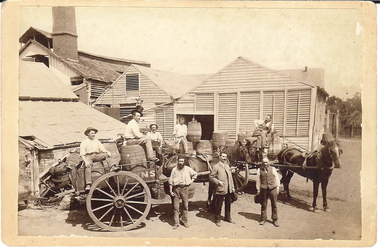
... Australia in February 1853 on the "South Seas". In 1858 he came to Bendigo and entered into a partnership with George Elliott as brewers in Golden Square. After this partnership was dissolved in 1862, James continued the business alone. James married Helen McFarlane McAllen in 1860. Following his death, James' 3rd son Benjamin Ellison Fawns carried on the business before becoming a pastoralist in Deniliquin by 1893. ORGANIZATION Business fawn's brewery golden square. R. Dermer Smith, Landscape and architectural ...Fawns's Brewery, near Oak Street, Golden Square. ( James Lerk, Nov. 1999). As early as 1858 George Mackay recorded in the Annals that James Fawns aged 35 years was in the brewery business in Golden Square. James Fawns (1824-21/9/1891) was born in Kincardshire, Scotland and came to Australia in February 1853 on the "South Seas". In 1858 he came to Bendigo and entered into a partnership with George Elliott as brewers in Golden Square. After this partnership was dissolved in 1862, James continued the business alone. James married Helen McFarlane McAllen in 1860. Following his death, James' 3rd son Benjamin Ellison Fawns carried on the business before becoming a pastoralist in Deniliquin by 1893.Sepia coloured photo. Outdoor group of workers with two horse drawn delivery carts at Fawn's Brewery. Brewery in background. Shingle roofing on roof of building at back.R. Dermer Smith, Landscape and architectural photographer, Bull Street, Sandhurstorganization, business, fawn's brewery, golden square. -
 Bendigo Historical Society Inc.
Book - SO NOW YOU SEE IT, c1992
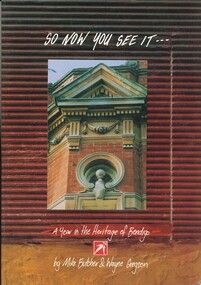
... architecture... bendigo...National Trust of Australia...HISTORY architecture bendigo National Trust of Australia Victoria Mike Butcher & Wayne Gregson So Now You See It. ...So Now You See It. Publisher: National Trust of Australia. ISBN: 0 909710 84 8. Printed by D G Walker, Kangaroo Flat, Victoria. A description of some of the earliest houses in Bendigo and their current owners in 1992.Mike Butcher & Wayne Gregsonhistory, architecture, bendigo, national trust of australia, victoria -
 Bendigo Historical Society Inc.
Book - SOUVENIR TO COMMEMORATE THE VISIT OF THE EMPIRE PARLIAMENTARY DELEGATION TO VICTORIA AUST 1926, 1926
... VICTORIA History architecture Victorian Architecture The Government of Victoria Souvenir to Commemorate the visit of the Empire Parliamentary Delegation to Victoria, Australia 1926. ...Souvenir to Commemorate the visit of the Empire Parliamentary Delegation to Victoria, Australia 1926. Published by Osboldstone & Co. Pty. Ltd. Minor damage to front coverThe Government of Victoriavictoria, history, architecture, victorian architecture -
 Bendigo Historical Society Inc.
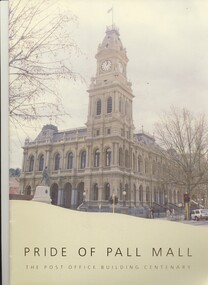
Book - PRIDE OF PALL MALL THE POST OFFICE BUILDING CENTENARY, c1987
... Australia Post. Bendigo Post Office...51-67 Pall Mall (corner Pall Mall & Williamson St. Postal Service... architecture...Australia Post. Bendigo Post Office 51-67 Pall Mall (corner Pall Mall & Williamson St. Postal Service architecture Pride of Pall Mall The Post Office Building Centenary. ...Pride of Pall Mall The Post Office Building Centenary. Publisher: Australia Post. Photographs, illustrations, paintings, building designs, envelopes. 20 pages. Inscription: To June from Paul Murphy. Compiled by Paul Murphy, Aust Post, contributions: Michael Butcher & Len C Bennetts of the Royal Historical Society, Bendigo. Post Codes began in 1967. Two copies 5231.1 and 5231.2book, bendigo, post office, bendigo, australia post. bendigo post office, 51-67 pall mall (corner pall mall & williamson st. postal service, architecture -
 Bendigo Historical Society Inc.
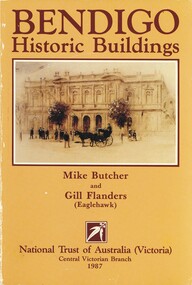
Book - BENDIGO HISTORIC BUILDINGS, c1987
... BOOK Bendigo buildings historic Bendigo history architecture Mike Butcher & Gill Flanders Bendigo Historic Buildings. Publisher: National Trust of Australia. ...Bendigo Historic Buildings. Publisher: National Trust of Australia. ISBN:0 9097 10 67 8. Photographs, illustrations & maps. Inscriptions: L Slate? Shale? S Lake 12/1/89 from Hilary. 180 pages.Mike Butcher & Gill Flandersbook, bendigo, buildings, historic, bendigo history, architecture -
 Bendigo Historical Society Inc.
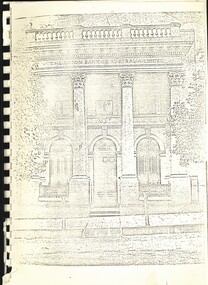
Book - THE UNION BANK OF BENDIGO
... Architecture. D V Bick 1981 A history of the progress of the contruction of the Old Union Bank, 45 View St, Bendigo, with plans, costings, photocopies of photographs (faded) and schedule of works carried out in 1952. Spiral bound 114 photocopied pages. Also includes a history of the Union Bank of Australia ...A history of the progress of the contruction of the Old Union Bank, 45 View St, Bendigo, with plans, costings, photocopies of photographs (faded) and schedule of works carried out in 1952. Spiral bound 114 photocopied pages. Also includes a history of the Union Bank of Australia and in Bendigo.D V Bick 1981bendigo, buildings, heritage buildings, union bank, bendigo heritage buildings, architecture. -
 Ithacan Historical Society
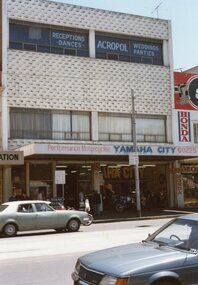
Photograph, Ithaca House, c1970s
... architecture graduate, designed the building. Construction was completed in 1958. Up until 2020 Yamaha were long standing ground floor tenants. Prior to the building of Ithaca House, from 1917 up until 1958, the club rooms were located on the top floor of Michael's Building on the corner of Lonsdale and Elizabeth Streets. The Ithacan Philanthropic Society has been a focal point initially for expatriate Ithacans and as the years have passed it holds many happy memories for Australian ...Ithaca House, the home of the Ithacan Philanthropic Society, is located at 329 - 335 Elizabeth Street. The site was purchased in the mid 1950s to build the club rooms. The money for the venture was raised by the issue of non-redeemable 10 and 50 pound debentures to members. Nicholas Sofarnos, a young Ithacan architecture graduate, designed the building. Construction was completed in 1958. Up until 2020 Yamaha were long standing ground floor tenants. Prior to the building of Ithaca House, from 1917 up until 1958, the club rooms were located on the top floor of Michael's Building on the corner of Lonsdale and Elizabeth Streets. The Ithacan Philanthropic Society has been a focal point initially for expatriate Ithacans and as the years have passed it holds many happy memories for Australian born Ithacans through the generations.A coloured photograph of a three storey grey building in a city street with two cars being driven along the road. The Yamaha Motor Bicycle company occupies the ground floor, and in the adjacent building Honda motorbikes are sold. There are curtained windows across the width of the second floor and signage on the top floor windows indicates this level is used for social events such as receptions and dances. -
Glen Eira Historical Society
Document - Historic Conservation Areas Project
... architectural features. Historic Conservation Areas Project Niven Barbara Newsletters Town Planning Historic Buildings Heritage Studies Housing Royal Historical Society of Victoria (RHSV) Read Michael Plans Local Government Historical Societies Committee for Urban Action (CUA) National Trust Hopkins Sherry Ms. Ford Hazel Preliminary Conservation Survey Town Planning Heritage Studies Rodda Andrew City of Caulfield Housing Estates Victoria National Estate Grants Program Australia ...Contains 4 items relating to historic conservation: 1/Five newsletters (one page each newsletter, dated 07/1975, 08/1975, 09/1975, 10/1975 and the final one 12/1975) describing how the project evolved, project funds, progress, study method, project 1 report, project 2 report and summary as no further funds available. Project was to include all of Melbourne but funding did not allow this. Note: newsletters stamped with Caulfield Historical Society. 2/Letter (one page on official city of Caulfield letterhead) from Andrew Rodda (manager planning) to Hazal Ford (dated 13/11/1989) describing ‘council resolved on 18/07/1989 to proceed with preliminary conservation survey’ and mentions that a copy is included. 3/Preliminary conservation survey for the City of Caulfield (nine pages) describing background, study area, budget, purpose, study outline, timeframe, report format, ownership, tasks and background information (mentions number and types of houses and properties as at 1986 and 1988) and a map of City of Caulfield. 4/Booklet (28 pages) titled ‘Heritage Area – Caulfield North Draft Heritage Guidelines July 1999 – City of Glen Eira’, containing Caulfield North Heritage Area, cultural heritage, Heritage Overlay Area, architectural description, common architectural forms and features, development guidelines, key design checklist. It includes a map of the Caulfield North Heritage Overlay Area, two illustrations about the development envelope and many black-and-white photographs of houses and architectural features.historic conservation areas project niven barbara, newsletters, town planning, historic buildings, heritage studies, housing, royal historical society of victoria (rhsv), read michael, plans, local government, historical societies, committee for urban action (cua), national trust, hopkins sherry ms., ford hazel, preliminary conservation survey, town planning, heritage studies, rodda andrew, city of caulfield, housing estates, victoria national estate grants program, australia icomos, burra charter, buildings structures and establishments, land surveys, suburbs, historic buildings, architectural significance, ‘caulfield’s heritage study’, soloman geulah dr., caulfield library, dandenong road, nepean highway, hotham street, iknerman road, orrong road, north road, poath road, ‘plan of the city of caulfield’, north ward, east ward, south ward, west ward, kooyong road, neerim road, bambra road, balaclava road, shire of caulfield, railways, world war 1914-1918, depression 1929-1939, rippon lea, labassa, parks, mansions, community services, ‘caulfield north draft heritage guidelines july 1999’, city of glen eira, caulfield north heritage area, glen eira heritage management plan, mayfield grove, normanby avenue, carnarvon street, glenferrie street, arthur street, malakoff street, normanby road, heritage advisory service, construction materials, victorian style, mediterranean style, spanish mission style, californian bungalow style, federation style, architectural style, architectural features, heritage conservation design, building construction, building regulations, aboriginal peoples, carnarvon road -
Glen Eira Historical Society
Letter - Lirrewa
... architectural features of home and hand drawn designs of side and centre windows and design above all main room doors. Includes typed directory listings from 1886 to 1921. Date and author unknown Copy of correspondence to Mrs W Brooks from the Administration National Trust of Australia regarding classification Lirrewa 20/03/1973 and stables....architectural features of home and hand drawn designs of side and centre windows and design above all main room doors. Includes typed directory listings from 1886 to 1921. Date and author unknown Copy of correspondence to Mrs W Brooks from the Administration National Trust of Australia regarding classification Lirrewa 20/03/1973 and stables. ...Four articles on Lirrewa’s history, conservation study and notes on architectural features and correspondence from National trust to Mrs W Brooks. Photocopy of an extract from Caulfied Historical Newsletter (No 4 April 1973) containing 2 articles about Lirrewa and Caulfield (one by J O’Donnell, one by Mrs AP Bell) Photocopied extract from the Caulfield Conservation study detailing history and features of Lirrewa written by Andrew Ward (January 1995) Handwritten notes on architectural features of home and hand drawn designs of side and centre windows and design above all main room doors. Includes typed directory listings from 1886 to 1921. Date and author unknown Copy of correspondence to Mrs W Brooks from the Administration National Trust of Australia regarding classification Lirrewa 20/03/1973 and stables.lirrewa, lirrewa grove, o’donnell j, fulton thomas, land subdivisions, glen eira road, glen huntly road, kooyong road, tennant dr, cox james dr, brooks walter richard, baby health care, bryce percy h, sylverly, house names, market gardens, chinese community, langdon montague william, langdon henry joseph, rosecraddock, langdon elizabeth, tarqua, st marys church, caulfield, hawthorn road, lirrewa grove, stables, architectural features, brooks gladys, brooks walter, councillors, scott robert, redcliff mr, architects, mcculloch mr, teachers, office workers, farmer mr, ward andrew, mansions, verandahs, slate tiles, fountains, leadlights, fireplaces, grant rs, black rs, anderson p, russell edwin r, cast ironwork, flats, marble, mantel pieces, gothic revival style, brick, arches -
Glen Eira Historical Society
Letter - St. Mary’s Church, Caulfield
... Australia (Victoria). Caulfield Conservation Study by Andrew Ward in 1994 for Shelford, St. Mary’s Jubilee School. He describes the architecture...Australia (Victoria). Caulfield Conservation Study by Andrew Ward in 1994 for Shelford, St. Mary’s Jubilee School. He describes the architecture ...Two documents about St. Mary’s Jubilee School. Roneoed correspondence to W.S. Feltham from S.R. Birch dated 22/03/1973 giving notification classification of St. Mary’s Jubilee School by the National Trust of Australia (Victoria). Caulfield Conservation Study by Andrew Ward in 1994 for Shelford, St. Mary’s Jubilee School. He describes the architecture and gives a brief history. The photocopied document includes a poorly reproduced photo.st. mary’s jubilee school, schools, glen eira road, hood crescent, caulfield, feltham w.s., webb charles, birch s. r., architectural features, gothic style, porches, plaques, tudor style, shelford c.e.g.g.s., st. mary’s church -
 Glen Eira Historical Society
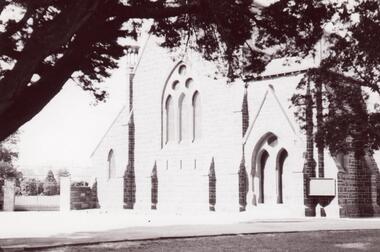
Photograph - St. Mary’s Church, Caulfield
... Also included are three lithographs of an architectural sketch of the proposed church from Illustrated Australian News 1870-1874, page 148....Also included are three lithographs of an architectural sketch of the proposed church from Illustrated Australian News 1870-1874, page 148. ...Three photographs and one photocopied photograph of St. Mary’s Anglican Church Caulfield. All are undated and photographers are unknown. The first has paddocks in the foreground with the church in the distance. Also included are three lithographs of an architectural sketch of the proposed church from Illustrated Australian News 1870-1874, page 148.st. mary’s church, caulfield, reed and barnes, architects, caulfield, illustrated australian news -
 Glen Eira Historical Society
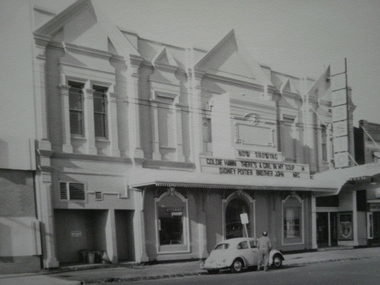
Article - ELSTERNWICK CLASSIC CINEMA
... Australia... National Trust Register... Elsternwick Theatre... Pausacker Ian... Classic Cinema... entertainment... cinemas... theatres... Victorian style... Elsternwick Public Hall... Skating Rink Company Limited... Selwyn Street... Victorian Permanent Building Society... Community Centres... Films... shows and exhibitions... film projectors... Amalgamate Picture Company Ltd.... Richardson Frank G.... architecture...Elsternwick Classic Cinema Gordon Street Elsternwick Dorchester Dance Hall National Trust of Australia National Trust Register Elsternwick Theatre Pausacker Ian Classic Cinema entertainment cinemas theatres Victorian style Elsternwick Public Hall Skating Rink Company Limited Selwyn Street Victorian Permanent Building Society Community Centres Films shows and exhibitions film projectors Amalgamate Picture Company Ltd. Richardson Frank G. architecture ...This file contains 4 items relating to the Elsternwick Classic Cinema: 1/1 original black and white photograph of the Elsternwick Classic Cinema, 9 Gordon Street Elsternwick. Date and photographer unknown. 2/ 2 photocopied photos of the Elsternwick Classic Theatre in its various stages of operation. One photo is of it as the Dorchester Dance Hall between 1938 and 1946 and the other is of the Classic Cinema in 1994. Photographers unknown. 3/National Trust of Australia (Victoria) Classification Report on Elsternwick Theatre with attached cover letter addressed to the Manager of the Planning Section, City of Glen Eira Council, from Ian Pausacker from the National Trust dated 04/10/2000. The report includes a statement of significance, history, description, context and floor plans of the theatre. 4/1 newspaper article written by Alex Njoo from the Caulfield/Port Philip Leader, 31/01/2012, congratulating the Tamir family on their conservation of the Elsternwick Classic Cinema. Includes a colour photo of the Tamirs, photographer unknown.elsternwick classic cinema, gordon street, elsternwick, dorchester dance hall, national trust of australia, national trust register, elsternwick theatre, pausacker ian, classic cinema, entertainment, cinemas, theatres, victorian style, elsternwick public hall, skating rink company limited, selwyn street, victorian permanent building society, community centres, films, shows and exhibitions, film projectors, amalgamate picture company ltd., richardson frank g., architecture, stairs, associated theatres limited, ballantyne and hared, balconies, architectural features, entrances, depression 1929-1939, astor, dancehalls, esquire theatre, prentice george, plottel joseph, architects, cowper murphy and associates, sharon cinema, tamir eddie, readings, free classical style, plans, business people, njoo alex, tamir family -
 Warrnambool and District Historical Society Inc.
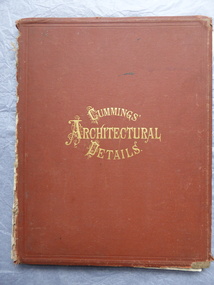
Book, Cummings Architectural Details, 1873
... architectural designs from U.S.A. in the 1870s. Designs such as these influenced the designs of buildings in other countries including Australia. ...This book was owned by John Crawley, engineer, architect and surveyor. He was appointed District Engineer for the Public Works Department for the Western District in 1866. He was the Shire of Warrnambool Engineer from 1874 to 1895 when he was succeeded by his son.This book is of interest as it contains examples of architectural designs from U.S.A. in the 1870s. Designs such as these influenced the designs of buildings in other countries including Australia. This book is also of interest because of its connection to John Crawley, a member of the Crawley family that had a long and influential association with the Shire of Warrnambool.This is a hard cover book. It has a brown cover with gold lettering. The book has come apart from its binding so many of the pages are loose and the covering on the spine is missing . The front cover is somewhat stained and the edges are worn. The book has many diagrams and illustrations.The inscriptions are handwritten in black ink J. W. Crawley Warrnambool J.W. Crawley 1879john crawley, shire of warrnambool, crawley family -
 Wangaratta RSL Sub Branch
Work on paper - Coat of Arms, Rats of Tobruk 1941, 1941
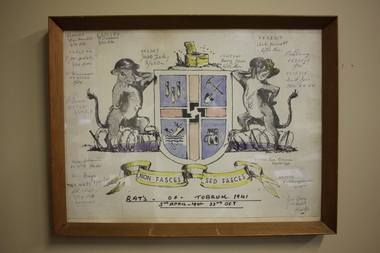
... He was born in the suburb of Prospect in Adelaide, South Australia, and studied architecture at the University of Adelaide. ...Hand drawn Coat of Arms for the soldiers known as the Rats of Tobruk with signatures of those involved in the engagement between 5th April to the 22nd of October 1941 The drawing is signed by artist John DOWIE AM, SX6087 who served with the 2/43rd Battalion Signatories are: VX42389 Eric Hamilton, 2/32 Battalion; VX30189 F.Baldwin, 2/23 Battalion; VX34544, F.J.Mc.Intosh 2/24 Battalion; VX34554 W.Harrison, 2/24 Battalion; WX7281 P.Bone 2/25 Battalion; VX33719 Duke Goldsmith, 2/24 Battalion; VX41179 Harry Frazer, 2/24 Battalion; VX29652 A.R.Stribley, 2/24 Battalion; SX6367 Arthur “Jack” Foley, 2/43 Battalion ( died in 1980 buried at Wangaratta); VX48340 Harry Jones, 2/23 Battalion; VX42317 Aub Jarrott, 2/24Battalion; VX28869 Rod Deering 2/24Battalion; VX15719 Ian F. Joss 7th Division AASC; VX19723 Len Dauria, 2/12 Field Regiment; NX35852 R.E (Snowy) Cornelius 2/13 Battalion; VX32559 Jim Gray, 2/24Battalion - James Cyril GRAY Born 6/1/1916 in Orroroo South Australia. Enlisted 28/5/1940 at Mildura. Awarded Military Medal for remarkable coolness, bravery and leadership at Tobruk on 24/4 and 1/5/1941. He was promoted to Sergeant on 14/8/1941, Lieutenant in November 1942 then Captain on 9/4/1945. He was wounded in action on 11/9/1943 and discharged on 20/12/1945. He married and had three children. He died on 10/4/1992 aged 76 and buried at Wangaratta Cemetery.This original drawing is by John DOWIE SX6087 who served with the 2/43rd Battalion during the second world war and is signed by the artist and soldiers from the 2/24th Battalion known as "Wangaratta's Own". John Stuart Dowie AM (15 January 1915 – 19 March 2008) was an Australian painter, sculptor and teacher. He was born in the suburb of Prospect in Adelaide, South Australia, and studied architecture at the University of Adelaide. During World War II, Dowie worked in the Military History Unit of the Australian Imperial Force, and as an assistant to Australia's official war sculptor, Lyndon Dadswell. As a soldier, he was one of the Rats of Tobruk. After studying art in London and Florence, Dowie returned to Australia. His work includes over 50 public sculpture commissions, including the "Three Rivers" fountain in Victoria Square, "Alice" in Rymill Park, the "Victor Richardson Gates" at Adelaide Oval and the "Sir Ross & Sir Keith Smith Memorial" at Adelaide Airport. He was made a Member of the Order of Australia in 1981 in recognition of service to the arts as a sculptor and painter. Dowie died on 19 March 2008, aged 93. There is a similiar version of the drawing on page 32 of the book Desert Sand and Jungle Green by Geoffrey Boss-Walker which is an illustrated history of the 2/43rd Battalion.Timber frame containing hand drawn Coat of Arms consisting of "rats" as shield supporters, crest with a swastika in the centre and motto surrounded by signatures.Signatures of artist John Dowie and soldiers engaged at Tobruk. The crest depicts a latrine and the motto reads NON FASCES SED FAECES (Latin translation - "Do not move but the dregs") rats of tobruk, coat of arms, 1941, john dowie, ww2, middle east, 2/24 battalion, 2/43 battalion -
 Sunshine and District Historical Society Incorporated
Archive - Wunderlich
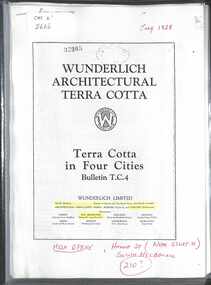
... Wunderlich Architectural Terra Cotta Bulletin Terra Cotta in Four Cities TC4 July 1924|Extract Entrance Doorway Davies Doery Pty Ltd Flinders Lane Melbourne|Wunderlich Architectural Terra Cotta Bulletin Terra Cotta Facades TC2 December 1926|Wunderlich Architectural Terra Cotta Bulletin A Versatile Medium TC5 July 1929|Typed Article Durabestos Homes of Colourful Beauty June 1930|Newspaper Article Sunshine Advocate 21 March 1925 New Sunshine factory|Newspaper Article Sunshine Advocate 12 November 1937 Wunderlich factory grows|Newspaper Article Sunshine Advocate 4 April 1925 Advance Sunshine Industrial and domestic development|Extract Cement and Concrete Asbestos Cement 1926|Ernest Julius Wunderlich 1859 to 1945 biography from Australian Dictionary of Biography|Extract Architectural terracotta paterae 1928 to 1929|Newspaper Article Sunshine Advocate 28 August 1926 Another Factory at Sunshine|Extract Wide profiles of Wunderlich tiiles offered by CSR Monier Wunderlich|Extract Monier Concrete Roof Tiles|Typed Report 10 November 2012 Asbestos|Newspaper Article Sunshine Advocate 16 May 1941 Reported Wounded Aboard|Letter to whom it may concern Wieslaw Zielinkski employed by Wunderlich Limited Sunshine|Extract Wunderlich Planning Officer Christiaan Sengers 1965 to 1967|Extract Former Wunderlich now West End Market McIntyre Road Albion|Extract from Internet Principal Clay Types Used in Ceramics|Typed Report The Winston Churchill Memorial Trust of Australia Jennifer Armstrong 2003 Churchill Fellow|Supplement to the Australian Women's Weekly - Page 10 Wunderlich Building Materials Advert Durabestos Building Sheets, Corrugated Durabestos, Modern Metal Ceilings, Terra-Cotta Roofing Tiles, Stainless Steel Sinks & Cermaic Fireplace Surrounds and Hearth Tiles|Molomby & Molomby Solicitor Leter dated 5th September 1986 to The Honourable J. ...Wunderlich McIntyre Road Sunshine north Wunderlich Architectural Terra Cotta Bulletin Terra Cotta in Four Cities TC4 July 1924|Extract Entrance Doorway Davies Doery Pty Ltd Flinders Lane Melbourne|Wunderlich Architectural Terra Cotta Bulletin Terra Cotta Facades TC2 December 1926|Wunderlich Architectural Terra Cotta Bulletin A Versatile Medium TC5 July 1929|Typed Article Durabestos Homes of Colourful Beauty June 1930|Newspaper Article Sunshine Advocate 21 March 1925 New Sunshine factory|Newspaper Article Sunshine Advocate 12 November 1937 Wunderlich factory grows|Newspaper Article Sunshine Advocate 4 April 1925 Advance Sunshine Industrial and domestic development|Extract Cement and Concrete Asbestos Cement 1926|Ernest Julius Wunderlich 1859 to 1945 biography from Australian Dictionary of Biography|Extract Architectural terracotta paterae 1928 to 1929|Newspaper Article Sunshine Advocate 28 August 1926 Another Factory at Sunshine|Extract Wide profiles of Wunderlich tiiles offered by CSR Monier Wunderlich|Extract Monier Concrete Roof Tiles|Typed Report 10 November 2012 Asbestos|Newspaper Article Sunshine Advocate 16 May 1941 Reported Wounded Aboard|Letter to whom it may concern Wieslaw Zielinkski employed by Wunderlich Limited Sunshine|Extract Wunderlich Planning Officer Christiaan Sengers 1965 to 1967|Extract Former Wunderlich now West End Market McIntyre Road Albion|Extract from Internet Principal Clay Types Used in Ceramics|Typed Report The Winston Churchill Memorial Trust of Australia Jennifer Armstrong 2003 Churchill Fellow|Supplement to the Australian Women's Weekly - Page 10 Wunderlich Building Materials Advert Durabestos Building Sheets, Corrugated Durabestos, Modern Metal Ceilings, Terra-Cotta Roofing Tiles, Stainless Steel Sinks & Cermaic Fireplace Surrounds and Hearth Tiles|Molomby & Molomby Solicitor Leter dated 5th September 1986 to The Honourable J. ...Wunderlich Architectural Terra Cotta Bulletin Terra Cotta in Four Cities TC4 July 1924|Extract Entrance Doorway Davies Doery Pty Ltd Flinders Lane Melbourne|Wunderlich Architectural Terra Cotta Bulletin Terra Cotta Facades TC2 December 1926|Wunderlich Architectural Terra Cotta Bulletin A Versatile Medium TC5 July 1929|Typed Article Durabestos Homes of Colourful Beauty June 1930|Newspaper Article Sunshine Advocate 21 March 1925 New Sunshine factory|Newspaper Article Sunshine Advocate 12 November 1937 Wunderlich factory grows|Newspaper Article Sunshine Advocate 4 April 1925 Advance Sunshine Industrial and domestic development|Extract Cement and Concrete Asbestos Cement 1926|Ernest Julius Wunderlich 1859 to 1945 biography from Australian Dictionary of Biography|Extract Architectural terracotta paterae 1928 to 1929|Newspaper Article Sunshine Advocate 28 August 1926 Another Factory at Sunshine|Extract Wide profiles of Wunderlich tiiles offered by CSR Monier Wunderlich|Extract Monier Concrete Roof Tiles|Typed Report 10 November 2012 Asbestos|Newspaper Article Sunshine Advocate 16 May 1941 Reported Wounded Aboard|Letter to whom it may concern Wieslaw Zielinkski employed by Wunderlich Limited Sunshine|Extract Wunderlich Planning Officer Christiaan Sengers 1965 to 1967|Extract Former Wunderlich now West End Market McIntyre Road Albion|Extract from Internet Principal Clay Types Used in Ceramics|Typed Report The Winston Churchill Memorial Trust of Australia Jennifer Armstrong 2003 Churchill Fellow|Supplement to the Australian Women's Weekly - Page 10 Wunderlich Building Materials Advert Durabestos Building Sheets, Corrugated Durabestos, Modern Metal Ceilings, Terra-Cotta Roofing Tiles, Stainless Steel Sinks & Cermaic Fireplace Surrounds and Hearth Tiles|Molomby & Molomby Solicitor Leter dated 5th September 1986 to The Honourable J. Kennan with concerns about the granting of a planning permit for the former Wunderlich Factory McIntyre Road Sunshine North|Hand written notes Brian O'Reilly Memorieswunderlich, mcintyre road, sunshine north -
 Sunshine and District Historical Society Incorporated
Book - The Streets of Melbourne From Early Photographs, The Herald & Weekly Times Ltd et al, C1985
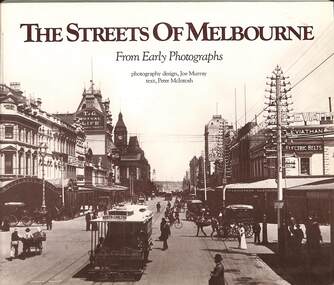
... Notable early photographers like Antoine Fauchery and Richard Daintree captured the essence of Melbourne's streets in the late 1850s, using advanced photographic techniques of the time The book was sponsored for Victoria's 150th Anniversary by the Australian Oil Industry. Melbourne history architecture street landscapes The book describes and displays early photographs of the streets and architecture in Melbourne showcasing its development from the 1850s to the 1890s. ...The book describes and displays early photographs of the streets and architecture in Melbourne showcasing its development from the 1850s to the 1890s.Soft covered booknon-fictionThe book describes and displays early photographs of the streets and architecture in Melbourne showcasing its development from the 1850s to the 1890s.melbourne, history, architecture, street landscapes -
 Robin Boyd Foundation
Newspaper - Clipping, Roger Aldridge, Our architectural conscience, 12.11.1969
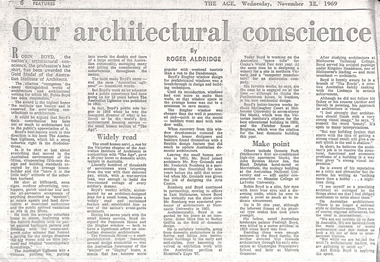
... Australian Institute of Architects. It is a comprehensive biographical piece. Walsh St library Photocopy of newspaper clipping. Our architectural ...This article announces that Robin Boyd had been awarded the Gold medal by the Australian Institute of Architects. It is a comprehensive biographical piece.Photocopy of newspaper clipping.walsh st library -
 Robin Boyd Foundation
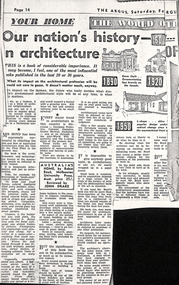
Newspaper - Clipping, John Drake, Our nation's history in architecture
... Australia's Home Walsh St library Photocopy of an article. The last column has not copied correctly, as newspaper must have been crumpled. Our nation's history in architecture ...This a copy of a book review of Robin Boyd's 'Australia's Home'.Photocopy of an article. The last column has not copied correctly, as newspaper must have been crumpled.australia's home, walsh st library
