
Showing 406 items matching "cyril "
-
 Flagstaff Hill Maritime Museum and Village
Equipment - Pattern, Briggs Brass Foundry, 1912-1972
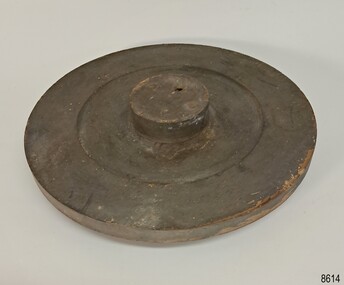
... In 1922, the youngest son, Cyril Falkiner McKinnon Briggs, joined the foundry. ...In 1922, the youngest son, Cyril Falkiner McKinnon Briggs, joined the foundry. ...The wooden pattern forms part of a larger collection; some of them were secured within a durable wooden crate. The cast pattern was an essential tool at Briggs Brass Foundry, specifically designed for creating sand casts. Sand casting is a time-honoured technique, with a history exceeding 2,000 years. The handcrafted nature of this process produces brass and copper alloy items particularly suitable for maritime applications. Typical products include bells, boat hooks, cowls, propellers, handles, lids, rowlocks, hooks, letters, bolts, rail holders, brackets, deck plates, flanges, rudder guides, portholes and covers. The distinctive bronze mixture used at Briggs’ Foundry is copper based. It is composed of local ingots of copper, tin, zinc and lead, blended in precisely measured quantities. The resulting alloy is non-ferrous, known for its exceptional durability and longevity. HISTORY OF BRIGGS MARINE: The Briggs Brass Foundry, trading as Briggs & Son Foundry, was established in 1912 by Herbert Harrison Briggs (1863-1931) with his son George Edward Briggs. In 1922, the youngest son, Cyril Falkiner McKinnon Briggs, joined the foundry. After Herbert died in 1931, his sons George and Cyril ran the foundry. The business became known as Briggs Marine Foundry, the “non-ferrous founders” and “bell specialists”. The foundry products were made using the traditional sand-casting method, which is now over two thousand years old and is becoming a dying art. The foundry operated at 70 Wellington St, Collingwood, and specialised in casting ship bells and other marine equipment and fittings. It also made decorative items such as miniature ship propellers. The great-granddaughter of Herbert Briggs inherited a Briggs brass bell, similar to one at Flagstaff Hill Maritime Village. In 1965, Cyril was the only remaining family member involved in Briggs Marine Products. The firm relocated to Chesterville Rd, Moorabbin and Cyril went into partnership with Frank Lee. In the same year, the firm exhibited its products at the 1965 Boat Show. When Cyril passed away in 1967, Frank took over the business with two new partners. After Frank Lee died in 1971, the foundry was run by his son and daughter-in-law, Les and Eva Lee. Briggs Marine still exists today, but the Briggs family is no longer involved. Briggs Foundry had a community-minded retail branch in Warrnambool, selling cast boat fittings and equipment to fishermen and others in the regional marine industry. The branch closed in 1972. In Flagstaff Hill’s formative years, 1972-1975, many Briggs Marine brassware products were generously donated from its Melbourne foundry, along with casting patterns, tools, machinery and a cupboard. EXHIBITION and LEGACY: The donated items were displayed in a simulated Brass Foundry within the Village, where visitors could view them and gain insight into the foundering and metalwork trades that supported maritime industries, including shipwrights and boatbuilders. The castings produced at the foundry were also vital for farmers, manufacturers and other local industries. This exhibit was part of a broader showcase of working crafts, trades and services typical of a Maritime town. The display was available to the public from the completion of the building in 1986 until 1994, when the space was repurposed. It is believed that Briggs Marine’s family members gave personal assistance in setting up the displays in the original village shops, particularly the ‘Brass Foundry’ building. A notable feature of the Village Brass Foundry was the historic Cornish chimney, presented as a working model. This chimney visually demonstrated the process of smelting metal in furnaces and pouring it into sand moulds. Constructed from specially curved bricks, the chimney now stands at about two-thirds of its original height, having been relocated from the Grassmere Cheese factory. The hand-cast sand patterns hold considerable significance due to their association with Briggs Brass Founders, a firm established in the early 20th century and widely recognised for its expertise in producing, repairing, and restoring ship bells and marine equipment. Known for their specialisation in non-ferrous metal casting, Briggs Brass Founders supplied high-quality fittings and equipment for maritime use. The company extended its operations by opening a branch in Warrnambool, where it actively supported the local community. The foundry’s ability to cast essential products was important to local and regional industries, like fishing, farming, manufacturing and commercial businesses. Through its presence, its reputation was reinforced as both a skilled manufacturer and a community-minded enterprise. The foundry is notably associated with the Schomberg Bell at Flagstaff Hill, having restored this small, historic bell to its original condition. The Schomberg Bell is a fine example from a luxury migrant vessel dating back to the mid-19th century, reflecting the craftsmanship and heritage preserved by Briggs Brass Foundry. Pattern; round wooden shape with a wide concave centre and a round flat handle in the middle, painted dark brown. The underside has a large wooden disc added to the centre. The pattern is part of a set of foundry patterns from Briggs Brass Foundry.flagstaff hill, flagstaff hill maritime museum and village, warrnambool, maritime museum, maritime village, great ocean road, shipwreck coast, briggs' bronze, traditional method, trade, sand cast, cast, brass alloy, copper alloy, pattern, mould, foundry, brass foundry, metal foundry, casting, sand mould, sand casting, marine equipment, marine tools, marine fittings, copper tin zinc lead, non-ferrous, non-corrosive, brassware, metalware, foundering, metalwork, maritime, bell founders, ship chandlers, marine products, biggs, briggs family, herbert harrison briggs, h h briggs, george edward briggs, cyril falkiner mckinnon briggs, cyril briggs, briggs & son brass foundry, h h briggs & sons foundry, briggs marine, alliance casting & engineering solutions, grassmere cheese factory, cornish chimney, curved bricks, collingwood, moorabbin, collingwood foundry, moorabbin foundry, 1912, briggs, briggs brass foundry, briggs marine foundry, briggs marine products, frank lee, les lee, eva lee, briggs marine warrnambool, non-ferrous founders, bell specialists, ship bell specialists, founders, metalworking, traditional sand casting, casting pattern, foundry pattern -
 Flagstaff Hill Maritime Museum and Village
Equipment - Pattern, Briggs Brass Foundry, 1912-1972
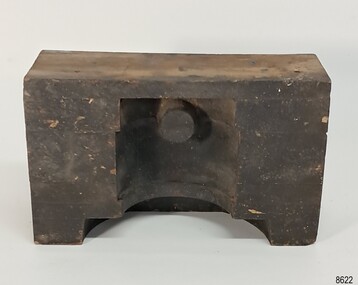
... In 1922, the youngest son, Cyril Falkiner McKinnon Briggs, joined the foundry. ...In 1922, the youngest son, Cyril Falkiner McKinnon Briggs, joined the foundry. ...The wooden pattern forms part of a larger collection; some of them were secured within a durable wooden crate. The cast pattern was an essential tool at Briggs Brass Foundry, specifically designed for creating sand casts. Sand casting is a time-honoured technique, with a history exceeding 2,000 years. The handcrafted nature of this process produces brass and copper alloy items particularly suitable for maritime applications. Typical products include bells, boat hooks, cowls, propellers, handles, lids, rowlocks, hooks, letters, bolts, rail holders, brackets, deck plates, flanges, rudder guides, portholes and covers. The distinctive bronze mixture used at Briggs’ Foundry is copper based. It is composed of local ingots of copper, tin, zinc and lead, blended in precisely measured quantities. The resulting alloy is non-ferrous, known for its exceptional durability and longevity. HISTORY OF BRIGGS MARINE: The Briggs Brass Foundry, trading as Briggs & Son Foundry, was established in 1912 by Herbert Harrison Briggs (1863-1931) with his son George Edward Briggs. In 1922, the youngest son, Cyril Falkiner McKinnon Briggs, joined the foundry. After Herbert died in 1931, his sons George and Cyril ran the foundry. The business became known as Briggs Marine Foundry, the “non-ferrous founders” and “bell specialists”. The foundry products were made using the traditional sand-casting method, which is now over two thousand years old and is becoming a dying art. The foundry operated at 70 Wellington St, Collingwood, and specialised in casting ship bells and other marine equipment and fittings. It also made decorative items such as miniature ship propellers. The great-granddaughter of Herbert Briggs inherited a Briggs brass bell, similar to one at Flagstaff Hill Maritime Village. In 1965, Cyril was the only remaining family member involved in Briggs Marine Products. The firm relocated to Chesterville Rd, Moorabbin and Cyril went into partnership with Frank Lee. In the same year, the firm exhibited its products at the 1965 Boat Show. When Cyril passed away in 1967, Frank took over the business with two new partners. After Frank Lee died in 1971, the foundry was run by his son and daughter-in-law, Les and Eva Lee. Briggs Marine still exists today, but the Briggs family is no longer involved. Briggs Foundry had a community-minded retail branch in Warrnambool, selling cast boat fittings and equipment to fishermen and others in the regional marine industry. The branch closed in 1972. In Flagstaff Hill’s formative years, 1972-1975, many Briggs Marine brassware products were generously donated from its Melbourne foundry, along with casting patterns, tools, machinery and a cupboard. EXHIBITION and LEGACY: The donated items were displayed in a simulated Brass Foundry within the Village, where visitors could view them and gain insight into the foundering and metalwork trades that supported maritime industries, including shipwrights and boatbuilders. The castings produced at the foundry were also vital for farmers, manufacturers and other local industries. This exhibit was part of a broader showcase of working crafts, trades and services typical of a Maritime town. The display was available to the public from the completion of the building in 1986 until 1994, when the space was repurposed. It is believed that Briggs Marine’s family members gave personal assistance in setting up the displays in the original village shops, particularly the ‘Brass Foundry’ building. A notable feature of the Village Brass Foundry was the historic Cornish chimney, presented as a working model. This chimney visually demonstrated the process of smelting metal in furnaces and pouring it into sand moulds. Constructed from specially curved bricks, the chimney now stands at about two-thirds of its original height, having been relocated from the Grassmere Cheese factory. The hand-cast sand patterns hold considerable significance due to their association with Briggs Brass Founders, a firm established in the early 20th century and widely recognised for its expertise in producing, repairing, and restoring ship bells and marine equipment. Known for their specialisation in non-ferrous metal casting, Briggs Brass Founders supplied high-quality fittings and equipment for maritime use. The company extended its operations by opening a branch in Warrnambool, where it actively supported the local community. The foundry’s ability to cast essential products was important to local and regional industries, like fishing, farming, manufacturing and commercial businesses. Through its presence, its reputation was reinforced as both a skilled manufacturer and a community-minded enterprise. The foundry is notably associated with the Schomberg Bell at Flagstaff Hill, having restored this small, historic bell to its original condition. The Schomberg Bell is a fine example from a luxury migrant vessel dating back to the mid-19th century, reflecting the craftsmanship and heritage preserved by Briggs Brass Foundry. Pattern; rectangular wooden block made from laminated sections of wood painted black. A half-cylinder shape was carved into the long side, and a dowel shape was placed at the lower side. The pattern is part of a set of foundry patterns from Briggs Brass Foundry.flagstaff hill, flagstaff hill maritime museum and village, warrnambool, maritime museum, maritime village, great ocean road, shipwreck coast, briggs' bronze, traditional method, trade, sand cast, cast, brass alloy, copper alloy, pattern, mould, foundry, brass foundry, metal foundry, casting, sand mould, sand casting, marine equipment, marine tools, marine fittings, copper tin zinc lead, non-ferrous, non-corrosive, brassware, metalware, foundering, metalwork, maritime, bell founders, ship chandlers, marine products, biggs, briggs family, herbert harrison briggs, h h briggs, george edward briggs, cyril falkiner mckinnon briggs, cyril briggs, briggs & son brass foundry, h h briggs & sons foundry, briggs marine, alliance casting & engineering solutions, grassmere cheese factory, cornish chimney, curved bricks, collingwood, moorabbin, collingwood foundry, moorabbin foundry, 1912, briggs, briggs brass foundry, briggs marine foundry, briggs marine products, frank lee, les lee, eva lee, briggs marine warrnambool, non-ferrous founders, bell specialists, ship bell specialists, founders, metalworking, traditional sand casting, casting pattern, foundry pattern -
 Flagstaff Hill Maritime Museum and Village
Equipment - Pattern, Briggs Brass Foundry, 1912-1972
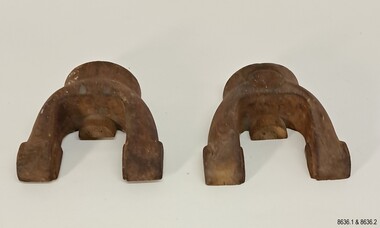
... In 1922, the youngest son, Cyril Falkiner McKinnon Briggs, joined the foundry. ...In 1922, the youngest son, Cyril Falkiner McKinnon Briggs, joined the foundry. ...The wooden pattern forms part of a larger collection; some of them were secured within a durable wooden crate. The cast pattern was an essential tool at Briggs Brass Foundry, specifically designed for creating sand casts. Sand casting is a time-honoured technique, with a history exceeding 2,000 years. The handcrafted nature of this process produces brass and copper alloy items particularly suitable for maritime applications. Typical products include bells, boat hooks, cowls, propellers, handles, lids, rowlocks, hooks, letters, bolts, rail holders, brackets, deck plates, flanges, rudder guides, portholes and covers. The distinctive bronze mixture used at Briggs’ Foundry is copper based. It is composed of local ingots of copper, tin, zinc and lead, blended in precisely measured quantities. The resulting alloy is non-ferrous, known for its exceptional durability and longevity. HISTORY OF BRIGGS MARINE: The Briggs Brass Foundry, trading as Briggs & Son Foundry, was established in 1912 by Herbert Harrison Briggs (1863-1931) with his son George Edward Briggs. In 1922, the youngest son, Cyril Falkiner McKinnon Briggs, joined the foundry. After Herbert died in 1931, his sons George and Cyril ran the foundry. The business became known as Briggs Marine Foundry, the “non-ferrous founders” and “bell specialists”. The foundry products were made using the traditional sand-casting method, which is now over two thousand years old and is becoming a dying art. The foundry operated at 70 Wellington St, Collingwood, and specialised in casting ship bells and other marine equipment and fittings. It also made decorative items such as miniature ship propellers. The great-granddaughter of Herbert Briggs inherited a Briggs brass bell, similar to one at Flagstaff Hill Maritime Village. In 1965, Cyril was the only remaining family member involved in Briggs Marine Products. The firm relocated to Chesterville Rd, Moorabbin and Cyril went into partnership with Frank Lee. In the same year, the firm exhibited its products at the 1965 Boat Show. When Cyril passed away in 1967, Frank took over the business with two new partners. After Frank Lee died in 1971, the foundry was run by his son and daughter-in-law, Les and Eva Lee. Briggs Marine still exists today, but the Briggs family is no longer involved. Briggs Foundry had a community-minded retail branch in Warrnambool, selling cast boat fittings and equipment to fishermen and others in the regional marine industry. The branch closed in 1972. In Flagstaff Hill’s formative years, 1972-1975, many Briggs Marine brassware products were generously donated from its Melbourne foundry, along with casting patterns, tools, machinery and a cupboard. EXHIBITION and LEGACY: The donated items were displayed in a simulated Brass Foundry within the Village, where visitors could view them and gain insight into the foundering and metalwork trades that supported maritime industries, including shipwrights and boatbuilders. The castings produced at the foundry were also vital for farmers, manufacturers and other local industries. This exhibit was part of a broader showcase of working crafts, trades and services typical of a Maritime town. The display was available to the public from the completion of the building in 1986 until 1994, when the space was repurposed. It is believed that Briggs Marine’s family members gave personal assistance in setting up the displays in the original village shops, particularly the ‘Brass Foundry’ building. A notable feature of the Village Brass Foundry was the historic Cornish chimney, presented as a working model. This chimney visually demonstrated the process of smelting metal in furnaces and pouring it into sand moulds. Constructed from specially curved bricks, the chimney now stands at about two-thirds of its original height, having been relocated from the Grassmere Cheese factory. The hand-cast sand patterns hold considerable significance due to their association with Briggs Brass Founders, a firm established in the early 20th century and widely recognised for its expertise in producing, repairing, and restoring ship bells and marine equipment. Known for their specialisation in non-ferrous metal casting, Briggs Brass Founders supplied high-quality fittings and equipment for maritime use. The company extended its operations by opening a branch in Warrnambool, where it actively supported the local community. The foundry’s ability to cast essential products was important to local and regional industries, like fishing, farming, manufacturing and commercial businesses. Through its presence, its reputation was reinforced as both a skilled manufacturer and a community-minded enterprise. The foundry is notably associated with the Schomberg Bell at Flagstaff Hill, having restored this small, historic bell to its original condition. The Schomberg Bell is a fine example from a luxury migrant vessel dating back to the mid-19th century, reflecting the craftsmanship and heritage preserved by Briggs Brass Foundry Pattern: pair of U-shaped carved blocks, unpainted. The blocks have opposing metal pins and holes to hold them together. One block has a disc shape carved into the base. The pattern is part of a set of foundry patterns from Briggs Brass Foundry.flagstaff hill, flagstaff hill maritime museum and village, warrnambool, maritime museum, maritime village, great ocean road, shipwreck coast, briggs' bronze, traditional method, trade, sand cast, cast, brass alloy, copper alloy, pattern, mould, foundry, brass foundry, metal foundry, casting, sand mould, sand casting, marine equipment, marine tools, marine fittings, copper tin zinc lead, non-ferrous, non-corrosive, brassware, metalware, foundering, metalwork, maritime, bell founders, ship chandlers, marine products, biggs, briggs family, herbert harrison briggs, h h briggs, george edward briggs, cyril falkiner mckinnon briggs, cyril briggs, briggs & son brass foundry, h h briggs & sons foundry, briggs marine, alliance casting & engineering solutions, grassmere cheese factory, cornish chimney, curved bricks, collingwood, moorabbin, collingwood foundry, moorabbin foundry, 1912, briggs, briggs brass foundry, briggs marine foundry, briggs marine products, frank lee, les lee, eva lee, briggs marine warrnambool, non-ferrous founders, bell specialists, ship bell specialists, founders, metalworking, traditional sand casting, casting pattern, foundry pattern -
 Flagstaff Hill Maritime Museum and Village
Equipment - Pattern, Briggs Brass Foundry, 1912-1972
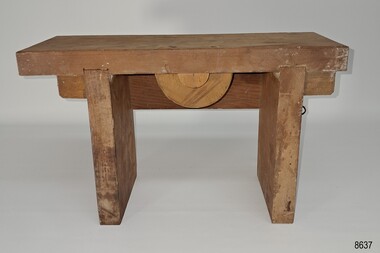
... In 1922, the youngest son, Cyril Falkiner McKinnon Briggs, joined the foundry. ...In 1922, the youngest son, Cyril Falkiner McKinnon Briggs, joined the foundry. ...The wooden pattern forms part of a larger collection; some of them were secured within a durable wooden crate. The cast pattern was an essential tool at Briggs Brass Foundry, specifically designed for creating sand casts. Sand casting is a time-honoured technique, with a history exceeding 2,000 years. The handcrafted nature of this process produces brass and copper alloy items particularly suitable for maritime applications. Typical products include bells, boat hooks, cowls, propellers, handles, lids, rowlocks, hooks, letters, bolts, rail holders, brackets, deck plates, flanges, rudder guides, portholes and covers. The distinctive bronze mixture used at Briggs’ Foundry is copper based. It is composed of local ingots of copper, tin, zinc and lead, blended in precisely measured quantities. The resulting alloy is non-ferrous, known for its exceptional durability and longevity. HISTORY OF BRIGGS MARINE: The Briggs Brass Foundry, trading as Briggs & Son Foundry, was established in 1912 by Herbert Harrison Briggs (1863-1931) with his son George Edward Briggs. In 1922, the youngest son, Cyril Falkiner McKinnon Briggs, joined the foundry. After Herbert died in 1931, his sons George and Cyril ran the foundry. The business became known as Briggs Marine Foundry, the “non-ferrous founders” and “bell specialists”. The foundry products were made using the traditional sand-casting method, which is now over two thousand years old and is becoming a dying art. The foundry operated at 70 Wellington St, Collingwood, and specialised in casting ship bells and other marine equipment and fittings. It also made decorative items such as miniature ship propellers. The great-granddaughter of Herbert Briggs inherited a Briggs brass bell, similar to one at Flagstaff Hill Maritime Village. In 1965, Cyril was the only remaining family member involved in Briggs Marine Products. The firm relocated to Chesterville Rd, Moorabbin and Cyril went into partnership with Frank Lee. In the same year, the firm exhibited its products at the 1965 Boat Show. When Cyril passed away in 1967, Frank took over the business with two new partners. After Frank Lee died in 1971, the foundry was run by his son and daughter-in-law, Les and Eva Lee. Briggs Marine still exists today, but the Briggs family is no longer involved. Briggs Foundry had a community-minded retail branch in Warrnambool, selling cast boat fittings and equipment to fishermen and others in the regional marine industry. The branch closed in 1972. In Flagstaff Hill’s formative years, 1972-1975, many Briggs Marine brassware products were generously donated from its Melbourne foundry, along with casting patterns, tools, machinery and a cupboard. EXHIBITION and LEGACY: The donated items were displayed in a simulated Brass Foundry within the Village, where visitors could view them and gain insight into the foundering and metalwork trades that supported maritime industries, including shipwrights and boatbuilders. The castings produced at the foundry were also vital for farmers, manufacturers and other local industries. This exhibit was part of a broader showcase of working crafts, trades and services typical of a Maritime town. The display was available to the public from the completion of the building in 1986 until 1994, when the space was repurposed. It is believed that Briggs Marine’s family members gave personal assistance in setting up the displays in the original village shops, particularly the ‘Brass Foundry’ building. A notable feature of the Village Brass Foundry was the historic Cornish chimney, presented as a working model. This chimney visually demonstrated the process of smelting metal in furnaces and pouring it into sand moulds. Constructed from specially curved bricks, the chimney now stands at about two-thirds of its original height, having been relocated from the Grassmere Cheese factory. The hand-cast sand patterns hold considerable significance due to their association with Briggs Brass Founders, a firm established in the early 20th century and widely recognised for its expertise in producing, repairing, and restoring ship bells and marine equipment. Known for their specialisation in non-ferrous metal casting, Briggs Brass Founders supplied high-quality fittings and equipment for maritime use. The company extended its operations by opening a branch in Warrnambool, where it actively supported the local community. The foundry’s ability to cast essential products was important to local and regional industries, like fishing, farming, manufacturing and commercial businesses. Through its presence, its reputation was reinforced as both a skilled manufacturer and a community-minded enterprise. The foundry is notably associated with the Schomberg Bell at Flagstaff Hill, having restored this small, historic bell to its original condition. The Schomberg Bell is a fine example from a luxury migrant vessel dating back to the mid-19th century, reflecting the craftsmanship and heritage preserved by Briggs Brass Foundry. Pattern; an unpainted, rectangular wooden frame with a top and sides, similar to a small rectangular stool. A solid half-cylinder shape was added under the horizontal 'seat' with another smaller half-cylinder attached to it, end-to-end. A string is tied between two metal loops attached to the back. There are two X marks stamped into the back. The pattern is part of a set of foundry patterns from Briggs Brass Foundry.Stamped: "X" "X"flagstaff hill, flagstaff hill maritime museum and village, warrnambool, maritime museum, maritime village, great ocean road, shipwreck coast, briggs' bronze, traditional method, trade, sand cast, cast, brass alloy, copper alloy, pattern, mould, foundry, brass foundry, metal foundry, casting, sand mould, sand casting, marine equipment, marine tools, marine fittings, copper tin zinc lead, non-ferrous, non-corrosive, brassware, metalware, foundering, metalwork, maritime, bell founders, ship chandlers, marine products, biggs, briggs family, herbert harrison briggs, h h briggs, george edward briggs, cyril falkiner mckinnon briggs, cyril briggs, briggs & son brass foundry, h h briggs & sons foundry, briggs marine, alliance casting & engineering solutions, grassmere cheese factory, cornish chimney, curved bricks, collingwood, moorabbin, collingwood foundry, moorabbin foundry, 1912, briggs, briggs brass foundry, briggs marine foundry, briggs marine products, frank lee, les lee, eva lee, briggs marine warrnambool, non-ferrous founders, bell specialists, ship bell specialists, founders, metalworking, traditional sand casting, casting pattern, foundry pattern -
 Flagstaff Hill Maritime Museum and Village
Equipment - Pattern, Briggs Brass Foundry, 1912-1972
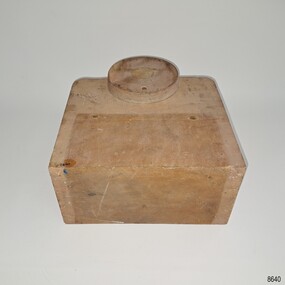
... In 1922, the youngest son, Cyril Falkiner McKinnon Briggs, joined the foundry. ...In 1922, the youngest son, Cyril Falkiner McKinnon Briggs, joined the foundry. ...The wooden pattern forms part of a larger collection; some of them were secured within a durable wooden crate. The cast pattern was an essential tool at Briggs Brass Foundry, specifically designed for creating sand casts. Sand casting is a time-honoured technique, with a history exceeding 2,000 years. The handcrafted nature of this process produces brass and copper alloy items particularly suitable for maritime applications. Typical products include bells, boat hooks, cowls, propellers, handles, lids, rowlocks, hooks, letters, bolts, rail holders, brackets, deck plates, flanges, rudder guides, portholes and covers. The distinctive bronze mixture used at Briggs’ Foundry is copper based. It is composed of local ingots of copper, tin, zinc and lead, blended in precisely measured quantities. The resulting alloy is non-ferrous, known for its exceptional durability and longevity. HISTORY OF BRIGGS MARINE: The Briggs Brass Foundry, trading as Briggs & Son Foundry, was established in 1912 by Herbert Harrison Briggs (1863-1931) with his son George Edward Briggs. In 1922, the youngest son, Cyril Falkiner McKinnon Briggs, joined the foundry. After Herbert died in 1931, his sons George and Cyril ran the foundry. The business became known as Briggs Marine Foundry, the “non-ferrous founders” and “bell specialists”. The foundry products were made using the traditional sand-casting method, which is now over two thousand years old and is becoming a dying art. The foundry operated at 70 Wellington St, Collingwood, and specialised in casting ship bells and other marine equipment and fittings. It also made decorative items such as miniature ship propellers. The great-granddaughter of Herbert Briggs inherited a Briggs brass bell, similar to one at Flagstaff Hill Maritime Village. In 1965, Cyril was the only remaining family member involved in Briggs Marine Products. The firm relocated to Chesterville Rd, Moorabbin and Cyril went into partnership with Frank Lee. In the same year, the firm exhibited its products at the 1965 Boat Show. When Cyril passed away in 1967, Frank took over the business with two new partners. After Frank Lee died in 1971, the foundry was run by his son and daughter-in-law, Les and Eva Lee. Briggs Marine still exists today, but the Briggs family is no longer involved. Briggs Foundry had a community-minded retail branch in Warrnambool, selling cast boat fittings and equipment to fishermen and others in the regional marine industry. The branch closed in 1972. In Flagstaff Hill’s formative years, 1972-1975, many Briggs Marine brassware products were generously donated from its Melbourne foundry, along with casting patterns, tools, machinery and a cupboard. EXHIBITION and LEGACY: The donated items were displayed in a simulated Brass Foundry within the Village, where visitors could view them and gain insight into the foundering and metalwork trades that supported maritime industries, including shipwrights and boatbuilders. The castings produced at the foundry were also vital for farmers, manufacturers and other local industries. This exhibit was part of a broader showcase of working crafts, trades and services typical of a Maritime town. The display was available to the public from the completion of the building in 1986 until 1994, when the space was repurposed. It is believed that Briggs Marine’s family members gave personal assistance in setting up the displays in the original village shops, particularly the ‘Brass Foundry’ building. A notable feature of the Village Brass Foundry was the historic Cornish chimney, presented as a working model. This chimney visually demonstrated the process of smelting metal in furnaces and pouring it into sand moulds. Constructed from specially curved bricks, the chimney now stands at about two-thirds of its original height, having been relocated from the Grassmere Cheese factory. The hand-cast sand patterns hold considerable significance due to their association with Briggs Brass Founders, a firm established in the early 20th century and widely recognised for its expertise in producing, repairing, and restoring ship bells and marine equipment. Known for their specialisation in non-ferrous metal casting, Briggs Brass Founders supplied high-quality fittings and equipment for maritime use. The company extended its operations by opening a branch in Warrnambool, where it actively supported the local community. The foundry’s ability to cast essential products was important to local and regional industries, like fishing, farming, manufacturing and commercial businesses. Through its presence, its reputation was reinforced as both a skilled manufacturer and a community-minded enterprise. The foundry is notably associated with the Schomberg Bell at Flagstaff Hill, having restored this small, historic bell to its original condition. The Schomberg Bell is a fine example from a luxury migrant vessel dating back to the mid-19th century, reflecting the craftsmanship and heritage preserved by Briggs Brass Foundry. Pattern: thick square mostly unopainted wooden block with a solid half-cylinder added to the top, which has rounded shoulders. A disc is added to the front, aligned with the curve at the top. The top curve has orange paint, and the dial is pink. Three holes are drilled in the back, in a triangular configuration. It is similar in shape to a mantle clock or an early-style radio. The pattern is part of a set of foundry patterns from Briggs Brass Foundry.flagstaff hill, flagstaff hill maritime museum and village, warrnambool, maritime museum, maritime village, great ocean road, shipwreck coast, briggs' bronze, traditional method, trade, sand cast, cast, brass alloy, copper alloy, pattern, mould, foundry, brass foundry, metal foundry, casting, sand mould, sand casting, marine equipment, marine tools, marine fittings, copper tin zinc lead, non-ferrous, non-corrosive, brassware, metalware, foundering, metalwork, maritime, bell founders, ship chandlers, marine products, biggs, briggs family, herbert harrison briggs, h h briggs, george edward briggs, cyril falkiner mckinnon briggs, cyril briggs, briggs & son brass foundry, h h briggs & sons foundry, briggs marine, alliance casting & engineering solutions, grassmere cheese factory, cornish chimney, curved bricks, collingwood, moorabbin, collingwood foundry, moorabbin foundry, 1912, briggs, briggs brass foundry, briggs marine foundry, briggs marine products, frank lee, les lee, eva lee, briggs marine warrnambool, non-ferrous founders, bell specialists, ship bell specialists, founders, metalworking, traditional sand casting, casting pattern, foundry pattern -
 Flagstaff Hill Maritime Museum and Village
Equipment - Pattern, Briggs Brass Foundry, 1912-1972
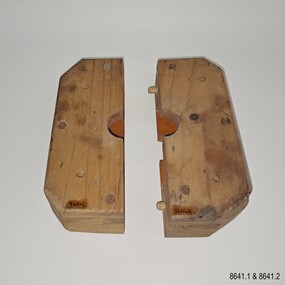
... In 1922, the youngest son, Cyril Falkiner McKinnon Briggs, joined the foundry. ...In 1922, the youngest son, Cyril Falkiner McKinnon Briggs, joined the foundry. ...The wooden pattern forms part of a larger collection; some of them were secured within a durable wooden crate. The cast pattern was an essential tool at Briggs Brass Foundry, specifically designed for creating sand casts. Sand casting is a time-honoured technique, with a history exceeding 2,000 years. The handcrafted nature of this process produces brass and copper alloy items particularly suitable for maritime applications. Typical products include bells, boat hooks, cowls, propellers, handles, lids, rowlocks, hooks, letters, bolts, rail holders, brackets, deck plates, flanges, rudder guides, portholes and covers. The distinctive bronze mixture used at Briggs’ Foundry is copper based. It is composed of local ingots of copper, tin, zinc and lead, blended in precisely measured quantities. The resulting alloy is non-ferrous, known for its exceptional durability and longevity. HISTORY OF BRIGGS MARINE: The Briggs Brass Foundry, trading as Briggs & Son Foundry, was established in 1912 by Herbert Harrison Briggs (1863-1931) with his son George Edward Briggs. In 1922, the youngest son, Cyril Falkiner McKinnon Briggs, joined the foundry. After Herbert died in 1931, his sons George and Cyril ran the foundry. The business became known as Briggs Marine Foundry, the “non-ferrous founders” and “bell specialists”. The foundry products were made using the traditional sand-casting method, which is now over two thousand years old and is becoming a dying art. The foundry operated at 70 Wellington St, Collingwood, and specialised in casting ship bells and other marine equipment and fittings. It also made decorative items such as miniature ship propellers. The great-granddaughter of Herbert Briggs inherited a Briggs brass bell, similar to one at Flagstaff Hill Maritime Village. In 1965, Cyril was the only remaining family member involved in Briggs Marine Products. The firm relocated to Chesterville Rd, Moorabbin and Cyril went into partnership with Frank Lee. In the same year, the firm exhibited its products at the 1965 Boat Show. When Cyril passed away in 1967, Frank took over the business with two new partners. After Frank Lee died in 1971, the foundry was run by his son and daughter-in-law, Les and Eva Lee. Briggs Marine still exists today, but the Briggs family is no longer involved. Briggs Foundry had a community-minded retail branch in Warrnambool, selling cast boat fittings and equipment to fishermen and others in the regional marine industry. The branch closed in 1972. In Flagstaff Hill’s formative years, 1972-1975, many Briggs Marine brassware products were generously donated from its Melbourne foundry, along with casting patterns, tools, machinery and a cupboard. EXHIBITION and LEGACY: The donated items were displayed in a simulated Brass Foundry within the Village, where visitors could view them and gain insight into the foundering and metalwork trades that supported maritime industries, including shipwrights and boatbuilders. The castings produced at the foundry were also vital for farmers, manufacturers and other local industries. This exhibit was part of a broader showcase of working crafts, trades and services typical of a Maritime town. The display was available to the public from the completion of the building in 1986 until 1994, when the space was repurposed. It is believed that Briggs Marine’s family members gave personal assistance in setting up the displays in the original village shops, particularly the ‘Brass Foundry’ building. A notable feature of the Village Brass Foundry was the historic Cornish chimney, presented as a working model. This chimney visually demonstrated the process of smelting metal in furnaces and pouring it into sand moulds. Constructed from specially curved bricks, the chimney now stands at about two-thirds of its original height, having been relocated from the Grassmere Cheese factory. The hand-cast sand patterns hold considerable significance due to their association with Briggs Brass Founders, a firm established in the early 20th century and widely recognised for its expertise in producing, repairing, and restoring ship bells and marine equipment. Known for their specialisation in non-ferrous metal casting, Briggs Brass Founders supplied high-quality fittings and equipment for maritime use. The company extended its operations by opening a branch in Warrnambool, where it actively supported the local community. The foundry’s ability to cast essential products was important to local and regional industries, like fishing, farming, manufacturing and commercial businesses. Through its presence, its reputation was reinforced as both a skilled manufacturer and a community-minded enterprise. The foundry is notably associated with the Schomberg Bell at Flagstaff Hill, having restored this small, historic bell to its original condition. The Schomberg Bell is a fine example from a luxury migrant vessel dating back to the mid-19th century, reflecting the craftsmanship and heritage preserved by Briggs Brass Foundry. Pattern: a pair of blocks that form a rectangle with a carved centre hole and a disc shape inside. The block is made from laminated pieces of wood with cut corners. Both sides have four drilled holes in a square configuration, but in different positions. The cut faces, and the space carved into them, are painted red; one piece has two dowel pins that fit into two drilled holes on the other. The pattern is part of a set of foundry patterns from Briggs Brass Foundry.flagstaff hill, flagstaff hill maritime museum and village, warrnambool, maritime museum, maritime village, great ocean road, shipwreck coast, briggs' bronze, traditional method, trade, sand cast, cast, brass alloy, copper alloy, pattern, mould, foundry, brass foundry, metal foundry, casting, sand mould, sand casting, marine equipment, marine tools, marine fittings, copper tin zinc lead, non-ferrous, non-corrosive, brassware, metalware, foundering, metalwork, maritime, bell founders, ship chandlers, marine products, biggs, briggs family, herbert harrison briggs, h h briggs, george edward briggs, cyril falkiner mckinnon briggs, cyril briggs, briggs & son brass foundry, h h briggs & sons foundry, briggs marine, alliance casting & engineering solutions, grassmere cheese factory, cornish chimney, curved bricks, collingwood, moorabbin, collingwood foundry, moorabbin foundry, 1912, briggs, briggs brass foundry, briggs marine foundry, briggs marine products, frank lee, les lee, eva lee, briggs marine warrnambool, non-ferrous founders, bell specialists, ship bell specialists, founders, metalworking, traditional sand casting, casting pattern, foundry pattern -
 Clunes Museum
Photograph, HERALD & WEEKLY TIMES, 1st Clunes Cubs & Scouts c1958
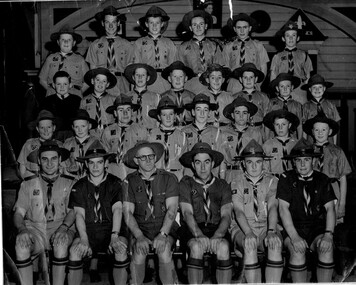
... MIDDLE ROW: IAN VORBACH, BILL MAKER, ARNO VAN BERKEL, BRIAN FOLEY, PETER LAZARUS, RICHARD VINECOMBE, ROBERT CAMPBELL FRONT ROW: HAYDEN TORNEY, PETER BALLINGER, DAID WILLIAMS, CYRIL SWANTON, NEIL HIGGINS, WALLACE BRITTEN, ARTIE VAN RAAPHORST...MIDDLE ROW: IAN VORBACH, BILL MAKER, ARNO VAN BERKEL, BRIAN FOLEY, PETER LAZARUS, RICHARD VINECOMBE, ROBERT CAMPBELL FRONT ROW: HAYDEN TORNEY, PETER BALLINGER, DAID WILLIAMS, CYRIL SWANTON, NEIL HIGGINS, WALLACE BRITTEN, ARTIE VAN RAAPHORST .1 BLACK AND WHITE PHOTOGRAPH SCOUT GROUP .2 BLACK AND WHITE PHOTOGRAPH CUBS GROUP 1st Clunes Cubs & Scouts c1958 Photograph PHOTOGRAPH HERALD & WEEKLY TIMES ....1 BLACK AND WHITE PHOTOGRAPH SCOUT GROUP .2 BLACK AND WHITE PHOTOGRAPH CUBS GROUPON REVERSE: NAMES WRITTEN IN PENCIL; .1 BACK ROW: RON PATTERSON, BARRY WATTS, JOHN CARTER, ALAN JONES, GEOFF CONSTATINE, HAROLD MCRONIE 2ND ROW LESTER CAMPBELL, ALAN HENDRICKSON, GREG PATTERSON, JOHN WORSLEY, BILL VAN BERKEL, BOBBY MEAD, RON JONES, BERTIE VAN RAAPHORST 3RD ROW: GRAEME COOK, UNKNOWN, JOHN WILLIAMS, GRAEME FEATHERSTON, UNKNOWN, UNKNOWN, GRAHAM TOOLE, IAN IODER FRONT ROW: UGO LA IACONO, KEITH OULTON, ALLAN PATTERSON, CYRIL SWANTON, JON PEART, JIM FLYNN .2 BACK ROW: EDDY LUFF, ERIC HENDRICKSON, LAURIE RIENIETS, TREVOR LAZARUS, IAN JONES, LANCE INGRAM. MIDDLE ROW: IAN VORBACH, BILL MAKER, ARNO VAN BERKEL, BRIAN FOLEY, PETER LAZARUS, RICHARD VINECOMBE, ROBERT CAMPBELL FRONT ROW: HAYDEN TORNEY, PETER BALLINGER, DAID WILLIAMS, CYRIL SWANTON, NEIL HIGGINS, WALLACE BRITTEN, ARTIE VAN RAAPHORSTclunes scout group, clunes cub group -
 Warrnambool and District Historical Society Inc.
Book, The Girl Who Played the Game by May Wynne, Early 1930s
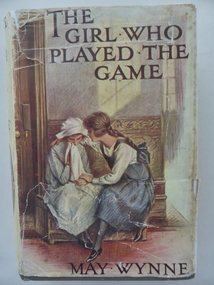
... The name, ‘Dorothy Donalson’ may be a spelling mistake and may be meant to be Dorothy Donaldson who was living in Derby Street, Warrnambool at that time. Her father Cyril and his brother had a timber yard in Raglan Parade....The name, ‘Dorothy Donalson’ may be a spelling mistake and may be meant to be Dorothy Donaldson who was living in Derby Street, Warrnambool at that time. Her father Cyril and his brother had a timber yard in Raglan Parade. ...This book was given as a prize to Dorothy Donalson who was a pupil at the Warrnambool State School. No. 1743. This school was opened in 1876 in Jamieson Street, Warrnambool, following the 1872 Education Act bringing free, secular and compulsory education to Victoria. Several other Government- sponsored primary schools that existed in Warrnambool in the early 1870s closed when the school in Jamieson Street opened. The school still operates today. The name, ‘Dorothy Donalson’ may be a spelling mistake and may be meant to be Dorothy Donaldson who was living in Derby Street, Warrnambool at that time. Her father Cyril and his brother had a timber yard in Raglan Parade.This book is an excellent example of the type of book given as a prize to school girls in Victoria in the 1930s. The author, May Wynne was a popular and prolific writer of the time. If the book belonged to a member of the Donaldson family, then this is of interest as the Donaldson timber business was a prominent one in Warrnambool at the time. This is a hard cover book of 255 pages. The cover is grey with black lettering on the front and the spine and an image of two schoolgirls in black and grey on the front cover. The book also has a dust cover with a multi-coloured image of the same two schoolgirls on the front cover. The dust cover has been reinforced with white paper pasted on the inside of the cover. The name plate is blue-coloured and has an ornamental edging with the information handwritten in black ink. The book contains 18 chapters and has a full-page black and white illustration at the front of the book.‘S.S. No. 1743 Warrnambool Presented to Dorothy Donalson, First Prize, Grade V11 Girls, 1934’ warrnambool state school, dorothy donaldson -
 Melbourne Tram Museum
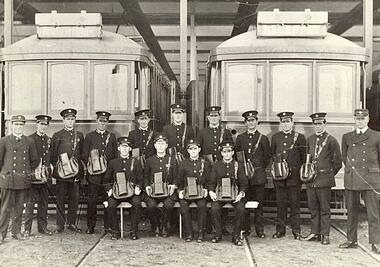
Photograph - Digital Image, State Library of Victoria, "FNPTT Conductors and Inspectors", 1/11/2021 12:00:00 AM
... Inspector Taylor, Les Mitchell, Jack Haliday, Bill Dickenson, Ted Culph, Jack Evans, George Harden, Ern Smith, Bob Thomson, Ern Royston, Inspector Catteral, Cyril Fothergill, Tom Doseford, Jack Russell..."FNPTT Conductors and Inspectors" Photograph Digital Image State Library of Victoria Inspector Taylor, Les Mitchell, Jack Haliday, Bill Dickenson, Ted Culph, Jack Evans, George Harden, Ern Smith, Bob Thomson, Ern Royston, Inspector Catteral, Cyril Fothergill, Tom Doseford, Jack Russell ...Digital image with Email titled "FNPTT Conductors and Inspectors", dated 1/11/2021 forwarding an image of Fitzroy Northcote and Preston Tramways Trust Staff c1920. Image from the State Library of Victoria. Lists the staff in the photo. Photo of crews standing in front of two trams at the Preston (Thornbury) Depot with their Conductors bags.trams, tramways, fnptt, conductors, inspectors, crews, preston depot, thornbury depot -
 Eltham District Historical Society Inc
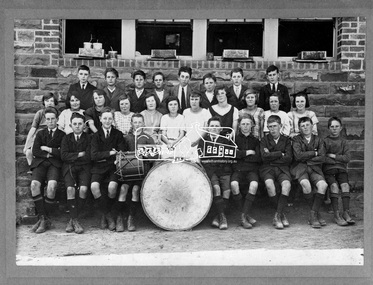
Photograph, State School No. 209. Dalton Street, Eltham, 1923
... Back Row L-R: Garnet Burges, Keith Poulter, Jack McColl, Geoff Braithwaite, Pat Carrucan, Teddy (Alf) Harvey, Jack Carrucan, Jack Burgoyne Second Row L-R: Dorothy Butler, Dulcie Stone, Nell Leadbeater, Gwen Ryan, Gwen Butler, Maisie McColl, Mollie Russell, Phyllis West, Grace Braithwaite, Evie Bunker, Violet Fraser Front Row L-R: Jack Newton, Cyril Bowman, George Harrison, Fred Butterworth, Stan Ellis, Loftus Hancock, Harry Butherway, George Pitcher, Sid Castledine Cross Reference Photo No....Back Row L-R: Garnet Burges, Keith Poulter, Jack McColl, Geoff Braithwaite, Pat Carrucan, Teddy (Alf) Harvey, Jack Carrucan, Jack Burgoyne Second Row L-R: Dorothy Butler, Dulcie Stone, Nell Leadbeater, Gwen Ryan, Gwen Butler, Maisie McColl, Mollie Russell, Phyllis West, Grace Braithwaite, Evie Bunker, Violet Fraser Front Row L-R: Jack Newton, Cyril Bowman, George Harrison, Fred Butterworth, Stan Ellis, Loftus Hancock, Harry Butherway, George Pitcher, Sid Castledine Cross Reference Photo No. ...Back Row L-R: Garnet Burges, Keith Poulter, Jack McColl, Geoff Braithwaite, Pat Carrucan, Teddy (Alf) Harvey, Jack Carrucan, Jack Burgoyne Second Row L-R: Dorothy Butler, Dulcie Stone, Nell Leadbeater, Gwen Ryan, Gwen Butler, Maisie McColl, Mollie Russell, Phyllis West, Grace Braithwaite, Evie Bunker, Violet Fraser Front Row L-R: Jack Newton, Cyril Bowman, George Harrison, Fred Butterworth, Stan Ellis, Loftus Hancock, Harry Butherway, George Pitcher, Sid Castledine Cross Reference Photo No.(s): 641, 642, 672, 717This photo forms part of a collection of photographs gathered by the Shire of Eltham for their centenary project book,"Pioneers and Painters: 100 years of the Shire of Eltham" by Alan Marshall (1971). The collection of over 500 images is held in partnership between Eltham District Historical Society and Yarra Plenty Regional Library (Eltham Library) and is now formally known as the 'The Shire of Eltham Pioneers Photograph Collection.' It is significant in being the first community sourced collection representing the places and people of the Shire's first one hundred years.Digital image and 4 x 5 inch B&W Negsepp, shire of eltham pioneers photograph collection, eltham, dalton street, state school no. 209, cyril bowman, dorothy butler, dulcie stone, evie bunker, fred butterworth, garnet burges, geoff braithwaite, george harrison, george pitcher, grace braithwaite, gwen butler, gwen ryan, harry butherway, jack burgoyne, jack carrucan, jack mccoll, jack newton, keith poulter, loftus hancock, maisie mccoll, mollie russell, nell leadbeater, pat carrucan, phyllis west, sid castledine, stan ellis, teddy (alf) harvey, violet fraser -
 Warrnambool and District Historical Society Inc.
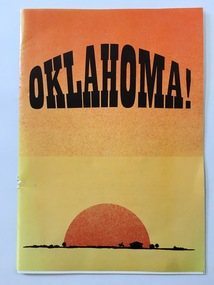
Programme - Oklahoma, 1996
... The husband and wife team of Cyril and Joyce Hayward contributed to make the theatre company well-known in the area for fine productions for over 30 years in the 1960s, 70s and 80s) . ...The husband and wife team of Cyril and Joyce Hayward contributed to make the theatre company well-known in the area for fine productions for over 30 years in the 1960s, 70s and 80s) . ...This is a program for the 1996 Warrnambool Theatre Company production of ‘Oklahoma’. Amateur theatre groups of various kinds have been operating in Warrnambool since the 1860s and a group called the Warrnambool Dramatic Society was operating in the 1950s. In 1958 this group changed its name to the Warrnambool Theatre Group and at a later stage this became the Warrnambool Theatre Company. The husband and wife team of Cyril and Joyce Hayward contributed to make the theatre company well-known in the area for fine productions for over 30 years in the 1960s, 70s and 80s) . Today the Warrnambool Theatre Company continues to produce plays, musicals and concerts on a regular basis. ‘Oklahoma!’ is an oft-produced musical by Rodgers and Hammerstein (1943).This is a program of interest as an example of the type of show produced by the Warrnambool Theatre Company in 1996. This is a 1996 Warrnambool Theatre Company production of ‘Oklahoma’. It has 16 pages and an orange-coloured cover with an image of a rising sun and a landscape outline on the front cover and a Warrnambool Standard advertisement on the back cover. The program contains black and white advertisements, information on the production, cast and crew and photographs of those involved in the production. The pages were stapled but the staples have been removed. ‘oklahoma!’, warrnambool theatre company -
 Clunes Museum
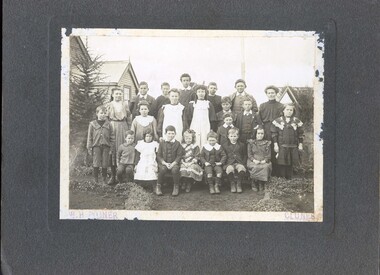
Photograph, c1908
... On Reverse; (written in blue biro) Tourello School Back Row: Chrissie Turnbull, Chris McRae, Colin Robertson, Arthur Roberts, Les Martin, Nicholas Grenfell, Miss Christie, unknown Middle Row: Bill Boyd, Bessie Scarffe, Ethel Turnbull, Lillian Roberts, Alec McRae, Bert Turnbull, Evelyn Grenfell Sitting: Cyril Boyd, Rene Trewin, Alex Trewin, Lyn Turnbull, Bill Grenfell, Norman Martin, unknown Stamped: W.H. ...poiner tourello school On Reverse; (written in blue biro) Tourello School Back Row: Chrissie Turnbull, Chris McRae, Colin Robertson, Arthur Roberts, Les Martin, Nicholas Grenfell, Miss Christie, unknown Middle Row: Bill Boyd, Bessie Scarffe, Ethel Turnbull, Lillian Roberts, Alec McRae, Bert Turnbull, Evelyn Grenfell Sitting: Cyril Boyd, Rene Trewin, Alex Trewin, Lyn Turnbull, Bill Grenfell, Norman Martin, unknown Stamped: W.H. ...Sepia photograph mounted on cardboard of pupils at the Tourello schoolOn Reverse; (written in blue biro) Tourello School Back Row: Chrissie Turnbull, Chris McRae, Colin Robertson, Arthur Roberts, Les Martin, Nicholas Grenfell, Miss Christie, unknown Middle Row: Bill Boyd, Bessie Scarffe, Ethel Turnbull, Lillian Roberts, Alec McRae, Bert Turnbull, Evelyn Grenfell Sitting: Cyril Boyd, Rene Trewin, Alex Trewin, Lyn Turnbull, Bill Grenfell, Norman Martin, unknown Stamped: W.H. Poiner Albert Street Clunes poiner, tourello, school -
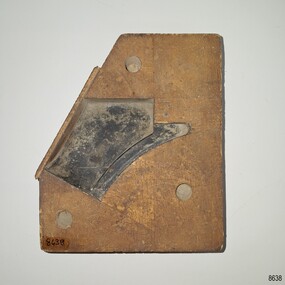 Flagstaff Hill Maritime Museum and Village
Equipment - Pattern, Briggs Brass Foundry, 1912-1972
... In 1922, the youngest son, Cyril Falkiner McKinnon Briggs, joined the foundry. ...In 1922, the youngest son, Cyril Falkiner McKinnon Briggs, joined the foundry. ...The wooden pattern was possibly made for casting a part for Craftman Marine, makers of engines for boats and other applications. It is part of a larger collection; some of them were secured within a durable wooden crate. The cast pattern was an essential tool at Briggs Brass Foundry, specifically designed for creating sand casts. Sand casting is a time-honoured technique, with a history exceeding 2,000 years. The handcrafted nature of this process produces brass and copper alloy items particularly suitable for maritime applications. Typical products include bells, boat hooks, cowls, propellers, handles, lids, rowlocks, hooks, letters, bolts, rail holders, brackets, deck plates, flanges, rudder guides, portholes and covers. The distinctive bronze mixture used at Briggs’ Foundry is copper based. It is composed of local ingots of copper, tin, zinc and lead, blended in precisely measured quantities. The resulting alloy is non-ferrous, known for its exceptional durability and longevity. HISTORY OF BRIGGS MARINE: The Briggs Brass Foundry, trading as Briggs & Son Foundry, was established in 1912 by Herbert Harrison Briggs (1863-1931) with his son George Edward Briggs. In 1922, the youngest son, Cyril Falkiner McKinnon Briggs, joined the foundry. After Herbert died in 1931, his sons George and Cyril ran the foundry. The business became known as Briggs Marine Foundry, the “non-ferrous founders” and “bell specialists”. The foundry products were made using the traditional sand-casting method, which is now over two thousand years old and is becoming a dying art. The foundry operated at 70 Wellington St, Collingwood, and specialised in casting ship bells and other marine equipment and fittings. It also made decorative items such as miniature ship propellers. The great-granddaughter of Herbert Briggs inherited a Briggs brass bell, similar to one at Flagstaff Hill Maritime Village. In 1965, Cyril was the only remaining family member involved in Briggs Marine Products. The firm relocated to Chesterville Rd, Moorabbin and Cyril went into partnership with Frank Lee. In the same year, the firm exhibited its products at the 1965 Boat Show. When Cyril passed away in 1967, Frank took over the business with two new partners. After Frank Lee died in 1971, the foundry was run by his son and daughter-in-law, Les and Eva Lee. Briggs Marine still exists today, but the Briggs family is no longer involved. Briggs Foundry had a community-minded retail branch in Warrnambool, selling cast boat fittings and equipment to fishermen and others in the regional marine industry. The branch closed in 1972. In Flagstaff Hill’s formative years, 1972-1975, many Briggs Marine brassware products were generously donated from its Melbourne foundry, along with casting patterns, tools, machinery and a cupboard. EXHIBITION and LEGACY: The donated items were displayed in a simulated Brass Foundry within the Village, where visitors could view them and gain insight into the foundering and metalwork trades that supported maritime industries, including shipwrights and boatbuilders. The castings produced at the foundry were also vital for farmers, manufacturers and other local industries. This exhibit was part of a broader showcase of working crafts, trades and services typical of a Maritime town. The display was available to the public from the completion of the building in 1986 until 1994, when the space was repurposed. It is believed that Briggs Marine’s family members gave personal assistance in setting up the displays in the original village shops, particularly the ‘Brass Foundry’ building. A notable feature of the Village Brass Foundry was the historic Cornish chimney, presented as a working model. This chimney visually demonstrated the process of smelting metal in furnaces and pouring it into sand moulds. Constructed from specially curved bricks, the chimney now stands at about two-thirds of its original height, having been relocated from the Grassmere Cheese factory. The hand-cast sand patterns hold considerable significance due to their association with Briggs Brass Founders, a firm established in the early 20th century and widely recognised for its expertise in producing, repairing, and restoring ship bells and marine equipment. Known for their specialisation in non-ferrous metal casting, Briggs Brass Founders supplied high-quality fittings and equipment for maritime use. The company extended its operations by opening a branch in Warrnambool, where it actively supported the local community. The foundry’s ability to cast essential products was important to local and regional industries, like fishing, farming, manufacturing and commercial businesses. Through its presence, its reputation was reinforced as both a skilled manufacturer and a community-minded enterprise. The foundry is notably associated with the Schomberg Bell at Flagstaff Hill, having restored this small, historic bell to its original condition. The Schomberg Bell is a fine example from a luxury migrant vessel dating back to the mid-19th century, reflecting the craftsmanship and heritage preserved by Briggs Brass Foundry. Pattern; rectangular wooden block with a corner cut diagonally. A five-sided shape has been carved into the centre, with one side curved inwards and slightly shallower than the other sides. The cut-out area is painted black. Three holes are drilled in the cut-out side to align the pattern with another piece of work. A wooden slat is fixed across the diagonal side. The back of the pattern has a handwritten inscription, possibly by two writers. The pattern is part of a set of foundry patterns from Briggs Brass Foundry and is connected to Craftman Marine.In black handwriting: "1 # H AL" Handwritten in a different hand: "CRAFTMAN MARINE" Written the the first hand: BRIGGS" (or "BRICK")flagstaff hill, flagstaff hill maritime museum and village, warrnambool, maritime museum, maritime village, great ocean road, shipwreck coast, briggs' bronze, traditional method, trade, sand cast, cast, brass alloy, copper alloy, pattern, mould, foundry, brass foundry, metal foundry, casting, sand mould, sand casting, marine equipment, marine tools, marine fittings, copper tin zinc lead, non-ferrous, non-corrosive, brassware, metalware, foundering, metalwork, maritime, bell founders, ship chandlers, marine products, biggs, briggs family, herbert harrison briggs, h h briggs, george edward briggs, cyril falkiner mckinnon briggs, cyril briggs, briggs & son brass foundry, h h briggs & sons foundry, briggs marine, alliance casting & engineering solutions, grassmere cheese factory, cornish chimney, curved bricks, collingwood, moorabbin, collingwood foundry, moorabbin foundry, 1912, craftman marine, craftsman marine, briggs, briggs brass foundry, briggs marine foundry, briggs marine products, frank lee, les lee, eva lee, briggs marine warrnambool, non-ferrous founders, bell specialists, ship bell specialists, founders, metalworking, traditional sand casting, casting pattern, foundry pattern -
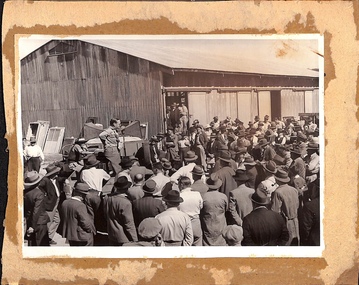 Bendigo Historical Society Inc.
Photograph - IAN DYETT COLLECTION: Photograph. Mounted image of Mr C.J. Curnow
... Black hand writing on the back - (C. J.) Cyril James Curnow Calling the bids First Commonwealth disposal auction Alice Springs. ...Black hand writing on the back - (C. J.) Cyril James Curnow Calling the bids First Commonwealth disposal auction Alice Springs. ...IAN DYETT COLLECTION: Photograph. Mounted image of Mr C.J.Curnow calling for bids at the first Commonwealth disposal auction held in Alice Springs after WW2. C.J. Curnow is standing on some machinery in front of a crowd of manly men, a corrugated iron shed is in the background with three men standing in the doorway. Frederick Cullen Dyett is in the crowd below C.J. Curnow wearing a black hat with his collar up. The photograph in is mounted on light brown card. Black hand writing on the back - (C. J.) Cyril James Curnow Calling the bids First Commonwealth disposal auction Alice Springs. (F.C.) Frederick Cullin Dyett in crowd below C J with black hat and collar upc.j. curnow, !940s auction -
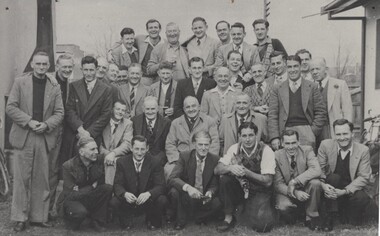 Wodonga & District Historical Society Inc
Photograph - Fred Rochow Railways Collection - Retirement send-off for Claude Clancy and Jack O'Donnell, 1955
... Back row left to right: Bill Baldock, Norm Davey, Tom (Milky) Cosgrove, Lionel McCormick, Bill Welch, Jimmy Lawler, Pat Murphy. 2nd row: Don Shepherd, Brian Putt, Norm O’Neill, Tom Guinane, Allan Smythe, Fred Leitch, Les Cross, Hugh Fraser, Eddy Moss, Colin Whitehand, Max Church, Eric Molloy, Frank Conway, Vin Snow, Stan Warnock, Dave Sutton 3rd row: Tommy Fitzgerald, Claude Clancy, Alex Reid, Jack, O’Donnell 4th row: Frank Rand, Kevin Goocher, Buddy Strachan, Cyril Tannick, Allan Elvish, Wally Riley...Back row left to right: Bill Baldock, Norm Davey, Tom (Milky) Cosgrove, Lionel McCormick, Bill Welch, Jimmy Lawler, Pat Murphy. 2nd row: Don Shepherd, Brian Putt, Norm O’Neill, Tom Guinane, Allan Smythe, Fred Leitch, Les Cross, Hugh Fraser, Eddy Moss, Colin Whitehand, Max Church, Eric Molloy, Frank Conway, Vin Snow, Stan Warnock, Dave Sutton 3rd row: Tommy Fitzgerald, Claude Clancy, Alex Reid, Jack, O’Donnell 4th row: Frank Rand, Kevin Goocher, Buddy Strachan, Cyril Tannick, Allan Elvish, Wally Riley Fred Rochow Railways Collection - Retirement send-off for Claude Clancy and Jack O'Donnell Photograph Fred Rochow Railways Collection - Retirement send-off for Claude Clancy and Jack O'Donnell ...The Fred Rochow Railways Collection incorporates photos related to the operation of the Wodonga Railway Station including different types of trains and railways staff C. 1930 – 1990. It was donated to the Wodonga Historical Society by Fred Rochow, a railwayman who spent many years based in Wodonga. He joined the Victorian Railways on 17th June l947 and retired in 1988. For some time, he was a member of the Australian Federated Union of Locomotive Enginemen and served a term as a member of the Trades Hall Council. He had an extensive knowledge of the struggles that took place to achieve better conditions for railway workers. Fred worked for many years as a fireman and then worked his way up the ranks to driver, experiencing many changes from the days of steam locomotives through to diesel trains, locomotives and even the modern XPT train. He worked throughout Victoria at different stages of his career, with his final working years focused on the northeast of Victoria and the Albury to Melbourne line. After his retirement, Fred continued to share his love of steam miniature trains with the community.This collection has local and statewide significance as it captures images of trains, locomotives and personnel who operated the railway services in Wodonga and throughout Northeast Victoria. The railways played a critical role in opening up Victoria and connecting Australia for trade, business, social communication and transport.Group photo at gathering for the retirement of Claude Clancy and Jack O'Donnell in Wodonga, 1955. Back row left to right: Bill Baldock, Norm Davey, Tom (Milky) Cosgrove, Lionel McCormick, Bill Welch, Jimmy Lawler, Pat Murphy. 2nd row: Don Shepherd, Brian Putt, Norm O’Neill, Tom Guinane, Allan Smythe, Fred Leitch, Les Cross, Hugh Fraser, Eddy Moss, Colin Whitehand, Max Church, Eric Molloy, Frank Conway, Vin Snow, Stan Warnock, Dave Sutton 3rd row: Tommy Fitzgerald, Claude Clancy, Alex Reid, Jack, O’Donnell 4th row: Frank Rand, Kevin Goocher, Buddy Strachan, Cyril Tannick, Allan Elvish, Wally Rileyrailways wodonga, fred rochow, wodonga railwaymen, claude clancy, jack o'donnell -
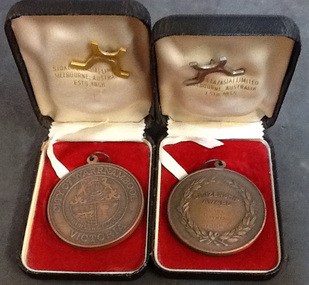 Warrnambool and District Historical Society Inc.
Medal - Warrnambool City Council Citizenship Award -Joyce Hayward, Mid 20th century
... Joyce Hayward and her husband, Cyril came from England to Warrnambool in 1955. ...Joyce Hayward and her husband, Cyril came from England to Warrnambool in 1955. ...Joyce Hayward and her husband, Cyril came from England to Warrnambool in 1955. For 30 years she and her husband were dominant figures in the performing arts organizations in Warrnambool. Joyce was the Director of the Warrnambool Theatre Company from 1955 to 1985 and directed more than 80 plays and musicals. She founded the Warrnambool Calisthenics Club, helped develop the Holiday Actors Company and was a key figure in the revival of the Warrnambool Arts Council in the 1970s. She was a Life Member of the Theatre Group. Along with her husband she helped to develop and build the Warrnambool Performing Arts Centre. She was awarded the British Empire Medal for services to the arts in Warrnambool in 1981. Warrnambool City Council gives Citizenship Awards annually. This is a significant item as it was an important award received by Joyce Hayward, a prominent person in the Warrnambool arts scene for 30 years. This is a bronze-coloured medallion presented to Joyce Hayward as a citizenship award in 1970. It is circular in shape with the crest of the City of Warrnambool on one side and a laurel wreath with inscriptions on the other. It has a metal ring at the top for hanging the item. It is in a black leather box lined with red velvet and white silk and includes a small metal stand to display the medallion. Medallion – City of Warrnambool, Dieu et Mon Droit, By These We Flourish Citizenship Award, J.T.H.Hayward, 1970, Stokes Melb. joyce hayward, warrnambool city council -
 Westbourne Grammar Heritage Collection
Award - Prize Medal 1928
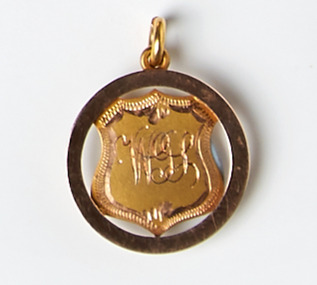
... This medal was donated by past student Cyril Brown in 2012. He received the award at Speech Night 1928 for attending school for three years without missing a day. ...This medal was donated by past student Cyril Brown in 2012. He received the award at Speech Night 1928 for attending school for three years without missing a day. ...This medal was donated by past student Cyril Brown in 2012. He received the award at Speech Night 1928 for attending school for three years without missing a day. This award was not given lightly. In 1926 Mabel Molland said in her Speech Night report, ‘Lorna Banks would have gained the gold medal for three years in succession had she not become ill one week before the school closed’. This medal has historic significance as a medal awarded to a past student and kept for 84 years. It is a rare example of the 3 Years Medal, without which we would not know the physical form of the award, mentioned in a number of Speech Night reports. The Westbourne Grammar Heritage Collection also contains an oral history interview with Mr. Brown which adds to the comparative significance of this item.Small gold medal featuring a shield inside a circle with a small ring at the top which attaches to the ring bail. The front of the shield has decorative engraving of letters 'WGS'. The reverse has engraved words, '3 Years/1928/C. Brown'. There are three hallmarks stamped below the engraved words on the reverse. -
 Mont De Lancey
Container - Vegemite Jar, Kraft Foods, c 1935 - 1945
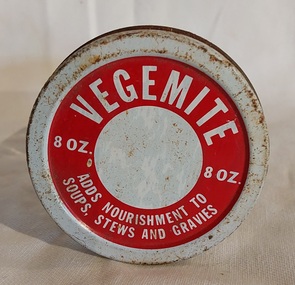
... The Vegemite spread itself was invented in 1923 by Cyril Callister, and initially struggled to gain popularity until it was co-marketed with Kraft cheese. ...The Vegemite spread itself was invented in 1923 by Cyril Callister, and initially struggled to gain popularity until it was co-marketed with Kraft cheese. ...Vintage 8oz clear Vegemite jars, specifically those used between 1935 and 1945, are a piece of Australian food history. These jars, originally used for packaging Vegemite, were often repurposed after use, with some finding new life as storage for beads. The Vegemite spread itself was invented in 1923 by Cyril Callister, and initially struggled to gain popularity until it was co-marketed with Kraft cheese. During World War II, Vegemite's popularity soared as it became a staple in Australian Army rations. Vegemite, a dark yeast extract spread, is a popular Australian food product. It is known for its strong, salty, and slightly bitter flavor. The Kraft brand was historically associated with Vegemite, but the brand is now owned by Bega Cheese. Vegemite is a staple in many Australian households and is often enjoyed on toast with butter. A small clear glass Vegemite jar with a rusted white and red screw top metal lid. On the red band is 'Vegemite 8oz. with suggested use in cooking.The lid has white lettering on a red surrounding band: 'VEGEMITE 8oz . Adds nourishment to soups, stews and gravies' The base of the glass has stamped in a circle -' VEGEMITE 5, 25' 'M (an indecipherable symbol) 18'containers, food containers, foodstuffs, spreads, vegemite -
 Melbourne Legacy
Photograph, Legatees in the Grampians, 1940
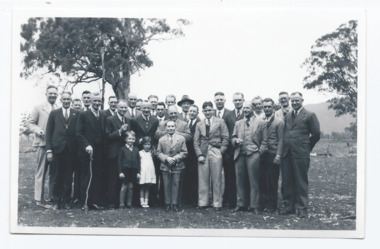
... In the 1970s Legatees Frank Doolan, Cyril Smith and Brian Armstrong were making an attempt to collect items relevant to Legacy's history for an official archive project. ...In the 1970s Legatees Frank Doolan, Cyril Smith and Brian Armstrong were making an attempt to collect items relevant to Legacy's history for an official archive project. ...The photo shows a group of Legatees outdoors possibly in the 1940s as some of the Legatees appear in the Launceston Conference photo from 1940. From the inscription it was a trip to the Grampians 20 years before it was added to the archive. The man in the centre of the front row could be Frank Wittman, who was the smallest man to have enlisted in the 1st AIF and as such the shortest Legatee. Frank Clifford Wittman was only 4ft 4 inches tall (132 cms). Taken from an article in the Bulletin when his medals were sold. He served in both world wars. In the 1970s Legatees Frank Doolan, Cyril Smith and Brian Armstrong were making an attempt to collect items relevant to Legacy's history for an official archive project. They approached legatees for appropriate items and perhaps Aaron Beattie provided this photo then. Delegates from other states were treated to outings when attending Conferences. Strong bonds of comradeship were formed between Legatees.Black and white photo of a group of Legatees in the Grampians.Handwritten on reverse 'with compliments Aaron Beattie' and 'Taken at Grampians over 20 years ago'.legatee event, conference, founding legatee -
 Bendigo Historical Society Inc.
Document - VIKKI SPICER COLLECTION: BENDIGO OPERATIC SOCIETY PERFORMANCE PROGRAMS, Friday 20th, 1970
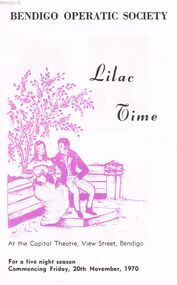
... Permission by Chappell & Co. Ltd. Producer Cyril Holden. Music Franz Schubert. Arranged Heinrich Berte & G.H. ...Permission by Chappell & Co. Ltd. Producer Cyril Holden. Music Franz Schubert. Arranged Heinrich Berte & G.H. ...Bendigo Operatic Society White Programme Booklet, Black Type & Lilac Illustration on cover. Production: 'Lilac Time' Capital Theatre, View Street Bendigo. Five night season. Commencing Friday, 20th November, 1970. Permission by Chappell & Co. Ltd. Producer Cyril Holden. Music Franz Schubert. Arranged Heinrich Berte & G.H. Clutsam. Adaptation & Lyrics Adrian Ross. Choreographer Madge Welch. Cast: Ann Ball, Dorothy Field, Cheryl Marshall, Graeme Daws, John Tonkin, Harry Brewer, Shane Brennan, Ruth Iredale, Peggy Green, Patricia McCracken, Brian Thomas, Douglas Sayle, John McCormack, John Boquest, Neil Roxburgh, Fred Trewarne, Ferd. Lorenz, Michael Filippini, Patrica Lyon, Christine Cavanaugh, Bartina Daws.Printed offset by Cambridge Press, Bendigoclubs and associations, theatre, bendigo operatic society -
 Wangaratta Urban Fire Brigade
1987 presentation dinner, photographs
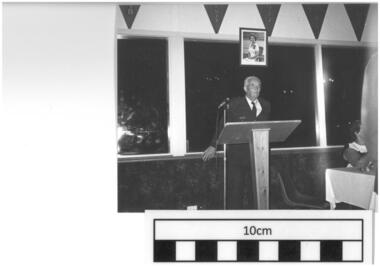
... .28, .29 L-R - Aileen Sanders (12yr badge), Elaine Graham (20yr badge) .30 Jon Briese 35yrs and Cyril Davidson 40 and John Kerr 25yrs - long service awards .31 - S. ....28, .29 L-R - Aileen Sanders (12yr badge), Elaine Graham (20yr badge) .30 Jon Briese 35yrs and Cyril Davidson 40 and John Kerr 25yrs - long service awards .31 - S. ...All photographs taken at the 1997 presentation dinner at the Wangaratta Rovers football club. Wangaratta Brigade members and partners and guests from other brigades and their partners along with 'guests' were always invited. .1 - Trevor Poulter (Chairman) .2 - L - R - ???, Arthur Haynes (regional officer), Tess Haynes .4 - L-R - ???, Trevor Poulter, David Allen (representing council) .5 - L-R - David Allen (representing council, Allan Mills .6 L-R - Brian Potter, Cyril Davidson .7 L-R - Kevin Howard, Brian Humphries (station officer) .8 L-R - Brian Potter, Cyril Davidson .9 L-R - June Poulter, Trevor Poulter, Jack Prendegast, Heinz Baytala .10 L-R - Brian Potter, Pat Briese .11 L-R - Jack Prendegast, Craig Musselwhite (junior) .12 L-R - Barrie Sanders, Brian Potter (giving award to Barrie) .13 L-R - John Rosser, Brian Potter, (35 yr long service medal to John) (Band members in background) .14 L-R - Peter Bell (when was a volunteer), Brian Potter .15 L-R - Jack Prendegast, Craig Musslewhite .16 L-R - Joan Rosser, Gail Humphries .17 L-R - Barrie Sanders (speaking), Brian Potter .18 L-R - Jack Prendergast, Heinz Baytala (winner of the reserve fireman) .19, .20, .21, Members and guests doing the 'progressive barn dance' .22, .23, .24, .25, .26, .27 Wangaratta running team members (end of competition season) - L-R - Eric Lawn, ???, Ron Webb, To Philp, ??? .28, .29 L-R - Aileen Sanders (12yr badge), Elaine Graham (20yr badge) .30 Jon Briese 35yrs and Cyril Davidson 40 and John Kerr 25yrs - long service awards .31 - S. Poulter + wife posing for the camera whilst on the dance floor, with several other people and part of the band in the background .32 - T.Poulter (brigade chairman) standing at the lecturn/microphone speaking - there are 2 others (1 male, 1 female) seated to the right of him at a table .33 - Front L- R - Dorothy Wise (with her back to us), ?, T Poulter. Back L-R - Fire officer(unknown), Dianne Mills .34 - Alex Carmody and wife Judy Carmody .35 - Front R around table to front L - ? , ? , Dianne Mills, Angie Sheetz, Ron Webb, ? , Maxine Webb, Steve Allan .36 - Chief Officer Brian Potter (speaking at lecturn), Arthur Haynes and wife Tess Haynes (seated in background) .37 - L to R around table - Cyril Davidson, Alec Carmody, Judy Carmody, Margaret Howard, Kevin Howard .38 - L to R Rhonda Allan, Jan Marshall (back to us), Stewart Marshall, Steve Allan .39 - L to R Tess Haynes, Arthur Haynes(standing), (Pat Rooks - a guest from Whitfield??), Trevor Poulter, June Poulter, Val Gleeson, Kevin Gleeson (mayor of Wangaratta at the time), Aileen Sanders, Elaine Graham 40 - a 'head and shoulders' photo of S/O Brian Humpfreys. In the photo is also a lady standing on his right - but her head is cut off so cant be identified .41 - Jan Marshall kissing Stewart Marshall S/O (various other members , guest and band in background) .42 - Back L - R - Trevour Poulter, Craig Mussellwhite, Brian Potter (Chief officer), Middle - Elaine Graham, Aileen Sanders Front L - R- Peter Bell, John Briese, Cyril Davidson .43 - L -R around table - Stewart Marshall S/O, Jan Marshall, Tracey Collier, Dianne Mills, ??? (standing), ???, Brendan Collier??, Gayle Humphreys, Brian Humphreys S/O .44 - L to R S/O Stewart Marshall, S/O Brian Humpreys, Jan Marshall (sitting with her head back laughing) .45 - all 3 standing side by side L to R Craige Musselwhite (reserve fireman of the year), Peter Bell (fireman of the year - holding the perpetual trophy shield), Trevor Poulter (runner up fireman of the year) .46 - Steven Poulter and wife .47- A. Hynes standing at lecturn speaking. 47 various photographs from the 1987 presentation dinner at Rovers.1- Nov 1987 Presentation Dinner Chairman Trevor Poulter .2- Nov 1987 Presentation Dinner .3 - Nov 1987 Presentation Dinner L to R S/O Allan S/O Grenfell Chairman Trevor Poulter .29- Nov 1987 Presentation Dinner .30 - Nov 1987 Presentation Dinner L to R FIREMAN JOHN BREEZE, CIRIL DAVIDSON JOHN KERR .31 - Nov 1987 Presentation Dinner S. Poulter + missus .32 - Nov 1987 Presentation Dinner T. Poulter chairman .33 - Presentation Dinner 1987 .34 - Nov 1987 Presentation Dinner .35 - Nov 1987 Presentation Dinner .36 - Nov 1987 Presentation Dinner .37 - Nov 1987 Presentation Dinner .38 - Nov 1987 Presentation Dinner .39 - Nov 1987 Presentation Dinner .40- Nov 1987 Presentation Dinner .41 - Presentation Dinner 1987 Nov S/O Stewart Marshall .42 - Presentation Dinner 1987 Nov S/O Brian Humpreys .44 - Nov 1987 Presentation dinner L to R S/O Stewart Marshal, " Brian Humpreys Jan Marshal .45 - Nov 1987 Presention dinner L to R Craige Musselwhite (reserve fireman of the year) Peter Bell (fireman of the year) Trevor Poulter (runner up) .46 - 1987 Nov. Presentation Dinner Steven Poulter and wife .47 - Nov 1987 Presentation Dinner A.C.O A. Hynesaileen sanders, elaine graham, eric lawn, ron webb, tom philp, jack prendergast, heinz baytala, barrie sanders, brian potter, joan rosser, gail humphries, craig musselwhite, peter bell, john rosser, pat briese, june poulter, trevor poulter, cyril davidson, kevin howard, brian humphries, david allen, allen mills, arthur haynes, tess haynes, john jerr, stephen poulter, alex carmody, judy carmody, dianne mills, angie sheetz, maxine webb, steve allan, jan marshall, a. hynes, margaret howard, rhonda allan, stewart marshall, val gleeson, kevin gleeson, john briese, tracey collier, brendan collier -
 Orbost & District Historical Society
photograph, C 1900
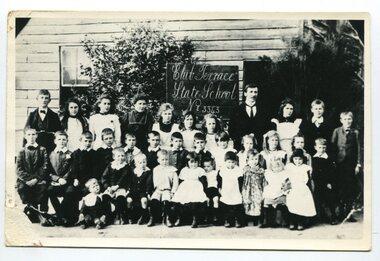
... Later in the same year the school was officially opened by the DI Cyril Bowden. Also present were B. Evans, MLA, B. ...Later in the same year the school was officially opened by the DI Cyril Bowden. Also present were B. Evans, MLA, B. ...Club Terrace, situated in East Gippsland, is important as a timber milling centre. The name probably derived from the ‘Ace of Clubs’ mine which operated for a time there and which took its name from the ‘Ace of Clubs’ cattle brand of still earlier days. The school first opened on 1st of February 1900, the teacher being Samuel Beaver. In 1960 the number of children enrolled grew too great for the little one-room school that had served so well. A modern type school of two rooms, built on a new site away from the mills, was occupied at the beginning of the 1961 school year when R. Lawry and his wife were the teachers. Later in the same year the school was officially opened by the DI Cyril Bowden. Also present were B. Evans, MLA, B. May, MLC and several Councillors from Orbost Shire. This school record is of immediate interest and value to the pupils and staff who have learned and taught in the Club Terrace State State School. The record also has a much wider significance, to the community in which the school is situated, as a record and research tool.A black / white photograph of a group of students and their male teacher standing outside a wooden building. It is labelled " Club Terrace State School No. 3343"on back - "about 1898"education club-terrace-state-school -
 Orbost & District Historical Society
jar, 1993
... A young chemist named Dr. Cyril P Callister, hired by the Fred Walker Company, developed a new spread from brewer’s yeast. ...A young chemist named Dr. Cyril P Callister, hired by the Fred Walker Company, developed a new spread from brewer’s yeast. ...A young chemist named Dr. Cyril P Callister, hired by the Fred Walker Company, developed a new spread from brewer’s yeast. It was claimed as the richest known sources of natural Vitamin B. Labelled as ‘Pure Vegetable Extract’, it was sold in a two ounce amber glass jar and capped with what was known as a Phoenix seal, to keep the contents fresh. A competition inviting the Australian public to create a name for the new spread offered a prize of 50 pounds. finalists. Hundreds of people entered and Fred Walker’s daughter selected the winning name: VEGEMITE. The name of the winning entrant was never placed on record. VEGEMITE spread was then sold from grocers’ shelves. In April 1984, a 115-gram jar of vegemite became the first product in Australia to be electronically scanned at a checkout A commemorative jar was produced to celebrate the occasion of 70 years - 1922-1997.Vegemite is possibly Australia's most iconic food brand. Since the 1930s it has been a major part of this country's cuisine. Yet unlike other Australian icons the attraction of Vegemite has remained local. A tapered brown glass jar with a gold metal lid. The label o the front is red with yellow, white and black print. there is a similar smaller label on the lid. with black writing.On base: a spiral with 10 in centre circle 13573 underneath the spiral above is letter A with raised dots insidevegemite jar -
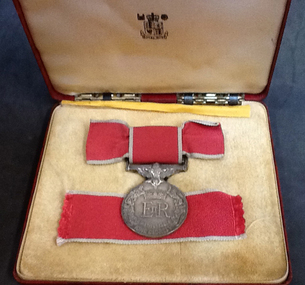 Warrnambool and District Historical Society Inc.
Medal - British Empire Medal Joyce Hayward, Late 20th century
... Joyce Hayward came with her husband Cyril to Warrnambool from England in 1955. ...Joyce Hayward came with her husband Cyril to Warrnambool from England in 1955. ...Joyce Hayward was awarded the British Empire Medal in 1981 for services to the arts in Warrnambool. The British Empire Medal was instituted in 1917 as part of the Order of the British Empire and in 1922 became a separate award known as the British Empire Medal. Joyce Hayward came with her husband Cyril to Warrnambool from England in 1955. For 30 years they were the dominant figures in the performing arts organizations in Warrnambool. Joyce Hayward was the Director of the Warrnambool Theatre Company from 1955 to 1985 and directed more than 80 plays and musicals. She founded the Warrnambool Calisthenics Club, helped develop the Holiday Actors organization and was a key figure in the revival of the Warrnambool Arts Council in the 1970s. She was a Life Member of the Warrnambool Theatre Company. She also helped establish the Performing Arts Centre in Warrnambool. She received the Warrnambool City Council Citizenship Award in 1970.It is a significant honour to be awarded a British Empire Medal and the acquisition by the Warrnambool and District Historical Society of the medal awarded to Joyce Hayward is of considerable importance. It is a rare item.This is a silver medal with a bar attached and clip at the back for the wearer and a red corded ribbon in a bow form on the silver attachment at the top. There is also a separate piece of red ribbon. The medal box is red leather material and lined with cream silk and velvet. Side one: E11R, Instituted by King George V., 4 armorial images, crown Side Two: For God and the Empire, For Meritorious Service, image (possibly Britannia) and a sun british empire medal, joyce hayward -
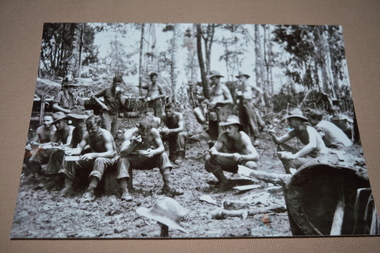 Wangaratta RSL Sub Branch
Photograph, c1945
... GREGORY. SX30255 PRIVATE Cyril MARSHALL VX29721 SIGNALMAN Martin W. ...GREGORY. SX30255 PRIVATE Cyril MARSHALL VX29721 SIGNALMAN Martin W. ...SATTELBERG AREA, NEW GUINEA. 1943-11-15. TROOPS OF THE 2/24TH. AUSTRALIAN INFANTRY BATTALION EATING MEAL DURING A LULL IN THE BATTLE FOR SATTELBERG. THEY ARE: NX10044 ACTING SERGEANT Stewart COLDHAM. (1) VX68432 PRIVATE Harold ANQUETAL. (2) VX80603 PRIVATE Thomas. F. BRYCE. (3) VX41167 PRIVATE Samuel T. SHERLOCK. (4) VX28432 LANCE CORPORAL Kenneth G. NORRIS. (5) ACTING CORPORAL Ralph F. KENYON. (6) VX43055 SIGNALMAN Ernest W. HORNER. (7) NX33751 PRIVATE Arol. J. PEIRCY. (8) VX71588 SIGNALMAN Francis. J. KELLY. (9) VX26381 PRIVATE John BUNNETT. NX86910 SIGNALMAN Ronald E. AMERY. QX13958 SERGEANT James S. GREGORY. SX30255 PRIVATE Cyril MARSHALL VX29721 SIGNALMAN Martin W. REIDY.The 2/24th Battalion was an infantry battalion of the Australian Army, which served during World War II .A unit of all-volunteers, it was formed in July 1940 from primarily Victorian volunteers and was known as "Wangaratta's Own" because of the time the battalion spent in the town during its formative period prior to deployment overseas. It served in North Africa in 1941–1942 as part of the 26th Brigade, which was assigned to the 7th Division, before being reassigned to the 9th Division. In early 1943, the battalion returned to Australia and later took part in campaigns against the Japanese in New Guinea in 1943–1944 and Borneo in 1945, before being disbanded in 1946. The 2/24th suffered the highest number of casualties of any 2nd AIF infantry battalion. The Unit was granted the Freedom of the City by the Rural City of Wangaratta in 1990 and one of the first, if not the first, to receive this type of honourReproduced black and white photograph of large group of soldiers having a meal. Soldiers are seated in the foreground and five standing behind. Nearly all have shirts removed.2/24th battalion, new guinea, ww2 -
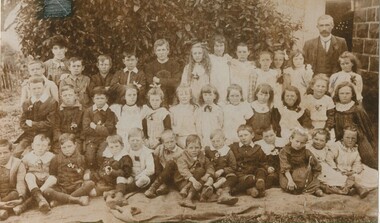 Lake Bolac & District Historical Society
Black and white photograph, Lake Bolac State School No. 854, circa 1908
... Middle: Cliff Murray, Billy Waller, Cyril McMaster, Doris Cameron, Mona McMaster, Rita Golding, Myrtle Golding, Adeline Murphy, Madge Robertson, Kitty Graham, Mary Young, Ann Pitkethly. ...Middle: Cliff Murray, Billy Waller, Cyril McMaster, Doris Cameron, Mona McMaster, Rita Golding, Myrtle Golding, Adeline Murphy, Madge Robertson, Kitty Graham, Mary Young, Ann Pitkethly. ...Pupils and teachers attending the Lake Bolac State School No 854, circa 1908. Back from left: Louis Murray, Mrs J Cameron( Sewing teacher), Boyd Golding, Syd Metherall, Billy Richardson, George Henderson, Bessie Waller, Elsie Park, Isobel Leach, Jessie Leach, Marjorie McMillan, Queenie Cameron ,Mr Pye (Teacher), Vida Golding. Middle: Cliff Murray, Billy Waller, Cyril McMaster, Doris Cameron, Mona McMaster, Rita Golding, Myrtle Golding, Adeline Murphy, Madge Robertson, Kitty Graham, Mary Young, Ann Pitkethly. Front: Alec Murray, Donald Waller, Harry Gale, Les Meek, Eion Murray, Fred Blackham, Les Gale, Fred Walker, Bollie Meek, Jack Young, Lily Blackham, Ruby Young, Minnie Young.lake bolac state school no 854, blackham, cameron, gale, golding, graham, henderson, leach, mcmaster, mcmillan, meek, metherall, murray, murphy, park, pitkethly, pye, richardson, walker, waller, young. -
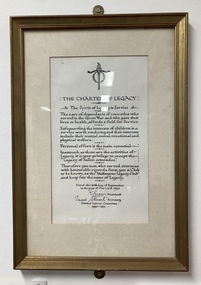 Melbourne Legacy
Work on paper, Legacy Charter, 1930
... An original 1930 Charter of Legacy which was drawn up by Legatee Cyril Smith, and adopted at the 1930 Canberra Conference. ...An original 1930 Charter of Legacy which was drawn up by Legatee Cyril Smith, and adopted at the 1930 Canberra Conference. ...An original 1930 Charter of Legacy which was drawn up by Legatee Cyril Smith, and adopted at the 1930 Canberra Conference. The Spirit of Legacy is Service. The care of dependents of comrades who served in the Great War and who gave their lives or health, affords a field for Service. Safeguarding the interests of children is a service worth rendering and their interests include their mental, moral, vocational and physical welfare. Personal effort is the main essential. In as much as these are the activities of Legacy, it is your privilege to accept the "Legacy of the Fallen comrades". Therefore you men who served overseas with honourable records form you a Club to be known as the "Melbourne Legacy Club" and keep fair the name of Legacy. Dated this 30th day of September in the year of our Lord 1930". Signed by FC Green, President, and James Stewart, Secretary, Central Liaison Committee 1930-1931.A record that the early legatees drew up a Charter for all clubs to follow outlining their main goals.A framed early copy of the Legacy Charter.Signed by two legatees, FC Green and James Stewart in black ink.charter, rules -
 Disability Sport & Recreation Victoria
Newsletter, Paravics Newsletter Vol. 1 No. 20, January 1972 - Paraplegic and Quadriplegic Association of Victoria, February 1972
... The newsletter, the first for 1972, includes numerous news items, including: - Cyril Thomas being congratulated by Paravics on his receiving an M.B.E. - A call for ideas for social events, as well as news of social events. - A walkathon - wheelathon fundraiser. - News on the upcoming Paralympics to be held in Heidelberg, Germany With the introduction of the metric system in Australia, Paravics attempted to use the adoption of the metric system for a fundraising campaign called "mark a metre", which included a poster attached to the newsletter....Paravics Sports Club disabled sports wheelchair sport Cyril Thomas Mike Jarrett metric system Paraplegic and Quadriplegic Association of Victoria As well as three pages of news, this newsletter includes a poster for Paravics "Mark a Metre" fundraising campaign, Three photocopied sheets (6 pages, double-sided), two of the sheets are off-white, and the last sheet is pale orange. ...The Paravics Sports Club, now known as Disability Sport and Recreation Victoria, was formed in 1962 to help a group of eight athletes with disability compete in national and international sporting competitions. Apart from its goal for advocating for greater sporting and recreation opportunities for disabled athletes, Paravics / Paraplegic and Quadriplegic Association of Victoria also sought to bring awareness and advocacy to the general needs of wheelchair bound persons. The newsletter, the first for 1972, includes numerous news items, including: - Cyril Thomas being congratulated by Paravics on his receiving an M.B.E. - A call for ideas for social events, as well as news of social events. - A walkathon - wheelathon fundraiser. - News on the upcoming Paralympics to be held in Heidelberg, Germany With the introduction of the metric system in Australia, Paravics attempted to use the adoption of the metric system for a fundraising campaign called "mark a metre", which included a poster attached to the newsletter.Three photocopied sheets (6 pages, double-sided), two of the sheets are off-white, and the last sheet is pale orange. Stapled together in the top right-hand corner. As well as three pages of news, this newsletter includes a poster for Paravics "Mark a Metre" fundraising campaign,paravics sports club, disabled sports, wheelchair sport, cyril thomas, mike jarrett, metric system, paraplegic and quadriplegic association of victoria -
Disability Sport & Recreation Victoria
Newsletter, Paravics Newsletter Vol. 1 No. 20, January 1972 - Paraplegic and Quadriplegic Association of Victoria, February 1972
... The newsletter, the first for 1972, includes numerous news items, including: - Cyril Thomas being congratulated by Paravics on his receiving an M.B.E. - A call for ideas for social events, as well as news of social events. - A walkathon - wheelathon fundraiser. - News on the upcoming Paralympics to be held in Heidelberg, Germany With the introduction of the metric system in Australia, Paravics attempted to use the adoption of the metric system for a fundraising campaign called "mark a metre", which included a poster attached to the newsletter....The newsletter, the first for 1972, includes numerous news items, including: - Cyril Thomas being congratulated by Paravics on his receiving an M.B.E. - A call for ideas for social events, as well as news of social events. - A walkathon - wheelathon fundraiser. - News on the upcoming Paralympics to be held in Heidelberg, Germany With the introduction of the metric system in Australia, Paravics attempted to use the adoption of the metric system for a fundraising campaign called "mark a metre", which included a poster attached to the newsletter. paravics sports club disabled sports wheelchair sport cyril thomas mike jarrett metric system paraplegic and quadriplegic association of victoria As well as three pages of news, this newsletter includes a poster for Paravics "Mark a Metre" fundraising campaign, Three photocopied sheets (6 pages, double-sided), two of the sheets are off-white, and the last sheet is pale orange. ...The Paravics Sports Club, now known as Disability Sport and Recreation Victoria, was formed in 1962 to help a group of eight athletes with disability compete in national and international sporting competitions. Apart from its goal for advocating for greater sporting and recreation opportunities for disabled athletes, Paravics / Paraplegic and Quadriplegic Association of Victoria also sought to bring awareness and advocacy to the general needs of wheelchair bound persons. The newsletter, the first for 1972, includes numerous news items, including: - Cyril Thomas being congratulated by Paravics on his receiving an M.B.E. - A call for ideas for social events, as well as news of social events. - A walkathon - wheelathon fundraiser. - News on the upcoming Paralympics to be held in Heidelberg, Germany With the introduction of the metric system in Australia, Paravics attempted to use the adoption of the metric system for a fundraising campaign called "mark a metre", which included a poster attached to the newsletter.Three photocopied sheets (6 pages, double-sided), two of the sheets are off-white, and the last sheet is pale orange. Stapled together in the top right-hand corner. As well as three pages of news, this newsletter includes a poster for Paravics "Mark a Metre" fundraising campaign,paravics sports club, disabled sports, wheelchair sport, cyril thomas, mike jarrett, metric system, paraplegic and quadriplegic association of victoria -
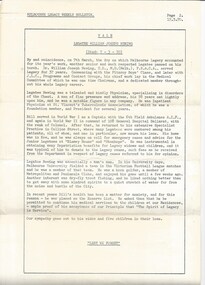 Melbourne Legacy
Article, Vale Legatee Raymond Morgan Hall / Vale Legatee William Joseph Newing, 1970
... The folder appears to have been mostly compiled by Legatee Cyril Smith as he has many hand written notes on miscellaneous pieces of paper (some are envelopes addressed to him). ...The folder appears to have been mostly compiled by Legatee Cyril Smith as he has many hand written notes on miscellaneous pieces of paper (some are envelopes addressed to him). ...A page from a Weekly Bulletin in 1970 farewelling two Legatees. It was in a folder of documents about the history of Legacy. So their service may have been particularly important. The folder appears to have been mostly compiled by Legatee Cyril Smith as he has many hand written notes on miscellaneous pieces of paper (some are envelopes addressed to him). The notes were typed up into a summary of the History of Legacy. Also documents relating to the first time Legacy approached the public for donations in September 1956, including newspaper articles that were reprinted, a schedule of information that was approved to be released to the press, and a list of potential donors that was circulated to Legatees in the hope they could contact the ones they knew personally or professionally. The documents from this folder have been added in seperate records (see 01262 to 01282). The folder was part of an attempt to capture history of Legacy, generally from the 1950s.These obituaries were kept with historical documents though the reason is unclear. The documents provide an insight into the working of Legacy, especially in the 1950s. Legatee Cyril Smith and others were detailing their experiences and knowledge for the future.Foolscap page from the Weekly Bulletin in 1970 to farewell two well known Legateeshistory, obituary
