
Showing 359 items matching "republic"
-
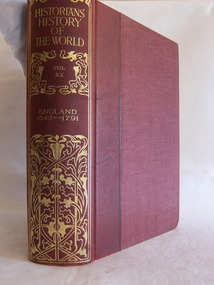 Flagstaff Hill Maritime Museum and Village
Book - Reference Book/History, Henry Smith Williams, The Historians History of the World Vol 20 set 1 - Edited by Henry Smith Williams L.L.D. Published by “The Times” 1908, 1908
... The struggle between King Charles I and Parliament, the rise of Oliver Cromwell, and the temporary transition to a Republic. It highlights the restoration of the monarchy under Charles II,the overthrow of James II and the establishment of a constitutional monarchy under William and Mary (1688). ...The struggle between King Charles I and Parliament, the rise of Oliver Cromwell, and the temporary transition to a Republic. It highlights the restoration of the monarchy under Charles II,the overthrow of James II and the establishment of a constitutional monarchy under William and Mary (1688). ...Henry Smith Williams’ “The Historians' History of the World” is a chronological and geographical "tapestry" of human events, these twenty five volumes occupy a very specific and prestigious place in historical research. Volume 20 focuses on the transformation period of England from the outbreak of the English Civil War to the late 18th century.The Book is part of a 25 volume set with red cloth bindings and gold filigree design to rib.non-fictionHenry Smith Williams’ “The Historians' History of the World” is a chronological and geographical "tapestry" of human events, these twenty five volumes occupy a very specific and prestigious place in historical research. Volume 20 focuses on the transformation period of England from the outbreak of the English Civil War to the late 18th century. warrnambool, flagstaff-hill, flagstaff-hill-maritime-museum, maritime-museum, shipwreck-coast, flagstaff-hill-maritime-village, book, the historians history of the world vol 20 set 1, henry smith williams -
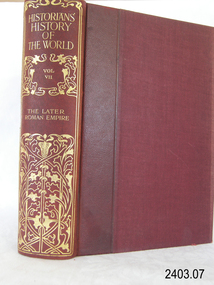 Flagstaff Hill Maritime Museum and Village
Book - Reference Book/History, Henry Smith Williams, The Historians History of the World Vol 7 set 1 - Edited by Henry Smith Williams L.L.D, 1908
... Volume vii shifts the narrative from the fall of the Roman Republic and the early Empire (covered in Vol. 5 and 6) into the complex era of the later Roman Empire and the rise of the Early Byzantine Empire. ...Volume vii shifts the narrative from the fall of the Roman Republic and the early Empire (covered in Vol. 5 and 6) into the complex era of the later Roman Empire and the rise of the Early Byzantine Empire. ...The 1908 edition of The Historians' History of the World is a monumental work of Edwardian scholarship, representing a specific era of "universal history" where the goal was to synthesise all human knowledge into a single narrative. Volume 7 shifts the narrative from the fall of the Roman Republic and the early Empire (covered in Vol. 5 and 6) into the complex era of the later Roman Empire and the rise of the Early Byzantine Empire.Book is part of a 25 volume set with red cloth bindings and gold filigree design to rib. non-fictionThe 1908 edition of The Historians' History of the World is a monumental work of Edwardian scholarship, representing a specific era of "universal history" where the goal was to synthesise all human knowledge into a single narrative. Volume 7 shifts the narrative from the fall of the Roman Republic and the early Empire (covered in Vol. 5 and 6) into the complex era of the later Roman Empire and the rise of the Early Byzantine Empire.flagstaff hill, warrnambool, shipwrecked-coast, flagstaff-hill, flagstaff-hill-maritime-museum, maritime-museum, shipwreck-coast, flagstaff-hill-maritime-village, the historians history of the world, henry smith williams l.l.d. -
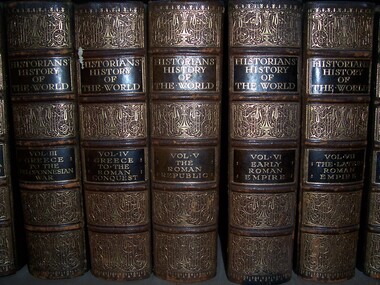 Glenelg Shire Council Cultural Collection
Book, Henry Smith William, LLD, Historians History of the World. Vol I-XXV, 1908
... Vol I: Egypt & Mesopotamia (438.1); Vol II: Israel-Persia India-Pheonicia Asia-Minor (438.2); Vol III: Greece to the Peloponnesian War (438.3); Vol IV: Greece to the Roman Conquest (438.4); Vol V: The Roman Republic (438.5); Vol VI: Early Roman Empire (438.6); Vol VII: The Later Roman (438.7); Vol VIII: Arabs Crusades Papacy (438.8); Vol IX: Italy (438.9); Vol XI: France 843-1715 (438.11); Vol XII: France 1715-1815 (438.12); Vol XIII: France since 1815. ...Vol I: Egypt & Mesopotamia (438.1); Vol II: Israel-Persia India-Pheonicia Asia-Minor (438.2); Vol III: Greece to the Peloponnesian War (438.3); Vol IV: Greece to the Roman Conquest (438.4); Vol V: The Roman Republic (438.5); Vol VI: Early Roman Empire (438.6); Vol VII: The Later Roman (438.7); Vol VIII: Arabs Crusades Papacy (438.8); Vol IX: Italy (438.9); Vol XI: France 843-1715 (438.11); Vol XII: France 1715-1815 (438.12); Vol XIII: France since 1815. ...Leather bound black spine and cover corners with green cloth-covered board covers. Gold lettering and gold graphics on spine. Set contains volumes I-XXV, catalogued as 438.1 - 438.25. Vol I: Egypt & Mesopotamia (438.1); Vol II: Israel-Persia India-Pheonicia Asia-Minor (438.2); Vol III: Greece to the Peloponnesian War (438.3); Vol IV: Greece to the Roman Conquest (438.4); Vol V: The Roman Republic (438.5); Vol VI: Early Roman Empire (438.6); Vol VII: The Later Roman (438.7); Vol VIII: Arabs Crusades Papacy (438.8); Vol IX: Italy (438.9); Vol XI: France 843-1715 (438.11); Vol XII: France 1715-1815 (438.12); Vol XIII: France since 1815. Netherlands (438.13); Vol XIV: Netherlands. Germany (438.14); Vol XV: Germany (continued) (438.15); Vol. XXIII. The United States. Spanish America (438.23); Vol. XXIV. Turkey. Minor Eastern States. China. Japan (438.24).history, world history -
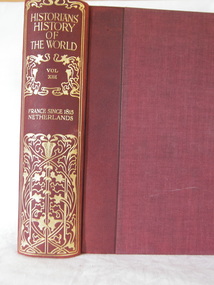 Flagstaff Hill Maritime Museum and Village
Book - Reference Book/History, Henry Smith Williams, The Historians History of the World Vol 13 set 1 - Edited by Henry Smith Williams L.L.D. Published by “The Times” 1908, 1908
... It details the Bourbon Restoration, the July Monarchy of Louis-Philippe, the 1848 Revolution, and the Second Empire under Napoleon III, the Franco-Prussian War, and the subsequent establishment of the “Third Republic” up to the early 20th century. The volume transitions into the history of the Low Countries the Netherlands, exploring their struggle for independence and their development as a global maritime and economic power. ...It details the Bourbon Restoration, the July Monarchy of Louis-Philippe, the 1848 Revolution, and the Second Empire under Napoleon III, the Franco-Prussian War, and the subsequent establishment of the “Third Republic” up to the early 20th century. The volume transitions into the history of the Low Countries the Netherlands, exploring their struggle for independence and their development as a global maritime and economic power. ...Henry Smith Williams’ “The Historians' History of the World” is a chronological and geographical "tapestry" of human events, these twenty five volumes occupy a very specific and prestigious place in historical research. Volume 13 focuses primarily on the modern history of France and the Netherlands. It specifically covers, France (1815–1904.) This section picks up immediately after the fall of Napoleon l following the 1815 Battle of Waterloo.The Book is part of a 25 volume set with red cloth bindings and gold filigree design to rib.non-fictionHenry Smith Williams’ “The Historians' History of the World” is a chronological and geographical "tapestry" of human events, these twenty five volumes occupy a very specific and prestigious place in historical research. Volume 13 focuses primarily on the modern history of France and the Netherlands. It specifically covers, France (1815–1904.) This section picks up immediately after the fall of Napoleon l following the 1815 Battle of Waterloo.flagstaff hill, warrnambool, shipwrecked-coast, flagstaff-hill, flagstaff-hill-maritime-museum, maritime-museum, shipwreck-coast, flagstaff-hill-maritime-village, book, the historians history of the world vol 13 set 1 -
 Federation University Historical Collection
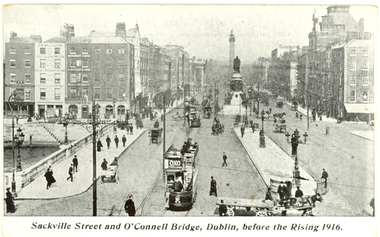
Postcard - Postcards - black and white, Coleman & Co, Dublin before and after the Rising, 1916, c1916
... Members of the Irish Volunteers — led by schoolmaster and Irish language activist Patrick Pearse, joined by the smaller Irish Citizen Army of James Connolly, along with 200 members of Cumann na mBan — seized key locations in Dublin and proclaimed the Irish Republic independent of the United Kingdom. There were some actions in other parts of Ireland: however, except for the attack on the Royal Irish Constabulary barracks at Ashbourne, County Meath, they were minor. ...Members of the Irish Volunteers — led by schoolmaster and Irish language activist Patrick Pearse, joined by the smaller Irish Citizen Army of James Connolly, along with 200 members of Cumann na mBan — seized key locations in Dublin and proclaimed the Irish Republic independent of the United Kingdom. There were some actions in other parts of Ireland: however, except for the attack on the Royal Irish Constabulary barracks at Ashbourne, County Meath, they were minor. ...The Easter Uprising took place in April 1916 in Dublin and is one of the pivotal events in modern Irish history. At the end of the Easter Uprising, 15 men identified as leaders were executed at Kilmainham Jail. To some, these men were traitors, to others they became heroes. (http://www.historylearningsite.co.uk/1916_easter_rising.htm, accessed 16 April 2014) Organised by seven members of the Military Council of the Irish Republican Brotherhood,[3] the Rising began on Easter Monday, 24 April 1916, and lasted for six days. Members of the Irish Volunteers — led by schoolmaster and Irish language activist Patrick Pearse, joined by the smaller Irish Citizen Army of James Connolly, along with 200 members of Cumann na mBan — seized key locations in Dublin and proclaimed the Irish Republic independent of the United Kingdom. There were some actions in other parts of Ireland: however, except for the attack on the Royal Irish Constabulary barracks at Ashbourne, County Meath, they were minor. With vastly superior numbers and the use of artillery, the British army quickly suppressed the Rising, and Pearse agreed to an unconditional surrender on Saturday 29 April. Most of the leaders were executed following courts-martial, but the Rising succeeded in bringing physical force republicanism back to the forefront of Irish politics. (http://en.wikipedia.org/wiki/Easter_Rising, accessed 16/04/2014) Sackville Street Dublin is now known a O'Connell Street.Seven black and white postcards showing photographic scenes before and after the Rising in Dublin.chatham family archive, chatham, holmes, ireland, dublin, uprising, sackville street, o'connell bridge, citizen army, liberty hall, henry street, nelson's pillar, post office, arnott's, abbey street, ruins, hotel metropole, the rising, easter uprising, easter rebellion, o'connell, chatham family archive, chatham, holmes, ireland, dublin, uprising, sackville street, o'connell bridge, citizen army, liberty hall, henry street, nelson's pillar, post office, arnott's, abbey street, ruins, hotel metropole, the rising, easter uprising, easter rebellion, o'connell -
 Federation University Historical Collection
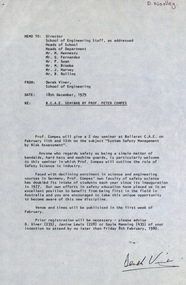
Document - Document - Timetable for Seminar, VIOSH: Ballarat College of Advanced Education; Seminar by Prof Peter Compes, 1980
... Prof Compes was Professor of General Safety Science, University of Wuppertal, Federal Republic of Germany. The seminar was to look at current experiences with accidents and disasters and future projections. ...Prof Compes was Professor of General Safety Science, University of Wuppertal, Federal Republic of Germany. The seminar was to look at current experiences with accidents and disasters and future projections. ...Victorian Institute of Occupational Safety and Health (VIOSH) Australia is the Asia-Pacific centre for teaching and research in occupational health and safety (OHS) and is known as one of Australia's leaders on the field. VIOSH has a global reputation for its innovative approach within the field of OHS management. VIOSH had its first intake of students in 1979. At that time the Institution was known as the Ballarat College of Advanced Education. In 1990 it became known as Ballarat University College, then in 1994 as University of Ballarat. It was 2014 that it became Federation University. VIOSH Australia students are safety managers, senior advisors and experienced OHS professionals. They come from all over Australia and industry. Students are taught active research and enquiry; rather than textbook learning and a one-size fits all approach. VIOSH accepts people into the Graduate Diploma of Occupational Hazard Management who have no undergraduate degree - on the basis of extensive work experience and knowledge. Ballarat College of Advanced Education invited Professor Peter Compes of Germany to conduct a Seminar on the subject "System Safety Management by Risk Assessment". This was to be held over two days in February 1980. Registration to attend was no later than 8 February 1980. Prof Compes was Professor of General Safety Science, University of Wuppertal, Federal Republic of Germany. The seminar was to look at current experiences with accidents and disasters and future projections. The moral. legal and economic need for change and the need for a system safety concept.Five A4 pages - one with news article Signatures of Derek Viner and Derek Woolley. Dates 1977 to 1980.viosh, victorian institute of occupational safety and health, ballarat college of advanced education, derek viner, derek woolley, professor peter compes, professor of general safety science, federal republic of germany, system safety management by risk assessment, seminar, university of wuppertal, school of engineering -
 Bialik College
Medal - No Butterflies in the Ghetto
... Here, a few weeks after his entry into the camp, Pavel Friedman wrote this poem on a piece of paper which was later found after the liberation and donated to the Jewish museum of the Czech Republic. In September 1944 Pavel Friedman was deported to the Oświęcim (Auschwitz) extermination camp where he was killed on an unspecified date. ...Here, a few weeks after his entry into the camp, Pavel Friedman wrote this poem on a piece of paper which was later found after the liberation and donated to the Jewish museum of the Czech Republic. In September 1944 Pavel Friedman was deported to the Oświęcim (Auschwitz) extermination camp where he was killed on an unspecified date. ...The phrase 'no butterflies in the ghetto' is an adaptation from a poem by the young Czech Jew Pavel Friedman. He was 21 years old when he was deported to the Terezín concentration camp/ghetto (Theresienstadt, in German), a few dozen kilometers north of Prague, in the Czech region of Ústí nad Labem. Here, a few weeks after his entry into the camp, Pavel Friedman wrote this poem on a piece of paper which was later found after the liberation and donated to the Jewish museum of the Czech Republic. In September 1944 Pavel Friedman was deported to the Oświęcim (Auschwitz) extermination camp where he was killed on an unspecified date. THE BUTTERFLY The last, the very last, So richly, brightly, dazzlingly yellow. Perhaps if the sun's tears would sing against a white stone. . . . Such, such a yellow Is carried lightly 'way up high. It went away I'm sure because it wished to kiss the world good-bye. For seven weeks I've lived in here, Penned up inside this ghetto. But I have found what I love here. The dandelions call to me And the white chestnut branches in the court. Only I never saw another butterfly. That butterfly was the last one. Butterflies don't live in here, in the ghetto. Beit Lohamei Haghetaot Museum's archive was contacted for release date details. https://www.gfh.org.il/eng Please contact [email protected] to request access to this record. A medal commemorating the Jewish children who perished in the Holocaust. No Butterflies in the Ghetto, #42judiasm, holocaust, children, memory, remember, medal -
 Flagstaff Hill Maritime Museum and Village
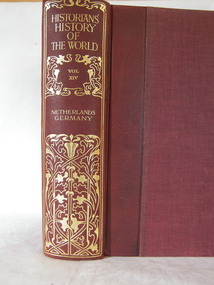
Book - Reference Book/History, Henry Smith Williams, The Historians History of the World Vol 14 set 1 - Edited by Henry Smith Williams L.L.D. Published by “The Times” 1908, 1908
... It covers the decline of the Dutch Republic, the impact of the French Revolution, the Napoleonic era and the Kingdom of Holland. ...It covers the decline of the Dutch Republic, the impact of the French Revolution, the Napoleonic era and the Kingdom of Holland. ...Henry Smith Williams’ “The Historians' History of the World” is a chronological and geographical "tapestry" of human events, these twenty five volumes occupy a very specific and prestigious place in historical research. Volume 14 serves as a bridge between the late early-modern period and the height of the imperial era for two major European powers. It is titled "The Netherlands (concluded), The Germanic Empires."The Book is part of a 25 volume set with red cloth bindings and gold filigree design to rib.non-fictionHenry Smith Williams’ “The Historians' History of the World” is a chronological and geographical "tapestry" of human events, these twenty five volumes occupy a very specific and prestigious place in historical research. Volume 14 serves as a bridge between the late early-modern period and the height of the imperial era for two major European powers. It is titled "The Netherlands (concluded), The Germanic Empires."flagstaff hill, warrnambool, flagstaff-hill-maritime-museum, maritime-museum, shipwreck-coast, flagstaff-hill-maritime-village, book, the historians history of the world vol 14 set 1, henry smith williams -
 Federation University Historical Collection
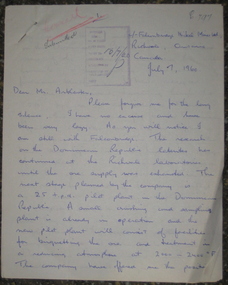
Correspondence, John Clelland to Harry Arblaster (Principal Ballarat School of Mines), 07/07/1960
... After 16 months in the Richvale Laboratory (Toronto) he was transferred to a pilot plant in Dominican Republic. The process was patented in the 1970s. ...After 16 months in the Richvale Laboratory (Toronto) he was transferred to a pilot plant in Dominican Republic. The process was patented in the 1970s. ...John Thomas Huyton Clelland was born in Glasgow, Scotland on 11 June 1936. He arrived in Australia with his family as a 10 year old. He maticulated from Ballarat College in 1953, enrolling at the Ballarat School of Mines in 1954. At the Ballarat School of Mines Clelland excelled in his studies, obtaining over 75% credit passes. Clelland was also a great extra-curricular contributer at the Ballarat School of Mines. He was President of the Students' representative Council, Captain of the Football Team and a member of the cricket team. In 1956 Clelland was awarded the Honour Blazer for sport and general qualities in leadership. In 1957 he won the Ballarat School of Mines Mica Smith Traveling Scholarship. Clelland worked for 6 months in Kalgoorli and 6 months in Mount Isa and Broken Hill. As part of his scholarship he travelled to Canada where he worked with Falconbridge Nickel processing nickel deposits. After 16 months in the Richvale Laboratory (Toronto) he was transferred to a pilot plant in Dominican Republic. The process was patented in the 1970s. He became President and General Manager of Falconbridge Dominicana. While President he established a foundation to aid in the culture, education and living standards for the Dominican People. John Clelland died peacefully at his home on 15 January 2012 at Savannah Georgia, USA . Upon his death John Clelland's wife, Loretta, informed his 'alma mater' that he was 'so proud of the opportunity which was afforded him at the School of Mines in Ballarat.' The University of Ballarat is proud to include John Clelland on our alumni roll.Four pages handwritten in blue ballpoint pen. The writer, John Clelland, was the recipient of the Ballarat School of Mines Mica Smith traveling Scholarship. The letter is addressed to Harry Arblaster, the Principal of the Ballarat School of Mines, and is an overview of Clelland's time in Canada. ballarat school of mines, john clelland, falconbridge nickel, canada, harry arblaster, dominican republic, scholarship, mica smith travelling scholarship, mining alumni -
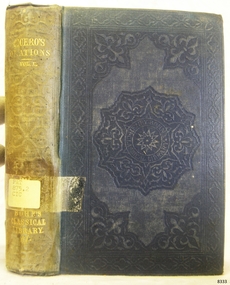 Flagstaff Hill Maritime Museum and Village
Book - Reference Book / Classics, Charles Duke Yonge (Translator), The Orations of Marcus Tullius Cicero Vol 1, 1856
... He lived during the chaotic final decades of the Roman Republic. As a "new man" (novus homo) meaning he came from a family without noble political lineage he rose to Rome's highest office, the consulship, purely through his brilliant legal mind and unmatched public speaking skills. ...He lived during the chaotic final decades of the Roman Republic. As a "new man" (novus homo) meaning he came from a family without noble political lineage he rose to Rome's highest office, the consulship, purely through his brilliant legal mind and unmatched public speaking skills. ...Volume 1 of The Orations of Marcus Tullius Cicero is the beginning in the widely published 4-volume English translation by Charles Duke Yonge for Bohn's Classical Library series and focuses on Cicero's earliest legal masterpieces. The volume captures his meteoric rise from a brilliant young defense attorney to Rome's leading forensic advocate, culminating in his famous take down of a corrupt governor. The core contents in this volume contains several pivotal legal cases, which can be divided into his early legal defenses and his massive prosecution of Verres. Included is Cicero’s very first surviving public speech (delivered in 81 BC). It is a civil partnership dispute regarding property and debt. Notably, Cicero had to argue against Rome's greatest orator of the time, Quintus Hortensius. Key themes in this volume is his fight against corruption and the exposure of provincial extortion and the greed of the Roman senatorial class. He exercised judicial integrity with his struggle to keep Rome's legal courts fair when faced with political bribery and intimidation.The Orations of Marcus Tullius Cicero Vol 1 Translated by C D Yonge Publisher: Henry G Bohn Date: 1856non-fictionVolume 1 of The Orations of Marcus Tullius Cicero is the beginning in the widely published 4-volume English translation by Charles Duke Yonge for Bohn's Classical Library series and focuses on Cicero's earliest legal masterpieces. The volume captures his meteoric rise from a brilliant young defense attorney to Rome's leading forensic advocate, culminating in his famous take down of a corrupt governor. The core contents in this volume contains several pivotal legal cases, which can be divided into his early legal defenses and his massive prosecution of Verres. Included is Cicero’s very first surviving public speech (delivered in 81 BC). It is a civil partnership dispute regarding property and debt. Notably, Cicero had to argue against Rome's greatest orator of the time, Quintus Hortensius. Key themes in this volume is his fight against corruption and the exposure of provincial extortion and the greed of the Roman senatorial class. He exercised judicial integrity with his struggle to keep Rome's legal courts fair when faced with political bribery and intimidation.warrnambool, shipwrecked-coast, flagstaff-hill, flagstaff-hill-maritime-museum, maritime-museum, shipwreck-coast, flagstaff-hill-maritime-village, shipwrecked-artefact, book, pattison collection, warrnambool library, warrnambool mechanics’ institute, ralph eric pattison, corangamite regional library service, warrnambool city librarian, mechanics’ institute library, victorian library board, warrnambool books and records, warrnambool children’s library, great ocean road, the orations of marcus tullius cicero vol 1, the orations of marcus tullius cicero, c d yonge -
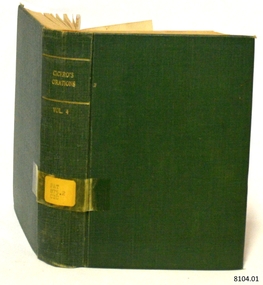 Flagstaff Hill Maritime Museum and Village
Book - Ancient Political Speeches/Reference, Henry George Bohn, The Orations of Marcus Tullius Cicero Vol 4, 1852
... He lived during the chaotic final decades of the Roman Republic. As a "new man" (novus homo) meaning he came from a family without noble political lineage he rose to Rome's highest office, the consulship, purely through his brilliant legal mind and unmatched public speaking skills. ...Cicero was desperately trying to rally the Roman Senate to defend the failing Republic against Antony’s rise to dictatorial power. ...The Orations of Marcus Tullius Cicero, Vol. 4 contains some of the most dramatic political speeches in ancient history. Specifically, this volume includes The Philippics, a series of 14 fierce orations delivered by Cicero against Marcus Antonius (Mark Antony) in 44–43 BC, following the assassination of Julius Caesar. Cicero was desperately trying to rally the Roman Senate to defend the failing Republic against Antony’s rise to dictatorial power. Appended to the back of the volume are Cicero’s works on the art of speaking and argument, including The Treatise on Rhetorical Invention, The Orator, Topics, and On Rhetorical Partitions.The Orations of Marcus Tullius Cicero Vol 4 Author: C D Yonge Publisher: Henry G Bohn Date: 1852 Green cloth hard cover with Library label, title & Vol number on spine in gold letteringnon-fictionThe Orations of Marcus Tullius Cicero, Vol. 4 contains some of the most dramatic political speeches in ancient history. Specifically, this volume includes The Philippics, a series of 14 fierce orations delivered by Cicero against Marcus Antonius (Mark Antony) in 44–43 BC, following the assassination of Julius Caesar. Cicero was desperately trying to rally the Roman Senate to defend the failing Republic against Antony’s rise to dictatorial power. Appended to the back of the volume are Cicero’s works on the art of speaking and argument, including The Treatise on Rhetorical Invention, The Orator, Topics, and On Rhetorical Partitions.warrnambool, shipwrecked-coast, flagstaff-hill, flagstaff-hill-maritime-museum, maritime-museum, flagstaff-hill-maritime-village, shipwrecked-artefact, book, a life, guy de maupassant, warrnambool mechanics’ institute, pattison collection, warrnambool library, corangamite regional library service, warrnambool city librarian, mechanics’ institute library, victorian library board, warrnambool books and records, warrnambool children’s library, ralph eric pattison, marcus tullius cicero, c.d. yonge, bohn's classical library, english translations -
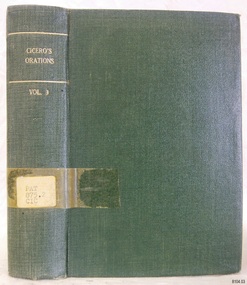 Flagstaff Hill Maritime Museum and Village
Book - Ancient Political Speeches/Reference, Henry George Bohn, The Orations of Marcus Tullius Cicero Vol 3, 1852
... He lived during the chaotic final decades of the Roman Republic. As a "new man" (novus homo) meaning he came from a family without noble political lineage he rose to Rome's highest office, the consulship, purely through his brilliant legal mind and unmatched public speaking skills. ...He lived during the chaotic final decades of the Roman Republic. As a "new man" (novus homo) meaning he came from a family without noble political lineage he rose to Rome's highest office, the consulship, purely through his brilliant legal mind and unmatched public speaking skills. ...The Orations of Marcus Tullius Cicero, Vol. 3 contains some of the most dramatic political speeches in ancient history. Volume 3 of this 1852 edition pivots away from the sweeping state conspiracies found in other volumes and focuses intensely on Cicero's personal political survival and highly dramatic legal defense trials. To understand its contents, you have to look at Cicero's life right before these speeches were given. In 58 BC, Cicero’s bitter enemy, Clodius, passed a law that forced Cicero into exile and destroyed his homes. A year later, Cicero was triumphantly recalled to Rome. Volume 3 is entirely made up of the legal battles and political speeches that followed his return as he fought to reclaim his property, protect his allies, and attack his enemies. If Volume 4 is about Cicero trying to save the dying Roman Republic from Mark Antony, Volume 3 is about Cicero saving his own skin, rebuilding his career, and fighting the corrupt gang politics of 1st-century BC Rome.The Orations of Marcus Tullius Cicero Vol 3 Author: C D Yonge Publisher: Henry G Bohn Date: 1852 Green cloth hard cover with Library label, title & Vol number on spine in gold letteringnon-fictionThe Orations of Marcus Tullius Cicero, Vol. 3 contains some of the most dramatic political speeches in ancient history. Volume 3 of this 1852 edition pivots away from the sweeping state conspiracies found in other volumes and focuses intensely on Cicero's personal political survival and highly dramatic legal defense trials. To understand its contents, you have to look at Cicero's life right before these speeches were given. In 58 BC, Cicero’s bitter enemy, Clodius, passed a law that forced Cicero into exile and destroyed his homes. A year later, Cicero was triumphantly recalled to Rome. Volume 3 is entirely made up of the legal battles and political speeches that followed his return as he fought to reclaim his property, protect his allies, and attack his enemies. If Volume 4 is about Cicero trying to save the dying Roman Republic from Mark Antony, Volume 3 is about Cicero saving his own skin, rebuilding his career, and fighting the corrupt gang politics of 1st-century BC Rome.warrnambool, shipwrecked-coast, flagstaff-hill, flagstaff-hill-maritime-museum, maritime-museum, flagstaff-hill-maritime-village, shipwrecked-artefact, book, a life, guy de maupassant, warrnambool mechanics’ institute, pattison collection, warrnambool library, corangamite regional library service, warrnambool city librarian, mechanics’ institute library, victorian library board, warrnambool books and records, warrnambool children’s library, ralph eric pattison, marcus tullius cicero, c.d. yonge, bohn's classical library, english translations -
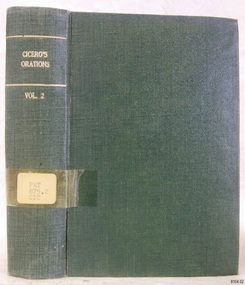 Flagstaff Hill Maritime Museum and Village
Book - Ancient Political Speeches/Reference, Henry George Bohn, The Orations of Marcus Tullius Cicero Vol 2, 1852
... He lived during the chaotic final decades of the Roman Republic. As a "new man" (novus homo) meaning he came from a family without noble political lineage he rose to Rome's highest office, the consulship, purely through his brilliant legal mind and unmatched public speaking skills. ...He lived during the chaotic final decades of the Roman Republic. As a "new man" (novus homo) meaning he came from a family without noble political lineage he rose to Rome's highest office, the consulship, purely through his brilliant legal mind and unmatched public speaking skills. ...Volume 2 of the 1852 Henry G. Bohn edition is arguably the most famous and politically explosive volume in the entire four-part series. While Volume 3 handles his personal survival and Volume 4 addresses his final stand against Mark Antony, Volume 2 captures Cicero at the absolute absolute peak of his political power. This volume contains the speeches from his consulship (the highest office in Rome) in 63 BC, where he single handedly uncovered and dismantled a bloody coup designed to burn down the city of Rome. This volume allows the reader to see Cicero when he was the undisputed "Father of the Fatherland" (Pater Patriae), in this is the volume. It showcases him navigating political bribery, fighting for the cultural value of the arts, and ultimately crushing a domestic terrorist plot against the Roman state.The Orations of Marcus Tullius Cicero Vol 2 Author: C D Yonge Publisher: Henry G Bohn Date: 1852 Green cloth hard cover with Library label, title & Vol number on spine in gold letteringnon-fictionVolume 2 of the 1852 Henry G. Bohn edition is arguably the most famous and politically explosive volume in the entire four-part series. While Volume 3 handles his personal survival and Volume 4 addresses his final stand against Mark Antony, Volume 2 captures Cicero at the absolute absolute peak of his political power. This volume contains the speeches from his consulship (the highest office in Rome) in 63 BC, where he single handedly uncovered and dismantled a bloody coup designed to burn down the city of Rome. This volume allows the reader to see Cicero when he was the undisputed "Father of the Fatherland" (Pater Patriae), in this is the volume. It showcases him navigating political bribery, fighting for the cultural value of the arts, and ultimately crushing a domestic terrorist plot against the Roman state.warrnambool, shipwrecked-coast, flagstaff-hill, flagstaff-hill-maritime-museum, maritime-museum, flagstaff-hill-maritime-village, shipwrecked-artefact, book, a life, guy de maupassant, warrnambool mechanics’ institute, pattison collection, warrnambool library, corangamite regional library service, warrnambool city librarian, mechanics’ institute library, victorian library board, warrnambool books and records, warrnambool children’s library, ralph eric pattison, marcus tullius cicero, c.d. yonge, bohn's classical library, english translations -
 Waverley RSL Sub Branch
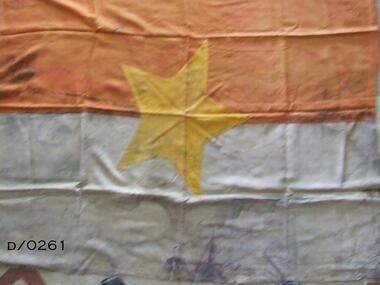
Vietcong Flag Type 5
... They proved highly effective against both ARVN (Army of the Republic of Vietnam) and later against the better equipped American troops. ...They proved highly effective against both ARVN (Army of the Republic of Vietnam) and later against the better equipped American troops. ...The National Liberation Front Flags 1955-1976 The Viet Cong, or National Liberation Front, was the patriot/rebel army based in South Vietnam that fought the South Vietnamese government and the supporting United States troops during the Vietnam War (1959-75). They fought mainly as guerrilla units and rarely as regular army units. They also provided a network of cadre who organized the peasants against the government in the territory they controlled. The Viet Cong were closely allied with the government of North Vietnam. The group was formed in the 1950s by former members of the Viet Minh acting on orders from Hanoi. They proved highly effective against both ARVN (Army of the Republic of Vietnam) and later against the better equipped American troops. There were at least four types of flags, probably more, seen being carried by the Viet Cong. Type #1 had a small yellow star centered over a red and blue striped background, Type #2 had a larger white star centered on the red and light-blue striped background, Type #3 had either a large or small yellow star centered on a red and white striped background, and Type #4 had three vertical stripes of red/white/red with a small gold star centered on the white stripe. Like the early flags of the American Revolution, most flags were hand-made and each flag was a little different. Some examples of these variant flags also had Vietnamese text added to them. http://www.loeser.us/flags/cold.html#vietnamCotton flag with a red upper half and bluish lower half An Orange star is in the centre. The flag is very water damaged with extensive fading of the colour. It was initially difficult to differentiate between a Type 1, Type 3 and Type 5 flag vietcong, flag, -
 Federation University Historical Collection
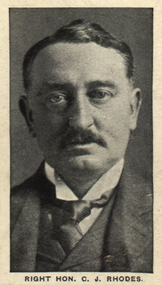
Photograph (black & White), Right Honorable Cecil John Rhodes - South Africa
... He was forced to resign as Prime Minister in 1896 after the disastrous Jameson Raid, an unauthorised attack on Paul Kruger's South African Republic (Transvaal), which sent his brother to prison convicted of high treason and nearly sentenced to death. ...He was forced to resign as Prime Minister in 1896 after the disastrous Jameson Raid, an unauthorised attack on Paul Kruger's South African Republic (Transvaal), which sent his brother to prison convicted of high treason and nearly sentenced to death. ...Cecil Rhodes was a British businessman, mining magnate and politician in South Africa. He was Prime Minister of the Cape Colony from 1890 to 1896. He believed in British Imperialism and he and his British South Africa Company formed the territory of Rhodesia in the early 1890s. He was forced to resign as Prime Minister in 1896 after the disastrous Jameson Raid, an unauthorised attack on Paul Kruger's South African Republic (Transvaal), which sent his brother to prison convicted of high treason and nearly sentenced to death. This event contributed to the outbreak of the Second Boer War. Rhodes went to Kimberley in a political move. During the war the military felt he was more of a liability than an asset and found him intolerable. The officer commanding the garrison of Kimberley, Lieutenant Colonel Robert Kekewich, experienced serious personal difficulties with Rhodes because of the latter's inability to co-operate. However, he still remained a leading figure in the politics of southern Africa. Rhodes was dogged by ill health his whole life. He died in 1902, aged 48, at his seaside cottage in Muizenberg. He was cared for by Leander Starr Jameson during his illness, becoming a trustee of his estate and residuary beneficiary of his will, which allowed him to continue living in Rhode's mansion after his death. His final will left a large area of land on the slopes of Table Mountain. Part of the estate became the upper campus of the University of Cape Town, another part became the Kirstenbosch National Botanical Garden. The rest was spared development and is now an important conservation area. His will also provided for the establishment of the Rhodes Scholarship. Individual image from photographed poster of tobacco and cigarette cards.cecil rhodes, mining magnate south africa, politician south africa, prime minister cape colony, british south africa company, rhodesia, jameson raid, paul kruger, south africa republic, transvaal, second boer war, kimberley, robert kekewich, leander starr jameson, muizenberg, table mountain, university of cape town, kirstenbosch national garden -
 Mission to Seafarers Victoria
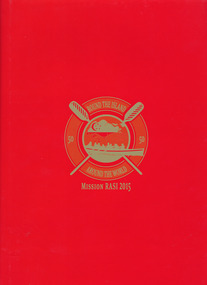
Book, Mission to Seafarers, Round the Island- Around the World - Mission RASI 2015, 2015
... Several corporate organisations such as Norton Rose Fulbright LLP have come on board to fund this event, with the Republic of Singapore Yacht Club providing the team with storage and training facilities. ...Several corporate organisations such as Norton Rose Fulbright LLP have come on board to fund this event, with the Republic of Singapore Yacht Club providing the team with storage and training facilities. ..."In connection with the SG50 celebrations in Singapore, Mission RASI (Row Around Singapore Island) will see a team of Singaporeans join hands with friends from overseas in a test of endurance and teamwork, to raise funds to further the Mission's work in promoting good shipping practices and a safe working environment for seafarers"--Page 4.Red cardboard hard cover book with red paper outer sleeve. 55 pages : color illustrations, color map ; 31 cmnon-fiction"In connection with the SG50 celebrations in Singapore, Mission RASI (Row Around Singapore Island) will see a team of Singaporeans join hands with friends from overseas in a test of endurance and teamwork, to raise funds to further the Mission's work in promoting good shipping practices and a safe working environment for seafarers"--Page 4.mission to seafarers, worldwide, charity, volunteers, singapore, nigel porteous, andrea fleming, london, rasi, row around singapore island, 2015, fundraising, reverend andrew wright, mts london, mts singapore, rowing -
 Bendigo Historical Society Inc.
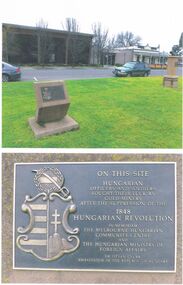
Photograph - HUNGARIAN MEMORIAL
... Dr Istvan Gyurk Ambassador of the Republic of Hungary. Beside the inscription is an emblem. ...Dr Istvan Gyurk Ambassador of the Republic of Hungary. Beside the inscription is an emblem. ...Four pages of coloured photographs of the unveilling of the Hungarian Memorial. Two photos on each page. Page 1 has a man leaning on the memorial and being photographed with a crowd looking on. The second photo shows the crowd and the Memorial before the unveilling. The Australian and Hungarian flags in the background. Across the street is the Foundry Arms Hotel and Safeway Supermarket. Written on the back is: 2 November 2002 Photographed by James Lerk, (written on the back of the four pages). Bendigo Advertiser Photographer Bill Hawkings posing the Hungarian Ambassador. Page 2 shows a litle girl in national dress laying some flowers at the base of the Memorial and a little boy looking on. The second photo is the unveilling. Page 3 shows the plaque on the left and on the right is the Memorial and standing behind it are 6 men, Rod Fyffe is on the left. The two flags behind them. Page 4 shows some children, 2 in national dress, the flowers at the base of the memorial and the men and flags behind them. The second photo is a close up of the side of the Memorial and children in national dress, the flowers and some of the crowd. The inscription reads: On this site Hungarian Officers and Soldiers sought their luck as gold miners after the suppression of the 1848 Hungarian Revolution. In Memoriam. The Melbourne Hungarian Community Centre and the Hungarian Ministry of Foreign Affairs. Dr Istvan Gyurk Ambassador of the Republic of Hungary. Beside the inscription is an emblem. Included is a page from the Memorials Australia website.hungarian memorial, james lerk, bendigo advertiser, bill hawkings -
 Flagstaff Hill Maritime Museum and Village
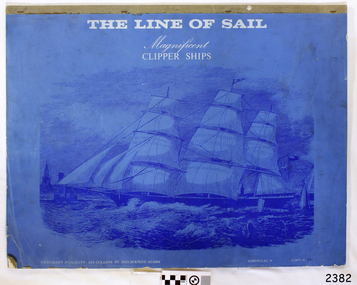
Book - Portfolio, Newcraft Pulicity, The Line of Sail; Magnificent Clipper Ships, 1969
... LIST OF PRINTS- The New Australian Clipper "BLUE JACKET" The Clipper Ship “CHRYSOLIER” The “GAUNTLET” Clipper Ship The New American Clipper “GREAT REPUBLIC” The Clipper Ship “GUIDING STAR” New Emigrant Ship “HESPERIDES” for the South Australian Line Capt. ...LIST OF PRINTS- The New Australian Clipper "BLUE JACKET" The Clipper Ship “CHRYSOLIER” The “GAUNTLET” Clipper Ship The New American Clipper “GREAT REPUBLIC” The Clipper Ship “GUIDING STAR” New Emigrant Ship “HESPERIDES” for the South Australian Line Capt. ...These prints include large sailing ships that were also referred to as Clippers and Tall Ships. These ships were used to transport cargo and passengers across the world in the 19th century. They were powered purely by harnessing the wind. It could take three to four months to sail in this manner from England to Australia. On many occasions the ships were wrecked, often close to their destination, through errors of navigation. The method of production of the original images is over a century old. The Melbourne publisher of this portfolio book, Newcraft Publicity, describes the contents as follows-' Magnificent Clipper Ships: Clipper ships in the line of sail make the most romantic and spectacular pictorial chapter of marine history. This collection depicting early clippers and other types of sailing ships were originally fine engravings on wooden printing blocks used in newspapers a century ago. They were taken directly from the original newspaper prints, and reproduced in enamel inks to provide a choice of fine line prints suitable for framing. LIST OF PRINTS- The New Australian Clipper "BLUE JACKET" The Clipper Ship “CHRYSOLIER” The “GAUNTLET” Clipper Ship The New American Clipper “GREAT REPUBLIC” The Clipper Ship “GUIDING STAR” New Emigrant Ship “HESPERIDES” for the South Australian Line Capt. Beatson’s Expedition in search of Sir John Franklin – the “ISABEL” The Black Ball Line Clipper Ship “JAMES BAINES” The “MERCHANT PRINCE” – Australian Clipper The White Star Line Clipper Ship “MORNING LIGHT” The Aberdeen Clipper Built Barque “PHOENICIAN” New Australian Clipper Ship the “ROYAL FAMILY” The “SOVEREIGN OF THE SEAS” American Clipper The New Iron Clipper Built Ship “TAYLEUR” for Australia H.M. New Frigate “THETIS” The American Clipper Ship “WITCH OF THE WAVE” ABOUT THE PUBLISHER- The Newcraft Publicity was a Melbourne business that operated in the 1960s at 243 Collins Street, Melbourne.This portfolio book of clipper ship prints is historically significant as it shows an important part of Australia's history, It includes some of the shipping lines famous in the 19th century for transporting passengers and goods to Australia. The prints are also significant for their origin in the carved wooden blocks used a century ago for creating images for the newspapers of the time. Book is also significant from being one of a limited edition of books produced. There are copes in both the Victorian State Library and the National Library of Australia.The Line of Sail is a portfolio of sixteen fine line, black and white prints on paper. The subject is clipper ships. The covers are paper-covered card, coloured a strong blue with white line images and text. The image side of the pages has a sheen, the back is matt. Each print has a caption. The top of the book is stapled and bound with grey tape. Produced by Newcraft Publicity, Melbourne. Limited Edition - Copy Number 086. Stamped on front cover "086"flagstaff hill, warrnambool, shipwrecked-coast, flagstaff-hill, flagstaff-hill-maritime-museum, maritime-museum, shipwreck-coast, flagstaff-hill-maritime-village, lithographs, newscraft publicity, book, the line of sail, dlipper ships, tall shipos, sailing ships, wood block print, newspaper drawings, newcraft productions, newcraft melbourne, portfolio of clipper ships, limited edition, wooden engravings, magnificent clipper ships -
 Falls Creek Historical Society
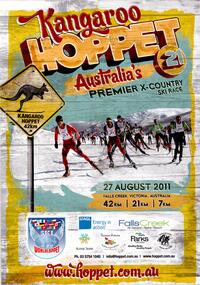
Poster - Kangaroo Hoppet 2011
... In 2011 the Men's Winner was Petr Novak from the Czech Republic in a time of 1:16:04. The winner of the Women's event was Esther Bottomley of Australia in a time of 1:42:22. ...In 2011 the Men's Winner was Petr Novak from the Czech Republic in a time of 1:16:04. The winner of the Women's event was Esther Bottomley of Australia in a time of 1:42:22. ...The Kangaroo Hoppet is Australia’s premier long distance cross country ski race, and a member of the Worldloppet series of international cross country ski events. After running the event for 10 years, it was decided they should become part of the Worldloppet series of marathon ski races. Representatives from the Birkebeiner Nordic Ski Club and the Australian Ski Federation attended the Worldloppet Annual Meeting in Finland in June 1990 to put the case for the acceptance of an Australian event into the Worldloppet series. Before being admitted, they had to demonstrate that the Birkebeiner Club could run a world class event, so three months later in August 1990 a 42km event named the Australian International Ski Marathon was held at Falls Creek together with a 21km Birkebeiner race and a 7km event called the Birkebeiner Lite. The event was approved by delegates from USA, Norway and Austria, in 1991 Australia became the 12th member of Worldloppet, with the condition that there had to be a name change. After some late night discussion allegedly involving red wine from North East Victoria the main event became the 42km Kangaroo Hoppet, with the minor events being the 21km Australian Birkebeiner, and 7km Joey Hoppet. In the winter of 1991, the first Kangaroo Hoppet was held. It was a great success and has been a regular fixture on the international ski calendar ever since. It features the main 42km event as well as a 21km event and a 7km event. The Hoppet brings the Australian snowfields to an international audience. In 2011 the Men's Winner was Petr Novak from the Czech Republic in a time of 1:16:04. The winner of the Women's event was Esther Bottomley of Australia in a time of 1:42:22. Due to lack of snow, the course had to be relocated to the Mt McKay area at the top of the ski resort. The 42km Hoppet course was shortened to 30km.This poster is significant because it documents an event which brings international attention to Falls Creek and the surrounding region.A poster featuring a group of competitors from a previous Hoppet event. A Kangaroo Hoppet road sign is on the left. The page border is yellow. Logos of AGL, Falls Creek All Season Alpine Resort, Alpine Shire, Tourism Victoria, Parks Victoria and the Birkebeiner Nordic Ski Club are across the bottom of the poster.At the top: Kangaroo HOPPET 21 Australia's PREMIER X-COUNTRY SKI RACE On the road sign: KANGAROO HOPPET 42km Beneath the image 27th August 2011/ 42KM 21KM 7KM Below the line of logos: Ph. 03 5754 1045 / [email protected] www.hoppet.com.au Across the bottom in larger cursive text www.hoppet.com.aukangaroo hoppet, worldloppet events, falls creek, mt. beauty -
 Duldig Studio museum + sculpture garden
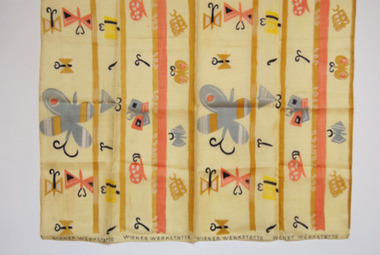
Fabric, Mathilda Flogl, Falter designed by Mathilda Flogl 1924-31, 1924-31
... Mathilde Flögl was born in the Czech Republic in 1893, and studied at the Kunstgerwerbeschule in Vienna. ...Mathilde Flögl was born in the Czech Republic in 1893, and studied at the Kunstgerwerbeschule in Vienna. ...This piece of fabric, known Fälter (butterfly), was designed by Mathilda Flögl (1893-1958), who worked in the textile department of the Wiener Werkstätte in Vienna. It is a remnant of the fabric that was used to make a bedspread for Karl and Slawa’s bed in their Vienna apartment where it lay decoratively over a gold brocade eiderdown. The purchase demonstrated Slawa’s interest in and knowledge of modern design and her commitment to the idea of enriching everyday life with beautiful objects, a principal of the Viennese Secession. Following the Duldigs removal from Vienna, the original bedspread and remnant were safeguarded and preserved by Slawa’s sister, Rella, in the basement of her Paris apartment. In 1948 the bedspread and this remnant were sent to Australia. The bedspread was a much-loved item but deteriorated over the years. In 1955 it was made into curtains, which are held in the Duldig Studio Collection. The Photographs of the bedspread in its original location are also held in the collection. The remnant is in pristine condition. The Wiener Werkstätte (Vienna Workshop) was a guild of designers and craftsmen that was founded by the architect Josef Hoffman (1879-1956) and the designer Koloman Moser (1868-1918). The firm manufactured a range of interior furnishings between 1903 and 1932. The textile department opened in 1900, and produced about 1,800 designs, mainly for printed fabrics for furnishings and apparel. The designs were characterised by simplified forms and vivid colours, and inspired by Eastern European peasant art and geometric motifs in contemporary painting. The workshop had a profound impact of European art and design, and its work is still celebrated today. Mathilde Flögl was born in the Czech Republic in 1893, and studied at the Kunstgerwerbeschule in Vienna. In 1916 she began working at the Weiner Werkstätte, and where she designed more than 120 textile patterns. This fabric Fälter or Butterfly was designed in 1924. The butterfly was a favourite motif of Flögl. In this design she plays with a variety of whimsical abstractions and arrangement of both the butterfly and the snail on a background of abstract colour stripes and blocks. Ann Carew 2016The fabric is of great aesthetic interest as an example of the work of the Viennese workshops, and the noted designer textile designer Mathilde Flögl. The original pencil drawings, pencil and gouache designs, and fabric swatches for Fälter are held in the MAK Museum in Vienna, and the Victorian and Albert Museum in London have a sample of piece of the silk fabric in an alternate colour wave. The Museum of Applied Arts in Sydney holds a swatch book of textiles from the Wiener Werkstätte, however Flögl’s work is not represented. The National Gallery of Victoria holds a similar swatch book. The remnant has an excellent provenance, is associated with a powerful personal narrative, and is significant and rare item relating to history of the Wiener Werkstätte in Vienna, and the oeuvre of Matilda Flögl. Ann Carew 2016Remnant of a block-printed silk fabric used to make the bedspread for Karl Duldig and Slawa Horowitz-Duldig's bed in Vienna. -
 Falls Creek Historical Society
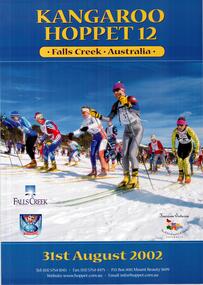
Poster - Kangaroo Hoppet 2002
... In 2002 the Men's Winner was Stanislav Rezac from the Czech Republic in a time of 2:10:40. The winner of the Women's event was Belinda Phillips of Australia in a time of 2:30:53....In 2002 the Men's Winner was Stanislav Rezac from the Czech Republic in a time of 2:10:40. The winner of the Women's event was Belinda Phillips of Australia in a time of 2:30:53. ...The Kangaroo Hoppet is Australia’s premier long distance cross country ski race, and a member of the Worldloppet series of international cross country ski events. The first race at Falls Creek was held in 1979 under the name of “Australian Birkebeiner”. It was a 21km race with about 80 participants organised by the Birkebeiner Nordic Ski Club of Mount Beauty. The course started and finished at Falls Creek Alpine Resort and took participants out into the Bogong High Plains. After running the event for 10 years, it was decided they should become part of the Worldloppet series of marathon ski races. Representatives from the Birkebeiner Nordic Ski Club and the Australian Ski Federation attended the Worldloppet Annual Meeting in Finland in June 1990 to put the case for the acceptance of an Australian event into the Worldloppet series. Before being admitted, they had to demonstrate that the Birkebeiner Club could run a world class event, so three months later in August 1990 a 42km event named the Australian International Ski Marathon was held at Falls Creek together with a 21km Birkebeiner race and a 7km event called the Birkebeiner Lite. The event was approved by delegates from USA, Norway and Austria, in 1991 Australia became the 12th member of Worldloppet, with the condition that there had to be a name change. After some late night discussion allegedly involving red wine from North East Victoria the main event became the 42km Kangaroo Hoppet, with the minor events being the 21km Australian Birkebeiner, and 7km Joey Hoppet. In the winter of 1991, the first Kangaroo Hoppet was held. It was a great success and has been a regular fixture on the international ski calendar ever since. It features the main 42km event as well as a 21km event and a 7km event. The Hoppet brings the Australian snowfields to an international audience. In 2002 the Men's Winner was Stanislav Rezac from the Czech Republic in a time of 2:10:40. The winner of the Women's event was Belinda Phillips of Australia in a time of 2:30:53.This poster is significant because it documents an event which brings international attention to Falls Creek and the surrounding region.A coloured poster featuring group of Hoppet competitors on a clear day. The heading is in gold text and the logos of Worldloppet, Falls Creek and Tourism Victoria are included towards the bottom.In gold text at the top: KANGAROO HOPPET 12 FALLS CREEK AUSTRALIA Beneath the image: 31st August 2002 Tel: (03) 5754 3103 - Fax: (03) 5754 4475 - P.O. Box 400 Mount Beauty 3699 Website: http://www.netc.net.au/-hoppet/ Email: [email protected] kangaroo hoppet, worldloppet events, falls creek, mt. beauty -
 Falls Creek Historical Society
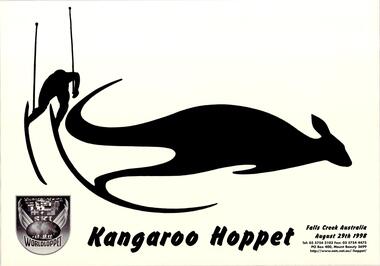
Poster - Kangaroo Hoppet 1998
... In 1998 the Men's Winner was Ales Vanek from the Czech Republic in a time of 1:47:05. The winner of the Women's event was Nadejda Simaknek of Russia in a time of 2:08:30....In 1998 the Men's Winner was Ales Vanek from the Czech Republic in a time of 1:47:05. The winner of the Women's event was Nadejda Simaknek of Russia in a time of 2:08:30. ...The Kangaroo Hoppet is Australia’s premier long distance cross country ski race, and a member of the Worldloppet series of international cross country ski events. The first race at Falls Creek was held in 1979 under the name of “Australian Birkebeiner”. It was a 21km race with about 80 participants organised by the Birkebeiner Nordic Ski Club of Mount Beauty. The course started and finished at Falls Creek Alpine Resort and took participants out into the Bogong High Plains. After running the event for 10 years, it was decided they should become part of the Worldloppet series of marathon ski races. Representatives from the Birkebeiner Nordic Ski Club and the Australian Ski Federation attended the Worldloppet Annual Meeting in Finland in June 1990 to put the case for the acceptance of an Australian event into the Worldloppet series. Before being admitted, they had to demonstrate that the Birkebeiner Club could run a world class event, so three months later in August 1990 a 42km event named the Australian International Ski Marathon was held at Falls Creek together with a 21km Birkebeiner race and a 7km event called the Birkebeiner Lite. The event was approved by delegates from USA, Norway and Austria, in 1991 Australia became the 12th member of Worldloppet, with the condition that there had to be a name change. After some late night discussion allegedly involving red wine from North East Victoria the main event became the 42km Kangaroo Hoppet, with the minor events being the 21km Australian Birkebeiner, and 7km Joey Hoppet. In the winter of 1991, the first Kangaroo Hoppet was held. It was a great success and has been a regular fixture on the international ski calendar ever since. It features the main 42km event as well as a 21km event and a 7km event. The Hoppet brings the Australian snowfields to an international audience. In 1998 the Men's Winner was Ales Vanek from the Czech Republic in a time of 1:47:05. The winner of the Women's event was Nadejda Simaknek of Russia in a time of 2:08:30.This poster is significant because it documents an event which brings international attention to Falls Creek and the surrounding region.A simple black and white poster featuring a silhouette of a skier and a kangaroo.All text is in black. The logos of Worldloppet is featured in the bottom left corner.Across bottom: Kangaroo Hoppet Falls Creek Australia August 29th 1998 Tel: (03) 5754 3103 Fax: (03) 5754 4475 P.O. Box 400 Mt. Beauty 3699 http://www.netc.net.au/-hoppet/kangaroo hoppet, worldloppet events, falls creek, mt. beauty -
 Flagstaff Hill Maritime Museum and Village
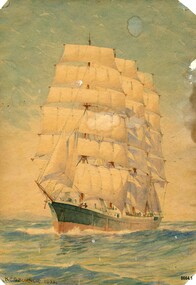
Painting - Watercolour painting, Beni Carr Glyn Burnett, Magdalene Vinnen, 1933
... In March 1933 (whilst in Sydney) the German Republic flag (on orders from Adolph Hitler) was lowered and replaced with the old monarchist flag which was then to be the official flag and beside it the Nazi flag was to be flown on all ceremonial occasions. ...In March 1933 (whilst in Sydney) the German Republic flag (on orders from Adolph Hitler) was lowered and replaced with the old monarchist flag which was then to be the official flag and beside it the Nazi flag was to be flown on all ceremonial occasions. ...Beni Carr Glyn Burnett (also known as B. C. G. Burnett or Beni Burnett) was born in 1889 to missionary parents in Mongolia. When he was 15 years old he began training as an architect with a firm in Shanghai. He worked in Singapore, Japan and China before moving to Australia around 1933. In 1937 he was appointed as the Commonwealth principal architect in the Northern Territory. He went on to design a series of houses for senior public servants and military personnel which became very popular as they were specifically designed for the tropics - incorporating louvres, high ceilings and good ventilation. When Darwin was bombed in February 1942, he was evacuated to Alice Springs where he continued to work as an architect. He also became a Magistrate and Coroner in Alice Springs. In later life he was well known for sketching clientele in public bars. He died in 1955. Beni Burnett was living in Sydney in 1933 when he produced these three artworks. There were several photography firms operating in Sydney at this time who specialised in photographing ships and the shipping trade (e.g. Samuel J. Hood and William James Hall) and whose photographs were used by artists to produce ship portraits. Both of these photographers took photographs of the two ships in B. C. G. Burnett's watercolours. The "Magdalene Vinnen" was photographed by Samuel J Hood in a series of photos taken in March 1933. It was a 4 masted steel barque, built in 1921 in Kiel, Germany and for almost 80 years was the largest traditional sailing ship in operation. She was used extensively as a cargo ship. She sailed into Sydney Harbour on 27th Feb 1933, loaded with almost 16,000 bales of wool destined for Falmouth, England. In March 1933 (whilst in Sydney) the German Republic flag (on orders from Adolph Hitler) was lowered and replaced with the old monarchist flag which was then to be the official flag and beside it the Nazi flag was to be flown on all ceremonial occasions. It visited Australia again in 1935 with its cargo being wheat from Port Broughton, S. A. In 1936 it was renamed "Kommodore Johnsen" and in 1945 (after WW2) the ship was awarded to the Soviet Union as war compensation and renamed "STS Sedov". This painting (one of a set of 3 small artworks) is significant as an example of shipping (particularly the use of sailing ships) that were still being used as late as the 1930's in Australia. It is also important because its creator (B. C. G. Burnett) went on to become a well-known public figure in the Northern Territory in the late 1930's due to his innovative approach to designing homes for the tropical climate. A watercolour painting of a sailing ship called "Magdalene Vinnen". It shows a 4 masted barque with a blue and red steel hull in full sail heading towards the viewer. The painter's name (B. C. G. Burnett) and date (1933) are written on the bottom left-hand corner of the painting. The location and name of the ship is written in ink on the back of the painting.front - "B. C. G. BURNETT. 1933 back - "off Sydney" / "Magdalene Vinnen"flagstaff hill maritime museum and village, warrnambool, great ocean road, sailing ships, ships, barque, magdalene vinnen, beni carr glyn burnett, b. c. g. burnett, beni burnett, painting, watercolour painting, sketch, sydney harbour, architect, darwin, burnett house, photography, samuel j. hood, william james hall, sedov, kommodore johnsen -
 Flagstaff Hill Maritime Museum and Village
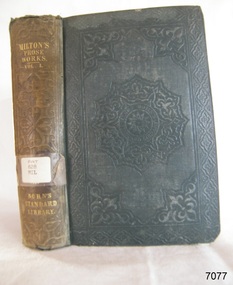
Book - Commentary Essays, John Milton, The Prose Works of John Milton Vol 1, 1848
... The prose works in this volume, written in Latin and English, were his official defences of the regicide and the republic against European royalist critics, most notably the Continental scholar Salmasius. ...The prose works in this volume, written in Latin and English, were his official defences of the regicide and the republic against European royalist critics, most notably the Continental scholar Salmasius. ...The Prose Works of John Milton, Volume 1 is part of a five-volume set issued by London publisher Henry G. Bohn beginning in 1848, as part of his well-known "Bohn's Standard Library" series of affordable classics. This particular volume gathers Milton's major political prose defending the execution of Charles I and the English republic: A Defence of the People of England, The Second Defence of the People of England, and Eikonoklastes (Milton's rebuttal to the royalist Eikon Basilike). It includes a portrait frontispiece of Milton and runs to 496 pages. The set as a whole was edited with a preface, preliminary remarks, and notes by James Augustus St. John, and volumes 4–5, covering a treatise on Christian doctrine, were separately translated by Charles R. Sumner.Hard cover book: The Prose Works of John Milton Vol 1 Author: John Milton Editor: James Augustus St. John Publisher: Henry G Bohn Date: 1848 Further Information: Blue leather hardcover with brown spine covers and spine embossed lettering to spine in gilt, portrait frontispiece. The spine has a Library label with an inscription.non-fictionThe Prose Works of John Milton, Volume 1 is part of a five-volume set issued by London publisher Henry G. Bohn beginning in 1848, as part of his well-known "Bohn's Standard Library" series of affordable classics. This particular volume gathers Milton's major political prose defending the execution of Charles I and the English republic: A Defence of the People of England, The Second Defence of the People of England, and Eikonoklastes (Milton's rebuttal to the royalist Eikon Basilike). It includes a portrait frontispiece of Milton and runs to 496 pages. The set as a whole was edited with a preface, preliminary remarks, and notes by James Augustus St. John, and volumes 4–5, covering a treatise on Christian doctrine, were separately translated by Charles R. Sumner.shipwrecked-coast, flagstaff-hill, flagstaff-hill-maritime-museum, warrnambool, maritime-museum, shipwreck-coast, flagstaff-hill-maritime-village, shipwrecked-artefact, book, pattison collection, warrnambool library, warrnambool mechanics’ institute, ralph eric pattison, corangamite regional library service, warrnambool city librarian, mechanics’ institute library, victorian library board, warrnambool books and records, warrnambool children’s library, the prose works of john milton vol 1, john milton -
 Flagstaff Hill Maritime Museum and Village
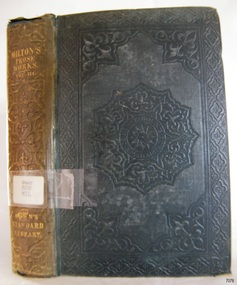
Book - Commentary Essays, John Milton, The Prose Works of John Milton Vol 3, 1848
... The prose works in this volume, written in Latin and English, were his official defences of the regicide and the republic against European royalist critics, most notably the Continental scholar Salmasius. ...The prose works in this volume, written in Latin and English, were his official defences of the regicide and the republic against European royalist critics, most notably the Continental scholar Salmasius. ...The Prose Works of John Milton, Volume 3 is part of a five-volume set issued by London publisher Henry G. Bohn beginning in 1848, as part of his well-known "Bohn's Standard Library" series of affordable classics. Volume 3 is the volume centred on Milton's ecclesiastical, educational, and domestic-life tracts, quite distinct from Volume 1 and its regicide/republic defences and Volume 2's church-government and press-freedom writings. The contents include The Likeliest Means to Remove Hirelings out of the Church; Animadversions upon the Remonstrants' Defence against Smectymnuus; and Apology for Smectymnuus, Milton's final anti-prelatical tract (1642), defending the Puritan pamphleteers writing under the collective pen-name "Smectymnuus" against Bishop Joseph Hall, and defending his own personal integrity as a polemicist. Also included is The Doctrine and Discipline of Divorce, Milton's controversial 1643 tract arguing, on scriptural grounds, for the lawfulness of divorce on grounds of incompatibility, written not long after his own troubled first marriage. There are further divorce tracts within this volume, as it continues the argument of the Doctrine and Discipline. The volume also includes a Tractate on Education, Milton's short treatise on his ideas for educational reform, and A Declaration for the Election of John III, King of Poland. Therefore, Volume 3 collects Milton's writings on church reform, personal and religious controversy, divorce law, and education — the more personal and doctrinal side of his prose output, as opposed to the state-political defences in VolumeHard cover book: The Prose Works of John Milton Vol 3 Author: John Milton Editor: James Augustus St. John Publisher: Henry G Bohn Date: 1848 Further Information: Blue leather hardcover with brown spine covers and spine embossed lettering to spine in gilt, portrait frontispiece. The spine has a Library label with an inscription.non-fictionThe Prose Works of John Milton, Volume 3 is part of a five-volume set issued by London publisher Henry G. Bohn beginning in 1848, as part of his well-known "Bohn's Standard Library" series of affordable classics. Volume 3 is the volume centred on Milton's ecclesiastical, educational, and domestic-life tracts, quite distinct from Volume 1 and its regicide/republic defences and Volume 2's church-government and press-freedom writings. The contents include The Likeliest Means to Remove Hirelings out of the Church; Animadversions upon the Remonstrants' Defence against Smectymnuus; and Apology for Smectymnuus, Milton's final anti-prelatical tract (1642), defending the Puritan pamphleteers writing under the collective pen-name "Smectymnuus" against Bishop Joseph Hall, and defending his own personal integrity as a polemicist. Also included is The Doctrine and Discipline of Divorce, Milton's controversial 1643 tract arguing, on scriptural grounds, for the lawfulness of divorce on grounds of incompatibility, written not long after his own troubled first marriage. There are further divorce tracts within this volume, as it continues the argument of the Doctrine and Discipline. The volume also includes a Tractate on Education, Milton's short treatise on his ideas for educational reform, and A Declaration for the Election of John III, King of Poland. Therefore, Volume 3 collects Milton's writings on church reform, personal and religious controversy, divorce law, and education — the more personal and doctrinal side of his prose output, as opposed to the state-political defences in Volumeshipwrecked-coast, flagstaff-hill, flagstaff-hill-maritime-museum, warrnambool, maritime-museum, shipwreck-coast, flagstaff-hill-maritime-village, shipwrecked-artefact, book, pattison collection, warrnambool library, warrnambool mechanics’ institute, ralph eric pattison, corangamite regional library service, warrnambool city librarian, mechanics’ institute library, victorian library board, warrnambool books and records, warrnambool children’s library, the prose works of john milton vol 1, john milton -
 Ballarat Heritage Services
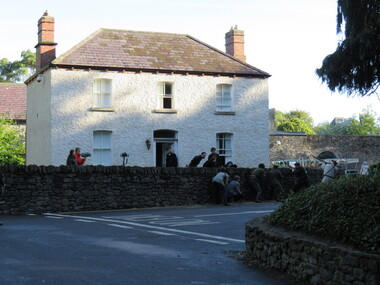
Photograph - Digital Photograph, Dorothy Wickham, Filming Fingal's Finest Day, Malahide Castle, 2016, 09/2016
... Ashe let them go after warning them not to fight against the Irish Republic again. Ashe's men camped at Kilsalaghan near Dublin until they received orders to surrender on Saturday. ...Ashe let them go after warning them not to fight against the Irish Republic again. Ashe's men camped at Kilsalaghan near Dublin until they received orders to surrender on Saturday. ...Generations of the Talbot family have called Malahide Castle home. They played significant roles in Irish political and social life. Set in 260 acres the castle is only 10 minutes from Dublin airport. https://www.malahidecastleandgardens.ie/ According to wikipedia See https://en.wikipedia.org/wiki/Easter_Rising#Fingal In Fingal (or north County Dublin), about 60 Volunteers mobilised near Swords. They belonged to the 5th Battalion of the Dublin Brigade (also known as the Fingal Battalion), and were led by Thomas Ashe and his second in command, Richard Mulcahy. Unlike the rebels elsewhere, the Fingal Battalion successfully employed guerrilla tactics. They set up camp and Ashe split the battalion into four sections: three would undertake operations while the fourth was kept in reserve, guarding camp and foraging for food. The Volunteers moved against the RIC barracks in Swords, Donabate and Garristown, forcing the RIC to surrender and seizing all the weapons. They also damaged railway lines and cut telegraph wires. The railway line at Blanchardstown was bombed to prevent a troop train reaching Dublin. This derailed a cattle train, which had been sent ahead of the troop train. The only large-scale engagement of the Rising, outside Dublin city, was at Ashbourne. On Friday, about 35 Fingal Volunteers surrounded the Ashbourne RIC barracks and called on it to surrender, but the RIC responded with a volley of gunfire. A firefight followed, and the RIC surrendered after the Volunteers attacked the building with a homemade grenade. Before the surrender could be taken, up to sixty RIC men arrived in a convoy, sparking a five-hour gun battle, in which eight RIC men were killed and 18 wounded. Two Volunteers were also killed and five wounded, and a civilian was fatally shot. The RIC surrendered and were disarmed. Ashe let them go after warning them not to fight against the Irish Republic again. Ashe's men camped at Kilsalaghan near Dublin until they received orders to surrender on Saturday. The Fingal Battalion's tactics during the Rising foreshadowed those of the IRA during the War of Independence that followed. Volunteer contingents also mobilised nearby in counties Meath and Louth, but proved unable to link up with the North Dublin unit until after it had surrendered. In County Louth, Volunteers shot dead an RIC man near the village of Castlebellingham on 24 April, in an incident in which 15 RIC men were also taken prisoner.filming, fingal's finest day, malahide castle, ireland -
 Federation University Historical Collection
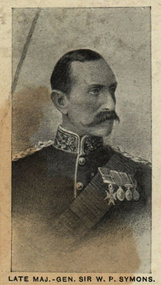
Photograph (black & White), Major General, Sir William Penn Symons - South Africa
... He was asked by the War Office to advise on the number of troops required to safely garrison the Natal from the threat of invasion from the Boer Republics of the Transvaal and Orange Free states. ...He was asked by the War Office to advise on the number of troops required to safely garrison the Natal from the threat of invasion from the Boer Republics of the Transvaal and Orange Free states. ...William Penn Symons' first combat experience was in South Africa during the Ninth Xhosa War, 1877-78. In 1879 he took part in the Zulu war. He then served during the Burma Expedition (1885-89). In 1889 he received the Companion of the Order of the Bath. In 1898, following other campaigns, he was awarded the Knight Commander of the Order of the Bath. In 1899, Symons was given the staff rank of brigadier general and was to be General Officer Commanding of Natal. He was asked by the War Office to advise on the number of troops required to safely garrison the Natal from the threat of invasion from the Boer Republics of the Transvaal and Orange Free states. Cabinet decided to send ten thousand extra troop abut they also appointed Lieutenant General Sir George White to supersede Symons as Generat Officer Commanding in Natal. Penn Symons, on his own authority deployed one of his brigades to Dundee, a town north of Ladysmith. The position of Ladysmith anad Dundee was precarious as they stand in a triangle of Natal, Orange Free State and Transvaal. White wanted to recall the Dundee garrison to Ladysmith but because of political pressure from Sit Walter Hely-Harrison, the Governor of Natal, he agreed to leave them there. The Boers declared war on 11 October and began crossing the Natal borders the following day. On 20 October 1899 Boer troops on the nearby Talana Hill proceeded to open fire on the town. The British guns moved to return fire as the general surveyed the Boer positions and gave orders to his commanding officers. Symons believed in old fashioned military tactics of close order but these formations were not designed to be used against lonf range bolt action rifles and Symons' brigades would be the first of manyin this war to pay the heavy cost ofthe mistake, as many generals would repeat it. The infantry battalions set off from the east of the town. The first part of the advance went well and they reached a small wood at the foot of the hill where they found shelter. Beyond the wood was a wall and then open ground. Symons rode up to the wood to find out why the attack had halted. He ordered the men to proceed, rode through the wood then walked through the gap in the wall. After a few moments he returned and was helped to remount his horse. He rode back from the front lines until he was out of sight of his troops before he asked for assistance from the Indian stretcher bearers. He had been shot in the stomach. Symons was taken to the field hospital at Dundee. After a few wasted days Symons' replacement, Brigadier General Yule, decided to abandon the town and the worst-wounded to the Boers and steal away at night to Ladysmith. Symons became a prisoner of war along with many others. He felt betrayed by Yule and just before he died he implored the medical officer, Major Donegal, to "tell everyone I died facing the enemy". Individual image from photographed poster of tobacco and cigarette cards.william penn symons, south africa, ninth xhosa war, companion of the order of the bath, knigt commander of the order of the bath, general officer commanding in natal, dundee, ladysmith, orange free state, transvaal, sir walter hely-harrison, governor of natal, boers, brigadier general yule -
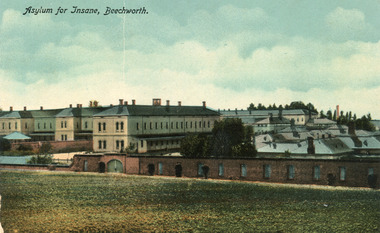 The Beechworth Burke Museum
Postcard, C. F. Falk, c.1930
... It was designed by C.F.Falk in Beechworth and printed in Saxony which is a landlocked state of Germany which borders the states of Brandenburg, Saxony-Anhalt, Thuringia, Bavaria and the countries of Poland and the Czech Republic. The depiction is a painting of the Mayday Hill Hospital which portrays the extensive buildings an HaHa wall (many of which have not survived to the present day). ...It was designed by C.F.Falk in Beechworth and printed in Saxony which is a landlocked state of Germany which borders the states of Brandenburg, Saxony-Anhalt, Thuringia, Bavaria and the countries of Poland and the Czech Republic. The depiction is a painting of the Mayday Hill Hospital which portrays the extensive buildings an HaHa wall (many of which have not survived to the present day). ...This postcard contains a depiction of the Mayday Hills Hospital in Beechworth, Victoria from the direction of Farm Hill, circa 1930. It was designed by C.F.Falk in Beechworth and printed in Saxony which is a landlocked state of Germany which borders the states of Brandenburg, Saxony-Anhalt, Thuringia, Bavaria and the countries of Poland and the Czech Republic. The depiction is a painting of the Mayday Hill Hospital which portrays the extensive buildings an HaHa wall (many of which have not survived to the present day). It provides a unique opportunity to reconstruct this historical site as it may have looked in approximately 1930. Beechworth's Mayday Hills was chosen as the site of Victoria's newest asylum, at the time, due to the landscape and altitude. The hilltop atmosphere and the native fauna, it was argued, would assist in the cure of the patients kept at the hospital (Wood 1985, 122). The positioning of the hospital had a beneficial effect on the rural town. A pamphlet published by James Ingram and Son (1849) reveal that famous landmarks in Beechworth which included the Post Office, Gaol, Courthouse and Asylum "demonstrate the appreciation of Beechworth by the Government not only as as important district center, but also as a site unrivaled as a sanitarium". There were other locations in contention at the time, but ultimately Beechworth was chosen (Craig 2000, 33). The extent of buildings displayed in this postcard helps convey the imposing and enormity of the structure before decommission. Prior to the creation of the Asylum in Beechworth, those charged with having mental illnesses or, as it was termed, "insanity" were unable to be properly cared for in the Gaol (which is where they were often sent). John Buckley Castieau wrote, in 1861 for the Ovens and Murray Advertiser, that the Gaol was unable to properly care for those classified then as "insane" but that they would endeavor to treat them above the other inmates (which he notes is not always the case in other establishments). Castieau wrote this in favour of supporting the building of the Mayday Hills Hospital in Beechworth. It was stated that at the time the Mayday Hills Hospital was built, there were 83 prisoners kept in the Gaol who were to be rehoused to the Hospital on the grounds of "insanity". The classification as someone as "insane", in this period of time is a reflection on the inability to cure and understand illnesses of the mind during the mid to late 1800s. The title on the obverse of this photograph as "Asylum for Insane, Beechworth" reflects a bygone era and attitude to mental health. Beechworth's Mayday Hills was chosen as the site of Victoria's newest asylum, at the time, due to the landscape and altitude. Opening on the 24th of October 1867, the Mayday Hills Hospital was originally named the "Ovens Lunatic Asylum", a title which is very much a product of its time. Whilst controversial, changes to the name is part of the history of the Hospital and can provide much insight into the understanding of mental illness throughout history and the use/disuse of this term provides information into the reception/changing opinions of mental illness in society. The Hospital would later become known as the "Mayday Hills Asylum" and/or "Mayday Hills Hospital" with the latter being the most commonly used title. An article in the Ovens and Murray Advertiser notes that on the 7th of March 1865, the foundation stone of the Hospital was laid (it would officially open in 1867) and that it was such a moment of accomplishment and joy for Beechworth that a letter to the editor even suggested that there should be a holiday dedicated to the day the foundation stone as laid. This reveals an extent to which the townspeople of early Beechworth valued the construction of the Hospital in their town. It provided the town with a sense of prestige and honour.At first glance, the remains of the Mayday Hills Hospital in Beechworth, Victoria, inspire tragedy, trauma and beauty. The buildings themselves, with their Italianate style Renaissance architecture designed by J.J. Clark (Craig 2000, 49 & Smith 2016, 203) reflect a bygone period of European and Australian history. The gardens provide a sense of tranquility and beauty. The experience of those within these walls remains a valuable area of study to provide a more complete understanding. This particular hospital is considered the fourth of its like and one of three identified as the largest of their kind. The Mayday Hills Hospital is a sister to the Kew and Ararat Asylums in Melbourne which are both located in relative proximity. Understanding the role of the Mayday Hills Hospital in Beechworth history is integral to understanding the development of the goldfields town, but also for providing important information as to the history of caring for, and the reception of, mental illnesses in Australian and wider European history. Mayday Hills provides a case study which can be researched through oral history, an analysis of the grounds/buildings and through images like this postcard which portray the structure in a highly deliberate manner. Images like this depict the strong façade of the Hospital and provide a glimpse into the tranquility of the gardens. This has been done deliberately to provide a sense of comfort and healing about the building to those looking from the outside. Further research into the importance of the Hospital in Beechworth and it's connection to the town will be supported through images like these kept in the Mayday Hills photo album in the collection of the Burke Museum.Colour rectangular postcard printed on cardObverse: Asylum for Insane, Beechworth. / Reverse: C.F. Faulk, Beechworth. Printed in Saxony. POST CARD / ADDRESS ONLY / AFFIX / STAMP / B 2298 / 1997.2457 /mental hospital, insane asylum, mayday hills mental hospital, beechworth, mayday hills, asylum, gold town, north-east victoria, ararat asylum, kew asylum -
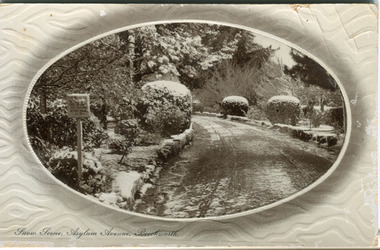 The Beechworth Burke Museum
Postcard, R & B Hall, c.1930
... Saxony is a landlocked state of Germany which borders the states of Brandenburg, Saxony-Anhalt, Thuringia, Bavaria and the countries of Poland and the Czech Republic. This particular postcard is embossed with a pattern which surrounds the middle image in the center of the card. ...Saxony is a landlocked state of Germany which borders the states of Brandenburg, Saxony-Anhalt, Thuringia, Bavaria and the countries of Poland and the Czech Republic. This particular postcard is embossed with a pattern which surrounds the middle image in the center of the card. ...This postcard was published by R. & B. Hall in Beechworth and printed in Saxony, circa 1930. Saxony is a landlocked state of Germany which borders the states of Brandenburg, Saxony-Anhalt, Thuringia, Bavaria and the countries of Poland and the Czech Republic. This particular postcard is embossed with a pattern which surrounds the middle image in the center of the card. This image depicts Asylum Avenue which leads to the Mayday Hills Asylum in Beechworth, Victoria. What makes this scene particularly interesting is the appearance of snow which is rare in Beechworth. The road depicted on the postcard has track marks made by a car with thin wheels. Beechworth's Mayday Hills was chosen as the site of Victoria's newest asylum, at the time, due to the landscape and altitude. The hilltop atmosphere and the native fauna, it was argued, would assist in the cure of the patients kept at the hospital (Wood 1985, 122). The positioning of the hospital had a beneficial effect on the rural town. A pamphlet published by James Ingram and Son (1849) reveal that famous landmarks in Beechworth which included the Post Office, Gaol, Courthouse and Asylum "demonstrate the appreciation of Beechworth by the Government not only as as important district center, but also as a site unrivaled as a sanitarium". There were other locations in contention at the time, but ultimately Beechworth was chosen (Craig 2000, 33). Prior to the creation of the Asylum in Beechworth, those charged with having mental illnesses or, as it was termed, "insanity" were unable to be properly cared for in the Gaol (which is where they were often sent). John Buckley Castieau wrote, in 1861 for the Ovens and Murray Advertiser, that the Gaol was unable to properly care for those classified then as "insane" but that they would endeavor to treat them above the other inmates (which he notes is not always the case in other establishments). Castieau wrote this in favour of supporting the building of the Mayday Hills Hospital in Beechworth. It was stated that at the time the Mayday Hills Hospital was built, there were 83 prisoners kept in the Gaol who were to be rehoused to the Hospital on the grounds of "insanity". The classification as someone as "insane", in this period of time is a reflection on the inability to cure and understand illnesses of the mind during the mid to late 1800s. Beechworth's Mayday Hills was chosen as the site of Victoria's newest asylum, at the time, due to the landscape and altitude. Opening on the 24th of October 1867, the Mayday Hills Hospital was originally named the "Ovens Lunatic Asylum", a title which is very much a product of its time. Whilst controversial, changes to the name is part of the history of the Hospital and can provide much insight into the understanding of mental illness throughout history and the use/disuse of this term provides information into the reception/changing opinions of mental illness in society. The Hospital would later become known as the "Mayday Hills Asylum" and/or "Mayday Hills Hospital" with the latter being the most commonly used title. An article in the Ovens and Murray Advertiser notes that on the 7th of March 1865, the foundation stone of the Hospital was laid (it would officially open in 1867) and that it was such a moment of accomplishment and joy for Beechworth that a letter to the editor even suggested that there should be a holiday dedicated to the day the foundation stone as laid. This reveals an extent to which the townspeople of early Beechworth valued the construction of the Hospital in their town. It provided the town with a sense of prestige and honour.At first glance, the remains of the Mayday Hills Hospital in Beechworth, Victoria, inspire tragedy, trauma and beauty. The buildings themselves, with their Italianate style Renaissance architecture designed by J.J. Clark (Craig 2000, 49 & Smith 2016, 203) reflect a bygone period of European and Australian history. The gardens provide a sense of tranquility and beauty. The experience of those within these walls remains a valuable area of study to provide a more complete understanding. This particular hospital is considered the fourth of its like and one of three identified as the largest of their kind. The Mayday Hills Hospital is a sister to the Kew and Ararat Asylums in Melbourne which are both located in relative proximity. Understanding the role of the Mayday Hills Hospital in Beechworth history is integral to understanding the development of the goldfields town, but also for providing important information as to the history of caring for, and the reception of, mental illnesses in Australian and wider European history. Mayday Hills provides a case study which can be researched through oral history, an analysis of the grounds/buildings and through images like this postcard which portray the structure in a highly deliberate manner. Images like this depict the strong façade of the Hospital and provide a glimpse into the tranquility of the gardens. This has been done deliberately to provide a sense of comfort and healing about the building to those looking from the outside. Further research into the importance of the Hospital in Beechworth and it's connection to the town will be supported through images like these kept in the Mayday Hills photo album in the collection of the Burke Museum.Pale coloured rectangular postcard printed on matte embossed card.Obverse: Snow Scene; Asylum Avenue, Beechworth. / Reverse: POST CARD / ADDRESS ONLY / Published by R. & B. Hall, Beechworth. / Printed in Saxony. / 3447 [crossed out] / 1997.2492 / AFFIX STAMP /asylum, asylum avenue, beechworth, snow north-east vic, victoria, snow scene, mayday hills, mayday hills hospital, mental hospital, colonial attitudes, mental health, history, town development, postcard -
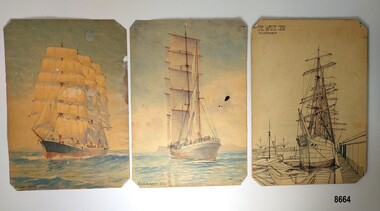 Flagstaff Hill Maritime Museum and Village
Painting - Paintings - set of three, Beni Carr Glyn Burnett, 1933
... In March 1933 (whilst in Sydney) the German Republic flag (on orders from Adolph Hitler) was lowered and replaced with the old monarchist flag which was then to be the official flag and beside it the Nazi flag was to be flown on all ceremonial occasions. ...In March 1933 (whilst in Sydney) the German Republic flag (on orders from Adolph Hitler) was lowered and replaced with the old monarchist flag which was then to be the official flag and beside it the Nazi flag was to be flown on all ceremonial occasions. ...Beni Carr Glyn Burnett (also known as B. C. G. Burnett or Beni Burnett) was born in 1889 to missionary parents in Mongolia. When he was 15 years old he began training as an architect with a firm in Shanghai. He worked in Singapore, Japan and China before moving to Australia around 1933. In 1937 he was appointed as the Commonwealth principal architect in the Northern Territory. He went on to design a series of houses for senior public servants and military personnel which became very popular as they were specifically designed for the tropics - incorporating louvres, high ceilings and good ventilation. When Darwin was bombed in February 1942, he was evacuated to Alice Springs where he continued to work as an architect. He also became a Magistrate and Coroner in Alice Springs. In later life he was well known for sketching clientele in public bars. He died in 1955. Beni Burnett was living in Sydney in 1933 when he produced these three artworks. There were several photography firms operating in Sydney at this time who specialised in photographing ships and the shipping trade (e.g. Samuel J. Hood and William James Hall) and whose photographs were used by artists to produce ship portraits. Both of these photographers took photographs of the two ships in B. C. G. Burnett's watercolours. The "Magdalene Vinnen" was photographed by Samuel J Hood in a series of photos taken in March 1933. It was a 4 masted steel barque, built in 1921 in Kiel, Germany and for almost 80 years was the largest traditional sailing ship in operation. It was used extensively as a cargo ship. It sailed into Sydney Harbour on 27th Feb 1933, loaded with almost 16,000 bales of wool destined for Falmouth, England. In March 1933 (whilst in Sydney) the German Republic flag (on orders from Adolph Hitler) was lowered and replaced with the old monarchist flag which was then to be the official flag and beside it the Nazi flag was to be flown on all ceremonial occasions. It visited Australia again in 1935 with its cargo being wheat from Port Broughton, S. A. In 1936 it was renamed "Kommodore Johnsen" and in 1945 (after WW2) the ship was awarded to the Soviet Union as war compensation and renamed "STS Sedov". The "Winterhude" (originally called "Mabel Rickmers) was a three masted Finnish barque built in 1898 by Rickers - Werft Bremerhaven for use on the East India rice trade and later the South American nitrate trade. After WW1 it came under French control as war compensation. It was also sold several times and at one stage was called "Selma Hemsoth" but in 1925 it was bought by Gustaf Erikson who restored the name "Winterhude" and the vessel became a regular transport in the Australian wheat trade. In 1944 it was sold to the German navy before being taken over by the British at the end of WW2. It was photographed in Sydney by William James Hall in 1931 on its way to Port Lincoln, South Australia to load wheat for Europe. The third ship depicted by B. C. G. Burnett is a pen and wash sketch labelled "The White Ship" and exactly matches a photograph pasted into his personal scrapbook which is in the "Library and Archives N. T.". The name of the ship is unknown and B. C. G. Burnett may have taken some artistic licence with the colouring as in the original photograph, the ship had a dark hull.This set of three small artworks is significant as examples of shipping (particularly the use of sailing ships) that were still being used as late as the 1930's in Australia. They are also important because their creator (B. C. G. Burnett) went on to become a well-known public figure in the Northern Territory in the late 1930's due to his innovative approach to designing homes for the tropical climate.A set of three artworks by B. C. G. Burnett of sailing ships in Sydney Harbour. They are all on rectangular watercolour paper with small diagonal edges at each corner. Painting 1 is a watercolour painting of a sailing ship called "Magdalene Vinnen". It shows a 4 masted barque with a blue and red steel hull in full sail heading towards the viewer. The painter's name (B. C. G. Burnett) and date (1933) are written on the bottom left-hand corner of the painting. Painting 2 is a watercolour painting of a sailing ship called "Winterhude". It shows a 3-masted barque with a blue and red steel hull in full sail heading away from the viewer. A small figure can be seen at the wheel at the rear of the ship. The painter's name (B. C. G. Burnett) and date (1933) are written on the bottom left-hand corner of the painting. Sketch 3 is an ink sketch of an unknown sailing ship moored to a dock. There are several small boats tied up near the sailing ship and a large steel freighter can be seen in the background. There is a faint wash of colour on parts of the sketch - the bottom of the ship, the masts and booms and the water at the end of the pier. The title (The White Ship) and the artist's name (B. C. G. Burnett) are written in ink in the top left corner. 1 (front) - "B. C. G. BURNETT. 1933 2 (front) - "B. C. G. BURNETT. 1933" 3 (front) - "THE WHITE SHIP / B. C. G. BURNETT"flagstaff hill maritime museum and village, warrnambool, great ocean road, sailing ships, ships, barque, magdalene vinnen, winterhude, beni carr glyn burnett, b. c. g. burnett, beni burnett, painting, watercolour painting, sketch, ink sketch, sydney harbour, architect, darwin, burnett house, photography, samuel j. hood, william james hall, sedov, kommodore johnsen, mabel rickmers
