
Showing 258 items matching "world war - 1914-1918 - history"
-
 Returned Nurses RSL Sub-branch
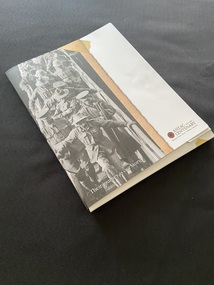
Book - Government publication, Victorian State Government, ANZAC centenary : 2014-2018 sharing Victoria's stories & making connections : their journey is our story, 2014
... World War...1914-1918 -- Australia -- Victoria -- Centennial celebrations...Soldiers -- Australia -- Victoria -- History...Australian Imperial Force (1914-1921) World War 1914-1918 -- Australia -- Victoria -- Centennial celebrations Soldiers -- Australia -- Victoria -- History 1914-1918 -- Participation Australian -- Anniversaries Soldiers -- Victoria -- History Army Nurses--Australia--History Women in War Folio contains: Community resource guide (18 pages) -- World War one history (42 pages) -- Victoria's world war one legacy (31 pages) -- Victorian government veterans' affairs grants (1 folded sheet) A collection of material published by the Victorian State Government to commemorate the ANZAC Centenary. ...Folio contains: Community resource guide (18 pages) -- World War one history (42 pages) -- Victoria's world war one legacy (31 pages) -- Victorian government veterans' affairs grants (1 folded sheet) A collection of material published by the Victorian State Government to commemorate the ANZAC Centenary. It includes pages on women in war and Australian nurses.Cardboard folio with an image of soldiers disembarking a ship across the back, spine and front cover. Inside are three booklets and a brochure.non-fictionFolio contains: Community resource guide (18 pages) -- World War one history (42 pages) -- Victoria's world war one legacy (31 pages) -- Victorian government veterans' affairs grants (1 folded sheet) A collection of material published by the Victorian State Government to commemorate the ANZAC Centenary. It includes pages on women in war and Australian nurses.australia. australian army. australian imperial force (1914-1921), world war, 1914-1918 -- australia -- victoria -- centennial celebrations, soldiers -- australia -- victoria -- history, 1914-1918 -- participation, australian -- anniversaries, soldiers -- victoria -- history, army nurses--australia--history, women in war -
 Returned Nurses RSL Sub-branch
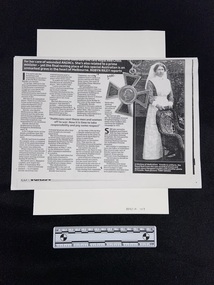
Document - Document package of photocopied papers relating to Estelle Lee Archer, [1987?]
... Australian Army Nurses World War 1914-1918 WWI WW1 Estelle Lee Archer Elizabeth Scholastica Dailey Royal Red Cross AANS Document package of photocopied military papers, newspaper article and military history research notes typed on A4 papers. ...Research details, short biography and army records on the life and war experiences of Estelle Lee Archer, born 1882 and passed away in 1960. Estelle served as an Australian Army Nurse in the 1st Australian General Hospital, and later in England and France. This collection of papers includes a short biographical piece; an article from an unknown newspaper; a copy of the registration of death; and a response from the Australian Military information Services Section for information on Estelle including copies of her enlistment records. There is also some brief information regarding Elizabeth Scholastica Dailey. Document package of photocopied military papers, newspaper article and military history research notes typed on A4 papers.australian army nurses, world war 1914-1918, wwi, ww1, estelle lee archer, elizabeth scholastica dailey, royal red cross, aans -
 Returned Nurses RSL Sub-branch
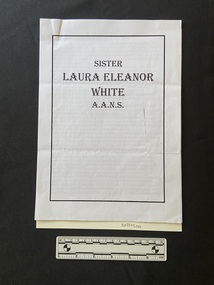
Document - Photocopy of a typed biographical history, Sister Laura Eleanor White A.A.N.S, unknown
... World War 1914-1918 Australian Nurses WWI WW1 Australian Army Nursing Serive AANS Laura Eleanor White Salonika Cover page has a solid black line border around the full page and the heading printed in the top centre. The following two pages are a typed biography. The final page is a full page portrait image of Sister White. Sister Laura Eleanor White A.A.N.S. Document Photocopy of a typed biographical history ...Biographical piece about Sister Laura Eleanor White who enlisted with the Australian Army Nursing Service in 1917 and served as a Staff Nurse in the military hospitals in Salonika. The piece of writing provides interesting information on living conditions in the General Hospitals.Cover page has a solid black line border around the full page and the heading printed in the top centre. The following two pages are a typed biography. The final page is a full page portrait image of Sister White.world war 1914-1918, australian nurses, wwi, ww1, australian army nursing serive, aans, laura eleanor white, salonika -
 Returned Nurses RSL Sub-branch
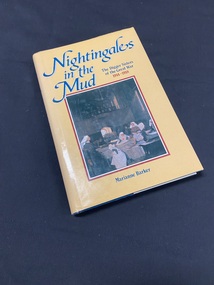
Book - Hardcover book, Marianne Barker, Nightingales in the mud : the Digger Sisters of the Great War 1914-1918, 1989
... History of Nursing...World War One 1914-1918...History of Nursing World War One 1914-1918 WW1 WWI Nurses Australia Great War Nurses 'Draws on many first-hand and previously unpublished accounts of the work of Australian nurses in the Great War to tell an extraordinary story of courage and companionship under conditions of great hardship - in the mud of Flanders, among the cholera cases in India, on the hospital ships during the Gallipoli campaign, on Afghanistan border, in Vladivostok, in mosquito infested Macedonia, and in the Sinai Desert. - from inside dustjacket. ...'Draws on many first-hand and previously unpublished accounts of the work of Australian nurses in the Great War to tell an extraordinary story of courage and companionship under conditions of great hardship - in the mud of Flanders, among the cholera cases in India, on the hospital ships during the Gallipoli campaign, on Afghanistan border, in Vladivostok, in mosquito infested Macedonia, and in the Sinai Desert. - from inside dustjacket. Contents note: pt. 1. The Middle East -- 1. Enlistment -- 2. Egypt -- 3. Hospital ships -- 4. Lemnos -- 5. Malta -- 6. Palestine -- 7. Mesopotamia -- 8. India -- 9. Serbia and Salonika -- pt. 2. The Western Front -- 10. The Australian base hospitals in France -- 11. The casualty clearing stations -- 12. Transport in France -- 13. Home hospitals in England -- 14. Repatriation -- Epilogue -- Appendix: Roll of Nurses. - from Trove record.Blue hardcover book with a yellow dustjacket. The title is printed down the spine in blue text. The front cover shows an image of an oil painting of nurses tending the beds of the wounded, it is surrounded by a dark red border. Above the image the title is printed in blue, with 1914-1918 printed in smaller red print.non-fiction'Draws on many first-hand and previously unpublished accounts of the work of Australian nurses in the Great War to tell an extraordinary story of courage and companionship under conditions of great hardship - in the mud of Flanders, among the cholera cases in India, on the hospital ships during the Gallipoli campaign, on Afghanistan border, in Vladivostok, in mosquito infested Macedonia, and in the Sinai Desert. - from inside dustjacket. Contents note: pt. 1. The Middle East -- 1. Enlistment -- 2. Egypt -- 3. Hospital ships -- 4. Lemnos -- 5. Malta -- 6. Palestine -- 7. Mesopotamia -- 8. India -- 9. Serbia and Salonika -- pt. 2. The Western Front -- 10. The Australian base hospitals in France -- 11. The casualty clearing stations -- 12. Transport in France -- 13. Home hospitals in England -- 14. Repatriation -- Epilogue -- Appendix: Roll of Nurses. - from Trove record.history of nursing, world war one 1914-1918, ww1, wwi, nurses australia, great war nurses -
 Buninyong Visitor Information Centre
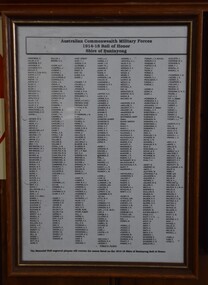
Document - Honour Roll, Australian Commonwealth Military Forces - 1914-1918 Roll of Honour - Shire of Buninyong
... World War 1 Buninyong Military History On back of frame 'G.D. Whykes, 310 Forest Street, Buninyong 3357'. Framed listing of names of Shire of Buninyong residents who served in the First World War. An asterisk marks the names of those killed. There are seven columns of names with about 500 names listed. Australian Commonwealth Military Forces - 1914-1918 ...Includes enlisted soldiers and those killed in action. Framed listing of names of Shire of Buninyong residents who served in the First World War. An asterisk marks the names of those killed. There are seven columns of names with about 500 names listed.On back of frame 'G.D. Whykes, 310 Forest Street, Buninyong 3357'. world war 1, buninyong, military history -
 Returned Nurses RSL Sub-branch
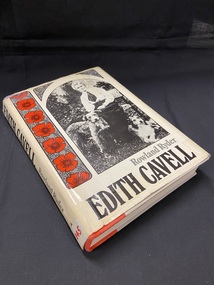
Book - Hardcover book, Rowland Ryder, Edith Cavell, 1975
... History of Nursing...World War One 1914-1918...Edith Cavell History of Nursing World War One 1914-1918 WW1 WWI Edith Louisa Cavell (1865-1915) was a British nurse and patriot. ...Edith Louisa Cavell (1865-1915) was a British nurse and patriot. She is celebrated for saving the lives of soldiers from all sides without distinction and in helping some 200 Allied soldiers escape from German-occupied Belgium during World War I, for which she was arrested. She was subsequently court-martialled, found guilty of treason and sentenced to death. Despite international pressure for mercy, she was shot by a German firing squad. Her execution received worldwide condemnation and extensive press coverage. - from Trove record.Hardback book with dustjacket. The dustjacket is cream in colour. Along the spine the title is printed in large black letters, followed by the author's name, and at the bottom is a white sticker with 'B45' handwritten in red texta. The front of the dustjacket shows a black and white photograph of a well-dressed lady sitting on a bench with a dog either side of her. Down the left side of the image is a vertical panel with seven red poppies. The title and author are printed across the bottom of the cover.non-fictionEdith Louisa Cavell (1865-1915) was a British nurse and patriot. She is celebrated for saving the lives of soldiers from all sides without distinction and in helping some 200 Allied soldiers escape from German-occupied Belgium during World War I, for which she was arrested. She was subsequently court-martialled, found guilty of treason and sentenced to death. Despite international pressure for mercy, she was shot by a German firing squad. Her execution received worldwide condemnation and extensive press coverage. - from Trove record. edith cavell, history of nursing, world war one 1914-1918, ww1, wwi -
 Returned Nurses RSL Sub-branch
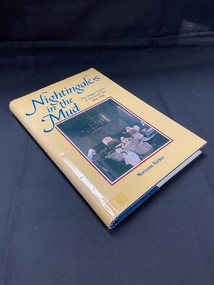
Book - Hardcover book, Marianne Barker, Nightingale in the mud : the Digger Sisters of the Great War 1914-1918, 1989
... History of Nursing...World War One 1914-1918...History of Nursing World War One 1914-1918 WW1 WWI Nurses Australia Great War Nurses 'Draws on many first-hand and previously unpublished accounts of the work of Australian nurses in the Great War to tell an extraordinary story of courage and companionship under conditions of great hardship - in the mud of Flanders, among the cholera cases in India, on the hospital ships during the Gallipoli campaign, on Afghanistan border, in Vladivostok, in mosquito infested Macedonia, and in the Sinai Desert. - from inside dustjacket. ...'Draws on many first-hand and previously unpublished accounts of the work of Australian nurses in the Great War to tell an extraordinary story of courage and companionship under conditions of great hardship - in the mud of Flanders, among the cholera cases in India, on the hospital ships during the Gallipoli campaign, on Afghanistan border, in Vladivostok, in mosquito infested Macedonia, and in the Sinai Desert. - from inside dustjacket. Contents note: pt. 1. The Middle East -- 1. Enlistment -- 2. Egypt -- 3. Hospital ships -- 4. Lemnos -- 5. Malta -- 6. Palestine -- 7. Mesopotamia -- 8. India -- 9. Serbia and Salonika -- pt. 2. The Western Front -- 10. The Australian base hospitals in France -- 11. The casualty clearing stations -- 12. Transport in France -- 13. Home hospitals in England -- 14. Repatriation -- Epilogue -- Appendix: Roll of Nurses. - from Trove record.Blue hardcover book with a yellow dustjacket. The title is printed down the spine in blue text. The front cover shows an image of an oil painting of nurses tending the beds of the wounded, it is surrounded by a dark red border. Above the image the title is printed in blue, with 1914-1918 printed in smaller red print.non-fiction'Draws on many first-hand and previously unpublished accounts of the work of Australian nurses in the Great War to tell an extraordinary story of courage and companionship under conditions of great hardship - in the mud of Flanders, among the cholera cases in India, on the hospital ships during the Gallipoli campaign, on Afghanistan border, in Vladivostok, in mosquito infested Macedonia, and in the Sinai Desert. - from inside dustjacket. Contents note: pt. 1. The Middle East -- 1. Enlistment -- 2. Egypt -- 3. Hospital ships -- 4. Lemnos -- 5. Malta -- 6. Palestine -- 7. Mesopotamia -- 8. India -- 9. Serbia and Salonika -- pt. 2. The Western Front -- 10. The Australian base hospitals in France -- 11. The casualty clearing stations -- 12. Transport in France -- 13. Home hospitals in England -- 14. Repatriation -- Epilogue -- Appendix: Roll of Nurses. - from Trove record.history of nursing, world war one 1914-1918, ww1, wwi, nurses australia, great war nurses -
 Returned Nurses RSL Sub-branch
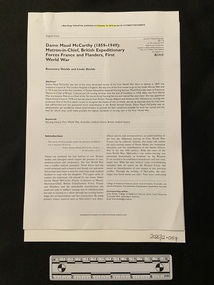
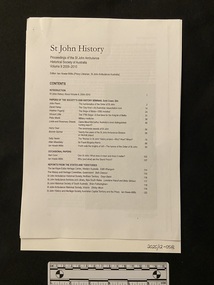
Document - Photocopy of journal article, Sage Journals et al, Dame Maud McCarthy (1859-1949), 2014
... history...World War 1...World War 1914-1918...World War". She had a profound influence on nursing, serving overseas throughout WWI and then later becoming "one of the first senior nurses to recognise the impact of war on minds, she set up separate units for men who had self-harmed and she pioneered nurse anaesthetists in the British Armed Forces" (from abstract). Nursing history World War 1 World War 1914-1918 ...Article published in the Journal of Medical Biography in 2014 about the life of Emma Maud McCarthy, "one of the most decorated nurses of the First World War". She had a profound influence on nursing, serving overseas throughout WWI and then later becoming "one of the first senior nurses to recognise the impact of war on minds, she set up separate units for men who had self-harmed and she pioneered nurse anaesthetists in the British Armed Forces" (from abstract).Black and white photocopy of an eight page, double-sided, journal article with text divided into two columns down each page. The article contains two photographic images of Maud McCarthy, one dressed as a Matron and the other as Dame on the occasion of the King's coronation. 'February 19, 2015' [Highlighted in yellow highlight marker at the top of the first page]nursing history, world war 1, world war 1914-1918, first world war, wwi, australian medical history, british medical history, nurses, emma maud mccarthy, maud mccarthy -
 Returned Nurses RSL Sub-branch
Document - Photocopy of journal article, Rosemary Shields et al, Dame Maud McCarthy: Australia's most distinguished nursing export?, circa 2009-10
... history...World War 1...World War 1914-1918...Maud McCarthy had a profound influence on nursing, serving overseas throughout WWI and then later becoming "one of the first senior nurses to recognise the impact of war on minds, she set up separate units for men who had self-harmed and she pioneered nurse anaesthetists in the British Armed Forces" (-Rosemary Shields). Nursing history World War 1 World War 1914-1918 ...Article published in the St John Ambulance Historical Society of Australia journal, volume 9 (2009-2010), about the life and nursing career of Emma Maud McCarthy. Maud McCarthy had a profound influence on nursing, serving overseas throughout WWI and then later becoming "one of the first senior nurses to recognise the impact of war on minds, she set up separate units for men who had self-harmed and she pioneered nurse anaesthetists in the British Armed Forces" (-Rosemary Shields). Photocopied article from the St John History Journal. The first page is a copy of the contents page of volume 9, followed by copies of pages 49-55 containing the article and photographs. nursing history, world war 1, world war 1914-1918, first world war, wwi, australian medical history, british medical history, nurses, emma maud mccarthy, maud mccarthy -
 Returned Nurses RSL Sub-branch
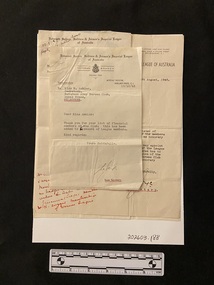
Document - Typed correspondence, Sage Journals et al, 2014
... history...World War 1...World War 1914-1918...World War". She had a profound influence on nursing, serving overseas throughout WWI and then later becoming "one of the first senior nurses to recognise the impact of war on minds, she set up separate units for men who had self-harmed and she pioneered nurse anaesthetists in the British Armed Forces" (from abstract). Nursing history World War 1 World War 1914-1918 ...Article published in the Journal of Medical Biography in 2014 about the life of Emma Maud McCarthy, "one of the most decorated nurses of the First World War". She had a profound influence on nursing, serving overseas throughout WWI and then later becoming "one of the first senior nurses to recognise the impact of war on minds, she set up separate units for men who had self-harmed and she pioneered nurse anaesthetists in the British Armed Forces" (from abstract). Collection of four typed letters. Two are on A4 paper and two on A5. Each one has the 'Returned Sailors, Soldiers & Airmen's Imperial League of Australia' title across the top, followed by the Victorian Branch emblem.'22.3.45 / papers are with books ?' [Handwritten in the top left corner of the second memorandum letter] '1.2.45. / Mrs Holland seen by ? + ? / + ? of honorary League Membership received but / no badges will be issued / unless the sister becomes a / ? League Member / ? suggest membership / of Womens League' [Handwritten in brown and red ink the bottom left corner of the final letter]nursing history, world war 1, world war 1914-1918, first world war, wwi, australian medical history, british medical history, nurses, emma maud mccarthy, maud mccarthy -
 Returned Nurses RSL Sub-branch
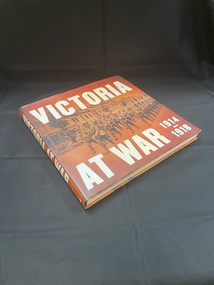
Book - Hardcover book, Michael McKernan, Victoria at War : 1915-1918, 2014
... World War 1...World War 1914-1918 Victoria...Victoria - social life and customs...Victoria - history...WW1 WWI World War 1 World War 1914-1918 Victoria Victoria - social life and customs Victoria - history During the First World War, in Melbourne and communities throughout Victoria, schoolchildren knitted socks for the troops serving in Gallipoli, the Middle East and on the Western Front. ...During the First World War, in Melbourne and communities throughout Victoria, schoolchildren knitted socks for the troops serving in Gallipoli, the Middle East and on the Western Front. Their families set up Red Cross branches to support the 91,000 Victorian servicemen and women overseas. Victoria at War records the achievements of the state's soldiers, nurses and their families - including the Whitelaws from Gippsland with six sons enlisting, 'Bert' Jacka, the first Australian to be awarded the Victoria Cross in the First World War, and commander Sir John Monash. Bestselling military historian Michael McKernan commemorates the generosity, devotion, sacrifice and spirit of a community pushed towards breaking point through stories from the home front and battlefront. - from National Library recordHardcover book with dust jacket. Title printed in large, bold, white text along spine and across the top and bottom of the cover. In the background is an image of rows of soldiers marching down a town street. The cover is a burnt orange colour.non-fictionDuring the First World War, in Melbourne and communities throughout Victoria, schoolchildren knitted socks for the troops serving in Gallipoli, the Middle East and on the Western Front. Their families set up Red Cross branches to support the 91,000 Victorian servicemen and women overseas. Victoria at War records the achievements of the state's soldiers, nurses and their families - including the Whitelaws from Gippsland with six sons enlisting, 'Bert' Jacka, the first Australian to be awarded the Victoria Cross in the First World War, and commander Sir John Monash. Bestselling military historian Michael McKernan commemorates the generosity, devotion, sacrifice and spirit of a community pushed towards breaking point through stories from the home front and battlefront. - from National Library recordww1, wwi, world war 1, world war 1914-1918 victoria, victoria - social life and customs, victoria - history -
 Returned Nurses RSL Sub-branch
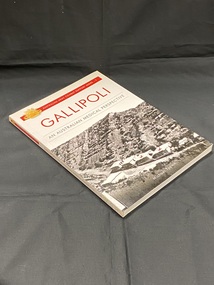
Book - Paperback book, Michael Tyquin, Gallipoli: an Australian medical perspective, 2012
... Gallipoli Australian Army Medical Corps AAMC medical aspects of war WWI WW1 World War 1914-1918 To be successful, a modern army needs logistical support to survive - to arm, feed, transport, and care for its soldiers. As history ...To be successful, a modern army needs logistical support to survive - to arm, feed, transport, and care for its soldiers. As history shows us the maintenance of health in any army , is a key factor in warfare. In many respects the Gallipoli campaign was a doomed undertaking. The seeds of ultimate defeat in December 1915 were the risks that attended a hugely ambitious, complex, and large-scale amphibious operation - the landings on well-defended shores on the Gallipoli peninsula, under cover of darkness. Communications at the time were primitive, while general staff officers had little understanding of their own army's medical assets or the needs of a large medical organisation. The Australian Army Medical Corps (AAMC) received aid from, and gave support to, all five forces at various times during 1915. Underlying the execution of the Dardanelles campaign were factors wholly outside the control of the Australian AMS. - from TroveWhite paperback book with a large black and white image of a field hospital at the base of a hill, two of the white tents have red crosses on the roofs'. Above the image, the title is printed in red with the sub-title in black beneath it. At the top of the cover is a red banner with the series title and at the far left of the banner is the gold Australian Army pin. The text on the spine matches the cover and there is a spine label taped to the base.non-fictionTo be successful, a modern army needs logistical support to survive - to arm, feed, transport, and care for its soldiers. As history shows us the maintenance of health in any army , is a key factor in warfare. In many respects the Gallipoli campaign was a doomed undertaking. The seeds of ultimate defeat in December 1915 were the risks that attended a hugely ambitious, complex, and large-scale amphibious operation - the landings on well-defended shores on the Gallipoli peninsula, under cover of darkness. Communications at the time were primitive, while general staff officers had little understanding of their own army's medical assets or the needs of a large medical organisation. The Australian Army Medical Corps (AAMC) received aid from, and gave support to, all five forces at various times during 1915. Underlying the execution of the Dardanelles campaign were factors wholly outside the control of the Australian AMS. - from Trovegallipoli, australian army medical corps, aamc, medical aspects of war, wwi, ww1, world war 1914-1918 -
 Returned Nurses RSL Sub-branch
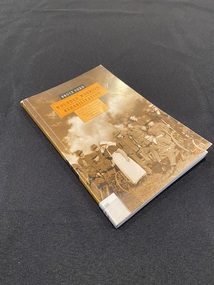
Book - Illustrated paperback book, Caulfield General Medical Centre, The wounded warrior and rehabilitation, 1996
... history...World War 1914-1918 medical care...No.11 Australian General Hospital Caulfield Rehabilitation Hospital (Vic.) military hospitals-Australia-history World War 1914-1918 medical care World War 1939-1945 medical care soldiers-medical care-Australia soldiers-rehabilitation-Australia rehabilitation wounded soldiers Traces the history of rehabilitation in the armed forces in Australia. ...Traces the history of rehabilitation in the armed forces in Australia. This history included the establishment of the Caulfield Hospital in Melbourne. A hospital that has adapted over time and throughout two World Wars, polio outbreaks and up to its recent care of the elderly and victims of accidents,Small paperback with an orange spine with title printed down it and a white spine label taped to the bottom. The front cover shows a sepia toned image of a group of wounded soldiers on crutches and in wheelchairs with a nurse standing amongst them. There are two orange templates in the top centre of the page with the title information printed inside them in black print.non-fictionTraces the history of rehabilitation in the armed forces in Australia. This history included the establishment of the Caulfield Hospital in Melbourne. A hospital that has adapted over time and throughout two World Wars, polio outbreaks and up to its recent care of the elderly and victims of accidents,no.11 australian general hospital, caulfield rehabilitation hospital (vic.), military hospitals-australia-history, world war 1914-1918 medical care, world war 1939-1945 medical care, soldiers-medical care-australia, soldiers-rehabilitation-australia, rehabilitation, wounded soldiers -
 Bendigo Historical Society Inc.
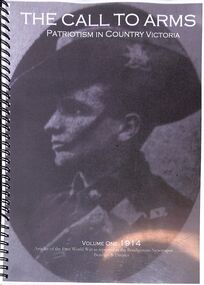
Book - "The Call to Arms. Patriotism in Country Victoria. Volume 1.", 2011
... World War one began in 1914, and ended in 1918. World War I or the First World War (28 July 1914 – 11 November 1918), also known as the Great War, was a global conflict between two coalitions: the Allies (or Entente) and the Central Powers. One of the deadliest conflicts in history...World War one began in 1914, and ended in 1918. World War I or the First World War (28 July 1914 – 11 November 1918), also known as the Great War, was a global conflict between two coalitions: the Allies (or Entente) and the Central Powers. One of the deadliest conflicts in history ...World War one began in 1914, and ended in 1918. World War I or the First World War (28 July 1914 – 11 November 1918), also known as the Great War, was a global conflict between two coalitions: the Allies (or Entente) and the Central Powers. One of the deadliest conflicts in history, World War I resulted in an estimated 15 to 22 million deaths, including those in war crimes and genocides. The war also helped spread the Spanish flu pandemic. The conflict saw important developments in weaponry, including the first large-scale use of machine guns, artillery, aircraft, chemical weapons, and tanks. The causes of World War I included the rise of the German Empire, which disturbed the long-standing balance of power in Europe, and the exacerbation of imperial rivalries, as reflected in new alliances and an arms race between the great powers. Tensions in the Balkans reached a breaking point on 28 June 1914 when Gavrilo Princip, a Bosnian Serb, assassinated Franz Ferdinand, the heir to the Austro-Hungarian throne. Austria-Hungary blamed Serbia and declared war on 28 July, upon which the Russian Empire mobilised in Serbia's defence. In early August, Germany declared war on Russia and France; the United Kingdom entered the war after Germany invaded Belgium. Germany's strategy in 1914 was to quickly defeat France, but its advance was halted in September, and the Western Front solidified into a near-continuous line of fortified trenches from the English Channel to Switzerland. The Eastern Front was more dynamic, but neither side gained a decisive advantage, despite costly offensives. The Ottoman Empire joined the Central Powers in November, which was followed by a failed Allied campaign at Gallipoli. Japan and Italy also joined the Allies. Major battles, including those at Verdun, the Somme, and Passchendaele, failed to break the stalemate on the Western Front. In April 1917, the United States joined the Allies after Germany resumed unrestricted submarine warfare against Atlantic shipping. Later that year, the Bolsheviks seized power in Russia in the October Revolution; Soviet Russia signed an armistice with the Central Powers in December, followed by a separate peace in March 1918. That month, Germany launched a spring offensive in the west, which despite initial successes left the German Army exhausted and demoralised. The Allied Hundred Days Offensive, beginning in August 1918, caused a collapse of the German front line. By early November, the Allies had signed armistices with the Ottomans and with Austria-Hungary, leaving Germany isolated. Facing a revolution at home, Kaiser Wilhelm II abdicated on 9 November, and the war ended with the Armistice of 11 November 1918. Metal spiral bound book. Plastic clear cover, and black cardboard back cover. Soft cover. Cover has an image of a black and white image of the bust of a soldier looking to the left. Titles in white. 121 pages. Contains articles of the First World War as reported in the 'Bendigonian Newspaper'. Contains a timeline of significant events during WW1. Has index. Transcribed by Pamela Houston. Printed by Bendigo Copy Centre, Bendigo. Volume one deals with 1914.world war one, soldiers, bendigonian newspapaper -
 Emerald Museum & Nobelius Heritage Park
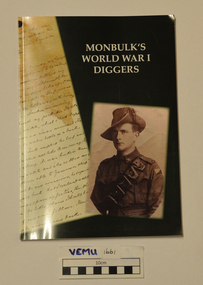
Book, Monbulk's World War 1 Diggers, 2016
... A collection of the service histories of men and women from Monbulk and District who served in World War 1; 1914-1918. ...A collection of the service histories of men and women from Monbulk and District who served in World War 1; 1914-1918. ...A collection of the service histories of men and women from Monbulk and District who served in World War 1; 1914-1918. Written and compiled by Jill A'Vard, President of Monbulk Historical Society.Soft cover.monbulk, monbulk rsl -
 Sunshine and District Historical Society Incorporated
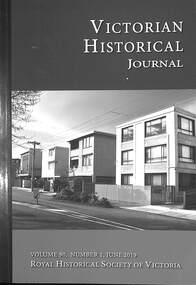
Journal - Victorian Historical Journal Volume 90 Number 1 June 2019, Royal Historical Society of Victoria et al, June 2019
... World War 1 by Judy Maddigan This article arose from an exhibition "The Forgotten Girls of World War One" mounted by Melbourne's living Museum of the West in 2018. Little has been written about the 700 or so wartime women munitions workers based at the Colonial Ammunition Company. These "girls" made all the .303 bullets for the Australian Army in the Great War, but recently remained hidden from history. World War 1914 - 1918 ...The Victorian Historical Journal, first published as the Victorian Historical Magazine in 1911, is the official journal of record and scholarly publication of the Royal Historical Society of Victoria. It is the second oldest history journal in Australia. It has become a vast collaborative history of Victoria with hundreds of individual contributors and topics and has itself become a primary source for researchers.Paperback book with glossy front covernon-fictionThe Victorian Historical Journal, first published as the Victorian Historical Magazine in 1911, is the official journal of record and scholarly publication of the Royal Historical Society of Victoria. It is the second oldest history journal in Australia. It has become a vast collaborative history of Victoria with hundreds of individual contributors and topics and has itself become a primary source for researchers. world war 1914 - 1918, colonial ammunition company, maribyrnong river, footscray, judy maddigan -
 Emerald Museum & Nobelius Heritage Park
Award - British War Medal 1914-20, Royal Mint, 1919-1920
... history. 416,809 Australians enlisted for service, of which more than 60,000 were killed and more than 150,000 were wounded, gassed, or taken prisoner. The First World War remains a significant event in Australia's history. The landings at Gallipoli on April 25, 1915 is remembered as ANZAC Day, and is still commemorated to this day, over 100 years later. medal commemorative medals military First World War World War One World War I World War 1 WWI WW1 Obverse: GEORGIVS V BRITT: OMN: REX ET IND: IMP: / Reverse: 1914 1918 // Silver, circular medallion. ...James Beashel enlisted for the Australian Imperial Force (AIF) on 1 June 1917. He served with the 33rd Battalion and was marched out to the front in France in February 1918. In that year the 33rd Battalion engaged in a number of significant battles as the Germans launched their ‘Spring Offensive’ – a final push for victory following the revolution and collapse of the Russian army in late 1917. Some of the notable engagements include the Battle of Mont St Quentin, the Battle of Amiens and the Battle of Villers Bretonneux. The British War Medal 1914-20 was instituted by King George V in 1919 to mark the end of the First World War. It was awarded to members of British and Imperial forces who had served for a prescribed period during the course of the war, or who had died in active service. Beashel was not the most disciplined of soldiers throughout his time with the AIF. He was regularly disciplined for offences such as neglecting to obey orders, drunkenness, going AWOL and missing marching parades. He was discharged from the AIF at the conclusion of the First World War and returned home to New South Wales. Later in life he relocated to Victoria and died in 1965. For his service he received the Victory Medal, the British War Medal 1914-20, and the 1914-15 Star.This item is historically significant as it represents the service of an Australian in one of the most significant events of the twentieth century, and indeed in human history. 416,809 Australians enlisted for service, of which more than 60,000 were killed and more than 150,000 were wounded, gassed, or taken prisoner. The First World War remains a significant event in Australia's history. The landings at Gallipoli on April 25, 1915 is remembered as ANZAC Day, and is still commemorated to this day, over 100 years later.Silver, circular medallion. The profile of King George V is impressed on the obverse, along with the words 'GEORGIVS V BRITT: OMN: REX ET IND: IMP:' The reverse has an impression of St George on horseback, along with '1914' and '1918'. The ribbon is a thick orange band, flanked on both sides by thinner blue, black and white bands.Obverse: GEORGIVS V BRITT: OMN: REX ET IND: IMP: / Reverse: 1914 1918 //medal, commemorative medals, military, first world war, world war one, world war i, world war 1, wwi, ww1 -
Emerald Museum & Nobelius Heritage Park
Award - War Medals - World War I, Royal Mint, 1919-1920
... World War. It was awarded to members of British and Imperial forces who had served for a prescribed period during the course of the war, or who had died in active service. The Victory Medal was awarded to those who served with the armed forces of the British and Imperial Forces or with certain voluntary organisations between 5 August 1914 and 11 November 1918. This item is historically significant as it represents the service of an Australian in one of the most significant events of the twentieth century, and indeed in human history ...James Beashel enlisted for the Australian Imperial Force (AIF) on 1 June 1917. He served with the 33rd Battalion and was marched out to the front in France in February 1918. In that year the 33rd Battalion engaged in a number of significant battles as the Germans launched their ‘Spring Offensive’ – a final push for victory following the revolution and collapse of the Russian army in late 1917. Some of the notable engagements include the Battle of Mont St Quentin, the Battle of Amiens and the Battle of Villers Bretonneux. Beashel was not the most disciplined of soldiers throughout his time with the AIF. He was regularly disciplined for offences such as neglecting to obey orders, drunkenness, going AWOL and missing marching parades. He was discharged from the AIF at the conclusion of the First World War and returned home to New South Wales. Later in life he relocated to Victoria and died in 1965. For his service he received the Victory Medal, the British War Medal 1914-20, and the 1914-15 Star. The 1914-15 Star was awarded to those who served with the British and Imperial Forces between 5 August 1914 and 31 December 1915 The British War Medal 1914-20 was instituted by King George V in 1919 to mark the end of the First World War. It was awarded to members of British and Imperial forces who had served for a prescribed period during the course of the war, or who had died in active service. The Victory Medal was awarded to those who served with the armed forces of the British and Imperial Forces or with certain voluntary organisations between 5 August 1914 and 11 November 1918.This item is historically significant as it represents the service of an Australian in one of the most significant events of the twentieth century, and indeed in human history. 416,809 Australians enlisted for service, of which more than 60,000 were killed and more than 150,000 were wounded, gassed, or taken prisoner. The First World War remains a significant event in Australia's history. The landings at Gallipoli on April 25, 1915 is remembered as ANZAC Day, and is still commemorated to this day, over 100 years later.Four medals. One is a bronze four-pointed star medallion, ensigned with a crown. The obverse has two crossed swords overlaid with a wreath and a scroll that reads '1914-15'. Below is the royal cypher of King George V - GV. The ribbon is a thick white band flanked by a thinner blue band on one side and a red band on the other. Two of the medals are the same. Silver, circular medallions. The profile of King George V is impressed on the obverse, along with the words 'GEORGIVS V BRITT: OMN: REX ET IND: IMP:' The reverse has an impression of St George on horseback, along with '1914' and '1918'. The ribbon is a thick orange band, flanked on both sides by thinner blue, black and white bands. One is a circular, bronze medallion, impressed on the obverse with a winged, female figure holding a palm branch in her right hand. The reverse reads 'THE GREAT WAR FOR CIVILISATION 1914 - 1919', surrounded by a laurel wreath. The ribbon is rainbow coloured.Medal 1: Obverse: 1914-15 / Medals 2 and 4: Obverse: GEORGIVS V BRITT: OMN: REX ET IND: IMP: / Reverse: 1914 1918 / Medal 3: Reverse: THE GREAT / WAR FOR / CIVILISATION / 1914 - 1919 /medal, commemorative medals, military, first world war, world war one, world war i, world war 1, wwi, ww1
