
Showing 23 items matching " arms production"
-
 Ballarat Tramway Museum
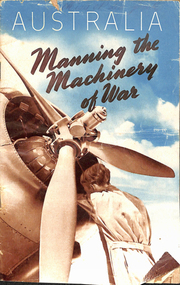
Book, Australian Government, "Australia - Manning the Machinery of War", 1943-1945
... ... Arms production...Trams tramways Arms production World War II On front cover has "Miss Patti Jack" in ink. 36 page booklet outlining production of armaments in Australia for World War II Printed in brown ink, front cover has 2 colour imprint, side stapled, 2 staples. ...36 page booklet outlining production of armaments in Australia for World War II Printed in brown ink, front cover has 2 colour imprint, side stapled, 2 staples.On front cover has "Miss Patti Jack" in ink.trams, tramways, arms production, world war ii -
 Federation University Historical Collection
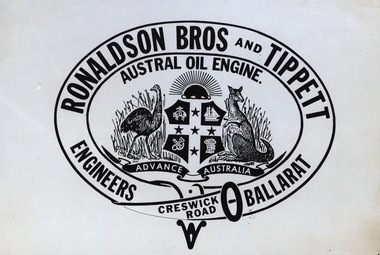
Article - Article - Advertising sticker, ZILLES COLLECTION: Ronaldson Bros and Tippett - Ballarat Sticker
... production of tractors. The company was taken over in 1970 and closed. zilles printers ballarat ronaldson bros and tippett agricultural machinery oil engines tractors coat of arms logo Name of company. ...Zilles Printers was begun by Lewis Zilles in the early 1930s. It was in McKenzie Street Ballarat. His son Jeffrey also became a printer - letterpress, offset and screen printer. The business became Zilles Printers/Graphics and was in Armstrong Street and later Bell Street Ballarat. Ronaldson Bros and Tippett began in Creswick Road Ballarat 1905. They were manufacturers of agricultural machinery and oil engines. In the 1930s they began production of tractors. The company was taken over in 1970 and closed. Black design on white background.Name of company. Artwork inside oval shapezilles printers, ballarat, ronaldson bros and tippett, agricultural machinery, oil engines, tractors, coat of arms, logo -
 Glenelg Shire Council Cultural Collection
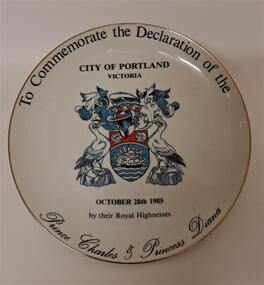
Memorabilia - City of Portland Commemoration Plate, C1980s
... Portland Coat of Arms Commemoration of City of Portland 1985 Portland Princess Diana Prince William Front - 'To Commemorate the Declaration of the CITY OF PORTLAND VICTORIA' 'OCTOBER 28th 1985 by their Royal Highnesses Prince Charles & Princess Dianna' Back - Production marked 'FINE CHINA WESTMINSTER AUSTRALIA' Plate - Light coloured. ...Portland Coat of ArmsCommemoration of City of Portland 1985Plate - Light coloured. Gold rim. Balck writing. Blue, purple, red coat of arms for Portland featuring two seagulls either side of a ship in front of a sunrise on the ocean. Was unpacked from a box assumed to belong with a timber stand.Front - 'To Commemorate the Declaration of the CITY OF PORTLAND VICTORIA' 'OCTOBER 28th 1985 by their Royal Highnesses Prince Charles & Princess Dianna' Back - Production marked 'FINE CHINA WESTMINSTER AUSTRALIA'portland, princess diana, prince william -
 Bendigo Historical Society Inc.
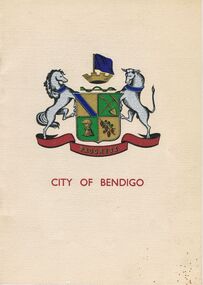
Book - JOAN O'SHEA COLLECTION: 150TH ANNIVERSARY OF BENDIGO BOOKLET, 1850 - 1950's
... arms for City of Bendigo underneath word progress, left hand side horse, right hand side bullock. History of Bendigo: From Sheep Run to Provincial City in 100 years. Map of Bendigo and Surrounds Railways, Water Courses & Storage, Power, Municipal Boundaries & Land Available for Industry. Municipal District Creation 1855, Borough Proclamation 1863, Proclaimed City 1871, Area: 7992 Acres Population as of last census City of Bendigo 28,722, City of Bendigo and adjacent Urban Areas 36,909. City of Bendigo Map, The Past Prior to 1850. Icons of Bendigo The Bendigo base Hospital,Law Courts & Post Office, Primary Schools, Housing, Industry including Butter Production...arms for City of Bendigo underneath word progress, left hand side horse, right hand side bullock. History of Bendigo: From Sheep Run to Provincial City in 100 years. Map of Bendigo and Surrounds Railways, Water Courses & Storage, Power, Municipal Boundaries & Land Available for Industry. Municipal District Creation 1855, Borough Proclamation 1863, Proclaimed City 1871, Area: 7992 Acres Population as of last census City of Bendigo 28,722, City of Bendigo and adjacent Urban Areas 36,909. City of Bendigo Map, The Past Prior to 1850. Icons of Bendigo The Bendigo base Hospital,Law Courts & Post Office, Primary Schools, Housing, Industry including Butter Production ...Joan O'Shea Collection. Buff Coloured Booklet City of Bendigo. 150th anniversary of Bendigo 1850s to 1950s. Image on cover coat of arms for City of Bendigo underneath word progress, left hand side horse, right hand side bullock. History of Bendigo: From Sheep Run to Provincial City in 100 years. Map of Bendigo and Surrounds Railways, Water Courses & Storage, Power, Municipal Boundaries & Land Available for Industry. Municipal District Creation 1855, Borough Proclamation 1863, Proclaimed City 1871, Area: 7992 Acres Population as of last census City of Bendigo 28,722, City of Bendigo and adjacent Urban Areas 36,909. City of Bendigo Map, The Past Prior to 1850. Icons of Bendigo The Bendigo base Hospital,Law Courts & Post Office, Primary Schools, Housing, Industry including Butter Production, Poultry Farming, Livestock Sales & Tomato Growing, Slaughter House & ordnance factory. The Present Recreation Photos: Bendigo Bowling Club, Queen Elizabeth Oval, Municipal Lawn Tennis Courts The Future of Bendigo, Bendigo Photographs From The 1950s,Cambridge Press Bendigobendigo, history, progress of bendigo 1850s on. -
 Bendigo Historical Society Inc.
Document - LONG GULLY HISTORY GROUP COLLECTION: 1852 - 1950'S
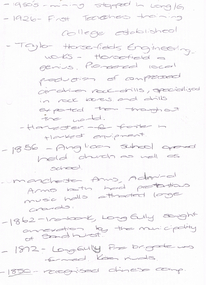
... Pioneered local production of compressed air driven roak-drills, specialized in rock bores and drills exported them throughout the world. Harvester - for f/ter in Harvest equipment. 1856 - Anglican School opened held church as well as school. Manchester Arms...BENDIGO History long gully history group The Long Gully History Group - 1852 to 1950's First Teachers training College Taylor Horsefields Engineering Works Anglican School Manchester Arms Admiral Arms Municipality of Sandhurst Long Gully Fire Brigade Chinese Camp Little Cornwell Long Gully Mine Two hand written pages with year dates and what took place at that time. Dates range from 1852 to 1950's. 1950's - mining stopped in Long /G. 1926 - First Teachers training College established. Taylor Horsefields Engineering works - Horsefield a genius. Pioneered local production ...Two hand written pages with year dates and what took place at that time. Dates range from 1852 to 1950's. 1950's - mining stopped in Long /G. 1926 - First Teachers training College established. Taylor Horsefields Engineering works - Horsefield a genius. Pioneered local production of compressed air driven roak-drills, specialized in rock bores and drills exported them throughout the world. Harvester - for f/ter in Harvest equipment. 1856 - Anglican School opened held church as well as school. Manchester Arms, Admiral Arms both has pretentious music halls attracted large crowds. 1862 - Ironbark, Long Gully sought annexation by the Municipality of Sandhurst. 1872 - Long Gully Fire Brigade was formed. Keen rivals. 1850 - recognised Chinese camp. ? Long Gully - due to the sinking deeper and the rewards generally richer, became the heart of 'Little Cornwall' - Cornish people. * Tent Church services held in 1862. Long Gully Mine opened April 1852. On the back of the first page is written - Mines - Reefs. mines mentioned are New Chum Hill, the New Chum and Victoria, The Victoria HIll Ironbark, The North Old Chum, Lansell's Big 180, Ballerstadt's Open-Cut, and the Victoria Quartz Mine.bendigo, history, long gully history group, the long gully history group - 1852 to 1950's, first teachers training college, taylor horsefields engineering works, anglican school, manchester arms, admiral arms, municipality of sandhurst, long gully fire brigade, chinese camp, little cornwell, long gully mine -
 Bendigo Historical Society Inc.
Document - LYDIA CHANCELLOR COLLECTION; THE VOLGA BOATMAN THEATRE PROGRAMME
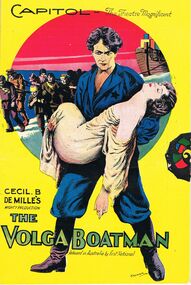
... arms. On the cover are the words, ' Capitol - The Theatre Magnificent. Cecil. B de Mille's mighty production, The Volga Boatman. ...arms. On the cover are the words, ' Capitol - The Theatre Magnificent. Cecil. B de Mille's mighty production, The Volga Boatman. ...One booklet with yellow cover and a picture of a man holding a woman in his arms. On the cover are the words, ' Capitol - The Theatre Magnificent. Cecil. B de Mille's mighty production, The Volga Boatman. Released in Australia by First National.' Printed by Farrow Falcon Press, 226-30 Little LonsdaleStreet, Melbourne.c. 1928. 34 pgs. Includes advertisements, illustrations, photos, plan of exits and the programme itself.program, theatre, the volga boatman, lydia chancellor, collection, theatre, entertainment, music, event, programme, program, programme -
 Bendigo Historical Society Inc.
Book - INTERIM TELEPHONE DIRECTOR: BENDIGO, MAY 1959
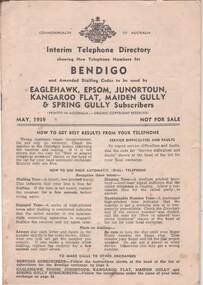
... A Commonwealth of Australia production with Coat of Arms on front page....A Commonwealth of Australia production with Coat of Arms on front page. Book INTERIM TELEPHONE DIRECTOR: BENDIGO, MAY 1959 ...INTERIM TELEPHONE DIRECTORY, BENDIGO, MAY 1959 Paper booklet containing New telephone numbers and amended dialling codes for Bendigo, Eaglehawk, Epsom, Junortoun, Kangaroo Falt, Maiden Gully and Spring Gully. A Commonwealth of Australia production with Coat of Arms on front page.book, bendigo, bendigo history & its people -
 Bendigo Historical Society Inc.
Document - VICTORIA HILL - CLASSIFICATION REQUEST
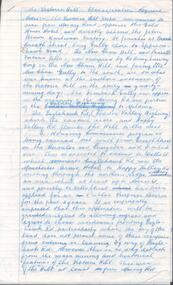
... MINING Parish Map Victoria Hill Classification Request for Victoria Hill Gold Mines Hotel John Brown Knitwear Factory Lansell's fortuna Villa Army Survey Corp Housing Commission Hercules Energetic Ironbark Manchester Arms Hotel Bendigo Goldfield Old Miners Homes George Lansell Sir George Lansell Bendigo Advertiser Theodore Ballerstedt Junior Mr C T C Johann Ballerstedt Mr Wm Rae David Sterry Adventure Wittscheibe's 'Jewellers Shop' Luffsman & Sterry's rich claim Ballerstedt Open Cut and Mine Lansells 180 Victoria Quartz Rotary Club of Bendigo South Bendigo Cemetry Handwritten, 3 page carbon copy of a classification request for victoria Hill. Notes give locality, housing program in the area, immediate surrounds of the area, prominent citizens, buildings, mines, geographical formations and gold production ...Handwritten, 3 page carbon copy of a classification request for victoria Hill. Notes give locality, housing program in the area, immediate surrounds of the area, prominent citizens, buildings, mines, geographical formations and gold production. Notes prepared by Albert Richardson.mining, parish map, victoria hill, classification request for victoria hill, gold mines hotel, john brown knitwear factory, lansell's fortuna villa, army survey corp, housing commission, hercules, energetic, ironbark, manchester arms hotel, bendigo goldfield, old miners homes, george lansell, sir george lansell, bendigo advertiser, theodore ballerstedt junior, mr c t c johann ballerstedt, mr wm rae, david sterry, adventure, wittscheibe's 'jewellers shop', luffsman & sterry's rich claim, ballerstedt open cut and mine, lansells 180, victoria quartz, rotary club of bendigo south, bendigo cemetry -
 Dutch Australian Heritage Centre Victoria
Dutch Tile (Tegel), Ridderzaal - Den Haag
... Arms of The Hague. Back - Metal Triangular hook for hanging. Industrial production marks. ...Arms of The Hague. Back - Metal Triangular hook for hanging. Industrial production marks. ...Tourism industry highlighting cultural aspect of the Netherlands - Dutch tiles.Promotes tourism to the Netherlands.Ceramic tile in the Delft blue.Front - Representation of the Ridderzaal (Hall of Knights - Seat of the Dutch Parliament) in The Hague. In top left corner - Dutch Coat of Arms. In top right corner - Coat of Arms of The Hague. Back - Metal Triangular hook for hanging. Industrial production marks. Along the bottom - English description of the subject of the tile plus Tourist slogan (THE HAGUE - A New Destination for travel to Holland) and contact information. Bottom right corner - manufacturer logo and name (b.v. plateelbakkerij - located in Schoonhoven, Holland)tourism, tile -
Glen Eira Historical Society
Article - MCKINNON
... Production... Markets... Farmers... Elster Creek... McMillan Archibald... Thomas Street... Centre Road... Wheatley Road... Vineyards... South Road... Ormond... Brighton... Moorabbin... Irish... Immigrants... Bentleigh... Priests... Hanrahan Pierce... Hanrahan Johanna... Caroll Michael... Caroll Catherine... Howes Eliza... Howes John... Howes Edward... Shanahan Denis... Shanahan Ellen... Gould James... Gould Catherine... Howes George... Bignell Road... Jasper Road... Tucker Road... McGuiness Family... Quinn Family... Halinan Family... Malane Family... Inns... The Gardeners Arms...McKinnon Cribben John Crop Production Markets Farmers Elster Creek McMillan Archibald Thomas Street Centre Road Wheatley Road Vineyards South Road Ormond Brighton Moorabbin Irish Immigrants Bentleigh Priests Hanrahan Pierce Hanrahan Johanna Caroll Michael Caroll Catherine Howes Eliza Howes John Howes Edward Shanahan Denis Shanahan Ellen Gould James Gould Catherine Howes George Bignell Road Jasper Road Tucker Road McGuiness Family Quinn Family Halinan Family Malane Family Inns The Gardeners Arms McKinnon Hotel Bent James Bent Thomas Tickets of Leave Murray Road Were Nicholas Sargood Family Ripponlea Mansions Elsternwick St. ...Brief typed history of McKinnon settlement taken from Moorabbin A Pictorial History 1862-1994 by John Cribben. Includes photocopied pages of railway gates, five land estate flyers and an article from the McKinnon Progress, undated.mckinnon, cribben john, crop production, markets, farmers, elster creek, mcmillan archibald, thomas street, centre road, wheatley road, vineyards, south road, ormond, brighton, moorabbin, irish, immigrants, bentleigh, priests, hanrahan pierce, hanrahan johanna, caroll michael, caroll catherine, howes eliza, howes john, howes edward, shanahan denis, shanahan ellen, gould james, gould catherine, howes george, bignell road, jasper road, tucker road, mcguiness family, quinn family, halinan family, malane family, inns, the gardeners arms, mckinnon hotel, bent james, bent thomas, tickets of leave, murray road, were nicholas, sargood family, ripponlea, mansions, elsternwick, st. stephens’ common school, church of england, school houses, evelyn street, st. john’s anglican church, telegraph offices, post offices, state schools, manchester road, north road, nicholls buildings, rivers frank, rivers ray, shops, pridgeon mr., elm grove, sobrin mr., clark misses, greaves bakery, armitage mrs., rout mr., tunnicliffe mrs., lance’s milk bar, johnson’s hardware shop, stiringer mrs., white horrie, robinson’s, mcinnerney’s flower shop, jean darling’s cakes, wyles jim, mckinnon progress association, glen orme avenue, ormond theatre, theatres, lester harry, the plaza, railway crossing, railway gates, wright street, nichols l., builders, pine grove, halls, st. elmo estate, patterson station estate, patterson road, brewer road, purton road, clee hill estate, railway park, hawthorn grove, wattle grove, elm grove, learys estate, manchester road, selkirk avenue, masters estate, lancaster street, moylan street, moorabbin railway crossing -
Glen Eira Historical Society
Document - Lees Family
... Production... Farmers... Vineyards... Viticulture... Bent James... McKinnon Road... Elster Creek... Hellins Edward... Inns... Gardeners Arms...Branbury Thomas McKinnon Road Wheatley Road McKinnon Railway East Bentleigh Convicts Crop Production Farmers Vineyards Viticulture Bent James McKinnon Road Elster Creek Hellins Edward Inns Gardeners Arms Brighton Cemetery Cemeteries Guerin Mary Quirk Michael Quirk Patrick Quirk Catherine Quirk Daniel Quirk Edward Quirk Daniel Snr. ...A seven page reprinted article by Jan Rigby, on the Lees Family, who were early pioneers, and pioneer market gardeners in McKinnon and Bentleigh 1850-2003. Includes footnotes and references author Jan Rigby used for her research.lees family, pioneers, market gardens, mckinnon, bentleigh, lees jack allan, briggs vera victoria, lees james henry, tobin linda doris, mcclelland vera auraria, lees leonard william, rigby jan, lees james, lees william, bentleigh, jasper road, centre road, harwood j., branbury thomas, mckinnon road, wheatley road, mckinnon railway, east bentleigh, convicts, crop production, farmers, vineyards, viticulture, bent james, mckinnon road, elster creek, hellins edward, inns, gardeners arms, brighton cemetery, cemeteries, guerin mary, quirk michael, quirk patrick, quirk catherine, quirk daniel, quirk edward, quirk daniel snr., lees mary, slab huts, lees joseph, lees joe, east bentleigh school, primary schools, ring catherine, ring kate, stables, lees bill, lees tom, lees james henry, lees jim, ormond state school, wagons, cruickshanks nursery, nurseries, church of christ, ormond, carlton street, lees street, ring charles, rout charlotte, horse racing, lees george, lees stan, crop production, nicholson street, lees street, cowie william, lees leonard william, lees len, lees vera, lees linda doris, lees jack allen, lees vera victoria, mckinnon cricket club, sporting clubs, bentleigh club, masonic lodge, thomas street, edwards george, nurserymen, chinese community, market gardeners, j.h. lee and sons, lee floss, lees iris, centre road, bent thomas -
 Warrnambool and District Historical Society Inc.
Photograph - Framed Photograph of Victoria Challenge Shield, George Edward & Sons, Glasgow, 1888
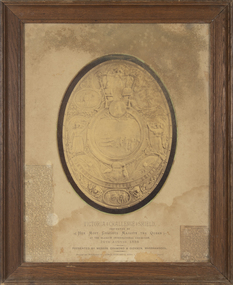
... production and fading. The shield details include images of War and Peace, Coat of Arms, militia figures and guns and a rifle match (in the centre). ...production and fading. The shield details include images of War and Peace, Coat of Arms, militia figures and guns and a rifle match (in the centre). ...This framed photograph is of the Victoria Challenge Shield which was presented in 1888 by the Warrnambool firm of Cramond and Dickson for competition among the Victoria Garrison Artillery members in Victoria. There were 8 garrison groups in Victoria at that time. The shield was 22 inches wide and two feet six inches high.The quality of the shield can be gauged by that fact that it was exhibited at the Glasgow International Exhibition of 1888 and was one of the items inspected by Queen Victoria. The stipulation by the donors was that the competition had to be held in Warrnambool. The Warrnambool artillery group won the trophy in 1898 and this is noted in one of the newspaper cuttings included with the photograph of the shield. The Cramond and Dickson general store in Warrnambool was founded in 1855 by John Cramond and James Dickson and was a prominent business in Warrnambool until it closed in 1973. This photograph is of considerable interest as it is a reminder of the Victoria Challenge Shield that was a competition prize for competing groups of the Victoria Garrison Artillery in the times when volunteer militia groups were strong in Victorian country towns ( from the 1860s to the beginning of the First World War). This is a framed oval photograph of the Victoria Challenge Shield. The photograph is of poor production and fading. The shield details include images of War and Peace, Coat of Arms, militia figures and guns and a rifle match (in the centre). There are two newspaper cuttings included in the frame and a handwritten date. The photograph has a beige background and is under glass in a wooden frameVictoria Challenge Shield inspected by Her Most Gracious Majesty the Queen at the Glasgow International Exhibition 24th August 1888 presented by Messrs Cramond & Dickson Warrnambool cramond & dickson warrnambool, victoria challenge shield, garrison artillery groups in victoria -
 Sunshine and District Historical Society Incorporated
Audio - Sunshine and District Historical Society Annual General Meeting 2003 Audio Tape
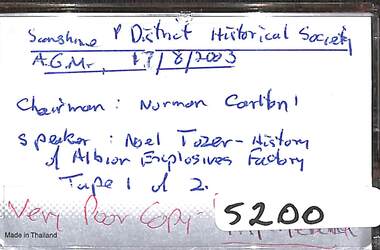
... In 1940 the factory first began production of propellants for small arms and artillery that were required by the military forces during WW2. ...In 1940 the factory first began production of propellants for small arms and artillery that were required by the military forces during WW2. ...After European settlement in the mid 1850s, the North Albion site was being used as grassland for farming and grazing. In the late 1930's, the threat of another world war in Europe was developing and the Australian Government decided it needed to increase and to be more independent in the manufacturing of munitions and explosives. The Albion site was chosen opposite the existing commercial ICI ANZ factory. ICI ANZ was chosen to design, construct and operate the new facilities. In 1940 the factory first began production of propellants for small arms and artillery that were required by the military forces during WW2. After the end of the WW2 the plant continued producing explosives and fertilizers for commercial use. The site was closed down in 1986, and the site went through an extensive decontamination and cleanup before being redeveloped into a housing estate with a shopping complex located in its center. The Black Powder Mill, built in 1942 is the only remaining building from the Albion explosives Factory. Noel Tozer is a former President of the Friends of the Black powder Mill. Sunshine and District Historical Society A.G.M. 18/7/2003 Chairman Norman Carlton Speaker Noel Tozer History of Albion Explosives Factorynoel tozer, albion explosive factory -
 Sunshine and District Historical Society Incorporated
Film - A Blast From The Past Albion Explosive Factory DVD
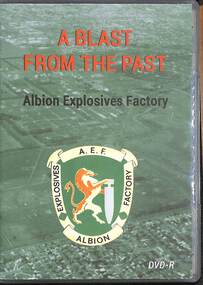
... arms and artillery. - By 1942–45, it was one of Australia’s three primary military explosives factories, employing thousands and contributing significantly to the war effort. Post War Time History - Continued production...arms and artillery. - By 1942–45, it was one of Australia’s three primary military explosives factories, employing thousands and contributing significantly to the war effort. Post War Time History - Continued production ...The Albion Explosives Factory was a major WWII-era munitions site in Sunshine, Victoria, operating from 1939 to 1986. Its legacy includes the Black Powder Mill, now a heritage landmark. War Time History - Established in 1939–40 in response to the looming threat of war in Europe. - Located in North Albion, opposite the ICIANZ chemical plant, which also helped design and operate the facility. - Initially known as Munitions Annexe No. 5, it became the Albion Explosives Factory, producing cordite, TNT, nitroglycerine, nitric acid, and other propellants for small arms and artillery. - By 1942–45, it was one of Australia’s three primary military explosives factories, employing thousands and contributing significantly to the war effort. Post War Time History - Continued production of explosives and fertilizers for commercial use after WWII. - Expanded in 1947–49 with the addition of the RDX plant north of Furlong Road. - Introduced new technologies like synthetic ammonia, DNT, and continuous TNT production through the 1950s–60s. Closure and Environmental Remediation - Closed in 1986, followed by extensive decontamination and cleanup. - The site was heavily contaminated with TNT, DNT, nitrates, ammonia, and metals, requiring years of environmental audits and remediation. - Eventually redeveloped into a housing estate and shopping complex, transforming the industrial site into a suburban community. A Blast from the Past Albion Explosive Factoryalbion explosive factory, deer park, cairnlea -
 Sunshine and District Historical Society Incorporated
Film - A Blast From The Past Albion Explosive Factory Video
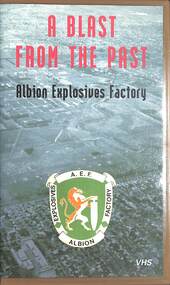
... arms and artillery. - By 1942–45, it was one of Australia’s three primary military explosives factories, employing thousands and contributing significantly to the war effort. Post War Time History - Continued production...arms and artillery. - By 1942–45, it was one of Australia’s three primary military explosives factories, employing thousands and contributing significantly to the war effort. Post War Time History - Continued production ...The Albion Explosives Factory was a major WWII-era munitions site in Sunshine, Victoria, operating from 1939 to 1986. Its legacy includes the Black Powder Mill, now a heritage landmark. War Time History - Established in 1939–40 in response to the looming threat of war in Europe. - Located in North Albion, opposite the ICIANZ chemical plant, which also helped design and operate the facility. - Initially known as Munitions Annexe No. 5, it became the Albion Explosives Factory, producing cordite, TNT, nitroglycerine, nitric acid, and other propellants for small arms and artillery. - By 1942–45, it was one of Australia’s three primary military explosives factories, employing thousands and contributing significantly to the war effort. Post War Time History - Continued production of explosives and fertilizers for commercial use after WWII. - Expanded in 1947–49 with the addition of the RDX plant north of Furlong Road. - Introduced new technologies like synthetic ammonia, DNT, and continuous TNT production through the 1950s–60s. Closure and Environmental Remediation - Closed in 1986, followed by extensive decontamination and cleanup. - The site was heavily contaminated with TNT, DNT, nitrates, ammonia, and metals, requiring years of environmental audits and remediation. - Eventually redeveloped into a housing estate and shopping complex, transforming the industrial site into a suburban community. A Blast from the Past Albion Explosive Factoryalbion explosive factory, deer park, cairnlea -
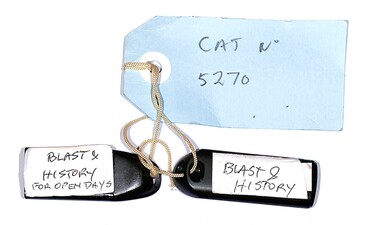 Sunshine and District Historical Society Incorporated
Film - A Blast From The Past Albion Explosive Factory USB Stick
... arms and artillery. - By 1942–45, it was one of Australia’s three primary military explosives factories, employing thousands and contributing significantly to the war effort. Post War Time History - Continued production...arms and artillery. - By 1942–45, it was one of Australia’s three primary military explosives factories, employing thousands and contributing significantly to the war effort. Post War Time History - Continued production ...The Albion Explosives Factory was a major WWII-era munitions site in Sunshine, Victoria, operating from 1939 to 1986. Its legacy includes the Black Powder Mill, now a heritage landmark. War Time History - Established in 1939–40 in response to the looming threat of war in Europe. - Located in North Albion, opposite the ICIANZ chemical plant, which also helped design and operate the facility. - Initially known as Munitions Annexe No. 5, it became the Albion Explosives Factory, producing cordite, TNT, nitroglycerine, nitric acid, and other propellants for small arms and artillery. - By 1942–45, it was one of Australia’s three primary military explosives factories, employing thousands and contributing significantly to the war effort. Post War Time History - Continued production of explosives and fertilizers for commercial use after WWII. - Expanded in 1947–49 with the addition of the RDX plant north of Furlong Road. - Introduced new technologies like synthetic ammonia, DNT, and continuous TNT production through the 1950s–60s. Closure and Environmental Remediation - Closed in 1986, followed by extensive decontamination and cleanup. - The site was heavily contaminated with TNT, DNT, nitrates, ammonia, and metals, requiring years of environmental audits and remediation. - Eventually redeveloped into a housing estate and shopping complex, transforming the industrial site into a suburban community. A Blast from the Past Albion Explosive Factoryalbion explosive factory, deer park, cairnlea -
 City of Greater Geelong
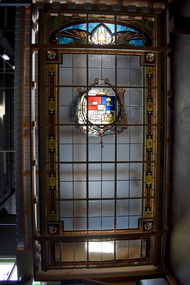
Decorative object - Geelong Crest Stained Glass Window, Arthur S Pittock, 1916
... The window showcases the City of Geelong’s original coat of arms, featuring images of Geelong’s early industries: sailing, wool, wine and wheat production, and a kangaroo as an inescutcheon. ...The window showcases the City of Geelong’s original coat of arms, featuring images of Geelong’s early industries: sailing, wool, wine and wheat production, and a kangaroo as an inescutcheon. ...This stained glass was originally installed at Geelong Town Hall following its expansion in 1917. The Geelong Council involved the staff and former students of the Gordon Technical College in designing the artwork and aesthetic of the building. Arthur S. Pittock, former student and local glazier, was responsible for the design and construction of the large stained glass window in the stair hall. The window was described as “a special feature” in the new building with the leaded glass work using “the motif throughout in Greek form, of admirable colour”. The window showcases the City of Geelong’s original coat of arms, featuring images of Geelong’s early industries: sailing, wool, wine and wheat production, and a kangaroo as an inescutcheon. During the redevelopment of City Hall in the late 1960's the stained glass window was removed from the building and placed in the basement carpark. The National Wool Museum has taken responsibility of the window and removed it from the car park to be conserved and housed safely. The surviving City Hall window is the most elaborate, known surviving stained glass window by Pittock.Stained glass window featuring the geelong crest with a decorative border, in a wooden frame. stained glass, geelong, history, geelong town hall, geelong council, gordon technical college, glazier, geelong crest, conservation -
 Kew Historical Society Inc
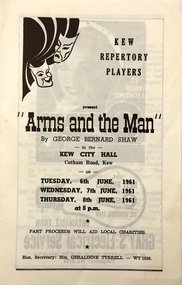
Programme - Theatre Programme, Arms and the Man / by George Bernard Shaw, 1961
... productions and exhibitions. The Arthur Dear Collection (in conjunction with the scrapbooks compiled by Marion Tilley) provide a comprehensive snapshot of performing arts in Kew during the 1940s, 1950s and 1960s. The collection includes valuable data about performances, performers, directors etc., during this period. arms ...From the early 1950s, the Kew Repertory Players performed more substantial, if less spectacular fare in the Recreation Hall, and later in the new Kew City Hall, after the former’s demolition in 1960. Their repertoire ranged from plays by Noel Coward to J.B. Priestley. Many of their programmes, the earliest from 1953, and the last from 1965, form part of our collection.Arthur Henry Dear was an employee of the City of Kew, acting as Hall Keeper of the Kew Recreation Hall in Wellington Street, and later the new Kew City Hall in Cotham Road. The Arthur Dear Collection contains memorabilia - tickets, programmes, invitations - as well as his identification badge. Items in the collection dates from the 1940s to the 1970s. The Kew Recreation Hall (Wellington Street) and later the Kew City Hall (Cotham Road) were major locations in suburban Melbourne in the postwar period for civic and private events including theatre productions and exhibitions. The Arthur Dear Collection (in conjunction with the scrapbooks compiled by Marion Tilley) provide a comprehensive snapshot of performing arts in Kew during the 1940s, 1950s and 1960s. The collection includes valuable data about performances, performers, directors etc., during this period. Programme issued by The Kew Repertory Players for a performance of Arms and the Man by George Bernard Shaw. Performances took place in the Kew City Hall in June 1961. The 8-page programme includes a cast list, some profiles, a synopsis and advertisements for local businesses.arms and the man, george bernard shaw, kew repertory players, arthur dear collection, performing arts -- kew -- victoria, kew city hall -- cotham road -- kew (vic.), theatre memorabilia -- kew (vic.) -
 Mont De Lancey
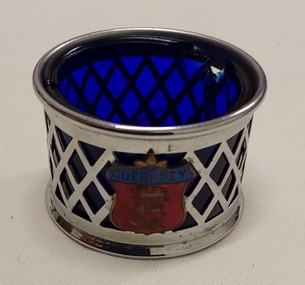
Domestic object - Mustard Pot, Cromplate, Unknown
... arms insignia badge attached. See entry 3531 for Salt and Pepper Shakers in this set. It was used in the 1900's and was originally owned by Edward Lloyd Mauger. Tableware Food containers Condiment sets Mustard pots 'Guernsey' is stamped on the badge. 'Cromplate' is stamped on the production ...This pot is part of a three piece condiment set which has a Guernsey coat of arms insignia badge attached. See entry 3531 for Salt and Pepper Shakers in this set. It was used in the 1900's and was originally owned by Edward Lloyd Mauger.A small vintage chrome plated mustard pot with a basket weave outer container and a cobalt blue glass insert to hold the mustard. There is no lid or spoon. On one side is attached a blue, red and gold with three lions Guernsey coat of Arms badge.'Guernsey' is stamped on the badge. 'Cromplate' is stamped on the production label underneath the chrome outer container.tableware, food containers, condiment sets, mustard pots -
![Book - Novel, Sandys, Oliver (pen-name of Marguerite Florence Laura Jarvis), Singing uphill, [n.d.] [194_?]](/media/collectors/641920217f0478323d8a47a8/items/65430acdf11bd0375b7bc25a/item-media/654f015ae64ed8bdfc17df2f/item-fit-380x285.jpg?cb=6) Linton Mechanics Institute and Free Library Collection
Linton Mechanics Institute and Free Library CollectionBook - Novel, Sandys, Oliver (pen-name of Marguerite Florence Laura Jarvis), Singing uphill, [n.d.] [194_?]
... Production / War Economy/ Standard' / 'This book is produced in complete conformity with the authorized economy standards' (Wartime Standards). Fiction Oliver Sandys Stamps indicating book was previously in other collections: 'G. R. McGie, Newsagent, Charlton'; 'Inverloch Mechanics' Institute and Free Library'; 'J. R. Lahn, Lending Library, Maldon'. Inscription on rear endpaper: 'E, Trezise'. 220 p.; red cover, original dust jacket has been removed, a section of it has been pasted to the front cover. This depicts a man and a woman near a farm fence, with a lamb in the woman's arms ...220 p.; red cover, original dust jacket has been removed, a section of it has been pasted to the front cover. This depicts a man and a woman near a farm fence, with a lamb in the woman's arms. Title and author's name handwritten on spine.fictionfiction, oliver sandys -
 Returned Nurses RSL Sub-branch
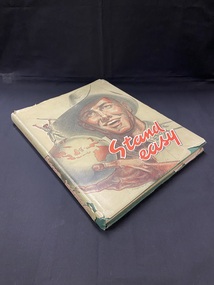
Book - Hardback book, Australian War Memorial, Stand Easy: after the defeat of Japan, 1945, 1945
... production until pictures of the final scenes in this great conflict could be included.' [From editorial note on the first page] Australin Army World War One WW1 WWI Military history Pacific Ocean Japan A book containing stories, verse, and black and white drawings, all created by members of the Australian Army. [From Trove] Green hardcover book with title in lighter green writing on the front cover and spine and an image in the same light green of a soldier holding a rifle with his arms ...A book containing stories, verse, and black and white drawings, all created by members of the Australian Army. [From Trove]Green hardcover book with title in lighter green writing on the front cover and spine and an image in the same light green of a soldier holding a rifle with his arms held up in victory. There is a worn and slightly torn pale olive dustjacket on the book, it has 'Stand easy' written on the lower left side of the front cover in red print. There is a large illustration of a soldier's head and upper body, he is smiling and holding a world globe (with Australia clearly visible) in the palm of his hand. On top of the globe stands another soldier holding a rifle with his arms held high in triumph. The edges and spine of the dust jacket are very torn and the writing on the spine is quite faded. Inside the book are two maps (420 x 265) folded in half, printed on both sides with maps of various campaigns.non-fiction A book containing stories, verse, and black and white drawings, all created by members of the Australian Army. [From Trove]australin army, world war one, ww1, wwi, military history, pacific ocean, japan -
 Returned Nurses RSL Sub-branch
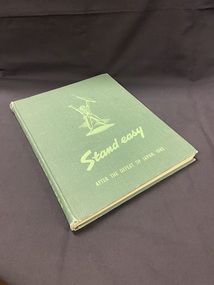
Book - Hardback book, Australian War Memorial, Stand Easy: after the defeat of Japan, 1945, 1945
... production until pictures of the final scenes in this great conflict could be included.' [From editorial note on the first page] Australin Army World War One WW1 WWI Military history Pacific Ocean Japan A book containing stories, verse, and black and white drawings, all created by members of the Australian Army. [From Trove] 'B71' [handwritten in pencil on first page] Green hardcover book with title in lighter green writing on the front cover and spine and an image in the same light green of a soldier holding a rifle with his arms ...A book containing stories, verse, and black and white drawings, all created by members of the Australian Army. [From Trove]Green hardcover book with title in lighter green writing on the front cover and spine and an image in the same light green of a soldier holding a rifle with his arms held up in victory. non-fiction A book containing stories, verse, and black and white drawings, all created by members of the Australian Army. [From Trove]australin army, world war one, ww1, wwi, military history, pacific ocean, japan -
 City of Melbourne Libraries
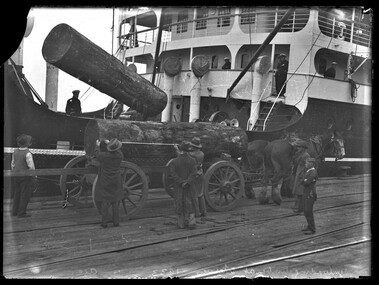
Photograph (item), Bull, Hugh Jones, 1897-1993, Unloading timber at Victoria Dock, 1933
... production, a high-budget Sino-Taiwanese-Hong Kong co-effort, portrays the event as a microcosm of the 1940s Sino-Japanese and civil war legacies, though critics noted the melodramatic style prioritizing spectacle over historical precision.” In conclusion, it is nice to return to our photo, and observe the people involved in this moment. The dockworkers are, so typical of the 1930s, dressed in what looks to us like formal clothing – dark suits or coats, white shirts, and black hats. I am particularly drawn to the young boy, bare-headed, arms...production, a high-budget Sino-Taiwanese-Hong Kong co-effort, portrays the event as a microcosm of the 1940s Sino-Japanese and civil war legacies, though critics noted the melodramatic style prioritizing spectacle over historical precision.” In conclusion, it is nice to return to our photo, and observe the people involved in this moment. The dockworkers are, so typical of the 1930s, dressed in what looks to us like formal clothing – dark suits or coats, white shirts, and black hats. I am particularly drawn to the young boy, bare-headed, arms ...Photographer notations on slide: "Unloading Timber at Wharves 1933 Age B5" Published: Age (Melbourne, Vic.: 1854- ), Tuesday 15 August 1933 MAHOGANY FROM MANILA. (1933, August 15). The Age (Melbourne, Vic. : 1854 - 1954), p. 11. Retrieved January 16, 2026, from http://nla.gov.au/nla.news-article204377024 Published title: MAHOGANY FROM MANILA Published Caption: Age Tue 15 Aug 1933 Caption: Unloading Mahogany Logs brought from Manila, Philippine Islands, by the steamer Taiping, which berthed yesterday at Victoria Dock. The vessel discharged twenty logs, each weighing three tons, the first shipment of this type of timber landed in Melbourne. Research by Project Volunteer, Louise McKenzie: This photograph in many ways epitomises Melbourne in the 1930s. It is a time of enormous growth, development and change. But before delving into that, the photo itself is very powerful. The huge mahogany logs being unloaded appear to be so heavy that the ship itself seems to list to port as they are craned over the side. They are being levered into a cart to which two large and sturdy Clydesdale horses are hitched. In contrast to the traditional horses, the wharf is crisscrossed with modern railway tracks. Unloading is both mechanical and manual, and the scene is one of intense interest to a young boy bystander. The ship appears to be squat and solid, but the whole image also gives a feeling of movement and intensity. The mahogany being delivered to Melbourne would be intended for high quality furniture. In the 1930s Australia actually had a growing timber industry, but much of the eucalyptus wood was being utilised for mass produced furniture, and much of this furniture would then have had a veneer applied to it. The fact that it was economic to import this timber from the “Philippine Islands” – not a traditional trading market for Australia – reflects a Victorian economy that was strong enough to support a growing demand for good quality furniture Mahogany was described as a classic, strong hardwood, often used for dark opulent furniture. In the 1930s the importation of timber from Manila (Philippines) to Australia was a notable trade, particularly in Philippine Lauan (often referred to as Philippine Mahogany), which was used as a cheaper alternative to other hardwoods. 1930s furniture, dominated by the art deco style, used a mix of luxurious exotic woods like mahogany, macassar and ebony for high-end pieces, often veneered over less expensive woods such as walnut, birch and poplar, and with plywood, chrome and lacquer also popular for more practical, streamlined designs during the Depression era. By the mid 1930s timber mills were being relocated away from the immediate dock area, but the fact that these logs were being transported by horse-drawn cart implies that the load would not have had to be taken too far for milling. 1885 the Melbourne Harbour Trust Commissioners had decided that land in or near the city was far too valuable to be used as timber yards. Furthermore, large stacks of timber posed a fire risk. The Trust asked the Victorian Government to reserve a site on the east side of the Yarra River opposite Yarraville and Spotswood. Here, in 1889, the Trust began building six jetties and a wharf specifically for the landing of timber. Clydesdale horses were initially brought to Victoria from Tasmania in the 1830s, and with the 1850s gold rush they were imported direct from Scotland. Melbourne was from its earliest years an important centre of horse-breeding from both imported and colonial-bred stock, providing the well-built draught horse for pulling heavily loaded wagons, the harness horse for delivery work and drawing coaches, and the saddle-horse used for riding. Stud breeding facilities were advertised from the early 1840s. By the 1870s the horse export trade was thriving, and the Port of Melbourne was the country's busiest exporter of horses to Indian, Asian and New Zealand markets. Kirk's Melbourne Horse and Carriage Bazaar in Bourke Street first advertised for business in 1840, and by the 1850s Bourke Street West was famed for its horse bazaars and saleyards. The Victorian Clydesdale Horse Society reports that Clydesdale working horses were a vital part of Melbourne's infrastructure and agricultural industry in the 1930s, when they reached the peak of their popularity despite the increasing competition from mechanization. Their main roles and usage at this time were: • City Delivery: Clydesdales were a common sight for metropolitan deliveries, particularly for breweries (such as Carlton & United Breweries), milk runs, and bread deliveries. • Industrial Work: They were heavily used for hauling cargo at the docks, in construction, and at specialized sites like the Truganina Explosives Reserve, where they pulled wagons. • Agriculture: In surrounding rural areas, they were the primary power source for ploughing and agricultural machinery. • Specialization: By the 1930s, the Clydesdale was smaller and more compact than the Shire or Percheron breeds, making them ideal for navigation in urban environments. After the 1930s their numbers decreased due to the onset of WWI and mechanisation. Wartime petrol rationing led to a brief revival for the working horse, as suburban tradesmen, now used to motor delivery, took their old jinkers out of mothballs. By 1947, however, only 1.5% of city traffic was horse-drawn. In 1952 the large horse cartage company A. Kellet Pty Ltd sold its 250 horses and converted its Richmond stables to storage. In the 1950s at Station and Princes piers, wharf labourers refused to work with the six draught horses still being used to haul trolleys and which were soon superseded by the fork lift, semi-trailer and mobile crane. Where carefully trained horses had once shunted trains in city goods yards, a few hundred a week were now being killed at the abattoirs for pet and human consumption. The last MCC dray horse was withdrawn from service in 1958, but some of the few remaining working animals are used by the mounted police for crowd control at demonstrations and football games. The death knell had also sounded for the associated trades of farrier, saddler and blacksmith. Our photo, therefore, showing the wharf with both the haulage Clydesdales and the rail lines, is a strong visual summary of the social and economic changes experienced in Victoria in the 1930s and on towards the 1950s. Our photo is located at Victoria Dock (also known as Victoria Harbour) which is still an active component of Melbourne’s port system. In 1892 the West Melbourne Dock (later Victoria Dock) was opened, downstream and immediately west of the Spencer Street railway shunting yards. It contained a swing basin for ships, replacing the one which had been provided on the south side of the river, later to be the Duke and Orr dry dock, west of the Charles Grimes Bridge. Further west was the South Wharf along the river bank. The history of Victoria Dock is extremely well described by Ashley Smith in his 2 March 2022 article in Docklands News, and its accompanying aerial photo of the Dock taken in 1934. He writes: "In the early 1930s Victoria Dock was one of the biggest sites for trade and export in Melbourne. A constant queue of ships sailed in, unloaded their cargo, recharged and reloaded, then left for the next port. Around the time this photo was taken (found in a 1934 photo book), the trapezium-shaped basin had been through some changes since its construction in the 1890s. The 497-metre-long Central Pier, finished in 1919, now featured six sheds to house the ever-increasing volume of cargo. The entrance had also been widened in the 1920s to allow better access. Some of the berths featured three-ton jib electric cranes to help with loading cargo and a rail network connected to the State Railway service. By the time construction was completed, the dock was 39 hectares and hailed as the second-largest dock in the world (behind Cavendish Dock, Barrow-in-Furness). To further save costs, excavations were dug to a more reasonable seven metres below low water, instead of British engineer Sir John Coode’s recommended 8.3 metres. Even then, the costs were still around £900,000. It was envisaged, with the extra wharfage, that around thirty 90-metre ships could berth inside. On March 22, 1892, Victoria Dock was opened by Victoria’s Governor, the Earl of Hopetoun (later Australia’s first Governor-General) who opened the sluice to let the Yarra in. It took six days to fill the basin with The Leader newspaper estimating that it would take another six months to completely fill (March 26, 1892). In the end, it took nearly a year before the first ship was allowed to enter on February 20, 1893, when the steamer Hubbuck sailed in to unload 1200 tonnes of cargo in 15 hours. The Argus (February 23, 1893) reported that the ship’s captain, J. R. Brodie, called the Yarra “better than the Thames”, and compared Victoria Dock favourably to the Albert Dock (Liverpool)." This would be a good time to move our focus on to the Taiping, which is the transporter of these giant mahogany logs. The Taiping was a steel-hulled, single-screw passenger-cargo Chinese steamer, which today has the dubious legacy of being involved in a collision headlined as “The Chinese Titanic”. It was constructed by the Hong Kong and Shampoa Dock Company at its facility in Hong Kong, with completion in 1926 for service under the Australia Oriental Line. Her gross register tonnage measured 4,324 tons, reflecting her design for inter-island and coastal trade routes, accommodating both passengers and freight. She operated routes connecting Australian ports with East Asian destinations. As World War II approached, Taiping continued predominantly working the trade routes between China and Australia, until December 1941, when she evacuated women and children from Hong Kong to Manila just before Japanese forces overran the region. She then safely reached Australia despite enemy air raids. Taiping was then requisitioned by the Royal Navy and repurposed as a victualling stores issuing ship for the Eastern Fleet, supporting logistical needs in the Pacific and Indian oceans. Returned to the Australian Oriental Line in 1947, she underwent refitting and by mid-1948 was chartered to the Shanghai Shipping Company, and modified for greater passenger accommodation – approximately 500 passengers. In 1948/49 the Chinese Civil War took place. The Taiping departed Shanghai on 26 January 1949 as one of the final vessels evacuating civilians from to Keelung Harbour in Taiwan. Reports indicate that the Taiping carried double the rated capacity of passengers i.e. 1000. The ship carried families, military personnel, civilians, carrying personal belongings, gold and valuables in hope of resettlement in Nationalist Taiwan. It also held heavy cargo in the form of silver and gold bullion loaded by the Central Bank of China. Because of the risk of patrols, and to conserve fuel, the Captain took the ship away from the usual open-sea passage, and instead navigated along the coast. He also extinguished navigation lights to avoid detection. Shortly after midnight on 27 January 1949 the Taiping collided with the smaller cargo steamer Chien Yuan in the East China Sea near the Zhoushan Archipelago. The Chien Yuan was also operating in darkness. The subsequent collision was catastrophic. The Chien Yuan sank with in 5 minutes, with the loss of 72 of its 74 crew. The Taiping sustained severe structural compromise from the broadside strike and initially remained afloat, then made a swift descent into the freezing water, with no attempt at an organised evacuation. No formal recovery process was instigated, however a distress signal went out. 32 survivors were picked up by the Australian destroyer HMAS Warramunga (on patrol nearby), a passing US vessel found 2 more, and local Zhoushan fishermen retrieved others. In the end, only 37 people survived. The event is remembered as a poignant moment in the mass migration to Taiwan, with families tragically separated. A memorial to the disaster exists at the Keelung Harbour naval base on Taiwan. With its total of over 1,500 deaths, it constituted one of the worst peacetime maritime losses. It is sometimes referred to as the “Oriental Titanic” because of the similarly large loss of life and speed of demise with the RMS Titanic in 1912. A fictional depiction of this event appears in the John Woo movies “The Crossing (Part 1) (2014), and The Crossing II (2015), known in Chinese as “Taiping Wheel”. The narrative weaves a story around pre-disaster romances and wartime turmoil among passengers, culminating in the ship’s rapid sinking. “The production, a high-budget Sino-Taiwanese-Hong Kong co-effort, portrays the event as a microcosm of the 1940s Sino-Japanese and civil war legacies, though critics noted the melodramatic style prioritizing spectacle over historical precision.” In conclusion, it is nice to return to our photo, and observe the people involved in this moment. The dockworkers are, so typical of the 1930s, dressed in what looks to us like formal clothing – dark suits or coats, white shirts, and black hats. I am particularly drawn to the young boy, bare-headed, arms crossed, and so intent on the unloading process. He too is wearing a white shirt, black trousers and jacket, and black shoes. This is 1933 Melbourne – but the haircut he is sporting is now very “hipster” and modern in 2026 Melbourne. References: MAHOGANY FROM MANILA. (1933, August 15). The Age (Melbourne, Vic. : 1854 - 1954), p. 11. Retrieved January 30, 2026, from http://nla.gov.au/nla.news-article204377024 Wikipedia, Taiping steamer, https://en.wikipedia.org/wiki/Taiping_(steamer) Wikipedia, Victoria Dock, https://en.wikipedia.org/wiki/Victoria_Dock_(Melbourne) Docklands News, Ashley Smith, 2 Mar 2022, https://www.docklandsnews.com.au/victoria-dock/ Living Histories: Heritage Council of Victoria, Jill Barnard, 2008, Jetties and Piers, https://livinghistories.net.au/wp-content/uploads/2015/11/Jetties-ONL-intro_Part-1.pdf eMelbourne, Wharves and Docks, https://www.emelbourne.net.au/biogs/EM01612b.htm Australian Academy of Technological Sciences – Harvesting Wood, https://www.austehc.unimelb.edu.au/tia/225.html Old Treasury Building, On the Water – The Docks, https://tinyurl.com/3wkbk66m Old Treasury Building, On The Road, https://tinyurl.com/dw44yr3t Port of Melbourne, Victorian Places, https://www.victorianplaces.com.au/port-of-melbourne Docklands Heritage Study - Environmental History, https://mvga-prod-files.s3.ap-southeast-4.amazonaws.com/public/2024-05/docklands-heritage-review-thematic-environmental-history-1991.pdf eMelbourne, Horses, https://www.emelbourne.net.au/biogs/EM00723b.htm Victorian Clydesdale Horse Society, https://www.clydesdalesvic.org.au/history The Crossing, https://letterboxd.com/film/the-crossing-i/Photographer notations on slide: "Unloading Timber at Wharves 1933 Age B5"ships, shipping, timber industry, shipwrecks, horses, docks, wharves, 1930-1939, wars, docklands
