
Showing 135 items matching " as charles dickens"
-
 Bendigo Historical Society Inc.
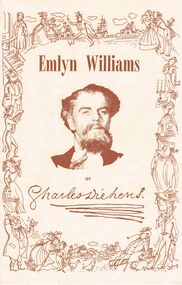
Document - EMLYN WILLIAMS AS CHARLES DICKENS, 1958
... EMLYN WILLIAMS AS CHARLES DICKENS...... as Charles Dickens...Emlyn Williams as Charles Dickens. Giving a Solo Performance of Scenes from the Famous Novels and Stories. ...COTTAGE Miners Emlyn Williams as Charles Dickens. Giving a Solo Performance of Scenes from the Famous Novels and Stories. ...Emlyn Williams as Charles Dickens. Giving a Solo Performance of Scenes from the Famous Novels and Stories. Tour of New Zealand and Australia, 1958. D D O'Conner Productions Ltd.., in association with the Australian Elizabethan Theatre Trust. 1 Moving in Society. 2 Paul. 3 Mr Bob Sawyer Gives a Bachelor Party. 4 The Signalman. 5 Mr Chops. 6 The Fancy Ball. The Adoptions . . . The Desk . . . The Nature of the Performance. During the fifties of the last century, Charles Dickens, at the Height of his fame as a novelist, ventured on something quite new; he gave, in Birmingham, a public 'reading' of one of his stories. This turned out to be an historic occasion, opening up an extraordinary career for the great writer. Each 'Reading' was more sensationally successful than the last. The word was put into inverted commas because nothing could have been less like reading than Dickens's dramatic performance. Something like a hundred years later at the Criterion Theatre, EMILYN WILLIAMS appeared before the London public 'as Charles Dicken's, giving a solo performance of scenes from the novels.' At this point the actor had been a star of . . . Personal Manager for Emlyn Williams: Alan Cambell. Stage Director: Tony Ward. Secretary and Accountant: Aubrey Thomas. Manager for the Australian Elizabethan Theatre Trust: Mary Rawdon. EMILYN WILLIAMS. Emlyn Williams, as actor, playwright of director (often in all three capacities simultaneously) has been in the theatre since he acquired the degree of M.A. and shook from his feet the dust of Oxford. Born in Flintshire, North Wales, in 1905, the son of a village inn-keeper, he spoke only Welsh as a child and learned English at school - a boyhood freely depicted in his comedy, 'The Druid's Rest.' At the age of ten he won a scholarship to the local Holywell County School, and at the age of seventeen another scholarship (in French) to Christ Church, Oxford. Once at the University hw discovered the theatre, by means of the Dramatic Society, and realized at once it was to dominate his life. While he . . . Includes photo of E Williams. Advertisement for DECCA Records, Emlyn Williams as Charles Dickens, Volume 1.Back cover photograph of Emlyn Williams. Second Programme in Australia: Emlyn Williams as 'A Boy Growing Up' An entertainment from the stories of Dylan Thomas. 'Gorgeously Funny' - The observer, London. Cover well decorated with sketches and photo of Emlyn WilliamsPeerless Press Pty. Ltd.cottage, miners, emlyn williams as charles dickens. giving a solo performance of scenes from the famous novels and stories. tour of new zealand and australia, 1958. d d o'conner productions ltd.., in association with the australian elizabethan theatre trust. 1 moving in society. 2 paul. 3 mr bob sawyer gives a bachelor party. 4 the signalman. 5 mr chops. 6 the fancy ball. the adoptions . . . the desk . . . the nature of the performance. during the fifties of the last century, novelist, ventured on something quite new, in birmingham, a public 'reading'. an historic occasion, opening up a career 'reading' criterion theatre solo performance novels.' actor had been a star of . . . personal manager for emlyn williams: alan cambell. stage director: tony ward. secretary and accountant: aubrey thomas. manager for the australian elizabethan theatre trust: mary rawdon. actor, playwright of director (often in all three capacities simultaneously) degree of m.a. oxford. born in flintshire, north wales, in 1905, village inn-keeper, spoke welsh learned english at school. comedy, 'the druid's rest.' won a scholarship to the local holywell county school, and at the age of seventeen another scholarship (in french) to christ church, oxford. university he discovered the theatre, dramatic society. photo of e williams. advertisement for decca records, as charles dickens, volume 1.back cover photograph of emlyn williams. second programme in australia: emlyn williams as 'a boy growing up' stories of dylan thomas. 'gorgeously funny' - the observer, london. -
 Melbourne Athenaeum Archives
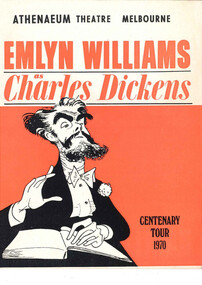
Theatre program, Douglass Advertising Service, Emlyn Williams as Charles Dickens Centenary Tour 1970 performed at the Athenaeum Theatre in 1970, 1970
... Emlyn Williams as Charles Dickens Centenary Tour 1970 performed at the Athenaeum Theatre in 1970...emlyn williams as charles dickens...athenaeum theatre program programme emlyn williams as charles dickens centenary tour 1970 emlyn williams charles dickens robert crawley phillip productions pty ltd aztec services pty ltd Paper program for a play performed at the Athenaeum Theatre 17 August until 5 September 1970; coloured cover; 16 p. includes articles about the film, the actors and advertisements Emlyn Williams as Charles Dickens Centenary Tour 1970 performed at the Athenaeum Theatre in 1970 Theatre program Douglass Advertising Service ...Paper program for a play performed at the Athenaeum Theatre 17 August until 5 September 1970; coloured cover; 16 p. includes articles about the film, the actors and advertisementsathenaeum theatre, program, programme, emlyn williams as charles dickens, centenary tour 1970, emlyn williams, charles dickens, robert crawley, phillip productions pty ltd, aztec services pty ltd -
 Linton Mechanics Institute and Free Library Collection
Book - Short stories, Jolly, Emily, A wife's story and other tales by the author of "Caste", "Safely married", &c., &c. : in three volumes : Vol. I, 1875
... Stories which were part of 'A wife's tale' were first published in 'Household Words' (ed. Charles Dickens) in 1855. Later stories serialised in various journals. .... : includes preface with letters written by Charles Dickens. Plain green cover...Stories which were part of 'A wife's tale' were first published in 'Household Words' (ed. Charles Dickens) in 1855. Later stories serialised in various journals. ...Volume I contains three stories: 'A wife's story' ; My first and last novel ; 'Annie and her master'312 p. : includes preface with letters written by Charles Dickens. Plain green coverfictionVolume I contains three stories: 'A wife's story' ; My first and last novel ; 'Annie and her master'fiction, emily jolly, short stories -
 Flagstaff Hill Maritime Museum and Village
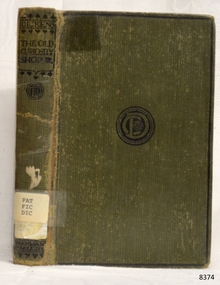
Book - A Fictional Story, Charles Dickens, The Old Curiosity Shop, (1897-1899)
... ...Charles Dickens...Charles Dickens was the foremost English novelist of the Victorian era. ...The Old Curiosity Shop Author: Charles Dickens Publisher: Chapman & Hall Ltd Date: Gadshill Edition (1897-1899)...Charles Dickens...Charles Dickens was the foremost English novelist of the Victorian era. ...Charles Dickens (1812–1870) was one of the great English novelists of the Victorian era, famous for vivid characters, social criticism, and stories that were first published in serial form. He began as a journalist, rose to enormous popularity during his lifetime, and wrote major works such as Oliver Twist, David Copperfield, and Great Expectations. The Old Curiosity Shop is about Nell Trent, a young girl, and her grandfather, who live in a London curiosity shop. After her grandfather’s gambling and debts bring danger from the moneylender Daniel Quilp, they flee and travel through hardship, poverty, and misfortune, the novel is best known for its emotional portrayal of Nell. It was written and published in serial form in “Master Humphrey’s Clock” magazine from 1840 to 1841, then issued as a book in 1841. The subject book published by the Oxford University Press. The subject book in hardback edition was published on 13th November 1997 by the same publisher.The Old Curiosity Shop Author: Charles Dickens Publisher: Chapman & Hall Ltd Date: Gadshill Edition (1897-1899)fictionCharles Dickens (1812–1870) was one of the great English novelists of the Victorian era, famous for vivid characters, social criticism, and stories that were first published in serial form. He began as a journalist, rose to enormous popularity during his lifetime, and wrote major works such as Oliver Twist, David Copperfield, and Great Expectations. The Old Curiosity Shop is about Nell Trent, a young girl, and her grandfather, who live in a London curiosity shop. After her grandfather’s gambling and debts bring danger from the moneylender Daniel Quilp, they flee and travel through hardship, poverty, and misfortune, the novel is best known for its emotional portrayal of Nell. It was written and published in serial form in “Master Humphrey’s Clock” magazine from 1840 to 1841, then issued as a book in 1841. The subject book published by the Oxford University Press. The subject book in hardback edition was published on 13th November 1997 by the same publisher.flagstaff hil, warrnambool, flagstaff hill maritime museum, maritime museum, shipwreck coast, flagstaff hill maritime village, great ocean road, book, pattison collection, warrnambool library, warrnambool mechanics’ institute, ralph eric pattison, corangamite regional library service, warrnambool city librarian, mechanics’ institute library, victorian library board, warrnambool books and records, warrnambool children’s library, the old curiosity shop, charles dickens -
 Flagstaff Hill Maritime Museum and Village
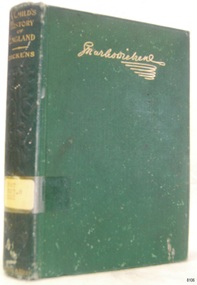
Book - A Fictional Story, Charles Dickens, A Childs History of England, 1900
... ...charles dickens...Charles Dickens was the foremost English novelist of the Victorian era. ...A Childs History of England. Author: Charles Dickens. Publisher: Chapman & Hall Ltd, London. ...Charles Dickens...Charles Dickens was the foremost English novelist of the Victorian era. ...Charles Dickens (1812–1870) was one of the great English novelists of the Victorian era, famous for vivid characters, social criticism, and stories that were first published in serial form. He began as a journalist, rose to enormous popularity during his lifetime, and wrote major works such as Oliver Twist, David Copperfield, and Great Expectations. “A Child’s History of England” is Dickens’s three volume, child directed history of England, originally serialised in Household Words from 1851 to 1853 and later issued in book form in 1853. It covers English history from ancient times through the fall of James II, with a brief closing summary up to Queen Victoria’s accession to the crown. Dickens wrote it as a readable, lively alternative to dry school history, aiming to interest his own children and young readers. The work is outspoken, often anti monarchical and anti aristocratic in tone, and it uses Dickens’s usual vivid style rather than detached academic prose.A Childs History of England. Author: Charles Dickens. Publisher: Chapman & Hall Ltd, London. Date: 1900. (See note section this document for more information on Edition). Green leather hardcover with title on spine in gold lettering, Charles Dickens signature on front cover written in gold lettering. The spine has a Library label and no Volume information.fictionCharles Dickens (1812–1870) was one of the great English novelists of the Victorian era, famous for vivid characters, social criticism, and stories that were first published in serial form. He began as a journalist, rose to enormous popularity during his lifetime, and wrote major works such as Oliver Twist, David Copperfield, and Great Expectations. “A Child’s History of England” is Dickens’s three volume, child directed history of England, originally serialised in Household Words from 1851 to 1853 and later issued in book form in 1853. It covers English history from ancient times through the fall of James II, with a brief closing summary up to Queen Victoria’s accession to the crown. Dickens wrote it as a readable, lively alternative to dry school history, aiming to interest his own children and young readers. The work is outspoken, often anti monarchical and anti aristocratic in tone, and it uses Dickens’s usual vivid style rather than detached academic prose.book, the old curiosity shop, charles dickens, shipwrecked-coast, flagstaff-hill, flagstaff-hill-maritime-museum, warrnambool, maritime-museum, flagstaff-hill-maritime-village, pattison collection, warrnambool library, warrnambool mechanics’ institute, ralph eric pattison, corangamite regional library service, warrnambool city librarian, mechanics’ institute library, victorian library board, warrnambool books and records, warrnambool children’s library, great ocean road -
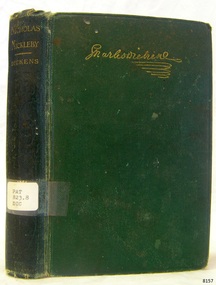 Flagstaff Hill Maritime Museum and Village
Book - A Fictional Story, Charles Dickens et al, The Life and Adventures of Nicholas Nickleby, 1844-1932
... ...charles dickens...Charles Dickens was the foremost English novelist of the Victorian era. ...The Life and Adventures of Nicholas Nickleby. Author: Charles Dickens. Publisher: Chapman & Hall Ltd, London. ...Charles Dickens...Charles Dickens was the foremost English novelist of the Victorian era. ...Charles Dickens (1812–1870) was one of the great English novelists of the Victorian era, famous for vivid characters, social criticism, and stories that were first published in serial form. He began as a journalist, rose to enormous popularity during his lifetime, and wrote major works such as Oliver Twist, David Copperfield, and Great Expectations. “Nicholas Nickleby” starts out as a good hearted but vulnerable young man whose family is left poor after his father’s death. His uncle, Ralph Nickleby, is cold and exploitative, and Nicholas is sent to work at Dothe boys Hall, a school run by the abusive Wackford Squeers family. There Nicholas witnesses appalling treatment of the children, escapes, and takes the mistreated boy Smike with him. After that, the novel follows Nicholas through a series of adventures in London and beyond as he protects his sister Kate, resists his uncle’s schemes, and finds decent allies such as the Cheeryble brothers. The plot mixes melodrama, comedy, family loyalty, and moral struggle, ending with justice restored and the worthy characters rewarded.The Life and Adventures of Nicholas Nickleby. Author: Charles Dickens. Publisher: Chapman & Hall Ltd, London. Date: 1844-1932. (See note section this document for more information on Edition). Green leather hardcover with title on spine in gold lettering, Charles Dickens signature on front cover written in gold lettering. The spine has a Library label and no Volume information.fictionCharles Dickens (1812–1870) was one of the great English novelists of the Victorian era, famous for vivid characters, social criticism, and stories that were first published in serial form. He began as a journalist, rose to enormous popularity during his lifetime, and wrote major works such as Oliver Twist, David Copperfield, and Great Expectations. “Nicholas Nickleby” starts out as a good hearted but vulnerable young man whose family is left poor after his father’s death. His uncle, Ralph Nickleby, is cold and exploitative, and Nicholas is sent to work at Dothe boys Hall, a school run by the abusive Wackford Squeers family. There Nicholas witnesses appalling treatment of the children, escapes, and takes the mistreated boy Smike with him. After that, the novel follows Nicholas through a series of adventures in London and beyond as he protects his sister Kate, resists his uncle’s schemes, and finds decent allies such as the Cheeryble brothers. The plot mixes melodrama, comedy, family loyalty, and moral struggle, ending with justice restored and the worthy characters rewarded.book, the old curiosity shop, charles dickens, shipwrecked-coast, flagstaff-hill, flagstaff-hill-maritime-museum, warrnambool, maritime-museum, flagstaff-hill-maritime-village, pattison collection, warrnambool library, warrnambool mechanics’ institute, ralph eric pattison, corangamite regional library service, warrnambool city librarian, mechanics’ institute library, victorian library board, warrnambool books and records, warrnambool children’s library, great ocean road -
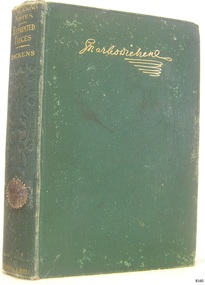 Flagstaff Hill Maritime Museum and Village
Book - A Fictional Story, Charles Dickens et al, American Notes and Reprinted Pieces, 1913
... ...charles dickens...Charles Dickens was the foremost English novelist of the Victorian era. ...American Notes and Reprinted Pieces. Author: Charles Dickens. Publisher: Chapman & Hall Ltd, London. ...Charles Dickens...Charles Dickens was the foremost English novelist of the Victorian era. ...Charles Dickens (1812–1870) was one of the great English novelists of the Victorian era, famous for vivid characters, social criticism, and stories that were first published in serial form. He began as a journalist, rose to enormous popularity during his lifetime, and wrote major works such as Oliver Twist, David Copperfield, and Great Expectations. Dickens wrote “American Notes” for general circulation, it is Dickens’s travel account of his 1842 trip through the United States and Canada, written as a sequence of observations on travel, cities, institutions, and society in general. It includes chapters on the voyage to America visiting Boston, New York, Philadelphia, Washington. The American railway and steamboat systems, Canada, and a concluding chapter on slavery. The “Reprinted Pieces” part of the book is a companion gathering of shorter Dickens items, so the subject volume is not just a travel book but a collected volume pairing it with miscellaneous prose.American Notes and Reprinted Pieces. Author: Charles Dickens. Publisher: Chapman & Hall Ltd, London. Date: 1913. (See note section this document for more information on Edition). Green leather hardcover with title on spine in gold lettering, Charles Dickens signature on front cover written in gold lettering. The spine has a Library label and no Volume information.fictionCharles Dickens (1812–1870) was one of the great English novelists of the Victorian era, famous for vivid characters, social criticism, and stories that were first published in serial form. He began as a journalist, rose to enormous popularity during his lifetime, and wrote major works such as Oliver Twist, David Copperfield, and Great Expectations. Dickens wrote “American Notes” for general circulation, it is Dickens’s travel account of his 1842 trip through the United States and Canada, written as a sequence of observations on travel, cities, institutions, and society in general. It includes chapters on the voyage to America visiting Boston, New York, Philadelphia, Washington. The American railway and steamboat systems, Canada, and a concluding chapter on slavery. The “Reprinted Pieces” part of the book is a companion gathering of shorter Dickens items, so the subject volume is not just a travel book but a collected volume pairing it with miscellaneous prose.book, the old curiosity shop, charles dickens, shipwrecked-coast, flagstaff-hill, flagstaff-hill-maritime-museum, warrnambool, maritime-museum, flagstaff-hill-maritime-village, pattison collection, warrnambool library, warrnambool mechanics’ institute, ralph eric pattison, corangamite regional library service, warrnambool city librarian, mechanics’ institute library, victorian library board, warrnambool books and records, warrnambool children’s library, great ocean road -
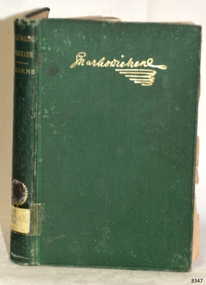 Flagstaff Hill Maritime Museum and Village
Book - Observational Essays, Charles Dickens, The Uncommercial Traveller, 1907
... ...charles dickens...Charles Dickens was the foremost English novelist of the Victorian era. ...The Uncommercial Traveller Author: Charles Dickens Publisher: Chapman & Hall Ltd Date: Subject Book 1907. ...Charles Dickens...Charles Dickens was the foremost English novelist of the Victorian era. ...Charles Dickens (1812–1870) was one of the great English novelists of the Victorian era, famous for vivid characters, social criticism, and stories that were first published in serial form. He began as a journalist, rose to enormous popularity during his lifetime, and wrote major works such as Oliver Twist, Great Expectations and David Copperfield. The Uncommercial Traveller is a collection of semi autobiographical essays, not a novel. Dickens uses the persona of an “Uncommercial Traveller” to roam London and elsewhere, reflecting on street life, poverty, travel, memory, and social conditions in a way that shows off his skills as an observer and journalist. The pieces are loose, varied sketches rather than one continuous plot. They include London wanderings, travel observations, sketches of odd characters, and writing about hardship and public life. A major recurring aim within these essays is social observation, especially Dickens’s concern for ordinary people and the poor.The Uncommercial Traveller Author: Charles Dickens Publisher: Chapman & Hall Ltd Date: Subject Book 1907. (See note section this document for more information on Edition). Green Faux leather hardcover with title on spine in gold lettering, Charles Dickens signature on front cover written in gold lettering. The spine has a Library label and no Volume information.fictionCharles Dickens (1812–1870) was one of the great English novelists of the Victorian era, famous for vivid characters, social criticism, and stories that were first published in serial form. He began as a journalist, rose to enormous popularity during his lifetime, and wrote major works such as Oliver Twist, Great Expectations and David Copperfield. The Uncommercial Traveller is a collection of semi autobiographical essays, not a novel. Dickens uses the persona of an “Uncommercial Traveller” to roam London and elsewhere, reflecting on street life, poverty, travel, memory, and social conditions in a way that shows off his skills as an observer and journalist. The pieces are loose, varied sketches rather than one continuous plot. They include London wanderings, travel observations, sketches of odd characters, and writing about hardship and public life. A major recurring aim within these essays is social observation, especially Dickens’s concern for ordinary people and the poor.book, the old curiosity shop, charles dickens, shipwrecked-coast, flagstaff-hill, flagstaff-hill-maritime-museum, warrnambool, maritime-museum, flagstaff-hill-maritime-village, pattison collection, warrnambool library, warrnambool mechanics’ institute, ralph eric pattison, corangamite regional library service, warrnambool city librarian, mechanics’ institute library, victorian library board, warrnambool books and records, warrnambool children’s library, great ocean road -
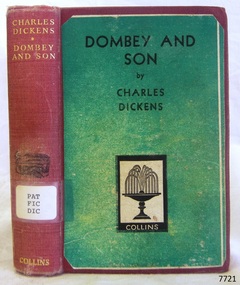 Flagstaff Hill Maritime Museum and Village
Book, Dombey and Son
... ...Charles Dickens...Dombey and Son Author: Charles Dickens Publisher:Collins Clear Type Press ...Warrnambool Shipwrecked-coast Flagstaff-Hill Flagstaff-Hill-Maritime-Museum Maritime-Museum Shipwreck-coast Flagstaff-Hill-Maritime-Village Shipwrecked-artefact Book Pattison Collection Warrnambool Library Warrnambool Mechanics’ Institute Ralph Eric Pattison Corangamite Regional Library Service Warrnambool City Librarian Mechanics’ Institute Library Victorian Library Board Warrnambool books and records Warrnambool Children’s Library Great Ocean Road Dombey and Son Charles Dickens Label on spine cover with typed text PAT FIC DIC Pastedown front endpaper has sticker from Warrnambool Children's Library covered by a sticker from Corangamite Regional Library Service Front loose endpaper has a stamp from Corangamite Regional Library Service Dombey and Son Author: Charles Dickens Publisher:Collins Clear Type Press Dombey and Son Book ...This item is from the ‘Pattison Collection’, a collection of books and records that was originally owned by the Warrnambool Mechanics’ Institute, which was founded in Warrnambool in 1853. By 1886 the Warrnambool Mechanics’ Institute (WMI) had grown to have a Library, Museum and Fine Arts Gallery, with a collection of “… choice productions of art, and valuable specimens in almost every branch and many wonderful national curiosities are now to be seen there, including historic relics of the town and district.” It later included a School of Design. Although it was very well patronised, the lack of financial support led the WMI in 1911 to ask the City Council to take it over. In 1935 Ralph Pattison was appointed as City Librarian to establish and organise the Warrnambool Library as it was then called. When the WMI building was pulled down in 1963 a new civic building was erected on the site and the new Warrnambool Library, on behalf of the City Council, took over all the holdings of the WMI. At this time some of the items were separated and identified as the ‘Pattison Collection’, named after Ralph Pattison. Eventually the components of the WMI were distributed from the Warrnambool Library to various places, including the Art Gallery, Historical Society and Flagstaff Hill. Later some were even distributed to other regional branches of Corangamite Regional Library and passed to and fro. It is difficult now to trace just where all of the items have ended up. The books at Flagstaff Hill Maritime Village generally display stamps and markings from Pattison as well as a variety of other institutions including the Mechanics’ Institute itself. RALPH ERIC PATTISON Ralph Eric Pattison was born in Rockhampton, Queensland, in 1891. He married Maude Swan from Warrnambool in 1920 and they set up home in Warrnambool. In 1935 Pattison accepted a position as City Librarian for the Warrnambool City Council. His huge challenge was to make a functional library within two rooms of the Mechanics’ Institute. He tirelessly cleaned, cleared and sorted a disarrayed collection of old books, jars of preserved specimens and other items reserved for exhibition in the city’s museum. He developed and updated the library with a wide variety of books for all tastes, including reference books for students; a difficult task to fulfil during the years following the Depression. He converted all of the lower area of the building into a library, reference room and reading room for members and the public. The books were sorted and stored using a cataloguing and card index system that he had developed himself. He also prepared the upper floor of the building and established the Art Gallery and later the Museum, a place to exhibit the many old relics that had been stored for years for this purpose. One of the treasures he found was a beautiful ancient clock, which he repaired, restored and enjoyed using in his office during the years of his service there. Ralph Pattison was described as “a meticulous gentleman whose punctuality, floorless courtesy and distinctive neat dress were hallmarks of his character, and ‘his’ clock controlled his daily routine, and his opening and closing of the library’s large heavy doors to the minute.” Pattison took leave during 1942 to 1945 to serve in the Royal Australian Navy, Volunteer Reserve as Lieutenant. A few years later he converted one of the Museum’s rooms into a Children’s Library, stocking it with suitable books for the younger generation. This was an instant success. In the 1950’s he had the honour of being appointed to the Victorian Library Board and received more inspiration from the monthly conferences in Melbourne. He was sadly retired in 1959 after over 23 years of service, due to the fact that he had gone over the working age of council officers. However he continued to take a very keen interest in the continual development of the Library until his death in 1969. The Pattison Collection, along with other items at Flagstaff Hill Maritime Village, was originally part of the Warrnambool Mechanics' Institute’s collection. The Warrnambool Mechanics’ Institute Collection is primarily significant in its totality, rather than for the individual objects it contains. Its contents are highly representative of the development of Mechanics' Institute libraries across Australia, particularly Victoria. A diversity of publications and themes has been amassed, and these provide clues to our understanding of the nature of and changes in the reading habits of Victorians from the 1850s to the middle of the 20th century. The collection also highlights the Warrnambool community’s commitment to the Mechanics’ Institute, reading, literacy and learning in the regions, and proves that access to knowledge was not impeded by distance. These items help to provide a more complete picture of our community’s ideals and aspirations. The Warrnambool Mechanics Institute book collection has historical and social significance for its strong association with the Mechanics Institute movement and the important role it played in the intellectual, cultural and social development of people throughout the latter part of the nineteenth century and the early twentieth century. The collection of books is a rare example of an early lending library and its significance is enhanced by the survival of an original collection of many volumes. The Warrnambool Mechanics' Institute’s publication collection is of both local and state significance. Dombey and Son Author: Charles Dickens Publisher:Collins Clear Type Press Label on spine cover with typed text PAT FIC DIC Pastedown front endpaper has sticker from Warrnambool Children's Library covered by a sticker from Corangamite Regional Library Service Front loose endpaper has a stamp from Corangamite Regional Library Service warrnambool, shipwrecked-coast, flagstaff-hill, flagstaff-hill-maritime-museum, maritime-museum, shipwreck-coast, flagstaff-hill-maritime-village, shipwrecked-artefact, book, pattison collection, warrnambool library, warrnambool mechanics’ institute, ralph eric pattison, corangamite regional library service, warrnambool city librarian, mechanics’ institute library, victorian library board, warrnambool books and records, warrnambool children’s library, great ocean road, dombey and son, charles dickens -
 Flagstaff Hill Maritime Museum and Village
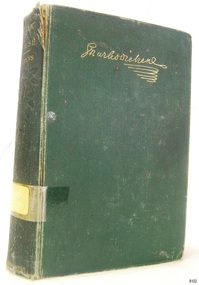
Book - A Fictional Story, Charles Dickens, Bleak House, 1873-1900
... ...charles dickens...Charles Dickens was the foremost English novelist of the Victorian era. ...Bleak House. Author: Charles Dickens. Publisher: Chapman & Hall Ltd, London. ...Charles Dickens...Charles Dickens was the foremost English novelist of the Victorian era. ...Charles Dickens (1812–1870) was one of the great English novelists of the Victorian era, famous for vivid characters, social criticism, and stories that were first published in serial form. He began as a journalist, rose to enormous popularity during his lifetime, and wrote major works such as Oliver Twist, David Copperfield, and Great Expectations. Bleak House is one of Charles Dickens’s major novels, a sprawling, multi plot story built around the endless Court of Chancery lawsuit known as “Jarndyce and Jarndyce” and its ruinous effect on several families. It is widely regarded as among his finest and most complex works, central to any serious study of his fiction.Bleak House. Author: Charles Dickens. Publisher: Chapman & Hall Ltd, London. Date: 1873-1900. (See note section this document for more information on Edition). Blue leather hardcover with title on spine in gold lettering, Charles Dickens signature on front cover written in gold lettering. The spine has a Library label.fictionCharles Dickens (1812–1870) was one of the great English novelists of the Victorian era, famous for vivid characters, social criticism, and stories that were first published in serial form. He began as a journalist, rose to enormous popularity during his lifetime, and wrote major works such as Oliver Twist, David Copperfield, and Great Expectations. Bleak House is one of Charles Dickens’s major novels, a sprawling, multi plot story built around the endless Court of Chancery lawsuit known as “Jarndyce and Jarndyce” and its ruinous effect on several families. It is widely regarded as among his finest and most complex works, central to any serious study of his fiction.book, the old curiosity shop, charles dickens, shipwrecked-coast, flagstaff-hill, flagstaff-hill-maritime-museum, warrnambool, maritime-museum, flagstaff-hill-maritime-village, pattison collection, warrnambool library, warrnambool mechanics’ institute, ralph eric pattison, corangamite regional library service, warrnambool city librarian, mechanics’ institute library, victorian library board, warrnambool books and records, warrnambool children’s library, great ocean road -
 Flagstaff Hill Maritime Museum and Village
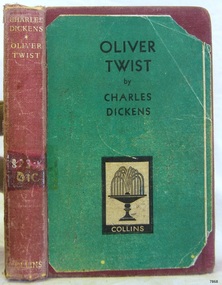
Book, Oliver Twist
... ...Charles Dickens...Oliver Twist Author: Charles Dickens Publisher: Collins Clear Type Press...The Warrnambool Mechanics' Institute’s publication collection is of both local and state significance. warrnambool shipwrecked-coast flagstaff-hill flagstaff-hill-maritime-museum maritime-museum shipwreck-coast flagstaff-hill-maritime-village shipwrecked-artefact book pattison collection warrnambool library warrnambool mechanics’ institute ralph eric pattison corangamite regional library service warrnambool city librarian mechanics’ institute library victorian library board warrnambool books and records warrnambool children’s library great ocean road Oliver Twist Charles Dickens Label on spine cover with typed text PAT FIC DIC Pastedown front endpaper has sticker from Warrnambool Children's Library covered by a sticker from Corangamite Regional Library Service Front loose endpaper has a stamp from Corangamite Regional Library Service Oliver Twist Author: Charles Dickens Publisher: Collins Clear Type Press Oliver Twist Book ...This item is from the ‘Pattison Collection’, a collection of books and records that was originally owned by the Warrnambool Mechanics’ Institute, which was founded in Warrnambool in 1853. By 1886 the Warrnambool Mechanics’ Institute (WMI) had grown to have a Library, Museum and Fine Arts Gallery, with a collection of “… choice productions of art, and valuable specimens in almost every branch and many wonderful national curiosities are now to be seen there, including historic relics of the town and district.” It later included a School of Design. Although it was very well patronised, the lack of financial support led the WMI in 1911 to ask the City Council to take it over. In 1935 Ralph Pattison was appointed as City Librarian to establish and organise the Warrnambool Library as it was then called. When the WMI building was pulled down in 1963 a new civic building was erected on the site and the new Warrnambool Library, on behalf of the City Council, took over all the holdings of the WMI. At this time some of the items were separated and identified as the ‘Pattison Collection’, named after Ralph Pattison. Eventually the components of the WMI were distributed from the Warrnambool Library to various places, including the Art Gallery, Historical Society and Flagstaff Hill. Later some were even distributed to other regional branches of Corangamite Regional Library and passed to and fro. It is difficult now to trace just where all of the items have ended up. The books at Flagstaff Hill Maritime Village generally display stamps and markings from Pattison as well as a variety of other institutions including the Mechanics’ Institute itself. RALPH ERIC PATTISON Ralph Eric Pattison was born in Rockhampton, Queensland, in 1891. He married Maude Swan from Warrnambool in 1920 and they set up home in Warrnambool. In 1935 Pattison accepted a position as City Librarian for the Warrnambool City Council. His huge challenge was to make a functional library within two rooms of the Mechanics’ Institute. He tirelessly cleaned, cleared and sorted a disarrayed collection of old books, jars of preserved specimens and other items reserved for exhibition in the city’s museum. He developed and updated the library with a wide variety of books for all tastes, including reference books for students; a difficult task to fulfil during the years following the Depression. He converted all of the lower area of the building into a library, reference room and reading room for members and the public. The books were sorted and stored using a cataloguing and card index system that he had developed himself. He also prepared the upper floor of the building and established the Art Gallery and later the Museum, a place to exhibit the many old relics that had been stored for years for this purpose. One of the treasures he found was a beautiful ancient clock, which he repaired, restored and enjoyed using in his office during the years of his service there. Ralph Pattison was described as “a meticulous gentleman whose punctuality, floorless courtesy and distinctive neat dress were hallmarks of his character, and ‘his’ clock controlled his daily routine, and his opening and closing of the library’s large heavy doors to the minute.” Pattison took leave during 1942 to 1945 to serve in the Royal Australian Navy, Volunteer Reserve as Lieutenant. A few years later he converted one of the Museum’s rooms into a Children’s Library, stocking it with suitable books for the younger generation. This was an instant success. In the 1950’s he had the honour of being appointed to the Victorian Library Board and received more inspiration from the monthly conferences in Melbourne. He was sadly retired in 1959 after over 23 years of service, due to the fact that he had gone over the working age of council officers. However he continued to take a very keen interest in the continual development of the Library until his death in 1969. The Pattison Collection, along with other items at Flagstaff Hill Maritime Village, was originally part of the Warrnambool Mechanics' Institute’s collection. The Warrnambool Mechanics’ Institute Collection is primarily significant in its totality, rather than for the individual objects it contains. Its contents are highly representative of the development of Mechanics' Institute libraries across Australia, particularly Victoria. A diversity of publications and themes has been amassed, and these provide clues to our understanding of the nature of and changes in the reading habits of Victorians from the 1850s to the middle of the 20th century. The collection also highlights the Warrnambool community’s commitment to the Mechanics’ Institute, reading, literacy and learning in the regions, and proves that access to knowledge was not impeded by distance. These items help to provide a more complete picture of our community’s ideals and aspirations. The Warrnambool Mechanics Institute book collection has historical and social significance for its strong association with the Mechanics Institute movement and the important role it played in the intellectual, cultural and social development of people throughout the latter part of the nineteenth century and the early twentieth century. The collection of books is a rare example of an early lending library and its significance is enhanced by the survival of an original collection of many volumes. The Warrnambool Mechanics' Institute’s publication collection is of both local and state significance. Oliver Twist Author: Charles Dickens Publisher: Collins Clear Type PressLabel on spine cover with typed text PAT FIC DIC Pastedown front endpaper has sticker from Warrnambool Children's Library covered by a sticker from Corangamite Regional Library Service Front loose endpaper has a stamp from Corangamite Regional Library Service warrnambool, shipwrecked-coast, flagstaff-hill, flagstaff-hill-maritime-museum, maritime-museum, shipwreck-coast, flagstaff-hill-maritime-village, shipwrecked-artefact, book, pattison collection, warrnambool library, warrnambool mechanics’ institute, ralph eric pattison, corangamite regional library service, warrnambool city librarian, mechanics’ institute library, victorian library board, warrnambool books and records, warrnambool children’s library, great ocean road, oliver twist, charles dickens -
 Flagstaff Hill Maritime Museum and Village
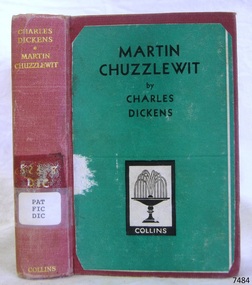
Book, Martin Chuzzlewit
... ...charles dickens...Martin Chuzzlewit Author: Charles Dickens Publisher: Collins Clear Type Press ...The Warrnambool Mechanics' Institute’s publication collection is of both local and state significance. warrnambool shipwrecked-coast flagstaff-hill flagstaff-hill-maritime-museum maritime-museum shipwreck-coast flagstaff-hill-maritime-village shipwrecked-artefact book warrnambool mechanics’ institute pattison collection warrnambool library ralph eric pattison warrnambool city librarian mechanics’ institute library victorian library board warrnambool books and records warrnambool children’s library martin chuzzlewit charles dickens Label on spine cover with typed text PAT FIC DIC Pastedown end page has sticker from Corangamite Regional Library Service Martin Chuzzlewit Author: Charles Dickens Publisher: Collins Clear Type Press Martin Chuzzlewit Book ...This item is from the ‘Pattison Collection’, a collection of books and records that was originally owned by the Warrnambool Mechanics’ Institute, which was founded in Warrnambool in 1853. By 1886 the Warrnambool Mechanics’ Institute (WMI) had grown to have a Library, Museum and Fine Arts Gallery, with a collection of “… choice productions of art, and valuable specimens in almost every branch and many wonderful national curiosities are now to be seen there, including historic relics of the town and district.” It later included a School of Design. Although it was very well patronised, the lack of financial support led the WMI in 1911 to ask the City Council to take it over. In 1935 Ralph Pattison was appointed as City Librarian to establish and organise the Warrnambool Library as it was then called. When the WMI building was pulled down in 1963 a new civic building was erected on the site and the new Warrnambool Library, on behalf of the City Council, took over all the holdings of the WMI. At this time some of the items were separated and identified as the ‘Pattison Collection’, named after Ralph Pattison. Eventually the components of the WMI were distributed from the Warrnambool Library to various places, including the Art Gallery, Historical Society and Flagstaff Hill. Later some were even distributed to other regional branches of Corangamite Regional Library and passed to and fro. It is difficult now to trace just where all of the items have ended up. The books at Flagstaff Hill Maritime Village generally display stamps and markings from Pattison as well as a variety of other institutions including the Mechanics’ Institute itself. RALPH ERIC PATTISON Ralph Eric Pattison was born in Rockhampton, Queensland, in 1891. He married Maude Swan from Warrnambool in 1920 and they set up home in Warrnambool. In 1935 Pattison accepted a position as City Librarian for the Warrnambool City Council. His huge challenge was to make a functional library within two rooms of the Mechanics’ Institute. He tirelessly cleaned, cleared and sorted a disarrayed collection of old books, jars of preserved specimens and other items reserved for exhibition in the city’s museum. He developed and updated the library with a wide variety of books for all tastes, including reference books for students; a difficult task to fulfil during the years following the Depression. He converted all of the lower area of the building into a library, reference room and reading room for members and the public. The books were sorted and stored using a cataloguing and card index system that he had developed himself. He also prepared the upper floor of the building and established the Art Gallery and later the Museum, a place to exhibit the many old relics that had been stored for years for this purpose. One of the treasures he found was a beautiful ancient clock, which he repaired, restored and enjoyed using in his office during the years of his service there. Ralph Pattison was described as “a meticulous gentleman whose punctuality, floorless courtesy and distinctive neat dress were hallmarks of his character, and ‘his’ clock controlled his daily routine, and his opening and closing of the library’s large heavy doors to the minute.” Pattison took leave during 1942 to 1942 to serve in the Royal Australian Navy, Volunteer Reserve as Lieutenant. A few years later he converted one of the Museum’s rooms into a Children’s Library, stocking it with suitable books for the younger generation. This was an instant success. In the 1950’s he had the honour of being appointed to the Victorian Library Board and received more inspiration from the monthly conferences in Melbourne. He was sadly retired in 1959 after over 23 years of service, due to the fact that he had gone over the working age of council officers. However he continued to take a very keen interest in the continual development of the Library until his death in 1969. The Pattison Collection, along with other items at Flagstaff Hill Maritime Village, was originally part of the Warrnambool Mechanics' Institute’s collection. The Warrnambool Mechanics’ Institute Collection is primarily significant in its totality, rather than for the individual objects it contains. Its contents are highly representative of the development of Mechanics' Institute libraries across Australia, particularly Victoria. A diversity of publications and themes has been amassed, and these provide clues to our understanding of the nature of and changes in the reading habits of Victorians from the 1850s to the middle of the 20th century. The collection also highlights the Warrnambool community’s commitment to the Mechanics’ Institute, reading, literacy and learning in the regions, and proves that access to knowledge was not impeded by distance. These items help to provide a more complete picture of our community’s ideals and aspirations. The Warrnambool Mechanics Institute book collection has historical and social significance for its strong association with the Mechanics Institute movement and the important role it played in the intellectual, cultural and social development of people throughout the latter part of the nineteenth century and the early twentieth century. The collection of books is a rare example of an early lending library and its significance is enhanced by the survival of an original collection of many volumes. The Warrnambool Mechanics' Institute’s publication collection is of both local and state significance. Martin Chuzzlewit Author: Charles Dickens Publisher: Collins Clear Type Press Label on spine cover with typed text PAT FIC DIC Pastedown end page has sticker from Corangamite Regional Library Servicewarrnambool, shipwrecked-coast, flagstaff-hill, flagstaff-hill-maritime-museum, maritime-museum, shipwreck-coast, flagstaff-hill-maritime-village, shipwrecked-artefact, book, warrnambool mechanics’ institute, pattison collection, warrnambool library, ralph eric pattison, warrnambool city librarian, mechanics’ institute library, victorian library board, warrnambool books and records, warrnambool children’s library, martin chuzzlewit, charles dickens -
 Flagstaff Hill Maritime Museum and Village
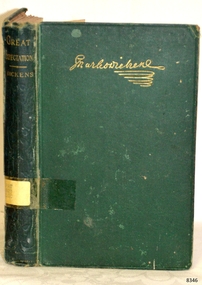
Book - A Fictional Story, Charles Dickens, Great Expectations, 1900-1913
... ...charles dickens...Charles Dickens was the foremost English novelist of the Victorian era. ...Green Faux leather hardcover with title on spine in gold lettering, Charles Dickens signature on front cover written in gold lettering. ...Charles Dickens...Charles Dickens was the foremost English novelist of the Victorian era. ...Charles Dickens (1812–1870) was one of the great English novelists of the Victorian era, famous for vivid characters, social criticism, and stories that were first published in serial form. He began as a journalist, rose to enormous popularity during his lifetime, and wrote major works such as Oliver Twist, Great Expectations and David Copperfield. Great Expectations is another of Dickens coming of age novels and is about Pip, a young orphan who is shaped by guilt, ambition, class anxiety, and his love for Estella. The story follows his rise from a humble village boy to a London gentleman, and then his gradual moral education as he learns what really matters in life. Dickens published it in 1860–61 in serialised form and then in a book published by Chapman & Hall in 1861. The novel is even today widely regarded as one of his major and most successful works.Great Expectations Author: Charles Dickens Publisher: Chapman & Hall Ltd Date: Subject Book 1900-1913.First Edition Published in 1860-1861 (See note section this document for more information on Edition). Green Faux leather hardcover with title on spine in gold lettering, Charles Dickens signature on front cover written in gold lettering. The spine has a Library label and no Volume information.fictionCharles Dickens (1812–1870) was one of the great English novelists of the Victorian era, famous for vivid characters, social criticism, and stories that were first published in serial form. He began as a journalist, rose to enormous popularity during his lifetime, and wrote major works such as Oliver Twist, Great Expectations and David Copperfield. Great Expectations is another of Dickens coming of age novels and is about Pip, a young orphan who is shaped by guilt, ambition, class anxiety, and his love for Estella. The story follows his rise from a humble village boy to a London gentleman, and then his gradual moral education as he learns what really matters in life. Dickens published it in 1860–61 in serialised form and then in a book published by Chapman & Hall in 1861. The novel is even today widely regarded as one of his major and most successful works.book, the old curiosity shop, charles dickens, shipwrecked-coast, flagstaff-hill, flagstaff-hill-maritime-museum, warrnambool, maritime-museum, flagstaff-hill-maritime-village, pattison collection, warrnambool library, warrnambool mechanics’ institute, ralph eric pattison, corangamite regional library service, warrnambool city librarian, mechanics’ institute library, victorian library board, warrnambool books and records, warrnambool children’s library, great ocean road -
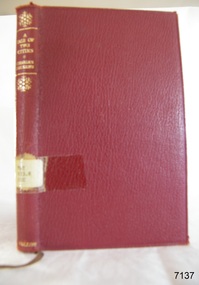 Flagstaff Hill Maritime Museum and Village
Book - A Fictional Story, Charles Dickens, A Tale of Two Cities, 1920s -1930s
... ...charles dickens...Charles Dickens was the foremost English novelist of the Victorian era. ...A Tale of Two Cities. Author: Charles Dickens. (Introduction by Sydney Dark) Publisher: Collins, (London & Glasgow) Date: Mid 20th Century. ...Charles Dickens...Charles Dickens was the foremost English novelist of the Victorian era. ...Charles Dickens (1812–1870) was one of the great English novelists of the Victorian era, famous for vivid characters, social criticism, and stories that were first published in serial form. He began as a journalist, rose to enormous popularity during his lifetime, and wrote major works such as Oliver Twist, David Copperfield, and Great Expectations. A Tale of Two Cities is Charles Dickens’s sweeping historical novel set against the French Revolution, focusing on London and Paris and the collision of private lives with mass upheaval. It is especially famous for its stark contrasts between order and chaos, and for one of the most moving acts of self sacrifice in Victorian fiction. The plot centres on Dr. Manette, imprisoned for eighteen years in the Bastille, his daughter Lucie, and the English lawyer Sydney Carton, whose life becomes entangled with that of the French aristocrat Charles Darnay. Set on the eve of and during the Revolution, the novel shows how old injustices fuel mob violence and terror, culminating in Carton’s substitution of himself for at the guillotine, in a Christ‑like gesture of redemption.A Tale of Two Cities. Author: Charles Dickens. (Introduction by Sydney Dark) Publisher: Collins, (London & Glasgow) Date: Mid 20th Century. (See note section this document for more information on Edition).fictionCharles Dickens (1812–1870) was one of the great English novelists of the Victorian era, famous for vivid characters, social criticism, and stories that were first published in serial form. He began as a journalist, rose to enormous popularity during his lifetime, and wrote major works such as Oliver Twist, David Copperfield, and Great Expectations. A Tale of Two Cities is Charles Dickens’s sweeping historical novel set against the French Revolution, focusing on London and Paris and the collision of private lives with mass upheaval. It is especially famous for its stark contrasts between order and chaos, and for one of the most moving acts of self sacrifice in Victorian fiction. The plot centres on Dr. Manette, imprisoned for eighteen years in the Bastille, his daughter Lucie, and the English lawyer Sydney Carton, whose life becomes entangled with that of the French aristocrat Charles Darnay. Set on the eve of and during the Revolution, the novel shows how old injustices fuel mob violence and terror, culminating in Carton’s substitution of himself for at the guillotine, in a Christ‑like gesture of redemption.book, the old curiosity shop, charles dickens, shipwrecked-coast, flagstaff-hill, flagstaff-hill-maritime-museum, warrnambool, maritime-museum, flagstaff-hill-maritime-village, pattison collection, warrnambool library, warrnambool mechanics’ institute, ralph eric pattison, corangamite regional library service, warrnambool city librarian, mechanics’ institute library, victorian library board, warrnambool books and records, warrnambool children’s library, great ocean road -
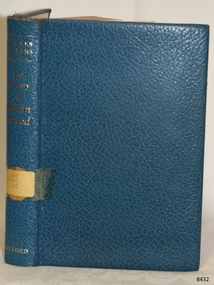 Flagstaff Hill Maritime Museum and Village
Book - A Fictional Story, Charles Dickens et al, The Mystery of Edwin Drood, 1966
... ...charles dickens...Charles Dickens was the foremost English novelist of the Victorian era. ...The Mystery of Edwin Drood Hard Cover, Blue. Author: Charles Dickens Publisher: Oxford University Press Date: 1966 Further Information: With twelve illustrations by Luke Fildes and two by Charles Collins...Charles Dickens...Charles Dickens was the foremost English novelist of the Victorian era. ...Charles Dickens (1812–1870) was one of the great English novelists of the Victorian era, famous for vivid characters, social criticism, and stories that were first published in serial form. He began as a journalist, rose to enormous popularity during his lifetime, and wrote major works such as Oliver Twist, David Copperfield, and Great Expectations. The Mystery of Edwin Drood is Charles Dickens’s final, unfinished novel about the mysterious disappearance (likely murder) of a young man named Edwin Drood in the fictional cathedral town of Cloisterham, England. The theme centres around Edwin who is engaged to Rosa Bud in a marriage arranged by their fathers. Both are unhappy with the arrangement and decide to break it off. Edwin’s uncle John Jasper, is the cathedral’s choirmaster, and secretly obsesses over Rosa and is an opium addict. After a tense Christmas Eve dinner with Edwin and the hot tempered Neville Landless (who also likes Rosa), Edwin disappears. Neville is suspected because he was last seen with Edwin, but there’s no body and not enough evidence to charge him. There is also a mysterious figure named Datchery who arrives in Cloisterham to investigate, and an elderly woman from an opium den called Princess Puffer who begins shadowing Jasper.The Mystery of Edwin Drood Hard Cover, Blue. Author: Charles Dickens Publisher: Oxford University Press Date: 1966 Further Information: With twelve illustrations by Luke Fildes and two by Charles CollinsfictionCharles Dickens (1812–1870) was one of the great English novelists of the Victorian era, famous for vivid characters, social criticism, and stories that were first published in serial form. He began as a journalist, rose to enormous popularity during his lifetime, and wrote major works such as Oliver Twist, David Copperfield, and Great Expectations. The Mystery of Edwin Drood is Charles Dickens’s final, unfinished novel about the mysterious disappearance (likely murder) of a young man named Edwin Drood in the fictional cathedral town of Cloisterham, England. The theme centres around Edwin who is engaged to Rosa Bud in a marriage arranged by their fathers. Both are unhappy with the arrangement and decide to break it off. Edwin’s uncle John Jasper, is the cathedral’s choirmaster, and secretly obsesses over Rosa and is an opium addict. After a tense Christmas Eve dinner with Edwin and the hot tempered Neville Landless (who also likes Rosa), Edwin disappears. Neville is suspected because he was last seen with Edwin, but there’s no body and not enough evidence to charge him. There is also a mysterious figure named Datchery who arrives in Cloisterham to investigate, and an elderly woman from an opium den called Princess Puffer who begins shadowing Jasper.book, the old curiosity shop, charles dickens, shipwrecked-coast, flagstaff-hill, flagstaff-hill-maritime-museum, warrnambool, maritime-museum, flagstaff-hill-maritime-village, pattison collection, warrnambool library, warrnambool mechanics’ institute, ralph eric pattison, corangamite regional library service, warrnambool city librarian, mechanics’ institute library, victorian library board, warrnambool books and records, warrnambool children’s library, great ocean road -
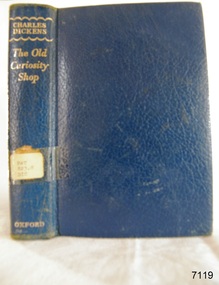 Flagstaff Hill Maritime Museum and Village
Book - A Fictional story, Charles Dickens, The Old Curiosity Shop, 1997
... ...charles dickens...Charles Dickens was the foremost English novelist of the Victorian era. ...The Old Curiosity Shop Author: Charles Dickens Publisher: Oxford University Press Date: 1997 Light blue leather embossed hardcover with a blue spine and lettering in gold. ...Charles Dickens...Charles Dickens was the foremost English novelist of the Victorian era. ...Charles Dickens (1812–1870) was one of the great English novelists of the Victorian era, famous for vivid characters, social criticism, and stories that were first published in serial form. He began as a journalist, rose to enormous popularity during his lifetime, and wrote major works such as Oliver Twist, David Copperfield, and Great Expectations. The Old Curiosity Shop is about Nell Trent, a young girl, and her grandfather, who live in a London curiosity shop. After her grandfather’s gambling and debts bring danger from the moneylender Daniel Quilp, they flee and travel through hardship, poverty, and misfortune, the novel is best known for its emotional portrayal of Nell. It was written and published in serial form in “Master Humphrey’s Clock” magazine from 1840 to 1841, then issued as a book in 1841. The subject book published by the Oxford University Press. The subject book in hardback edition was published on 13th November 1997 by the same publisher.The Old Curiosity Shop Author: Charles Dickens Publisher: Oxford University Press Date: 1997 Light blue leather embossed hardcover with a blue spine and lettering in gold. The spine has a Library label.fictionCharles Dickens (1812–1870) was one of the great English novelists of the Victorian era, famous for vivid characters, social criticism, and stories that were first published in serial form. He began as a journalist, rose to enormous popularity during his lifetime, and wrote major works such as Oliver Twist, David Copperfield, and Great Expectations. The Old Curiosity Shop is about Nell Trent, a young girl, and her grandfather, who live in a London curiosity shop. After her grandfather’s gambling and debts bring danger from the moneylender Daniel Quilp, they flee and travel through hardship, poverty, and misfortune, the novel is best known for its emotional portrayal of Nell. It was written and published in serial form in “Master Humphrey’s Clock” magazine from 1840 to 1841, then issued as a book in 1841. The subject book published by the Oxford University Press. The subject book in hardback edition was published on 13th November 1997 by the same publisher.book, the old curiosity shop, charles dickens, shipwrecked-coast, flagstaff-hill, flagstaff-hill-maritime-museum, warrnambool, maritime-museum, flagstaff-hill-maritime-village, pattison collection, warrnambool library, warrnambool mechanics’ institute, ralph eric pattison, corangamite regional library service, warrnambool city librarian, mechanics’ institute library, victorian library board, warrnambool books and records, warrnambool children’s library, great ocean road -
Glenelg Shire Council Cultural Collection
Book, CHARLES DICKENS, A Christmas Carol, c. 1918
... 'A Christmas Carol' by Charles Dickens, blue soft cloth cover, black print and decoration, edited by W.H.D. ...CHARLES DICKENS...A Christmas Carol Book Book CHARLES DICKENS BILLING AND SONS, PRINTERS, GUILDFORD, SURRY ...A Christmas Carol recounts the story of Ebenezer Scrooge, an elderly miser who is visited by the ghost of his former business partner Jacob Marley and the spirits of Christmas Past, Present and Yet to Come. After their visits, Scrooge is transformed into a kinder, gentler man'A Christmas Carol' by Charles Dickens, blue soft cloth cover, black print and decoration, edited by W.H.D. Rouse.A Christmas Carol recounts the story of Ebenezer Scrooge, an elderly miser who is visited by the ghost of his former business partner Jacob Marley and the spirits of Christmas Past, Present and Yet to Come. After their visits, Scrooge is transformed into a kinder, gentler man -
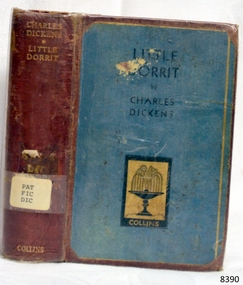 Flagstaff Hill Maritime Museum and Village
Book - A Fictional Story, Charles Dickens, Little Dorrit, 1968
... ...Charles Dickens...Charles Dickens was the foremost English novelist of the Victorian era. ...Little Dorrit Author: Charles Dickens Publisher: Collins Further Information: We do have 2 more copies of this same book. ...Charles Dickens...Charles Dickens was the foremost English novelist of the Victorian era. ...Charles Dickens (1812–1870) was one of the great English novelists of the Victorian era, famous for vivid characters, social criticism, and stories that were first published in serial form. He began as a journalist, rose to enormous popularity during his lifetime, and wrote major works such as Oliver Twist, David Copperfield, and Great Expectations. Little Dorrit is about Amy “Little” Dorrit, a gentle, selfless woman born and raised in the Marshalsea debtors’ prison where her father, William Dorrit, has been imprisoned for unpaid debts. The story follows her as she works as a seamstress outside the prison, gradually becoming entangled with Arthur Clennam, a businessman returning from abroad. Dickens interweaves a sharp critique of Victorian bureaucracy, finance, and class throughout the story. The theme centres around Amy Dorrit who lives her whole early life in Marshalsea, supporting her family with quiet dignity while her father clings to fragile genteel pretensions. Arthur Clennam, disillusioned after years in China, becomes involved with the Dorrits and uncovers a web of secrets involving his own mother, a hidden inheritance, and shady business dealings. William Dorrit suddenly inherits a fortune and is able to lift the family out of poverty and into fashion conscious society.The novel shows how money distorts their characters and relationships, while Amy remains the moral centre.Little Dorrit Author: Charles Dickens Publisher: Collins Further Information: We do have 2 more copies of this same book. All have been published by different companies. ( R.N. 8159 and R.N. 8344)fictionCharles Dickens (1812–1870) was one of the great English novelists of the Victorian era, famous for vivid characters, social criticism, and stories that were first published in serial form. He began as a journalist, rose to enormous popularity during his lifetime, and wrote major works such as Oliver Twist, David Copperfield, and Great Expectations. Little Dorrit is about Amy “Little” Dorrit, a gentle, selfless woman born and raised in the Marshalsea debtors’ prison where her father, William Dorrit, has been imprisoned for unpaid debts. The story follows her as she works as a seamstress outside the prison, gradually becoming entangled with Arthur Clennam, a businessman returning from abroad. Dickens interweaves a sharp critique of Victorian bureaucracy, finance, and class throughout the story. The theme centres around Amy Dorrit who lives her whole early life in Marshalsea, supporting her family with quiet dignity while her father clings to fragile genteel pretensions. Arthur Clennam, disillusioned after years in China, becomes involved with the Dorrits and uncovers a web of secrets involving his own mother, a hidden inheritance, and shady business dealings. William Dorrit suddenly inherits a fortune and is able to lift the family out of poverty and into fashion conscious society.The novel shows how money distorts their characters and relationships, while Amy remains the moral centre. flagstaff hil, warrnambool, flagstaff hill maritime museum, maritime museum, shipwreck coast, flagstaff hill maritime village, great ocean road, book, pattison collection, warrnambool library, warrnambool mechanics’ institute, ralph eric pattison, corangamite regional library service, warrnambool city librarian, mechanics’ institute library, victorian library board, warrnambool books and records, warrnambool children’s library, little dorrit, charles dickens -
 Flagstaff Hill Maritime Museum and Village
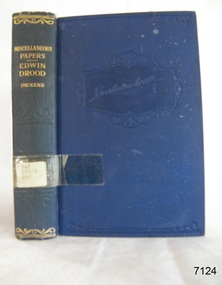
Book - Unfinished Fictional story, Charles Dickens, Miscellaneous Papers with (The Mystery of Edwin Drood), 1935
... ...charles dickens...Charles Dickens was the foremost English novelist of the Victorian era. ...Miscellaneous Papers and (The Mystery of Edwin Drood) Author: Charles Dickens Publisher: Hazell Watson and Viney Limited Date: 1935 Light blue leather embossed hardcover with a blue spine and lettering in gold. ...Charles Dickens...Charles Dickens was the foremost English novelist of the Victorian era. ...Charles Dickens (1812–1870) was one of the great English novelists of the Victorian era, famous for vivid characters, social criticism, and stories that were first published in serial form. He began as a journalist, rose to enormous popularity during his lifetime, and wrote major works such as Oliver Twist, David Copperfield, and Great Expectations. The subject novel “Miscellaneous Papers” with excerpts from “The Mystery of Edwin Drood” collects mid 19th century essays on topics like agriculture, crime, education, capital punishment, and includes tributes to figures such as W.M. Thackeray and Adelaide Anne Procter. Appended to the novel is “The Mystery of Edwin Drood,” Dickens's 1870 unfinished novel about Edwin Drood's disappearance amid opium addiction, obsession, and intrigue in Cloisterham, involving various suspects like John Jasper.Miscellaneous Papers and (The Mystery of Edwin Drood) Author: Charles Dickens Publisher: Hazell Watson and Viney Limited Date: 1935 Light blue leather embossed hardcover with a blue spine and lettering in gold. The spine has a Library label.fictionCharles Dickens (1812–1870) was one of the great English novelists of the Victorian era, famous for vivid characters, social criticism, and stories that were first published in serial form. He began as a journalist, rose to enormous popularity during his lifetime, and wrote major works such as Oliver Twist, David Copperfield, and Great Expectations. The subject novel “Miscellaneous Papers” with excerpts from “The Mystery of Edwin Drood” collects mid 19th century essays on topics like agriculture, crime, education, capital punishment, and includes tributes to figures such as W.M. Thackeray and Adelaide Anne Procter. Appended to the novel is “The Mystery of Edwin Drood,” Dickens's 1870 unfinished novel about Edwin Drood's disappearance amid opium addiction, obsession, and intrigue in Cloisterham, involving various suspects like John Jasper.book, the old curiosity shop, charles dickens, shipwrecked-coast, flagstaff-hill, flagstaff-hill-maritime-museum, warrnambool, maritime-museum, flagstaff-hill-maritime-village, pattison collection, warrnambool library, warrnambool mechanics’ institute, ralph eric pattison, corangamite regional library service, warrnambool city librarian, mechanics’ institute library, victorian library board, warrnambool books and records, warrnambool children’s library, great ocean road -
 Flagstaff Hill Maritime Museum and Village
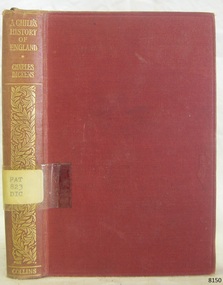
Book - A Fictional Story, Charles Dickens et al, A Childs History of England, 1910
... ...charles dickens...Charles Dickens was the foremost English novelist of the Victorian era. ...A Childs History of England. Author: Charles Dickens. Illustrator. Harry Furniss. Publisher: Collins Clear Type Press, London. ...Charles Dickens...Charles Dickens was the foremost English novelist of the Victorian era. ...Charles Dickens (1812–1870) was one of the great English novelists of the Victorian era, famous for vivid characters, social criticism, and stories that were first published in serial form. He began as a journalist, rose to enormous popularity during his lifetime, and wrote major works such as Oliver Twist, David Copperfield, and Great Expectations. “A Child’s History of England” is Dickens’s three volume, child directed history of England, originally serialised in Household Words from 1851 to 1853 and later issued in book form in 1853. It covers English history from ancient times through the fall of James II, with a brief closing summary up to Queen Victoria’s accession to the crown. Dickens wrote it as a readable, lively alternative to dry school history, aiming to interest his own children and young readers. The work is outspoken, often anti monarchical and anti aristocratic in tone, and it uses Dickens’s usual vivid style rather than detached academic prose.A Childs History of England. Author: Charles Dickens. Illustrator. Harry Furniss. Publisher: Collins Clear Type Press, London. Date: 1910. (See note section this document for more information on Edition). red cloth hardcover with title on spine in gold lettering and pattern. The spine has a Library label and no Volume information only title and author.fictionCharles Dickens (1812–1870) was one of the great English novelists of the Victorian era, famous for vivid characters, social criticism, and stories that were first published in serial form. He began as a journalist, rose to enormous popularity during his lifetime, and wrote major works such as Oliver Twist, David Copperfield, and Great Expectations. “A Child’s History of England” is Dickens’s three volume, child directed history of England, originally serialised in Household Words from 1851 to 1853 and later issued in book form in 1853. It covers English history from ancient times through the fall of James II, with a brief closing summary up to Queen Victoria’s accession to the crown. Dickens wrote it as a readable, lively alternative to dry school history, aiming to interest his own children and young readers. The work is outspoken, often anti monarchical and anti aristocratic in tone, and it uses Dickens’s usual vivid style rather than detached academic prose.book, the old curiosity shop, charles dickens, shipwrecked-coast, flagstaff-hill, flagstaff-hill-maritime-museum, warrnambool, maritime-museum, flagstaff-hill-maritime-village, pattison collection, warrnambool library, warrnambool mechanics’ institute, ralph eric pattison, corangamite regional library service, warrnambool city librarian, mechanics’ institute library, victorian library board, warrnambool books and records, warrnambool children’s library, great ocean road -
Glenelg Shire Council Cultural Collection
Book - Book - A Tale of Two Cities, n.d
... Novel 'A Tale of Two Cities' by Charles Dickens, edited by grace Todhunter B.A, Hard cover, red, gold lettering on spine...CHARLES DICKENS...McDonald / Form IV / PHS' - blue ink, inside front cover Novel 'A Tale of Two Cities' by Charles Dickens, edited by grace Todhunter B.A, Hard cover, red, gold lettering on spine Book Book - A Tale of Two Cities CHARLES DICKENS ...Novel 'A Tale of Two Cities' by Charles Dickens, edited by grace Todhunter B.A, Hard cover, red, gold lettering on spine -
 Flagstaff Hill Maritime Museum and Village
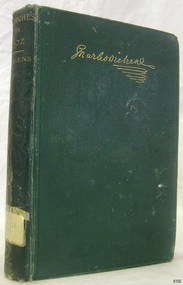
Book - A Fictional Story, Charles Dickens et al, Sketches by Boz. (Illustrative of Ever day Life and Every day People), 1892
... ...charles dickens...Charles Dickens was the foremost English novelist of the Victorian era. ...(Illustrative of Ever day Life and Every day People) .Author: Charles Dickens. Publisher: Chapman & Hall Ltd, London. ...Charles Dickens...Charles Dickens was the foremost English novelist of the Victorian era. ...Charles Dickens (1812–1870) was one of the great English novelists of the Victorian era, famous for vivid characters, social criticism, and stories that were first published in serial form. He began as a journalist, rose to enormous popularity during his lifetime, and wrote major works such as Oliver Twist, David Copperfield, and Great Expectations. Sketches by Boz is Charles Dickens' first published book, a collection of fifty six short sketches originally appearing in periodicals from 1833 to 1836 under his pseudonym "Boz." It captures everyday London life through vivid observations of ordinary people and scenes. The book is divided into four sections, "Our Parish," "Scenes," "Characters," and "Tales." The first three offer non narrative portraits of urban life, while "Tales" includes fictional stories. Illustrated by George Cruikshank with forty plates, it blends humor, social commentary, and realism. Published by Chapman & Hall, London, the specified full title matches the "New Edition, Complete" or first one-volume combined edition from 1839, compiling two earlier 1836 series. Earlier parts issues ran 1837-1839; Chapman & Hall took over rights in 1837. "Ltd" likely indicates a later reprint by Chapman & Hall Ltd., but core content remains unchanged.Sketches by Boz. (Illustrative of Ever day Life and Every day People) .Author: Charles Dickens. Publisher: Chapman & Hall Ltd, London. Date: 1892. (See note section this document for more information on Edition). Blue leather hardcover with title on spine in gold lettering. The spine has a Library label.fictionCharles Dickens (1812–1870) was one of the great English novelists of the Victorian era, famous for vivid characters, social criticism, and stories that were first published in serial form. He began as a journalist, rose to enormous popularity during his lifetime, and wrote major works such as Oliver Twist, David Copperfield, and Great Expectations. Sketches by Boz is Charles Dickens' first published book, a collection of fifty six short sketches originally appearing in periodicals from 1833 to 1836 under his pseudonym "Boz." It captures everyday London life through vivid observations of ordinary people and scenes. The book is divided into four sections, "Our Parish," "Scenes," "Characters," and "Tales." The first three offer non narrative portraits of urban life, while "Tales" includes fictional stories. Illustrated by George Cruikshank with forty plates, it blends humor, social commentary, and realism. Published by Chapman & Hall, London, the specified full title matches the "New Edition, Complete" or first one-volume combined edition from 1839, compiling two earlier 1836 series. Earlier parts issues ran 1837-1839; Chapman & Hall took over rights in 1837. "Ltd" likely indicates a later reprint by Chapman & Hall Ltd., but core content remains unchanged.book, the old curiosity shop, charles dickens, shipwrecked-coast, flagstaff-hill, flagstaff-hill-maritime-museum, warrnambool, maritime-museum, flagstaff-hill-maritime-village, pattison collection, warrnambool library, warrnambool mechanics’ institute, ralph eric pattison, corangamite regional library service, warrnambool city librarian, mechanics’ institute library, victorian library board, warrnambool books and records, warrnambool children’s library, great ocean road -
 Flagstaff Hill Maritime Museum and Village
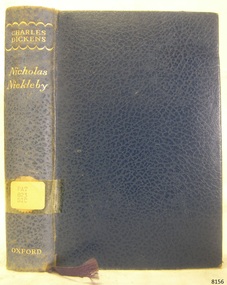
Book - A Fictional Story, Charles Dickens et al, Nicholas Nickleby, 1966-1987
... ...charles dickens...Charles Dickens was the foremost English novelist of the Victorian era. ...Nicholas Nickleby. Author: Charles Dickens. Publisher: Oxford University Press, London. ...Charles Dickens...Charles Dickens was the foremost English novelist of the Victorian era. ...Charles Dickens (1812–1870) was one of the great English novelists of the Victorian era, famous for vivid characters, social criticism, and stories that were first published in serial form. He began as a journalist, rose to enormous popularity during his lifetime, and wrote major works such as Oliver Twist, David Copperfield, and Great Expectations. “Nicholas Nickleby” starts out as a good hearted but vulnerable young man whose family is left poor after his father’s death. His uncle, Ralph Nickleby, is cold and exploitative, and Nicholas is sent to work at Dothe boys Hall, a school run by the abusive Wackford Squeers family. There Nicholas witnesses appalling treatment of the children, escapes, and takes the mistreated boy Smike with him. After that, the novel follows Nicholas through a series of adventures in London and beyond as he protects his sister Kate, resists his uncle’s schemes, and finds decent allies such as the Cheeryble brothers. The plot mixes melodrama, comedy, family loyalty, and moral struggle, ending with justice restored and the worthy characters rewarded.Nicholas Nickleby. Author: Charles Dickens. Publisher: Oxford University Press, London. Date: 1966-1987 (See note section this document for more information on Edition). Blue leather hardcover, Spine has Author and Title in gold lettering. The spine has a Library label.fictionCharles Dickens (1812–1870) was one of the great English novelists of the Victorian era, famous for vivid characters, social criticism, and stories that were first published in serial form. He began as a journalist, rose to enormous popularity during his lifetime, and wrote major works such as Oliver Twist, David Copperfield, and Great Expectations. “Nicholas Nickleby” starts out as a good hearted but vulnerable young man whose family is left poor after his father’s death. His uncle, Ralph Nickleby, is cold and exploitative, and Nicholas is sent to work at Dothe boys Hall, a school run by the abusive Wackford Squeers family. There Nicholas witnesses appalling treatment of the children, escapes, and takes the mistreated boy Smike with him. After that, the novel follows Nicholas through a series of adventures in London and beyond as he protects his sister Kate, resists his uncle’s schemes, and finds decent allies such as the Cheeryble brothers. The plot mixes melodrama, comedy, family loyalty, and moral struggle, ending with justice restored and the worthy characters rewarded.book, the old curiosity shop, charles dickens, shipwrecked-coast, flagstaff-hill, flagstaff-hill-maritime-museum, warrnambool, maritime-museum, flagstaff-hill-maritime-village, pattison collection, warrnambool library, warrnambool mechanics’ institute, ralph eric pattison, corangamite regional library service, warrnambool city librarian, mechanics’ institute library, victorian library board, warrnambool books and records, warrnambool children’s library, great ocean road -
 Flagstaff Hill Maritime Museum and Village
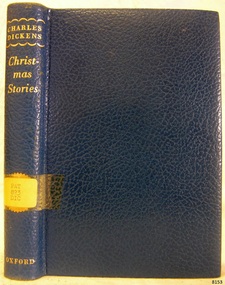
Book - A Fictional Story, Charles Dickens et al, Christmas Stories, 1956
... ...charles dickens...Charles Dickens was the foremost English novelist of the Victorian era. ...Our Mutual Friend. Author: Charles Dickens. Publisher: Oxford University Press, London. ...Charles Dickens...Charles Dickens was the foremost English novelist of the Victorian era. ...Charles Dickens (1812–1870) was one of the great English novelists of the Victorian era, famous for vivid characters, social criticism, and stories that were first published in serial form. He began as a journalist, rose to enormous popularity during his lifetime, and wrote major works such as Oliver Twist, David Copperfield, and Great Expectations. This volume gathers five separate Christmas stories rather than one continuous novel. The best known of them, “A Christmas Carol”, follows Ebenezer Scrooge’s moral transformation after visits from supernatural spirits, while the others mix ghostly, sentimental, and domestic themes around Christmas, memory, family, and social feeling. Together they show Dickens using Christmas as a setting for moral instruction, sympathy for the poor, and festive storytelling. This Oxford University Press London, Christmas Books volume is a collected edition of Dickens’s five Christmas novellas, “A Christmas Carol,” “The Chimes”, “The Cricket on the Hearth”, “The Battle of Life”, and “The Haunted Man”. It is not the original 1840s publication; the Oxford publication is a later reprint from 1956.Our Mutual Friend. Author: Charles Dickens. Publisher: Oxford University Press, London. Date: 1956 (See note section this document for more information on Edition). Blue leather hardcover, Spine has Author and Title in gold lettering. The spine has a Library label and no Volume information.fictionCharles Dickens (1812–1870) was one of the great English novelists of the Victorian era, famous for vivid characters, social criticism, and stories that were first published in serial form. He began as a journalist, rose to enormous popularity during his lifetime, and wrote major works such as Oliver Twist, David Copperfield, and Great Expectations. This volume gathers five separate Christmas stories rather than one continuous novel. The best known of them, “A Christmas Carol”, follows Ebenezer Scrooge’s moral transformation after visits from supernatural spirits, while the others mix ghostly, sentimental, and domestic themes around Christmas, memory, family, and social feeling. Together they show Dickens using Christmas as a setting for moral instruction, sympathy for the poor, and festive storytelling. This Oxford University Press London, Christmas Books volume is a collected edition of Dickens’s five Christmas novellas, “A Christmas Carol,” “The Chimes”, “The Cricket on the Hearth”, “The Battle of Life”, and “The Haunted Man”. It is not the original 1840s publication; the Oxford publication is a later reprint from 1956.book, the old curiosity shop, charles dickens, shipwrecked-coast, flagstaff-hill, flagstaff-hill-maritime-museum, warrnambool, maritime-museum, flagstaff-hill-maritime-village, pattison collection, warrnambool library, warrnambool mechanics’ institute, ralph eric pattison, corangamite regional library service, warrnambool city librarian, mechanics’ institute library, victorian library board, warrnambool books and records, warrnambool children’s library, great ocean road -
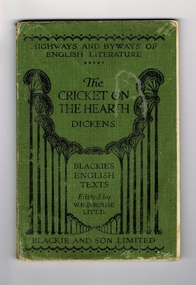 Kiewa Valley Historical Society
Book - Reference Cricket, The Cricket on the Hearth, circa 1930
... Book of literature by Charles Dickens. Has green cover with black lettering and decoration. ...Book of literature by Charles Dickens. Has green cover with black lettering and decoration. ...A text book used by a local Tawonga student in the 1930's. The school she attended was Rosehill Girls School in Albury. This was one of the foundation schools of Scots School, Albury. Rosehill was opened in 1926 by a Miss Lillian Windridge, for both day and boarding students, in a large former residential property on the corner of Crisp and Young Streets and was named after her uncle's property 'Rosehill' near Kyneton in Victoria. It catered from kindergarten to the Leaving Class. The school flourished and extra space was made available at the adjacent 'Springfield' property for more classrooms. In 1934 lack of space forced 'Rosehill' to move to a new location in Kiewa Street. In 1938, Miss Windridge sold the school to Miss Anna Drennan, a well educated Scots woman with a Masters' degree from Edinburgh University. By early 1939 the school was again overcrowded and was moved to the property 'Woodstock' in Schubach Street, East Albury and the name changed to 'Woodstock School for Girls'. In 1972, the Woodstock Presbyterian Girls School and the Albury Grammar School amalgamated to form the Scots School Albury. Wilma's family were one of the early families to settle in the Kiewa Valley and had a property at Tawonga. After her marriage, Wilma moved, with her husband, to Mt. Beauty until 1958 when they moved back to manage the farm and remained there for the rest of her life.It has a social significance as it depicts the standard of literature that was expected to be read and appreciated by students in the 1930's era. As the school was situated in Albury, it meant that the student would have been a boarder as daily transport to and from the Kiewa Valley would have been impossible at that time, unlike the 'School Bus' run that is available today. At this time there was no 'secondary education' available in the valley and education beyond primary school would have been limited to children of families that could afford to send their children to board at privately run schools.Book of literature by Charles Dickens. Has green cover with black lettering and decoration. It seems to be one of a series of books called the 'Highways and Byways of English Literature". On the front cover, at the top, 'Highway and Byways of English Literature'. Centre of page is the title "The Cricket on the Hearth" and the author Dickens. Underneath this is 'Blackies English Texts Edited by W.H.D.Rouse, Litt.D." Across the foot of the page is 'Blackie and Son Limited'. On the first page, hand written in ink is "Wilma Roper, Rosehill G.S.,Albury."secondary education, albury, kiewa valley, tawonga -
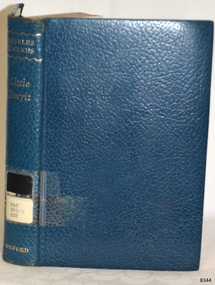 Flagstaff Hill Maritime Museum and Village
Book - A Fictional story, Chapman & Hall Ltd, Little Dorrit, 1890s
... ...Charles Dickens...Charles Dickens was the foremost English novelist of the Victorian era. ...Little Dorrit. Author: Charles Dickens. Publisher: Chapman & Hall Ltd, London. ......Charles Dickens...Charles Dickens was the foremost English novelist of the Victorian era. ...Charles Dickens (1812–1870) was one of the great English novelists of the Victorian era, famous for vivid characters, social criticism, and stories that were first published in serial form. He began as a journalist, rose to enormous popularity during his lifetime, and wrote major works such as Oliver Twist, David Copperfield, and Great Expectations. Little Dorrit is about Amy “Little” Dorrit, a gentle, selfless woman born and raised in the Marshalsea debtors’ prison where her father, William Dorrit, has been imprisoned for unpaid debts. The story follows her as she works as a seamstress outside the prison, gradually becoming entangled with Arthur Clennam, a businessman returning from abroad. Dickens interweaves a sharp critique of Victorian bureaucracy, finance, and class throughout the story. The theme centres around Amy Dorrit who lives her whole early life in Marshalsea, supporting her family with quiet dignity while her father clings to fragile genteel pretensions. Arthur Clennam, disillusioned after years in China, becomes involved with the Dorrits and uncovers a web of secrets involving his own mother, a hidden inheritance, and shady business dealings. William Dorrit suddenly inherits a fortune and is able to lift the family out of poverty and into fashion conscious society.The novel shows how money distorts their characters and relationships, while Amy remains the moral centre.Little Dorrit. Author: Charles Dickens. Publisher: Chapman & Hall Ltd, London. Date: 1890s. (See note section this document for more information on Edition). Green cloth hardcover with Authors name to front cover in gold. Spine has gold title lettering. The spine has a Library label.fictionCharles Dickens (1812–1870) was one of the great English novelists of the Victorian era, famous for vivid characters, social criticism, and stories that were first published in serial form. He began as a journalist, rose to enormous popularity during his lifetime, and wrote major works such as Oliver Twist, David Copperfield, and Great Expectations. Little Dorrit is about Amy “Little” Dorrit, a gentle, selfless woman born and raised in the Marshalsea debtors’ prison where her father, William Dorrit, has been imprisoned for unpaid debts. The story follows her as she works as a seamstress outside the prison, gradually becoming entangled with Arthur Clennam, a businessman returning from abroad. Dickens interweaves a sharp critique of Victorian bureaucracy, finance, and class throughout the story. The theme centres around Amy Dorrit who lives her whole early life in Marshalsea, supporting her family with quiet dignity while her father clings to fragile genteel pretensions. Arthur Clennam, disillusioned after years in China, becomes involved with the Dorrits and uncovers a web of secrets involving his own mother, a hidden inheritance, and shady business dealings. William Dorrit suddenly inherits a fortune and is able to lift the family out of poverty and into fashion conscious society.The novel shows how money distorts their characters and relationships, while Amy remains the moral centre. flagstaff hill, warrnambool, shipwrecked coast, flagstaff hill maritime museum, maritime museum, shipwreck coast, flagstaff hill maritime village, great ocean road, book, pattison collection, warrnambool library, warrnambool mechanics’ institute, ralph eric pattison, corangamite regional library service, warrnambool city librarian, mechanics’ institute library, victorian library board, warrnambool books and records, warrnambool children’s library, little dorrit, charles dickens -
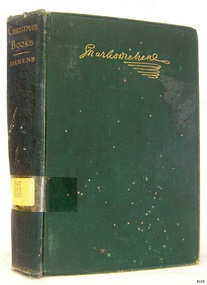 Flagstaff Hill Maritime Museum and Village
Book - A Fictional Story, Charles Dickens, Christmas Books, 1894
... ...charles dickens...Charles Dickens was the foremost English novelist of the Victorian era. ...Christmas Books. Author: Charles Dickens. Publisher: Chapman & Hall Ltd, London. ...Charles Dickens...Charles Dickens was the foremost English novelist of the Victorian era. ...Charles Dickens (1812–1870) was one of the great English novelists of the Victorian era, famous for vivid characters, social criticism, and stories that were first published in serial form. He began as a journalist, rose to enormous popularity during his lifetime, and wrote major works such as Oliver Twist, David Copperfield, and Great Expectations. This volume gathers five separate Christmas stories rather than one continuous novel. The best known of them, “A Christmas Carol”, follows Ebenezer Scrooge’s moral transformation after visits from supernatural spirits, while the others mix ghostly, sentimental, and domestic themes around Christmas, memory, family, and social feeling. Together they show Dickens using Christmas as a setting for moral instruction, sympathy for the poor, and festive storytelling. This Nelson and Sons London Christmas Books volume is a collected edition of Dickens’s five Christmas novellas, “A Christmas Carol,” “The Chimes”, “The Cricket on the Hearth”, “The Battle of Life”, and “The Haunted Man”. It is not the original 1840's publication; the Nelson publication is a later reprint in the company’s “Nelson’s Classics series, with examples catalogued from 1941 to 1959.Christmas Books. Author: Charles Dickens. Publisher: Chapman & Hall Ltd, London. Date: 1894. (See note section this document for more information on Edition). Green cloth hardcover with Authors name to front cover in gold. Spine has gold title lettering. The spine has a Library label.fictionCharles Dickens (1812–1870) was one of the great English novelists of the Victorian era, famous for vivid characters, social criticism, and stories that were first published in serial form. He began as a journalist, rose to enormous popularity during his lifetime, and wrote major works such as Oliver Twist, David Copperfield, and Great Expectations. This volume gathers five separate Christmas stories rather than one continuous novel. The best known of them, “A Christmas Carol”, follows Ebenezer Scrooge’s moral transformation after visits from supernatural spirits, while the others mix ghostly, sentimental, and domestic themes around Christmas, memory, family, and social feeling. Together they show Dickens using Christmas as a setting for moral instruction, sympathy for the poor, and festive storytelling. This Nelson and Sons London Christmas Books volume is a collected edition of Dickens’s five Christmas novellas, “A Christmas Carol,” “The Chimes”, “The Cricket on the Hearth”, “The Battle of Life”, and “The Haunted Man”. It is not the original 1840's publication; the Nelson publication is a later reprint in the company’s “Nelson’s Classics series, with examples catalogued from 1941 to 1959.book, the old curiosity shop, charles dickens, shipwrecked-coast, flagstaff-hill, flagstaff-hill-maritime-museum, warrnambool, maritime-museum, flagstaff-hill-maritime-village, pattison collection, warrnambool library, warrnambool mechanics’ institute, ralph eric pattison, corangamite regional library service, warrnambool city librarian, mechanics’ institute library, victorian library board, warrnambool books and records, warrnambool children’s library, great ocean road -
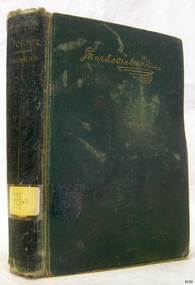 Flagstaff Hill Maritime Museum and Village
Book - A Fictional Story, Charles Dickens, Little Dorrit, 1890s
... ...charles dickens...Charles Dickens was the foremost English novelist of the Victorian era. ...Little Dorrit. Author: Charles Dickens. Publisher: Chapman & Hall Ltd, London. ...Charles Dickens...Charles Dickens was the foremost English novelist of the Victorian era. ...Charles Dickens (1812–1870) was one of the great English novelists of the Victorian era, famous for vivid characters, social criticism, and stories that were first published in serial form. He began as a journalist, rose to enormous popularity during his lifetime, and wrote major works such as Oliver Twist, David Copperfield, and Great Expectations. Little Dorrit is about Amy “Little” Dorrit, a gentle, selfless woman born and raised in the Marshalsea debtors’ prison where her father, William Dorrit, has been imprisoned for unpaid debts. The story follows her as she works as a seamstress outside the prison, gradually becoming entangled with Arthur Clennam, a businessman returning from abroad. Dickens interweaves a sharp critique of Victorian bureaucracy, finance, and class throughout the story. The theme centers around Amy Dorrit who lives her whole early life in Marshalsea, supporting her family with quiet dignity while her father clings to fragile genteel pretensions. Arthur Clennam, disillusioned after years in China, becomes involved with the Dorrits and uncovers a web of secrets involving his own mother, a hidden inheritance, and shady business dealings. William Dorrit suddenly inherits a fortune and is able to lift the family out of poverty and into fashion conscious society.The novel shows how money distorts their characters and relationships, while Amy remains the moral centre.Little Dorrit. Author: Charles Dickens. Publisher: Chapman & Hall Ltd, London. Date: 1890s. (See note section this document for more information on Edition). Green cloth hardcover with Authors name to front cover in gold. Spine has gold title lettering. The spine has a Library label.fictionCharles Dickens (1812–1870) was one of the great English novelists of the Victorian era, famous for vivid characters, social criticism, and stories that were first published in serial form. He began as a journalist, rose to enormous popularity during his lifetime, and wrote major works such as Oliver Twist, David Copperfield, and Great Expectations. Little Dorrit is about Amy “Little” Dorrit, a gentle, selfless woman born and raised in the Marshalsea debtors’ prison where her father, William Dorrit, has been imprisoned for unpaid debts. The story follows her as she works as a seamstress outside the prison, gradually becoming entangled with Arthur Clennam, a businessman returning from abroad. Dickens interweaves a sharp critique of Victorian bureaucracy, finance, and class throughout the story. The theme centers around Amy Dorrit who lives her whole early life in Marshalsea, supporting her family with quiet dignity while her father clings to fragile genteel pretensions. Arthur Clennam, disillusioned after years in China, becomes involved with the Dorrits and uncovers a web of secrets involving his own mother, a hidden inheritance, and shady business dealings. William Dorrit suddenly inherits a fortune and is able to lift the family out of poverty and into fashion conscious society.The novel shows how money distorts their characters and relationships, while Amy remains the moral centre. book, the old curiosity shop, charles dickens, shipwrecked-coast, flagstaff-hill, flagstaff-hill-maritime-museum, warrnambool, maritime-museum, flagstaff-hill-maritime-village, pattison collection, warrnambool library, warrnambool mechanics’ institute, ralph eric pattison, corangamite regional library service, warrnambool city librarian, mechanics’ institute library, victorian library board, warrnambool books and records, warrnambool children’s library, great ocean road -
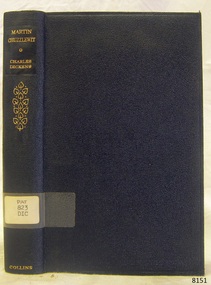 Flagstaff Hill Maritime Museum and Village
Book - A Fictional Story, Charles Dickens, Martin Chuzzlewit, 1910
... ...charles dickens...Charles Dickens was the foremost English novelist of the Victorian era. ...Martin Chuzzlewit. Author: Charles Dickens. Introduction by Kenneth Hayens. ...Charles Dickens...Charles Dickens was the foremost English novelist of the Victorian era. ...Charles Dickens (1812–1870) was one of the great English novelists of the Victorian era, famous for vivid characters, social criticism, and stories that were first published in serial form. He began as a journalist, rose to enormous popularity during his lifetime, and wrote major works such as Oliver Twist, David Copperfield, and Great Expectations. “Martin Chuzzlewit” is Charles Dickens’s sixth novel serialised 1843-1844, with a novel published in 1844 by Chapman and Hall. The themes are about selfishness, hypocrisy, and moral reform, its plot follows young Martin, his proud grandfather, the hypocritical architect Pecksniff, the loyal Tom Pinch, and the good humoured Mark Tapley. There is also a criminal subplot around Jonas Chuzzlewit. The core plot in short is where Martin becomes at odds with his miserly grandfather as he works for Pecksniff, becomes friends with Tom Pinch. He travels to America, is nearly ruined by a swindle, eventually returning to England. Several villains are ultimately exposed and punished while virtuous characters are rewarded.Martin Chuzzlewit. Author: Charles Dickens. Introduction by Kenneth Hayens. Publisher: Collins, London & Glasgow. Date: 1953. (See note section this document for more information on Edition). Blue leather hardcover with title on spine in gold lettering and pattern. The spine has a Library label and no Volume information only title and author.fictionCharles Dickens (1812–1870) was one of the great English novelists of the Victorian era, famous for vivid characters, social criticism, and stories that were first published in serial form. He began as a journalist, rose to enormous popularity during his lifetime, and wrote major works such as Oliver Twist, David Copperfield, and Great Expectations. “Martin Chuzzlewit” is Charles Dickens’s sixth novel serialised 1843-1844, with a novel published in 1844 by Chapman and Hall. The themes are about selfishness, hypocrisy, and moral reform, its plot follows young Martin, his proud grandfather, the hypocritical architect Pecksniff, the loyal Tom Pinch, and the good humoured Mark Tapley. There is also a criminal subplot around Jonas Chuzzlewit. The core plot in short is where Martin becomes at odds with his miserly grandfather as he works for Pecksniff, becomes friends with Tom Pinch. He travels to America, is nearly ruined by a swindle, eventually returning to England. Several villains are ultimately exposed and punished while virtuous characters are rewarded.book, the old curiosity shop, charles dickens, shipwrecked-coast, flagstaff-hill, flagstaff-hill-maritime-museum, warrnambool, maritime-museum, flagstaff-hill-maritime-village, pattison collection, warrnambool library, warrnambool mechanics’ institute, ralph eric pattison, corangamite regional library service, warrnambool city librarian, mechanics’ institute library, victorian library board, warrnambool books and records, warrnambool children’s library, great ocean road -
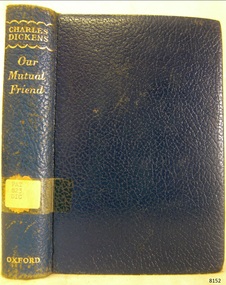 Flagstaff Hill Maritime Museum and Village
Book - A Fictional Story, Charles Dickens et al, Our Mutual Friend, 1987
... ...charles dickens...Charles Dickens was the foremost English novelist of the Victorian era. ...Our Mutual Friend. Author: Charles Dickens. Publisher: Oxford University Press, London. ...Charles Dickens...Charles Dickens was the foremost English novelist of the Victorian era. ...Charles Dickens (1812–1870) was one of the great English novelists of the Victorian era, famous for vivid characters, social criticism, and stories that were first published in serial form. He began as a journalist, rose to enormous popularity during his lifetime, and wrote major works such as Oliver Twist, David Copperfield, and Great Expectations. “Our Mutual Friend” is Charles Dickens’s final completed novel, and it’s a dark social satire about money, greed, inheritance, identity, and moral redemption in Victorian London. The plot begins with an apparent drowning, a dust heap fortune, and a marriage condition in a will. It then expands into a tangled set of stories involving the river Thames, corrupt social climbers, and several characters who are tested and changed by wealth.Our Mutual Friend. Author: Charles Dickens. Publisher: Oxford University Press, London. Date: 1987 (See note section this document for more information on Edition). Blue leather hardcover, Spine has Author and Title in gold lettering. The spine has a Library label and no Volume information.fictionCharles Dickens (1812–1870) was one of the great English novelists of the Victorian era, famous for vivid characters, social criticism, and stories that were first published in serial form. He began as a journalist, rose to enormous popularity during his lifetime, and wrote major works such as Oliver Twist, David Copperfield, and Great Expectations. “Our Mutual Friend” is Charles Dickens’s final completed novel, and it’s a dark social satire about money, greed, inheritance, identity, and moral redemption in Victorian London. The plot begins with an apparent drowning, a dust heap fortune, and a marriage condition in a will. It then expands into a tangled set of stories involving the river Thames, corrupt social climbers, and several characters who are tested and changed by wealth.book, the old curiosity shop, charles dickens, shipwrecked-coast, flagstaff-hill, flagstaff-hill-maritime-museum, warrnambool, maritime-museum, flagstaff-hill-maritime-village, pattison collection, warrnambool library, warrnambool mechanics’ institute, ralph eric pattison, corangamite regional library service, warrnambool city librarian, mechanics’ institute library, victorian library board, warrnambool books and records, warrnambool children’s library, great ocean road
