
Showing 7 items matching " australian outrage"
-
 Robin Boyd Foundation
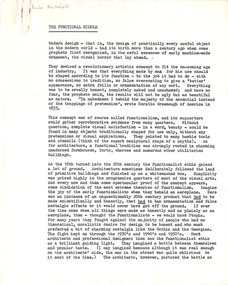
Document - Manuscript, Robin Boyd, The Functional Riddle
... ... Australian Outrage...Functionalism R.A.I.A. Australian Outrage Max Harris robin boyd manuscript "Lewis?" ...As the title suggests, Boyd explores the concept of Functionalism and questions the decline in popularity of the movement when Functionalism is still intertwined in contemporary design. Boyd challenges R.A.I.A.'s publication 'Australia Outrange' (a book that captures the unaesthetic aspects of Functionalism)The annotations indicate this was a lecture with slides.Typewritten, pencil edits / notes, quarto, 5 pages"Lewis?" Mitchell penciled on top left corner of first page, pencil notes on the left marginfunctionalism, r.a.i.a., australian outrage, max harris, robin boyd, manuscript -
 Eltham District Historical Society Inc
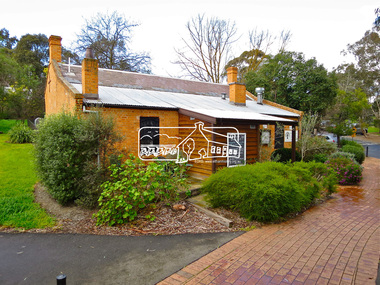
Photograph, Jim Connor, Shillinglaw Cottage, Panther Place, Eltham, 17 Aug 2015
... Shillinglaw Cottage looks stable enough now but it was the first colonial building in Australia to be pulled apart brick by brick and reconstructed on a different site. Community outrage prevented the council from demolishing the cottage in 1963 to make way for Eltham’s Shire Offices and local people paid for the cottage to be moved. ...Shillinglaw Cottage looks stable enough now but it was the first colonial building in Australia to be pulled apart brick by brick and reconstructed on a different site. Community outrage prevented the council from demolishing the cottage in 1963 to make way for Eltham’s Shire Offices and local people paid for the cottage to be moved. ...Shillinglaw Cottage looks stable enough now but it was the first colonial building in Australia to be pulled apart brick by brick and reconstructed on a different site. Community outrage prevented the council from demolishing the cottage in 1963 to make way for Eltham’s Shire Offices and local people paid for the cottage to be moved. Originally built by respected local builder George Stebbing in 1859, the cottage is typical of European farmhouses, but is constructed of handmade local bricks in a style known as “Flemish Bond.” The chequered pattern created by the burnt “header” bricks is a unique feature of this style. The cottage’s name comes from its long association with the Shillinglaw family, who loved there for more than eighty years. The Cottage is classified by the National Trust. Tomorrow's history documented todayeltham, jim connor collection, main road, shillinglaw cottage -
 Bendigo Historical Society Inc.
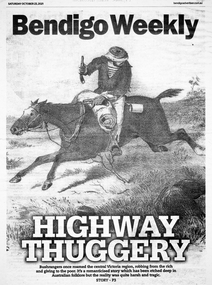
Newspaper - Bendigo Advertiser story Sat Oct 23 2021 entitled "Cop-killer caught out", Sat Oct 23 2021
... Australia, focusing on his involvement in violent crimes and his eventual capture. Gipsy Smith was involved in a shootout in central Victoria in 1856 that resulted in the death of Sergeant John McNally and the wounding of Constable John Moore. Smith and his accomplice escaped after the incident, which caused public outrage...Australia, focusing on his involvement in violent crimes and his eventual capture. Gipsy Smith was involved in a shootout in central Victoria in 1856 that resulted in the death of Sergeant John McNally and the wounding of Constable John Moore. Smith and his accomplice escaped after the incident, which caused public outrage ...This document recounts the story of Gipsy Smith (real name William Turner), a notorious bushranger in 19th-century Australia, focusing on his involvement in violent crimes and his eventual capture. Gipsy Smith was involved in a shootout in central Victoria in 1856 that resulted in the death of Sergeant John McNally and the wounding of Constable John Moore. Smith and his accomplice escaped after the incident, which caused public outrage due to McNally's popularity. Smith was part of a group of bushrangers who terrorized travelers, merchants, and goldfields communities with armed robberies and audacious hold-ups. Notable incidents included tying up and robbing multiple victims, and high-speed horse chases with police. Bushrangers like Smith were sometimes romanticized as rebellious figures, but the document emphasizes the real violence and fear they caused. Smith, originally William Turner, was a former convict from Tasmania who became a bushranger after escaping to Victoria during the gold rush. He was known for his bravado, often displaying weapons openly among gold diggers. Smith was eventually recognized and arrested in Maryborough after the murder, narrowly avoiding a murder conviction due to a technicality with his arrest warrant. He was sentenced to 15 years of hard labor for manslaughter. After serving his sentence, Smith was trusted with responsible work, such as driving cattle and managing a farm, suggesting a degree of rehabilitation. The story is part of a historical series highlighting notable events in the region’s past.Bendigo Advertiser story Sat Oct 23 2021 entitled "Cop-killer caught out" This item contains the following documents 3486.51a Bendigo Advertiser Page 1 Title Page - "Highway Thuggery" 3486.51b Bendigo Advertiser Page 3 article "Cop-killer caught out" the story of Gypsy Smith Bushrangerbendigo, gipsy smith bushranger -
 8th/13th Victorian Mounted Rifles Regimental Collection
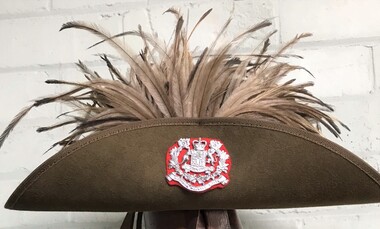
Headwear - Slouch hat Robertson
... outraged. Their relationship with the ‘black hat’ went back nearly a century. Submissions and argument ensued until the current workable arrangement was reached where a CO can authorize the wearing of berets but recognising that the slouch hat is the formal Australian Army head dress. ...outraged. Their relationship with the ‘black hat’ went back nearly a century. Submissions and argument ensued until the current workable arrangement was reached where a CO can authorize the wearing of berets but recognising that the slouch hat is the formal Australian Army head dress. military hat plumes VMR Robertson Slouch hat with emu plumes and silver Victorian Mounted Rifles badge over and red backing on turned up side. ...This slouch hat was worn at the 75th Anniversary of Beersheba parade at the Australian War Memorial, 31 October 1992. VMR Squadron 4th/19th Prince of Wales’s Light Horse provided the Honour Guard under the command of Captain Kelvin Robertson. It was the first occasion on which slouch hats and plumes were worn by the regiment. In 1992, all Corps in the Australian Army were ordered to wear slouch hats. This was a reaction to the high incidence of skin cancer in soldiers. Berets were thought to offer inadequate sun protection. Slouch hats were not practical in AFVs. Not all crewmen had access to helmets, so berets continued to be worn in vehicles. Slouch hats were worn for parade ground and general barracks work. RAAC acknowledged its Light Horse ancestry by wearing the emu plumes. Life continued in this way till 2010 when the wearing of berets was banned. Special Forces were exempt because it was argued they had a special relationship with the beret. Armoured Corps was outraged. Their relationship with the ‘black hat’ went back nearly a century. Submissions and argument ensued until the current workable arrangement was reached where a CO can authorize the wearing of berets but recognising that the slouch hat is the formal Australian Army head dress. Slouch hat with emu plumes and silver Victorian Mounted Rifles badge over and red backing on turned up side.military, hat, plumes, vmr, robertson -
 Returned Nurses RSL Sub-branch
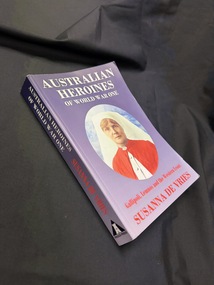
Book - Illustrated paperback book, Susanna De Vries, Australian heroines of World War One : Gallipoli, Lemnos and the Western Front, 2013
... Australian Nurses World War One WWI WW1 Louise Mack [Creed] Claire Trestrail [Swan] Muriel Wakeford Hilda Theresa Samsing Grace Margaret Wilson Anne Donnell Florence James-Wallace Elsie May Tranter 'This outstanding book tells the stories of eight courageous women through diaries, letters, photos, paintings and specially drawn maps. These women had the courage and strength for with the Anzacs are renowns and the compassion and tenderness that only a woman can bring. Sister Hilda Samsing from Melbourne became a whistleblower when nursing aboard the hospital ship Gascon, outraged ...'This outstanding book tells the stories of eight courageous women through diaries, letters, photos, paintings and specially drawn maps. These women had the courage and strength for with the Anzacs are renowns and the compassion and tenderness that only a woman can bring. Sister Hilda Samsing from Melbourne became a whistleblower when nursing aboard the hospital ship Gascon, outraged by the bungled evacuation of wounded Anzacs. She defied censorship and kept a very frank diary, reproduced here for the first time. In 1914, Louise Creed, a Sydney journalist, was caught in the besieged city of Antwerp and mad a hair-raising escape from a German firing squad. Brisbane's Grace Wilson, ordered to establish an emergency hospital on drought-stricken Lemnos Island, arrived there to find suffering Anzacs but no drinking water, tents or medical supplies. Grace and her nurses saved the lives of thousands who had been wounded at Lone Pine and The Nek. In France, Florence James-Wallace, Anne Donnell and Elsie Tranter nursed near the front line in the Casualty Clearing Stations, treating soldiers with hideous wounds or blinded by mustard gas. In 1918 they had to deal with an epidemic of Spanish flu, but their heroism was quickly forgotten. Two of these women received such meagre pensions, they died destitute. Publication of this book with its numerous illustrations has been facilitated by a generous donation from Dame Elizabeth Murdoch, keen that these stories become known to Australians of all ages.' [Summary from back cover] Has endnotes with full biographical details and an index.Paperback book with purple blue cover & spine, red and white text one cover & spine, black logo and text on spine and colour image of a woman in army nurses uniform on cover. Top and bottom corners of front cover curling.non-fiction'This outstanding book tells the stories of eight courageous women through diaries, letters, photos, paintings and specially drawn maps. These women had the courage and strength for with the Anzacs are renowns and the compassion and tenderness that only a woman can bring. Sister Hilda Samsing from Melbourne became a whistleblower when nursing aboard the hospital ship Gascon, outraged by the bungled evacuation of wounded Anzacs. She defied censorship and kept a very frank diary, reproduced here for the first time. In 1914, Louise Creed, a Sydney journalist, was caught in the besieged city of Antwerp and mad a hair-raising escape from a German firing squad. Brisbane's Grace Wilson, ordered to establish an emergency hospital on drought-stricken Lemnos Island, arrived there to find suffering Anzacs but no drinking water, tents or medical supplies. Grace and her nurses saved the lives of thousands who had been wounded at Lone Pine and The Nek. In France, Florence James-Wallace, Anne Donnell and Elsie Tranter nursed near the front line in the Casualty Clearing Stations, treating soldiers with hideous wounds or blinded by mustard gas. In 1918 they had to deal with an epidemic of Spanish flu, but their heroism was quickly forgotten. Two of these women received such meagre pensions, they died destitute. Publication of this book with its numerous illustrations has been facilitated by a generous donation from Dame Elizabeth Murdoch, keen that these stories become known to Australians of all ages.' [Summary from back cover] Has endnotes with full biographical details and an index.australian nurses, world war one, wwi, ww1, louise mack [creed], claire trestrail [swan], muriel wakeford, hilda theresa samsing, grace margaret wilson, anne donnell, florence james-wallace, elsie may tranter -
 Returned Nurses RSL Sub-branch
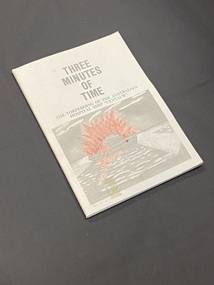
Book - Illustrated paperback book, Lower Tweed River Historical Society, Three minutes of time: the torpedoing of the Australian Hospital Ship "Centaur", 1991
... Australia. Before dawn on 14 May 1943, while on her second voyage, Centaur was torpedoed and sunk by a Japanese submarine off North Stradbroke Island, Queensland. The majority of the 332 aboard died in the attack; the 64 survivors had to wait for 36 hours before they were rescued. The attack resulted in public outrage ..."A compelling account of the sinking of the Australian Hospital Ship Centaur during World War II. Australian Hospital Ship (AHS) Centaur was a hospital ship which was attacked and sunk by a Japanese submarine off the coast of Queensland, Australia, on 14 May 1943. Of the 332 medical personnel and civilian crew aboard, 268 were killed. The Scottish-built vessel was launched in 1924 as a combination passenger liner/freighter and operated a trade route between Western Australia and Singapore via Indonesia, carrying passengers, cargo, and livestock. Centaur served in both civilian and military capabilities during her career, and she was involved in recovering German survivors of the engagement between Kormoran and HMAS Sydney. Following her early-1943 conversion to a hospital ship, Centaur served as a medical transport between New Guinea and Australia. Before dawn on 14 May 1943, while on her second voyage, Centaur was torpedoed and sunk by a Japanese submarine off North Stradbroke Island, Queensland. The majority of the 332 aboard died in the attack; the 64 survivors had to wait for 36 hours before they were rescued. The attack resulted in public outrage as it was considered to be a war crime. Protests were made by the Australian and British governments to Japan and efforts were made to discover the people responsible so they could be tried at a war crimes tribunal. Despite this, it was not until the 1970s that identity of the attacking submarine, I-177, became public. The reason for the attack is unknown, and the events surrounding the sinking of Centaur are controversial because it has been attested that she may have been in breach of the international conventions that should have protected her. Claims of discovery were made in 1995, but the wreck was later proven to be another ship. The wreck of Centaur was found on 20 December 2009. " (https://regimental-books.com.au/product/three-minutes-of-time-the-torpedoing-of-the-australian-hospital-ship-centaur/)Thin grey paperback book. Front cover has the title printed in dark grey text in the centre of the top half of the page, followed by the sub-title in smaller print. The lower half of the page has a square box with a light and dark grey illustration of a ship in the ocean. The ship has a stark red hospital cross on the front and is surrounded by red to sigify an explosion, which is also reflected in the water.non-fiction "A compelling account of the sinking of the Australian Hospital Ship Centaur during World War II. Australian Hospital Ship (AHS) Centaur was a hospital ship which was attacked and sunk by a Japanese submarine off the coast of Queensland, Australia, on 14 May 1943. Of the 332 medical personnel and civilian crew aboard, 268 were killed. The Scottish-built vessel was launched in 1924 as a combination passenger liner/freighter and operated a trade route between Western Australia and Singapore via Indonesia, carrying passengers, cargo, and livestock. Centaur served in both civilian and military capabilities during her career, and she was involved in recovering German survivors of the engagement between Kormoran and HMAS Sydney. Following her early-1943 conversion to a hospital ship, Centaur served as a medical transport between New Guinea and Australia. Before dawn on 14 May 1943, while on her second voyage, Centaur was torpedoed and sunk by a Japanese submarine off North Stradbroke Island, Queensland. The majority of the 332 aboard died in the attack; the 64 survivors had to wait for 36 hours before they were rescued. The attack resulted in public outrage as it was considered to be a war crime. Protests were made by the Australian and British governments to Japan and efforts were made to discover the people responsible so they could be tried at a war crimes tribunal. Despite this, it was not until the 1970s that identity of the attacking submarine, I-177, became public. The reason for the attack is unknown, and the events surrounding the sinking of Centaur are controversial because it has been attested that she may have been in breach of the international conventions that should have protected her. Claims of discovery were made in 1995, but the wreck was later proven to be another ship. The wreck of Centaur was found on 20 December 2009. " (https://regimental-books.com.au/product/three-minutes-of-time-the-torpedoing-of-the-australian-hospital-ship-centaur/) ahs centaur, australian hospital ship centaur, hospital ship -
 Returned Nurses RSL Sub-branch
Book - Paperback book, Thomas Keneally, The daughhters of Mars, 2012
... Australian men and women who voluntarily risked their lives for peace. Naomi and Sally Durance are daughters of a dairy farmer from the Macleay Valley. Bound together in complicity by what they consider a crime, when the Great War begins in 1914 they hope to submerge their guilt by leaving for Europe to nurse the tides of young wounded. They head for the Dardanelles on the hospital ship Archimedes. Their education in medicine, valour and human degradation continues on the Greek island of Lemnos, then on the Western Front. Everywhere they are confronted by new outrages ...In 1915 sisters Naomi and Sally Durance answer a call for nurses to join the war effort. They are escaping the family dairy farm in the Macleay Valley, and they carry a secret with them. Soon they are in Egypt, where they are put to work on the Red Cross hospital ship Archimedes as it patrols the Dardanelles. On Archimedes they witness Mars in all his ferocity, as he pummels soldiers in the massive, brutal metal brawl that is Gallipoli. Yet the sisters and their newfound nursing friends, with whom they will witness undreamt-of carnage and take care of unspeakably blighted men, find themselves courageous in the face of the horror. Naomi, Sally and their gang are then sent to northern Europe, where Naomi nurses in the visionary Australian Voluntary Hospital run by the committed and eccentric Lady Tarlton, and Sally in a casualty clearing station next to the Western Front. Here, again, they must face the inhumanity of war in its many terrible guises - where trench warfare and gas abound. But it is here, too, that the sisters meet the remarkable men with whom they wish to spend the rest of their lives. Inspired by journals of Australian nursing sisters who gave their all to the Great War effort and the men they nursed, The Daughters Of Mars is vast in scope yet extraordinarily intimate. This is Keneally at the height of his storytelling powers; a stunning tour de force to join the best of First World War literature, and one that casts a fresh light on the challenges faced by the Australian men and women who voluntarily risked their lives for peace. Naomi and Sally Durance are daughters of a dairy farmer from the Macleay Valley. Bound together in complicity by what they consider a crime, when the Great War begins in 1914 they hope to submerge their guilt by leaving for Europe to nurse the tides of young wounded. They head for the Dardanelles on the hospital ship Archimedes. Their education in medicine, valour and human degradation continues on the Greek island of Lemnos, then on the Western Front. Everywhere they are confronted by new outrages - gas, shellshock and broken men. Naomi encounters the wonderful, eccentric Lady Tarlton, who is founding a voluntary hospital near Boulogne; Sally serves in a casualty clearing station close to the front. They meet the men with whom they would wish to spend the rest of their lives. An extraordinary portrait of two ordinary young women[From Trove]Paperback book with a light olive cover and an image of a poppy field under the title and the author's name.fictionIn 1915 sisters Naomi and Sally Durance answer a call for nurses to join the war effort. They are escaping the family dairy farm in the Macleay Valley, and they carry a secret with them. Soon they are in Egypt, where they are put to work on the Red Cross hospital ship Archimedes as it patrols the Dardanelles. On Archimedes they witness Mars in all his ferocity, as he pummels soldiers in the massive, brutal metal brawl that is Gallipoli. Yet the sisters and their newfound nursing friends, with whom they will witness undreamt-of carnage and take care of unspeakably blighted men, find themselves courageous in the face of the horror. Naomi, Sally and their gang are then sent to northern Europe, where Naomi nurses in the visionary Australian Voluntary Hospital run by the committed and eccentric Lady Tarlton, and Sally in a casualty clearing station next to the Western Front. Here, again, they must face the inhumanity of war in its many terrible guises - where trench warfare and gas abound. But it is here, too, that the sisters meet the remarkable men with whom they wish to spend the rest of their lives. Inspired by journals of Australian nursing sisters who gave their all to the Great War effort and the men they nursed, The Daughters Of Mars is vast in scope yet extraordinarily intimate. This is Keneally at the height of his storytelling powers; a stunning tour de force to join the best of First World War literature, and one that casts a fresh light on the challenges faced by the Australian men and women who voluntarily risked their lives for peace. Naomi and Sally Durance are daughters of a dairy farmer from the Macleay Valley. Bound together in complicity by what they consider a crime, when the Great War begins in 1914 they hope to submerge their guilt by leaving for Europe to nurse the tides of young wounded. They head for the Dardanelles on the hospital ship Archimedes. Their education in medicine, valour and human degradation continues on the Greek island of Lemnos, then on the Western Front. Everywhere they are confronted by new outrages - gas, shellshock and broken men. Naomi encounters the wonderful, eccentric Lady Tarlton, who is founding a voluntary hospital near Boulogne; Sally serves in a casualty clearing station close to the front. They meet the men with whom they would wish to spend the rest of their lives. An extraordinary portrait of two ordinary young women[From Trove]wwi, ww1, world war one, world war 1, nurses, miles franklin award nominations, military nursing -- fiction, 1914-1918 -- australia -- fiction, historical fiction
