
Showing 24 items matching " boyd’s pottery"
-
 Glen Eira Historical Society
Article - Joyous Gard
... Boyd Park... Wahroonga Crescent... Murrumbeena... Caulfield City Council... Boyd’s pottery...Springthorpe Memorial Boroondara Cemetery Gilbert Web C Gilbert Webb The Wheel of Life Springthorpe John William Inglis Annie Constance Springthorpe Dorothy Springthorpe Annie Constance Springthorpe Enid Springthorpe Lancelot Springthorpe Guy Joyous Gard Doble Allan M Doble Mrs Allan Murrumbeena Primary School Springthorpe Reserve Joyous Gard Court Tyers S W Outer Circle Railway Boyd Park Wahroonga Crescent Murrumbeena Caulfield City Council Boyd’s pottery Linear Park Article Joyous Gard ...Two copies of a one page photocopy from the book Australian Sculptors (1980) by Ken Scarlett, describing the Springthorpe Memorial at Boroondara Cemetery, Kew. The file also includes a photocopy of an article by Chrys Spicer, date and source unknown, about the Springthorpe Memorial. The article includes seven photographs of the memorial. A research note by Chloe Stapleton, dated 31/08/12, suggests a possible source for this article. The file also includes a copy of a typed letter from Allan M Doble to Melbourne University Art Curator Heather Lowe, dated 24/03/1995, concerning the history of the Wheel of Life Sculpture originally located at Joyous Gard. The file also includes a copy of a typed letter, dated 19/05/1995, from Allan Doble to the Melbourne University Gallery with information about the Wheel of Life sculpture Also included in the file are photocopies of two Melway maps showing the location of Joyous Gard and Springthorpe Reserve with notes by Allan Doble, dated 24/03/1995. The file also includes eight coloured photographs (100mm x 150mm) of the Wheel of Life sculpture now located in the Medical School of the University of Melbourne, date and photographer unknown, probably 1990s. Negatives are also included.springthorpe memorial, boroondara cemetery, gilbert web c, gilbert webb, the wheel of life, springthorpe john william, inglis annie constance, springthorpe dorothy, springthorpe annie constance, springthorpe enid, springthorpe lancelot, springthorpe guy, joyous gard, doble allan m, doble mrs allan, murrumbeena primary school, springthorpe reserve, joyous gard court, tyers s w, outer circle railway, boyd park, wahroonga crescent, murrumbeena, caulfield city council, boyd’s pottery, linear park -
 Nillumbik Shire Council
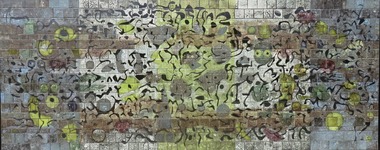
Public Art: Tom SANDERS (b.1925-d.2008 Vic, Aus), Tom Sanders, Wall of the Moon (Homage to Miro) - (Location: Eltham Town Square, Arthur Street, Eltham), 1968
... Sanders was a well-known local potter who worked for a time with David Boyd at the Martin Boyd Pottery, before returning to Melbourne where he had some association with Arthur Boyd, at the pottery in Murrumbeena. ...Sanders was a well-known local potter who worked for a time with David Boyd at the Martin Boyd Pottery, before returning to Melbourne where he had some association with Arthur Boyd, at the pottery in Murrumbeena. ...Sanders was a well-known local potter who worked for a time with David Boyd at the Martin Boyd Pottery, before returning to Melbourne where he had some association with Arthur Boyd, at the pottery in Murrumbeena. Sanders set up a studio in Eltham in the early 1950s and made the first of a series of architectural ceramic murals with painter and print maker Lawrence Daws in 1956. In 1957 he left for Europe and while there was inspired by the Spanish artist Joan Miro’s unconventional painting style and large scale murals, in particular Wall of the Moon (1957). After returning from his travels in Europe to Australia in 1964, he began to work solely on creating ceramic murals, some of which were commissioned for Southland Shopping Centre in Cheltenham, Melbourne, 1968 (now demolished), the National Mutual Centre, Melbourne,1964-5 (now demolished), Dee Why Library, Sydney 1966, Woden Valley High School, ACT, 1967, Tullamarine Airport Melbourne, 1969-70 (now demolished), Perth Concert Hall, 1971 and The University of Melbourne,1975 (with John Olsen). This mural is one of only three remaining in the public realm by Tom Sanders (the others are at the Perth Concert Hall (1971) and at the University of Melbourne (1975). Ceramic mural (earthenware tiles) consisting of a playful/organic abstract design similar in style to the Spanish artist Joan Miro. Shades of blue, yellow and black glazes are layered onto matte black and shiny bronze tiles. N/Amural, public art, earthernware, pottery, ceramics, glaze, eltham, ekphrasis2017, eltham town square, joan miro -
 Nillumbik Shire Council
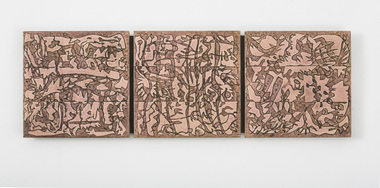
Ceramic (tiles): Tom SANDERS, Untitled, c. 1970s early
... Sanders was a well-known local potter who worked for a time with David Boyd at the Martin Boyd Pottery, before returning to Melbourne where he had some association with Arthur Boyd, at the pottery in Murrumbeena. ...Sanders was a well-known local potter who worked for a time with David Boyd at the Martin Boyd Pottery, before returning to Melbourne where he had some association with Arthur Boyd, at the pottery in Murrumbeena. ...Sanders was a well-known local potter who worked for a time with David Boyd at the Martin Boyd Pottery, before returning to Melbourne where he had some association with Arthur Boyd, at the pottery in Murrumbeena. Sanders set up a studio in Eltham in the early 1950s and made the first of a series of architectural ceramic murals with painter and print maker Lawrence Daws in 1956. After returning from his travels in Europe to Australia in 1964, he began to work solely on creating ceramic murals. Murals created during the second half of the 1960s and into the 70s can/could previously be found at Southland Shopping Centre in Cheltenham, Melbourne (1968) - now demolished, the National Mutual Centre, Melbourne (1964-5) - now demolished, Dee Why Library, Sydney (1966), Woden Valley High School, ACT (1967), Tullamarine Airport, Melbourne (1969, 1970), Perth Concert Hall (1971) and University of Melbourne (1975) (with John Olsen). Sanders has worked with many of Australia’s pre-eminent painters and ceramicists including Fred Williams and John Olsen. In 2015 Nillumbik Shire Council will be installing a mural by Sanders, donated by Tom and his family before Tom passed away in 2009, for the redevelopment of the Eltham Town Square. During the 1970s Sanders produced a number of tapestry designs. Highly respected artist and one time local resident Hilary Jackman worked with Sanders developing and adapting his tile designs to be translated into silk tapestries that were made in Japanese Mills of Kawashima Orimono in Kyoto. They were displayed in the big Hall in the NGV. Sanders gave these tiles to Jackman as payment for her work. The tapestries are based on abstract designs and have a cotton warp, and silk weft. The tiles are similar to Sanders’ other mural works such as Wall of the Moon (Homage to Miro) and the mural located in the Perth Concert Hall. It’s clear that Sanders was inspired by the Spanish surrealist artist Joan Miro from the 1930s in both philosophy and style. Miro’s work is quite playful, symbolic and imaginative. Miro’s preference for painting like this was “to express contempt for conventional painting methods, which he saw was a way of supporting a bourgeois society”. He "famously declared an "assassination of painting" in favor of upsetting the visual elements of established painting.” Three earthenware tiles, embossed with an abstract linear design. N/A -
 Duldig Studio museum + sculpture garden
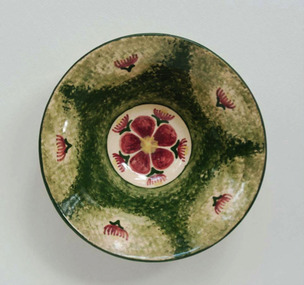
Ceramic, Karl Duldig, Gumnut Bowl by Karl Duldig c.1948, c. 1948
... The Duldigs studio pottery provides a counterpoint to the ceramics produced at Arthur Merric Boyd Pottery in Murrumbeena, which was established in 1944 by Arthur Boyd, John Perceval and Peter Herbst. ...The Duldigs studio pottery provides a counterpoint to the ceramics produced at Arthur Merric Boyd Pottery in Murrumbeena, which was established in 1944 by Arthur Boyd, John Perceval and Peter Herbst. ...Karl Duldig’s ceramic bowl is a particularly interesting example of Karl’s ability to creatively respond to a new environment with a fresh visual repertoire, in this case, the flowering Eucalyptus in a design reminiscent of traditional European folk art. The bowl is an excellent example of the utilitarian and decorative studio pottery produced by Karl and his wife Slawa Horowitz-Duldig between 1944 and 1960. Clay was an important medium for Karl. When he was forced to flee Austria for Switzerland, working with clay became a convenient medium; and he continued to expand his use of clay in Singapore. In Australia his work in clay extended from domestic hand-made pottery to public sculptures and architectural reliefs. In 1944 Duldig purchased a kiln, which was installed in the garage of the family’s St. Kilda flat, soon after a pottery wheel was acquired. It was the beginning of a cottage industry that supplemented the family income during the war years and beyond. Duldig initially sold his decorative ceramic wares through a local florist in St. Kilda, and subsequently through shops such as the Chez Nous French Art Shop (Howey Place) and Light and Shade (Royal Arcade), and the Primrose Pottery shop in Collins Street. The Primrose Pottery shop was an extremely important commercial outlet, and hub, for emerging artists, potters and designers from 1929 until 1974. Its proprietors Edith and Betty MacMillan worked closely with their suppliers, commissioning and taking items on consignment. In the post war period important Melbourne studio potters such as Allan Lowe, Arthur Boyd, John Perceval and Neil Douglas exhibited and sold domestic wares in the Primrose Pottery shop. The Duldigs studio pottery provides a counterpoint to the ceramics produced at Arthur Merric Boyd Pottery in Murrumbeena, which was established in 1944 by Arthur Boyd, John Perceval and Peter Herbst. The emphasis on painterly decoration was important and the AMB potters also produced simple household wares decorated with Australian flora and wildlife, for example Neil Douglas also made small bowls decorated with the fairy wrens, lyrebirds, gumnuts and eucalypts. Ann Carew 2016The Duldig Studio’s collection of ceramics has national aesthetic and historic significance. It contains a representative sample of works of art in ceramics created by Karl Duldig during his lifetime, including small sculptures, as well as functional and novelty items for the tourist market during the 1956 Melbourne Olympic Games. The artist’s working methods and the development of his practice are comprehensively demonstrated in the collection. This in-situ collection demonstrates the philosophy of the Vienna Secession and its inheritors that handcrafted, simple functional domestic wares might enrich both the lives of the maker and the user. This bowl is part of a collection of ceramics that has national historic significance in providing a rich illustration of an immigrant and artistic experience, and touching on the themes of settlement adaptation of artistic practice. The collection is also associated with places of cultural and historical significance in Melbourne such as the Primrose Pottery Shop, and the story of Australian studio ceramics in the post-war years. Ann Carew 2016Cream earthenware bowl with flowering gum motif and sponged green background.Duldig in script incised under. -
Federation University Historical Collection
Documents, Donald I. Johnston, Ballarat Technical Art School Principal's Reports, 1944-1949, 1944-1949
... pottery...treddle saw...Marion Beckwith...Queen's Air Training Corps...Kenneth Treadwell...ethel kift...Ballarat Ladies Art Association...Barbara Daykin...Sylvia Williams...Mary Fogarty...Winifred Beckwith...reginald J. Boyd...ballarat school of mines ballarat technical art school Donald I Johnston Valerie Robertson Ballarat Art Association Mollie Crockford Marion Beckwith Neville Reeves Ruth Mole Joan Walter Beryl Grinter John Proctor pottery treddle saw Marion Beckwith Queen's Air Training Corps Kenneth Treadwell ethel kift Ballarat Ladies Art Association Barbara Daykin Sylvia Williams Mary Fogarty Winifred Beckwith reginald J. Boyd ...Brown hard covered book with hand written reports from the Art Principal, Donald I. Johnston. 20 September 1944 - Convalescent Depot soldiers for tuition ballarat school of mines, ballarat technical art school, donald i johnston, valerie robertson, ballarat art association, mollie crockford, marion beckwith, neville reeves, ruth mole, joan walter, beryl grinter, john proctor, pottery, treddle saw, marion beckwith, queen's air training corps, kenneth treadwell, ethel kift, ballarat ladies art association, barbara daykin, sylvia williams, mary fogarty, winifred beckwith, reginald j. boyd, ballarat teachers' college, teachers' training college ballarat, iris mitchell, peggie crosbie, grigg, kellock, evan jones, repatriation, ballarat exhibition commissioner, betty brown, red cross society, ken palmer, prime minister's avenue, ben chifley, bryan pddle, neville bunning, bernard bryan, richard o'neill, neville reeves, jack proctor, r. reed, f.g. proctor -
 Eltham District Historical Society Inc
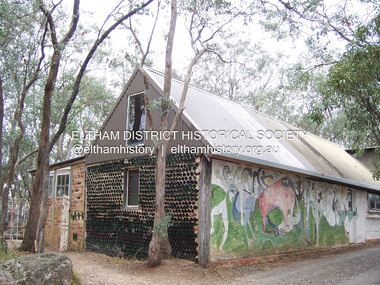
Photograph - Digital Photograph, Marguerite Marshall, Art Gallery at Clifton Pugh's Artists' Colony, Dunmoochin, Barreenong Road, Cottles Bridge, 5 February 2008
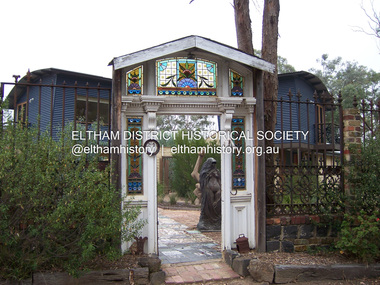
... Boyd and Mirka Mora. A potters’ community, started by Peter and Helen Laycock with Alma Shanahan, held monthly exhibitions in the 1960s, attracting local, interstate and international visitors – with up to 500 attending at a time.3 Most artists sold their properties and moved away. But two of the original artists remained into the new millennium as did relative newcomer Heja Chong who built on Pugh’s property (now owned by the Dunmoochin Foundation). In 1984 Chong brought the 1000-year-old Japanese Bizan pottery...Boyd and Mirka Mora. A potters’ community, started by Peter and Helen Laycock with Alma Shanahan, held monthly exhibitions in the 1960s, attracting local, interstate and international visitors – with up to 500 attending at a time.3 Most artists sold their properties and moved away. But two of the original artists remained into the new millennium as did relative newcomer Heja Chong who built on Pugh’s property (now owned by the Dunmoochin Foundation). In 1984 Chong brought the 1000-year-old Japanese Bizan pottery ...Art Gallery with mural painted by Clifton Pugh (1924-1990) at his Artists' Colony, Dunmoochin, Barreenong Road, Cottles Bridge. Following military service in the second world war, Clifton Pugh studied under artist Sir William Dargie at the National Gallery School in Melbourne as well as Justus Jorgensen, founder of Montsalvat. For a while he lived on the dole but also worked packing eggs for the Belot family saving sufficient to purchase six acres (2.4 ha) of land at Barreenong Road, Cottles Bridge. He accumulated more land and persuaded several other artists and friends to buy land nearby, resulting in a property of approximately 200 acres, stablishing it as one of the first artistic communes in Australia alongside Montsalvat in Eltham. It was around 1951 that Pugh felt he had '"done moochin' around" and so the name of the property evolved. He bought timber from Alistair Knox to build his house on the crest of a hill. Inspired by local goldminer's huts, it was a one room wattle-and-daub structure with dirt floor. Over the years it expanded with thick adobe walls made from local clay, high ceilings and stone floors. All materials other than the local earth were sourced from second hand materials, most found at wreckers' yards. Artists from across the nation were drawn to Dunmoochin, with several setting up houses and shacks on the property, maintaining their independence but sharing their artistic zeal. Artists who worked or resided at Dunmoochin included Mirka Mora, John Perceval, Albert Tucker, Fred Williams, Charles Blackman, Arthur Boyd and John Olsen. In 2002, Pugh's house along with its treasure trove of art and a library of some 20,000 books was destroyed by fire. Traces of Pugh's home remain with the presence of the Victorian doorframe archway with leadlight of intricate design, procured from a demolished Melbourne mansion; and two bronze life-sized female statues created by Pugh and cast by Matcham Skipper. In place of Pugh's house rose two double-storey mud-brick artists' studios topped with corrugated iron rooves curved like the wings of a bird with accommodation for seven. The original studios, gallery and other buildings survived the fire. Covered under Heritage Overlay, Nillumbik Planning Scheme. Published: Nillumbik Now and Then / Marguerite Marshall 2008; photographs Alan King with Marguerite Marshall.; p153 It’s not surprising that artist Clifton Pugh was drawn to Cottles Bridge to establish his artists’ colony Dunmoochin. Undisturbed by the clamour of modern life at Barreenong Road, Pugh was surrounded by the Australian bush he loved, and where his ashes were later scattered. The 200 acres (81ha) of bushland, broken by glimpses of rolling hills, has more than 50 species of orchids and Pugh shared his property with native animals including kangaroos, emus, phascogales, wombats, and diverse bird life. Pugh encouraged these creatures to join him in the bush by creating, with Monash University, a holding station where the animals were raised. Dunmoochin inspired Pugh for such paintings as in a book on orchids and the Death of a Wombat series.1 But his love for the bush was accompanied by the fear that Europeans were destroying it and much of his painting illustrated this fear and his plea for its conservation.2 However it was his house rather than the surrounding bush that was to be destroyed. Tragically in 2002 Pugh’s house, with its treasure of art and library of 20,000 art books, was destroyed by fire. Traces of the beauty of Pugh’s home still remain, however, in the magnificent Victorian doorframe archway with leadlight of intricate design procured from a demolished Melbourne mansion; and two bronze life-sized female statues created by Pugh and cast by Matcham Skipper. Now in place of Pugh’s house, are two double-storey mud-brick artists’ studios topped with corrugated roofs curved like birds’ wings, with accommodation for seven. The original studios, gallery and other buildings remain.3 Pugh grew up on his parents’ hobby farm at Briar Hill and attended the Briar Hill Primary School, then Eltham High School and later Ivanhoe Grammar. At 15 he became a copy boy for the Radio Times newspaper, then worked as a junior in a drafting office. Pugh was to have three wives and two sons. After serving in World War Two in New Guinea and Japan, Pugh studied under artist Sir William Dargie, at the National Gallery School in Melbourne.4 Another of his teachers was Justus Jörgensen, founder of Montsalvat the Eltham Artists’ Colony. Pugh lived on the dole for a while and paid for his first six acres (2.4ha) at Barreenong Road by working as an egg packer for the Belot family. Pugh accumulated more land and persuaded several other artists and friends to buy land nearby, resulting in the 200 acre property. They, too, purchased their land from the Belot family by working with their chickens. Around 1951 Pugh felt he had ‘Done moochin’ around’ and so the name of his property was born. Pugh bought some used timber from architect Alistair Knox to build his house on the crest of a hill. Inspired by local goldminers’ huts it was a one-room wattle-and-daub structure with a dirt floor. It was so small that the only room he could find for his telephone was on the fork of a tree nearby.5 Over the years the mud-brick house grew to 120 squares in the style now synonymous with Eltham. It had thick adobe walls (sun-dried bricks) made from local clay, high ceilings and stone floors with the entire structure made of second-hand materials – most found at wreckers’ yards. Pugh’s first major show in Melbourne in 1957, established him as a distinctive new painter, breaking away from the European tradition ‘yet not closely allied to any particular school of Australian painting’.6 Pugh became internationally known and was awarded the Order of Australia. He won the Archibald Prize for portraiture three times, although he preferred painting the bush and native animals. In 1990 not long before he died, Pugh was named the Australian War Memorial’s official artist at the 75th anniversary of the landing at Gallipoli. Today one of Pugh’s legacies is the Dunmoochin Foundation, which gives seven individual artists or couples and environmental researchers the chance to work in beautiful and peaceful surroundings, usually for a year. By November 2007, more than 80 people had taken part, and the first disabled artist had been chosen to reside in a new studio with disabled access.1 In 1989, not long before Pugh died in 1990 of a heart attack at age 65, he established the Foundation with La Trobe University and the Victorian Conservation Trust now the Trust for Nature. Pugh’s gift to the Australian people – of around 14 hectares of bushland and buildings and about 550 art works – is run by a voluntary board of directors, headed by one of his sons, Shane Pugh. La Trobe University in Victoria stores and curates the art collection and organises its exhibition around Australia.2 The Foundation aims to protect and foster the natural environment and to provide residences, studios and community art facilities at a minimal cost for artists and environmental researchers. They reside at the non-profit organisation for a year at minimal cost. The buildings, some decorated with murals painted by Pugh and including a gallery, were constructed by Pugh, family and friends, with recycled as well as new materials and mud-bricks. The Foundation is inspired by the tradition begun by the Dunmoochin Artists’ Cooperative which formed in the late 1950s as one of the first artistic communes in Australia. Members bought the land collaboratively and built the seven dwellings so that none could overlook another. But, in the late 1960s, the land was split into private land holdings, which ended the cooperative. Dunmoochin attracted visits from the famous artists of the day including guitarists John Williams and Segovia; singer and comedian Rolf Harris; comedian Barry Humphries; and artists Charles Blackman, Arthur Boyd and Mirka Mora. A potters’ community, started by Peter and Helen Laycock with Alma Shanahan, held monthly exhibitions in the 1960s, attracting local, interstate and international visitors – with up to 500 attending at a time.3 Most artists sold their properties and moved away. But two of the original artists remained into the new millennium as did relative newcomer Heja Chong who built on Pugh’s property (now owned by the Dunmoochin Foundation). In 1984 Chong brought the 1000-year-old Japanese Bizan pottery method to Dunmoochin. She helped build (with potters from all over Australia) the distinctive Bizan-style kiln, which fires pottery from eight to 14 days in pine timber, to produce the Bizan unglazed and simple subdued style. The kiln, which is rare in Australia, is very large with adjoining interconnected ovens of different sizes, providing different temperatures and firing conditions. Frank Werther, who befriended Pugh as a fellow student at the National Gallery Art School in Melbourne, built his house off Barreenong Road in 1954. Werther is a painter of the abstract and colourist style and taught art for about 30 years. Like so many in the post-war years in Eltham Shire, as it was called then, Werther built his home in stages using mud-brick and second-hand materials. The L-shaped house is single-storey but two-storey in parts with a corrugated-iron pitched roof. The waterhole used by the Werthers for their water supply is thought to be a former goldmining shaft.4 Alma Shanahan at Barreenong Road was the first to join Pugh around 1953. They also met at the National Gallery Art School and Shanahan at first visited each weekend to work, mainly making mud-bricks. She shared Pugh’s love for the bush, but when their love affair ended, she designed and built her own house a few hundred yards (metres) away. The mud-brick and timber residence, made in stages with local materials, is rectangular, single-storey with a corrugated-iron roof. As a potter, Shanahan did not originally qualify as an official Cooperative member.This collection of almost 130 photos about places and people within the Shire of Nillumbik, an urban and rural municipality in Melbourne's north, contributes to an understanding of the history of the Shire. Published in 2008 immediately prior to the Black Saturday bushfires of February 7, 2009, it documents sites that were impacted, and in some cases destroyed by the fires. It includes photographs taken especially for the publication, creating a unique time capsule representing the Shire in the early 21st century. It remains the most recent comprehenesive publication devoted to the Shire's history connecting local residents to the past. nillumbik now and then (marshall-king) collection, art gallery, clifton pugh, dunmoochin, cottlesbridge, cottles bridge, barreenong road -
 Eltham District Historical Society Inc
Photograph - Digital Photograph, Marguerite Marshall, Doorway of Clifton Pugh's former house at Dunmoochin, Barreenong Road, Cottles Bridge, 5 February 2008
... Boyd and Mirka Mora. A potters’ community, started by Peter and Helen Laycock with Alma Shanahan, held monthly exhibitions in the 1960s, attracting local, interstate and international visitors – with up to 500 attending at a time.3 Most artists sold their properties and moved away. But two of the original artists remained into the new millennium as did relative newcomer Heja Chong who built on Pugh’s property (now owned by the Dunmoochin Foundation). In 1984 Chong brought the 1000-year-old Japanese Bizan pottery...Boyd and Mirka Mora. A potters’ community, started by Peter and Helen Laycock with Alma Shanahan, held monthly exhibitions in the 1960s, attracting local, interstate and international visitors – with up to 500 attending at a time.3 Most artists sold their properties and moved away. But two of the original artists remained into the new millennium as did relative newcomer Heja Chong who built on Pugh’s property (now owned by the Dunmoochin Foundation). In 1984 Chong brought the 1000-year-old Japanese Bizan pottery ...Following military service in the second world war, Clifton Pugh studied under artist Sir William Dargie at the National Gallery School in Melbourne as well as Justus Jorgensen, founder of Montsalvat. For a while he lived on the dole but also worked packing eggs for the Belot family saving sufficient to purchase six acres (2.4 ha) of land at Barreenong Road, Cottles Bridge. He accumulated more land and persuaded several other artists and friends to buy land nearby, resulting in a property of approximately 200 acres, stablishing it as one of the first artistic communes in Australia alongside Montsalvat in Eltham. It was around 1951 that Pugh felt he had '"done moochin' around" and so the name of the property evolved. He bought timber from Alistair Knox to build his house on the crest of a hill. Inspired by local goldminer's huts, it was a one room wattle-and-daub structure with dirt floor. Over the years it expanded with thick adobe walls made from local clay, high ceilings and stone floors. All materials other than the local earth were sourced from second hand materials, most found at wreckers' yards. Artists from across the nation were drawn to Dunmoochin, with several setting up houses and shacks on the property, maintaining their independence but sharing their artistic zeal. Artists who worked or resided at Dunmoochin included Mirka Mora, John Perceval, Albert Tucker, Fred Williams, Charles Blackman, Arthur Boyd and John Olsen. In 2002, Pugh's house along with its treasure trove of art and a library of some 20,000 books was destroyed by fire. Traces of Pugh's home remain with the presence of the Victorian doorframe archway with leadlight of intricate design, procured from a demolished Melbourne mansion; and two bronze life-sized female statues created by Pugh and cast by Matcham Skipper. In place of Pugh's house rose two double-storey mud-brick artists' studios topped with corrugated iron rooves curved like the wings of a bird with accommodation for seven. The original studios, gallery and other buildings survived the fire. Covered under Heritage Overlay, Nillumbik Planning Scheme. Published: Nillumbik Now and Then / Marguerite Marshall 2008; photographs Alan King with Marguerite Marshall.; p155 It’s not surprising that artist Clifton Pugh was drawn to Cottles Bridge to establish his artists’ colony Dunmoochin. Undisturbed by the clamour of modern life at Barreenong Road, Pugh was surrounded by the Australian bush he loved, and where his ashes were later scattered. The 200 acres (81ha) of bushland, broken by glimpses of rolling hills, has more than 50 species of orchids and Pugh shared his property with native animals including kangaroos, emus, phascogales, wombats, and diverse bird life. Pugh encouraged these creatures to join him in the bush by creating, with Monash University, a holding station where the animals were raised. Dunmoochin inspired Pugh for such paintings as in a book on orchids and the Death of a Wombat series.1 But his love for the bush was accompanied by the fear that Europeans were destroying it and much of his painting illustrated this fear and his plea for its conservation.2 However it was his house rather than the surrounding bush that was to be destroyed. Tragically in 2002 Pugh’s house, with its treasure of art and library of 20,000 art books, was destroyed by fire. Traces of the beauty of Pugh’s home still remain, however, in the magnificent Victorian doorframe archway with leadlight of intricate design procured from a demolished Melbourne mansion; and two bronze life-sized female statues created by Pugh and cast by Matcham Skipper. Now in place of Pugh’s house, are two double-storey mud-brick artists’ studios topped with corrugated roofs curved like birds’ wings, with accommodation for seven. The original studios, gallery and other buildings remain.3 Pugh grew up on his parents’ hobby farm at Briar Hill and attended the Briar Hill Primary School, then Eltham High School and later Ivanhoe Grammar. At 15 he became a copy boy for the Radio Times newspaper, then worked as a junior in a drafting office. Pugh was to have three wives and two sons. After serving in World War Two in New Guinea and Japan, Pugh studied under artist Sir William Dargie, at the National Gallery School in Melbourne.4 Another of his teachers was Justus Jörgensen, founder of Montsalvat the Eltham Artists’ Colony. Pugh lived on the dole for a while and paid for his first six acres (2.4ha) at Barreenong Road by working as an egg packer for the Belot family. Pugh accumulated more land and persuaded several other artists and friends to buy land nearby, resulting in the 200 acre property. They, too, purchased their land from the Belot family by working with their chickens. Around 1951 Pugh felt he had ‘Done moochin’ around’ and so the name of his property was born. Pugh bought some used timber from architect Alistair Knox to build his house on the crest of a hill. Inspired by local goldminers’ huts it was a one-room wattle-and-daub structure with a dirt floor. It was so small that the only room he could find for his telephone was on the fork of a tree nearby.5 Over the years the mud-brick house grew to 120 squares in the style now synonymous with Eltham. It had thick adobe walls (sun-dried bricks) made from local clay, high ceilings and stone floors with the entire structure made of second-hand materials – most found at wreckers’ yards. Pugh’s first major show in Melbourne in 1957, established him as a distinctive new painter, breaking away from the European tradition ‘yet not closely allied to any particular school of Australian painting’.6 Pugh became internationally known and was awarded the Order of Australia. He won the Archibald Prize for portraiture three times, although he preferred painting the bush and native animals. In 1990 not long before he died, Pugh was named the Australian War Memorial’s official artist at the 75th anniversary of the landing at Gallipoli. Today one of Pugh’s legacies is the Dunmoochin Foundation, which gives seven individual artists or couples and environmental researchers the chance to work in beautiful and peaceful surroundings, usually for a year. By November 2007, more than 80 people had taken part, and the first disabled artist had been chosen to reside in a new studio with disabled access.1 In 1989, not long before Pugh died in 1990 of a heart attack at age 65, he established the Foundation with La Trobe University and the Victorian Conservation Trust now the Trust for Nature. Pugh’s gift to the Australian people – of around 14 hectares of bushland and buildings and about 550 art works – is run by a voluntary board of directors, headed by one of his sons, Shane Pugh. La Trobe University in Victoria stores and curates the art collection and organises its exhibition around Australia.2 The Foundation aims to protect and foster the natural environment and to provide residences, studios and community art facilities at a minimal cost for artists and environmental researchers. They reside at the non-profit organisation for a year at minimal cost. The buildings, some decorated with murals painted by Pugh and including a gallery, were constructed by Pugh, family and friends, with recycled as well as new materials and mud-bricks. The Foundation is inspired by the tradition begun by the Dunmoochin Artists’ Cooperative which formed in the late 1950s as one of the first artistic communes in Australia. Members bought the land collaboratively and built the seven dwellings so that none could overlook another. But, in the late 1960s, the land was split into private land holdings, which ended the cooperative. Dunmoochin attracted visits from the famous artists of the day including guitarists John Williams and Segovia; singer and comedian Rolf Harris; comedian Barry Humphries; and artists Charles Blackman, Arthur Boyd and Mirka Mora. A potters’ community, started by Peter and Helen Laycock with Alma Shanahan, held monthly exhibitions in the 1960s, attracting local, interstate and international visitors – with up to 500 attending at a time.3 Most artists sold their properties and moved away. But two of the original artists remained into the new millennium as did relative newcomer Heja Chong who built on Pugh’s property (now owned by the Dunmoochin Foundation). In 1984 Chong brought the 1000-year-old Japanese Bizan pottery method to Dunmoochin. She helped build (with potters from all over Australia) the distinctive Bizan-style kiln, which fires pottery from eight to 14 days in pine timber, to produce the Bizan unglazed and simple subdued style. The kiln, which is rare in Australia, is very large with adjoining interconnected ovens of different sizes, providing different temperatures and firing conditions. Frank Werther, who befriended Pugh as a fellow student at the National Gallery Art School in Melbourne, built his house off Barreenong Road in 1954. Werther is a painter of the abstract and colourist style and taught art for about 30 years. Like so many in the post-war years in Eltham Shire, as it was called then, Werther built his home in stages using mud-brick and second-hand materials. The L-shaped house is single-storey but two-storey in parts with a corrugated-iron pitched roof. The waterhole used by the Werthers for their water supply is thought to be a former goldmining shaft.4 Alma Shanahan at Barreenong Road was the first to join Pugh around 1953. They also met at the National Gallery Art School and Shanahan at first visited each weekend to work, mainly making mud-bricks. She shared Pugh’s love for the bush, but when their love affair ended, she designed and built her own house a few hundred yards (metres) away. The mud-brick and timber residence, made in stages with local materials, is rectangular, single-storey with a corrugated-iron roof. As a potter, Shanahan did not originally qualify as an official Cooperative member.This collection of almost 130 photos about places and people within the Shire of Nillumbik, an urban and rural municipality in Melbourne's north, contributes to an understanding of the history of the Shire. Published in 2008 immediately prior to the Black Saturday bushfires of February 7, 2009, it documents sites that were impacted, and in some cases destroyed by the fires. It includes photographs taken especially for the publication, creating a unique time capsule representing the Shire in the early 21st century. It remains the most recent comprehenesive publication devoted to the Shire's history connecting local residents to the past. nillumbik now and then (marshall-king) collection, art gallery, clifton pugh, dunmoochin, cottlesbridge, cottles bridge, barreenong road -
 Bendigo Historical Society Inc.
Ceramic - Raynham Vase, white semicircular, Raynham Ceramic Pty. Ltd, 1948 - 1964
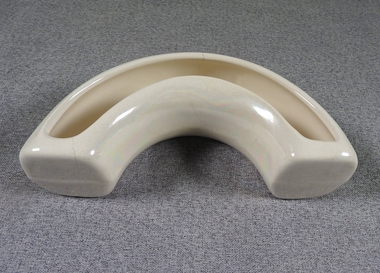
... He had a second pottery at 237 East Boundary Rd East Bentleigh and also operated from Carey St East Bentleigh after buying out Guy Boyd. ...He had a second pottery at 237 East Boundary Rd East Bentleigh and also operated from Carey St East Bentleigh after buying out Guy Boyd. ...Raynham (Ray) Cook started his pottery in 1946 in the garage in the back yard of 218 Murrumbeena Rd East Bentleigh Victoria and moved to a factory in North Rd East Bentleigh in 1948. The company was named Raynham Ceramic Pty. Ltd. after his first name and produced all sorts of light weight slipware. some speckled lustreware vases. He had a second pottery at 237 East Boundary Rd East Bentleigh and also operated from Carey St East Bentleigh after buying out Guy Boyd. Ray was a pioneer in Australia of the electric pottery kiln which was very novel in the 1940's Ray's greatest attribute was probably his design skills. All Raynham pottery was his designs. One of his key employees was "Paddy" McDonald who undertook the majority of the thrown pottery. Ray Cook sold the company to Bendigo Pottery in the early 1970's who continued to use the Raynham brand for a short time. Most examples by that company have the same form but are unmarked.White semi- circular small vase with a metallic shimmering finish (lustreware) . A fine seven centremetre crack in it. 208 in pencil on the baseray cook, raynham ceramic pty. ltd., slipcast vases, paddy mcdonald, bendigo pottery -
 Bendigo Historical Society Inc.
Booklet - ARTHUR BOYD: "seven persistent images"
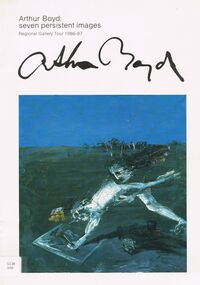
... Boyd (1920-1999) was a member of the Antipodean School of Artists. He painted in the impressionist and expressionist styles. Known for his Australian landscapes, often featuring social and moral themes. He also produced pottery...Boyd (1920-1999) was a member of the Antipodean School of Artists. He painted in the impressionist and expressionist styles. Known for his Australian landscapes, often featuring social and moral themes. He also produced pottery ...Arthur Boyd (1920-1999) was a member of the Antipodean School of Artists. He painted in the impressionist and expressionist styles. Known for his Australian landscapes, often featuring social and moral themes. He also produced pottery and sculptures.A catalogue titled ' Arthur Boyd: seven persistent images. Regional Gallery Tour 1986-87. Published by the Australian National Gallery 1985. 16 pgs. Ill.person, individual, arthur boyd, aurthur boyd, person, individual, male, artwork, australian art, artist, australian national gallery, exhibition, regional gallery tour, arthur boyd gift, paintings, drawings, landscapes, painter, painting -
 Bendigo Historical Society Inc.
Document - MINING REPORTS - MINING RECORD FEB., 1862
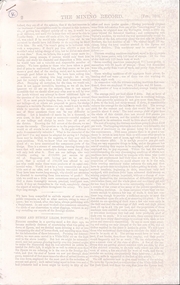
... DOCUMENT Gold Mining Reports Mining Record Feb 1862 Bell's Life Wellington Hotel Botanical Gardens Mitchell Gardens Bird-in-Hand Independent Co Ballarat Co Perserverance Co North Star co All England Co Macleod Co Mather and Co Gold Washing Co Bendigo Valley Co Robey And Co Hobbs and Co Taylor's Lewis and Co Henwood and Co Bullock and Co Davey and Co Webb and Lathlean The Welshman's Bon Accord John Thomas's Caledonian Co Webster Hrdy Bros McEwen and Co The Big Engine Co Epsom Huntly and Ironstone Hill Co 'The Thames' steamer Whitely and Co Cambridge Co Victoria Co Dower M'Intosh and Co Thomas and Davies Aurora Co Brett's Thomas Bros Mitchell Brothers Ballarat Co North Star Co All England Co Mr B G Davies Mr Ramsay Dr Evans Tarrangower Times Mr Humffray Clunes Co Mr Courtin Mr Lawrence Port Phillip and Colonial Gold Mining Co Mr Bland R Brough Smith John S McNair John Mathieson Mr R O Smith Joseph Millen Thomas Kaye John Basset William Cook James Cousley John Hill Robert Hollinger Thomas Houston George Loudon William Manning John Matthews John McEwen Thomas Milligan John Moorhead Robert Moorhead David Murdoch Andrew Murdoch Joseph Nevin Edward O'Malley Wm Newton Paul James Reid Samuel Robinson Jesse Selwood James Shand William Woods Catherine United Claimholders Star Reef Co Sailor's Gully Co Churchill Davidson Wm Wilson John Jervis James Patterson John Carmont George M'Naughten Alexander Wiseman James Houston M'Lennan Clark Thomas Hollick James Alfred Bowles John Lampert Francis Palmetser Nichols Little Pumping Engine Co M'Niely Morrison Waight John Coote Robert Hamilton William Wilson John Jervis Southern Cross Co Ladam's Claim Knobel Bird Philip Ladams James Anderson Cordon Ashley Godwin Burkamp John Lomasney James Bryant Matthew Langridge Benjamin Exley J R Finlayson Wormold McCartney Schrade Schumacher George Barry James Patten Peter Speares Thomas Caley Shadbolt John Lomasney Peat Kenely McGenely Egan Exwell James Winterbottom John Winterbottom William Jury Jonathan Laidman John Pile Simon Howard Peter Morris Bignall Charles Robison Ferguson Thomas Steers Adolphe Witts Albert Berchdolt Richard Urand Thomas Watson Klemm Boyd Abbot Peterson Taylor Henry Day Walter Wallan Brown Grennan Day Young Mr Beckwith Joseph Thomson Nelson Reef Quartz Mining Co Photocopy of pages 2, 3, 4, 6 to 10 of The Mining Record, Feb. 1862. Items mentioned are:- Epsom and Huntly Leads, Pottery ...Photocopy of pages 2, 3, 4, 6 to 10 of The Mining Record, Feb. 1862. Items mentioned are:- Epsom and Huntly Leads, Pottery Flat, & c, Parliamentary Intelligence, Deep Sinking On Quartz Reefs, The Comet Company (Formerly Cooper's Little Redan), Hustler's Reef Quartz Mining & Drainage Company, Sailors' Gully Quartz Mining Company, Star Reef, Sailor's Gully, Bendigo, Star Reef Quartz Mining Company's Claim, Wilson & Co's Claim, Murdoch and Co's Claim, Hollick and Co.'s Claim, Cook and Co.'s Claim, Coote and Co.'s Claim, Sailor's gully quartz Mining Company's Claim, Garden Gully Reef, Knobel & Co.'s Claim, Ladams and Co.'s Claim, Southern Cross Company, The Rainbow Company, Barry and Co.'s Claim, Union Company's Claim, Winterbottom and Co.s Claim, Jury and Co.'s Claim, Piles and Co.'s Claim, Steers and Co.'s Claim, Watson and Co.'s Claim, Coles and Co.'s Claim, James and Co.'s Claim, Morgan, Kirchner and Co.'s Claim, Boyd and Co.'s Claim, Shanks and Co.'s Claim, Day and Co.'s Claim, Brown and Co.'s Claim, St. Mungo Quartz Mining Company and the Nelson Reef Quartz Mining Company.document, gold, mining reports, mining record feb 1862, bell's life, wellington hotel, botanical gardens, mitchell gardens, bird-in-hand, independent co, ballarat co, perserverance co, north star co, all england co, macleod co, mather and co, gold washing co, bendigo valley co, robey and co, hobbs and co, taylor's, lewis and co, henwood and co, bullock and co, davey and co, webb and lathlean, the welshman's, bon accord, john thomas's, caledonian co, webster, hrdy bros, mcewen and co, the big engine co, epsom huntly and ironstone hill co, 'the thames' steamer, whitely and co, cambridge co, victoria co, dower m'intosh and co, thomas and davies, aurora co, brett's, thomas bros, mitchell brothers, ballarat co, north star co, all england co, mr b g davies, mr ramsay, dr evans, tarrangower times, mr humffray, clunes co, mr courtin, mr lawrence, port phillip and colonial gold mining co, mr bland, r brough smith, john s mcnair, john mathieson, mr r o smith, joseph millen, thomas kaye, john basset, william cook, james cousley, john hill, robert hollinger, thomas houston, george loudon, william manning, john matthews, john mcewen, thomas milligan, john moorhead, robert moorhead, david murdoch, andrew murdoch, joseph nevin, edward o'malley, wm newton paul, james reid, samuel robinson, jesse selwood, james shand, william woods, catherine united claimholders, star reef co, sailor's gully co, churchill davidson, wm wilson, john jervis, james patterson, john carmont, george m'naughten, alexander wiseman, james houston, m'lennan, clark, thomas hollick, james alfred bowles, john lampert, francis palmetser, nichols, little pumping engine co, m'niely, morrison, waight, john coote, robert hamilton, william wilson, john jervis, southern cross co, ladam's claim, knobel, bird, philip ladams, james anderson, cordon, ashley, godwin, burkamp, john lomasney, james bryant, matthew langridge, benjamin exley, j r finlayson, wormold, mccartney, schrade, schumacher, george barry, james patten, peter speares, thomas caley, shadbolt, john lomasney, peat, kenely, mcgenely, egan, exwell, james winterbottom, john winterbottom, william jury, jonathan laidman, john pile, simon howard, peter morris, bignall, charles robison, ferguson, thomas steers, adolphe witts, albert berchdolt, richard urand, thomas watson, klemm, boyd, abbot, peterson, taylor, henry day, walter wallan, brown, grennan, day, young, mr beckwith, joseph thomson, nelson reef quartz mining co -
Glen Eira Historical Society
Article - Attwood Family
... Boyd Mrs.... Timber Houses... Outbuildings... Artists... Trains... Car Parks... Christie’s Woodyard... Ferguson Cam... Railway Accidents... Ardyne Street... North Road... Dalny Road... Brett Street... Barnes Family... Newspapers... Roads and Streets... Soils... Flower Growing... Market Gardens... World War 1939-1945... Land Subdivisions... Air Raid Precautions... Bicycles... Drawing... Springthorpe Park... Mass Media... Murrumbeena Shopping Centre... Butcher Shops... Grocer Shops... Green Grocers... Shoe Shops... Confectionary Shops... Barber Shops... Beck George... Bowyer Ralph... Rennie Bill... Bookmakers... Presbyterian Church... Methodist Church... Hanna’s Milk Bar... Sunday School... Woodland Bill... SSW Grocery Chain... Drays... Woodland Alec... Lee Ron... Jewellers... Bakeries... Fish Shops... Dressmakers... Delicatessens... East Bentleigh... Selkrigs Family... Pottery...Boyd Mrs. Timber Houses Outbuildings Artists Trains Car Parks Christie’s Woodyard Ferguson Cam Railway Accidents Ardyne Street North Road Dalny Road Brett Street Barnes Family Newspapers Roads and Streets Soils Flower Growing Market Gardens World War 1939-1945 Land Subdivisions Air Raid Precautions Bicycles Drawing Springthorpe Park Mass Media Murrumbeena Shopping Centre Butcher Shops Grocer Shops Green Grocers Shoe Shops Confectionary Shops Barber Shops Beck George Bowyer Ralph Rennie Bill Bookmakers Presbyterian Church Methodist Church Hanna’s Milk Bar Sunday School Woodland Bill SSW Grocery Chain Drays Woodland Alec Lee Ron Jewellers Bakeries Fish Shops Dressmakers Delicatessens East Bentleigh Selkrigs Family Pottery Heads’ Garage Head Lindsay Head Doug Head Clarry Head Ron Murrumbeena Road Car Retailers Petrol Pumps Motor Vehicle Repair Shops Billy One Motors Bird Mr. ...Two items about the Attwood Family: A seventeen page computer typed copy of the memories of John Attwood, compiled by Colin Smith in January 2002. Includes memories of his childhood, contact and impressions of local identities including Merric Boyd and others; the retailers and business owners in the Murrumbeena area, the trains and railway stations, picture theatres and other businesses. A photocopy of an article taken from the Herald Sun newspaper 06/11/2007. Myra Attwood, wife of John, local business person in Murrumbeena Newsagency; includes brief local history of family and Myra’s personal hobbies, till the time of her death. Also a newspaper clipping of her death notice, unknown source and date.emily street, murrumbeena, elsternwick, railway stations, signal boxes, beena avenue, murrumbeena state school, primary schools, attwood john, attwood myra, attwood rhonda, attwood colin, attwood warren, attwood murray, attwood janine, attwood susan, attwood michael, attwood greg, attwood gerard, black bridge, outer circle railway, murrumbeena newsagency, newsagents, murrumbeena railway station, railway stations, book binders, stevens alf, sykes harold, attwood motors, neerim road, boyd merric, boyd mrs., timber houses, outbuildings, artists, trains, car parks, christie’s woodyard, ferguson cam, railway accidents, ardyne street, north road, dalny road, brett street, barnes family, newspapers, roads and streets, soils, flower growing, market gardens, world war 1939-1945, land subdivisions, air raid precautions, bicycles, drawing, springthorpe park, mass media, murrumbeena shopping centre, butcher shops, grocer shops, green grocers, shoe shops, confectionary shops, barber shops, beck george, bowyer ralph, rennie bill, bookmakers, presbyterian church, methodist church, hanna’s milk bar, sunday school, woodland bill, ssw grocery chain, drays, woodland alec, lee ron, jewellers, bakeries, fish shops, dressmakers, delicatessens, east bentleigh, selkrigs family, pottery, heads’ garage, head lindsay, head doug, head clarry, head ron, murrumbeena road, car retailers, petrol pumps, motor vehicle repair shops, billy one motors, bird mr., real estate agents, w.b. tonks and company, sparrow mr., pidgeon mr., hardware stores, florist shops, murrumbeena post office, tile shops, gardens, murrumbeena chamber of commerce, kiosks, gardeners, carnegie citizens band, spurway nursing home, argosy theatre, cinemas, dance halls, the capri, theatre groups, caulfield council, the blowfly train service, billiard rooms, printers, hammond olsen and company, l.j. miles and company, moody’s real estate agency, paddocks, flats, es&a bank murrumbeena, esanda bank murrumbeena, state savings bank murrumbeena, commonwealth bank murrumbeena, fuel merchants, hobart road, golden fleece service station, quince’s buses, bus services, ardyne street, timber yard, gow mr., railway parade, shell service station, pharmecies, house miss, bicycle shops, barnhill les mr., fliner mr., boot makers, widdop peter, moran and cato’s, grocers, pizza shop, car yards, classic caravan, o’brien kevin, wrought iron work, williams mr., candle making factory, lights, power tom, gates, fences, whitelaw monier tiles, whitelaw bill, hanna rex, dandenong road, cumloden grammar school, independent schools, emmaus rest house, oakdene, house names, taranto bob, hanson cab service, billy one motors, grey mr., horse troughs, horse drawn vehicle, taxis, board roy, buick cars, charleston’s bakery, carnegie, rosstown hotel, corum’s dairy, kangaroo road, reids dairy, dalny road, reid shaver, racehorses, cove’s dairy, wilson street, police, murrumbeena police station, dunoon street, murrumbeena park, footballers, gangs, liberal party, labour party, united australian party, uap, woodland alec, liquor shops, johnson suzanne, singers, taylor squizzy, boyd family, artists, criminals, skase christopher, skase charles, sunaria competition, herald and weekly times, ralph j.w., j.h. ralph butchers, butcher shops, pennington gardens, home units, flats, schrape frank, builder, smith colin, mansions, death registers, hockley myra, esperanto, book keepers, accountants, solicitors -
 Bendigo Historical Society Inc.
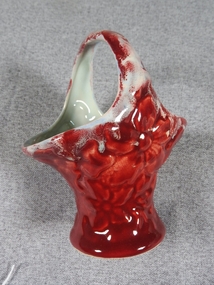
Ceramic - Raynham Vase, small red basket shape, Raynham Ceramic Pty. Ltd, 1948 - 1964
... He had a second pottery at 237 East Boundary Rd East Bentleigh and also operated from Carey St East Bentleigh after buying out Guy Boyd. ...He had a second pottery at 237 East Boundary Rd East Bentleigh and also operated from Carey St East Bentleigh after buying out Guy Boyd. ...Raynham (Ray) Cook started his pottery in 1946 in the garage in the back yard of 218 Murrumbeena Rd East Bentleigh Victoria and moved to a factory in North Rd East Bentleigh in 1948. The company was named Raynham Ceramic Pty. Ltd. after his first name and produced all sorts of light weight slipware. some speckled lustreware vases. He had a second pottery at 237 East Boundary Rd East Bentleigh and also operated from Carey St East Bentleigh after buying out Guy Boyd. Ray was a pioneer in Australia of the electric pottery kiln which was very novel in the 1940's Ray's greatest attribute was probably his design skills. All Raynham pottery was his designs. One of his key employees was "Paddy" McDonald who undertook the majority of the thrown pottery. Ray Cook sold the company to Bendigo Pottery in the early 1970's who continued to use the Raynham brand for a short time. Most examples by that company have the same form but are unmarked. A small basket shape, the exterior is a deep red colour with white patches on the handle, the interior is cream coloured. There are floral designs impressed into the vase. It has shiny gloss finish. Red printing on the base - Raynham and a black number 36ray cook, raynham ceramic pty. ltd., slipcast vases, paddy mcdonald, bendigo pottery -
 Bendigo Historical Society Inc.
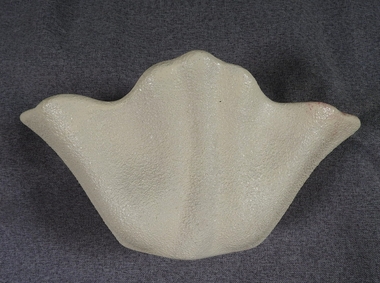
Ceramic - Raynham Vase, white fan shape, Raynham Ceramic Pty. Ltd, 1948 - 1964
... He had a second pottery at 237 East Boundary Rd East Bentleigh and also operated from Carey St East Bentleigh after buying out Guy Boyd. ...He had a second pottery at 237 East Boundary Rd East Bentleigh and also operated from Carey St East Bentleigh after buying out Guy Boyd. ...Raynham (Ray) Cook started his pottery in 1946 in the garage in the back yard of 218 Murrumbeena Rd East Bentleigh Victoria and moved to a factory in North Rd East Bentleigh in 1948. The company was named Raynham Ceramic Pty. Ltd. after his first name and produced all sorts of light weight slipware. some speckled lustreware vases. He had a second pottery at 237 East Boundary Rd East Bentleigh and also operated from Carey St East Bentleigh after buying out Guy Boyd. Ray was a pioneer in Australia of the electric pottery kiln which was very novel in the 1940's Ray's greatest attribute was probably his design skills. All Raynham pottery was his designs. One of his key employees was "Paddy" McDonald who undertook the majority of the thrown pottery. Ray Cook sold the company to Bendigo Pottery in the early 1970's who continued to use the Raynham brand for a short time. Most examples by that company have the same form but are unmarked. A fan shaped vase with a white textured non gloss external surface and a white semi-gloss internal surface. There are no markings.ray cook, raynham ceramic pty. ltd., slipcast vases, paddy mcdonald, bendigo pottery -
 Bendigo Historical Society Inc.
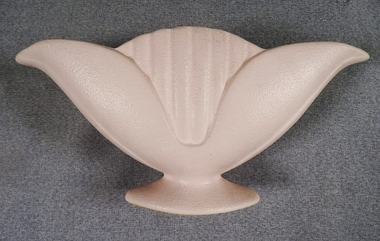
Ceramic - Raynham Vase, pink fan shape, Raynham Ceramic Pty. Ltd, 1948 - 1964
... He had a second pottery at 237 East Boundary Rd East Bentleigh and also operated from Carey St East Bentleigh after buying out Guy Boyd. ...He had a second pottery at 237 East Boundary Rd East Bentleigh and also operated from Carey St East Bentleigh after buying out Guy Boyd. ...Raynham (Ray) Cook started his pottery in 1946 in the garage in the back yard of 218 Murrumbeena Rd East Bentleigh Victoria and moved to a factory in North Rd East Bentleigh in 1948. The company was named Raynham Ceramic Pty. Ltd. after his first name and produced all sorts of light weight slipware. some speckled lustreware vases. He had a second pottery at 237 East Boundary Rd East Bentleigh and also operated from Carey St East Bentleigh after buying out Guy Boyd. Ray was a pioneer in Australia of the electric pottery kiln which was very novel in the 1940's Ray's greatest attribute was probably his design skills. All Raynham pottery was his designs. One of his key employees was "Paddy" McDonald who undertook the majority of the thrown pottery. Ray Cook sold the company to Bendigo Pottery in the early 1970's who continued to use the Raynham brand for a short time. Most examples by that company have the same form but are unmarked. A fan shaped vase with a pink textured non gloss external surface and a pink smooth gloss internal surface. Vertical ridges in a v shaped indention on both sides. It's on a squat pedestal in the same mould. Markings on the base in blue print - Raynham 86k.ray cook, raynham ceramic pty. ltd., slipcast vases, paddy mcdonald, bendigo pottery -
 Bendigo Historical Society Inc.
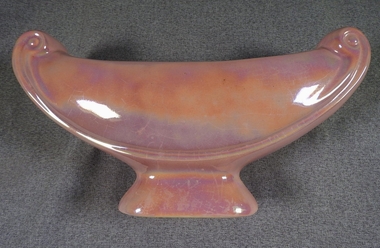
Ceramic - Raynham Vase, large pink boat shape, Raynham Ceramic Pty. Ltd, 1948 - 1964
... He had a second pottery at 237 East Boundary Rd East Bentleigh and also operated from Carey St East Bentleigh after buying out Guy Boyd. ...He had a second pottery at 237 East Boundary Rd East Bentleigh and also operated from Carey St East Bentleigh after buying out Guy Boyd. ...Raynham (Ray) Cook started his pottery in 1946 in the garage in the back yard of 218 Murrumbeena Rd East Bentleigh Victoria and moved to a factory in North Rd East Bentleigh in 1948. The company was named Raynham Ceramic Pty. Ltd. after his first name and produced all sorts of light weight slipware. some speckled lustreware vases. He had a second pottery at 237 East Boundary Rd East Bentleigh and also operated from Carey St East Bentleigh after buying out Guy Boyd. Ray was a pioneer in Australia of the electric pottery kiln which was very novel in the 1940's Ray's greatest attribute was probably his design skills. All Raynham pottery was his designs. One of his key employees was "Paddy" McDonald who undertook the majority of the thrown pottery. Ray Cook sold the company to Bendigo Pottery in the early 1970's who continued to use the Raynham brand for a short time. Most examples by that company have the same form but are unmarked. A large boat shaped vase with a pink metallic shimmering finish (lustreware) and a pink smooth gloss internal surface. There are scrolls on both ends. It's on a squat pedestal in the same mould. Markings on the base illegible, possibly Raynham and a number.ray cook, raynham ceramic pty. ltd., slipcast vases, paddy mcdonald, bendigo pottery -
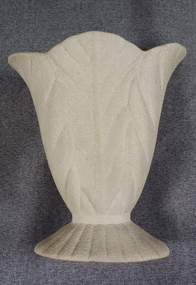 Bendigo Historical Society Inc.
Ceramic - Raynham Vase, white vase, Raynham Ceramic Pty. Ltd, 1948 - 1964
... He had a second pottery at 237 East Boundary Rd East Bentleigh and also operated from Carey St East Bentleigh after buying out Guy Boyd. ...He had a second pottery at 237 East Boundary Rd East Bentleigh and also operated from Carey St East Bentleigh after buying out Guy Boyd. ...Raynham (Ray) Cook started his pottery in 1946 in the garage in the back yard of 218 Murrumbeena Rd East Bentleigh Victoria and moved to a factory in North Rd East Bentleigh in 1948. The company was named Raynham Ceramic Pty. Ltd. after his first name and produced all sorts of light weight slipware. some speckled lustreware vases. He had a second pottery at 237 East Boundary Rd East Bentleigh and also operated from Carey St East Bentleigh after buying out Guy Boyd. Ray was a pioneer in Australia of the electric pottery kiln which was very novel in the 1940's Ray's greatest attribute was probably his design skills. All Raynham pottery was his designs. One of his key employees was "Paddy" McDonald who undertook the majority of the thrown pottery. Ray Cook sold the company to Bendigo Pottery in the early 1970's who continued to use the Raynham brand for a short time. Most examples by that company have the same form but are unmarked.A white vase with an external textured surface and indented curved marks. The inside is is a smooth glossy yellow. The vase is an oval shape which is smaller at the base. It's on a squat pedestal in the same mould. Markings on the base - Raynham 51Bray cook, raynham ceramic pty. ltd., slipcast vases, paddy mcdonald, bendigo pottery -
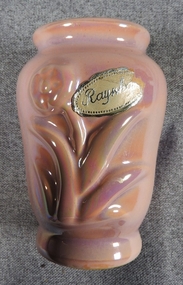 Bendigo Historical Society Inc.
Ceramic - Raynham Vase, small pink cylindrical vase, Raynham Ceramic Pty. Ltd, 1948 - 1964
... He had a second pottery at 237 East Boundary Rd East Bentleigh and also operated from Carey St East Bentleigh after buying out Guy Boyd. ...He had a second pottery at 237 East Boundary Rd East Bentleigh and also operated from Carey St East Bentleigh after buying out Guy Boyd. ...Raynham (Ray) Cook started his pottery in 1946 in the garage in the back yard of 218 Murrumbeena Rd East Bentleigh Victoria and moved to a factory in North Rd East Bentleigh in 1948. The company was named Raynham Ceramic Pty. Ltd. after his first name and produced all sorts of light weight slipware. some speckled lustreware vases. He had a second pottery at 237 East Boundary Rd East Bentleigh and also operated from Carey St East Bentleigh after buying out Guy Boyd. Ray was a pioneer in Australia of the electric pottery kiln which was very novel in the 1940's Ray's greatest attribute was probably his design skills. All Raynham pottery was his designs. One of his key employees was "Paddy" McDonald who undertook the majority of the thrown pottery. Ray Cook sold the company to Bendigo Pottery in the early 1970's who continued to use the Raynham brand for a short time. Most examples by that company have the same form but are unmarked. A small cylindrical vase. The external surface has a pink metallic shimmering finish (lustreware) with an indentation of a flower and a small, damaged cream coloured stick-on label - Raynham. The inside is pink smooth gloss surface and a small red stick-on label - GUARANTEED Raynham PRODUCTION AUSTRALIA The vase is slightly wider at the top than its base. Markings on the base - Raynham 27, From Marge & Rex Sa.... Birthday 1962ray cook, raynham ceramic pty. ltd., slipcast vases, paddy mcdonald, bendigo pottery -
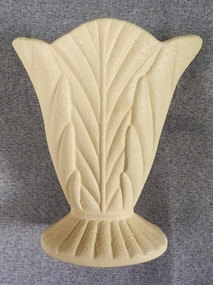 Bendigo Historical Society Inc.
Ceramic - Raynham Vase, white vase, Raynham Ceramic Pty. Ltd, 1948 - 1964
... He had a second pottery at 237 East Boundary Rd East Bentleigh and also operated from Carey St East Bentleigh after buying out Guy Boyd. ...He had a second pottery at 237 East Boundary Rd East Bentleigh and also operated from Carey St East Bentleigh after buying out Guy Boyd. ...Raynham (Ray) Cook started his pottery in 1946 in the garage in the back yard of 218 Murrumbeena Rd East Bentleigh Victoria and moved to a factory in North Rd East Bentleigh in 1948. The company was named Raynham Ceramic Pty. Ltd. after his first name and produced all sorts of light weight slipware. some speckled lustreware vases. He had a second pottery at 237 East Boundary Rd East Bentleigh and also operated from Carey St East Bentleigh after buying out Guy Boyd. Ray was a pioneer in Australia of the electric pottery kiln which was very novel in the 1940's Ray's greatest attribute was probably his design skills. All Raynham pottery was his designs. One of his key employees was "Paddy" McDonald who undertook the majority of the thrown pottery. Ray Cook sold the company to Bendigo Pottery in the early 1970's who continued to use the Raynham brand for a short time. Most examples by that company have the same form but are unmarked.A cream coloured vase with an external textured surface and indented curved marks. The inside is a smooth cream coloured surface. The vase is an oval shape which is smaller at the base. It's on a squat pedestal in the same mould. Markings on the base - 3 02ray cook, raynham ceramic pty. ltd., slipcast vases, paddy mcdonald, bendigo pottery -
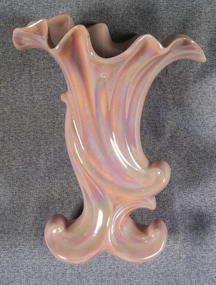 Bendigo Historical Society Inc.
Ceramic - Raynham Vase, tall pink vase, Raynham Ceramic Pty. Ltd, 1948 - 1964
... He had a second pottery at 237 East Boundary Rd East Bentleigh and also operated from Carey St East Bentleigh after buying out Guy Boyd. ...He had a second pottery at 237 East Boundary Rd East Bentleigh and also operated from Carey St East Bentleigh after buying out Guy Boyd. ...Raynham (Ray) Cook started his pottery in 1946 in the garage in the back yard of 218 Murrumbeena Rd East Bentleigh Victoria and moved to a factory in North Rd East Bentleigh in 1948. The company was named Raynham Ceramic Pty. Ltd. after his first name and produced all sorts of light weight slipware. some speckled lustreware vases. He had a second pottery at 237 East Boundary Rd East Bentleigh and also operated from Carey St East Bentleigh after buying out Guy Boyd. Ray was a pioneer in Australia of the electric pottery kiln which was very novel in the 1940's Ray's greatest attribute was probably his design skills. All Raynham pottery was his designs. One of his key employees was "Paddy" McDonald who undertook the majority of the thrown pottery. Ray Cook sold the company to Bendigo Pottery in the early 1970's who continued to use the Raynham brand for a short time. Most examples by that company have the same form but are unmarked. A tall asymmetrical centrepiece vase with flared fluted opening, the base is two scrolls. The external surface and the upper part of the internal surface has a pink metallic shimmering finish (lustreware) Marking on the base - Raynham 330ray cook, raynham ceramic pty. ltd., slipcast vases, paddy mcdonald, bendigo pottery -
 Bendigo Historical Society Inc.
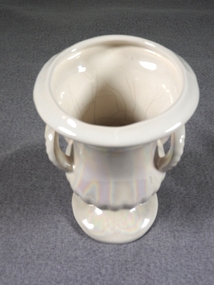
Ceramic - Raynham Vase, tall white vase, Raynham Ceramic Pty. Ltd, 1948 - 1964
... He had a second pottery at 237 East Boundary Rd East Bentleigh and also operated from Carey St East Bentleigh after buying out Guy Boyd. ...He had a second pottery at 237 East Boundary Rd East Bentleigh and also operated from Carey St East Bentleigh after buying out Guy Boyd. ...Raynham (Ray) Cook started his pottery in 1946 in the garage in the back yard of 218 Murrumbeena Rd East Bentleigh Victoria and moved to a factory in North Rd East Bentleigh in 1948. The company was named Raynham Ceramic Pty. Ltd. after his first name and produced all sorts of light weight slipware. some speckled lustreware vases. He had a second pottery at 237 East Boundary Rd East Bentleigh and also operated from Carey St East Bentleigh after buying out Guy Boyd. Ray was a pioneer in Australia of the electric pottery kiln which was very novel in the 1940's Ray's greatest attribute was probably his design skills. All Raynham pottery was his designs. One of his key employees was "Paddy" McDonald who undertook the majority of the thrown pottery. Ray Cook sold the company to Bendigo Pottery in the early 1970's who continued to use the Raynham brand for a short time. Most examples by that company have the same form but are unmarked.A tall cylindrical white vase curves in from the top then bulges out near its base with two horseshoe shaped handles on the bulge. It's on a squat pedestal in the same mould. It has a white metallic shimmering finish (lustreware). The inside has numerous cracks. Markings on the base - 904ray cook, raynham ceramic pty. ltd., slipcast vases, paddy mcdonald, bendigo pottery -
 Bendigo Historical Society Inc.
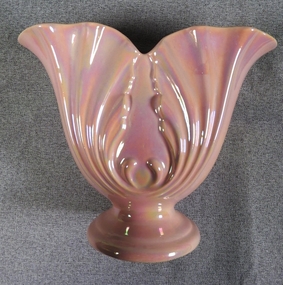
Ceramic - Raynham Vase, pink fan shape, Raynham Ceramic Pty. Ltd, 1948 - 1964
... He had a second pottery at 237 East Boundary Rd East Bentleigh and also operated from Carey St East Bentleigh after buying out Guy Boyd. ...He had a second pottery at 237 East Boundary Rd East Bentleigh and also operated from Carey St East Bentleigh after buying out Guy Boyd. ...Raynham (Ray) Cook started his pottery in 1946 in the garage in the back yard of 218 Murrumbeena Rd East Bentleigh Victoria and moved to a factory in North Rd East Bentleigh in 1948. The company was named Raynham Ceramic Pty. Ltd. after his first name and produced all sorts of light weight slipware. some speckled lustreware vases. He had a second pottery at 237 East Boundary Rd East Bentleigh and also operated from Carey St East Bentleigh after buying out Guy Boyd. Ray was a pioneer in Australia of the electric pottery kiln which was very novel in the 1940's Ray's greatest attribute was probably his design skills. All Raynham pottery was his designs. One of his key employees was "Paddy" McDonald who undertook the majority of the thrown pottery. Ray Cook sold the company to Bendigo Pottery in the early 1970's who continued to use the Raynham brand for a short time. Most examples by that company have the same form but are unmarked. A fan shaped vase with a pink metallic shimmering (lustreware)external surface and a pink smooth gloss internal surface. indentions on both sides. It's on a squat pedestal in the same mould. Markings on the base - 199 and a damaged silver sticker Rayray cook, raynham ceramic pty. ltd., slipcast vases, paddy mcdonald, bendigo pottery -
 Bendigo Historical Society Inc.
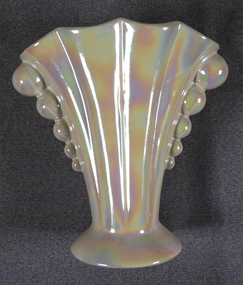
Ceramic - Raynham Vase, tall white fan shape, Raynham Ceramic Pty. Ltd, 1948 - 1964
... He had a second pottery at 237 East Boundary Rd East Bentleigh and also operated from Carey St East Bentleigh after buying out Guy Boyd. ...He had a second pottery at 237 East Boundary Rd East Bentleigh and also operated from Carey St East Bentleigh after buying out Guy Boyd. ...Raynham (Ray) Cook started his pottery in 1946 in the garage in the back yard of 218 Murrumbeena Rd East Bentleigh Victoria and moved to a factory in North Rd East Bentleigh in 1948. The company was named Raynham Ceramic Pty. Ltd. after his first name and produced all sorts of light weight slipware. some speckled lustreware vases. He had a second pottery at 237 East Boundary Rd East Bentleigh and also operated from Carey St East Bentleigh after buying out Guy Boyd. Ray was a pioneer in Australia of the electric pottery kiln which was very novel in the 1940's Ray's greatest attribute was probably his design skills. All Raynham pottery was his designs. One of his key employees was "Paddy" McDonald who undertook the majority of the thrown pottery. Ray Cook sold the company to Bendigo Pottery in the early 1970's who continued to use the Raynham brand for a short time. Most examples by that company have the same form but are unmarked. A tall fan shaped vase with a white metallic shimmering (lustreware) external surface and a white gloss internal surface. Vertical curved indention on both sides with matching curves around the oval shape at the top of the vase. The base of the vase is a circle smaller than the top. There five semi-spherical extrusions reducing in size down each side of the ends of the oval opening. It's on a squat round pedestal in the same mould. Markings on the base in black print - Raynham 7ray cook, raynham ceramic pty. ltd., slipcast vases, paddy mcdonald, bendigo pottery -
![Ceramic, Malcolm Boyd, Untitled [Male Form] by Malcolm Boyd, 1977](/media/collectors/530576742162ef0fa09a2288/items/556e8b9f2162f1015460fbfb/item-media/62a9b7295a061b9db7f1e053/item-fit-380x285.jpg?cb=6) Federation University Art Collection
Federation University Art CollectionCeramic, Malcolm Boyd, Untitled [Male Form] by Malcolm Boyd, 1977
... Boyd operated the Black Cockatoo Pottery from around 1980-1995, starting in Essendon, then moving to Ascot Vale, Stratford, Bairnsdale and finally Fernbank in Gippsland. ...Boyd operated the Black Cockatoo Pottery from around 1980-1995, starting in Essendon, then moving to Ascot Vale, Stratford, Bairnsdale and finally Fernbank in Gippsland. ...MALCOLM BOYD Born Gippsland, Victoria In 1977 Malcolm Boyd graduated with a Diploma of Visual Arts from the Gippsland Institute of Advanced Education. It was at this time that he presented this work to the Jan Feder Memorial Ceramics Collection. Over thirty years later he still has a passion for ceramic history and design. Boyd operated the Black Cockatoo Pottery from around 1980-1995, starting in Essendon, then moving to Ascot Vale, Stratford, Bairnsdale and finally Fernbank in Gippsland. His handbuilt stoneware pots and clay sculptures are wood fired at his East Gippsland studio. He often uses ochre coloured dam banks on his property at Fernbank. The local clays are crushed, screened and blended with a white stoneware body to produce a number of shades and textures. All Malcolm Boyd's pot's are hand built using moulding, coiling, slabbing, and modelling techniques, and are high temperature fired (1300C) to allow some of the very ancient oriental glazes to mature. All works spend at least 20 hours in the wood fired kilns. This work is part of the Jan Feder Memorial Ceramics Collection which was amassed with funds raised by Jan Feder's student peers at the Gippsland Centre for Art and Design in the mid 1980s after Jan Feder passed away. Although many of the works are donated the intention of the collection was to purchase from visiting lecturers who became leading ceramic artists around the world, as well as from many of the staff who taught at the Churchill Campus. This work is part of the Jan Feder Memorial Ceramics Collection. Jan Feder was an alumna of the Gippsland Campus who studied ceramics on the campus. She passed away in the mid 1980s. Her student peers raised funds to buy ceramic works in her memory. They bought works from visiting lecturers who became leading ceramic artists around the world, as well as from many of the staff who taught there.malcolm boyd, ceramics, artist, artwork, jan feder memorial ceramics collection, gippsland campus, alumni -
 Federation University Art Collection
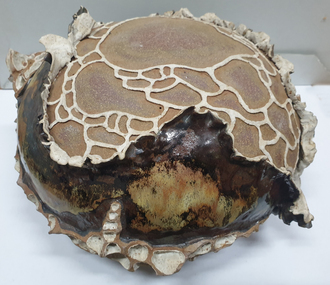
Ceramic, Malcolm Boyd, Stoneware sculptured sphere, 1977
... Boyd operated the Black Cockatoo Pottery from around 1980-1995, starting in Essendon, then moving to Ascot Vale, Stratford, Bairnsdale and finally Fernbank in Gippsland. ...Boyd operated the Black Cockatoo Pottery from around 1980-1995, starting in Essendon, then moving to Ascot Vale, Stratford, Bairnsdale and finally Fernbank in Gippsland. ...MALCOLM BOYD Born Gippsland, Victoria In 1977 Malcolm Boyd graduated with a Diploma of Visual Arts from the Gippsland Institute of Advanced Education. It was at this time that he presented this work to the Jan Feder Memorial Ceramics Collection. Over thirty years later he still has a passion for ceramic history and design. Boyd operated the Black Cockatoo Pottery from around 1980-1995, starting in Essendon, then moving to Ascot Vale, Stratford, Bairnsdale and finally Fernbank in Gippsland. His handbuilt stoneware pots and clay sculptures are wood fired at his East Gippsland studio. He often uses ochre coloured dam banks on his property at Fernbank. The local clays are crushed, screened and blended with a white stoneware body to produce a number of shades and textures. All Malcolm Boyd's pot's are hand built using moulding, coiling, slabbing, and modelling techniques, and are high temperature fired (1300C) to allow some of the very ancient oriental glazes to mature. All works spend at least 20 hours in the wood fired kilns. This work is part of the Jan Feder Memorial Ceramics Collection which was amassed with funds raised by Jan Feder's student peers at the Gippsland Centre for Art and Design in the mid 1980s after Jan Feder passed away. Although many of the works are donated the intention of the collection was to purchase from visiting lecturers who became leading ceramic artists around the world, as well as from many of the staff who taught at the Churchill Campus. Jan Feder Memorial Collection Presented by the artist in 1977. malcolm boyd, ceramics, stoneware, artists, artwork, jan feder memorial ceramics collection, alumni, woodfire
