
Showing 38 items matching " burness"
-
 Sunshine and District Historical Society Incorporated
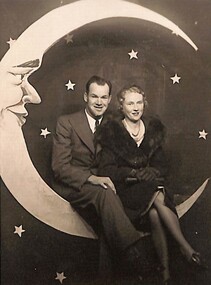
Photograph - Les Noble and Burness, 1930s
... ... Burness...Les Noble and Burness at the Museum of Melbourne...Photograph of Les Noble and Burness at the Museum in the Exhibition Gardens Melbourne...[with a set of photographs of steam trains] Leslie "Len" William Noble Burness Photograph of Les Noble and Burness at the Museum in the Exhibition Gardens Melbourne Les Noble and Burness at the Museum of Melbourne Photograph Les Noble and Burness ...Donated to S.& D,H.S. [with a set of photographs of steam trains]Photograph of Les Noble and Burness at the Museum in the Exhibition Gardens Melbourneleslie "len" william noble, burness -
 Returned Nurses RSL Sub-branch
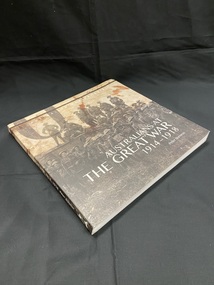
Book - Paperback book, Murdoch Books, Australians at the Great war 1915-1918, 2015
... 'PROPERTY OF VICTORIAN BRANCH RSL' [stamped in red ink on multiple pages and edges] 'A4154 / 940.40994 / BUR' [handwritten in pencil on the inside cover]......Peter Burness...Book Paperback book Murdoch Books Peter Burness ...Australia's contribution to the Great War has become part of the core of its national identity, and this work from the Australian War Memorial's Peter Burness offers a compact, thoroughly-illustrated and authoritative survey of the founding of the ANZAC tradition. From the shores of Gallipoli, through the trenches of France and Belgium, to the Light Horse in the Middle East, Australians at the Great War: 1914-1918 showcases photographs, artworks, posters, maps and artefacts from the War Memorial's comprehensive archive, along with detailed historical and anecdotal passages. Both as a testament to the courage of Australians at war, and as a guide to Australia's cultural legacy, Australians at the Great War: 1914-1918 is the perfect introduction. - taken from Trove.Paperback book. Black and white image of soldiers in uniform standing in front of and on top of a tank, wraps around the full cover. Title is overlaid in white print on the front and on the spine.non-fictionAustralia's contribution to the Great War has become part of the core of its national identity, and this work from the Australian War Memorial's Peter Burness offers a compact, thoroughly-illustrated and authoritative survey of the founding of the ANZAC tradition. From the shores of Gallipoli, through the trenches of France and Belgium, to the Light Horse in the Middle East, Australians at the Great War: 1914-1918 showcases photographs, artworks, posters, maps and artefacts from the War Memorial's comprehensive archive, along with detailed historical and anecdotal passages. Both as a testament to the courage of Australians at war, and as a guide to Australia's cultural legacy, Australians at the Great War: 1914-1918 is the perfect introduction. - taken from Trove.wwi, ww1, first world war, world war 1914-1918, australian war memorial, military museums - australia, military participation - australia -
![Book, Dept. of Veterans' Affairs, Fromelles and the Somme: Australians on the Western Front [by] Peter Burness, 2006](/media/collectors/4f729f7b97f83e03086018a5/items/593a0b96d0cdd11b444cd457/item-media/5bac2dd121ead11568b486e3/item-fit-380x285.jpg?cb=6) Eltham District Historical Society Inc
Eltham District Historical Society IncBook, Dept. of Veterans' Affairs, Fromelles and the Somme: Australians on the Western Front [by] Peter Burness, 2006
... Fromelles and the Somme: Australians on the Western Front [by] Peter Burness...Covered in plastic Fromelles and the Somme: Australians on the Western Front [by] Peter Burness Book Dept. of Veterans' Affairs ...The numbers are distressing, even a century later - on the Western Front in France during the Great War some 265,000 Australians served against the enemy - more than 46,000 of them lost their lives, many thousands more injured, This book tells some of the story - Review by http://www.diversitybooks.com.auSoftcover 80 p. : chiefly ill., maps, ports, captioned illustrations (AWM Archives) throughout, plus a line-drawn map. Covered in plasticISBN 1920720693fromelle, somme, world war 1914-1918, military campaign -
 Bendigo Military Museum
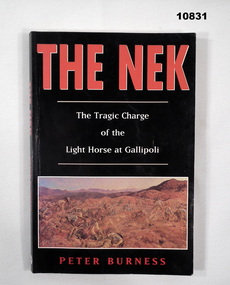
Book - BATTLE WW1, Peter Burness, "THE NEK", 1996
... Peter Burness..."THE NEK" Book BATTLE WW1 Peter Burness Kangaroo Press Pty Ltd Australian Print Group ...From front cover - "THE NEK/ The Tragic Charge of the Light Horse at Gallipoli".SOFT COVER BOOK. Cover - cardboard, red and white ink print on a black colour background. Front illustration - in colour - paintingt by George Lambert titled "The Charge of the 3rd Light Horse Brigade at the Nek". 168 pages, cut, plain white paper. Illustrated black and white photographs and one map. publications, books, gallipoli, ww1 -
 Bendigo Military Museum
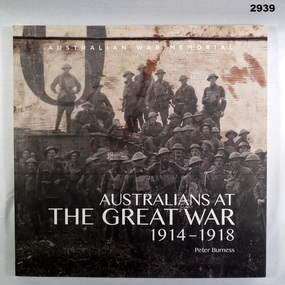
Book - BOOK, THE GREAT WAR, Australian War Memorial et al, Australians at the Great War 1914-1918
... ...Peter Burness...Australians at the Great War 1914-1918 Book BOOK, THE GREAT WAR Australian War Memorial Peter Burness Murdoch Books ...Book, paperback, front cover has large group portrait of Australian Soldiers with full kit & steel helmets in front of a tank. 150 pages, illustrated photos, painting & maps.books, the great war, the australians -
 Monbulk RSL Sub Branch
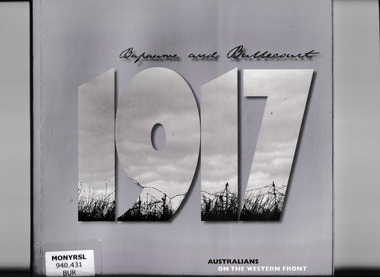
Book, Department of Veterans' Affairs, Bapaume and Bullecourt : Australians on the Western Front - 1917, 2007
... ...Peter Burness...Bapaume and Bullecourt : Australians on the Western Front - 1917 Book Department of Veterans' Affairs Peter Burness ...From February 1917 the Australians pursued the Germans who were withdrawing to their Hindenburg line ... After Bullecourt the units moved to Belgium where, before the year ended, they would fight in the notorious Third battle of Ypres.Ill, p.84.non-fictionFrom February 1917 the Australians pursued the Germans who were withdrawing to their Hindenburg line ... After Bullecourt the units moved to Belgium where, before the year ended, they would fight in the notorious Third battle of Ypres. world war 1914-1917 - western front - australian invilvement, battles of bapaume and bullecourt -
 Monbulk RSL Sub Branch
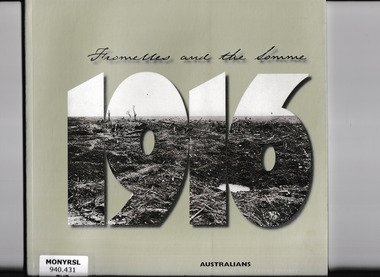
Book, Department of Veterans' Affairs, Fromelles and the Somme: Australians on the Western Front - 1916, 2006
... ...Peter Burness...Fromelles and the Somme: Australians on the Western Front - 1916 Book Department of Veterans' Affairs Peter Burness ...The first Australians arrived in France in 1916 and were immediately involved in the battles of Fromelles and the Somme.Ill, p.80.non-fictionThe first Australians arrived in France in 1916 and were immediately involved in the battles of Fromelles and the Somme.world war 1914-1917 - western front - australian invilvement, battles of fromelles and somme -
 Sunshine and District Historical Society Incorporated
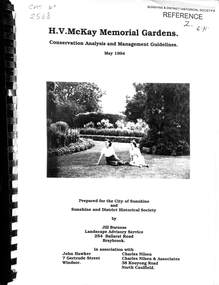
Document - H.V. McKay Memorial Gardens Conservation Analysis and Management Guidelines Draft Report 12/11/1993, Jill Burness
... Jill Burness...McKay Memorial Gardens Conservation Analysis and Management Guidelines Draft Report 12/11/1993 Jill Burness John Hawker Charles Nilsen from Charles Nilsen and Associates ...The H.V. McKay Memorial Gardens were established in 1909 and are Australia's oldest remaining industrial gardens. The heritage-listed gardens on Anderson Road were established by H.V. McKay as Sunshine Gardens later taken over by Brimbank City Council and renamed the H.V. McKay Memorial Gardens. The development of the gardens was not only an expression of H.V. McKay's own social philosophy but also represented a changing attitude to Urban Planning that is known as the "Garden Suburb" movement. Designed by the assistant city engineer at Ballarat, F. A. Horsfall and laid out by head gardener S. G. Thompson, the eight-acre gardens were sited alongside the factory and incorporated recreation facilities and popular horticultural displays.H.V. McKay Memorial Gardens Conservation Analysis and Management Guidelines Draft Report 12/11/1993h.v. mckay memorial gardens, sunshine gardens, garden, andersons road, sunshine -
 Horsham Regional Art Gallery
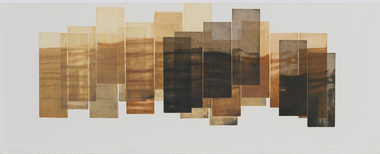
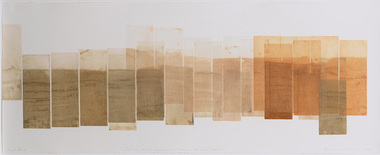
Print, Heather BURNESS, Journey to the Wimmera (night driving) / layers in the sand / skin, 2007
... Heather BURNESS...Journey to the Wimmera (night driving) / layers in the sand / skin Print Heather BURNESS ...Purchased through the Horsham Art Gallery Trust Fund, 2008 -
 Horsham Regional Art Gallery
Print, Heather BURNESS, Journey to the Wimmera / layers in the sand / skin, 2007
... Heather BURNESS...Journey to the Wimmera / layers in the sand / skin Print Heather BURNESS ...Purchased through the Horsham Art Gallery Trust Fund, 2008 -
 Warrnambool RSL Sub Branch
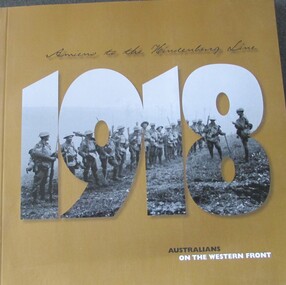
Book, BOOK: 1918 - Australians on the Western Front
... Author: Peter Burness Publisher: Department of Veterans Affairs, Canberra. 2008...Author: Peter Burness Publisher: Department of Veterans Affairs, Canberra. 2008 BOOK: 1918 - Australians on the Western Front Book ... -
 Sunshine and District Historical Society Incorporated
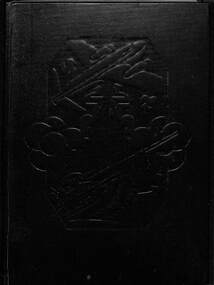
Book - The First Year of War in Pictures, The Sun News-Pictorial, Melbourne, 1940s
... Gift to Les from Burness 18.5.1941. Book came from the private collection of John Willaton ...Gift to Les from Burness 18.5.1941. Book came from the private collection of John Willaton World War 1939 - 1945 A pictorial history of World War II. ...A pictorial history of World War II. Our collection of books covers 4 years of the war. This volume covers the first year.Black hard covered embossed book non-fictionA pictorial history of World War II. Our collection of books covers 4 years of the war. This volume covers the first year.world war 1939 - 1945 -
 Kilmore Historical Society
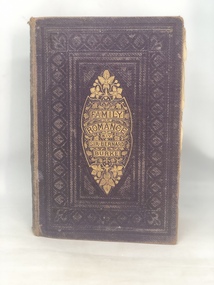
FAMILY ROMANCE, Family Romance by Sir Bernard Burke, 1876
... Handwritten inscription on first page 'F493 BUR' 'Glenaroua Public Hall and Library No. 94' Stamp on title page 'Glenaroua Public Hall and Library'...Handwritten inscription on first page 'F493 BUR' 'Glenaroua Public Hall and Library No. 94' Stamp on title page 'Glenaroua Public Hall and Library' Faded blue leather cover with gold writing on front cover spine 'Family Romance by Sir Bernard Burke' 341 pages ; 19 cm ; Illu Family Romance by Sir Bernard Burke FAMILY ROMANCE Sir Bernard Burke Hurst and Blackett Publishers ...Faded blue leather cover with gold writing on front cover spine 'Family Romance by Sir Bernard Burke' 341 pages ; 19 cm ; IlluHandwritten inscription on first page 'F493 BUR' 'Glenaroua Public Hall and Library No. 94' Stamp on title page 'Glenaroua Public Hall and Library'romance, kilmore mechanics institute library. -
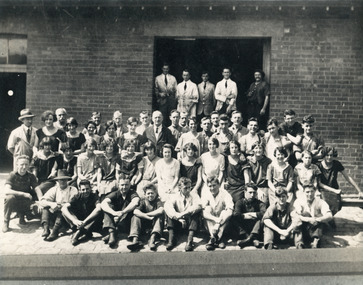 National Wool Museum
Photograph - Staff Portrait, Port Phillip Mills, 1926
... / Chas Mills / Smelan(?) Burs(?) / Geoff Smith / Jack Austin / Bob Walker / Jed (?) .../ Chas Mills / Smelan(?) Burs(?) / Geoff Smith / Jack Austin / Bob Walker / Jed (?) ...Part of a collection of photographs previously housed at Victorian Wool Processors (VWP), who were the last early stage wool processing company in Melbourne, and the second last in Victoria. The photographs were collected from other companies as they closed, and were donated to the museum by David Ritchie who was the General Manager at VWP. Victoria Wool Processors (Aust) Pty Ltd was founded by Jim Kim in 1983 as a dedicated international wool trading firm. Seeking greater quality control, the company opened its first physical processing plant in Melbourne in 1990 before scaling up to a state-of-the-art, 24-hour carbonising and scouring facility at Laverton North in 2002. For decades, it stood as one of the largest early-stage wool processing operations in the Southern Hemisphere, known for incorporating modern water-recycling and waste-management infrastructure. However, a severe domestic energy crisis and soaring natural gas prices forced the permanent closure of its manufacturing plant in December 2024, culminating in the company's official corporate liquidation in April 2026. This photo was previously in a frame with seven other black and white photographs showing staff associated with the Port Phillip Mills. This photo shows a staff portrait taken in 1926.Black and white photograph showing a group of men and women seated and standing for a staff portrait against a brick wall.Back: [handwritten] 1926 / D5 / Goking(?) / Malcolm (?) / Chas Mills / Smelan(?) Burs(?) / Geoff Smith / Jack Austin / Bob Walker / Jed (?) Van(?) / Hammond (?)victorian wool processors, early wool processing, textile industry, jim kim, topmaking, port phillip topmaking pty ltd, williamstown, pressing, carding, combing, wool scouring, footscray, wool sorting -
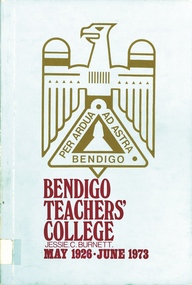 Bendigo Historical Society Inc.
Book - BENDIGO TEACHERS' COLLEGE MAY 1926-JUNE1973, c1973
... Inscriptions/Markings: label on spine has sticker 0054 BUR, inside: with compliments from Jessie C Burnett. ...Inscriptions/Markings: label on spine has sticker 0054 BUR, inside: with compliments from Jessie C Burnett. ...Bendigo Teachers' College May 1926- June 1973. Per Ardua Ad Astra Bendigo. Publisher Cambridge Press, Bendigo. 102 pages. Photographs and Illustrations. Inscriptions/Markings: label on spine has sticker 0054 BUR, inside: with compliments from Jessie C Burnett. Bendigo Historical Society Inc stamp on inside of front cover and back cover. With Index.Jessie C Burnettbendigo, education, bendigo teachers' college, jessie c burnett -
 Flagstaff Hill Maritime Museum and Village
Book, The Complete Works of Robert Burns
... Label on spine cover with typed text PAT 821 BUR Pastedown front endpaper has sticker from Warrnambool Mechanics Institute and Free Library Front loose endpaper has a sticker from Corangamite Regional Library Service...The Warrnambool Mechanics' Institute’s publication collection is of both local and state significance. warrnambool shipwrecked-coast flagstaff-hill flagstaff-hill-maritime-museum maritime-museum shipwreck-coast flagstaff-hill-maritime-village shipwrecked-artefact book pattison collection warrnambool library warrnambool mechanics’ institute ralph eric pattison corangamite regional library service warrnambool city librarian mechanics’ institute library victorian library board warrnambool books and records warrnambool children’s library great ocean road Peoms Songs and Letters Robert Burns Label on spine cover with typed text PAT 821 BUR Pastedown front endpaper has sticker from Warrnambool Mechanics Institute and Free Library Front loose endpaper has a sticker from Corangamite Regional Library Service The Complete Works of Robert Burns Peoms Songs and Letters Edited from the best printed manuscript authorities by Alexander Smith Author: Robert Burns Publisher: MacMillan & Co Date: 1884 The Complete Works of Robert Burns Book ...This item is from the ‘Pattison Collection’, a collection of books and records that was originally owned by the Warrnambool Mechanics’ Institute, which was founded in Warrnambool in 1853. By 1886 the Warrnambool Mechanics’ Institute (WMI) had grown to have a Library, Museum and Fine Arts Gallery, with a collection of “… choice productions of art, and valuable specimens in almost every branch and many wonderful national curiosities are now to be seen there, including historic relics of the town and district.” It later included a School of Design. Although it was very well patronised, the lack of financial support led the WMI in 1911 to ask the City Council to take it over. In 1935 Ralph Pattison was appointed as City Librarian to establish and organise the Warrnambool Library as it was then called. When the WMI building was pulled down in 1963 a new civic building was erected on the site and the new Warrnambool Library, on behalf of the City Council, took over all the holdings of the WMI. At this time some of the items were separated and identified as the ‘Pattison Collection’, named after Ralph Pattison. Eventually the components of the WMI were distributed from the Warrnambool Library to various places, including the Art Gallery, Historical Society and Flagstaff Hill. Later some were even distributed to other regional branches of Corangamite Regional Library and passed to and fro. It is difficult now to trace just where all of the items have ended up. The books at Flagstaff Hill Maritime Village generally display stamps and markings from Pattison as well as a variety of other institutions including the Mechanics’ Institute itself. RALPH ERIC PATTISON Ralph Eric Pattison was born in Rockhampton, Queensland, in 1891. He married Maude Swan from Warrnambool in 1920 and they set up home in Warrnambool. In 1935 Pattison accepted a position as City Librarian for the Warrnambool City Council. His huge challenge was to make a functional library within two rooms of the Mechanics’ Institute. He tirelessly cleaned, cleared and sorted a disarrayed collection of old books, jars of preserved specimens and other items reserved for exhibition in the city’s museum. He developed and updated the library with a wide variety of books for all tastes, including reference books for students; a difficult task to fulfil during the years following the Depression. He converted all of the lower area of the building into a library, reference room and reading room for members and the public. The books were sorted and stored using a cataloguing and card index system that he had developed himself. He also prepared the upper floor of the building and established the Art Gallery and later the Museum, a place to exhibit the many old relics that had been stored for years for this purpose. One of the treasures he found was a beautiful ancient clock, which he repaired, restored and enjoyed using in his office during the years of his service there. Ralph Pattison was described as “a meticulous gentleman whose punctuality, floorless courtesy and distinctive neat dress were hallmarks of his character, and ‘his’ clock controlled his daily routine, and his opening and closing of the library’s large heavy doors to the minute.” Pattison took leave during 1942 to 1945 to serve in the Royal Australian Navy, Volunteer Reserve as Lieutenant. A few years later he converted one of the Museum’s rooms into a Children’s Library, stocking it with suitable books for the younger generation. This was an instant success. In the 1950’s he had the honour of being appointed to the Victorian Library Board and received more inspiration from the monthly conferences in Melbourne. He was sadly retired in 1959 after over 23 years of service, due to the fact that he had gone over the working age of council officers. However he continued to take a very keen interest in the continual development of the Library until his death in 1969. The Pattison Collection, along with other items at Flagstaff Hill Maritime Village, was originally part of the Warrnambool Mechanics' Institute’s collection. The Warrnambool Mechanics’ Institute Collection is primarily significant in its totality, rather than for the individual objects it contains. Its contents are highly representative of the development of Mechanics' Institute libraries across Australia, particularly Victoria. A diversity of publications and themes has been amassed, and these provide clues to our understanding of the nature of and changes in the reading habits of Victorians from the 1850s to the middle of the 20th century. The collection also highlights the Warrnambool community’s commitment to the Mechanics’ Institute, reading, literacy and learning in the regions, and proves that access to knowledge was not impeded by distance. These items help to provide a more complete picture of our community’s ideals and aspirations. The Warrnambool Mechanics Institute book collection has historical and social significance for its strong association with the Mechanics Institute movement and the important role it played in the intellectual, cultural and social development of people throughout the latter part of the nineteenth century and the early twentieth century. The collection of books is a rare example of an early lending library and its significance is enhanced by the survival of an original collection of many volumes. The Warrnambool Mechanics' Institute’s publication collection is of both local and state significance. The Complete Works of Robert Burns Peoms Songs and Letters Edited from the best printed manuscript authorities by Alexander Smith Author: Robert Burns Publisher: MacMillan & Co Date: 1884Label on spine cover with typed text PAT 821 BUR Pastedown front endpaper has sticker from Warrnambool Mechanics Institute and Free Library Front loose endpaper has a sticker from Corangamite Regional Library Servicewarrnambool, shipwrecked-coast, flagstaff-hill, flagstaff-hill-maritime-museum, maritime-museum, shipwreck-coast, flagstaff-hill-maritime-village, shipwrecked-artefact, book, pattison collection, warrnambool library, warrnambool mechanics’ institute, ralph eric pattison, corangamite regional library service, warrnambool city librarian, mechanics’ institute library, victorian library board, warrnambool books and records, warrnambool children’s library, great ocean road, peoms songs and letters, robert burns -
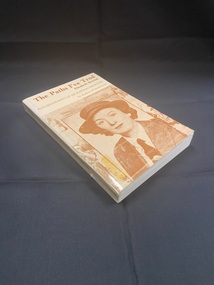 Returned Nurses RSL Sub-branch
Book, Elizabeth Burchill, The paths I've trod: autobigraphy of an Australian nurse, 1981
... 'A4128 / 950.5404 / BUR' [Handwritten in pencil inside from cover] 'PROPERTY OF VICTORIAN BRANCH R.S,L,' [Stamped in red ink on first page] 'Burchill B.A B.Lill?...From Trove 'A4128 / 950.5404 / BUR' [Handwritten in pencil inside from cover] 'PROPERTY OF VICTORIAN BRANCH R.S,L,' [Stamped in red ink on first page] 'Burchill B.A B.Lill? ...'Dora Elizabeth Burchill was born in Hawthorn, Victoria and trained as a triple certificate nurse in Melbourne and London. Proving that nursing is the best passport for travel she subsequently travelled widely and became registered as a nurse in seven countries of the world. Cherishing the ideals of Florence Nightingale in peace and war, Sister Burchill volunteered to serve in Ethiopia during the Italian-Abyssinian War in 1936, nursed refugee children during the Spanish Civil War in 1937 and served with the 2nd AIF in Palestine and Egypt in 1940. Following six years as a member of the Australian Army Nursing Service, she took another challenging path, becoming involved in radio broadcasting [Working for 3SR Radio Station, Shepparton p185], writing and lecturing for the Commonwealth Institute in England. Six years later she returned to nursing and started the first full-time infant welfare clinic in Darwin for the Northern Territory Department of Health and remained in this important post of increasing development in post-war Darwin for five years. Sister Burchill continued this work in Thursday Island and the Sepik District of New Guinea into the 1960s. Many published articles in magazines and newspapers and five published books testify to her skill and determination as a factual writer. ?Innamincka?, is her best-known book. Seeking further worthwhile challenges in the 1970s, Sister Burchill studied for the Higher School Certificate which resulted in her earning a place in the Faculty of Arts, Monash University. She graduated as Bachelor of Arts in 1981. In 1986, she graduated as Bachelor of Letters at the University of Melbourne. Includes index. Bibliography: p. [249]-250. Medicine. Nursing. Burchill, Elizabeth, 1908-. Australia. Biographies (ANB/PRECIS SIN 0516392). Includes bibliographical references (pages 249-250) and index.' From TroveSepia toned paperback book with title and author details printed in brown text along spine and cover. Front cover shows a sepia photo of an Army Nurse overlaying an image of soldiers, camels and a ship.non-fiction'Dora Elizabeth Burchill was born in Hawthorn, Victoria and trained as a triple certificate nurse in Melbourne and London. Proving that nursing is the best passport for travel she subsequently travelled widely and became registered as a nurse in seven countries of the world. Cherishing the ideals of Florence Nightingale in peace and war, Sister Burchill volunteered to serve in Ethiopia during the Italian-Abyssinian War in 1936, nursed refugee children during the Spanish Civil War in 1937 and served with the 2nd AIF in Palestine and Egypt in 1940. Following six years as a member of the Australian Army Nursing Service, she took another challenging path, becoming involved in radio broadcasting [Working for 3SR Radio Station, Shepparton p185], writing and lecturing for the Commonwealth Institute in England. Six years later she returned to nursing and started the first full-time infant welfare clinic in Darwin for the Northern Territory Department of Health and remained in this important post of increasing development in post-war Darwin for five years. Sister Burchill continued this work in Thursday Island and the Sepik District of New Guinea into the 1960s. Many published articles in magazines and newspapers and five published books testify to her skill and determination as a factual writer. ?Innamincka?, is her best-known book. Seeking further worthwhile challenges in the 1970s, Sister Burchill studied for the Higher School Certificate which resulted in her earning a place in the Faculty of Arts, Monash University. She graduated as Bachelor of Arts in 1981. In 1986, she graduated as Bachelor of Letters at the University of Melbourne. Includes index. Bibliography: p. [249]-250. Medicine. Nursing. Burchill, Elizabeth, 1908-. Australia. Biographies (ANB/PRECIS SIN 0516392). Includes bibliographical references (pages 249-250) and index.' From Trovenursing in warfare, elizabeth burchill, world war two, wwii, ww2, china-ethiopian war, spanish civil war, australian army nursing service -
 Returned Nurses RSL Sub-branch
Book - Paperback book, Elizabeth Burchill, Australian Nurses since Nightingale 1860-1990, 1992
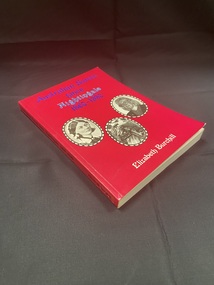
... 'A4377 / 610.73 / BUR' [Handwritten in pencil inside the cover] 'Elizabeth Burchill B.A., B.Luit, R.N, R.M (author) / Melbourne 1992' [Handwritten in black ink on first page] 'PROPERTY OF VICTORIAN BRANCH RSL' [Stamped in red ink on first page]...[From Trove record] 'A4377 / 610.73 / BUR' [Handwritten in pencil inside the cover] 'Elizabeth Burchill B.A., B.Luit, R.N, R.M (author) / Melbourne 1992' [Handwritten in black ink on first page] 'PROPERTY OF VICTORIAN BRANCH RSL' [Stamped in red ink on first page] Bright pink paperback book with the title printed at the top centre of the cover in blue text. ...Origins of the nursing tradition - Nightingale nurses in Australia - District nursing - Bush nursing - Infant welfare - Border nurses - Male nurses - Army nurses - Expanding horizons - The 1985 strike - Elizabeth Burchill's story. [From Trove record]Bright pink paperback book with the title printed at the top centre of the cover in blue text. Beneath the title are three oval templates with images of a different woman in each one. The author's name is printed in white text at the bottom of the cover. non-fictionOrigins of the nursing tradition - Nightingale nurses in Australia - District nursing - Bush nursing - Infant welfare - Border nurses - Male nurses - Army nurses - Expanding horizons - The 1985 strike - Elizabeth Burchill's story. [From Trove record]nursing history australia, nightingale nurses -
 Flagstaff Hill Maritime Museum and Village
Equipment - Dentist Drill, Late 19th century
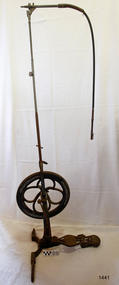
... Bow drills, hand drills and even a "bur thimble" drill were later used to prepare cavities for filling. ...Bow drills, hand drills and even a "bur thimble" drill were later used to prepare cavities for filling. ...The design of this and other similar treadle powered dental engine (or dentist drill) was in common use by dentists from the 1870’s into the 1920's. When electricity became accessible to most communities the electrically powered dental engines began to take over from the treadle power. Over the ages teeth were extracted using picks and scissors and other gouging instruments. Bow drills, hand drills and even a "bur thimble" drill were later used to prepare cavities for filling. Some drills were made bendable by attaching flexible shanks between the metal bur and the handle, giving access to the teeth at the back of the mouth. Other mechanical devices were introduced along the way, such as clockwork drills, but they were hard to handle and inefficient. Over the centuries “dentistry has been performed by priests, monks and other healers. This was followed by barbers; the barber’s chair may well have been the precursor to the dental chair. “(SA Medical Heritage Society Inc.) In 1871 James Morrison patented the first commercially manufactured 'foot treadle dental engine', the first practica dental engine although others had been introduced as early as 1790 (by John Greenwood). Handmade steel burs or drills were introduced for dental handpieces, taking advantage of the significant increase in the speed of the drill. In 1891 the first machine-made steel burs were in use. The treadle drill reduced the time to prepare a cavity from hours to less than ten minutes. In 1876 the Samuel S. White Catalogue of Dentist Instruments listed a 12 ½ inch wheel diameter dental engine, with 14 bright steel parts, for sale at US $55 In today’s market, this is the equivalent to US $1200 approx. The specifications of that dental engine are very similar to the this one in our Flagstaff Hill Maritime Village’s collection. It is interesting to note that workings of a similar treadle dentist drill were used and modified to power a treadle spinning wheel of one of the volunteer spinners at Flagstaff Hill Maritime Village. The foot treadle dental engine was a milestone in dental history. “Historic importance of treadle powered machines; they made use of human power in an optimal way” (Lowtech Magazine “Short history of early pedal powered machines”) The invention of a machine to speed up the process of excavation of a tooth lead to the invention of new burs and drills for the handpieces, improving speed and the surgical process of dentistry. They were the fore-runner of today’s electrically powered dental engines. This treadle-powered dentist drill, or dentist engine, is made of iron and steel and provides power for a mechanical dental hand-piece that would be fitted with a dental tool. The drill has a three footed cast iron base, one foot being longer than the other two. A vertical C shaped frame is joined into the centre of the base, holding an axle that has a driving-wheel (or flywheel) and connecting to a crank. A slender, shoulder height post, made from telescoping pipes, joins into the top of this frame and is height adjusted by a hand tightened screw with a round knob. On the post just above the frame is a short metal, horizontal bar (to hold the hand-piece when it is not in use). A narrow tubular arm is attached to the top of the stand at a right angle and can move up and down. At the end of the arm is a firmly fixed, flexible rubber hose protected for a short distance by a sheath of thin metal. At the end of the hose there is a fitting where the drill’s hand-piece would be attached; a small, silver coloured alligator clip is also at the end. A treadle, or foot pedal, is hinged to the heel to the long foot of the base, and joined at the toe to the crank that turns the driving-wheel. There is a spring under the toe of the treadle. The metal driving-wheel has a wide rim. Touching the inside of the rim are four tubular rings that bulge towards the outside of the driving-wheel, away from the pole, and all meet at the hub of the axle. The axle is bulbous between the inside of the driving-wheel and the frame then passes through the frame and is attached on the other side. The driving-wheel has a groove around which a belt would sit. The belt would also fit around a pulley on the arm, at the top of the post. The pulley is joined to a rod inside the arm and this spins the drill's hand-piece and dental tool holder. The two shorter feet of the base are made from a long metal bar that has been curved outwards, and its centre is bolted to the base of the pole. Under the ends of the curved legs of the base are wedge shaped feet. The driving-wheel is decorated in light coloured paint on both sides, each side having three sets of floral decals evenly spaced around them, and each about a sixth of the wheel's circumference. Similar decoration is along the sides of the frame. The foot pedal has decorative cutout patterns in the centre of the foot and at the toe. On the long foot of the stand is some lettering with a fine, light coloured border around it. The lettering is hard to read, being a dark colour and flaking off. There are also remnants of fine, light coloured flourishes. The foot pedal has lettering of the maker’s trade mark cast into the metal at the ball of the foot. Lettering on the base is peeling and difficult to read. The foot pedal has a trade mark cast into it that looks like a combination of ‘C’ , ‘S’ , ‘A’, ‘R’. flagstaff hill, warrnambool, shipwrecked coast, flagstaff hill maritime museum, maritime museum, shipwreck coast, flagstaff hill maritime village, great ocean road, dentist, teeth, dental drill, dental engine, treadle drill, foot powered drill, treadle engine, orthodontics, dental surgery, james morrison -
 Flagstaff Hill Maritime Museum and Village
Equipment - Dentist Drill, Late 19th century
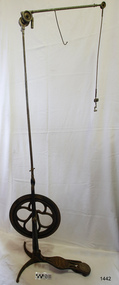
... Bow drills, hand drills and even a "bur thimble" drill were later used to prepare cavities for filling. ...Bow drills, hand drills and even a "bur thimble" drill were later used to prepare cavities for filling. ...The design of this and other similar treadle powered dental engine (or dentist drill) was in common use by dentists from the 1870’s into the 1920's. When electricity became accessible to most communities the electrically powered dental engines began to take over from the treadle power. Over the ages teeth were extracted using picks and scissors and other gouging instruments. Bow drills, hand drills and even a "bur thimble" drill were later used to prepare cavities for filling. Some drills were made bendable by attaching flexible shanks between the metal bur and the handle, giving access to the teeth at the back of the mouth. Other mechanical devices were introduced along the way, such as clockwork drills, but they were hard to handle and inefficient. Over the centuries “dentistry has been performed by priests, monks and other healers. This was followed by barbers; the barber’s chair may well have been the precursor to the dental chair. “(SA Medical Heritage Society Inc.) In 1871 James Morrison patented the first commercially manufactured 'foot treadle dental engine', the first practica dental engine although others had been introduced as early as 1790 (by John Greenwood). Handmade steel burs or drills were introduced for dental handpieces, taking advantage of the significant increase in the speed of the drill. In 1891 the first machine-made steel burs were in use. The treadle drill reduced the time to prepare a cavity from hours to less than ten minutes. In 1876 the Samuel S. White Catalogue of Dentist Instruments listed a 12 ½ inch wheel diameter dental engine, with 14 bright steel parts, for sale at US $55 In today’s market, this is the equivalent to US $1200 approx. The specifications of that dental engine are very similar to the this one in our Flagstaff Hill Maritime Village’s collection. It is interesting to note that workings of a similar treadle dentist drill were used and modified to power a treadle spinning wheel of one of the volunteer spinners at Flagstaff Hill Maritime Village. The foot treadle dental engine was a milestone in dental history. “Historic importance of treadle powered machines; they made use of human power in an optimal way” (Lowtech Magazine “Short history of early pedal powered machines”) The invention of a machine to speed up the process of excavation of a tooth lead to the invention of new burs and drills for the handpieces, improving speed and the surgical process of dentistry. They were the fore-runner of today’s electrically powered dental engines. This treadle-powered dentist drill, or dentist engine, is made of iron and steel and provides power for a mechanical dental handpiece that would be fitted with a dental tool. On the foot is painted lettering naming it "The Brentfield" and there is a fine line of light coloured paint creating a border around the name. The paint under the lettering is peeling off. The drill has a Y-shaped, three footed cast iron base, one foot being longer than the other two. A vertical frame is joined into the centre of the base, holding an axle that has a driving-wheel (or flywheel) and connecting to a crank. A slender, shoulder height post, made from adjustable telescoping pipes, joins into the top of this frame. On the post just above the frame is a short metal, horizontal bar (to hold the hand-piece when it is not in use). A narrow tubular arm is attached to the top of the stand at a right angle and can move up, down and around. There is a pulley each side of the joint of the arm and a short way along the arm is fitted a short metal pipe. A little further along the arm a frayed-ended cord hangs down from a hole. At the end of the arm is another pulley and a joint from which hangs a long, thin metal pipe with two pulleys and a fitting on the end. A treadle, or foot pedal, is joined to the long foot of the base, and joined at the toe to the crank that turns the driving-wheel. The metal driving-wheel has a wide rim. Touching the inside of the rim are four tubular rings that bulge towards the outside of the driving-wheel, away from the pole, and all meet at the hub of the axle. The axle fits between the inside of the driving-wheel and the frame then passes through the frame and is attached on the other side. The driving-wheel has a groove around which a belt would sit. The belt would also fit around a pulley on the arm, at the top of the post. The pulley is joined to a rod inside the arm and this spins the drill's hand-piece and dental tool holder. The foot pedal has a cross-hatch pattern on the heel and the ball of the foot has tread lines across it. The end of the toe and the instep areas have cut-out pattern in them. "The ____/ Brentfield / __ DE IN L___" (Made in London) painted on the long foot of the base. Marked on the drill connection is “Richter De Trey, Germany”flagstaff hill, warrnambool, shipwrecked coast, flagstaff hill maritime museum, maritime museum, shipwreck coast, flagstaff hill maritime village, great ocean road, dentist, teeth, dental drill, dental engine, treadle drill, foot powered drill, treadle engine, orthodontics, dental surgery, james morrison, the brentfield, richter de trey, german dental fitting, london dental drill -
 Bendigo Historical Society Inc.
Book - ALEC H CHISHOLM COLLECTION: BOOK ''THE MERRY MUSES OF CALEDONIA'' BY ROBERT BURNS
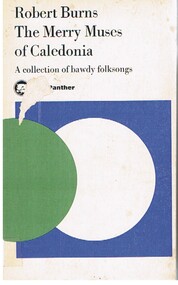
... Catalogue sticker '2042 BUR' on spine. Handwritten in biro on first page 'to the Old Pretender from the Young'....Catalogue sticker '2042 BUR' on spine. Handwritten in biro on first page 'to the Old Pretender from the Young'. ...Book. ALEC H CHISHOLM COLLECTION. 223 page paperback collection of bawdy folk-songs by Robert Burns. Includes an 8 page glossary of Scottish words. Edited by James Barke and Sydney Goodsir Smith. Notes by J. De Lancey Ferguson. Published by Panther Books in 1966 and printed by C.Nicholls & Co. Ltd., England. Catalogue sticker '2042 BUR' on spine. Handwritten in biro on first page 'to the Old Pretender from the Young'.Robert Burnsbooks, collections, poetry, alec h chisholm collection, robert burns, poetry -
 Flagstaff Hill Maritime Museum and Village
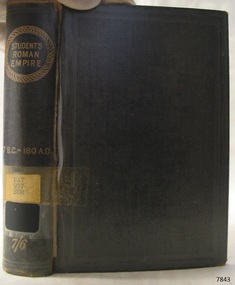
Book - Reference Book/History, John Murray, A History of The Roman Empire From it’s Foundation To The Death of Marcus Aurelius. (27 B.C to 180 A.D), 1893
... Label on spine cover with typed text PAT 937 BUR Paste down front end paper has sticker from Warrnambool Mechanics Institute and Free Library Front loose end paper has a sticker from Corangamite Regional Library Service...Label on spine cover with typed text PAT 937 BUR Paste down front end paper has sticker from Warrnambool Mechanics Institute and Free Library Front loose end paper has a sticker from Corangamite Regional Library Service A History of The Roman Empire The Students Roman Empire Black Hard cover gold embossing for lettering on spine no ribbing Date: 1893 (This is a British first edition) A History of The Roman Empire From it’s Foundation To The Death of Marcus Aurelius. (27 B.C to 180 A.D) Book Reference Book/History John Murray John Bagnell Bury ...J. B. Bury’s “A History of the Roman Empire from Its Foundation to the Death of Marcus Aurelius (27 B.C.–180 A.D.)” is a 1893 Victorian era scholarly survey of the early Roman Empire, written for students but still widely valued for its clear prose and careful use of evidence. It is also commonly known by the title The Student’s Roman Empire in some editions and catalogue records.A History of The Roman Empire The Students Roman Empire Black Hard cover gold embossing for lettering on spine no ribbing Date: 1893 (This is a British first edition) non-fictionJ. B. Bury’s “A History of the Roman Empire from Its Foundation to the Death of Marcus Aurelius (27 B.C.–180 A.D.)” is a 1893 Victorian era scholarly survey of the early Roman Empire, written for students but still widely valued for its clear prose and careful use of evidence. It is also commonly known by the title The Student’s Roman Empire in some editions and catalogue records. warrnambool, shipwrecked-coast, flagstaff-hill, flagstaff-hill-maritime-museum, maritime-museum, flagstaff-hill-maritime-village, book, pattison collection, warrnambool library, warrnambool mechanics’ institute, ralph eric pattison, corangamite regional library service, mechanics’ institute library, victorian library board, warrnambool books and records, marcus aurekius, a history of the roman empire, j b bury -
 Flagstaff Hill Maritime Museum and Village
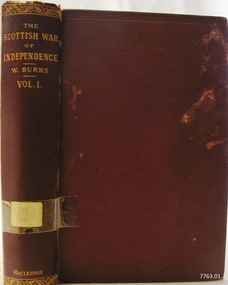
Book, The Scottish War of Independence Vol 1
... Label on spine cover with typed text PAT 941 BUR Pastedown front endpaper has sticker from Warrnambool Public Library covered by a sticker from Corangamite Regional Library Service Front loose endpaper has a stamp from Corangamite Regional Library Service ...Warrnambool Shipwrecked-coast Flagstaff-Hill Flagstaff-Hill-Maritime-Museum Maritime-Museum Shipwreck-coast Flagstaff-Hill-Maritime-Village Shipwrecked-artefact Book Pattison Collection Warrnambool Library Warrnambool Mechanics’ Institute Ralph Eric Pattison Corangamite Regional Library Service Warrnambool City Librarian Mechanics’ Institute Library Victorian Library Board Warrnambool books and records Warrnambool Children’s Library Great Ocean Road The Scottish War of Independence Vol 1 William Burns Label on spine cover with typed text PAT 941 BUR Pastedown front endpaper has sticker from Warrnambool Public Library covered by a sticker from Corangamite Regional Library Service Front loose endpaper has a stamp from Corangamite Regional Library Service The Scottish War of Independence Vol 1 Its Antecedents and Effects Author: William Burns Publisher: James Maclehose Date: 1874 The Scottish War of Independence Vol 1 Book ...This item is from the ‘Pattison Collection’, a collection of books and records that was originally owned by the Warrnambool Mechanics’ Institute, which was founded in Warrnambool in 1853. By 1886 the Warrnambool Mechanics’ Institute (WMI) had grown to have a Library, Museum and Fine Arts Gallery, with a collection of “… choice productions of art, and valuable specimens in almost every branch and many wonderful national curiosities are now to be seen there, including historic relics of the town and district.” It later included a School of Design. Although it was very well patronised, the lack of financial support led the WMI in 1911 to ask the City Council to take it over. In 1935 Ralph Pattison was appointed as City Librarian to establish and organise the Warrnambool Library as it was then called. When the WMI building was pulled down in 1963 a new civic building was erected on the site and the new Warrnambool Library, on behalf of the City Council, took over all the holdings of the WMI. At this time some of the items were separated and identified as the ‘Pattison Collection’, named after Ralph Pattison. Eventually the components of the WMI were distributed from the Warrnambool Library to various places, including the Art Gallery, Historical Society and Flagstaff Hill. Later some were even distributed to other regional branches of Corangamite Regional Library and passed to and fro. It is difficult now to trace just where all of the items have ended up. The books at Flagstaff Hill Maritime Village generally display stamps and markings from Pattison as well as a variety of other institutions including the Mechanics’ Institute itself. RALPH ERIC PATTISON Ralph Eric Pattison was born in Rockhampton, Queensland, in 1891. He married Maude Swan from Warrnambool in 1920 and they set up home in Warrnambool. In 1935 Pattison accepted a position as City Librarian for the Warrnambool City Council. His huge challenge was to make a functional library within two rooms of the Mechanics’ Institute. He tirelessly cleaned, cleared and sorted a disarrayed collection of old books, jars of preserved specimens and other items reserved for exhibition in the city’s museum. He developed and updated the library with a wide variety of books for all tastes, including reference books for students; a difficult task to fulfil during the years following the Depression. He converted all of the lower area of the building into a library, reference room and reading room for members and the public. The books were sorted and stored using a cataloguing and card index system that he had developed himself. He also prepared the upper floor of the building and established the Art Gallery and later the Museum, a place to exhibit the many old relics that had been stored for years for this purpose. One of the treasures he found was a beautiful ancient clock, which he repaired, restored and enjoyed using in his office during the years of his service there. Ralph Pattison was described as “a meticulous gentleman whose punctuality, floorless courtesy and distinctive neat dress were hallmarks of his character, and ‘his’ clock controlled his daily routine, and his opening and closing of the library’s large heavy doors to the minute.” Pattison took leave during 1942 to 1945 to serve in the Royal Australian Navy, Volunteer Reserve as Lieutenant. A few years later he converted one of the Museum’s rooms into a Children’s Library, stocking it with suitable books for the younger generation. This was an instant success. In the 1950’s he had the honour of being appointed to the Victorian Library Board and received more inspiration from the monthly conferences in Melbourne. He was sadly retired in 1959 after over 23 years of service, due to the fact that he had gone over the working age of council officers. However he continued to take a very keen interest in the continual development of the Library until his death in 1969. The Pattison Collection, along with other items at Flagstaff Hill Maritime Village, was originally part of the Warrnambool Mechanics' Institute’s collection. The Warrnambool Mechanics’ Institute Collection is primarily significant in its totality, rather than for the individual objects it contains. Its contents are highly representative of the development of Mechanics' Institute libraries across Australia, particularly Victoria. A diversity of publications and themes has been amassed, and these provide clues to our understanding of the nature of and changes in the reading habits of Victorians from the 1850s to the middle of the 20th century. The collection also highlights the Warrnambool community’s commitment to the Mechanics’ Institute, reading, literacy and learning in the regions, and proves that access to knowledge was not impeded by distance. These items help to provide a more complete picture of our community’s ideals and aspirations. The Warrnambool Mechanics Institute book collection has historical and social significance for its strong association with the Mechanics Institute movement and the important role it played in the intellectual, cultural and social development of people throughout the latter part of the nineteenth century and the early twentieth century. The collection of books is a rare example of an early lending library and its significance is enhanced by the survival of an original collection of many volumes. The Warrnambool Mechanics' Institute’s publication collection is of both local and state significance. The Scottish War of Independence Vol 1 Its Antecedents and Effects Author: William Burns Publisher: James Maclehose Date: 1874Label on spine cover with typed text PAT 941 BUR Pastedown front endpaper has sticker from Warrnambool Public Library covered by a sticker from Corangamite Regional Library Service Front loose endpaper has a stamp from Corangamite Regional Library Service warrnambool, shipwrecked-coast, flagstaff-hill, flagstaff-hill-maritime-museum, maritime-museum, shipwreck-coast, flagstaff-hill-maritime-village, shipwrecked-artefact, book, pattison collection, warrnambool library, warrnambool mechanics’ institute, ralph eric pattison, corangamite regional library service, warrnambool city librarian, mechanics’ institute library, victorian library board, warrnambool books and records, warrnambool children’s library, great ocean road, the scottish war of independence vol 1, william burns -
 Flagstaff Hill Maritime Museum and Village
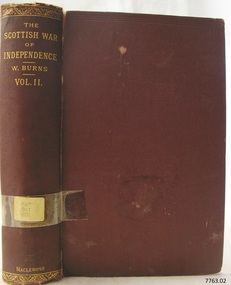
Book, The Scottish War of Independence Vol 2
... Label on spine cover with typed text PAT 941 BUR Pastedown front endpaper has sticker from Warrnambool Public Library covered by a sticker from Corangamite Regional Library Service Front loose endpaper has a stamp from Corangamite Regional Library Service ...Warrnambool Shipwrecked-coast Flagstaff-Hill Flagstaff-Hill-Maritime-Museum Maritime-Museum Shipwreck-coast Flagstaff-Hill-Maritime-Village Shipwrecked-artefact Book Pattison Collection Warrnambool Library Warrnambool Mechanics’ Institute Ralph Eric Pattison Corangamite Regional Library Service Warrnambool City Librarian Mechanics’ Institute Library Victorian Library Board Warrnambool books and records Warrnambool Children’s Library Great Ocean Road The Scottish War of Independence Vol 2 William Burns Label on spine cover with typed text PAT 941 BUR Pastedown front endpaper has sticker from Warrnambool Public Library covered by a sticker from Corangamite Regional Library Service Front loose endpaper has a stamp from Corangamite Regional Library Service The Scottish War of Independence Vol 2 Its Antecedents and Effects Author: William Burns Publisher: James Maclehose Date: 1874 The Scottish War of Independence Vol 2 Book ...This item is from the ‘Pattison Collection’, a collection of books and records that was originally owned by the Warrnambool Mechanics’ Institute, which was founded in Warrnambool in 1853. By 1886 the Warrnambool Mechanics’ Institute (WMI) had grown to have a Library, Museum and Fine Arts Gallery, with a collection of “… choice productions of art, and valuable specimens in almost every branch and many wonderful national curiosities are now to be seen there, including historic relics of the town and district.” It later included a School of Design. Although it was very well patronised, the lack of financial support led the WMI in 1911 to ask the City Council to take it over. In 1935 Ralph Pattison was appointed as City Librarian to establish and organise the Warrnambool Library as it was then called. When the WMI building was pulled down in 1963 a new civic building was erected on the site and the new Warrnambool Library, on behalf of the City Council, took over all the holdings of the WMI. At this time some of the items were separated and identified as the ‘Pattison Collection’, named after Ralph Pattison. Eventually the components of the WMI were distributed from the Warrnambool Library to various places, including the Art Gallery, Historical Society and Flagstaff Hill. Later some were even distributed to other regional branches of Corangamite Regional Library and passed to and fro. It is difficult now to trace just where all of the items have ended up. The books at Flagstaff Hill Maritime Village generally display stamps and markings from Pattison as well as a variety of other institutions including the Mechanics’ Institute itself. RALPH ERIC PATTISON Ralph Eric Pattison was born in Rockhampton, Queensland, in 1891. He married Maude Swan from Warrnambool in 1920 and they set up home in Warrnambool. In 1935 Pattison accepted a position as City Librarian for the Warrnambool City Council. His huge challenge was to make a functional library within two rooms of the Mechanics’ Institute. He tirelessly cleaned, cleared and sorted a disarrayed collection of old books, jars of preserved specimens and other items reserved for exhibition in the city’s museum. He developed and updated the library with a wide variety of books for all tastes, including reference books for students; a difficult task to fulfil during the years following the Depression. He converted all of the lower area of the building into a library, reference room and reading room for members and the public. The books were sorted and stored using a cataloguing and card index system that he had developed himself. He also prepared the upper floor of the building and established the Art Gallery and later the Museum, a place to exhibit the many old relics that had been stored for years for this purpose. One of the treasures he found was a beautiful ancient clock, which he repaired, restored and enjoyed using in his office during the years of his service there. Ralph Pattison was described as “a meticulous gentleman whose punctuality, floorless courtesy and distinctive neat dress were hallmarks of his character, and ‘his’ clock controlled his daily routine, and his opening and closing of the library’s large heavy doors to the minute.” Pattison took leave during 1942 to 1945 to serve in the Royal Australian Navy, Volunteer Reserve as Lieutenant. A few years later he converted one of the Museum’s rooms into a Children’s Library, stocking it with suitable books for the younger generation. This was an instant success. In the 1950’s he had the honour of being appointed to the Victorian Library Board and received more inspiration from the monthly conferences in Melbourne. He was sadly retired in 1959 after over 23 years of service, due to the fact that he had gone over the working age of council officers. However he continued to take a very keen interest in the continual development of the Library until his death in 1969. The Pattison Collection, along with other items at Flagstaff Hill Maritime Village, was originally part of the Warrnambool Mechanics' Institute’s collection. The Warrnambool Mechanics’ Institute Collection is primarily significant in its totality, rather than for the individual objects it contains. Its contents are highly representative of the development of Mechanics' Institute libraries across Australia, particularly Victoria. A diversity of publications and themes has been amassed, and these provide clues to our understanding of the nature of and changes in the reading habits of Victorians from the 1850s to the middle of the 20th century. The collection also highlights the Warrnambool community’s commitment to the Mechanics’ Institute, reading, literacy and learning in the regions, and proves that access to knowledge was not impeded by distance. These items help to provide a more complete picture of our community’s ideals and aspirations. The Warrnambool Mechanics Institute book collection has historical and social significance for its strong association with the Mechanics Institute movement and the important role it played in the intellectual, cultural and social development of people throughout the latter part of the nineteenth century and the early twentieth century. The collection of books is a rare example of an early lending library and its significance is enhanced by the survival of an original collection of many volumes. The Warrnambool Mechanics' Institute’s publication collection is of both local and state significance. The Scottish War of Independence Vol 2 Its Antecedents and Effects Author: William Burns Publisher: James Maclehose Date: 1874Label on spine cover with typed text PAT 941 BUR Pastedown front endpaper has sticker from Warrnambool Public Library covered by a sticker from Corangamite Regional Library Service Front loose endpaper has a stamp from Corangamite Regional Library Service warrnambool, shipwrecked-coast, flagstaff-hill, flagstaff-hill-maritime-museum, maritime-museum, shipwreck-coast, flagstaff-hill-maritime-village, shipwrecked-artefact, book, pattison collection, warrnambool library, warrnambool mechanics’ institute, ralph eric pattison, corangamite regional library service, warrnambool city librarian, mechanics’ institute library, victorian library board, warrnambool books and records, warrnambool children’s library, great ocean road, the scottish war of independence vol 2, william burns -
 Whitehorse Historical Society Inc.
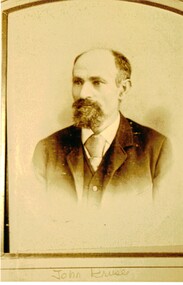
Photograph, John Kruse
... Born in Germany he had spent some time in Australia bur eventually settled in Pittsburg USA. Thirteen years after August died, Wilhelmina moved to Pittsburg with John & Mary, but within three years Wilhelmina and son John had died. ...Born in Germany he had spent some time in Australia bur eventually settled in Pittsburg USA. Thirteen years after August died, Wilhelmina moved to Pittsburg with John & Mary, but within three years Wilhelmina and son John had died. ...John Kruse was the brother of August Schwerkolt"s second wife, Wilhelmina. Born in Germany he had spent some time in Australia bur eventually settled in Pittsburg USA. Thirteen years after August died, Wilhelmina moved to Pittsburg with John & Mary, but within three years Wilhelmina and son John had died. Mary, then an orphan lived with uncle John Kruse. In 1909 John and Mary sailed to Melbourne in order to regain the titles of both the Northcote & Mitcham properties, which they were able to do.Sepia photograph of John Kruse, brother of Wilhelmina Schwerkolt.The name John Kruse written on the bottom of photographkruse john, schwerkolt wilhelmina -
 Bendigo Historical Society Inc.
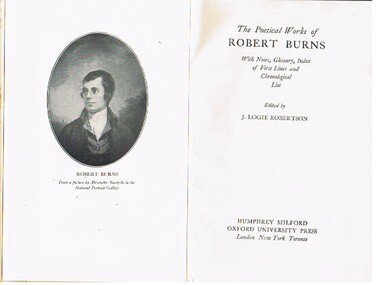
Book - ALEC H CHISHOLM COLLECTION: BOOK ''THE POETICAL WORKS OF ROBERT BURNS''
... Catalogue sticker '2041 BUR' on spine. Two newspaper articles marking the birthday of Robert Burns (25 Jan. 1759) inside front cover. ...Catalogue sticker '2041 BUR' on spine. Two newspaper articles marking the birthday of Robert Burns (25 Jan. 1759) inside front cover. ...Book. ALEC H CHISHOLM COLLECTION. 635 page hardback collection of verse by Robert Burns. Edited by J. Logie Robertson with notes, glossary and index to first lines. Image of Robert Burns opposite title page. Published in 1942 by Oxford University Press. Printed by Latimer Trend & Co., Plymouth. Catalogue sticker '2041 BUR' on spine. Two newspaper articles marking the birthday of Robert Burns (25 Jan. 1759) inside front cover. The Age 27/01/1951 and the Sydney Morning Herald 23/01/1971.Robert Burnsbooks, collections, poetry, alec h chisholm collection, robert burns, poetry -
 4th/19th Prince of Wales's Light Horse Regiment Unit History Room
Newspaper articles, as described
... "Army" 13 Nov 2008 "Last to fall in Great War" by Peter Burness 3. The Australian 26-27 Sep 1998 "Digging In" by Ross McMullin about the mutinies in the 59th Battalion in 1918 4, The Age 10 Nov 1998 "Lest We Forget" by Geoffrey Blainey- A special feature to mark the 80th anniversary of the end gof World War 1..."Army" 13 Nov 2008 "Last to fall in Great War" by Peter Burness 3. The Australian 26-27 Sep 1998 "Digging In" by Ross McMullin about the mutinies in the 59th Battalion in 1918 4, The Age 10 Nov 1998 "Lest We Forget" by Geoffrey Blainey- A special feature to mark the 80th anniversary of the end gof World War 1 Newspaper articles ...Four newspaper articles about the First World War. 1. Australian Financial Review 2-3 Nov 2013 "Abbots new Western Front to usurp the Gallipoli legend" by Phillip Coorey 2. "Army" 13 Nov 2008 "Last to fall in Great War" by Peter Burness 3. The Australian 26-27 Sep 1998 "Digging In" by Ross McMullin about the mutinies in the 59th Battalion in 1918 4, The Age 10 Nov 1998 "Lest We Forget" by Geoffrey Blainey- A special feature to mark the 80th anniversary of the end gof World War 1newspaper articles, world war 1 -
 The Beechworth Burke Museum
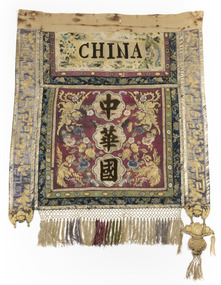
Textile - Banner, c1872
... In 2015, with the enormous support of the Copland Foundation and fundraising activities by the Friends of the Bur Museum Committee, conservation of the third banner was undertaken by Artlab Australia in Adelaide. ...In 2015, with the enormous support of the Copland Foundation and fundraising activities by the Friends of the Bur Museum Committee, conservation of the third banner was undertaken by Artlab Australia in Adelaide. ...This banner was one of five banners gifted to the Beechworth Chinese community in recognition of their support of the Hospital and Benevolent Asylum in 1875, from the Carnival Committee. These banners had been purchased in China by a social envoy from Beechworth then presented to the Chinese community during the Beechworth Fine Arts Exhibition in May of that same year, by Donald Fiddes, President of the Ovens District Hospital. The Burke Museum's Chinese Collection presents the history of Chinese settlement in Beechworth from 1856 and its involvement in local community affairs in the second half of the 19th century. In settling in the area they formed their own community with distinctive Chinese cultural traditions, forming their own 'camps' with laid out streets, housing a Temple, Chinese Theatre and restaurants, hotels, stores, gambling houses and dwellings. Members of the Chinese community took an active interest in town affairs and were generous donors to the appeal to build the Ovens District Hospital in 1856/7. The vibrant colours and dynamic graphics of the silk embroidered Chinese banners were a highlight of Beechworth Charitable processions that took place in the main street. Two of the Chinese banners were conserved for the Burke Museum in 2006 by Carol Campbell of Phoenix Conservation Services with funding from Victoria’s Heritage Grants. In 2015, with the enormous support of the Copland Foundation and fundraising activities by the Friends of the Bur Museum Committee, conservation of the third banner was undertaken by Artlab Australia in Adelaide. The banners display traditional Chinese textile techniques and are visually beautiful and very rare and are considered of local and national significance, with the potential to be deemed internationally significant.Multi panelled banner with embroidery and applied design motifs on front. Back panel is painted design of two men. The front panels have been constructed using strips of various weaves and colours of silk that have been embroidered or had a design applied prior to the overall construction of the piece. The embroidery is predominantly gold work with both plyed and floss silk threads. Silk macrame fringe and tassels to central panel and padded lotus and bowl motif hanging tassel from side panels. Velvet lettering applied to front "CHINA" CHINA /beechworth, burke museum, chinese, benevolent asylum, ovens district hospital, beechworth carnival processions, carnival, processions, beechworth chinese community, beechworth fine arts exhibition, donald fiddes -
 The Beechworth Burke Museum
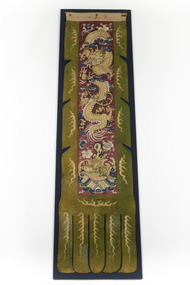
Textile - Banner, c1872
... In 2015, with the enormous support of the Copland Foundation and fundraising activities by the Friends of the Bur Museum Committee, conservation of the third banner was undertaken by Artlab Australia in Adelaide....In 2015, with the enormous support of the Copland Foundation and fundraising activities by the Friends of the Bur Museum Committee, conservation of the third banner was undertaken by Artlab Australia in Adelaide. ...This banner was one of five banners gifted to the Beechworth Chinese community in recognition of their support of the Hospital and Benevolent Asylum in 1875, from the Carnival Committee. These banners had been purchased in China by a social envoy from Beechworth then presented to the Chinese community during the Beechworth Fine Arts Exhibition in May of that same year, by Donald Fiddes, President of the Ovens District Hospital. The Burke Museum's Chinese Collection presents the history of Chinese settlement in Beechworth from 1856 and its involvement in local community affairs in the second half of the 19th century. In settling in the area they formed their own community with distinctive Chinese cultural traditions, forming their own 'camps' with laid out streets, housing a Temple, Chinese Theatre and restaurants, hotels, stores, gambling houses and dwellings. Members of the Chinese community took an active interest in town affairs and were generous donors to the appeal to build the Ovens District Hospital in 1856/7. The vibrant colours and dynamic graphics of the silk embroidered Chinese banners were a highlight of Beechworth Charitable processions that took place in the main street. Two of the Chinese banners were conserved for the Burke Museum in 2006 by Carol Campbell of Phoenix Conservation Services with funding from Victoria’s Heritage Grants. In 2015, with the enormous support of the Copland Foundation and fundraising activities by the Friends of the Bur Museum Committee, conservation of the third banner was undertaken by Artlab Australia in Adelaide.The banners display traditional Chinese textile techniques and are visually beautiful and very rare and are considered of local and national significance, with the potential to be deemed internationally significant.Multi panelled banner with embroidery and applied design motifs on front. The front panels have been constructed using strips of various weaves and colours of silk that have been embroidered or had a design applied prior to the overall construction of the piece. The embroidery is predominantly gold work with both plyed and floss silk threads.beechworth, burke museum, chinese, benevolent asylum, ovens district hospital, beechworth carnival processions, carnival, processions, beechworth chinese community, beechworth fine arts exhibition, donald fiddes -
 The Beechworth Burke Museum
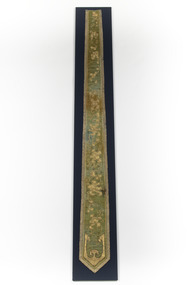
Textile - Banner, c1872
... In 2015, with the enormous support of the Copland Foundation and fundraising activities by the Friends of the Bur Museum Committee, conservation of the third banner was undertaken by Artlab Australia in Adelaide. ...In 2015, with the enormous support of the Copland Foundation and fundraising activities by the Friends of the Bur Museum Committee, conservation of the third banner was undertaken by Artlab Australia in Adelaide. ...This banner was one of five banners gifted to the Beechworth Chinese community in recognition of their support of the Hospital and Benevolent Asylum in 1875, from the Carnival Committee. These banners had been purchased in China by a social envoy from Beechworth then presented to the Chinese community during the Beechworth Fine Arts Exhibition in May of that same year, by Donald Fiddes, President of the Ovens District Hospital. The Burke Museum's Chinese Collection presents the history of Chinese settlement in Beechworth from 1856 and its involvement in local community affairs in the second half of the 19th century. In settling in the area they formed their own community with distinctive Chinese cultural traditions, forming their own 'camps' with laid out streets, housing a Temple, Chinese Theatre and restaurants, hotels, stores, gambling houses and dwellings. Members of the Chinese community took an active interest in town affairs and were generous donors to the appeal to build the Ovens District Hospital in 1856/7. The vibrant colours and dynamic graphics of the silk embroidered Chinese banners were a highlight of Beechworth Charitable processions that took place in the main street. Two of the Chinese banners were conserved for the Burke Museum in 2006 by Carol Campbell of Phoenix Conservation Services with funding from Victoria’s Heritage Grants. In 2015, with the enormous support of the Copland Foundation and fundraising activities by the Friends of the Bur Museum Committee, conservation of the third banner was undertaken by Artlab Australia in Adelaide. The banners display traditional Chinese textile techniques and are visually beautiful and very rare and are considered of local and national significance, with the potential to be deemed internationally significant.Multi panelled banner with embroidery and applied design motifs on front. The front panels have been constructed using strips of various weaves and colours of silk that have been embroidered or had a design applied prior to the overall construction of the piece. The embroidery is predominantly gold work with both plyed and floss silk threads.beechworth, burke museum, chinese, benevolent asylum, ovens district hospital, beechworth carnival processions, carnival, processions, beechworth chinese community, beechworth fine arts exhibition, donald fiddes
