
Showing 58 items matching " bus competition"
-
 Ballarat Tramway Museum
Newspaper, Trams Vs Buses, 17/09/1924 12:00:00 AM
... ... Bus Competition...ESCo Ballarat Public Transport Bus Competition By Laws Newspaper Clippings P Pringle Clipping from the West Australian, Perth, 17 September 1924, pg. 11, Ballarat Council introduces by-laws to control the completion between the tramways and bus companies. ...Clipping from the West Australian, Perth, 17 September 1924, pg. 11, Ballarat Council introduces by-laws to control the completion between the tramways and bus companies.esco, ballarat public transport, bus competition, by laws, newspaper clippings, p pringle -
Ballarat Tramway Museum
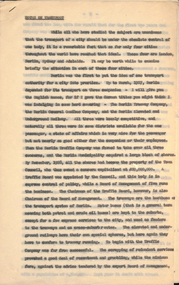
document - Correspondence, Electric Supply Co. of Vic (ESCo), Apr. 1929
... ... Bus Competition...Tram trams Bus Fares Bus Competition ESCo MMTB Licence Fees Melbourne Brighton Bus On top of the pink sheet written in pencil is the file number "22/1/2" and "52/1/15". ...Set of two letters between Mr. P. J. Pringle of ESCo Ballarat and Mr. D. Murdoch, General Manager of the TB Melbourne and a copy of the Victorian Government Gazette of Wed. 20/3/1929 regarding fares along the same routes that trams and buses travel. In Bendigo and Melbourne, the fare by bus was 1 penny more than the tram. 1976.1 - Victorian Government Gazette - No. 32 - 20/3/1929 - pages 1067 to 1124 - with page 1081 highlighted on the front cover in blue pencil and a ESCo date received stamp (16/4/1929) on the front cover. Page 1081 details the City of Bendigo's By- Laws and Regulations No. 58, pursuant to the Urban and Country Act of 1927, relating to Motor Omnibuses. Details the requirements of bus owners in the Bendigo district, definitions, licence fees, routes and fares, timetables over five pages. Following this item are similar regulations for the Shire of Mildura (p1086). Item 335H x 210W, consisting of four staple sections. Damaged on left hand edges, particularly around page 1081 where the two letters were pinned. (Removed at time of cataloguing). Also yellowing and damage due to silver fish along bottom edge. Printed by H.J. Green Government Printer, Melbourne. 1976.2 - Letter from Mr. P. J. Pringle (ESCo) to A. D. Murdoch Manger TB dated 16/4/1929 forwarding a copy of the Bendigo Motor Bus regulations and noted that where the buses traversed the tram routes, the fare is 1d more and that the buses have regular service schedules. Licence fee is 5/- per annum per passenger that the bus can carry. Mr. Pringle thought that this was inadequate. Also notes the cost of insurance. On ESCo letterhead - two pages white paper, has been folded into 6, pinned in the top left hand corner., damaged on the right hand edge and top left hand corner. Size 262H x 203W. 1976.3 - Carbon copy of letter from Mr. Murdoch to Mr. Pringle on pink paper, dated 20/4/1929 thanking of the advice and noting that on the Melbourne - Brighton - Caulfield route, the minimum fare where the bus traverses the same route as the tram, is 5d, while the tram fare is 4d. All corners damaged or folded, silver fish damage on right hand edge. Size - 336H x 2089W. See Reg Item No. 2260.1 and 2260.2 for the relevant Acts of Parliament On top of the pink sheet written in pencil is the file number "22/1/2" and "52/1/15".tram, trams, bus fares, bus competition, esco, mmtb, licence fees, melbourne brighton bus -
 Melbourne Tram Museum
Document - Lecture Notes, Melbourne & Metropolitan Tramways Board (MMTB), "Notes on Transport", late 1930's
... ... Bus Competition...Trams tramways Berlin Adelaide London Sydney Buses Bus Services Concession Fares Bus Competition Melbourne Brighton Bus Lecture Notes - 7 carbon copies (poor) on foolscap sheet, titled "Notes on Transport" providing details. ...Lecture Notes - 7 carbon copies (poor) on foolscap sheet, titled "Notes on Transport" providing details. World cities that control transport entirely (London, Berlin, Sydney and Adelaide). The MMTB Act (20 years ago), its formation position in transport management in Melbourne, bus service history in Melbourne and poor performance, granting of bus licences, issues with this, Melbourne Brighton bus company, MMTB bus operations. The need for the MMTB to do road maintenance, annual payments for road works, Fire Brigade etc and fare concessions. Notes the VR get reimbursed for blind and incapacitated soldiers. Two copies heldtrams, tramways, berlin, adelaide, london, sydney, buses, bus services, concession fares, bus competition, melbourne brighton bus -
 Melbourne Tram Museum
Photograph - Illustration/s, James Flood Charity Trust, c1920
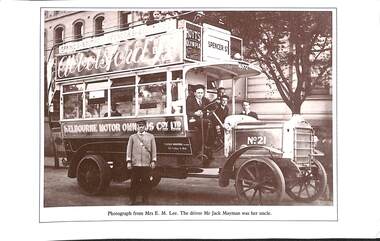
... ... Competition...bus...The bus has adverts for Hoyts Olympia and Abbotsford Ale. The buses ran in competition with the tram services. The illustration is part of an Order for the Book, Victoria Illustrated, published during 1984....Trams tramways Buses Collins St Bourke St Competition bus 21 Illustration of a Melbourne Motor Omnibus Co Ltd. ...Illustration of a Melbourne Motor Omnibus Co Ltd. Bus, No. 21, possibly at Spring St, on a bus route that operated via Bourke, Spencer and Collins St. Has the destination of Spencer St. The conductor is in a uniform. The bus operated by F. Leslie Bruford, of 352 Collins St. The bus has adverts for Hoyts Olympia and Abbotsford Ale. The buses ran in competition with the tram services. The illustration is part of an Order for the Book, Victoria Illustrated, published during 1984.trams, tramways, buses, collins st, bourke st, competition, bus 21 -
 Melbourne Tram Museum
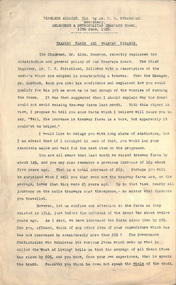
Document - Radio Transcript, Melbourne & Metropolitan Tramways Board (MMTB), "Wireless Address 3LO by Mr W. Strangward Secretary MMTB 17 June 1926 - Tramway Fares and Tramway Finance", Jun. 2916
... Notes that tram fares were raised by 14% last month, fare history, cost of living, the Board's slogan "Service at Cost", wages, cost of new tramways, cost of operations vs fares, the issue of State Government payments to the Infectious Diseases Hospital, Fire Bridges, and Licensing fees and the impact of these imposts, track maintenance costs, relationships with Councils, free travel, workmen fares, free passes to returned soldiers, new routes and bus competition. Two copies held....Notes that tram fares were raised by 14% last month, fare history, cost of living, the Board's slogan "Service at Cost", wages, cost of new tramways, cost of operations vs fares, the issue of State Government payments to the Infectious Diseases Hospital, Fire Bridges, and Licensing fees and the impact of these imposts, track maintenance costs, relationships with Councils, free travel, workmen fares, free passes to returned soldiers, new routes and bus competition. Two copies held. "Wireless Address 3LO by Mr W. ...Radio transcript - 8 foolscap sheets, stencil duplicated. Titled - "Wireless Address 3LO by Mr W. Strangward Secretary MMTB 17 June 1926 - Tramway Fares and Tramway Finance" First paragraph refers to previous radio broadcasts by the Chairman, Mr Strickland (track) and Mr Murdoch. Notes that tram fares were raised by 14% last month, fare history, cost of living, the Board's slogan "Service at Cost", wages, cost of new tramways, cost of operations vs fares, the issue of State Government payments to the Infectious Diseases Hospital, Fire Bridges, and Licensing fees and the impact of these imposts, track maintenance costs, relationships with Councils, free travel, workmen fares, free passes to returned soldiers, new routes and bus competition. Two copies held.trams, tramways, radio stations, fares, costs, victorian government, fire brigade, licence fees, buses, track repairs -
Ballarat Tramway Museum
Newspaper, The West Australian, "Trams Vs Buses", 17/09/1924 12:00:00 AM
... Digital image and transcript of a press cutting from The West Australian 17/9/1924 - "Trams vs Buses" providing a commentary on the issue of bus operation competition for tram passengers in Ballarat. ...ESCo Buses City Of Ballarat Competition Tramways Digital image and transcript of a press cutting from The West Australian 17/9/1924 - "Trams vs Buses" providing a commentary on the issue of bus operation competition for tram passengers in Ballarat. ...Digital image and transcript of a press cutting from The West Australian 17/9/1924 - "Trams vs Buses" providing a commentary on the issue of bus operation competition for tram passengers in Ballarat. Quotes from a letter written by ESCo Manager Mr Pringle to the Minister for Railways Mr J C Willcock. Notes the use of private buses, licensing issues with the Regulations, Council actions and the issue in general.esco, buses, city of ballarat, competition, tramways -
 Melbourne Tram Museum
Document - Report, Keith Kings, "The Privatisation of Melbourne's Public Transport - Has the wheel turned full circle?, Apr. 2002
... The lecture looks at early railway development in Melbourne, private operators, development of horse drawn buses in Melbourne, competition, bus chassis, body builders, operators, private suburban operators, tramway buses, cable tram MTOCo, tramway trusts, Government involvement, formation of The Met, PTC, V/Line, corporatisation of public transport, franchising, passenger expectations of public transport, Yarra Trams and the future....The lecture looks at early railway development in Melbourne, private operators, development of horse drawn buses in Melbourne, competition, bus chassis, body builders, operators, private suburban operators, tramway buses, cable tram MTOCo, tramway trusts, Government involvement, formation of The Met, PTC, V/Line, corporatisation of public transport, franchising, passenger expectations of public transport, Yarra Trams and the future. ...Set of two reports by Keith Kings, titled "The Privatisation of Melbourne's Public Transport - Has the wheel turned full circle? for the Second Annual RMIT Sir Robert Risson Memorial Lecture. See Reg Item 4679 for the first lecture by Graeme Turnbull. .1 - 12 A4 pages - Keith notes that it was the actual handout of the presentation. Two copies, one stapled. 2 - 20 A4 pages, single sides - copy of the initially drafted document. Both copies have handwritten notes about their origin and use. The lecture looks at early railway development in Melbourne, private operators, development of horse drawn buses in Melbourne, competition, bus chassis, body builders, operators, private suburban operators, tramway buses, cable tram MTOCo, tramway trusts, Government involvement, formation of The Met, PTC, V/Line, corporatisation of public transport, franchising, passenger expectations of public transport, Yarra Trams and the future.trams, tramways, buses, cable trams, mto co, public transport, competition, yarra trams, franchising, the met, ptc, tramways -
 Melbourne Tram Museum
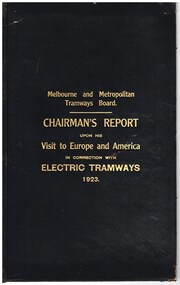
Document - Report, Melbourne & Metropolitan Tramways Board (MMTB), "Chairman's Report upon his Visit to Europe and America in connection with Electric Tramways 1923", 1924
... His conclusions - conduit system not desirable, and the need to regulate buses from competition with tramways. Has an appendix extracts of numerous reports, letters and papers about the various issues. ...His conclusions - conduit system not desirable, and the need to regulate buses from competition with tramways. Has an appendix extracts of numerous reports, letters and papers about the various issues. ...Report - black Rexene cloth card covers, 28 pages (including blank end and glued papers), sewn binding one section titled "Chairman's Report upon his Visit to Europe and America in connection with Electric Tramways 1923". Title gold blocked. Details Alex Cameron's 1923 visit to America, Great Britain and the Continent of Europe in connection (note different spelling to the cover) with electric tramways. In particular it was to investigate the question of the use of Conduit systems. Visited San Francisco, Los Angeles, Kansas City, St Louis, Chicago, Detroit, Cleveland, New York and Washington. Then to London, Paris, Brussels. Also attended the Municipal Tramways Association conference held in Portsmouth, August 1923. His conclusions - conduit system not desirable, and the need to regulate buses from competition with tramways. Has an appendix extracts of numerous reports, letters and papers about the various issues. Report dated 29th Oct. 1924. Second copy from the McComb collection added 5-1-2017 - scanned to a pdf - text readable when opened in Adobe format.Has a lable on the first page, "Plan & EPA Library M0036390" Second copy - has Mr. Lormer in the top left and right hand comers.trams, tramways, trams, tramways, mmtb, conduit systems, tramways, conversion, electrification, europe, usa -
 Federation University Historical Collection
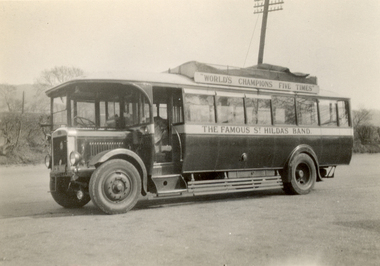
Photograph - Black and White, St Hilda's Band bus, 1934, April 1934
... The Frank Wright Medal at the Royal South Street competition is awarded to an individual recognized as making an outstanding contribution to brass music in Australia. frank wright st hildas band brass band vintage bus Written in pencil on back - Near Hastings, April 1934 Black and white photograph of a parked 1930's bus. ...Frank Wright was a renown resident of Smeaton, where he was born on 2 August 1901. He lived at Laura Villa, and attended Smeaton State School. His father William was a gold miner and his mother's name was Sarah. Their family won many singing and instrumental awards. Frank was tutored by Percy Code and was awarded a gold medal for the highest marks in the ALCM examinations in the British Colonies at the age of seventeen years. He became the Australian Open Cornet Champion by the age of eighteen. A year later, Frank conducted the City of Ballarat Band, and later the Ballarat Soldiers’ Memorial Band. He formed the Frank Wright Frisco Band and Frank Wright and his Coliseum Orchestra. These bands won many South Street awards, and Frank as conductor won many awards in the Australian Band Championship contest. In 1933 Frank Wright sailed to England to conduct the famous St Hilda’s Band and was later appointed Musical Director of the London County Council, where he organized many amazing concerts in parks, in and around the London district. He was made Professor of Brass and Military Band Scoring and conducted at the Guildhall of Music and Drama. Frank was often invited to adjudicate Brass Band Championships around Europe, in Australia, including South Street and in New Zealand. The Frank Wright Medal at the Royal South Street competition is awarded to an individual recognized as making an outstanding contribution to brass music in Australia.Black and white photograph of a parked 1930's bus. On the far side can be seen a telegraph pole and vegetation. The bus is sign written with 'World's Champion Five Times The Famous St Hildas Band'.Written in pencil on back - Near Hastings, April 1934frank wright, st hildas band, brass band, vintage bus -
 Federation University Historical Collection
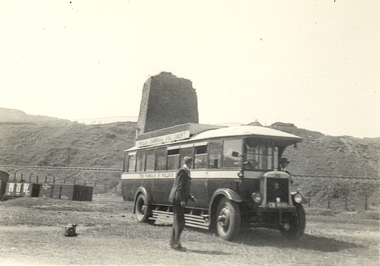
Photograph - Black and White, Frank Wright, St Hilda's Band bus at Llanelly, Wales, 29/5/1934
... The Frank Wright Medal at the Royal South Street competition is awarded to an individual recognized as making an outstanding contribution to brass music in Australia. frank wright 1930's bus welsh tower st hilda's band sthilda's band bus Written in pencil on back - Llanelly, Wales, 29/5/34 Black and white photograph of an early 1930's bus parked on the grass in the foreground, with a man standing on the hidden steps of the bus and another man walking in front. ...Frank Wright was a renown resident of Smeaton, where he was born on 2 August 1901. He lived at Laura Villa, and attended Smeaton State School. His father William was a gold miner and his mother's name was Sarah. Their family won many singing and instrumental awards. Frank was tutored by Percy Code and was awarded a gold medal for the highest marks in the ALCM examinations in the British Colonies at the age of seventeen years. He became the Australian Open Cornet Champion by the age of eighteen. A year later, Frank conducted the City of Ballarat Band, and later the Ballarat Soldiers’ Memorial Band. He formed the Frank Wright Frisco Band and Frank Wright and his Coliseum Orchestra. These bands won many South Street awards, and Frank as conductor won many awards in the Australian Band Championship contest. In 1933 Frank Wright sailed to England to conduct the famous St Hilda’s Band and was later appointed Musical Director of the London County Council, where he organized many amazing concerts in parks, in and around the London district. He was made Professor of Brass and Military Band Scoring and conducted at the Guildhall of Music and Drama. Frank was often invited to adjudicate Brass Band Championships around Europe, in Australia, including South Street and in New Zealand. The Frank Wright Medal at the Royal South Street competition is awarded to an individual recognized as making an outstanding contribution to brass music in Australia.Black and white photograph of an early 1930's bus parked on the grass in the foreground, with a man standing on the hidden steps of the bus and another man walking in front. In the middle distance rail lines can be seen on an embankment rising behind a post and wire fence and in the background a tower rises on the closest hill. The bus is the St Hilda's Band bus and the place is Llanelly in Wales.Written in pencil on back - Llanelly, Wales, 29/5/34frank wright, 1930's bus, welsh tower, st hilda's band, sthilda's band bus -
 Federation University Historical Collection
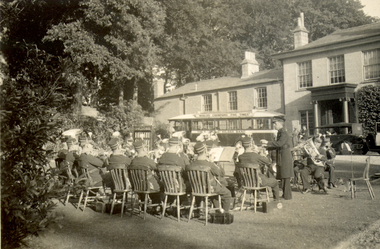
Photograph - Black and White, St. Hilda's Band at Lostwithiel, 1934
... The Frank Wright Medal at the Royal South Street competition is awarded to an individual recognized as making an outstanding contribution to brass music in Australia. frank wright brass band st hilda's band lostwithiel vintage bus Written in pencil on the back - St Hilda's (F.W, Conductor), Lostwithiel. 1934 Black and white photograph of a brass band seated on spindle backed, wooden chairs performing on a grassed area, surrounded on the left by large leafy trees and at the back by a two storied building. ...Frank Wright was a renown resident of Smeaton, where he was born on 2 August 1901. He lived at Laura Villa, and attended Smeaton State School. His father William was a gold miner and his mother's name was Sarah. Their family won many singing and instrumental awards. Frank was tutored by Percy Code and was awarded a gold medal for the highest marks in the ALCM examinations in the British Colonies at the age of seventeen years. He became the Australian Open Cornet Champion by the age of eighteen. A year later, Frank conducted the City of Ballarat Band, and later the Ballarat Soldiers’ Memorial Band. He formed the Frank Wright Frisco Band and Frank Wright and his Coliseum Orchestra. These bands won many South Street awards, and Frank as conductor won many awards in the Australian Band Championship contest. In 1933 Frank Wright sailed to England to conduct the famous St Hilda’s Band and was later appointed Musical Director of the London County Council, where he organized many amazing concerts in parks, in and around the London district. He was made Professor of Brass and Military Band Scoring and conducted at the Guildhall of Music and Drama. Frank was often invited to adjudicate Brass Band Championships around Europe, in Australia, including South Street and in New Zealand. The Frank Wright Medal at the Royal South Street competition is awarded to an individual recognized as making an outstanding contribution to brass music in Australia.Black and white photograph of a brass band seated on spindle backed, wooden chairs performing on a grassed area, surrounded on the left by large leafy trees and at the back by a two storied building. Parked in front of the building are a vintage car and an early 1930's bus. The band is St. Hilda's Band with Frank Wright as the conductor. The place is Lostwithiel.Written in pencil on the back - St Hilda's (F.W, Conductor), Lostwithiel. 1934frank wright, brass band, st hilda's band, lostwithiel, vintage bus -
 Federation University Historical Collection
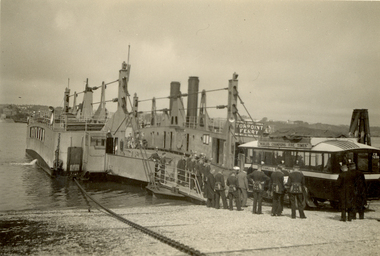
Photograph - Photograph - Black and White, St. Hilda's Bus and band members boarding the Torpoint Ferry, on the River Tamar, 1934
... The Frank Wright Medal at the Royal South Street competition is awarded to an individual recognized as making an outstanding contribution to brass music in Australia. frank wright st hilda's band st hilda's bus brass band torpoint ferry Written in pencil on back - St Hilda's Bus on Torpoint Ferry between Devon and Cornwall, 1934 Black and white photograph of an early 1930's bus boarding a vehicle and passenger chain ferry. ...Frank Wright was a renown resident of Smeaton, where he was born on 2 August 1901. He lived at Laura Villa, and attended Smeaton State School. His father William was a gold miner and his mother's name was Sarah. Their family won many singing and instrumental awards. Frank was tutored by Percy Code and was awarded a gold medal for the highest marks in the ALCM examinations in the British Colonies at the age of seventeen years. He became the Australian Open Cornet Champion by the age of eighteen. A year later, Frank conducted the City of Ballarat Band, and later the Ballarat Soldiers’ Memorial Band. He formed the Frank Wright Frisco Band and Frank Wright and his Coliseum Orchestra. These bands won many South Street awards, and Frank as conductor won many awards in the Australian Band Championship contest. In 1933 Frank Wright sailed to England to conduct the famous St Hilda’s Band and was later appointed Musical Director of the London County Council, where he organized many amazing concerts in parks, in and around the London district. He was made Professor of Brass and Military Band Scoring and conducted at the Guildhall of Music and Drama. Frank was often invited to adjudicate Brass Band Championships around Europe, in Australia, including South Street and in New Zealand. The Frank Wright Medal at the Royal South Street competition is awarded to an individual recognized as making an outstanding contribution to brass music in Australia.Black and white photograph of an early 1930's bus boarding a vehicle and passenger chain ferry. A group on men dressed in a band uniform are standing and watching the bus's progress. Land can be seen on both sides of the Tamar River. It is the Torpoint Ferry between Devonport in Plymouth and Torpoint in Cornwall. The men are the St. Hilda's Band, including Frank Wright, the conductor.Written in pencil on back - St Hilda's Bus on Torpoint Ferry between Devon and Cornwall, 1934frank wright, st hilda's band, st hilda's bus, brass band, torpoint ferry -
Marysville & District Historical Society
THE TRIANGLE NEWS-VOL 40 NO 49-DECEMBER 20 2013
... competition...marysville region really long lunch...mindfulness in marysville...yea community bus...marysville victoria australia marysville & district lions club friends of lions thanks triangle helpers what's on when in december the committee of management of the gallipoli park precinct australia day celebrations marysville community market creative triangle el kanah nye council recognises valuable work of ses church notices local carol services mayor's chair councillor comment yea arts carnivale 2014 advertisements real estate council adopts code red policy murrindindi shire council nye at crossways tender drainage upgrade-yea township half day closure council offices marysville golf report triangle christmas lights competition marysville region really long lunch mindfulness in marysville yea community bus kinglake library welcomes special storytime visitors black spur inn pizza and beer night cafe culture series 2014 council services over christmas/ny period 2013-2014 st john's parish hall dance alexandra resource recovery centres timetable THE TRIANGLE NEWS-VOL 40 NO 49-DECEMBER 20 2013 ...marysville, victoria, australia, marysville & district lions club, friends of lions, thanks triangle helpers, what's on when in december, the committee of management of the gallipoli park precinct, australia day celebrations, marysville community market, creative triangle, el kanah nye, council recognises valuable work of ses, church notices, local carol services, mayor's chair, councillor comment, yea arts carnivale 2014, advertisements, real estate, council adopts code red policy, murrindindi shire council, nye at crossways, tender drainage upgrade-yea township, half day closure council offices, marysville golf report, triangle christmas lights competition, marysville region really long lunch, mindfulness in marysville, yea community bus, kinglake library welcomes special storytime visitors, black spur inn pizza and beer night, cafe culture series 2014, council services over christmas/ny period 2013-2014, st john's parish hall dance alexandra, resource recovery centres timetable -
Marysville & District Historical Society
THE TRIANGLE NEWS-VOL 41 NO 5-FEBRUARY 14 2014
... competition...family picnic and fun day...buxton ridge vineyard wine tasting...church notices...the annual motorhome event at buxton...looking for helpers...highwood health...mayor's chair...planning and environment act 1987...adventurous cooks...black spur caravan park...t20 cricket comes to marysville...advertisements...payment of rate instalment...murrindindi shire council...marysville real estate...fallons bus...marysville victoria australia marysville & district lions club skate park/bmx/basketball practice area complete what's on when in february marysville p.s. parents club agm marysville op shop agm marysville sub branch rsl agm men's shed the committee of management of the gallipoli park precinct creative triangle marysville community market fishing competition family picnic and fun day buxton ridge vineyard wine tasting church notices the annual motorhome event at buxton looking for helpers highwood health mayor's chair planning and environment act 1987 adventurous cooks black spur caravan park t20 cricket comes to marysville advertisements payment of rate instalment murrindindi shire council marysville real estate fallons bus service alexandra marysville route service position vacant parks & gardens officer marysville branch liberal party agm valentine's day 3 course dinner black spur inn heartfelt thoughts mark anniversary murrindindi shire council kinglake office buxton hall show councillor comment irish band saoirse el kanah marysville culture community frog trail hopping along despite fungus foe department of environment & primary industries promote your community group on line opening of upper room restaurant regional information for 8 & 9 feb valentine's day maryton park made in marysville grand opening compensation bid 2009 black saturday fires scarecrow competition marysville region really long lunch buxton progress assocn rock 'n roll night at buxton hall murrindindi shire council welcomes new citizens world's greatest shave THE TRIANGLE NEWS-VOL 41 NO 5-FEBRUARY 14 2014 ...marysville, victoria, australia, marysville & district lions club, skate park/bmx/basketball practice area complete, what's on when in february, marysville p.s. parents club agm, marysville op shop agm, marysville sub branch rsl agm, men's shed, the committee of management of the gallipoli park precinct, creative triangle, marysville community market, fishing competition, family picnic and fun day, buxton ridge vineyard wine tasting, church notices, the annual motorhome event at buxton, looking for helpers, highwood health, mayor's chair, planning and environment act 1987, adventurous cooks, black spur caravan park, t20 cricket comes to marysville, advertisements, payment of rate instalment, murrindindi shire council, marysville real estate, fallons bus service alexandra marysville route service, position vacant parks & gardens officer, marysville branch liberal party agm, valentine's day 3 course dinner, black spur inn, heartfelt thoughts mark anniversary, murrindindi shire council kinglake office, buxton hall show, councillor comment, irish band saoirse, el kanah, marysville culture community, frog trail hopping along despite fungus foe, department of environment & primary industries, promote your community group on line, opening of upper room restaurant, regional information for 8 & 9 feb, valentine's day maryton park, made in marysville grand opening, compensation bid 2009 black saturday fires, scarecrow competition, marysville region really long lunch, buxton progress assocn, rock 'n roll night at buxton hall, murrindindi shire council welcomes new citizens, world's greatest shave -
Marysville & District Historical Society
THE TRIANGLE NEWS-VOL 41 NO 6-FEBRUARY 21 2014
... bus service alexandra marysville route service...position vacant parks & gardens officer...marysville branch liberal party agm...marysville skate park...need for feed...lions club of pakenham...free disposal of greenwaste...councillor comment...intrepid triangle bushwalkers...irish band saoirse...el kanah...marysville cultural community...irish andrew sisters...news from the gallipoli park precinct committee of management...scarecrow competition...marysville victoria australia made in marysville art craft and produce co op marysville central marysville and district lions welcome erin morrison to the triangle news team what's on when in february & march marsyville walks without hills marysville p.s. parents club agm marysville sub branch rsl agm the committee of management of the gallipoli park precinct marysville community market creative triangle marysville & district historical society resignation of mary kenealy buxton ridge vineyard wine tasting church notices the annual motorhome event at buxton world day of prayer national live theatre-warhorse mayor's chair murrindindi shire council advertise your regional tourism event for free adventurous cooks black spur caravan park advertisements chainsaw carving event marysville golf report daytime netball veterans football super 8's cricket at marysville alexandra district hospital display close the gap payment of rate instalment marysville real estate thank you from family picnic and fun day youth fundraiser australian government mobile service centre assistance temporary road closure darwin st fire prevention irrigation systems fallons bus service alexandra marysville route service position vacant parks & gardens officer marysville branch liberal party agm marysville skate park need for feed lions club of pakenham free disposal of greenwaste councillor comment intrepid triangle bushwalkers irish band saoirse el kanah marysville cultural community irish andrew sisters news from the gallipoli park precinct committee of management scarecrow competition buxton progress assocn rock 'n roll night at buxton hall marysville fire brigade news marysville region really long lunch the last of the yarra track stopping places book gallipoli park world's greatest shave THE TRIANGLE NEWS-VOL 41 NO 6-FEBRUARY 21 2014 ...marysville, victoria, australia, made in marysville art craft and produce co op, marysville central, marysville and district lions welcome erin morrison to the triangle news team, what's on when in february & march, marsyville walks without hills, marysville p.s. parents club agm, marysville sub branch rsl agm, the committee of management of the gallipoli park precinct, marysville community market, creative triangle, marysville & district historical society, resignation of mary kenealy, buxton ridge vineyard wine tasting, church notices, the annual motorhome event at buxton, world day of prayer, national live theatre-warhorse, mayor's chair, murrindindi shire council, advertise your regional tourism event for free, adventurous cooks, black spur caravan park, advertisements, chainsaw carving event, marysville golf report, daytime netball, veterans football, super 8's cricket at marysville, alexandra district hospital display, close the gap, payment of rate instalment, marysville real estate, thank you from family picnic and fun day youth fundraiser, australian government mobile service centre assistance, temporary road closure darwin st, fire prevention irrigation systems, fallons bus service alexandra marysville route service, position vacant parks & gardens officer, marysville branch liberal party agm, marysville skate park, need for feed, lions club of pakenham, free disposal of greenwaste, councillor comment, intrepid triangle bushwalkers, irish band saoirse, el kanah, marysville cultural community, irish andrew sisters, news from the gallipoli park precinct committee of management, scarecrow competition, buxton progress assocn, rock 'n roll night at buxton hall, marysville fire brigade news, marysville region really long lunch, the last of the yarra track stopping places book, gallipoli park, world's greatest shave -
Federation University Historical Collection
Photograph - Photographs, Ballarat University College, School of Business formal occasions, 1985-88
... Holmes Farewell 1986 .22-24) Graduation Dinner 1985 .25) Brian West 1986 .26) Bev Sparks 1986 .27) Barry Davis 1986 .28) John Wotsko 1986 .29) Mark Brookes 1986 .30) Ron Kemp 1986 .31) Gerry Anderson (Math) 1986 .32) Cathy Mason 1986 .33) Ken Morris, Barry Davis, P Oppenhiem, R Kemp & Denis Shanahan 1986 .34) Management game team 1986 .35) P Oppenhiem 1986 .36) Gerald .37-44) Staff Conference Learmonth Nov 1986 .37) Bus to Learmonth .38) Doug Thac .39) Lunch Conference .40) Working Hard- P Oppenhiem & D Shanahan .41) Walter Robson Centre .42) Ron Jelleff, Doug Thac, Brian West, Adrian Smith .43) L-R - Ron Kemp, Walter Robson, Gary Carnegie .44) Ron Kemp .45) Feb 1987, B Trudinger .46) Cathy, Jan 1987 .47) Ron Jelleff 1986 .48) Andrew Keay 1986 (Feb-Dec) Law .49) 10th Anniversary Ball, 31 Oct 1986 .50) Ball - Dennis Shanahan .51) Ball - Barry Davis .52-55) Launching Management Competition at Craig's Hotel 1987 .56) Susan Parks 1987 (exchange with D Thac) .57) Pat Hope 1987 .58) Pauline (part time) 1987 .59-61) Launching of the Faculty of Business Newsletter (July 87) .62-63) Susan Parks her last working day at BCAE 1987 .64-66) Management Competition 1987 .67-75) Student Awards 1987 .76) Student Awards winning group MANSYM 1987 .77-89) Awards for Excellence 1988 .77) Graeme & Alison King 1988 .78) Alison King 1988 .79) Craig Ower (right) 1988 .80) Director & Jodie Lunn 88 .90) Farewell Bev & Barbara .91 Business & Librarianship Nov 1988 ...Holmes Farewell 1986 .22-24) Graduation Dinner 1985 .25) Brian West 1986 .26) Bev Sparks 1986 .27) Barry Davis 1986 .28) John Wotsko 1986 .29) Mark Brookes 1986 .30) Ron Kemp 1986 .31) Gerry Anderson (Math) 1986 .32) Cathy Mason 1986 .33) Ken Morris, Barry Davis, P Oppenhiem, R Kemp & Denis Shanahan 1986 .34) Management game team 1986 .35) P Oppenhiem 1986 .36) Gerald .37-44) Staff Conference Learmonth Nov 1986 .37) Bus to Learmonth .38) Doug Thac .39) Lunch Conference .40) Working Hard- P Oppenhiem & D Shanahan .41) Walter Robson Centre .42) Ron Jelleff, Doug Thac, Brian West, Adrian Smith .43) L-R - Ron Kemp, Walter Robson, Gary Carnegie .44) Ron Kemp .45) Feb 1987, B Trudinger .46) Cathy, Jan 1987 .47) Ron Jelleff 1986 .48) Andrew Keay 1986 (Feb-Dec) Law .49) 10th Anniversary Ball, 31 Oct 1986 .50) Ball - Dennis Shanahan .51) Ball - Barry Davis .52-55) Launching Management Competition at Craig's Hotel 1987 .56) Susan Parks 1987 (exchange with D Thac) .57) Pat Hope 1987 .58) Pauline (part time) 1987 .59-61) Launching of the Faculty of Business Newsletter (July 87) .62-63) Susan Parks her last working day at BCAE 1987 .64-66) Management Competition 1987 .67-75) Student Awards 1987 .76) Student Awards winning group MANSYM 1987 .77-89) Awards for Excellence 1988 .77) Graeme & Alison King 1988 .78) Alison King 1988 .79) Craig Ower (right) 1988 .80) Director & Jodie Lunn 88 .90) Farewell Bev & Barbara .91 Business & Librarianship Nov 1988 Ballarat University College, School of Business formal occasions Photograph Photographs ...These photos came from Mary Hollick when she retired in 2017. Mary worked for more than 30 years and was a senior lecturer in Tourism at what is now Federation University's School of Business. These photos were taken over four years at various events including the Graduation Dinners for the School of Business, conferences and awards ceremonies.Series of photographs of various people associated with the School of Business .1-5) People attending the Walter Robson Graduate Dinner 1986 .6-14) People attending the Graduate Dinner 1987 at the Bell Tower .7) Gerry .8) Bev Sparks lecturer Admin .9) Garry Carnegie lecturer Acc's .11) Director .15-21b) G. Holmes Farewell 1986 .22-24) Graduation Dinner 1985 .25) Brian West 1986 .26) Bev Sparks 1986 .27) Barry Davis 1986 .28) John Wotsko 1986 .29) Mark Brookes 1986 .30) Ron Kemp 1986 .31) Gerry Anderson (Math) 1986 .32) Cathy Mason 1986 .33) Ken Morris, Barry Davis, P Oppenhiem, R Kemp & Denis Shanahan 1986 .34) Management game team 1986 .35) P Oppenhiem 1986 .36) Gerald .37-44) Staff Conference Learmonth Nov 1986 .37) Bus to Learmonth .38) Doug Thac .39) Lunch Conference .40) Working Hard- P Oppenhiem & D Shanahan .41) Walter Robson Centre .42) Ron Jelleff, Doug Thac, Brian West, Adrian Smith .43) L-R - Ron Kemp, Walter Robson, Gary Carnegie .44) Ron Kemp .45) Feb 1987, B Trudinger .46) Cathy, Jan 1987 .47) Ron Jelleff 1986 .48) Andrew Keay 1986 (Feb-Dec) Law .49) 10th Anniversary Ball, 31 Oct 1986 .50) Ball - Dennis Shanahan .51) Ball - Barry Davis .52-55) Launching Management Competition at Craig's Hotel 1987 .56) Susan Parks 1987 (exchange with D Thac) .57) Pat Hope 1987 .58) Pauline (part time) 1987 .59-61) Launching of the Faculty of Business Newsletter (July 87) .62-63) Susan Parks her last working day at BCAE 1987 .64-66) Management Competition 1987 .67-75) Student Awards 1987 .76) Student Awards winning group MANSYM 1987 .77-89) Awards for Excellence 1988 .77) Graeme & Alison King 1988 .78) Alison King 1988 .79) Craig Ower (right) 1988 .80) Director & Jodie Lunn 88 .90) Farewell Bev & Barbara .91 Business & Librarianship Nov 1988 On First page written in blue pen - Walter Robson Graduate Dinner 1986 Under the next 4 photos - Graduate Dinner 1986 On following page - Graduate Dinner 1987 Bell Towermary hollick, ballarat university college, federation university australia, school of business, graduation dinner, walter robson graduation dinner, denis shanahan -
 Phillip Island and District Historical Society Inc.
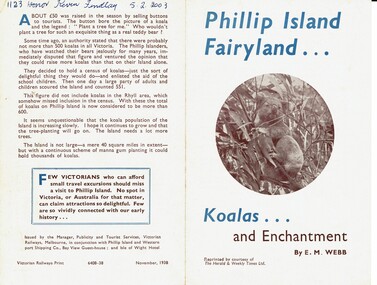
Booklet, Phillip Island Fairyland - Koalas and enchantment by E.M. Webb, November 1938
... In the 1930s and 1940s the Victorian Railways was facing serious competition with not only the increasing popularity of the car but also many bus coach services that in many cases served the same tourist destinations that could be reached by rail. ...In the 1930s and 1940s the Victorian Railways was facing serious competition with not only the increasing popularity of the car but also many bus coach services that in many cases served the same tourist destinations that could be reached by rail. ...In the 1930s and 1940s the Victorian Railways was facing serious competition with not only the increasing popularity of the car but also many bus coach services that in many cases served the same tourist destinations that could be reached by rail. To counter the impact on its passenger business, the Victorian Railways extensively advertised on posters and printed brochures. [State Libray of Victoria Blog Jan 2023]]HistoricalSmall, cream coloured brochure with a round photo of a koala on front cover. Other pages contain information on tourist spots, concentrating on the abundance of koalas.Koalas and enchantment. Phillip Island Fairyland for fascinating holidays. Victorian Railways Print November 1938tourism, tourist brochure, koalas, railways -
 Eltham District Historical Society Inc
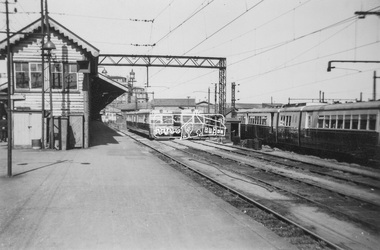
Photograph, George Coop, Diesel-electric rail cars in the Railmotor Yard at Spencer Street Station, c.1951
... Amazingly these railcars survived to this time, even though they were in direct competition with the bus service. By 1980 no Walker Railmotor cars or trainsets were in service. ...Amazingly these railcars survived to this time, even though they were in direct competition with the bus service. By 1980 no Walker Railmotor cars or trainsets were in service. ...This photo was taken the same time as EDHS_04673-36 an A2-class Steam Locomotive 987 sitting on the other side of the platform at Spencer Street Railway Station. 280HP Walker Railmotor Walker Railmotors are diesel railcars, or train sets, that were designed to improve the passenger services on Victorian branchlines in Australia. They were practically a bus service on rails. These motors entered service in 1948 with the 102 hp and the 154 hp units. The 102 hp units were built until 1955 and the 153 hp units stopped being built one year before. The 280 hp units were built from 1950-1951. The engine and drive systems were built by the Walker Railcar Company in Wigan, England, and the bodies were built by Martin & King in Melbourne, Victoria, Australia. The railcars were put together by Victorian Railways. The railcars were, in the end, gradually replaced by a diesel electric railcar from 1978 on. Amazingly these railcars survived to this time, even though they were in direct competition with the bus service. By 1980 no Walker Railmotor cars or trainsets were in service. Very few are preserved. REF: Walker Railmotors, https://locomotive.fandom.com/wiki/Walker_RailmotorsDigital TIFF file Scan of black and white 620 format contact printgeorge coop collection, spencer street railway station, walker railmotor -
 Bendigo Military Museum
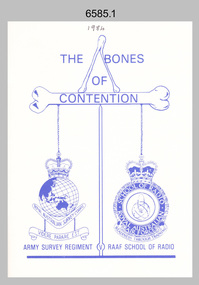
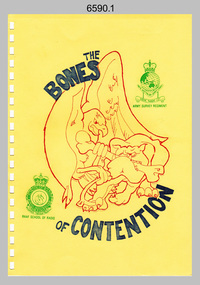
Photograph - Bones Day – Army Survey Regiment Verses RAAF School of Radio at Bendigo, Victoria, 1984
... The “little bone” (a mounted chicken bone) was the consolation trophy awarded to the winner of the evening competition. The 3-hour bus trip for the visiting unit on their return was typically very raucous. ...The “little bone” (a mounted chicken bone) was the consolation trophy awarded to the winner of the evening competition. The 3-hour bus trip for the visiting unit on their return was typically very raucous. ...These 41 photographs were taken at Bones Day, an annual sports competition between the Army Survey Regiment and the RAAF School of Radio, at Bendigo on the 14th of November 1984. The two units took turns each year to host the event. The day competition usually comprised basketball, cricket, cross country, golf, pistol shooting, sailing, squash, rifle shooting, softball, tennis, touch football, tug-of-war and volleyball. The “big bone” trophy comprising a large bone from a beast housed inside a wooden framed glass case, was awarded to the winner of the day competition. The “O.H.A.R.A Rock” seen on the table in photo 6585.10P was awarded to the shooter with the lowest score in rifle shooting. The evening competition often included darts, carpet bowls, hookey, quoits and billiards/snooker. The “little bone” (a mounted chicken bone) was the consolation trophy awarded to the winner of the evening competition. The 3-hour bus trip for the visiting unit on their return was typically very raucous. The history of the Bones Day competition is best described in the booklet titled - Bones of Contention Souvenir Program. 1965. Refer to Item 6267. Photo 6585.41P is also published with Item 6276.5P.This item comprises the cover of a program booklet and a set of 40 photographs from Bones Day, an annual sports competition between the Army Survey Regiment and the RAAF School of Radio, held at Bendigo on the 14th of November 1984. The photographs were printed on photographic paper and are part of the Army Survey Regiment’s Collection. The colour A4 booklet cover and black and white photographs were scanned at 300 dpi. .1) – A5 size program booklet titled ‘The Bones of Contention’, buff card cover, graphics and internal text printed in purple. 32 pages dated 1984. .2) to .4) - Photo, black & white, 1984. Basketball. Army in darker tops, RAAF in white. .5) - Photo, black & white, 1984. Basketball. Unidentified participants from RAAF. .6) - Photo, black & white, 1984. Rifle Shooting. L to R: CPL Graham Johnston, unidentified. .7) & .8) - Photo, black & white, 1984. Rifle Shooting. Unidentified participants. .9) - Photo, black & white, 1984. Rifle Shooting. Unidentified officials at Range Control. .10) - Photo, black & white, 1984. Rifle Shooting. Unidentified participants from RAAF. The “O.H.A.R.A Rock” awarded to the shooter with the lowest score in rifle shooting is seen on the table. .11) - Photo, black & white, 1984. Pistol Shooting. Army CO LTCOL Jorge Gruszka. .12) - Photo, black & white, 1984. Pistol Shooting. L to R: Army CO LTCOL Jorge Gruszka, CPL Doug Home. .13) - Photo, black & white, 1984. Pistol Shooting. Army CO LTCOL Jorge Gruszka. .14) - Photo, black & white, 1984. Pistol Shooting. RAAF’s participants L to R: unidentified, CO WGCDR McCarthy, remainder unidentified. .15) - Photo, black & white, 1984. Pistol Shooting. ARMY’s participants L to R: CPL Doug Home, SSGT Davidson, SPR Andy Godden, CO LTCOL Jorge Gruszka. .16) & .17) - Photo, black & white, 1984. Pistol Shooting. ARMY and RAAF participants Back row L to R: CPL Doug Home, SSGT Davidson, unidentified RAAF participants (x2). Front row L to R: SPR Andy Godden, RAAF CO WGCDR McCarthy, Army CO LTCOL Jorge Gruszka. .18) to .25) - Photo, black & white, 1984. Softball. Unidentified ARMY & RAAF participants. .26) - Photo, black & white, 1984. Tennis. L to R: ARMY’s CPL John ‘Stormy’ Tempest, SPR Steve Coulson. .27) - Photo, black & white, 1984. Tennis. Unidentified participant. .28) - Photo, black & white, 1984. Tennis. CPL Ginny (Turner) Rowe, unidentified in background. .29) to .31) - Photo, black & white, 1984. Tennis. Unidentified participants. .32) - Photo, black & white, 1984. Tug-of-War. Army team lines up L to R: SPR Kerron South, CPL Leon Jackson, SPR Brett McAllister, CPL Jamie ‘Fish’ McRae, unidentified, CPL Roger Graf, CPL Peter Lefel. .33) - Photo, black & white, 1984. Tug-of-War. Army team pulling hard L to R: unidentified, CPL Jamie ‘Fish’ McRae, SPR Brett McAllister, CPL Leon Jackson, SPR Kerron South. .34) - Photo, black & white, 1984. Tug-of-War. Army and RAAF spectators. Centre foreground L to R: MAJ Bob Roche, Army CO LTCOL Jorge Gruszka, RAAF CO WGCDR McCarthy. .35) - Photo, black & white, 1984. Tug-of-War. RAAF team taking the strain on the rope. Unidentified participants. .36) - Photo, black & white, 1984. Tug-of-War. Army and RAAF teams shake hands after Army’s victory. .37) - Photo, black & white, 1984. Volleyball. Army’s team (light shirts) prepare to receive RAAF’s serve. L to R: CPL Rod Skidmore, CPL Ian Nichols, CPL Dan Cirsky, CPL Terry ‘TJ’ Wicker. .38) - Photo, black & white, 1984. Volleyball. Army’s CPL Rod Skidmore (light shirt) attempts to block a RAAF spike. Unidentified RAAF participants at left. Army team L to R: CPL Terry ‘TJ’ Wicker CPL Robin Marshall, CPL Dan Cirsky. .39) - Photo, black & white, Trophy presentation. L to R: RAAF CO WGCDR McCarthy presents ‘the Big Bone’ to Army’s CO LTCOL Jorge Gruszka. .40) - Photo, black & white, Trophy presentation. L to R: RAAF CO WGCDR McCarthy presents ‘the Little Bone’ to Army’s CO LTCOL Jorge Gruszka. .41) - Photo, black & white, Trophy presentation. L to R: RAAF CO WGCDR McCarthy presents an unidentified trophy to Army’s CO LTCOL Jorge Gruszka..1 - 'The Bones of Contention' title on booklet cover. '1984' hand written on top of cover Photos .2P to .41P – 'Bones Day 1984' annotated on cover sleeve.royal australian survey corps, rasvy, army survey regiment, army svy regt, fortuna, bones day -
 Bendigo Military Museum
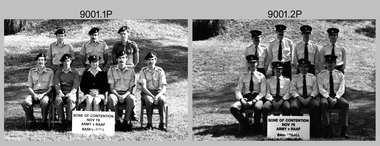
Photograph - Bones Day – Army Survey Regiment Verses RAAF School of Radio at Laverton, Victoria, 1985
... The “little bone” (a mounted chicken bone) was the consolation trophy awarded to the winner of the evening competition. The 3-hour bus trip for the visiting unit on their return was typically very raucous. ...The “little bone” (a mounted chicken bone) was the consolation trophy awarded to the winner of the evening competition. The 3-hour bus trip for the visiting unit on their return was typically very raucous. ...The 10 photographs were taken at Bones Day, an annual sports competition between the Army Survey Regiment and the RAAF School of Radio, at Laverton on the 13th of November 1985. The two units took turns each year to host the event. The day competition usually comprised basketball, cricket, cross country, golf, sailing, pistol shooting, squash, rifle shooting, softball, tennis, touch football, tug-of-war and volleyball. The “big bone” trophy comprising a large bone from a beast housed inside a wooden framed glass case, was awarded to the winner of the day competition. The “O.H.A.R.A Rock” was awarded to the shooter with the lowest score in rifle shooting. The evening competition often included darts, carpet bowls, hookey, quoits and billiards/snooker. The “little bone” (a mounted chicken bone) was the consolation trophy awarded to the winner of the evening competition. The 3-hour bus trip for the visiting unit on their return was typically very raucous. The history of the Bones Day competition is best described in the booklet titled - Bones of Contention Souvenir Program. 1965. Refer to Item 6267. This item comprises the cover of a program booklet and a set of 10 photographs taken at Bones Day, an annual sports competition between the Army Survey Regiment and the RAAF School of Radio, held at Laverton on the 13th of November 1985. The photographs were printed on photographic paper and are part of the Army Survey Regiment’s Collection. The colour A4 booklet cover and black and white photographs were scanned at 300 dpi. .1) – A4 size program booklet titled ‘The Bones of Contention’, buff card cover and colour graphics, internal text and cartoon graphics printed in purple. 32 pages dated 1985. .2) - Photo, black & white, 1985. Basketball teams. Back row L to R: unidentified (x2), Bob Croxton, unidentified, Danny Galbraith, unidentified, Steve Burke. Middle row L to R: Rob Jones, unidentified (x2), Sherri (Dally) Burke, unidentified, Evan Allanson, unidentified. Front row L to R: unidentified (x4), Brenton McDonald, unidentified, Max Shaw. .3) - Photo, black & white, 1985. Cricket teams. Back row L to R: unidentified, Bill Griggs, unidentified, Mick Hogan, unidentified, Jim Ash, Dave Wright, Bob Thrower. Middle row L to R: PTE Hudson, unidentified, Brett McAllister, unidentified (x5). Front row L to R: PTE Wigg, unidentified, Brian Partridge, unidentified, Graham Hales, unidentified (x3). .4) - Photo, black & white, 1985. Cross Country teams. Back row L to R: unidentified (x3), Peter Barrett unidentified (x2), Paul Davis, unidentified. Front row L to R: unidentified, Jeff Rudd, unidentified, Greg Rowe, unidentified (x2), Steve Winner, unidentified. .5) - Photo, black & white, 1985. Golf teams. Back row L to R: unidentified (x2), Brian Johnson, unidentified (x2). Front row L to R: Doug Arman, unidentified, Graeme Dowd, unidentified, Peter Imeson, unidentified (x2). .6) - Photo, black & white, 1985. Pistol Shooting teams. Back row L to R: unidentified, Doug Home, unidentified, Tony Clark, Ben Lucas. Front row L to R: unidentified (x2), Daryl Hockings CSM, unidentified, Max Colletti. .7) - Photo, black & white, 1985. Pistol Shooting teams. Back row L to R: unidentified, Greg Sulman, unidentified, Bob Bright, Tom Bloxham, Bob Hopper, unidentified (x2). Front row L to R: unidentified (x2), Dan Cirsky, unidentified (x3), Brad Peppler, unidentified. .8) - Photo, black & white, 1985. Softball teams. Back row L to R: Scheryl Delforce, unidentified, Le-Anne (Smallshaw) Shirley, unidentified, Raelene (Munting) Brodie, Carmel (Butler) Fauth, Gill Park. Middle row L to R: unidentified (x2), Viv (Hawkins) Doherty, unidentified, Avril (Bray) Lloyd, unidentified (x6). Front row L to R: Wendy (Leitinger) McCarthy, unidentified, Leah (Hoffman) Peppler, unidentified, Lorraine (Daly) Talbot-Smith, unidentified, Chris Gordon, unidentified. .9) - Photo, black & white, 1985. Tennis teams. Back row L to R: Damien Killeen, unidentified, Ozzie Slade, unidentified, Dennis Learmonth, unidentified. Middle row L to R: Carol Dunstan, unidentified, Ginny (Turner) Rowe, unidentified (x2), Steve Coulson. Front row L to R: unidentified (x4), Col McInness, Peter Ball. .10) - Photo, black & white, 1985. Touch Football teams. Back row L to R: unidentified, Paul Baker, Jeff Willey, Per Andersen, unidentified (x4). Middle row L to R: John ’Junior’ Whaling, Simon ‘Andy’ Capp, Daryl South, Ken Talbot-Smith, unidentified (x4). Front row L to R: Frank Downie, Peter ‘Spoon’ Lefel, Roy Hicks, Greg Oaten CSC, unidentified (x4). .11) - Photo, black & white, 1985. Tug-of-War teams. Back row L to R: unidentified (x2), Steve Burke, unidentified (x3). Middle row L to R: unidentified (x2), JB Zahra, unidentified, Mal Paterson, Geunther Ebenwaldner, unidentified, Peter ‘Spoon’ Lefel. Front row L to R: Kerron South, unidentified, Barry Hogan, unidentified (x2), Brett McAllister. .1 - 'The Bones of Contention' title on booklet cover. Photos .2P to .11P – 'Bones Day 1985' annotated on cover sleeve.royal australian survey corps, rasvy, army survey regiment, army svy regt, fortuna, bones day -
 Bendigo Military Museum
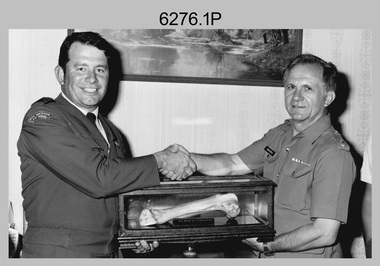
Photograph - Bones Day – Army Survey Regiment Verses RAAF School of Radio at Bendigo, Victoria, 1978
... The “little bone” (a mounted chicken bone) was the consolation trophy awarded to the winner of the evening competition. The 3-hour bus trip for the visiting unit on their return was typically very raucous. ...The “little bone” (a mounted chicken bone) was the consolation trophy awarded to the winner of the evening competition. The 3-hour bus trip for the visiting unit on their return was typically very raucous. ...This set of 31 photographs was taken at Bones Day, an annual sports competition between the Army Survey Regiment and the RAAF School of Radio at Bendigo in November 1978. The two units took turns each year to host the event. The day competition usually comprised basketball, cricket, cross country, golf, sailing, squash, softball, tennis, touch football, rifle shooting, tug-of-war and volleyball. The “big bone” trophy comprising a large bone from a beast housed inside a wooden framed glass case, was awarded to the winner of the day competition. The evening competition often included darts, carpet bowls, hookey, quoits and billiards/snooker. The “little bone” (a mounted chicken bone) was the consolation trophy awarded to the winner of the evening competition. The 3-hour bus trip for the visiting unit on their return was typically very raucous. See item 6275.8P for more photographs taken on this occasion. The history of the Bones Day competition is best described in the booklet titled - Bones of Contention Souvenir Program. 1965. Refer to Item 6267.This set of 31 photographs were taken at Bones Day, an annual sports competition between the Army Survey Regiment (ASR) and the RAAF School of Radio (RSR) at Bendigo in November 1978. The photographs were printed on photographic paper and are part of the Army Survey Regiment’s Collection. The black and white photographs were scanned at 300 dpi. .1) - Photo, black & white, 1978, ASR Basketball Team Back row L to R: Jamie ‘Fish’ McRae, John Thomas, Gary Kerr. Front row L to R: Phil McGuire, Bill Jones, Gill Park, Bruce ‘Stretch’ Gordon, Stuart Symonds. .2) - Photo, black & white, 1978, RSR Basketball Team: All unidentified. .3) - Photo, black & white, 1978, Basketball action: Gill Park in No. 8 top, remainder unidentified. .4) - Photo, black & white, 1978, Basketball action: L to R: unidentified (x4), Gill Park, unidentified, Bruce ‘Stretch’ Gordon, remainder unidentified. .5) - Photo, black & white, 1978, ASR Cricket Team Back row L to R: Alan Toogood, Bob Norwood, Ken ‘Sluggo’ Slater, unidentified, Josh Degroot. Front row L to R: Rick van der Bom, Greg Byers, Peter Hammer, 2LT Trevor Black, Alan Bunn, Mark Casey. .6) - Photo, black & white, 1978, RSR Cricket Team: All unidentified. .7) - Photo, black & white, 1978, ASR Rifle Shooting Team Back row L to R: John Cain, Bob Clark, Ian Belmont, unidentified. Front row L to R: Steve Hansen, Struan Robinson, Max Neil, Warren ‘Waldo’ Shirley. .8) - Photo, black & white, 1978, RSR Rifle Shooting Team: All unidentified. .9) - Photo, black & white, 1978, ASR Squash Team Back row L to R: Errol Fletcher, Rick Downie, Andy Wilson, George Timmins, John Bennett. Front row L to R: Terry Danger, Di Norling, Rob John, Dennis Puniard. .10) - Photo, black & white, 1978, Softball action: L to R: Janet (Chopping) Justin, Lorraine ‘Snoopy’ (Daly) Talbot-Smith. In left background: Janet (Chopping) Justin. .11) - Photo, black & white, 1978, Softball action: L to R: Le-anne (Smallshaw) Shirley, Lynn Johnson. .12) - Photo, black & white, 1978, Softball action: L to R: Lorraine ‘Snoopy’ (Daly) Talbot-Smith, John Ashby, unidentified. .13) - Photo, black & white, 1978, RSR Tennis Team: All unidentified. .14) - Photo, black & white, 1978, ASR Volleyball Team Back row L to R: Kerry ‘Gags’ Gallager, Gerry Gates, Bob Clisby, unidentified, Cornelius Moorrees, Laurie Justin. Front row L to R: Chris Edwards, Bob Bright, Keith Quinton, Mick ‘Buddha’ Ellis, George Holland, unidentified. .15) - Photo, black & white, 1978, RSR Volleyball Team: All unidentified. .16) - Photo, black & white, 1978, Volleyball action L to R: Keith Quinton, unidentified, Chris Edwards, remainder unidentified. .17) - Photo, black & white, 1978, Volleyball action L to R: unidentified, Keith Quinton in No. 4 top, unidentified, unidentified. .18) - Photo, black & white, 1978, ASR Tug-of-War Team Back row L to R: Russ Mollenhaur, Brian Collings, Noel ‘Macca’ McNamara, Ken ‘Sluggo’ Slater, Mick Davey, Russell ‘Rusty’ Williams, unidentified. Front row L to R: Wolfgang Thun, Rhys Delaine, Phil Boyle, unidentified, Ian Nelson, Jamie ‘Fish’ McRae. .19) - Photo, black & white, 1978, RSR Tug-of-War Team: All unidentified. .20) - Photo, black & white, 1978, ASR Tug-of-War Team in action. .21) - Photo, black & white, 1978, RSR Tug-of-War Team in action. .22) & .23) - Photo, black & white, 1978, Tug-of-War Teams at end of contest. .24) - Photo, black & white, 1978, Darts competition: Di Chalmers in action. John Ashby in right background. .25) - Photo, black & white, 1978, Carpet bowls competition: All unidentified. .26) - Photo, black & white, 1978, Ian Whittington EXCH-UK admires the view from the Tavern’s rafters. .27) - Photo, black & white, 1978, social activities L to R: Paul Baker, unidentified. .28) - Photo, black & white, 1978, social activities L to R: Adrian Rynberk, unidentified, unidentified. .29) - Photo, black & white, 1978, Trophy presentation. L to R: RAAF CO presents ‘the Little Bone’ to Army’s CO LTCOL Bob Skitch. In background L to R: unidentified, Ian Whittington EXCH-UK in right background. .30) - Photo, black & white, 1978, Trophy presentation. L to R: RAAF CO presents ‘the Little Bone’ to Army’s CO LTCOL Bob Skitch. In background L to R: John Smith, Ian Whittington EXCH-UK. .31) - Photo, black & white, 1978, Trophy presentation. L to R: RAAF CO presents ‘the Little Bone’ to Army’s CO LTCOL Bob Skitch. In background L to R: unidentified, Ian Whittington EXCH-UK in right background. .1P to.9P – ‘Bones Day 1978’ annotated on cover sleeve.royal australian survey corps, rasvy, army survey regiment, army svy regt, fortuna, bones day -
 Bendigo Military Museum
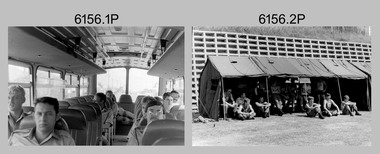
Photograph - Bones Day - Army Survey Regiment, Bendigo versus RAAF School of Radio, Laverton, 1984, 1985 and 1988
... competition. The “O.H.A.R.A Rock” seen in photo 6276.2P was awarded to PTE Zahra for the lowest score in rifle shooting. He had to lug it with him for the rest of the evening. The 3-hour bus...competition. The “O.H.A.R.A Rock” seen in photo 6276.2P was awarded to PTE Zahra for the lowest score in rifle shooting. He had to lug it with him for the rest of the evening. The 3-hour bus ...These five photographs were taken at Bones Day, an annual sports competition between the Army Survey Regiment and the RAAF School of Radio in November 1984, 1985, and 1988. The two units took turns each year to host the event. The day competition usually comprised basketball, cross country, golf, sailing, squash, softball, tennis, touch football, rifle shooting, tug-of-war and volleyball. The “big bone” trophy comprising a large bone from a beast housed inside a wooden framed glass case, was awarded to the winner of the day competition. The evening competition often included darts, carpet bowls, hookey, quoits and billiards/snooker. The “little bone” (a mounted chicken bone) was the consolation trophy awarded to the winner of the evening competition. The “O.H.A.R.A Rock” seen in photo 6276.2P was awarded to PTE Zahra for the lowest score in rifle shooting. He had to lug it with him for the rest of the evening. The 3-hour bus trip for the visiting unit on their return was typically very raucous. The history of the Bones Day competition is best described in the booklet titled - Bones of Contention Souvenir Program. 1965. Refer to Item 6267. Photo 6276.1P is also published with item 6585.41P.This collection of five photographs was taken at Bones Day, an annual sports competition between the Army Survey Regiment and the RAAF School of Radio, at Bendigo and Laverton respectively in November 1984, 1985, and 1988. The photographs were printed on photographic paper and are part of the Army Survey Regiment’s Collection. The photographs were scanned at 300 dpi. .1) - Photo, black & white, 14th November 1984, RAAF CO WGCDR McCarthy presents ‘the Big Bone’ to Army’s CO LTCOL Jorge Gruszka. .2) - Photo, black & white, 13th November 1985, Trophy presentations L to R: MAJ Daryl Hockings CSM, PTE JB Zahra, unidentified RAAF officer. .3) - Photo, black & white, 13th November 1985, tug-of-war L to R: Peter Lefel, Kerron South, Barry Hogan, DB Zahra, unidentified (x2), Guenther Ebenwaldner, Steve Burke, Mal Paterson. .4) - Photo, colour, 1988, at Bendigo, tug-of-war L to R: Jodi Bowman, unidentified, Frank Savy, Barry Hogan, unidentified (x2), Graeme Spong, unidentified (x2), Mick Duggan, unidentified, Dave Lambton-Young, unidentified (x2). .5) - Photo, colour, 1988, at Bendigo, tug-of-war L to R: Mick Duggan, Dave Lambton-Young, unidentified (x3), Frank Savy (with sign), unidentified, Barry Hogan, unidentified, Graeme Spong, unidentified (x3)..1P to .7P – No personnel are identified. The date is stamped on the back of photos .1P to .3P.royal australian survey corps, rasvy, army survey regiment, army svy regt, fortuna, asr, raaf school of radio, bones day -
 Bendigo Military Museum
Photograph - Army Survey Regiment’s Tug-of-War Team at Simpson Barracks, Watsonia, c1989
... bus who were not part of this team. The team’s coach was WO1 Ken Slater. Tug-of-War contests were very popular for the competitors and spectators, as they were often held at the Regiment as a component of inter-squadron athletics competitions, Flag Day verses the School of Military Survey, Bones Day verses the RAAF’s the School of Radio and a component of regimental training....bus who were not part of this team. The team’s coach was WO1 Ken Slater. Tug-of-War contests were very popular for the competitors and spectators, as they were often held at the Regiment as a component of inter-squadron athletics competitions, Flag Day verses the School of Military Survey, Bones Day verses the RAAF’s the School of Radio and a component of regimental training. ...These eight photos of the Army Survey Regiment’s Tug-of-War Team were most likely taken at Simpson Barracks, Watsonia in circa 1989. There is no information available on why the unit sent the team to Melbourne, the occasion, and the winner of this contest. It may have been a military athletics carnival held to commemorate Australia’s First Fleet bi- centenary, noting there was other members of Army Svy Regt on the bus who were not part of this team. The team’s coach was WO1 Ken Slater. Tug-of-War contests were very popular for the competitors and spectators, as they were often held at the Regiment as a component of inter-squadron athletics competitions, Flag Day verses the School of Military Survey, Bones Day verses the RAAF’s the School of Radio and a component of regimental training.These eight photos of the Army Survey Regiment’s Tug-of-War Team were most likely taken at a competition held at Simpson Barracks, Watsonia circa 1989. The photographs were on 35mm negative film and were scanned at 96 dpi. They are part of the Army Survey Regiment’s Collection. .1) - Photo, black & white, c1989, L to R: Neil Jones, WO1 Ken Slater, WO1 Brian Mead, unidentified (x2), Dave Cook, John Lane and Barry Miller. .2) - Photo, black & white, c1989, L to R: Rhys De Laine, WO1 Ken Slater, unidentified, Phil Meagher, unidentified (x6), Dave Cook and Mick Gillham. .3) - Photo, black & white, c1989, L to R: unidentified (x2), Rhys De Laine, Phil Meagher, Neil Jones, John Lane, Dave Cook, Rick Warren, Mick Gillham, unidentified and WO1 Ken Slater. .4) to .6) - Photo, black & white, c1989, L to R: Rick Warren, Dave Cook, John Lane, Neil Jones, Phil Meagher, Rhys De Laine and unidentified (x2). WO1 Ken Slater in foreground. .7) - Photo, black & white, c1989, L to R: Rick Warren, Dave Cook, John Lane, Neil Jones, Phil Meagher, Rhys De Laine and unidentified (x2). .8) - Photo, black & white, c1989, L to R: unidentified (x2), Rhys De Laine, Phil Meagher, Neil Jones, John Lane, Dave Cook, Rick Warren.No personnel are identified.royal australian survey corps, rasvy, army survey regiment, army svy regt, fortuna, asr -
 Bendigo Military Museum
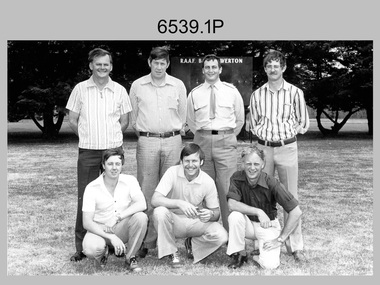
Photograph - Bones Day – Army Survey Regiment Verses RAAF School of Radio at Laverton, Victoria, 1977
... The “little bone” (a mounted chicken bone) was the consolation trophy awarded to the winner of the evening competition. The 3-hour bus trip for the visiting unit on their return was typically very raucous. ...The “little bone” (a mounted chicken bone) was the consolation trophy awarded to the winner of the evening competition. The 3-hour bus trip for the visiting unit on their return was typically very raucous. ...These two photographs were taken at Bones Day, an annual sports competition between the Army Survey Regiment and the RAAF School of Radio at Laverton on the 10th of November 1977. The two units took turns each year to host the event. The day competition usually comprised basketball, cricket, cross country, golf, sailing, squash, softball, tennis, touch football, rifle shooting, tug-of-war and volleyball. The “big bone” trophy comprising a large bone from a beast housed inside a wooden framed glass case, was awarded to the winner of the day competition. The evening competition often included darts, carpet bowls, hookey, quoits and billiards/snooker. The “little bone” (a mounted chicken bone) was the consolation trophy awarded to the winner of the evening competition. The 3-hour bus trip for the visiting unit on their return was typically very raucous. The history of the Bones Day competition is best described in the booklet titled - Bones of Contention Souvenir Program. 1965. Refer to Item 6267.These two photographs were taken at Bones Day, an annual sports competition between the Army Survey Regiment and the RAAF School of Radio at Laverton on the 10th of November 1977. The photographs were printed on photographic paper and are part of the Army Survey Regiment’s Collection. The black and white photographs were scanned at 300 dpi. .1) - Photo, black & white, 1977, ASR Golf Team Back row L to R: Alf Behr, Graeme Jeffers, Lloyd Binion, unidentified. Front row L to R: Ian Marner, Peter Warwick, Roy Morgan. .2) - Photo, black & white, 1977, ASR Squash Team Back row L to R: unidentified (x4), Rob John, Dennis Puniard. Middle row L to R: Kerry Brown, unidentified, Tony Spurling, Errol Fletcher. Front row L to R: Terry Danger, unidentified (x2), Lynn Johnson, unidentified..1P to .2P –No personnel are identified.royal australian survey corps, rasvy, army survey regiment, army svy regt, fortuna -
 Eltham District Historical Society Inc
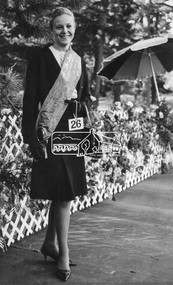
Photograph, Joy Chapman, Miss Eltham, April 1965, Apr 1965
... Alec Chapman, Annie Bremner, Blacksmith, Bremner's Flat, Brougham Steet, Bus Services, Circus, Diamond Creek, Dianne Bell, Doctor Bradbury, Easter Gymkhana, Elizabeth Chapman, Eltham High School, eltham hotel, Eltham Lower Park, Eltham Public Hall, Eltham State School, Eltham Trestle Bridge, General Store, Grace Mitchell, Ice Man, Joy Chapman, Lyons Garage, Margaret Harding, Milk bar, Miss Eltham 1965, Miss Victoria Show Girl, Mount Pleasant Road, Pan man, Rodda Parade, shops, Show Girl Competition, Swimming Pool, Water hole, Yarra River...competition which was held at the Royal Melbourne Show. There I met many country girls who were representing their rural Victoria home. I made it into a final round of judging but I think justice prevailed when someone from a country background was crowned. It was fun to go into the show as I had not really been before and to see the displays of handcraft, cooking and wood chopping events was great as well as the judging of farm animals interesting. It is hard to remember the Eltham I grew up in. The Lyons Garage company bus...competition which was held at the Royal Melbourne Show. There I met many country girls who were representing their rural Victoria home. I made it into a final round of judging but I think justice prevailed when someone from a country background was crowned. It was fun to go into the show as I had not really been before and to see the displays of handcraft, cooking and wood chopping events was great as well as the judging of farm animals interesting. It is hard to remember the Eltham I grew up in. The Lyons Garage company bus ...My Recollections of Eltham Past by Margaret Joy Harding (nee Joy Chapman.) My family of Elizabeth and Alec Chapman moved to Eltham in 1946 into a cottage on the opposite side of the Diamond Creek from where the little train now operates in the Lower Park. At that time Eltham truly was a country town and the Pub was the main meeting place for most inhabitants on a Saturday afternoon in the beer garden. I attended Eltham Primary School where I started as a 4-year-old (my birthday being slightly after the mid-year intake) that happened then. My mother spent a lot of days taking me back to school when I had dismissed myself and walked the one kilomtre home alone. Bremner's Common (now Wingrove Park) was a big attraction with its dam and tad poling which I found much more entertaining than school. (Mrs Bremner ran a Service Station on the site of the current one). Another attraction at this site was the circus that came a couple of times a year. Watching them put up the circus tent was very interesting and even more of an attraction was the feeding of the Lions in cages and the monkeys and elephants among the other animals that are not found in a circus these days. At school then we were provided with hot chocolate at morning recess where the mothers would prepare it in the shelter shed. The only form of classroom heating was an open fire. Worse was the warm milk given in the summer months. By the time I was near finishing at Primary school we used to be able to walk along the Main Road at lunchtime to Mrs. Mitchell's shop to a delicious hot pie. As I recall there was no supervision for this departure from the school grounds. It is interesting that some of the other children I started school with I still have contact with, in fact one is a very good friend although now living in Perth. That is the other thing about Eltham; many who grew up here continue to live in the area. Following primary school, the natural progression was to Eltham High School. There was only the main building at that time and I can remember our first assembly at the front entrance. During the time I was at High School several new class rooms were added and the school hall. I remember the musical plays such as HMS Pinafore and other classical musicals being performed. I also remember countless hours doing marching practice. The main street shops when I was young consisted of the Blue Gum milk bar at the far end, a Grocery store and a shoe maker where Coles currently stands. Opposite there was Lyon's Garage. They also provided a bus service and when we got off the train this little bus would tour the back streets taking each individual to their home, sometimes this could take quite considerable time. There was also a Black Smith next to the Chiropractic Practice opposite Alistair Knox Park, another Milk Bar/General Store on the comer of Bridge Street/Main Road where a shop currently still operates. There was also a Butcher's shop down from the pub opposite Franklin Street. The only doctor was next to the courthouse on the other side of Brougham Street. On Saturday afternoon I was occasionally allowed to go the movies in the Town Hall which also stood on the site of the Coles centre. Often the Fire Alarm would sound and everyone would run outside to watch the fire truck leave with the volunteers clutching on the back. The other attraction during summer of course was the swimming pool which was a small concrete pool filled with water pumped from the Diamond Creek, sometimes it was like a mud puddle so for me the nearer to home Yarra/Diamond Creek junction was a much better option. We swam in the water hole which was quite deep and with fallen trees and sometimes carcasses of cows and kangaroos floating past. As recreation, the churches were another attraction for the Sunday school picnics to Mordialloc in the back of the moving van with benches tied into the back for us to "sit" on. Too bad when we went around a corner! In the early days we had an Ice Man deliver the ice once a week for "refrigeration". The green grocer came around in a horse and cart as did the milkman and the bread was delivered but I constantly got into trouble for eating the middle out on the way from the box it was delivered to in Mt Pleasant road across the paddock. The milkman finally would not come down our street after his horse bolted one morning and took off across the paddock. We also had the "Pan Man" come weekly and whose visit I would avoid. Our nearest shop was where the flower stall is located opposite the Lower Park. It consisted of a Tea Room and Milk Bar. There was a Public Telephone there which was the only contact to anyone else. We were a one car family so my mother’s movements were very limited as the Eltham Station was a couple of kilometres away and a trip to the city was an event. Being an only child growing up was a little lonely however rambling along the creek with my Mum, picking mushrooms and picking cherry plums for jam and the dogs catching rabbits which we ate if we could get them away from the dogs. We also liked to go into the Lower Park during school holidays when the Greek people came to camp and they would sing and dance around the camp fire and it all seemed so different to us as this was early days of immigration. Childhood was relatively simple and carefree and I wish the kids of today had the freedom of my youth and the healthy outdoor lifestyle of the "olden days". SHOW GIRL COMPETITION In 1965 Eltham was more like a country town than the suburb it has become today. People knew each other, if not personally then certainly of the family name. The big event for the year was a Gymkhana or show at Lower Eltham Park. I can remember marching as a teenager from the town centre to the park in the marching girls with the decorated floats. In 1965, just on a whim on the day, I decided to enter the Miss Eltham Show Girl which was a part of the festivities at the park. I seem to remember that the show mainly consisted of horse events, cattle judging and dog show. As I had not given any serious thought to entering the competition, I wore a suit that I had for work which was brown wool, with a coffee coloured shirt under, black shoes, bag, and gloves but no hat. I duly paraded for the judges and much to my surprise I was announced the winner. I eventually went on to compete at the Miss Victoria Show Girl competition which was held at the Royal Melbourne Show. There I met many country girls who were representing their rural Victoria home. I made it into a final round of judging but I think justice prevailed when someone from a country background was crowned. It was fun to go into the show as I had not really been before and to see the displays of handcraft, cooking and wood chopping events was great as well as the judging of farm animals interesting. It is hard to remember the Eltham I grew up in. The Lyons Garage company bus that actually drove you home (or close to it) when we got off the train at night. The Eltham Hotel on a Saturday afternoon a usual social meeting place where people just sat and chatted. The pictures held in the Town Hall and when the fire alarm sounded all the men just jumped up and ran to help. Suburbia has now swallowed most of that life but thankfully we at least do have the trestle bridge and parkland. Digital file only - Black and white photo print on loan for scanning by EDHSalec chapman, annie bremner, blacksmith, bremner's flat, brougham steet, bus services, circus, diamond creek, dianne bell, doctor bradbury, easter gymkhana, elizabeth chapman, eltham high school, eltham hotel, eltham lower park, eltham public hall, eltham state school, eltham trestle bridge, general store, grace mitchell, ice man, joy chapman, lyons garage, margaret harding, milk bar, miss eltham 1965, miss victoria show girl, mount pleasant road, pan man, rodda parade, shops, show girl competition, swimming pool, water hole, yarra river -
 Eltham District Historical Society Inc
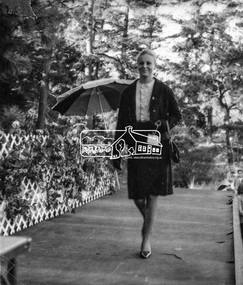
Photograph, Joy Chapman parading before the judges, Miss Eltham 1965, Apr 1965
... alec chapman, annie bremner, blacksmith, bremner's flat, brougham steet, bus services, circus, diamond creek, dianne bell, doctor bradbury, easter gymkhana, elizabeth chapman, eltham high school, eltham hotel, eltham lower park, eltham public hall, eltham state school, eltham trestle bridge, general store, grace mitchell, ice man, joy chapman, lyons garage, margaret harding, milk bar, miss eltham 1965, miss victoria show girl, mount pleasant road, pan man, rodda parade, shops, show girl competition, swimming pool, water hole, yarra river...competition which was held at the Royal Melbourne Show. There I met many country girls who were representing their rural Victoria home. I made it into a final round of judging but I think justice prevailed when someone from a country background was crowned. It was fun to go into the show as I had not really been before and to see the displays of handcraft, cooking and wood chopping events was great as well as the judging of farm animals interesting. It is hard to remember the Eltham I grew up in. The Lyons Garage company bus...competition which was held at the Royal Melbourne Show. There I met many country girls who were representing their rural Victoria home. I made it into a final round of judging but I think justice prevailed when someone from a country background was crowned. It was fun to go into the show as I had not really been before and to see the displays of handcraft, cooking and wood chopping events was great as well as the judging of farm animals interesting. It is hard to remember the Eltham I grew up in. The Lyons Garage company bus ...My Recollections of Eltham Past by Margaret Joy Harding (nee Joy Chapman.) My family of Elizabeth and Alec Chapman moved to Eltham in 1946 into a cottage on the opposite side of the Diamond Creek from where the little train now operates in the Lower Park. At that time Eltham truly was a country town and the Pub was the main meeting place for most inhabitants on a Saturday afternoon in the beer garden. I attended Eltham Primary School where I started as a 4-year-old (my birthday being slightly after the mid-year intake) that happened then. My mother spent a lot of days taking me back to school when I had dismissed myself and walked the one kilomtre home alone. Bremner's Common (now Wingrove Park) was a big attraction with its dam and tad poling which I found much more entertaining than school. (Mrs Bremner ran a Service Station on the site of the current one). Another attraction at this site was the circus that came a couple of times a year. Watching them put up the circus tent was very interesting and even more of an attraction was the feeding of the Lions in cages and the monkeys and elephants among the other animals that are not found in a circus these days. At school then we were provided with hot chocolate at morning recess where the mothers would prepare it in the shelter shed. The only form of classroom heating was an open fire. Worse was the warm milk given in the summer months. By the time I was near finishing at Primary school we used to be able to walk along the Main Road at lunchtime to Mrs. Mitchell's shop to a delicious hot pie. As I recall there was no supervision for this departure from the school grounds. It is interesting that some of the other children I started school with I still have contact with, in fact one is a very good friend although now living in Perth. That is the other thing about Eltham; many who grew up here continue to live in the area. Following primary school, the natural progression was to Eltham High School. There was only the main building at that time and I can remember our first assembly at the front entrance. During the time I was at High School several new class rooms were added and the school hall. I remember the musical plays such as HMS Pinafore and other classical musicals being performed. I also remember countless hours doing marching practice. The main street shops when I was young consisted of the Blue Gum milk bar at the far end, a Grocery store and a shoe maker where Coles currently stands. Opposite there was Lyon's Garage. They also provided a bus service and when we got off the train this little bus would tour the back streets taking each individual to their home, sometimes this could take quite considerable time. There was also a Black Smith next to the Chiropractic Practice opposite Alistair Knox Park, another Milk Bar/General Store on the comer of Bridge Street/Main Road where a shop currently still operates. There was also a Butcher's shop down from the pub opposite Franklin Street. The only doctor was next to the courthouse on the other side of Brougham Street. On Saturday afternoon I was occasionally allowed to go the movies in the Town Hall which also stood on the site of the Coles centre. Often the Fire Alarm would sound and everyone would run outside to watch the fire truck leave with the volunteers clutching on the back. The other attraction during summer of course was the swimming pool which was a small concrete pool filled with water pumped from the Diamond Creek, sometimes it was like a mud puddle so for me the nearer to home Yarra/Diamond Creek junction was a much better option. We swam in the water hole which was quite deep and with fallen trees and sometimes carcasses of cows and kangaroos floating past. As recreation, the churches were another attraction for the Sunday school picnics to Mordialloc in the back of the moving van with benches tied into the back for us to "sit" on. Too bad when we went around a corner! In the early days we had an Ice Man deliver the ice once a week for "refrigeration". The green grocer came around in a horse and cart as did the milkman and the bread was delivered but I constantly got into trouble for eating the middle out on the way from the box it was delivered to in Mt Pleasant road across the paddock. The milkman finally would not come down our street after his horse bolted one morning and took off across the paddock. We also had the "Pan Man" come weekly and whose visit I would avoid. Our nearest shop was where the flower stall is located opposite the Lower Park. It consisted of a Tea Room and Milk Bar. There was a Public Telephone there which was the only contact to anyone else. We were a one car family so my mother’s movements were very limited as the Eltham Station was a couple of kilometres away and a trip to the city was an event. Being an only child growing up was a little lonely however rambling along the creek with my Mum, picking mushrooms and picking cherry plums for jam and the dogs catching rabbits which we ate if we could get them away from the dogs. We also liked to go into the Lower Park during school holidays when the Greek people came to camp and they would sing and dance around the camp fire and it all seemed so different to us as this was early days of immigration. Childhood was relatively simple and carefree and I wish the kids of today had the freedom of my youth and the healthy outdoor lifestyle of the "olden days". SHOW GIRL COMPETITION In 1965 Eltham was more like a country town than the suburb it has become today. People knew each other, if not personally then certainly of the family name. The big event for the year was a Gymkhana or show at Lower Eltham Park. I can remember marching as a teenager from the town centre to the park in the marching girls with the decorated floats. In 1965, just on a whim on the day, I decided to enter the Miss Eltham Show Girl which was a part of the festivities at the park. I seem to remember that the show mainly consisted of horse events, cattle judging and dog show. As I had not given any serious thought to entering the competition, I wore a suit that I had for work which was brown wool, with a coffee coloured shirt under, black shoes, bag, and gloves but no hat. I duly paraded for the judges and much to my surprise I was announced the winner. I eventually went on to compete at the Miss Victoria Show Girl competition which was held at the Royal Melbourne Show. There I met many country girls who were representing their rural Victoria home. I made it into a final round of judging but I think justice prevailed when someone from a country background was crowned. It was fun to go into the show as I had not really been before and to see the displays of handcraft, cooking and wood chopping events was great as well as the judging of farm animals interesting. It is hard to remember the Eltham I grew up in. The Lyons Garage company bus that actually drove you home (or close to it) when we got off the train at night. The Eltham Hotel on a Saturday afternoon a usual social meeting place where people just sat and chatted. The pictures held in the Town Hall and when the fire alarm sounded all the men just jumped up and ran to help. Suburbia has now swallowed most of that life but thankfully we at least do have the trestle bridge and parkland. Digital file only - Black and white photo print on loan for scanning by EDHSalec chapman, annie bremner, blacksmith, bremner's flat, brougham steet, bus services, circus, diamond creek, dianne bell, doctor bradbury, easter gymkhana, elizabeth chapman, eltham high school, eltham hotel, eltham lower park, eltham public hall, eltham state school, eltham trestle bridge, general store, grace mitchell, ice man, joy chapman, lyons garage, margaret harding, milk bar, miss eltham 1965, miss victoria show girl, mount pleasant road, pan man, rodda parade, shops, show girl competition, swimming pool, water hole, yarra river -
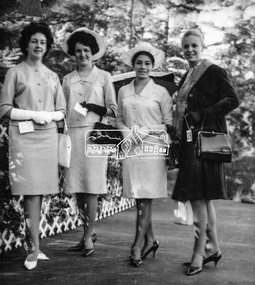 Eltham District Historical Society Inc
Photograph, Joy Chapman, Miss Eltham 1965 with other contestants, Apr 1965
... alec chapman, annie bremner, blacksmith, bremner's flat, brougham steet, bus services, circus, diamond creek, dianne bell, doctor bradbury, easter gymkhana, elizabeth chapman, eltham high school, eltham hotel, eltham lower park, eltham public hall, eltham state school, eltham trestle bridge, general store, grace mitchell, ice man, joy chapman, lyons garage, margaret harding, milk bar, miss eltham 1965, miss victoria show girl, mount pleasant road, pan man, rodda parade, shops, show girl competition, swimming pool, water hole, yarra river...competition which was held at the Royal Melbourne Show. There I met many country girls who were representing their rural Victoria home. I made it into a final round of judging but I think justice prevailed when someone from a country background was crowned. It was fun to go into the show as I had not really been before and to see the displays of handcraft, cooking and wood chopping events was great as well as the judging of farm animals interesting. It is hard to remember the Eltham I grew up in. The Lyons Garage company bus...competition which was held at the Royal Melbourne Show. There I met many country girls who were representing their rural Victoria home. I made it into a final round of judging but I think justice prevailed when someone from a country background was crowned. It was fun to go into the show as I had not really been before and to see the displays of handcraft, cooking and wood chopping events was great as well as the judging of farm animals interesting. It is hard to remember the Eltham I grew up in. The Lyons Garage company bus ...My Recollections of Eltham Past by Margaret Joy Harding (nee Joy Chapman.) My family of Elizabeth and Alec Chapman moved to Eltham in 1946 into a cottage on the opposite side of the Diamond Creek from where the little train now operates in the Lower Park. At that time Eltham truly was a country town and the Pub was the main meeting place for most inhabitants on a Saturday afternoon in the beer garden. I attended Eltham Primary School where I started as a 4-year-old (my birthday being slightly after the mid-year intake) that happened then. My mother spent a lot of days taking me back to school when I had dismissed myself and walked the one kilomtre home alone. Bremner's Common (now Wingrove Park) was a big attraction with its dam and tad poling which I found much more entertaining than school. (Mrs Bremner ran a Service Station on the site of the current one). Another attraction at this site was the circus that came a couple of times a year. Watching them put up the circus tent was very interesting and even more of an attraction was the feeding of the Lions in cages and the monkeys and elephants among the other animals that are not found in a circus these days. At school then we were provided with hot chocolate at morning recess where the mothers would prepare it in the shelter shed. The only form of classroom heating was an open fire. Worse was the warm milk given in the summer months. By the time I was near finishing at Primary school we used to be able to walk along the Main Road at lunchtime to Mrs. Mitchell's shop to a delicious hot pie. As I recall there was no supervision for this departure from the school grounds. It is interesting that some of the other children I started school with I still have contact with, in fact one is a very good friend although now living in Perth. That is the other thing about Eltham; many who grew up here continue to live in the area. Following primary school, the natural progression was to Eltham High School. There was only the main building at that time and I can remember our first assembly at the front entrance. During the time I was at High School several new class rooms were added and the school hall. I remember the musical plays such as HMS Pinafore and other classical musicals being performed. I also remember countless hours doing marching practice. The main street shops when I was young consisted of the Blue Gum milk bar at the far end, a Grocery store and a shoe maker where Coles currently stands. Opposite there was Lyon's Garage. They also provided a bus service and when we got off the train this little bus would tour the back streets taking each individual to their home, sometimes this could take quite considerable time. There was also a Black Smith next to the Chiropractic Practice opposite Alistair Knox Park, another Milk Bar/General Store on the comer of Bridge Street/Main Road where a shop currently still operates. There was also a Butcher's shop down from the pub opposite Franklin Street. The only doctor was next to the courthouse on the other side of Brougham Street. On Saturday afternoon I was occasionally allowed to go the movies in the Town Hall which also stood on the site of the Coles centre. Often the Fire Alarm would sound and everyone would run outside to watch the fire truck leave with the volunteers clutching on the back. The other attraction during summer of course was the swimming pool which was a small concrete pool filled with water pumped from the Diamond Creek, sometimes it was like a mud puddle so for me the nearer to home Yarra/Diamond Creek junction was a much better option. We swam in the water hole which was quite deep and with fallen trees and sometimes carcasses of cows and kangaroos floating past. As recreation, the churches were another attraction for the Sunday school picnics to Mordialloc in the back of the moving van with benches tied into the back for us to "sit" on. Too bad when we went around a corner! In the early days we had an Ice Man deliver the ice once a week for "refrigeration". The green grocer came around in a horse and cart as did the milkman and the bread was delivered but I constantly got into trouble for eating the middle out on the way from the box it was delivered to in Mt Pleasant road across the paddock. The milkman finally would not come down our street after his horse bolted one morning and took off across the paddock. We also had the "Pan Man" come weekly and whose visit I would avoid. Our nearest shop was where the flower stall is located opposite the Lower Park. It consisted of a Tea Room and Milk Bar. There was a Public Telephone there which was the only contact to anyone else. We were a one car family so my mother’s movements were very limited as the Eltham Station was a couple of kilometres away and a trip to the city was an event. Being an only child growing up was a little lonely however rambling along the creek with my Mum, picking mushrooms and picking cherry plums for jam and the dogs catching rabbits which we ate if we could get them away from the dogs. We also liked to go into the Lower Park during school holidays when the Greek people came to camp and they would sing and dance around the camp fire and it all seemed so different to us as this was early days of immigration. Childhood was relatively simple and carefree and I wish the kids of today had the freedom of my youth and the healthy outdoor lifestyle of the "olden days". SHOW GIRL COMPETITION In 1965 Eltham was more like a country town than the suburb it has become today. People knew each other, if not personally then certainly of the family name. The big event for the year was a Gymkhana or show at Lower Eltham Park. I can remember marching as a teenager from the town centre to the park in the marching girls with the decorated floats. In 1965, just on a whim on the day, I decided to enter the Miss Eltham Show Girl which was a part of the festivities at the park. I seem to remember that the show mainly consisted of horse events, cattle judging and dog show. As I had not given any serious thought to entering the competition, I wore a suit that I had for work which was brown wool, with a coffee coloured shirt under, black shoes, bag, and gloves but no hat. I duly paraded for the judges and much to my surprise I was announced the winner. I eventually went on to compete at the Miss Victoria Show Girl competition which was held at the Royal Melbourne Show. There I met many country girls who were representing their rural Victoria home. I made it into a final round of judging but I think justice prevailed when someone from a country background was crowned. It was fun to go into the show as I had not really been before and to see the displays of handcraft, cooking and wood chopping events was great as well as the judging of farm animals interesting. It is hard to remember the Eltham I grew up in. The Lyons Garage company bus that actually drove you home (or close to it) when we got off the train at night. The Eltham Hotel on a Saturday afternoon a usual social meeting place where people just sat and chatted. The pictures held in the Town Hall and when the fire alarm sounded all the men just jumped up and ran to help. Suburbia has now swallowed most of that life but thankfully we at least do have the trestle bridge and parkland. Digital file only - Black and white photo print on loan for scanning by EDHSalec chapman, annie bremner, blacksmith, bremner's flat, brougham steet, bus services, circus, diamond creek, dianne bell, doctor bradbury, easter gymkhana, elizabeth chapman, eltham high school, eltham hotel, eltham lower park, eltham public hall, eltham state school, eltham trestle bridge, general store, grace mitchell, ice man, joy chapman, lyons garage, margaret harding, milk bar, miss eltham 1965, miss victoria show girl, mount pleasant road, pan man, rodda parade, shops, show girl competition, swimming pool, water hole, yarra river -
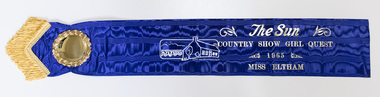 Eltham District Historical Society Inc
Photograph, Peter Pidgeon, The original Miss Eltham 1965 sash, 17 May 2019
... alec chapman, annie bremner, blacksmith, bremner's flat, brougham steet, bus services, circus, diamond creek, dianne bell, doctor bradbury, easter gymkhana, elizabeth chapman, eltham high school, eltham hotel, eltham lower park, eltham public hall, eltham state school, eltham trestle bridge, general store, grace mitchell, ice man, joy chapman, lyons garage, margaret harding, milk bar, miss eltham 1965, miss victoria show girl, mount pleasant road, pan man, rodda parade, shops, show girl competition, swimming pool, water hole, yarra river...competition which was held at the Royal Melbourne Show. There I met many country girls who were representing their rural Victoria home. I made it into a final round of judging but I think justice prevailed when someone from a country background was crowned. It was fun to go into the show as I had not really been before and to see the displays of handcraft, cooking and wood chopping events was great as well as the judging of farm animals interesting. It is hard to remember the Eltham I grew up in. The Lyons Garage company bus...competition which was held at the Royal Melbourne Show. There I met many country girls who were representing their rural Victoria home. I made it into a final round of judging but I think justice prevailed when someone from a country background was crowned. It was fun to go into the show as I had not really been before and to see the displays of handcraft, cooking and wood chopping events was great as well as the judging of farm animals interesting. It is hard to remember the Eltham I grew up in. The Lyons Garage company bus ...My Recollections of Eltham Past by Margaret Joy Harding (nee Joy Chapman.) My family of Elizabeth and Alec Chapman moved to Eltham in 1946 into a cottage on the opposite side of the Diamond Creek from where the little train now operates in the Lower Park. At that time Eltham truly was a country town and the Pub was the main meeting place for most inhabitants on a Saturday afternoon in the beer garden. I attended Eltham Primary School where I started as a 4-year-old (my birthday being slightly after the mid-year intake) that happened then. My mother spent a lot of days taking me back to school when I had dismissed myself and walked the one kilomtre home alone. Bremner's Common (now Wingrove Park) was a big attraction with its dam and tad poling which I found much more entertaining than school. (Mrs Bremner ran a Service Station on the site of the current one). Another attraction at this site was the circus that came a couple of times a year. Watching them put up the circus tent was very interesting and even more of an attraction was the feeding of the Lions in cages and the monkeys and elephants among the other animals that are not found in a circus these days. At school then we were provided with hot chocolate at morning recess where the mothers would prepare it in the shelter shed. The only form of classroom heating was an open fire. Worse was the warm milk given in the summer months. By the time I was near finishing at Primary school we used to be able to walk along the Main Road at lunchtime to Mrs. Mitchell's shop to a delicious hot pie. As I recall there was no supervision for this departure from the school grounds. It is interesting that some of the other children I started school with I still have contact with, in fact one is a very good friend although now living in Perth. That is the other thing about Eltham; many who grew up here continue to live in the area. Following primary school, the natural progression was to Eltham High School. There was only the main building at that time and I can remember our first assembly at the front entrance. During the time I was at High School several new class rooms were added and the school hall. I remember the musical plays such as HMS Pinafore and other classical musicals being performed. I also remember countless hours doing marching practice. The main street shops when I was young consisted of the Blue Gum milk bar at the far end, a Grocery store and a shoe maker where Coles currently stands. Opposite there was Lyon's Garage. They also provided a bus service and when we got off the train this little bus would tour the back streets taking each individual to their home, sometimes this could take quite considerable time. There was also a Black Smith next to the Chiropractic Practice opposite Alistair Knox Park, another Milk Bar/General Store on the comer of Bridge Street/Main Road where a shop currently still operates. There was also a Butcher's shop down from the pub opposite Franklin Street. The only doctor was next to the courthouse on the other side of Brougham Street. On Saturday afternoon I was occasionally allowed to go the movies in the Town Hall which also stood on the site of the Coles centre. Often the Fire Alarm would sound and everyone would run outside to watch the fire truck leave with the volunteers clutching on the back. The other attraction during summer of course was the swimming pool which was a small concrete pool filled with water pumped from the Diamond Creek, sometimes it was like a mud puddle so for me the nearer to home Yarra/Diamond Creek junction was a much better option. We swam in the water hole which was quite deep and with fallen trees and sometimes carcasses of cows and kangaroos floating past. As recreation, the churches were another attraction for the Sunday school picnics to Mordialloc in the back of the moving van with benches tied into the back for us to "sit" on. Too bad when we went around a corner! In the early days we had an Ice Man deliver the ice once a week for "refrigeration". The green grocer came around in a horse and cart as did the milkman and the bread was delivered but I constantly got into trouble for eating the middle out on the way from the box it was delivered to in Mt Pleasant road across the paddock. The milkman finally would not come down our street after his horse bolted one morning and took off across the paddock. We also had the "Pan Man" come weekly and whose visit I would avoid. Our nearest shop was where the flower stall is located opposite the Lower Park. It consisted of a Tea Room and Milk Bar. There was a Public Telephone there which was the only contact to anyone else. We were a one car family so my mother’s movements were very limited as the Eltham Station was a couple of kilometres away and a trip to the city was an event. Being an only child growing up was a little lonely however rambling along the creek with my Mum, picking mushrooms and picking cherry plums for jam and the dogs catching rabbits which we ate if we could get them away from the dogs. We also liked to go into the Lower Park during school holidays when the Greek people came to camp and they would sing and dance around the camp fire and it all seemed so different to us as this was early days of immigration. Childhood was relatively simple and carefree and I wish the kids of today had the freedom of my youth and the healthy outdoor lifestyle of the "olden days". SHOW GIRL COMPETITION In 1965 Eltham was more like a country town than the suburb it has become today. People knew each other, if not personally then certainly of the family name. The big event for the year was a Gymkhana or show at Lower Eltham Park. I can remember marching as a teenager from the town centre to the park in the marching girls with the decorated floats. In 1965, just on a whim on the day, I decided to enter the Miss Eltham Show Girl which was a part of the festivities at the park. I seem to remember that the show mainly consisted of horse events, cattle judging and dog show. As I had not given any serious thought to entering the competition, I wore a suit that I had for work which was brown wool, with a coffee coloured shirt under, black shoes, bag, and gloves but no hat. I duly paraded for the judges and much to my surprise I was announced the winner. I eventually went on to compete at the Miss Victoria Show Girl competition which was held at the Royal Melbourne Show. There I met many country girls who were representing their rural Victoria home. I made it into a final round of judging but I think justice prevailed when someone from a country background was crowned. It was fun to go into the show as I had not really been before and to see the displays of handcraft, cooking and wood chopping events was great as well as the judging of farm animals interesting. It is hard to remember the Eltham I grew up in. The Lyons Garage company bus that actually drove you home (or close to it) when we got off the train at night. The Eltham Hotel on a Saturday afternoon a usual social meeting place where people just sat and chatted. The pictures held in the Town Hall and when the fire alarm sounded all the men just jumped up and ran to help. Suburbia has now swallowed most of that life but thankfully we at least do have the trestle bridge and parkland. Born digitalalec chapman, annie bremner, blacksmith, bremner's flat, brougham steet, bus services, circus, diamond creek, dianne bell, doctor bradbury, easter gymkhana, elizabeth chapman, eltham high school, eltham hotel, eltham lower park, eltham public hall, eltham state school, eltham trestle bridge, general store, grace mitchell, ice man, joy chapman, lyons garage, margaret harding, milk bar, miss eltham 1965, miss victoria show girl, mount pleasant road, pan man, rodda parade, shops, show girl competition, swimming pool, water hole, yarra river -
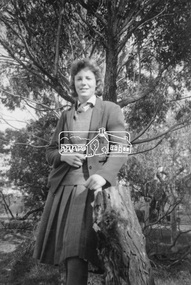 Eltham District Historical Society Inc
Photograph, Joy Chapman in rear playground of Eltham High School, 1959, 1959
... alec chapman, annie bremner, blacksmith, bremner's flat, brougham steet, bus services, circus, diamond creek, dianne bell, doctor bradbury, easter gymkhana, elizabeth chapman, eltham high school, eltham hotel, eltham lower park, eltham public hall, eltham state school, eltham trestle bridge, general store, grace mitchell, ice man, joy chapman, lyons garage, margaret harding, milk bar, miss eltham 1965, miss victoria show girl, mount pleasant road, pan man, rodda parade, shops, show girl competition, swimming pool, water hole, yarra river...competition which was held at the Royal Melbourne Show. There I met many country girls who were representing their rural Victoria home. I made it into a final round of judging but I think justice prevailed when someone from a country background was crowned. It was fun to go into the show as I had not really been before and to see the displays of handcraft, cooking and wood chopping events was great as well as the judging of farm animals interesting. It is hard to remember the Eltham I grew up in. The Lyons Garage company bus...competition which was held at the Royal Melbourne Show. There I met many country girls who were representing their rural Victoria home. I made it into a final round of judging but I think justice prevailed when someone from a country background was crowned. It was fun to go into the show as I had not really been before and to see the displays of handcraft, cooking and wood chopping events was great as well as the judging of farm animals interesting. It is hard to remember the Eltham I grew up in. The Lyons Garage company bus ...My Recollections of Eltham Past by Margaret Joy Harding (nee Joy Chapman.) My family of Elizabeth and Alec Chapman moved to Eltham in 1946 into a cottage on the opposite side of the Diamond Creek from where the little train now operates in the Lower Park. At that time Eltham truly was a country town and the Pub was the main meeting place for most inhabitants on a Saturday afternoon in the beer garden. I attended Eltham Primary School where I started as a 4-year-old (my birthday being slightly after the mid-year intake) that happened then. My mother spent a lot of days taking me back to school when I had dismissed myself and walked the one kilomtre home alone. Bremner's Common (now Wingrove Park) was a big attraction with its dam and tad poling which I found much more entertaining than school. (Mrs Bremner ran a Service Station on the site of the current one). Another attraction at this site was the circus that came a couple of times a year. Watching them put up the circus tent was very interesting and even more of an attraction was the feeding of the Lions in cages and the monkeys and elephants among the other animals that are not found in a circus these days. At school then we were provided with hot chocolate at morning recess where the mothers would prepare it in the shelter shed. The only form of classroom heating was an open fire. Worse was the warm milk given in the summer months. By the time I was near finishing at Primary school we used to be able to walk along the Main Road at lunchtime to Mrs. Mitchell's shop to a delicious hot pie. As I recall there was no supervision for this departure from the school grounds. It is interesting that some of the other children I started school with I still have contact with, in fact one is a very good friend although now living in Perth. That is the other thing about Eltham; many who grew up here continue to live in the area. Following primary school, the natural progression was to Eltham High School. There was only the main building at that time and I can remember our first assembly at the front entrance. During the time I was at High School several new class rooms were added and the school hall. I remember the musical plays such as HMS Pinafore and other classical musicals being performed. I also remember countless hours doing marching practice. The main street shops when I was young consisted of the Blue Gum milk bar at the far end, a Grocery store and a shoe maker where Coles currently stands. Opposite there was Lyon's Garage. They also provided a bus service and when we got off the train this little bus would tour the back streets taking each individual to their home, sometimes this could take quite considerable time. There was also a Black Smith next to the Chiropractic Practice opposite Alistair Knox Park, another Milk Bar/General Store on the comer of Bridge Street/Main Road where a shop currently still operates. There was also a Butcher's shop down from the pub opposite Franklin Street. The only doctor was next to the courthouse on the other side of Brougham Street. On Saturday afternoon I was occasionally allowed to go the movies in the Town Hall which also stood on the site of the Coles centre. Often the Fire Alarm would sound and everyone would run outside to watch the fire truck leave with the volunteers clutching on the back. The other attraction during summer of course was the swimming pool which was a small concrete pool filled with water pumped from the Diamond Creek, sometimes it was like a mud puddle so for me the nearer to home Yarra/Diamond Creek junction was a much better option. We swam in the water hole which was quite deep and with fallen trees and sometimes carcasses of cows and kangaroos floating past. As recreation, the churches were another attraction for the Sunday school picnics to Mordialloc in the back of the moving van with benches tied into the back for us to "sit" on. Too bad when we went around a corner! In the early days we had an Ice Man deliver the ice once a week for "refrigeration". The green grocer came around in a horse and cart as did the milkman and the bread was delivered but I constantly got into trouble for eating the middle out on the way from the box it was delivered to in Mt Pleasant road across the paddock. The milkman finally would not come down our street after his horse bolted one morning and took off across the paddock. We also had the "Pan Man" come weekly and whose visit I would avoid. Our nearest shop was where the flower stall is located opposite the Lower Park. It consisted of a Tea Room and Milk Bar. There was a Public Telephone there which was the only contact to anyone else. We were a one car family so my mother’s movements were very limited as the Eltham Station was a couple of kilometres away and a trip to the city was an event. Being an only child growing up was a little lonely however rambling along the creek with my Mum, picking mushrooms and picking cherry plums for jam and the dogs catching rabbits which we ate if we could get them away from the dogs. We also liked to go into the Lower Park during school holidays when the Greek people came to camp and they would sing and dance around the camp fire and it all seemed so different to us as this was early days of immigration. Childhood was relatively simple and carefree and I wish the kids of today had the freedom of my youth and the healthy outdoor lifestyle of the "olden days". SHOW GIRL COMPETITION In 1965 Eltham was more like a country town than the suburb it has become today. People knew each other, if not personally then certainly of the family name. The big event for the year was a Gymkhana or show at Lower Eltham Park. I can remember marching as a teenager from the town centre to the park in the marching girls with the decorated floats. In 1965, just on a whim on the day, I decided to enter the Miss Eltham Show Girl which was a part of the festivities at the park. I seem to remember that the show mainly consisted of horse events, cattle judging and dog show. As I had not given any serious thought to entering the competition, I wore a suit that I had for work which was brown wool, with a coffee coloured shirt under, black shoes, bag, and gloves but no hat. I duly paraded for the judges and much to my surprise I was announced the winner. I eventually went on to compete at the Miss Victoria Show Girl competition which was held at the Royal Melbourne Show. There I met many country girls who were representing their rural Victoria home. I made it into a final round of judging but I think justice prevailed when someone from a country background was crowned. It was fun to go into the show as I had not really been before and to see the displays of handcraft, cooking and wood chopping events was great as well as the judging of farm animals interesting. It is hard to remember the Eltham I grew up in. The Lyons Garage company bus that actually drove you home (or close to it) when we got off the train at night. The Eltham Hotel on a Saturday afternoon a usual social meeting place where people just sat and chatted. The pictures held in the Town Hall and when the fire alarm sounded all the men just jumped up and ran to help. Suburbia has now swallowed most of that life but thankfully we at least do have the trestle bridge and parkland. Digital file only - Black and white photo print on loan for scanning by EDHSalec chapman, annie bremner, blacksmith, bremner's flat, brougham steet, bus services, circus, diamond creek, dianne bell, doctor bradbury, easter gymkhana, elizabeth chapman, eltham high school, eltham hotel, eltham lower park, eltham public hall, eltham state school, eltham trestle bridge, general store, grace mitchell, ice man, joy chapman, lyons garage, margaret harding, milk bar, miss eltham 1965, miss victoria show girl, mount pleasant road, pan man, rodda parade, shops, show girl competition, swimming pool, water hole, yarra river -
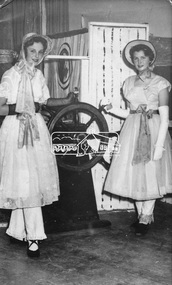 Eltham District Historical Society Inc
Photograph, Joy Chapman (left) with Dianne Bell in HMS Pinafore, 1960, 1960
... alec chapman, annie bremner, blacksmith, bremner's flat, brougham steet, bus services, circus, diamond creek, dianne bell, doctor bradbury, easter gymkhana, elizabeth chapman, eltham high school, eltham hotel, eltham lower park, eltham public hall, eltham state school, eltham trestle bridge, general store, grace mitchell, ice man, joy chapman, lyons garage, margaret harding, milk bar, miss eltham 1965, miss victoria show girl, mount pleasant road, pan man, rodda parade, shops, show girl competition, swimming pool, water hole, yarra river...competition which was held at the Royal Melbourne Show. There I met many country girls who were representing their rural Victoria home. I made it into a final round of judging but I think justice prevailed when someone from a country background was crowned. It was fun to go into the show as I had not really been before and to see the displays of handcraft, cooking and wood chopping events was great as well as the judging of farm animals interesting. It is hard to remember the Eltham I grew up in. The Lyons Garage company bus...competition which was held at the Royal Melbourne Show. There I met many country girls who were representing their rural Victoria home. I made it into a final round of judging but I think justice prevailed when someone from a country background was crowned. It was fun to go into the show as I had not really been before and to see the displays of handcraft, cooking and wood chopping events was great as well as the judging of farm animals interesting. It is hard to remember the Eltham I grew up in. The Lyons Garage company bus ...My Recollections of Eltham Past by Margaret Joy Harding (nee Joy Chapman.) My family of Elizabeth and Alec Chapman moved to Eltham in 1946 into a cottage on the opposite side of the Diamond Creek from where the little train now operates in the Lower Park. At that time Eltham truly was a country town and the Pub was the main meeting place for most inhabitants on a Saturday afternoon in the beer garden. I attended Eltham Primary School where I started as a 4-year-old (my birthday being slightly after the mid-year intake) that happened then. My mother spent a lot of days taking me back to school when I had dismissed myself and walked the one kilomtre home alone. Bremner's Common (now Wingrove Park) was a big attraction with its dam and tad poling which I found much more entertaining than school. (Mrs Bremner ran a Service Station on the site of the current one). Another attraction at this site was the circus that came a couple of times a year. Watching them put up the circus tent was very interesting and even more of an attraction was the feeding of the Lions in cages and the monkeys and elephants among the other animals that are not found in a circus these days. At school then we were provided with hot chocolate at morning recess where the mothers would prepare it in the shelter shed. The only form of classroom heating was an open fire. Worse was the warm milk given in the summer months. By the time I was near finishing at Primary school we used to be able to walk along the Main Road at lunchtime to Mrs. Mitchell's shop to a delicious hot pie. As I recall there was no supervision for this departure from the school grounds. It is interesting that some of the other children I started school with I still have contact with, in fact one is a very good friend although now living in Perth. That is the other thing about Eltham; many who grew up here continue to live in the area. Following primary school, the natural progression was to Eltham High School. There was only the main building at that time and I can remember our first assembly at the front entrance. During the time I was at High School several new class rooms were added and the school hall. I remember the musical plays such as HMS Pinafore and other classical musicals being performed. I also remember countless hours doing marching practice. The main street shops when I was young consisted of the Blue Gum milk bar at the far end, a Grocery store and a shoe maker where Coles currently stands. Opposite there was Lyon's Garage. They also provided a bus service and when we got off the train this little bus would tour the back streets taking each individual to their home, sometimes this could take quite considerable time. There was also a Black Smith next to the Chiropractic Practice opposite Alistair Knox Park, another Milk Bar/General Store on the comer of Bridge Street/Main Road where a shop currently still operates. There was also a Butcher's shop down from the pub opposite Franklin Street. The only doctor was next to the courthouse on the other side of Brougham Street. On Saturday afternoon I was occasionally allowed to go the movies in the Town Hall which also stood on the site of the Coles centre. Often the Fire Alarm would sound and everyone would run outside to watch the fire truck leave with the volunteers clutching on the back. The other attraction during summer of course was the swimming pool which was a small concrete pool filled with water pumped from the Diamond Creek, sometimes it was like a mud puddle so for me the nearer to home Yarra/Diamond Creek junction was a much better option. We swam in the water hole which was quite deep and with fallen trees and sometimes carcasses of cows and kangaroos floating past. As recreation, the churches were another attraction for the Sunday school picnics to Mordialloc in the back of the moving van with benches tied into the back for us to "sit" on. Too bad when we went around a corner! In the early days we had an Ice Man deliver the ice once a week for "refrigeration". The green grocer came around in a horse and cart as did the milkman and the bread was delivered but I constantly got into trouble for eating the middle out on the way from the box it was delivered to in Mt Pleasant road across the paddock. The milkman finally would not come down our street after his horse bolted one morning and took off across the paddock. We also had the "Pan Man" come weekly and whose visit I would avoid. Our nearest shop was where the flower stall is located opposite the Lower Park. It consisted of a Tea Room and Milk Bar. There was a Public Telephone there which was the only contact to anyone else. We were a one car family so my mother’s movements were very limited as the Eltham Station was a couple of kilometres away and a trip to the city was an event. Being an only child growing up was a little lonely however rambling along the creek with my Mum, picking mushrooms and picking cherry plums for jam and the dogs catching rabbits which we ate if we could get them away from the dogs. We also liked to go into the Lower Park during school holidays when the Greek people came to camp and they would sing and dance around the camp fire and it all seemed so different to us as this was early days of immigration. Childhood was relatively simple and carefree and I wish the kids of today had the freedom of my youth and the healthy outdoor lifestyle of the "olden days". SHOW GIRL COMPETITION In 1965 Eltham was more like a country town than the suburb it has become today. People knew each other, if not personally then certainly of the family name. The big event for the year was a Gymkhana or show at Lower Eltham Park. I can remember marching as a teenager from the town centre to the park in the marching girls with the decorated floats. In 1965, just on a whim on the day, I decided to enter the Miss Eltham Show Girl which was a part of the festivities at the park. I seem to remember that the show mainly consisted of horse events, cattle judging and dog show. As I had not given any serious thought to entering the competition, I wore a suit that I had for work which was brown wool, with a coffee coloured shirt under, black shoes, bag, and gloves but no hat. I duly paraded for the judges and much to my surprise I was announced the winner. I eventually went on to compete at the Miss Victoria Show Girl competition which was held at the Royal Melbourne Show. There I met many country girls who were representing their rural Victoria home. I made it into a final round of judging but I think justice prevailed when someone from a country background was crowned. It was fun to go into the show as I had not really been before and to see the displays of handcraft, cooking and wood chopping events was great as well as the judging of farm animals interesting. It is hard to remember the Eltham I grew up in. The Lyons Garage company bus that actually drove you home (or close to it) when we got off the train at night. The Eltham Hotel on a Saturday afternoon a usual social meeting place where people just sat and chatted. The pictures held in the Town Hall and when the fire alarm sounded all the men just jumped up and ran to help. Suburbia has now swallowed most of that life but thankfully we at least do have the trestle bridge and parkland. Digital file only - Black and white photo print on loan for scanning by EDHSalec chapman, annie bremner, blacksmith, bremner's flat, brougham steet, bus services, circus, diamond creek, dianne bell, doctor bradbury, easter gymkhana, elizabeth chapman, eltham high school, eltham hotel, eltham lower park, eltham public hall, eltham state school, eltham trestle bridge, general store, grace mitchell, ice man, joy chapman, lyons garage, margaret harding, milk bar, miss eltham 1965, miss victoria show girl, mount pleasant road, pan man, rodda parade, shops, show girl competition, swimming pool, water hole, yarra river
