
Showing 38 items matching " chinese graves"
-
 Bendigo Historical Society Inc.
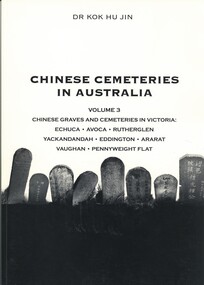
Book - CHINESE CEMETERIES IN AUSTRALIA, VOLUME 3. CHINESE GRAVES AND CEMETERIES IN VICTORIA, 2003
... CHINESE CEMETERIES IN AUSTRALIA, VOLUME 3. CHINESE GRAVES AND CEMETERIES IN VICTORIA...... Chinese graves...Chinese Cemeteries in Australia, Volume 3. Chinese Graves and Cemeteries in Victoria: Echuca, Avoca, Rutherglen, Yackandandah, Eddington, Ararat, Vaughan, Pennyweight Flat. ...CEMETERY chinese Bendigo cemeteries Victoria Chinese graves genealogy Dr Kok Hu Jin Chinese Cemeteries in Australia, Volume 3. ...Chinese Cemeteries in Australia, Volume 3. Chinese Graves and Cemeteries in Victoria: Echuca, Avoca, Rutherglen, Yackandandah, Eddington, Ararat, Vaughan, Pennyweight Flat. Publisher: Golden Dragon Museum, Bendigo. ISBN: 09578013 7 8. 93 pages. Black and white illustrations & map.Dr Kok Hu Jincemetery, chinese, bendigo cemeteries victoria, chinese graves, genealogy -
 Buninyong & District Historical Society
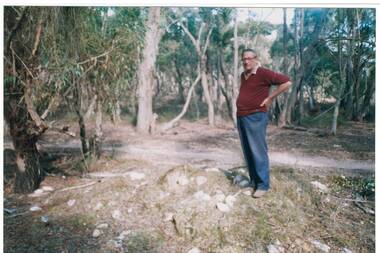
Photograph - Chinese graves, Misery Creek, Enfield, Chinese heritage site
... Chinese graves, Misery Creek, Enfield...Local history and evidence of Chinese heritage Local history of Chinese mining Chinese grave sites Evidence of Chinese mining activity in area Local mining history None Good condition with no blemishes or marks Chinese heritage site Photograph Chinese graves, Misery Creek, Enfield ...Local history and evidence of Chinese heritageLocal history of Chinese miningGood condition with no blemishes or marksNonechinese grave sites, evidence of chinese mining activity in area, local mining history -
 Buninyong & District Historical Society
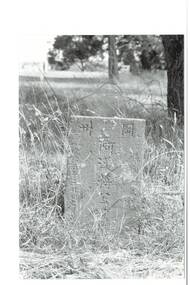
Photograph - Original B/W Photograph, Clive Brooks, Buninyong Cemetery, engraved headstone for Chinese grave, 9/4/1994
... Graves...Chinese...A B/W photo , Buninyong Cemetery, engraved headstone for Chinese grave....Part of series to record changes in Buninyong Grave of early Buninyong Chinese settlers. Buninyong Cemetery Headstone Graves Chinese A B/W photo , Buninyong Cemetery, engraved headstone for Chinese grave. ...Part of series to record changes in BuninyongGrave of early Buninyong Chinese settlers.A B/W photo , Buninyong Cemetery, engraved headstone for Chinese grave.buninyong, cemetery, headstone, graves, chinese -
 Bendigo Historical Society Inc.
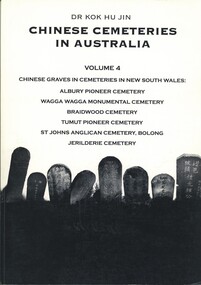
Book - CHINESE CEMETERIES IN AUSTRALIA VOLUME 4, c2003
... ... Chinese graves...Chinese Cemeteries in Australia Volume 4 Chinese Graves in Cemeteries in New South Wales: Albury Pioneer Cemetery, Wagga Wagga Monumental Cemetery, Braidwood Cemetery, Tumut Pioneer Cemetery, St Johns Anglican Cemetery, Bolong, Jerilderie Cemetery. ...HISTORY Australian chinese cemeteries cemeteries NSW Chinese graves genealogy Dr Kok Hu Jin Chinese Cemeteries in Australia Volume 4 Chinese Graves in Cemeteries in New South Wales: Albury Pioneer Cemetery, Wagga Wagga Monumental Cemetery, Braidwood Cemetery, Tumut Pioneer Cemetery, St Johns Anglican Cemetery, Bolong, Jerilderie Cemetery. ...Chinese Cemeteries in Australia Volume 4 Chinese Graves in Cemeteries in New South Wales: Albury Pioneer Cemetery, Wagga Wagga Monumental Cemetery, Braidwood Cemetery, Tumut Pioneer Cemetery, St Johns Anglican Cemetery, Bolong, Jerilderie Cemetery. Publisher: Golden Dragon Museum, Bendigo. ISBN: 09578013 7 8. 106 pages. Black and white illustrations & map.Dr Kok Hu Jinhistory, australian, chinese cemeteries, cemeteries nsw, chinese graves, genealogy -
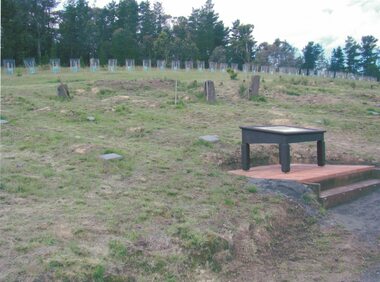 Linton and District Historical Society Inc
Photograph, Chinese Memorial Tablet, Linton Cemetery, 2007
... Colour photograph of Chinese memorial tablet on red pavers with Chinese graves behind....Colour photograph of Chinese memorial tablet on red pavers with Chinese graves behind. Chinese Memorial Tablet, Linton Cemetery, 2007 Photograph ...Commemorative plaque installed at Linton Cemetery in November 2007.Colour photograph of Chinese memorial tablet on red pavers with Chinese graves behind."Chinese commemorative plaque with new plantings in background Linton cemetery 4.11.07".linton cemetery, chinese memorial -
 Bendigo Historical Society Inc.
Book - CHINESE CEMETERIES IN AUSTRALIA VOLUME 5, c
... ... Chinese graves...AUSTRALIA History chinese White Hills Cemetery Chinese graves genealogy Dr Kok Hu Jin Chinese Cemeteries in Australia Volume 5, White Hills Cemetery Bendigo, Victoria. ...Chinese Cemeteries in Australia Volume 5, White Hills Cemetery Bendigo, Victoria. Publisher: Golden Dragon Museum, Bendigo. ISBN: 09578013 7 8. 191 PAGES. Black and white illustrations & maps. Published post 12 July 2003. Inscriptions $30.Dr Kok Hu Jinaustralia, history, chinese, white hills cemetery, chinese graves, genealogy -
 Bendigo Historical Society Inc.
Book - CHINESE CEMETERIES IN AUSTRALIA, VOLUME 2, BENDIGO CEMETERY VICTORIA, c2003
... ... Chinese graves...CEMETERY chinese Bendigo cemeteries Victoria Chinese graves genealogy Dr Kok Hu Jin Chinese Cemeteries in Australia, Volume 2 Bendigo Cemetery Victoria. ...Chinese Cemeteries in Australia, Volume 2 Bendigo Cemetery Victoria. Publisher: Golden Dragon Museum, Bendigo. ISBN: 0 9578013 7 8. Black and white illustrations and map. 97 pages.Dr Kok Hu Jincemetery, chinese, bendigo cemeteries victoria, chinese graves, genealogy -
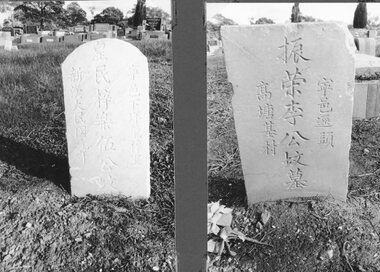 Stawell Historical Society Inc
Photograph, Chinese Grave Headstones-- 10 Photos
... Collection of 10 photos of Chinese Grave Stones in 3 Sleeves...Collection of 10 photos of Chinese Grave Stones in 3 Sleeves Stawell Chinese Grave Headstones-- 10 Photos Photograph ...Collection of 10 photos of Chinese Grave Stones in 3 Sleevesstawell -
 Beechworth Cemetery Trust
Map - Beechworth Cemetery reproduction of original map -Secretary copy, Beechworth Cemetery
... graves...chinese section...Rotunda, fountain, nursery, memorial wall, pioneer section map displays the plan of grave sites rotunda fountain nursery memorial wall pioneer section graves chinese section un-numbered grave sites cemetery All graves at the cemetery set out in denominational sections with hand-written information on additional graves added to sections in Roman Catholic A & C, Church of England A-F, Presbyterian A-C, Methodist/Uniting B and Wesleyan A. ...Reproduction map displaying all grave sites in Beechworth Public Cemetery. Rotunda, fountain, nursery, memorial wall, pioneer sectionmap displays the plan of grave sitesLaminated Photocopy of original cemetery map with additional information hand-written on the map. All graves at the cemetery set out in denominational sections with hand-written information on additional graves added to sections in Roman Catholic A & C, Church of England A-F, Presbyterian A-C, Methodist/Uniting B and Wesleyan A. Multidenominational hand-written note on Jews section with Trust Minutes 4.7.'83 written next to this addition. Additions hand-drawn of fountain, memorial wall, nursery and pioneer cemetery.rotunda, fountain, nursery, memorial wall, pioneer section, graves, chinese section, un-numbered grave sites, cemetery -
Beechworth Cemetery Trust
Map - Beechworth Cemetery reproduction of original map, Beechworth Cemetery Reproduction - Treasurer copy
... graves...chinese section...Rotunda, fountain, nursery, memorial wall, pioneer section map displays the plan of grave sites rotunda fountain nursery memorial wall pioneer section graves chinese section un-numbered grave sites cemetery All graves at the cemetery set out in denominational sections with hand-written information on additional graves added to sections in Roman Catholic A & C, Church of England A-F, Presbyterian A-C, Methodist/Uniting B and Wesleyan A. ...Reproduction map displaying all grave sites in Beechworth Public Cemetery. Rotunda, fountain, nursery, memorial wall, pioneer sectionmap displays the plan of grave sitesLaminated Photocopy of original cemetery map with additional information hand-written on the map. All graves at the cemetery set out in denominational sections with hand-written information on additional graves added to sections in Roman Catholic A & C, Church of England A-F, Presbyterian A-C, Methodist/Uniting B and Wesleyan A. Multidenominational hand-written note on Jews section with Trust Minutes 4.7.'83 written next to this addition. Additions hand-drawn of fountain, memorial wall, nursery and pioneer cemetery.rotunda, fountain, nursery, memorial wall, pioneer section, graves, chinese section, un-numbered grave sites, cemetery -
Beechworth Cemetery Trust
Map - Beechworth Cemetery reproduction of original map - On site in Rotunda, Beechworth Cemetery
... graves...chinese section...Rotunda, fountain, nursery, memorial wall, pioneer section map displays the plan of grave sites rotunda fountain nursery memorial wall pioneer section graves chinese section un-numbered grave sites cemetery All graves at the cemetery set out in denominational sections with hand-written information on additional graves added to sections in Roman Catholic A & C, Church of England A-F, Presbyterian A-C, Methodist/Uniting B and Wesleyan A. ...Reproduction map displaying all grave sites in Beechworth Public Cemetery. Rotunda, fountain, nursery, memorial wall, pioneer sectionmap displays the plan of grave sitesLaminated Photocopy of original cemetery map with additional information hand-written on the map. All graves at the cemetery set out in denominational sections with hand-written information on additional graves added to sections in Roman Catholic A & C, Church of England A-F, Presbyterian A-C, Methodist/Uniting B and Wesleyan A. Multidenominational hand-written note on Jews section with Trust Minutes 4.7.'83 written next to this addition. Additions hand-drawn of fountain, memorial wall, nursery and pioneer cemetery.rotunda, fountain, nursery, memorial wall, pioneer section, graves, chinese section, un-numbered grave sites, cemetery -
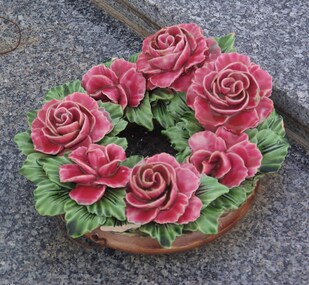 Ballarat Heritage Services
Photograph - Photograph - Colour, China Roses at Bendigo Cemetery, 2018, 02/09/2018
... A number of china roses affixed to graves at Bendigo Cemetery. ...bendigo cemetery china roses A number of china roses affixed to graves at Bendigo Cemetery. China Roses at Bendigo Cemetery, 2018 Photograph Photograph - Colour Clare Gervasoni ...A number of china roses affixed to graves at Bendigo Cemetery. bendigo cemetery, china roses -
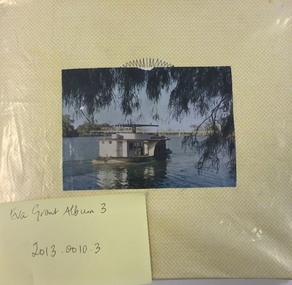 Kew Historical Society Inc
Album - Photographs of heritage sites in Victoria, Eva Grant, 1964-66
... . | Kyneton - De Grave’s Flour Mill - “C”. | Maldon (Vic.) - Chinese oven; Macarthur’s House; Maldon’s oldest resident; Chinese graves x 2; [Beehive Chimney]. | Marysville (Vic.) - Centenary cairn | Mitcham (Vic.), Mud brick house x 2, Deep Creek Road. | Melbourne (Vic.) - St Paul’s Cathedral [renovation] (1964); Wreckers at Damman’s Corner, cnr Bourke and Collins Streets (1964); Princess Gate project x 2 (1964); Colonial Storekeeper’s building on cnr King and Bourke Streets (1966); Early observatory 1861-3; the Honey Memorial. | Mt Oberon (Vic.) - [obsolete] radio telephone dish. | Seymour (Vic.) - Habres (sic) House x 3.| Swan Hill (Vic.) - Major Mitchell’s Cairn (12/1964); Headstone of Andrew Beverage AM (12/1964). | Templestowe (Vic.) - Finn’s Hotel. | Thornton (Vic.) - Eildon Station. | Werribee (Vic.) - Chirnside Memorial [Presbyterian] Church; gaslight beside church | Location unknown, but possibly Swan Hill - Brick house; Wooden bullock dray. | Location unknown - Headstone of John Furlonge 1835..... | Kyneton - De Grave’s Flour Mill - “C”. | Maldon (Vic.) - Chinese oven; Macarthur’s House; Maldon’s oldest resident; Chinese graves x 2; [Beehive Chimney]. | Marysville (Vic.) - Centenary cairn | Mitcham (Vic.), Mud brick house x 2, Deep Creek Road. | Melbourne (Vic.) - St Paul’s Cathedral [renovation] (1964); Wreckers at Damman’s Corner, cnr Bourke and Collins Streets (1964); Princess Gate project x 2 (1964); Colonial Storekeeper’s building on cnr King and Bourke Streets (1966); Early observatory 1861-3; the Honey Memorial. | Mt Oberon (Vic.) - [obsolete] radio telephone dish. | Seymour (Vic.) - Habres (sic) House x 3.| Swan Hill (Vic.) - Major Mitchell’s Cairn (12/1964); Headstone of Andrew Beverage AM (12/1964). | Templestowe (Vic.) - Finn’s Hotel. | Thornton (Vic.) - Eildon Station. | Werribee (Vic.) - Chirnside Memorial [Presbyterian] Church; gaslight beside church | Location unknown, but possibly Swan Hill - Brick house; Wooden bullock dray. | Location unknown - Headstone of John Furlonge 1835. ...Eva Grant was a member of the Kew Historical Society. Three albums in the collection were created by her, this one, the third created between 1964 and 1966. They were donated to the Society by her daughter in 2010. Each of the albums includes photographs and newspaper cuttings collected on her travels to historic places in South East Australia in the 1950s and 1960s. Particular structures photographed in this album include: Barnawatha (Vic.) - The Hermitage | Beveridge (Vic.) - Stone cottage where Ned Kelly was born. | Brighton - St Andrew’s Church graveyard. | Chiltern (Vic.) - lake view [missing] | Cowes (Vic.) - ‘Broadwater’ [originally home of Henty-Wilson family], demolished 1965; Bell of the Speke wreck; Edward’s tree. | Euroa (Vic.) - Habbies Howe | Fairfield (Vic.) - Dight’s Falls; John Dight. | Fernshawe (Vic.) - Queen Mary tree. | Jolimont (Vic.) - Old railway tunnel linking the first Government House (1964); Sign identifying location of first Government House. | Kew (Vic.) - Cairn at Dight’s Falls; Canoe tree, Bowyer Avenue. | Kyneton - De Grave’s Flour Mill - “C”. | Maldon (Vic.) - Chinese oven; Macarthur’s House; Maldon’s oldest resident; Chinese graves x 2; [Beehive Chimney]. | Marysville (Vic.) - Centenary cairn | Mitcham (Vic.), Mud brick house x 2, Deep Creek Road. | Melbourne (Vic.) - St Paul’s Cathedral [renovation] (1964); Wreckers at Damman’s Corner, cnr Bourke and Collins Streets (1964); Princess Gate project x 2 (1964); Colonial Storekeeper’s building on cnr King and Bourke Streets (1966); Early observatory 1861-3; the Honey Memorial. | Mt Oberon (Vic.) - [obsolete] radio telephone dish. | Seymour (Vic.) - Habres (sic) House x 3.| Swan Hill (Vic.) - Major Mitchell’s Cairn (12/1964); Headstone of Andrew Beverage AM (12/1964). | Templestowe (Vic.) - Finn’s Hotel. | Thornton (Vic.) - Eildon Station. | Werribee (Vic.) - Chirnside Memorial [Presbyterian] Church; gaslight beside church | Location unknown, but possibly Swan Hill - Brick house; Wooden bullock dray. | Location unknown - Headstone of John Furlonge 1835.Important record of significant heritage properties in Victoria, many of which have since been demolished.30 page spirex bound drawing book including photographs and newspaper articles of historic buildings in Victoria. The front cover has a picture of a steam boat. The cover is encased in plastic. A number items in the album are annotated with written commentary by Eva Grant who compiled the album. Annotations and transcriptions by Eva Grant on most imageseva grant, photograph albums, heritage places - victoria -
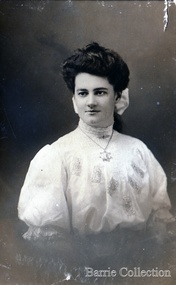 Melton City Libraries
Photograph, Martha (Watson) Myers, 1907, c.1930 and 1953
... Martha also told me the stories about how as a child she played at the cemetery, taking the oranges placed as offerings on the Chinese graves and being chased away in fright when caught by a Chinese man. ...Martha also told me the stories about how as a child she played at the cemetery, taking the oranges placed as offerings on the Chinese graves and being chased away in fright when caught by a Chinese man. ...Martha Watson was born on 17 October 1888 in Ballarat, Victoria, Australia as the first child of Robina (Ruby) WATSON. She died on 23 March 1976 in Geelong, Victoria, Australia. Memories of Martha by Valcia nee Twigg Lowrie, granddaughter of Arthur Watson. My memories and recollections as told to me my Grandmother ‘Mum’ Myers. As a child she had scarlet fever and did not attend school during the illness and missed a lot of school (Macarthur Street State School). When she was meant to return to school having fallen behind her classmates, confused and behind with the school work, she instead spent her time wandering around Lake Wendouree feeling too ashamed to attend school. Her uncle Arthur, born in 1874, whom she idealized, was a type of father/mentor figure who played and important part in her early life. He moved to Queensland in the early 1900’s and they did not meet again until he visited Melton in 1949, he died in 1954. He was a champion rower in Victoria and Queensland and a noted cyclist who rode in three Warrnambool to Melbourne races, and footballer. Her mother’s death certificate reveals her place of death as the Ballarat Hospital on 8th September 1903 aged 36. Martha was not told of the death of her mother, it was some time later when she found out her mother had died. She was greatly distressed when she eventually found out. The grief and the circumstance of her mothers death and her unfortunate life had a permanent effect on Martha’s life. Robina was buried in Open Ground at the New Cemetery Ballarat. Marjorie likened to this to the death of Mozart at the age of 35 who was also buried in a common grave. Martha also told me the stories about how as a child she played at the cemetery, taking the oranges placed as offerings on the Chinese graves and being chased away in fright when caught by a Chinese man. Her description left a vivid impression on my mind. The Burnbank street house was just across the road from the cemetery. The pieces of this story I had heard made sense when I visited the location in recent years. Martha’s described how Nanna would sing on the front verandah, and send her off to t get drink for her. This situation might help explain the reason for Martha’s strong aversion to alcohol. As a young girl it had been distressing to her. Nanna was a colourful and theatrical personality and danced with the Duke when he visited Ballarat. She was also known to have stated that she would marry a man who could give her a bucket of gold, possibly around the time after her first husband, Charles death, she had her young boy Edward to bring up. Martha was about 13 years old when Nanna Watson left Ballarat going to Queensland to visit her son Arthur. Martha slept that night afraid and alone in the empty house. The person who was meant to collect her did not come until the next day. She went to work for a family, a woman with children, they took most of the money that Nanna had left with Martha. There was a new baby in the house and the Scottish man in the house behaved suspiciously towards Martha. She was afraid of him and would hide from him under the bed. At this young age she managed to survive on her wits and sense of self preservation. It is not known how long she worked with this family. The place was from my impression, away from the town of Ballarat. Her very difficult formative years are testament to her strength of character and determination to succeed in life and ambition to provide the best opportunities for her own children. In 1905 Martha received a post card from Uncle Arthur in Brisbane addressed – c/o Mrs Styles 14 High Street Ballarat. Dolly Styles was a Ballarat friend and she kept in contact with her for many years. A letter reveals her living in Minyip in her older years. Martha is thought to have spent a few years working before she arrived in Melton. Miss Shebler hired Martha to help her in the care of her father and to assist with work in the Golden Fleece Hotel. Mr Shebler was a nice old man and mostly confined to his room and somewhat childlike as described by Martha. [The elderly Mr August Shebler died in February 1908]. Martha’s exact arrival in Melton is not known, but could be estimated as late 1906 to early 1907. In her room at the hotel she could hear the spring cart of Mr Minns going on the milk delivery rounds in the very early hours of the morning after coming across the creek from his house When she was 19, she married Frederick Thomas MYERS, son of Henri MIERS and Ann DOWLING, on 30 April 1908 ( Fitzroy, Victoria, Australia). Frederick Thomas MYERS and Martha Mary WATSON had the following children: 1. Frederick John Watson MYERS was born on 01 October 1908 in Melton, Victoria, Australia.He died on 07 February 2001.He married Mary June BATTYE on 18 September 1948 in Victoria, Australia. 2. Marjorie Gretchen MYERS was born on 21 February 1912 in Melton, Victoria, Australia.She died on 10 September 2004 in Frankston, Victoria, Australia.She married Herbert Vivian BUTLER on 07 January 1939 in Victoria, Australia. 3. Eva Edna MYERS was born on 15 October 1918 in Melton, Victoria, Australia.She died on 31 January 2008 in Bacchus Marsh, Victoria, Australia.She married Ernest Wesley BARRIE on 25 October 1941 in Melton, Victoria, Australia. 4. Arthur Bruce MYERS was born on 29 April 1925 in Melton, Victoria, Australia.He died on 26 March 2015 in Melbourne, Victoria, Australia.He married Olive Irene NORTON in April 1953 in Balliang, Victoria, Australia (or Church of Christ Footscray? (WB)). 5. Maxwell Douglas MYERS was born on 10 August 1927 in Melton, Victoria, Australia.He died on 03 May 2005 in Geelong, Victoria, Australia.He married Rosemary Rebecca BARRIE on 31 August 1951 in Melton, Victoria, Australia. Valcia nee Twigg Lowrie granddaughter of Arthur Watson, daughter of Mercia and Val Twigg did extensive research on the Marshall family of Lerwick Shetland Isle obtaining birth information of the Scottish forebears. She also got the birth/marriage and death certificates of the Ballarat connection of Robina’s husbands and children. Copies were sent to Edna and Wendy during the early 1990’s. Bruce and Irene also obtained certificates and Myers family information. Wendy applied for certificates at this time.Photographs of Martha (Watson) Myers taken at different times of her life -
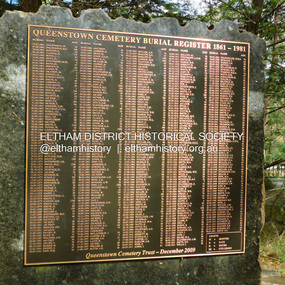 Eltham District Historical Society Inc
Photograph, Jim Connor, Queenstown Cemetery Burial Register 1861-1981, Queenstown Cemetery, Smiths Gully Road, St Andrews, 8 March 2023
... Many graves are unmarked and unrecorded including many Chinese and other itinerant miners. ...Many graves are unmarked and unrecorded including many Chinese and other itinerant miners. ...Installed by the Queenstown Cemetery Trust December 2009 The discovery of gold in Smyth's Creek in 1854 and subsequent gold rush to the Caledonia diggings led to the establishment of Queenstown (present day St Andrews). The first recorded burial was July 31st, 1861 and it was officially declared a Cemetery Reserve in 1866. Many graves are unmarked and unrecorded including many Chinese and other itinerant miners. The cemetery was closed for new burials in 1851. The last recorded burial was in 1981 in an existing family grave.jim connor collection, 2023-03-08, queenstown cemetery, smiths gully road, st andrews -
 Eltham District Historical Society Inc
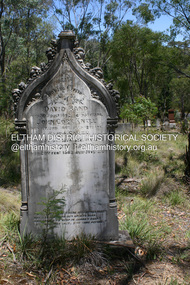
Photograph - Digital Photograph, Alan King, Queenstown Cemetery, Smiths Gully Road, St Andrews, 28 December 2007
... Many graves are unmarked and unrecorded including many Chinese and other itinerant miners. ...Many graves are unmarked and unrecorded including many Chinese and other itinerant miners. ...The discovery of gold in Smyth's Creek in 1854 and subsequent gold rush to the Caledonia diggings led to the establishment of Queenstown (present day St Andrews). The first recorded burial was July 31st, 1861 and it was officially declared a Cemetery Reserve in 1866. Many graves are unmarked and unrecorded including many Chinese and other itinerant miners. The cemetery was closed for new burials in 1851. The last recorded burial was in 1981 in an existing family grave. In Loving memory of David Band Died 30th Decr. 1862, aged 51 years. John Cork Knell Died 11th April 1867, aged 42 years. Eliza Smith Died 20th Jany. 1874, aged 3 1/2 years. William Band Died 20th Feby. 1883, aged 51 years. Published: Nillumbik Now and Then / Marguerite Marshall 2008; photographs Alan King with Marguerite Marshall.; p73 The discovery of gold at Smyth’s Creek* in 1854 brought 3000 people to the area in search of their fortunes.1 However in the harsh conditions many miners and their families died young, and were buried in unmarked graves. Their stories died with them but by 1861, the first burial was recorded at the Queenstown Cemetery – that of William Dalrymple aged 65 – although the cemetery was only officially declared a reserve in 1866. Even before this in 1856, a double burial had been recorded for the twin baby daughters of George Harrison at Market Square, the miners’ settlement – presumably where the cemetery is today. In 1951 the Queenstown Cemetery at 70 Smiths Gully Road, Smiths Gully, closed for burials. However the last burial in a family plot, that of Grace Evelyn Smith, occurred in 1981. Today only 55 headstones remain, but more than 380 burials are recorded. Remnant bushland dominates the cemetery where many graves are merely mounds and others have been damaged by vandalism and the neglect of time. Bushfire in 1962 destroyed the picket fencing, grave markers and cypress boundary planted in the early 1900s. The box/stringybark woodland in the 1.7 hectare Cemetery Reserve is regrowth from then and the indigenous and heritage vegetation is protected. Thanks to the volunteer Cemetery Trust and Friends & Relations of Queenstown Cemetery, the cemetery is maintained, stories recorded and the burial index corrected and expanded.2 Close by the cemetery on the site of today’s Peter Franke Picnic and Nature Reserve stood Market Square, the Caledonia Diggings village of tents and stores, the forerunner of Queenstown, now St Andrews. Many of the Caledonia Diggings miners were Chinese, many of whom, with itinerant prospectors, were buried in unmarked graves. Histories are being recorded of other immigrants, mainly English and German, who settled after the gold rush, some of whose descendants fought and died in the two world wars. Names on many headstones are also recorded on the district’s roads, reserves and war memorials such as Motschall, Joyce, Howard and Coutie. The oldest surviving tombstone is that of Scot, David Band who died in 1862 at 51 years. His oldest daughter Elizabeth, with husband John Knell, owned the Queenstown Hotel and the post office. Child-rearing in a colonial gold town was often tragically difficult, as demonstrated in the first 20 years, when 41% of the 34 burials recorded were children. Settlers endured harsh conditions graphically illustrated with the deaths of Annie Joyce at 30 years and of her family. Annie was married to gold miner Walter Joyce. Their third child Walter, born in 1886, died in March 1887. Eight months later Annie died of breast cancer. Walter died in 1909, aged 53, of miner’s phthisic caused by stone dust destroying his lungs. It was so hard to make a living that burials were usually held from 2.30 pm to allow mourners to work a day before paying their last respects.3 Most burials before 1890 were recorded as Anglicans, as the only church on the Caledonia Diggings was the Church of St Andrew, until 1897, when the Primitive Methodist Church came to Panton Hill. Generally miners came to better themselves, but some, like Grace Hopkinson (nee Milward), born in England in 1828, came from a well-off and educated family. According to family legend Grace emigrated with husband William, to live in a tent, but had kept her personally embossed sterling silver cutlery service. Amid the tough environment were some successes like that reported in The Evelyn Observer April/May 1901 of miner William Hopkinson who was buried at the cemetery in 1912 aged 81. The Observer stated that Hopkinson ‘recently dropped across another find in his claim at One Tree Hill’. The lump of gold found this time weighed more than half a kilo. Mr Hopkinson referred to it as ‘another little speck’. *Today’s Smiths GullyThis collection of almost 130 photos about places and people within the Shire of Nillumbik, an urban and rural municipality in Melbourne's north, contributes to an understanding of the history of the Shire. Published in 2008 immediately prior to the Black Saturday bushfires of February 7, 2009, it documents sites that were impacted, and in some cases destroyed by the fires. It includes photographs taken especially for the publication, creating a unique time capsule representing the Shire in the early 21st century. It remains the most recent comprehenesive publication devoted to the Shire's history connecting local residents to the past. nillumbik now and then (marshall-king) collection, david band, eliza smith, gravestones, john cork knell, queenstown cemetery, smiths gully road, st andrews, william band -
 Eltham District Historical Society Inc
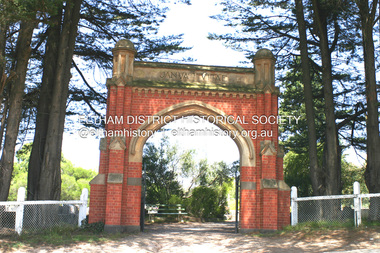
Photograph - Digital Photograph, Alan King, Memorial Arch Gateway, Nillumbik Cemetery, Diamond Creek, 23 January 2008
... It is believed that several unmarked graves are of Aborigines and Chinese miners.2 Perhaps the most famous person buried in the cemetery was author Alan Marshall, who died in 1984 and wrote, among other books, I Can Jump Puddles. ...It is believed that several unmarked graves are of Aborigines and Chinese miners.2 Perhaps the most famous person buried in the cemetery was author Alan Marshall, who died in 1984 and wrote, among other books, I Can Jump Puddles. ...The Nillumbik Cemetery is of historical, architectural, aesthetic and social significance at a Regional level (North-east Melbourne). The memorial arch is of State significance. Nillumbik Cemetery, which was established in 1867, is of historical and social significance for its association with the early history of Diamond Creek and as a record of the pioneering families of the district. Significant graves include those of the famous writer Alan Marshall, author of 'I Can Jump Puddles', footballer Gordon Coventry, and William Ellis, notable early settler and benefactor. The 1897 Tudor/Gothic revival memorial arch, bequeathed by William Ellis, is a rare design in ornamental gateways and is relatively large for the size of the cemetery. It is unique in Victoria as a cemetery gateway arch. The burial ground has associated structures, such as the hexagonal timber sexton's office, post and wire fence and picket hand gate along Main Street, all probably built in the early twentieth century. Covered under Heritage Overlay, Nillumbik Planning Scheme. National Trust of Australia (Victoria) - Regional significance Published: Nillumbik Now and Then / Marguerite Marshall 2008; photographs Alan King with Marguerite Marshall.; p83 Entering Nillumbik Cemetery through an ornamental gateway and shaded by the Monterey Cypress hedge helps one leave the busy world outside and contemplate yesterday’s Diamond Creek. The gateway, classified by the National Trust of Australia (Victoria), and inscribed with ‘JANVA VITAE’ (gate of life), was a gift from a distinguished pioneer, William Ellis. Ellis, who was an original trustee of the Nillumbik Cemetery representing the Primitive Methodists and a successful farmer, bequeathed £100 to build the red-brick and carved stone gateway in 1887. In 1867 surveyor Edward Bage had set aside two acres (0.8ha) now 35 Main Street, for this cemetery, in what was then called the village of Nillumbik. Several earlier burials on private lands in the district might have been exhumed and re-interred in the new cemetery. The first burials in the cemetery are thought to be of ‘a Chinaman who hanged himself from a tree behind the Church of England’ and ‘another man who was drowned in a water-hole behind the same church’.1 The 1000 or so graves in the cemetery are grouped into five denominational sections: two Anglican and one each for the Methodist (the largest), Catholic and Presbyterian Churches. It is believed that several unmarked graves are of Aborigines and Chinese miners.2 Perhaps the most famous person buried in the cemetery was author Alan Marshall, who died in 1984 and wrote, among other books, I Can Jump Puddles. Surprisingly his grave is particularly modest consisting of only a grassed plot with a tiny boulder and a simple bronze plaque. It lies about halfway down the main path, at the west and third row back. The first European, interred at the cemetery on July 9, 1869, was Hannah, aged 13 years eight months, daughter of local orchardist John Lawrey and wife Honor.3 Each grave has a story which reflects a rich history. Phillip Cummings, who died in 1884, provided the barn for Diamond Creek’s first school, run by the Primitive Methodist Church. The barn stood at the corner of Phipps Crescent and the main road.4 Former Eltham Shire councillor George Stebbings, who died in 1896, built several prominent buildings in the district, including Shillinglaw Cottage in Eltham.5 The grave of miner James Joseph Whyte, who died in 1908, is a reminder of Diamond Creek’s gold mining history. At age 51, Whyte died from a rock fall in the Diamond Mine, Diamond Creek. Diamond Creek’s first butcher, Patrick Ryan, became President of the Shire of Heidelberg and Chairman of the Eltham Hurstbridge Railway Trust. A former gold miner, he was grandfather of local historian Reverend Jock Ryan. He was buried in an unmarked grave halfway down the central path. His son John Lawrence, who is buried elsewhere, had been a Mayor of the City of Heidelberg. George Martin Pizzey gave a hall, for what was to become The St John’s Anglican Church in Diamond Creek. He was a Crimean War veteran, mason and leather goods manufacturer in Melbourne, who died in 1915. The two world wars took a heavy toll of locals with 54 personnel buried here, two thirds of whom served in World War One. A sporting pioneer was Greensborough District Cricket Club founder, Andrew Webb, who was buried in 1971. Politician Roy Mountford Vale (Monte), who died in 1977, was a Member of the Legislative Assembly of Greensborough, and a founding councillor and president of the Diamond Valley Shire. Modern-day residents are also remembered in this cemetery. The tragic Ash Wednesday bushfires took their toll on the district: William Marsden of Panton Hill CFA died, aged 39, fighting bushfires at Upper Beaconsfield in 1983.6 Several graves tell of those who held distinguished positions overseas, including William Constable, who died in 1989. Constable was artistic director of a ballet company, art director of more than 30 films for London-based film productions, and was awarded best Film Art Director at the Moscow Film Festival in 1960.This collection of almost 130 photos about places and people within the Shire of Nillumbik, an urban and rural municipality in Melbourne's north, contributes to an understanding of the history of the Shire. Published in 2008 immediately prior to the Black Saturday bushfires of February 7, 2009, it documents sites that were impacted, and in some cases destroyed by the fires. It includes photographs taken especially for the publication, creating a unique time capsule representing the Shire in the early 21st century. It remains the most recent comprehenesive publication devoted to the Shire's history connecting local residents to the past. nillumbik now and then (marshall-king) collection, diamond creek, memorial arch, gateway, nillumbik cemetery, william ellis -
 Eltham District Historical Society Inc
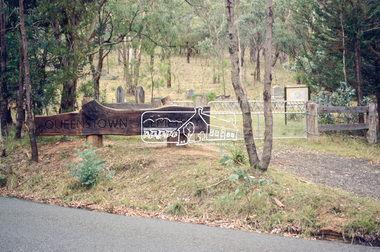
Slide - Photograph, Queenstown Cemetery, Smiths Gully Road, St Andrews, c.2004
... Many graves are unmarked and unrecorded including many Chinese and other itinerant miners. ...Many graves are unmarked and unrecorded including many Chinese and other itinerant miners. ...The discovery of gold in Smyth's Creek in 1854 and subsequent gold rush to the Caledonia diggings led to the establishment of Queenstown (present day St Andrews). The first recorded burial was July 31st, 1861 and it was officially declared a Cemetery Reserve in 1866. Many graves are unmarked and unrecorded including many Chinese and other itinerant miners. The cemetery was closed for new burials in 1851. The last recorded burial was in 1981 in an existing family grave.35mm colour positive transparency Mount - white 7 dots (Technodia Italy)queenstown cemetery, smiths gully road, st andrews -
 Eltham District Historical Society Inc
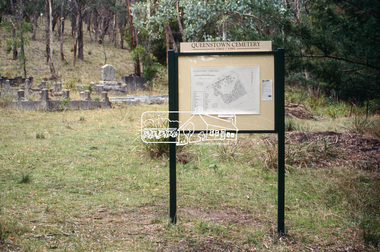
Slide - Photograph, Queenstown Cemetery, Smiths Gully Road, St Andrews, c.2004
... Many graves are unmarked and unrecorded including many Chinese and other itinerant miners. ...Many graves are unmarked and unrecorded including many Chinese and other itinerant miners. ...The discovery of gold in Smyth's Creek in 1854 and subsequent gold rush to the Caledonia diggings led to the establishment of Queenstown (present day St Andrews). The first recorded burial was July 31st, 1861 and it was officially declared a Cemetery Reserve in 1866. Many graves are unmarked and unrecorded including many Chinese and other itinerant miners. The cemetery was closed for new burials in 1851. The last recorded burial was in 1981 in an existing family grave.35mm colour positive transparency Mount - white 7 dots (Technodia Italy)queenstown cemetery, smiths gully road, st andrews -
 Eltham District Historical Society Inc
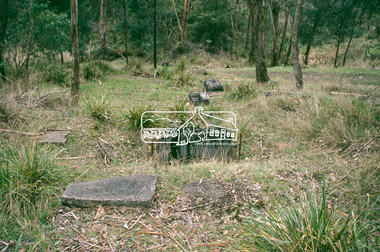
Slide - Photograph, Queenstown Cemetery, Smiths Gully Road, St Andrews, c.2004
... Many graves are unmarked and unrecorded including many Chinese and other itinerant miners. ...Many graves are unmarked and unrecorded including many Chinese and other itinerant miners. ...The discovery of gold in Smyth's Creek in 1854 and subsequent gold rush to the Caledonia diggings led to the establishment of Queenstown (present day St Andrews). The first recorded burial was July 31st, 1861 and it was officially declared a Cemetery Reserve in 1866. Many graves are unmarked and unrecorded including many Chinese and other itinerant miners. The cemetery was closed for new burials in 1851. The last recorded burial was in 1981 in an existing family grave.35mm colour positive transparency Mount - white 7 dots (Technodia Italy)queenstown cemetery, smiths gully road, st andrews -
 Eltham District Historical Society Inc
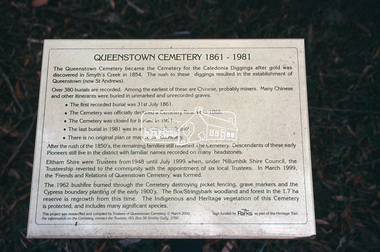
Slide - Photograph, Queenstown Cemetery, Smiths Gully Road, St Andrews, c.2004
... Many graves are unmarked and unrecorded including many Chinese and other itinerant miners. ...Many graves are unmarked and unrecorded including many Chinese and other itinerant miners. ...The discovery of gold in Smyth's Creek in 1854 and subsequent gold rush to the Caledonia diggings led to the establishment of Queenstown (present day St Andrews). The first recorded burial was July 31st, 1861 and it was officially declared a Cemetery Reserve in 1866. Many graves are unmarked and unrecorded including many Chinese and other itinerant miners. The cemetery was closed for new burials in 1851. The last recorded burial was in 1981 in an existing family grave.35mm colour positive transparency Mount - white 7 dots (Technodia Italy)queenstown cemetery, smiths gully road, st andrews -
 Bendigo Historical Society Inc.
Newsletter - The Grapevine Cuttings by Rob Upson - 'The March from Robe to Bendigo and China’s Long March', July 2001
... Rob is a valuable volunteer for the Bendigo Historical Society. history bendigo grapevine cuttings grave in maiden gully The March from Robe to Bendigo and China’s Long March Article 29 of 65 Newsletters in PDF format from the Grapevine collection. ...Rob Upson became a volunteer at the Bendigo Visitor Centre in 1998. The Staff produced a monthly newsletter called ‘The Grapevine’. Being reasonably new to Bendigo, Rob became interested in its history and began writing articles to share with the volunteers. He called them ‘Grapevine Cuttings’ under the pen name of ‘Merlot’. Rob wrote about 90 articles over a period of 12 years until ‘The Grapevine’ was finally pruned and shutdown. Rob is a valuable volunteer for the Bendigo Historical Society.Article 29 of 65 Newsletters in PDF format from the Grapevine collection. history, bendigo, grapevine cuttings, grave in maiden gully, the march from robe to bendigo and china’s long march -
 Bendigo Historical Society Inc.
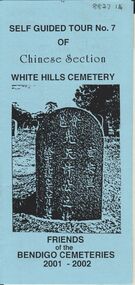
Document - BENDIGO CEMETERIES COLLECTION: SELF GUIDED TOUR NO.7 DOCUMENT
... Self Guided Tour No. 7 of Chinese Section, White Hills Cemetery, Friends of the Bendigo Cemeteries 2-001 - 2002. Theme 'A hundred years after Federation' Map with numbered grave sites, with descriptions e.g. ...Self Guided Tour No. 7 of Chinese Section, White Hills Cemetery, Friends of the Bendigo Cemeteries 2-001 - 2002. Theme 'A hundred years after Federation' Map with numbered grave sites, with descriptions e.g. ...BHS CollectionBlue coloured document, trifold. Self Guided Tour No. 7 of Chinese Section, White Hills Cemetery, Friends of the Bendigo Cemeteries 2-001 - 2002. Theme 'A hundred years after Federation' Map with numbered grave sites, with descriptions e.g. Louey Ah Pon, passenger involved in a fatal car accident with a bus on High St., a market gardener of Golden Square. Chung Fook Jao, committed suicide in his hut on the New Chum Mine site where he had worked the tailing for many years.Friends of the Bendigo Cemeteries 2000bendigo, cemetery, white hills cemetery tour -
 Bendigo Historical Society Inc.
Document - BENDIGO CEMETERIES COLLECTION: SELF GUIDED TOUR NO.3 DOCUMENT
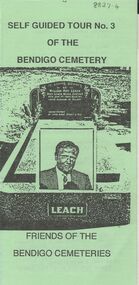
... Map of cemetery with numbered graves described e.g. Lady Jane Lamsey, honoured by Emperor of Chinese , Oscar Flight, Flight's Band 80 years dedicated to music. ...Map of cemetery with numbered graves described e.g. Lady Jane Lamsey, honoured by Emperor of Chinese , Oscar Flight, Flight's Band 80 years dedicated to music. ...BHS CollectionGreen trifold document: Self Guided Tour No. 3 of the Bendigo Cemetery. On front, headstone image of William Roy Leach. Map of cemetery with numbered graves described e.g. Lady Jane Lamsey, honoured by Emperor of Chinese , Oscar Flight, Flight's Band 80 years dedicated to music. On back fold: this tour takes you past graves of some of Roy's old friends, as well as neglected graves, some bearing family names still found in the business directories of BendigoFriends of the Bendigo Cemeteries Inc. 1 May 1994.bendigo, cemetery, bendigo cemetery tour -
 Stawell Historical Society Inc
Photograph, Mr Mow Fung from Deep Lead -- Studio Portrait
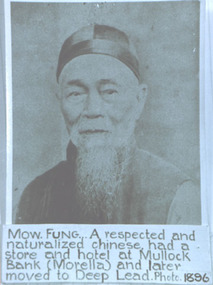
... Portrait of Mow Fung Deep Lead plus Grave Headstone. In the twentieth Century the Chinese population around Stawell continued to dwindle. ...Portrait of Mow Fung Deep Lead plus Grave Headstone. In the twentieth Century the Chinese population around Stawell continued to dwindle. ...Portrait of Mow Fung Deep Lead plus Grave Headstone. In the twentieth Century the Chinese population around Stawell continued to dwindle. One family whose associations with the area was the Mow Fungs. refer Page 117 "Good Country for a Grant" A History of the Stawell Shire. by Robert Kingston. A photograph of a male Chinese with a beard and dressed with a skull cap. The photograph has a blush tint.Mow. Fung... A respected and naturalized Chinese had a store and hotel at Mullock Bank (Morella) and later moved to Deep Lead. Photo 1896stawell chinese mullock bank morella -
 Stawell Historical Society Inc
Photograph, Mr Mow Fung & his relations' Gravestones -- Photos -- Coloured
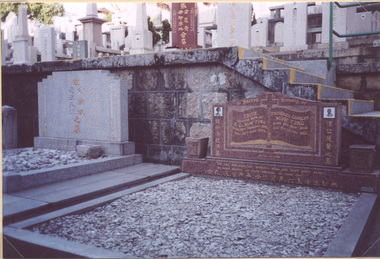
... China. Daughters Alice, Lizzie, Elsie, Ruby, Lena Mow Fung. The son Hoctor buried Deep Lead cemetery 1892 aged 3 months. Mow Fung died in Hong Kong 1897 aged 76. His wife Anna Mow Fung died in 1899 aged 51. Headstone on cardboard 275.1 Photo (7) Headstone of David of David (Mow Fung) died Hong Kong 1984 son of Fred & Edith Mow Fung next grave. ...grave. Headstone on card 275.4 photos 1 & 2 Headstones of Chung Mow Fung died 1897 Hong Kong Christian Cemetery, former Hotel Keeper, Junction Hotel Deep Lead 1895. stawell chinese Headstone on cardboard 275.1 Photo (7) Headstone of David (Mow Fung) died Hong Kong 1984 son of Fred & Edith Mow Fung next grave. ...Colour photos of 7 Gravestones Related to Mow Fung. Headstones in Hong Kong Christian Cemetery of Mow Fung (Chung Mow Fung) who kept the Junction Hotel at Deep Lead 1876 - 1895 when he and his wife Anna Mow Fung, their 5 daughters and son Fred returned to China. Daughters Alice, Lizzie, Elsie, Ruby, Lena Mow Fung. The son Hoctor buried Deep Lead cemetery 1892 aged 3 months. Mow Fung died in Hong Kong 1897 aged 76. His wife Anna Mow Fung died in 1899 aged 51. Headstone on cardboard 275.1 Photo (7) Headstone of David of David (Mow Fung) died Hong Kong 1984 son of Fred & Edith Mow Fung next grave. Headstones on cardboard 275.2 Photos (3 & 4) in Hong Kong. In Loving Memory of our dear mother Anna Mow Fung. Headstone on card 275.3 photos (5 & 6) Photo 5 Headstone of Fred Muw Fung dies 5.10.1950 born Deep Lead 9.5.1882 son of (Chung) Mow Fung & Anna Mow Fung d. 1897 - 1899. also headstone of Edith Mow Fung died 16.6.1944 wife of Fred buried Grampian Road Cemetery, Hong Kong. Headstone by G.H. Robson & Sons Stawell. Also on card 275.3 Photo (6) Headstone of David Mow Fung died 1984 son of Fred & Edith Mow Fung d 1950 - 1944 next grave. Headstone on card 275.4 photos 1 & 2 Headstones of Chung Mow Fung died 1897 Hong Kong Christian Cemetery, former Hotel Keeper, Junction Hotel Deep Lead 1895. Seven colour photographs of tomb stones with Chinese and English writing.Headstone on cardboard 275.1 Photo (7) Headstone of David (Mow Fung) died Hong Kong 1984 son of Fred & Edith Mow Fung next grave. Headstones on cardboard 275.2 Photos (3 & 4) in Hong Kong. In Loving Memory of our dear mother Anna Mow Fung. Headstone on card 275.3 photos (5 & 6) Photo 5 Headstone of Fred Mow Fung died 5.10.1950 born Deep Lead 9.5.1882 son of (Chung) Mow Fung & Anna Mow Fung d. 1897 - 1899. also headstone of Edith Mow Fung died 16.6.1944 wife of Fred buried Grampian Road Cemetery, Hong Kong. Headstone by G.H. Robson & Sons Stawell. Also on card 275.3 Photo (6) Headstone of David Mow Fung died 1984 son of Fred & Edith Mow Fung d 1950 - 1944 next grave. Headstone on card 275.4 photos 1 & 2 Headstones of Chung Mow Fung died 1897 Hong Kong Christian Cemetery, former Hotel Keeper Junction Hotel Deep Lead 1895.stawell chinese -
 Ballarat Heritage Services
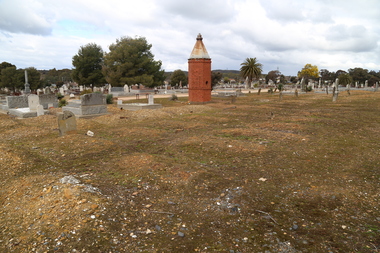
Photograph - Photograph - Colour, Clare Gervasoni, Chinese Section in the Bendigo Cemetery, 2018, 01/09/2018
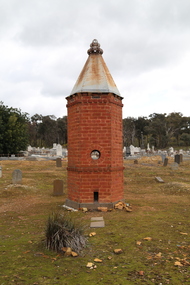
... graves...headstones...chinese...bendigo cemetery graves headstones chinese lee kie Colour photograph of the Chinese section in the Bendigo Cemetery. ...Colour photograph of the Chinese section in the Bendigo Cemetery.bendigo cemetery, graves, headstones, chinese, lee kie -
 Ballarat Heritage Services
Photograph - Photograph - Colour, Clare Gervasoni, Chinese Section in the Bendigo Cemetery, 2018, 01/09/2018
... graves...headstones...chinese...bendigo cemetery graves headstones chinese oven A plaque states: This Pomelo Tree (known to the Chinese as the tree of life) was planted on 9 October 1996 in recognition and to the memory of the many Chinese buried at or in close proximity to this site during the 19th and 20th centuries. ...Colour photograph of the Chinese section in the Bendigo Cemetery.A plaque states: This Pomelo Tree (known to the Chinese as the tree of life) was planted on 9 October 1996 in recognition and to the memory of the many Chinese buried at or in close proximity to this site during the 19th and 20th centuries. bendigo cemetery, graves, headstones, chinese, oven -
 Sunbury Family History and Heritage Society Inc.
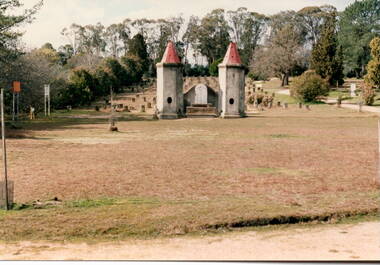
Photograph, Beechworth Chinese Cemetery, 1988
... A non-digital coloured photograph of a Chinese Cemetery Showing the ovens and the altar with the graves in rows behind....Beechworth Chinese Cemetery school camps A non-digital coloured photograph of a Chinese Cemetery Showing the ovens and the altar with the graves in rows behind. ...While the children were on their Beechworth Camp they visited the Chinese Cemetery in that town. The two grey buildings with the red roofs buildings are the ovens used for cremations and the altar is in the centre. The ovens were erected in 1857 and the altar was added between 1883-84. A number of Chinese came to the area seeking gold after the main gold rushes in the early 1850s.The existence of the Chinese Cemetery at Beechworth is an indication of the many different races of people arrived in Victoria during the 1850s seeking gold and their influence as they spread across the Colony. A non-digital coloured photograph of a Chinese Cemetery Showing the ovens and the altar with the graves in rows behind.beechworth chinese cemetery, school camps -
 Ballarat Heritage Services
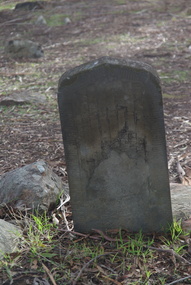
Photograph - Colour, Grave at Vaughan Chinese Cemetery, 2017, 16/07/2017
... The Bendigo Chinese Society Honouring the memory of their Countrymen, fenced the site, 1928 Population of Vaughan 1859, 13000 Grave at Vaughan Chinese Cemetery, 2017 Photograph - Colour ...This site was used as a burial ground from 1855 (about) to 1859. European and Chinese pioneers rest here. The Bendigo Chinese Society Honouring the memory of their Countrymen, fenced the site, 1928 Population of Vaughan 1859, 13000vaughan, vaughan springs, vaughan chinese cemetery, chinese
