
Showing 20 items matching " circus wirth's"
-
 Bendigo Historical Society Inc.
Document - ROYAL PRINCESS THEATRE COLLECTION: EIGHT FIRST BIRTHDAY SOUVENIR PROGRAMME, c1955
... ... Circus (Wirth's making their first appearance in1887)...Operas, including Gilbert and Sullivan, Shakespearean plays, Minstrels, Pantomime, Circus (Wirth's making their first appearance in1887), Drama, Revues, Magicians, and the latest medium of entertainment Ice Revue. ...Operas including Gilbert and Sullivan Shakespearean plays Minstrels Pantomime Circus (Wirth's making their first appearance in1887) Drama Revues Magicians and the latest medium of entertainment Ice Revue. ...Royal Princess Theatre Eight First Birthday Souvenir Programme, 31st August, 1955. 1874 - 1955. Manager: Don Vincent. Price - Sixpence. Proceeds: Cinematograph Trade Benevolent Fund. The Royal Princess Theatre. In May, 1874, the late John Crowley, at a cost of 12,000 pounds the Royal Princess Theatre. It was opened on 31st August, 1874, on which occasion the 'Grand Duchess of Gerolstein' was performed. It was in January, 1904, that the Theatre was closed until April, 1905, for re-construction at a cost of 5,000 pounds. Further alterations were made I 1936 when the old circle and the gallery was converted into the present circle and loge, the cost on this occasion was 14,000 pounds. At the Royal Princess has been seen every form of entertainment known in the world. Operas, including Gilbert and Sullivan, Shakespearean plays, Minstrels, Pantomime, Circus (Wirth's making their first appearance in1887), Drama, Revues, Magicians, and the latest medium of entertainment Ice Revue. Of the many shows presented on stage of the theatre, I feel none has survived as long, or as well, as 'Charley's Aunt.' The companies to present their performances have been many and varied, but among an imposing list, the names of Charles Holloway, The Royal English Opera Company, J. C. Williamson Co., and Royal Comic Opera Coy., will long be remembered. The line of notable personalities who have appeared on the stage is long also, and includes such names as John McCormack, Clara Butt, Harry Lauder, Peter Dawson and more recently Jessie Mathews and John Calvert. But of all these and many others, I am sure none can ever compare with the wonderful performances by the late Dame Nellie Melba, who gave her farewell performance in September, 1921. It is interesting to note that Dame Nellie Melba, gave two farewell performances. The first was in February, 1886, when she made a last appearance as Mrs Armstrong, to later become Madame Melba. The first competition of the Austral Society was held in the Theatre in May, 1897, and the first living pictures were seen in August, 1899. The London Bioscope Co. presented 'Struck Oil,' with Maggie Moore, in February, 1901 (Maggie Moore had appeared in the stage play or the same name many times earlier). However, it was not until 1910 that the Royal Princess was mainly used for pictures, and of course, since that year, that has been the principle form of entertainment presented. It was Easter, 1930, that the first talkie, 'The Desert Song,' was screened and then followed coloured films, and now in 1955 the latest in film development - Cinemascope has been installed. This installation caused, for the first time in many years, alterations to the back stage to enable the large 30ft. Screen to be quickly removed ready for any 'live' performances. In 1937 the Royal Princess came under the Management of Northern Amusements Pty. Ltd., a unit of the Woodrow Corporation Ltd., whose policy it is to bring in entertainment to Bendigo, and I, as their representative will carry on the traditions of the past, and make the Royal Princess truly a Home of Entertainment. Don Vincent, Manager. Wednesday, 31st August, 1955 on the stage. Eagelhawk Brass Band. Official cutting of the Bithday Cake and its presentation to the Matron of the Benoevolent Home by His Worship the Mayor of Bendigo (The cake kindly donated by Friedrich & Bassemir). Presentation of the Travel Voucher for a 10 day Luxury Coach Tour on behalf of Pioneer Coaches Ltd., to the licky couple winning the recent 25th Wedding Anniversary Contest, by His Worship the Mayor of Eaglehawk. 'Progress of Fashion by Bendigo Fashion House including A Tableaux of 7 Bridal Ensembles. Miss 1874 Gertrude Perry, Misses 1955 Rosemary Lorenz, Lorraine Foley, Joan Pinder, Pauline Kim, Shirley Morgan, Pat Ferrari, Wilma Breerton. Make - up by Helen Lang Beauty Salon. 81st Birthday Performance on the screen. Newsreels, Cartoons, Shorts, Seven Brides for Seven Brothers. Photograph: The Staff of the Royal Princess, under the Management of Mr Don Vincent, who are at your service. Hearing Aids are now installed in all parts of the Theatre, Doctors or Nurses on call may leave their names at the pay-box. Advertisements for Bendigo businesses: Radio Taxis, Kings Dry Cleaners, John V. Schenck Art Florist, Morley Johnsons everything for the home, Ron Meurer fridges, The Melody Bar, music. Program comprises of two sheets of paper.program, theatre, royal princess theatre, royal princess theatre eight first birthday souvenir programme, 31st august, 1955. 1874 - 1955. manager: don vincent. price - sixpence. proceeds: cinematograph trade benevolent fund. the royal princess theatre. in may, 1874, the late john crowley, at a cost of 12, 000 pounds the royal princess theatre. opened on 31st august, 1874, 'grand duchess of gerolstein' was performed. 1904, the theatre was closed until 1905, for re-construction. further alterations 1936 when the old circle and the gallery was converted into the present circle and loge, 14, 000 pounds. seen every form of entertainment known in the world. operas, including gilbert and sullivan, shakespearean plays, minstrels, pantomime, circus (wirth's making their first appearance in1887), drama, revues, magicians, and the latest medium of entertainment ice revue. 'charley's aunt.' the companies have been many and varied, charles holloway, the royal english opera company, j. c. williamson co., and royal comic opera coy., john mccormack, clara butt, harry lauder, peter dawson and more recently jessie mathews and john calvert. dame nellie melba, who gave her farewell performance in september, 1921. it is interesting to note that dame nellie melba, gave two farewell performances. the first was in february, 1886, when she made a last appearance as mrs armstrong, to later become madame melba. the first competition of the austral society was held in the theatre in may, 1897, the first living pictures in august, 1899. the london bioscope co. presented 'struck oil, ' with maggie moore, in february, 1901 (maggie moore had appeared in the stage play or the same name many times earlier). by1910 that the royal princess was mainly used for pictures, has been the principle form of entertainment presented. it was easter, 1930, that the first talkie, 'the desert song, ' was screened and then coloured films, now 1955 the latest in film development - cinemascope has been installed, alterations to the back stage to enable the large 30ft. screen to be quickly removed 'live' performances. in 1937 the management of northern amusements pty. ltd., a unit of the woodrow corporation ltd., 1955. eagelhawk brass band. official cutting of the bithday cake and its presentation to the matron of the benoevolent home by his worship the mayor of bendigo (the cake kindly donated by friedrich & bassemir). presentation of the travel voucher for a 10 day luxury coach tour on behalf of pioneer coaches ltd., to the licky couple winning the recent 25th wedding anniversary contest, by his worship the mayor of eaglehawk. 'progress of fashion by bendigo fashion house including a tableaux of 7 bridal ensembles. miss 1874 gertrude perry, misses 1955 rosemary lorenz, lorraine foley, joan pinder, pauline kim, shirley morgan, pat ferrari, wilma breerton. make - up by helen lang beauty salon. 81st birthday performance on the screen. newsreels, cartoons, shorts, seven brides for seven brothers. photograph: the staff of the royal princess, under the management of mr don vincent, who are at your service. hearing aids are now installed in all parts of the theatre, doctors or nurses on call may leave their names at the pay-box. advertisements for bendigo businesses: radio taxis, kings dry cleaners, john v. schenck art florist, morley johnsons everything for the home, ron meurer fridges, the melody bar, music. royal princess theatre eight first birthday souvenir programme, 31st august, 1955. 1874 - 1955. manager: don vincent. price - sixpence. proceeds: cinematograph trade benevolent fund. the royal princess theatre. in may, 1874, the late john crowley, at a cost of 12, 000 pounds the royal princess theatre. opened on 31st august, 1874, 'grand duchess of gerolstein' was performed. 1904, the theatre was closed until 1905, for re-construction. further alterations 1936 when the old circle and the gallery was converted into the present circle and loge, 14, 000 pounds. seen every form of entertainment known in the world. operas, including gilbert and sullivan, shakespearean plays, minstrels, pantomime, circus (wirth's making their first appearance in1887), drama, revues, magicians, and the latest medium of entertainment ice revue. 'charley's aunt.' the companies have been many and varied, charles holloway, the royal english opera company, j. c. williamson co., and royal comic opera coy., john mccormack, clara butt, harry lauder, peter dawson and more recently jessie mathews and john calvert. dame nellie melba, who gave her farewell performance in september, 1921. it is interesting to note that dame nellie melba, gave two farewell performances. the first was in february, 1886, when she made a last appearance as mrs armstrong, to later become madame melba. the first competition of the austral society was held in the theatre in may, 1897, the first living pictures in august, 1899. the london bioscope co. presented 'struck oil, ' with maggie moore, in february, 1901 (maggie moore had appeared in the stage play or the same name many times earlier). by1910 that the royal princess was mainly used for pictures, has been the principle form of entertainment presented. it was easter, 1930, that the first talkie, 'the desert song, ' was screened and then coloured films, now 1955 the latest in film development - cinemascope has been installed, alterations to the back stage to enable the large 30ft. screen to be quickly removed 'live' performances. in 1937 the management of northern amusements pty. ltd., a unit of the woodrow corporation ltd., 1955. eagelhawk brass band. official cutting of the bithday cake and its presentation to the matron of the benoevolent home by his worship the mayor of bendigo (the cake kindly donated by friedrich & bassemir). presentation of the travel voucher for a 10 day luxury coach tour on behalf of pioneer coaches ltd., to the licky couple winning the recent 25th wedding anniversary contest, by his worship the mayor of eaglehawk. 'progress of fashion by bendigo fashion house including a tableaux of 7 bridal ensembles. miss 1874 gertrude perry, misses 1955 rosemary lorenz, lorraine foley, joan pinder, pauline kim, shirley morgan, pat ferrari, wilma breerton. make - up by helen lang beauty salon. 81st birthday performance on the screen. newsreels, cartoons, shorts, seven brides for seven brothers. photograph: the staff of the royal princess, under the management of mr don vincent, who are at your service. hearing aids are now installed in all parts of the theatre, doctors or nurses on call may leave their names at the pay-box. advertisements for bendigo businesses: radio taxis, kings dry cleaners, john v. schenck art florist, morley johnsons everything for the home, ron meurer fridges, the melody bar, music. -
 Bendigo Historical Society Inc.
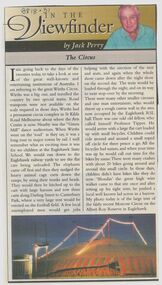
Newspaper - In the Viewfinder "The Circus"
... Circus...Wirth's...Circus" by Jack Perry. Published in the Bendigo Weekly. Describes visits to Bendigo by Wirth's and other circuses...BHS Collection Circus Wirth's Professor Tipper "Blondin" Newspaper article "The Circus" by Jack Perry. ...BHS CollectionNewspaper article "The Circus" by Jack Perry. Published in the Bendigo Weekly. Describes visits to Bendigo by Wirth's and other circusescircus, wirth's, professor tipper, "blondin" -
Merbein District Historical Society
Film - DVD, Norm Beard's Home Movies, 1950-1960's
... ... Circus Wirth's...Roy Harwood Circus Wirth's Pre school fete Floods Paschendale Ave Merbein Keera Station Shearing 1959 Anniversary parade Melbourne University Archaeological Dig Norm Beard's Home Movies Film DVD ...roy harwood, circus wirth's, pre school fete, floods paschendale ave merbein, keera station shearing , 1959 anniversary parade, melbourne university archaeological dig -
 Bendigo Historical Society Inc.
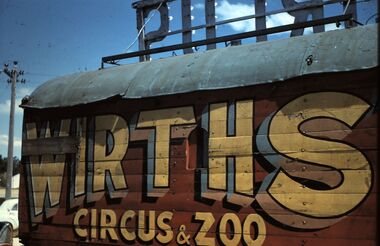
Slide - FLEMING COLLECTION: 1950S BENDIGO SLIDE, 22 April 1957
... Written on side of wagon ' Wirths Circus & Zoo'...Bendigo Easter Fair 22/4/1957. Wirths Circus and wagon taking part in procession. ...Bendigo 1950s. Bendigo Easter Fair 22/4/1957. Wirths Circus and wagon taking part in procession. Written on side of wagon ' Wirths Circus & Zoo'Colorclipevent, entertainment, bendgio easter fair procession, 1950s. bendigo easter fair 22/4/1957. wirths circus & zoo wagon procession. -
 Bendigo Historical Society Inc.
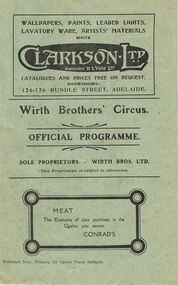
Document - LYDIA CHANCELLOR COLLECTION; WIRTH BROTHERS' CIRCUS PROGRAM
... LYDIA CHANCELLOR COLLECTION; WIRTH BROTHERS' CIRCUS PROGRAM...circus... entertainment... advertisements... Wirth...A green paper programme for Wirth Brothers' Circus which also contains many advertisements. ...PROGRAM Theatre wirth brothers' circus Lydia Chancellor collection program circus entertainment advertisements Wirth Brothers Circus A green paper programme for Wirth Brothers' Circus which also contains many advertisements. ...A green paper programme for Wirth Brothers' Circus which also contains many advertisements. On the front cover is an advertisement for Clarkson Ltd., Rundle Street, Adelaide. Under the advertisement are the words ' Wirth Brothers' Circus. Official Programme. Sole Proprietors - Wirth Bros. Ltd. This Programme is subject to alteration.' Underneath is an advertisement for Conrad's Meat. Pritchard Bros., Printers, 113 Gawler Place, Adelaide. Inside the covers are pages with the program surrounded by many advertisements. C. early 1900sprogram, theatre, wirth brothers' circus, lydia chancellor, collection, program, circus, entertainment, advertisements, wirth brothers circus -
 Bendigo Historical Society Inc.
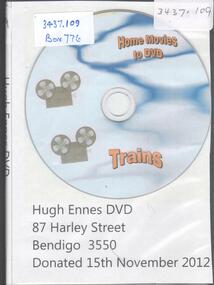
Film - Home Movies to DVD Trains, abt 1960s
... Xing at Backrabanyuhe with R/Motor from Sea Lake. Wirths Circus passing home. Spraying of line for weeds. ...Xing at Backrabanyuhe with R/Motor from Sea Lake. Wirths Circus passing home. Spraying of line for weeds. ...Hugh Ennes DVD Donated 15 November 2012. Contents: JDC McLean Stock Special. Xing at Backrabanyuhe with R/Motor from Sea Lake. Wirths Circus passing home. Spraying of line for weeds. Rail derailment between Bkl. and Wychitella. Puffing Billy coming into UFT Gully.trains, puffing billy -
 Bendigo Historical Society Inc.
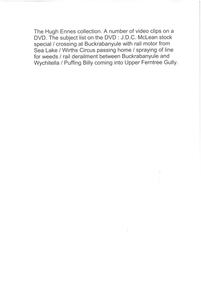
Film - HUGH ENNES COLLECTION: VIDEO CLIPS ON A DVD
... Crossing at Buckrabanyule with rail motor from Sea Lake. Wirths Circus passing home. Spraying of line for weeds. ...Crossing at Buckrabanyule with rail motor from Sea Lake. Wirths Circus passing home. Spraying of line for weeds. ...The Hugh Ennes collection. A number of video clips on a DVD. the subject list on the DVD: J.D.C. McLean stock special. Crossing at Buckrabanyule with rail motor from Sea Lake. Wirths Circus passing home. Spraying of line for weeds. Rail derailment between Buckrabanyule and Wychitella. Puffing Billy coming into Upper Ferntree Gully.australia, history -
 Melbourne Tram Museum
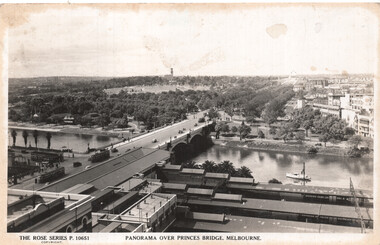
Postcard, Rose Stereograph Co, "Panorama over Princes Bridge Melbourne", c1950
... In the background is Government House, the Shrine of Remembrance, former Wirths Circus buildings and the other various entertainment venues that formed the basis of the future Arts Centre. ...In the background is Government House, the Shrine of Remembrance, former Wirths Circus buildings and the other various entertainment venues that formed the basis of the future Arts Centre. ...Rose Series postcard P 10651 titled "Panorama over Princes Bridge Melbourne", with three trams in St Kilda Road, two trams at Batman Ave terminus and the Flinders St station platforms along the lower edge of the card. In the background is Government House, the Shrine of Remembrance, former Wirths Circus buildings and the other various entertainment venues that formed the basis of the future Arts Centre. There are adverts for Dunlop, Aspro, Brockhoff biscuits and the Bradshaw Everett Business College.Yields information about St Kilda Road and the Princes Bridge environment.Postcard - printed real photograph with Rose Stereograph Co. name on the rear, unused.melbourne, rose series, st kilda road, shrine of remembrance, southbank -
 Bendigo Historical Society Inc.
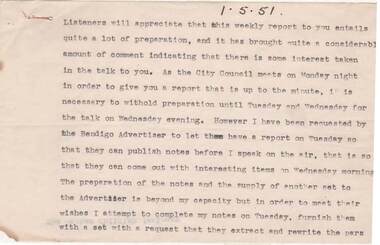
Document - NORMAN OLIVER COLLECTION: SPEECH NOTES 1 MAY 1951
... Topics covered: The controversy with Strathfieldsaye, obstruction of streets, traffic crossings for children, City Engineer's report, the fire brigades demonstration, the transport committee, the municipal stage coach, land reclamation, Wirths Circus, social notes, and the Black Watch Band....Topics covered: The controversy with Strathfieldsaye, obstruction of streets, traffic crossings for children, City Engineer's report, the fire brigades demonstration, the transport committee, the municipal stage coach, land reclamation, Wirths Circus, social notes, and the Black Watch Band. ...The Norman Oliver collection. Norman Oliver was three times Mayor of Bendigo - 1950-51, 1964-65, 1970-71. These notes are dated 1.5.1951, written in ink across the top of the first page. Corrections have been written in blue ink. Twenty-six typed pages. Numbered, but extra pages have been added to the sequence due to an error by the Advertiser in printing the speech before Cr Oliver had delivered it on 3BO on the weekly program 'The Mayor Speaks'. Topics covered: The controversy with Strathfieldsaye, obstruction of streets, traffic crossings for children, City Engineer's report, the fire brigades demonstration, the transport committee, the municipal stage coach, land reclamation, Wirths Circus, social notes, and the Black Watch Band.bendigo, council, speech notes, norman joseph oliver , councillor norman oliver. mayor of bendigo. 3bo -
 Ballarat Tramway Museum
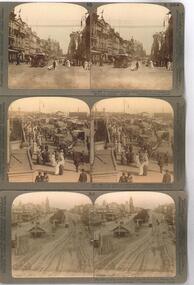
Photograph - Black & White Photograph/s, Underwood & Underwood, 1908
... Set of three: 1 - Collins St at Swanston St looking west - tram has the destination of Victoria Bridge - image number (10)-10238 2 - Princes Bridge, looking south with many people on the bridge, including market stalls, horse drawn vehicles and cable trams. Has the Wirths Circus building and ?? Stationers and Printers building in the background. 3 - Sturt St from Grenville St with 3 ESCo trams in the photograph along with the Town Hall, the tramway shelter. ...Set of three: 1 - Collins St at Swanston St looking west - tram has the destination of Victoria Bridge - image number (10)-10238 2 - Princes Bridge, looking south with many people on the bridge, including market stalls, horse drawn vehicles and cable trams. Has the Wirths Circus building and ?? Stationers and Printers building in the background. 3 - Sturt St from Grenville St with 3 ESCo trams in the photograph along with the Town Hall, the tramway shelter. ...Yields information about the appearance of the intersection of Sturt and Grenville St looking west and tram operations.Photographic reproduction - sepia coloured of a three stereo pair images with details on the sides. Originals made by Underwood and Underwood of Arlington New Jersey and Westwood New Jersey USA. Not dated, c1908 Printed on A4 size ink-jet printer. Set of three: 1 - Collins St at Swanston St looking west - tram has the destination of Victoria Bridge - image number (10)-10238 2 - Princes Bridge, looking south with many people on the bridge, including market stalls, horse drawn vehicles and cable trams. Has the Wirths Circus building and ?? Stationers and Printers building in the background. 3 - Sturt St from Grenville St with 3 ESCo trams in the photograph along with the Town Hall, the tramway shelter. The Mechanics Institute Building has the "Talk W to W Coltman" sign on it. Image no. - (34)-10262.trams, tramways, melbourne, cable trams, collins st, swanston st, princes bridge, sturt st, esco, shelters -
 University of Melbourne, Burnley Campus Archives
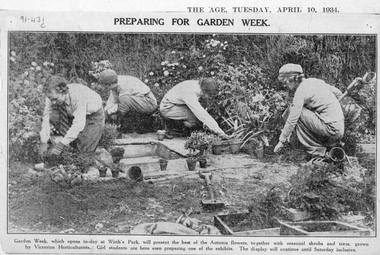
Newspaper - Newspaper Cutting, The Age, Preparing for Garden Week, 1934
... Newspaper cutting of b/w photograph of four female students preparing a garden display for Garden Week at Wirth's Circus. Students are: Evelyn Yule (1932), Betty Holmes (1932), Margaret Doherty (1932) and Alice Gascodine (1933). 2 copies. ...Newspaper cutting of b/w photograph of four female students preparing a garden display for Garden Week at Wirth's Circus. Students are: Evelyn Yule (1932), Betty Holmes (1932), Margaret Doherty (1932) and Alice Gascodine (1933). 2 copies. ...Students are: Evelyn Yule (1932), Betty Holmes (1932), Margaret Doherty (1932) and Alice Gascodine (1933) in no particular order although Alice Glascodine probably on right.. 2 copies. Text below the photo: "Garden week, which opens today at Wirth's Park, will present the best of the Autumn flowers, together with seasonal shrubs and trees, grown by Victorian horticulturalists. Girl students are here seen preparing one of the exhibits. The display will continue until Saturday inclusive." 1. The Age, April 10, 1934. Newspaper cutting of b/w photograph of four female students preparing a garden display for Garden Week at Wirth's Circus. Students are: Evelyn Yule (1932), Betty Holmes (1932), Margaret Doherty (1932) and Alice Gascodine (1933). 2 copies. Text below the photo: "Garden week, which opens today at Wirth's Park, will present the best of the Autumn flowers, together with seasonal shrubs and trees, grown by Victorian horticulturalists. Girl students are here seen preparing one of the exhibits. The display will continue until Saturday inclusive." 2. "Garden Week Preparations," newspaper article The Sun News-Pictorial 10 April, 1934. 3. "While Remember" by "Annette" The Herald 11 April, 1934. 4. "Garden Week Opens," The Age 11 April. 1934 female students, evelyn yule, betty holmes, margaret doherty, alice gascodine, garden week 1934, wirth's park -
 Melbourne Tram Museum
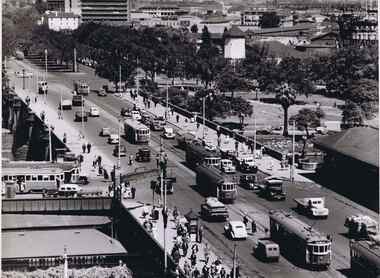
Photograph - Black & White Photograph/s, Australian Govt. Department of Information, late 1940's
... Shows the gardens in the now Southbank area, the junction just past the bridge of South Melbourne tram line, Wirth Bros Circus and other buildings, Prince Henry's Hospital. ...Shows the gardens in the now Southbank area, the junction just past the bridge of South Melbourne tram line, Wirth Bros Circus and other buildings, Prince Henry's Hospital. ...Black and white photograph taken from St Pauls Cathedral Melbourne, looking south over Princes Bridge, early 1950's. Has nine trams in the view, mainly W2's, but one W3 and many motor vehicles, trucks etc. Shows the gardens in the now Southbank area, the junction just past the bridge of South Melbourne tram line, Wirth Bros Circus and other buildings, Prince Henry's Hospital. In particular is an Olympic pool direction sign hanging below the Batman Ave tram sign. This would have been the pool in Batman Ave, nearer to Flinders St, within the Flinders St yard complex, not the 1956 pool. Directly below is a female pedestrian dress in the classic 1950's "Dior" look. Over the bridge on the west side is "The Trocadero" formerly The Green Mill Dance Hall opened on 07/09/1926. West of that again is "Olympia" run by Wirth's . In the distance is Prince Henry's Hospital, the tall section was built in 1942, since demolished. Rod Atkins noted that the Olympia burnt down in the early fifties about the same the Trocadia closed, so pre 1953. Note the centre pole is still place at the Sturt Street intersection. In Batman Ave we have two W2's 401 and earlier one. In St Kilda Road we have four W2's in foreground in then W3 - No. 667 then a W4 then a SW6 in the distance. Outbound on route 4D is 578, behind it is 340 on route 5. A safety zone is between 578 and 340.Stamped on rear "Australian Official Photograph / Department of Information" and the number "L3121" in pencil.trams, tramways, swanston st, princes bridge, melbourne, south melbourne, tram 401, tram 667, tram 578 -
 Surrey Hills Historical Society Collection
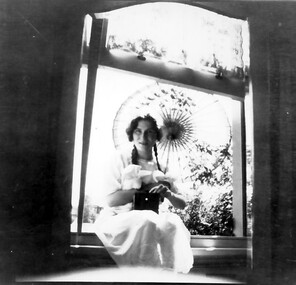
Photograph, Norma Bull portrait
... The “Two Hemispheres” exhibition toured Australia in 1948 and for over twelve months she followed Wirth’s Circus around the country, painting aspects of circus life. ...The “Two Hemispheres” exhibition toured Australia in 1948 and for over twelve months she followed Wirth’s Circus around the country, painting aspects of circus life. ...Norma Bull in a window of 'Medlow', 1920s Her brother (Ronald) Richard was a keen photographer and is believed to have taken the photographs of the family and in the grounds of 'Medlow'. Norma Catherine Bull (7 September 1906 – September 1980) was an Australian painter, printmaker and etcher best known for the paintings and sketches she made in Britain during World War II. Norma was the daughter of Richard Joseph Bull (1874-1927) and Catherine Grace Perrier (1884-1972). Her father was the Director of Bacteriology at Melbourne University. Richard and Catherine had 2 children. Norma was born in Hawthorn in 1906 and her brother Ronald Richard was born in Surrey Hills in 1912, where in 1911 Richard bought a property at 42 Warrigal Road, Surrey Hills developed by Colonel William Cairncross, known as ‘Willcyrus’ and renamed ‘Medlow’ by the Bulls. As a child, Norma was a high achiever both intellectually and artistically. She was educated at Fintona, where she matriculated as Dux of the School and winner of an exhibition in French. She won a scholarship to attend the University of Melbourne where she studied French, Zoology, Philosophy, English and History, leading to a Bachelor of Arts in 1929. Following this she studied painting and drawing at the National Gallery Art School for seven years. Whilst most of the students of the 1930s were inspired by Modernism, Norma followed more traditional styles and became known for her etchings and realistic depiction of urban scenes. Her work was strongly influenced by the conservative nature of the National Gallery Art School under Bernard Hall, and she remained a traditionalist all her life. In 1938, she was awarded the Sir John Longstaff Scholarship in Fine Art. This enabled her to travel to England to study at the Royal Academy in London. She arrived in April 1939 and after the outbreak of war, she worked as a volunteer at a First Aid Clearing Station and applied to become a war artist. In 1941, she was given a sketching permit by the War Artists Advisory Committee to record bomb damage in the Bristol area. In 1947, an exhibition of her 205 wartime works entitled “Two Hemispheres”, opened at Australia House in London. Many were acquired for major collections in England including the Victoria and Albert Museum, the Imperial War Museum and the Royal Collection. The “Two Hemispheres” exhibition toured Australia in 1948 and for over twelve months she followed Wirth’s Circus around the country, painting aspects of circus life. From then on she lived at Medlow’, From 1960 she was secretary of the Fellowship of Australian Artists. She was a finalist in the Archibald Prize on 2 occasions and is remembered through a biennial Art Prize, ‘The Norma Bull Portraiture Scholarship’ which is administered by The Victorian Artist’s Society. She continued to paint landscapes and seascapes in her traditionalist style. She had holiday homes at Anglesea and Bright. After she died in September 1980, 31 of her works were bequeathed to Bright Art Gallery. A black and white photograph of a lady holding a sun umbrella and sitting in a window frame.miss norma bull, medlow, house names, warrigal road, surrey hills, mr ronald richard bull -
 City of Melbourne Libraries
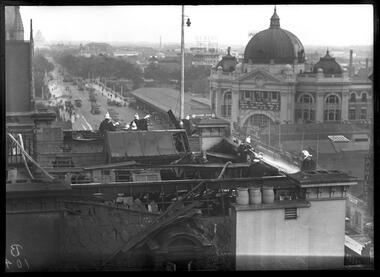
Photograph, Bull, Hugh Jones, 1897-1993, Fire at Cathedral Hotel, Swanston Street, Melbourne
... This was the site of Wirths Brothers Circus, an impressive complex including an octagonal circus Hippodrome (5000 seat auditorium), Pleasure Park, roller skating rink, and Dance Hall. ...This was the site of Wirths Brothers Circus, an impressive complex including an octagonal circus Hippodrome (5000 seat auditorium), Pleasure Park, roller skating rink, and Dance Hall. ...Fire at the Cathedral Hotel! Southward view Firemen in their shiny brass Merryweather style helmets battle a fire in the roof of the Cathedral Hotel, Tuesday 3 March 1936. It was located on the corner of Swanston Street and Flinders Lane and so named for its proximity to St Paul’s Cathedral, just visible at top left. The fire broke out in between the roof space and wooden ceiling of the hotel at around 4.30 pm, causing disruption to afternoon commuters – hence the banked-up trams along St Kilda Road. The hoses snaking across the roof have been dragged up through the hotel’s front door. The scene of devastation on the roof appears to be a result of both the fire and firefighting efforts. The panoramic background is dominated by the dome of Flinders Street Station, the wide, treed boulevard of St Kilda Road, and a densely built-up industrial area south of the Yarra with its elevated signage and substantial buildings. Featured in "Newsworthy: Melbourne in photographs 1933-1936" exhibition at East Melbourne Library, October to December 2023. Exhibition caption by project volunteer, Louise McKenzie. Photographer notations on slide: "Fire at Cathedral Hotel Swanston St 1936 B104" Description: This photo, taken from an adjacent building, shows 12 firemen fighting a fire on the roof of the Cathedral Hotel, Melbourne. There is evidence of considerable damage to the roof of the building as a result of the fire and fire fighting efforts. The photo gives a feeling of elevation, as the firemen are in focus, with an out of focus panoramic background, showing the dome of Flinders Street Station, and St Kilda Road down to the Shrine. Research by project volunteer, Louise McKenzie: The Age reported on 4 March 1936 that the fire broke out in rubbish between the roof space and wooden ceiling of the Cathedral Hotel at 4.30 pm. “The Eastern Hill fire brigade was notified by telephone, and an almost simultaneous call was also received at fire brigade headquarters from a street alarm.” The firemen in their dark uniforms with brass buttons, gold epaulettes and shiny brass Merryweather helmets, stand out against the broken slate tiles and dislodged timber of the damaged roofing, all of which look blackened and in disarray. Two pale water hoses snake thickly across the roof. It is a scene of some devastation and chaos. Three chimney pots by contrast sit plump and strong against the damage. The Cathedral Hotel is located on the corner of Swanston Street and Flinders Lane, so named due to its proximity to St Pauls Cathedral (just visible at far left) on the corner of Flinders and Swanston streets. This intersection is a hub and focus of Melbourne activity. The backgrounded Melbourne skyline, while not in clear focus, is of interest. On the right is the impressive dome of Flinders Street Station, with the clock at 4.50 pm. Its grand frontage, and some of the façade along Flinders Street, are visible. To the left is the wide and grand-scaled St Kilda Road, leading down to the Shrine of Remembrance. There are many trams on Princes Bridge (mostly heading northward), together with some trucks and pedestrians. The pedestrian walkway along Princes Bridge is wide, and the Bridge balustrade lined with flag poles. The middle background shows a large number of trees. This was the site of Wirths Brothers Circus, an impressive complex including an octagonal circus Hippodrome (5000 seat auditorium), Pleasure Park, roller skating rink, and Dance Hall. Today it is the site of the Melbourne Arts Centre. Adjacent to the station is a large covered area, still extant today as part of the Station precinct. Floating above the horizon is sign advertising 'DUNLOP', located in the formerly industrial area which is today’s Southbank. Port Phillip Bay is faintly visible in the distance. The city seems sprawling, but uncrowded, and well punctuated by trees. Two photos were included an Age pictorial, one showing the firefighters at work, the other a crowd scene at street level (see References). These images are not part of the McKenzie Collection. References: No title (1936, March 4). The Age (Melbourne, Vic. : 1854 - 1954), p. 13. Retrieved February 5, 2024, from http://nla.gov.au/nla.news-article205256255 FIRE AT A CITY HOTEL. (1936, March 4). The Age (Melbourne, Vic. : 1854 - 1954), p. 12. Retrieved February 5, 2024, from http://nla.gov.au/nla.news-article205256231 FIRE IN ROOF OF CITY HOTEL (1936, March 4). The Argus (Melbourne, Vic. : 1848 - 1957), p. 8. Retrieved February 5, 2024, from http://nla.gov.au/nla.news-article11018696 Hotel Roof Fire Draws Crowd (1936, March 4). Examiner (Launceston, Tas. : 1900 - 1954), p. 8 (DAILY). Retrieved February 5, 2024, from http://nla.gov.au/nla.news-article52000751 'Flinders Lane Melbourne 1966', Peter Andrew Barrett, Facebook, 12 June 2020, https://www.facebook.com/120943481324886/photos/a.512123662206864/3025002490918956/?type=3Photographer notations on slide: "Fire at Cathedral Hotel Swanston St 1936 B104".fires, 1930-1939, hotels -
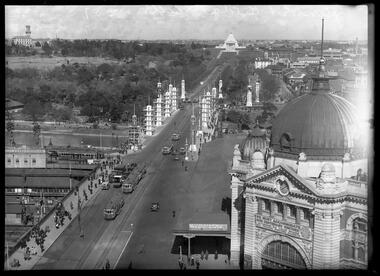 City of Melbourne Libraries
Photograph, Bull, Hugh Jones, 1897-1993, Princes Bridge Centenary pylons under construction
... But at this time it was the home of Wirths Olympia Circus, which comprised Wirths Pleasure Park (an amusement park), a 5,000 seat auditorium – Hippodrome, a roller skating rink, a glaciarium, a cinema, and the Green Mill Dance Hall. ...But at this time it was the home of Wirths Olympia Circus, which comprised Wirths Pleasure Park (an amusement park), a 5,000 seat auditorium – Hippodrome, a roller skating rink, a glaciarium, a cinema, and the Green Mill Dance Hall. ...Princes Bridge Centenary pylons under construction Possibly taken from Young and Jacksons Hotel (formerly Princes Bridge Hotel) on the corner of Flinders and Swanston streets, Flinders Street Station’s clocks and main entrance dominate, along with its distinctive copper dome and decorative façade. The time on the main clock is 1.40pm, and the sign underneath, reflecting Melbourne’s upcoming Centenary reads, “We must accommodate our Centenary visitors! Citizens! Do your share by taking paying guests.” At left is the original Princes Bridge Station, today the site of Federation Square. The riverside tram terminus advertises a Café/Tobacconist/Refreshment Room selling cigars & cigarettes, fountain drinks & confectionery, and in smaller text: “Leave your boot repairs here”. Nearly everyone is dressed in dark suits, coats and hats. The footpaths are wide and there are no traffic lights. The roadway stretches towards the Shrine of Remembrance, not yet dedicated but very dominant on the skyline. Government House is clearly visible across the wide parkland that would come to be known as Kings Domain and that is an area of deep importance to the people of the Eastern Kulin. Originally, Birrarung was part of a network of swamps and lagoons linked to the course of the river. From 1896, Public Works Department engineer Carlo Catani, oversaw a new channel to straighten the river and the swamps and lagoons were filled with spoil from the channel works. From the same vantage point today, only the top of the tower of Government House would be visible. The photo captures the pylons along Princes Bridge, mid-construction and being installed to mark Melbourne’s Centenary. The pylons were not without controversy. Both The Argus and The Age bemoaned them for being “made almost entirely of imported softwood timber”, denying work to native hardwood timber workers and sawmillers, and leading visitors to think Australia did not have its own exceptional native hardwoods. The pylons were also variously described in their incomplete state, as unimaginative and resembling an oilfield. Published: The Age 5 September 1934 Featured in "Newsworthy: Melbourne in photographs 1933-1936" exhibition at East Melbourne Library, October to December 2023. Exhibition caption by project volunteer, Louise McKenzie Photographer notations on slide: "Pylons + St Kilda Rd C57" Published: Age (Melbourne, Vic. : 1854 - 1954), Wednesday 5 September 1934, page 11 Published title: DECORATIONS -- THEN AND NOW. Published caption: "Although not completed yet, some impression of the effect of the decorations on Princes-bridge may be obtained from the first picture which shows the majestic sweep of St Kilda road with the Shrine of Remembrance and Government House dominating the horizon. The area to the left of St. Kilda-road and in front of Government House is portion of the area which it is proposed to call the King's Domain, which extends to Domain-road and Anderson-street..." Description: East-facing, elevated view of Flinders Street Station and Princes Bridge, featuring partially completed pylons erected for Melbourne's Centenary celebrations. The Shrine of Remembrance and Government House can be seen in the distance. In the foreground are trams, cars and trucks, pedestrians, Batman Avenue tram terminus and refreshment rooms. Signage on Flinders Street Station encourages citizens to accommodate Centenary visitors. The Melbourne Centenary was held 1934-35 in celebration John Batman's proclamation that Melbourne "the place for a village". Centenary events included a visit by Prince Henry, Duke of Gloucester. A Centenary Cake measuring 50 feet in height and ten tons in weight was cut into 250,000 pieces and sold at 1 shilling per piece for charity. Spectacular floodlighting of city landmarks, the creation of the Pioneer Women's Memorial Garden, and the MacRobertson Air Race from London, were other notable activities. Research by project volunteer, Louise McKenzie: The photo in The Age collage of 5 September 1934 has a slightly cropped foreground. The original photo has been taken from an elevated vantage point, most probably the roof of the Nicholas Building on the corner of Flinders and Swanston streets. The right foreground is dominated by the main “clocks” entrance to Flinders Street Station, showing its distinctive copper dome and decorative façade. The time on the main clock is 1.40 pm. The main sign on the front of the Station reads, "We Must Accommodate our Centenary Visitors! Citizens! Do your share by taking paying guests. Write to The Official Centenary Accommodation Bureau, 436 Collins St. City. Tel M 4671”. Another sign at eye level at the main entrance says: “Cheap Trips on Sundays”. The sign on the end of the roof along the eastern side of the station reads, “The Babies Need Your Help! Support Broadmeadows Foundling Hospital Appeal. July and August”. Run by the Sisters of St Joseph of the Sacred Heart, St Joseph’s Foundling Hospital was a purpose built infants’ home for up to 300 babies, plus accommodation for expectant mothers, mainly single women. In the early 1930s, the department (Victorian Children’s Welfare Department) contracted St Joseph’s Foundling Hospital to care for an additional 60 infant state wards, and up to 175 non wards at any given time. In 1931 it also operated a mothercraft training school. The centre foreground shows the commencement of Princes Bridge. Beneath the left side of the bridge was the site of the original Princes Bridge Station, by this time incorporated into Flinders Street Station, and today the area is the site of Federation Square. It was linked to Flinders Street station by the railway tracks that ran underneath the northern approach to the bridge. This photo shows a tram terminus which has a Café/Tobacconist/Refreshment Room, selling cigars & cigarettes, fountain drinks & confectionary, and a sign: Leave your boot repairs here. In the foreground is a wide roadway running south/north, comprising two vehicle lanes each heading north/south, and a central section containing two sets of tram tracks. There are cars, buses and delivery vans on the roadway. The trams visible are Glen Iris (Route No. 6; tram no. 448), Toorak (Route No. 8, tram no. 333), ? (No. 7), ? (No. 1), and ? (No. 2A). The footpaths are extremely wide. There is a square newspaper/magazine stand on the eastern side footpath. And also a “Ferry” sign. There are no traffic lights, but a policeman is visible on the roadway. There are pedestrians – men, women, children, a porter with trolley, women with prams. Clothing comprises dark suits, coats and hats for nearly everyone. There are double headed “Collins Street” lights along the side of the roadway, and along the northern riverbank. The roadway in the foreground is an extension of Swanston Street, which becomes Princes Bridge, then St Kilda Road, stretching towards the Shrine of Remembrance, and diverting past it. The Shrine had not yet been officially dedicated, and looks very white and dominant on the skyline. On the LHS of St Kilda Road, Government House is clearly visible across the wide parkland to be known as Kings Domain. The Kings Domain area is important to the people of the Eastern Kulin nation, and also has historical importance for its association with the early settlement of Melbourne and the foundation of British colonial administration in Victoria. On the southern side of the Yarra River (Birrarung) an historic rowing boathouse is visible, located adjacent to the Alexandra Gardens. Originally Birrarung was part of a network of swamps and lagoons linked to the course of the river. From 1896, under the guidance of engineer Carlo Catani* a new channel to straighten the river was created and the swamps and lagoons were filled with spoil from the channel works. The gardens were then created and completed in time for a Royal visit by the Duke of York in May 1901. The gardens are named after Alexandra of Denmark, the wife of King Edward VII. Both these areas, plus the Royal Botanic Gardens Victoria, Shrine of Remembrance Reserve, Sidney Myer Music Bowl, Government House, and the Queen Victoria Gardens together form the Domain Parklands. The extent of the subsequent plantings is evident today, where from the same vantage point only the top of the tower of Government House would be visible. *Catani was born in Florence in 1852, but after arriving in Melbourne worked as a civil engineer for the Victorian Government. His last major project was the reclamation of the foreshore of St Kilda, envisaged in the style of a European resort, complete with a split level esplanade, bathing pavilions, dance halls, amusements and a French-Italian style of landscape complete with palms. The gardens at the end of Fitzroy Street, St Kilda, now bear his name. The historic boathouse visible across the Yarra is another glimpse into Melbourne’s past. “Boathouse Row” comprises 7 amateur rowing clubs, the first established in 1859 (Melbourne University Boat Club). Other Clubs were Richmond, Melbourne, Banks, Melbourne Grammar School, Yarra Yarra and Mercantile. South of the river and west of the bridge is an area today developed into the Melbourne arts precinct of Hamer Hall and the Arts Centre. But at this time it was the home of Wirths Olympia Circus, which comprised Wirths Pleasure Park (an amusement park), a 5,000 seat auditorium – Hippodrome, a roller skating rink, a glaciarium, a cinema, and the Green Mill Dance Hall. Dog shows were also held at Olympia. The Green Mill Dance Hall closed in 1950, and the remainder of the Wirth buildings on site were destroyed by fire in December 1953. The feature of the photo is the pylons erected along Princes Bridge to mark Melbourne’s Centenary in 1934. The sixteen plastered pylons were designed by Roy Prentice, the second person to qualify as an architect at The University of Melbourne’s Bachelor of Architecture degree, in 1933, aged 27. Simon Reeves in his article marking the 100th birthday of Roy Prentice on 20 June 2006 reports that the State Electricity Commission sponsored this work, and the Argus reported that “… the pylons were “illuminated from within to give the effect of soft radiance”. Australia Home Beautiful 1 Oct 1934 reports in a very detailed and comprehensive article: The 10 taller pylons, including flagpole, were 48 ft, with a base of 8 ft. Timber-framed and faced with fibrous plaster and galvanised sheet iron, each structure was securely bolted to a concrete foundation three feet in depth. Panels of glass let into the shaft of each pylon were indirectly lit by 40, 100 watt lamps, and the upper bank of internal lamps were dyed so as to flood the panels with a deep red light. The decorative painted shields and flagpoles/pennants were illuminated by three 200 watt projectors concealed in the roof of each pylon, and were part of an electric night light decoration scheme involving 28 miles of wire to supply more than 20,000 lights. An article in the Argus on 18 October 1934 provided minute detail of the lighting erected in Melbourne for the Centenary, converting it “… into a coloured fairyland by night.” The estimated cost of 10 pounds per hour the lights were on. The display included 800 standard light poles 30 feet high which were tiered with electric bulbs concealed in inverted cones, 138 specially designed “Venetian poles” draped in flags trophies and streamers. The streets included in the electric night light decoration scheme were Bourke Street from Spring to William, the entire length of Collins Street, Flinders Street from Elizabeth to Spring, Lonsdale Street from Elizabeth to Swanston, Swanston and Elizabeth Streets from Flinders to Lonsdale, and parts of Springs and Spencer Streets. Together with the Princes Bridge pylons, approximately 28 miles of wire was required to supply power to the more than 20,000 lights. And that is just in the city of Melbourne. It was estimated the same amount of lighting was duplicated among other local councils. The pylons were not without controversy. The Argus on 28 August 1934 in an article headed “Imported Timber in Pylons” reported that the Princes Bridge pylons are “made almost entirely of imported softwood timber”, and have therefore denied work to native hardwood timber workers and sawmillers. The same day the Melbourne Age ran a similar story, bemoaning the fact that foreign oregon had been used which may lead tourists to think Australia did not have its own exceptional native hardwoods. A Camberwell City Councillor described the pylons as unimaginative, and the Herald reported that skeletons of pylons for the Centenary decorations in their present form led the area to resemble an oilfield! The Yarra River and Princes Bridge have long been a focal point of Melbourne life. In the early days of European settlement in Melbourne a rope-hauled punt carried people across the Yarra River. A surge in population and increased shipping traffic created a need for a bridge. There was difficulty in agreeing on a suitable site for the bridge (options were crossing at Elizabeth, Swanston, Queen or Market Streets), but the NSW Government favoured Swanston Street and the Melbourne Town Council decided on a temporary bridge across the Yarra spanning from the foot of Swanston Street. This first bridge was a single span timber toll bridge designed by Scottish born bridge designer David Lennox, and completed in 1845. It was 120 feet long, had a roadway of 17 feet wide, and a footpath on one side of 4 feet. It was leased to the Melbourne Bridge Company in the name of Robert A Balbirnie. The tollhouse was on the north side of the river and the toll keeper, Patrick Doherty, was credited with saving nine lives during the four years he was in charge of the toll station. The second bridge was stone (completed 1850), and named Prince’s Bridge after the HRH Prince of Wales, later Edward VII. It was designed with an elliptical single arc and an exceedingly small rise in proportion to the span. However, this design created an obstacle for flood waters, and together with Melbourne’s increasing population it was quickly apparent that a new bridge was required. At its opening on 15 November 1850 coincided with the imminent declaration of Victoria as a separate colony, it provided a moment of great celebration for Melbournians and “The opening ceremony was described as the grandest processional display witnessed in the colony.” (ToMelbourne.com.au) Princes Bridge in its present form, as depicted in this photograph, was designed by Jenkins, D’Ebro and Grainger, and constructed in 1886-88 by David Munro. John Grainger (father of Australian composer Percy Grainger) did the majority of the design work for the bridge. The structure was to have three arches each 96 feet wide measured across the river, and the banks on both sides were raised to allow more space for floodwater to flow. St Kilda Road was originally many feet below the current level. The bridge is of architectural significance for its substantial size, giant half columns, extensive use of wrought and cast iron, decorative elements (cast-iron lamps) and the skilled stonemasonry in the construction of the abutments and piers. Its main design features are similar to those of Blackfriars Bridge in London (1870). The bluestones were quarried from Footscray, the Malmsbury stones were from quarries at Kyneton, and the granite from Harcourt. The cost was met by the State of Victoria, City of Melbourne, and six out of seven of its municipalities, and their coats of arms feature on the bridge. The building of the bridge reflected the boom period of Melbourne, including the Victorian gold rush 1851- late 1860s, and its contractor, David Munro, was also responsible for the construction of Queens Bridge and Sandridge Railway Bridge. The Centenary pylons are no longer in place, but today this intersection still plays a major part in Melbourne’s daily life: people still meet “under the clocks” at Flinders Street station, and the route in and out of the city along St Kilda Road is often a feature of parades such as Moomba, the Grand Final Parade, and of course the Anzac Day Parade which commences at the Princes Bridge intersection and finishes at the Shrine of Remembrance. There are many tram routes, which cross the Bridge, and it directs pedestrians towards the Arts Precinct, the various components of Domain Park, plus the Southbank restaurant and rowing precincts. Even though this is a street scene, it feels very intimate; the viewer is instantly immersed in the activity of a Melbourne afternoon, looking down St Kilda Road from a viewpoint near today’s Federation Square. References: DECORATIONS -- THEN AND NOW. (1934, September 5). The Age (Melbourne, Vic. : 1854 - 1954), p. 11. Retrieved September 21, 2023, from http://nla.gov.au/nla.news-article205880269 'Flinders Street railway station', Wikipedia, https://en.wikipedia.org/wiki/Flinders_Street_railway_station 'St Joseph’s Foundling Hospital (1901-75)', Finding Records, Department of Health and Human Services, State of Victoria, https://www.findingrecords.dhhs.vic.gov.au/collectionresultspage/St-JosephsFoundling-Hospital-Babies-Home#departmental-administration 'Alexandra Gardens', City of Melbourne, https://www.melbourne.vic.gov.au/community/parks-open-spaces/major-parks-gardens/Pages/alexandra-gardens.aspx 'Wirths Circus', Wikipedia, https://en.wikipedia.org/wiki/Wirth's_Circus 'Roy Prentice: Centenary Architect', Built Heritage Pty Ltd, Simon Reeves, https://www.builtheritage.com.au/downloads/prentice.pdf 'Princes Bridge', Heritage Council Victoria, https://vhd.heritagecouncil.vic.gov.au/places/817 PORT PHILLIP. (1846, April 1). The Sydney Morning Herald (NSW : 1842 - 1954), p. 3. Retrieved September 21, 2023, from http://nla.gov.au/nla.news-article12886251 'Edward VII', Wikipedia, https://en.wikipedia.org/wiki/Edward_VII 'Princes Bridge', ToMelbourne.com, https://tomelbourne.com.au/princes-bridge/ 'Princes Bridge', eMelbourne, https://www.emelbourne.net.au/biogs/EM01189b.htm 'Princes Bridge', Australia for everyone, http://australiaforeveryone.com.au/files/melbourne/princes-bridge.html 'Victorian gold rush', Wikipedia, https://en.wikipedia.org/wiki/Victorian_gold_rush IMPORTED TIMBER IN PYLONS (1934, August 28). The Argus (Melbourne, Vic. : 1848 - 1957), p. 9. Retrieved September 21, 2023, from http://nla.gov.au/nla.news-article10952507 Princes-Bridge Pylons. (1934, August 28). The Age (Melbourne, Vic. : 1854 - 1954), p. 7. Retrieved September 21, 2023, from http://nla.gov.au/nla.news-article205532235 Pylons Appear Near Princes Bridge (1934, August 18). The Herald (Melbourne, Vic. : 1861 - 1954), p. 1. Retrieved September 21, 2023, from http://nla.gov.au/nla.news-article243104375 PRINCES-BRIDGE PYLONS. (1934, September 20). The Age (Melbourne, Vic. : 1854 - 1954), p. 10. Retrieved September 21, 2023, from http://nla.gov.au/nla.news-article205873535 28 Miles of Wire (1934, October 18). The Argus (Melbourne, Vic. : 1848 - 1957), p. 1 (The Junior Argus). Retrieved September 21, 2023, from http://nla.gov.au/nla.news-article10977836 'Historical references for Boathouse Row, Melbourne', http://boathouserowmelbourne.com.au/history/ 'ITALIAN DELEGATION TO HONOUR CARLO CATANI, DESIGNER OF THE ST KILDA FORESHORE, St Kilda Historical Society, 2001, https://web.archive.org/web/20070928061938/http://www.skhs.org.au/~SKHSarticles/articles/Carlo_Catani.html# HISTORY IN LIGHTS (1934, July 12). The Herald (Melbourne, Vic. : 1861 - 1954), p. 16. Retrieved September 21, 2023, from http://nla.gov.au/nla.news-article243172436 'Dressing Melbourne for the Duke', The Australian home beautiful: a journal for the home builder. Vol 12 No. 10 (1 October 1934), page 21, 58. Retrieved September 14, 2023, from http://nla.gov.au/nla.obj-2950922209Photographer notations on slide: "Pylons + St Kilda Rd C57".centenaries, bridges, lighting, flinders street railway station -
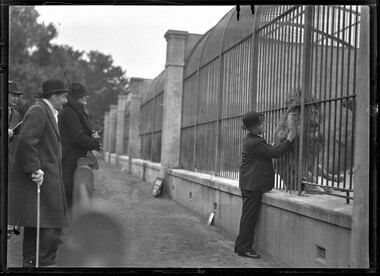 City of Melbourne Libraries
Photograph, Bull, Hugh Jones, 1897-1993, Vice-regal visit to Zoo: Lord Huntingfield greets the King of the Beasts
... Roy, aged 28 in 1934, was a former Wirth’s circus lion who had been left at the zoo at 10 years of age. ...Roy, aged 28 in 1934, was a former Wirth’s circus lion who had been left at the zoo at 10 years of age. ...Photographer notations on slide: "Vice Regal visit to zoo B42" Published: The Age, Tuesday 26 June 1934, page 11. Published title: VICE-ROYALTY GREETS THE KING OF THE BEASTS AT THE ZOO. Published caption: “Lord Huntingfield experienced a pleasant “induction ceremony” as Patron of the Royal Zoological and Acclimatisation Society yesterday, when he made a tour of the Zoological Gardens. The picture shows the Governor, accompanied by Lady Huntingfield, inspecting the King of the Beasts, who is submitting to a little playful treatment from the Director of the Gardens, Mr. Wilkie, while the Director whispers in his ear that a distinguished visitor has come to see him.” Trove article identifier: http://nla.gov.au/nla.news-article204818472 Description: A man wearing a hat and suit strokes a caged lion, observed by a man in a hat, scarf and overcoat who is leaning on a walking stick, and a woman in a hat and coat, holding a handbag. They stand behind a protective rail. Research by project volunteer, Fiona Collyer: Andrew Arthur Wellesley Wilkie, 1853-1948, was Director of the Melbourne Zoo from 1923 to 1936 and was associated with the zoo for 70 years. He first worked as a horticultural assistant to Government botanist Baron Ferdinand von Mueller at the Botanical Gardens at the age of 13, along with his older brother David. One of Andrew’s jobs was to capture moths for the National Herbarium. In 1857, a group of prominent Melburnians assembled at St. Patrick’s Hall to form the Zoological Society of Victoria, with the aim of introducing animals and plants from overseas. It was conceived, “For the purposes of science and for that of affording the public the advantages of studying the habits of the animal creation in properly arranged zoological gardens.” The Victorian Government granted 32 acres (13 hectares) of land to the Zoological Society at the southern end of Richmond Paddock on the opposite bank to the Botanical Gardens. (This is where AAMI Stadium and Collingwood Football Club now stand.) In 1861, the Zoological Society of Victoria was renamed The Acclimatisation Society of Victoria. Unfortunately the Yarra River frontage was damp, swampy and subject to flooding, so the animals were briefly housed at the Botanical Gardens until in 1862, the City of Melbourne donated 55 acres (22 hectares) of land at Royal Park for the fledgling zoo. Baron von Mueller secured employment at Royal Park for Andrew and David and they helped to lay out the gardens, plant trees and take care of a collection of deer, pheasants, hares and partridges. Initially the zoo was used for the acclimatisation of animals recovering from the long voyage to Australia and for breeding them for sport. In 1872, the zoo bought two lions, a leopard and a cheetah that had been seized from circus showmen Keith and Phillips when they were unable to pay the bill of butcher Mr T K Bennet of Bourke Street. The first zoo director, Mr. Albert Le Souef, negotiated with captains of ships to buy animals at overseas ports they visited and soon a multitude of exotic species arrived, including a ten-year-old Indian elephant in 1878. In 1923, after being head keeper for some years, Andrew was appointed director of the zoo. By 1933, the zoo had 110 different species of animals, 200 species of birds and 72 species of reptiles under Andrew’s care. He had personally planted all but six trees and laid out the garden beds. As director he lobbied authorities for funds to build more humane enclosures for the animals. In June 1928, Table Talk magazine wrote of Andrew Wilkie: “Up at the Zoo there is a humble gentleman who is a lion among the lions, who knows the proper specific to employ when the boa constrictor has chilblains, and who is a friend and confidant of Queenie the elephant. His fount of zoological lore has never been plumbed. It is bottomless, like his good fellowship and geniality. Every day he may be seen somewhere in the grounds of that growing sanctuary for the strange and arresting fauna and creeping things of the world, and I assure you as one who is privy to his passion that that area and its inhabitants are rarely out of his thoughts.” Andrew retired from the zoo in 1936 at the age of 83 and in 1948 died at his home in Brunswick aged 94. He and his wife Josephine had six children. Roy, aged 28 in 1934, was a former Wirth’s circus lion who had been left at the zoo at 10 years of age. Andrew visited Roy every day on his rounds and the pair formed a close and affectionate bond. Wireless Weekly magazine in February 1933 reported, “Roy was delighted to see Mr Wilkie, and in a docile manner, approached the bars of his cage and had his head vigorously rubbed by the director, who daily carries out this act of kindness.” As reported in The Herald on 27 October 1936, “Mr Wilkie has also found the old lion docile. He has not shown the animal any particular favouritism, but the lion has shown him a faithfulness that none of the keepers can claim. When Mr Wilkie approaches the bars the lion rolls over and lets the director stroke him and pull his tail. He gets very excited if Mr Wilkie passes without climbing over the protecting rail for a little game.” A 1930 newsreel film shows Andrew stroking Roy’s mane through the bars and the blissed out big cat lying on his back while lifting his chin for a rub. Another newsreel film from the time shows Andrew stroking a lioness and playfully pulling her tail. The Victorian Acclimatisation Society was founded in 1861 by Edward Wilson, 1813-1878, then owner and editor of The Argus newspaper. He said that Australian indigenous animals were practically useless, providing only “a little sport and an occasional meal”. The Society believed that Australia’s plants and animals were vastly inferior to those in Europe. They wanted to introduce and acclimatise to Victoria “all innoxious animals, birds, fishes, insects and vegetables, whether useful or ornamental” for sport and for the table, and to spread indigenous animals and plants from the colony around the world. Their motto was “if it lives, we want it”. The Society was primarily responsible for introducing sparrows, starlings, sambar and hog deer, ostriches, brown trout, blackberries, and carp to the Murray River. They released the European songbirds, thrush and blackbird to quell the homesickness of British settlers. The Society also sent Australian animals like platypus, echidnas, kangaroos and koalas to Europe for scientific and novelty purposes. Thomas Austin, a wealthy sheep farmer of Barwon Park, Winchelsea (property now owned by the National Trust) was a member and in 1859 he introduced hares, blackbirds, thrushes and partridges onto his property. He is probably best known for introducing 24 breeding rabbits onto his estate as game for shooting parties. Thomas quipped, “The introduction of a few rabbits could do little harm and might provide a touch of home, in addition to a spot of hunting." In 2022, genomic data confirmed that Australia’s feral rabbit population is entirely descended from these rabbits. Biological control has brought the rabbit population down from an estimated high of 10 billion rabbits in the 1920s to approximately 200 million today, inhabiting 70% of Australian landmass (5.3 million square kilometres). In 1872, the Acclimatisation Society was renamed The Zoological and Acclimatisation Society of Victoria and they focused on importing exotic animals for display purposes to the zoo. In 1937, the Royal Acclimatisation Society of Victoria was recreated as the Zoological Board of Victoria with a focus on research of native animals threatened with extinction. In an editorial for The Argus newspaper, 16 March 1856, Edward Wilson lamented: "…this country has been shamelessly stolen from the blacks. Had they been like the New Zealanders or the North American Indians, we should have bought their land, and supplied them with the means of living when we took it... In less than twenty years we have nearly swept them off the face of the earth. We have shot them down like dogs. In the guise of friendship we have issued corrosion sublimate in their damper, and consigned whole tribes to the agonies of an excruciating death. We have made them drunkards, and infected them with disease which has rotted the bones of their adults, and made such few children as are born amongst them a sorrow and a torture from the very instant of their birth. We have made them outcasts on their own land, and are rapidly consigning them to entire annihilation. There are but a few of them left, comparatively. This is what we would do for that few. We would feed and clothe every one of them.” [Note: this last sentence is italicized in the original newspaper article text]. Lord Huntingfield, (William Charles Arcedeckne Vanneck) 1883-1969, Governor of Victoria 1934-1939, was a British Conservative Party politician and the first ever Australian-born Governor of an Australian state (although he was always considered British). He was patron of the Royal Zoological and Acclimatisation Society of Victoria and was acting Governor-General for six months during the absence of Lord Gowie in 1938. Lady Huntingfield (née Margaret Eleanor Crosby) 1884-1943, his American-born wife showed great interest in social welfare and the advancement of women and children. She was president of the City Newsboys Society and Patroness of the Girls Friendly Society. In 1937, rose breeder Alister Clark named a yellow hybrid tea rose for her. In 1940, the City of Melbourne opened the Lady Huntingfield Free Kindergarten in North Melbourne, now the Lady Huntingfield Early Learning and Family Services Centre. Lady Huntingfield died in London in 1943 after her house was bombed during a German airstrike. The Lady Huntingfield Memorial Scholarship was established after the City of Melbourne raised £1000 in a public appeal conducted in her memory for students undertaking a Social Work degree at the University of Melbourne. It is awarded annually to this day. The Queen Victoria Hospital named a bed in her honour. References: VICE-ROYALTY GREETS THE KING OF BEASTS AT THE ZOO. (1934, June 26). The Age (Melbourne, Vic. : 1854 - 1954), p. 11. Retrieved August 18, 2024, from http://nla.gov.au/nla.news-article204818472 Prominent Personalities ANDREW WILKIE (1928, June 7). Table Talk (Melbourne, Vic. : 1885 - 1939), p. 15. Retrieved August 29, 2024, from http://nla.gov.au/nla.news-article146562949 'Thomas Austin (pastoralist)', Wikipedia, https://en.wikipedia.org/wiki/Thomas_Austin_(pastoralist) 'Edward Wilson (journalist)', Wikipedia, https://en.wikipedia.org/wiki/Edward_Wilson_(journalist) THE WOMAN'S WORLD (1934, June 26). The Herald (Melbourne, Vic. : 1861 - 1954), p. 14. Retrieved August 19, 2024, from http://nla.gov.au/nla.news-article243164806 MR. WILKIE CAN PULL THE OLD LION'S TAIL (1936, October 27). The Herald (Melbourne, Vic. : 1861 - 1954), p. 4. Retrieved August 18, 2024, from http://nla.gov.au/nla.news-article248551307 Director Of Zoo Will Retire Tomorrow--With White Kitten (1936, December 30). The Herald (Melbourne, Vic. : 1861 - 1954), p. 8. Retrieved August 18, 2024, from http://nla.gov.au/nla.news-article244655203 LIGHT CAR CLUB IN CARICATURE (1931, August 25). The Sun News-Pictorial (Melbourne, Vic. : 1922 - 1954; 1956), p. 24. Retrieved August 19, 2024, from http://nla.gov.au/nla.news-article276250310 'The Acclimatisation Society was driven by misguided ideals about 'fixing nature' in Australia', ABC News, https://www.abc.net.au/news/2022-11-04/acclimatisation-society-introduced-species-history-listen/101588262?utm_source=abc_news_app&utm_medium=content_shared&utm_campaign=abc_news_app&utm_content=safari 'Dr Andrew Wilkie Director Of Melbourne Zoo, With Lion (1930) Video', Pond5 Inc., https://www.pond5.com/stock-footage/item/155691351-dr-andrew-wilkie-director-melbourne-zoo-lion-1930 'Kodak Cinegraph Compilation No 12', ACMI Collection, YouTube.com [Zoo footage at 8.33 minutes, Mr Wilkie at 11.04 minutes], https://www.youtube.com/watch?v=OZZqgSNsP0k THE ABORIGINES. (1856, March 16). The Argus (Melbourne, Vic. : 1848 - 1957), p. 4. Retrieved September 28, 2024, from http://nla.gov.au/nla.news-article4833244Photographer notations on slide: "Vice Regal visit to zoo B42".1930-1939, melbourne zoo, animals, hunting, wildlife, royal park, gardens -
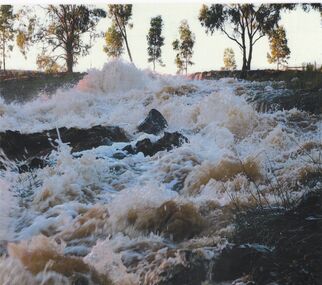 Bendigo Historical Society Inc.
Photograph - HUGH ENNES COLLECTION: EPPALOCK WEIR WATER OVERFLOW - JAN 2011
... Puffing Billy. Wirths Circus. The Hugh Ennes collection. Colour photograph. ...The Hugh Ennes collection. Colour photograph. Water overflows from Eppalock Weir, January 2011.railways, bendigo to melbourne, trains. railways. puffing billy. wirths circus. -
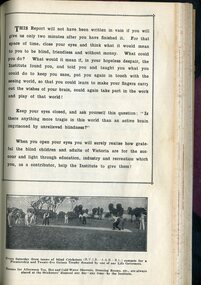 Vision Australia
Administrative record - Text, Royal Victorian Institute for the Blind annual report 1927, 1927
... Royal Victorian Institute for the Blind Annual Report Lord Somers Lady Somers G Dent J Tanswell George Findlay Donald Forbes Baldwin Spencer National Museum of Victoria Cricket Rowing H Foster Auxiliaries Wirths Brothers Circus Raleigh Street Hostel Margaret Cates Tom Ginniff Peter Stevens Buildings 1 volume bound with illustrations. ...Articles in this annual report include: 60th anniversary, approximately 1000 blind people in Victoria, hope that Government will increase it's support which has not varied for over 30 years and comparison of costs compared to the 50th anniversary, visits by Lady Stonehaven and Lord and Lady Somers, resignation of G. Dent and appointment of J. Tanswell as head teacher, George Findlay is entering the final year of his degree and Donald Forbes is in his second year, thanks to Sir Baldwin Spencer for allowing the children to visit the National Museum and touch various items as he spoke about the various exhibits, George Findlay won the 3LO Exhibition for Pianoforte, the success of the Concert Party and the difficulty in securing halls large enough to hold concerts, placement of safety zones by the City of Melbourne and South Melbourne councils opposite the Institute, official opening of the hostel in Raleigh Street by the Lord Mayor, activities providing support for those not working at the Institute include teaching of home trades who manufactured goods will be purchased by the RVIB for sale in their shop, a wholesale tobacco and grocery store, use of the Pipe Organ, musical instruments, wireless set, study, writing, games, typewriting, showers and baths and dressing rooms for on-site use, a brief outline of the blind cricket playing ground and the boat house, the decision to provide free Wireless Sets to those who cannot afford them, H. Foster (foreman of the Mat department) again played Father Xmas at the children's Christmas party, the Orchestra and Concert Party gave their annual free concert to the Tramways Board and employees in appreciation for the free passes for the blind, formation of a Central Auxiliary with representatives from each municipality to help bring the work of the Institute more predominantly to the general public across Victoria, and the passing of workers Margaret Cates, Tom Ginniff and Peter Stevens.1 volume bound with illustrations.royal victorian institute for the blind, annual report, lord somers, lady somers, g dent, j tanswell, george findlay, donald forbes, baldwin spencer, national museum of victoria, cricket, rowing, h foster, auxiliaries, wirths brothers circus, raleigh street hostel, margaret cates, tom ginniff, peter stevens, buildings -
 Working Heritage Crown Land Collection
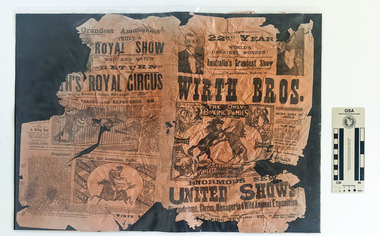
Pamphlet - Wirth Bros show pamphlets, May 18 1898
... Damaged and weathered pamphlets for a Circus and Show by the Wirth Bros ...The pamphlet was found under the floorboards during works to the building Historic Newspaper 1898 Warracknabeal Court House Various text and illustrations depicting the activities of the show including horses, tigers and elephants and monkeys. 18th May 1898 Damaged and weathered pamphlets for a Circus and Show by the Wirth Bros Wirth Bros Show pamphlets Pamphlet Wirth Bros show pamphlets Serymgour and Sons, Theatrical Printers ...The pamphlet was found under the floorboards during works to the building Damaged and weathered pamphlets for a Circus and Show by the Wirth Bros Various text and illustrations depicting the activities of the show including horses, tigers and elephants and monkeys. 18th May 1898 historic newspaper, 1898, warracknabeal court house -
Vision Australia
Document - Text, Autobiography by Arthur McKay, 1980
... O'Neill Alex Sauter Radio club Phyllis Gration Trojan Club Recreation Rita Nightingale Bert Harris Fred Sutcliffe Dick Sutcliffe Jack Murphy David Bell Malvern Tramways Band Wirths Brothers Circus Melbourne Museum Jack Cox Botanical Gardens Education Evelyn Holden Waldemar Seidel Jack Sweeney Auxiliaries William Mallenson Hugh Jeffrey Ormond Hall Kitty Rayner Neil Westh Raleigh Street Hostel Murray Parker Villa Maria Society James Sutton Crowe John Cowan Myrtle Middleton Jim Watson Walter Clemson Bill Jones Cricket Edward (Ted) Hanlon Norm Rees Harry Finlayson Donald Forbes Geoffrey Green Olinda Norma Allen Kiat So Melrose House for the Blind Harold Gration Joe Morton Employment Charlie Bradley Jim Smith Blind Workers Union Lorna Cole Australian Federation of Blind Citizens Guild of Professional Blind Fred Jones Ken Swadesir St Paul's School for the Blind Alfred Dovey RVIB Rifle Club David Blyth Gordon Duxbury Betty Bridge Elsie Mead Keith Holdsworth Barbara Gillott Thomas Walter Mitchell Dr Charles Bennett Lady Nell Seeing Eye Dog School Miss Bryan Garnett Dent 1 word file of Arthur McKay's autobiography Autobiography by Arthur McKay Document Text ...In 1980, Arthur James McKay wrote the story of life, from early days at home in Sale to journeying between the workshop at RVIB and a working musician.1 word file of Arthur McKay's autobiographyarthur mckay, rvib school, bert kelton, alan campbell, ken campbell, frank plumstead, george findlay, david palmer, rvib orchestra, dancing, s.w. hedger, charlotte briggs, harry van assche, geoff palmer, 3db radio station, merle grenfell, brother p.g. o'neill, alex sauter, radio club, phyllis gration, trojan club, recreation, rita nightingale, bert harris, fred sutcliffe, dick sutcliffe, jack murphy, david bell, malvern tramways band, wirths brothers circus, melbourne museum, jack cox, botanical gardens, education, evelyn holden, waldemar seidel, jack sweeney, auxiliaries, william mallenson, hugh jeffrey, ormond hall, kitty rayner, neil westh, raleigh street hostel, murray parker, villa maria society, james sutton crowe, john cowan, myrtle middleton, jim watson, walter clemson, bill jones, cricket, edward (ted) hanlon, norm rees, harry finlayson, donald forbes, geoffrey green, olinda, norma allen, kiat so, melrose house for the blind, harold gration, joe morton, employment, charlie bradley, jim smith, blind workers union, lorna cole, australian federation of blind citizens, guild of professional blind, fred jones, ken swadesir, st paul's school for the blind, alfred dovey, rvib rifle club, david blyth, gordon duxbury, betty bridge, elsie mead, keith holdsworth, barbara gillott, thomas walter mitchell, dr charles bennett, lady nell seeing eye dog school, miss bryan, garnett dent
