
Showing 103 items matching " contemporary group"
-
 Women's Art Register
Archive (Collection) - Art In Australia Journal Compilation Archive
... ... Contemporary Group Melbourne...Ruth Ainsworth Mina Arnst F.M. Clinton Contemporary Group Melbourne M.I.Drury Joyce Dennys Katherine Elder Edith Hope Margaret Johnson M.I.Drury Archive Art In Australia Journal Compilation Archive ...ruth ainsworth, mina arnst, f.m. clinton, contemporary group melbourne, m.i.drury, joyce dennys, katherine elder, edith hope, margaret johnson, m.i.druryruth ainsworth, mina arnst, f.m. clinton, contemporary group melbourne, m.i.drury, joyce dennys, katherine elder, edith hope, margaret johnson, m.i.drury -
Women's Art Register
Archive (Collection) - Enid Cambridge Artist Archive
... ... Contemporary Group...1903-1976 Flowers Colour Landscape Modernism Society of Artists Contemporary Group Watercolour Institute Painting Watercolour Archive Enid Cambridge Artist Archive ...flowers, colour landscape, modernism, society of artists, contemporary group, watercolour institute, painting, watercolourflowers, colour landscape, modernism, society of artists, contemporary group, watercolour institute, painting, watercolour -
Women's Art Register
Archive (Series) - Cambridge, Enid. Artist File 1
... ... Contemporary Group...Flowers Colour Landscape Modernism Society of Artists Contemporary Group Watercolour Institute Painting Watercolour Foolscap white archival 4 flap folder or document wallet Archive Cambridge, Enid. ...Biography, Catalogues, Correspondence, Artwork Imagesflowers, colour landscape, modernism, society of artists, contemporary group, watercolour institute, painting, watercolourflowers, colour landscape, modernism, society of artists, contemporary group, watercolour institute, painting, watercolour -
Women's Art Register
Archive (Series) - Art In Australia Journal. Subject File 1
... ... Contemporary Group Melbourne...Ruth Ainsworth Mina Arnst F.M. Clinton Contemporary Group Melbourne M.I.Drury Joyce Dennys Katherine Elder Edith Hope Margaret Johnson M.I.Drury Foolscap white archival 4 flap folder or document wallet Archive Art In Australia Journal. ...Biography, Newspaper Clippings, Articlesruth ainsworth, mina arnst, f.m. clinton, contemporary group melbourne, m.i.drury, joyce dennys, katherine elder, edith hope, margaret johnson, m.i.druryruth ainsworth, mina arnst, f.m. clinton, contemporary group melbourne, m.i.drury, joyce dennys, katherine elder, edith hope, margaret johnson, m.i.drury -
Women's Art Register
Archive (Series) - Enid Cambridge. Duplicate File 1
... ... Contemporary Group...Painting Watercolour Flowers Colour Landscape Modernism Society of Artists Contemporary Group Watercolour Institute Foolscap manilla file Archive Enid Cambridge. ...Biography, Catalogues, Correspondence, Artwork Imagespainting, watercolour, flowers, colour landscape, modernism, society of artists, contemporary group, watercolour institutepainting, watercolour, flowers, colour landscape, modernism, society of artists, contemporary group, watercolour institute -
Women's Art Register
Archive (Series) - Art In Australia Journal. Slide Kit
... ... Contemporary Group Melbourne...Ruth Ainsworth Mina Arnst F.M. Clinton Contemporary Group Melbourne M.I.Drury Joyce Dennys Katherine Elder Edith Hope Margaret Johnson M.I.Drury Set of slides in Polypropylene sleeves, within a Polypropyline binder and slipcase. ...ruth ainsworth, mina arnst, f.m. clinton, contemporary group melbourne, m.i.drury, joyce dennys, katherine elder, edith hope, margaret johnson, m.i.druryruth ainsworth, mina arnst, f.m. clinton, contemporary group melbourne, m.i.drury, joyce dennys, katherine elder, edith hope, margaret johnson, m.i.drury -
Women's Art Register
Archive (Series) - Art In Australia Journal, Digitised Slide Kit
... ... Contemporary Group Melbourne...Ruth Ainsworth Mina Arnst F.M. Clinton Contemporary Group Melbourne M.I.Drury Joyce Dennys Katherine Elder Edith Hope Margaret Johnson M.I.Drury Archive Art In Australia Journal, Digitised Slide Kit ...ruth ainsworth, mina arnst, f.m. clinton, contemporary group melbourne, m.i.drury, joyce dennys, katherine elder, edith hope, margaret johnson, m.i.druryruth ainsworth, mina arnst, f.m. clinton, contemporary group melbourne, m.i.drury, joyce dennys, katherine elder, edith hope, margaret johnson, m.i.drury -
Port Melbourne Historical & Preservation Society
Photograph - First contemporary houses Stokes Street, Port Melbourne, 1990s
... Construction of first contemporary houses (a group of three) to go up at the northern block of Stokes Street, approx 240-244. ...Construction of first contemporary houses (a group of three) to go up at the northern block of Stokes Street, approx 240-244. ...Photographed by a neighbourColour photo. Construction of first contemporary houses (a group of three) to go up at the northern block of Stokes Street, approx 240-244. Nott St School visible on left - a poor imagebuilt environment - domestic, stokes street -
 Federation University Art Collection
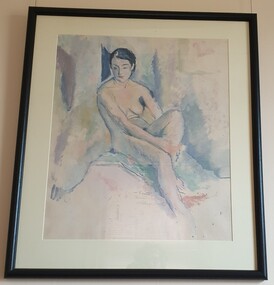
Painting - Oil on paper, William Frater, 'Nude' by William Frater, 1932
... During the 1930s he exhibited with the Contemporary Art Group along with Arnold Shore and George Bell. ...During the 1930s he exhibited with the Contemporary Art Group along with Arnold Shore and George Bell. ...William FRATER (1890-1974) Born 31 January 1890 at Ochiltree Castle, near Linlithgow, Scotland Arrived Melbourne, Australia in September 1910 In a lecture on modern art in 1925, Frater stated the basic position from which the rest of his oeuvre stems: 'Copying nature is not an art; … to copy effects of light tends to destroy form and colour'. Frater gave aggressive leadership to the small group of modernists in the 1920s. His example, teaching, lecturing and crusty style of polemic did much to disrupt the academic style as the arbiter of pictorial values and to pioneer a change of taste in the community.His approach in the 1930s was markedly indebted to Cézanne, especially in the portraits which predominated until his retirement from stained-glass designing in 1940. (L. J. Course, 'Frater, William (1890–1974)', Australian Dictionary of Biography, National Centre of Biography, Australian National University, http://adb.anu.edu.au/biography/frater-william-6239/text10739, published first in hard copy 1981, accessed online 3 May 2016.) Jock Frater was on of the first modern painters who opposed the fashionable and academic schools of painting. During the 1930s he exhibited with the Contemporary Art Group along with Arnold Shore and George Bell. During a very conservative period in Australian Art John Frater advanced the cause of innovation and modernism. This item is part of the Federation University Art Collection. The Art Collection features over 2000 works and was listed as a 'Ballarat Treasure' in 2007.Framed seated nude study in oil on paper. Lower centre in pencil "W. Frater". In lighter pencil "painted 1932"art, artwork, frater, william frater, life drawing, nude, oil on paper, portrait, jock frater, william jock frater, available -
 Flagstaff Hill Maritime Museum and Village
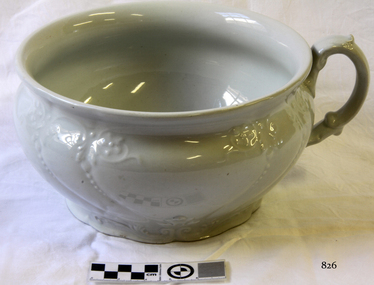
Ceramic - Chamber Pot, 1912
... contemporary patterns now associated with the 1950s and 1960s. Designs by Jessie Tate and Eve Midwinter, some originally found on Midwinter shapes, also appear on 1970s Studio ware. The Studio range was one of Meakin’s most successful and continued in production until the late-1970s. The enormous range of floral, geometric, and abstract designs make Studio Ware collectible in its own right. In the 1970s and 1980s as part of the Wedgwood Group...contemporary patterns now associated with the 1950s and 1960s. Designs by Jessie Tate and Eve Midwinter, some originally found on Midwinter shapes, also appear on 1970s Studio ware. The Studio range was one of Meakin’s most successful and continued in production until the late-1970s. The enormous range of floral, geometric, and abstract designs make Studio Ware collectible in its own right. In the 1970s and 1980s as part of the Wedgwood Group ...In the 19th and early 20th centuries, J. & G. Meakin were important, large-scale producers of good quality, ironstone tableware (‘White Granite’ ware) that met a ready market in the United States, South America, Australia, and other traditional British markets. By the 1890s the company was one of the world’s largest earthenware manufacturers. Although export teaware and tableware was the factory’s staple commodity, Meakin also manufactured toilet ware, kitchen ware and a wide range of fancy earthenware. The company was amongst the first British pottery firms to experiment with modernist designs associated with the art deco period. The Moderne' range was introduced in 1929 consisting of an angular shape decorated design with geometric patterns and often highlighted with silver or gold. This range remained in production through the 1930s. Post 1945 the company introduced the streamlined Studio shape (1953) and Horizon shape (1955) both heavily influenced by the Russell Wright ‘American Modern’ tableware. In 1964 a new Studio shape was released with tall streamlined coffee pots used as the background for many contemporary patterns now associated with the 1950s and 1960s. Designs by Jessie Tate and Eve Midwinter, some originally found on Midwinter shapes, also appear on 1970s Studio ware. The Studio range was one of Meakin’s most successful and continued in production until the late-1970s. The enormous range of floral, geometric, and abstract designs make Studio Ware collectible in its own right. In the 1970s and 1980s as part of the Wedgwood Group Meakin produced contemporary products under the ‘Bull in a China Shop’ and ‘Creative Tableware’ names. ‘Sol’ (c.1912-1963), ‘Studio’ (1953 on) and ‘Royal Staffordshire’ (post 1968) were important J. & G. Meakin Ltd trade names. Meakin marks are numerous, but all include the J. & G. Meakin name. The significance of this item and pottery generally is that often earthenware is portrayed as being a landmark in the evolution of humanity. This is because these items are the few things from the past that have survived in a tangible form. Pottery is an important functional part of society and it has a critical role to play as it helps archaeologists to date other artefacts of the same time period. Also, the decorations on pottery have told much about the beliefs, lifestyles and lives of the people who bought them and used them. In other words it gives us today a snapshot of society from the past and how people used these items in their daily lives, their likes as well as societal and design trends. Earthenware white glazed ironstoneJ & G Meakin Hanley England stamped to base, with white flora designwarrnambool, flagstaff-hill, flagstaff-hill-maritime-museum, shipwreck-coast, flagstaff-hill-maritime-village, pottery, earthenware, iron stone, alfred meakin, james meakin, george meakin, earthenware manufactures, chamber pot -
 Flagstaff Hill Maritime Museum and Village
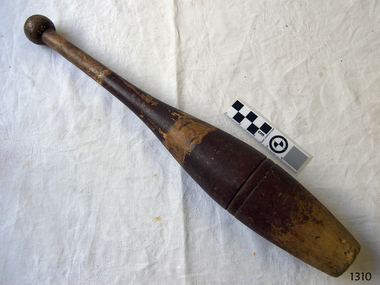
Equipment - Juggling Club, late 19th to early 20th century
... Juggles also compete at International Championships to obtain world records, performing as individuals or in groups or teams. Contemporary champion juggler David Cain performs a Juggling History Show that both entertains and educates his audience. ...Juggles also compete at International Championships to obtain world records, performing as individuals or in groups or teams. Contemporary champion juggler David Cain performs a Juggling History Show that both entertains and educates his audience. ...This wooden juggling club or exercise club may also be referred to as a juggling pin. It is very similar in shape to a bowling pin or an Indian club. It dates approximately to the early 20th century. It may have been used as one of a pair for gymnastics or exercise, or part of a larger set used by a juggler for entertainment in a circus or carnival. At some time it may have been used with a ball or disc as part of a Skittles or bowling game set. The historical collection of Federation University Australia, Victoria, includes a very similar but slightly shorter club, labelled ‘timber skittle”, as can be seen in their photograph. Another example of very similar-shaped, same-sized clubs can be seen in the collection of Nobelius Heritage Park and Emerald Museum, Emerald, Victoria. JUGGLING Jugglers entertain audiences with their tricks and routines at events such as circuses, amusement parks, parties, shows on television or theatre, schools and parties. Juggles also compete at International Championships to obtain world records, performing as individuals or in groups or teams. Contemporary champion juggler David Cain performs a Juggling History Show that both entertains and educates his audience. His routines date from the early 1600s to the 20th century. He uses a wide variety of equipment in his acts including juggling clubs. EXERCISE Exercise clubs or Indian clubs were used in 19th century Victorian times as part of exercise or strengthening programs when they were swung in certain patterns and movements. Even in the early 20th century workplace a few minutes of Indian club swinging was common practice for the relief of tension. A video clip of an American school room in 1904 shows a group of boys and girls skilfully wielding clubs in an exercise sequence (see ‘Links” section). The 1904 and 1932 Olympic Games had an event called Club Swinging. Rhythmic gymnastics was added to the Olympic Program at the L.A. Games in 1984 where competitors use apparatus such as rope, hoop, ball, ribbon and clubs. The clubs come in a variety of weights and heights and have been used from the mid-1800s until around the 1930s in schools and military institutions. They are decorated in a variety of patterns and colours and some have feature lines or scored rings on them. This juggling club is significant for its association with education, entertainment and sport in the late 19th and early 20th century.Wooden juggling club (or pin, skittle or Indian club). Vintage, bottle-shaped club with a flat, slightly concave, base. Its turned, solid timber body tapers out from the base then in again to a very narrow handle with a round knob joined onto the top. Two concentric feature lines are scored into the wider part of club. It was possibly used in exercise, gymnastics or as a skittle. Sections of the club have two brown painted stripes; paint on the lower strip has been worn off at the base . There are remnants of white paint in two areas, possibly the remains of a maker’s name or decoration. There also appears to be an inscription stamped into the wooden handle but this is illegible. Late 19th to early 20th century.Remnants of what appears to be stamped lettering and painted labelling.flagstaff hill, warrnambool, shipwrecked coast, flagstaff hill maritime museum, maritime museum, shipwreck coast, flagstaff hill maritime village, great ocean road, wooden skittle, entertainment, bowling skittle, wooden juggling pin, wooden juggling club, wooden exercise club, indian club, exercise club, club swinging, rhythmic gymnastics, sport equipment, juggling equipment, wooden club -
 Flagstaff Hill Maritime Museum and Village
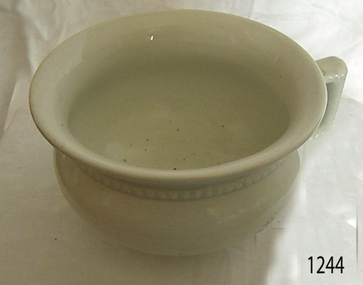
Ceramic - Chamber Pot, J & G Meakin, Early to mid 20th century
... contemporary patterns now associated with the 1950s and 1960s. Designs by Jessie Tate and Eve Midwinter, some originally found on Midwinter shapes, also appear on 1970s Studio ware. The Studio range was one of Meakin’s most successful and continued in production until the late-1970s. The enormous range of floral, geometric, and abstract designs make Studio Ware collectible in its own right. In the 1970s and 1980s as part of the Wedgwood Group...contemporary patterns now associated with the 1950s and 1960s. Designs by Jessie Tate and Eve Midwinter, some originally found on Midwinter shapes, also appear on 1970s Studio ware. The Studio range was one of Meakin’s most successful and continued in production until the late-1970s. The enormous range of floral, geometric, and abstract designs make Studio Ware collectible in its own right. In the 1970s and 1980s as part of the Wedgwood Group ...In the 19th and early 20th centuries, J. & G. Meakin were important, large-scale producers of good quality, ironstone tableware (‘White Granite’ ware) that met a ready market in the United States, South America, Australia, and other traditional British markets. By the 1890s the company was one of the world’s largest earthenware manufacturers. Although export teaware and tableware was the factory’s staple commodity, Meakin also manufactured toilet ware, kitchenware and a wide range of fancy earthenware. The company was amongst the first British pottery firms to experiment with modernist designs associated with the art deco period. The Moderne' range was introduced in 1929 consisting of an angular shape decorated design with geometric patterns and often highlighted with silver or gold. This range remained in production through the 1930s. Post 1945 the company introduced the streamlined Studio shape (1953) and Horizon shape (1955) both heavily influenced by the Russell Wright ‘American Modern’ tableware. In 1964 a new Studio shape was released with tall streamlined coffee pots used as the background for many contemporary patterns now associated with the 1950s and 1960s. Designs by Jessie Tate and Eve Midwinter, some originally found on Midwinter shapes, also appear on 1970s Studio ware. The Studio range was one of Meakin’s most successful and continued in production until the late-1970s. The enormous range of floral, geometric, and abstract designs make Studio Ware collectible in its own right. In the 1970s and 1980s as part of the Wedgwood Group Meakin produced contemporary products under the 'Bull in a China Shop' and 'Creative Tableware' names. 'Sol' (c.1912-1963), 'Studio' (1953 on) and 'Royal Staffordshire' (post-1968) were important J. & G. Meakin Ltd trade names. Meakin marks are numerous, but all include the J. & G. Meakin name. The significance of this item and pottery generally is that often earthenware is portrayed as being a landmark in the evolution of humanity. This is because these items are the few things from the past that have survived in a tangible form. Pottery is an important functional part of society and it has a critical role to play as it helps archaeologists to date other artefacts of the same time period. Also, the decorations on pottery have told much about the beliefs, lifestyles and lives of the people who bought them and used them. In other words it gives us today a snapshot of society from the past and how people used these items in their daily lives, their likes as well as societal and design trends. Chamber pot ceramic white with handle at side and decoration around top. Unclearwarrnambool, shipwrecked-coast, flagstaff-hill, flagstaff-hill-maritime-museum, shipwreck-coast, flagstaff-hill-maritime-village, champer pot, personal hygiene, personal item, ceramic pot, domestic object -
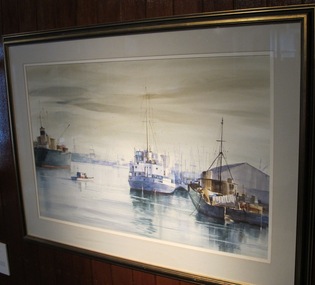 Mission to Seafarers Victoria
Painting - Watercolour, R.T. Miller, Harbour Reflections, c. 2000
... Group. His watercolours have won over 40 major awards, including Victorian Artists' Society, 1973 Artist of the Year Award, and the Rotary Club of Camberwell Watercolour Prize (twice). Represented in many Australian collections both public and private. Fulfills previous MTSV acquisition policy regarding collection of modern or contemporary ...Robert Thomas Miller Born in Melbourne in 1916 Studied commercial art at RMIT and for many years worked as graphic designer and design director at ACI Ltd. Member of the Victorian Artists's Society (Council member since 1965), Australian Guild of Realist Artists, Old Water Colour Society Club (past president), Australian Watercolour Institute, Hughesdale Arts Group (past president), Burnie (Tas.) Coastal Art Group. His watercolours have won over 40 major awards, including Victorian Artists' Society, 1973 Artist of the Year Award, and the Rotary Club of Camberwell Watercolour Prize (twice). Represented in many Australian collections both public and private.Maritime artRobert T. Miller, Mission to Seafarers Victoria CollectionA framed and glazed mat mounted watercolour painting by award winning artist Robert T Miller in ''landscape" format showing moored, masted ships; The modern frame is of moulded or carved wood with appearance of brushed gilt type gilding; image is mounted with pale grey window mount; Backing sealed with paper wire strand hanging system;Artist signed front lower right corner of painting in black ink; no date; sepia label adhered on top centre Verso with artist bio and brief CV ; Other exhibition labels adhered ; inscription describing acquisition and title of work; ( details TBA) M3 in black markerharbour, dockside, artwork, marine art, robert thomas miller, robert t. miller, watercolour, artwork-paintings -
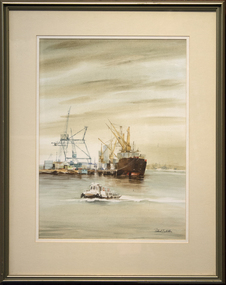 Mission to Seafarers Victoria
Painting - Watercolour, Robert Thomas Miller, The Busy Tug Boat, c. 2000
... Group. His watercolours have won over 40 major awards, including Victorian Artists' Society, 1973 Artist of the Year Award, and the Rotary Club of Camberwell Watercolour Prize (twice). Represented in many Australian collections both public and private. Fulfills previous MTSV acquisition policy regarding collection of modern or contemporary ...Robert Thomas Miller Born in Melbourne in 1916 Studied commercial art at RMIT and for many years worked as graphic designer and design director at ACI Ltd. Member of the Victorian Artists's Society (Council member since 1965), Australian Guild of Realist Artists, Old Water Colour Society Club (past president), Australian Watercolour Institute, Hughesdale Arts Group (past president), Burnie (Tas.) Coastal Art Group. His watercolours have won over 40 major awards, including Victorian Artists' Society, 1973 Artist of the Year Award, and the Rotary Club of Camberwell Watercolour Prize (twice). Represented in many Australian collections both public and private.Maritime ArtRobert T. Miller, Mission to Seafarers Victoria CollectionContemporary framed in limed wood, mounted and glazed watercolour painting by R.T. MILLER in portrait format. Mat mount is white. Image features freighter with black hull at mooring in dockland setting; wire hanging systemInterpretation label adhered to back, includes photographic portrait of the artist Value on label Signature M4 in black markermarine painting, port melbourne, artwork, docklands, tug boat, robert thomas miller, robert t. miller, r.t. miller, artwork-paintings, tugboat -
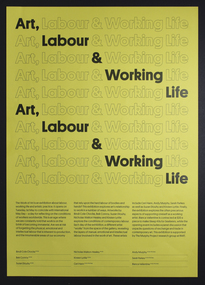 Mission to Seafarers Victoria
Poster, Art, Labour and Working Life, 2018
... contemporary labour, (2) the labour of art-making itself and (3) the often precarious aspects of life as a working artist. Throughout the exhibition, different artists "worked" from the space of the gallery, revealing the layers of manual, emotional and intellectual labour involved in the work of art. CONTRIBUTION I was invited to develop the exhibition by the "Murphy Group...contemporary labour, (2) the labour of art-making itself and (3) the often precarious aspects of life as a working artist. Throughout the exhibition, different artists "worked" from the space of the gallery, revealing the layers of manual, emotional and intellectual labour involved in the work of art. CONTRIBUTION I was invited to develop the exhibition by the "Murphy Group ...A poster printed by the RMIT in 2018, to promote an exhibition of works at the MTSV about the interelationships between labour, working life and artistic practice. BACKGROUND The Work of Art was an exhibition about labour, working life and artistic practice. The exhibition explored three aspects of art's relationship to work: (1) artworks about contemporary labour, (2) the labour of art-making itself and (3) the often precarious aspects of life as a working artist. Throughout the exhibition, different artists "worked" from the space of the gallery, revealing the layers of manual, emotional and intellectual labour involved in the work of art. CONTRIBUTION I was invited to develop the exhibition by the "Murphy Group", a group of researchers at RMIT. As the lead co-curator for the exhibition, I researched the history of artistic responses to working conditions. Through this process I identified a gap - while many artists have explored the conditions of labour and working life in their artworks, fewer have drawn attention to the working conditions of artists themselves. This became a key theme in the exhibition. The exhibition presented the work of nine contemporary Australian artists, including high profile and mid-career artists like Bindi Cole and Bek Conroy, alongside the work of emerging artists. In addition to the display of artworks throughout the space, five artists worked performatively, bringing to life the processes and manual labour involved in artmaking. A public forum extended the complex discussion on the relationship between art, work and labour. SIGNIFICANCE The works were presented in the context of a public space that has a strong relationship to contemporary labour - the Mission to Seafarers in Docklands. The Mission to Seafarers is a working mission that provides support to ship-workers. Presenting the works in this space created a real connection between the artworks and the lived experience of precarious labour. The exhibition reached a large audience including over 1000+ visitors in 10 days. It fostered a high engagement on social media and attracted media coverage including a feature in ArtsHub.A record of the ongoing involvement of the MTSV in art, and working with the art community by providing a suitable venue and display space.A3 size yellow paper promotional poster, double-sided. Three-quarters of the front of the poster is covered with the repeated line "Art, Labour & Working Life" in large font, to form ten rows. These rows are in outline form except for picked out words which are in entirely black characters and these cascade down, a row at a time, a word at a time, to form the same line ("Art, Labour & Working Life"). rmit, 2018, events, labour, working life, artistic practice, hiring event, cultural events, multimedia, nicholas walton-healey -
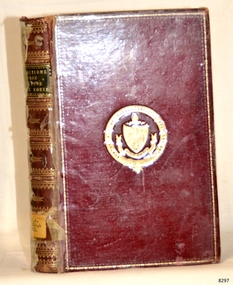 Flagstaff Hill Maritime Museum and Village
Book - Literary Work, John Milton, Selections from the Prose Works of John Milton, 1870
... group. This work is significant because in the Victorian era, Milton’s prose was often neglected in favour of his poetry. Anthologies like Graham's were highly important because they reintroduced Victorian readers to Milton the political radical and defender of liberty. For scholars of 19th-century intellectual history, this book shows exactly how the Victorians "packaged" and interpreted the controversial 17th-century republican for a contemporary ...Selections from the Prose Works of John Milton (1870) is a curated compilation of the non-poetic writings of John Milton. While Milton is globally famous for epic poems like Paradise Lost, he spent a significant portion of his adult life writing fiery political and religious tracts. This specific volume, compiled and annotated by the Rev. James J.G. Graham, extracts the most powerful segments of Milton’s prose. The book organizes his writings to give readers a cohesive look at Milton's philosophy, including his arguments for the freedom of the press known as Areopagitica. This was a famous 1644 prose pamphlet by Milton, written to protest Parliament's Licensing Order of 1643, which mandated government pre-approval for all published books. It remains one of the most historically significant defences of freedom of speech and the press. This work also encompasses his thoughts on the right to overthrow tyrannical rulers, his views on church reform, and various autobiographical passages.Selections from the Prose Works of John Milton Author: John Milton Edited by the Rev.James J G Graham Publisher: Hurst and Blackett Date: 1870 Further Information: Red embossed hardcover with a red spine and lettering in gold. The spine has a Library label with an inscription.fictionSelections from the Prose Works of John Milton (1870) is a curated compilation of the non-poetic writings of John Milton. While Milton is globally famous for epic poems like Paradise Lost, he spent a significant portion of his adult life writing fiery political and religious tracts. This specific volume, compiled and annotated by the Rev. James J.G. Graham, extracts the most powerful segments of Milton’s prose. The book organizes his writings to give readers a cohesive look at Milton's philosophy, including his arguments for the freedom of the press known as Areopagitica. This was a famous 1644 prose pamphlet by Milton, written to protest Parliament's Licensing Order of 1643, which mandated government pre-approval for all published books. It remains one of the most historically significant defences of freedom of speech and the press. This work also encompasses his thoughts on the right to overthrow tyrannical rulers, his views on church reform, and various autobiographical passages.flagstaff hill, warrnambool, shipwrecked coast, flagstaff hill maritime museum, maritime museum, shipwreck coast, flagstaff hill maritime village, great ocean road, selections from the prose works of john milton, colac municipal library, rev.james j ggraham -
 Flagstaff Hill Maritime Museum and Village
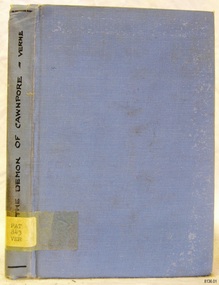
Book - A Fictional Story, Jules Verne, The Steam House Part 1 The Demon of Cawnpore, 1881
... contemporary industrial advancements. (For more information on the Pattison Collection see item 3678 Flagstaff Hill collections) https://victoriancollections.net.au/items/5580c7e72162f114d8b758db warrnambool shipwrecked-coast flagstaff-hill flagstaff-hill-maritime-museum maritime-museum flagstaff-hill-maritime-village shipwrecked-artefact book warrnambool mechanics’ institute pattison collection warrnambool library corangamite regional library service warrnambool city librarian mechanics’ institute library victorian library board warrnambool books and records warrnambool children’s library Ralph Eric Pattison Jules Verne Voyages Extraordinaire series L’École des Robinson's The Steam House: Part 1, The Demon of Cawnpore is a Jules Verne adventure set in India after the 1857 Sepoy Rebellion. It follows a group ...The Steam House: Part 1, The Demon of Cawnpore is a Jules Verne adventure set in India after the 1857 Sepoy Rebellion. It follows a group of English and French travellers crossing northern India in a bizarre steam powered elephant named Behemoth that pulls two houses behind it. The main characters are a Colonel Munro who secretly hopes to find and destroy his old enemy, Nana Sahib who is the rebel leader linked to the Cawnpore bloodbath. The story unfolds as the journey begins, as a sort of grand expedition, with the travellers enjoying the novelty and comfort of their mobile home. As the trip continues, the plot turns into a hunt, because Munro believes Nana Sahib may still be alive and wants revenge for the killing of his wife at the Cawnpore massacre. In short It is an Indian adventure novel about a steam powered elephant journey that turns into a revenge quest for Colonel Munro against the elusive Nana Sahib.Hard cover book, The Steam House Part 1, The Demon of Cawnpore. Author: Jules Verne Publisher: Sampson Low, Marston, Searle & Rivington, London Date: 1881. Light blue hardcover with the title on the spine having lettering to spine in black hand written text pen. fictionThe Steam House: Part 1, The Demon of Cawnpore is a Jules Verne adventure set in India after the 1857 Sepoy Rebellion. It follows a group of English and French travellers crossing northern India in a bizarre steam powered elephant named Behemoth that pulls two houses behind it. The main characters are a Colonel Munro who secretly hopes to find and destroy his old enemy, Nana Sahib who is the rebel leader linked to the Cawnpore bloodbath. The story unfolds as the journey begins, as a sort of grand expedition, with the travellers enjoying the novelty and comfort of their mobile home. As the trip continues, the plot turns into a hunt, because Munro believes Nana Sahib may still be alive and wants revenge for the killing of his wife at the Cawnpore massacre. In short It is an Indian adventure novel about a steam powered elephant journey that turns into a revenge quest for Colonel Munro against the elusive Nana Sahib.warrnambool, shipwrecked-coast, flagstaff-hill, flagstaff-hill-maritime-museum, maritime-museum, flagstaff-hill-maritime-village, shipwrecked-artefact, book, warrnambool mechanics’ institute, pattison collection, warrnambool library, corangamite regional library service, warrnambool city librarian, mechanics’ institute library, victorian library board, warrnambool books and records, warrnambool children’s library, ralph eric pattison, jules verne, voyages extraordinaire series, l’école des robinson's -
Glenelg Shire Council Cultural Collection
Photograph - Reproduction Photograph - Wando Villa / Stanton Drew, 89 Wellington Road, Portland Victoria, n.d
... Contemporary reproduction of a period photo of Wando Villa / Stanton drew. Front view, group of children and adults sitting/standing at front of house...Contemporary reproduction of a period photo of Wando Villa / Stanton drew. Front view, group of children and adults sitting/standing at front of house Photograph Reproduction Photograph - Wando Villa / Stanton Drew, 89 Wellington Road, Portland Victoria ...Contemporary reproduction of a period photo of Wando Villa / Stanton drew. Front view, group of children and adults sitting/standing at front of house -
 Orbost & District Historical Society
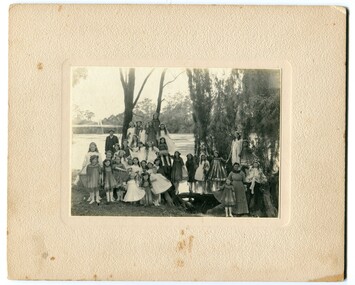
black and white photograph, 1920s
... This photograph is a contemporary record of rural life in Orbost in the early 20th century. orbost snowy-river A black / white photograph of a group of young girls dressed up and posing on the banks of a river. ...The bridge shown in the background was built in the 1920s as a road and rail bridge, and was partly washed away by flood waters in 1934. There is no known history of this item.This photograph is a contemporary record of rural life in Orbost in the early 20th century.A black / white photograph of a group of young girls dressed up and posing on the banks of a river. On the left hand side of the photograph is an older man and on the right is an older lady. In the background is a bridge - the first Snowy River bridge. The photograph is on a cream coloured buff card. orbost snowy-river -
 Orbost & District Historical Society
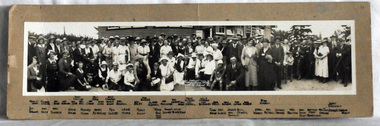
black and white photographs, 1937
... It is a contemporary pictorial record of Orbost residents in 1937. orbost-back-to-celebrations-1937 on front - "Orbost Celebrations 1937 Back To School' Two long black / white photographs of a large group of people standing or sitting outside a building. 983.1 has some names written underneath it. ...This photograph was taken at the 1937 Back to Orbost celebrations. Some of the family names recorded are: Boucher; Farquhar; Nixon; Richardson; Gilbert; Henderson; Rodwell; Herbert; Cameron; Reynolds; MacDonald; Cowell; Lyons; Warren; Pleydell; Ralston and Perry.This is a useful research tool. It is a contemporary pictorial record of Orbost residents in 1937.Two long black / white photographs of a large group of people standing or sitting outside a building. 983.1 has some names written underneath it. Both are on grey buff cards.on front - "Orbost Celebrations 1937 Back To School'orbost-back-to-celebrations-1937 -
 Orbost & District Historical Society
black and white photograph, W C RICE, C1914 -1918
... group of ladies who were the official collectors for the Red Cross during WW1. The Australian Red Cross Society (ARCS) was formed just after the outbreak of the First World War in August 1914, originally as a branch of the the British Red Cross. It came into being as a branch of the British Red Cross Society on August 13th 1914 to succour the wounded in the First World War. This is a contemporary ...This photo shows the group of ladies who were the official collectors for the Red Cross during WW1. The Australian Red Cross Society (ARCS) was formed just after the outbreak of the First World War in August 1914, originally as a branch of the the British Red Cross. It came into being as a branch of the British Red Cross Society on August 13th 1914 to succour the wounded in the First World War.This is a contemporary record of a significant event in Orbost. It reflects the involvement of Orbost, a small town, in the efforts of the Australian Red Cross Society to provide comforts to soldiers during World war 1.A black / white photograph post card of a group of nine ladies wearing white uniforms with red crosses on the front. They are wearing hats / veils.on front - "Leila Perry, Grace Cameron,Nell Cameron, Jean Cameron, Flora Cameron, Jean Stirling, Lily Perry , Anne Stirling" on back - "For Historical Society - official collectors for Red Cross 1914-1918 War"red-cross-orbost -
 Orbost & District Historical Society
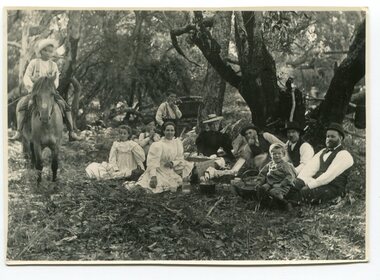
black and white photograph, 1901
... This is a contemporary pictorial record of rural family life in Orbost in the early 20th century. old-station-orbost family-life on back - "Old Station" A black / white photograph of a group of people sitting in a clearing under some trees having a picnic. ...This photograph was taken at the "old station" at Corringle near Orbost. It was a popular picnic spot. Late in 1857 Mr Thomas T. Stirling took over Corringle Run ("Corringle" means "shallow water"). Mr Stirling and his family came from the wester district - Winchelsea. He settled at the Old Station. A few people were employed at the Orbost Stationb and there was settlement on the Orbost flats, Mr T. T. Stirling held the land from Lake Tyrers to Bemm River as a cattle run. About 1888 he became Secretary of the new Tambo Shire.This is a contemporary pictorial record of rural family life in Orbost in the early 20th century.A black / white photograph of a group of people sitting in a clearing under some trees having a picnic. On the left - hand side is a young boy on a horse.on back - "Old Station"old-station-orbost family-life -
 Orbost & District Historical Society
black and white photograph, 1901
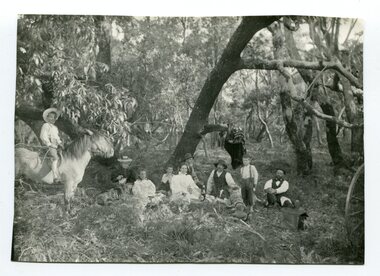
... This is a contemporary pictorial record of rural family life in Orbost in the early 20th century. family-rural-life-orbost old-station-corringle on back - "Picnic at the Old Station" A black / white photograph of a group of early settlers (it appears to be a family group) having a picnic underneath trees. ...The Old Station at Corringle was a popular picnic spot in 1901. Late in 1857 Mr Thomas T. Stirling took over Corringle Run ("Corringle" means "shallow water"). Mr Stirling and his family came from the wester district - Winchelsea. He settled at the Old Station. A few people were employed at the Orbost Stationb and there was settlement on the Orbost flats, Mr T. T. Stirling held the land from Lake Tyrers to Bemm River as a cattle run. About 1888 he became Secretary of the new Tambo Shire.This is a contemporary pictorial record of rural family life in Orbost in the early 20th century.A black / white photograph of a group of early settlers (it appears to be a family group) having a picnic underneath trees. There is a young boy on a horse on the left hand side.on back - "Picnic at the Old Station"family-rural-life-orbost old-station-corringle -
 Orbost & District Historical Society
black and white photograph, W C RICE, C 1914 -1918
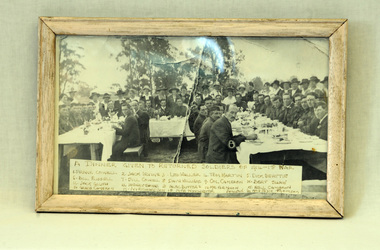
... group of WW1 returned soldiers at a special dinner which was held at the old show ground. Those in the photograph are: Frank Cowell; Jack Irving; Les Waller; Tom Martin; Dick Beattie; Bill Russell; Bill Cowell; Dave Williams; Col Cameron; Bert Shaw; Jack Gluth; Henry Thomas; Alec Butters; Mrs A. G. Nixon; Nell Cameron; Grace Cameron; Ivy Richrdson; Nita Winchester This is a contemporary ...This photograph shows a group of WW1 returned soldiers at a special dinner which was held at the old show ground. Those in the photograph are: Frank Cowell; Jack Irving; Les Waller; Tom Martin; Dick Beattie; Bill Russell; Bill Cowell; Dave Williams; Col Cameron; Bert Shaw; Jack Gluth; Henry Thomas; Alec Butters; Mrs A. G. Nixon; Nell Cameron; Grace Cameron; Ivy Richrdson; Nita WinchesterThis is a contemporary pictorial record of a significant event in Orbost. This item, associated with WW1 is a reminder of the involvement of the Orbost men who served in that conflict and the appreciation of their efforts by the Orbost communityA long black / white photograph of a large group of men sitting at tables having a meal . There are some women standing behind them. They are outdoors. The photo is in a light pink wooden frame under glass. 1010.2 is a copy.at front on paper label - "A DINNER GIVEN TO RETURNED SOLDIERS OF 1914 - 1918 WAR" and a list of names.armed-services ww1 orbost-soldiers -
 Orbost & District Historical Society
newspaper clipping, November 29 1947
... Newspapers reflect contemporary society and this clipping reflects the interest in the royal family to Australians at this time. newspaper-the-argus media-print royal-family elizabeth11-wedding A cut-out b/w photograph from the Argus dated Saturday November 1947. It is captioned "Request Picture of Royal Wedding Group.and is an airmail picture of the royal wedding group ...The Argus was a morning daily newspaper in Melbourne that was established in 1846 and closed in 1957 and was considered to be the general Australian newspaper of record for this period. It was widely known as a conservative newspaper for most of its history. The wedding of Elizabeth II and Prince Philip, Duke of Edinburgh took place on 20 November 1947 at Westminster Abbey in London.Newspapers reflect contemporary society and this clipping reflects the interest in the royal family to Australians at this time.A cut-out b/w photograph from the Argus dated Saturday November 1947. It is captioned "Request Picture of Royal Wedding Group.and is an airmail picture of the royal wedding group.newspaper-the-argus media-print royal-family elizabeth11-wedding -
 Orbost & District Historical Society
book, Gippsland For Tourists, 1938
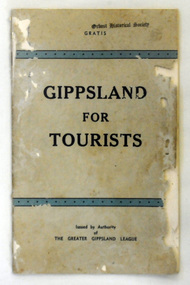
... This group seems to have been a group of Gippsland citizens interested in the progress of Gippsland and any government action in the area. This meeting was held at Maffra. This tourist guide is a contemporary ...This is the 2nd edition. In the Gippsland Times newspaper on June 1 1936 there is a report of a meeting of the Greater Gippsland League at which the production of this book was mentioned as"a method of marking the Gippsland Centenary. TOURIST BOOK-LET. The work of -Messrs A. Gilchrist and A. B. Cooper in connection with the preparation of a tourist booklet was warmly commended and a minute of appreciation placed on record." This group seems to have been a group of Gippsland citizens interested in the progress of Gippsland and any government action in the area. This meeting was held at Maffra. This tourist guide is a contemporary record of tourism promotion in Gippsland.A thin 48 pp booklet with a grey cover. The title, "GIPPSLAND FOR TOURISTS" is inside two blue, black bordered, bands. The print is navy. ath efoot of the page is "Issued by Authority of the Greater Gippsland League". At the top is "Gratis". at top of front cover - "Orbost Historical Society" stampedgippsland-tourism greater-gippsland-league -
 Mission to Seafarers Victoria
Journal, The Log: Volume 1, number 3, issue 213, 2018, 2018
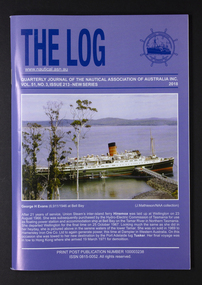
... From NAA website: "Every three months the NAA produces THE LOG journal, packed with: CURRENT NEWS of ships of all types, including – Cruise ships and ferries – Tankers, tugs and harbour vessels – Container, bulk and naval ships – Historic and preserved vessels – Shipbuilding, repairs, accidents and mishaps Plus historical articles, personal recollections and correspondence Plus illustrations from historical and contemporary photographs Plus full indexes of articles, authors, companies and illustrations" The NAA was founded in 1968 and is run by volunteers dedicated to recording, researching, preserving and publishing the maritime history of Australia, New Zealand and the South West Pacific nautical association of australia inc. boats professional associations interest group william gordon volum naa THE LOG is a quarterly colour A5-size journal, typically of 72 pages. ...THE LOG is a quarterly colour A5-size journal, typically of 72 pages. It includes illustrated articles of wide maritime and historical interest, together with comprehensive reports on recent shipping activities related to the Australasian region. non-fictionnautical association of australia inc., boats, professional associations, interest group, william gordon volum, naa -
 Orbost & District Historical Society
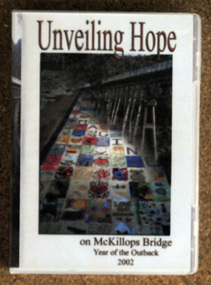
D.V.D, Jenkins, Daniel - Hot Dog Films, Unveiling Hope, 8.8.2002
... groups of East Gippsland. Banners containing thousands of messages of hope and optimism for the future of rural communities were suspended from he bridge in the Snowy River National Park, in front of a three hundred strong crowd that had assembled. Sister Helen Barnes from the Sisters of St Joseph Order, founded by Mary McKillop, initiated the project. This event was a significant event in local history and this item is a contemporary ...As part of the Crelebration of the Year of the Outback, McKillop's Bridge in the Deddick Valley was hung with nineteen banners made by individuals and groups of East Gippsland. Banners containing thousands of messages of hope and optimism for the future of rural communities were suspended from he bridge in the Snowy River National Park, in front of a three hundred strong crowd that had assembled. Sister Helen Barnes from the Sisters of St Joseph Order, founded by Mary McKillop, initiated the project. This event was a significant event in local history and this item is a contemporary recording of it.A D.V.D. titled, Unveiling Hope. On the front is a coloured photograph of McKillop's Bridge in the Deddick Valley.mckillop's-bridge banners-of-hope -
 Flagstaff Hill Maritime Museum and Village
Book, Warrnambool Past & Present, 1907
... Group). This newer book is an A4 portrait style format with Vidler's publication on the top of each page, and a matching 1984 photograph with contemporary comments on the lower half of the page. ...Group). This newer book is an A4 portrait style format with Vidler's publication on the top of each page, and a matching 1984 photograph with contemporary comments on the lower half of the page. ...This is the original book “Warrnambool Past & Present Sixty Years of Progress 1847-1907” that was published in 1907. It features photos of Warrnambool, taken by Edward Vidler in 1907, who matches them with some earlier prints. Vidler had a photographic studio in Liebig Street Warrnambool. Compiled by Edward A. Vidler, Secretary, Warrnambool Chamber of Commerce and Manufacturers, and Warrnambool and District Progress League The front cover of this little but significant book of photographs, advertisements and commentary reads “Warrnambool Past & Present. Sixty Years of Progress – 1847-1907. Illustrated by 100 views of Old and New Warrnambool. Price : One Shilling.” The title page of the book states “Warrnambool : Past and Present. The Metropolis of the Western District. Compiled from contemporary records by Edward A. Vidler, Secretary, Warrnambool Chamber of Commerce and Manufacturers, and Warrnambool and District Progress League. Illustrated. Printed by The Thompson Printing Co., Koroit Street Warrnambool.” In 1984 a facsimile reproduction of Vidler's publication was printed by the 'Osburne Group'. (The Group was named after Richard Osburne who owned the first newspaper in Warrnambool, called The Examiner. The donor of this book was another member of the three people who formed the Osburne Group). This newer book is an A4 portrait style format with Vidler's publication on the top of each page, and a matching 1984 photograph with contemporary comments on the lower half of the page. This book is significant record of the development and changes of Warrnambool therough the years since it was first settled to more recent times.Warrnambool Past & Present. Compiled by Edward D. Vidler. Sixty Years of Progress 1847-1907. Cream, soft cover, A5 landscape orientation, black and white print book, apart from front cover's title, which is red print. Printed by The Thompson Printing Co. Koroit Street, Warrnambool. Original 1907 publication. Includes photographs, advertisements and commentary on Warrnambool and the Western District of Victoria. Price was One Shilling. flagstaff hill, warrnambool, shipwrecked coast, flagstaff hill maritime museum, maritime museum, shipwreck coast, flagstaff hill maritime village, great ocean road, warrnambool history book, vidler’s warrnambool past & present, warrnambool historical photographs, edward a. vidler, pictorial work of warrnambool -
 Rye RSL Sub Branch
Dinner Gong
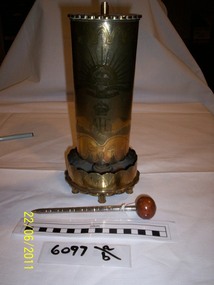
... This "Dinner Gong" and "Striker" are significant Historically and Socially, as it is believed to be the only example of a dinner gong and striker made in theatre as contemporary "trench art" by serving members of this group. Around the top of the main part of the Gong are stamped the initials of the Australian members of the Royal Flying Corps at the time, it is of possible National historical significance, as they were such a small group at best, and a highly vulnerable group, quite likely to not survive the conflict. ...Hand theatre made "trench art", utilising used artillery brass shell casings, of various calibres, hand made with such "tools" as were available at the time. They have been decoratively trimmed at the mouth of each with a "scalloped" pattern, the shallowest casing mounted on small arms casings as "feet" and the large casing inverted engraved and embossed with a depiction of the Australian Commonwealth Military Forces "Rising Sun" badge.This "Dinner Gong" and "Striker" are significant Historically and Socially, as it is believed to be the only example of a dinner gong and striker made in theatre as contemporary "trench art" by serving members of this group. Around the top of the main part of the Gong are stamped the initials of the Australian members of the Royal Flying Corps at the time, it is of possible National historical significance, as they were such a small group at best, and a highly vulnerable group, quite likely to not survive the conflict. This group and their desendants went on to be a part of the formation of the Australian Flying Corps, the beginings of the Royal Australian Air Force. It relates to the embrionic stages of a part of the now Australian Defence Force.A commemorative Dinner Gong construted from Artillery Shell Casings of various sizes. The largest cut short at the bottom, mounted on rifle or machine gun casings cut short as 'feet'. A slightly smaller diameter inverted as the 'gong' with decorative engravings depicting, a Rising Sun emblem on a decorated back ground, 'AFC' (Australian Flying Corps) crowned wings, on the same decorated back ground. The open ends of these larger casings is 'scalloped' and decorated beautifully, while the closed ends have a 'pie crust effect around the flanged edge. There is a biforcated mount at the top to hold the 'striker' made from white metal ballastered rod with a wooden eliptical knob. On the top around the striker mount are stamped the initials of those believed to be the first Australian Aviators in the then AFC.
