
Showing 110 items matching " emu hill"
-
 Linton and District Historical Society Inc
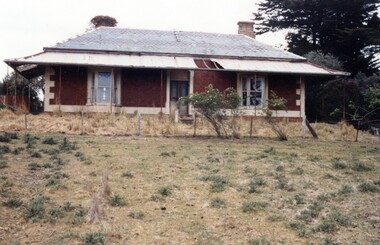
Photograph, Emu Hill Homestead, 1982, 1982
... Emu Hill Homestead, 1982...Emu Hill homestead...LDHS trip to Emu Hill, November 1982...."Society trip Emu Hill"....LDHS trip to Emu Hill, November 1982. Emu Hill homestead LDHS activities LDHS trip to Emu Hill 1982 "Society trip Emu Hill". ...LDHS trip to Emu Hill, November 1982.Colour photograph showing old brick homestead building with pitched roof and verandah."Society trip Emu Hill".emu hill homestead, ldhs activities, ldhs trip to emu hill 1982 -
 Linton and District Historical Society Inc
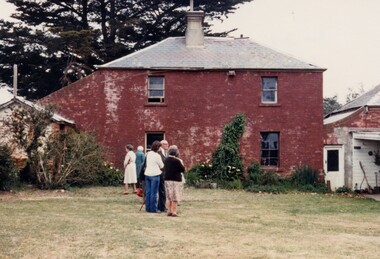
Photograph, Emu Hill Homestead, 1982, 1982
... Emu Hill Homestead, 1982...Emu Hill homestead...LDHS trip to Emu Hill, November 1982....LDHS trip to Emu Hill, November 1982. Emu Hill homestead LDHS activities LDHS trip to Emu Hill 1982 Bill Grigg Snr. ...LDHS trip to Emu Hill, November 1982.Colour photograph showing small group of people at rear of two storey brick building with pitched roof and chimney."Bill Grigg snr. (Poppy) Joan Hunt Beatrice Brewster".emu hill homestead, ldhs activities, ldhs trip to emu hill 1982, bill grigg snr., joan hunt, beatrice brewster -
 Linton and District Historical Society Inc
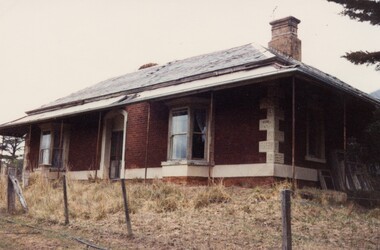
Photograph, Emu Hill Homestead, 1982, 1982
... Emu Hill Homestead, 1982...Emu Hill homestead...LDHS trip to Emu Hill, November 1982....LDHS trip to Emu Hill, November 1982. Emu Hill homestead LDHS activities LDHS trip to Emu Hill 1982 Colour photograph showing close up front and side view of old brick homestead with pitched roof and verandah. ...LDHS trip to Emu Hill, November 1982.Colour photograph showing close up front and side view of old brick homestead with pitched roof and verandah.emu hill homestead, ldhs activities, ldhs trip to emu hill 1982 -
 Linton and District Historical Society Inc
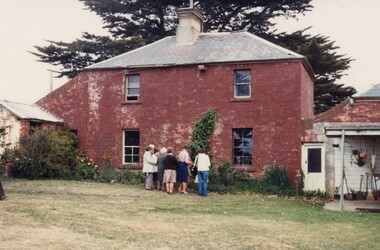
Photograph, Emu Hill Homestead, 1982, 1982
... Emu Hill Homestead, 1982...... LDHS trip to Emu Hill 1982...Emu Hill Homestead, 1982 Photograph Photograph ...Colour photograph of a small group of people standing outside an old two storey brick building.Kaye Draffin Joan Hunt Beatrice Brewsterldhs activities, ldhs trip to emu hill 1982, emu hill homestead, kaye draffin, joan hunt, beatrice brewster -
 Linton and District Historical Society Inc
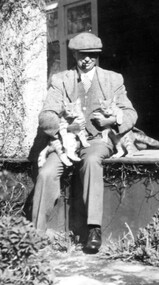
Photograph, Rex Bell
... ... Emu Hill homestead..."Rex Bell sitting out the front of Emu Hill Homestead"....Rex Bell Emu Hill homestead Cats "Rex Bell sitting out the front of Emu Hill Homestead". ...Black and white copy of photograph of Rex Bell wearing flat hat, pipe in mouth, nursing two cats, seated on verandah floor."Rex Bell sitting out the front of Emu Hill Homestead".rex bell, emu hill homestead, cats -
 Ballarat Heritage Services
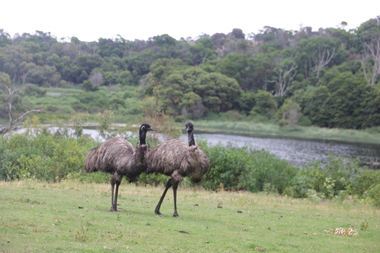
Photograph - Colour, Clare Gervasoni, Emus at Tower Hill, 2016, 31/12/2016
... emu...tower hill...Emus at Tower Hill...emu tower hill Emus at Tower Hill Emus at Tower Hill, 2016 Photograph - Colour Clare Gervasoni ...Emus at Tower Hillemu, tower hill -
 Linton and District Historical Society Inc
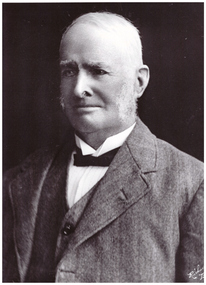
Photograph, Cr. John Clarke
... ... Emu Hill pastoral station...John Clarke was the owner of Emu Hill station. (See photograph of Emu Hill homestead, Registration number 2013-01). ...John Clarke was the owner of Emu Hill station. (See photograph of Emu Hill homestead, Registration number 2013-01). ...There are three copies of this photograph, the first was formerly in a frame and was in the possession of the Shire of Grenville until it was donated to LDHS. (Frame is in room 01 at Resource Centre. It is understood photograph was removed from frame with a view to having it restored.) The second copy of the photograph is mounted photograph 233 and the third is a copy held in the Clarke family file. John Clarke was the owner of Emu Hill station. (See photograph of Emu Hill homestead, Registration number 2013-01). Between 1872 and 1917 he was also a Shire of Grenville councillor, and served as Shire President in 1878, 1889, 1898, 1906 and 1912. John's wife was Mary Jane Newcomen, daughter of William (W.W.R.) Newcomen and Matilda (Egan).Black and white photograph of John Clarke, showing a man with sideburns, wearing a suit with waistcoat, shirt with high collar, and bow tie.On back of original photo (photo previously in frame): "J. CLARKE". On mounted photo (copy of original): "Mr John Clarke".john clarke, emu hill pastoral station, shire presidents -
 Ballarat Heritage Services
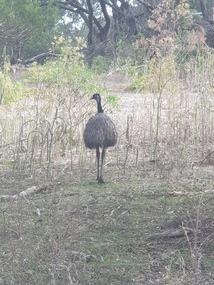
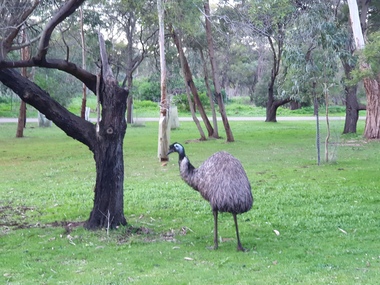
Photograph - Digital photographs, Clare Gervasoni, Emus at Tower Hill Koroit, 2018
... ...Tower Hill...emu...Digital images of emus on Tower Hill near Koroit, Victoria...koroit moyne shire volcano maar game reserve Tower Hill Tower Hill emu wildlife native bird flightless Digital images of emus on Tower Hill near Koroit, Victoria Emus at Tower Hill Koroit Photograph Digital photographs Clare Gervasoni ...Digital images of emus on Tower Hill near Koroit, Victoriakoroit, moyne shire, volcano, maar, game reserve, tower hill, tower hill, emu, wildlife, native, bird, flightless -
 Ballarat Heritage Services
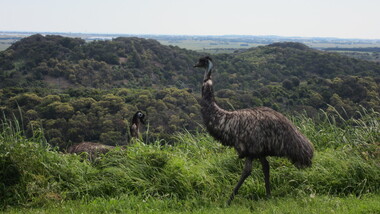
Photograph - Digital photographs, Clare Gervasoni, Emus at Tower Hill near Koroit, Victoria, 29/06/2020
... ...Tower Hill...emu...Digital images of emus on Tower Hill near Koroit, Victoria...koroit moyne shire volcano maar game reserve Tower Hill Tower Hill emu wildlife native bird flightless Digital images of emus on Tower Hill near Koroit, Victoria Emus at Tower Hill near Koroit, Victoria Photograph Digital photographs Clare Gervasoni ...Digital images of emus on Tower Hill near Koroit, Victoriakoroit, moyne shire, volcano, maar, game reserve, tower hill, tower hill, emu, wildlife, native, bird, flightless -
 Ballarat Heritage Services
Photograph - Digital photographs, L.J. Gervasoni, Emus at Tower Hill Koroit, 2015
... ...Tower Hill...emu...Digital images of emus on Tower Hill near Koroit, Victoria...koroit moyne shire volcano maar game reserve Tower Hill Tower Hill emu wildlife native bird flightless Digital images of emus on Tower Hill near Koroit, Victoria Emus at Tower Hill Koroit Photograph Digital photographs L.J. ...Digital images of emus on Tower Hill near Koroit, Victoriakoroit, moyne shire, volcano, maar, game reserve, tower hill, tower hill, emu, wildlife, native, bird, flightless -
 Linton and District Historical Society Inc
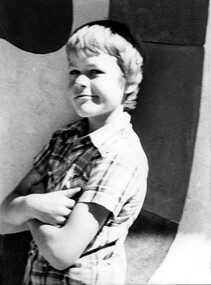
Photograph, James Draffin, c. 1982
... "James Draffin, son of Howard and Kaye Draffin "Emu Hill" Linton"....James Draffin "James Draffin, son of Howard and Kaye Draffin "Emu Hill" Linton". Black and white photograph of a young boy standing with arms crossed, wearing a checked shirt. ...Black and white photograph of a young boy standing with arms crossed, wearing a checked shirt."James Draffin, son of Howard and Kaye Draffin "Emu Hill" Linton".james draffin -
 Federation University Historical Collection
Booklet, H.P. Benett, Looking back over 100 Years. 1839-1939: A Brief Historical Review on the Settlement and Development of Linton and District, 1939
... ...emu hill...Wardy Yallock is the Aboriginal name for the district now know as Linton. linton lintons diggings wardy yallock george sandow mt bute station emu hill matthew hamilton samuel lewers john clarke joseph shepherd edward morey james nicol wg bennett edwin ball thomas bryant william white ewen cameron john cameron bryson campbell james woodrow Soft cream covered booklet of 42 pages. ...This book was published for the centenary of white settlement at Linton. Wardy Yallock is the Aboriginal name for the district now know as Linton.Soft cream covered booklet of 42 pages. Topics include pioneers; gold; mining; civic development; municipal history, education, churches, racing, athletics, football, rifle shooting;tennis, golf;fire brigade, band, horticultural society, Linton Free Library; friendly ; societies; post office; railway; police; war; old Lintonians' Association. Images include: Ewen Rankin; Robert Rankin; John Linton; R. Ching; Mary Linton; James Nicol; J.H. Roberts; W.G. Bennett; Robert Linton; Digory Roberts; W. Campbell; W. Todd; B. Oulten; W. White; Rev. Campbell; J. Wearne; J.G.Allan; R.S. Nelson; Victory Mine; South Victoria Mine; Samuel Lewers; M.H. Baird; Thomas Younghusband; Joseph Shepherd; Thomas Kennedy; John Clarke; James Dodds; G.H. Smith; Linton State School; Sussex Street Linton Looking north; Sussex Street Linton looking South; Albert Kennedy; N. Wishartlinton, lintons diggings, wardy yallock, george sandow, mt bute station, emu hill, matthew hamilton, samuel lewers, john clarke, joseph shepherd, edward morey, james nicol, wg bennett, edwin ball, thomas bryant, william white, ewen cameron, john cameron, bryson campbell, james woodrow -
 Linton and District Historical Society Inc
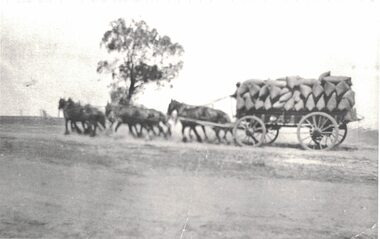
Photograph, W.M. Grigg Hauling Wheat
... ... Emu Hill...W M Grigg Emu Hill Farm Linton wheat Black and white copy of original photograph of a wagon and team loaded with bags of wheat. ...Black and white copy of original photograph of a wagon and team loaded with bags of wheat.w m grigg, emu hill, farm, linton, wheat -
 Linton and District Historical Society Inc
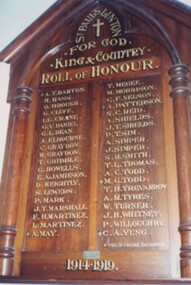
Photograph, Photograph of WWI Honour Roll at St Paul's Church of England, Linton, 1990
... Listing 40 names, the honour roll was presented by Mrs G. L. Dean of Emu Hill Estate. It was unveiled on 21.2.1921. ...Listing 40 names, the honour roll was presented by Mrs G. L. Dean of Emu Hill Estate. It was unveiled on 21.2.1921. ...Listing 40 names, the honour roll was presented by Mrs G. L. Dean of Emu Hill Estate. It was unveiled on 21.2.1921. Photograph taken in 1990.Colour photo of St Paul's Linton Honour Roll, 1914-19 War.st paul's church of england linton, world war 1914-1918, memorials, honour boards, mrs g. l. dean -
 Linton and District Historical Society Inc
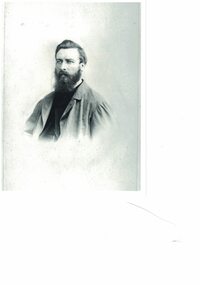
Photograph, John Adamson
... Caroline was born at the Linton's pastoral property 'Emu Hill' in 1845. ...Caroline was born at the Linton's pastoral property 'Emu Hill' in 1845. John Adamson Linton family Black and white copy of original portrait of a dark haired and bearded man, wearing a light coloured Jacket, dark vest and white shirt. ...In 1868 John Adamson married Caroline Maria Cowen Linton, a daughter of Joseph and Mary Linton. Caroline was born at the Linton's pastoral property 'Emu Hill' in 1845. Black and white copy of original portrait of a dark haired and bearded man, wearing a light coloured Jacket, dark vest and white shirt.john adamson, linton family -
 Linton and District Historical Society Inc
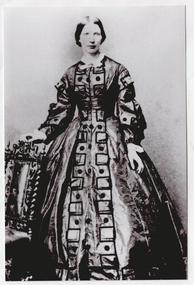
Photograph, Annie Lewers
... Annie Lewers died at Emu Hill in 1904....Around the time Samuel Lewers retired in 1895 they leased and moved to Emu Hill, the property formerly owned by the Linton family, at that time owned by Edward Morey. ...Born in Ireland in 1838, Annie Ross married Samuel Lewers at Creswick in 1856. Samuel Lewers, a gold buyer and bank agent, became manager of the Bank of New South Wales in Linton in about 1860, and was afterwards the first Shire of Grenville President and a Justice of the Peace. Annie and Samuel Lewers had eleven children. They lived in the residence at the Bank of NSW building in Sussex Street (this building now known as Traquair House). Around the time Samuel Lewers retired in 1895 they leased and moved to Emu Hill, the property formerly owned by the Linton family, at that time owned by Edward Morey. Samuel Lewers died shortly after his retirement, in 1895. Annie Lewers died at Emu Hill in 1904.Black & white copy of original photograph, showing Annie Lewers as a comparatively young woman. She is shown wearing an elaborate dress with white collar and cuffs. Studio portrait, subject is standing with right hand resting on the back of a chair. (Mrs. Samuel Lewers)annie lewers, mrs samuel lewers -
 Linton and District Historical Society Inc
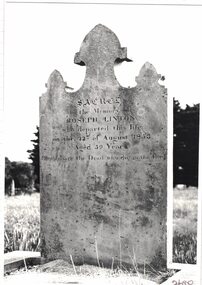
Photograph, Joseph Linton Headstone at Cape Clear cemetery
... Joseph Linton and his wife Mary (nee Dunlop) arrived in Victoria from Scotland in 1839 and established a pastoral run known as 'Emu Hill' near the present-day township of Linton which is named after them. ...Joseph Linton and his wife Mary (nee Dunlop) arrived in Victoria from Scotland in 1839 and established a pastoral run known as 'Emu Hill' near the present-day township of Linton which is named after them. ...Joseph Linton and his wife Mary (nee Dunlop) arrived in Victoria from Scotland in 1839 and established a pastoral run known as 'Emu Hill' near the present-day township of Linton which is named after them. (Linton was surveyed and officially gazetted in 1860. ) Joseph Linton was killed in a buggy accident in 1853, and is buried at Cape Clear, about 14 kilometres from Linton.Black and white copy of original photograph showing the grave and headstone of Joseph Linton."Sacred to the Memory of / JOSEPH LINTON / who departed this life / on the 22nd of August 1853 / Aged 59 Years / Blessed are the Dead who die in the Lord".joseph linton, cape clear cemetery -
 Linton and District Historical Society Inc
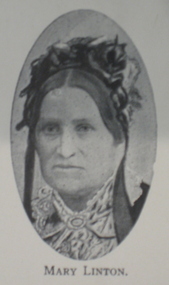
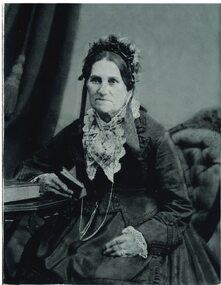
Photograph, Geo Richards studio photographer opposite Star office, Ballarat, Mrs Joseph Linton, nee Mary Dunlop
... Mary and Joseph Linton migrated to Victoria in 1839, and took up a pastoral lease in the Wardy Yaloak district which they called Emu Hill. They had eleven children, ten of whom survived to adulthood. ...Mary and Joseph Linton migrated to Victoria in 1839, and took up a pastoral lease in the Wardy Yaloak district which they called Emu Hill. They had eleven children, ten of whom survived to adulthood. ...Mary Linton, nee Dunlop, was born in 1809 the West Indies, and married Joseph Linton in Scotland when she was eighteen. Mary and Joseph Linton migrated to Victoria in 1839, and took up a pastoral lease in the Wardy Yaloak district which they called Emu Hill. They had eleven children, ten of whom survived to adulthood. Mary died in Ballarat in 1887. The township of Linton derives its name from this family. Part of Old Lintonian collection ; No. 12Sepia photograph of a woman wearing a gown with a lace collar and cap, seated with right arm resting on book on table, left arm resting on lap.mrs joseph linton, mary linton, mary dunlop, old lintonian collection -
 Linton and District Historical Society Inc
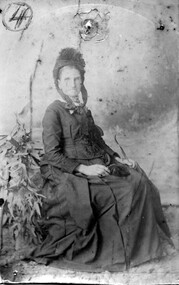
Photograph, Mary Linton née Dunlop (Mrs Joseph Linton)
... Mary and Joseph Linton migrated to Victoria in 1839, and took up a pastoral lease in the Wardy Yaloak district which they called Emu Hill. They had eleven children, ten of whom survived to adulthood. ...Mary and Joseph Linton migrated to Victoria in 1839, and took up a pastoral lease in the Wardy Yaloak district which they called Emu Hill. They had eleven children, ten of whom survived to adulthood. ...Photograph is part of Old Lintonian collection ; No. 4. Mary Linton, nee Dunlop, was born in 1809 the West Indies, and married Joseph Linton in Scotland when she was eighteen. Mary and Joseph Linton migrated to Victoria in 1839, and took up a pastoral lease in the Wardy Yaloak district which they called Emu Hill. They had eleven children, ten of whom survived to adulthood. Mary died in Ballarat in 1887. The township of Linton derives its name from this family.Sepia photograph of a lady wearing long gown and hat, seated with arms resting on her lap.mrs joseph linton, old lintonian collection, mary linton nee dunlop -
 Bendigo Historical Society Inc.
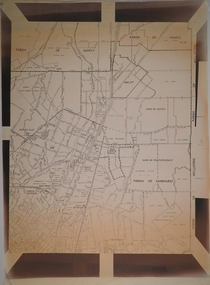
Map - CAMPBELL COLLECTION: BENDIGO AND DISTRICT MAPS
... Eastern area of Bendigo, Parish of Huntly, Ascot, Shire of Huntly, Jackass Flat, Old White Hills, White Hills, Emu Point, North Bendigo, East Bendigo, Strathdale, Parish of Strathfieldsaye, Parish of Sandhurst, Parish of Wellsford....Eastern area of Bendigo, Parish of Huntly, Ascot, Shire of Huntly, Jackass Flat, Old White Hills, White Hills, Emu Point, North Bendigo, East Bendigo, Strathdale, Parish of Strathfieldsaye, Parish of Sandhurst, Parish of Wellsford. ...Map. Eastern area of Bendigo, Parish of Huntly, Ascot, Shire of Huntly, Jackass Flat, Old White Hills, White Hills, Emu Point, North Bendigo, East Bendigo, Strathdale, Parish of Strathfieldsaye, Parish of Sandhurst, Parish of Wellsford.map, bendigo, parishes -
 Federation University Historical Collection
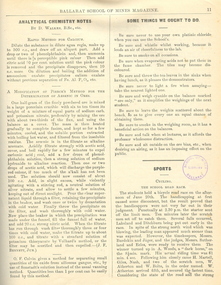
Magazine, Ballarat School of Mines Students' Magazine, 1898-1901, 1898-1901
... McLean * A Few Hints on Histological Technique by Emil Gutheil * Summaries and Notes from the Mining Journals * Students' Association * A Visit to the Skipton Caves (Mount Widdern, Ormand Hill, volcano, Emu Creek, Mount Kinross, Mount Elephant, Mount Vite Vite, Mount Kinross, Mount Hamiston) * Mount Magnet To Victoria (cont) * The New Engines at the Ballarat Woollen Mills - includes image of the Compound 700 H.P. ...McLean * A Few Hints on Histological Technique by Emil Gutheil * Summaries and Notes from the Mining Journals * Students' Association * A Visit to the Skipton Caves (Mount Widdern, Ormand Hill, volcano, Emu Creek, Mount Kinross, Mount Elephant, Mount Vite Vite, Mount Kinross, Mount Hamiston) * Mount Magnet To Victoria (cont) * The New Engines at the Ballarat Woollen Mills - includes image of the Compound 700 H.P. ...Bound copies of the Ballarat School of Mines Students' Magazine, 1898-1901 Vol 1, No. 1, September 1898 * News and Notes (Ballarat School of Mines Museum, J.F. Usher, New British Pharmacopoeia, excursion to Bendigo) * History of the Ballarat School of Mines * Current Topics (Federation, Gladstone, Anglo-American Alliance) * Of Custom * Discovery of Coolgardie * Mining Notes(Clunes, Pitfield, Birthday Mine, Western Australia, Transvaal, Mt Bischoff, Rand Drill Co.) * From the Journals * The Societies - (Student Association, Ballarat Field Club and Science Society, Ballarat Photographic Club) * Original Poetry * Sports * Students' Association Committee Meetings * On the Increase of Temperature of the Earth With Increased Depth Vol 1, No. 2, October 1898 * Notes about some of the Past Students (E.M. Weston, J.A. Porter, H.R. Sleeman, G.E. Sander, B.C.T. Solley, T. Rhys, C. Burbury, D. McDougal, J. Matsen) * Excursion to Daylesford, p.3 * History of the Ballarat School of Mines (continued) * The Soudan * Greater Melbourne * Image of J. Hopkinson, electrical engineer killed ascending the Alps * What is Science * Mining Notes (Pitfield Plains, Victoria United G.M.Co., Lithgow, Avoca, great Cobar, Mt Whycheproof) * Student's Association (women's franchise) * Sports Vol 2, No. 1, March 1899 * News and Notes * History of the Ballarat School of Mines (continued) * Notes of Victorian Geology, 1. Granites, by Thomas S. Hart * Sir William Crookes * Summaries and Notes from the Mining Journals * Students' Association * Sports * The Bush Assayer * Solubility of Gold-Silver Alloys in Potassium Cyanide * Correspondence Vol 2, No. 2, April 1899 * News and Notes (Smythesdale Excursion, New Buildings, A.S. Coyte, R.J. Allan) * History of the Ballarat School of Mines (Continued) * The New Students (J. Owen, A. Clayton Morrisby, A.S. Atkin, J. Alexander Reid, Alfred G. Johnston, L. Lowe, F.H. Dalton, W.M. Robertson, A. Hacke, H.L. Giles, W. Martin, E. Walshe, H.L. Krause, R. Sawyer) * Berringa by Oh'E Jay * Summaries and Notes from the Mining Journals * Mount Magnet to Victoria - A Long Bicycle Trip * 1898 Examination returns * Sports Vol 2, No. 3, May 1899 * Technical Education and the Proposed Affiliation of the Schools of Mines with the Melbourne University. * Laying of the Foundation Stone of the New Classrooms (now Administration Building). Alexander J. Peacock * News and Notes (Past Students - A.S. Lilburn, J.W. Sutherland, J. Richardson, E. Prendergast, J. Wallace, J. Kidd, J. Lake, Mathew Thompson), Coolgardie Exhibition. * Trip to Lal Lal * Students' Association * Summaries and Notes from the Mining Journals * Professor Henry Louis on Mining Education * Corrections Used in Chaining by C.W. Adams * The Black Horse Cyanide Plant * Sports * Completed List of 1898 Examinations Vol 2, No. 4, June 1899 * News and Notes * The Education Problem by D.N. McLean * A Few Hints on Histological Technique by Emil Gutheil * Summaries and Notes from the Mining Journals * Students' Association * A Visit to the Skipton Caves (Mount Widdern, Ormand Hill, volcano, Emu Creek, Mount Kinross, Mount Elephant, Mount Vite Vite, Mount Kinross, Mount Hamiston) * Mount Magnet To Victoria (cont) * The New Engines at the Ballarat Woollen Mills - includes image of the Compound 700 H.P. Engines constructed for the Ballarat Woollen Mills by Austral Otis Company and consulting engineers Monash and Anderson. * Sports * Original Poetry * Correspondence Vol 2, No. 5, July 1899 * News and Notes (E. Byron Moore, Visit to Britannia Gold Mine, J. Bryant, Visit to Last Chance Mine) * A Few Hints on Histological Technique (cont) by Emil Gutheil * Summaries and Notes from the Mining Journals * Professor Alfred Mica Smith (includes image) * Notes on Victorian Geology Part 2 The Trappean Rocks, by Thomas Hart * Origin of Diamonds * Hydraulic Mining by A.E.C. Kerr * Volcanoes by F.G. Bonney * Analytical Chemistry Notes by Daniel Walker * Some Things Out To Do * Sports * Correspondence Vol 2, No. 6, August 1899 *Summaries and notes from the Mining Journals * Some Regulations of the Academy of Mines at Freiberg * A visit to Mt Lyell Smelters * Professor Gilbert J. Dawbarn (includes image) * Air compressor and Transmission of Power by Compressed air by A.E.C. Kerr * Chemistry Notes by Daniel Walker * Mineralogical Notes, Ballarat by Thomas S. Hart * Kalgurli Gold Mines, W.A. * OUr New Lab Vol 2., No 7, September 1899 * Summaries and Notes from the Mining Journals * Some recent Steam Plants at Bendigo by Gilbert Dawbarn * Professor Thomas Stephen Hart (includes image) * Students Association * Notes on Victorian Geology by Thomas Hart * Centrifugal Pumps * A New Chum's Experience by E.M. Weston Vol 2., No 8, October 1899 * The institute of Chemistry Examinations * A New Method of Qualitative Chemical Analysis by Emil Gutheil * Steam Engine Valves and Valve-Gears by Gilbert Dawbarn * Daniel Walker (includes image) * Notes on Victorian Geology by Thomas Hart * Cyaniding Cripple Creek Tellurides (Metallic Extraction Company) * Notes on Two Ballarat Gravel Pumping Plants, G.A. Wilberforce (Eureka Jennings Co and Yarrowee Sluicing Co) * History of the School of Mines (concluded) Vol 3., No 1, March 1900 * A Journey from Natal to Mashomaland with the British Police * A Plea for Research * New Caledonia by C.A.M. Deane * Notes of Victorian Geology - Lower Palaeoroic Rocks by Thomas Hart * Mt Bischoff Mine and Mill * Summaries and Notes from the Mining Journals * Things we Eat and Drink * Farewell to A.S. Coyte Vol 3., No 1, March 1900 * Mining Education * Model Locomotive made by the apprentices of the Phoenix Foundry, p2 * Glimpses of Rhodesian Police Camp Life * New Caledonia (continued) * Summaries from the Mining and Engineering Journals * Boot and Saddle Vol 3., No 3, May 1900 * A Students' Common Room * Geological Excursion to Hardie's Hill * Notes on Victorian Geology by Thomas Hart * The Planet Venus by John Brittain * Summaries and Notes from the Australian Mining Standard * The Assay Ton * Zeehan Smelters * Electrical Notes by Ohe Jay * Trop of the Cricket Club to Stawell * Students' Association * Solid Hydrogen Vol 3., No 4, June 1900 * The Minister of Mines on Mining Education (Minister A.R. Outtrim) * Lal Lal Geology Trip (Thomas Hart) * Rifle Club now defunct, pg 3 * A Contribution to the Mining Geology of Kalgoorlie, W.A. by Ferdinand Krause (includes cross sections) (Wood's Point, Rand, Johannesburg, South Africa, Gaffney's Creek, Walhalla, Shady Creek, Sago Hill at Cardigan, Bunbury) * Summaries and Notes from the Australian Mining Standard (Buninyong Estate Mine) * Monthly Progress Reports of the Geological Survey * Electrical Notes by John M Sutherland (Telagraphone, phonograph, telephone receiver) * Students' Theatre Party (Gordon Todd, Ohe Jaeger, C.S. Wakley) * Opening of the New Buildings - Ministerial Speeches (Outtrim, W.H. Irvine, New Mining Laboratory, Old Chemistry Building, Battery, Model Mine) * Students' Association * Relief of Mafeking * A Critic Criticised * Things We Eat and Drink by Ohe Jay - Oatmeal, Coffee and Cocoa. Vol 3., No 5, July 1900 * Research * Adelaide Varsity Students at Ballarat * The Manchester-Liverpool Mono Railway * Students Association * *A Contribution to the Mining Geology of Kalgoorlie, W.A. by Ferdinand Krause (continued) (includes cross-sections) * Motive Power, address by Charles A. Parsons * Summaries and Notes from the Australian Mining Standard * Sugar Manufacturing by Sugna * Great Creswick Hydraulic Sluicing Plant (THomas Hart, Ballarat School of Mines Mining Class visit) * Reminiscences of a Students Life in Germany * Football - Ballarat School of Mines v Geelong Grammar School (Australian Rules Football) Vol 3., No 6, August 1900 * Cheap Mine Management * Library * Bendigo School of Mines, pg 3 * Notes on Ore Dressing by T, Vincent, Manager The Zeehan (Tas) Silver-Lead Mines Ltd) * Motive Power * Notes on Broken Hill - Its Mines and Minerals by J. Williams * The Concert * Summaries and Notes from the Australian Mining Standard * The Dandy Duke's Dreadful Demise * The Road Race Vol 3., No 7, September 1900 * Michaelmas Excursion (Melbourne University, Prof Kernot, Applied Mechanics) * Injury to School Property * Return of E. Ditchburn (Boer War) * Mt William Gold-Field visit, pg 3 * The Stoping of Wide Lodes by J.V. Lake (includes cross sections) * Summaries of Notes from the Australian Mining Standard * Notes on Broken Hill Part 2- Its Mines and Minerals by W.J. Williams * Motive Power from the Waves * Electrical Notes * Some Account of Italian Mining (Sarinia, Sicily, Peidmont, Lombardia) by Candido Maglione * Students Association * Should Women Have the Vote by Frank Bessemeres * The School Theatre Parly * Past Students * Poetry * Football * Surveying Rules Vol 3., No 8, October 1900 * Ballarat School of Mines Associateship * An Engineering Laboratory * Students' Practical Work * Notes on Broken Hill Part 3 by W.J. Williams * The Lake View Consols by F.S. Earp - Battery Treatment of Sulpo-Telluride Ore * Neglected Mineral Fields - Eurowie and Warrata * A Glimpse Ahead * News and Notes * A.W. G. McPherson, Boer War * Students Association * Ballarat School of Mines Melbourne Excursion to the Government Electric Lighting Station, Austral-Otis Co, Working Mens College * Ballarat School of Mines Concert in Aid of Soldiers Statue Balance Sheet * Football * Cricket Vol 3., No 8b, November 1900 * Position of the Ballarat School of Mines with Regards to Mining Education * Age Limit * Entrance Examination * Presentation t0 Professor Alfred Mica Smith * Image of a Group of Old Ballarat School of Mines Students in Coolgardie and Kalgoorlie. * Students Association Vol 4., No 1, March 1901 * Espirit De Corps * A few Notes on the Testing of Explosives * Round About Inverell, NSW by F. and J. Mawl * On the Choice of Drawing Instruments * Summaries and Notes From the Technical Journals * Annual Examinations 1900 * New Students * Sporting Notes * The Vale of Coolgardie Mine, Bonnievale, W.A. by G. Stephen Hart * News and Notes (Kerr Grant, C.L. Nash, R. Gordon Todd, Vial) * Editorial Notices Vol 4., No 2, Second Term 1901 * The Metallurgical Treatment of Sulpho-Telluride Ores by L.W. Grayson * Some Metallurgical Difficulties of Aluminium * Diehl's Sulphide Process by A.E. C. Kerr * A Californian Gold Mine by A.E. C. Kerr * New Express Locomotives for the Victorian Government (Phoenix Foundry) * An Excursion to Geelong (Electric Light and Traction Company of Australia) * The Linkenback Table for our New Mining Laboratory (Humboldt Company of Colgne) * Death of Thomas Bath * The Late Alfred G. Johnson (Boer War) * An Introduction to Natural Science by Emil Gutheil * The First Annual School Sports Meeting * Concert in Aid of Magazine Funds * The Men That Made the Concert (C.E. Denniston, W.H. Chandler, Mr White, William Litte Jnr, Marriott, Giles McCracken) * Sports * News and Notes Vol 4., No 2, Third Term 1901 * Bagging-Up - A Sketch * Concentration of Difficult Silver-Lead Ores * Estimation of Chlorine, Bromine and Iodine by D. Runting * Summaries of Notes from teh technical Journals * Notes on the Use and Care of Platinum Ware Common Sense * The Machinery at the Tasmania Gold Mine, Beaconsfield, Tasmania * Mining at Walhalla - The Long Tunnel Mine * Past Students * Mapping our of Agricultural Areas, etc, In Dense Vine Lands, North Queensland by R.A. Suter * News and Notes * Concert Balance Sheet e.m. weston, robert brough smyth, mcdougall, bruce, charles burbury, harrie wood, graham j. hopwood, emil gutheil, daniel walker, thomas hart, thomas stephen hart, m. hacker, schnitzler, f.a., ditchfield, l.h, alfred e.c. kerr, charles harvey, campbell, joseph bryant, campbell & ferguson, gilbert j. dawburn, irving, g.b., kerr, a.e.c., john walter sutherland, william robertson, herbert l. krause, alfred mica smith, binh pham, crosbie, d. jack, ditchburn, j., james hiscock, alfred johnston, reid, j.a., kidd, john, james bonwick, james, j.p, overall, d, e.h salmon, gaynor marquand, williams, w.w., williams, william, deane, c.m., vincent, tom, phillips, g.e., hart, d.w., jarnail suingh, rowlands, e., ferdinand m. krause,, easterby, f.l, parsons, r.g., partington, j.r., vial, s.b., meadows, h, atkins, arthur, john braisted burdekin, w.h. corbould, ditchburn, john, hill, john, otto e. jager, mcpherson, g.t, nicholls, c, thom, j.m., crafter, stewart, john brittain, peter lalor, hardy - commissioner, thomas bath, alf johnston, charles campbell, nash, llewellyn, watson, m.a, gardener, eddie, adamson, s.g, alford, l.c, allen, r.j, arthur, d.w.b., burge, a., willia, cairncross, cooper, i, maurice osric copland, maurice copland, dickinson, s., doepel, dunstan, john, loveday dunstan, eeles, terri, flegeltaub, israel, fletcher, a, fyrar, peter, kerr grant, w.kerr, green, gary, betty harris, harris, c.m., hay, a.l., hearn, hill, martin, james, david, johnston, alfred g, kilner, marion, kingston, thomas, lewin, f.c.k., lilburne, arthur m, linahan, colin, macready, w.h, major birlefco, markwald, henry, mccaffrey, mcfarlane, kaye, mciver, s.k, mellins, b, morton, felicity, w. kenneth moss, ken moss, nash, c.w., nash, neville, nickolls, berkeley, osborne, percy, philp, e., playford, william, reid, e, roberts, gordon, ross, f.c., royce, phillip, sawyer, basil, stewart, r.c., todhunter, i, vaisey, a., vincent, john, vinden, sue, wakley, cecil, watt, james, westcott, lewis, charles w. whyte,, vial, s browning, ballarat school of mines students in coolgardie and kalgoorlie, coolgardie, kalgoorlie, claude maitland, a.l. hay, a.s. lilburne, latham watson, arthur kildahl, thomas copeland, f.a. moss, w.a. hearman, cardoc james, alexander fraser, e.o. watt, g.m. roberts, j.j. dunstan, h.v. moss, j.a. hill,, john dunstan, c.m. harris, william h. corbould, j.w. sutherland, ballarat photographic club, ballarat field naturalists club, ballarat field club and science society, photography, geology, excursions, last chance mine, tasmania gold mine, beaconsfield, tasmania, rand, south africa, mount lyell, ballarat school of mines student excursion to mount lyell, h.l. krause, ferdinand krause, krause, hardie's hill, hardie's hill excursion, lal lal, lal lal excursion, lal lal geology excursion, smythesdale, smythesdale excursion, soudan, south african miners, south star mines, wynne and tregurtha battery, ananconda copper mining, arizona copper mining, boiler plates, british guinea, butte copper smelter, daylesford geology camp, daylesford excursion, diehl process, electric power house ballarat, electric pumps, geelong rope factory, gympie, golden horseshoe estate, c johnstone, jack nichol, c. macgennis, alec saunders, alfred g. johnstone, graeme jolly, william purdie, john mann, maxwell l gaunt, sale school of mines, freiberg school of mines, schools of mines, railway locomotive -
 Federation University Historical Collection
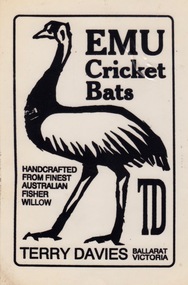
Article - Article - Advertising sticker, ZILLES COLLECTION: Sticker advertising Emu Cricket Bats by Terry Davies, Ballarat
... Terry was named in the Northern Roosters Cricket Club Legends Team of the Century 1920-2000. zilles printers ballarat sir rowland hill adhesive paper santo avery avery labels self-adhesive label terry davies batsman melbourne country week northern roosters cricket club legends team of the century 1920-2000 Name of bat and name of maker TD. - Emu Cricket Bats, handcrafted from finest Australian Fisher Willow. ...Zilles Printers was begun by Lewis Zilles in the early 1930s. It was in McKenzie Street Ballarat. His son Jeffrey also became a printer - letterpress, offset and screen printer. The business became Zilles Printers/Graphics and was in Armstrong Street and later Bell Street Ballarat. A form of sticker began in 1839 when Sir Rowland Hill invented adhesive paper. The first self-adhesive label was invented in 1935 by Stanton Avery - Avery Labels. The sticker was used on the bats as advertisement. Terry Davies was one of the top batsmen in Ballarat during the 1970s. He played from 1971-71 to 1982-83, a total of 151 games. He captained Ballarat in Melbourne Country Week as well as being Captain-Coach of the club. Terry was named in the Northern Roosters Cricket Club Legends Team of the Century 1920-2000.Cream colour card backing a clear sticker with black print.Name of bat and name of maker TD. - Emu Cricket Bats, handcrafted from finest Australian Fisher Willow. Terry Davies, Ballarat Victoria.zilles printers, ballarat, sir rowland hill, adhesive paper, santo avery, avery labels, self-adhesive label, terry davies, batsman, melbourne country week, northern roosters cricket club, legends team of the century 1920-2000 -
 Federation University Historical Collection
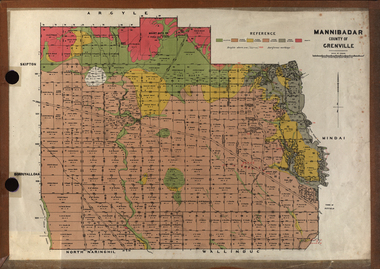
Plan, Mannibadar Geological plan
... mannibadar pitfield mount bute emu hills woady yalouk river geology plan Coloured plan of Mannibadar, County of Grenville. ...Coloured plan of Mannibadar, County of Grenville.mannibadar, pitfield, mount bute, emu hills, woady yalouk river, geology, plan -
 Federation University Historical Collection
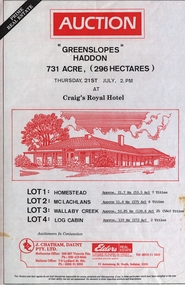
Document - Real Estate Flyers, J. Chatham, Daunt Pty. Ltd, Various years
... emu downs" beaufort..."wattlw grove" mount mercer..."rowan lodge"...centennial hotel kensington..."ben nevis estate" elmhurst..."paddlesteamer lodge" wodonga place albury..."woodlands" ararat...lake wallace hotel, edenhope...cremorne hotel newtown geelong...terang hotel...avoca hotel...woori yallock hotel...ballarat tram family restaurant...victoria hotel woodend...patersons siding restaurant and bar, ballarat...the coorrabin motor inn, stawell...clifton hill...[Jane Dyer (nee Chatham).16 June 2024] j chatham daunt auction "greenslopes" haddon "mindai park" cape clear kingston district the mill restaurant malmsbury "emu downs" beaufort "wattlw grove" mount mercer "rowan lodge" centennial hotel kensington "ben nevis estate" elmhurst "paddlesteamer lodge" wodonga place albury "woodlands" ararat lake wallace hotel, edenhope cremorne hotel newtown geelong terang hotel avoca hotel woori yallock hotel ballarat tram family restaurant victoria hotel woodend patersons siding restaurant and bar, ballarat the coorrabin motor inn, stawell clifton hill hotel, clifton hill albion hotel, kyabram "stag hotel" learmonth "osborne" rokewood shamrock hotel echuca willaura hotel, willaura "boggy creek pub" curdie vale shamrock hotel, dennington "mt elephant hotel/motel" derrinallum narmbool, ballarat brighton inn hotel khyat's posters real estate Hotels. ...The Ballarat-based firm, J Chatham and Co, serviced the Hotel Industry in Victoria, particularly Victoria’s Wimmera and Western Districts. Established by Jack { John} Chatham in 1956, The business was based at 7 Lydiard St South, Ballarat. As a regional hotel and motel broking specialist, Jack worked closely with other Ballarat businesses, including the Ballarat Brewery. On Jack's death in 1967, the business was taken over by his son, Philip, and renamed J Chatham Pty Ltd. The business continued to grow. Chatham House, the building the business operated from, and subsequently purchased and named, at 7 Lydiard St South, Ballarat still stands today. It was renamed by new owners in 2025 In the 1970's Philip opened a Melbourne branch in Dudley St, Nth Melbourne, The Melbourne branch, J Chatham and Daunt Pty Ltd, operated from 205 Victoria Parade, Fitzroy, a few blocks west of the Carlton United Brewery in the 1980s. In the late 1980s Philip's son, Andrew, joined the business, then called J Chatham, Daunt and Foley Pty Ltd. The business at this time operated from a terrace house [?Bouverie Street] Carlton near Grattan St. By 2005, the Daunt and Foley partnership had dissolved. In 2001 Philip predeceased his wife, Elizabeth Chatham (nee Holmes), a Director of the Company. His share of the business was inherited by Andrew. Elizabeth died in 2005. The business was sold in 2006. [Jane Dyer (nee Chatham).16 June 2024]Thirty-one real estate flyers j chatham, daunt, auction, "greenslopes" haddon, "mindai park" cape clear, kingston district, the mill restaurant malmsbury, "emu downs" beaufort, "wattlw grove" mount mercer, "rowan lodge", centennial hotel kensington, "ben nevis estate" elmhurst, "paddlesteamer lodge" wodonga place albury, "woodlands" ararat, lake wallace hotel, edenhope, cremorne hotel newtown geelong, terang hotel, avoca hotel, woori yallock hotel, ballarat tram family restaurant, victoria hotel woodend, patersons siding restaurant and bar, ballarat, the coorrabin motor inn, stawell, clifton hill hotel, clifton hill, albion hotel, kyabram, "stag hotel" learmonth, "osborne" rokewood, shamrock hotel echuca, willaura hotel, willaura, "boggy creek pub" curdie vale, shamrock hotel, dennington, "mt elephant hotel/motel" derrinallum, narmbool, ballarat, brighton inn hotel, khyat's, posters, real estate, hotels., restaurants -
 Flagstaff Hill Maritime Museum and Village
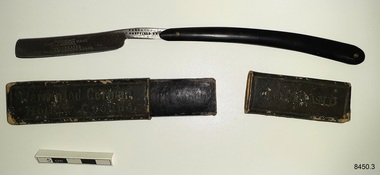
Domestic object - Razor and case, Ford & Medley (F & M), ca 1900-1928
... Hill Maritime Museum and Village...Dr W R Angus...W.R. Angus Collection...personal grooming accessory...razor...shaving accessory...The Wake...The F & M Wake...Hollow Ground razor...Ford & Medley...Sheffield...cutler...electroplater...Emu...Emu Works. The firm's most popular razor was The Arrow. In 1928 the firm closed down. The Ford & Medley razor is now part of Flagstaff Hill’s comprehensive W.R. ...Emu Works. The firm's most popular razor was The Arrow. In 1928 the firm closed down. The Ford & Medley razor is now part of Flagstaff Hill’s comprehensive W.R. ...This straight edge razor, The F & M Wake, was made by Ford & Medley in Sheffield, England. This style or razor was a popular choice for men's shaving in the late 19th and early 20th centuries. Ford & Medley were cutlers by trade and registered their first silver mark in 1900. The firm were also did electroplating. The firm was contracted to the government during World War I. The company was using the trademarks EMU and WIZARD as well as the logo of 'knotted ropes' with the letters "F M"by the end of that war at their factory called Emu Works. The firm's most popular razor was The Arrow. In 1928 the firm closed down. The Ford & Medley razor is now part of Flagstaff Hill’s comprehensive W.R. Angus Collection, donated by the family of Dr W R Angus (1901-1970), surgeon and oculist. The W.R. Angus Collection: - The W.R. Angus Collection includes historical medical equipment, surgical instruments and material belonging to Dr Edward Ryan and Dr Thomas Francis Ryan, (both of Nhill, Victoria) and Dr Angus’ own belongings. The Collection’s history spans the medical practices of the two Doctors Ryan, from 1885-1926 plus that of Dr Angus, up until 1969. It includes historical medical and surgical equipment and instruments from the doctors Edward and Thomas Ryan of Nhill, Victoria. Dr Angus married Gladys in 1927 at Ballarat, the nearest big city to Nhill where he began as a Medical Assistant. He was also Acting House surgeon at the Nhill hospital where their two daughters were born. During World War II Dr Angus served as a Military Doctor. He was a Surgeon Captain for the Australian Defence Forces, Army Medical Corps, stationed in Ballarat, Victoria, and in Bonegilla, N.S.W. He completed his service just before the end of the war due to suffering from a heart attack. Dr Angus and his family moved to Warrnambool in 1939, where Dr Angus operated his own medical practice. He later added the part-time Port Medical Officer responsibility and was the last person appointed to that position. Both Dr Angus and his wife were very involved in the local community, including the planning stages of the new Flagstaff Hill and the layout of the gardens there. Dr Angus passed away in March 1970.This razor is an example of men's shaving equipment used in the early 20th century. It is significant for its association with the local doctor, W.R. Angus. Dr W R Angus (1901-1970), surgeon and oculist, collected a range of military objects including those he personally used during his time as Surgeon Captain in the Australian Defence Forces in World War II. The W.R. Angus Collection is significant for still being located at the site it is connected with, Doctor Angus being the last Port Medical Officer in Warrnambool. The Collection includes historical medical objects that date back to the late 1800s.Razor, cut-throat straight blade razor, in black cardboard box with slide-off lid. Black composition arc shaped handle with pin to attach blade that folds inside the handle. Inscriptions are on handle, blade and case. "The Wake" razor, made by Ford & Medley, Sheffield, England. The pouch belonged to Dr W R Angus and is now part of the W. R. Angus Collection.On razor; "THE F & M WAKE" "CELEBRATED HOLLOW GROUND RAZOR" "FORD & MEDLEY / SHEFFIELD ENGLAND" On case; "WARRANTED GORMAN" "HOLLOW GROUND" Logo on razor [""F" "M" either side of entwined rope symbolflagstaff hill, warrnambool, maritime village, maritime museum, shipwreck coast, great ocean road, flagstaff hill maritime museum and village, dr w r angus, w.r. angus collection, personal grooming accessory, razor, shaving accessory, the wake, the f & m wake, hollow ground razor, ford & medley, sheffield, cutler, electroplater, emu works -
 Greensborough Historical Society
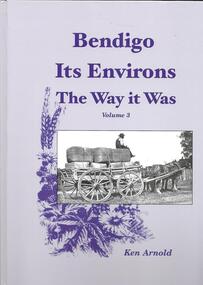
Book, Crown Castleton Publishers, Bendigo Its Environs - the Way it Was. Vol 3 / by Ken Arnold, 2013_
... A brief history of the areas of Strathfieldsaye, Junortoun, Longlea, Axedale, Kimbolton, Redesdale, Lyal, Myrtle Creek, Axe Creek, Eppalock, Emu Creek, Sedgwick, Mandurang, Mandurang South and Diamond Hill....A brief history of the areas of Strathfieldsaye, Junortoun, Longlea, Axedale, Kimbolton, Redesdale, Lyal, Myrtle Creek, Axe Creek, Eppalock, Emu Creek, Sedgwick, Mandurang, Mandurang South and Diamond Hill. bendigo 399 pages, illus. ...A brief history of the areas of Strathfieldsaye, Junortoun, Longlea, Axedale, Kimbolton, Redesdale, Lyal, Myrtle Creek, Axe Creek, Eppalock, Emu Creek, Sedgwick, Mandurang, Mandurang South and Diamond Hill.399 pages, illus. Hard cover.bendigo -
 Orbost & District Historical Society
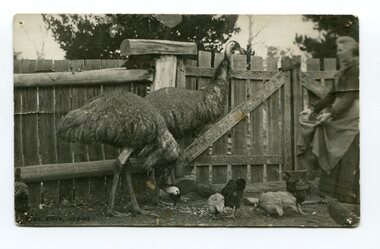
black and white photograph, Segerberg & Bulmer, late 19th century
... Hill. (info. Newsletter 113) Grove-Annie Grove-Carl Two black / white photographs of a woman in a pen feeding two emus and some chickens. black and white photograph Segerberg & Bulmer ...Charles Henry [Carl] Grove died on 17/4/1938 at Box Hill at the age of 88 and was buried in Orbost. Prior to coming to the Snowy River district, Carl worked as overseer on Buchan Station. In 1880, he selected land at Newmerella after first coming here in 1874 with early selector James A Robertson. He married Annie Robertson in 1876. Carl was a farmer, hop and seed grower and nurseryman. He was an elected Councillor of the newly formed Tambo Shire in 1882, and then in 1892 to the Orbost Shire where he served for many years filling various public roles. In 1911, he shifted to Queensland, but later returned to Victoria and died at Box Hill. (info. Newsletter 113)Two black / white photographs of a woman in a pen feeding two emus and some chickens.grove-annie grove-carl -
 Flagstaff Hill Maritime Museum and Village
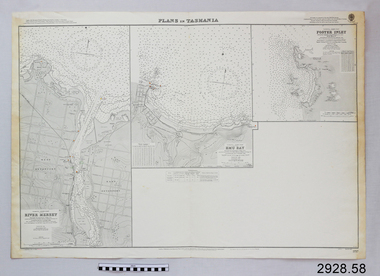
Document - Navigation Chart, Plans in Tasmania - Foster Inlet, River Mersey and Emu Bay
... Hill-Maritime-Village...Shipwrecked-artefact...River Mersey...Foster Inlet...Emu...Warrnambool Shipwrecked-coast Flagstaff-Hill Flagstaff-Hill-Maritime-Museum Maritime-Museum Shipwreck-coast Flagstaff-Hill-Maritime-Village Shipwrecked-artefact River Mersey Foster Inlet Emu Bay Navigation Chart Navigation Chart - Plans in Tasmania - Foster Inlet, River Mersey and Emu Bay Plans in Tasmania - Foster Inlet, River Mersey and Emu Bay Document Navigation Chart ...Navigation Chart - Plans in Tasmania - Foster Inlet, River Mersey and Emu Baywarrnambool, shipwrecked-coast, flagstaff-hill, flagstaff-hill-maritime-museum, maritime-museum, shipwreck-coast, flagstaff-hill-maritime-village, shipwrecked-artefact, river mersey, foster inlet, emu bay, navigation chart -
 Flagstaff Hill Maritime Museum and Village
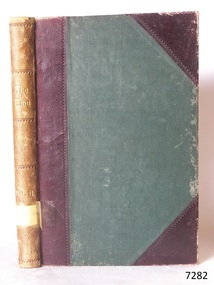
Book, The Emu Vol 2
... hill-maritime-village...shipwrecked-artefact...book...warrnambool library...warrnambool mechanics’ institute...warrnambool city librarian...mechanics’ institute library...victorian library board...warrnambool books and records...warrnambool children’s library...great ocean road...the emu...The Warrnambool Mechanics' Institute’s publication collection is of both local and state significance. shipwrecked-coast flagstaff-hill warrnambool flagstaff-hill-maritime-museum maritime-museum shipwreck-coast flagstaff-hill-maritime-village shipwrecked-artefact book warrnambool library warrnambool mechanics’ institute warrnambool city librarian mechanics’ institute library victorian library board warrnambool books and records warrnambool children’s library great ocean road the emu vol 2 a j campbell h kendall Label on spine with typed text RA 598.2050 EMU Pastedown front endpaper has sticker from Warrnambool Public Library The Emu Vol 2 - 1902-3 A Quarterly Magazine to popularise the Study and Protection of Native Birds Editors A J Campbell and H Kendall Publisher: Walker May & Co Date: 1903 The Emu Vol 2 Book ...This item is from the ‘Pattison Collection’, a collection of books and records that was originally owned by the Warrnambool Mechanics’ Institute, which was founded in Warrnambool in 1853. By 1886 the Warrnambool Mechanics’ Institute (WMI) had grown to have a Library, Museum and Fine Arts Gallery, with a collection of “… choice productions of art, and valuable specimens in almost every branch and many wonderful national curiosities are now to be seen there, including historic relics of the town and district.” It later included a School of Design. Although it was very well patronised, the lack of financial support led the WMI in 1911 to ask the City Council to take it over. In 1935 Ralph Pattison was appointed as City Librarian to establish and organise the Warrnambool Library as it was then called. When the WMI building was pulled down in 1963 a new civic building was erected on the site and the new Warrnambool Library, on behalf of the City Council, took over all the holdings of the WMI. At this time some of the items were separated and identified as the ‘Pattison Collection’, named after Ralph Pattison. Eventually the components of the WMI were distributed from the Warrnambool Library to various places, including the Art Gallery, Historical Society and Flagstaff Hill. Later some were even distributed to other regional branches of Corangamite Regional Library and passed to and fro. It is difficult now to trace just where all of the items have ended up. The books at Flagstaff Hill Maritime Village generally display stamps and markings from Pattison as well as a variety of other institutions including the Mechanics’ Institute itself. RALPH ERIC PATTISON Ralph Eric Pattison was born in Rockhampton, Queensland, in 1891. He married Maude Swan from Warrnambool in 1920 and they set up home in Warrnambool. In 1935 Pattison accepted a position as City Librarian for the Warrnambool City Council. His huge challenge was to make a functional library within two rooms of the Mechanics’ Institute. He tirelessly cleaned, cleared and sorted a disarrayed collection of old books, jars of preserved specimens and other items reserved for exhibition in the city’s museum. He developed and updated the library with a wide variety of books for all tastes, including reference books for students; a difficult task to fulfil during the years following the Depression. He converted all of the lower area of the building into a library, reference room and reading room for members and the public. The books were sorted and stored using a cataloguing and card index system that he had developed himself. He also prepared the upper floor of the building and established the Art Gallery and later the Museum, a place to exhibit the many old relics that had been stored for years for this purpose. One of the treasures he found was a beautiful ancient clock, which he repaired, restored and enjoyed using in his office during the years of his service there. Ralph Pattison was described as “a meticulous gentleman whose punctuality, floorless courtesy and distinctive neat dress were hallmarks of his character, and ‘his’ clock controlled his daily routine, and his opening and closing of the library’s large heavy doors to the minute.” Pattison took leave during 1942 to 1945 to serve in the Royal Australian Navy, Volunteer Reserve as Lieutenant. A few years later he converted one of the Museum’s rooms into a Children’s Library, stocking it with suitable books for the younger generation. This was an instant success. In the 1950’s he had the honour of being appointed to the Victorian Library Board and received more inspiration from the monthly conferences in Melbourne. He was sadly retired in 1959 after over 23 years of service, due to the fact that he had gone over the working age of council officers. However he continued to take a very keen interest in the continual development of the Library until his death in 1969. The Pattison Collection, along with other items at Flagstaff Hill Maritime Village, was originally part of the Warrnambool Mechanics' Institute’s collection. The Warrnambool Mechanics’ Institute Collection is primarily significant in its totality, rather than for the individual objects it contains. Its contents are highly representative of the development of Mechanics' Institute libraries across Australia, particularly Victoria. A diversity of publications and themes has been amassed, and these provide clues to our understanding of the nature of and changes in the reading habits of Victorians from the 1850s to the middle of the 20th century. The collection also highlights the Warrnambool community’s commitment to the Mechanics’ Institute, reading, literacy and learning in the regions, and proves that access to knowledge was not impeded by distance. These items help to provide a more complete picture of our community’s ideals and aspirations. The Warrnambool Mechanics Institute book collection has historical and social significance for its strong association with the Mechanics Institute movement and the important role it played in the intellectual, cultural and social development of people throughout the latter part of the nineteenth century and the early twentieth century. The collection of books is a rare example of an early lending library and its significance is enhanced by the survival of an original collection of many volumes. The Warrnambool Mechanics' Institute’s publication collection is of both local and state significance. The Emu Vol 2 - 1902-3 A Quarterly Magazine to popularise the Study and Protection of Native Birds Editors A J Campbell and H Kendall Publisher: Walker May & Co Date: 1903 Label on spine with typed text RA 598.2050 EMU Pastedown front endpaper has sticker from Warrnambool Public Library shipwrecked-coast, flagstaff-hill, warrnambool, flagstaff-hill-maritime-museum, maritime-museum, shipwreck-coast, flagstaff-hill-maritime-village, shipwrecked-artefact, book, warrnambool library, warrnambool mechanics’ institute, warrnambool city librarian, mechanics’ institute library, victorian library board, warrnambool books and records, warrnambool children’s library, great ocean road, the emu vol 2, a j campbell, h kendall -
 Flagstaff Hill Maritime Museum and Village
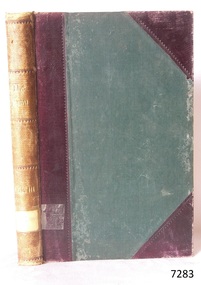
Book, The Emu Vol 3
... Hill-Maritime-Village...Shipwrecked-artefact...Book...Warrnambool Library...Warrnambool Mechanics’ Institute...Warrnambool City Librarian...Mechanics’ Institute Library...Victorian Library Board...Warrnambool books and records...Warrnambool Children’s Library...Great Ocean Road...The Emu...Shipwrecked-coast Flagstaff-Hill Warrnambool Flagstaff-Hill-Maritime-Museum Maritime-Museum Shipwreck-coast Flagstaff-Hill-Maritime-Village Shipwrecked-artefact Book Warrnambool Library Warrnambool Mechanics’ Institute Warrnambool City Librarian Mechanics’ Institute Library Victorian Library Board Warrnambool books and records Warrnambool Children’s Library Great Ocean Road The Emu Vol 3 A J Campbell H Kendall Label on spine with typed text RA 598.2050 EMU Pastedown front endpaper has sticker from Warrnambool Mechanics Institute and Free Library The Emu Vol 3 - 1903-4 A Quarterly Magazine to popularise the Study and Protection of Native birds Editors A J Campbell and H Kendall Publisher: Walker May & Co Date: 1904 The Emu Vol 3 Book ...This item is from the ‘Pattison Collection’, a collection of books and records that was originally owned by the Warrnambool Mechanics’ Institute, which was founded in Warrnambool in 1853. By 1886 the Warrnambool Mechanics’ Institute (WMI) had grown to have a Library, Museum and Fine Arts Gallery, with a collection of “… choice productions of art, and valuable specimens in almost every branch and many wonderful national curiosities are now to be seen there, including historic relics of the town and district.” It later included a School of Design. Although it was very well patronised, the lack of financial support led the WMI in 1911 to ask the City Council to take it over. In 1935 Ralph Pattison was appointed as City Librarian to establish and organise the Warrnambool Library as it was then called. When the WMI building was pulled down in 1963 a new civic building was erected on the site and the new Warrnambool Library, on behalf of the City Council, took over all the holdings of the WMI. At this time some of the items were separated and identified as the ‘Pattison Collection’, named after Ralph Pattison. Eventually the components of the WMI were distributed from the Warrnambool Library to various places, including the Art Gallery, Historical Society and Flagstaff Hill. Later some were even distributed to other regional branches of Corangamite Regional Library and passed to and fro. It is difficult now to trace just where all of the items have ended up. The books at Flagstaff Hill Maritime Village generally display stamps and markings from Pattison as well as a variety of other institutions including the Mechanics’ Institute itself. RALPH ERIC PATTISON Ralph Eric Pattison was born in Rockhampton, Queensland, in 1891. He married Maude Swan from Warrnambool in 1920 and they set up home in Warrnambool. In 1935 Pattison accepted a position as City Librarian for the Warrnambool City Council. His huge challenge was to make a functional library within two rooms of the Mechanics’ Institute. He tirelessly cleaned, cleared and sorted a disarrayed collection of old books, jars of preserved specimens and other items reserved for exhibition in the city’s museum. He developed and updated the library with a wide variety of books for all tastes, including reference books for students; a difficult task to fulfil during the years following the Depression. He converted all of the lower area of the building into a library, reference room and reading room for members and the public. The books were sorted and stored using a cataloguing and card index system that he had developed himself. He also prepared the upper floor of the building and established the Art Gallery and later the Museum, a place to exhibit the many old relics that had been stored for years for this purpose. One of the treasures he found was a beautiful ancient clock, which he repaired, restored and enjoyed using in his office during the years of his service there. Ralph Pattison was described as “a meticulous gentleman whose punctuality, floorless courtesy and distinctive neat dress were hallmarks of his character, and ‘his’ clock controlled his daily routine, and his opening and closing of the library’s large heavy doors to the minute.” Pattison took leave during 1942 to 1945 to serve in the Royal Australian Navy, Volunteer Reserve as Lieutenant. A few years later he converted one of the Museum’s rooms into a Children’s Library, stocking it with suitable books for the younger generation. This was an instant success. In the 1950’s he had the honour of being appointed to the Victorian Library Board and received more inspiration from the monthly conferences in Melbourne. He was sadly retired in 1959 after over 23 years of service, due to the fact that he had gone over the working age of council officers. However he continued to take a very keen interest in the continual development of the Library until his death in 1969. The Pattison Collection, along with other items at Flagstaff Hill Maritime Village, was originally part of the Warrnambool Mechanics' Institute’s collection. The Warrnambool Mechanics’ Institute Collection is primarily significant in its totality, rather than for the individual objects it contains. Its contents are highly representative of the development of Mechanics' Institute libraries across Australia, particularly Victoria. A diversity of publications and themes has been amassed, and these provide clues to our understanding of the nature of and changes in the reading habits of Victorians from the 1850s to the middle of the 20th century. The collection also highlights the Warrnambool community’s commitment to the Mechanics’ Institute, reading, literacy and learning in the regions, and proves that access to knowledge was not impeded by distance. These items help to provide a more complete picture of our community’s ideals and aspirations. The Warrnambool Mechanics Institute book collection has historical and social significance for its strong association with the Mechanics Institute movement and the important role it played in the intellectual, cultural and social development of people throughout the latter part of the nineteenth century and the early twentieth century. The collection of books is a rare example of an early lending library and its significance is enhanced by the survival of an original collection of many volumes. The Warrnambool Mechanics' Institute’s publication collection is of both local and state significance. The Emu Vol 3 - 1903-4 A Quarterly Magazine to popularise the Study and Protection of Native birds Editors A J Campbell and H Kendall Publisher: Walker May & Co Date: 1904 Label on spine with typed text RA 598.2050 EMU Pastedown front endpaper has sticker from Warrnambool Mechanics Institute and Free Library shipwrecked-coast, flagstaff-hill, warrnambool, flagstaff-hill-maritime-museum, maritime-museum, shipwreck-coast, flagstaff-hill-maritime-village, shipwrecked-artefact, book, warrnambool library, warrnambool mechanics’ institute, warrnambool city librarian, mechanics’ institute library, victorian library board, warrnambool books and records, warrnambool children’s library, great ocean road, the emu vol 3, a j campbell, h kendall
