
Showing 729 items matching " family photography"
-
 Glenelg Shire Council Cultural Collection
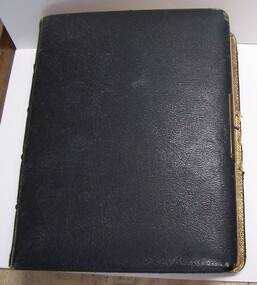
Album - Ward Family Photograph Album, 1890s
... ... family photography...Batson, Portland Ward family records family history family photography Front: (inside cover, label) The Ward family photograph album Dark green leather bound album. ...Displayed in History House. Sign from History House reads: Donated by Miss M. Batson, PortlandDark green leather bound album. Numerous thick gold-edged pages for single photographs.Front: (inside cover, label) The Ward family photograph albumward family records, family history, family photography -
 Wodonga & District Historical Society Inc
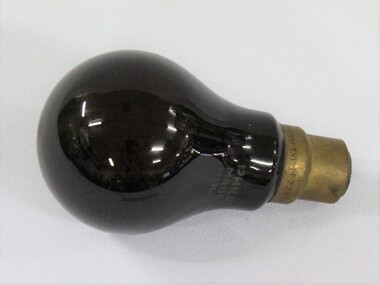
Functional object - Haeusler Collection Photographic Dark Room Light Globe c. early 1900s
... ...family photography...It contributes to our understanding of domestic and family life in early twentieth century Wodonga, as well as providing interpretative capacity for themes including local history and social history. photography photos photographic photographs family photos family photography darkroom photography dark room photography haeusler haeusler collection wodonga On light globe socket "240 V TYP. ...The Wodonga Historical Society Haeusler Collection provides invaluable insight into life in late nineteenth and early twentieth century north east Victoria. The collection comprises manuscripts, personal artefacts used by the Haeusler family on their farm in Wodonga, and a set of glass negatives which offer a unique visual snapshot of the domestic and social lives of the Haeusler family and local Wodonga community. The Haeusler family migrated from Prussia (Germany) to South Australia in the 1840s and 1850s, before purchasing 100 acres of Crown Land made available under the Victorian Lands Act 1862 (also known as ‘Duffy’s Land Act’) in 1866 in what is now Wodonga West. The Haeusler family were one of several German families to migrate from South Australia to Wodonga in the 1860s. This dark room equipment belonged to Louis Haeusler (b.1878) and is one of the many objects in the Haeusler Collection that represent home and social life in early twentieth century Wodonga.This item has well documented provenance and a known owner. It forms part of a significant and representative historical collection which reflects the local history of Wodonga. It contributes to our understanding of domestic and family life in early twentieth century Wodonga, as well as providing interpretative capacity for themes including local history and social history.A black dark room light globe used to produce home photography in the early to mid twentieth century.On light globe socket "240 V TYP. PF 723B / 66GL"/ On glass globe "PHILLIPS MADE IN HOLLANIS"photography, photos, photographic, photographs, family photos, family photography, darkroom photography, dark room photography, haeusler, haeusler collection, wodonga -
 Wodonga & District Historical Society Inc
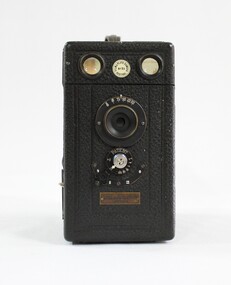
Functional object - Haeusler Collection Camera early 1900s
... ...family photography...It contributes to our understanding of domestic and family life in early twentieth century Wodonga, as well as providing interpretative capacity for themes including local history and social history. photography photos photographic photographs family photos family photography darkroom photography dark room photography wodonga haeusler collection haeusler On front of camera "FILM & PLATE CAMERA AUSTRALIA"/On adjustable settings "5 8 11 16 22 32"/BAKER & ROUSE PTY.LTD AUSTRALIA" Black box shaped camera with carry handle from the early twentieth century Haeusler Collection Camera early 1900s Functional object Haeusler Collection Camera early 1900s ...The Wodonga Historical Society Haeusler Collection provides invaluable insight into life in late nineteenth and early twentieth century north east Victoria. The collection comprises manuscripts, personal artefacts used by the Haeusler family on their farm in Wodonga, and a set of glass negatives which offer a unique visual snapshot of the domestic and social lives of the Haeusler family and local Wodonga community. The Haeusler family migrated from Prussia (Germany) to South Australia in the 1840s and 1850s, before purchasing 100 acres of Crown Land made available under the Victorian Lands Act 1862 (also known as ‘Duffy’s Land Act’) in 1866 in what is now Wodonga West. The Haeusler family were one of several German families to migrate from South Australia to Wodonga in the 1860s. This photographic equipment belonged to Louis Haeusler (b.1878) and is one of the many objects in the Haeusler Collection that represent home and social life in early twentieth century Wodonga.This item has well documented provenance and a known owner. It forms part of a significant and representative historical collection which reflects the local history of Wodonga. It contributes to our understanding of domestic and family life in early twentieth century Wodonga, as well as providing interpretative capacity for themes including local history and social history. Black box shaped camera with carry handle from the early twentieth centuryOn front of camera "FILM & PLATE CAMERA AUSTRALIA"/On adjustable settings "5 8 11 16 22 32"/BAKER & ROUSE PTY.LTD AUSTRALIA"photography, photos, photographic, photographs, family photos, family photography, darkroom photography, dark room photography, wodonga, haeusler collection, haeusler -
 Wodonga & District Historical Society Inc
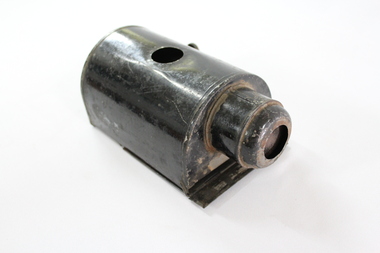
Functional object - Haeusler Collection Photographic Equipment c. early 1900s
... ...family photography...It contributes to our understanding of domestic and family life in early twentieth century Wodonga, as well as providing interpretative capacity for themes including local history and social history. photography photos photographic photographs family photos family photography darkroom photography dark room photography wodonga haeusler haeusler collection Film equipment made from alloy coated with black paint Haeusler Collection Photographic Equipment c. early 1900s Functional object Haeusler Collection Photographic Equipment c. early 1900s ...The Wodonga Historical Society Haeusler Collection provides invaluable insight into life in late nineteenth and early twentieth century north east Victoria. The collection comprises manuscripts, personal artefacts used by the Haeusler family on their farm in Wodonga, and a set of glass negatives which offer a unique visual snapshot of the domestic and social lives of the Haeusler family and local Wodonga community. The Haeusler family migrated from Prussia (Germany) to South Australia in the 1840s and 1850s, before purchasing 100 acres of Crown Land made available under the Victorian Lands Act 1862 (also known as ‘Duffy’s Land Act’) in 1866 in what is now Wodonga West. The Haeusler family were one of several German families to migrate from South Australia to Wodonga in the 1860s. This photographic equipment belonged to Louis Haeusler (b.1878) and is one of the many objects in the Haeusler Collection that represent home and social life in early twentieth century Wodonga.This item has well documented provenance and a known owner. It forms part of a significant and representative historical collection which reflects the local history of Wodonga. It contributes to our understanding of domestic and family life in early twentieth century Wodonga, as well as providing interpretative capacity for themes including local history and social history. Film equipment made from alloy coated with black paintphotography, photos, photographic, photographs, family photos, family photography, darkroom photography, dark room photography, wodonga, haeusler, haeusler collection -
 Wodonga & District Historical Society Inc
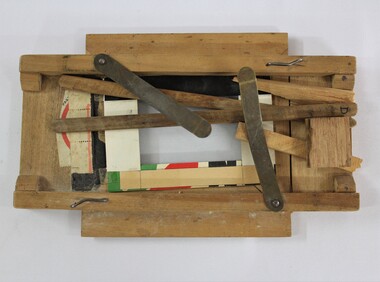
Functional object - Haeusler Collection Hand Made Photograph Printing Frame early 1900s
... ...family photography...It contributes to our understanding of domestic and family life in early twentieth century Wodonga, as well as providing interpretative capacity for themes including local history and social history. photography photos photographic photographs family photos family photography darkroom photography dark room photography printing printing frame wodonga haeusler haeusler collection A handmade photographic printing frame, constructed from timber, paper, nails, glass and sticky tape. ...The Wodonga Historical Society Haeusler Collection provides invaluable insight into life in late nineteenth and early twentieth century north east Victoria. The collection comprises manuscripts, personal artefacts used by the Haeusler family on their farm in Wodonga, and a set of glass negatives which offer a unique visual snapshot of the domestic and social lives of the Haeusler family and local Wodonga community. The Haeusler family migrated from Prussia (Germany) to South Australia in the 1840s and 1850s, before purchasing 100 acres of Crown Land made available under the Victorian Lands Act 1862 (also known as ‘Duffy’s Land Act’) in 1866 in what is now Wodonga West. The Haeusler family were one of several German families to migrate from South Australia to Wodonga in the 1860s. This homemade photographic printing frame was built by Louis Haeusler (b.1878) and demonstrates his engineering capabilities. Rather than purchase the required materials for his home dark room processing, Louis would make any tools he needed from found materials around the Haeusler family home. Louis’ photographic equipment is among the many objects in the Haeusler Collection that represent home and social life in early twentieth century Wodonga. The item is handmade and unique, with well documented provenance. It forms part of a significant and representative historical collection which reflects the local history of Wodonga. It contributes to our understanding of domestic and family life in early twentieth century Wodonga, as well as providing interpretative capacity for themes including local history and social history. A handmade photographic printing frame, constructed from timber, paper, nails, glass and sticky tape. photography, photos, photographic, photographs, family photos, family photography, darkroom photography, dark room photography, printing, printing frame, wodonga, haeusler, haeusler collection -
 Wodonga & District Historical Society Inc
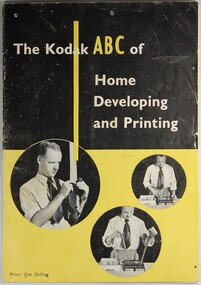
Booklet - Haeusler Collection Kodak Booklet c.1952, The Kodak ABC of Home Developing and Printing
... ...family photography...It contributes to our understanding of domestic and family life in early twentieth century Wodonga, as well as providing interpretative capacity for themes including local history and social history. photography photos photographic photographs family photos family photography darkroom photography dark room photography kodak wodonga haeusler haeusler collection Printed text. ...The Wodonga Historical Society Haeusler Collection provides invaluable insight into life in late nineteenth and early twentieth century north east Victoria. The collection comprises manuscripts, personal artefacts used by the Haeusler family on their farm in Wodonga, and a set of glass negatives which offer a unique visual snapshot of the domestic and social lives of the Haeusler family and local Wodonga community. The Haeusler family migrated from Prussia (Germany) to South Australia in the 1840s and 1850s, before purchasing 100 acres of Crown Land made available under the Victorian Lands Act 1862 (also known as ‘Duffy’s Land Act’) in 1866 in what is now Wodonga West. The Haeusler family were one of several German families to migrate from South Australia to Wodonga in the 1860s. This photographic equipment belonged to Louis Haeusler (b.1878) and is one of the many objects in the Haeusler Collection that represent home and social life in early twentieth century Wodonga. This item has well documented provenance and a known owner. It forms part of a significant and representative historical collection which reflects the local history of Wodonga. It contributes to our understanding of domestic and family life in early twentieth century Wodonga, as well as providing interpretative capacity for themes including local history and social history. Kodak home developing and printing instruction booklet, printed in 1952.Printed text. Printed by "KODAK (AUSTRALIASIA) PTY. LTD.photography, photos, photographic, photographs, family photos, family photography, darkroom photography, dark room photography, kodak, wodonga, haeusler, haeusler collection -
 Wodonga & District Historical Society Inc
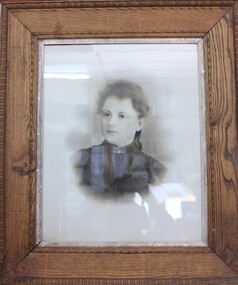
Photograph - Photographic Portrait of Ilma Haeusler early 1900s
... ...family photography...It contributes to our understanding of domestic and family life in early twentieth century Wodonga, as well as providing interpretative capacity for themes including local history, social history, and women’s history. photography photos photographic photographs family photos family photography haeusler collection A black and white photographic portrait of a Ilma Margaret Ernestine Haeusler (née Tasker, b.1900 in Tallangatta) displayed in a thick wooden frame Photographic Portrait of Ilma Haeusler early 1900s Photograph Photographic Portrait of Ilma Haeusler early 1900s ...The Wodonga Historical Society Haeusler Collection provides invaluable insight into life in late nineteenth and early twentieth century north east Victoria. The collection comprises manuscripts, personal artefacts used by the Haeusler family on their farm in Wodonga, and a set of glass negatives which offer a unique visual snapshot of the domestic and social lives of the Haeusler family and local Wodonga community. The Haeusler family migrated from Prussia (Germany) to South Australia in the 1840s and 1850s, before purchasing 100 acres of Crown Land made available under the Victorian Lands Act 1862 (also known as ‘Duffy’s Land Act’) in 1866 in what is now Wodonga West. The Haeusler family were one of several German families to migrate from South Australia to Wodonga in the 1860s. This photograph is of Ilma Margaret Ernestine Haeusler (née Tasker, b.1900 in Tallangatta), mother of Alf Haeusler who was born in 1922. This item has well documented provenance and a known owner. It forms part of a significant and representative historical collection which reflects the local history of Wodonga. It contributes to our understanding of domestic and family life in early twentieth century Wodonga, as well as providing interpretative capacity for themes including local history, social history, and women’s history. A black and white photographic portrait of a Ilma Margaret Ernestine Haeusler (née Tasker, b.1900 in Tallangatta) displayed in a thick wooden framephotography, photos, photographic, photographs, family photos, family photography, haeusler collection -
 Wodonga & District Historical Society Inc
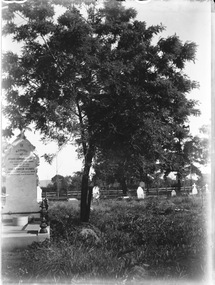
Negative - Haeusler Glass Negatives Collection - Grave of Henry Edward and Anna Emilie Klinge
... haeusler family graves...photography...It contributes to our understanding of domestic and family life in early twentieth century Wodonga, as well as providing interpretative capacity for themes including local history and social history. haeusler family graves photography wodonga pioneers haeusler family german immigration wodonga glass negatives "IN /MEMORY/ of /HENRY EDWARD KLINGE/ WHO DIED 27TH JULY 1900/ AGED 29 YEARS. ...The Wodonga Historical Society Haeusler Collection provides invaluable insight into life in late nineteenth and early twentieth century north east Victoria. The collection comprises manuscripts, personal artefacts used by the Haeusler family on their farm in Wodonga, and a set of glass negatives which offer a unique visual snapshot of the domestic and social lives of the Haeusler family and local Wodonga community. The Haeusler family migrated from Prussia (Germany) to South Australia in the 1840s and 1850s, before purchasing 100 acres of Crown Land made available under the Victorian Lands Act 1862 (also known as ‘Duffy’s Land Act’) in 1866 in what is now Wodonga West. The Haeusler family were one of several German families to migrate from South Australia to Wodonga in the 1860s. This digital image was produced from one of the glass negatves that form part of the collection, probably taken by Louis Haeusler (b.1887) with the photographic equipment in the Wodonga Historical Society Haeusler Collection. This item is unique and has well documented provenance and a known owner. It forms part of a significant and representative historical collection which reflects the local history of Wodonga. It contributes to our understanding of domestic and family life in early twentieth century Wodonga, as well as providing interpretative capacity for themes including local history and social history.Digital image from the Haeusler Glass negative collection. These graves can be found in the Wodonga Cemetery. Henry (Heinrich) Edward and Anna Emilie were children of Johann Wilhelm Klinge (1832 – 1907) who married Christiana Mattiske (1838 – 1918) and who are also buried in the Wodonga cemetery."IN /MEMORY/ of /HENRY EDWARD KLINGE/ WHO DIED 27TH JULY 1900/ AGED 29 YEARS./ALSO HIS SISTER/ ANNA EMILIE KLINGE/ WHO DIED 25TH JANUARY 1868/ AGED 1 YEAR AND 8 MONTHS."haeusler family graves, photography, wodonga pioneers, haeusler family, german immigration wodonga, glass negatives -
 Phillip Island and District Historical Society Inc.
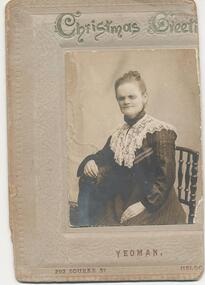
Photograph, Yeoman's, Martha Lock
... ...photography...family...This photograph belonged to the Lock family before being acquired by the Museum. local history photography family of john barnard lock black & white photograph lock family martha lock Black & White Photograph of Martha Lock, eldest daughter of Captain J. ...This photograph belonged to the Lock family before being acquired by the Museum.Black & White Photograph of Martha Lock, eldest daughter of Captain J. B. Lock & Elizabeth, of Rhyll. She was the first girl child born on Phillip Island.local history, photography, family of john barnard lock, black & white photograph, lock family, martha lock -
 Phillip Island and District Historical Society Inc.
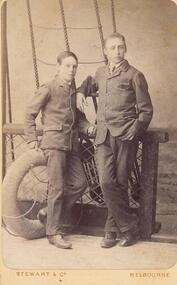
Photograph, Stewart & Co, Lock Family
... ...photography...family...This photograph belonged to the Lock family before being acquired by the Museum. local history photography family of john barnard lock black & white photograph lock family john & george lock Black & White Photograph of John (left) and George (right), sons of Captain John Barnard Lock of Rhyll, Phillip Island. ...This photograph belonged to the Lock family before being acquired by the Museum.Black & White Photograph of John (left) and George (right), sons of Captain John Barnard Lock of Rhyll, Phillip Island.local history, photography, family of john barnard lock, black & white photograph, lock family, john & george lock -
 Phillip Island and District Historical Society Inc.
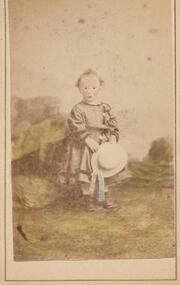
Photograph, John Barnard Lock Jnr
... ...photography...family...This photograph belonged to the Lock family before being acquired by the Museum. local history photography family of john barnard lock coloured photograph lock family john barnard lock jnr Tinted photograph of John Barnard Lock, younger son of Captain John Barnard Lock. ...This photograph belonged to the Lock family before being acquired by the Museum.Tinted photograph of John Barnard Lock, younger son of Captain John Barnard Lock. Very young child.local history, photography, family of john barnard lock, coloured photograph, lock family, john barnard lock jnr -
 Bendigo Historical Society Inc.
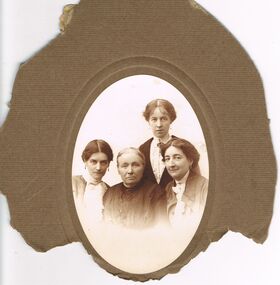
Photograph - LYDIA CHANCELLOR COLLECTION: PORTRAIT
... ... photography... family...PHOTOGRAPH Portrait female group Lydia Chancellor collection women fashion costume person people photograph photo photography family portrait A damaged photograph of four unknown women formally dressed in frocks and lace - the fashion of the day. ...A damaged photograph of four unknown women formally dressed in frocks and lace - the fashion of the day. Date unknown.photograph, portrait, female group, lydia chancellor, collection, women, fashion, costume, person, people, photograph, photo, photography, family, portrait -
 Bendigo Historical Society Inc.
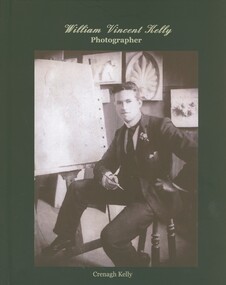
Book - WILLIAM VINCENT KELLY PHOTOGRAPHER
... Family...kelly...Bendigo-Photography-Kelly Family...GENEALOGY Family kelly Bendigo-Photography-Kelly Family Crenagh Kelly William Vincent Kelly Photographer, 75 pages hardcover book of the Vincent family history, with photographs. ...William Vincent Kelly Photographer, 75 pages hardcover book of the Vincent family history, with photographs.Crenagh Kellygenealogy, family, kelly, bendigo-photography-kelly family -
 Tatura Irrigation & Wartime Camps Museum
Photograph, Brady Family
... brady family - 3 photos...photography...brady family - 3 photos photography photograph slides film 3 photographs Brady Family Photograph ...3 photographsbrady family - 3 photos, photography, photograph, slides, film -
 Wodonga & District Historical Society Inc
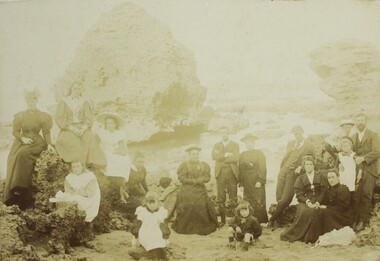
Photograph - Haeusler Collection Photograph Group Portrait by Seaside late 1800s
... ...photography...family...It contributes to our understanding of domestic and family life in early twentieth century Wodonga, as well as providing interpretative capacity for themes including local history and social history. photograph photography family photograph portrait photographic portrait seaside ocean beach victorian wodonga haeusler collection A sepia toned group portrait photograph of people wearing Victorian era clothing at the seaside. ...The Wodonga Historical Society Haeusler Collection provides invaluable insight into life in late nineteenth and early twentieth century north east Victoria. The collection comprises manuscripts, personal artefacts used by the Haeusler family on their farm in Wodonga, and a set of glass negatives which offer a unique visual snapshot of the domestic and social lives of the Haeusler family and local Wodonga community. The Haeusler family migrated from Prussia (Germany) to South Australia in the 1840s and 1850s, before purchasing 100 acres of Crown Land made available under the Victorian Lands Act 1862 (also known as ‘Duffy’s Land Act’) in 1866 in what is now Wodonga West. The Haeusler family were one of several German families to migrate from South Australia to Wodonga in the 1860s. The photographer and subjects of this photograph are unidentified. It belongs to a collection of Haeusler family personal belongings, and is possibly a family photograph. This item is unique and has well documented provenance and a known owner. It forms part of a significant and representative historical collection which reflects the local history of Wodonga. It contributes to our understanding of domestic and family life in early twentieth century Wodonga, as well as providing interpretative capacity for themes including local history and social history.A sepia toned group portrait photograph of people wearing Victorian era clothing at the seaside. photograph, photography, family photograph, portrait, photographic portrait, seaside, ocean, beach, victorian, wodonga, haeusler collection -
 Wodonga & District Historical Society Inc
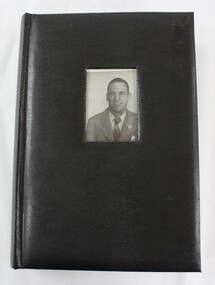
Album - Haeusler Family Photograph Album Mid Twentieth-Century
... ...photography...family...It contributes to our understanding of social and family life in early twentieth century Wodonga, as well as providing interpretative capacity for themes including local history and social history. photograph photographs photography family photos album photograph album haeusler haeusler collection wodonga A black leather photograph album containing family photographs from the early to mid twentieth-century. ...The Wodonga Historical Society Haeusler Collection provides invaluable insight into life in late nineteenth and early twentieth century north east Victoria. The collection comprises manuscripts, personal artefacts used by the Haeusler family on their farm in Wodonga, and a set of glass negatives which offer a unique visual snapshot of the domestic and social lives of the Haeusler family and local Wodonga community. The Haeusler family migrated from Prussia (Germany) to South Australia in the 1840s and 1850s, before purchasing 100 acres of Crown Land made available under the Victorian Lands Act 1862 (also known as ‘Duffy’s Land Act’) in 1866 in what is now Wodonga West. The Haeusler family were one of several German families to migrate from South Australia to Wodonga in the 1860s. This album contains portrait photographs of the Haeusler family in the mid-twentieth century, and images of the town of Wodonga. They were taken by Alf Haeusler (1922-1997). This item has well documented provenance and a known owner. It forms part of a significant and representative historical collection which reflects the local history of Wodonga. It contributes to our understanding of social and family life in early twentieth century Wodonga, as well as providing interpretative capacity for themes including local history and social history.A black leather photograph album containing family photographs from the early to mid twentieth-century.photograph, photographs, photography, family photos, album, photograph album, haeusler, haeusler collection, wodonga -
 Heidelberg Repatriation Hospital
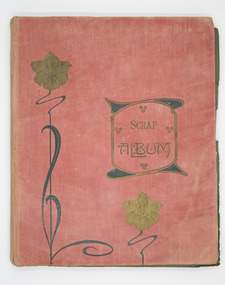
Album - Photograph WWI, c.1913-1916
... Red cloth hard cover photo album with Art Nouveau design on cover and green paper pages, containing black and white photographs from the World War One era of soldiers abroad and family. Some formal studio photography. Subject matter includes: Middle East, France, Egypt, Horses, Zoo visit, well digging, horse in a hammock, hotels and souvenir cards, North Africa, camels, camps, tents, donkeys, ships, portraits, sports teams, Ypres in Belgium, Folkestone UK, Camp at Burrumbeet 1913 and another dated photograph reads 30th May 1916. ...wwi world war one soldiers aif anzac portraits photo albums grand continental cairo jb ballardie william harrigan ypres cairo 54th bn t.s.s. borda la rue au beurre leas bandstand & parade folkestone Cover reads: SCRAP ALBUM Red cloth hard cover photo album with Art Nouveau design on cover and green paper pages, containing black and white photographs from the World War One era of soldiers abroad and family. Some formal studio photography. Subject matter includes: Middle East, France, Egypt, Horses, Zoo visit, well digging, horse in a hammock, hotels and souvenir cards, North Africa, camels, camps, tents, donkeys, ships, portraits, sports teams, Ypres in Belgium, Folkestone UK, Camp at Burrumbeet 1913 and another dated photograph reads 30th May 1916. ...Red cloth hard cover photo album with Art Nouveau design on cover and green paper pages, containing black and white photographs from the World War One era of soldiers abroad and family. Some formal studio photography. Subject matter includes: Middle East, France, Egypt, Horses, Zoo visit, well digging, horse in a hammock, hotels and souvenir cards, North Africa, camels, camps, tents, donkeys, ships, portraits, sports teams, Ypres in Belgium, Folkestone UK, Camp at Burrumbeet 1913 and another dated photograph reads 30th May 1916. Photographs are stuck down onto pages. Cover reads: SCRAP ALBUMwwi, world war one, soldiers, aif, anzac, portraits, photo albums, grand continental cairo, jb ballardie, william harrigan, ypres, cairo, 54th bn, t.s.s. borda, la rue au beurre, leas bandstand & parade folkestone -
 Flagstaff Hill Maritime Museum and Village
Container - Medicine Glass, J.W. Small & Co, early 20th century
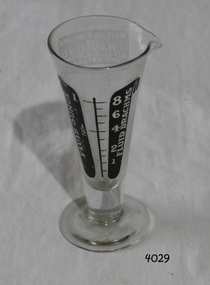
... photography chemicals. The glass was once owned by Dr W R Angus, who practised in Warrnambool in the 20th century. It was donated by members of his family. ...photography chemicals. The glass was once owned by Dr W R Angus, who practised in Warrnambool in the 20th century. It was donated by members of his family. ...This measuring glass for fluids was used mostly used for medicines but could have been used for measuring photography chemicals. The glass was once owned by Dr W R Angus, who practised in Warrnambool in the 20th century. It was donated by members of his family. Dr Angus enjoyed photography amongst other hobbies. The maker, J.W. Small & Co. was a long established camera and photography business Camera Corner, in 270 Little Collins Street, Melbourne. At the 1887 Melbourne Exhibition the company showcased bicycles as well as a wide range of photography equipment including cameras and any other accessories and needs for the amateur photographer. In 1887 the sole proprietor of the business was Mr Herbert Small. The firm offered the service of developing and enlarging pictures. In 1894 the firm advertised as photographic and lantern material manufacturers. There were branches in Adelaide and Sydney also. The company was still in business in the 1920's, when Dr Angus graduated as a doctor and surgeon.The medicine glass is significant for its association with Dr William Roy Angus, who practice medicine in Warrnambool for several decades. He and his wife were heavily involved in the community. Dr Angus was also connected to the maritime history of Warrnambool, being the last Port Medical Officer. The glass is also associated with the Melbourne company J.W. Small &O Co, which was 'long established' in 1887.Medicine glass (dose cup or measuring glass), for measuring fluids. This glass holds 1 fluid ounce. Wide mouth with pouring lip tapers sharply to narrow centre of the base, which has a round flat foot. Black inscriptions are on the side of the glass, showing fluid ounces and fluid drachmas. An opaque label on the back shows maker details. The other side has a label. The glass was made in England for the Australian company J.W. Small & Co. It is part of the W R Angus Collection. "FLUID OUNCES" "FLUID DRACHMS" "MADE IN ENGLAND / FOR / J.W. SMALL & CO / MELBOURNE, SYDNEY AND ADELAIDE"flagstaff hill, warrnambool, shipwrecked-coast, flagstaff-hill, flagstaff-hill-maritime-museum, maritime-museum, shipwreck-coast, flagstaff-hill-maritime-village, measuring glass, dose cup, medical equipment, medicine glass, medication administration, w.r. angus, j.w. small & co, fluid measurment, photography equipment -
 Kew Historical Society Inc
Biographical information, Ronald Horace Setford (1915–1988)
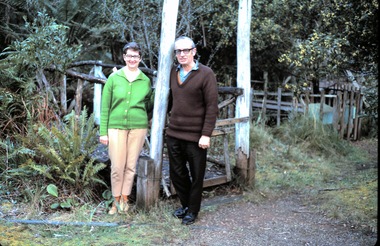
... photography and in the early 1960s he purchased his Minolta camera. Slide evenings at Tanner Avenue were a regular occurrence. Ron made his own title slides, interval slides and end slides. As well as many holiday photos (around Australia and their world trip in 1966), he enjoyed photographing local landmarks, flowers, insects and family. ...photography and in the early 1960s he purchased his Minolta camera. Slide evenings at Tanner Avenue were a regular occurrence. Ron made his own title slides, interval slides and end slides. As well as many holiday photos (around Australia and their world trip in 1966), he enjoyed photographing local landmarks, flowers, insects and family. ...Ronald Horace Setford was born in April 1915 at 18 Church Street, Hawthorn, at his family’s home above their decorator shop. He was the second of three sons born to Horace Turner Setford (1880-1944) and Mabel Crofts (1887-1943). He attended Hawthorn West Primary School and then Swinburne before beginning work in his family’s business ‘Setford and Son’ in October 1930. This was formalised in April 1931 when he became a carpentry and joinery apprentice. In 1934 he graduated as a grade four carpenter. Ron worked in the family business until 1964 and then worked at J S Kidd and Co Pty Ltd as a storeman until his retirement in December 1973. Ron married Grace Muriel Agnes Perrey (1915-2001) in 1936 and they first lived in Kew around 1940, at 38 Marshall Avenue. Ron served in the Citizen Military Forces as a sapper with the 9 Australian Army Transport Company, Royal Australian Engineers, signing up a week after Darwin had been bombed. He spent time in Darwin, Wayville (South Australia), Herberton and Grovely (Queensland). Afterwards he refused to eat rice, never spoke of the war, nor took part in any ANZAC day proceedings. In 1941, Ron and Grace bought their block of land at 9 Tanner Avenue, East Kew, part of the Old Golf Links Estate, for £225. It was not until December 1945 that Ron started building their home and they moved in during May 1947. Ron and Grace remained there for thirty-seven years until the house was sold to their nephew in 1984. It has since been demolished. Ron’s great passion was photography and in the early 1960s he purchased his Minolta camera. Slide evenings at Tanner Avenue were a regular occurrence. Ron made his own title slides, interval slides and end slides. As well as many holiday photos (around Australia and their world trip in 1966), he enjoyed photographing local landmarks, flowers, insects and family. One of Ron’s photography projects was to record the progress of the building of the Eastern Freeway. This was near their home, and he’d walk down to the works on a regular basis, dressed smartly, with his camera in hand. The workers thought he was an official photographer, and he was allowed on site to take his photos. In 1984, Ron and Grace downsized and moved to Bayswater. Ron passed away on 31 October 1988 at the Maroondah Hospital in Ringwood East, at age 73. His ashes were spread on his beloved rose bushes at Tanner Avenue. Lauren Thomson, 2025ron setford, 9 tanner avenue -- kew east (vic, setford and son -- 18 church st (hawthorn), grace muriel agnes perrey, 9 australian army transport company, j s kidd and co pty ltd, eastern freeway, f19 freeway -
 Melton City Libraries
Photograph, Edna Barrie, 1920, 1924, 1933 and 1940
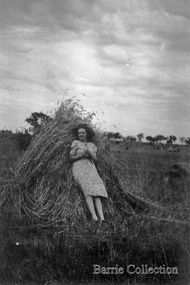
... This began her interest in photography documenting family life at their “Burnbank” home. ...This began her interest in photography documenting family life at their “Burnbank” home. ...SUMMARY - Edna (Myers) Barrie, 1918 – 2018, Profile Early Life Edna was born at Melton and delivered by Hannah Watts. Her mother Martha walked in the dark at night with her basket under her arm to the bridge over the Toolern Creek Bridge and into Sherwin Street to the corner of Yuille Street to Hannah’s house Lynch Cottage. Martha’s husband was away shearing and eventually heard the news of the birth of their blue eyed third child and second daughter. She was born into a family that was surrounded by music; her father played the “squeeze box” and mother the mouth organ. From an early age the family were aware of the great composers, a framed picture of Beethoven, Chopin, Schubert and Wagner hung above the door to the lounge room of their 4 roomed cottage, the room where the piano stood. Her life on stage started as a singer aged 6 years at the Melton Mechanics Institute Hall. Edna was born with a natural ear for music learning piano and singing from her older sister Marjorie who became an accomplished pianist and soloist and renowned music teacher in Melton and district. In the 1920s and 1930s concerts at the Melton Mechanics Institute were regular events were the local talent was fostered. The Myers children, like other children of Melton and Rockbank, studied singing, piano and elocution, sat examinations, entered in competitions in South Street Ballarat, Footscray and Melbourne. In 1929 a Sacred Concert was broadcast by 3AR from the Hall as part of the Back to Melton Celebrations. Marjorie Myers performed two of the items on the piano. Edna attended Melton State School 430 from 1924 – 1933. Her father Fred had also attended the same school. In 1924 the School staged Cinderella at the Melton Mechanics Institute Hall with a cast of 33 students. After completing her education a Melton she boarded in South Melbourne and attending Melbourne Girls High School (MacRobertson Girls High School), a school which recognized her musical attributes. She travelled home on the train on the weekends, sometimes getting off at Rockbank to save a few pennies in fares. Working life The early 1930s the Depression was a difficult time for a young woman to find work. Jobs were often menial and given to the youngest and therefore cheapest applicant. She worked as sales assistant at Polonskis and Myer in the city, and Irvines Modes in Footscray. Working to 1pm on Saturday, and when held up by a customer meant missing the train home. While at Myer Department store she lived at home and rode her bike to the Melton railway station. On one occasion she had a nasty fall when a part of her bicycle came loose causing the bike to crash rendering her concussed and injuring her nose. During the 1930s she was given a camera “a little snap” by Mrs Kelly her landlady. This began her interest in photography documenting family life at their “Burnbank” home. Musically, while at Myers she participated in annual performances held at The Kings Hall and the Myer Mural Hall. Working in the basement at Myers she was often embarrassed when her name was called, customers assuming she belonged to the Myer Family. Ken Myer worked in the basement at the same time handling the ‘Wheeler’, a wicker basket used for moving goods around the store. The family philosophy was for the children to start at the bottom and work their way up. Social life Social life in her teenage years was connected also with Scots Presbyterian Church. She attended Sunday School classes and received book prizes for attendance. She loved to read and welcomed the times when she received new book. She took part in the Sunday School Anniversaries and was presented with a Bible from the Superintendent, Henry Robinson for her assistance with the music. Marriage and War years In 1941 Edna married Ernest “Bonnie” Barrie. War in the Pacific was soon to break out. While in Sydney on their honeymoon they met up with Jim Barrie who was on his way to Canada via Hawaii just missing Pearl Harbour by two days. Jim became a Spitfire Pilot and joined the RAF and was based in England. He returned to Australia later in RAAF to fight the Japanese off the coast of New Guinea. The three eldest Barrie brothers were farmers and food producers and were thus except from military service. Edna and Bon were members of the VAOC- Volunteer Air Observers Corp entailing being rostered on duty as plane spotters. The women took shifts during the day and the men at night which involved staying overnight in the Shire Offices. Later the spotting tower was built in the plantation opposite the Post Office. Edna and Bon carried on with this from their home in Ferris Rd when the threat of invasion had ceased Community life Community life in Melton revolved around fund raising events for the Melton Mechanics Institute for the War effort and keeping up with maintenance for the Hall. In 1944 the Minister for Health gave approval for the Shire of Melton to open and Infant Welfare Centre inviting Edna to form part of the Committee with seven other women. In 1948 she was President of Melton Branch of the Victorian Health Centres Association. She volunteered this use of her car driving the person in charge, Sister Smith to visit mothers and their babies. In 1963, along with Betty Jones and Isabel Snell, Edna was instrumental in forming the 1st Melton Cub Pack and later supported the formation of the 1st Melton Scouts. During 1963 – 1968 she completed the Australian Boy Scout Association Cub Pack Preliminary Training and achieved her Wood Badge. Country Women’s Association In 1944-1996 she was a member of the Melton Branch Country Women’s Association (CWA), Melton Branch, Secretary of the Branch in 1945 – 1946 and Branch International Secretary 1970-1971. She worked with choir, music and drama interest groups within the branch attaining both first and second place in 1959, second place in 1952 Exhibition and second in Music in 1960 in the state. She was involved in their handicraft craft events, fund raising and musical events and singing competitions. During the 1950s she trained Trios and Quartets in part singing for the CWA competitions in Ballarat and Melbourne. It was at this time that she developed her skill as a conductor and trainer of choirs. She later auditioned for the Victorian Choir for alto parts believing she would stand a better chance of being chosen, because of her ability to sing in natural harmony. In 1962 she participated in the Tenth Australian Country Women of the World (ACWW) Triennial Conference “Australia Presents: CWA Massed Choir” in the Melbourne Town Hall. This event was recorded by Super Sound Spotlight on 45 extended play vinyl record. The songs were Australian music and words, for example The Silver Stars are in the Sky, The Graceful Swaying Wattle and Kookaburra. Edna continued with her interest in the Victorian Choir regularly meeting at the CWA Headquarters in Toorak for rehearsals. In 1974 she took part in the Australian Choir at the fourteenth Triennial conference of the ACWW Interfaith Service held at the Perth Concert Hall on the 13th of October. Arts and Culture Edna was also in the Choir of 3KZ Carols by Candlelight at the Myer Music Bowl in 1963 and 1964. Melton Choral Society. Edna was Director and Conductor in the 1970s performing at many community events such as Carols by Candle Light, Church Services, Easter and Palm Sunday services, Mothers Union and the 1976 Community Services Week Combined Church Service. The October – November 1978 Program covered the following: songs from the Musicals, Choral and Solo with Narratives, Guest Instrumental Item, Recitation Negro Spirituals and Australian Songs. Her involvement with church choirs included the Scots Presbyterian Church Choir Easter and Christmas performances and the 1967 Centenary Service. In 1980s the Melton Uniting Church Sacred Music Performances included The Crucifixion by Stainer, The Olivet to Calvary and other church Hymns. Edna was Musical Director of the Melton Amateur Theatrical Society and worked on performances in collaboration with Mabel Rogers on script and musical interpretation. Melton and District Historical Society Annual Art and Craft Show. First held in Melton Mechanics Institute Hall in 1973, it later took place in the in the Melton Community Hall. The Art Show was also run in conjunction with other community organizations such as Rotary and Girl Guides. Community history and research Melton streetscape and society Over 20 years commencing in the 1970s, Edna undertook extensive photographing of the changing streetscape of Melton’s High Street. She anticipated the impact of change on the community during the time of Melton’s rapid transition from a small farming district to a large urban community and this led to her extensively document and photograph many of the structures and landscape features of the township that have since been lost. She also meticulously recorded much of the contemporary life of the town and has left a significant legacy of archival material. Melton State School 100 Years Celebration, October 1970 Co-author with Mabel Rogers “The First 100 Years, 1870 – 1970” Assembled a collection of School Class Photograph and identified and compiled lists of names for future school history. She also assembled a photographic display for the 125th anniversary in 1995. Melton and District Historical Society (M&DHS) Foundation Member, 1968 Held President and Secretary positions from its inception Research associated with the classification of Heritage buildings Christ Church Classification C Scots’ Presbyterian Church Classification D Set up the storage and Catalogue system in the Office at the Willows Organised society visits to Heritage sites in and beyond the Shire of Melton, including Stathtulloh, Eynesbury, Deanside, ToolernVale sites including Merrywood (now demolished) Staughton Vale, Chirnside, Point Cook, Shwerkolts Cottage. 1970 – 1983 Melton and District Historical Society Letterhead. Staughton Memorial Light from early newspaper cutting in its location before restoration to present location. Sketch by Wendy Barrie. Designing and printing pamphlets, stationery, and other sale items with Willows title. M&DHS street naming research for new housing developments (1970 – 2000). Collaborated with Mary Tolhurst to research the names of early landowners and pioneer families connected to the first settlers. Researched Aboriginal names for inclusion on lists submitted to developers. An early example is the naming of Kuranjang and the street names associated with the McPherson family. Plains of Promise (Shire of Melton history) by Joan Starr (1985). Edna assisted with Historical Society materials and contributed her own research and photographs. Contacted and organised for Hubert Opperman to launch the book. (She was also present at his last bike ride at Rochester in 1995.) Western Metropolitan Groups of Historical Societies. Member attending meetings and representing Melton, also hosted the Group at Melton The Willows Member of the Committee of Management for the restoration of the “Willows” house the establishment of The Willows Park 1982 March - Official Opening of the Willows Park- Preparation and planning for the event. Involved in the collecting of items in the furnishing of the display rooms in the Willows house. Donated items and furniture from the Myers and Daley family houses. (19th century) Machinery Shed Establishment. Involved with Jeff Robinson in the construction and collection of machinery display Other significant sites Championed and participated in the restoration and preservation significant sites in Melton, including: restoration of the Staughton Memorial Light and its return to its present site restoration of the Pykes Grave (using EW Barrie earthmoving equipment) restoration and reconstruction of Dunvegan restoration and reconstruction of Macs Cottage, the management and Caretakers residence Melton State School War Memorial Gates removed from Unitt Street entrance and relocated to the Willows Park Donated the Barrie family single furrow plough which was standing at the Court House Plaza. It removed and to Council Depot and later missing. The plaque was taken to the Willows. Jimmy Melrose (aviator) cairn restoration at crash site in Melton South Donald Mackintosh (Olympic gold medallist marksman) grave site at the Melton Cemetery (Historical items held by the Myers family collection.) Houdini first flight at Diggers Rest. Edna’s father was shearing at Diggers Rest at the time and witnessed the flight. She attended the 90 year anniversary of the event at the site in 2000. Radio and electronics Edna’s husband Bon interest in wireless communication dates in the 1920s with the building of a crystal set in the early days of public broadcasting. At the Back to Melton Celebrations in 1929, 3AR broadcast a concert from the Melton Mechanics Institute on the 20th February at 8pm featuring Footscray City Band, James Hill baritone, Vera Carew Soprano, James Foran Tenor, Marjorie Myers Piano, and James Williamson Entertainer. Accompanists: Miss Agnes Ross and Mrs James Hill. The Myers children had recordings of their piano playing made onto the aluminium records, Martha Myers’ voice can be heard introducing an item. These were made in a studio in Melbourne. Marjorie was given a upright Gramophone by Donald Mackintosh in recognition of her talent and her contribution to the cultural life of Melton. The family were then able to listen to 78rpm recordings of the famous classical recordings. The turntable was hand wound metal stylus needles had to be regularly replaced. The aluminium disk needed a bamboo needle to prevent damage to the surface. Before electricity was introduced to Melton in 1939 the Mechanics Hall relied on generators to produce electricity. Bon Barrie, being mechanically minded, built a public address system for be used a community functions at the Hall and Recreational Park. By 1939 this was up and running and used for over three decades. A large Collection of 78rpm records provided music for dances, marching, parades and any public event needing music and microphones. The early system was portable and worked on batteries. CFA Radio Communication In the 1950s with the introduction two-way HF and later VHF very high frequency radio sets. Melton Rural Fire Brigade was part of the Bacchus Marsh Group. Radio sets where located in the Melton Fire Truck, and in the house of the Barrie family at Ferris Road. This was an ideal location to observe a 360 degree view in all directions when smoke appeared on the horizon. An antenna was erected beside the house. The set OX 7 was located in the kitchen and monitored 24 hours by the family. When an electrical fire occurred at the junction of the electricity to the house there was time to radio the fire station and summons the men working in the paddocks, thus saving the house from possible destruction. With the introduction of UHF – ultra high frequency Vinten Radios the signal was clearer and static and interference lessened and radio traffic became easier to read, and reduced noise levels in the household. VL3 LY Radio Base became the Group Headquarters was established in 1967. By 1970 the Brigades were: Melton, Rockbank, Sydenham, Toolern Vale, Diggers Rest, Truganina, and Werribee. In 1974 when the family moved to First Avenue, another antenna and a small building were erected adjacent to the residence and used to house the equipment, maps. Radio traffic consisted of regular schedule times and communication with adjoining groups of brigades such as Bacchus Marsh, Mt Macedon and Little River Groups. Many of the brigade and group base radios were situated in private residences and operated primarily by fire fighters wives who held the position of Communications Officer, either registered as a brigade member or informally. Edna was never registered as an operational brigade member but operated informally as an assistant to her husband Bon. She was however a member of the Melton Fire Brigade Ladies Auxiliary from its inception in 1968, a non-operational position. Edna kept up to date with radio procedure following the 1967 handbook; preparing maps, plotting compass points and taking notes on weather forecasts from the SA Border and Western District. Daily notes were taken in anticipation of fire warnings. These log books and daily radio traffic were incidental to the regular radio schedules. Emergency turnouts noted, burning off times and predicted location of smoke. In the summer fire season all TBF (total fire ban days were recorded.) In times of emergency the Barrie family assisted Bon the base radio operator to plot the position and location of fire trucks and to help clarify garbled radio traffic, keep notes and make telephone calls. These log books are held in the EE and EW Family Archive. Melton Uniting Church Edna founded the Church Opportunity with Maisie Robinson in 1975 in the Melton South Methodist Church building. Methodist and Presbyterian Churches of Melton had combined severing their long held connection with Bacchus Marsh. A Manse had been recently built for the Melton Minister. At a Parish Committee meeting at the Melton South Church it was suggested to use the building as an Opportunity Shop. It opened in July 1975, and it raised $1,600 contribution to the church budget in 1976. In 1977 The Uniting Church in Australia was formed and the Melton South Uniting Church Opportunity shop continued to go from strength to strength expanding the buildings providing the welfare needs of the community. Archive Set up by Edna Catalogued items dating from 1857 Minute Book and set ongoing system and storage of items of heritage. Melton Un Awards and recognition of service to the Melton community Rotary Award for Community Service, 1980 Victoria 150th Anniversary Celebrations contributions, 1985 Life Membership of the Melton and District Historical Society (M&DHS), 1989 Extra-Ordinary Contribution for years of service to M&DHS, 1992 Long Service for Exceptional Service MD&HS, 1993 Royal Historical Society of Victoria Award of Merit, 1997 Shire of Melton Certificate of Appreciation for continued support and dedication as a member of MD&HS to the preservation of Melton’s History, 1998 Centenary of Federation Peoplescape (Canberra) Melton Shire nomination, 2001 Uniting Church Melton Life Membership of the Opportunity Shop Uniting Church in Australia Commission for Mission for 30 years of hard work and dedications to the Uniting Church, 2007 Uniting Church Adult Fellowship Certificate appreciation in recognition of valuable support through the “Sammy” Stamp Fund Neighbourhood Watch 5 year award Photographs of Edna at different ageslocal identities -
 Flagstaff Hill Maritime Museum and Village
Postcard - Coastal Scene, Joseph Jordan Photographic Studio, Breakwater, Warrnambool, circa 1907
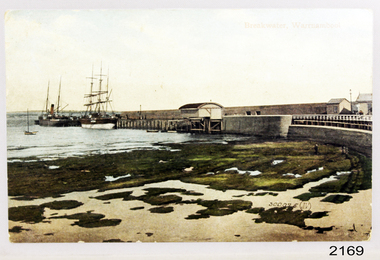
... He resigned from the army in 1889 and set up a professional photography studio in Liebig Street, Warrnambool. He became very well known in the Western District for family photographs, official photographs of local councillors and groups as well as views of local scenery. ...He resigned from the army in 1889 and set up a professional photography studio in Liebig Street, Warrnambool. He became very well known in the Western District for family photographs, official photographs of local councillors and groups as well as views of local scenery. ...The Port of Warrnambool - In the early years the Port of Warrnambool was a busy port. Steamships and sailing ships were frequent visitors to the port. Steam navigation companies were plentiful, carrying passengers and freighting cargo such as coal, timber, food, livestock, furniture, hardware and haberdashery between Melbourne and the ports along the southwest coast of Victoria, including Warrnambool. The carts would take their loads into the township for distribution. The Breakwater was built (using 32 ton blocks of concrete) between 1874 and 1890 to provide ships with greater protection from the Southern Ocean. The Lifeboat and Rocket House - The coastline of South West Victoria has had over 600 shipwrecks and many lost lives; even in Warrnambool’s Lady Bay there were around 16 known shipwrecks between 1850 and 1905, with eight lives lost. In 1859 the first Government-built lifeboat arrived at Warrnambool Harbour and a shed was soon built to house it, followed in 1864 by a rocket house to safely store the Rocket Rescue equipment. In 1878 the buildings were moved to the Breakwater area, and in 1910 the new Lifeboat Warrnambool arrived with its ‘self-righting’ design. For almost one hundred years the lifeboat and rocket crews, mostly local volunteers, trained regularly to maintain and improve their skills, summoned when needed by alarms, gunshots, ringing bells and foghorns. Some became local heroes but all served an important role. By the end of the 1950s the lifeboat and rescue equipment had become obsolete. Joseph Jordan - Joseph Jordan was born in 1841 in Leicester England. When he was 16 he joined the 7th Queen's Own Hussars and was sent to India at the outbreak of the mutiny. He took part in the relief of Lucknow and remained in India for eleven years. It was during this time, he became interested in photography. He was posted to New Zealand and later came to Victoria, becoming a sergeant major of the Mounted Rifles. In the mid 1880s he came to the Western district where he was responsible for establishing units of the Mounted Rifles in various country towns such as Dunkeld, Mortlake, Panmure, Bushfield, Koroit etc. He resigned from the army in 1889 and set up a professional photography studio in Liebig Street, Warrnambool. He became very well known in the Western District for family photographs, official photographs of local councillors and groups as well as views of local scenery. In 1891 he photographed the wrecked barque "Fiji" at "Wrecks Beach" near Princetown. His business was taken over by his son Arthur around 1917. Joseph was a keen rifle shot and in 1924 he donated the "Jordan Shield" as a prize to the Victorian Rifle Association. He was made a "Life Honorary Member" of the Warrnambool Returned Soldiers League and in 1933 he was recognised as being the oldest living soldier in Victoria. Joseph died in 1935 aged 95. Valentine Publishing Company Pty. Ltd. Valentine and Sons was a printing and photography business based in Dundee, Scotland and Canada. In the early 1900's, at the height of the postcard craze, they published large numbers of postcards in the U.K., Canada, U.S., Australia and South Africa. Valentine postcards have a 6 digit serial number on the view side with the initials "J. V." in a circle adjacent to the number. The 300,000's related to views of Australia. From around 1900 (or earlier) the firm bought many images for their postcards from local and national photographers who sold publishing rights to Valentines.This postcard is significant for its association with the Port of Warrnambool and the Warrnambool Breakwater as it shows a point in time when shipping activities were an important part of Warrnambool's commerce and social development. It is also a record of the Warrnambool Lifeboat and Rocket house which was important in aiding ordinary citizens, harbour employees and the volunteer boat and rescue crew in saving the lives of sailors and passengers due to the high number of shipwrecks that occurred along the coastline. Joseph Jordan is a significant figure in Warrnambool history as he helped to establish early units of the Mounted Rifles (G Company) in local towns during the late 1880's and later, photographed local scenes, groups and citizens of early Warrnambool. It is also a culturally significant example of the type of postcards that were very popular in the early part of the 20th century.Photograph of breakwater from beachFront of card - Breakwater, Warrnambool / 300,025 J.V [in a circle] Back of card - POSTCARD / VALENTINE'S SERIES / - This space may be used for communication / The address only to be written here - Miss Alice Griffen / Howard St / Warrnambool - How are you enjoying your holiday we are grand. / from / Dodo, Dodo, Dodo with love - Leura? / Marjory Craig? / BL006 / R99A / REG NO 2169flagstaff hill, warrnambool, shipwrecked-coast, flagstaff-hill, flagstaff-hill-maritime-museum, maritime-museum, photograph, warrnambool breakwater, breakwater, shipwreck-coast, flagstaff-hill-maritime-village, warrnambool harbour, postcard, joseph jordan, valentine and sons, valentine publishing company, lady bay, life boat house, rocket house, steam ship, barque, jordan photography -
 Flagstaff Hill Maritime Museum and Village
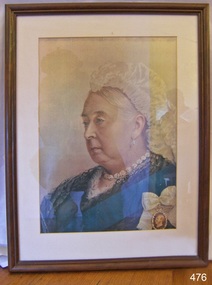
Print - Portrait of Queen Victoria, Hoy Art Picture Framing, Original probably painted in 1887 or 1897 to commemorate 50 or 60 years on the throne
... Victoria and her family travelled and were seen on an unprecedented scale, thanks to transport improvements and other technical changes such as the spread of newspapers and the invention of photography. ...Victoria and her family travelled and were seen on an unprecedented scale, thanks to transport improvements and other technical changes such as the spread of newspapers and the invention of photography. ...Queen Victoria was born at Kensington Palace, London, on 24 May 1819. She was the only daughter of Edward, Duke of Kent, the fourth son of George III. Her father died shortly after her birth and she became heir to the throne because the three uncles who were ahead of her in the succession - George IV, Frederick Duke of York, and William IV - had no legitimate children who survived. Warmhearted and lively, Victoria had a gift for drawing and painting; educated by a governess at home, she was a natural diarist and kept a regular journal throughout her life. On William IV's death in 1837, she became Queen at the age of 18. Queen Victoria is associated with Britain's great age of industrial expansion, economic progress and, especially, empire. At her death, it was said, Britain had a worldwide empire on which the sun never set. In the early part of her reign, she was influenced by two men: her first Prime Minister, Lord Melbourne, and then her husband, Prince Albert, whom she married in 1840. Both men taught her much about how to be a ruler in a 'constitutional monarchy, in which the monarch had very few powers but could use much influence. Albert took an active interest in the arts, science, trade and industry; the project for which he is best remembered was the Great Exhibition of 1851, the profits from which helped to establish the South Kensington museums complex in London. Her marriage to Prince Albert produced nine children between 1840 and 1857. Most of her children married into other Royal families in Europe. Edward VII (born 1841), married Alexandra, daughter of Christian IX of Denmark. Alfred, Duke of Edinburgh and of Saxe-Coburg and Gotha (born 1844) married Marie of Russia. Arthur, Duke of Connaught (born 1850) married Louise Margaret of Prussia. Leopold, Duke of Albany (born 1853) married Helen of Waldeck-Pyrmont. Victoria, Princess Royal (born 1840) married Friedrich III, German Emperor. Alice (born 1843) married Ludwig IV, Grand Duke of Hesse and by Rhine. Helena (born 1846) married Christian of Schleswig-Holstein. Louise (born 1848) married John Campbell, 9th Duke of Argyll. Beatrice (born 1857) married Henry of Battenberg. Victoria bought Osborne House (later presented to the nation by Edward VII) on the Isle of Wight as a family home in 1845, and Albert bought Balmoral in 1852. Victoria was deeply attached to her husband and she sank into depression after he died, aged 42, in 1861. She had lost a devoted husband and her principal trusted adviser in affairs of state. For the rest of her reign she wore black. Until the late 1860s she rarely appeared in public; although she never neglected her official Correspondence, and continued to give audiences to her ministers and official visitors, she was reluctant to resume a full public life. She was persuaded to open Parliament in person in 1866 and 1867, but she was widely criticised for living in seclusion and quite a strong republican movement developed. Seven attempts were made on Victoria's life, between 1840 and 1882 - her courageous attitude towards these attacks greatly strengthened her popularity. With time, the private urgings of her family and the flattering attention of Benjamin Disraeli, Prime Minister in 1868 and from 1874 to 1880, the Queen gradually resumed her public duties. In foreign policy, the Queen's influence during the middle years of her reign was generally used to support peace and reconciliation. In 1864, Victoria pressed her ministers not to intervene in the Prussia-Denmark war, and her letter to the German Emperor (whose son had married her daughter) in 1875 helped to avert a second Franco-German war. On the Eastern Question in the 1870s - the issue of Britain's policy towards the declining Turkish Empire in Europe - Victoria (unlike Gladstone) believed that Britain, while pressing for necessary reforms, ought to uphold Turkish hegemony as a bulwark of stability against Russia, and maintain bi-partisanship at a time when Britain could be involved in war. Victoria's popularity grew with the increasing imperial sentiment from the 1870s onwards. After the Indian Mutiny of 1857, the government of India was transferred from the East India Company to the Crown, with the position of Governor-General upgraded to Viceroy, and in 1877 Victoria became Empress of India under the Royal Titles Act passed by Disraeli's government. During Victoria's long reign, direct political power moved away from the sovereign. A series of Acts broadened the social and economic base of the electorate. These acts included the Second Reform Act of 1867; the introduction of the secret ballot in 1872, which made it impossible to pressurise voters by bribery or intimidation; and the Representation of the Peoples Act of 1884 - all householders and lodgers in accommodation worth at least £10 a year, and occupiers of land worth £10 a year, were entitled to vote. Despite this decline in the Sovereign's power, Victoria showed that a monarch who had a high level of prestige and who was prepared to master the details of political life could exert an important influence. This was demonstrated by her mediation between the Commons and the Lords, during the acrimonious passing of the Irish Church Disestablishment Act of 1869 and the 1884 Reform Act. It was during Victoria's reign that the modern idea of the constitutional monarch, whose role was to remain above political parties, began to evolve. But Victoria herself was not always non-partisan and she took the opportunity to give her opinions, sometimes very forcefully, in private. After the Second Reform Act of 1867, and the growth of the two-party (Liberal and Conservative) system, the Queen's room for manoeuvre decreased. Her freedom to choose which individual should occupy the premiership was increasingly restricted. In 1880, she tried, unsuccessfully, to stop William Gladstone - whom she disliked as much as she admired Disraeli and whose policies she distrusted - from becoming Prime Minister. She much preferred the Marquess of Hartington, another statesman from the Liberal party which had just won the general election. She did not get her way. She was a very strong supporter of the Empire, which brought her closer both to Disraeli and to the Marquess of Salisbury, her last Prime Minister. Although conservative in some respects - like many at the time she opposed giving women the vote - on social issues, she tended to favour measures to improve the lot of the poor, such as the Royal Commission on housing. She also supported many charities involved in education, hospitals and other areas. Victoria and her family travelled and were seen on an unprecedented scale, thanks to transport improvements and other technical changes such as the spread of newspapers and the invention of photography. Victoria was the first reigning monarch to use trains - she made her first train journey in 1842. In her later years, she became the symbol of the British Empire. Both the Golden (1887) and the Diamond (1897) Jubilees, held to celebrate the 50th and 60th anniversaries of the Queen's accession, were marked with great displays and public ceremonies. On both occasions, Colonial Conferences attended by the Prime Ministers of the self-governing colonies were held. Despite her advanced age, Victoria continued her duties to the end - including an official visit to Dublin in 1900. The Boer War in South Africa overshadowed the end of her reign. As in the Crimean War nearly half a century earlier, Victoria reviewed her troops and visited hospitals; she remained undaunted by British reverses during the campaign: 'We are not interested in the possibilities of defeat; they do not exist.' Victoria died at Osborne House on the Isle of Wight, on 22 January 1901 after a reign which lasted almost 64 years, then the longest in British history. Her son, Edward VII succeeded her. She was buried at Windsor beside Prince Albert, in the Frogmore Royal Mausoleum, which she had built for their final resting place. Above the Mausoleum door are inscribed Victoria's words: "Farewell best beloved, here, at last, I shall rest with thee, with thee in Christ I shall rise again." Source: https://www.royal.uk/queen-victoria This picture captures Queen Victoria in her later years. It may well have been painted to commemorate her Golden Anniversary in 1887, or her Diamond Anniversary in 1897.Picture, print, reproduction of a drawing or photograph of Queen Victoria. She is wearing a dark-coloured dress, white headdress and a diamond necklace and earrings. On her left shoulder is the Royal Order of Victoria and Albert, awarded to female members of the British Royal Family and female courtiers. There are four grades or classes of this Royal Order as well as the Sovereign's Badge, which is exclusive to her. Also across her left shoulder, is a blue riband representing the Order of the Garter. The picture is in a medium-coloured timber frame with a white string across the width at the rear. The label says it was framed by Hoy Art, Warrnambool. The signature of the Queen is on the picture but is not obvious since the picture has been re-framed."HOY ART / PICTURE FRAMING / 48 Kepler St, Warrnambool 3280 / Phone (055) 62 8022" Signature (hidden by new framing) "Victoria H.R.S."flagstaff hill, warrnambool, shipwrecked-coast, flagstaff-hill, flagstaff-hill-maritime-museum, maritime-museum, shipwreck-coast, flagstaff-hill-maritime-village, picture of queen victoria, queen victoria, the royal order of victoria and albert, the order of the garter, hoy art -
 Mission to Seafarers Victoria
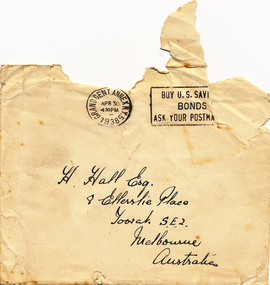
Letter - Correspondence, Irwin, 30/04/1938
... family name unknown), is writing about his camera and sends one photograph as an example. He's also writing about the trip on the ship. This is a photograph of social and historic significance, being part of a sub-collection of material that provides a snapshot of the type of individuals involved in the Ladies Harbour Lights Guild and the activities carried out by that organisation. olive duncan olive hall new york irwin henry hall grand central cat photography lillie duncan Waldorf Historia letterhead Envelope with hand written address in ink, to H Hall Esq. ...This letter and photograph illustrates the broad social circle of Henry Gaucheron Hall Jnr and Olive Hall (nee Duncan), who was a member of the Ladies Harbour Lights Guild. The photograph affords a view of a ship's deck, circa 1938. Irwin (family name unknown), is writing about his camera and sends one photograph as an example. He's also writing about the trip on the ship.This is a photograph of social and historic significance, being part of a sub-collection of material that provides a snapshot of the type of individuals involved in the Ladies Harbour Lights Guild and the activities carried out by that organisation.Envelope with hand written address in ink, to H Hall Esq. Postmarked April 1938. Letter hand written in ink dated 30.04.1938 adorned with the Waldorf Historia crest (New York), signed by Irwin. The letter mentions Olive and has a photograph enclosed. Small photograph of ship's deck and two crew inscribed in same ink with "Roy's best Love".Waldorf Historia letterheadolive duncan, olive hall, new york, irwin, henry hall, grand central, cat, photography, lillie duncan -
 Federation University Historical Collection
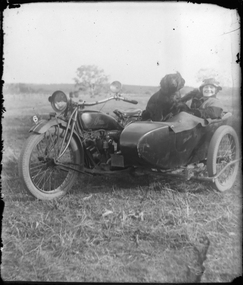
Photograph - Glass Plate, Woman and Dog in a Sidecar by Henry Sutton
... Family. He is known as an important Australian inventor. Henry sutton glass plates photography motorcycle sidecar Image of a woman and dog in a sidecar. ...Henry Sutton was born in Ballarat into the musical Sutton Family. He is known as an important Australian inventor. Image of a woman and dog in a sidecar.henry sutton, glass plates, photography, motorcycle, sidecar -
 Federation University Historical Collection
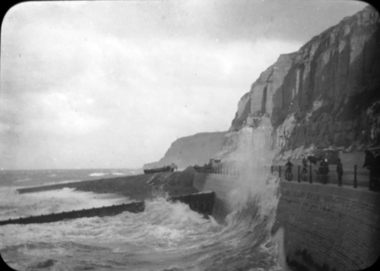
Photograph - Glass Plate, Henry Sutton, Hastings by Henry Sutton, c1891
... Family. He is known as an important Australian inventor. Henry sutton glass plates photography coastal scene sea Photograph of Hastings.. ...Henry Sutton was born in Ballarat into the musical Sutton Family. He is known as an important Australian inventor. Photograph of Hastings..henry sutton, glass plates, photography, coastal scene, sea -
Federation University Historical Collection
Magazine, Various magazines with articles on Henry Sutton
... photography, wireless, cars, motorcycles, and bicycles as well as many more inventions. Henry was also one of four brothers that ran the Sutton's Music Store after the death of their Father Richard Sutton. Henry Sutton taught Applied Electricity at the Ballarat School of Mines in 1883 to 1886. Henry Sutton Cosmos forgotten genius the innovative man book launch sutton family ...Various publications containing articles and information on Henry Sutton.1 Cosmos magazine of the year - Forgotten genius .2 Amateur Radio - Henry Sutton: the innovative man .3 Henry Sutton Book Launch flyer .4 Ballarat Historical Society - Ballarat Remembers - Henry Sutton inventor .5 Ballarat Heritage Festival programs x 3 .6 Ballarat Heritage Weekend Flyer .7 Ballarat international Foto Biennale Booklet .8 Ballarat Heritage Weekend 2017 Booklet .9 Logan City Council Whats On x 2 .10 Ballarat Heritage Weekend 2018 .11 Henry Sutton Biography Booklet .12 Henry Sutton History Walk Booklet .13 Ballarat Courier Newspapers non-fictionVarious publications containing articles and information on Henry Suttonhenry sutton, cosmos, forgotten genius, the innovative man, book launch, sutton family, ballarat remembers, inventor, ballarat historical society, amateur radio, ballarat heritage weekend, ignite your curiosity, learning and discovery, ballarat heritage festival -
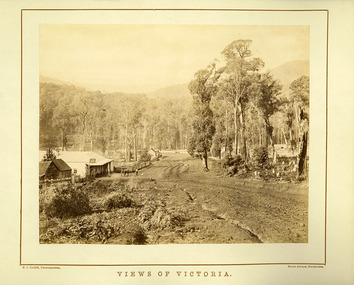 Marysville & District Historical Society
Photograph (Item) - Black and white photograph, Nicholas John Caire, Views of Victoria, Unknown
... Caire gave up his city work and made his home in South Yarra and devoted the rest of his life to outdoor photography, specializing in the bush, the gullies and the mountains of south-eastern Victoria. marysville victoria keppels australian hotel keppel family nicholas john caire photograph N.J. ...An early black and white photograph of the main road in Marysville in Victoria taken by Nicholas John Caire.An early black and white photograph of the main road in Marysville in Victoria showing the Keppels Australian Hotel which was built and opened by the Keppel Family in 1865. The Keppels Australian Hotel was the first hotel to be opened in Marysville. The Keppel Family were among Marysville's earliest pioneering families. This photograph was taken by Nicholas John Caire. N.J. Caire had a great love for the area in and surrounding Marysville and in the late 1800's took many photographs of Marysville and its surrounds. N.J. Caire was born in 1837 in Guernsey. He arrived in Adelaide about 1860 along with his parents who encouraged his early interest in photography. He opened a studio in Adelaide in 1867 after traveling extensively throughout the Gippsland taking photographs. After marrying in 1870 he moved to Talbot in Victoria until 1876 when he opened a studio in the Royal Arcade in Melbourne. After 1885 N.J. Caire gave up his city work and made his home in South Yarra and devoted the rest of his life to outdoor photography, specializing in the bush, the gullies and the mountains of south-eastern Victoria. N.J. CAIRE, PHOTOGRAPHER ROYAL ARCADE, MELBOURNEmarysville, victoria, keppels australian hotel, keppel family, nicholas john caire, photograph -
Federation University Historical Collection
Album, Hilda Rix Nicholas, Henry Sutton's Niece and the Wright family
... photography, wireless, cars, motorcycles, and bicycles as well as many more inventions. Henry was also one of four brothers that ran the Sutton's Music Store after the death of their Father Richard Sutton. Henry Sutton taught Applied Electricity at the Ballarat School of Mines in 1883 to 1886. Hilda Rix Nicholas Henry Sutton George Matson Nicholas Bronwyn Wright Red A4 folder with information about Hilda Rix Nicholas and the Wright Family ...Henry Sutton is a talented world-wide accepted inventor with inventions relating to the telephone, photography, wireless, cars, motorcycles, and bicycles as well as many more inventions. Henry was also one of four brothers that ran the Sutton's Music Store after the death of their Father Richard Sutton. Henry Sutton taught Applied Electricity at the Ballarat School of Mines in 1883 to 1886.Red A4 folder with information about Hilda Rix Nicholas and the Wright Familyhilda rix nicholas, henry sutton, george matson nicholas, bronwyn wright -
Federation University Historical Collection
Album, Folders of information on Henry Sutton
... photography, wireless, cars, motorcycles, and bicycles as well as many more inventions. Henry was also one of four brothers that ran the Sutton's Music Store after the death of their Father Richard Sutton. Henry Sutton taught Applied Electricity at the Ballarat School of Mines in 1883 to 1886. Henry Sutton Birth Certificate Royal Reception Stories family ...Henry Sutton is a talented world-wide accepted inventor with inventions relating to the telephone, photography, wireless, cars, motorcycles, and bicycles as well as many more inventions. Henry was also one of four brothers that ran the Sutton's Music Store after the death of their Father Richard Sutton. Henry Sutton taught Applied Electricity at the Ballarat School of Mines in 1883 to 1886..1 Red A4 folder with information about Henry Sutton .2 Red A4 folder with information about Henry Suttonhenry sutton, birth certificate, royal reception, stories, family history, genealogy, inventor -
Federation University Historical Collection
Album - Photograph, The Tatti Family ( Henry's 2nd Wife)
... photography, wireless, cars, motorcycles, and bicycles as well as many more inventions. Henry was also one of four brothers that ran the Sutton's Music Store after the death of their Father Richard Sutton. Henry Sutton taught Applied Electricity at the Ballarat School of Mines in 1883 to 1886. Tatti Family ...Henry Sutton is a talented world-wide accepted inventor with inventions relating to the telephone, photography, wireless, cars, motorcycles, and bicycles as well as many more inventions. Henry was also one of four brothers that ran the Sutton's Music Store after the death of their Father Richard Sutton. Henry Sutton taught Applied Electricity at the Ballarat School of Mines in 1883 to 1886.White A4 folder containing information on the Tatti family (Henry Sutton's 2nd Wife's family)tatti family, second wife, arthur sutton, henry sutton, albert sutton, annie may sutton, swiss/italian
