
Showing 29 items matching " fibro buildings"
-
 Glen Eira Historical Society
Letter - Sussex Street, 18/20, Caulfield South
... ... Fibro Buildings...Welch Christina Evelyn Sussex Street Caulfield South Brick Houses Conley Kitty Fibro Buildings Gates Fireplaces Cole Mr. Letter Sussex Street, 18/20, Caulfield South ...Copy of typed letter to Mrs. Roberts dated 01/06/1963 by sworn valuator with a detailed description of 18 and 20 Sussex Street Caulfield South plus handwritten notes of description of valuation with measurement of rooms. Handwritten note itemising interior.welch christina evelyn, sussex street, caulfield south, brick houses, conley kitty, fibro buildings, gates, fireplaces, cole mr. -
 Ringwood and District Historical Society
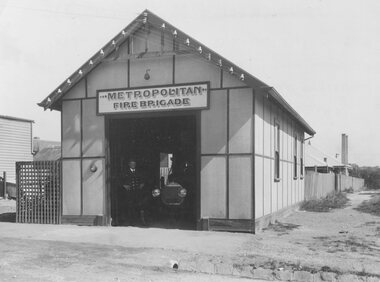
Photograph, Old Ringwood Fire Station 1930
... Black and white photograph of fibro building with sign on front- 'Metropolitan Fire Brigade'....Black and white photograph of fibro building with sign on front- 'Metropolitan Fire Brigade'. ...Black and white photograph of fibro building with sign on front- 'Metropolitan Fire Brigade'.Typed below photograph: "The old Ringwood Fire Station 1930. Was behind old Town Hall in Maroondah Highway. Later used as infant welfare centre. Civic Place on right with old schoolmasters house in background. Looking along Civic Place towards Ringwood St. Note old telephone wires and insulators." Written on rear of backing sheet: "Engine 1912 Hotchkins. C of E Ministers house on right in Ringwood Street." -
Lakes Entrance Historical Society
Photograph - Pomora House Lakes Entrance Victoria 2008
... Colour photograph of Pomora House , showing a weatherboard and fibro building with iron roof behind a picket fence, 3 Princes Highway Lakes Entrance Victoria...Accommodation Tourism Colour photograph of Pomora House , showing a weatherboard and fibro building with iron roof behind a picket fence, 3 Princes Highway Lakes Entrance Victoria Photograph Pomora House Lakes Entrance Victoria 2008 ...Pomora House became a bed and breakfast accommodation around 2008 . This image paired with 04299.1 of the first hotel in Lakes Entrance built by Thomas Laughtons . The two photos were paired together for the Lakes Entrance 150 year display.Colour photograph of Pomora House , showing a weatherboard and fibro building with iron roof behind a picket fence, 3 Princes Highway Lakes Entrance Victoriaaccommodation, tourism -
 Lakes Entrance Historical Society
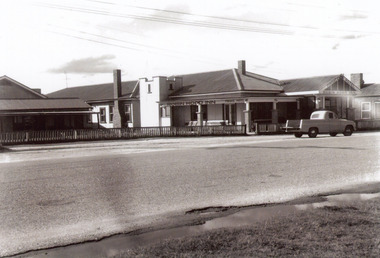
Photograph - Robin Hood Inn Lakes Entrance Victoria c1950
... A single story style fibro clad building, hipped roof with gable wing on eastern side. ...A single story style fibro clad building, hipped roof with gable wing on eastern side. ...Also one other Black and white photograph 10 x15 sameBlack and white photograph showing Robin Hood Inn. A single story style fibro clad building, hipped roof with gable wing on eastern side. Lakes Entrance Victoriaguesthouses, architecture -
 Lakes Entrance Historical Society
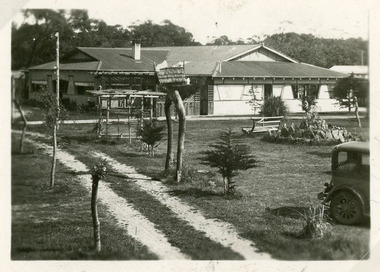
Postcard, Whiters Camp Park, 1935c
... A timber and fibro cement building in Californian bungalow style. ...A timber and fibro cement building in Californian bungalow style. ...The Homestead, L C P Furnished Apartments have become very popular (on back)Black and white small format postcard of the Homestead at Whiters Camp Park. A timber and fibro cement building in Californian bungalow style. Low pitched gable roof with built in veranda extensions. Homestead was the residence of the proprietor and family. Formal garden in foreground image. Lakes Entrance Victoriatourism, houses, resort -
 Lakes Entrance Historical Society
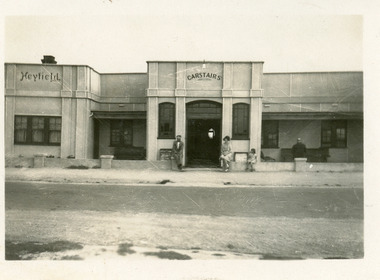
Photograph - Heyfield House Lakes Entrance c1935, c1935
... Black and white photograph of Heyfield House, showing a large fibro-cement clad building, with name Carstairs on facade. ...Two other copies identical view size 12.5 x 17.5 cm Guesthouses Architecture Tourism Black and white photograph of Heyfield House, showing a large fibro-cement clad building, with name Carstairs on facade. ...Two other copies identical view size 12.5 x 17.5 cmBlack and white photograph of Heyfield House, showing a large fibro-cement clad building, with name Carstairs on facade. Man, woman and child seated on concrete fence. Couch in alcove with person seated. Lakes Entrance Victoriaguesthouses, architecture, tourism -
 Lakes Entrance Historical Society
Photograph - Historic House 43 Roadknight Street, Lakes Entrance 2000, Davies, Judy
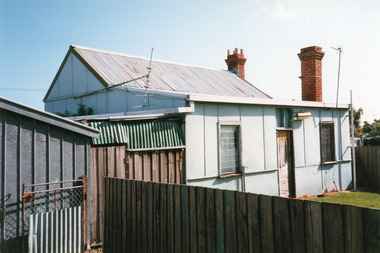
... Also one other colour photograph similar, side of building, fibro cladding and two brick chimneys....Also one other colour photograph similar, side of building, fibro cladding and two brick chimneys. ...House provided by the community for Miss Hammarstrom and family after Mr Hammerstrom, a fisherman, was lost at sea in 1926. The Age newspaper collected 400 pounds in an appeal to support the family. House was originally timber clad. Also one other colour photograph similar, side of building, fibro cladding and two brick chimneys.Colour photograph of a small fibro cement cottage. Corrugated iron gable roof, two substantial brick chimneys, at 43 Roadknight Street, Lakes Entrance Victoria houses, accommodation, heritage study -
 Lakes Entrance Historical Society
Photograph - Broome's Federal Hotel Lakes Entrance c1927
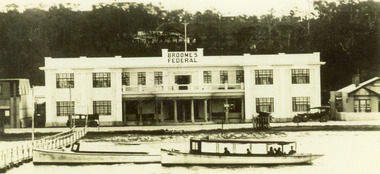
... Sepia toned photograph of Broomes Federal guest house, showing a large two storied fibro cement clad building, two tourist launches and rowing boat on lake moored to a timber jetty. ...2x Identical copies 10x14 Guesthouses Architecture Transport Sepia toned photograph of Broomes Federal guest house, showing a large two storied fibro cement clad building, two tourist launches and rowing boat on lake moored to a timber jetty. ...2x Identical copies 10x14Sepia toned photograph of Broomes Federal guest house, showing a large two storied fibro cement clad building, two tourist launches and rowing boat on lake moored to a timber jetty. Two motor cars of early vintage in front of guest house. Venga guest house visible to right of Broomes Federal. In the background amongst the trees, Holiday Inn guest house on Kalimna Heights. Lakes Entrance Victoriaguesthouses, architecture, transport -
 City of Moorabbin Historical Society (Operating the Box Cottage Museum)
Manufactured Glass, brown bottle, 20thC
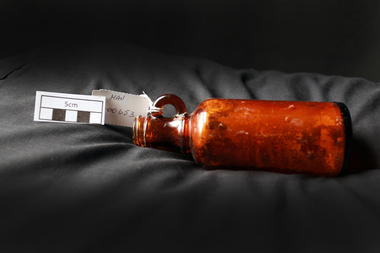
... Working with products containing asbestos - including the building material known as "Fibro" - caused people to develop various pleural abnormalities such as asbestosis and malignant mesothelioma. ...Working with products containing asbestos - including the building material known as "Fibro" - caused people to develop various pleural abnormalities such as asbestosis and malignant mesothelioma. ...This bottle may have held medicine used by a local early settler family. A local resident discovered it when digging his garden in McKinnon 2013. James Hardie immigrated to Australia in 1888 from Linlithgow, Scotland, and created a business importing oils and animal hides. Andrew Reid, also from Linlithgow, came to join Hardie in Melbourne, and became a full partner in 1895. When Hardie retired in 1911, he sold his half of the business to Reid. James Hardie Industries Ltd first listed on the Australian Stock Exchange in 1951 and is an industrial building materials company headquartered in Ireland which specialises in fibre cement products. James Hardie manufactures and develops technologies, materials and processes for the production of building materials. For over 20 years, Hardie has also operated a research and development facility devoted solely to fibre-cement technology. The company was a key player in asbestos mining and manufacturing in Australia through most of the twentieth century. Working with products containing asbestos - including the building material known as "Fibro" - caused people to develop various pleural abnormalities such as asbestosis and malignant mesothelioma. In December 2001, the company shareholders unanimously voted to restructure and relocate the company in the Netherlands as a parent company. This was part of a strategy to separate the company from the stigma of its asbestos liabilities. February 2010, James Hardie moved its corporate domicile from The Netherlands to Ireland, In May 2012 the High Court of Australia found that seven former James Hardie non-executive directors misled the stock exchange over the asbestos victims compensation fundA brown glass bottle, with finger grip handlearound bottom " THIS BOTTLE ALWAYS REMAINS THE PROPERTY OF JAMES HARDIE PTY. LTD. SYDNEY' on base 'IS985 / 7early settlers, pioneers, market gardeners, moorabbin, bentleigh, ormond, mvkinnon, glass bottles, medine containers, medical supplies, james hadie pty ltd. hardie -
 City of Moorabbin Historical Society (Operating the Box Cottage Museum)
Manufactured Glass, brown bottle, 20th C
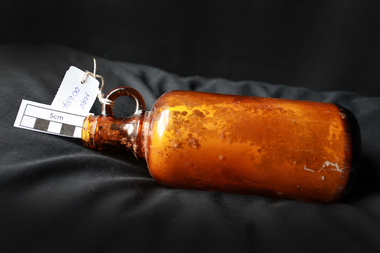
... Working with products containing asbestos - including the building material known as "Fibro" - caused people to develop various pleural abnormalities such as asbestosis and malignant mesothelioma. ...Working with products containing asbestos - including the building material known as "Fibro" - caused people to develop various pleural abnormalities such as asbestosis and malignant mesothelioma. ...This bottle may have held medicine used by a local early settler family. A local resident discovered it when digging his garden in McKinnon 2013. James Hardie immigrated to Australia in 1888 from Linlithgow, Scotland, and created a business importing oils and animal hides. Andrew Reid, also from Linlithgow, came to join Hardie in Melbourne, and became a full partner in 1895. When Hardie retired in 1911, he sold his half of the business to Reid. James Hardie Industries Ltd first listed on the Australian Stock Exchange in 1951 and is an industrial building materials company headquartered in Ireland which specialises in fibre cement products. James Hardie manufactures and develops technologies, materials and processes for the production of building materials. For over 20 years, Hardie has also operated a research and development facility devoted solely to fibre-cement technology. The company was a key player in asbestos mining and manufacturing in Australia through most of the twentieth century. Working with products containing asbestos - including the building material known as "Fibro" - caused people to develop various pleural abnormalities such as asbestosis and malignant mesothelioma. In December 2001, the company shareholders unanimously voted to restructure and relocate the company in the Netherlands as a parent company. This was part of a strategy to separate the company from the stigma of its asbestos liabilities. February 2010, James Hardie moved its corporate domicile from The Netherlands to Ireland, In May 2012 the High Court of Australia found that seven former James Hardie non-executive directors misled the stock exchange over the asbestos victims compensation fund' A brown glass bottle with finger ring hold at neck that may have been used by a local home owner to hold medicine c1900around base ' THIS BOTTLE ALWAYS REMAINS THE PROPERTY OF JAMES HARDIE PTY LTD SYDNEY ' on base ' IS 994 ' pioneers, market gardeners, moorabbin, bentleigh, ormond, mvkinnon, glass bottles, medine containers, medical supplies, james hadie pty ltd. hardie, early settlers -
 Phillip Island and District Historical Society Inc.
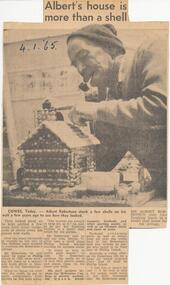
Newspaper clippings, 04/01/1965
... Text explains his building up of a tourist attraction by cementing shells onto 18" fibro plaster sheets to make pictures of people and objects....Text explains his building up of a tourist attraction by cementing shells onto 18" fibro plaster sheets to make pictures of people and objects. ...Collection of newspaper clippings in scrap book dated 1960 - 1973. Taken probably from Sentinel Times of Wonthaggi.Newspaper article with photo of Albert Robertson and model shell house. Text explains his building up of a tourist attraction by cementing shells onto 18" fibro plaster sheets to make pictures of people and objects."Albert's House is more than a shell"local history, newspapers, shell house on summerland peninsula, phillip island, jean jamieson -
 Phillip Island and District Historical Society Inc.
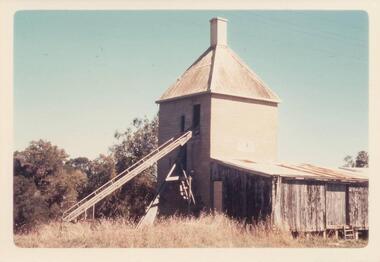
Photograph, 1960's
... April 1973 local history photography photographs agriculture buildings historic chicory kiln ventnor phillip island Mr E Booth Alan Jenner Jack Jenner N & J Archibald Colour Photograph. Chicory Kiln. Ventnor - Nobbies Road - Mr. E. Booth. Built for Alan Jenner about 1940 by Jack Jenner. concrete with wood and fibro ...Donated by N. M. & J. D. Archibald. April 1973Colour Photograph. Chicory Kiln. Ventnor - Nobbies Road - Mr. E. Booth. Built for Alan Jenner about 1940 by Jack Jenner. concrete with wood and fibro. Fibro roof and chimney. Chicory Kiln Album.local history, photography, photographs, agriculture buildings, historic, chicory kiln, ventnor, phillip island, mr e booth, alan jenner, jack jenner, n & j archibald -
 Phillip Island and District Historical Society Inc.
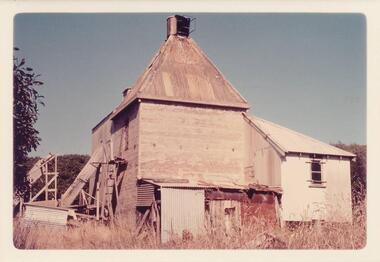
Photograph, 1960's
... April 1973 local history photography photographs agriculture buildings historic chicory kiln colour print ventnor phillip island K McKindlay N & J Archibald Colour Photograph. Chicory Kiln. Ventnor - Mr. K. McKindlay. Concrete with Iron & Fibro ...Donated by N. M. & J. D. Archibald. April 1973Colour Photograph. Chicory Kiln. Ventnor - Mr. K. McKindlay. Concrete with Iron & Fibro structure. Built approximately 1940. Chicory Kiln Album.local history, photography, photographs, agriculture buildings, historic, chicory kiln, colour print, ventnor, phillip island, k mckindlay, n & j archibald -
 Phillip Island and District Historical Society Inc.
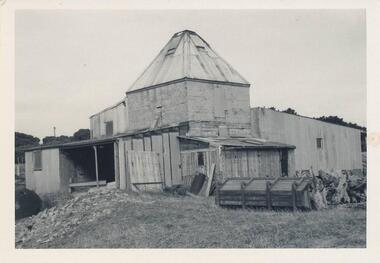
Photograph, 1960's
... April 1973 local history photography photographs agriculture buildings historic chicory kiln cowes phillip island G Stoppa N & J Archibald Black & White Photograph. Chicory Kiln. Cowes, Main Road - Mr. G. Stoppa. Cement blocks with Iron, Wood & Fibro ...Donated by N. M. & J. D. Archibald. April 1973Black & White Photograph. Chicory Kiln. Cowes, Main Road - Mr. G. Stoppa. Cement blocks with Iron, Wood & Fibro. Built late 1940's or 50's. Chicory Kiln Album.local history, photography, photographs, agriculture buildings, historic, chicory kiln, cowes, phillip island, g stoppa, n & j archibald -
 Halls Gap & Grampians Historical Society
Photograph - B/W
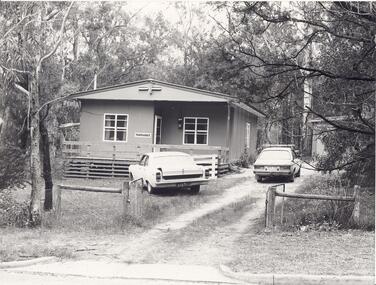
... A number of this houses were transported from job to job. BUILDINGS Houses A fibro cement house of simple rectangular construction, a low pitched roof ,sashed windows, a garage appears at the end of the driveway. ..."Yarrabee" a holiday house in Halls Gap which was formerly a staff house for the construction of Bellfield Dam. A number of this houses were transported from job to job.A fibro cement house of simple rectangular construction, a low pitched roof ,sashed windows, a garage appears at the end of the driveway. Two cars are parked in driveway, gum trees surround the house. buildings, houses -
![Photograph - Colour Print, Harry Gilham [Attrib.], Living and Learning Centre, Main Road, Eltham, Aug 1988](/media/collectors/4f729f7b97f83e03086018a5/items/6a1ccb54e43e4200865b4676/item-media/6a1ccbd3e43e4200865b58ed/item-fit-380x285.jpg?cb=6) Eltham District Historical Society Inc
Eltham District Historical Society IncPhotograph - Colour Print, Harry Gilham [Attrib.], Living and Learning Centre, Main Road, Eltham, Aug 1988
... buildings on the property to house goats and poultry with a horse stable and storage sheds for the animal food. She also built the coach house with its horse box and tack room and built an adjoining garage for their car. Structural alterations to the house were also carried out during the period of their ownership. Their house renovations removed the four fireplaces and chimneys and added a wider verandah, a fibro...buildings on the property to house goats and poultry with a horse stable and storage sheds for the animal food. She also built the coach house with its horse box and tack room and built an adjoining garage for their car. Structural alterations to the house were also carried out during the period of their ownership. Their house renovations removed the four fireplaces and chimneys and added a wider verandah, a fibro ...North face of house viewed from the current (1990) pottery area (now pathed) The kitchen was separate from the house as a safety measure in the late 1800s. A detailed history of the site and early development of the Eltham Living and Learning Centre can be found in EDHS_04870 - Folder, Shire of Eltham Living and Learning Centre, 1996 The original property was part of Josiah Holloways subdivision of Little Eltham. It had a 70 foot frontage to Maria Street and stretched down to the Diamond Creek. John Perason, a Tanner, purchased the property in 1857 for £100 and he built a solid brick house which over the years was modified significantly by various owners and which is the basis of the present-day Living and Learning Centre. Claire Fitzpatrick and her husband Alfred, a retired chemical engineer, bought it in the early 1950's. Claire's interest in farming and animal husbandry and breeding saw her modify and establish buildings on the property to house goats and poultry with a horse stable and storage sheds for the animal food. She also built the coach house with its horse box and tack room and built an adjoining garage for their car. Structural alterations to the house were also carried out during the period of their ownership. Their house renovations removed the four fireplaces and chimneys and added a wider verandah, a fibro cement extension on the north wall requiring a doorway to be made in the brick wall for access. Part of a passage wall was removed to join the northwest room, now the "sitting room". A new jarrah floor was put in as the old one was rotten with borer. The verandahs, front and back, were re-organised in design and the front door had its leadlighting panels removed to allow more light into the house. During this period the water catchment well was filled in. This well had a concrete slab fitted onto a collar around its top. The well is 12 feet deep and 8 feet in diameter. Septic sewerage was installed and an internal toilet fitted in the house. The former northeast room was divided into bathroom/toilet and passageway with cupboards to access the extension. Kitchen stove and sink was removed (they fell apart) and a slow-combustion stove with hot water heater installed. Basins and hot water were connected to the new bathroom. In the early 1970s Eltham Shire Council, Councillors Frank Maas and Don Maling, were proposing an extended communities activities program be set up and the Commonwealth Grants Commission was approached for financial assistance to such a scheme. During 1974 a $50,000 Commonwealth Government grant was received by the Shire Council to acquire the Fitzpatrick property as part of the Shire's planning to establish an "extended community activities program". Council's Committee recommended an annual budget of $26,950 for the program and the project was named the Living and Learning Centre and in charge of the program was the first co-ordinator, Carina Hack. The activities were planned to cover "practical skills for living" and included cooking, preserving, gardening, animal husbandry, home economics, electronics, carpentry, hairdressing, making children's clothes and car maintenance. Hobbies and arts and crafts that would include amongst other future items, winemaking, music spinning and weaving and painting. 739 main road eltham, eltham living and learning centre, living and learning centre, living and learning nillumbik (eltham), main road eltham -
 Eltham District Historical Society Inc
Photograph - Black and White Print, Widening of the verandah of 'Rosebank,' now Living and Learning Centre, Main Road, Eltham, c.1965
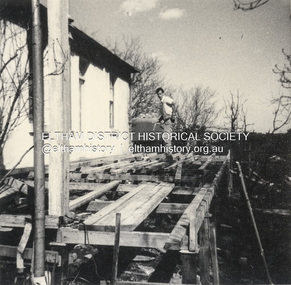
... buildings on the property to house goats and poultry with a horse stable and storage sheds for the animal food. She also built the coach house with its horse box and tack room and built an adjoining garage for their car. Structural alterations to the house were also carried out during the period of their ownership. Their house renovations removed the four fireplaces and chimneys and added a wider verandah, a fibro...buildings on the property to house goats and poultry with a horse stable and storage sheds for the animal food. She also built the coach house with its horse box and tack room and built an adjoining garage for their car. Structural alterations to the house were also carried out during the period of their ownership. Their house renovations removed the four fireplaces and chimneys and added a wider verandah, a fibro ...Restructure of the front verandah of 'Rosebank' by widening, c.1965. It was glassed in at a later date. The west facing front verandah was widened and enclosed for additional class room use by the Living and Learning Centre. A detailed history of the site and early development of the Eltham Living and Learning Centre can be found in EDHS_04870 - Folder, Shire of Eltham Living and Learning Centre, 1996 The original property was part of Josiah Holloways subdivision of Little Eltham. It had a 70 foot frontage to Maria Street and stretched down to the Diamond Creek. John Perason, a Tanner, purchased the property in 1857 for £100 and he built a solid brick house which over the years was modified significantly by various owners and which is the basis of the present-day Living and Learning Centre. Claire Fitzpatrick and her husband Alfred, a retired chemical engineer, bought it in the early 1950's. Claire's interest in farming and animal husbandry and breeding saw her modify and establish buildings on the property to house goats and poultry with a horse stable and storage sheds for the animal food. She also built the coach house with its horse box and tack room and built an adjoining garage for their car. Structural alterations to the house were also carried out during the period of their ownership. Their house renovations removed the four fireplaces and chimneys and added a wider verandah, a fibro cement extension on the north wall requiring a doorway to be made in the brick wall for access. Part of a passage wall was removed to join the northwest room, now the "sitting room". A new jarrah floor was put in as the old one was rotten with borer. The verandahs, front and back, were re-organised in design and the front door had its leadlighting panels removed to allow more light into the house. During this period the water catchment well was filled in. This well had a concrete slab fitted onto a collar around its top. The well is 12 feet deep and 8 feet in diameter. Septic sewerage was installed and an internal toilet fitted in the house. The former northeast room was divided into bathroom/toilet and passageway with cupboards to access the extension. Kitchen stove and sink was removed (they fell apart) and a slow-combustion stove with hot water heater installed. Basins and hot water were connected to the new bathroom. In the early 1970s Eltham Shire Council, Councillors Frank Maas and Don Maling, were proposing an extended communities activities program be set up and the Commonwealth Grants Commission was approached for financial assistance to such a scheme. During 1974 a $50,000 Commonwealth Government grant was received by the Shire Council to acquire the Fitzpatrick property as part of the Shire's planning to establish an "extended community activities program". Council's Committee recommended an annual budget of $26,950 for the program and the project was named the Living and Learning Centre and in charge of the program was the first co-ordinator, Carina Hack. The activities were planned to cover "practical skills for living" and included cooking, preserving, gardening, animal husbandry, home economics, electronics, carpentry, hairdressing, making children's clothes and car maintenance. Hobbies and arts and crafts that would include amongst other future items, winemaking, music spinning and weaving and painting. 739 main road eltham, eltham living and learning centre, living and learning centre, living and learning nillumbik (eltham), main road eltham -
![Photograph - Colour Print, Harry Gilham [Attrib.], Living and Learning Centre, Main Road, Eltham, c.1988](/media/collectors/4f729f7b97f83e03086018a5/items/6a1cdaf8e43e4200865c849d/item-media/6a1cdb13e43e4200865c85b6/item-fit-380x285.jpg?cb=6) Eltham District Historical Society Inc
Eltham District Historical Society IncPhotograph - Colour Print, Harry Gilham [Attrib.], Living and Learning Centre, Main Road, Eltham, c.1988
... buildings on the property to house goats and poultry with a horse stable and storage sheds for the animal food. She also built the coach house with its horse box and tack room and built an adjoining garage for their car. Structural alterations to the house were also carried out during the period of their ownership. Their house renovations removed the four fireplaces and chimneys and added a wider verandah, a fibro...buildings on the property to house goats and poultry with a horse stable and storage sheds for the animal food. She also built the coach house with its horse box and tack room and built an adjoining garage for their car. Structural alterations to the house were also carried out during the period of their ownership. Their house renovations removed the four fireplaces and chimneys and added a wider verandah, a fibro ...The 'back door' which faced the Main Road entrance to the office, Eltham Living and Learning Centre, herb garden at its peak, late 1980s A detailed history of the site and early development of the Eltham Living and Learning Centre can be found in EDHS_04870 - Folder, Shire of Eltham Living and Learning Centre, 1996 The original property was part of Josiah Holloways subdivision of Little Eltham. It had a 70 foot frontage to Maria Street and stretched down to the Diamond Creek. John Perason, a Tanner, purchased the property in 1857 for £100 and he built a solid brick house which over the years was modified significantly by various owners and which is the basis of the present-day Living and Learning Centre. Claire Fitzpatrick and her husband Alfred, a retired chemical engineer, bought it in the early 1950's. Claire's interest in farming and animal husbandry and breeding saw her modify and establish buildings on the property to house goats and poultry with a horse stable and storage sheds for the animal food. She also built the coach house with its horse box and tack room and built an adjoining garage for their car. Structural alterations to the house were also carried out during the period of their ownership. Their house renovations removed the four fireplaces and chimneys and added a wider verandah, a fibro cement extension on the north wall requiring a doorway to be made in the brick wall for access. Part of a passage wall was removed to join the northwest room, now the "sitting room". A new jarrah floor was put in as the old one was rotten with borer. The verandahs, front and back, were re-organised in design and the front door had its leadlighting panels removed to allow more light into the house. During this period the water catchment well was filled in. This well had a concrete slab fitted onto a collar around its top. The well is 12 feet deep and 8 feet in diameter. Septic sewerage was installed and an internal toilet fitted in the house. The former northeast room was divided into bathroom/toilet and passageway with cupboards to access the extension. Kitchen stove and sink was removed (they fell apart) and a slow-combustion stove with hot water heater installed. Basins and hot water were connected to the new bathroom. In the early 1970s Eltham Shire Council, Councillors Frank Maas and Don Maling, were proposing an extended communities activities program be set up and the Commonwealth Grants Commission was approached for financial assistance to such a scheme. During 1974 a $50,000 Commonwealth Government grant was received by the Shire Council to acquire the Fitzpatrick property as part of the Shire's planning to establish an "extended community activities program". Council's Committee recommended an annual budget of $26,950 for the program and the project was named the Living and Learning Centre and in charge of the program was the first co-ordinator, Carina Hack. The activities were planned to cover "practical skills for living" and included cooking, preserving, gardening, animal husbandry, home economics, electronics, carpentry, hairdressing, making children's clothes and car maintenance. Hobbies and arts and crafts that would include amongst other future items, winemaking, music spinning and weaving and painting. 739 main road eltham, eltham living and learning centre, living and learning centre, living and learning nillumbik (eltham), main road eltham -
![Photograph - Black and White Print, Harry Gilham [Attrib.], Living and Learning Centre, Main Road, Eltham, 1990](/media/collectors/4f729f7b97f83e03086018a5/items/6a1cdbffe43e4200865c95df/item-media/6a1cdc19e43e4200865c975d/item-fit-380x285.jpg?cb=6) Eltham District Historical Society Inc
Eltham District Historical Society IncPhotograph - Black and White Print, Harry Gilham [Attrib.], Living and Learning Centre, Main Road, Eltham, 1990
... buildings on the property to house goats and poultry with a horse stable and storage sheds for the animal food. She also built the coach house with its horse box and tack room and built an adjoining garage for their car. Structural alterations to the house were also carried out during the period of their ownership. Their house renovations removed the four fireplaces and chimneys and added a wider verandah, a fibro...buildings on the property to house goats and poultry with a horse stable and storage sheds for the animal food. She also built the coach house with its horse box and tack room and built an adjoining garage for their car. Structural alterations to the house were also carried out during the period of their ownership. Their house renovations removed the four fireplaces and chimneys and added a wider verandah, a fibro ...The 'back door' which faced the Main Road entrance to the office, Eltham Living and Learning Centre - Shows original sandstone blocks in back verandah floor A detailed history of the site and early development of the Eltham Living and Learning Centre can be found in EDHS_04870 - Folder, Shire of Eltham Living and Learning Centre, 1996 The original property was part of Josiah Holloways subdivision of Little Eltham. It had a 70 foot frontage to Maria Street and stretched down to the Diamond Creek. John Perason, a Tanner, purchased the property in 1857 for £100 and he built a solid brick house which over the years was modified significantly by various owners and which is the basis of the present-day Living and Learning Centre. Claire Fitzpatrick and her husband Alfred, a retired chemical engineer, bought it in the early 1950's. Claire's interest in farming and animal husbandry and breeding saw her modify and establish buildings on the property to house goats and poultry with a horse stable and storage sheds for the animal food. She also built the coach house with its horse box and tack room and built an adjoining garage for their car. Structural alterations to the house were also carried out during the period of their ownership. Their house renovations removed the four fireplaces and chimneys and added a wider verandah, a fibro cement extension on the north wall requiring a doorway to be made in the brick wall for access. Part of a passage wall was removed to join the northwest room, now the "sitting room". A new jarrah floor was put in as the old one was rotten with borer. The verandahs, front and back, were re-organised in design and the front door had its leadlighting panels removed to allow more light into the house. During this period the water catchment well was filled in. This well had a concrete slab fitted onto a collar around its top. The well is 12 feet deep and 8 feet in diameter. Septic sewerage was installed and an internal toilet fitted in the house. The former northeast room was divided into bathroom/toilet and passageway with cupboards to access the extension. Kitchen stove and sink was removed (they fell apart) and a slow-combustion stove with hot water heater installed. Basins and hot water were connected to the new bathroom. In the early 1970s Eltham Shire Council, Councillors Frank Maas and Don Maling, were proposing an extended communities activities program be set up and the Commonwealth Grants Commission was approached for financial assistance to such a scheme. During 1974 a $50,000 Commonwealth Government grant was received by the Shire Council to acquire the Fitzpatrick property as part of the Shire's planning to establish an "extended community activities program". Council's Committee recommended an annual budget of $26,950 for the program and the project was named the Living and Learning Centre and in charge of the program was the first co-ordinator, Carina Hack. The activities were planned to cover "practical skills for living" and included cooking, preserving, gardening, animal husbandry, home economics, electronics, carpentry, hairdressing, making children's clothes and car maintenance. Hobbies and arts and crafts that would include amongst other future items, winemaking, music spinning and weaving and painting. 739 main road eltham, eltham living and learning centre, living and learning centre, living and learning nillumbik (eltham), main road eltham -
![Photograph - Black and White Print, Harry Gilham [Attrib.], Living and Learning Centre, Main Road, Eltham, c.1990](/media/collectors/4f729f7b97f83e03086018a5/items/6a1cddabe43e4200865cee41/item-media/6a1cddbbe43e4200865cf696/item-fit-380x285.jpg?cb=6) Eltham District Historical Society Inc
Eltham District Historical Society IncPhotograph - Black and White Print, Harry Gilham [Attrib.], Living and Learning Centre, Main Road, Eltham, c.1990
... buildings on the property to house goats and poultry with a horse stable and storage sheds for the animal food. She also built the coach house with its horse box and tack room and built an adjoining garage for their car. Structural alterations to the house were also carried out during the period of their ownership. Their house renovations removed the four fireplaces and chimneys and added a wider verandah, a fibro...buildings on the property to house goats and poultry with a horse stable and storage sheds for the animal food. She also built the coach house with its horse box and tack room and built an adjoining garage for their car. Structural alterations to the house were also carried out during the period of their ownership. Their house renovations removed the four fireplaces and chimneys and added a wider verandah, a fibro ...Brick storage shed, south wall entry. This cool room, half set down in the soil still standing at time but with a more modern galvanised tin roof. A detailed history of the site and early development of the Eltham Living and Learning Centre can be found in EDHS_04870 - Folder, Shire of Eltham Living and Learning Centre, 1996 The original property was part of Josiah Holloways subdivision of Little Eltham. It had a 70 foot frontage to Maria Street and stretched down to the Diamond Creek. John Perason, a Tanner, purchased the property in 1857 for £100 and he built a solid brick house which over the years was modified significantly by various owners and which is the basis of the present-day Living and Learning Centre. Claire Fitzpatrick and her husband Alfred, a retired chemical engineer, bought it in the early 1950's. Claire's interest in farming and animal husbandry and breeding saw her modify and establish buildings on the property to house goats and poultry with a horse stable and storage sheds for the animal food. She also built the coach house with its horse box and tack room and built an adjoining garage for their car. Structural alterations to the house were also carried out during the period of their ownership. Their house renovations removed the four fireplaces and chimneys and added a wider verandah, a fibro cement extension on the north wall requiring a doorway to be made in the brick wall for access. Part of a passage wall was removed to join the northwest room, now the "sitting room". A new jarrah floor was put in as the old one was rotten with borer. The verandahs, front and back, were re-organised in design and the front door had its leadlighting panels removed to allow more light into the house. During this period the water catchment well was filled in. This well had a concrete slab fitted onto a collar around its top. The well is 12 feet deep and 8 feet in diameter. Septic sewerage was installed and an internal toilet fitted in the house. The former northeast room was divided into bathroom/toilet and passageway with cupboards to access the extension. Kitchen stove and sink was removed (they fell apart) and a slow-combustion stove with hot water heater installed. Basins and hot water were connected to the new bathroom. In the early 1970s Eltham Shire Council, Councillors Frank Maas and Don Maling, were proposing an extended communities activities program be set up and the Commonwealth Grants Commission was approached for financial assistance to such a scheme. During 1974 a $50,000 Commonwealth Government grant was received by the Shire Council to acquire the Fitzpatrick property as part of the Shire's planning to establish an "extended community activities program". Council's Committee recommended an annual budget of $26,950 for the program and the project was named the Living and Learning Centre and in charge of the program was the first co-ordinator, Carina Hack. The activities were planned to cover "practical skills for living" and included cooking, preserving, gardening, animal husbandry, home economics, electronics, carpentry, hairdressing, making children's clothes and car maintenance. Hobbies and arts and crafts that would include amongst other future items, winemaking, music spinning and weaving and painting. 739 main road eltham, eltham living and learning centre, living and learning centre, living and learning nillumbik (eltham), main road eltham -
![Photograph - Colour Print, Harry Gilham [Attrib.], Living and Learning Centre, Main Road, Eltham, 1995](/media/collectors/4f729f7b97f83e03086018a5/items/6a1cde5de43e4200865d0c81/item-media/6a1cde8be43e4200865d1127/item-fit-380x285.jpg?cb=6) Eltham District Historical Society Inc
Eltham District Historical Society IncPhotograph - Colour Print, Harry Gilham [Attrib.], Living and Learning Centre, Main Road, Eltham, 1995
... buildings on the property to house goats and poultry with a horse stable and storage sheds for the animal food. She also built the coach house with its horse box and tack room and built an adjoining garage for their car. Structural alterations to the house were also carried out during the period of their ownership. Their house renovations removed the four fireplaces and chimneys and added a wider verandah, a fibro...buildings on the property to house goats and poultry with a horse stable and storage sheds for the animal food. She also built the coach house with its horse box and tack room and built an adjoining garage for their car. Structural alterations to the house were also carried out during the period of their ownership. Their house renovations removed the four fireplaces and chimneys and added a wider verandah, a fibro ...New Pavilion at left has plants appearing. Grass area needs a mow - verandah with repainted stool/forms - early spring 1995 A detailed history of the site and early development of the Eltham Living and Learning Centre can be found in EDHS_04870 - Folder, Shire of Eltham Living and Learning Centre, 1996 The original property was part of Josiah Holloways subdivision of Little Eltham. It had a 70 foot frontage to Maria Street and stretched down to the Diamond Creek. John Perason, a Tanner, purchased the property in 1857 for £100 and he built a solid brick house which over the years was modified significantly by various owners and which is the basis of the present-day Living and Learning Centre. Claire Fitzpatrick and her husband Alfred, a retired chemical engineer, bought it in the early 1950's. Claire's interest in farming and animal husbandry and breeding saw her modify and establish buildings on the property to house goats and poultry with a horse stable and storage sheds for the animal food. She also built the coach house with its horse box and tack room and built an adjoining garage for their car. Structural alterations to the house were also carried out during the period of their ownership. Their house renovations removed the four fireplaces and chimneys and added a wider verandah, a fibro cement extension on the north wall requiring a doorway to be made in the brick wall for access. Part of a passage wall was removed to join the northwest room, now the "sitting room". A new jarrah floor was put in as the old one was rotten with borer. The verandahs, front and back, were re-organised in design and the front door had its leadlighting panels removed to allow more light into the house. During this period the water catchment well was filled in. This well had a concrete slab fitted onto a collar around its top. The well is 12 feet deep and 8 feet in diameter. Septic sewerage was installed and an internal toilet fitted in the house. The former northeast room was divided into bathroom/toilet and passageway with cupboards to access the extension. Kitchen stove and sink was removed (they fell apart) and a slow-combustion stove with hot water heater installed. Basins and hot water were connected to the new bathroom. In the early 1970s Eltham Shire Council, Councillors Frank Maas and Don Maling, were proposing an extended communities activities program be set up and the Commonwealth Grants Commission was approached for financial assistance to such a scheme. During 1974 a $50,000 Commonwealth Government grant was received by the Shire Council to acquire the Fitzpatrick property as part of the Shire's planning to establish an "extended community activities program". Council's Committee recommended an annual budget of $26,950 for the program and the project was named the Living and Learning Centre and in charge of the program was the first co-ordinator, Carina Hack. The activities were planned to cover "practical skills for living" and included cooking, preserving, gardening, animal husbandry, home economics, electronics, carpentry, hairdressing, making children's clothes and car maintenance. Hobbies and arts and crafts that would include amongst other future items, winemaking, music spinning and weaving and painting. 739 main road eltham, eltham living and learning centre, living and learning centre, living and learning nillumbik (eltham), main road eltham -
![Photograph - Colour Print, Harry Gilham [Attrib.], Living and Learning Centre, Main Road, Eltham, 1995](/media/collectors/4f729f7b97f83e03086018a5/items/6a1cdf36e43e4200865d43d6/item-media/6a1cdf50e43e4200865d4778/item-fit-380x285.jpg?cb=6) Eltham District Historical Society Inc
Eltham District Historical Society IncPhotograph - Colour Print, Harry Gilham [Attrib.], Living and Learning Centre, Main Road, Eltham, 1995
... buildings on the property to house goats and poultry with a horse stable and storage sheds for the animal food. She also built the coach house with its horse box and tack room and built an adjoining garage for their car. Structural alterations to the house were also carried out during the period of their ownership. Their house renovations removed the four fireplaces and chimneys and added a wider verandah, a fibro...buildings on the property to house goats and poultry with a horse stable and storage sheds for the animal food. She also built the coach house with its horse box and tack room and built an adjoining garage for their car. Structural alterations to the house were also carried out during the period of their ownership. Their house renovations removed the four fireplaces and chimneys and added a wider verandah, a fibro ...New verandah Eltham Living and Learning Centre on the western face looking down over the Tannery site and Diamond Creek. Pavilion in place (LH Side). The verandah with its upgrade of curtains 1995. Originally 4 feet 6 inches wide. A detailed history of the site and early development of the Eltham Living and Learning Centre can be found in EDHS_04870 - Folder, Shire of Eltham Living and Learning Centre, 1996 The original property was part of Josiah Holloways subdivision of Little Eltham. It had a 70 foot frontage to Maria Street and stretched down to the Diamond Creek. John Perason, a Tanner, purchased the property in 1857 for £100 and he built a solid brick house which over the years was modified significantly by various owners and which is the basis of the present-day Living and Learning Centre. Claire Fitzpatrick and her husband Alfred, a retired chemical engineer, bought it in the early 1950's. Claire's interest in farming and animal husbandry and breeding saw her modify and establish buildings on the property to house goats and poultry with a horse stable and storage sheds for the animal food. She also built the coach house with its horse box and tack room and built an adjoining garage for their car. Structural alterations to the house were also carried out during the period of their ownership. Their house renovations removed the four fireplaces and chimneys and added a wider verandah, a fibro cement extension on the north wall requiring a doorway to be made in the brick wall for access. Part of a passage wall was removed to join the northwest room, now the "sitting room". A new jarrah floor was put in as the old one was rotten with borer. The verandahs, front and back, were re-organised in design and the front door had its leadlighting panels removed to allow more light into the house. During this period the water catchment well was filled in. This well had a concrete slab fitted onto a collar around its top. The well is 12 feet deep and 8 feet in diameter. Septic sewerage was installed and an internal toilet fitted in the house. The former northeast room was divided into bathroom/toilet and passageway with cupboards to access the extension. Kitchen stove and sink was removed (they fell apart) and a slow-combustion stove with hot water heater installed. Basins and hot water were connected to the new bathroom. In the early 1970s Eltham Shire Council, Councillors Frank Maas and Don Maling, were proposing an extended communities activities program be set up and the Commonwealth Grants Commission was approached for financial assistance to such a scheme. During 1974 a $50,000 Commonwealth Government grant was received by the Shire Council to acquire the Fitzpatrick property as part of the Shire's planning to establish an "extended community activities program". Council's Committee recommended an annual budget of $26,950 for the program and the project was named the Living and Learning Centre and in charge of the program was the first co-ordinator, Carina Hack. The activities were planned to cover "practical skills for living" and included cooking, preserving, gardening, animal husbandry, home economics, electronics, carpentry, hairdressing, making children's clothes and car maintenance. Hobbies and arts and crafts that would include amongst other future items, winemaking, music spinning and weaving and painting. 739 main road eltham, eltham living and learning centre, living and learning centre, living and learning nillumbik (eltham), main road eltham -
 Lakes Entrance Historical Society
Photograph - Historic House, 8 North Arm Avenue, Lakes Entrance Victoria 2000
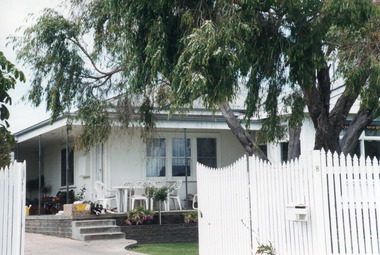
... Building was lounge and ballroom for Robin Hood Inn, a popular guest house situated on corner of Esplanade and Carstairs Avenue. It was broken up, and components relocated, to make way for Sherwood Lodge Motel in 1958. Now situated in North Arm Avenue Lakes Entrance Houses Heritage Study Colour photograph of a fibro ...Building was lounge and ballroom for Robin Hood Inn, a popular guest house situated on corner of Esplanade and Carstairs Avenue. It was broken up, and components relocated, to make way for Sherwood Lodge Motel in 1958. Now situated in North Arm Avenue Lakes EntranceColour photograph of a fibro dwelling, hipped roof with gable extension, veranda over main room with triple sash window and French door. White timber picket fence and gate, situated at 8 North Arm Avenue, Lakes Entrance Victoriahouses, heritage study -
 Hume City Civic Collection
Photograph, Late 1980's
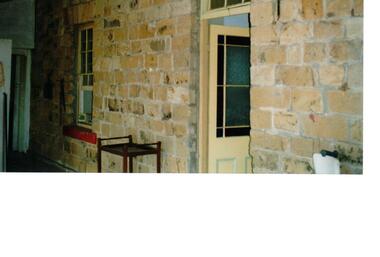
... building. A double hung 8 pane sash window is on the LHS of the wall and a doorway with a 2 panelled and glass door is in the foreground. The woodwork is painted cream. A tea trolley is near the door. The verandah roof is lined with fibro...building. A double hung 8 pane sash window is on the LHS of the wall and a doorway with a 2 panelled and glass door is in the foreground. The woodwork is painted cream. A tea trolley is near the door. The verandah roof is lined with fibro ...The Duncan family have occupied 'Glencoe' since 1888 when John Duncan purchased it from M. O'Brien. In 1972 Glencoe was the site for the Sunbury Pop Festival.A coloured photograph of the front facade of a sandstone building. A double hung 8 pane sash window is on the LHS of the wall and a doorway with a 2 panelled and glass door is in the foreground. The woodwork is painted cream. A tea trolley is near the door. The verandah roof is lined with fibro cement. At the extreme end of the porch there is a doorway. Farm implements are hanging on the wall.sandstone buildings, duncan, george, glencoe homestead, sunbury pop festival, george evans collection -
 Southern Sherbrooke Historical Society Inc.
Photograph - Bert and Minnie Sutton c.mid 1940s
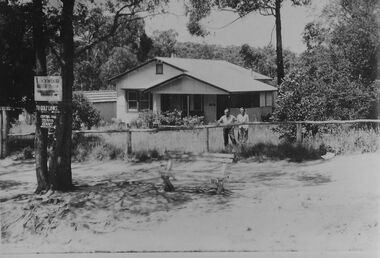
... fibro sheeting with an L-shaped open verandah. After purchasing the house Bert altered it, eventually enclosing the verandah and turning it into a sleepout. The house has been extensively altered since but is still standing in Lockwood Rd. The block is treed and the garden appears to be rather wild. A tiled roofed building...fibro sheeting with an L-shaped open verandah. After purchasing the house Bert altered it, eventually enclosing the verandah and turning it into a sleepout. The house has been extensively altered since but is still standing in Lockwood Rd. The block is treed and the garden appears to be rather wild. A tiled roofed building ...B&W photo of Bert (Gilbert William) and Minnie (Williamina Wilson) Sutton (daughter of Charles Macauley and Minnie Gray) standing outside their original home in Belgrave Heights. The photo shows the couple standing at their post-and-wire front fence at their property in Lockwood Road. The house was next door to Edward's store. Bert is in shirtsleeves and Minnie is wearing a cardigan over a dress. Their house is a single gabled house of weatherboard and fibro sheeting with an L-shaped open verandah. After purchasing the house Bert altered it, eventually enclosing the verandah and turning it into a sleepout. The house has been extensively altered since but is still standing in Lockwood Rd. The block is treed and the garden appears to be rather wild. A tiled roofed building is behind the house and to the left, possibly a garage. On the nature strip in front of the Suttons' house is a wooden bench, and attached to a tree are the signs, "Lockwood House" (with a hand pointing right), "To golf links" (with an arrow pointing right) and "Central Park Tennis Courts" (with an arrow pointing left). The sun is shining. Bert, who was a carpenter, died in 1969 and Minnie died in 1977. Copy of original photo donated to our society by Kath Oram, a founding member. -
Lakes Entrance Historical Society
Photograph - Maranui Guest House Lakes Entrance Victoria c1956, 1956c
... building decorated with flags. Timber fence at front in herringbone design. Boat deck seat on veranda, man in doorway, man and boy at right of photo. Part of fibro...building decorated with flags. Timber fence at front in herringbone design. Boat deck seat on veranda, man in doorway, man and boy at right of photo. Part of fibro ...Maranui History as told by Rod Hooper SC Charley and Stella Hooper were married in Melbourne in 1944 and honeymooned at Broomes. Then in 1946 they purchased it from Broome’s and re-named it Maranui. A large recreation room was added at the rear in 1957. A big renovation was undertaken in 1961-62 with the front completely remodelled. When the restaurant was built at the rear they were granted a liquor license in 1966 after objections by Crea’s at Glenara and the Central Hotel. Charley, who did most of the cooking for guests, added Lakes Entrance flathead tails to the menu which was an immediate hit. Today they are a staple menu option for most Lakes Entrance eating establishments. Around 1968 Hoopers purchased the police station and land at the rear where they relocated a old house that was used for staff accommodation. Charley’s intention was to build a motel and connect it to Maranui but ill health saw his plans fail to come to fruition. He died in 1970. Stella, along with children Bev, Glen and Rod continued to run Maranui till they sold to the Savage family in 1976. Decorations were for Centenary celebrations. Lakes Entrance VictoriaBlack and white photograph of Hoopers Maranui Guest House, showing a timber double storied building decorated with flags. Timber fence at front in herringbone design. Boat deck seat on veranda, man in doorway, man and boy at right of photo. Part of fibro cement picture theatre is visible at right of Maranui. guesthouses, celebrations, architecture, cinema, fences -
Lakes Entrance Historical Society
Photograph - Maranui Guest House Lakes Entrance Victoria c1946
... A timber double storied building with upstairs balcony and down stairs veranda across front, sash windows, doors with side lights and fan lights, hedge at front enclosed by picket fence. On right of photo, fibro...A timber double storied building with upstairs balcony and down stairs veranda across front, sash windows, doors with side lights and fan lights, hedge at front enclosed by picket fence. On right of photo, fibro ...Maranui History as told by Rod Hooper SC Charley and Stella Hooper were married in Melbourne in 1944 and honeymooned at Broomes. Then in 1946 they purchased it from Broome’s. A large recreation room was added at the rear in 1957. A big renovation was undertaken in 1961-62 with the front completely remodelled. When the restaurant was built at the rear they were granted a liquor license in 1966 after objections by Crea’s at Glenara and the Central Hotel. Charley, who did most of the cooking for guests, added Lakes Entrance flathead tails to the menu which was an immediate hit. Today they are a staple menu option for most Lakes Entrance eating establishments. Around 1968 Hoopers purchased the police station and land at the rear where they relocated a old house that was used for staff accommodation. Charley’s intention was to build a motel and connect it to Maranui but ill health saw his plans fail to come to fruition. He died in 1970. Stella, along with children Bev, Glen and Rod continued to run Maranui till they sold to the Savage family in 1976. Black and white photograph of Hoopers Maranui Guest House. A timber double storied building with upstairs balcony and down stairs veranda across front, sash windows, doors with side lights and fan lights, hedge at front enclosed by picket fence. On right of photo, fibro cement Prince Regent Theatre, built 1926. Lakes Entrance VictoriaMaranui Lakes Entranceguesthouses, architecture, entertainment -
 City of Melbourne Libraries
Photograph, Bull, Hugh Jones, 1897-1993, Eucharistic Congress Procession, Collins Street, Melbourne
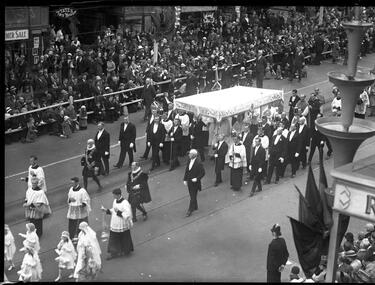
... fibro-cement, and their colour scheme deepens from clear yellow on the top cone to orange on the lowest, with slender rims of vermilion and white. Each cone is flooded with light externally from three lamps concealed in the one below it. There is also a painted coat of arms from which spring a trophy of flags.” Note the sign for Tates Tea House - a well-known Melbourne landmark, located in the basement of the Manchester Unity Building...fibro-cement, and their colour scheme deepens from clear yellow on the top cone to orange on the lowest, with slender rims of vermilion and white. Each cone is flooded with light externally from three lamps concealed in the one below it. There is also a painted coat of arms from which spring a trophy of flags.” Note the sign for Tates Tea House - a well-known Melbourne landmark, located in the basement of the Manchester Unity Building ...Published: The Age 10 December 1934 Published title: RELIGIOUS PAGEANTRY AND FERVOR MARKED CLOSE OF EUCHARISTIC CONGRESS. Published caption: Thousands of men and women marched in the Eucharistic procession yesterday which brought the Congress to a close. The picture above shows the procession headed by the Children of Mary in Bourke-street and turning into Spring-street, in front of Parlia ment House. Right (top) — The procession leaving the starting point at St. Patrick's Cathedral and below, the Papal Legate carrying the Host under a canopy borne by a guard of laymen and preceded by white-clad girls scattering rose leaves, incense bearers and the Papal Chamberlains in their Spanish uniforms. The end of the procession in front of Mount St. Evin’s Hospital from which the final benediction was given by Cardi nal MacRory from an altar on the bal cony. The Papal Legate carrying the Host is passing through the assemblage of surpliced priests. On the left is an aerial picture taken just as the Children of Mary at the head of the procession are taking up their places for the final assembling. In the left top corner of the picture is St Patrick's Cathedral, from which the procession started, and in the right lower corner is Mount St. Evin’s Hospital. The space immediately in front of the hospital was reserved for the processionists while on either side is the crowd that assembled to take part in the final service. Trove article identifier: http://nla.gov.au/nla.news-article205067634 Religious pageantry and fervour The National Eucharistic Congress took place from Sunday 2 to Sunday 9 December 1934. An initiative of the Roman Catholic Church, it was their contribution to Melbourne’s Centenary Celebrations. 200,000 Catholics resided in Melbourne at this time – one quarter of the city’s population. While the Congress was aimed at Catholics, and acted as an opportunity to reinforce their living faith and homage, it contained a variety of events of splendour, solemnity and significance designed to appeal to Melbournians, and would additionally provide incentive for people to travel to Victoria, thereby creating an economic benefit to the state. The Procession of the Blessed Sacrament concluded the week-long Congress. Commencing at St Patrick’s Cathedral, it covered a two-mile route via Gisborne, Collins, Elizabeth and Bourke streets, then to Victoria Parade, where a final benediction was pronounced by Cardinal MacRory from the balcony of Mount St. Evin’s Hospital (today the site of St Vincent’s Private Hospital). An estimated 100,000 took part. Onlookers line Swanston Street, some standing at the entrance to Tate’s Tea House – a well-known Melbourne landmark located in the basement of the Manchester Unity Building. The white-veiled Children of Mary Sodalists strew rose petals in the path of the canopy, covering the jewelled Monstrance containing the Blessed Sacrament of consecrated Host (bread) and carried by the Cardinal. Church hierarchy in scarlet robes walk alongside, followed by incense bearers, the Papal Chamberlains in their Spanish uniforms, and a guard of honour of laymen of the city and country parishes. In the foreground is a tiered pole. This is one of 800 “Venetian Lights” specifically installed for the Centenary along all principal thoroughfares. “The poles are painted white, the superstructure resembling three trumpet lilies are made of durable fibro-cement, and their colour scheme deepens from clear yellow on the top cone to orange on the lowest, with slender rims of vermilion and white. Each cone is flooded with light externally from three lamps concealed in the one below it. There is also a painted coat of arms from which spring a trophy of flags.” – Australian Home Beautiful Featured in "Newsworthy: Melbourne in photographs 1933-1936" exhibition at East Melbourne Library, October to December 2023. Exhibition caption by project volunteer, Louise McKenzie. Research by project volunteer, Louise McKenzie: This photo was taken on Sunday 9 December 1934, looking from the Melbourne Town Hall (corner of Swanston and Collins streets) across the road to the Manchester Unity Building. This is the afternoon procession concluding the Catholic Church’s National Eucharistic Congress in Melbourne - a procession of the Blessed Eucharist through the Melbourne city. It commenced at St Patrick’s Cathedral, and covered a two mile route via Gisborne, Collins, Elizabeth and Bourke streets, then to Victoria Parade where a final benediction was pronounced by the Cardinal from the balcony of Mount St. Evin’s Hospital (present day St Vincent’s Private Hospital). An estimated 100,000 took part in the march. The people lining the streets a men in suits and hats, women in coats and hats, and children in their “Sunday best”, kneeling beside the road, many with their hands clasped in front of them. The small girls ahead of the canopy covering the Host are pale-blue clad, white veiled Children of Mary Sodalists, who strew rose petals to pave the way of the Cardinal carrying the jewelled Monstrance (Blessed Sacrament of consecrated Host (bread)), together with church heirarchy wearing scarlet robes. Behind came incense bearers and the Papal Chamberlains in their Spanish uniforms, followed by a guard of honour of laymen of the city and country parishes. The Children of Mary Sodalities was a religious body which aimed at fostering in its members an ardent devotion, reverence, and filial love towards the Blessed Virgin Mary, initially embracing the pupils and orphans of the schools and institutions of the Sisters of Charity of St Vincent de Paul. In 1847, Blessed Pius IX affiliated them to the Jesuit Roman Sodality. They were distinguished by a medal suspended from a blue ribbon, and once a fully-fledged a Child of Mary wore a distinctive blue cape. On the extreme right foreground of the photo can be seen an intriguing piece of artistic design – a tiered pole. This is one of the 800 “Venetian Lights” specifically installed for Melbourne’s Centenary along all principal thoroughfares. “The poles are painted white, the superstructure resembling three trumpet lilies are made of durable fibro-cement, and their colour scheme deepens from clear yellow on the top cone to orange on the lowest, with slender rims of vermilion and white. Each cone is flooded with light externally from three lamps concealed in the one below it. There is also a painted coat of arms from which spring a trophy of flags.” Note the sign for Tates Tea House - a well-known Melbourne landmark, located in the basement of the Manchester Unity Building. References: RELIGIOUS PAGEANTRY AND FERVOR MARKED CLOSE OF EUCHARISTIC CONGRESS. (1934, December 10). The Age (Melbourne, Vic. : 1854 - 1954), p. 11. Retrieved September 14, 2023, from http://nla.gov.au/nla.news-article205067634 Eucharistic Congress (1934, December 1). The Argus (Melbourne, Vic. : 1848 - 1957), p. 11. Retrieved January 23, 2024, from http://nla.gov.au/nla.news-article10997817 National Eucharistic Congress, Melbourne. (1934, December 6). The Catholic Press (Sydney, NSW : 1895 - 1942), p. 28. Retrieved January 23, 2024, from http://nla.gov.au/nla.news-article104371824 'The year of the Melbourne Eucharistic Congress: 1934.' The Campion Society, https://campion.australiancardijninstitute.org/ch-7-the-year-of-the-melbourne-eucharistic-congress-1934/ 'Melbourne Eucharistic Congress 1934.' Panoramic photograph, https://emhs.org.au/catalogue/emdf0123 The National Eucharistic Congress, Melbourne, Australia December 2nd-9th, 1934. Edited by Rev. J.M. Murphy and Rev. F. Moynihan, The Advocate Press, Melbourne. 'Children of Mary Sodalists', Wikipedia, https://en.wikipedia.org/wiki/Sodality_of_Our_Lady 'Dressing Melbourne for the Duke' (1934, October 1). The Australian home beautiful : a journal for the home builder, p. 21, 58. Retrieved September 14, 2023, from http://nla.gov.au/nla.obj-2950922209 Photographer notations on slide: "Eucharistic Congress Procession on Swanston St B61" [sic - actually Collins Street].events, religion, parades, catholic church -
 Bendigo Military Museum
Mixed media - SOLDIERS MEMORIAL INSTITUTE RESTORATION & REDEVELOPEMENT 2009 - 2015
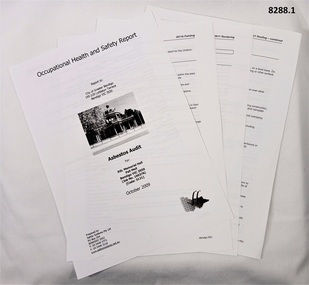
... During 2011 the Sec RSL Paul discussed with C/C Peter a broader upgrade of the entire building with emphasis on the Rear Fibro addition which incorporated the stage, toilets and storage. ...During 2011 the Sec RSL Paul discussed with C/C Peter a broader upgrade of the entire building with emphasis on the Rear Fibro addition which incorporated the stage, toilets and storage. ...These records, plans, maps and documentation revolve around the Soldiers Memorial Institute Pall Mall Bendigo. (Now Bendigo Military Museum) This sequence of events regarding works begins in 2009 and goes through to 2015.It can be broken up into Phase 1 (P1) ongoing Works and Phase 2 (P2) Redevelopment/Revitalisation as one followed the other and overlapped. The following list by date/year is a very brief outline of the discussions, meetings, planning and works completed. October 2009 P1. Asbestos Audit carried out. 2010 P1. First assessments of Asbestos in the Office, Foyer, Passage & Meeting room. Asbestos was removed from the Men’s toilet. This would also include a new Trap door over the Mine situated under the Billiard room. 11.10.2011 P1. New trap door installed in the Billiard room. 15.10.2011 P1. Mine is checked with ground penetrating Radar. June 2011 P1. Asbestos removal in the kitchen. (Not in use) Following on : Asbestos in the Meeting room & Passage is clear, carpet in the Office to come up, asbestos removal in the Women’s toilets. Structural damage to the front wall of the Office and Fireplace wall, false ceiling in the office (refer Cat No 8218) At this point a group being CoGB Property Manager, Heritage, Contractors, Museum Curator/Chairman Sub Committee Peter Ball (C/C) RSL Secretary Paul Penno, RSL Club Manager Erik & Maiintenance Ken to be involved. C/C Peter to Co Ordinate a time line of works, Museum closures and draw up basic plans for Office upgrade. 1.9.2011 P1. Due to Office walls damage talks decided to upgrade the Office, the room is stripped and the false ceiling comes down. 15.9.2011 P1. Foyer, asbestos tiles removed. 20.9.2011 P1. Floor and timber finish approved by Property Manager. Some works being done in the kitchen. Phase 2 beginnings. P2. During 2011 the Sec RSL Paul discussed with C/C Peter a broader upgrade of the entire building with emphasis on the Rear Fibro addition which incorporated the stage, toilets and storage. Sec Paul, Pres Cliff Richards, C/C Peter met to form a plan forward. 20.10.2011 P2. Letter to C of GB regarding this phase and request for a meeting. 22.11.2011 P2. Meeting between 2 x C o GB and Sec Paul, Pres Cliff, C/C Peter RSL. C/C Peter to draw up a Dot point plan. 23.11.2011 P1. Office is completed enough to move in. 2.1.2012 P1. Works in the kitchen had begun but now to be fully gutted. 20.2.2012 P1. C/C Peter to draw up a basic plan of kitchen for use by the Museum/RSL. Mid July 2012 PI. Kitchen completed enough for use. 23.10.2012 P2. Meeting with C of GB and 3 x Museum to draw up a Business plan, a new Conservation Management Plan (CMP), $ commitment discussed. 10.12.2012 P2. Facilitator Murray Poustie RSL Historian, C/C Peter and 2 x Museum Sub Committee Marg Andrea and John Young to put together a business plan. 4.1.2013 P2. New CMP arrives, number of issues with. 15.1.2013 P2. Meeting with C of GB, Heritage, C/C Peter and M Poustie re corrections CMP. 16.1.2013 P2. First meeting of Museum group with basic plans put together. 23.1.2013 P2. Second meeting of Museum group, alterations made. 30.1.2023 P2. New CMP arrives. 7.2.2013 P1. Final Kitchen finished with Air con installed. 8.2.2013 P2. Plans adopted by Museum group. 13.2.2013 P2. Plans put to Bendigo RSL. 15.3.2013 P2. Plans updated with meeting between C/C Peter, Sec Paul, Pres Cliff, Manager Erik, forwarded to Council. 26.3.2013 P2. Scope of planning arrives back from C of GB. August 2013 P2. New Working group formed, Sec Paul, C/C Peter, Sub/comm member John. Meeting with Ian Ross & 1 SED & W/Group to develope the Business plan further, one item that no works to be done before 1.1.2016 due to 2015 being Centenary of Anzac. A 2nd meeting a week later. P1. At this point the Rotunda was not part of the initial process 23.9.2013 P1. Inspection of the North front wall by C of GB, Heritage & C/C Peter. Asbestos sample taken & positive. Water damage/cracks as in Office Walls. 11.10.2013 P1. C of GB, Heritage have another look at Rotunda. No works before to be done until the dryer months. 11.10.2013 P2. First meeting with Concept planners Lovell Chen x 3, Council x 3, Heritage x 2, SED x 1 & Museum x 3 group. Introductory meeting so all up to date, Museum walk through. 12.11.2013 P2. 2nd meeting of the above with draft proposals of extension upgrade of SMI presented. 18.12.2013 P2. 3rd meeting with above, number of small changes made. 2014 P2. Sec Paul, Pres Cliff, C/C Peter met with full Council to put the case to them. 2014 P1. Meeting with Council, Contractors, C/C Peter re Rotunda maintenance, asbestos removal to be on 30.5.2014 to fit in with current Museum Bookings. 4.11.2014 P2. An Orientation day was held for prospective detailed Planning. 11.11.2014, C/C Peter met with C of GB group to choose the tender for the final detailed drawings, Lovell Chen chosen, to be finalised by April 2015. 20.1.2015 P2. Bore holes drilled at rear of SMI re possible below ground structure. 18.2.2015 P2 1st meeting of Working group, 4 x Lovell Chen, various Council departments x 10, Museum x 3, Art Gallery x 1. 17.3.2015 P2. 2nd meeting of W/Group, a meeting with SED and SED presentation to the RSL. 5.5.2015 P2. 3rd meeting of the W/group with latest plans & possibly final. 4.6.2015 P2. 4th meeting of the W/group, planning permit & Heritage applications will now go ahead. On paper still 2 years planning & 4 years construction. P1. The Rotunda completed with new membrane and touch up painting. 30.6.2015 P2. Final meeting of W/group, from now on just planning, approvals, Heritage & Public objections. Fund raising to begin. Further to this scope. 3.8.2015 P2. Sec Paul & C/C Peter put the plans to Committee BDRSL and are approved. 5.8.2015 P2. Plans signed by Sec Paul and forwarded to C of GB Council. .1) Occupational Health and Safety Report re Asbestos in the Soldiers Memorial Institute Hall Pall Mall Bendigo for the City of Greater Bendigo - prepared by “Safety Systems PTY LTD Bendigo - October 2009”. 55 pages double sided, all print in B & W. .2) Correspondence, 80 pages A4 dated 20.10.2011 to 23.12.2013, letters, emails, plans, maps, fund raising relating to Phase 2. Items involve, RSL, C of GB, Heritage, SED, Political Parties, Government. .3) .4) Conservation Management plans Returned Soldiers Memorial Hall Pall Mall Bendigo, both 65 pages, A4, Colour and B & W, contains Contents, maps, diagrams, charts, photos put together by "Context PTY LTD Brunswick Victoria. .3) Draft copy dated 19.12.2012, has green Texta markings throughout and biro notes. .4) Final report with corrections dated 24.1.2013. .5) .6) Soldiers Memorial Institute Museum Business Plan, January 2013, A4 17 pages, In Colour & B & W, contents, maps and planning. .5) Revised edition in plastic insert folder. .6) Revised edition for presentation purposes. .7) .8) Business Planning documents by Ian Ross SED Advisory 2013. .7) Business Plan A4, B & W, 12 pages, copy of the initial plan dated 19.8.2013. .8) Bendigo Soldiers Memorial Institute Museum Business Plan December 2013, updated presentation version, plastic covers, A4, Colour & B & W, 31 pages, covers, Vision, Priorities, strategic actions/interventions, action/outcome plan. Appendix A, Appendix B. Photos, plans, potential funding and where from. .9) Letter, documents, drawing relating to the replacement of the Balcony Membrane of the Soldiers Memorial Institute. The letter is 4 pages from Meagan, Heritage C of GB to Sec Paul, C/C Peter regarding the replacement of the Membrane dated 18.2.2014. 15 pages of Membrane works prepared by Lovell Chen to be carried out, dated 14.2.2014. The drawing shows the detail of how the replacement will be. .10) Photographs of the Soldiers memorial Institute (55), taken during phase 2, A4, colour showing external walls and roofing and damage, internal taken in the loft, all rooms, damage to areas. .11) Three folders, spiral bound, plastic covers, Colour and B & W images, the 3 front pages are all different. Contents are plans, sketches, proposals, from Demolition maps to final specifications. Folder 1. 11 pages, one sided dated December 2013, Lovell Chen. Folder 2. 14 pages, one sided dated December 2014, Lovel Chen. Folder 3. 21 pages, one sided dated December 2104 and May 2015, Lovel Chen.brsl, smirsl, restoration, asbestos, business, plans, conservation
