
Showing 63 items matching " grain shed"
-
 Glenelg Shire Council Cultural Collection
Photograph - Photograph - Ship at dock with large shed to right, possible grain conveyor and grain shed, 1964, 1964
... Photograph - Ship at dock with large shed to right, possible grain conveyor and grain shed, 1964...... Grain Shed...Black and white photograph of a ship at dock with large shed to right, possible grain conveyor and grain shed...(Ink stamp with blue pen and pencil additions, centre) Black and white photograph of a ship at dock with large shed to right, possible grain conveyor and grain shed Photograph Photograph - Ship at dock with large shed to right, possible grain conveyor and grain shed, 1964 ...Port of Portland Authority archivesFront: (no inscriptions) Back: P.H.T./ Print No. ... Neg. No 86/ Date taken 23-9-64/ SUBJECT./ ... (Ink stamp with blue pen and pencil additions, centre)port of portland archives, portland harbour, ship berthed, grain conveyor, grain shed -
Glenelg Shire Council Cultural Collection
Photograph - Photograph Contact prints - Piles of grain in shed and chute and hopper, 1960
... Photograph Contact prints - Piles of grain in shed and chute and hopper...... Grain Shed...First three show different views of the same two piles of grain in a shed. The fourth one is a close up of chute and hopper used to deliver the grain....Photograph Photograph Contact prints - Piles of grain in shed and chute and hopper ...Port of Portland Authority ArchivesFront: B/r pencil. Back: F1 2-12-60 in pencil.port of portland archives, grain shed, chute, hopper -
Glenelg Shire Council Cultural Collection
Photograph - Photograph - Construction site by a wharf with a metal shed on it, 1964, 1964
... ... Grain Shed...Black and white photograph of a dock with large shed to right, possible grain conveyor and grain shed. ...(Ink stamp with blue pen and pencil additions, centre) Black and white photograph of a dock with large shed to right, possible grain conveyor and grain shed. ...Port of Portland Authority archivesFront: (no inscriptions) Back: P.H.T./ Print No. ... Neg. No 20/ Date taken 5-5-64/ SUBJECT./ ... (Ink stamp with blue pen and pencil additions, centre)port of portland archives, portland harbour, grain conveyor, grain shed -
Glenelg Shire Council Cultural Collection
Photograph - Photograph - contact prints showing silo conveyor construction, Portland, 1964
... Two photo's showing conveyor belt construction, two of ship berthed, grain shed, silo construction in foreground. Two photo's of ship berthed, grain shed, metal towers on silo construction site....Two photo's showing conveyor belt construction, two of ship berthed, grain shed, silo construction in foreground. Two photo's of ship berthed, grain shed, metal towers on silo construction site. ...Port of Portland Authority ArchivesFront: 86. 23-9-64 95. 23-9-64 96. 23-9.64 83. 23-9-64 84. 23-9-64 85. 23-9-64 (Beneath each print, in white.) Back: 86 pencilport of portland archives, grain silos -
Glenelg Shire Council Cultural Collection
Photograph - Photograph - ship at dock, Portland, 1964
... Black and white photograph of a ship at dock with large shed to right, possible grain conveyor and grain shed....(Ink stamp with blue pen and pencil additions, centre) Black and white photograph of a ship at dock with large shed to right, possible grain conveyor and grain shed. ...Port of Portland Authority archivesFront: (no inscriptions) Back: P.H.T./ Print No. ... Neg. No 86/ Date taken 23-9-64/ SUBJECT./ ... (Ink stamp with blue pen and pencil additions, centre)port of portland archives, ship, dock -
Glenelg Shire Council Cultural Collection
Photograph - Photograph - Sheet of contact prints showing silo and conveyor construction, 1964
... Two of ship berthed, grain shed and mtal towers on silo construction site. ...Two of ship berthed, grain shed and mtal towers on silo construction site. ...Port of Portland Authority ArchivesFront: 83. 23.9.64 84. 23-9-64 85. 23-9-64 95. 23-9-64 96. 23-9-64 86. 23-9-64 (In white, beneath each print).port of portland -
Glenelg Shire Council Cultural Collection
Photograph - Photograph - Portland Harbour, n.d
... Black and white photo, showing grain storage shed, grain trucks, ship at berth, tug boat, floodlights on....'G284 A' in black ink Black and white photo, showing grain storage shed, grain trucks, ship at berth, tug boat, floodlights on. ...Back: photographer's stamp. 'G284 A' in black ink -
Glenelg Shire Council Cultural Collection
Photograph, Photograph - Grain storage, n.d
... Black and white photograph of pile of grain in large shed. Grain chute and hopper. Man on left adjusting machinery....Black and white photograph of pile of grain in large shed. Grain chute and hopper. Man on left adjusting machinery. ...Port of Portland Authority ArchivesBack: 7cm wide border ruled around edge in pencil. 28cms x 21cms (15) top border, pencil. 58% pencil crossed out 60% blue pencil.port of portland -
Glenelg Shire Council Cultural Collection
Photograph - Photograph - Loading Grain, n.d
... Black and white photo, taken from ship, showing grain trucks, storage shed, grain delivery chutes, tractor, workers, onlookers...Glenelg Shire Council Cultural Collection History House Cliff Street Portland great-ocean-road Port of Portland Authority Archives Port of Portland Archives Black and white photo, taken from ship, showing grain trucks, storage shed, grain delivery chutes, tractor, workers, onlookers Photograph Photograph - Loading Grain ...Port of Portland Authority Archivesport of portland archives -
Glenelg Shire Council Cultural Collection
Photograph - Photograph - grain storage, n.d
... Black and white photo of pile of grain in large shed. Grain delivering chute and hopper in foreground, two men between equipment and pile of grain....Glenelg Shire Council Cultural Collection History House Cliff Street Portland great-ocean-road Port of Portland Authority Archives Port of Portland Archives grain silos Black and white photo of pile of grain in large shed. Grain delivering chute and hopper in foreground, two men between equipment and pile of grain. ...Port of Portland Authority Archivesport of portland archives, grain silos -
Glenelg Shire Council Cultural Collection
Photograph, Photograph - Grain storage, n.d
... Black and white photo of a pile of grain in a shed....Glenelg Shire Council Cultural Collection History House Cliff Street Portland great-ocean-road Port of Portland Authority Archives Port of Portland Black and white photo of a pile of grain in a shed. Photograph - Grain storage Photograph Photograph ...Port of Portland Authority Archivesport of portland -
Glenelg Shire Council Cultural Collection
Photograph, Photograph - Grain storage, n.d
... Black and white photo of two piles of grain in large shed....Glenelg Shire Council Cultural Collection History House Cliff Street Portland great-ocean-road Port of Portland Authority Archives Black and white photo of two piles of grain in large shed. Photograph - Grain storage Photograph Photograph ...Port of Portland Authority Archives -
Glenelg Shire Council Cultural Collection
Photograph, Photograph - 'Almstelmeer', 1976
... Top view of 'Amstelmeer', showing hatch covers on place. Grain storage shed and conveyor on left. Silos in background, right....Top view of 'Amstelmeer', showing hatch covers on place. Grain storage shed and conveyor on left. Silos in background, right. ...Port of Portland Authority ArchivesBack: Amstelmeer - oats 5/4/76 in pencilport of portland -
Glenelg Shire Council Cultural Collection
Photograph - Photograph - grain storage, n.d
... Black and white photo of pile of grain in storage shed. Chute delivering more grain to top of pile....Black and white photo of pile of grain in storage shed. Chute delivering more grain to top of pile. ...Port of Portland Authority ArchivesBack: Pencil grid ruled round sides of photo 23 1/2cm - 100 screen in pencil.port of portland archives, grain chutes -
Glenelg Shire Council Cultural Collection
Photograph - Photograph - grain storage, n.d
... Black and white photograph of a large pile of grain in storage shed. Filled bags contain pile. Chute and hopper in foreground....Glenelg Shire Council Cultural Collection History House Cliff Street Portland great-ocean-road Port of Portland Authority Archives Port of Portland Archives grain silos Black and white photograph of a large pile of grain in storage shed. Filled bags contain pile. Chute and hopper in foreground. ...Port of Portland Authority Archivesport of portland archives, grain silos -
Glenelg Shire Council Cultural Collection
Photograph - Photograph - grain storage, n.d
... Black and white photograph of numerous piles of grain in large shed. Chutes either side of shed delivering more grain to piles....Glenelg Shire Council Cultural Collection History House Cliff Street Portland great-ocean-road Port of Portland Authority Archives Port of Portland Archives grain silos Black and white photograph of numerous piles of grain in large shed. Chutes either side of shed delivering more grain to piles. ...Port of Portland Authority Archivesport of portland archives, grain silos -
Glenelg Shire Council Cultural Collection
Photograph - Photograph - set of 4 contact prints, 1960
... Top two are the same, rail trucks beside shed. Bottom two are the same. Pile of grain in shed. Chute delivering more grain to pile. ...Top two are the same, rail trucks beside shed. Bottom two are the same. Pile of grain in shed. Chute delivering more grain to pile. ...Port of Portland Authority ArchivesFront: B/r h.s left in pencil. Back: F1 2-12-60 in pencil. -
Glenelg Shire Council Cultural Collection
Photograph - Photograph - grain storage, n.d
... Black and white photograph of piles of grain in large storage shed. Chute delivering more grain to one pile....Glenelg Shire Council Cultural Collection History House Cliff Street Portland great-ocean-road Port of Portland Authority Archives Port of Portland Archives grain silos Black and white photograph of piles of grain in large storage shed. Chute delivering more grain to one pile. ...Port of Portland Authority Archivesport of portland archives, grain silos -
Glenelg Shire Council Cultural Collection
Photograph, Photograph - Grain storage, n.d
... Black and white photo of two piles of grain on floor of large storage shed. More grain being delivered by chute to pile in foreground....Glenelg Shire Council Cultural Collection History House Cliff Street Portland great-ocean-road Port of Portland Authority Archives Port of Portland Black and white photo of two piles of grain on floor of large storage shed. More grain being delivered by chute to pile in foreground. ...Port of Portland Authority Archivesport of portland -
Glenelg Shire Council Cultural Collection
Photograph - Photograph - Main Breakwater Construction, n.d
... View from the south east, showing two ships at berth on left, transit shed on right, pile of grain in front of shed....View from the south east, showing two ships at berth on left, transit shed on right, pile of grain in front of shed. Photograph Photograph - Main Breakwater Construction ...Port of Portland Authority Archivesport of portland archives, portland harbour, ship berthed -
 Eltham District Historical Society Inc
Document - Property Binder, 836 Main Road, Eltham
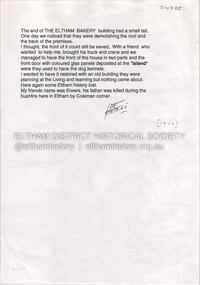
... The front shop was operated as a “sometimes” art gallery which we called “Gouge and Grain”. There were old sheds against the back fence which we thought were probably stables from the bakery days. ...The front shop was operated as a “sometimes” art gallery which we called “Gouge and Grain”. There were old sheds against the back fence which we thought were probably stables from the bakery days. ...Newspaper article: Was woman found in well put in it? Diamond Valley Local, 16 February 1954, story of wife of baker found in well before Burgoyne family purchased bakery. Newspaper article: Bakery goes ... locals protest, The Valley Voice, 18 July 1979, Joh Ebeli protests about planned destruction, history of building memories of Alistair Knox. Note on demolition of Eltham Bakery building, 1979, by Joh Ebeli who tried to save front of house with friend names Elwers. Photocopy newspaper article: Murder mystery at bakery, History comes to life for old building, 4 November 1979, Harry Burgoyne remembers his grandfather John James Thomas Neville Burgoyne bought bakery in 1896 at time of body found in well, bakery build 1860-1864, sold in 1921. Photocopy newspaper article: Public meeting called over Eltham restaurant proposal, Diamond Valley News, 4 October 1988, protests re proposal for motel and restaurant. Photocopy newspaper article: Fresh tales at an old mine, Diamond Valley News, 4 October 1988, Ausminde Pty Ltd applied for renewal of exploration licence at Old Tree Hill Mine, last mined by Stan Bone and Bill Wallace, photograph of Russell Yeoman at site. Photocopy of line drawing, The Bakery, by Joh Ebeli, 1978. Photocopy of photograph, Old Bakery, next to house built 1880. Photocopy of photograph with Old Bakery in background. On August 12, 1902, appearing before T. Smallman, Esq,. Police Magistrate, and Messrs. W. Duncan and W.J. Taylor, Justices of the Peace is Luther Haley, baker. Wilfred Henry Johnston, by his agent Stanley Ernest Elder had applied for a warrant of ejectment under the Landlord and Tenant Act 1890 against Luther Haley from the bakery premises at the corner of Main Road and York Street. From the evidence presented it is made known that Mrs Burgoyne of Eltham had purchased the property some months earlier from Mr Johnston, which consisted of a store and bakery establishment at Eltham occupied by Mr. Luther Haley, and whose lease expired some little time back, and up to the present time, Mr. Haley was not prepared to leave. He informed the court that he was unable to secure at Eltham a suitable house in which to carry on his business, but he was building a place near the railway station which he expected to be done in about three weeks time, at which time he would give up possession of the bakery. Mr Smallman informed the defendant, Luther Haley, that he would have to quit the premises in three weeks from the present date, and that a warrant of ejectment would be issued. However he also informed Mr Haley that he would order the warrant to lie in the office for three weeks from that date. The premises under construction refered to by Luther Haley in court were situated on the western side of Main Road, near the railway station slightly opposite present day Arthur Street. It was opened around September 1902 as a General Store, Bakery and Tea Rooms. In June 2024 Annie Hackrath shared a memory of living in the old bakery: "My husband and I lived in the old bakery for 18 months in 1978-9 , husband Geoff used the old bakery out the back as a wood workshop, making turnery and handcrafted furniture. The front shop was operated as a “sometimes” art gallery which we called “Gouge and Grain”. There were old sheds against the back fence which we thought were probably stables from the bakery days. Lovely memories of the old place which had so much character and seemed to attract a multitude of interesting creative people! Sad that it was pulled down; a friend salvaged some of the lead light glass in the old doors and included it in a new door panel for us."main road, eltham, property, shops, businesses, eltham bakery, burgoyne family, joh ebeli, alistair knox, harry burgoyne, john james thomas neville burgoyne, one tree hill mine, stan bone miner, bill wallace miner, russell yeoman, henry rech, ausminde pty ltd, john street, bridge street, judy paynter, art gallery, gouge and grain, annie hackrath, geoff hackrath -
 The Beechworth Burke Museum
Photograph, 1859
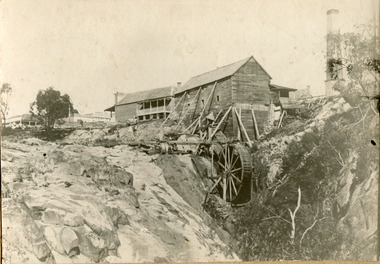
... grain, dairy, fodder and meat. Unfortunately, the region experienced poor agricultural yields in the 1880s and 1890s, which lead to the closure of the Beechworth Flour Mills in the 1880s. This photograph depicts the first sawmill in Beechworth, which was responsible for making the materials available for other early buildings in the town. The mill race and wheel are also clearly depicted, which may shed ...Louis Chevalier, brother of popular artist Nicholas Chevalier, opened a sawmill in Beechworth near Spring Creek in Newtown in 1853. This facilitated a boom in building in the town, as materials were much more available than they had been previously. A second sawmill was opened in the town in 1856. Louis Chevalier served on the Beechworth Council as a representative of Newtown between 1858 and 1860. As this photograph is taken in 1859, the mill would have been operating as a sawmill at the time this photograph was taken. Louis Chevalier’s mill stopped sawing wood and began milling flour at some point between 1860 and 1862. At this time, the Oven’s district was almost self-sufficient, producing considerable quantities of grain, dairy, fodder and meat. Unfortunately, the region experienced poor agricultural yields in the 1880s and 1890s, which lead to the closure of the Beechworth Flour Mills in the 1880s. This photograph depicts the first sawmill in Beechworth, which was responsible for making the materials available for other early buildings in the town. The mill race and wheel are also clearly depicted, which may shed light onto how mill wheels of this era and place were constructedBlack and white rectangular photograph printed on matte photographic paper mounted on boardReverse: 3146 / 1997.2654 / Louis Chevalier's Flour Mill on / the Newtown Falls before the / Bridge / Est 1853 / this photo 1859 / 84-229-1 / Burke Museum Beechworth / Page 41 / 81 % / (Illegible) / (Illegible) 14 / chevalier, louis chevalier, newtown, mill, grain mill, sawmill, flour mill, 1850s beechworth, beechworth council, farming and agriculture, victorian agricultural history, spring creek, buildings, industry, forestry, wood, timber -
 Greensborough Historical Society
Financial record - Receipt, P. Stubley & Son, P. Stubley & Son Pty Ltd, 27/10/1964
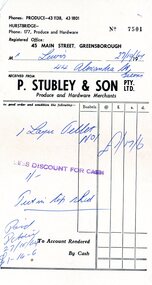
... Lewis family stubleys hardware stubleys hay and grain store Handwritten [Bag] of Layer pellets; Put in top shed [Sold] to Mr [Neil] Lewis, 44 Alexander St. ...Receipt for purchase of "1 large pellet No1" [possibly chicken food] from Greensborough's Stubley's produce and hardware.Receipt, black print on white paper (yellowed) Handwritten [Bag] of Layer pellets; Put in top shed [Sold] to Mr [Neil] Lewis, 44 Alexander St. Greens. by P Stubley & Son, 45 Main Street, Greensborough for One pound 16 sh and 6d cashlewis family, stubleys hardware, stubleys hay and grain store -
 Charlton Golden Grains Museum Inc
Photograph, Charlton Shire, Charlton Flour Mill, c.1987
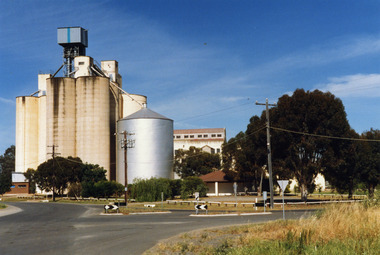
... grain receival site for **GrainCorp**, cementing its continued, vital role in Charlton's agricultural life. W.E. Foreman Noske Bros Flour Mill Charlton Business Industry Colour photograph of Charlton Flour Mill and silos. Intersection of Kaye & Davies Streets in the foreground. One large silver silo and three taller greyish concrete silos to the left. Three other cream coloured silos behind. There are pipes and sheds ...A previous mill had operated in Charlton by Mr. W.E. Foreman on the banks of the Avoca River and was acquired in 1919 by Noske Bros. The present Flour Mill was built by Noske Bros and opened in May 1927. It was taken over by the Grain Elevator Board in the 1970s. Noske's Flour Mill, with its commanding presence and towering silos, has long **dominated the Charlton skyline** and remains a significant landmark, even though it no longer mills flour. The mill's history is deeply intertwined with the development of Charlton and the grain industry of the surrounding district. The foundation for the mill's presence was laid in 1919 when Messrs Noske Bros. Pty. Ltd., already owning mills in Horsham, Nhill, and Murray Bridge, acquired G. H. Foreman’s Mill located by the Avoca River. The founder, **T. J. Noske**, was an early pioneer of flour exporting, expanding his milling business after unexpectedly acquiring the Horsham mill. ### A State-of-the-Art Operation The original mill by the river operated until August 1926 before being closed and dismantled. Plans were well underway for a **new, state-of-the-art mill** to be located at the former Cobb and Co site. In 1927, the new mill began operation. It was one of the largest in the state, boasting a capacity of three tons of flour per hour, a 250 h.p. diesel engine, and three initial silos. The mill quickly gained a reputation for **excellence** for both its design and its flour, which was sold successfully in local and overseas markets. ### Periods of Expansion and Trial The mill continued to grow, reflecting the importance of the local agricultural industry. Between 1940 and 1941, **nine new silos** were built, adding bulk receival points. In the record-breaking 1968 season, the mill received a colossal wheat intake of **695,000 bushels**. However, the mill also faced setbacks. On January 21, 1949, disaster struck when a **large fire** erupted in the storage shed, which contained 500 tons of bagged flour ready for export and new flour bags. The blaze was so intense that smoke was visible as far away as Wycheproof, and it threatened to destroy the entire mill. Thanks to the monumental efforts of the Charlton, St. Arnaud, Wycheproof, and Wedderburn Brigades, who ran the main pump almost continuously for 26 hours, the damage was contained, though the estimated loss was a substantial £60,000. ### Transformation of the Site At its peak, the mill was a major employer, providing work for approximately 65–70 men. But after over 45 years of operation, flour production at the mill ceased on October 25, 1973. Noske Industries Ltd. sought to adapt, converting the operation to a less successful stock feed production centre. In 1977, the **Grain Elevators Board** took over the site as a grain receival depot, building a large elevator tower that surpassed the height of the original buildings. The site eventually returned to private hands and, since 2000, has been owned and operated as a primary grain receival site for **GrainCorp**, cementing its continued, vital role in Charlton's agricultural life. Colour photograph of Charlton Flour Mill and silos. Intersection of Kaye & Davies Streets in the foreground. One large silver silo and three taller greyish concrete silos to the left. Three other cream coloured silos behind. There are pipes and sheds on top of the silos. There is a cream single story building to the right of the silver silo and a multi-storey building behind with eight window in the upper level. There is a small red brick building on the far left of the photo.w.e. foreman, noske bros, flour mill charlton, business, industry -
 Charlton Golden Grains Museum Inc
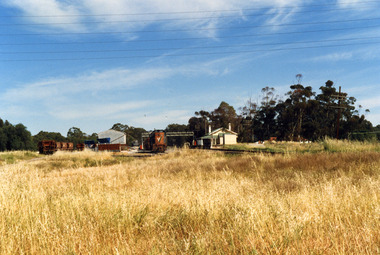
Photograph, Charlton Shire, Charlton Railway Station c. 1987, c.1987
... Grains Museum Inc 1 High Street Charlton goldfields Charlton Railway Station was established in 1882 and closed down in the late 1970s. Transport Railway Station Charlton Colour photograph of the disused Charlton Railway Station. On the right, there is a small cream and green weatherboard building with a large verandah. There is a train engine and trucks in the middle of the photo and some other trucks to the left. There is a large corrugated iron shed ...Charlton Railway Station was established in 1882 and closed down in the late 1970s.Colour photograph of the disused Charlton Railway Station. On the right, there is a small cream and green weatherboard building with a large verandah. There is a train engine and trucks in the middle of the photo and some other trucks to the left. There is a large corrugated iron shed and a small dark grey crane behind it. There is a large area of high grass in the foreground and six electricity wires through the top of the photo.transport, railway station, charlton -
 Charlton Golden Grains Museum Inc
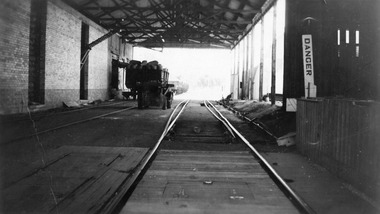
Photograph, c.1940
... Charlton Golden Grains Museum Inc 1 High Street Charlton goldfields Loading bays at Noske's flour mill. The shed was destroyed by fire, jan 1949. ...Loading bays at Noske's flour mill. The shed was destroyed by fire, jan 1949.Standard black and white photograph with no border.charlton, business, noske bros, noske's, flour mill -
 Victorian Interpretive Projects Inc.
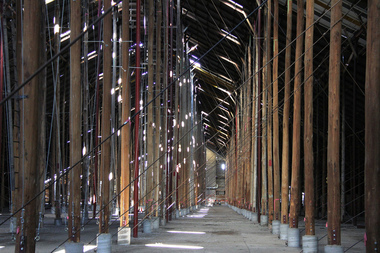
Photograph - digital, LJ Gervasoni, Murtoa Stick Shed 00031, 13/08/2011
... Grain Store...wheat store...stick shed...From the Victorian Heritage Register statement of significance H0791 The Marmalake/Murtoa Grain Store, originally the No.1 Murtoa Shed, is located within the Murtoa Grain Terminal, adjacent to the grain elevator tower and railway line. ...Murtoa grain storage facility better known as the Stick Shed. The shed was constructed in World War Two to store grain. ...Murtoa grain storage facility better known as the Stick Shed. The shed was constructed in World War Two to store grain. ...From the Victorian Heritage Register statement of significance H0791 The Marmalake/Murtoa Grain Store, originally the No.1 Murtoa Shed, is located within the Murtoa Grain Terminal, adjacent to the grain elevator tower and railway line. The shed is 280m long, 60m wide and 19m high at the ridge with a capacity of 3.4 million bushels. The hipped corrugated iron roof of the shed is supported on approximately 600 unmilled hardwood poles set in a concrete slab floor and braced with iron tie rods. These poles are the reason for use of the term "stick shed". With its vast gabled interior and the long rows of poles the space has been likened to the nave of a cathedral. An elevator at one end took wheat from railway trucks to ridge level where it was distributed by conveyor along the length of the shed, creating a huge single mound of grain. Braced internal timber bulkheads on either side took the lateral thrust of the wheat, and conveyors at ground level outside the bulkheads took wheat back to the elevator for transport elsewhere. Wheat had been handled in jute bags from the start of the Victorian wheat industry in the mid nineteenth century. Bulk storage had been developed in North America from the early 1900s. NSW began building substantial concrete silos from 1920-21. In Western Australia, farmers' co-operatives, who had to supply their own bulk storage from 1934-5, pioneered the use of low-cost horizontal sheds of timber and corrugated iron for bulk storage. Following its establishment in 1935 the Victorian Grain Elevators Board (GEB) planned a network of 160 concrete silos in country locations, connected by rail to the shipping terminal at Geelong. By the outbreak of the Second World War there was a worldwide glut of wheat, and Australia soon had a massive surplus which it was unable to export. Only 48 silos had been established under the Victorian Silo Scheme so far, and wartime material and labour restrictions prevented progress with this scheme. The storage deficit had become an emergency by 1941 as Britain obtained its imports from North America, rather than over the lengthy and difficult shipping route from Australia. In 1941 the GEB, under chairman and general manager Harold Glowrey, proposed large temporary versions of the horizontal bulk storage sheds already in use in Western Australia. The proposal was approved by the Victorian Wheat and Woolgrowers Association, who considered the use of shed storages as a longer term proposition. After initial resistance from the Australian Wheat Board, some of whose members represented wheat bagging interests, the Commonwealth and Victorian governments agreed to split the costs, and Murtoa was chosen as a suitable site for the first emergency storage. The main contractor, Green Bros, commenced work on the No.1 Murtoa Shed in September 1941, deliveries of bulk wheat began in January 1942, and the store was full by June of the same year. In the following years the Council for Scientific and Industrial Research (later CSIRO) conducted valuable research and experiment on the impacts and control of insect pests at the Murtoa No.1 shed. With these discoveries, and the development of more effective pesticides, use of the No.1 shed and the larger No.2 shed, erected in 1942/43, continued for many years. The No.2 shed was demolished in 1975. By the 1990s, pest resistance to pesticides and requirements for both pest free and insecticide free grain rendered open storage of this type unviable. The No. 1 store was also becoming increasingly expensive to maintain, and its use was phased out from 1989.Image of the Marmalake/Murtoa Grain Store which is of historical, architectural, scientific (technical) and social significance to the State of VictoriaDigital colour image of the interior of the Marmaduke . Murtoa grain storage facility better known as the Stick Shed. The shed was constructed in World War Two to store grain. The supporting columns are trees.marmalake, murtoa grain store, wheat store, stick shed, murtoa -
 Bendigo Historical Society Inc.
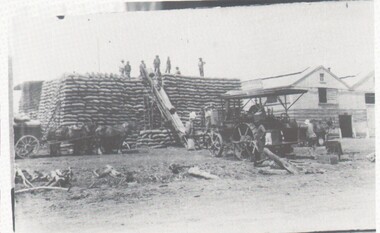
Photograph - HARRY BIGGS COLLECTION: GRAIN DEPOT
... Bags of grain are being taken up an elevator worked by a traction engine onto an already large stack. To the left of the stack is a team of horses hitched to a loaded wagon waiting to be unloaded, there are sheds visible to the right of the stack....Bags of grain are being taken up an elevator worked by a traction engine onto an already large stack. To the left of the stack is a team of horses hitched to a loaded wagon waiting to be unloaded, there are sheds visible to the right of the stack. ...Photograph (proof) of a team of men working at a grain depot. Bags of grain are being taken up an elevator worked by a traction engine onto an already large stack. To the left of the stack is a team of horses hitched to a loaded wagon waiting to be unloaded, there are sheds visible to the right of the stack.topic, farming, grain handling, grain handling, traction engine -
 Bendigo Historical Society Inc.
Photograph - HARRY BIGGS COLLECTION: LOADING WHEAT
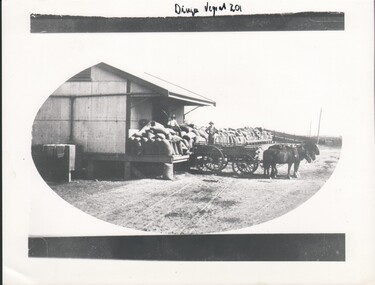
... Photograph of two workers loading or unloading bags of grain (wheat?). There is a shed with a low Veranda extending from the front, there is a wagon drawn by two horses backed up[ to this Veranda. ...History House 11 Mackenzie Street Bendigo goldfields TOPIC Farming loading wheat Dingee Loading wheat Photograph of two workers loading or unloading bags of grain (wheat?). There is a shed with a low Veranda extending from the front, there is a wagon drawn by two horses backed up[ to this Veranda. ...Photograph of two workers loading or unloading bags of grain (wheat?). There is a shed with a low Veranda extending from the front, there is a wagon drawn by two horses backed up[ to this Veranda. One man is standing in the wagon and the other is sitting on bags of grain on the veranda. There are numerous bags of grain on a low platform extending into the background. In the far background there is what appears to be a loading ramp. Written above the photo is Dingee negative 201topic, farming, loading wheat, dingee, loading wheat -
 City of Moorabbin Historical Society (Operating the Box Cottage Museum)
Photograph - Washing Day at 'Law Muir Den' Mrs J L Smith c1910, c1910
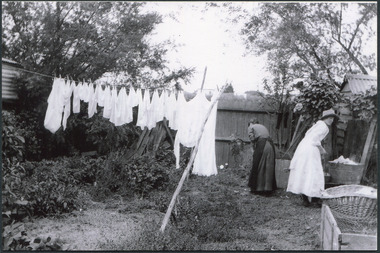
... Shed from Mr Box and commenced business as a wood merchant - sawing logs into shorter pieces using one horse to power the saw. He purchased the property, added to the buildings , began trading in fuel and fodder as well and installed a chaff cutting mill powered by 10hp steam engine. The business prospered As Motor transport was increasing 1926 J L Smith built a small Garage on the opposite corner (Woolworths Supermarket 2005) , employed a good mechanic ( Reg Hunt ) and developed another successful business. J.L.Smith was an early settler in East Brighton now Bentleigh and established successful Wood cutting, Grain ...Mrs J.L.Smith and Ada Smith in the backyard of the house Law Muir Den 510 Centre Rd Bentleigh c 1910. . The early settler women usually devoted a whole day to washing as it was very labourious. A fire was lit in a stone pit and a large tub of water boiled. Soap that had been made, usually in the previous Autumn, from fat drippings and caustic soda, was flaked into the tub to form suds. The clothes were moved around in the tub with a long wooden paddle that was also used to lift the clothes out of the tub into another tub of cold rinsing water..Stains were removed by scrubbing soap on the cloth against a scrubbing board. Clothes were wrung by hand or a mechanical wringer and hung on the clothes line to dry. Mary Ann Smith was married John Logan Smith 1860-1932 who at first rented a cottage 'Law Muir Den' & Shed from Mr Box and commenced business as a wood merchant - sawing logs into shorter pieces using one horse to power the saw. He purchased the property, added to the buildings , began trading in fuel and fodder as well and installed a chaff cutting mill powered by 10hp steam engine. The business prospered As Motor transport was increasing 1926 J L Smith built a small Garage on the opposite corner (Woolworths Supermarket 2005) , employed a good mechanic ( Reg Hunt ) and developed another successful business. J.L.Smith was an early settler in East Brighton now Bentleigh and established successful Wood cutting, Grain & Chaff cutting and Motor garage businesses in Centre Road . He was elected Councillor of the Shire of Moorabbin and, with Mary Ann, his family were involved with local Church, Red Cross, and other community organizations.Photograph, Black & White, showing 2 women washing clothes in a large tub, set over a fire in a stone pit, in the back yard. Clothes are hanging from a rope line strung between 2 trees and held up with a wooden 'prop'
