
Showing 715 items matching " james hall"
-
 Bendigo Historical Society Inc.
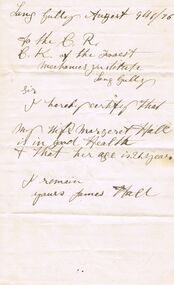
Document - ANCIENT ORDER OF FORESTERS NO 3770 COLLECTION: NOTE FROM JAMES HALL
... ANCIENT ORDER OF FORESTERS NO 3770 COLLECTION: NOTE FROM JAMES HALL...Ancient Order of Foresters No 3770 Collection - Note from James Hall...Note from James Hall to the C.R. of C. K. of the Forest, Mechanics Institute, Long Gully certifying that his Wife Margaret Hall was in good Health and signed by James Hall. ...SOCIETIES Aof correspondence Ancient Order of Foresters No 3770 Collection - Note from James Hall Court King of the Forest Mechanics Institute Margaret Hall Note from James Hall to the C.R. of C. ...Note from James Hall to the C.R. of C. K. of the Forest, Mechanics Institute, Long Gully certifying that his Wife Margaret Hall was in good Health and signed by James Hall. Dated August 9th/76.societies, aof, correspondence, ancient order of foresters no 3770 collection - note from james hall, court king of the forest, mechanics institute, margaret hall -
 Allan Doney Collection, Bendigo Historical Society Inc.
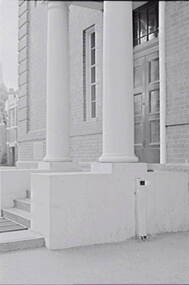
Negative - Senior Secondary College - King James Hall, Allan Doney, 1950 -1970
... Senior Secondary College - King James Hall...Negative Senior Secondary College - King James Hall Allan Doney ...In the years of Allan Doney’s photography, landmark buildings succumbed to fire, neglect and redevelopment. He photographed the grey sand hills from Bendigo’s mining past, the streetscapes, poppet heads, miners’ cottages, gracious homes with ornate verandahs, trams and much more. Above all, his photographs show how much of the city has survived from the 19th century – and how much has not. Through two decades of great change, Allan Doney was there to capture ways people interacted with it. Although he travelled to many other places in Northern Victoria and beyond in search of subjects for his art, he seemed to always return to Bendigo for inspiration. -
 Robin Boyd Foundation
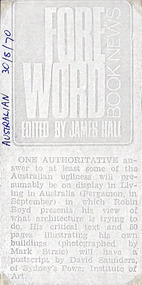
Newspaper - Clipping, James Hall, Foreword, 30.08.1970
... James Hall...Photocopy Foreword Newspaper Clipping James Hall The Australian ...This is a very short notice of the new book by Robin Boyd titled 'Living in Australia'.PhotocopyHandwritten in blue pen, the newspaper and date.walsh st library -
 Bendigo Historical Society Inc.
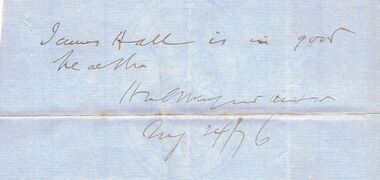
Document - ANCIENT ORDER OF FORESTERS NO 3770 COLLECTION: HEALTH CERTIFICATE
... ... James Hall...The paper states James Hall is in good health. Signed with an unreadable signature....The paper states James Hall is in good health. Signed with an unreadable signature. ...Health Certificate written on a piece of blue water-marked paper and dated May? 24/76. The paper states James Hall is in good health. Signed with an unreadable signature.societies, aof, correspondence, ancient order of foresters no 3770 collection - health certificate, james hall -
 Bendigo Historical Society Inc.
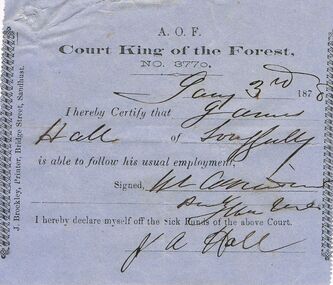
Document - ANCIENT ORDER OF FORESTERS NO 3770 COLLECTION: DOCTOR'S CERTIFICATE
... ... James Hall...Blue Doctor's Certificate dated Jany 3rd 1878 certifying that James Hall of Long Gully was able to follow his usual employment and signed by H.L. ...SOCIETIES Aof correspondence Ancient Order of Foresters No 3770 Collection - Doctor's Certificate Court King of the Forest James Hall H L Atkinson J Brockley Blue Doctor's Certificate dated Jany 3rd 1878 certifying that James Hall of Long Gully was able to follow his usual employment and signed by H.L. ...Blue Doctor's Certificate dated Jany 3rd 1878 certifying that James Hall of Long Gully was able to follow his usual employment and signed by H.L. Atkinson. Signed at the end by J.A. Hall declaring himself off the Sick Funds.societies, aof, correspondence, ancient order of foresters no 3770 collection - doctor's certificate, court king of the forest, james hall, h l atkinson, j brockley -
 Moorabbin Air Museum
Book (item) - The Lafayette Flying Corps, James Norman Hall, The Lafayette Flying Corps Volume I, 1920
... James Norman Hall...Hard-cover book The Lafayette Flying Corps Volume I Book The Lafayette Flying Corps James Norman Hall Charles Bernard Nordhoff ... -
Moorabbin Air Museum
Book (item) - The Lafayette Flying Corps, Charles Bernard Nordhoff, The Lafayette Flying Corps Volume II, 1920
... ...James Norman Hall...Hard-cover book The Lafayette Flying Corps Volume II Book The Lafayette Flying Corps Charles Bernard Nordhoff James Norman Hall ... -
 Mrs Aeneas Gunn Memorial Library
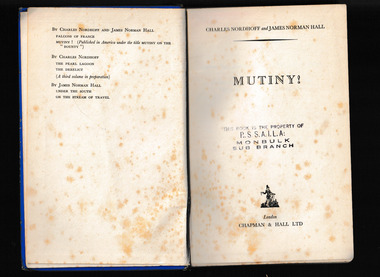
Book, Charles Nordhoff et al, Mutiny, 1933
... ...James Norman Hall....Mutiny Book Charles Nordhoff James Norman Hall. Chapman & Hall ...A fictional account of the Mutiny on the BountyMaps, p.415.fictionA fictional account of the Mutiny on the Bountybounty - ship, mutinies - great britain -
 Flagstaff Hill Maritime Museum and Village
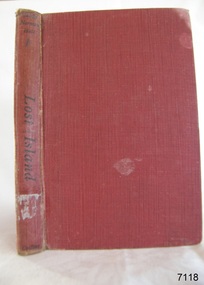
Book, Lost Island
... ...james norman hall...Lost Island Author: James Norman Hall Publisher: Collins Date: 1945 ...The Warrnambool Mechanics' Institute’s publication collection is of both local and state significance. flagstaff-hill-maritime-museum book lost island james norman hall Shipwrecked-coast Flagstaff-Hill Warrnambool Maritime-Museum Shipwreck-coast Flagstaff-Hill-Maritime-Village Shipwrecked-artefact Pattison Collection Warrnambool Library Warrnambool Mechanics’ Institute Ralph Eric Pattison Corangamite Regional Library Service Warrnambool City Librarian Mechanics’ Institute Library Victorian Library Board Warrnambool books and records Warrnambool Children’s Library Great Ocean Road Pastedown front endpaper has a sticker from Warrnambool Public Library Front loose endpaper has a sticker from Corangamite Regional Library Service Lost Island Author: James Norman Hall Publisher: Collins Date: 1945 Lost Island Book ...This item is from the ‘Pattison Collection’, a collection of books and records that was originally owned by the Warrnambool Mechanics’ Institute, which was founded in Warrnambool in 1853. By 1886 the Warrnambool Mechanics’ Institute (WMI) had grown to have a Library, Museum and Fine Arts Gallery, with a collection of “… choice productions of art and valuable specimens in almost every branch and many wonderful national curiosities are now to be seen there, including historic relics of the town and district.” It later included a School of Design. Although it was very well patronised, the lack of financial support led the WMI in 1911 to ask the City Council to take it over. In 1935 Ralph Pattison was appointed as City Librarian to establish and organise the Warrnambool Library as it was then called. When the WMI building was pulled down in 1963 a new civic building was erected on the site and the new Warrnambool Library, on behalf of the City Council, took over all the holdings of the WMI. At this time some of the items were separated and identified as the ‘Pattison Collection’, named after Ralph Pattison. Eventually, the components of the WMI were distributed from the Warrnambool Library to various places, including the Art Gallery, Historical Society and Flagstaff Hill. Later some were even distributed to other regional branches of Corangamite Regional Library and passed to and fro. It is difficult now to trace just where all of the items have ended up. The books at Flagstaff Hill Maritime Village generally display stamps and markings from Pattison as well as a variety of other institutions including the Mechanics’ Institute itself. RALPH ERIC PATTISON Ralph Eric Pattison was born in Rockhampton, Queensland, in 1891. He married Maude Swan from Warrnambool in 1920 and they set up home in Warrnambool. In 1935 Pattison accepted a position as City Librarian for the Warrnambool City Council. His huge challenge was to make a functional library within two rooms of the Mechanics’ Institute. He tirelessly cleaned, cleared and sorted a disarrayed collection of old books, jars of preserved specimens and other items reserved for exhibition in the city’s museum. He developed and updated the library with a wide variety of books for all tastes, including reference books for students; a difficult task to fulfil during the years following the Depression. He converted all of the lower areas of the building into a library, reference room and reading room for members and the public. The books were sorted and stored using a cataloguing and card index system that he had developed himself. He also prepared the upper floor of the building and established the Art Gallery and later the Museum, a place to exhibit the many old relics that had been stored for years for this purpose. One of the treasures he found was a beautiful ancient clock, which he repaired, restored and enjoyed using in his office during the years of his service there. Ralph Pattison was described as “a meticulous gentleman whose punctuality, floorless courtesy and distinctive neat dress were hallmarks of his character, and ‘his’ clock controlled his daily routine and his opening and closing of the library’s large heavy doors to the minute.” Pattison took leave from 1942 to 1945 to serve in the Royal Australian Navy, Volunteer Reserve as Lieutenant. A few years later he converted one of the Museum’s rooms into a Children’s Library, stocking it with suitable books for the younger generation. This was an instant success. In the 1950’s he had the honour of being appointed to the Victorian Library Board and received more inspiration from the monthly conferences in Melbourne. He was sadly retired in 1959 after over 23 years of service, due to the fact that he had gone over the working age of council officers. However, he continued to take a very keen interest in the continual development of the Library until his death in 1969. The Pattison Collection, along with other items at Flagstaff Hill Maritime Village, was originally part of the Warrnambool Mechanics' Institute’s collection. The Warrnambool Mechanics’ Institute Collection is primarily significant in its totality, rather than for the individual objects it contains. Its contents are highly representative of the development of Mechanics' Institute libraries across Australia, particularly Victoria. A diversity of publications and themes has been amassed, and these provide clues to our understanding of the nature of and changes in the reading habits of Victorians from the 1850s to the middle of the 20th century. The collection also highlights the Warrnambool community’s commitment to the Mechanics’ Institute, reading, literacy and learning in the regions, and proves that access to knowledge was not impeded by distance. These items help to provide a more complete picture of our community’s ideals and aspirations. The Warrnambool Mechanics Institute book collection has historical and social significance for its strong association with the Mechanics Institute movement and the important role it played in the intellectual, cultural and social development of people throughout the latter part of the nineteenth century and the early twentieth century. The collection of books is a rare example of an early lending library and its significance is enhanced by the survival of an original collection of many volumes. The Warrnambool Mechanics' Institute’s publication collection is of both local and state significance. Lost Island Author: James Norman Hall Publisher: Collins Date: 1945 Pastedown front endpaper has a sticker from Warrnambool Public Library Front loose endpaper has a sticker from Corangamite Regional Library Serviceflagstaff-hill-maritime-museum, book, lost island, james norman hall, shipwrecked-coast, flagstaff-hill, warrnambool, maritime-museum, shipwreck-coast, flagstaff-hill-maritime-village, shipwrecked-artefact, pattison collection, warrnambool library, warrnambool mechanics’ institute, ralph eric pattison, corangamite regional library service, warrnambool city librarian, mechanics’ institute library, victorian library board, warrnambool books and records, warrnambool children’s library, great ocean road -
Box Hill Historical Society
Photograph - Houses - Elgar Road, Simon Fox
... ...Hall> James (Capt.)...Called "Tyneholm" it is believed to be the home of retired sea captain, James Hall. It was sold to the Salvation Army in 1913 when it became the administrative centre for the Box Hill Boys' home and was known as "Howard House". ...See also "Heritage and Conservation Study, Vol. 2 pages 34-35 Salvation Army Hayville Retirement Village Elgar Road Box Hill South Canterbury Road Tyneholm House names Howard House Hall> James (Capt.) Hall> Isaac Box Hill Boys Home Italianate style Photograph Houses - Elgar Road Simon Fox ...A substantial two storeyed stuccoed asymetrical Italianate villa with two storeyed verandah of stuccoed masonry and cast-iron columns with round arches to both levels. The fascia boards have fretted valance treatment with bracketed frieze. The body bricks are marked "Fritsch Holzer", "Standard" and "Box Hill" (double frogged). Called "Tyneholm" it is believed to be the home of retired sea captain, James Hall. It was sold to the Salvation Army in 1913 when it became the administrative centre for the Box Hill Boys' home and was known as "Howard House". See also "Heritage and Conservation Study, Vol. 2 pages 34-35salvation army, hayville retirement village, elgar road, box hill south, canterbury road, tyneholm, house names, howard house, hall> james (capt.), hall> isaac, box hill boys home, italianate style -
 Bendigo Historical Society Inc.
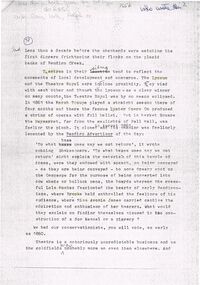
Document - NINE PAGE TYPEWRITTEN (DRAFT) PAPER: HISTORY OF THEATRE IN BENDIGO
... Billy Heffernan. St. James Hall.....; proposal to build an Opera House; St James Hall; Royal Princess Theatre; James Cassius Williamson; itinerant lecturers; various performing companies by name (page 15); various 'smash hits of the day' (page 15); in detail - the shows in Sandhurst for the year 1894 , month by month; the Masonic Theatre; Bendigo Dramatic Society; Bendigo Glee Club; Bendigo Orchestra; Bendigo Liedertafel; Alice Crawford (Shakespearian actress); Bindley's Conservatorium of Music with list of talented artists from there; Austral Competitions...Billy Heffernan. St. James Hall. Nine page loose-leaf typewritten (draft) paper re history of Theatre in Bendigo - no author given (has handwritten annotation -''Was this the talk given by Pat Lyon to RHSC - ask James Lerk ''. ...Nine page loose-leaf typewritten (draft) paper re history of Theatre in Bendigo - no author given (has handwritten annotation -''Was this the talk given by Pat Lyon to RHSC - ask James Lerk ''. Pages 12 to 19 are numbered and the is an accompanying unnumbered page with annotation ''who compiled this?'' which seems to relate to theatre in Dunolly, rather than Bendigo. Detail of history of theatre in Bendigo incl ref to: Lyceum Theatre; Theatre Royal; Marsh Troupe; Lyster Opera Co.; proposal to build an Opera House; St James Hall; Royal Princess Theatre; James Cassius Williamson; itinerant lecturers; various performing companies by name (page 15); various 'smash hits of the day' (page 15); in detail - the shows in Sandhurst for the year 1894 , month by month; the Masonic Theatre; Bendigo Dramatic Society; Bendigo Glee Club; Bendigo Orchestra; Bendigo Liedertafel; Alice Crawford (Shakespearian actress); Bindley's Conservatorium of Music with list of talented artists from there; Austral Competitionsentertainment, theatre, history, royal prinecss theatre. masonic theatre. austral competitions. lyceum theatre, theatre royal, bendigo glee club. bendigo dramatic society, alice crawford. crowley. billy heffernan. st. james hall. -
 Flagstaff Hill Maritime Museum and Village
Painting - Watercolour Painting, Beni Carr Glyn Burnett, The Winterhude, 1933
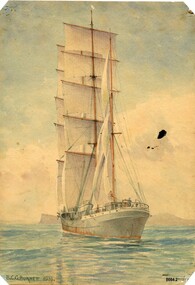
... ...William James Hall...Hood and William James Hall) and whose photographs were used by artists to produce ship portraits. ...Hood and William James Hall) and whose photographs were used by artists to produce ship portraits. ...Beni Carr Glyn Burnett (also known as B. C. G. Burnett or Beni Burnett) was born in 1889 to missionary parents in Mongolia. When he was 15 years old he began training as an architect with a firm in Shanghai. He worked in Singapore, Japan and China before moving to Australia around 1933. In 1937 he was appointed as the Commonwealth principal architect in the Northern Territory. He went on to design a series of houses for senior public servants and military personnel which became very popular as they were specifically designed for the tropics - incorporating louvres, high ceilings and good ventilation. When Darwin was bombed in February 1942, he was evacuated to Alice Springs where he continued to work as an architect. He also became a Magistrate and Coroner in Alice Springs. In later life he was well known for sketching clientele in public bars. He died in 1955. Beni Burnett was living in Sydney in 1933 when he produced these three artworks. There were several photography firms operating in Sydney at this time who specialised in photographing ships and the shipping trade (e.g. Samuel J. Hood and William James Hall) and whose photographs were used by artists to produce ship portraits. Both of these photographers took photographs of the two ships in B. C. G. Burnett's watercolours. The "Winterhude" (originally called "Mabel Rickmers) was a three masted Finnish barque built in 1898 by Rickers - Werft Bremerhaven for use on the East India rice trade and later the South American nitrate trade. After WW1 it came under French control as war compensation. It was also sold several times and at one stage was called "Selma Hemsoth" but in 1925 it was bought by Gustaf Erikson who restored the name "Winterhude" and the vessel became a regular transport in the Australian wheat trade. In 1944 it was sold to the German navy before being taken over by the British at the end of WW2. It was photographed in Sydney by William James Hall in1931 on its way to Port Lincoln, South Australia to load wheat for Europe.This painting (one of a set of three small artworks) is significant as an example of shipping (particularly the use of sailing ships) that were still being used as late as the 1930's in Australia. It is also important because its creator (B. C. G. Burnett) went on to become a well-known public figure in the Northern Territory in the late 1930's due to his innovative approach to designing homes for the tropical climate.A watercolour painting of a sailing ship called "Winterhude". It shows a 3 masted barque with a blue and red steel hull in full sail heading away from the viewer. A small figure can be seen at the wheel at the rear of the ship. The painter's name (B. C. G. Burnett) and date (1933) are written on the bottom left-hand corner of the painting. The name of the ship is written in faded pencil on the back of the painting.front - "B. C. G. BURNETT. 1933" back - in faded pencil - "the Winterhude"flagstaff hill maritime museum and village, warrnambool, great ocean road, sailing ships, ships, barque, winterhude, beni carr glyn burnett, b. c. g. burnett, beni burnett, painting, watercolour painting, sketch, ink sketch, sydney harbour, architect, darwin, burnett house, photography, samuel j. hood, william james hall, mabel rickmers -
 Bendigo Historical Society Inc.
Document - ANCIENT ORDER OF FORESTERS NO 3770 COLLECTION: MEMBER'S CLEARANCE
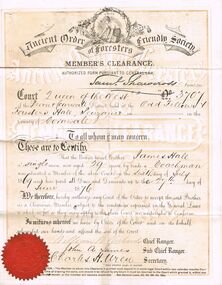
... ... James Hall...The clearance states that Brother James Hall a single man, now aged 29 years, by trade a Coachman was admitted a Member of the above Court, on the Sixth day of July 1869 and has paid all Dues and Demands up to the 27th day of June 1876. ...The clearance states that Brother James Hall a single man, now aged 29 years, by trade a Coachman was admitted a Member of the above Court, on the Sixth day of July 1869 and has paid all Dues and Demands up to the 27th day of June 1876. ...Ancient Order of Foresters Friendly Society Member's Clearance printed on cream heavy paper with light tan pattern with Ancient Order of Foresters Friendly Society Members Clearance printed on it. There is an emblem at the top of the paper, it has a circular wreath of ribbon and flowers. On the left is a bunch of flowers, a musical instrument on the right and in the centre of the wreath is a boy kneeling and rolling a bundle of tied up stems. The paper is from Court Queen of the West No. 3707 of the Devon & Cornwall District held at the Odd Fellows & Forester's Hall, Penzance in the County of Cornwall. The clearance states that Brother James Hall a single man, now aged 29 years, by trade a Coachman was admitted a Member of the above Court, on the Sixth day of July 1869 and has paid all Dues and Demands up to the 27th day of June 1876. It authorizes any Court to accept the Said Brother as a Clearance Member subject to the conditions. Signed by William W. Richards - Chief Ranger, John A Lames - Sub Chief Ranger, and Charles H. Uren - Secretary. Has a red seal in the bottom left corner. Court Queen of the West 3707 AOF Penzance.societies, aof, correspondence, ancient order of foresters no 3770 collection, ancient order of forresters friendly society member's clearance, saml shawcross, court queen of the west no 3707, james hall, william w richards, john a lames, charles h uren -
 Bendigo Historical Society Inc.
Document - PAPER BY FRANK CUSACK: 'THEATRE ON THE GOLDFIELDS''
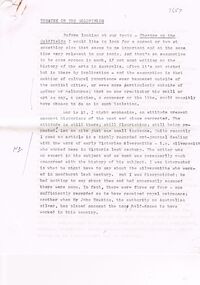
... ... St James Hall...Reference to Theatre Royal; Yates (lessee); Gregg (lessee); Carcross's Royal Exchange Restaurant; Wright's tent theatre; Victorian saloon; Sydenham Gardens; Burton's Circus; C H Rignold; Royal Victoria Theatre; Princess Theatre; Criterion Hotel; Fawcett Rowe; Lola Montez; Criterion Theatre; Henry Coleman; G V Brooke; Burralls Assembly Rooms; Nicholls Assembly Rooms; Shamrock Concert Hall; Bendigo Hotel; Billy Heffernon; John Crowley; Thatcher; Greville; Joe Small; Fanny Young; Frank Varley; Lyceum Theatre; Haymarket; Bendigo Histrionic Club; Garrick Club; Sandhurst Philharmonic Society; Abbott; new Lyceum theatre; Richard Younge; opera house; St. James Hall; Royal Princess Theatre; Masonic Theatre; Bendigo Dramatic Society; Bendigo Glee Club; Bendigo Amateur Dramatic Club; Bendigo Orchestra; Bendigo Liedertafel; Alice Crawford; Conservatorium of Music; E A Bindley....Rignold Burralls Assembley Rooms Nicholls Assembley Rooms Shamrock Concert Hall Garrick Club St James Hall Royal Princess Theatre Alice Crawford Lyceum Theatre. ...'Theatre on the Goldfields'' - paper by Frank Cusack. Two versions of this paper - an incomplete version (foolscap) of 6 pages and full version (A4) with pencilled annotations (19 pp). (Incomplete version covers pages to p11). Reference to Theatre Royal; Yates (lessee); Gregg (lessee); Carcross's Royal Exchange Restaurant; Wright's tent theatre; Victorian saloon; Sydenham Gardens; Burton's Circus; C H Rignold; Royal Victoria Theatre; Princess Theatre; Criterion Hotel; Fawcett Rowe; Lola Montez; Criterion Theatre; Henry Coleman; G V Brooke; Burralls Assembly Rooms; Nicholls Assembly Rooms; Shamrock Concert Hall; Bendigo Hotel; Billy Heffernon; John Crowley; Thatcher; Greville; Joe Small; Fanny Young; Frank Varley; Lyceum Theatre; Haymarket; Bendigo Histrionic Club; Garrick Club; Sandhurst Philharmonic Society; Abbott; new Lyceum theatre; Richard Younge; opera house; St. James Hall; Royal Princess Theatre; Masonic Theatre; Bendigo Dramatic Society; Bendigo Glee Club; Bendigo Amateur Dramatic Club; Bendigo Orchestra; Bendigo Liedertafel; Alice Crawford; Conservatorium of Music; E A Bindley.Frank Cusackentertainment, theatre, history, frank cusack, royal theatre, wrights tent theatre, burtons circus, c. h. rignold, burralls assembley rooms, nicholls assembley rooms, shamrock concert hall, garrick club, st james hall, royal princess theatre, alice crawford, lyceum theatre. e a bindley. -
 Flagstaff Hill Maritime Museum and Village
Painting - Paintings - set of three, Beni Carr Glyn Burnett, 1933
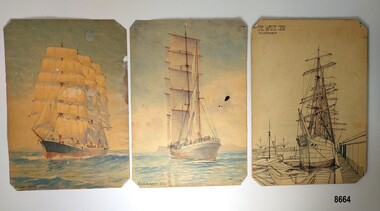
... ...William James Hall...Hood and William James Hall) and whose photographs were used by artists to produce ship portraits. ...Hood and William James Hall) and whose photographs were used by artists to produce ship portraits. ...Beni Carr Glyn Burnett (also known as B. C. G. Burnett or Beni Burnett) was born in 1889 to missionary parents in Mongolia. When he was 15 years old he began training as an architect with a firm in Shanghai. He worked in Singapore, Japan and China before moving to Australia around 1933. In 1937 he was appointed as the Commonwealth principal architect in the Northern Territory. He went on to design a series of houses for senior public servants and military personnel which became very popular as they were specifically designed for the tropics - incorporating louvres, high ceilings and good ventilation. When Darwin was bombed in February 1942, he was evacuated to Alice Springs where he continued to work as an architect. He also became a Magistrate and Coroner in Alice Springs. In later life he was well known for sketching clientele in public bars. He died in 1955. Beni Burnett was living in Sydney in 1933 when he produced these three artworks. There were several photography firms operating in Sydney at this time who specialised in photographing ships and the shipping trade (e.g. Samuel J. Hood and William James Hall) and whose photographs were used by artists to produce ship portraits. Both of these photographers took photographs of the two ships in B. C. G. Burnett's watercolours. The "Magdalene Vinnen" was photographed by Samuel J Hood in a series of photos taken in March 1933. It was a 4 masted steel barque, built in 1921 in Kiel, Germany and for almost 80 years was the largest traditional sailing ship in operation. It was used extensively as a cargo ship. It sailed into Sydney Harbour on 27th Feb 1933, loaded with almost 16,000 bales of wool destined for Falmouth, England. In March 1933 (whilst in Sydney) the German Republic flag (on orders from Adolph Hitler) was lowered and replaced with the old monarchist flag which was then to be the official flag and beside it the Nazi flag was to be flown on all ceremonial occasions. It visited Australia again in 1935 with its cargo being wheat from Port Broughton, S. A. In 1936 it was renamed "Kommodore Johnsen" and in 1945 (after WW2) the ship was awarded to the Soviet Union as war compensation and renamed "STS Sedov". The "Winterhude" (originally called "Mabel Rickmers) was a three masted Finnish barque built in 1898 by Rickers - Werft Bremerhaven for use on the East India rice trade and later the South American nitrate trade. After WW1 it came under French control as war compensation. It was also sold several times and at one stage was called "Selma Hemsoth" but in 1925 it was bought by Gustaf Erikson who restored the name "Winterhude" and the vessel became a regular transport in the Australian wheat trade. In 1944 it was sold to the German navy before being taken over by the British at the end of WW2. It was photographed in Sydney by William James Hall in 1931 on its way to Port Lincoln, South Australia to load wheat for Europe. The third ship depicted by B. C. G. Burnett is a pen and wash sketch labelled "The White Ship" and exactly matches a photograph pasted into his personal scrapbook which is in the "Library and Archives N. T.". The name of the ship is unknown and B. C. G. Burnett may have taken some artistic licence with the colouring as in the original photograph, the ship had a dark hull.This set of three small artworks is significant as examples of shipping (particularly the use of sailing ships) that were still being used as late as the 1930's in Australia. They are also important because their creator (B. C. G. Burnett) went on to become a well-known public figure in the Northern Territory in the late 1930's due to his innovative approach to designing homes for the tropical climate.A set of three artworks by B. C. G. Burnett of sailing ships in Sydney Harbour. They are all on rectangular watercolour paper with small diagonal edges at each corner. Painting 1 is a watercolour painting of a sailing ship called "Magdalene Vinnen". It shows a 4 masted barque with a blue and red steel hull in full sail heading towards the viewer. The painter's name (B. C. G. Burnett) and date (1933) are written on the bottom left-hand corner of the painting. Painting 2 is a watercolour painting of a sailing ship called "Winterhude". It shows a 3-masted barque with a blue and red steel hull in full sail heading away from the viewer. A small figure can be seen at the wheel at the rear of the ship. The painter's name (B. C. G. Burnett) and date (1933) are written on the bottom left-hand corner of the painting. Sketch 3 is an ink sketch of an unknown sailing ship moored to a dock. There are several small boats tied up near the sailing ship and a large steel freighter can be seen in the background. There is a faint wash of colour on parts of the sketch - the bottom of the ship, the masts and booms and the water at the end of the pier. The title (The White Ship) and the artist's name (B. C. G. Burnett) are written in ink in the top left corner. 1 (front) - "B. C. G. BURNETT. 1933 2 (front) - "B. C. G. BURNETT. 1933" 3 (front) - "THE WHITE SHIP / B. C. G. BURNETT"flagstaff hill maritime museum and village, warrnambool, great ocean road, sailing ships, ships, barque, magdalene vinnen, winterhude, beni carr glyn burnett, b. c. g. burnett, beni burnett, painting, watercolour painting, sketch, ink sketch, sydney harbour, architect, darwin, burnett house, photography, samuel j. hood, william james hall, sedov, kommodore johnsen, mabel rickmers -
 Flagstaff Hill Maritime Museum and Village
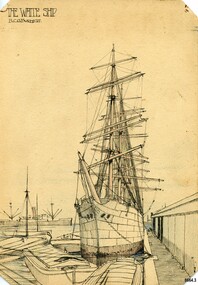
Artwork, other - Pen and Wash Painting, Beni Carr Glyn Burnett, The White Ship, circa 1933
... ...William James Hall...Hood and William James Hall) and whose photographs were used by artists to produce ship portraits. ...Hood and William James Hall) and whose photographs were used by artists to produce ship portraits. ...Beni Carr Glyn Burnett (also known as B. C. G. Burnett or Beni Burnett) was born in 1889 to missionary parents in Mongolia. When he was 15 years old he began training as an architect with a firm in Shanghai. He worked in Singapore, Japan and China before moving to Australia around 1933. In 1937 he was appointed as the Commonwealth principal architect in the Northern Territory. He went on to design a series of houses for senior public servants and military personnel which became very popular as they were specifically designed for the tropics - incorporating louvres, high ceilings and good ventilation. When Darwin was bombed in February 1942, he was evacuated to Alice Springs where he continued to work as an architect. He also became a Magistrate and Coroner in Alice Springs. In later life he was well known for sketching clientele in public bars. He died in 1955. Beni Burnett was living in Sydney in 1933 when he produced these three artworks. There were several photography firms operating in Sydney at this time who specialised in photographing ships and the shipping trade (e.g. Samuel J. Hood and William James Hall) and whose photographs were used by artists to produce ship portraits. Both of these photographers took photographs of the two ships in B. C. G. Burnett's watercolours This ship depicted by B. C. G. Burnett in his pen and wash sketch labelled "The White Ship" exactly matches a photograph pasted into his personal scrapbook which is in the "Library and Archives N. T.". The name of the ship is unknown and B. C. G. Burnett may have taken some artistic licence with the colouring as in the original photograph, the ship had a dark hull.This artwork (one of a set of three small artworks) is significant as an example of shipping (particularly the use of sailing ships) that were still being used as late as the 1930's in Australia. It is also important as its creator (B. C. G. Burnett) went on to become a well-known public figure in the Northern Territory in the late 1930's due to his innovative approach to designing homes for the tropical climate.An ink sketch of an unknown sailing ship moored to a dock. There are several small boats tied up near the sailing ship and a large steel freighter can be seen in the background. There is a faint wash of colour on parts of the sketch - the bottom of the ship, the masts and booms and the water at the end of the pier. The title (The White Ship) and the artist's name (B. C. G. Burnett) are written in ink in the top left corner. The back of the sketch is black card with faint pencil marks (overwritten in red ink) that appear to read "1842 A". A page from an album belonging to Beni Burnett displays five black and white photos including three photographs of ships. The photograph on the bottom right is an exact match for the pen and wash drawing. front - "THE WHITE SHIP / B. C. G. BURNETT" back - difficult to read "1842 A"flagstaff hill maritime museum and village, warrnambool, great ocean road, sailing ships, ships, barque, magdalene vinnen, winterhude, beni carr glyn burnett, b. c. g. burnett, beni burnett, painting, watercolour painting, sketch, ink sketch, sydney harbour, architect, darwin, burnett house, photography, samuel j. hood, william james hall -
 Flagstaff Hill Maritime Museum and Village
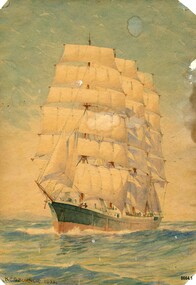
Painting - Watercolour painting, Beni Carr Glyn Burnett, Magdalene Vinnen, 1933
... ...William James Hall...Hood and William James Hall) and whose photographs were used by artists to produce ship portraits. ...Hood and William James Hall) and whose photographs were used by artists to produce ship portraits. ...Beni Carr Glyn Burnett (also known as B. C. G. Burnett or Beni Burnett) was born in 1889 to missionary parents in Mongolia. When he was 15 years old he began training as an architect with a firm in Shanghai. He worked in Singapore, Japan and China before moving to Australia around 1933. In 1937 he was appointed as the Commonwealth principal architect in the Northern Territory. He went on to design a series of houses for senior public servants and military personnel which became very popular as they were specifically designed for the tropics - incorporating louvres, high ceilings and good ventilation. When Darwin was bombed in February 1942, he was evacuated to Alice Springs where he continued to work as an architect. He also became a Magistrate and Coroner in Alice Springs. In later life he was well known for sketching clientele in public bars. He died in 1955. Beni Burnett was living in Sydney in 1933 when he produced these three artworks. There were several photography firms operating in Sydney at this time who specialised in photographing ships and the shipping trade (e.g. Samuel J. Hood and William James Hall) and whose photographs were used by artists to produce ship portraits. Both of these photographers took photographs of the two ships in B. C. G. Burnett's watercolours. The "Magdalene Vinnen" was photographed by Samuel J Hood in a series of photos taken in March 1933. It was a 4 masted steel barque, built in 1921 in Kiel, Germany and for almost 80 years was the largest traditional sailing ship in operation. She was used extensively as a cargo ship. She sailed into Sydney Harbour on 27th Feb 1933, loaded with almost 16,000 bales of wool destined for Falmouth, England. In March 1933 (whilst in Sydney) the German Republic flag (on orders from Adolph Hitler) was lowered and replaced with the old monarchist flag which was then to be the official flag and beside it the Nazi flag was to be flown on all ceremonial occasions. It visited Australia again in 1935 with its cargo being wheat from Port Broughton, S. A. In 1936 it was renamed "Kommodore Johnsen" and in 1945 (after WW2) the ship was awarded to the Soviet Union as war compensation and renamed "STS Sedov". This painting (one of a set of 3 small artworks) is significant as an example of shipping (particularly the use of sailing ships) that were still being used as late as the 1930's in Australia. It is also important because its creator (B. C. G. Burnett) went on to become a well-known public figure in the Northern Territory in the late 1930's due to his innovative approach to designing homes for the tropical climate. A watercolour painting of a sailing ship called "Magdalene Vinnen". It shows a 4 masted barque with a blue and red steel hull in full sail heading towards the viewer. The painter's name (B. C. G. Burnett) and date (1933) are written on the bottom left-hand corner of the painting. The location and name of the ship is written in ink on the back of the painting.front - "B. C. G. BURNETT. 1933 back - "off Sydney" / "Magdalene Vinnen"flagstaff hill maritime museum and village, warrnambool, great ocean road, sailing ships, ships, barque, magdalene vinnen, beni carr glyn burnett, b. c. g. burnett, beni burnett, painting, watercolour painting, sketch, sydney harbour, architect, darwin, burnett house, photography, samuel j. hood, william james hall, sedov, kommodore johnsen -
 Robin Boyd Foundation
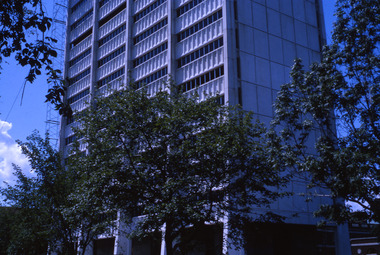
Slide, Robin Boyd, 1964
... Colour slide in a mount. William James Hall, Harvard University, Cambridge, Massachusetts, USA. ...The Boyds then travelled on to England, Finland (especially to see Tapiola), Russia and India to see Le Corbusier's Chandigarh, and also Hong Kong and Thailand. slide robin boyd Made in Australia / 8 / AUG 64M Colour slide in a mount. William James Hall, Harvard University, Cambridge, Massachusetts, USA. ...In 1964, Robin and Patricia Boyd spent several weeks on a world tour - Boyd took a leading role at the International Design Conference in Aspen and he also visited Chicago, Yale University, and New York’s World Fair. The Boyds then travelled on to England, Finland (especially to see Tapiola), Russia and India to see Le Corbusier's Chandigarh, and also Hong Kong and Thailand.Colour slide in a mount. William James Hall, Harvard University, Cambridge, Massachusetts, USA. (Architect: Minnori Yamaski.)Made in Australia / 8 / AUG 64Mslide, robin boyd -
 Federation University Historical Collection
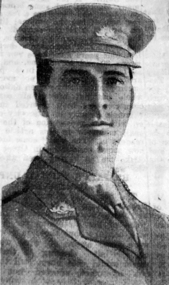
Book - Scrapbook, Ballarat School of Mines Scrap Book, 1916-1920, 1916-1920
... ...henry james hall obituary...ballarat school of mines world war one news clippings scrapbook william e. moon john h. smyth david l. thomas clay maurice copland repatriation g. buchanan j.m. bickett harrie wood cliff garrad harold c. cornell f.g. marriott technical education classes for soldiers w.h. middleton e.j. cannon ted cannon ponsonby carew-smythe boer war memorial amalie feild antarctica fred middleton richard vale obituary rand stephen richards richard g. walker world war one chemists frank tate free instruction for soldiers ken moss girls' preparatory eureka stockade pageant commitee fred g. middleton shackelton relief party aurora emil gutheil obituary henry james hall obituary william elphick moon arthur tandy john mcwhae harold bieske james millhinch bickett obituary wild flower show technical schools conference, ballarat allan t. perry ballarat pottery clay citizen soldiers' camp george buchanan obituary clifford garrard james dyer woolcott obituary frank penhalluriack w.s> penhalluriack annie whitla ballarat school of mines jubilee anniversary university classes maurice copland obituary boot repairing museum rennovation bootmaking f.g. marriott obituary vocational training classes j.d. woolcott obituary Ferdinand Krause obituary ferdinand krause Emil Guthiel Cornell Spanish flu Pneumonic flu pandemic Red hardcovered scrapbook with news clippings relating to the Ballarat School of Mines. ...Red hardcovered scrapbook with news clippings relating to the Ballarat School of Mines.ballarat school of mines, world war one, news clippings, scrapbook, william e. moon, john h. smyth, david l. thomas, clay, maurice copland, repatriation, g. buchanan, j.m. bickett, harrie wood, cliff garrad, harold c. cornell, f.g. marriott, technical education, classes for soldiers, w.h. middleton, e.j. cannon, ted cannon, ponsonby carew-smythe, boer war memorial, amalie feild, antarctica, fred middleton, richard vale obituary, rand, stephen richards, richard g. walker, world war one chemists, frank tate, free instruction for soldiers, ken moss, girls' preparatory, eureka stockade pageant commitee, fred g. middleton, shackelton relief party, aurora, emil gutheil obituary, henry james hall obituary, william elphick moon, arthur tandy, john mcwhae, harold bieske, james millhinch bickett obituary, wild flower show, technical schools conference, ballarat, allan t. perry, ballarat pottery clay, citizen soldiers' camp, george buchanan obituary, clifford garrard, james dyer woolcott obituary, frank penhalluriack, w.s> penhalluriack, annie whitla, ballarat school of mines jubilee, anniversary, university classes, maurice copland obituary, boot repairing, museum rennovation, bootmaking, f.g. marriott obituary, vocational training classes, j.d. woolcott obituary, ferdinand krause obituary, ferdinand krause, emil guthiel, cornell, spanish flu, pneumonic flu, pandemic -
 Bendigo Historical Society Inc.
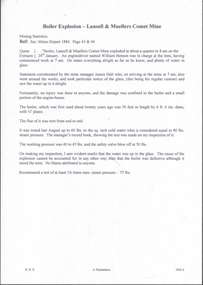
Document - MINING ACCIDENTS - BOILER EXPLOSION AT LANSELL & MUELLERS COMET MINE
... ... James Hall...DOCUMENT Gold Mining Accidents Boiler Explosion at Lansell & Muellers Comet Mine Mining Statistics Mines Report 1884 Page 43 & 44 William Benson James Hall Handwritten extracts on a boiler explosion at Lansell & Muellers Comet Mine. ...Handwritten extracts on a boiler explosion at Lansell & Muellers Comet Mine. 'Everything had been alright and there was plenty of water in the glass. When the boiler exploded it damaged a small part of the engine-house and tore the flue from end to end. The cause of the explosion could not be found, although it had stood the tests.'document, gold, mining accidents, boiler explosion at lansell & muellers comet mine, mining statistics, mines report 1884 page 43 & 44, william benson, james hall -
 Bendigo Historical Society Inc.
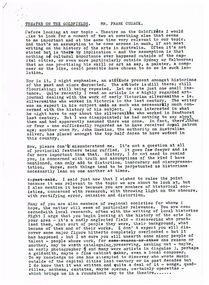
Document - THEATRE ON THE GOLDFIELDS - MR FRANK CUSACK
... ... St James Hall...ENTERTAINMENT Theatre Bendigo Theatre on the Goldfields Mr Frank Cusack John Hawkins Bulwer Lytton 'Lady of Lyons' The Theatre Royal Gregg Yates Stark Carncross's Royal Exchange Restaurant The Argus The Casion Charles Thatcher Burton's Theatre C H Rignold George Rignold Royal Victoria Theatre The Princess The Criterion Walsh and Fawcett George Fawcett Rowe Fawcett Rowe Lola Montez Henry Coleman Madame Carilly The Advertiser Victoria Reef William Kelly G V Brooke Burralls Assembly Rooms Nicholls Assembly Rooms Royal Hotel Shamrock Concert Hall Bendigo Hotel Billy Heffernan John Crowely Mrs Hancock Miss Urie M Langlaise Sarah Flower Madame Caradine Thatcher the Inimitable Greville Joe Small Fanny Young Frank Varley Hugh Anderson Porter's Stars of the Australian Stage and Screen Abbott Lyceum Theatre Mr & Mrs Robe Robert Heir G W Daniels Bendigo Histrionic Club Carrick Club 'The Old Curiosity Shop' Benjamin Farjeon or B L Farjeon Louis Quatorze Robert Younge Woolridge's Eagle Saloon Fry's Troupe Coleman's Rotunda Theatre Old House Rainer's Ethipian Serenaders Jacobs Mrs Macgowan The Golden Age Foos & Fitzgerald Madame Arnati Gibson Pearsons Harmonic hall London Hotel Little Joe and the Comical Wonder Pick and Shovel United States Hotel John Hunter Kerr Marsh Troupe Lyster Opera Co Miss Avonia Jones Cobb & Co Billy heffernan Shamrock Hotel St James Hall Crowley Royal Princess Theatre Offenbach's Duchess of Gerolstein James Cassius Williamson Maggie Moore Hal Porter Grattan Riggs Co Garner Musgrove George Rignold Bland Holt Harry Rickards London Gaiety Co Alfred Dampier Dan Barry Co Harold Stephen Coghill brothers Paine Waterman & Balfe The Australian Bijou Opera Co Williamson & Musgrove's Royal Opera Co Nellie Stewart The Alfred Dampier Co Ward Lyons Dramatic Co George Darrell William Elton Charles Arnold's Co Masonic Theatre The Capital) The Bendigo Dramatic Society The Bendigo Glee Club The Bendigo Amateur Dramatic Club Bendigo Orchestra Bendigo Liedertafel Alice Crawford Wilson Barrett Co Ernest Toy Emily Dyason Gertrude Alger William Murdoch A C Bartleman Madame Benda Amy and Eileen Castles Erna Mueller Madame Bertha Rossow E A Bindley Kate Samuels Jan Kubelik Two typed copies of notes titled 'Theatre on the Goldfields' by Mr. ...Two typed copies of notes titled 'Theatre on the Goldfields' by Mr. Frank Cusack. Notes mention the early theatres on the Goldfields, the actors, actresses and singers, owners and places where the theatres were. Also mentioned are some of the plays that were performed.entertainment, theatre, bendigo, theatre on the goldfields, mr frank cusack, john hawkins, bulwer lytton, 'lady of lyons', the theatre royal, gregg, yates, stark, carncross's royal exchange restaurant, the argus, the casion, charles thatcher, burton's theatre, c h rignold, george rignold, royal victoria theatre, the princess, the criterion, walsh and fawcett, george fawcett rowe, fawcett rowe, lola montez, henry coleman, madame carilly, the advertiser, victoria reef, william kelly, g v brooke, burralls assembly rooms, nicholls assembly rooms, royal hotel, shamrock concert hall, bendigo hotel, billy heffernan, john crowely, mrs hancock, miss urie, m langlaise, sarah flower, madame caradine, thatcher the inimitable, greville, joe small, fanny young, frank varley, hugh anderson, porter's stars of the australian stage and screen, abbott, lyceum theatre, mr & mrs robe, robert heir, g w daniels, bendigo histrionic club, carrick club, 'the old curiosity shop', benjamin farjeon or b l farjeon, louis quatorze, robert younge, woolridge's eagle saloon, fry's troupe, coleman's rotunda theatre, old house, rainer's ethipian serenaders, jacobs, mrs macgowan, the golden age, foos & fitzgerald, madame arnati, gibson, pearsons harmonic hall, london hotel, little joe and the comical wonder, pick and shovel, united states hotel, john hunter kerr, marsh troupe, lyster opera co, miss avonia jones, cobb & co, billy heffernan, shamrock hotel, st james hall, crowley, royal princess theatre, offenbach's duchess of gerolstein, james cassius williamson, maggie moore, hal porter, grattan riggs co, garner, musgrove, george rignold, bland holt, harry rickards, london gaiety co, alfred dampier, dan barry co, harold stephen, coghill brothers, paine, waterman & balfe, the australian bijou opera co, williamson & musgrove's royal opera co, nellie stewart, the alfred dampier co, ward lyons dramatic co, george darrell, william elton, charles arnold's co, masonic theatre, the capital), the bendigo dramatic society, the bendigo glee club, the bendigo amateur dramatic club, bendigo orchestra, bendigo liedertafel, alice crawford, wilson barrett co, ernest toy, emily dyason, gertrude alger, william murdoch, a c bartleman, madame benda, amy and eileen castles, erna mueller, madame bertha rossow, e a bindley, kate samuels, jan kubelik -
Port Melbourne Historical & Preservation Society
Book - Minutes, Port Melbourne Cricket Club, 1958 - 1968
... ...James HALL...Sport - Cricket A W DOWNER John William (Jack) WOODRUFF James HALL MADIGAN S ANDERSON GILL Port Melbourne Cricket Club Dark green minute book with leather binding. ...Dark green minute book with leather binding. Minutes of Port Melbourne Cricket Club from 31 March 1958 to 25 january 1968. Sheet of paper in front with minute from january 24 1963 re "Special performance trophies"sport - cricket, a w downer, john william (jack) woodruff, james hall, madigan, s anderson, gill, port melbourne cricket club -
Southern Sherbrooke Historical Society Inc.
Moors family history, "The Moors Family", 1990s
... ...james moors...hall...This copy of Helen Uhe's work was donated to Southern Sherbrooke Historical Society by Helen in 2008. moors family robert moors humphrey moors frances sophia moors james moors hall family ww1 servicemen A blue spiral-bound plastic folder with sheet protectors, containing a history of the Moors family of Narre Warren. ...This copy of Helen Uhe's work was donated to Southern Sherbrooke Historical Society by Helen in 2008.A blue spiral-bound plastic folder with sheet protectors, containing a history of the Moors family of Narre Warren. Contains birth, death and marriage certificates, photos, ephemera, etc. and correspondence between the author, Helen Uhe, and members of the Moors family, as well as other individuals.moors family, robert moors, humphrey moors, frances sophia moors, james moors, hall family, ww1 servicemen -
 Federation University Historical Collection
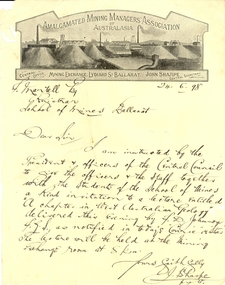
Letter - Letterhead, J. Sharpe, Amalgamated Mining Managers' Association of Australasia Letterhead, 1898, 24/06/1898
... The artwork on this letterhead may have been executed by Henry James Hall....The artwork on this letterhead may have been executed by Henry James Hall. Amalgamated Mining Managers' Association of Australasia Letterhead, 1898 Letter Letterhead J. ...Handwritten letter on Amalgamated Mining Managers' Association of Australasia letterhead inviting students of the Ballarat School of Mines to attend the lecture on 'A Chapter in West Australian Geology' delivered by F.G. Johnson, F.G.S. at the Ballarat Mining Exchange. The artwork on this letterhead may have been executed by Henry James Hall.amalgamated mining managers' association of australasia, letterhead, j. sharpe, ballarat mining exchange, f.d. johnson, west australian geology, henry hall -
 Bendigo Historical Society Inc.
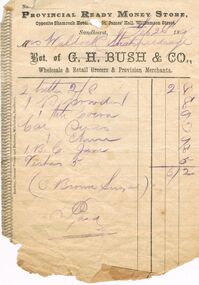
Document - INVOICE, 1891
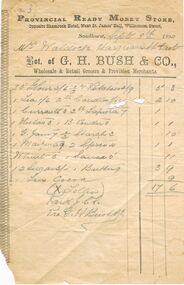
... Opposite Shamrock Hotel, Next to St. James Hall Williamson Street. Sandhurst Sept 26th 1891. ...Opposite Shamrock Hotel, Next to St. James Hall Williamson Street. Sandhurst Sept 26th 1891. ...Invoice: Provincial Ready Money Store. Opposite Shamrock Hotel, Next to St. James Hall Williamson Street. Sandhurst Sept 26th 1891. Mrs Waldock Strathfieldsaye. Bot. of G.H. Bush & Co. Wholesale & Retail Grocers & Provision Merchants. Invoice lists household food items. On the back in pencil, hand written is number calculations. Box 625business, retail, grocer, provincial ready money store. shamrock hotel. g. h. bush. -
 Bendigo Historical Society Inc.
Document - INVOICE, 1890
... Invoice: Yellow in colour with Provincial Ready Money Store, Opposite Shamrock Hotel, Next St. James' Hall, Williamson Street. Sandhurst, Sept 8th 1890. ...Shamrock Hotel Invoice: Yellow in colour with Provincial Ready Money Store, Opposite Shamrock Hotel, Next St. James' Hall, Williamson Street. Sandhurst, Sept 8th 1890. ...Invoice: Yellow in colour with Provincial Ready Money Store, Opposite Shamrock Hotel, Next St. James' Hall, Williamson Street. Sandhurst, Sept 8th 1890. Mrs Waldock Hargreaves St East. Bot of G.H. Bush & Co. Wholesale & Retail Grocers & Provision Merchants. The invoice lists household food items. Small tear on invoice. Box 625business, retail, grocer, provincial ready money store. g.h.bush & co. shamrock hotel -
 Clunes Museum
Photograph, BALLARAT COURIER PTY. LTD
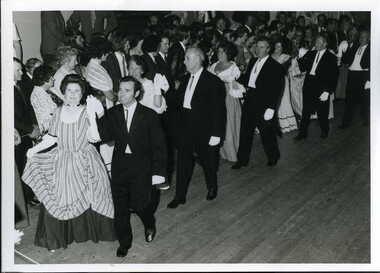
... BLACK & WHITE PHOTOGRAPH TAKEN IN CLUNES TOWN HALL, JAMES ESMOND FESTIVAL BALL....local history photography photographs events and celebrations james esmond fesival ball BLACK & WHITE PHOTOGRAPH TAKEN IN CLUNES TOWN HALL, JAMES ESMOND FESTIVAL BALL. ...BLACK & WHITE PHOTOGRAPH TAKEN IN CLUNES TOWN HALL, JAMES ESMOND FESTIVAL BALL.local history, photography, photographs, events and celebrations, james esmond fesival ball -
 Flagstaff Hill Maritime Museum and Village
Instrument - Telescope, Mid-18th Century
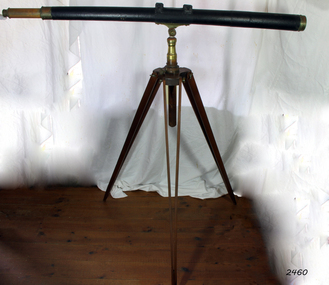
... Hall...James Short...Hall developed the achromatic lens by combining two types of glass with different refractive properties. This reduced colour distortion and produced a sharper image, although some edge distortion remained. That same year, the Scottish instrument maker James...Dollond telescopes were associated with the renowned mariners, Captain James Cook and Admiral Lord Nelson Flagstaff Hill Maritime Museum and Village maritime museum maritime village Great Ocean Road Warrnambool optical instrument achromatic telescope heliometer light refraction instrument maker lens transit of Venus astronomical telescope concave lens scientific instrument navigation navigational instrument astronomy Dollond Dollond London John Dollond Peter Dollond Dollond telescope Day or Night telescope floor-standing telescope library telescope Hans Lippershey Isaac Newton Chester Moor Hall James Short Captain Cook Thomas Jefferson Admiral Lord Nelson Dollond & Co Aitchison & Co Dollond & Aitchison Boots Opticians George III Duke of York George Huggins George Dollond P and J Dollond J Dollond and Son spectacles cameras Inscription reads "Dollond London, Day or Night" and "DOLLOND LONDON" Telescope: Dollond's Telescope, Day or Night model navigational instrument. ...This Day or Night telescope, made by John Dollond, was designed for use in a range of lighting conditions, as its name suggests. Telescopes are optical instruments that make distant objects appear larger and closer, thereby extending the range of what the human eye can observe. The development of the telescope was gradual, shaped by a series of important advances in optical science. In 1608, the Dutch spectacle-maker Hans Lippershey discovered that when two lenses were held apart in a particular way, distant objects appeared closer. He applied for a patent for this invention, creating the first documented telescope. In 1668, Isaac Newton produced the first successful reflecting telescope, using a two-inch concave spherical mirror. This marked a major step forward, demonstrating that mirrors could overcome some of the limitations of lenses and greatly improve magnification. Further progress followed in the eighteenth century. In 1729, Chester Moor Hall developed the achromatic lens by combining two types of glass with different refractive properties. This reduced colour distortion and produced a sharper image, although some edge distortion remained. That same year, the Scottish instrument maker James Short developed parabolic and elliptical mirrors that were better suited to reflecting telescopes because they reduced optical distortion. Building on these advances, John Dollond improved the achromatic objective lens by placing a concave flint-glass lens between two convex crown-glass lenses, considerably enhancing image quality. Maker’s information. John Dollond (1707–1761), of London, was a maker of optical, scientific and astronomical instruments best known for developing the achromatic refracting telescope. He also introduced a practical heliometer, a telescope fitted with a divided lens that could be used to measure the Sun’s diameter and the angular distance between celestial bodies. The son of Huguenot refugees, Dollond first learned the family trade of silk weaving before turning his attention to optics and astronomy, in which he became highly skilled. In 1753, Dollond patented his improved lenses, the same year he had introduced the heliometer. In 1761, John Dollond was appointed as optician to George III and the Duke of York. He was also elected a Fellow of the Royal Society in May 1761, but died suddenly later that year in November. His share of the patent then passed to his eldest son, Peter. In later disputes between Peter Dollond and rival London opticians who challenged the patent, Peter consistently argued that, whatever earlier precedents may have existed, his father had independently developed a practical method for producing achromatic lenses through his command of Newtonian optics. By successfully defending the patent, the Dollond firm became one of the leading manufacturers of optical instruments. During the eighteenth and nineteenth centuries, the name ‘Dollond’ was at times used almost generically to mean ‘telescope,’ reflecting the firm’s reputation. Genuine Dollond telescopes were regarded as among the finest available. Peter Dollond (1731–1820) was the driving force behind the family business. He had founded a small optical business in 1750 on Vine Street, Halton Garden, with his father's guidance. The success of the business led to his father joining him in partnership in 1752. In 1959, J Dollond and Son opened a shop on The Strand, London. Dollonds appear to have produced both reflecting and refracting telescopes, and they possessed the technical skill to manufacture significant numbers of lenses largely free from chromatic aberration. In 1766, Peter went into partnership with his younger brother, John, and they traded under the name P and J Dollond. They supplied optical instruments for Captain Cook and George Hadley, an English lawyer and Meteorologist. In 1769, Captain Cook travelled with a Dollond telescope on the voyage to observe the Transit of Venus. Other notable customers included Thomas Jefferson and Admiral Lord Nelson. In 1781, Peter Dollond made bifocal spectacles. In 1804, young John Dollond passed away. The following year, Peter Dollond went into partnership with his nephew, George Huggins, and Huggins legally changed his surname to Dollond, and the firm remained P and J Dollond. In the early 20th century, the company sold film cameras. The firm remained in the hands of Dollond family members until 1927, when Dollond & Co. merged with James Aitchison & Co. to form Dollond & Aitchison, the well-known high street chain of opticians, which continued making and selling prescription spectacles. Now fully part of Boots Opticians, the company no longer manufactures instruments and operates exclusively as a retail business. The telescope in the collection is an excellent example of one of Dollond’s early library telescopes. Its association with one of eighteenth-century England’s leading innovators in optical development gives it considerable historical significance and makes it an important object within the collection. John Dollond’s experiments in optics advanced the understanding of the divergent properties of lenses and made a lasting contribution to the development of practical optical science. His work helped lay the foundation for major improvements in the design and performance of optical instruments. In his own time, Dollond was celebrated as the “Father of practical optics” and received widespread recognition for his achievements in the field. Dollond telescopes were associated with the renowned mariners, Captain James Cook and Admiral Lord Nelson Telescope: Dollond's Telescope, Day or Night model navigational instrument. Telescope is mounted on wooden tripod stand that has folding legs. Brass telescope with leather sheath over barrel, adjustable angle fitting with brass wing nuts that join the legs to the top frame, which is then joined to the telescope pole by an adjustable screw fitting. Manufactured by Dollond, London. Inscription reads "Dollond London, Day or Night" and "DOLLOND LONDON"flagstaff hill maritime museum and village, maritime museum, maritime village, great ocean road, warrnambool, optical instrument, achromatic telescope, heliometer, light refraction, instrument maker, lens, transit of venus, astronomical telescope, concave lens, scientific instrument, navigation, navigational instrument, astronomy, dollond, dollond london, john dollond, peter dollond, dollond telescope, day or night telescope, floor-standing telescope, library telescope, hans lippershey, isaac newton, chester moor hall, james short, captain cook, thomas jefferson, admiral lord nelson, dollond & co, aitchison & co, dollond & aitchison, boots opticians, george iii, duke of york, george huggins, george dollond, p and j dollond, j dollond and son, spectacles, cameras -
 Greensborough Historical Society
Photograph - Digital image, Marble Hall, 1930-1940
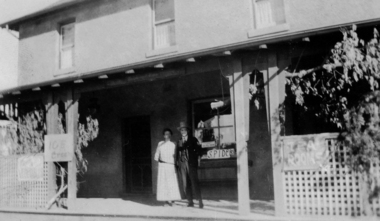
... ...james chapman...marble hall...Hall", Greensborough. The Marble Hotel, Greensborough was located at the corner of Main Street and Para Road. The first licensed hotel in Greensborough and one of the earliest brick buildings was built by James Chapman in the early 1850s as a hotel and lodging house to cater for wood carters and those trying their luck at the gold fields but served many functions over the years including post office, general store, public hall, butchers, bakers, surgery, private dwelling and baby health care centre. ...Photograph of early Greensborough building, now demolished. marble hotel greensborough james chapman marble hall greensborough Digital copy of black and white photograph. ...Photograph of "Marble Hall", Greensborough. The Marble Hotel, Greensborough was located at the corner of Main Street and Para Road. The first licensed hotel in Greensborough and one of the earliest brick buildings was built by James Chapman in the early 1850s as a hotel and lodging house to cater for wood carters and those trying their luck at the gold fields but served many functions over the years including post office, general store, public hall, butchers, bakers, surgery, private dwelling and baby health care centre. It got its name due to its white washed exterior. This photo is from the Lorraine Coates Collection.Photograph of early Greensborough building, now demolished.Digital copy of black and white photograph.marble hotel greensborough, james chapman, marble hall greensborough -
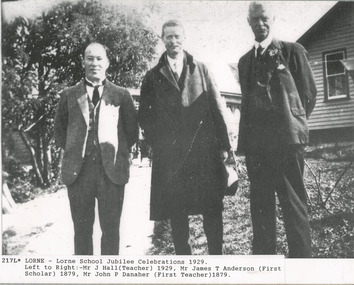 Lorne Historical Society
Photograph, Lorne School Jubilee Celebration 1929
... hall...james t anderson...Outside Lorne School 1929 Jubilee Celebrations showing L to R. Mr J Hall (teacher) 1929, James T Anderson (1st scholar) 1879 and John P Danaher (1st teacher) 1879...1929 lorne school jubilee teachers mr j hall james t anderson john p danaher Outside Lorne School 1929 Jubilee Celebrations showing L to R. ...Outside Lorne School 1929 Jubilee Celebrations showing L to R. Mr J Hall (teacher) 1929, James T Anderson (1st scholar) 1879 and John P Danaher (1st teacher) 18791929, lorne school jubilee, teachers, mr j hall, james t anderson, john p danaher
