
Showing 518 items matching " painting schools"
-
 Bendigo Historical Society Inc.
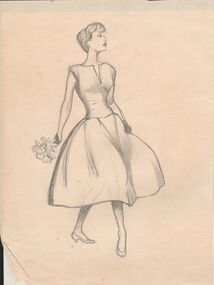
Drawing - NORMAN PENROSE COLLECTION: ART FOLDER, 1953, 1954, 1955
... ... Painting Schools...Contains notes on Painting Schools and art. Also pronunciation of artists names. ...Contains notes on Painting Schools and art. Also pronunciation of artists names. ...Artwork. Norman Penrose collection: brown art folder with darker brown spine. Contains notes on Painting Schools and art. Also pronunciation of artists names. Also contains cuttings from magazines & papers relating to women's and men's fashions. Also some cuttings of armchairs. Some drawings of women and notes and illustrations of proportions of the head for fashion drawing. Some of the cuttings are pages from the Australian Women's Weekly.drawing, pencil, norman penrose collection, australian women's weekly, painting schools, women's and men's fashions. -
 Federation University Art Collection
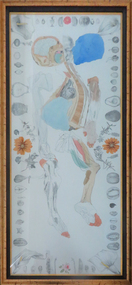
Pencil and Watercolour, Lannan, Duncan, 'Body With Offerings' by Duncan Lannan, 1999
... Framed pencil and watercolour painting. School of Human Movement Collection...The Art Collection features over 1000 works and was listed as a 'Ballarat Treasure' in 2007. art artwork duncan lannan biology botany human movement drawing pencil watercolour alumni Framed pencil and watercolour painting. School of Human Movement Collection 'Body With Offerings' by Duncan Lannan Pencil and Watercolour Lannan, Duncan ...Duncan LANNAN (1972- ) Duncan Lannan undertook a Diploma of Arts (Visual Arts) at RMIT between 1995 and 1996. A further two years study at the University of Ballarat (now Federation University Australia) saw Duncan Lannan awarded a Bachelor of Arts (Visual Arts) in 2000. Ge completed a Graduate Diploma od Education at the University of Melbourne in 2001. This item is part of the Federation University Art Collection. The Art Collection features over 1000 works and was listed as a 'Ballarat Treasure' in 2007.Framed pencil and watercolour painting. School of Human Movement Collectionart, artwork, duncan lannan, biology, botany, human movement, drawing, pencil, watercolour, alumni -
 Pyrenees Shire Council
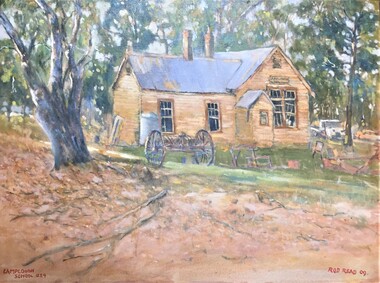
painting, Rodney Read, Lamplough School 1239 by Rodney Read, 2009
... oil painting of school building and trees...significant as a work of art by local Pyrenees artist, locally significant to the Central Highlands Region of Victoria as a representation of local landscape and/or culture Signed: ROD READ 09 (lower right) oil painting of school building and trees Lamplough School 1239 by Rodney Read painting Rodney Read ...significant as a work of art by local Pyrenees artist, locally significant to the Central Highlands Region of Victoria as a representation of local landscape and/or culture oil painting of school building and treesSigned: ROD READ 09 (lower right) -
 Whitehorse Historical Society Inc.
Article, Heidelberg's golden summers fill our eyes, 1985
... The National Gallery of Victoria will have the biggest exhibition of the Heidelberg School paintings....National Gallery of Victoria Heidelberg School Conder Charles McCubbin Frederick Streeton Arthur McCaughey Patrick Box Hill Artists Camp The National Gallery of Victoria will have the biggest exhibition of the Heidelberg School paintings. Heidelberg's golden summers fill our eyes Article Article ...The National Gallery of Victoria will have the biggest exhibition of the Heidelberg School paintings.national gallery of victoria, heidelberg school, conder, charles, mccubbin, frederick, streeton, arthur, mccaughey, patrick, box hill artists camp -
Whitehorse Historical Society Inc.
Article, Australian Painters - The Heidelberg School, 1971
... Article describing the History and Paintings of the Heidelberg School....Heidelberg School Roberts Tom McCubbin Frederick Streeton Arthur Buvelot Louis Article describing the History and Paintings of the Heidelberg School. ...Article describing the History and Paintings of the Heidelberg School.heidelberg school, roberts, tom, mccubbin, frederick, streeton, arthur, buvelot, louis -
 Stawell Historical Society Inc
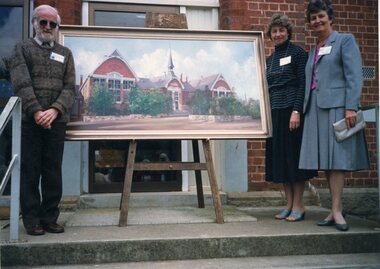
Photograph, Stawell Primary School Number 502's painting by Mr John Glover, Cynthia Bodey & Helen Greenberger 1987 -- Coloured
... Stawell Primary School Number 502's painting by Mr John Glover, Cynthia Bodey & Helen Greenberger 1987 -- Coloured...Photo of 502 School Painting by John Glover. Cynthia Bodey & Helen Greenberger 1987...Photo of 502 School Painting by John Glover. Cynthia Bodey & Helen Greenberger 1987 Stawell Education Stawell Primary School Number 502's painting by Mr John Glover, Cynthia Bodey & Helen Greenberger 1987 -- Coloured Photograph ...Photo of 502 School Painting by John Glover. Cynthia Bodey & Helen Greenberger 1987stawell education -
Whitehorse Historical Society Inc.
Book, Prelude to Heidelberg, 1991
... school...artists camps...box hill...painting...The history of the artist's camp at Box Hill and its relationship to the beginnings of the Heidelberg School of Painting....heidelberg school artists camps box hill painting The history of the artist's camp at Box Hill and its relationship to the beginnings of the Heidelberg School of Painting. ...The history of the artist's camp at Box Hill and its relationship to the beginnings of the Heidelberg School of Painting.The history of the artist's camp at Box Hill and its relationship to the beginnings of the Heidelberg School of Painting.The history of the artist's camp at Box Hill and its relationship to the beginnings of the Heidelberg School of Painting.heidelberg school, artists camps, box hill, painting -
 Whitehorse Historical Society Inc.
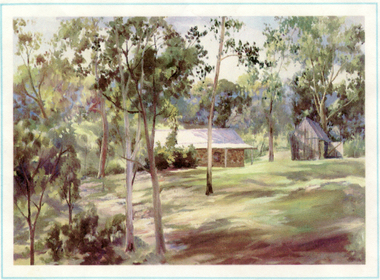
Photograph, Schwerkolt Cottage, 1/06/2003 12:00:00 AM
... Coloured copy of a painting by Donald Cameron, Art Teacher at Mitcham High School. Painting was on the front of a greeting loaned for copying by Rosalie Whalen....whalen rosalie schwerkolt cottage cameron donald mitcham high school Coloured copy of a painting by Donald Cameron, Art Teacher at Mitcham High School. ...Coloured copy of a painting by Donald Cameron, Art Teacher at Mitcham High School. Painting was on the front of a greeting loaned for copying by Rosalie Whalen.whalen, rosalie, schwerkolt cottage, cameron, donald, mitcham high school -
 Lakes Entrance Historical Society
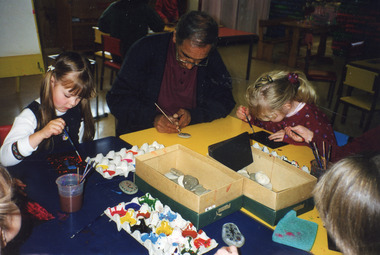
Photograph - Kooei Elder visits Pre School, Lakes Post Newspaper, 1999
... Colour photograph of Koori Elder Bill Harrison visiting Pre School, painting stones with students Sarah Currie, Sasha Sztynder.. ...Schools Colour photograph of Koori Elder Bill Harrison visiting Pre School, painting stones with students Sarah Currie, Sasha Sztynder.. ...Colour photograph of Koori Elder Bill Harrison visiting Pre School, painting stones with students Sarah Currie, Sasha Sztynder.. Lakes Entrance Victoriaschools -
 Bendigo Historical Society Inc.
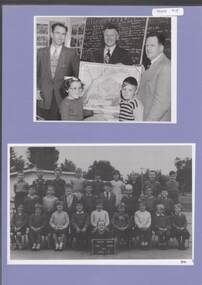
Document - GOLDEN SQUARE P.S. LAUREL ST. 1189 COLLECTION: PHOTO'S, 1965
... Top image shows three men, two children, posed around an Albert Namatjira painting ( presentation to school ? ) Bottom image Grade 2B, 1965....Top image shows three men, two children, posed around an Albert Namatjira painting ( presentation to school ? ) Bottom image Grade 2B, 1965. ...Two copies of photos mounted on purple board. Top image shows three men, two children, posed around an Albert Namatjira painting ( presentation to school ? ) Bottom image Grade 2B, 1965.education, primary, golden square laurel st p.s. -
 Greensborough Historical Society
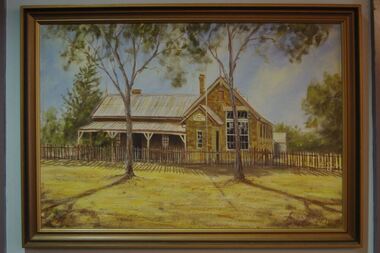
Photograph - Digital image, Dennis Ward, Greensborough Primary School Gr2062 Painting Portrait, 25/06/2015
... Greensborough Primary School Gr2062 Painting Portrait...School on Grimshaw Street. Built in 1879, this building is now heritage listed by the National Trust. This photograph shows a painting of the school, hanging in the old building. ...School on Grimshaw Street. Built in 1879, this building is now heritage listed by the National Trust. This photograph shows a painting of the school, hanging in the old building. ...The old brick building at Greensborough Primary School on Grimshaw Street. Built in 1879, this building is now heritage listed by the National Trust. This photograph shows a painting of the school, hanging in the old building. Details unknown.Digital copy of colour photographgreensborough primary school, greensborough state school -
 Sunbury Family History and Heritage Society Inc.
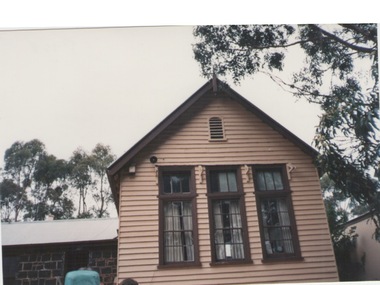
Photograph, Bulla Primary School, 1994
... There are a series of photographs in the collection which featured school improvements which were carried out on the building and the grounds in 1994 at the Bulla Primary School No. 46. The improvements included painting the school buildings, installing new playground equipment and laying out the school garden to include a vegetable garden. ...There are a series of photographs in the collection which featured school improvements which were carried out on the building and the grounds in 1994 at the Bulla Primary School No. 46. The improvements included painting the school buildings, installing new playground equipment and laying out the school garden to include a vegetable garden. ...There are a series of photographs in the collection which featured school improvements which were carried out on the building and the grounds in 1994 at the Bulla Primary School No. 46. The improvements included painting the school buildings, installing new playground equipment and laying out the school garden to include a vegetable garden. The first classroom to be built was a bluestone building, which opened in 1870. The weatherboard building was added in the early years of the 1900s.Two years after these improvements took place the Bulla Primary School was closed.A non-digital coloured photograph of one of the early weatherboard classrooms at the Bulla Primary School.bulla primary school, school improvements, school grounds -
 Whitehorse Historical Society Inc.
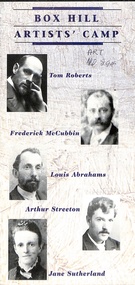
Pamphlet, Box Hill Artists' Camp, 1998
... painting...roberts...tom...mccubbin...frederick...abrahams...louis...streeton...arthur...sutherland...jane...heidelberg school...Australian school of painting established in 1880's by group of painters who camped in Box Hill on Gardiner's Creek. ...Australian school of painting established in 1880's by group of painters who camped in Box Hill on Gardiner's Creek. ...Australian school of painting established in 1880's by group of painters who camped in Box Hill on Gardiner's Creek.Australian school of painting established in 1880's by group of painters who camped in Box Hill on Gardiner's Creek. They later moved to Heidelberg. Plein air painting instigated by Tom Roberts.Australian school of painting established in 1880's by group of painters who camped in Box Hill on Gardiner's Creek. painting, roberts, tom, mccubbin, frederick, abrahams, louis, streeton, arthur, sutherland, jane, heidelberg school, conder, charles, humphrey, mather, john, handasyde, stewart, hansen, theo brooke, gardiners creek, dewar, s. g. -
Whitehorse Historical Society Inc.
Postcard - Illustration, Heidelberg School
... Folio of coloured postcards of artists paintings from the Heidelberg School. The Heidelberg School set up tents in 1885 on land belonging to David Houston on Gardiner's Creek. ...The Heidelberg School set up tents in 1885 on land belonging to David Houston on Gardiner's Creek. Included is a history on each artist and painting. ...Folio of coloured postcards of artists paintings from the Heidelberg School. The Heidelberg School set up tents in 1885 on land belonging to David Houston on Gardiner's Creek. Included is a history on each artist and painting.heidelberg school, davies, david, conder, charles, phillips, fox emanuel, mccubbin, frederick, roberts, tom, streeton, arthur, sutherland, jane, withers, walter, alston, alby, box hill artists camp -
 Greensborough Historical Society
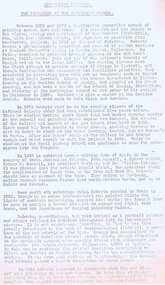
Article - Document, Formation of the Heidelberg School of Painting, 1960s
... Formation of the Heidelberg School of Painting......heidelberg school of painting...The Heidelberg School of Painting worked in the Yarra Valley area between Box Hill and Heidelberg in the late 19th Century and produced a number of famous artists. ...The Heidelberg School of Painting worked in the Yarra Valley area between Box Hill and Heidelberg in the late 19th Century and produced a number of famous artists. ...The Heidelberg School of Painting worked in the Yarra Valley area between Box Hill and Heidelberg in the late 19th Century and produced a number of famous artists. This article outlines the history of the School and also lists some paintings.The area in which they worked abuts our area of interest and may have overlapped it in the lower Plenty River area.Foolscap double sided typed document of 6 pages; includes list of paintings..Blue biro word on front page, "Fraser"heidelberg, yarra river, walter withers, heidelberg school of painting, australian art. -
 Whitehorse Historical Society Inc.
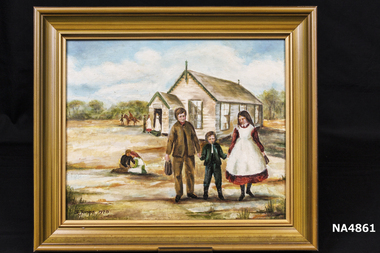
Painting, Painting of Vermont Primary School, 1978
... Painting of Vermont Primary School...Oil painting of Vermont Primary School No. 1022 of the 1880's Shows school with three children in foreground. ...Two small children kneeling in front Background has a bush scene with figures on a horse Picture is in a wood frame Painting of Vermont Primary School Painting Painting ...Painted by Shirley Jones , a local Artist in 1978Oil painting of Vermont Primary School No. 1022 of the 1880's Shows school with three children in foreground. Two small children kneeling in front Background has a bush scene with figures on a horse Picture is in a wood framehandcrafts, hand painted -
 Stawell Historical Society Inc
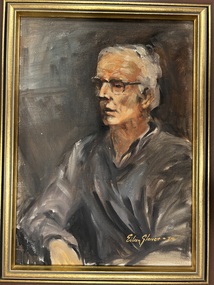
Painting, Painting of John Glover by Eileen Glover
... John was a well known painter of Stawell mainly rural scenes Eileen his wife was a painter in her own right Donor Cynthia (Cindy) Simmons was on the staff of Stawell High School 1974 -1 Margie Glover (daughter of John Glover) with the painting. -2 Stawell High School staff with US teacher Cindy Simmons. ...John was a well known painter of Stawell mainly rural scenes Eileen his wife was a painter in her own right Donor Cynthia (Cindy) Simmons was on the staff of Stawell High School 1974 -1 Margie Glover (daughter of John Glover) with the painting. -2 Stawell High School staff with US teacher Cindy Simmons. ...John was a well known painter of Stawell mainly rural scenes Eileen his wife was a painter in her own right Donor Cynthia (Cindy) Simmons was on the staff of Stawell High School 1974 -1 Margie Glover (daughter of John Glover) with the painting. -2 Stawell High School staff with US teacher Cindy Simmons. Framed Oil portrait of man in glassesEileen Gloverart -
 Bendigo Historical Society Inc.
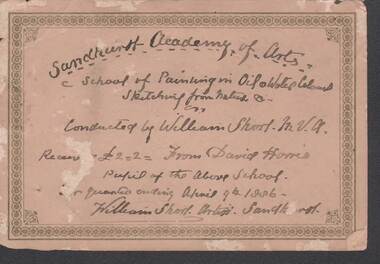
Document - HARRIS COLLECTION: DAVID HARRIS, 9th April, 1886
... small fawn coloured Receipt to David Harris from William Short, Sandhurst Academy of Arts School of painting in oil & water colours conducted by William Short M.V.A. ...David Harris jonathan harris axedale small fawn coloured Receipt to David Harris from William Short, Sandhurst Academy of Arts School of painting in oil & water colours conducted by William Short M.V.A. ...small fawn coloured Receipt to David Harris from William Short, Sandhurst Academy of Arts School of painting in oil & water colours conducted by William Short M.V.A. Received Two pounds two shillings from David Harris for quarter ending 9.4.1886 (1886) - quarterly account (for tuition?).david harris, jonathan harris, axedale, -
 Federation University Art Collection
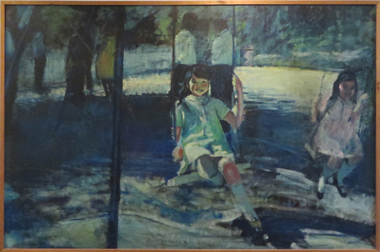
Painting, Domenico Micich, 'Girl on Swing' by Milivoj Micich, 1971
... School from 1968 to 1971. Described as a portrait artist, Micich taught art for many years in Ballarat. This is one of a number of paintings from Ballarat School of Mines Students produced for the opening of the new Mount Helen campus. ...School from 1968 to 1971. Described as a portrait artist, Micich taught art for many years in Ballarat. This is one of a number of paintings from Ballarat School of Mines Students produced for the opening of the new Mount Helen campus. ...Domenico Milivoj MICICH (1949- ) Born Zadar, Croatia Arrived Australia 1960 Domenico Micich studied at the Ballarat School of Mines Art School from 1968 to 1971. Described as a portrait artist, Micich taught art for many years in Ballarat. This is one of a number of paintings from Ballarat School of Mines Students produced for the opening of the new Mount Helen campus. This item is part of the Federation University Art Collection. The Art Collection features over 1000 works and was listed as a 'Ballarat Treasure' in 2007.An oil painting of a small girl on a swing in an outdoor setting. art, artwork, domenico micich, milvoj micich, swing, playground, oil on canvas, alumni, available -
 Robin Boyd Foundation
Journal, Students Society of the R.V.I.A (Melbourne), Lines, 1942
... The journal also contains an article 'The Democratic City' by architect Dr Ernst Fuchs and an article 'An Australian School of Painting?' by John Reed, Deputy President Contemporary Art Society, founder of Heidi with his wife Sunday Reed....The journal also contains an article 'The Democratic City' by architect Dr Ernst Fuchs and an article 'An Australian School of Painting?' by John Reed, Deputy President Contemporary Art Society, founder of Heidi with his wife Sunday Reed. ...Robin Boyd was the editor and designer of this volume. Lines was an annual journal of the Students Society of the R.V.I.A. This is a very rare copy. Most articles have a byline, but the ones without are perhaps by Robin Boyd. There is such an article 'An Australian Architecture?" (2 pages) which is perhaps by Boyd. The journal also contains an article 'The Democratic City' by architect Dr Ernst Fuchs and an article 'An Australian School of Painting?' by John Reed, Deputy President Contemporary Art Society, founder of Heidi with his wife Sunday Reed.rvia, architecture, ernst fuchs, roy simpson, john reed, walsh st library -
 Ringwood and District Historical Society
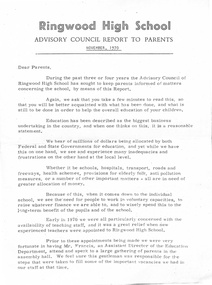
Pamphlet, Ringwood High School - Advisory Council Report to Parents, November, 1970
... Areas of concern include staffing, educational excursions, drama and musical presentations, tending to the school plantation at Powelltown, efforts to establish a proper school library, general improvements of the school grounds , provision of different types of sporting facilities, painting of the school - inside and out, and additional seating in the school grounds. ...Areas of concern include staffing, educational excursions, drama and musical presentations, tending to the school plantation at Powelltown, efforts to establish a proper school library, general improvements of the school grounds , provision of different types of sporting facilities, painting of the school - inside and out, and additional seating in the school grounds. ...Buff coloured 4 page leaflet with green typeThe Advisory Council has prepared a detailed report to parents listing fund raising projects and preparations for future efforts. Areas of concern include staffing, educational excursions, drama and musical presentations, tending to the school plantation at Powelltown, efforts to establish a proper school library, general improvements of the school grounds , provision of different types of sporting facilities, painting of the school - inside and out, and additional seating in the school grounds. Geoff Buchanan was the President of the Ringwood High School Advisory Council. He prepared this report and he closed it with the very best wishes for the future students of the school. -
 Dandenong/Cranbourne RSL Sub Branch
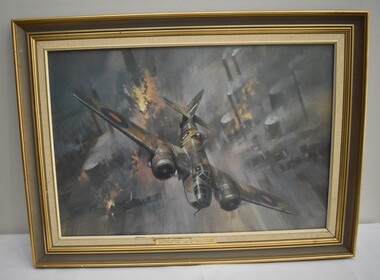
Painting - Large wooden framed painting
... Michael Turner born in 1934 is a British painter and illustrator specialising in motoring and aviation paintings. After leaving school he attended Art College followed by National Service with the Royal Electrical and Mechanical Engineers for 2 years. ...Michael Turner born in 1934 is a British painter and illustrator specialising in motoring and aviation paintings. After leaving school he attended Art College followed by National Service with the Royal Electrical and Mechanical Engineers for 2 years. ...Michael Turner born in 1934 is a British painter and illustrator specialising in motoring and aviation paintings. After leaving school he attended Art College followed by National Service with the Royal Electrical and Mechanical Engineers for 2 years. On leaving National Service he worked with a London advertising studio before turning freelance in1957. The Bristol Blenheim depicted in the painting was a British light bomber used extensively for 2 years of the Second World War. It was powered by a pair of Bristol Mercury V111 air cooled radial engines capable of developing 860 bhp. armament was a combination of Vickers, Browning and Lewis machine guns in .303 ( 7.7mm ). A 1000lb (450kg ) could be carried in the internal bomb bay in the centre section of the fuselage. The 114 Squadron was a Squadron of the British Royal Air Force formed in India during the First World War. The Squadron was disbanded in 1971.Large wooden framed painting of an RAF WW2 bomber in flight.Below the painting is the wording " A 114 Squadron Blenheim 1V on a low level bombing run over the power station at Knapsack Cologne, in August 1941 - donated by Laurie Pillar". -
Bendigo Historical Society Inc.
Photograph - PRESENTATION OF PAINTING BY CHARLES DARVALL
... On envelope is printed in blue ink the following details: Mrs Kingerlee, c/o Historical Society, Dudley House, to pay $4.00 Photograph 1 - 'Presentation of painting 'Rae's Hill School' by Sir Roger Darvall. L-R Lady Darvell, Sir Roger Darvall, Mr Rae Anderson (President of BHS of Vic). ...On envelope is printed in blue ink the following details: Mrs Kingerlee, c/o Historical Society, Dudley House, to pay $4.00 Photograph 1 - 'Presentation of painting 'Rae's Hill School' by Sir Roger Darvall. L-R Lady Darvell, Sir Roger Darvall, Mr Rae Anderson (President of BHS of Vic). ...Two black and white photographs and one brown envelope. On envelope is printed in blue ink the following details: Mrs Kingerlee, c/o Historical Society, Dudley House, to pay $4.00 Photograph 1 - 'Presentation of painting 'Rae's Hill School' by Sir Roger Darvall. L-R Lady Darvell, Sir Roger Darvall, Mr Rae Anderson (President of BHS of Vic). At back - son-in-law of Sir Roger , Barry Stevens and daughter Margaret Stevens. Painting by Charles Darvall'. Photograph 2 - 'Mr Rae Anderson, President of B H society, Jack Hattam, Comm. Member, Cr Alec Craig (former Mayor of Bendigo), Presentation of Book of photos of Bendigo Base Hospital before the new alterations'.person, group, men and women -
 Federation University Art Collection
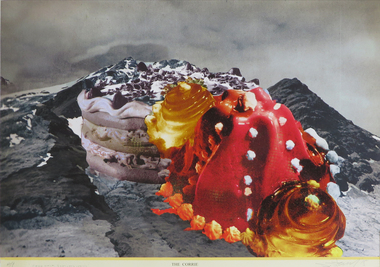
Work on paper - Artwork - Digital archive print, The Corry (from the series: Cake Walking in Scotland, 2015/2016), 2016
... David Ferry studied painting at the Camberwell Schools of Art and printmaking at the Slade School of Fine Art in London. ...David Ferry studied painting at the Camberwell Schools of Art and printmaking at the Slade School of Fine Art in London. ...David FERRY (1957- ) Born in Blackpool, United Kingdom. David Ferry studied painting at the Camberwell Schools of Art and printmaking at the Slade School of Fine Art in London. He is currently Professor of Printmaking and Book Arts at the Cardiff School of Art, Cardiff Metropolitan University,Wales. He was Former Associate Professor of Fine Art Media, at the Long Island University, New York, USA, and former Head of Printmaking at the Winchester School of Art, UK. David Ferry was awarded a Fellowship of The Royal Society of Arts for his contribution in the foundation of the Curwen Print Study Centre in Cambridge where he became its first Artistic Director in 2003. In 2010 he was made Professor of Printmaking at the Cardiff School of Art and Design, and a full Fellow of the Royal Society of Painter / Printmakers (RE).Framed screenprint which forms part of a series called ‘Cake walking in Scotland’ which was printed 2015/16. It is a Digital Archive print with gold and silver leaf and glitter and varnish. "Upon entering a strange place, the visitor is disorientated. He looks for key markers that can act as signposts to help him find his way. These markers are taken from his past experiences, giving shape to his perceptions.’…’ Ferry was born in the seaside town of Blackpool and educated at London art colleges during the late 1970s at the height of British Punk. These early foundations continue to assert themselves in the mischievous and disruptive nature of his photomontage. He argues that early understandings of oneself, along with the characters and situations one encounters, shape our viewpoint. These act as familiar signposts that enable us to negotiate our understanding of the world. Employing what he refers to as a collage mentality, Ferry collides and layers fragments to explore his subjects.’ Writes Stephen Clarke on David Ferry’s work in ‘The Double Negative’. (htt05 April 2019)ps://www.roeandmoore.com/shop/the-corrie-by-david-ferry/, accessed One of an edition of 12.david ferry, printmaking, artist in residence, screenprint, art, artwork -
 Bendigo Historical Society Inc.
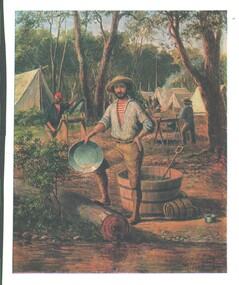
Print - WES HARRY COLLECTION: 'I HAVE GOT IT ', 1854
... painting at the Dusseldorf Academy, and travelled widely. In 1852, he moved to London, and in August that year decided to travel to Victoria, Australia to try his luck on the goldfields. He arrived at Geelong on 24 December 1852, and made many sketches of the mining districts around Ballarat until 1854. He moved to Melbourne, and in 1870 was appointed the first Master of the School...painting at the Dusseldorf Academy, and travelled widely. In 1852, he moved to London, and in August that year decided to travel to Victoria, Australia to try his luck on the goldfields. He arrived at Geelong on 24 December 1852, and made many sketches of the mining districts around Ballarat until 1854. He moved to Melbourne, and in 1870 was appointed the first Master of the School ..."I have got it" is the title of this painting created on the goldfienlds in Ballarat in 1854. Eugene von Guérard, painter and teacher, was born in November 1811 in Vienna. From 1826, he toured Italy with his artist father and between 1830 and 1832 resided in Rome. From around 1839 to 1844, he studied landscape painting at the Dusseldorf Academy, and travelled widely. In 1852, he moved to London, and in August that year decided to travel to Victoria, Australia to try his luck on the goldfields. He arrived at Geelong on 24 December 1852, and made many sketches of the mining districts around Ballarat until 1854. He moved to Melbourne, and in 1870 was appointed the first Master of the School of Painting, National Gallery of Victoria. He retired from this position at the end of 1881, and in 1882 departed for Europe. In 1891, he moved to London, and died in London on 17 April 1901. He is buried in Brompton Cemetery, Chelsea, England.Print of an oil painting by Eugene von Guerard called 'I have got it ', painted in 1854. It depicts a mining camp in the bush, there are several tents in the background and two men using windlasses, in front of these there is a digger posing with a gold dish with gold visible at the base of the dish. Behind him there is a wooden tub and bucket, with a spade resting in the tub. This painting is from a collection at the State Library of Victoria.Eugene von Guerardmining, i have got it, eugene von guerard -
 Federation University Historical Collection
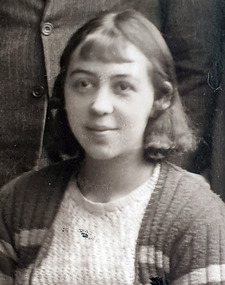
Article - Article - Women, Ballarat Technical Art School: Women of Note; Nornie Gude, Artist, (1915 - 2002)
... She later went on to the National Gallery School from 1936-1939, studying with Sidney Nolan and Charles Bush, and became the first woman to win the National Gallery Students Travelling Scholarship. Gude won many awards for her painting...She later went on to the National Gallery School from 1936-1939, studying with Sidney Nolan and Charles Bush, and became the first woman to win the National Gallery Students Travelling Scholarship. Gude won many awards for her painting ...Eleanor Constance (Nornie) Gude was born in 1915 in Ballarat, Victoria to Stella Rehfisch and Walter Gude, musician and violin teacher, and conductor of the St Patrick's Cathedral orchestra and choir in Ballarat. Her parents met when Stella was 27 and the 42-year old Walter was teaching her the violin. Nornie and her sister Gilda were both raised in Ballarat before moving to Melbourne on the eve of World War II. She was accepted into the Ballarat Technical Art School at 15 because of her advanced skill in painting, and trained there from 1931-1936. She won the esteemed MacRobertson Scholarship in art worth £100 a year. She later went on to the National Gallery School from 1936-1939, studying with Sidney Nolan and Charles Bush, and became the first woman to win the National Gallery Students Travelling Scholarship. Gude won many awards for her painting both while at school and throughout her career. Her work is represented in collections at the National Gallery of Victoria, Parliament House, and the Art Gallery of Western Australia, as well as regional collections in Ballarat, Geelong, Castlemaine Art Museum, and Bendigo.Portrait of Nornie Gude while a student at the Ballarat Technical Art Schoolnornie gude, ballarat technical art school, 1931-1936, women of note, artist, macrobertson scholarship, 100 pound per year, national gallery school, 1936-1939, sidney nolan, charles bush, first woman national gallery students travelling scholarship, parliament house, regional collections, ballarat, geelong, castlemaine, bendigo, national gallery victoria, eleanor constance gude -
 Federation University Art Collection
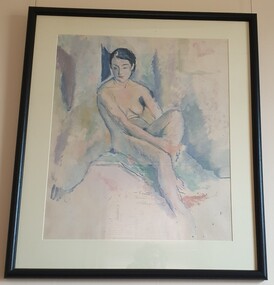
Painting - Oil on paper, William Frater, 'Nude' by William Frater, 1932
... Jock Frater was on of the first modern painters who opposed the fashionable and academic schools of painting. During the 1930s he exhibited with the Contemporary Art Group along with Arnold Shore and George Bell. ...Jock Frater was on of the first modern painters who opposed the fashionable and academic schools of painting. During the 1930s he exhibited with the Contemporary Art Group along with Arnold Shore and George Bell. ...William FRATER (1890-1974) Born 31 January 1890 at Ochiltree Castle, near Linlithgow, Scotland Arrived Melbourne, Australia in September 1910 In a lecture on modern art in 1925, Frater stated the basic position from which the rest of his oeuvre stems: 'Copying nature is not an art; … to copy effects of light tends to destroy form and colour'. Frater gave aggressive leadership to the small group of modernists in the 1920s. His example, teaching, lecturing and crusty style of polemic did much to disrupt the academic style as the arbiter of pictorial values and to pioneer a change of taste in the community.His approach in the 1930s was markedly indebted to Cézanne, especially in the portraits which predominated until his retirement from stained-glass designing in 1940. (L. J. Course, 'Frater, William (1890–1974)', Australian Dictionary of Biography, National Centre of Biography, Australian National University, http://adb.anu.edu.au/biography/frater-william-6239/text10739, published first in hard copy 1981, accessed online 3 May 2016.) Jock Frater was on of the first modern painters who opposed the fashionable and academic schools of painting. During the 1930s he exhibited with the Contemporary Art Group along with Arnold Shore and George Bell. During a very conservative period in Australian Art John Frater advanced the cause of innovation and modernism. This item is part of the Federation University Art Collection. The Art Collection features over 2000 works and was listed as a 'Ballarat Treasure' in 2007.Framed seated nude study in oil on paper. Lower centre in pencil "W. Frater". In lighter pencil "painted 1932"art, artwork, frater, william frater, life drawing, nude, oil on paper, portrait, jock frater, william jock frater, available -
 Eltham District Historical Society Inc
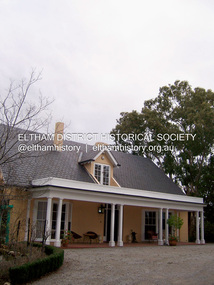
Photograph - Digital Photograph, Marguerite Marshall, 'Landscape', 60 Lavender Park Road, Eltham South, 24 June 2008
... But Leason found his niche by running an art school, painting society portraits and illustrating books and magazines....But Leason found his niche by running an art school, painting society portraits and illustrating books and magazines. ...Built by artist and cartoonist Percy Leason in 1927 in what was then New Street but renamed Lavender Park Road in the late 1950s/early 1960s. Covered under Heritage Overlay, Nillumbik Planning Scheme. Published: Nillumbik Now and Then / Marguerite Marshall 2008; photographs Alan King with Marguerite Marshall.; p121 Said to be a genius, cartoonist Percy Leason’s career was at its peak when in 1925 to 1926 he built his home at New Street (now Lavender Park Road) Eltham. The Herald newspaper owner, Sir Keith Murdoch, had hired Leason for his newly acquired Melbourne Punch magazine at a salary of £1750, making him ‘one of the highest paid cartoonists in the world’.1 With this salary and financial help from Murdoch, Leason was able to build his lovely home in Eltham. At the crest of a sweeping drive, the home now two-storey in white brick with a gabled grey slate roof and dormer windows is flanked by an extension built by another owner in the 1980s. Leason lived in the home with his wife, Isabel and children, until 1937, when he left for the United States of America, where he lived until his death in 1959. The four-bedroom house and garden would have been well-suited to bringing up his family and to entertaining their friends in style. Large airy rooms have high ceilings with moulded plaster, timber floors and several are brightened with bay windows. Leason made friends with many of the artists and personalities who gravitated to Eltham. Around 1931 Justus Jörgensen, founder of the Montsalvat Artists’ Colony, helped Leason build his large studio at the back of the house. Another friend was journalist Mervyn Skipper, father of jeweller and sculptor Matcham, and artists Helen and Sonia. Leason’s teacher, artist Max Meldrum, also visited and rented accommodation in Eltham, opposite Wingrove Park. Punch folded in 1925, but Leason continued as cartoonist for Table Talk. In 1926 Leason began the cartoons of a mythical Australian town Wiregrass, which were inspired by Kaniva, his home town. The art gallery in Main Road Eltham was named Wiregrass in Leason’s honour. Leason completed 1000 drawings from 1919 to 1937, which author Garrie Hutchinson claimed, were technically unsurpassed and had regional and universal interest. Leason’s acute observations of country life stemmed from his childhood in Kaniva in Victoria’s western Wimmera, where he was born, the son of a selector, in 1889. Meldrum claimed that Leason could name every plant and the habits of every animal.2 Leason also painted 28 portraits of the last full-blooded aboriginals in Victoria at Lake Tyers in Gippsland, most of which are in a private collection. In Sydney Leason illustrated Henry Lawson’s Selected Poems and worked for The Bulletin. Leason had begun his career at 13 as an apprentice lithographic artist at Sands and MacDougall. He attended night classes at the National Gallery and the Victorian Artists Society. Leason first visited Eltham in 1910 to paint with fellow artist William ‘Jock’ Frater. They camped near Bible and Pitt Streets and along the Diamond Creek on the site of the present Eltham Retirement Centre. Despite his success as a cartoonist, Leason wanted to be recognised as a serious painter and for his anthropological work.3 He was also conservative and felt uncomfortable with the modern art scene in Melbourne.4 So he left for the United States of America to work as a painter. Ironically his time in New York saw the burgeoning of modern art, notably by artists such as Jackson Pollock. But Leason found his niche by running an art school, painting society portraits and illustrating books and magazines.This collection of almost 130 photos about places and people within the Shire of Nillumbik, an urban and rural municipality in Melbourne's north, contributes to an understanding of the history of the Shire. Published in 2008 immediately prior to the Black Saturday bushfires of February 7, 2009, it documents sites that were impacted, and in some cases destroyed by the fires. It includes photographs taken especially for the publication, creating a unique time capsule representing the Shire in the early 21st century. It remains the most recent comprehenesive publication devoted to the Shire's history connecting local residents to the past. nillumbik now and then (marshall-king) collection, landscape, lavender park road, percy leason, new street -
 Eltham District Historical Society Inc
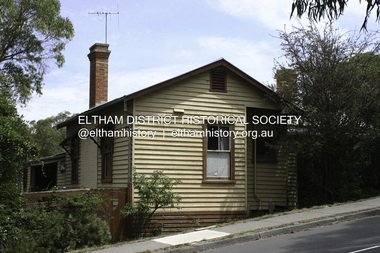
Photograph - Digital Photograph, Alan King, Southernwood, cnr Bolton and Brougham Street, Eltham, 30 January 2008
... However, after working as a jackaroo on several country properties for 18 months, Withers resumed painting in Melbourne, where he enrolled in evening art classes at the Melbourne National Gallery school of painting under G F Folingsby. ...However, after working as a jackaroo on several country properties for 18 months, Withers resumed painting in Melbourne, where he enrolled in evening art classes at the Melbourne National Gallery school of painting under G F Folingsby. ...Walter Withers once lived at the corner of Bolton and Brougham Streets, Eltham. Covered under Heritage Overlay, Nillumbik Planning Scheme. Published: Nillumbik Now and Then / Marguerite Marshall 2008; photographs Alan King with Marguerite Marshall.; p105 Walter Withers, one of Australia’s most famous artists, once lived in Southernwood, the weatherboard house at the corner of Bolton and Brougham Streets, Eltham. Withers, one of the first prominent artists to live in Eltham, was known for his lyrical paintings of the Australian bush and is associated with the Heidelberg School of artists. Withers was born in 1854 at Handsworth, Warwickshire, England, the grandson of an artist. He studied art at the Royal Academy of Arts, London. But in 1882 his father, opposing an artistic career for Withers, ordered him to go to Australia. However, after working as a jackaroo on several country properties for 18 months, Withers resumed painting in Melbourne, where he enrolled in evening art classes at the Melbourne National Gallery school of painting under G F Folingsby. Employed as a draughtsman by William Inglis & Co, then by Ferguson & Mitchell, lithographic printers, Withers produced portraits in black-and-white for several periodicals. His work was exhibited in the Old Academy, Melbourne. At this time he met and became life-long friends with artists Frederick McCubbin, Tom Roberts and Louis Abrahams. In 1887 Withers went to England and married Fanny Finn. They lived in Paris for awhile, where Withers studied at the Academie Julian. After his return to Melbourne in 1889, Withers lived at the artist camp at Eaglemont, then moved close to the Charterisville mansion, where he established a studio and sub-let cottages to other artists. Around 1892 Withers opened a Collins Street studio, had his first exhibition, and started giving painting classes. One of his pupils was Norman Lindsay, also to become a prominent artist. Withers had long been attracted to Eltham, but had to wait until 1903 to live there, after the railway line was extended to Eltham in 1902. He could then commute to the painting classes he gave in Melbourne. Withers lived on the two and a half acres (1.0ha) Bolton Street property with his wife and five children. They were joined for a short time by prominent painter Sir Hans Heyson who took lessons from Withers. Withers added a studio to the Queen Anne/Edwardian style seven-bedroom home, which had been built in 1891. Each bedroom included a fireplace and most rooms had 12 foot high (3.6m) ceilings. The house retains several fine leadlight windows. Withers painted his largest canvas The Return from the Harvest in 1905, at his Eltham studio. He is represented in national, state and regional galleries, and in many private collections in Australia and abroad. In 1904-05 Withers was president of the Victorian Artists’ Society. Withers at times stayed during the week at his studio in Oxford Chambers, Melbourne, and on weekends and holidays with his family at Eltham. Withers lived in Eltham until his death in 1914, aged 60 years. He had been plagued by rheumatism and in later life by heart and lung disease. It is said he died of a stroke peacefully in a rocking chair in front of the lounge-room fire. He is buried at St Helena in the St Katherine’s Anglican Church cemetery. In 1983, the auction of the house sparked fears that it would be pulled down, or substantially altered. Fortunately the new owners decided to retain the house. Some security was given to the house’s future when it was later included in the Heritage Overlay to the Nillumbik Planning Scheme. The property is also important because it is one of only a few left in the district, which were once owned by noted artists. These include three in Warrandyte: one formerly owned by Penleigh Boyd, another by Frank Crozier, and the other by Danila Vassilieff; and two in Eltham: Percy Leason’s in Lavender Park Road and Justus Jörgensen’s Montsalvat. A small park at the corner of Bible and Arthur Streets, Eltham is named in Walter Withers’ honour.This collection of almost 130 photos about places and people within the Shire of Nillumbik, an urban and rural municipality in Melbourne's north, contributes to an understanding of the history of the Shire. Published in 2008 immediately prior to the Black Saturday bushfires of February 7, 2009, it documents sites that were impacted, and in some cases destroyed by the fires. It includes photographs taken especially for the publication, creating a unique time capsule representing the Shire in the early 21st century. It remains the most recent comprehenesive publication devoted to the Shire's history connecting local residents to the past. nillumbik now and then (marshall-king) collection, bolton steet, brougham steet, eltham, southernwood, walter withers house -
 Federation University Historical Collection
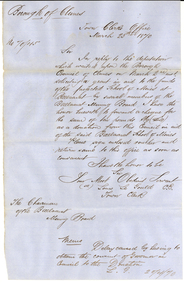
Document, Establishment of the Ballarat School of Mines, 1870, 1870
... Bland to Harrie Wood, 30/05/1870 .27) Letter from Robert Park re alteration of the former Ballarat Court House for use as the Ballarat School of Mines, 05/05/1870. .28) Letter from G. Whitty re painting of the former Ballarat Court House for use as the Ballarat School of Mines, 04/05/1870 .29) Letter from William Newman re plastering of the former Ballarat Court House for use as the Ballarat School of Mines, 05/05/1870 .30) Letter from Charles A. ...Bland to Harrie Wood, 30/05/1870 .27) Letter from Robert Park re alteration of the former Ballarat Court House for use as the Ballarat School of Mines, 05/05/1870. .28) Letter from G. Whitty re painting of the former Ballarat Court House for use as the Ballarat School of Mines, 04/05/1870 .29) Letter from William Newman re plastering of the former Ballarat Court House for use as the Ballarat School of Mines, 05/05/1870 .30) Letter from Charles A. ...The Ballarat School of Mines was the first site of technical edducation in Australasia. It is now a predecessor institution of Federation University Australia. It's first president was Redmond Barry.Correspondence and planning documents relating to the setting up of the Ballarat School of Mines. it includes tenders for contractors for the refurbishment of the former Ballarat Circuit Court. .1) Rules for the pupils of the Mining School at Zurickau, 18/11/1870 (not translated by Emanuel Steinfeld, perhaps by W. Henderson) .2) Regulations of the Mining Academy at Frieberg, 18/11/1870 .3) Einrichtungen, Freiberg, 1870 (written in German) .4) Letter from Somerville Learmonth of Ercildoun to Harrie Wood, Clerk of the Board of Mines Ballarat, accepting a position as one of three trustees of the Ballarat School of Mines, along with Redmond Barry and R.H. Bland, 08/01/1870 .5) Printing order with Robert Wreford, 26/01/1870 .6) H. Waymouth to Mr Bickett re the Ballarat School of Mines, 1780 .7) Letter from R.H. Bland of Clunes to Harrie Wood of the Ballarat Mining Board, 27/01/1870 .8) Letter from Somerville Livingstone Learmonth of Ercildoun to Harrie Woods of the Ballarat Mining Board refusing the offer to be a Trustee of the Ballarat School of Mines, 28/01/1870 .9) Minutes of the meeting of the Ballarat School of Mines Executive Council, 05/02/1870 and Correspondence from Harrie Wood to J. Warrington Rogers re the lease of the building for the Ballarat School of Mines, 21/01/1870 .10) Chief Secretary's Office to Ballarat Mining Board re Life Membership of the Ballarat School of Mines, 02/02/1870 .10b) Letter from Redmond Barry, Carlton Gardens, Melbourne re the visit of the Governor of Victoria to the Ballarat School of Mines, 04/02/1870 .12) Letter from Charles Pucke on behalf of Mr McCulloch to H, Ainswood, Secretary of the Ballarat Mining Board, 11/07/1870 .13) Correspondence from Henry Rosales of Walhalla (Chairman of the Gippsland Mining Board) to James Baker of the Ballarat School of Mines, 28/12/1870 .11) Meeting of the Executive Council, Bickett, Eddy Downes, 08/02/1870 .14) Letter from John Phillips, contract surveyor of St Arnaud to Mr Newman, Vice-President of the Ballarat School of Mines, 15/12/1870 .15) Articles ordered and obtained for the Ballarat School of Mines, 03/01/1870 .16) Telegram from John Lewis of Clunes to the Ballarat School of Mines. .16b) Quote from painter Thomas Robson for painting the Ballarat School of Mines, 05/06/1870 .17) Note from Duncan Gillies to Harrie Wood re grant for the Ballarat School of Mines, 05/06/1870 .18) Correspondence re Grant to the Ballarat School of Mines, Duncan Gillies, 04/07/1870 .19) Correspondence concerning the Ballarat School of Mines from F. Valient to Harrie Wood, 14/05/1870 .19b) Correspondence from Somerville Livingstone Learmonth to Harrie Woods - an apology for a meeting with Judge Rogers, 23/05/1870 .20) Letter from R.H. Bland to Harrie Wood, 15/07/1870 .22) Telegraph from J. Warrington Rogers to Harrie Wood of the Ballarat Mining Board concerning tenders for the Ballarat School of Mines, which was established in 1870. .23) Letter from Ballarat Mining Board to Judge Warrington Rogers, 31/05/1870 .24) Telegraph to Harrie Wood of the Ballarat Mining Board from J. Warrington Rogers concerning Sir Redmond Barry. A note at the bottom of the telegraph notes ‘This telegram has been delayed through repairs on line. .25) Letter on Melbourne Public Library Letterhead from librarian Augustus Fulk, 05/08/1870 .26) Letter from R.H. Bland to Harrie Wood, 30/05/1870 .27) Letter from Robert Park re alteration of the former Ballarat Court House for use as the Ballarat School of Mines, 05/05/1870. .28) Letter from G. Whitty re painting of the former Ballarat Court House for use as the Ballarat School of Mines, 04/05/1870 .29) Letter from William Newman re plastering of the former Ballarat Court House for use as the Ballarat School of Mines, 05/05/1870 .30) Letter from Charles A. Abbott re teaching Mechanical Drawing at the Ballarat School of Mines, 04/04/1870 .32) Letter from Redmond Barry to the Ballarat School of Mines, 07/1870 .31) National Insurance Company of Australia insurance for the Ballarat School of Mines (former Ballarat Circuit Court), 01/05/1870 .33) Letter from R.H. Bland to Harrie Wood, 09/1870 .34) Letter from Somerville Livingstone Learmonth to Harrie Wood, 06/09/1870 .35) Letter to the Chief Secretary to the Ballarat School of Mines Library & Museum, 30/11/1870 .36) Parliament house (Kitto) to the Ballarat Mining Board, 15/11/1870 .37) H. de la Poer Wall of Grenville College to R.W. Newman of the Ballarat School of Mines, 27/04/1971 .38) W.H. Odgers to the Ballarat East Town Clerk, 20/05/1870 .39) Correspondence to the Borough of Clunes for the Ballarat Mining Board requesting a grant to set of a school of mines at Ballarat. 25/03/1870 .40) Surveyor to Harrie Wood, Mining Registrar, 27/04/1870 .40) Letter to Judge Warrington Rogers re the contractor's account for satisfactory completion of work on the Ballarat School of Mines, 11/07/1870 .43) Desks for the Ballarat School of Mines by Henry Gough, 1870 .44) Ballarat Star Office to James Baker of the Ballarat School of Mines, 1870ballarat school of mines, frieberg mining academy, learmonth, somerville learmonth, wreford, weymouth, bland, rivet henry bland, barry, redmond barry, mcculloch, phillips, john phillips, robson, gillies, duncan gillies, warrington rogers, melbourne public library, whitty, robert park, newman, william newman, charles abbott, janes baler, de la poer wall, odgers, louis le gould, wood, harrie wood, steinfeld, emanuel steinfeld, ainswood, pucke, thomas robson, telegraph, telegram, state library of victoria, fulks, architecture, reed, j. reed, rosales, abbott, charles a. abbott, mechanical drawing, drawing, ballarat circuit courthouse, ballarat courthouse, national insurance company of australia, grenville college, chief secretary's office, robert sandon, school of mines, schools of mines, establishment, ballarat school of mines establishment, germany, london, ercildoun
