
Showing 65 items matching " pat love"
-
 Musculoskeletal Health Australia (now held by the Glen Eira Historical Society)
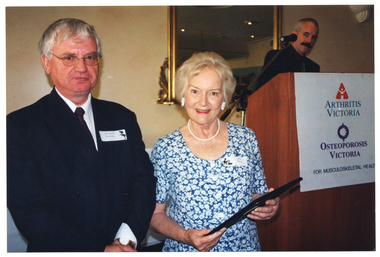
Photograph - Group photo, Circa 2004
... ... pat love...Pat Love, holding her framed award, poses for a photo with President of the Arthritis Foundation of Victoria, Alan Leaf....Pat Love, holding her framed award, poses for a photo with President of the Arthritis Foundation of Victoria, Alan Leaf. arthritis foundation of victoria afv award pat love award recipient alan leaf president C2004 COL photo of a man and a woman standing close to one another. ...Pat Love, holding her framed award, poses for a photo with President of the Arthritis Foundation of Victoria, Alan Leaf.COL photo of a man and a woman standing close to one another. The woman is holding a framed award. Behind them, there is a man standing behind a podium. On the wall behind the podium, there is a large mirror with an ornate gold frame.arthritis foundation of victoria, afv, award, pat love, award recipient, alan leaf, president, c2004 -
 Clunes Museum
Card - GREETING CARD, FIFTH AVENUE
... TO PAT WITH LOVE WISHES AND MANY THANKS FOR CARD AND GIFT DICK...LOCAL HISTORY DOCUMENT GREETING CARDS GREETING CARD TO PAT WITH LOVE WISHES AND MANY THANKS FOR CARD AND GIFT DICK XMAS CARD WITH A LANTERN AND BALLS ON COVER Card GREETING CARD FIFTH AVENUE ...XMAS CARD WITH A LANTERN AND BALLS ON COVERTO PAT WITH LOVE WISHES AND MANY THANKS FOR CARD AND GIFT DICKlocal history, document, greeting cards, greeting card -
 Marysville & District Historical Society
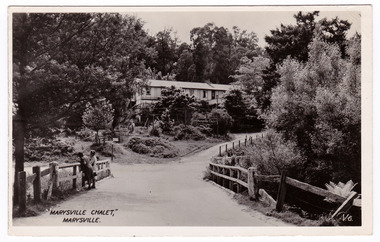
Postcard (Item) - Black and white postcard, Valentine Publishing Co. Pty. Ltd, "MARYSVILLE CHALET," MARYSVILLE, 1923-1963
... Will/ write again later. Lots of Love Pat & Arthur...Will/ write again later. Lots of Love Pat & Arthur A black and white postcard of Marysville Chalet that was produced by the Valentine Publishing Co Pty. ...A black and white postcard of Marysville Chalet that was produced by the Valentine Publishing Co Pty. Ltd. as a souvenir of Marysville.A black and white postcard of Marysville Chalet that was produced by the Valentine Publishing Co Pty. Ltd. as a souvenir of Marysville.V.6. VALENTINE'S/ POST CARD A GENUINE PHOTOGRAPH OCT. 1949 Dear Mum & Dad/ and kids,/ This is a photo of the Chalet, you can't see/ our room its right around the other side./ Gordon and Jean have a room right on the/ front. We are having a marvellous time,/ have been on two trips so far. It is raining/ today, so we are staying here, we are in/ the Ballroom in front of a fire. Arthur is/ playing Table Tennis, they have the tables etc/ down here. We have another honeymoon couple/ with us. Norm and Phil, they are very nice. Will/ write again later. Lots of Love Pat & Arthurmarysville, victoria, australia, the marysville chalet, guest house, poontawan, steavenson hotel, albert harrison, margaret harrison, elise ackerman, ralph ackerman, john van ranglerooy, joe keithard, kathy keithard, louisa goding, accommodation, valentine publishing co pty ltd, postcard, souvenir, v.6. -
 Federation University Historical Collection
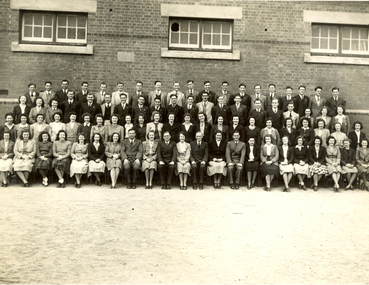
Photograph - Black and White, Ballarat Teachers' College, 1947, 1947
... Second Row: Beth Leslie; Faye Dreher; Gwen Pamphilon; Arthur Lelean; Howard Pattenden; Jack Tyers; Hugh Fraser; William Henderson; Jack Mallett; Alan Martin; Keith Boyd; John Ellifson; John Collins; Tom Hill; Wal Henning; Burns Roddis; Fred Marshman; Dawn Doney; Pat Watts; Ann McKinnon. Third Row: Ethel Esmore; Joy Love; Pat Luxford; Jean Elliott; Josie Bunny; Phyllis Borley; Joyce Matheson; Val Witney; Ruth Tozer; Nancy Kerr; K.ath Tobin; Muriel Morrish; Jean Clode; Peg Purdue; Joyce Kennedy; Margaret Palmer; Marie Faulds; Thelma Ritchie. ...Second Row: Beth Leslie; Faye Dreher; Gwen Pamphilon; Arthur Lelean; Howard Pattenden; Jack Tyers; Hugh Fraser; William Henderson; Jack Mallett; Alan Martin; Keith Boyd; John Ellifson; John Collins; Tom Hill; Wal Henning; Burns Roddis; Fred Marshman; Dawn Doney; Pat Watts; Ann McKinnon. Third Row: Ethel Esmore; Joy Love; Pat Luxford; Jean Elliott; Josie Bunny; Phyllis Borley; Joyce Matheson; Val Witney; Ruth Tozer; Nancy Kerr; K.ath Tobin; Muriel Morrish; Jean Clode; Peg Purdue; Joyce Kennedy; Margaret Palmer; Marie Faulds; Thelma Ritchie. ...Ballarat Teachers' College was opened on may 4th, 1926, at S.S. 33, Dana Street, with an enrollment of sixty-one students, its original staff consisted of the Principal, Mr W. H. Ellwood, M.A., m.Ed. (Chairman of the Teachers' tribunal from its inception in 1946 until 1954), Miss A. Bouchier, B.A., and Mr A.B. Jones, B.A. (Lecturers). In 1927 Miss P.A. Hamano joined the staff. Teaching practice and special rural school work were carried on in schools in or near Ballarat - drawing, crafts and singing were taught by local teachers. In 1927 the college moved to the old Ballarat East Town Hall (remodelled for their use) in Barkly Street. During 1927 the numbers in the College were augmented by twenty-six Manual arts students who had formerly received their training at Ballarat High School. Manual Arts students continued till 1930, when, on grounds of economy, their training was concentrated at Melbourne Teachers' College.\During the four succeeding years approximately sixty students annually entered the primary course. Inclusive of Manual Arts students, and private fee-paying students, exactly 400 trainees passed through the college in its brief span of life (1926-1931) Fourteen years were to pass before they were again opened to students on February 2nd, 1946. The college was re-commenced at S.S. Dana Street under the guidance of Mr W.F. Lord, M.C., M.M., B.A., Dip.Ed., (Acting Principal 1946-1950), and a staff consisting of Miss E.B. Hughes, B.A., Dip. Ed., Mr C.B. Bryan, B.A., V.Com., Dip.Ed., Miss M.H. Miller, L.Mus.A., and Miss G. Kentish, Dip.Phys.Ed. The opening ceremony was performed by the Minister for education at that time, the Hon. F. Field, M.L.A., accompanied by the Hon. T.T. Hollway, M.L.A., and the then Director of Education, Mr J.A. Seitz. It was originally intended to cater for women students only (for whom 130 Victoria Street was purchased as a hostel) but, at the last moment, men were also accepted. A co-educational college was thus set up instead, and has continued as such. The original Staff has been considerable augmented, and the number of Students has been more than trebled. 1951 saw the introduction of the two-year course, successful students being presented with the Trained Primary Teachers' Certificate at the final College assembly each year. In December, 1855, College held its first Graduation Ceremony, with its own Graduation hymn, the words of which were written by Miss C.M. Canty of the staff. Mr Ellwood, former Principal,delivered the occasional address and presented the Ellwood Prize to the outstading student of the year (Mr C.P. Handreck). Students who had successfully completed the course received their certificates from Mr E.B. Pederick, Chief Inspector of Primary Schools. College accomodation having been strained for several years, it was pleasant news when tenders were called in July, 1956, for the building of the first section of the new Ballarat Teachers' College in Gillies Street, near the Botanical Gardens. At the beginning of 1958 the new College was occupied, and staff and students have appreciated greatly the appointments and cacilities of the new buildign. In 1968 the three-year Diploma Course began, co-existent with the other courses which will continue during the transitional period. Successful students in the course receive the Diploma of Teaching (Primary).Black and white photograph of students and staff of the Ballarat Teachers' College. The people are in four rows, and they stand in front of the Dana Street Primary School. Back Row: Jim Howlett; Milton Rice; Keith McLean; Jim Williams; George Nield, David Cooper, Ray Terrill, William Gleeson; Tom Pascoe; Lindsay Harley; Ron Carless; Robert Giddings; Colin Connelly; Alex Magill; Eddie Blake; William Punshon; Athol Aisbett; Kevin Collins; John O'Shannessy. Second Row: Beth Leslie; Faye Dreher; Gwen Pamphilon; Arthur Lelean; Howard Pattenden; Jack Tyers; Hugh Fraser; William Henderson; Jack Mallett; Alan Martin; Keith Boyd; John Ellifson; John Collins; Tom Hill; Wal Henning; Burns Roddis; Fred Marshman; Dawn Doney; Pat Watts; Ann McKinnon. Third Row: Ethel Esmore; Joy Love; Pat Luxford; Jean Elliott; Josie Bunny; Phyllis Borley; Joyce Matheson; Val Witney; Ruth Tozer; Nancy Kerr; K.ath Tobin; Muriel Morrish; Jean Clode; Peg Purdue; Joyce Kennedy; Margaret Palmer; Marie Faulds; Thelma Ritchie. Fourth Row: Pat Lewin; Mavis Poland; Lorna Welsh; Lynette Lynch; Nancy Alexander; Betty Williams, Val Gorrie; Alan Sonsee; Trudy Kentish; Carl Bryan; Monica Miller; W.F. Lord; Beth Hughes; Mephan McMcEwin; Mattie Hayes; Neila Vallance; Pat Robinson; Elva Surman; Joan Gunning; Norma Dally; Beatrice Freeman; Kath Crossett.ballarat teachers' college, education, dana street primary school, 1947 -
 Marysville & District Historical Society
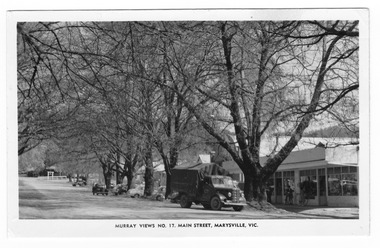
Postcard (Item) - Black and white postcard, Murray Views, Murray Views No. 17. Main Street, Marysville, Vic, c1940s
... See you/ Friday week. Love Pat....See you/ Friday week. Love Pat. A black and white photograph of Murchison Street in Marysville in Victoria. ...A black and white photograph of Murchison Street in Marysville in Victoria.A black and white photograph of the main street in Marysville in Victoria. This is now known as Murchison Street. This postcard was produced by Murray Views in Gympie in Queensland as a souvenir of Marysville.POST CARD STAMP REAL (illegible)/ AUSTRALIA BY MURRAY (illegible) Tuesday 1st/ Dear Ade,/ Well here I am/ as I said/ writing/ to you. I have 8 minutes/ before the dinner gong goes so/ I'd better hurry./ We're having a super/ time, but the weather is/ shocking. Today we put/ on our raincoats, golf shoes/ & umbrellas & walked to/ the Taggerty River & back/ via Talbot Drive. It/ was lovely (& wet(. It's about/ 6 miles or maybe more./ I didn't think you or John/ would come on such a / terrible day. How's work?/ Think of me eating, sleeping/ & playing won't you./ There are 17 people here. There/ were 30 when we arrived./ Doesn't the Main Street look/ beaut? That's how it really look./ Saw "Mad About Men" here on/ Saturday night. Extra good/ show. Must close. See you/ Friday week. Love Pat.murchison street, marysville, victoria, murray views pty ltd, murray views no 17, postcard, souvenir -
 Federation University Historical Collection
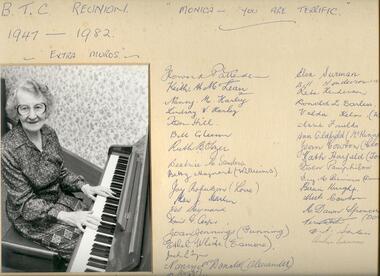
Photograph, Monica Miller photograph, BTC Reunion 1947 - 1982
... Love)...Stan J Marlen...Wal Maynard...David G. Cooper...Joan Jennings (Gunning)...Etherl White (Esmore)...Jack ......Nancy McDonald (Alexander)...Pat...Love) Stan J Marlen Wal Maynard David G. Cooper Joan Jennings (Gunning) Etherl White (Esmore) Jack ... Nancy McDonald (Alexander) Pat Watts (Knight) Lorna Davis (Welsh) Joyce Fraser (Mathison) Hugh Fraser Margaret Alexander (Palmer) Maurene Canter (Merlin) Elva Surman Bill Henderson Reta Henderson Ronald L. ...Monica was a well-loved music teacher at the Ballarat Teachers' College.Black and white photograph in cream matte board. Monica Miller sits at the piano. Those who attended the BTC Reunion 1947 - 1982 signed the mountballarat teachers' college, monica miller, lynette vickery (lynch), beth stutterd (leslie), howard pattender, keith h. m. lean, nancy m. harley, lindsay w. harley, jon hill, bill gleeson, ruth b gozer, beatrice m. sanders, betty maynard (williams), joy anderson (love), stan j marlen, wal maynard, david g. cooper, joan jennings (gunning), etherl white (esmore), jack ..., nancy mcdonald (alexander), pat watts (knight), lorna davis (welsh), joyce fraser (mathison), hugh fraser, margaret alexander (palmer), maurene canter (merlin), elva surman, bill henderson, reta henderson, ronald l. earless, valda kelm (witney), marie faulds, ann oldfield (mckinnen), jean cowton (clode), kath harfield (tobin), groen pamphilon, inez m bemirs (domascheng), bernie kurght, mick cowton, m. dawn spencer (doney), vern white, n.t. sanders, arther ..., -
 Federation University Historical Collection
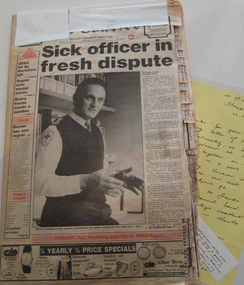
Ballarat Teachers' College (Year of 1947) correspondence, Ballarat Teachers' College (Year of 1947) correspondence relating to reunions, 1990s
... Pat Lewsin (Williams) 12 pages * 42. Joy Love (Robertson) * 43. ...Pat Lewsin (Williams) 12 pages * 42. Joy Love (Robertson) * 43. ...All participants attended BTC (Ballarat Teacher's College) in 1947.Much of this document is handwritten so is significant as an example of teacher's handwritten letters.Two Ballarat Courier newspapers dated 5 June 1991 and 1 June 1991 bound at side with white contact adhesive. The newspapers are used as an alphabetical filing system for correspondence relating to reunions. They have been cut along the top edge to create an indented filing system with a number and name put onto each tab. .1) Newspaper dated 5 June 1991, comprising tabs 1 Athol/Aisbett - 27 Gleeson. The information contained in the pages is sometimes biographical, with names, addresses and occupations. * 1. Athol/Aisbett 6 pages * 2. Nancy Alexander (McDonald) 7 pages * 3. Jessie Batson 3 pages * 4. Eddie Blake - * 5. Phyllis Borley (Smith) 10 pages * 6. Keith Boyd 1 page * 7. Owen Brennan - * 8. Josie Bunning (Humphries) 1 page * 9. Ron Carless 15 pages * 10. Jean Clade (Courten Coster) * 11. John Collins 3 pages * 12. Kevin Collins 2 pages * 13. Colin Connelly 1 page * 14. David Cooper 9 pages * 15. Kath Crossnett (Ward) 1 page * 16. Norma Dally (Gittson) 4 pages * 17. inez Domaschenz (Reimers) 3 * 18. Dawn Doney (Spencer) 5 pages * 19. Fay Dreher (O'Toole) 6 pages * 20. John Ellifson - * 21. Jean Elliott (Elliott) 1page * 22. Ethel Esmore (White) 17 pages * 23. Marie Faulds 3 pages * 24. Hugh Fraser 2 pages * 25. Beatrice Freeman (Sanders) 6 pages * 26. Bob Giddings 2 pages * 27. Bill Gleeson 2 pages 15105.2 Newspaper dated 1 June 1991, comprising tabs 28. Gorrie/Gunning to 81. Williams/Witney, then names in alphabetical order and one tab "information" at back of newspaper filing system. The following pages are listed after the second name of the "tab" * 28. Val Gorrie (Lynch) * 29. Joan Gunning (Jennings) 17 pages * 30. Madeline Hannan (Meehan) * 31. Lindsay Harley 6 pages * 32. Bill Henderson * 33. Wal Henning 2 pages * 34. Tom Hill * 35. Jim Howlett 13 pages * 36. Claire Kennedy (McLachlan) * 37. Joyce Kennedy (Evans) 3 pages * 38. Nancy Kerr (Harley) * 39. Arthur Lelean 2 pages * 40. Beth Leslie (Only) (Stutterd) * 41. Pat Lewsin (Williams) 12 pages * 42. Joy Love (Robertson) * 43. Pat Luxford (Steer) 3 pages * 44. Lynette Lynch (vickery) (McCl;ure) * 45. Ann McKinnon (Oldfield) 29 pages * 46. Alex McLachlan * 47. Keith McLean 3 pages * 48. Alex Magill * 49. Jack Mallett 12 pages * 50. Fred Marshman * 51. Alan Martin 11 pages * 52. Joyce Mathison (fraser) * 53. Maurine Merlin (Carter) 9 pages * 54. Muriel Morrish * 55. Mary Murnane (Bergin) 15 pages * 56. George Nield * 57. John O'Shannessy 1 small note * 58. Margaret Palmer (Alexander) * 59. Gwen Pamphiton 20 pages * 60. Tom Pascoe * 61. Howard Pattenden 12 pages and two small notes * 62. Ruth Pearse (Marshall) * 63. Betty Ferry (Ellis) 7 pages plus small note * 64. Mavis Polard (Grant * 65. Bill Punshon 4 pages and 2 small notes * 66. Peggy Purdue (Wood) (Jakeman) * 67. Milton Rice 29 pages * 68. Thelma Ritchie * 69. Pat Robinson (Kloppenborg) 6 pages * 70. Burns roddis * 71. Elva Surman (Murphy) - nil * 72. Ray Terrill * 73. Kath Tobin (Hatfield) 2 pages * 74. Ruth Tozer * 75. Jack Tyers 10 pages * 76. Neila Vallance (Peart) * 77. Pat Watts (Knight) 12 plus 2 newspaper articles * 78. Lorna Welsh (Davis) * 79. Betty Williams (Maynard) 12 pages plus 2 small notes * 80. Jil Williams * 81. Val Witney (Kelm) 12 pages * Carl Bryan * Mattie Hayes (Uton) - nil * Beth Hughes * Trudi Kentish 7 pages * W. Lord - nil * Mephan McEwin - 12 pages plus newspaper obit * Monica Miller (Rawlings) 5 pages includes funeral booklet * Win O'Brien (Lloyd) 9 pages * Alan Sonsee - nil * Information - 25 pages of acceptances and addresses of students who attended BTC in 1947 Most of the notes and letters contained in this document are handwritten. All the tabs are handwritten, mostly in blue ink or biro.btc, ballarat, ballarat teachers' college, education, 1947, harley, tozer, pattenden, sonsee, lelean, miller -
 Marysville & District Historical Society
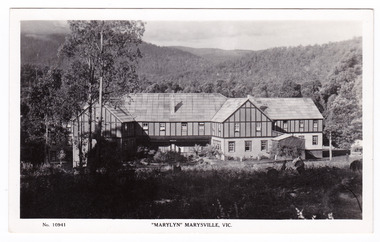
Postcard (item) - Black and white postcard, Rose Stereograph Company, "MARYLYN", MARYSVILLE, VIC, 1913-1967
... How is/ Pat, no fights I hope./ Lots of love. Joan...How is/ Pat, no fights I hope./ Lots of love. Joan A black and white postcard from Marylyn Guest House in Marysville. ...A black and white postcard from Marylyn Guest House in Marysville. Marylyn was a part of the Mary Chain of guest houses built by Eric Dowdle in the Depression years. The postcard was produced by the Rose Stereograph Company as a souvenir of Marysville.A black and white postcard from Marylyn Guest House in Marysville.No. 10941 POST CARD The "Rose" Series/ De Luxe A Real Photograph/ Produced in Australia Published by the Rose Stereograph Co./ Armadale, Victoria. "Mary-Lyn"/ Marysville/ Friday/ Dear Joyce/ Just a note to let you know I am/ behaving myself and/ thinking of Ian all the time./ The weather has been very/ good. The walks and the/ scenery are beautiful./ We have giggled ever since/ we arrived ^ here. Last night/ I got under the shower and/ discovered I didn't have my/ towel with me, so I had to/ put my dressing gown on and/ make a run for it. How is/ Pat, no fights I hope./ Lots of love. Joanmarysville, victoria, australia, mary chain guest houses, marylyn, eric dowdle, rose series, rose stereograph company, postcard, souvenir, no. 10941 -
 Federation University Historical Collection
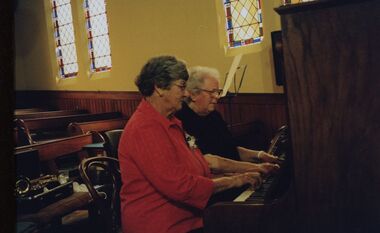
Photograph - Colour, Chatham-Holmes Collection: Elizabeth Chatham
... Elizabeth Chatham (Holmes) had a great love of music and achieved the talent to a high degree. Photograph shows her playing with Pat Gleeson....Elizabeth Chatham (Holmes) had a great love of music and achieved the talent to a high degree. Photograph shows her playing with Pat Gleeson. chatham-holmes collection elizabeth chatham pat gleeson piano Chatham-Holmes Collection: Elizabeth Chatham Photograph - Colour ...Elizabeth Chatham (Holmes) had a great love of music and achieved the talent to a high degree. Photograph shows her playing with Pat Gleeson.chatham-holmes collection, elizabeth chatham, pat gleeson, piano -
 Flagstaff Hill Maritime Museum and Village
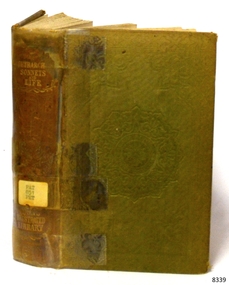
Book - Book of Poetry, Thomas Campbell, The Sonnets Triumphs and Other Poems of Petrarch, 1873
... love, death, and time. Collectively, these works shaped the course of Renaissance literature and popularized the "Petrarchan sonnet" structure across Europe. The label on the spine cover with typed text PAT ...This volume compiles the core poetic works of Petrarch. It is anchored by his Canzoniere (Songbook), which features his famous sonnets and poems dedicated to his unrequited muse, Laura. It also includes his Triumphs (Trionfi), an allegorical series of poems exploring human life, love, death, and time. Collectively, these works shaped the course of Renaissance literature and popularized the "Petrarchan sonnet" structure across Europe.The Sonnets Triumphs and Other Poems of Petrarch Author: Francesco Petrarca (Petrarch) Publisher: Bell & Daldy Date: 1873 Olive hardcover with a brown spine and lettering in gold. The spine has a label with an inscription. Further Information: First completely Translated into English Verse by various hands, with a life of the poet by Thomas CampbellfictionThis volume compiles the core poetic works of Petrarch. It is anchored by his Canzoniere (Songbook), which features his famous sonnets and poems dedicated to his unrequited muse, Laura. It also includes his Triumphs (Trionfi), an allegorical series of poems exploring human life, love, death, and time. Collectively, these works shaped the course of Renaissance literature and popularized the "Petrarchan sonnet" structure across Europe.flagstaff hill, warrnambool, shipwrecked coast, flagstaff hill maritime museum, maritime museum, shipwreck coast, flagstaff hill maritime village, great ocean road, book, pattison collection, warrnambool library, warrnambool mechanics’ institute, ralph eric pattison, corangamite regional library service, warrnambool city librarian, mechanics’ institute library, victorian library board, warrnambool books and records, warrnambool children’s library, the sonnets triumphs and other poems of petrarch, petrarch, thomas campbell -
 Flagstaff Hill Maritime Museum and Village
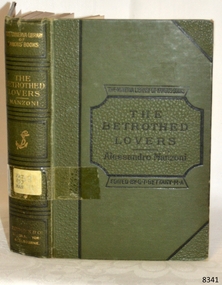
Book - A Fictional Love Story, Alessandro Manzoni, The Betrothed Lovers, 1889
... love and wish to marry. Their plans are cruelly shattered by a tyrannical local baron, Don Rodrigo, who wants Lucia for himself and forces the couple to flee. The epic narrative follows their separate, perilous journeys through a landscape torn apart by war, political corruption, famine, and a devastating outbreak of the Bubonic Plague in Milan. This work is renowned for its deep psychological realism, social critique, and profound exploration of religious faith and divine providence. The label on the spine cover with typed text PAT ...The subject novel is regarded as a Victorian literary artifact of a masterpiece of European literature. The Betrothed Lovers is the English translation of I Promessi Sposi (originally published in 1827), widely considered the most famous and influential Italian novel ever written. Set in northern Italy in 1628 during the oppressive era of Spanish rule, the story follows two young silk weavers, Renzo and Lucia, who are deeply in love and wish to marry. Their plans are cruelly shattered by a tyrannical local baron, Don Rodrigo, who wants Lucia for himself and forces the couple to flee. The epic narrative follows their separate, perilous journeys through a landscape torn apart by war, political corruption, famine, and a devastating outbreak of the Bubonic Plague in Milan. This work is renowned for its deep psychological realism, social critique, and profound exploration of religious faith and divine providence.The Betrothed Lovers Author: Alessandro Manzoni Publisher: Ward Lock & Co Date: 1889 Further Information: Edited by G.T.BettanyfictionThe subject novel is regarded as a Victorian literary artifact of a masterpiece of European literature. The Betrothed Lovers is the English translation of I Promessi Sposi (originally published in 1827), widely considered the most famous and influential Italian novel ever written. Set in northern Italy in 1628 during the oppressive era of Spanish rule, the story follows two young silk weavers, Renzo and Lucia, who are deeply in love and wish to marry. Their plans are cruelly shattered by a tyrannical local baron, Don Rodrigo, who wants Lucia for himself and forces the couple to flee. The epic narrative follows their separate, perilous journeys through a landscape torn apart by war, political corruption, famine, and a devastating outbreak of the Bubonic Plague in Milan. This work is renowned for its deep psychological realism, social critique, and profound exploration of religious faith and divine providence.flagstaff hill, warrnambool, shipwrecked coast, flagstaff hill maritime museum, maritime museum, shipwreck coast, flagstaff hill maritime village, great ocean road, book, pattison collection, warrnambool library, warrnambool mechanics’ institute, ralph eric pattison, corangamite regional library service, warrnambool city librarian, mechanics’ institute library, victorian library board, warrnambool books and records, warrnambool children’s library, the betrothed lovers, allessandro manzoni, g.t.bettany -
 Flagstaff Hill Maritime Museum and Village
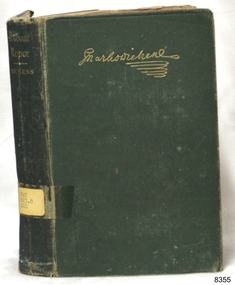
Book - A Fictional Story, Charles Dickens, Barnaby Rudge, (1871–1879)
... love, family conflict, imprisonment, and eventual reckoning. Dickens uses the riot setting to show how crowd panic and prejudice can spread destructively through society. The label on the spine cover with typed text PAT ...Charles Dickens (1812–1870) was one of the great English novelists of the Victorian era, famous for vivid characters, social criticism, and stories that were first published in serial form. He began as a journalist, rose to enormous popularity during his lifetime, and wrote major works such as Oliver Twist, David Copperfield, and Great Expectations. Barnaby Rudge is a historical Dickens novel set against the Gordon Riots of 1780, mixing mystery, political unrest, family secrets, and the story of a simple minded young man, Barnaby, and his pet raven Grip. It is considered Dickens’s first historical novel and one of his less widely read works, but it remains important for its treatment of mob violence and social disorder. The novel begins with a murder mystery linked to the Haredale and Rudge families, then broadens into the chaos of the anti Catholic Gordon Riots in London. Barnaby, an innocent and impressionable character, is drawn into the riotous crowd. Other threads involve love, family conflict, imprisonment, and eventual reckoning. Dickens uses the riot setting to show how crowd panic and prejudice can spread destructively through society.Barnaby Rudge Author: Charles Dickens Publisher: Chapman & Hall Ltd Date: Household Edition (1871–1879) (See note section this document for more information on Edition). Green cloth hardcover with a black spine with authors name signed on front cover, lettering in gold. The spine has a Library label. First Published as part of the weekly Master Humphrey's Clock series (1840-1841)fictionCharles Dickens (1812–1870) was one of the great English novelists of the Victorian era, famous for vivid characters, social criticism, and stories that were first published in serial form. He began as a journalist, rose to enormous popularity during his lifetime, and wrote major works such as Oliver Twist, David Copperfield, and Great Expectations. Barnaby Rudge is a historical Dickens novel set against the Gordon Riots of 1780, mixing mystery, political unrest, family secrets, and the story of a simple minded young man, Barnaby, and his pet raven Grip. It is considered Dickens’s first historical novel and one of his less widely read works, but it remains important for its treatment of mob violence and social disorder. The novel begins with a murder mystery linked to the Haredale and Rudge families, then broadens into the chaos of the anti Catholic Gordon Riots in London. Barnaby, an innocent and impressionable character, is drawn into the riotous crowd. Other threads involve love, family conflict, imprisonment, and eventual reckoning. Dickens uses the riot setting to show how crowd panic and prejudice can spread destructively through society.flagstaff hil, warrnambool, flagstaff hill maritime museum, maritime museum, shipwreck coast, flagstaff hill maritime village, great ocean road, book, pattison collection, warrnambool library, warrnambool mechanics’ institute, ralph eric pattison, corangamite regional library service, warrnambool city librarian, mechanics’ institute library, victorian library board, warrnambool books and records, warrnambool children’s library, barnaby rudge, charles dickens -
 Flagstaff Hill Maritime Museum and Village
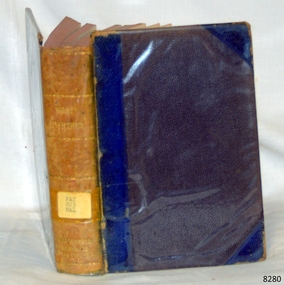
Book - Fictional Novel, Sir Thomas Malory, Morte Darthur, 1868
... It follows Arthur from his miraculous birth and pulling the sword from the stone, through the golden age of the Round Table and the Quest for the Holy Grail, to the tragic collapse of the kingdom fueled by the love affair between Sir Lancelot and Queen Guinevere. The label on the spine cover with typed text PAT 823 MAL Paste down front end paper has a sticker from Warrnambool Mechanics Institute and Free Library Front loose end paper has a sticker from Corangamite Regional Library Service Front loose end paper has a stamp from Corangamite Regional Library Service Morte Darthur Author: Thomas Malory Publisher: Macmillan & Co Date: 1868 Further Information: Blue front cover and brown spine with gilt lettering, reinforced corners to hard cover in dark blue, library label to spine. ...This work, Le Morte d'Arthur, was originally finished around 1469–1470 and is the definitive English compilation of the legends of King Arthur. Written in Middle English prose, it weaves together diverse French and British source materials into a single cohesive epic. It follows Arthur from his miraculous birth and pulling the sword from the stone, through the golden age of the Round Table and the Quest for the Holy Grail, to the tragic collapse of the kingdom fueled by the love affair between Sir Lancelot and Queen Guinevere.Morte Darthur Author: Thomas Malory Publisher: Macmillan & Co Date: 1868 Further Information: Blue front cover and brown spine with gilt lettering, reinforced corners to hard cover in dark blue, library label to spine. Introduction By Sir Edward Strachey BartfictionThis work, Le Morte d'Arthur, was originally finished around 1469–1470 and is the definitive English compilation of the legends of King Arthur. Written in Middle English prose, it weaves together diverse French and British source materials into a single cohesive epic. It follows Arthur from his miraculous birth and pulling the sword from the stone, through the golden age of the Round Table and the Quest for the Holy Grail, to the tragic collapse of the kingdom fueled by the love affair between Sir Lancelot and Queen Guinevere.flagstaff hill, warrnambool, shipwrecked coast, flagstaff hill maritime museum, maritime museum, shipwreck coast, flagstaff hill maritime village, great ocean road, book, pattison collection, warrnambool library, warrnambool mechanics’ institute, ralph eric pattison, corangamite regional library service, warrnambool city librarian, mechanics’ institute library, victorian library board, warrnambool books and records, warrnambool children’s library, thomas malory, morte darthur -
 Flagstaff Hill Maritime Museum and Village
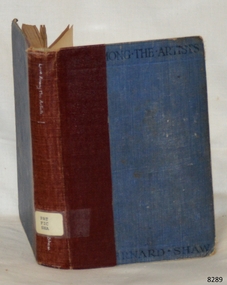
Book, Love Among The Artists
... The Warrnambool Mechanics' Institute’s publication collection is of both local and state significance. flagstaff hill warrnambool shipwrecked coast flagstaff hill maritime museum maritime museum shipwreck coast flagstaff hill maritime village great ocean road book pattison collection warrnambool library warrnambool mechanics’ institute ralph eric pattison corangamite regional library service warrnambool city librarian mechanics’ institute library victorian library board warrnambool books and records warrnambool children’s library Love Among The Artists Bernard Shaw The label on the spine cover with typed text PAT FIC SHA Pastedown frontend paper has a sticker from Warrnambool Mechanics Institute and Free Library covered by a sticker from Corangamite Regional Library Service Front loose endpaper has a stamp from Corangamite Regional Library Service Flyleaf has a stamp from Warrnambool Mechanics Institute and Free Library Love Among The Artists Author: Bernard Shaw Publisher: Constable & Company Ltd Date: 1924 Love Among The Artists Book Book ...This book was part of a large group of books referred to as the Pattison Collection, which belonged to the Warrnambool Public Library, part of the Warrnambool Mechanics’ Institute. About RALPH ERIC PATTISON and the ‘PATTISON COLLECTION’ The ‘Pattison Collection’ is a collection of books and records that was originally owned by the Warrnambool Mechanics’ Institute, founded in Warrnambool in 1853. By 1886 the Warrnambool Mechanics’ Institute (WMI) had grown to have a Library, Museum and Fine Arts Gallery, with a collection of “… choice productions of art and valuable specimens in almost every branch and many wonderful national curiosities are now to be seen there, including historic relics of the town and district.” It later included a School of Design. Although it was very well patronised, the WMI was led to ask the City Council to take it over in 1911 due to lack of financial support. In 1935 Ralph Pattison was appointed as City Librarian to establish and organise the Warrnambool Public Library as it was then called. Ralph Eric Pattison was born in Rockhampton, Queensland, in 1891. He married Maude Swan from Warrnambool in 1920 and they set up home in Warrnambool. In 1935 when Pattison accepted the position as City Librarian for the Warrnambool City Council his huge challenge was to make a functional library within two rooms of the Mechanics’ Institute. He tirelessly cleaned, cleared and sorted a disarrayed collection of old books, jars of preserved specimens and other items reserved for exhibition in the city’s museum. He developed and updated the library with a wide variety of books for all tastes, including reference books for students; a difficult task to fulfil during the years following the Depression. He converted all of the lower areas of the building into a library, reference room and reading room for members and the public. The books were sorted and stored using a cataloguing and card index system that he had developed himself. He also prepared the upper floor of the building and established the Art Gallery and later the Museum, a place to exhibit the many old relics that had been stored for years for this purpose. One of the treasures he found was a beautiful ancient clock, which he repaired, restored and enjoyed using in his office during the years of his service there. Ralph Pattison was described as “a meticulous gentleman whose punctuality, floorless courtesy and distinctive neat dress were hallmarks of his character, and ‘his’ clock controlled his daily routine and his opening and closing of the library’s large heavy doors to the minute.” Pattison took leave from 1942 to 1945 to serve in the Royal Australian Navy, Volunteer Reserve as Lieutenant. A few years later he converted one of the Museum’s rooms into a Children’s Library, stocking it with suitable books for the younger generation. This was an instant success. In the 1950’s he had the honour of being appointed to the Victorian Library Board and received more inspiration from the monthly conferences in Melbourne. He was sadly retired in 1959 after over 23 years of service, due to the fact that he had gone over the working age of council officers. However, he continued to take a very keen interest in the continual development of the Library until his death in 1969. THE NEW WARRNAMBOOL LIBRARY When the WMI building was pulled down in 1963 a new civic building was erected on the site and the new Warrnambool Library, on behalf of the City Council, took over all the holdings of the WMI. At this time some of the items were separated and identified as the ‘Pattison Collection’, named after Pattison. Eventually, the components of the WMI were distributed from the Warrnambool Library to various places, including the Art Gallery, Historical Society and Flagstaff Hill. Later some were even distributed to other regional branches of Corangamite Regional Library and passed to and fro. It is difficult now to trace just where all of the items have ended up. The books at Flagstaff Hill Maritime Village generally display stamps and markings from Pattison as well as a variety of other institutions including the Mechanics’ Institute itself. WARRNAMBOOL MECHANICS’ INSTITUTE Warrnambool's Mechanics' Institute (or Institution as it was sometimes called) was one of the earliest in Victoria. On 17th October 1853, a meeting was held where it was resolved to request the Lieutenant Governor of the Colony to grant land for the erection of a Mechanics' Institutes building. A committee was formed at the meeting and Richard Osburne chaired the first meeting of this committee. The land on the North West corner of Banyan and Merri Streets was granted but there were no funds to erect the building. The Formal Rights of the Warrnambool Mechanics' Institute's encompassed its aims and these were officially adopted in1859; "This Institution has for its object the diffusion of literary, scientific, and other useful knowledge amongst its members, excluding all controversial subjects, religious or political. These objects are sought to be obtained by means of a circulating library, a reading room, the establishment of classes, debates, and the occasional delivery of lectures on natural and experimental philosophy, mechanics, astronomy, chemistry, natural history, literature, and the useful and ornamental arts, particularly those which have a more immediate reference to the colony." The Warrnambool Mechanics' Institute opened its first reading room in November 1884 in the National School building at the corner of Banyan and Timor Streets. The Institute was funded by member subscription, payable on a quarterly, half-yearly or yearly basis. Samuel Hannaford, the Manager of the Warrnambool Bank of Australasia, was the first Honorary Secretary of the Mechanics' Institutes, and an early President and Vice-President. He also gave several of the early lectures in the Reading Room. Another early Secretary, Librarian and lecturer was Marmaduke Fisher, the teacher at the National School. Lecture topics included The Poets and Poetry of Ireland', 'The Birth and Development of the Earth', 'The Vertebrae - with Remarks on the pleasures resulting from the study of Natural History' and 'Architecture'. In 1856 the Reading Room was moved to James Hider's shop in Timor Street, and by 1864 it was located in the bookshop of Davies and Read. In the 1860s the Mechanics' Institute struggled as membership waned but in 1866, after a series of fundraising efforts, the committee was able to purchase land in Liebig Street, on a site then called Market Square, between the weighbridge and the fire station. A Mechanics' Institute building was opened at this site in August 1871. The following year four more rooms were added to the main Reading Room and in 1873 the Artisan School of Design was incorporated into the Institute. The same year Joseph Archibald established a Museum; however, it deteriorated when he was transferred to Bendigo in 1877. In 1880, with Archibald's return to Warrnambool, the Museum was re-established, and in 1885 a new building was built at the back of the Institute to accommodate the re-created School of Design, the Art Gallery and the Museum. In 1887 the Museum section was moved to the former courthouse in Timor Street (for some time the walls of the building formed part of the TAFE cafeteria but all is now demolished)). In 1911 the Museum was transferred back to the original building and the management of the Mechanics' Institute was handed over to the Warrnambool City Council. The Museum and Art Gallery became one and housed many fine works of art, and the Library continued to grow. The building was well patronised, with records showing that at the beginning of the 20th century there were between 500 and 800 visitors. During World War One the monthly figures were in the thousands, with 3,400 people visiting in January 1915. The Museum was a much - loved Institution in Warrnambool until the contents of the Museum and Art Gallery were removed to make room for the Warrnambool City Council Engineers' Department. The contents were stored but many of the items were scattered or lost. When the original building was demolished the site became occupied by the Civic Centre, which included the new City Library. (The library was temporarily located in the old Palais building in Koroit Street.) In the process of reorganisation the Collection was distributed amongst the community groups: -The new City Library took some of the historical books and some important documents, historic photographs and newspapers. -The Art Gallery kept the 19th Century art collection and some of the artefacts from the museum. -The Historical Society has some items -The State Museum has some items -Some items were destroyed -Flagstaff Hill Maritime Village has old newspapers, Government Gazettes, most of the Mechanics' Institute Library, ledgers and documents connected to the Mechanics' Institute Library, some framed and unframed artworks and some photographs. The Warrnambool Mechanics' Institute Library book collection is deemed to be of great importance because it is one of the few collections in an almost intact state, and many of the books are now very rare and of great value. The Pattison Collection, along with other items at Flagstaff Hill Maritime Village, was originally part of the Warrnambool Mechanics' Institute’s collection. The Warrnambool Mechanics’ Institute Collection is primarily significant in its totality, rather than for the individual objects it contains. Its contents are highly representative of the development of Mechanics' Institute libraries across Australia, particularly Victoria. A diversity of publications and themes has been amassed, and these provide clues to our understanding of the nature of and changes in the reading habits of Victorians from the 1850s to the middle of the 20th century. The collection also highlights the Warrnambool community’s commitment to the Mechanics’ Institute, reading, literacy and learning in the regions, and proves that access to knowledge was not impeded by distance. These items help to provide a more complete picture of our community’s ideals and aspirations. The Warrnambool Mechanics Institute book collection has historical and social significance for its strong association with the Mechanics Institute movement and the important role it played in the intellectual, cultural and social development of people throughout the latter part of the nineteenth century and the early twentieth century. The collection of books is a rare example of an early lending library and its significance is enhanced by the survival of an original collection of many volumes. The Warrnambool Mechanics' Institute’s publication collection is of both local and state significance. Love Among The Artists Author: Bernard Shaw Publisher: Constable & Company Ltd Date: 1924 The label on the spine cover with typed text PAT FIC SHA Pastedown frontend paper has a sticker from Warrnambool Mechanics Institute and Free Library covered by a sticker from Corangamite Regional Library Service Front loose endpaper has a stamp from Corangamite Regional Library Service Flyleaf has a stamp from Warrnambool Mechanics Institute and Free Library flagstaff hill, warrnambool, shipwrecked coast, flagstaff hill maritime museum, maritime museum, shipwreck coast, flagstaff hill maritime village, great ocean road, book, pattison collection, warrnambool library, warrnambool mechanics’ institute, ralph eric pattison, corangamite regional library service, warrnambool city librarian, mechanics’ institute library, victorian library board, warrnambool books and records, warrnambool children’s library, love among the artists, bernard shaw -
 Flagstaff Hill Maritime Museum and Village
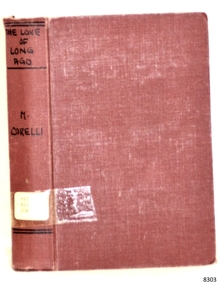
Book, The Love of Long Ago
... The Warrnambool Mechanics' Institute’s publication collection is of both local and state significance. flagstaff hill warrnambool shipwrecked coast flagstaff hill maritime museum maritime museum shipwreck coast flagstaff hill maritime village great ocean road book pattison collection warrnambool library warrnambool mechanics’ institute ralph eric pattison corangamite regional library service warrnambool city librarian mechanics’ institute library victorian library board warrnambool books and records warrnambool children’s library The Love of Long Ago Marie Corelli The label on the spine cover with typed text PAT 823 COR Pastedown front endpaper has a sticker from Warrnambool Public Library covered by a sticker from Corangamite Regional Library Service Front loose endpaper has a stamp from Corangamite Regional Library Service The Love of Long Ago Author: Marie Corelli Publisher: Methuen & Co Date: 1920 The Love of Long Ago Book ...This book was part of a large group of books referred to as the Pattison Collection, which belonged to the Warrnambool Public Library, part of the Warrnambool Mechanics’ Institute. About RALPH ERIC PATTISON and the ‘PATTISON COLLECTION’ The ‘Pattison Collection’ is a collection of books and records that was originally owned by the Warrnambool Mechanics’ Institute, founded in Warrnambool in 1853. By 1886 the Warrnambool Mechanics’ Institute (WMI) had grown to have a Library, Museum and Fine Arts Gallery, with a collection of “… choice productions of art and valuable specimens in almost every branch and many wonderful national curiosities are now to be seen there, including historic relics of the town and district.” It later included a School of Design. Although it was very well patronised, the WMI was led to ask the City Council to take it over in 1911 due to lack of financial support. In 1935 Ralph Pattison was appointed as City Librarian to establish and organise the Warrnambool Public Library as it was then called. Ralph Eric Pattison was born in Rockhampton, Queensland, in 1891. He married Maude Swan from Warrnambool in 1920 and they set up home in Warrnambool. In 1935 when Pattison accepted the position as City Librarian for the Warrnambool City Council his huge challenge was to make a functional library within two rooms of the Mechanics’ Institute. He tirelessly cleaned, cleared and sorted a disarrayed collection of old books, jars of preserved specimens and other items reserved for exhibition in the city’s museum. He developed and updated the library with a wide variety of books for all tastes, including reference books for students; a difficult task to fulfil during the years following the Depression. He converted all of the lower areas of the building into a library, reference room and reading room for members and the public. The books were sorted and stored using a cataloguing and card index system that he had developed himself. He also prepared the upper floor of the building and established the Art Gallery and later the Museum, a place to exhibit the many old relics that had been stored for years for this purpose. One of the treasures he found was a beautiful ancient clock, which he repaired, restored and enjoyed using in his office during the years of his service there. Ralph Pattison was described as “a meticulous gentleman whose punctuality, floorless courtesy and distinctive neat dress were hallmarks of his character, and ‘his’ clock controlled his daily routine and his opening and closing of the library’s large heavy doors to the minute.” Pattison took leave from 1942 to 1945 to serve in the Royal Australian Navy, Volunteer Reserve as Lieutenant. A few years later he converted one of the Museum’s rooms into a Children’s Library, stocking it with suitable books for the younger generation. This was an instant success. In the 1950’s he had the honour of being appointed to the Victorian Library Board and received more inspiration from the monthly conferences in Melbourne. He was sadly retired in 1959 after over 23 years of service, due to the fact that he had gone over the working age of council officers. However, he continued to take a very keen interest in the continual development of the Library until his death in 1969. THE NEW WARRNAMBOOL LIBRARY When the WMI building was pulled down in 1963 a new civic building was erected on the site and the new Warrnambool Library, on behalf of the City Council, took over all the holdings of the WMI. At this time some of the items were separated and identified as the ‘Pattison Collection’, named after Pattison. Eventually, the components of the WMI were distributed from the Warrnambool Library to various places, including the Art Gallery, Historical Society and Flagstaff Hill. Later some were even distributed to other regional branches of Corangamite Regional Library and passed to and fro. It is difficult now to trace just where all of the items have ended up. The books at Flagstaff Hill Maritime Village generally display stamps and markings from Pattison as well as a variety of other institutions including the Mechanics’ Institute itself. The Pattison Collection, along with other items at Flagstaff Hill Maritime Village, was originally part of the Warrnambool Mechanics' Institute’s collection. The Warrnambool Mechanics’ Institute Collection is primarily significant in its totality, rather than for the individual objects it contains. Its contents are highly representative of the development of Mechanics' Institute libraries across Australia, particularly Victoria. A diversity of publications and themes has been amassed, and these provide clues to our understanding of the nature of and changes in the reading habits of Victorians from the 1850s to the middle of the 20th century. The collection also highlights the Warrnambool community’s commitment to the Mechanics’ Institute, reading, literacy and learning in the regions, and proves that access to knowledge was not impeded by distance. These items help to provide a more complete picture of our community’s ideals and aspirations. The Warrnambool Mechanics Institute book collection has historical and social significance for its strong association with the Mechanics Institute movement and the important role it played in the intellectual, cultural and social development of people throughout the latter part of the nineteenth century and the early twentieth century. The collection of books is a rare example of an early lending library and its significance is enhanced by the survival of an original collection of many volumes. The Warrnambool Mechanics' Institute’s publication collection is of both local and state significance. The Love of Long Ago Author: Marie Corelli Publisher: Methuen & Co Date: 1920 The label on the spine cover with typed text PAT 823 COR Pastedown front endpaper has a sticker from Warrnambool Public Library covered by a sticker from Corangamite Regional Library Service Front loose endpaper has a stamp from Corangamite Regional Library Service flagstaff hill, warrnambool, shipwrecked coast, flagstaff hill maritime museum, maritime museum, shipwreck coast, flagstaff hill maritime village, great ocean road, book, pattison collection, warrnambool library, warrnambool mechanics’ institute, ralph eric pattison, corangamite regional library service, warrnambool city librarian, mechanics’ institute library, victorian library board, warrnambool books and records, warrnambool children’s library, the love of long ago, marie corelli -
 Flagstaff Hill Maritime Museum and Village
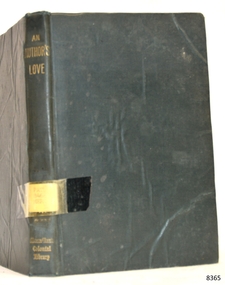
Book - A Fictional Love Story, Elizabeth Balch et al, An Authors Love, 1889
... PAT 846 MER Paste down front end paper has a sticker from Warrnambool Mechanics Institute and Free Library. Front loose end paper has a stamp from Corangamite Regional Library Service. Flyleaf has a stamp from Warrnambool Mechanics Institute and Free Library. An Authors Love ...The book is an epistolary novel (a story told in letters) written by the American author Elizabeth Balch (though it was published anonymously at the time). It was written as a highly clever literary hoax and a sequel of sorts to a major 1873 French literary sensation, Lettres à une Inconnue (Letters to an Unknown) by the famous French dramatist and short-story writer Prosper Mérimée (best known as the author of the novella Carmen). Mérimée had spent over thirty years writing passionate, brilliant, and deeply personal letters to an anonymous woman (later revealed to be Jenny Dacquin). When these were published after his death, they became a massive hit, but the public only ever saw his side of the conversation. Elizabeth Balch decided to write the missing half of the romance.An Authors Love Author: Prosper Merimee's Publisher: Macmillan And Co Date: 1889 Further Information: Being the unpublished letters of Prosper Merimee's 'Inconnue'fictionThe book is an epistolary novel (a story told in letters) written by the American author Elizabeth Balch (though it was published anonymously at the time). It was written as a highly clever literary hoax and a sequel of sorts to a major 1873 French literary sensation, Lettres à une Inconnue (Letters to an Unknown) by the famous French dramatist and short-story writer Prosper Mérimée (best known as the author of the novella Carmen). Mérimée had spent over thirty years writing passionate, brilliant, and deeply personal letters to an anonymous woman (later revealed to be Jenny Dacquin). When these were published after his death, they became a massive hit, but the public only ever saw his side of the conversation. Elizabeth Balch decided to write the missing half of the romance.flagstaff hil, warrnambool, flagstaff hill maritime museum, maritime museum, shipwreck coast, flagstaff hill maritime village, great ocean road, book, pattison collection, warrnambool library, warrnambool mechanics’ institute, ralph eric pattison, corangamite regional library service, warrnambool city librarian, mechanics’ institute library, victorian library board, warrnambool books and records, warrnambool children’s library, an authors love, prosper merimees -
 Flagstaff Hill Maritime Museum and Village
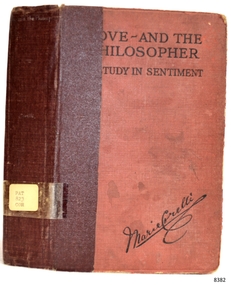
Book, Love-And The Philosopher
... The Warrnambool Mechanics' Institute’s publication collection is of both local and state significance. flagstaff hil Warrnambool flagstaff hill maritime museum maritime museum shipwreck coast flagstaff hill maritime village great ocean road book pattison collection warrnambool library warrnambool mechanics’ institute ralph eric pattison corangamite regional library service warrnambool city librarian mechanics’ institute library victorian library board warrnambool books and records warrnambool children’s library Love-And The Philosopher Marie Corelli The label on the spine cover with typed text PAT 823 COR Paste down front end paper has a sticker from Warrnambool Mechanics Institute and Free Library covered by a sticker from Corangamite Regional Library Service. ...This book was part of a large group of books referred to as the Pattison Collection, which belonged to the Warrnambool Public Library, part of the Warrnambool Mechanics’ Institute. About RALPH ERIC PATTISON and the ‘PATTISON COLLECTION’ The ‘Pattison Collection’ is a collection of books and records that was originally owned by the Warrnambool Mechanics’ Institute, founded in Warrnambool in 1853. By 1886 the Warrnambool Mechanics’ Institute (WMI) had grown to have a Library, Museum and Fine Arts Gallery, with a collection of “… choice productions of art and valuable specimens in almost every branch and many wonderful national curiosities, are now to be seen there, including historic relics of the town and district.” It later included a School of Design. Although it was very well patronised, the WMI was led to ask the City Council to take it over in 1911 due to a lack of financial support. In 1935 Ralph Pattison was appointed as City Librarian to establish and organise the Warrnambool Public Library as it was then called. Ralph Eric Pattison was born in Rockhampton, Queensland, in 1891. He married Maude Swan from Warrnambool in 1920 and they set up a home in Warrnambool. In 1935 when Pattison accepted the position as City Librarian for the Warrnambool City Council his huge challenge was to make a functional library within two rooms of the Mechanics’ Institute. He tirelessly cleaned, cleared and sorted a disarrayed collection of old books, jars of preserved specimens and other items reserved for exhibition in the city’s museum. He developed and updated the library with a wide variety of books for all tastes, including reference books for students; a difficult task to fulfil during the years following the Depression. He converted all of the lower areas of the building into a library, reference room and reading room for members and the public. The books were sorted and stored using a cataloguing and card index system that he had developed himself. He also prepared the upper floor of the building and established the Art Gallery and later the Museum, a place to exhibit the many old relics that had been stored for years for this purpose. One of the treasures he found was a beautiful ancient clock, which he repaired, restored and enjoyed using in his office during the years of his service there. Ralph Pattison was described as “a meticulous gentleman whose punctuality, floorless courtesy and distinctive neat dress were hallmarks of his character, and ‘his’ clock controlled his daily routine and his opening and closing of the library’s large heavy doors to the minute.” Pattison took leave from 1942 to 1945 to serve in the Royal Australian Navy, Volunteer Reserve as Lieutenant. A few years later he converted one of the Museum’s rooms into a Children’s Library, stocking it with suitable books for the younger generation. This was an instant success. In the 1950’s he had the honour of being appointed to the Victorian Library Board and received more inspiration from the monthly conferences in Melbourne. He was sadly retired in 1959 after over 23 years of service, due to the fact that he had gone over the working age of council officers. However, he continued to take a very keen interest in the continual development of the Library until his death in 1969. THE NEW WARRNAMBOOL LIBRARY When the WMI building was pulled down in 1963 a new civic building was erected on the site and the new Warrnambool Library, on behalf of the City Council, took over all the holdings of the WMI. At this time some of the items were separated and identified as the ‘Pattison Collection’, named after Pattison. Eventually, the components of the WMI were distributed from the Warrnambool Library to various places, including the Art Gallery, Historical Society and Flagstaff Hill. Later some were even distributed to other regional branches of Corangamite Regional Library and passed to and fro. It is difficult now to trace just where all of the items have ended up. The books at Flagstaff Hill Maritime Village generally display stamps and markings from Pattison as well as a variety of other institutions including the Mechanics’ Institute itself. The Pattison Collection, along with other items at Flagstaff Hill Maritime Village, was originally part of the Warrnambool Mechanics' Institute’s collection. The Warrnambool Mechanics’ Institute Collection is primarily significant in its totality, rather than for the individual objects it contains. Its contents are highly representative of the development of Mechanics' Institute libraries across Australia, particularly Victoria. A diversity of publications and themes has been amassed, and these provide clues to our understanding of the nature of and changes in the reading habits of Victorians from the 1850s to the middle of the 20th century. The collection also highlights the Warrnambool community’s commitment to the Mechanics’ Institute, reading, literacy and learning in the regions, and proves that access to knowledge was not impeded by distance. These items help to provide a more complete picture of our community’s ideals and aspirations. The Warrnambool Mechanics Institute book collection has historical and social significance for its strong association with the Mechanics Institute movement and the important role it played in the intellectual, cultural and social development of people throughout the latter part of the nineteenth century and the early twentieth century. The collection of books is a rare example of an early lending library and its significance is enhanced by the survival of an original collection of many volumes. The Warrnambool Mechanics' Institute’s publication collection is of both local and state significance. Love-And The Philosopher Author: Marie Corelli Publisher: Methuen & Co Date: 1923 Further Information: The label on the spine cover with typed text PAT 823 COR Paste down front end paper has a sticker from Warrnambool Mechanics Institute and Free Library covered by a sticker from Corangamite Regional Library Service. Front loose end paper has a stamp from Corangamite Regional Library Service. Front loose end paper has a stamp from Warrnambool Public Library.flagstaff hil, warrnambool, flagstaff hill maritime museum, maritime museum, shipwreck coast, flagstaff hill maritime village, great ocean road, book, pattison collection, warrnambool library, warrnambool mechanics’ institute, ralph eric pattison, corangamite regional library service, warrnambool city librarian, mechanics’ institute library, victorian library board, warrnambool books and records, warrnambool children’s library, love-and the philosopher, marie corelli -
 Flagstaff Hill Maritime Museum and Village
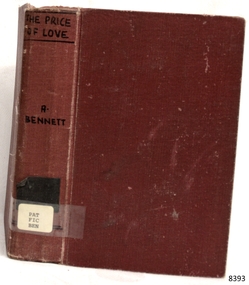
Book, The Price of Love
... The Warrnambool Mechanics' Institute’s publication collection is of both local and state significance. flagstaff hil Warrnambool flagstaff hill maritime museum maritime museum shipwreck coast flagstaff hill maritime village great ocean road book pattison collection warrnambool library warrnambool mechanics’ institute ralph eric pattison corangamite regional library service warrnambool city librarian mechanics’ institute library victorian library board warrnambool books and records warrnambool children’s library The Price of Love Arnold Bennett The label on the spine cover with typed text PAT FIC BEN Paste down front end paper has a sticker from Warrnambool Mechanics Institute and Free Library covered by a sticker from Corangamite Regional Library Service. ...This book was part of a large group of books referred to as the Pattison Collection, which belonged to the Warrnambool Public Library, part of the Warrnambool Mechanics’ Institute. About RALPH ERIC PATTISON and the ‘PATTISON COLLECTION’ The ‘Pattison Collection’ is a collection of books and records that was originally owned by the Warrnambool Mechanics’ Institute, founded in Warrnambool in 1853. By 1886 the Warrnambool Mechanics’ Institute (WMI) had grown to have a Library, Museum and Fine Arts Gallery, with a collection of “… choice productions of art and valuable specimens in almost every branch and many wonderful national curiosities, are now to be seen there, including historic relics of the town and district.” It later included a School of Design. Although it was very well patronised, the WMI was led to ask the City Council to take it over in 1911 due to a lack of financial support. In 1935 Ralph Pattison was appointed as City Librarian to establish and organise the Warrnambool Public Library as it was then called. Ralph Eric Pattison was born in Rockhampton, Queensland, in 1891. He married Maude Swan from Warrnambool in 1920 and they set up a home in Warrnambool. In 1935 when Pattison accepted the position as City Librarian for the Warrnambool City Council his huge challenge was to make a functional library within two rooms of the Mechanics’ Institute. He tirelessly cleaned, cleared and sorted a disarrayed collection of old books, jars of preserved specimens and other items reserved for exhibition in the city’s museum. He developed and updated the library with a wide variety of books for all tastes, including reference books for students; a difficult task to fulfil during the years following the Depression. He converted all of the lower areas of the building into a library, reference room and reading room for members and the public. The books were sorted and stored using a cataloguing and card index system that he had developed himself. He also prepared the upper floor of the building and established the Art Gallery and later the Museum, a place to exhibit the many old relics that had been stored for years for this purpose. One of the treasures he found was a beautiful ancient clock, which he repaired, restored and enjoyed using in his office during the years of his service there. Ralph Pattison was described as “a meticulous gentleman whose punctuality, floorless courtesy and distinctive neat dress were hallmarks of his character, and ‘his’ clock controlled his daily routine and his opening and closing of the library’s large heavy doors to the minute.” Pattison took leave from 1942 to 1945 to serve in the Royal Australian Navy, Volunteer Reserve as Lieutenant. A few years later he converted one of the Museum’s rooms into a Children’s Library, stocking it with suitable books for the younger generation. This was an instant success. In the 1950’s he had the honour of being appointed to the Victorian Library Board and received more inspiration from the monthly conferences in Melbourne. He was sadly retired in 1959 after over 23 years of service, due to the fact that he had gone over the working age of council officers. However, he continued to take a very keen interest in the continual development of the Library until his death in 1969. THE NEW WARRNAMBOOL LIBRARY When the WMI building was pulled down in 1963 a new civic building was erected on the site and the new Warrnambool Library, on behalf of the City Council, took over all the holdings of the WMI. At this time some of the items were separated and identified as the ‘Pattison Collection’, named after Pattison. Eventually, the components of the WMI were distributed from the Warrnambool Library to various places, including the Art Gallery, Historical Society and Flagstaff Hill. Later some were even distributed to other regional branches of Corangamite Regional Library and passed to and fro. It is difficult now to trace just where all of the items have ended up. The books at Flagstaff Hill Maritime Village generally display stamps and markings from Pattison as well as a variety of other institutions including the Mechanics’ Institute itself. The Pattison Collection, along with other items at Flagstaff Hill Maritime Village, was originally part of the Warrnambool Mechanics' Institute’s collection. The Warrnambool Mechanics’ Institute Collection is primarily significant in its totality, rather than for the individual objects it contains. Its contents are highly representative of the development of Mechanics' Institute libraries across Australia, particularly Victoria. A diversity of publications and themes has been amassed, and these provide clues to our understanding of the nature of and changes in the reading habits of Victorians from the 1850s to the middle of the 20th century. The collection also highlights the Warrnambool community’s commitment to the Mechanics’ Institute, reading, literacy and learning in the regions, and proves that access to knowledge was not impeded by distance. These items help to provide a more complete picture of our community’s ideals and aspirations. The Warrnambool Mechanics Institute book collection has historical and social significance for its strong association with the Mechanics Institute movement and the important role it played in the intellectual, cultural and social development of people throughout the latter part of the nineteenth century and the early twentieth century. The collection of books is a rare example of an early lending library and its significance is enhanced by the survival of an original collection of many volumes. The Warrnambool Mechanics' Institute’s publication collection is of both local and state significance. The Price of Love Author: Arnold Bennett Publisher: Methuen & Co Date: 1914 The label on the spine cover with typed text PAT FIC BEN Paste down front end paper has a sticker from Warrnambool Mechanics Institute and Free Library covered by a sticker from Corangamite Regional Library Service. Front loose end paper has a stamp from Corangamite Regional Library Service. Contents paper has a stamp from Warrnambool Mechanics Institute and Free Libraryflagstaff hil, warrnambool, flagstaff hill maritime museum, maritime museum, shipwreck coast, flagstaff hill maritime village, great ocean road, book, pattison collection, warrnambool library, warrnambool mechanics’ institute, ralph eric pattison, corangamite regional library service, warrnambool city librarian, mechanics’ institute library, victorian library board, warrnambool books and records, warrnambool children’s library, the price of love, arnold bennett -
 Flagstaff Hill Maritime Museum and Village
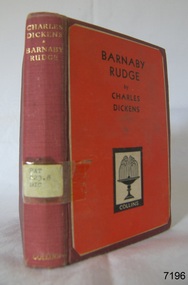
Book - A Fictional Story, Charles Dickens, Barnaby Rudge, Prior to 1911
... love, family conflict, imprisonment, and eventual reckoning. Dickens uses the riot setting to show how crowd panic and prejudice can spread destructively through society. The label on the spine with typed text PAT ...Charles Dickens (1812–1870) was one of the great English novelists of the Victorian era, famous for vivid characters, social criticism, and stories that were first published in serial form. He began as a journalist, rose to enormous popularity during his lifetime, and wrote major works such as Oliver Twist, David Copperfield, and Great Expectations. Barnaby Rudge is a historical Dickens novel set against the Gordon Riots of 1780, mixing mystery, political unrest, family secrets, and the story of a simple minded young man, Barnaby, and his pet raven Grip. It is considered Dickens’s first historical novel and one of his less widely read works, but it remains important for its treatment of mob violence and social disorder. The novel begins with a murder mystery linked to the Haredale and Rudge families, then broadens into the chaos of the anti Catholic Gordon Riots in London. Barnaby, an innocent and impressionable character, is drawn into the riotous crowd. Other threads involve love, family conflict, imprisonment, and eventual reckoning. Dickens uses the riot setting to show how crowd panic and prejudice can spread destructively through society.Barnaby Rudge. Author: Charles Dickens. Publisher: Collins, Clear Type Press (London & Glasgow) Date: Mid 20th Century. (See note section this document for more information on Edition). Red leather hardcover with title on front on paper with a dark red spine and lettering in gold. The spine has a Library label.fictionCharles Dickens (1812–1870) was one of the great English novelists of the Victorian era, famous for vivid characters, social criticism, and stories that were first published in serial form. He began as a journalist, rose to enormous popularity during his lifetime, and wrote major works such as Oliver Twist, David Copperfield, and Great Expectations. Barnaby Rudge is a historical Dickens novel set against the Gordon Riots of 1780, mixing mystery, political unrest, family secrets, and the story of a simple minded young man, Barnaby, and his pet raven Grip. It is considered Dickens’s first historical novel and one of his less widely read works, but it remains important for its treatment of mob violence and social disorder. The novel begins with a murder mystery linked to the Haredale and Rudge families, then broadens into the chaos of the anti Catholic Gordon Riots in London. Barnaby, an innocent and impressionable character, is drawn into the riotous crowd. Other threads involve love, family conflict, imprisonment, and eventual reckoning. Dickens uses the riot setting to show how crowd panic and prejudice can spread destructively through society.book, the old curiosity shop, charles dickens, shipwrecked-coast, flagstaff-hill, flagstaff-hill-maritime-museum, warrnambool, maritime-museum, flagstaff-hill-maritime-village, pattison collection, warrnambool library, warrnambool mechanics’ institute, ralph eric pattison, corangamite regional library service, warrnambool city librarian, mechanics’ institute library, victorian library board, warrnambool books and records, warrnambool children’s library, great ocean road -
 Flagstaff Hill Maritime Museum and Village
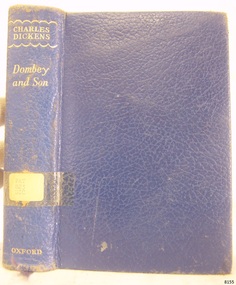
Book - A Fictional Story, Charles Dickens et al, Dombey and Son, 1930s to 1950
... love because she is not the son he wanted. The novel shows the consequences of emotional blindness through illness, death, failed marriage, betrayal, and eventual partial reconciliation. In broad terms, it is a novel about pride, grief, commercial values, and the human cost of treating people like assets. The label on the spine with typed text PAT ...Charles Dickens (1812–1870) was one of the great English novelists of the Victorian era, famous for vivid characters, social criticism, and stories that were first published in serial form. He began as a journalist, rose to enormous popularity during his lifetime, and wrote major works such as Oliver Twist, David Copperfield, and Great Expectations. “Dombey and Son” is about Paul Dombey, a proud London businessman obsessed with having a son to inherit his firm. The story follows the emotional damage this causes to his neglected daughter Florence and to his family generally. It is one of Dickens’s major middle period novels and is often read as a critique of money, social ambition, industrial modernity, and damaged family life. The plot centres on Mr. Dombey, who values business and inheritance above affection, and on Florence, the daughter he cannot properly love because she is not the son he wanted. The novel shows the consequences of emotional blindness through illness, death, failed marriage, betrayal, and eventual partial reconciliation. In broad terms, it is a novel about pride, grief, commercial values, and the human cost of treating people like assets.Hard Cover edition, Dombey and Son. Author: Charles Dickens. Publisher: Oxford University Press, London. Date: 1930s-1950 reprinted Oxford literary edition. Original first published in 1848 (See note section this document for more information on Edition). Blue leather hardcover, Spine has Author and Title in gold lettering. The spine has a Library label and no Volume information.fictionCharles Dickens (1812–1870) was one of the great English novelists of the Victorian era, famous for vivid characters, social criticism, and stories that were first published in serial form. He began as a journalist, rose to enormous popularity during his lifetime, and wrote major works such as Oliver Twist, David Copperfield, and Great Expectations. “Dombey and Son” is about Paul Dombey, a proud London businessman obsessed with having a son to inherit his firm. The story follows the emotional damage this causes to his neglected daughter Florence and to his family generally. It is one of Dickens’s major middle period novels and is often read as a critique of money, social ambition, industrial modernity, and damaged family life. The plot centres on Mr. Dombey, who values business and inheritance above affection, and on Florence, the daughter he cannot properly love because she is not the son he wanted. The novel shows the consequences of emotional blindness through illness, death, failed marriage, betrayal, and eventual partial reconciliation. In broad terms, it is a novel about pride, grief, commercial values, and the human cost of treating people like assets.book, the old curiosity shop, charles dickens, shipwrecked-coast, flagstaff-hill, flagstaff-hill-maritime-museum, warrnambool, maritime-museum, flagstaff-hill-maritime-village, pattison collection, warrnambool library, warrnambool mechanics’ institute, ralph eric pattison, corangamite regional library service, warrnambool city librarian, mechanics’ institute library, victorian library board, warrnambool books and records, warrnambool children’s library, great ocean road, hard times for these times -
 Flagstaff Hill Maritime Museum and Village
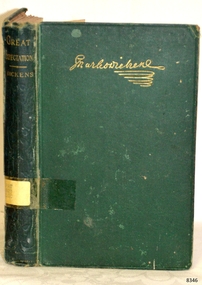
Book - A Fictional Story, Charles Dickens, Great Expectations, 1900-1913
... love for Estella. The story follows his rise from a humble village boy to a London gentleman, and then his gradual moral education as he learns what really matters in life. Dickens published it in 1860–61 in serialised form and then in a book published by Chapman & Hall in 1861. The novel is even today widely regarded as one of his major and most successful works. The label on the spine cover with typed text PAT ...Charles Dickens (1812–1870) was one of the great English novelists of the Victorian era, famous for vivid characters, social criticism, and stories that were first published in serial form. He began as a journalist, rose to enormous popularity during his lifetime, and wrote major works such as Oliver Twist, Great Expectations and David Copperfield. Great Expectations is another of Dickens coming of age novels and is about Pip, a young orphan who is shaped by guilt, ambition, class anxiety, and his love for Estella. The story follows his rise from a humble village boy to a London gentleman, and then his gradual moral education as he learns what really matters in life. Dickens published it in 1860–61 in serialised form and then in a book published by Chapman & Hall in 1861. The novel is even today widely regarded as one of his major and most successful works.Great Expectations Author: Charles Dickens Publisher: Chapman & Hall Ltd Date: Subject Book 1900-1913.First Edition Published in 1860-1861 (See note section this document for more information on Edition). Green Faux leather hardcover with title on spine in gold lettering, Charles Dickens signature on front cover written in gold lettering. The spine has a Library label and no Volume information.fictionCharles Dickens (1812–1870) was one of the great English novelists of the Victorian era, famous for vivid characters, social criticism, and stories that were first published in serial form. He began as a journalist, rose to enormous popularity during his lifetime, and wrote major works such as Oliver Twist, Great Expectations and David Copperfield. Great Expectations is another of Dickens coming of age novels and is about Pip, a young orphan who is shaped by guilt, ambition, class anxiety, and his love for Estella. The story follows his rise from a humble village boy to a London gentleman, and then his gradual moral education as he learns what really matters in life. Dickens published it in 1860–61 in serialised form and then in a book published by Chapman & Hall in 1861. The novel is even today widely regarded as one of his major and most successful works.book, the old curiosity shop, charles dickens, shipwrecked-coast, flagstaff-hill, flagstaff-hill-maritime-museum, warrnambool, maritime-museum, flagstaff-hill-maritime-village, pattison collection, warrnambool library, warrnambool mechanics’ institute, ralph eric pattison, corangamite regional library service, warrnambool city librarian, mechanics’ institute library, victorian library board, warrnambool books and records, warrnambool children’s library, great ocean road -
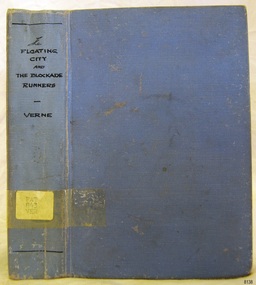 Flagstaff Hill Maritime Museum and Village
Book - A Fictional Story, Jules Verne, The Blockade Runners and A Floating City, 1894-1900
... His commercial mission shifts when he falls in love with Jenny Halliburtt, who disguised herself as a boy to join his crew and rescue her father a Confederate prisoner an abolitionist and journalist. Flyleaf has full publication details. Label on spine cover with typed text PAT ...The “A Floating City” part of the novel (1871) is about a transatlantic voyage aboard Brunel's “Great Eastern” steam ship. The unnamed French narrator joins his friend Captain Fabian Mac Elwin, who is heartbroken to see his former love Ellen on board with her abusive husband Harry Drake. Tensions build as the journey progresses, culminating in a dramatic confrontation at sea. The story is based on Verne's own 1867 voyage on the Great Eastern. “The Blockade Runners” (1865 ) was a novella , set during the American Civil War,the main character is a British merchant captain James Playfair who must break the Union blockade of Charleston, South Carolina, to trade his supplies for cotton. His commercial mission shifts when he falls in love with Jenny Halliburtt, who disguised herself as a boy to join his crew and rescue her father a Confederate prisoner an abolitionist and journalist.Hard cover book, The Blockade Runners and A Floating City. Author: Jules Verne Publisher: Sampson Low, Marston, & Company, London Date: 1894-1900. Light blue hardcover with the title on the spine having lettering to spine in black hand written text pen. fictionThe “A Floating City” part of the novel (1871) is about a transatlantic voyage aboard Brunel's “Great Eastern” steam ship. The unnamed French narrator joins his friend Captain Fabian Mac Elwin, who is heartbroken to see his former love Ellen on board with her abusive husband Harry Drake. Tensions build as the journey progresses, culminating in a dramatic confrontation at sea. The story is based on Verne's own 1867 voyage on the Great Eastern. “The Blockade Runners” (1865 ) was a novella , set during the American Civil War,the main character is a British merchant captain James Playfair who must break the Union blockade of Charleston, South Carolina, to trade his supplies for cotton. His commercial mission shifts when he falls in love with Jenny Halliburtt, who disguised herself as a boy to join his crew and rescue her father a Confederate prisoner an abolitionist and journalist. warrnambool, shipwrecked-coast, flagstaff-hill, flagstaff-hill-maritime-museum, maritime-museum, flagstaff-hill-maritime-village, shipwrecked-artefact, book, warrnambool mechanics’ institute, pattison collection, warrnambool library, corangamite regional library service, warrnambool city librarian, mechanics’ institute library, victorian library board, warrnambool books and records, warrnambool children’s library, ralph eric pattison, jules verne, voyages extraordinaire series, l’école des robinson's -
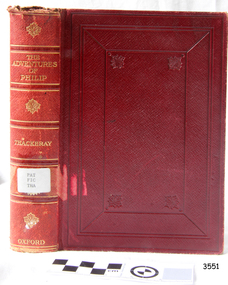 Flagstaff Hill Maritime Museum and Village
Book - A Fictional Story, William Makepeace Thackeray et al, The Adventures of Philip, 1908
... love and marries Charlotte Baynes, despite having almost no income. The novel becomes an intense critique of Victorian societal expectations, exploring the crushing anxiety of genteel poverty, the snobbery of wealthy relatives, and Philip's struggle to maintain his pride and integrity while desperately trying to support his growing family. The label on the spine cover with typed text PAT ...The Adventures of Philip on His Way Through the World was originally serialised in The Cornhill Magazine from 1861 to 1863 and is Thackeray's final completed novel. The story is heavily semi autobiographical, reflecting Thackeray's own youth, early struggles, and financial losses. The narrative follows Philip Firmin, a passionate, blustering, but fundamentally good hearted young man. He stands to inherit a comfortable fortune from his late mother. However, Philip is completely betrayed by his own father, the aristocratic and deceitful Dr Brandon Firmin. The doctor secretly squanders, swindles, and speculates away his son's entire inheritance, leaving Philip financially ruined. Forced to make his own way in the world, Philip moves to Paris to work as a struggling journalist. He falls in love and marries Charlotte Baynes, despite having almost no income. The novel becomes an intense critique of Victorian societal expectations, exploring the crushing anxiety of genteel poverty, the snobbery of wealthy relatives, and Philip's struggle to maintain his pride and integrity while desperately trying to support his growing family.The Adventures of Philip Author: William Makepeace Thackeray Publisher: Henry Frowde Oxford University Press Date: 1908fictionThe Adventures of Philip on His Way Through the World was originally serialised in The Cornhill Magazine from 1861 to 1863 and is Thackeray's final completed novel. The story is heavily semi autobiographical, reflecting Thackeray's own youth, early struggles, and financial losses. The narrative follows Philip Firmin, a passionate, blustering, but fundamentally good hearted young man. He stands to inherit a comfortable fortune from his late mother. However, Philip is completely betrayed by his own father, the aristocratic and deceitful Dr Brandon Firmin. The doctor secretly squanders, swindles, and speculates away his son's entire inheritance, leaving Philip financially ruined. Forced to make his own way in the world, Philip moves to Paris to work as a struggling journalist. He falls in love and marries Charlotte Baynes, despite having almost no income. The novel becomes an intense critique of Victorian societal expectations, exploring the crushing anxiety of genteel poverty, the snobbery of wealthy relatives, and Philip's struggle to maintain his pride and integrity while desperately trying to support his growing family.shipwrecked-coast, flagstaff-hill, flagstaff-hill-maritime-museum, warrnambool, maritime-museum, shipwreck-coast, flagstaff-hill-maritime-village, shipwrecked-artefact, book, pattison collection, warrnambool library, warrnambool mechanics’ institute, ralph eric pattison, corangamite regional library service, warrnambool city librarian, mechanics’ institute library, victorian library board, warrnambool books and records, warrnambool children’s library, great ocean road, the virginians-, william makepeace thackeray -
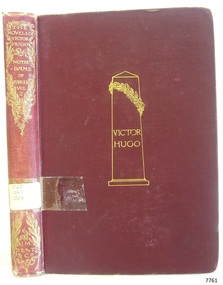 Flagstaff Hill Maritime Museum and Village
Book - Fictional Novel, Victor Hugo, Notre Dame of Paris Vol 2, 1899
... Beyond the human drama, the book is a love letter to Gothic architecture; Hugo famously wrote it to spark a preservation movement to save the crumbling Notre-Dame Cathedral from neglect and modernisation. The label on the spine cover with typed text PAT ...The novel is better known today by its English title, The Hunchback of Notre-Dame. This grand historical novel is set in 1482 Paris and revolves around the doomed gypsy dancer Esmeralda, the tortured archdeacon Claude Frollo, the dashing but shallow captain Phoebus, and the fiercely loyal, deformed bell-ringer Quasimodo. By the time you reach the final volume, the narrative is driving toward its intense, tragic climax. Beyond the human drama, the book is a love letter to Gothic architecture; Hugo famously wrote it to spark a preservation movement to save the crumbling Notre-Dame Cathedral from neglect and modernisation.Notre Dame of Paris Vol 2 Author: Victor Hugo Publisher: J M Dent & Co Date: 1899 Further Information: Translated by J. Carroll Beckwith Vol. 1 is 7072, Vol. 3 is 7073, Vol.4 is 8036fictionThe novel is better known today by its English title, The Hunchback of Notre-Dame. This grand historical novel is set in 1482 Paris and revolves around the doomed gypsy dancer Esmeralda, the tortured archdeacon Claude Frollo, the dashing but shallow captain Phoebus, and the fiercely loyal, deformed bell-ringer Quasimodo. By the time you reach the final volume, the narrative is driving toward its intense, tragic climax. Beyond the human drama, the book is a love letter to Gothic architecture; Hugo famously wrote it to spark a preservation movement to save the crumbling Notre-Dame Cathedral from neglect and modernisation.flagstaff hill, warrnambool, shipwrecked coast, flagstaff hill maritime museum, maritime museum, shipwreck coast, flagstaff hill maritime village, great ocean road, book, pattison collection, warrnambool library, warrnambool mechanics’ institute, ralph eric pattison, corangamite regional library service, warrnambool city librarian, mechanics’ institute library, victorian library board, warrnambool books and records, warrnambool children’s library, notre dame of paris vol 4, victor hugo, j. carroll beckwith -
Mission to Seafarers Victoria
Letter - Correspondence, 02/07/1951
... Letter commences "My dear Allan," and concludes "With love from Pat." 'Pat' is written in blue ink....Quinn Collection letters-from-abroad allan quinn pat hannon barry hannon hammersmith, u.k. Letter commences "My dear Allan," and concludes "With love from Pat." ...Pat writes of the high cost of living in London, the meagre food ration, and the scarcity of flats for rent. Quinn CollectionA self-folding letter (0878.a) headed 19 Luxemburg Gardens, Hammersmith, W.6 and dated 02/07/51. The letter is typed using black ribbon. It is addressed to Mr Allan Quinn, C/- General Delivery, Post Office, Oslo, Norway. The return address is Mrs B. J. Hannon, C/- S.M.H.E.A., 1 Regent Street, Picadilly (writer's spelling). Below the return address is typed "Our telephone number is Riv. 1770 but in case of our moving Barry's business address is above and the number is Whitehall 3985." Below that is an Oslo postmark.Letter commences "My dear Allan," and concludes "With love from Pat." 'Pat' is written in blue ink.letters-from-abroad, allan quinn, pat hannon, barry hannon, hammersmith, u.k. -
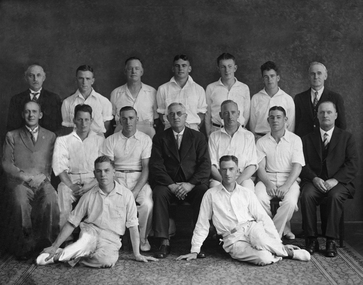 Murrumbeena Cricket Club
Photograph, 1935-36 C Team Premiership, c. 1936
... Pat Brophy...Wally Grant...J Tormey...Alf Wood...S Vaughan...Jim Watson...Charlie Parker...V Frankland...Albert Bristowe...T J Riley...Dr Buntine...R Kelly...Percy Love...Murrumbeena Murrumbeena Cricket Club Cricket Cricket Clubs Cricketers Peter Robertson Pat Brophy Wally Grant J Tormey Alf Wood S Vaughan Jim Watson Charlie Parker V Frankland Albert Bristowe T J Riley Dr Buntine R Kelly Percy Love Jack Corran Albert Forscutt Photograph of 1935-36 C Team premiership 1935-36 C Team Premiership Photograph Photograph ...Photograph of 1935-36 C Team premiershipmurrumbeena, murrumbeena cricket club, cricket, cricket clubs, cricketers, peter robertson, pat brophy, wally grant, j tormey, alf wood, s vaughan, jim watson, charlie parker, v frankland, albert bristowe, t j riley, dr buntine, r kelly, percy love, jack corran, albert forscutt -
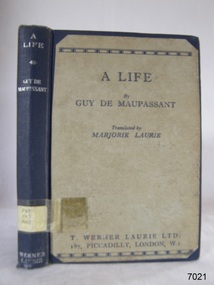 Flagstaff Hill Maritime Museum and Village
Book - A Fictional story, Henri René Albert Guy de Maupassant, A Life, 1933
... love and happiness are gradually worn down by marriage, betrayal, family burdens, and disappointment. Maupassant is the author and the book is generally read as a bleak and at time depressing study of illusion versus reality in a woman’s life. The label on the spine with typed text PAT ...A Life is the English title of Guy De Maupassant’s French novel "Une Vie" (1883), is a realist story about Jeanne de Lamare, a sheltered young woman whose hopes for love and happiness are gradually worn down by marriage, betrayal, family burdens, and disappointment. Maupassant is the author and the book is generally read as a bleak and at time depressing study of illusion versus reality in a woman’s life.A Life Author: Guy De Maupassant, Translated by Marjorie Laurie Publisher: T Werner Laurie Ltd Date: 1933 Further Information: Cover cream, Spine blue with blue lettering to cover and Cream lettering to blue Spine. Library label to Spine.fictionA Life is the English title of Guy De Maupassant’s French novel "Une Vie" (1883), is a realist story about Jeanne de Lamare, a sheltered young woman whose hopes for love and happiness are gradually worn down by marriage, betrayal, family burdens, and disappointment. Maupassant is the author and the book is generally read as a bleak and at time depressing study of illusion versus reality in a woman’s life.warrnambool, shipwrecked-coast, flagstaff-hill, flagstaff-hill-maritime-museum, maritime-museum, flagstaff-hill-maritime-village, shipwrecked-artefact, book, a life, guy de maupassant, warrnambool mechanics’ institute, pattison collection, warrnambool library, corangamite regional library service, warrnambool city librarian, mechanics’ institute library, victorian library board, warrnambool books and records, warrnambool children’s library, henri rené albert guy de maupassant, ralph eric pattison -
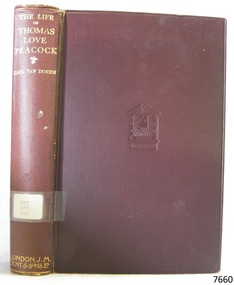 Flagstaff Hill Maritime Museum and Village
Book, The Life of Thomas Love Peacock
... Warrnambool Shipwrecked-coast Flagstaff-Hill Flagstaff-Hill-Maritime-Museum Maritime-Museum Shipwreck-coast Flagstaff-Hill-Maritime-Village Shipwrecked-artefact Book Pattison Collection Warrnambool Library Warrnambool Mechanics’ Institute Ralph Eric Pattison Corangamite Regional Library Service Warrnambool City Librarian Mechanics’ Institute Library Victorian Library Board Warrnambool books and records Warrnambool Children’s Library Great Ocean Road The Life of Thomas Love Peacock Carl Van Doren Label on spine cover with typed text PAT 920 PEA Pastedown front endpaper has sticker from Warrnambool Mechanics Institute and Free Librarycovered by a sticker from Corangamite Regional Library Service Front loose endpaper has a stamp from Warrnambool Public Museum The Life of Thomas Love Peacock Author: Carl Van Doren Publisher: J M Dent & Sons Ltd Date: 1911 The Life of Thomas Love Peacock Book ...This item is from the ‘Pattison Collection’, a collection of books and records that was originally owned by the Warrnambool Mechanics’ Institute, which was founded in Warrnambool in 1853. By 1886 the Warrnambool Mechanics’ Institute (WMI) had grown to have a Library, Museum and Fine Arts Gallery, with a collection of “… choice productions of art, and valuable specimens in almost every branch and many wonderful national curiosities are now to be seen there, including historic relics of the town and district.” It later included a School of Design. Although it was very well patronised, the lack of financial support led the WMI in 1911 to ask the City Council to take it over. In 1935 Ralph Pattison was appointed as City Librarian to establish and organise the Warrnambool Library as it was then called. When the WMI building was pulled down in 1963 a new civic building was erected on the site and the new Warrnambool Library, on behalf of the City Council, took over all the holdings of the WMI. At this time some of the items were separated and identified as the ‘Pattison Collection’, named after Ralph Pattison. Eventually the components of the WMI were distributed from the Warrnambool Library to various places, including the Art Gallery, Historical Society and Flagstaff Hill. Later some were even distributed to other regional branches of Corangamite Regional Library and passed to and fro. It is difficult now to trace just where all of the items have ended up. The books at Flagstaff Hill Maritime Village generally display stamps and markings from Pattison as well as a variety of other institutions including the Mechanics’ Institute itself. RALPH ERIC PATTISON Ralph Eric Pattison was born in Rockhampton, Queensland, in 1891. He married Maude Swan from Warrnambool in 1920 and they set up home in Warrnambool. In 1935 Pattison accepted a position as City Librarian for the Warrnambool City Council. His huge challenge was to make a functional library within two rooms of the Mechanics’ Institute. He tirelessly cleaned, cleared and sorted a disarrayed collection of old books, jars of preserved specimens and other items reserved for exhibition in the city’s museum. He developed and updated the library with a wide variety of books for all tastes, including reference books for students; a difficult task to fulfil during the years following the Depression. He converted all of the lower area of the building into a library, reference room and reading room for members and the public. The books were sorted and stored using a cataloguing and card index system that he had developed himself. He also prepared the upper floor of the building and established the Art Gallery and later the Museum, a place to exhibit the many old relics that had been stored for years for this purpose. One of the treasures he found was a beautiful ancient clock, which he repaired, restored and enjoyed using in his office during the years of his service there. Ralph Pattison was described as “a meticulous gentleman whose punctuality, floorless courtesy and distinctive neat dress were hallmarks of his character, and ‘his’ clock controlled his daily routine, and his opening and closing of the library’s large heavy doors to the minute.” Pattison took leave during 1942 to 1945 to serve in the Royal Australian Navy, Volunteer Reserve as Lieutenant. A few years later he converted one of the Museum’s rooms into a Children’s Library, stocking it with suitable books for the younger generation. This was an instant success. In the 1950’s he had the honour of being appointed to the Victorian Library Board and received more inspiration from the monthly conferences in Melbourne. He was sadly retired in 1959 after over 23 years of service, due to the fact that he had gone over the working age of council officers. However he continued to take a very keen interest in the continual development of the Library until his death in 1969. The Pattison Collection, along with other items at Flagstaff Hill Maritime Village, was originally part of the Warrnambool Mechanics' Institute’s collection. The Warrnambool Mechanics’ Institute Collection is primarily significant in its totality, rather than for the individual objects it contains. Its contents are highly representative of the development of Mechanics' Institute libraries across Australia, particularly Victoria. A diversity of publications and themes has been amassed, and these provide clues to our understanding of the nature of and changes in the reading habits of Victorians from the 1850s to the middle of the 20th century. The collection also highlights the Warrnambool community’s commitment to the Mechanics’ Institute, reading, literacy and learning in the regions, and proves that access to knowledge was not impeded by distance. These items help to provide a more complete picture of our community’s ideals and aspirations. The Warrnambool Mechanics Institute book collection has historical and social significance for its strong association with the Mechanics Institute movement and the important role it played in the intellectual, cultural and social development of people throughout the latter part of the nineteenth century and the early twentieth century. The collection of books is a rare example of an early lending library and its significance is enhanced by the survival of an original collection of many volumes. The Warrnambool Mechanics' Institute’s publication collection is of both local and state significance. The Life of Thomas Love Peacock Author: Carl Van Doren Publisher: J M Dent & Sons Ltd Date: 1911Label on spine cover with typed text PAT 920 PEA Pastedown front endpaper has sticker from Warrnambool Mechanics Institute and Free Librarycovered by a sticker from Corangamite Regional Library Service Front loose endpaper has a stamp from Warrnambool Public Museum warrnambool, shipwrecked-coast, flagstaff-hill, flagstaff-hill-maritime-museum, maritime-museum, shipwreck-coast, flagstaff-hill-maritime-village, shipwrecked-artefact, book, pattison collection, warrnambool library, warrnambool mechanics’ institute, ralph eric pattison, corangamite regional library service, warrnambool city librarian, mechanics’ institute library, victorian library board, warrnambool books and records, warrnambool children’s library, great ocean road, the life of thomas love peacock, carl van doren -
Glen Eira Historical Society
Document - St David’s Uniting Church, Glen Huntly
... Love Rev.... Foundation stones... Millar Rev.... Vertigan S.A Rev.... Moorhead Kenneth Rev... Sunday Schools... Grange Road... Manses... Moorhead Joan... Piper Pat...Love Rev. Foundation stones Millar Rev. Vertigan S.A Rev. Moorhead Kenneth Rev Sunday Schools Grange Road Manses Moorhead Joan Piper Pat Glen Huntly James Street Wright L Mrs Piper Geoff Fenton Leo Lambe J Barnes P Allen Beryl Nicholls Betty Courtnay Sam McCowan R Allen Percy Document St David’s Uniting Church, Glen Huntly ...Brief history on St David’s Presbyterian Church, 144 Grange Road, Glen Huntly, mentioning that the church first began at Mr. A W F. Smith's home, on the corner of Grange and Glen Huntly Road. St David’s Uniting Church, March and April, 1984 newsletters; Newspaper article on forthcoming auction of 140 Grange Road, dated 29/03/2004st david’s uniting church, pollard rev., flynn john dr., grange road, wallace rev., muirhead j, glen huntly, boyd rev, smith a.w. f., clau j rev., love rev., foundation stones, millar rev., vertigan s.a rev., moorhead kenneth rev, sunday schools, grange road, manses, moorhead joan, piper pat, glen huntly, james street, wright l mrs, piper geoff, fenton leo, lambe j, barnes p, allen beryl, nicholls betty, courtnay sam, mccowan r, allen percy -
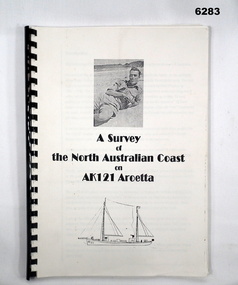 Bendigo Military Museum
Booklet - A survey of the North Australian Coast on AK121 Aroetta, NT Force, NT Coastal Recce Unit RAE, 6 Aust Army Topo Survey Corps, AKA121 Aroetta, 28 Mar 1945
... The survey party: Lieut Jack Worsley (the Loot) Sgt Jack Love, Spr Jack Cook, Spr Pat Hede. Crew of Aroetta: Liet Ralph Warne (Skipper), Sgt Buckley (Buck) (First Mate and Orderly Rm), Sgt Jim Terjesen (Jumbo) Bosun, WO2 Tom Davis (Engineer), Cpl Kevin Monk (Artificer), L/Cpl Jack Cox (Deck Hand), Spr Jack Andrews (Signals), Spr Laurie Rament (Ass. ...The survey party: Lieut Jack Worsley (the Loot) Sgt Jack Love, Spr Jack Cook, Spr Pat Hede. Crew of Aroetta: Liet Ralph Warne (Skipper), Sgt Buckley (Buck) (First Mate and Orderly Rm), Sgt Jim Terjesen (Jumbo) Bosun, WO2 Tom Davis (Engineer), Cpl Kevin Monk (Artificer), L/Cpl Jack Cox (Deck Hand), Spr Jack Andrews (Signals), Spr Laurie Rament (Ass. ...The work of the Australian Survey Corps is to make maps for the Army. At the outbreak of war very little of the mainland had been mapped, especially the northern parts. The best maps in existence of the N.T. coast in Dec "41 were those made by Matt Flinders in 1801 -1802. The Army soon got out new maps of all important areas including much of the inland. Later it was decided to bring the complete coastline up to date. Several parties put in between them six months on the coast during the dry season of "45 but a couple more months would be needed to complete the program when the "wet" interrupted the work. A small section from Buckingham Bay - Groote Eylandt was still untouched and this diary covers that section of the N.T. Coast. A survey party of four men was chosen who were to be transported from place to place by the AK121 Aroetta - a ketch of 25 tons belonging to an army unit called N.T. Coastal Recce whose work it was to patrol the coast and as well do air - sea rescue. The survey party: Lieut Jack Worsley (the Loot) Sgt Jack Love, Spr Jack Cook, Spr Pat Hede. Crew of Aroetta: Liet Ralph Warne (Skipper), Sgt Buckley (Buck) (First Mate and Orderly Rm), Sgt Jim Terjesen (Jumbo) Bosun, WO2 Tom Davis (Engineer), Cpl Kevin Monk (Artificer), L/Cpl Jack Cox (Deck Hand), Spr Jack Andrews (Signals), Spr Laurie Rament (Ass. Engineer), Spr McKenzie (Mac) (Cook). The complete history is not available after July 31 1945. The remainder of the notes are very badly water-damaged and in some places unreadable.A4 Booklet, plain paper with text and diagrams and half tone photograph of Lt Jack Worsley with plastic binderSigned by George Barton Maj. for LtCol GS. NT Forceroyal australian survey corps, rasvy, fortuna, army survey regiment, army svy regt, asr
