
Showing 78 items matching " polio"
-
 Department of Health and Human Services
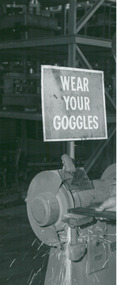
Photograph, "Wear Your Goggles" - A safety sign on a workshop machine grinding stone from part of polio & tuberculosis (TB) patients undertaking occupational therapy & recreational activities in a workshop environment
... "Wear Your Goggles" - A safety sign on a workshop machine grinding stone from part of polio & tuberculosis (TB) patients undertaking occupational therapy & recreational activities in a workshop environment...Department of Health and Human Services 50 Lonsdale St Melbourne melbourne "Wear Your Goggles" - A safety sign on a workshop machine grinding stone from part of polio & tuberculosis (TB) patients undertaking occupational therapy & recreational activities in a workshop environment Photograph ... -
 Department of Health and Human Services
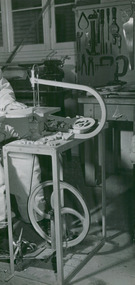
Photograph, A polio & tuberculosis (TB) patient using a scroll or band saw to cut intricate wooden designs as part of undertaking occupational therapy & recreational workshop activities
... A polio & tuberculosis (TB) patient using a scroll or band saw to cut intricate wooden designs as part of undertaking occupational therapy & recreational workshop activities...Department of Health and Human Services 50 Lonsdale St Melbourne melbourne A polio & tuberculosis (TB) patient using a scroll or band saw to cut intricate wooden designs as part of undertaking occupational therapy & recreational workshop activities Photograph ... -
 Kiewa Valley Historical Society
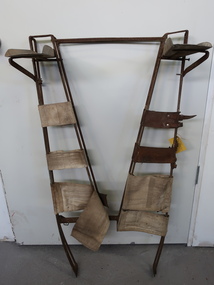
Calliper
... polio...Used for polio patient for sleeping - to stop the legs turning over. ...The polio patient found these devices restrictive and uncomfortable. ...Used for polio patient for sleeping - to stop the legs turning over. Polio disability aid. Callipers were fitted to lock up the knee joints of weakened leg to enable a person to walk without their legs collapsing and to pick the foot up from the ground when foot drop had occurred due to paralysed skin muscles. The polio patient found these devices restrictive and uncomfortable. See KVHS 1796, KVHS 1798Used by Wilma Davies, a Kiewa Valley resident, who suffered from polio from the early 1950s.Metal frame for each leg to fit in a 'V' shape from the waist to the feet. Supported by canvas straps - 3 on the left side, and 2 on the right (1 has been torn off and replaced with leather straps). 2 flat foot shaped steel plates are at the foot end and are adjustable for the feet to be at several angles. The frame has a supporting frame attached giving depth to the calliper.polio, calliper, pandemic -
 Federation University Historical Collection
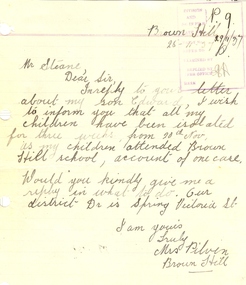
Letter, Letter from Mrs Pilven, 1938, 26/11/1937
... ...polio...This letter was probably written during the Polio pandemic....Barker Library (top floor) Mount Helen goldfields This letter was probably written during the Polio pandemic. pilven f.e. feguson illness polio edward pilven brown hill pandemic Brown Hill 25-11-37 Mr Steane, Dear Sir, In your reply to your letter about my son Edward, I wish to inform you that all my children have been isolated for three weeks, from 20th Nov, as my children attended Brown Hill school, account of one case. ...This letter was probably written during the Polio pandemic.Letter to the Ballarat School of Mines from Mrs Pilven to Mr Steane, Principal of the Ballarat Junior Techncial School, notifying of her children's absence from school, and a reply from F.E. Ferguson, Registrar of the Ballarat School of Mines.Brown Hill 25-11-37 Mr Steane, Dear Sir, In your reply to your letter about my son Edward, I wish to inform you that all my children have been isolated for three weeks, from 20th Nov, as my children attended Brown Hill school, account of one case. Would you kindly give me a reply what to do. Our district Dr is Spring Victorian St. I am yours Truly [signed] Mrs Pilven Brown Hill November 29th, 1937. Mrs, Pilvenm, Brown Hill. Dear Madam. I received you letter of the 25th inst/ and note that your children have been isoated. It will be necessary for you to complete the Application for Admission Form and return it to me before Friday th 3rd December. A letter has been sent to the Head Teacher of the Brown Hill School requesting him to forward Elementary School Record Cards for those students who desire to enter the Technical School next year and students will be selected on the information disclosed by those cards. Yours faithfully, [signed] F.E. Ferguson, Registrarpilven, f.e. feguson, illness, polio, edward pilven, brown hill, pandemic -
 Whitehorse Historical Society Inc.
Newspaper - Article, Hurdles cleared with grit, 13/02/2000
... Article on Noel Spurr, City of Whitehorse councillor and polio sufferer....Whitehorse Historical Society Inc. 2-10 Deep Creek Road Mitcham melbourne Spurr Noel Poliomyelitis Spurr Margaret Article on Noel Spurr, City of Whitehorse councillor and polio sufferer. Hurdles cleared with grit Newspaper Article ...Article on Noel Spurr, City of Whitehorse councillor and polio sufferer.spurr, noel, poliomyelitis, spurr, margaret -
 Bendigo Historical Society Inc.
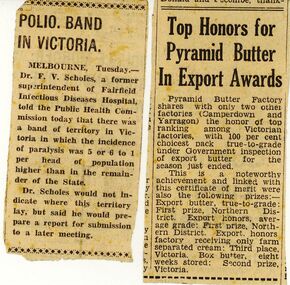
Document - BILL ASHMAN COLLECTION: NEWSPAPER CUTTINGS
... Two newspaper cuttings, one reporting an Honor awarded to Pyramid Butter Factory and the other reporting on Polio band in Victoria....History House 11 Mackenzie Street Bendigo goldfields EVENT Agriculture Two newspaper cuttings, one reporting an Honor awarded to Pyramid Butter Factory and the other reporting on Polio band in Victoria. Document BILL ASHMAN COLLECTION: NEWSPAPER CUTTINGS ...Two newspaper cuttings, one reporting an Honor awarded to Pyramid Butter Factory and the other reporting on Polio band in Victoria.event, agriculture -
 Sunshine and District Historical Society Incorporated
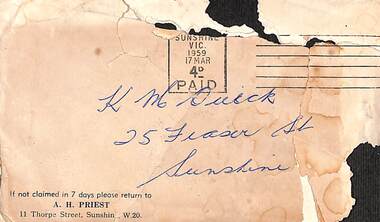
Letter - Kenneth Matthew Quick
... ...POLIO...City of Sunshine Notice Front - The SALK community vaccination effort refers to the widespread rollout of the inactivated polio vaccine (IPV) developed by Dr. Jonas Salk in the 1950s, which marked a turning point in global public health. ...It is intended to commence free Anti-Polio (SALK) Vaccination for Adults during night sessions to be held at the Sunshine Town Hall early 1959. 5059.03 - Kenneth Matthew Quick City Of Sunshine Notice Back - Registration of Dogs. ...Kenneth Matthew Quick Lodge Of Recollection No 588 City of Sunshine POLIO SALK Alick Harold Priest 5059.01 - Kenneth Matthew Quick Envelope - K. ...Envelope - This envelope post marked 17th March 1959 is addressed to Kenneth Matthew Quick. He lived at 25 Fraser Street Sunshine. Kenneth worked as a carpenter by trade. Kenneth was a member of the Lodge of Recollection No 588. This envelope was from Alick Harold Priest, the secretary of the Lodge of Recollection No 588. Alick worked as clerk and lived at 11 Thorpe Street Sunshine. Quick Lodge of Recollection Notice - This is an example of a formal notice to members of a Masonic Lodge to attend its regular meeting. This notice also detailed dues payable for the Grand Lodge Building Fund and proposition as Candidates for initiation into the Lodge. It is assumed this notice was sent in the envelope. City of Sunshine Notice Front - The SALK community vaccination effort refers to the widespread rollout of the inactivated polio vaccine (IPV) developed by Dr. Jonas Salk in the 1950s, which marked a turning point in global public health. In Australia, mass community vaccination with the Salk vaccine began in 1956, mainly by City Councils throughout Australia. City of Sunshine Notice Back - A reminded by the City of Sunshine to its residents for dog registrations and change of address or ownership. Dog registration was and still is mandatory and helps reunite lost pets, supports animal management, and ensures public safety. 5059.01 - Kenneth Matthew Quick Envelope - K. M. Quick 25 Fraser St Sunshine. If not claimed in 7 days please return to A.H. Priest 11 Thorpe Street Sunshine W20. Post marked Sunshine Vic 17th Mar 1959 4d Paid. 5059.02 - Kenneth Matthew Quick Lodge Of Recollection Notice - Quick Lodge of Recollection No 588 Dir Sir and Bro K M Quirk You are hereby summoned to attend the Regular Meeting of your lodge, to be held in the Masonic Hall, Hampshire Road, Sunshine on Friday 3rd April 1959 at 7:15pm punctually Yours fraternally Bro A. H. Priest Secretary 11 Thorpe Steet Sunshine. 5059.03 - Kenneth Matthew Quick City Of Sunshine Notice Front - City of Sunshine SALK Shots for Adults. It is intended to commence free Anti-Polio (SALK) Vaccination for Adults during night sessions to be held at the Sunshine Town Hall early 1959. 5059.03 - Kenneth Matthew Quick City Of Sunshine Notice Back - Registration of Dogs. Notification of change of address or ownership. 5059.04 - Kenneth Matthew Quick No 7 Group Education Scheme Form - No 7 Group Education Scheme F. E. Abberton President. To the parent, Applications are invited from members of the Craft in No 7 Group area to enrol their children for the 1959 Coaching Scheme.kenneth matthew quick, lodge of recollection no 588, city of sunshine, polio, salk, alick harold priest -
![Poster - Infantile Paralysis Notice, Shire of Mortlake, infantile Paralysis registration of cases, [14/8/1937]](/media/collectors/4f729f5b97f83e0308601618/items/4f72acc197f83e030860399a/item-media/4f72acc197f83e030860399c/item-fit-380x285.jpg?cb=6) Mortlake and District Historical Society
Mortlake and District Historical SocietyPoster - Infantile Paralysis Notice, Shire of Mortlake, infantile Paralysis registration of cases, [14/8/1937]
... Polio, Epidemic...Polio, Epidemic Outbreaks of poliomyelitis were common up until the 1950's when vaccine became available. ...Polio, EpidemicOutbreaks of poliomyelitis were common up until the 1950's when vaccine became available. The cause was not known and management was difficult - paralysis in varying degrees was the usual outcome. Public concern was high especially concerning children. One of the most significant Australians to suffer from this disease, was Alan Marshall (1902 -1984) who was born in Noorat, 15 kilometres from Mortlake. He wrote an account of his boyhood after he was struck down by the disease, in the internationally acclaimed 'I can jump puddles' (1955).Rectangular piece of calico, poster.'Shire of Mortlake. INFANTILE PARALYSIS. 1. Parents or Guardians of all children aged eighteen and under coming into the Shire of Mortlake from the Metropolitan or any other area affected with Infantile Paralysis, MUST REGISTER such children immediately either personally or by post at the Shire Hall, Mortlake. 2. Parents or Guardians of such "registered" children are requested to keep them away from all public gatherings and from all contact with other children for a period of Twenty-one days, and in the event of any illness to consult a Doctor immediately. 3. Residents of the Shire with children living in the house are requested in their own interests, not to take into their homes, or allow their children to have contact with, any "registered" child. 4. The following particulars are required upon registration:- Name, Age, Sex, Local Address, Metropolitan School, Grade, Metropolitan Address, Date of Leaving Metropolitan or affected area. Registration forms may be obtained at the Shire Hall, Mortlake, and at all Post Offices within the Shire. By Order, N.TURNBULL, Shire Secretary. MORTLAKE, 14/81937. ' -
Port Melbourne Historical & Preservation Society
Photograph - Digital images of people in Port Melbourne c.1950, c.1958
... Man on right Harold LEADINGHAM known as 'Hoppy' and believed to have had polio. ...Man on right Harold LEADINGHAM known as 'Hoppy' and believed to have had polio. Alf ALEXANDER Harold LEADINGHAM Digital image of Alf Alexander, Port Melbourne. ...Alf ALEXANDER on left. Man on right Harold LEADINGHAM known as 'Hoppy' and believed to have had polio. Digital image of Alf Alexander, Port Melbourne.alf alexander, harold leadingham -
 Alfred Hospital Nurses League - Nursing History Collection
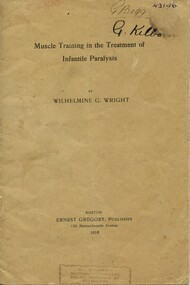
Booklet - Text booklet, Wilhelmine G Wright, Muscle training in the treatment of infantile paralysis, 1916
... Before modern vaccinations, treatment for polio focused on alleviating symptoms and managing symptoms through methods such as therapeutic exercise and physiotherapy...Before modern vaccinations, treatment for polio focused on alleviating symptoms and managing symptoms through methods such as therapeutic exercise and physiotherapy Insight into treatment and management of poliomylitis which was a significant disease prior to vaccination becoming available Infantile papalysis poliomyltis Historic textbook (1916) detailing systemic therapeutic exercises to treat "infantile paralysis" (poliomyltis) Previous owner has handwritten [black ink] her name (both maiden and married) at top right of front cover. previous catalogue number handwritten [black ink] above this. ...Historic textbook (1916) detailing systemic therapeutic exercises to treat "infantile paralysis" (poliomyltis)Booklet with light brown cover, staples have been removed. Black print on front cover details title, author and publishernon-fictionHistoric textbook (1916) detailing systemic therapeutic exercises to treat "infantile paralysis" (poliomyltis)infantile papalysis, poliomyltis -
 Kiewa Valley Historical Society
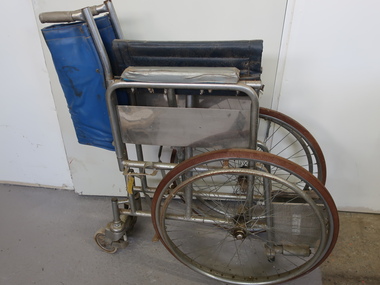
Wheelchair
... polio...This was followed by developments in ergonomics (comfort), controls, comfort and performance.See KVHS 1796, KVHS 1797 Used by Wilma Davies, a Kiewa Valley resident, who suffered from polio from the early 1950s. polio wheelchair pandemic "Sibbing / Melbourne" on the foot plates 2 large wheels - The outer wheel is steel and the inner is rubber with metal spokes attached. ...After WWII demand for wheelchairs increased. The original wheelchairs were driven by the patient's hands pushing the wheels. Later a motor was added. Then the motor and battery were built into the chair under the seat. This was followed by developments in ergonomics (comfort), controls, comfort and performance.See KVHS 1796, KVHS 1797Used by Wilma Davies, a Kiewa Valley resident, who suffered from polio from the early 1950s.2 large wheels - The outer wheel is steel and the inner is rubber with metal spokes attached. The foot plates are of ribbed steel. The ribbed seat is blue made of thick canvas as is the back of the chair. Some plastic has been glued on the back. The arm rests are also covered with old torn plastic. There is a metal stick on the side used to brake the chair by being pulled enabling it to touch the wheel and slow it down or stop it from turning."Sibbing / Melbourne" on the foot platespolio, wheelchair, pandemic -
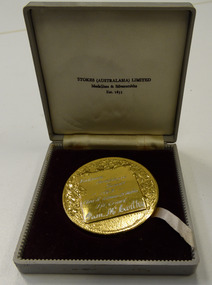 Disability Sport & Recreation Victoria
Medal and Case, Medal and Case - 1963 Victorian Paraplegic Games - Class B Women's 25 metres - 1st Crawl - Pam McCarthy, 1963
... Anglo-Indian Pamela "Pam" McCarthy was struck by polio in 1945 at age 11 In addition to her becoming a singer, she also competed at a variety of sporting meets for the disabled....Disability Sport & Recreation Victoria 33-37 Hotham Street Collingwood Anglo-Indian Pamela "Pam" McCarthy was struck by polio in 1945 at age 11 In addition to her becoming a singer, she also competed at a variety of sporting meets for the disabled. ...Anglo-Indian Pamela "Pam" McCarthy was struck by polio in 1945 at age 11 In addition to her becoming a singer, she also competed at a variety of sporting meets for the disabled.Grey plastic case containing gold coloured medal.Medal contains text - 1963 Victorian Paraplegic Games - Class B Women's 25 metres - 1st Crawl - Pam McCarthy The lid on the case is inscribed with the word "TROPHY" and a laurel wreath. The bottom of the case is inscribed with "Casecraft. CAT. No 102". The interior of the case includes he text "Stokes (Australia) Limited - medallists and silversmtihs est. 1855:.pamela mccarthy, victorian paraplegic games -
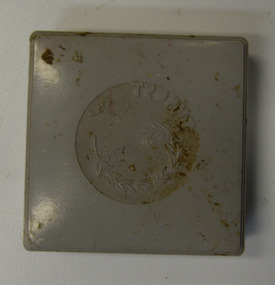 Disability Sport & Recreation Victoria
Grey medal case, Grey medal case containing medal from 1963 Victorian Paraplegic Games - Class B Women's 25 metres - 1st Crawl - Pam McCarthy, 1963
... Anglo-Indian Pamela "Pam" McCarthy was struck by polio in 1945 at age 11 In addition to her becoming a singer, she also competed at a variety of sporting meets for the disabled....Disability Sport & Recreation Victoria 33-37 Hotham Street Collingwood Anglo-Indian Pamela "Pam" McCarthy was struck by polio in 1945 at age 11 In addition to her becoming a singer, she also competed at a variety of sporting meets for the disabled. pamela mccarthy victorian paraplegic games The lid on the case is inscribed with the word "TROPHY" and a laurel wreath. ...Anglo-Indian Pamela "Pam" McCarthy was struck by polio in 1945 at age 11 In addition to her becoming a singer, she also competed at a variety of sporting meets for the disabled.Grey plastic medal case.The lid on the case is inscribed with the word "TROPHY" and a laurel wreath. The bottom of the case is inscribed with "Casecraft. CAT. No 102". The interior of the case includes he text "Stokes (Australia) Limited - medallists and silversmtihs est. 1855:.pamela mccarthy, victorian paraplegic games -
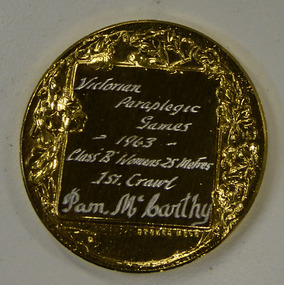 Disability Sport & Recreation Victoria
Gold medal, Gold medal from 1963 Victorian Paraplegic Games - Class B Women's 25 metres - 1st Crawl - Pam McCarthy, 1963
... Anglo-Indian Pamela "Pam" McCarthy was struck by polio in 1945 at age 11 In addition to her becoming a singer, she also competed at a variety of sporting meets for the disabled....Disability Sport & Recreation Victoria 33-37 Hotham Street Collingwood Anglo-Indian Pamela "Pam" McCarthy was struck by polio in 1945 at age 11 In addition to her becoming a singer, she also competed at a variety of sporting meets for the disabled. pamela mccarthy victorian paraplegic games Front - 1963 Victorian Paraplegic Games - Class B Women's 25 metres - 1st Crawl - Pam McCarthy Reverse - engraving of swimmers competiting Gold medal from 1963 Victorian Paraplegic Games. ...Anglo-Indian Pamela "Pam" McCarthy was struck by polio in 1945 at age 11 In addition to her becoming a singer, she also competed at a variety of sporting meets for the disabled.Gold medal from 1963 Victorian Paraplegic Games.Front - 1963 Victorian Paraplegic Games - Class B Women's 25 metres - 1st Crawl - Pam McCarthy Reverse - engraving of swimmers competitingpamela mccarthy, victorian paraplegic games -
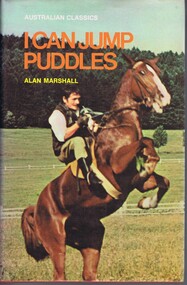 Greensborough Historical Society
Book, Alan Marshall, I Can Jump Puddles, 1955
... ...Polio...Greensborough Historical Society 34A Glenauburn Road Lower Plenty Lower Plenty melbourne Autobiographical book about Alan Marshall's childhood in country Victoria australian history Alan Marshall Polio authors Hardcover book with text and paper sleeve with colour Image I Can Jump Puddles Book Book Alan Marshall F W Cheshire Pty Limited ...Autobiographical book about Alan Marshall's childhood in country VictoriaHardcover book with text and paper sleeve with colour Imageaustralian history, alan marshall, polio, authors -
 Whitehorse Historical Society Inc.
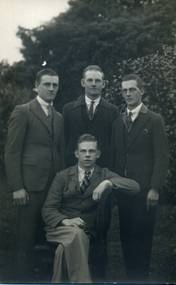
Photograph, Edwards Family, C 1930's
... This photograph must have been taken after 1931, because that was the year Ronald contracted Polio. Stanley later drowned aged 27....This photograph must have been taken after 1931, because that was the year Ronald contracted Polio. Stanley later drowned aged 27. edwards family alfred edwards theodore edwards stanley edwards ronald edwards Black and white photograph of the four Edwards brothers of Husband Road, Forest Hill. ...From left to right: Stanley, Theodore, Alfred, Ronald seated. This photograph must have been taken after 1931, because that was the year Ronald contracted Polio. Stanley later drowned aged 27.Black and white photograph of the four Edwards brothers of Husband Road, Forest Hill. Father Arthur Edwards, mother Martha (nee Course)edwards family, alfred edwards, theodore edwards, stanley edwards, ronald edwards -
 Orbost & District Historical Society
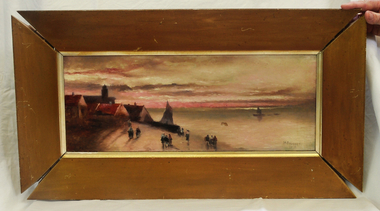
Painting, Bazeley, M, 1912
... Bazeley who was the wife of the current Church of England minister and the mother of Dr Percival Bazeley, born in Orbost (1909) who was credited with assisting Dr Jonas Salk who produced the polio vaccine....Bazeley who was the wife of the current Church of England minister and the mother of Dr Percival Bazeley, born in Orbost (1909) who was credited with assisting Dr Jonas Salk who produced the polio vaccine. This item is an example of the artistic talents of many women in the early 20th century. ...The painting was created by Mrs M. Bazeley who was the wife of the current Church of England minister and the mother of Dr Percival Bazeley, born in Orbost (1909) who was credited with assisting Dr Jonas Salk who produced the polio vaccine.This item is an example of the artistic talents of many women in the early 20th century. It is of aesthetic significance.Picture of small village by the sea with passersby. In all gold coloured frame.Front RH corner - M Bazeley,1912painting oil-painting bazely -
 Sunshine and District Historical Society Incorporated
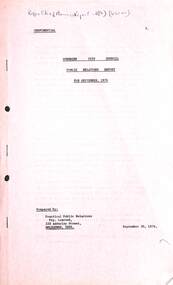
Document - City of Sunshine - Commissioner Mr Alexander Alex George Gillon Collection 1976 - 1982 - Sunshine City Council Public Relations Report September 1976, Practical Public Relations Pty Ltd, 30th September 1976
... Sunshine City Council Public Relations Report For September 1976 New Mayor & Mayoress Mayoral Columns Derrimut Saleyards Sunshine West Storm Damage Carlton and United Brewery Greythorn Timber Company Sunshine Pioneers (Sunshine & District Historical Society Polio Clean Up Italian Earthquake Appeal...City of Sunshine Alexander "Alex" George Gillon Sunshine City Council Public Relations Report For September 1976 New Mayor & Mayoress Mayoral Columns Derrimut Saleyards Sunshine West Storm Damage Carlton and United Brewery Greythorn Timber Company Sunshine Pioneers (Sunshine & District Historical Society Polio Clean Up Italian Earthquake Appeal Foolscap sized document. ...A public relations consultant was engaged to monitor media reports about the City of Sunshine.This report is significant because it reports on the period aftermath of the inquiry into Sunshine City Council.Sunshine City Council Public Relations Report For September 1976 New Mayor & Mayoress Mayoral Columns Derrimut Saleyards Sunshine West Storm Damage Carlton and United Brewery Greythorn Timber Company Sunshine Pioneers (Sunshine & District Historical Society Polio Clean Up Italian Earthquake Appeal city of sunshine, alexander "alex" george gillon -
 Geoffrey Kaye Museum of Anaesthetic History
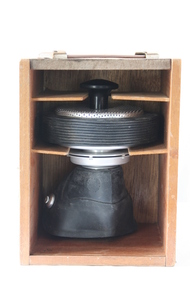
Equipment - Resuscitator, 1962
... Extensive testing was undertaken over eight years, with the device being successfully used for air transport of polio patients, for emergency resuscitation in hospital wards, and by hospital orderlies....Extensive testing was undertaken over eight years, with the device being successfully used for air transport of polio patients, for emergency resuscitation in hospital wards, and by hospital orderlies. resuscitator porton [white print on black rubber concertina bellows] PR 504 / P.B.C. 22 / - SEPT 1962 Black rubber mask attached to a black concentina bag with a round metal filter at the end. ...The Porton resuscitator was devised in 1951 at the British Chemical Defence Experimental Establishment in Porton, Sailsbury, as a bellows-valve-mask resuscitator. Extensive testing was undertaken over eight years, with the device being successfully used for air transport of polio patients, for emergency resuscitation in hospital wards, and by hospital orderlies.Black rubber mask attached to a black concentina bag with a round metal filter at the end. Sits in its original wooden box with perspex lid. Instructions of use displayed on each side of the box. [white print on black rubber concertina bellows] PR 504 / P.B.C. 22 / - SEPT 1962resuscitator, porton -
 Whitehorse Historical Society Inc.
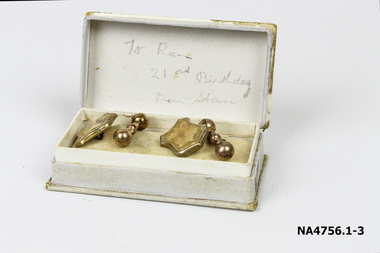
Accessory - Cuff Links in Dunklings Box, 1935
... These cuff links were a 21st Birthday gift to Ronald Arthur Edwards from his brother Stan in August 1935. Ron had polio and had problems walking. Stan drowned in 1936 in Tonumbarry Weir spillway. ...Whitehorse Historical Society Inc. 2-10 Deep Creek Road Mitcham melbourne These cuff links were a 21st Birthday gift to Ronald Arthur Edwards from his brother Stan in August 1935. Ron had polio and had problems walking. Stan drowned in 1936 in Tonumbarry Weir spillway. ...These cuff links were a 21st Birthday gift to Ronald Arthur Edwards from his brother Stan in August 1935. Ron had polio and had problems walking. Stan drowned in 1936 in Tonumbarry Weir spillway. Both men were sons of Martha and Arthur Edwards of Husband Road, Forest Hill. Information from the niece of both men.Gold cuff links in the shape of shields in Dunklings box. 'To Ron 21st birthday from Stan' written in pencil on lid of box.Dunklings the Jewellers Diamond House Melb & Perthcostume accessories, jewellery -
 Royal District Nursing Service (now known as Bolton Clarke)
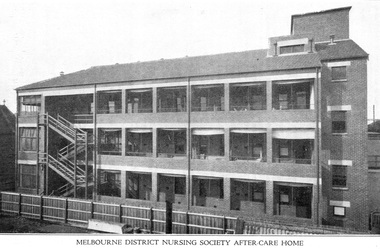
Photograph - Digital image, c.1930
... Many children were nursed there, particularly during the Polio epidemic....Many children were nursed there, some long term, during the Polio epidemic and the Society employed two School Teachers. ...The Melbourne District Nursing Society After-Care Home was built in 1926 to give short term care to MDNS patients who were too ill to remain in their home, but not ill enough to go to hospital. Melbourne hospitals also sent patients there who required further care after discharge from hospital. After convalescence they returned to their homes. Many children were nursed there, particularly during the Polio epidemic.The Society were pioneers in recognizing the need for premises where patients too ill to be in their own home, but not ill enough to go to hospital, was needed, and the Society built, then opened, the After-Care Home in 1926, (from 1934 called After-Care Hospital), for these patients, and patients from Hospitals. Many children were nursed there, some long term, during the Polio epidemic and the Society employed two School Teachers. The Society now ran two divisions, the After-Care with its own Trained nurses and the District division. The Society were the first in Melbourne, in early 1928, to recognize some patients leaving the After-Care, and many at home, needed further social care and they set up ‘Almoners’ from their Committee to visit these patients and be intermediaries in getting them social assistance. It was late the following year before the first training of Almoners took place in Melbourne. In 1930 the Society employed a full time kindergarten teacher to visit poor children in their homes. That year the Society were pioneers in opening an Ante-Natal Clinic at the After-Care, setting a high standard with equipment, keeping records and providing leaflets with instructions in how to keep healthy during pregnancy, what complications to look for, and what to do when labour commenced. In 1934 the Society were pioneers again when they opened the first Women’s Welfare Clinic in Melbourne giving advice on birth-control, at first attended by their own patients, but then accepting patients from public hospitals until their own clinics were opened. A trained Almoner was employed, but left after twelve months due to the amount of work required. Trained Almoners were in short supply so a Social Service Officer was employed at the After-Care who successfully gained better housing from the Housing Commission for families living under unsuitable conditions. In the 1950s the Hospital and Charities Commission decided to take over the After-Care Hospital, so the Melbourne District Nursing Society and After-Care Hospital separated and the Melbourne District Nursing Service was formed, setting up Headquarters at 452 St. Kilda Road. In 1966 Royal patronage was given and the name changed to Royal District Nursing Service (RDNS).Digital image of the rear of the extended Melbourne District Nursing Society After-Care Home 45 Victoria Parade, Collingwood. It shows a three story brick building with a tiled hip roof and open verandas running along each story with windows seen behind. A zigzag stair case runs down the left hand side of the building and on the right hand side of the image you can see a section set back with one window on each floor. Behind this section, part of another multi story building is seen. A wooden paling fence is seen in the foreground of the photograph. On the far right, part of another brick building with hip roof can be seen melbourne district nursing society, mdns, melbourne district nursing society and after-care home, rdns, royal district nursing service -
 Royal District Nursing Service (now known as Bolton Clarke)
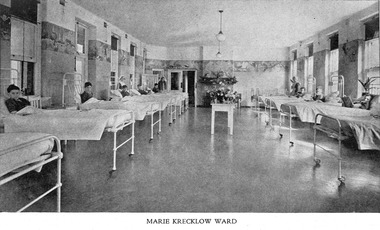
Photograph - Digital image, c.1934
... Many children were nursed at the hospital, some long term during the Polio epidemic. ...Many children were nursed there, some long term during the Polio epidemic and the Society employed two School Teachers. ...In 1934 the Trustees of the Marie Krecklow Estate donated 500 pounds to furnish and equip an empty Ward in the Melbourne District Nursing Society After-Care Hospital in the memory of Mrs. Marie Krecklow. This image shows the furnishings in the Ward of the Hospital at 45 Victoria Parade, Collingwood. The boys in this image are receiving nursing care before returning home following their recuperation. Many children were nursed at the hospital, some long term during the Polio epidemic. The Society were pioneers in recognizing the need for premises where patients too ill to be in their own home, but not ill enough to go to hospital, was needed, and the Society built, then opened, the Melbourne District Nursing Society After-Care Home in 1926, (from 1934 called After-Care Hospital), for these patients, and patients from Melbourne Hospitals who required recuperation before returning home. Many children were nursed there, some long term during the Polio epidemic and the Society employed two School Teachers. The Society now ran two divisions, the After-Care with its own Trained nurses and the District division. The Society were the first in Melbourne, in early 1928, to recognize some patients leaving the After-Care, and many at home, needed further social care and they set up ‘Almoners’ from their committee to visit these patients and be intermediaries in getting them social assistance. It was late the following year before the first training of Almoners took place in Melbourne. In 1930 the Society employed a full time kindergarten teacher to visit poor children in their homes. That year the Society were pioneers in opening an Ante-Natal Clinic at the After-Care, setting a high standard with equipment, keeping records and providing leaflets with instructions in how to keep healthy during pregnancy, what complications to look for and what to do when labour commenced. In 1934 the Society were pioneers again when they opened the first Women’s Welfare Clinic in Melbourne giving advice on birth-control, at first attended by their own patients, but then accepting patients from public hospitals until their own clinics were opened.A trained Almoner was employed at the hospital but left after twelve months due to the volume of work. Unable to employ another trained Almoner due to a shortage of them, a Social Service Officer was employed at the After-Care who successfully gained better housing from the Housing Commission for families living under unsuitable conditions. In the 1950s the Hospital and Charities Commission decided to take over the After-Care Hospital, so the Melbourne District Nursing Society and After-Care Hospital separated and the Melbourne District Nursing Service was formed, setting up Headquarters at 452 St. Kilda Road. In 1966, following Royal patronage the name was changed to Royal District Nursing Service (RDNS).Digital mage showing the 'Marie Krecklow Ward' in the Melbourne District Nursing Society After-Care Hospital. The image shows five iron hospital beds along the left hand side and five iron hospital beds along the right hand side of the ward. Eight young boys, most with short dark hair and one with short blonde hair, are leaning against pillows sitting up in the beds. Some pillows are propped against an iron support which slopes from the headrest. Three sets of windows can be seen on either side of the ward which is painted grey and a wide floral border to the picture rails, then white paint above the picture rail which continues over the ceiling. A white table with vases of flowers is in the centre rear of the image. A Sister, wearing a white uniform and veil and a dark cape stands at the rear left hand side of the image, and two nurses wearing white aprons over dark uniforms and white caps stand half way down the ward, one on either side. mdns, melbourne district nursing society, after- care hospital, after-care home, rdns, royal district nursing service, mrs marie krecklow -
Royal Australian and New Zealand College of Obstetricians & Gynaecologists (RANZCOG)
Doctor's theatre gown worn by Dr Mitchell Henry O'Sullivan, c. 1930s
... During the 1930s gowns were worn when attending polio patients. From 1945 onwards, midwifery hospitals required all staff working in labour wards, premature nurseries, and special care (observation nurseries) to wear gowns when in contact with mothers or babies. ...During the 1930s gowns were worn when attending polio patients. From 1945 onwards, midwifery hospitals required all staff working in labour wards, premature nurseries, and special care (observation nurseries) to wear gowns when in contact with mothers or babies. ...The wearing of gown became mandatory in all operating theatres from the 1900s and in 1914-1918 during the Spanish flu epidemic. During the 1930s gowns were worn when attending polio patients. From 1945 onwards, midwifery hospitals required all staff working in labour wards, premature nurseries, and special care (observation nurseries) to wear gowns when in contact with mothers or babies. During the 1950s the gown regime helped to combat the spread of golden stph in midwifery hospitals. Dr Mitchell Henry O'Sullivan worked in the Victorian country town of Casterton as a general practitioner from 1919 until his death in 1977. He also practiced obstetrics. His son, Dr David More O'Sullivan donated his obstetric bag and its contents to the College in 1999. The bag and contents are a unique time capsule of the type of instruments and pharmaceuticals used in the inter-war period.Cotton gown with high round collar and long sleeves. Gown is made in two sections with a centre doubled seam. The collar is made to button at the neck, but the button on this gown is missing. Wrists of gown are fastened with flat mother of pearl buttons. Open at back with six ties. Laundry tag taped to right side of gown.surgery -
 Orbost & District Historical Society
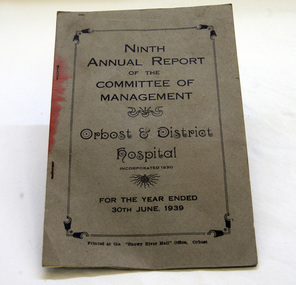
book, 1939
... There was also pressure from Dr Nettleton to begin a garbage collection in the town to clean up the town As the polio epidemic abated, diptheria took over and Dr Nettleton urged the shire to fund a further free immunisation campaign. ...There was also pressure from Dr Nettleton to begin a garbage collection in the town to clean up the town As the polio epidemic abated, diptheria took over and Dr Nettleton urged the shire to fund a further free immunisation campaign. ...The Committee of Management held monthly meetings and "the members were conscientious in their attendance". 1938/1939 were busy years for the Orbost Hospital as there was a serious outbreak of poliomyelitis and some cases had to be sent on to Sale. There was also pressure from Dr Nettleton to begin a garbage collection in the town to clean up the town As the polio epidemic abated, diptheria took over and Dr Nettleton urged the shire to fund a further free immunisation campaign. In February, 1939t here were major bush fires in the district and the fire came within 300 yards of the Orbost Hospital. (info. from Orbost Hospital History, Personalities and Stories by Margaret Hollands)The Orbost Hospital was completed by the end of October 1929 after more than twenty years of agitation and preparation. Orbost is an isolated town and the importance of the medical service in the community is immense. This report is a reminder of its early history.A small book - 9th annual report of the Management Committee of Orbost & District Hospital, incorporated 1930. In black print inside rectangular border is title plus "For the Year Ended 30th June, 1939."orbost-hospital report-orbost-hospital-committee-of-management -
 Bendigo Historical Society Inc.
Domestic object - Butter Churn
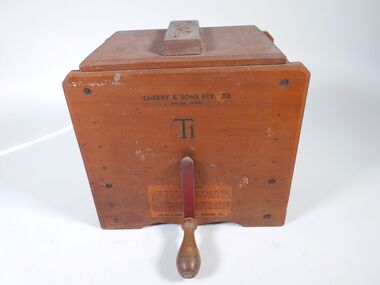
... Edward died in 1909 and the business was taken over by his son George until his death in 1917. During the polio epidemic in the 1930's, the company also made respirators. ...Edward died in 1909 and the business was taken over by his son George until his death in 1917. During the polio epidemic in the 1930's, the company also made respirators. ..."Cherry and Sons Pty Ltd", dates this churn to post 1904. In 1858, Edward Cherry began making butter churns in his spare time. Thisi became a full time business with the first factory opening in Gisborne in 1875, using imported NZ kauri pine. Steam was used to bend the base and then it was 12 months drying time before the churn was available for sale. Edward died in 1909 and the business was taken over by his son George until his death in 1917. During the polio epidemic in the 1930's, the company also made respirators. The company closed iin the 1970's.A wooden butter churn with handle and lid. the handle turns a spoked wooden paddle inside to make butter. It is a light brown colour, 30 centimetres high, 32 centimetres long and 21 centimetres wide. The wooden handle on the outside of the box is nine centimetres long three and a half centimetres wide tapering to one and a half centimetres wide, it's attached to a piece of metal that's 13 centimetres long, one and a half centimetres wide and half a centimetre thick. This is attached to a metal rod one centimetre in diameter that goes through the box and is attached to the other side of the box. A wooden frame 24 centimetres by 18 centimetres with two one centimetre wide pieces inside it is attached to the rod.CHERRY & SONS PTY. LTD. GISBORNE VICTORIA T1 Directions for use butter churn, cherry and sons pty ltd -
 Orbost & District Historical Society
shakers, after WW11 (?)
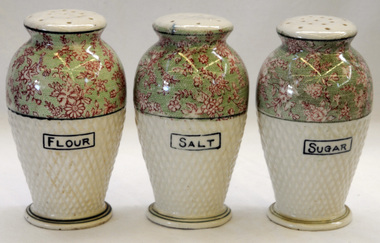
... She was highly respected in Orbost for her nursing skills particularly during the 1938 outbreak of polio, Most patients were cared for in their homes and Miss McWilliam was sent out to care for them. ...She was highly respected in Orbost for her nursing skills particularly during the 1938 outbreak of polio, Most patients were cared for in their homes and Miss McWilliam was sent out to care for them. ...These items were owned and used by Alice Pow (nee McWilliam), known as Maccie. Maccie was a nurse who came to Orbost in 1936. She was highly respected in Orbost for her nursing skills particularly during the 1938 outbreak of polio, Most patients were cared for in their homes and Miss McWilliam was sent out to care for them. Over 14 months she travelled 9560 miles supervising their treatments. She eventually married Mr Hec Pow who had been left to bring up his three daughters after his wife died.. The Pows lived in Orbost where Hec Pow was worked with his father Fred at the saw mill in Cabbage Tree. Maccie Pow was a member of the Orbost Bowling Club, Red Cross and Orbost Golf Club.Three vase shaped pottery shakers. Each has a cork stopper i n the base and sprinkle holes on the top. They are pale green coloured to half way and the rest is pale green with pink flowers. The surface is dimpled. On the base : ANDOVER Made in Japanchina tableware shakers pow-maccie mcwilliam-alice -
 Orbost & District Historical Society
food cover, 1940's (?)
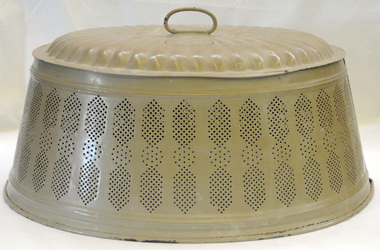
... She was highly respected in Orbost for her nursing skills particularly during the 1938 outbreak of polio, Most patients were cared for in their homes and Miss McWilliam was sent out to care for them. ...She was highly respected in Orbost for her nursing skills particularly during the 1938 outbreak of polio, Most patients were cared for in their homes and Miss McWilliam was sent out to care for them. ...This item was owned and used by Alice Pow (nee McWilliam), known as Maccie. Maccie was a nurse who came to Orbost in 1936. She was highly respected in Orbost for her nursing skills particularly during the 1938 outbreak of polio, Most patients were cared for in their homes and Miss McWilliam was sent out to care for them. Over 14 months she travelled 9560 miles supervising their treatments. She eventually married Mr Hec Pow who had been left to bring up his three daughters after his wife died.. The Pows lived in Orbost where Hec Pow was worked with his father Fred at the saw mill in Cabbage Tree. Maccie Pow was a member of the Orbost Bowling Club, Red Cross and Orbost Golf Club.An oval shaped metal food cover made of pressed tin painted tan. It has a loop handle on the top. The sides slope outwards and it is seamed on both sides. The bottom edge is rolled. The sides have a perforated design for air flow.food food-protection kitchen-ware pow-maccie mcwilliam-alice -
 Cheese World Museum
DVD, On our selection: the women's story
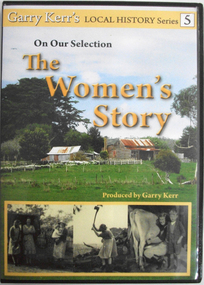
... The story of the 'Remarkable Mary Stuchbery' details the struggles of a wife and family whose husband/father contracted polio shortly after returning from WWII service. ...The story of the 'Remarkable Mary Stuchbery' details the struggles of a wife and family whose husband/father contracted polio shortly after returning from WWII service. ...This is the story of the women of the bush, women who performed more than the traditional duties of wife and mother. They worked alongside their men, through good/times and bad and they were rare to complain. Six former country women of the Portland/Heywood district provide us with a snapshot of life as it was from the 1920's through to the 1960's. They speak about their own and their mother's lives, lives which have experienced the greatest material and personal changes in history. The story of the 'Remarkable Mary Stuchbery' details the struggles of a wife and family whose husband/father contracted polio shortly after returning from WWII service. Garry Kerr has produced a series of local history stories, initially for the Heywood [history group] and more recent items privately.The material contained in these interviews provides a first-hand insight into the experiences of women who were involved in carving farms from virgin bush. Their recollections of work, social activities and opportunities for their children are an invaluable primary source.Full colour DVD cover featuring image of old hip-roof weatherboard house with front verandah and skillion roof to rear with stone chimney attached to outside. Corrugated iron roof is rusty. To the left is an outbuilding. Picket and wire fencing is in the foreground, background has large cypress tree to left and gum to right. At the bottom is a series of three black and white images showing (L-R) three women in working clothes and a woman holding a baby; woman chopping wood; woman milking cow with young boy standing beside her. The back cover is yellow with images of the seven women featured showing coloured images of the interviewees beside black and white images of the interviewees when young. DVD features the same images as the front cover.Garry Kerr's LOCAL HISTORY Series 5/On Our Selection/The/Women's/Story/Produced by Garry Kerr (front) WOMEN WERE THE UNSUNG HEROES OF THE BUSH/This is the story of the women of the bush [see historical information] ... Running time 74 minutes/Plus an additional 30 minutes of/'The Remarkable Mary Stuchbery' -
 Alfred Hospital Nurses League - Nursing History Collection
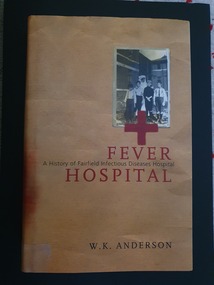
Book - Illustrated book, William Keys Anderson, Fever Hospital: a history of Fairfield Infectious Diseases Hospital, 2002
... June Middleton, past polio patient at Fairfield Hospital...Fever Hospital: a history of Fairfield Infectious Diseases Hospital Book Illustrated book William Keys Anderson Melbourne University Press Lauren Statham, Alice Graphics Brown Prior Anderson June Middleton, past polio patient at Fairfield Hospital ...A record of the work and achievement of Fairfield hospital in the context of Australian developments in medicine and health. The story of Fairfield Hospital is central to the story of infectious diseases in Victoria. Fairfield Infectious Diseases Hospital opened in 1904 as a fever hospital, later becoming one of the world's foremost centres for the treatment of infectious diseases, especially HIV/AIDS.Hardcover book bound in red, with tile and author's name printed in gold on spine. Dust jacket has an ochre coloured background, title and authors name on front cover and spine. Also on front cover is a copy of black and white photograph: young patients 'well on the way to recovery' in the 1930's (Fairfield Hospital Archives, Austin Hospital Melbourne). Book contains many illustrations.non-fictionA record of the work and achievement of Fairfield hospital in the context of Australian developments in medicine and health. The story of Fairfield Hospital is central to the story of infectious diseases in Victoria. Fairfield Infectious Diseases Hospital opened in 1904 as a fever hospital, later becoming one of the world's foremost centres for the treatment of infectious diseases, especially HIV/AIDS.fairfield hospital (melbourne-vic)-history, hospitals-victoria-history, communicable diseases -
 Nillumbik Shire Council
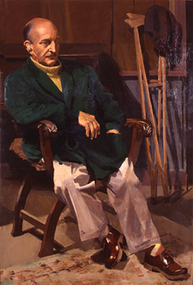
Painting - Alan MARTIN (b.1923 - d.1989 AUS), Portrait of Alan Marshall, 1956
... He became a central figure in the area's arts community of writers, artists, sculptors, film makers, actors and musicians. He contracted polio when he was young is considered one of Australia's most successful and loved authors. ...He became a central figure in the area's arts community of writers, artists, sculptors, film makers, actors and musicians. He contracted polio when he was young is considered one of Australia's most successful and loved authors. ...Alan Martin studied under Max Meldrum, at the National Gallery School and the Royal Melbourne Institute of Technology. He later established his own art school. He has won several prizes and is represented in several provincial collections. Alan Marshall was the author of more than fifteen books, and lived much of his life in Eltham. He became a central figure in the area's arts community of writers, artists, sculptors, film makers, actors and musicians. He contracted polio when he was young is considered one of Australia's most successful and loved authors. His most famous book, 'I Can Jump Puddles' is based on his life story and the obstacles he faced as a child in trying to overcome his disability. The portrait of Alan Marshall was exhibited as a finalist at the 1956 Archibald Prize.
