
Showing 10 items matching " ravenswood station"
-
 Puffing Billy Railway
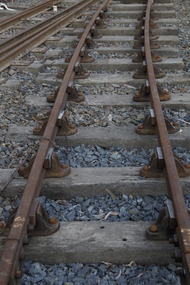
Double Headed Rail, circa 1872 - 1883
... ...ravenswood station siding...lvl=3&IRN=450&gall=456 1863 Ravenswood Station open on the 1st Feb 1863 Victorian Railways - purchased and imported the Rail and Chairs from Raleigh, Dalgleish, White and Co. ...lvl=3&IRN=450&gall=456 1863 Ravenswood Station open on the 1st Feb 1863 Victorian Railways - purchased and imported the Rail and Chairs from Raleigh, Dalgleish, White and Co. ...Double Headed Rail from Ravenswood Station Siding which was dismantled circa 1987 the two rails were stored for a time at Maldon before being donated to Puffing Billy Museum Bearing makers marks of Wilson & Cammell - Dronfield- Steel works Wilson & Cammell made Steel rails at their Dronfield Steel Works, in Dronfield, North East Derbyshire, England from 1872 - 1883 Double-headed rail In late 1830s Britain, railway lines had a vast range of different patterns. One of the earliest lines to use double-headed rail was the London and Birmingham Railway, which had offered a prize for the best design. This rail was supported by chairs and the head and foot of the rail had the same profile. The supposed advantage was that, when the head became worn, the rail could be turned over and re-used. In practice, this form of recycling was not very successful as the chair caused dents in the lower surface, and double-headed rail evolved into bullhead rail in which the head was more substantial than the foot. Info from Wikipedia - Rail Profile https://en.wikipedia.org/wiki/Rail_profile The first records of double headed rail being used In Victoria by Victorian Railways was in 1859, the rails, chairs, oak and trenails were imported from UK. After the 1870’s the Victorian Railways went over to using flat bottom rails, but they still needed replacement double headed rail for lines already laid and this continued up to at least 1883 Wilson & Cammell - Dronfield- Steel works Wilson & Cammell made Steel rails at their Dronfield Steel Works, in Dronfield England from 1872 - 1883 Mount Alexander & Murray River Railway The Melbourne, Mount Alexander & Murray River Railway Company received parliamentary assent in February 1853 to build Victoria's first inland railway from Melbourne to Williamstown, and Melbourne to Bendigo and Echuca. Construction commenced in January 1854 with work on a pier at Williamstown but lack of funds slowed progress, eventually prompting the company to sell out to the government. The 100-mile (162 km) section to Bendigo opened in October 1862. Its cost of £35,000 per mile made it the most expensive railway ever built in Australia. In 1864, the line was extended to Echuca, tapping into the booming Murray-Darling paddlesteamer trade. info from Museums Victoria - Victorian Railways https://museumsvictoria.com.au/railways/theme.aspx?lvl=3&IRN=450&gall=456 1863 Ravenswood Station open on the 1st Feb 1863 Victorian Railways - purchased and imported the Rail and Chairs from Raleigh, Dalgleish, White and Co. London Importation of railway plant : abstract of a return to an order of the Legislative Assembly dated 27th June 1860 for - Copies of the advertisements calling for tenders, the names of the tenderers and the accounts and correspondence with Mr Brunel relating thereto GP V 1859/60 no. C 15 http://www.parliament.vic.gov.au/papers/govpub/VPARL1859-60NoC15.pdf Report from the Select Committee upon the Importation of Railway Plant : together with proceedings of the Committee, minutes of evidence and appendix GP V 1859/60 no. D 38 (2.9 MB) http://www.parliament.vic.gov.au/papers/govpub/VPARL1859-60NoD38.pdf Ravenswood Siding When the Victorian Railways were established in 1856 they adopted one of the popular British permanent way standards - heavy 80lb (36.3kg) double-headed rail held up right in cast iron chairs attached to transverse timber sleepers by wooden pegs called trenails. The Ravenswood Railway siding was constructed in 1862 with 12 feet wrought iron double-head rail held in cast iron chairs with Ransom and May patent compressed keys. Trenails held the chairs to the sleepers and the joints were secured in joint chairs. Joints were subsequently joined using fish plates. It formed part of the Melbourne to Echuca rail line, initially known as the Melbourne, Mt Alexander and Murray River Railway. George Christian Derbyshire, the first Engineer-in-Chair of the Victorian Railways was responsible for the design and construction of the works. No new lines were built in Victoria using double-headed rail after 1870. The siding was disconnected from the main line in 1988. The Ravenswood Railway Siding demonstrates the original 1856 philosophy of the Victorian Railways to adopt British permanent way technology. The siding demonstrates significant aspects in the development of permanent way technology in England and Victoria over the period from the 1830's to the 1880's. The chairs in the Ravenswood siding are physical evidence of early railway technology rendered obsolete 120 years ago, namely joint chairs at rail joints and trenails to secure the chairs to the sleepers. The double-headed rail demonstrates an important stage in the evolution of British rail technology in the 1830s. The old fish plates, square headed bolts and square nuts demonstrate the success of fishing the rail joins. The Ravenswood siding demonstrates the earliest form of rail joint technology developed in England, and existing in Australia, the joint chair. In part of the siding the sequence of joint and intermediate chairs is consistent with the 1856 specifications, that sequence is rare with the joints secured in joint chairs. The survival of chairs in this sequence is rare and almost certainly demonstrates that they remained in continuous use at the same location from 1862 to 1988. This remnant of the Ravenswood siding has survived 126 years. The siding has proved to be the most significant of extant remnant double-headed sidings in Victoria, containing a rare combination of early permanent way technologies. Construction dates 1862, Info from Ravenswood Railway Siding Victorian Heritage Database Report http://vhd.heritagecouncil.vic.gov.au/places/4693/download-report The remaining section of this siding is significant at the State and National levels in that it demonstrates the use of chaired rail by the Victorian Railways Department for the Trunk Lines and, more particularly, the following stages in the evolution of this long obsolete method of permanent way construction: a) The use of joint chairs and intermediate chairs at regular intervals inferring that the original wrought iron rail lengths were 12 feet, as is known through documentary sources to have been the case. The survival of chairs in this sequence is unique and almost certainly demonstrates that they have remained in continuous use at the same location and in the same sequence from 1862 to 1988 . b) The use of joint chairs and intermediate chairs designed for use with trenails. c) The use of later intermediate chairs designed for use with steel pins and the use of fished joints with steel double head chaired rail, representing a second method of constructing the permanent way using chaired rail technology. info from Ravenswood Siding - Melbourne/Echuca Railway Line - Victorian Heritage Database Report http://vhd.heritagecouncil.vic.gov.au/places/70103/download-report Addition to Citation for Melbourne to EchucaRailway Line 1/10/1990 Double Head Rail The surviving lengths of double head rail with chairs on this railway compare with one surviving similar remnant on the Geelong to Ballarat railway and are representative of permanent way construction techniques applied exclusively to the two trunk railways of the 1860's. In this respect they are rare survivors and may be unique at the national level and of technical importance at the international level to the extent that they enhance contemporary understanding of early railway building technology. Surviving lengths of chaired double head rail survive at Kyneton, Ravenswood and Bendigo on this railway and include a number of different types of cast iron intermediate and joint chairs with hardwood keys and metal pins. The Ravenswood siding is of special significance for the diversity of chair types and for the sequence of chairs recalling rail lengths known to be associated with construction of the line in 1862. Construction of the Railway Tenders closed on 24 March 1858 with no less than 133 tenders being received. A contract was let to Cornish and Bruce for £3,356,937 to commence work on 1 June 1858 and complete the line by 31 July 1861. Cornish and Bruce made quick early progress with the Melbourne to Sunbury section being officially opened on 13 January 1859. The line was officially opened to Bendigo (Sandhurst) on 20 October 1862 by the Governor of Victoria, Sir Henry Barkly. A great banquet was held for 800 guests and this was followed by a grand ball. The extension of the line to Echuca was a relatively simple matter as that part of the line was across plain country without any significant engineering challenges. Tenders were called for the work in 1863 and the work was completed in 1864 by contractors Collier and Barry Apart from the line contractors, other firms directly involved were J Shire law and Co (sleepers), R Fulton, Langlands Brothers and Co, William Crossley (water supply), B Moreland, Langlands Brothers and Co (platelayers lorries), E Chambers (iron pins, traversers), Miller and McQuinstan (luggage vans and steam engines) and various contractors for building works. Info from Engineers Australia Engineering Heritage Victoria Nomination for Recognition under the Engineering Heritage Australia Heritage Recognition Program for the Goldfields Railways - Melbourne , Bendigo & Echuca Railway Page 25 - .2.9.2 Statement from National Trust of Australia (Victoria) Listing number B5323 for Mt Alexander/Murray Valley Rail Line: Page 69 - Theme 3 https://www.engineersaustralia.org.au/portal/system/files/engineering-heritage-australia/nomination-title/Melbourne_%20Bendigo_Echuca%20Railway%20Nomination.pdf The Melbourne, Mount Alexander and Murray River Railway Company was a railway company in Victoria, Australia. It was established on 8 February 1853 to build a railway from Melbourne to Echuca on the Victorian-NSW border and a branch railway to Williamstown. The company struggled to make any progress and on 23 May 1856, the colonial Government took over the Company and it became part of the newly established Department of Railways, part of the Board of Land and Works. The Department of Railways became Victorian Railways in 1859. Construction of the Bendigo line commenced in 1858, but this private consortium also met with financial difficulties when it was unable to raise sufficient funds, and was bought out by the Victorian colonial government. The design work was then taken over by Captain Andrew Clarke, R. E., Surveyor-General of Victoria, with bridge designs completed by Bryson and O'Hara The contract for the first stage of the line from Footscray to Sandhurst (now Bendigo), was let to Cornish and Bruce for £3,356,937.2s.2d ($6.714 million) with work commencing on 1 June 1858. Completion of the permanent way was to be by 31 July 1861 https://en.wikipedia.org/wiki/Melbourne,_Mount_Alexander_and_Murray_River_Railway_Company Victorian Railways - purchased and imported the Rail and Chairs from Raleigh, Dalgleish, White and Co. London Importation of railway plant : abstract of a return to an order of the Legislative Assembly dated 27th June 1860 for - Copies of the advertisements calling for tenders, the names of the tenderers and the accounts and correspondence with Mr Brunel relating thereto GP V 1859/60 no. C 15 http://www.parliament.vic.gov.au/papers/govpub/VPARL1859-60NoC15.pdf Report from the Select Committee upon the Importation of Railway Plant : together with proceedings of the Committee, minutes of evidence and appendix GP V 1859/60 no. D 38 (2.9 MB) http://www.parliament.vic.gov.au/papers/govpub/VPARL1859-60NoD38.pdf Victorian Railways : report of the Board of Land and Works November 1862 GP V 1862/63 no. 21 (2.8 MB) https://www.parliament.vic.gov.au/papers/govpub/VPARL1862-63No21.pdfHistoric - Victorian Railways - Double Headed rail Ravenswood Railway Station and Siding Victorian Heritage Database Reports Victorian Heritage Register VHR H1100 Victorian Heritage Register VHR H1786 National Trust VHR H1100 Mount Alexander and Murray River Rail way Line National Trust2 rail lengths of Double Headed Rail made of Iron makers marks : Wilson & Cammell - Dronfield - Steel and 20 joint chairs with metal rail pins Makers mark Wilson & Cammell - Dronfield - Steel (possible date 187? very hard to read ) puffing billy, double headed rail, wilson & cammell - dronfield - steel works, ravenswood station siding, melbourne to echuca rail line, initially known as the melbourne, mt alexander and murray river railway. -
 Bendigo Historical Society Inc.
Document - MYSTERY OF JOHN MCMAHON'S GRAVE BIG HILL
... ... Ravenswood Station...PERSON Individual john mcmahon Mystery of John McMahon's Grave Big Hill John McMahon Big Hill Tunnel Mrs I Marchesi Mr Marchesi Mrs Ivy Irene Marchesi (nee Bone) Sarah McMahon Sarah McEwan (McKeown/McKeon) Ravenswood Station Kangaroo Flat Cemetery Sarah Jane McMahon Frederick Benton PictureAustralia Vic Rail Melbourne to Mount Alexander-Murray Rail Line Stone markers for John McMahon The Mystery of John McMahon's Grave, Big Hill mentions granite stone markers south of the Tunnel. ...The Mystery of John McMahon's Grave, Big Hill mentions granite stone markers south of the Tunnel. Some believed he was buried there, but further research has found he is buried at the Kangaroo Flat Cemetery in the Roman Catholic section, Grave No. 1134 on 20 May, 1874. Also mentioned is his widow was appointed Gate Keeper at Ravenswood on 2 September, 1874. Also mentioned is the death of Frederick Benton, who died on 24 February, 1860 of peritonitis. There is a sepia? Photo taken of the Big Hill Tunnel (Bendigo side looking south) from Picture Australia c. 1875 and a coloured one of the Big Hill Tunnel Bendigo side (photo taken March, 2008). On page 2 are two coloured views at Big Hill for John McMahon, 850 metres south of Big Hill Tunnel entrance, Melbourne side/east of line (photos taken March, 2008).person, individual, john mcmahon, mystery of john mcmahon's grave, big hill, john mcmahon, big hill tunnel, mrs i marchesi, mr marchesi, mrs ivy irene marchesi (nee bone), sarah mcmahon, sarah mcewan (mckeown/mckeon), ravenswood station, kangaroo flat cemetery, sarah jane mcmahon, frederick benton, pictureaustralia, vic rail, melbourne to mount alexander-murray rail line, stone markers for john mcmahon -
 Bendigo Military Museum
Map - MAP, RAVENSWOOD, VIC TRAINING AREA, Aust Army, Unknown
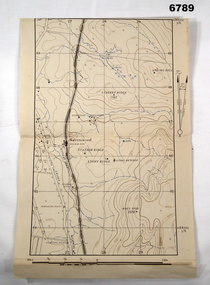
... On centre left is Ravenswood Train station. The Calder Highway is shown, from the bottom of the map to halfway up left side. ...On centre left is Ravenswood Train station. The Calder Highway is shown, from the bottom of the map to halfway up left side. ...Items in the collection re Lt Col J. Swatton, refer Cat No 6719.2P for his service details.This is an enlarged version of a contour map. It is undated. On centre left is Ravenswood Train station. The Calder Highway is shown, from the bottom of the map to halfway up left side. Top right side shows "Spring Hill".Each grid square is 1000 x 1000 yards. Top right corner grid is 230,000 E, 450,000 Nth. Magnetic variation when this map was made is 6.55' grid to magnetic Nth. printed onto the map, with an "X" are 'Starting Point', "Debussing Point", and "Assembly Point" . Handwritten in red pencil at top LHS are the letters "C.O".passchendaele barracks trust, map, j.w. swatton -
 Bendigo Historical Society Inc.
Photograph - VIEWS OF BENDIGO: NEAR BIG HILL RANGES, 1875, copy,1970
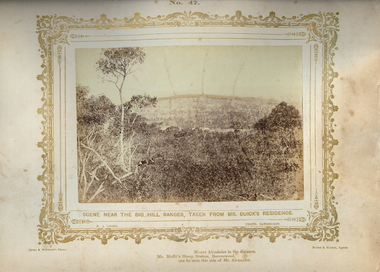
... Moffit's Sheep Station, Ravenswood, |can be seen this side of Mt. ...Moffit's Sheep Station, Ravenswood, |can be seen this side of Mt. ...Sepia photo on cream board, copy of original. Shows scene near Big Hill from Mr. Buick's residence. Inscription: Above image, 'Views of Bendigo|No.47.'. Below, 'Scene near Big Hill ranges, taken from Mr. Buick's Residence. ','N.J. Caire Photo, Sandhurst'. Bottom, 'Casey & Wenborn's Print Forbes & Holmes, Agents',' Mount Alexander in the distance. Mr. Moffit's Sheep Station, Ravenswood, |can be seen this side of Mt. Alexander.'. On Back, 'RHSV stamp, Bendigo Branch '1959|70'. (Two copies) Nicholas CaireN.J.Cairecottage, miners, see: 'views of bendigo' by n.j.caire -
 Bendigo Historical Society Inc.
Newspaper - Bendigo Advertiser Collection: Small Town With Big Hearts Article on Ravenswood, Nov 03 1993
... Ravenswood has lost several key amenities over the years, including its service station, railway station, school, and church. ...Ravenswood has lost several key amenities over the years, including its service station, railway station, school, and church. ...Ravenswood was intended to become a functioning town in the 19th century, with land subdivided into house lots, but this development never materialized. The area was originally part of the Alexander Number Two Run (later renamed Ravenswood Run), established in 1838 and covering 118,000 acres. Major Thomas Mitchell explored the area in 1837, naming its prominent features. The first discovery of gold in the Bendigo creek is credited to the wife of Ravenswood's overseer, Mr. Kennedy, in the early 1850s.This discovery contributed to the development of Bendigo and the surrounding region. The Ravenswood homestead was built in 1857 and is a significant Georgian-style building, more typical of Tasmania or eastern New South Wales.It features well-proportioned outbuildings, servants' quarters, and English-influenced gardens.The homestead currently sits on 400 acres of the original land, surrounded by a picturesque landscape of pastures, ancient gums, boulders, creeks, and gullies. For the past 20 years, the Beilharz family has owned and restored the homestead, transforming it into a serene and well-maintained property.The family's efforts have preserved both the building and its unique atmosphere.Community and ArchitectureUnlike other large homesteads in Victoria's Western District, Ravenswood Homestead was built for style and comfort, not as a working hub; work buildings like shearing sheds were located far from the main house. The homestead is physically and socially separated from the nearby township, lacking the close relationship often seen between English manor houses and their villages. Ravenswood Homestead stands as a historically significant site, notable for its architecture, landscape, and role in the early gold discoveries that shaped the Bendigo region. Ravenswood Pub (Junction Hotel) is located near the Calder Highway, the pub is a well-known spot for travellers and the motorcycle community. Recently rebuilt and managed by Stewart and Debbie Crowther, who previously worked in sales management in Bendigo. The Crowthers transformed the pub into a welcoming, family-oriented venue by removing restrictive rules for children and adding a play area and secure garden. Their approach was motivated by their own experience as parents and the needs of traveling families. The pub enjoys strong support from local residents, in addition to serving travellers. The nearest general store or milk bar is eight kilometers away, so the pub has tried to fill this gap by offering take-away food. The pub's freehold owner (an oil company) plans to build a petrol and convenience store next door, which would address the community's need for local services. There is no set timeline, but locals are optimistic about the positive impact. Ravenswood has lost several key amenities over the years, including its service station, railway station, school, and church. However, there is renewed growth, with new homes being built and anticipation that new businesses will help revitalize the area.Small Towns With Big Hearts Ravenswood. Series of photos and information about Ravenswood. Pictures by Peter Hyett. Written by Wayne Gregson. This item contains the following documents newspaper articles and black and white photos: 8091.605a Part of Page 30, the Bendigo Advertiser Weds Nov 03 1993 8091.605b Part of Page 30, the Bendigo Advertiser Wednesday Nov 03 1993 8091.605c Black and White Photo Man seated on the verandah of The Ravenswood homestead - Contact BHS for Details 8091.605d Black and White Photo of a house with the granite hill country behind - Contact BHS for Details 8091.605e Black and White Photo of the Ravenswood Homestead - Contact BHS for Details 8091.605f Black and White Photo of the Calder Highway at Ravenswood - Contact BHS for Details 8091.605g Black and White Photo of the Calder Highway sign at Ravenswood - Contact BHS for Details 8091.605h Black and White Photo of a Woman and a Man at the Junction Hotel at Ravenswood - Contact BHS for Detailsnewspaper, bendigo advertiser, ravenswood -
 Bendigo Historical Society Inc.
Document - ''THE MOUNT ALEXANDER STATIONS'': SHORT ARTICLE, 24/03/1969
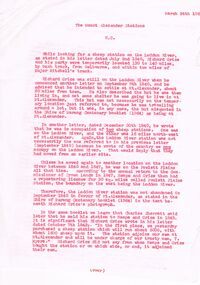
... Station... Richard Grice... Powlett Plains. Lodden River....Ravenswood...BENDIGO Land sales Pastoral Licences Mount Alexandra Station Richard Grice Powlett Plains. Lodden River. Ravenswood Typed article, red carbon copy, ( 2 copies of same). ...Typed article, red carbon copy, ( 2 copies of same). On top of first page: ''The Mount Alexander Stations'' , underneath title, the initials H.C. (Harold Curnow) March 24th 1969 . Detailed discussion of early ownership of pastoral licences in the area. Reference to Richard Grice; Powlett Plains; Heape; Charles Sherratt; Fenton; Gibson; Mt. Alexander Station; Mt. Alexander North ; William Barkerbendigo, land sales, pastoral licences, mount alexandra station, richard grice, powlett plains. lodden river., ravenswood -
Bendigo Historical Society Inc.
Document - GOLDEN SQUARE METHODIST, CHILDREN'S PICNIC TO RAVENSWOOD, 1915
... Ravenswood 2 o'clock. Sports and races 2.20 to 3.30. Ginger Beer (free) - Children and Adults 3.30. Ice Cream (free - Children Only 3.45. Children's Tea (Free) 4 - followed by Lollies. Adults Afternoon Tea (Free) 4.30 followed by Ice Cream. Ginger Beer (Free) - Children and Adults 5.15. Sports and Games 5.30 to ? Train leaves 8.15 Moonlight. Six hours of solid enjoyment! No time to get tired or to wander about! No special invitation to anyone - Open to all! Railway ticket covers everything. Adults, 1/6; Children, 1/- Female Teachers and Senior Scholars, 1/3, obtainable at Mr R Saunder's or Railway Station...Ravenswood 2 o'clock. Sports and races 2.20 to 3.30. Ginger Beer (free) - Children and Adults 3.30. Ice Cream (free - Children Only 3.45. Children's Tea (Free) 4 - followed by Lollies. Adults Afternoon Tea (Free) 4.30 followed by Ice Cream. Ginger Beer (Free) - Children and Adults 5.15. Sports and Games 5.30 to ? Train leaves 8.15 Moonlight. Six hours of solid enjoyment! No time to get tired or to wander about! No special invitation to anyone - Open to all! Railway ticket covers everything. Adults, 1/6; Children, 1/- Female Teachers and Senior Scholars, 1/3, obtainable at Mr R Saunder's or Railway Station ...Golden Square Methodist, Children's Picnic to Ravenswood, Saturday, October 23, 1915. Program includes time of train depature from Bendigo and Golden Square to arrive at Ravenswood 2 o'clock. Sports and races 2.20 to 3.30. Ginger Beer (free) - Children and Adults 3.30. Ice Cream (free - Children Only 3.45. Children's Tea (Free) 4 - followed by Lollies. Adults Afternoon Tea (Free) 4.30 followed by Ice Cream. Ginger Beer (Free) - Children and Adults 5.15. Sports and Games 5.30 to ? Train leaves 8.15 Moonlight. Six hours of solid enjoyment! No time to get tired or to wander about! No special invitation to anyone - Open to all! Railway ticket covers everything. Adults, 1/6; Children, 1/- Female Teachers and Senior Scholars, 1/3, obtainable at Mr R Saunder's or Railway Station prior to train leaving. Golden Sq. Meth. S. S. Scholars (Under16) free and will receive Tickets on entering train. Tickets good for trains leaving Bendigo noon and 3.15; Ravenswood 4.20 and 10.30. Teachers will kindly assist in carring out the arrangments. It is desired to strictly adhere to the programme. Bring own cups and pannikins. Hot water and milg provided.Bolton Bros, Printers, Bendigochurch, celebration, golden square methodist -
 Bendigo Historical Society Inc.
Document - A VIEW STREET VIEWING
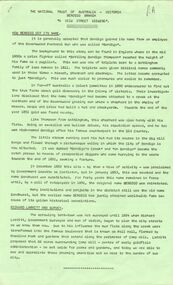
... Ravenswood Pastoral Run... Battling Bendigo Thompson... Messrs Heape and Grice... Richard Larritt... Rosalind Park... The Ogg & Co of Bendigo... A N A Hall... Princess Theatre... Art Gallery... Alexandra Fountain... Princess Alexandra... Edward VII... W C Vahland... Former Bank of New South Wales... The C B C of Sydney (Former Bank of Victoria)... State Register of Historic Buildings... The Old Post Office (Now Sandhurst Trustees)... Former Union Bank (Later A N Z View Street Branch)... Bendigo Branch of the National Trust... Temperance Hall... Vahland and Getzschmann... James Blair... Dr Harry Atkinson... The Masonic Hall and Temple... The Bendigo Fire Station...BENDIGO History view street A View Street Viewing How Bendigo Got Its Name Ravenswood Pastoral Run Battling Bendigo Thompson Messrs Heape and Grice Richard Larritt Rosalind Park The Ogg & Co of Bendigo A N A Hall Princess Theatre Art Gallery Alexandra Fountain Princess Alexandra Edward VII W C Vahland Former Bank of New South Wales The C B C of Sydney (Former Bank of Victoria) State Register of Historic Buildings The Old Post Office (Now Sandhurst Trustees) Former Union Bank (Later A N Z View Street Branch) Bendigo Branch of the National Trust Temperance Hall Vahland and Getzschmann James Blair Dr Harry Atkinson The Masonic Hall and Temple The Bendigo Fire Station William Beebe Denderah (Now called Coolock House) Convent of Mercy Sir George V Lansell The Bendigo Advertiser George Lansell Snr Fortuna A H Q Survey Malmo Carl Van Damme Residence No 10 Valentine Street Brick Residence 282 View Street Dudley House Bendigo Branch of The Royal Historical Society Wm Honeybone Bendigo Sports Centre Five typed, green pages of the history of View Street and its buildings and How Bendigo got Its Name. ...Five typed, green pages of the history of View Street and its buildings and How Bendigo got Its Name. Some of the buildings are described. Unsigned. Notes forwarded to BHS from Dymocks booksellers, Alice Plaza, Alice Springs.bendigo, history, view street, a view street viewing, how bendigo got its name, ravenswood pastoral run, battling bendigo thompson, messrs heape and grice, richard larritt, rosalind park, the ogg & co of bendigo, a n a hall, princess theatre, art gallery, alexandra fountain, princess alexandra, edward vii, w c vahland, former bank of new south wales, the c b c of sydney (former bank of victoria), state register of historic buildings, the old post office (now sandhurst trustees), former union bank (later a n z view street branch), bendigo branch of the national trust, temperance hall, vahland and getzschmann, james blair, dr harry atkinson, the masonic hall and temple, the bendigo fire station, william beebe, denderah (now called coolock house), convent of mercy, sir george v lansell, the bendigo advertiser, george lansell snr, fortuna, a h q survey, malmo, carl van damme, residence no 10 valentine street, brick residence 282 view street, dudley house, bendigo branch of the royal historical society, wm honeybone, bendigo sports centre -
 Bendigo Historical Society Inc.
Document - NOTES RELATING TO: RICHARD GRICE
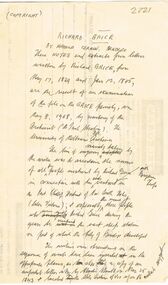
... Ravenswood Estate Notes relating to Richard Grice (by Harold Curnow, Bendigo.) Notes taken from letter from letters written by Richard Grice from May 1839 to January 1845 as a result of examination of the file on the Grice family on May 8, 1968 by courtesy of the Archivist, University of Melbourne Archives. ''Line of enquiry taken by the writer was to ascertain the names of all the people mentioned by Richard Grice especially the names of those people who were with Richard Grice during the years he occupied the vast sheep station ...Notes relating to Richard Grice (by Harold Curnow, Bendigo.) Notes taken from letter from letters written by Richard Grice from May 1839 to January 1845 as a result of examination of the file on the Grice family on May 8, 1968 by courtesy of the Archivist, University of Melbourne Archives. ''Line of enquiry taken by the writer was to ascertain the names of all the people mentioned by Richard Grice especially the names of those people who were with Richard Grice during the years he occupied the vast sheep station in part of which the City of Bendigo developed''. Mention of ''writer's own observations of the sequence of events in the appropriate places'' and ''an important letter written by Martin Maxwell (?unclear), Mar 25, 1843 and located in the State Archives of Vic..'' This document (2821) is handwritten on the back of a telegram form. It is marked in handwriting (Copyright).richard grice, harold curnow, melbourne archives., ravenswood estate -
 Bendigo Historical Society Inc.
Newspaper - Naming of Bendigo
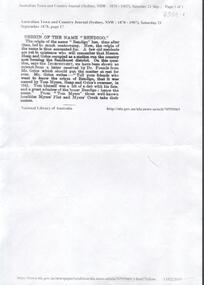
... They set up their head station at what is now Lockwood South on the Bullock Creek and was in the centre of the run. ('Ravenswood...They set up their head station at what is now Lockwood South on the Bullock Creek and was in the centre of the run. ('Ravenswood ...Benjamin Heape and Richard Grice, with Charles Sherratt occupied a run of about 118,900 acres, called the Mount Alexander North Run. They set up their head station at what is now Lockwood South on the Bullock Creek and was in the centre of the run. ('Ravenswood Run 1839 - 2002', Rita Hull)One page photocopy of newspaper article 'Australian Town and Country Journal (Sydney 1870 - 1907) Saturday 21st September, 1878, page 17: article headline ' Origin of the name Bendigo', regarding a letter from Mr. Grice stating that Bendigo was named by Tom Myers, Heap and Grice's overseer. ravenswood run, heape and grice, sherratt, bendigo, origin of bendigo name
