
Showing 192 items matching " record keeping"
-
 National Wool Museum
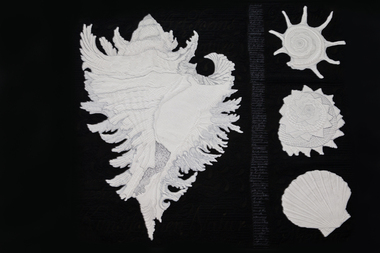
Quilt, The Art of Record Keeping, 2015
... The Art of Record Keeping...Artist statement: "The Art of Record Keeping" pays homage to the work of Ernst Haeckel, German zoologist and evolutionist from the late 1800s. ...Artist statement: "The Art of Record Keeping" pays homage to the work of Ernst Haeckel, German zoologist and evolutionist from the late 1800s. ...Winner of 2015 Expressions: the Wool Quilt PRize. Created by Lisa Davis. Artist statement: "The Art of Record Keeping" pays homage to the work of Ernst Haeckel, German zoologist and evolutionist from the late 1800s. Raw edge machine applique and intricate quilting combine to create texture and detail reminiscent of Haeckel's illustrations. Including parallel lines in the quilting echoes the idea of documentation"Black wool quilt with white wool shapes -
 Flagstaff Hill Maritime Museum and Village
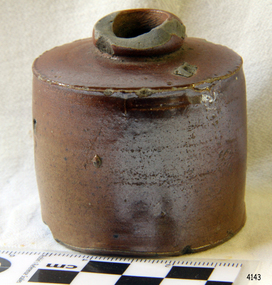
Container - Ink Bottle, 19th to early-20th century
... ...record keeping...This ink well is historically significant as it represents methods of hand written communication that were still common up until the mid-20th century, when fountain pens and ballpoint pens took over in popularity and convenience. flagstaff hill warrnambool shipwreck coast flagstaff hill maritime museum flagstaff hill maritime village maritime museum great ocean road shipwreck artefact writing equipment writing accessory office equipment stationery domestic stoneware clay ceramic pottery ink well inkwell ink bottle penny ink well nib pen dip pen ink hand writing record keeping household business vintage blotting paper dwarf bottle Ink bottle or ink well, sometimes called a Penny Ink Well. ...This design of ink bottle or ink well was commonly referred to as a ‘penny ink well’ because it was very inexpensive to produce. It is also known as a dwarf bottle. Pen and ink has been in use for hand writing from about the seventh century up until the mid-20th century. Up until around the mid-19th century a quill pen made from a bird’s feather was used. In the 1850s the steel point pen was invented and could be manufactured on machines in large quantities. In the 1880s a successful portable fountain pen was designed, giving a smooth flowing ink and ease of use. Ink wells, used with steel nib dip pens, were commonly used up until the mid-20th century. The pens only held a small amount of ink so users had to frequently dip the nib of the pen into an ink well for more ink. Hand writing with pen and ink left wet writing on the paper, so blotting paper was carefully used to absorb the excess ink and prevent smudging. Ink could be purchased, ready to use, or in the powdered form, which needed to be mixed with water. After the invention of fountain pens, which had a reservoir of ink, and then ballpoint pens, which also had ink that flowed freely, the dip pen was slowly replaced. However, artisans continue to use nib pens to create beautiful calligraphy.This ink well is historically significant as it represents methods of hand written communication that were still common up until the mid-20th century, when fountain pens and ballpoint pens took over in popularity and convenience.Ink bottle or ink well, sometimes called a Penny Ink Well. Cylindrical body, salt-glazed, brown ceramic stoneware bottle, handmade. Stoneware bottle. flagstaff hill, warrnambool, shipwreck coast, flagstaff hill maritime museum, flagstaff hill maritime village, maritime museum, great ocean road, shipwreck artefact, writing equipment, writing accessory, office equipment, stationery, domestic, stoneware, clay, ceramic, pottery, ink well, inkwell, ink bottle, penny ink well, nib pen, dip pen, ink, hand writing, record keeping, household, business, vintage, blotting paper, dwarf bottle -
 Blacksmith's Cottage and Forge
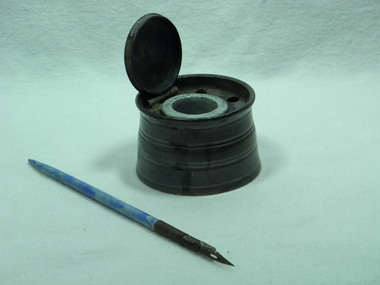
Ink-well, ceramic insert, steel-nib pen
... ...record keeping...This ink-well was used in the Bacchus Marsh Court House, possibly for book-keeping and/or for court records. This type of ink-well and pen were in use everywhere in schools, businesses, courts, etc before the invention of the type-writer and the ball-point pen. ...Of local significance in the history of the town of Bacchus Marsh. ink ink well hand writing record keeping pens nibs clerical work court records Indecipherable imprint on bottom of pot, possibly machine markings. ...This ink-well was used in the Bacchus Marsh Court House, possibly for book-keeping and/or for court records. This type of ink-well and pen were in use everywhere in schools, businesses, courts, etc before the invention of the type-writer and the ball-point pen. Clerks were usually male and a good copperplate hand-writing was admired. Ink was often mixed by hand used a powdered ink mixed with water.Of local significance in the history of the town of Bacchus Marsh.Round pewter ink-well, with hinged lid and ceramic insert. Five round holes pierced in inner rim of metal to hold pens. Two ribbed bands around exterior of pot. Two bands indented around top of lid. Insert designed to hold ink. Pen with marbled blue handle, metal nib holder and metal nib.Indecipherable imprint on bottom of pot, possibly machine markings. Illegible written marks on side of pewter pot. Ceramic insert marked on side and bottom by red and black ink.ink, ink well, hand writing, record keeping, pens, nibs, clerical work, court records -
 Federation University Historical Collection
Book, McGraw Hill Book Company Inc, Instructional Strategies for Secondary School Physical Education, 2001
... ...record keeping...physical education education teaching coach public relations stress characterists of children psychomotor strategies cignitive learning cognitive strategies social learning curriculum lesson plans teaching styles fitness movement classroom management record keeping discipline Soft covered book with an image of 4 students playing soccer. ...Soft covered book with an image of 4 students playing soccer.physical education, education, teaching, coach, public relations, stress, characterists of children, psychomotor strategies, cignitive learning, cognitive strategies, social learning, curriculum, lesson plans, teaching styles, fitness, movement, classroom management, record keeping, discipline -
Federation University Historical Collection
Book, Ballarat School of Mines Proposed New Programs for 1979, 1979
... ...record keeping for small businesses...Ballarat School of Mines is a predecessor institution of Federation University Australia. ballarat school of mines courses electric motor control electrical drafting camping and caravan park managers course child care record keeping for small businesses introduction to sheetmetal return to study Yellow soft covered report with proposed new programs for 1979 at the Ballarat School of Mines. ...Ballarat School of Mines is a predecessor institution of Federation University Australia. Yellow soft covered report with proposed new programs for 1979 at the Ballarat School of Mines. ballarat school of mines, courses, electric motor control, electrical drafting, camping and caravan park managers course, child care, record keeping for small businesses, introduction to sheetmetal, return to study -
 Federation University Historical Collection
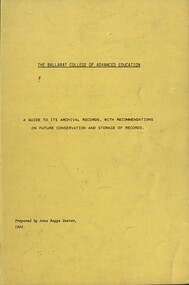
Report, Anne Beggs Sunter, A Guide to Archival Records at Ballarat College of Advanced Education, 1983
... ...record keeping...Archives ballarat college of advanced education record keeping historical collection museum Anne Beggs Sunter Yellow covered report with recommendations on future conservaton and storage of records at the Ballarat College of Advanced Education (later Federation University). ...Yellow covered report with recommendations on future conservaton and storage of records at the Ballarat College of Advanced Education (later Federation University).archives, ballarat college of advanced education, record keeping, historical collection, museum, anne beggs sunter -
 Flagstaff Hill Maritime Museum and Village
Container - Ink Bottle, 1890s to 1902
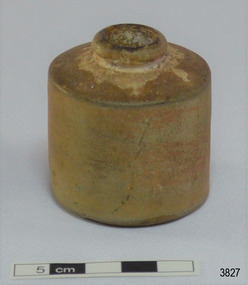
... ...record keeping...It is valuable for an insight into Victorian era of shipping and maritime history. flagstaff hill warrnambool flagstaff hill maritime museum maritime museum shipwreck coast flagstaff hill maritime village great ocean road john chance inverlochy scotland captain e.r. kendrick melbourne tramway company tramway cable ingoldsby reef point addis anglesea thompson’s creek barwon heads ink bottle writing equipment writing accessory office equipment stationery domestic stoneware clay ceramic pottery ink well inkwell penny ink well nib pen dip pen ink hand writing record keeping household business vintage blotting paper dwarf ink Ink bottle or ink well; cylindrical shaped, salt-glazed, mid-brown ceramic bottle. ...This design of ink bottle or ink well was commonly referred to as a ‘penny ink well’ because it was very inexpensive to produce. It is also known as a dwarf ink bottle. It was recovered from the wreck of the 1895-1902 ship Inverlochy and is part of the John Chance Collection. Pen and ink has been in use for hand writing from about the seventh century up until the mid-20th century. Up until around the mid-19th century a quill pen made from a bird’s feather was used. In the 1850s the steel point pen was invented and could be manufactured on machines in large quantities. In the 1880s a successful portable fountain pen was designed, giving a smooth flowing ink and ease of use. Ink wells, used with steel nib dip pens, were commonly used up until the mid-20th century. The pens only held a small amount of ink so users had to frequently dip the nib of the pen into an ink well for more ink. Hand writing with pen and ink left wet writing on the paper, so blotting paper was carefully used to absorb the excess ink and prevent smudging. Ink could be purchased, ready to use, or in the powdered form, which needed to be mixed with water. After the invention of fountain pens, which had a reservoir of ink, and then ballpoint pens, which also had ink that flowed freely, the dip pen was slowly replaced. However, artisans continue to use nib pens to create beautiful calligraphy. INVERLOCHY 1895-1902 - The Inverlochy was a steel sailing barque built in Scotland in 1895 for international trade. In 1902 the Inverlochy left Liverpool under the command of Captain E.R. Kendrick. There were 21 officers and crew and the captain’s wife Mrs Kendrick, on board, bound for Australia with cargo that included tools, chemicals, liquor (beer, whisky, stout, rum, and brandy), steel, iron, wire netting, hoop iron, tinplate and pig iron), and steel wire for the Melbourne Tramway Company, tiles, soap, soft goods and earthenware. On December 18 almost at their destination, the Inverlochy ran aground on Ingoldsby Reef at Point Addis, near Anglesea. The crew and passengers left the ship via lifeboat and landed at Thompson’s Creek, then walked about 20 kilometres to Barwon Heads. Salvagers were interested in the 10 miles of cable in the hold. Mrs Kendrick’s ‘high grade’ bicycle was amongst the items salvaged but she lost her jewellery and two pianos. By February 1903 the ship had broken up and objects such as bottles and casks of liquor were washed ashore. Bad weather shook the wreck in June 1903, causing the ship’s spars and figurehead to be washed ashore. This ink bottle is historically significant as it represents methods of hand written communication that were still common up until the mid-20th century, when fountain pens and ballpoint pens took over in popularity and convenience. The Ink bottle also has significant as it was recovered by John Chance, a diver from the wreck of the Inverlochy in the late 1960s to early 1970s. Items that come from several wrecks along Victoria's coast have since been donated to the Flagstaff Hill Maritime Village’s museum collection by his family, illustrating this item’s level of historical value. This Ink bottle is significant because of its historical connection to the barque Inverlochy, which is an example of a commercial international steel sailing barque and is listed on the Victorian Heritage Database VHR S338. The Inverlochy is significant for its cargo, which is a snapshot of the kind of goods imported into Australia at the turn of the 19th century, including cable for the Melbourne Tramway Company. The wreck of the Inverlochy is important as an accessible dive site that shows the remains of a large international trading vessel and its contents. It is valuable for an insight into Victorian era of shipping and maritime history.Ink bottle or ink well; cylindrical shaped, salt-glazed, mid-brown ceramic bottle. It has a small round mouth, rounded lip that extend past the short neck, wide shoulders, straight sides, flat bottom. Handmade. Also called a Penny Ink Well.flagstaff hill, warrnambool, flagstaff hill maritime museum, maritime museum, shipwreck coast, flagstaff hill maritime village, great ocean road, john chance, inverlochy, scotland, captain e.r. kendrick, melbourne tramway company, tramway cable, ingoldsby reef, point addis, anglesea, thompson’s creek, barwon heads, ink bottle, writing equipment, writing accessory, office equipment, stationery, domestic, stoneware, clay, ceramic, pottery, ink well, inkwell, penny ink well, nib pen, dip pen, ink, hand writing, record keeping, household, business, vintage, blotting paper, dwarf ink -
 Flagstaff Hill Maritime Museum and Village
Container - Ink Bottle, 1890s to 1902
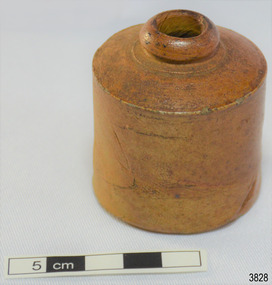
... ...record keeping...It is valuable for an insight into Victorian era of shipping and maritime history. flagstaff hill warrnambool flagstaff hill maritime museum maritime museum shipwreck coast flagstaff hill maritime village great ocean road john chance inverlochy scotland captain e.r. kendrick melbourne tramway company tramway cable ingoldsby reef point addis anglesea thompson’s creek barwon heads ink bottle writing equipment writing accessory office equipment stationery domestic stoneware clay ceramic pottery ink well inkwell penny ink well nib pen dip pen ink hand writing record keeping household business vintage blotting paper dwarf ink Ink bottle, glazed, prange-brown ceramic cylinder, ring of clay on top for lip, narrow mouth, very short neck on wide shoulder that reaches out to edge of of straight-sided body, flat base. ...This design of ink bottle or ink well was commonly referred to as a ‘penny ink well’ because it was very inexpensive to produce. It is also known as a dwarf bottle. It was recovered from the wreck of the 1895-1902 ship Inverlochy and is part of the John Chance Collection. Pen and ink has been in use for hand writing from about the seventh century up until the mid-20th century. Up until around the mid-19th century a quill pen made from a bird’s feather was used. In the 1850s the steel point pen was invented and could be manufactured on machines in large quantities. In the 1880s a successful portable fountain pen was designed, giving a smooth flowing ink and ease of use. Ink wells, used with steel nib dip pens, were commonly used up until the mid-20th century. The pens only held a small amount of ink so users had to frequently dip the nib of the pen into an ink well for more ink. Hand writing with pen and ink left wet writing on the paper, so blotting paper was carefully used to absorb the excess ink and prevent smudging. Ink could be purchased, ready to use, or in the powdered form, which needed to be mixed with water. After the invention of fountain pens, which had a reservoir of ink, and then ballpoint pens, which also had ink that flowed freely, the dip pen was slowly replaced. However, artisans continue to use nib pens to create beautiful calligraphy. INVERLOCHY 1895-1902 - The Inverlochy was a steel sailing barque built in Scotland in 1895 for international trade. In 1902 the Inverlochy left Liverpool under the command of Captain E.R. Kendrick. There were 21 officers and crew and the captain’s wife Mrs Kendrick, on board, bound for Australia with cargo that included tools, chemicals, liquor (beer, whisky, stout, rum, and brandy), steel, iron, wire netting, hoop iron, tinplate and pig iron), and steel wire for the Melbourne Tramway Company, tiles, soap, soft goods and earthenware. On December 18 almost at their destination, the Inverlochy ran aground on Ingoldsby Reef at Point Addis, near Anglesea. The crew and passengers left the ship via lifeboat and landed at Thompson’s Creek, then walked about 20 kilometres to Barwon Heads. Salvagers were interested in the 10 miles of cable in the hold. Mrs Kendrick’s ‘high grade’ bicycle was amongst the items salvaged but she lost her jewellery and two pianos. By February 1903 the ship had broken up and objects such as bottles and casks of liquor were washed ashore. Bad weather shook the wreck in June 1903, causing the ship’s spars and figurehead to be washed ashore. This ink bottle is historically significant as it represents methods of hand written communication that were still common up until the mid-20th century, when fountain pens and ballpoint pens took over in popularity and convenience. The Ink bottle also has significant as it was recovered by John Chance, a diver from the wreck of the Inverlochy in the late 1960s to early 1970s. Items that come from several wrecks along Victoria's coast have since been donated to the Flagstaff Hill Maritime Village’s museum collection by his family, illustrating this item’s level of historical value. This Ink bottle is significant because of its historical connection to the barque Inverlochy, which is an example of a commercial international steel sailing barque and is listed on the Victorian Heritage Database VHR S338. The Inverlochy is significant for its cargo, which is a snapshot of the kind of goods imported into Australia at the turn of the 19th century, including cable for the Melbourne Tramway Company. The wreck of the Inverlochy is important as an accessible dive site that shows the remains of a large international trading vessel and its contents. It is valuable for an insight into Victorian era of shipping and maritime history. Ink bottle, glazed, prange-brown ceramic cylinder, ring of clay on top for lip, narrow mouth, very short neck on wide shoulder that reaches out to edge of of straight-sided body, flat base. On the shoulder, close to the neck, are concentric lines in the clay. There are dark areas around the lip and mouth opening. The clay appears to have a fold line on its body. The material has flecks of darker material in it. Sediment around shoulder. Handmade. Also called a Penny Ink Well.flagstaff hill, warrnambool, flagstaff hill maritime museum, maritime museum, shipwreck coast, flagstaff hill maritime village, great ocean road, john chance, inverlochy, scotland, captain e.r. kendrick, melbourne tramway company, tramway cable, ingoldsby reef, point addis, anglesea, thompson’s creek, barwon heads, ink bottle, writing equipment, writing accessory, office equipment, stationery, domestic, stoneware, clay, ceramic, pottery, ink well, inkwell, penny ink well, nib pen, dip pen, ink, hand writing, record keeping, household, business, vintage, blotting paper, dwarf ink -
 Flagstaff Hill Maritime Museum and Village
Container - Ink Bottles, Caldwell’s Ink Factory, Early 20th century
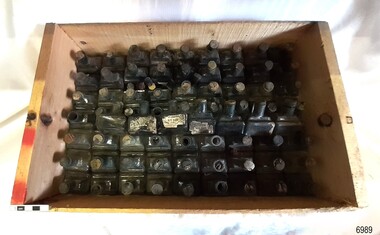
... ...record keeping...Flagstaff Hill Warrnambool Maritime Village Maritime Museum Shipwreck coast Great Ocean Road Ink nib pen writing ink writing copying banks lawyers commerce student permanent ink Flo-Eesi blue black ink stationery record keeping handwriting writing equipment writing accessory office supply cottage bottle boat bottle mouth-blown bottle two-part mould sheer-lip bottle burst-lip cork seal F R Caldwell Caldwell’s Ink Company Albert Park South Melbourne inkstands stencil ink copy ink Quicksticker Zac cough mixture Printed on label; “CALDWELL FLO-EESI BLUE BLACK INK” “ - - - - “ Printed script signature “F.R. ...This crate of bottles may have come from a wholesaler, business, stationer or school. The design of the bottles is sometimes called a ‘cottage’ or ‘boat’ shape. Each of the 70 Caldwell’s handmade glass ink bottles was mouth-blown into a two-piece mould, a method often used in the mid-to-late 19th century. The glass blower burst the bottle off the end of his blowpipe with a tool, leaving an uneven mouth and sharp edge on the bottle, which was usually filed. The bottle was then filled with ink and sealed with a cork. More expensive bottles would have a lip added, which was more time-consuming and costly to produce. The capacity for a bottle such as this was about 3 ½ oz (ounces) equal to about 100 ml. Pen and ink have been in use for handwriting since about the seventh century. A quill pen made from a bird’s feather was used up until around the mid-19th century. In the 1850s a steel point nib for the dip pen was invented and could be manufactured on machines in large quantities. The nis only held a small amount of ink so users had to frequently dip the nib into an ink well for more ink. Handwriting left wet ink on the paper, so the blotting paper was carefully used to absorb the excess ink and prevent smudging. Ink could be purchased as a ready-to-use liquid or in powdered form, which needed to be mixed with water. In the 1880s a successful, portable fountain pen gave smooth-flowing ink and was easy to use. In the mid-20th century, the modern ballpoint pen was readily available and inexpensive, so the fountain pen lost its popularity. However, artisans continue to use nib pens to create beautiful calligraphy. Caldwell’s Ink Co. – F.R. Caldwell established Caldwell’s Ink Company in Australia around 1902. In Victoria, he operated from a factory at Victoria Avenue, Albert Park, until about 1911, then from Yarra Bank Road in South Melbourne. Newspaper offices were appointed as agencies to sell his inks, for example, in 1904 the New Zealand Evening Star sold Caldwell’s Flo-Eesi blue black ink in various bottle sizes, and Murchison Advocate (Victoria) stocked Caldwell’s ink in crimson, green, blue black, violet, and blue. Caldwell’s ink was stated to be “non-corrosive and unaffected by steel pens”. A motto used in advertising in 1904-1908 reads ‘Makes Writing a Pleasure’. Stationers stocked Caldwell’s products and hawkers sold Caldwell’s ink stands from door to door in Sydney in the 1910s and 1920s. In 1911 Caldwell promised cash for returned ink bottles and warned of prosecution for anyone found refilling his bottles. Caldwell’s Ink Stands were given as gifts. The company encouraged all forms of writing with their Australian-made Flo-Eesi writing inks and bottles at their impressive booth in the ‘All Australian Exhibition’ in 1913. It advertised its other products, which included Caldwell’s Gum, Caldwell’s Stencil Ink (copy ink) and Caldwell’s Quicksticker as well as Caldwell’s ‘Zac’ Cough Mixture. Caldwell stated in a 1920 article that his inks were made from a formula that was over a century old, and were scientifically tested and quality controlled. The formula included gallic and tannic acids and high-quality dyes to ensure that they did not fade. They were “free from all injurious chemicals”. The permanent quality of the ink was important for legal reasons, particularly to banks, accountants, commerce, municipal councils and lawyers. The Caldwell’s Ink Company also exported crates of its ink bottles and ink stands overseas. Newspaper advertisements can be found for Caldwell’s Ink Company up until 1934 when the company said they were the Best in the business for 40 years.This large collection of similar ink bottles is of particular significance as the bottles have come from the same source, most have their original corks and some retain their original labels, which is rare. The method of manufacture of these bottles is also representative of a 19th-century handcraft industry that is now been largely replaced by mass production. The bottles and their contents are of state significance for being produced by an early Melbourne industry and exported overseas. This case of ink bottles is historically significant as it represents methods of handwritten communication that were still common up until the mid-20th century when fountain pens and modern ballpoint pens became popular and convenient and typewriters were becoming part of standard office equipment.Ink bottles in a wooden crate; 70 rectangular, hand-blown clear glass ink bottles. They have side seams, uneven thickness, especially at the bases, and rough, burst-off mouths. The shoulders on the long sides have horizontal grooves used for pen rests. The bottles vary; some have labels, some contain remnants of blue-black ink, and many have their original corks. The glass has bubbles and imperfections. The remnants of printed labels are on white paper with a swirly border and black text. The bottles contained Caldwell’s blend of blue black ‘Flo-Eesi’ ink.Printed on label; “CALDWELL FLO-EESI BLUE BLACK INK” “ - - - - “ Printed script signature “F.R. Caldwell”flagstaff hill, warrnambool, maritime village, maritime museum, shipwreck coast, great ocean road, ink, nib pen, writing ink, writing, copying, banks, lawyers, commerce, student, permanent ink, flo-eesi, blue black ink, stationery, record keeping, handwriting, writing equipment, writing accessory, office supply, cottage bottle, boat bottle, mouth-blown bottle, two-part mould, sheer-lip bottle, burst-lip, cork seal, f r caldwell, caldwell’s ink company, albert park, south melbourne, inkstands, stencil ink, copy ink, quicksticker, zac cough mixture -
 Flagstaff Hill Maritime Museum and Village
Container - Ink Bottle, Caldwell’s Ink Factory, Late 19th to early 20th centuries
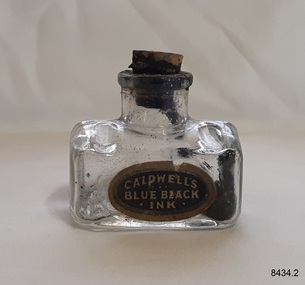
... ...record keeping...Flagstaff Hill Warrnambool Maritime Village Maritime Museum Shipwreck coast Great Ocean Road Ink nib pen writing ink writing copying banks lawyers commerce student permanent ink blue black ink stationery record keeping handwriting writing equipment writing accessory office supply cottage bottle boat bottle mouth-blown bottle cork seal F R Caldwell Caldwell’s Ink Company Albert Park South Melbourne inkstands stencil ink copy ink Quicksticker Zac cough mixture three part mould Cauldwells Cauldwell's Printed on label; “CALDWELL's BLUE BLACK INK” Embossed on the base "CALDWELLS" Ink bottle; rectangular base, hand-blown clear glass bottle with its own cork. ...This design of the bottle is sometimes called a ‘cottage’ or ‘boat’ shape. The Caldwell’s handmade glass ink bottle was mouth-blown into a three-piece mould, a method often used in the late 19th and early 20th centuries, with the maker's name engraved into the mould section for the base. The glass blower would cut the bottle off the end of his blowpipe with a tool and join a mouth onto the top, rolling the lip. The bottle was then filled with ink and sealed with a cork. This method of manufacture was more time-consuming and costly to produce than those made in a simple two-piece mould and 'cracked' off the blowpipe. The capacity for a bottle such as this was about 3 ½ oz (ounces) equal to about 100 ml. This particular bottle is unusual as it has four sloping indents at the corners of the shoulder, most likely for resting a pen with its nib upwards and the handle resting on a flat surface. Most of the bottles made during this era had horizontal pen rests that were indented into both of the long sides of the shoulder. Pen and ink have been in use for handwriting since about the seventh century. A quill pen made from a bird’s feather was used up until around the mid-19th century. In the 1850s a steel point nib for the dip pen was invented and could be manufactured on machines in large quantities. This only held a small amount of ink so users had to frequently dip the nib into an ink well for more ink. Handwriting left wet ink on the paper, so the blotting paper was carefully used to absorb the excess ink and prevent smudging. Ink could be purchased as a ready-to-use liquid or in powdered form, which needed to be mixed with water. In the 1880s a successful, portable fountain pen gave smooth-flowing ink and was easy to use. In the mid-20th century, the modern ballpoint pen was readily available and inexpensive, so the fountain pen lost its popularity. However, artisans continue to use nib pens to create beautiful calligraphy. Caldwell’s Ink Co. – F.R. Caldwell established Caldwell’s Ink Company in Australia around 1902. In Victoria, he operated from a factory at Victoria Avenue, Albert Park, until about 1911, then from Yarra Bank Road in South Melbourne. Newspaper offices were appointed as agencies to sell his inks, for example, in 1904 the New Zealand Evening Star sold Caldwell’s Flo-Eesi blue black ink in various bottle sizes, and Murchison Advocate (Victoria) stocked Caldwell’s ink in crimson, green, blue black, violet, and blue. Caldwell’s ink was stated to be “non-corrosive and unaffected by steel pens”. A motto used in advertising in 1904-1908 reads ‘Makes Writing a Pleasure’. Stationers stocked Caldwell’s products and hawkers sold Caldwell’s ink stands from door to door in Sydney in the 1910s and 1920s. In 1911 Caldwell promised cash for returned ink bottles and warned of prosecution for anyone found refilling his bottles. Caldwell’s Ink Stands were given as gifts. The company encouraged all forms of writing with their Australian-made Flo-Eesi writing inks and bottles at their impressive booth in the ‘All Australian Exhibition’ in 1913. It advertised its other products, which included Caldwell’s Gum, Caldwell’s Stencil Ink (copy ink) and Caldwell’s Quicksticker as well as Caldwell’s ‘Zac’ Cough Mixture. Caldwell stated in a 1920 article that his inks were made from a formula that was over a century old, and were scientifically tested and quality controlled. The formula included gallic and tannic acids and high-quality dyes to ensure that they did not fade. They were “free from all injurious chemicals”. The permanent quality of the ink was important for legal reasons, particularly to banks, accountants, commerce, municipal councils and lawyers. The Caldwell’s Ink Company also exported crates of its ink bottles and ink stands overseas. Newspaper advertisements can be found for Caldwell’s Ink Company up until 1934 when the company said they were the Best in the business for 40 years.This hand-blown bottle is significant for being the only bottle in our collection with the unusual sloping pen rests on its shoulder. It is also significant for being made in a less common three-piece mould. The method of manufacture is representative of a 19th-century handcraft industry that is now been largely replaced by mass production. The bottle is of state significance for being produced by an early Melbourne industry and exported overseas. This ink bottle is historically significant as it represents methods of handwritten communication that were still common up until the mid-20th century when fountain pens and modern ballpoint pens became popular and convenient and typewriters were becoming part of standard office equipment.Ink bottle; rectangular base, hand-blown clear glass bottle with its own cork. The bottle has side seams from the base to the mouth, an indented base and an applied lip. The corners of the shoulder sides have unusual diagonal grooves that slope down and outwards that may have been used as pen rests. Inside the bottle are remnants of dried blue-black ink. The glass has imperfections and some ripples on the surface. The bottle has an attached oval black label label with gold-brown printed text and border. The base has an embossed inscription. The bottles once contained Caldwell’s blend of blue black ink.Printed on label; “CALDWELL's BLUE BLACK INK” Embossed on the base "CALDWELLS"flagstaff hill, warrnambool, maritime village, maritime museum, shipwreck coast, great ocean road, ink, nib pen, writing ink, writing, copying, banks, lawyers, commerce, student, permanent ink, blue black ink, stationery, record keeping, handwriting, writing equipment, writing accessory, office supply, cottage bottle, boat bottle, mouth-blown bottle, cork seal, f r caldwell, caldwell’s ink company, albert park, south melbourne, inkstands, stencil ink, copy ink, quicksticker, zac cough mixture, three part mould, cauldwells, cauldwell's -
 Flagstaff Hill Maritime Museum and Village
Container - Ink Bottle with pens, Early 20th century
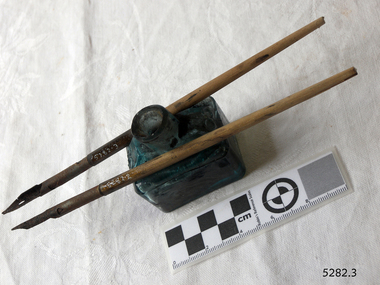
... ...record keeping...Flagstaff Hill Warrnambool Maritime Museum Maritime Village Great Ocean Road Shipwreck Coast Ink nib pen writing ink writing copying banks lawyers commerce student permanent ink stationery record keeping handwriting writing equipment writing accessory office supply cottage bottle boat bottle mouth-blown bottle two-part mould sheer-lip bottle burst-lip cork seal copy ink aqua glass Victorian 'Boat' ink bottle, small rectangular, aqua glass ink bottle with grooves along the long sides for pen rests. ...This handmade, aqua glass ink bottle's design is sometimes called a ‘boat’ shape. The base was mouth-blown into a rectangular mould, evidenced by the lack of seams, the pontil, crease lies and the uneven thickness of the glass. The shoulder section was mouth-blown into a two-piece mould and then cut off from the blowpipe. The lip is sometimes referred to as a 'burst-lip, which was often filed to be smooth. This method of making bottles was often used in the mid-to-late 19th century. The bottle would then be filled with ink and sealed with a cork. More expensive bottles would have a lip added, which was more time-consuming and costly. The capacity for a bottle such as this was about 3 ½ oz (ounces) equal to about 100 ml. Pens are a common item for that period. Pen and ink have been used for handwriting since about the seventh century. A quill pen made from a bird’s feather was used until the mid-19th century. In the 1850s a steel point nib for the dip pen was invented and could be manufactured on machines in large quantities. The nis only held a small amount of ink so users had to frequently dip the nib into an ink well for more ink. Handwriting left wet ink on the paper, so the blotting paper was carefully used to absorb the excess ink and prevent smudging. Ink could be purchased as a ready-to-use liquid or in powdered form, which needed to be mixed with water. In the 1880s a successful, portable fountain pen gave smooth-flowing ink and was easy to use. In the mid-20th century, the modern ballpoint pen was readily available and inexpensive, so the fountain pen lost its popularity. However, artisans continue to use nib pens to create beautiful calligraphy.The ink bottle is of interest, being made of aqua glass rather than the more common clear glass. This set of ink bottles and pens is significant because of the bottle's method of manufacture, which is representative of a 19th-century handcraft industry that has now been largely replaced by mass production. The bottle and pens are historically significant as tools used for handwritten communication until the mid-20th century when fountain pens and modern ballpoint pens became popular and convenient and mechanical typewriters became part of standard office equipment.Victorian 'Boat' ink bottle, small rectangular, aqua glass ink bottle with grooves along the long sides for pen rests. The base has a pontil, no seams, and the glass is uneven in thickness. The shoulder has two side seams and there is a ridge where it is joined onto the base; there are round indents on each of the shoulder, on the short sides, four in all. The mouth has rough edges. The neck leans to one side. The glass has impurities, crease lines and bubbles. There is dried ink in the bottle. Two pens with metal nibs are included with the ink bottle. flagstaff hill, warrnambool, maritime museum, maritime village, great ocean road, shipwreck coast, ink, nib pen, writing ink, writing, copying, banks, lawyers, commerce, student, permanent ink, stationery, record keeping, handwriting, writing equipment, writing accessory, office supply, cottage bottle, boat bottle, mouth-blown bottle, two-part mould, sheer-lip bottle, burst-lip, cork seal, copy ink, aqua glass -
 Flagstaff Hill Maritime Museum and Village
Container - Ink Bottle and Pen, Caldwell’s Ink Factory, Early 20th century
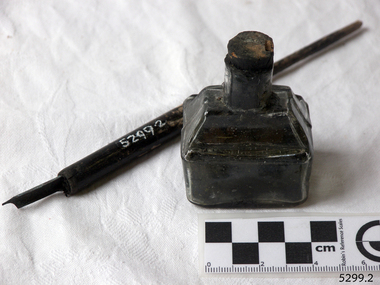
... ...record keeping...Flagstaff Hill Warrnambool Maritime Museum Maritime Village Great Ocean Road Shipwreck Coast Ink nib pen writing ink writing copying banks lawyers commerce student permanent ink Flo-Eesi blue black ink stationery record keeping handwriting writing equipment writing accessory office supply cottage bottle boat bottle mouth-blown bottle two-part mould sheer-lip bottle burst-lip cork seal F R Caldwell Caldwell’s Ink Company Albert Park South Melbourne inkstands stencil ink copy ink Quicksticker Zac cough mixture "Caldwell's Flo-Eesi Blue Black Ink." ...This shaped ink bottle made by Caldwell's is called a 'boat ink bottle'. It was shaped especially to hold a nib pen when the pen was not in use. The design of the bottle is sometimes called a ‘cottage’ or ‘boat’ shape. The Caldwell’s handmade glass ink bottle was mouth-blown into a two-piece mould, a method often used in the mid-to-late 19th century. The glass blower burst the bottle off the end of his blowpipe with a tool, leaving an uneven mouth and sharp edge on the bottle, which was usually filed. The bottle was then filled with ink and sealed with a cork. More expensive bottles would have a lip added, which was more time-consuming and costly to produce. The capacity for a bottle such as this was about 3 ½ oz (ounces) equal to about 100 ml. Pen and ink have been in use for handwriting since about the seventh century. A quill pen made from a bird’s feather was used up until around the mid-19th century. In the 1850s a steel point nib for the dip pen was invented and could be manufactured on machines in large quantities. The nis only held a small amount of ink so users had to frequently dip the nib into an ink well for more ink. Handwriting left wet ink on the paper, so the blotting paper was carefully used to absorb the excess ink and prevent smudging. Ink could be purchased as a ready-to-use liquid or in powdered form, which needed to be mixed with water. In the 1880s a successful, portable fountain pen gave smooth-flowing ink and was easy to use. In the mid-20th century, the modern ballpoint pen was readily available and inexpensive, so the fountain pen lost its popularity. However, artisans continue to use nib pens to create beautiful calligraphy. Caldwell’s Ink Co. – F.R. Caldwell established Caldwell’s Ink Company in Australia around 1902. In Victoria, he operated from a factory at Victoria Avenue, Albert Park, until about 1911, then from Yarra Bank Road in South Melbourne. Newspaper offices were appointed as agencies to sell his inks, for example, in 1904 the New Zealand Evening Star sold Caldwell’s Flo-Eesi blue black ink in various bottle sizes, and Murchison Advocate (Victoria) stocked Caldwell’s ink in crimson, green, blue black, violet, and blue. Caldwell’s ink was stated to be “non-corrosive and unaffected by steel pens”. A motto used in advertising in 1904-1908 reads ‘Makes Writing a Pleasure’. Stationers stocked Caldwell’s products and hawkers sold Caldwell’s ink stands from door to door in Sydney in the 1910s and 1920s. In 1911 Caldwell promised cash for returned ink bottles and warned of prosecution for anyone found refilling his bottles. Caldwell’s Ink Stands were given as gifts. The company encouraged all forms of writing with their Australian-made Flo-Eesi writing inks and bottles at their impressive booth in the ‘All Australian Exhibition’ in 1913. It advertised its other products, which included Caldwell’s Gum, Caldwell’s Stencil Ink (copy ink) and Caldwell’s Quicksticker as well as Caldwell’s ‘Zac’ Cough Mixture. Caldwell stated in a 1920 article that his inks were made from a formula that was over a century old, and were scientifically tested and quality controlled. The formula included gallic and tannic acids and high-quality dyes to ensure that they did not fade. They were “free from all injurious chemicals”. The permanent quality of the ink was important for legal reasons, particularly to banks, accountants, commerce, municipal councils and lawyers. The Caldwell’s Ink Company also exported crates of its ink bottles and ink stands overseas. Newspaper advertisements can be found for Caldwell’s Ink Company up until 1934 when the company said they were the Best in the business for 40 years.This pen and ink bottle set is of significance as the bottle has its original cork and retains remnants of ink, which was made from a recipe that at the time was over 100 years old, according to Caldwell.. The handmade, mould blown method of manufacture is representative of a 19th-century handcraft industry that is now been largely replaced by mass production. The bottle and its contents are of state significance for being produced by an early Melbourne industry and exported overseas. The pen and ink set is historically significant as it represents methods of handwritten communication that were still common up until the mid-20th century when fountain pens and modern ballpoint pens became popular and convenient and typewriters were becoming part of standard office equipment.Victorian boat ink bottle; small rectangular clear glass ink bottle with horizontal grooves made in the glass for resting and holding the pen. The set includes one pen and nib with the bottle and cork. The bottle is made by Caldwell's and contains its Flo-Eesi Blue Black Ink brand."Caldwell's Flo-Eesi Blue Black Ink."flagstaff hill, warrnambool, maritime museum, maritime village, great ocean road, shipwreck coast, ink, nib pen, writing ink, writing, copying, banks, lawyers, commerce, student, permanent ink, flo-eesi, blue black ink, stationery, record keeping, handwriting, writing equipment, writing accessory, office supply, cottage bottle, boat bottle, mouth-blown bottle, two-part mould, sheer-lip bottle, burst-lip, cork seal, f r caldwell, caldwell’s ink company, albert park, south melbourne, inkstands, stencil ink, copy ink, quicksticker, zac cough mixture -
 Flagstaff Hill Maritime Museum and Village
Container - Ink Bottle, Late-19th to early-20th century
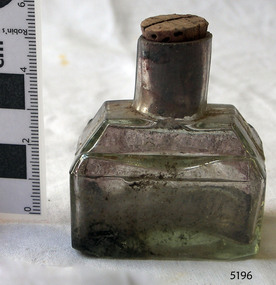
... ...record keeping...Flagstaff Hill Warrnambool Maritime Museum Maritime Village Great Ocean Road Shipwreck Coast Ink nib pen writing ink writing copying banks lawyers commerce student permanent ink stationery record keeping handwriting writing equipment writing accessory office supply cottage bottle boat bottle mouth-blown bottle two-part mould sheer-lip bottle burst-lip cork seal stencil ink copy ink Victorian 'boat' shaped ink bottle; small rectangular clear glass ink bottle with grooves in shoulders for holding pen. ...The design of the bottle is sometimes called a ‘cottage’ or ‘boat’ shape. This handmade glass ink bottle was mouth-blown into a two-piece mould, a method often used in the mid-to-late 19th century. The glass blower burst the bottle off the end of his blowpipe with a tool, leaving an uneven mouth and sharp edge on the bottle, which was usually filed. The bottle was then filled with ink and sealed with a cork. More expensive bottles would have a lip added, which was more time-consuming and costly to produce. The capacity for a bottle such as this was about 3 ½ oz (ounces) equal to about 100 ml. Pen and ink have been in use for handwriting since about the seventh century. A quill pen made from a bird’s feather was used up until around the mid-19th century. In the 1850s a steel point nib for the dip pen was invented and could be manufactured on machines in large quantities. The nis only held a small amount of ink so users had to frequently dip the nib into an ink well for more ink. Handwriting left wet ink on the paper, so the blotting paper was carefully used to absorb the excess ink and prevent smudging. Ink could be purchased as a ready-to-use liquid or in powdered form, which needed to be mixed with water. In the 1880s a successful, portable fountain pen gave smooth-flowing ink and was easy to use. In the mid-20th century, the modern ballpoint pen was readily available and inexpensive, so the fountain pen lost its popularity. However, artisans continue to use nib pens to create beautiful calligraphy.This ink bottle still retains its original cork. The method of manufacture is representative of a 19th-century, handcraft industry that is now largely replaced by mass production. The ink bottle is historically significant as it represents methods of handwritten personal and business communication that were still common up until the mid-20th century when fountain pens and modern ballpoint pens became popular and convenient and typewriters were becoming part of standard office equipment.Victorian 'boat' shaped ink bottle; small rectangular clear glass ink bottle with grooves in shoulders for holding pen. Bottle has side seams and a 'burst-lip'. The bottle retains its cork.flagstaff hill, warrnambool, maritime museum, maritime village, great ocean road, shipwreck coast, ink, nib pen, writing ink, writing, copying, banks, lawyers, commerce, student, permanent ink, stationery, record keeping, handwriting, writing equipment, writing accessory, office supply, cottage bottle, boat bottle, mouth-blown bottle, two-part mould, sheer-lip bottle, burst-lip, cork seal, stencil ink, copy ink -
 Flagstaff Hill Maritime Museum and Village
Container - Ink Bottle, Royal Doulton, Late 19th to early-20th century
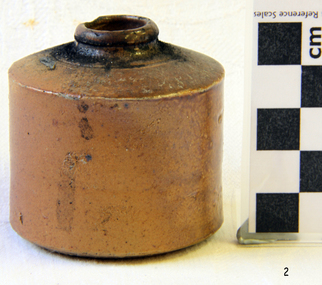
... ...record keeping...This ink well is historically significant as it represents the method of hand written communication that was still common up until the mid-20th century, before fountain pens and ballpoint pens took over in popularity and convenience. flagstaff hill warrnambool shipwreck coast flagstaff hill maritime museum flagstaff hill maritime village great ocean road shipwreck artefact writing equipment writing accessory office equipment stationery domestic stoneware clay ceramic pottery inkwell penny ink well nib pen dip pen ink hand writing record keeping household business vintage blotting paper ink bottle dwarf ink Salt Glazed None Ceramic, salt-glazed, mid-brown ink bottle. ...The Royal Doulton company began as a partnership between John Doulton, Martha Jones, and John Watt was an English ceramic and home accessories manufacturer founded in 1815. Operating originally in Vauxhall, London, later moving to Lambeth, in 1882 it opened a factory in Burslem, Stoke-on-Trent, in the centre of English pottery. The business was specialised in making salt-glazed stoneware articles, including utilitarian or decorative bottles, jugs and jars, much of it intended for inns and pubs. The backbone of the business was a wide range of utilitarian wares, mostly stonewares, including storage jars, tankards and the like, and later extending to pipes for drains, lavatories and other bathroom ceramics. From 1853 to 1902 its wares were marked Doulton & Co., then from 1902, when a royal warrant was given, Royal Doulton. The company always made some more decorative items, initially still mostly stoneware, and from the 1860s the firm made considerable efforts to get a reputation for design, in which it was largely successful, as one of the first British makers of art pottery. Initially, this was done through artistic stoneware's made in Lambeth, but in 1882 the firm bought a Burslem factory, which was mainly intended for making bone China table wares and decorative items. An early utilitarian stoneware item made by a well-known company that specialised in making salt-glazed items that later earned a reputation for making stoneware art objects. This ink well is historically significant as it represents the method of hand written communication that was still common up until the mid-20th century, before fountain pens and ballpoint pens took over in popularity and convenience.Ceramic, salt-glazed, mid-brown ink bottle. It has a small round mouth, rounded lip that extends past neck, wide shoulders, straight sides, flat base. Handmade. The surface is matt. there are flecks of dark brown in the clay. The bottle has marks on the side.Noneflagstaff hill, warrnambool, shipwreck coast, flagstaff hill maritime museum, flagstaff hill maritime village, great ocean road, shipwreck artefact, writing equipment, writing accessory, office equipment, stationery, domestic, stoneware, clay, ceramic, pottery, inkwell, penny ink well, nib pen, dip pen, ink, hand writing, record keeping, household, business, vintage, blotting paper, ink bottle, dwarf ink, salt glazed -
NMIT (Northern Melbourne Institute of TAFE)
Booklet: Cinderella or princess? TAFE amalgamations and records, V.C. Johnson, 1987
... ...Record keeping...TAFE amalgamations Record keeping Archives A4 size 20 page booklet written by Valerie C. ...A4 size 20 page booklet written by Valerie C. Johnson in October 1987.tafe amalgamations, record keeping, archives -
 National Wool Museum
Book - Book of Correspondence, 1960s-1970s
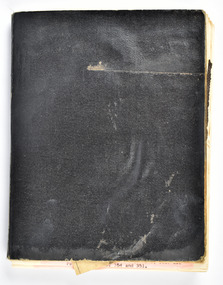
... ...Record Keeping...Wool Victoria Working Life Blankets Correspondence Scrapbook Letters Record Keeping Woollen Mill Collins Bros Mill Pty Ltd Note book with black cover, containing notes typed on pink, green and white paper, cut out and sticky taped into note book. ...Notes relate to blanket design, marketing, retail and production and repeatedly refer to ‘Phillips’. Refers to Physician Blankets, so possibly related to Collins Brothers Mill Pty Ltd. Note book with black cover, containing notes typed on pink, green and white paper, cut out and sticky taped into note book. Also contains some loose newspaper articles and wool samples. wool, victoria, working life, blankets, correspondence, scrapbook, letters, record keeping, woollen mill, collins bros mill pty ltd -
Clunes Museum
Document (Collection) - MINUTE BOOKS, Clunes Free Lending Library et al, FREE LENDING LIBRARY - CLUNES, 1884-1912
... ...record keeping...Administrative and financial records of the United Friendly Society of Clunes and the Clunes Free Lending Library in the late eighteenth and early nineteenth centuries clunes free lending library record keeping australian womens association medical union Nil .1 United Friendly Societies of Clunes Minute Book containing Receipts and Disbursements 1877-1914 .2 Clunes Free Lending Library Letter Book 1912-1921 .3 Clunes Free Lending Library Minute Book 1905-1912 .4 Clunes Free Lending Library Minute Book 1894-1901 .5 Clunes Free Lending Library Minute Book 1884-1893 .6 Clunes Free Lending Library Loans Register .7 Letter to the Secretary, Medical Union, Clunes, with envelope addressed to Mr L Chambers, Medical Committee, Clunes .8 Letter Australian Women's Association , Clunes Branch 2536 dated 23 September 1914 advising that Mr Harden will represent the Branch at the meeting on Thursday September 24th, 1914 FREE LENDING LIBRARY - CLUNES Document MINUTE BOOKS Clunes Free Lending Library United Friendly Society of Clunes ...clunes free lending library, record keeping, australian womens association, medical unionclunes free lending library, record keeping, australian womens association, medical union -
Box Hill Historical Society
Book, Marjorie Morgan et al, Family and Local History : An ordered approach towards publication, 1988
... ...Record keeping...Family history Record keeping Interviewing Presentations Charts A resource book to help you to help yourself keep your research records in order so it will make it easier to publish your findings. ...A resource book to help you to help yourself keep your research records in order so it will make it easier to publish your findings. It also includes interviewing techniques, presentation, identification of photographs, using computers to organise your material.79p.A resource book to help you to help yourself keep your research records in order so it will make it easier to publish your findings. It also includes interviewing techniques, presentation, identification of photographs, using computers to organise your material.family history, record keeping, interviewing, presentations, charts -
Moorabbin Air Museum
Book - Pilot training, Systems Controls
... Record keeping...Pilot training Record keeping Piston powerplants Turbine powerplants Electrical system Interiors General avionics Avionic components & operation Airframe Lesser systems Overview of working of basic aircraft systems, circa 1980 Systems Controls Book Pilot training ...Overview of working of basic aircraft systems, circa 1980non-fictionOverview of working of basic aircraft systems, circa 1980record keeping, piston powerplants, turbine powerplants, electrical system, interiors, general avionics, avionic components & operation, airframe, lesser systems -
Unions Ballarat
Ledger. Political Labor Council of Victoria, Ballarat Branch, March 1911-August 1912
... ...Finance - record keeping...Political Labor Council of Victoria - Ballarat Branch BTLC Ballarat Regional Trades and Labour Council Finance - record keeping Paper ledger - one volume. Ledger. ...The ledger is part of the financial recordkeeping of the Political Labor Council of Victoria, Ballarat Branch. Constitution of the Political Labor Council of Victoria can be found at http://tinyurl.com/politicallabourcouncilvic. It had platforms at federal, state and municipal levels. The state platform includes land policy, financial policy including restriction of public borrowing, reform of parliamentary structure, industrial regulation, free education, support for technical education and adequate pensions.Constitutes part of the history of the Political Labor Council of Victoria. Financial transactions. Paper ledger - one volume.political labor council of victoria - ballarat branch, btlc, ballarat regional trades and labour council, finance - record keeping -
 Musculoskeletal Health Australia (now held by the Glen Eira Historical Society)
Photograph - Solo photo, Circa 1998 to 1999
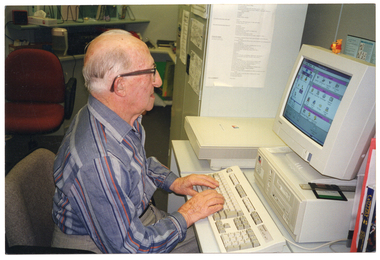
... ... record keeping...A cropped version of this photo appears on page 11 of the 1999 Annual Report, accompanying a report titled "Webiste". arthritis foundation of victoria afv telephone advisory service tas telephone enquiries henry friedman volunteer member data entry database record keeping 1998 [On a yellow sticky note, handwritten in black ink] Volunteer Henry Friedman prepares to enter data ["data" has been crossed out] material records ["records" has been crossed out] into the data base which records enquirries [sic] to the Telephone Advisory Service, also ["also" has been crossed out] [On the same sticky note, handwritten sideways in blue ink] 4 [circled] Colour photo of a man sitting at a computer desk, typing on the keyboard. ...The Arthritis Foundation of Victoria's Telephone Advisory Service (TAS) was staffed by volunteers, and provided information and referral services to members. In this photo, TAS volunteer, Henry Friedman, enters data into a computer. A cropped version of this photo appears on page 11 of the 1999 Annual Report, accompanying a report titled "Webiste".Colour photo of a man sitting at a computer desk, typing on the keyboard. The computer monitor screen is displaying several colourful icons. In the background, there is a tall metal cabinet, an office chair, and a desk against the wall, with some shelving above it.[On a yellow sticky note, handwritten in black ink] Volunteer Henry Friedman prepares to enter data ["data" has been crossed out] material records ["records" has been crossed out] into the data base which records enquirries [sic] to the Telephone Advisory Service, also ["also" has been crossed out] [On the same sticky note, handwritten sideways in blue ink] 4 [circled]arthritis foundation of victoria, afv, telephone advisory service, tas, telephone enquiries, henry friedman, volunteer member, data entry, database, record keeping, 1998 -
 Creswick Campus Historical Collection - University of Melbourne
Document - Kitchen supply records - 1937 - 1957, Victorian School of Forestry
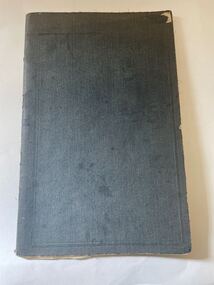
... Record keeping book with quantities of food supplies recorded from 1937 to 1957...This was used by the kitchen staff of the VSF to record food supplies. Record keeping book with quantities of food supplies recorded from 1937 to 1957 Document Kitchen supply records - 1937 - 1957 Victorian School of Forestry ...This was used by the kitchen staff of the VSF to record food supplies.Record keeping book with quantities of food supplies recorded from 1937 to 1957 -
 Sunshine and District Historical Society Incorporated
Film (item) - The New Tax System How To Series Video
... The New Tax System How To Series Incorporating Australian Business Number, Good Record Keeping, Pay As You Go and Business Activity Statement...Business Tax System Overhaul Australian Tax Tax The New Tax System How To Series Incorporating Australian Business Number, Good Record Keeping, Pay As You Go and Business Activity Statement VHS Video Tape Film The New Tax System How To Series Video ...A series of four videos were produced by the Australian Government to help business's & the country's citizens to understand the new taxation system as Australia underwent one of the biggest tax overhauls in its history on 1 July 2000.Australia underwent one of the biggest tax overhauls in its history on 1 July 2000, driven by the Howard Government’s reform package known as A New Tax System (ANTS). The major changes included. 1. Introduction of the Goods and Services Tax (GST) 2. New Personal Income Tax Scales 3. Major Family Payment Reforms 4. Support for Seniors 5. Private Health Insurance Rebate 6. Fringe Benefits Reporting Changes 7. Business Tax System Overhaul The New Tax System How To Series Incorporating Australian Business Number, Good Record Keeping, Pay As You Go and Business Activity Statementaustralian tax, tax -
 Bendigo Historical Society Inc.
Document - DUDLEY HOUSE COLLECTION: OBITUARY, 2020
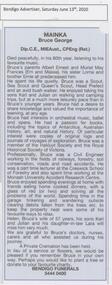
... Bruce was President of the Bendigo Historical Society 2000-2002 and was instrumental in organizing a new committee, establishing procedures and record keeping processes after several decades of neglect....Bruce was President of the Bendigo Historical Society 2000-2002 and was instrumental in organizing a new committee, establishing procedures and record keeping processes after several decades of neglect. ...Document. Obituary for Bruce Mainka, published in the Bendigo Advertiser, Saturday 13 June 2020. Bruce was President of the Bendigo Historical Society 2000-2002 and was instrumental in organizing a new committee, establishing procedures and record keeping processes after several decades of neglect.document, memo, obituary -
University of Melbourne, Burnley Campus Archives
Book - Register, Register of Fruits, 1887
... Given as a record of Cole's variety record keeping in 1887 to the principal of Burnley Horticultural College in 1945....Given as a record of Cole's variety record keeping in 1887 to the principal of Burnley Horticultural College in 1945. register fruits currants almonds figs nectarines peaches apricots cherries plums apples pears 1887 t.h. kneen c.f. cole 1945 provenance remarks Burnley School of Horticulture Inscription, " To T. ...Given as a record of Cole's variety record keeping in 1887 to the principal of Burnley Horticultural College in 1945.Handwritten bound register of fruits (currants, almonds, figs, nectarines, peaches, apricots, cherries, plums, apples, pears) dated March 1887. Includes index, roman numeral numbering id, varieties, labels, time of ripening, from whom obtained and remarks. Given as a record of work in the proving grounds of Royal Horticultural Gardens Burnley to the principal of Burnley Horticultural College in 1945.Inscription, " To T. Kneen with the compliments of C.F. Cole, 18/9/45." register, fruits, currants, almonds, figs, nectarines, peaches, apricots, cherries, plums, apples, pears, 1887, t.h. kneen, c.f. cole, 1945, provenance, remarks, burnley school of horticulture -
Clunes Museum
Administrative record - LEDGER
... Example of financial records held by the State Bank of Victoria prior to automated or digital record keeping systems...Example of financial records held by the State Bank of Victoria prior to automated or digital record keeping systems banking cash book state bank of victoria On front cover - "Transfers & F.S. ...Example of financial records held by the State Bank of Victoria prior to automated or digital record keeping systemsState Bank of Victoria Depositor's Ledger cloth boundOn front cover - "Transfers & F.S. A/C's 1-500"banking, cash book, state bank of victoria -
Clunes Museum
Document - HISTORICAL RECORDS
... .8 WHITE STICKER WITH HANDWRITTEN"HISTORICAL RECORDS FOR SAFE KEEPING...MINERS RIGHTS RECEIPTS TOBACCO LICENCE RECEIPTS POST OFFICE RECEIPTS VICTUALLERS LICENCE .8 WHITE STICKER WITH HANDWRITTEN"HISTORICAL RECORDS FOR SAFE KEEPING .1 PARTICULARS FOR IDENTIFICATION OF PENSIONERS 1823-1834 .2 TOBACCO LICENCES RECEIPT BOOK 1901-1915 .3 PUBLIC ACCOUNTS RECEIPT BOOK 1913-1914 .4 POST OFFICE RECEIPT BOOK 1877-1905 .5 MINERS RIGHT RECEIPT BOOK 1887-1888 .6 MINERS RIGHT RECEIPT BOOK 1898-1899 .7 CERTIFICATION TO AUTHORIZE THE ISSUE OF A VICTUALLER'S LICENSE 1881 .8 CARDBOARD BOX FOR STORING .1 TO .7 Document HISTORICAL RECORDS ....1 PARTICULARS FOR IDENTIFICATION OF PENSIONERS 1823-1834 .2 TOBACCO LICENCES RECEIPT BOOK 1901-1915 .3 PUBLIC ACCOUNTS RECEIPT BOOK 1913-1914 .4 POST OFFICE RECEIPT BOOK 1877-1905 .5 MINERS RIGHT RECEIPT BOOK 1887-1888 .6 MINERS RIGHT RECEIPT BOOK 1898-1899 .7 CERTIFICATION TO AUTHORIZE THE ISSUE OF A VICTUALLER'S LICENSE 1881 .8 CARDBOARD BOX FOR STORING .1 TO .7.8 WHITE STICKER WITH HANDWRITTEN"HISTORICAL RECORDS FOR SAFE KEEPINGminers rights receipts, tobacco licence receipts, post office receipts, victuallers licence -
 Waverley RSL Sub Branch
Identification Tags (Dog Tags)
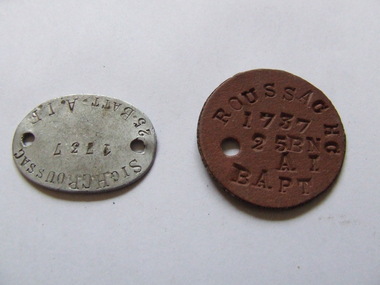
... All soldiers were issued two tags: one to stay with the body and the other to go to the person in charge of the burial for record-keeping purposes...All soldiers were issued two tags: one to stay with the body and the other to go to the person in charge of the burial for record-keeping purposes Rossac Henry Claude 1737 25 Btn....Left Aus 20 08 15 Born India Patna 14 7 1892 Enlisted Queensland Sent to Alexandria Landed Gallipoli 12 10 1915 France Marseille 19 3 16 wia 9 10 17 (France) returned to Aus for discharge (medical) 21 04 18 Awards1914-15 star British War MedalVictory Medal WWII V18817 Enlisted Royal Park served 1939-45 His daughter Mena Roussac also enlisted roussac henry id tags dog tags wwi gallipoli 25 bn. 1st a i f Fibre tag Roussac H C 1737 25 BN AI Bapt The other aluminium Sig. ...Tags were used to identify wounded or deceased soldiers. All soldiers were issued two tags: one to stay with the body and the other to go to the person in charge of the burial for record-keeping purposesRossac Henry Claude 1737 25 Btn....Left Aus 20 08 15 Born India Patna 14 7 1892 Enlisted Queensland Sent to Alexandria Landed Gallipoli 12 10 1915 France Marseille 19 3 16 wia 9 10 17 (France) returned to Aus for discharge (medical) 21 04 18 Awards1914-15 star British War MedalVictory Medal WWII V18817 Enlisted Royal Park served 1939-45 His daughter Mena Roussac also enlisted 2 tID tags for Henry Claude Roussac 1737 Signaller 25 Bn Ist AIF one is round made of brownish fibre board and the other is oval made of aluminiumFibre tag Roussac H C 1737 25 BN AI Bapt The other aluminium Sig. Roussac1737 25 Batt A.I.F.roussac henry, id tags, dog tags wwi, gallipoli, 25 bn. 1st a i f -
 Bendigo Historical Society Inc.
Administrative record - Arthur Allsop Collection: Race record books
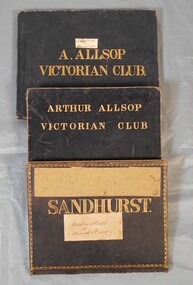
... All books have ruled columns for record keeping. The three books cover the period January 1982 - December 1893, January 1892 - July 1894 and October 1888 to March 1889. ...All books have ruled columns for record keeping. The three books cover the period January 1982 - December 1893, January 1892 - July 1894 and October 1888 to March 1889. ...Arthur Allsop went into the business office at Bendigo (Vic.) of the late Mr. Alfred Joseph. He later operated as an independent bookmaker. Arthur Allsop was a partner in the firm of Kelly and Allsop and was involved in mining and speculation in Bendigo. He was elected as a member of the Bendigo Stock Exchange in 1906. He started his athletic career at picnic sports and was a fine athlete winning many foot races. For 15 years he acted as secretary of the Sandhurst City Fire Brigade, he was captain of the Bendigo lacrosse team. He was a fair cricketer, and played against the English and Australian Elevens. He played football, and acted as secretary to the Bendigo Football Club. In later years he played bowls and captained pennant teams. He was a Past District- Grandmaster in the M.U.I.O.O.F. Allsop eventually moved to Melbourne and then Sydney working as a bookmaker. He died in Sydney in 1921. His wife Belle died in Bendigo in 1914 and is buried in the Bendigo Cemetery.Three record books used by Bookmaker Arthur Allsop. Dark coloured leather covers. One has SANDHURST printed in gold lettering, one has A ALLSOP VICTORIAN CLUB and one has ARTHUR ALLSOP VICTORIAN CLUB. All books have ruled columns for record keeping. The three books cover the period January 1982 - December 1893, January 1892 - July 1894 and October 1888 to March 1889. The books contain handwritten records of races across Victoria including names of horses and betting records.horse racing, bookmaker, arthur allsop, kelly and allsop -
 Melbourne Legacy
Document, Comments on Presidential Year 1987 - BR Wilson, 1988
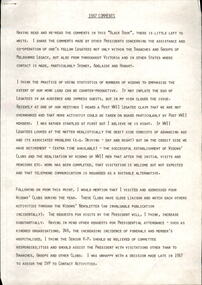
... He included observations based on his year as President. He felt record keeping was an cost burden. The document is dated 29 February 1988 as the presidential year ran from March to the following February. ...He included observations based on his year as President. He felt record keeping was an cost burden. The document is dated 29 February 1988 as the presidential year ran from March to the following February. ...The President in 1987 was Bruce Wilson. He included observations based on his year as President. He felt record keeping was an cost burden. The document is dated 29 February 1988 as the presidential year ran from March to the following February. Was in a binder of documents that is passed from an outgoing President to the incoming President. It is primarily from the 1930s to 1990s. Most documents are being catalogued separately.A record of the ideas of the President in the 1980s.White foolscap paper x 2 pages with black type of the President's comments in 1987.Signed in blue pen 'Bruce Wilson 29/2/88'.presidents, bruce wilson
