
Showing 579 items matching " south europe"
-
 Ballarat Tramway Museum
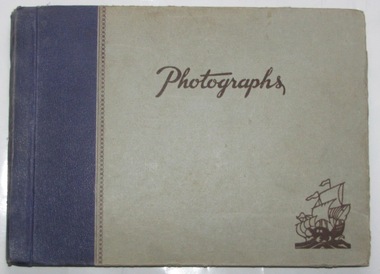
Album - Photo Album, Wal Jack, United Kingdom, South Africa and Europe, 1950's
... United Kingdom, South Africa and Europe...United Kingdom, South Africa and Europe Album Photo Album Wal Jack ...Compiled from photos sent to Wal Jack from various correspondents of various locations and lines within Liverpool, Edinburgh, Glasgow, Manchester, Leeds, London, Birmingham, Bristol, Leeds, Coventry, Bath, Sheffield, Plymouth, Portsmouth, Newcastle, Gateshead, Sunderland, Aberdeen, Dundee, Belfast, Bolton, Blackpool, Johannesburg, Calcutta, Durban, Pretoria, java, Heliopolis, Cairo and Cape Town. Each photo has been scanned and detailed. Has a strong association with Wal Jack and tramway developments until 1964 and given their extent it is of particular significance. Features United Kingdom and South African trams.Grey covered photograph album with word "Photographs on front cover, with large blue band binding, light brown paper inside covers holding some 27 sheets of card on which photos have been mounted using photo corners of various types, captions in white ink. Has some 176 black and white photographs and some colour photographs / postcards. Includes some loose illustrations of trams cut from magazines etc. trams, tramways, uk trams, south africa -
 Embroiderers Guild, Victoria
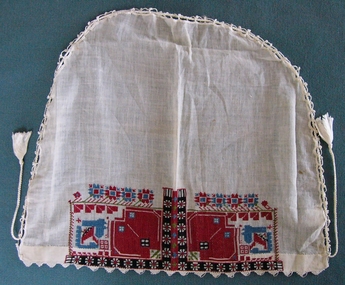
Headwear - Southern European Embroidered Cap, Mid 19th Century
... ... South Europe...Embroidery Caps Cross stitch Mid 19th Century South Europe Fine cream cotton with a decorative panel of half cross and cross stitches in red, blue, black and green. ...Fine cream cotton with a decorative panel of half cross and cross stitches in red, blue, black and green. Front of the cap is finished with a simple Armenian edge. Back has a draw string threaded through a row of buttonhole loops.embroidery, caps, cross stitch, mid 19th century, south europe -
 Whitehorse Historical Society Inc.
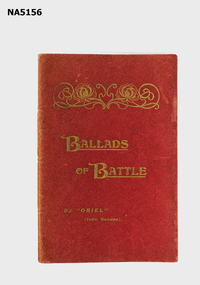
Book - Song book, "Ballards of Battle", 6th June 1900
... Songs relating to Australian troops in South Africa & Europe From the Collection of Charles Henry Honybun...Songs relating to Australian troops in South Africa & Europe From the Collection of Charles Henry Honybun Honybun Charles Song book WW1 Ballards of Battle by 'Oriel' John Sands A red coloured book containing ballads "Ballards of Battle" Book Song book ...Songs relating to Australian troops in South Africa & Europe From the Collection of Charles Henry HonybunA red coloured book containing balladsBallards of Battle by 'Oriel' John Sandshonybun charles, song book, ww1 -
 Victorian Aboriginal Corporation for Languages
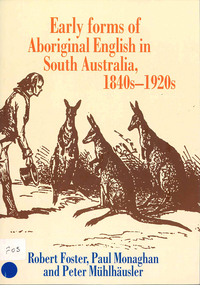
Book, Robert Foster et al, Early forms of Aboriginal English in South Australia, 1840s-1920s, 2003
... A dictionary of South Australian Pidgin English, spoken primarily between Aboriginals and Europeans in South Australia in the 19th and 20th centuries. ...South Australian languages Nunga Kaurna pidgin English Word lists A dictionary of South Australian Pidgin English, spoken primarily between Aboriginals and Europeans in South Australia in the 19th and 20th centuries. ...A dictionary of South Australian Pidgin English, spoken primarily between Aboriginals and Europeans in South Australia in the 19th and 20th centuries. It is a valuable resource for those engaged with historical and literary texts that in the past have often proved difficult to those not trained in pidgin linguistics.Word listssouth australian languages, nunga, kaurna, pidgin english -
 Wangaratta RSL Sub Branch
Photograph - Photographs, K.W. Truscott
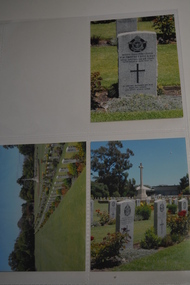
... Gravestone photographs of Keith William "Bluey" TRUSCOTT 400213 Awarded DFC & Bar - Born 17/5/1916 Prahran Victoria WW2 RAAF Squadron Leader and Ace fighter pilot who served in Europe, South West Pacific and Milne Bay. Played for Melbourne Football Club. ...Gravestone photographs of Keith William "Bluey" TRUSCOTT 400213 Awarded DFC & Bar - Born 17/5/1916 Prahran Victoria WW2 RAAF Squadron Leader and Ace fighter pilot who served in Europe, South West Pacific and Milne Bay. Played for Melbourne Football Club. ...Gravestone photographs of Keith William "Bluey" TRUSCOTT 400213 Awarded DFC & Bar - Born 17/5/1916 Prahran Victoria WW2 RAAF Squadron Leader and Ace fighter pilot who served in Europe, South West Pacific and Milne Bay. Played for Melbourne Football Club. Died at sea and buried at Karrakatta Cemetery in Perth Western Australia. Three coloured photographs depicting head stones in cemetery400213 Squadron Leader K.W. Truscott DFC & Bar Royal Australian Air Force 28th March 1943 Aged 26 In Loving Memory of our Darling Son His duty nobly done. truscott, raaf, ww2, dfc -
 The Beechworth Burke Museum
Geological specimen - Loellingite in Rhodonite
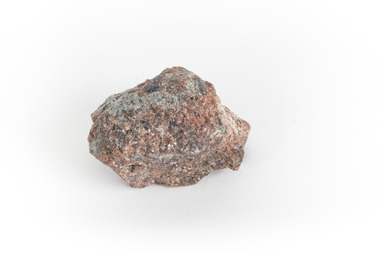
... It is quite rare to find, though has been found in Australia, North America, South America and Europe....It is quite rare to find, though has been found in Australia, North America, South America and Europe. This specimen is part of a larger collection of geological and mineral specimens collected from around Australia (and some parts of the world) and donated to the Burke Museum between 1868-1880. ...Rhodonite is a reddish-pink manganese silicate material and often contains iron, magnesium and calcium. It is usually found in metamorphic rocks (rocks which have been altered by heat, pressure or chemical process). It can range in size from tiny to massive. Because of their composition they are not suitable for use in jewellery because they are hard enough. It is quite rare to find, though has been found in Australia, North America, South America and Europe.This specimen is part of a larger collection of geological and mineral specimens collected from around Australia (and some parts of the world) and donated to the Burke Museum between 1868-1880. A large percentage of these specimens were collected in Victoria as part of the Geological Survey of Victoria that begun in 1852 (in response to the Gold Rush) to study and map the geology of Victoria. Collecting geological specimens was an important part of mapping and understanding the scientific makeup of the earth. Many of these specimens were sent to research and collecting organisations across Australia, including the Burke Museum, to educate and encourage further study. This specimen is a palm shaped piece of loellingite within rhodonite. It is mostly reddish-pink coloured, with flecks of light and dark grey. Loellingite is a grey iron arsenide which often forms into crystal shapes. It is mostly found in mesothermal veins (caused by immense heat) with sulfides or in limestone. It is toxic when heated or struck. rhodonite, loellingite, burke museum, beechworth, geological survey of victoria -
 Bendigo Military Museum
Map - SILK MAP WW2, 1943-45
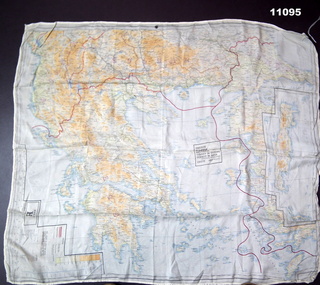
... Shows Greece, Albania, Bulgaria South, Turkey in Europe, Turkey in Asia * (Western Seaboard). ...Europe Two coloured maps, printed on silk. Shows roads, railways, waterways and mountains. National boundaries as at 1943 are shown. First map: scale 1:1,000,000, sheet H. Shows Greece, Albania, Bulgaria South ...T.B.A. See also Cat 11096.Two coloured maps, printed on silk. Shows roads, railways, waterways and mountains. National boundaries as at 1943 are shown. First map: scale 1:1,000,000, sheet H. Shows Greece, Albania, Bulgaria South, Turkey in Europe, Turkey in Asia * (Western Seaboard). Crete (inset right). Rear map: scale 1:1,000,000 Sheet G. Shows Slovakia (Sth), Poland (Sth), Hungary (Sth East), Romania, Serbia, Bulgaria (Central and East), Croatia, Montenhead (East) Albania (Nth).ww2, silk maps, europe -
 Warrnambool and District Historical Society Inc.
Ledger, Nullawarre Post Office, c.1960
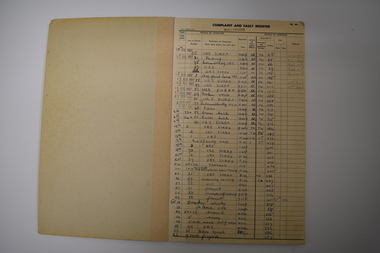
... Nullawarre is a small settlement 25 kilometres south east of Warrnambool. European settlers first came to the Nullawarre district in the late 1860s and the area is largely agricultural. ...Nullawarre is a small settlement 25 kilometres south east of Warrnambool. European settlers first came to the Nullawarre district in the late 1860s and the area is largely agricultural. ...This ledger came from the Nullawarre Post Office and was in use from 1967 to 1970. Nullawarre is a small settlement 25 kilometres south east of Warrnambool. European settlers first came to the Nullawarre district in the late 1860s and the area is largely agricultural. Charles and Vida Williams were the Post Master and Post Mistress at the Nullawarre Post Office in the mid 20th century.This ledger is of interest as it was used in the Nullawarre Post Office in the mid 20th century and is an example of business practices during that time. This is a ledger or booklet - a Complaint and Fault Register from the Nullawarre Post Office. It has a thick cardboard cover with green binding. The pages are ruled with black lines and black printed headings. The entries are handwritten in blue ink and pencil and some date stamps have been used. Most pages are blank. The corners of the ledger are slightly damaged. nullawarre post office, history of warrnambool -
 Whitehorse Historical Society Inc.
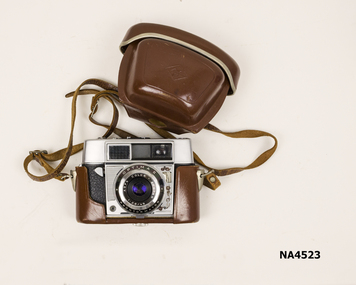
Equipment - Camera
... The camera was used by donor's late Auntie Hazel Porter on some overseas holidays notably Women's Weekly World Discovery Tour in February-June 1974, which included Japan, United Kingdom, Europe and South Africa. This was a voyage on the P&O liner Himalaya. ...The camera was used by donor's late Auntie Hazel Porter on some overseas holidays notably Women's Weekly World Discovery Tour in February-June 1974, which included Japan, United Kingdom, Europe and South Africa. This was a voyage on the P&O liner Himalaya. ...The camera was used by donor's late Auntie Hazel Porter on some overseas holidays notably Women's Weekly World Discovery Tour in February-June 1974, which included Japan, United Kingdom, Europe and South Africa. This was a voyage on the P&O liner Himalaya. Also a trip to China in 1979 and Germany in 1980. The camera was mainly used for slides.1. AGFA OPTIMA II PRONTORMATOR 35mm camera|Lens AGFA COLOR - APOTAR 1:2.8/45 2. The camera has a brown leather case also an illustrated manual.photography, cameras -
 Federation University Historical Collection
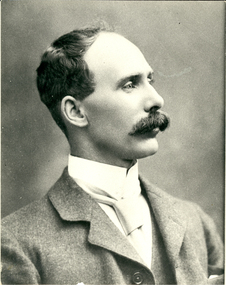
Photograph - Photograph - Black and White, William Corbould, c1900
... He began work as assayer and chemist at the Central Mine, Broken Hill but, from around 1891, spent several years in the United States, Europe and South Africa. He was foundation member of the Western Australian Chamber of Mines in 1895 while working as manager of Hannan's Reward at Kalgoorlie. ...He began work as assayer and chemist at the Central Mine, Broken Hill but, from around 1891, spent several years in the United States, Europe and South Africa. He was foundation member of the Western Australian Chamber of Mines in 1895 while working as manager of Hannan's Reward at Kalgoorlie. corbould mining ballarat school of mines mining alumni Portrait of male with moustache, wearing a tie and jacket. ...William Henry Corbould was born on 4 November 1866 at Ballarat and educated at the Ballarat School of Mines. He began work as assayer and chemist at the Central Mine, Broken Hill but, from around 1891, spent several years in the United States, Europe and South Africa. He was foundation member of the Western Australian Chamber of Mines in 1895 while working as manager of Hannan's Reward at Kalgoorlie. Portrait of male with moustache, wearing a tie and jacket. He is William Thomas Henry Corbould.corbould, mining, ballarat school of mines, mining alumni -
 Federation University Art Collection
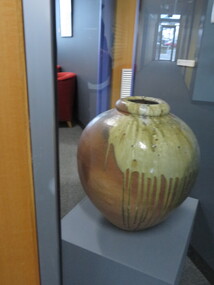
Ceramic - Artwork - Ceramic, 'Wood Fired Urn' by Robert Barron
... In 1979, he left Australia on a five-year journey to New Zealand, North America, England, Europe, and South Korea to work with skilled potters in woodfiring. ...In 1979, he left Australia on a five-year journey to New Zealand, North America, England, Europe, and South Korea to work with skilled potters in woodfiring. ...Robert BARRON (1957- ) Born in Harpenden, England. Robert Barron first worked full-time with clay in 1976, the family pottery at Croydon, Victoria. In 1979, he left Australia on a five-year journey to New Zealand, North America, England, Europe, and South Korea to work with skilled potters in woodfiring. During this time, he visited Michael Cardew at Wenford Bridge Pottery, Cornwall, UK., and was engaged as an apprentice at Cornwall Bridge Pottery, Connecticut, USA. Returning to Australia in 1984, he established Gooseneck Pottery at Kardella, Victoria. With the assistance of a Crafts Board grant Robert Barron built a 1000 cubic ft five-chambered Nabori-Gama style woodfired kiln. This kiln one of the largest wood-fired kilns in Australia. Robert Barron is influenced by the philosophies of Bernard Leach and Michael Cardew.artwork, artist, ceramic, gippsland campus, robert barron -
 Victorian Aboriginal Corporation for Languages
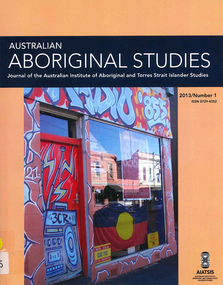
Periodical, Australian Institute of Aboriginal and Torres Strait Islander Studies, Australian Aboriginal studies : journal of the Australian Institute of Aboriginal and Torres Strait Islander Studies, 2013
... The world from Malarrak: Depictions of South-east Asian and European subjects in rock art from the Wellington Range, Australia Sally K May, Paul SC Ta�on, Alistair Paterson, Meg Travers This paper investigates contact histories in northern Australia through an analysis of recent rock paintings. ...The world from Malarrak: Depictions of South-east Asian and European subjects in rock art from the Wellington Range, Australia Sally K May, Paul SC Ta�on, Alistair Paterson, Meg Travers This paper investigates contact histories in northern Australia through an analysis of recent rock paintings. ...We don?t leave our identities at the city limits: Aboriginal and Torres Strait Islander people living in urban localities Bronwyn Fredericks Aboriginal and Torres Strait Islander people who live in cities and towns are often thought of as ?less Indigenous? than those who live ?in the bush?, as though they are ?fake? Aboriginal people ? while ?real? Aboriginal people live ?on communities? and ?real? Torres Strait Islander people live ?on islands?. Yet more than 70 percent of Australia?s Indigenous peoples live in urban locations (ABS 2007), and urban living is just as much part of a reality for Aboriginal and Torres Strait Islander people as living in remote discrete communities. This paper examines the contradictions and struggles that Aboriginal and Torres Strait Islander people experience when living in urban environments. It looks at the symbols of place and space on display in the Australian cities of Melbourne and Brisbane to demonstrate how prevailing social, political and economic values are displayed. Symbols of place and space are never neutral, and this paper argues that they can either marginalise and oppress urban Aboriginal and Torres Strait Islander people, or demonstrate that they are included and engaged. Juggling with pronouns: Racist discourse in spoken interaction on the radio Di Roy While the discourse of deficit with regard to Australian Indigenous health and wellbeing has been well documented in print media and through images on film and on television, radio talk concerning this discourse remains underresearched. This paper interrogates the power of an interactive news interview, aired on the Radio National Breakfast program on ABC Radio in 2011, to maintain and reproduce the discourse of deficit, despite the best intentions of the interview participants. Using a conversation-analytical approach, and membership categorisation analysis in particular, this paper interrogates the spoken interaction between a well-known radio interviewer and a respected medical researcher into Indigenous eye health. It demonstrates the recreation of a discourse emanating from longstanding hegemonies between mainstream and Indigenous Australians. Analysis of firstperson pronoun use shows the ongoing negotiation of social category boundaries and construction of moral identities through ascriptions to category members, upon which the intelligibility of the interview for the listening audience depended. The findings from analysis support claims in a considerable body of whiteness studies literature, the main themes of which include the pervasiveness of a racist discourse in Australian media and society, the power of invisible assumptions, and the importance of naming and exposing them. Changes in Pitjantjatjara mourning and burial practices Bill Edwards, University of South Australia This paper is based on observations over a period of more than five decades of changes in Pitjantjatjara burial practices from traditional practices to the introduction of Christian services and cemeteries. Missions have been criticised for enforcing such changes. However, in this instance, the changes were implemented by the Aboriginal people themselves. Following brief outlines of Pitjantjatjara traditional life, including burial practices, and of the establishment of Ernabella Mission in 1937 and its policy of respect for Pitjantjatjara cultural practices and language, the history of these changes which commenced in 1973 are recorded. Previously, deceased bodies were interred according to traditional rites. However, as these practices were increasingly at odds with some of the features of contemporary social, economic and political life, two men who had lost close family members initiated church funeral services and established a cemetery. These practices soon spread to most Pitjantjatjara communities in a manner which illustrates the model of change outlined by Everett Rogers (1962) in Diffusion of Innovations. Reference is made to four more recent funerals to show how these events have been elaborated and have become major social occasions. The world from Malarrak: Depictions of South-east Asian and European subjects in rock art from the Wellington Range, Australia Sally K May, Paul SC Ta�on, Alistair Paterson, Meg Travers This paper investigates contact histories in northern Australia through an analysis of recent rock paintings. Around Australia Aboriginal artists have produced a unique record of their experiences of contact since the earliest encounters with South-east Asian and, later, European visitors and settlers. This rock art archive provides irreplaceable contemporary accounts of Aboriginal attitudes towards, and engagement with, foreigners on their shores. Since 2008 our team has been working to document contact period rock art in north-western and western Arnhem Land. This paper focuses on findings from a site complex known as Malarrak. It includes the most thorough analysis of contact rock art yet undertaken in this area and questions previous interpretations of subject matter and the relationship of particular paintings to historic events. Contact period rock art from Malarrak presents us with an illustrated history of international relationships in this isolated part of the world. It not only reflects the material changes brought about by outside cultural groups but also highlights the active role Aboriginal communities took in responding to these circumstances. Addressing the Arrernte: FJ Gillen?s 1896 Engwura speech Jason Gibson, Australian National University This paper analyses a speech delivered by Francis James Gillen during the opening stages of what is now regarded as one of the most significant ethnographic recording events in Australian history. Gillen?s ?speech? at the 1896 Engwura festival provides a unique insight into the complex personal relationships that early anthropologists had with Aboriginal people. This recently unearthed text, recorded by Walter Baldwin Spencer in his field notebook, demonstrates how Gillen and Spencer sought to establish the parameters of their anthropological enquiry in ways that involved both Arrernte agency and kinship while at the same time invoking the hierarchies of colonial anthropology in Australia. By examining the content of the speech, as it was written down by Spencer, we are also able to reassesses the importance of Gillen to the ethnographic ambitions of the Spencer/Gillen collaboration. The incorporation of fundamental Arrernte concepts and the use of Arrernte words to convey the purpose of their 1896 fieldwork suggest a degree of Arrernte involvement and consent not revealed before. The paper concludes with a discussion of the outcomes of the Engwura festival and the subsequent publication of The Native Tribes of Central Australia within the context of a broader set of relationships that helped to define the emergent field of Australian anthropology at the close of the nineteenth century. One size doesn?t fit all: Experiences of family members of Indigenous gamblers Louise Holdsworth, Helen Breen, Nerilee Hing and Ashley Gordon Centre for Gambling Education and Research, Southern Cross University This study explores help-seeking and help-provision by family members of Indigenous people experiencing gambling problems, a topic that previously has been ignored. Data are analysed from face-to-face interviews with 11 family members of Indigenous Australians who gamble regularly. The results confirm that substantial barriers are faced by Indigenous Australians in accessing formal help services and programs, whether for themselves or a loved one. Informal help from family and friends appears more common. In this study, this informal help includes emotional care, practical support and various forms of ?tough love?. However, these measures are mostly in vain. Participants emphasise that ?one size doesn?t fit all? when it comes to avenues of gambling help for Indigenous peoples. Efforts are needed to identify how Indigenous families and extended families can best provide social and practical support to assist their loved ones to acknowledge and address gambling problems. Western Australia?s Aboriginal heritage regime: Critiques of culture, ethnography, procedure and political economy Nicholas Herriman, La Trobe University Western Australia?s Aboriginal Heritage Act 1972 (WA) and the de facto arrangements that have arisen from it constitute a large part of the Aboriginal ?heritage regime? in that state. Although designed ostensibly to protect Aboriginal heritage, the heritage regime has been subjected to various scholarly critiques. Indeed, there is a widespread perception of a need to reform the Act. But on what basis could this proceed? Here I offer an analysis of these critiques, grouped according to their focus on political economy, procedure, ethnography and culture. I outline problems surrounding the first three criticisms and then discuss two versions of the cultural critique. I argue that an extreme version of this criticism is weak and inconsistent with the other three critiques. I conclude that there is room for optimism by pointing to ways in which the heritage regime could provide more beneficial outcomes for Aboriginal people. Read With Me Everyday: Community engagement and English literacy outcomes at Erambie Mission (research report) Lawrence Bamblett Since 2009 Lawrie Bamblett has been working with his community at Erambie Mission on a literacy project called Read With Me. The programs - three have been carried out over the past four years - encourage parents to actively engage with their children?s learning through reading workshops, social media, and the writing and publication of their own stories. Lawrie attributes much of the project?s extraordinary success to the intrinsic character of the Erambie community, not least of which is their communal approach to living and sense of shared responsibility. The forgotten Yuendumu Men?s Museum murals: Shedding new light on the progenitors of the Western Desert Art Movement (research report) Bethune Carmichael and Apolline Kohen In the history of the Western Desert Art Movement, the Papunya School murals are widely acclaimed as the movement?s progenitors. However, in another community, Yuendumu, some 150 kilometres from Papunya, a seminal museum project took place prior to the completion of the Papunya School murals and the production of the first Papunya boards. The Warlpiri men at Yuendumu undertook a ground-breaking project between 1969 and 1971 to build a men?s museum that would not only house ceremonial and traditional artefacts but would also be adorned with murals depicting the Dreamings of each of the Warlpiri groups that had recently settled at Yuendumu. While the murals at Papunya are lost, those at Yuendumu have, against all odds, survived. Having been all but forgotten, this unprecedented cultural and artistic endeavour is only now being fully appreciated. Through the story of the genesis and construction of the Yuendumu Men?s Museum and its extensive murals, this paper demonstrates that the Yuendumu murals significantly contributed to the early development of the Western Desert Art Movement. It is time to acknowledge the role of Warlpiri artists in the history of the movement.b&w photographs, colour photographsracism, media, radio, pitjantjatjara, malarrak, wellington range, rock art, arrernte, fj gillen, engwura, indigenous gambling, ethnography, literacy, erambie mission, yuendumu mens museum, western desert art movement -
 Flagstaff Hill Maritime Museum and Village
Book - Reference Book/History, Henry Smith Williams, The Historians History of the World Vol 22 set 1 - Edited by Henry Smith Williams L.L.D. Published by “The Times” 1908, 1908
... South America, including the roles of figures like Simon Bolivar and Jose de San Martin. Within the set volume 22 is significant for several structural and thematic reasons While previous volumes (like Vol. 20 and 21) focus on the internal struggles of European monarchies, Volume 22 chronicles the first successful large-scale implementation of a democratic republic in the modern era. ...Henry Smith Williams’ “The Historians' History of the World” is a chronological and geographical "tapestry" of human events, these twenty five volumes occupy a very specific and prestigious place in historical research. Volume 22 represents a critical pivot point in the series, shifting the focus away from the concentrated histories of Europe and the British Empire toward the "New World" and the rising power of the West.The Book is part of a 25 volume set with red cloth bindings and gold filigree design to rib.non-fictionHenry Smith Williams’ “The Historians' History of the World” is a chronological and geographical "tapestry" of human events, these twenty five volumes occupy a very specific and prestigious place in historical research. Volume 22 represents a critical pivot point in the series, shifting the focus away from the concentrated histories of Europe and the British Empire toward the "New World" and the rising power of the West.flagstaff hill, warrnambool, shipwrecked-coast, flagstaff-hill, flagstaff-hill-maritime-museum, maritime-museum, shipwreck-coast, flagstaff-hill-maritime-village, book, the historians history of the world vol 22 set 1 -
 Flagstaff Hill Maritime Museum and Village
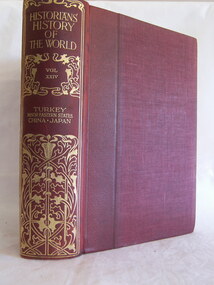
Book - Reference Book/History, Henry Smith Williams, The Historians History of the World Vol 24 set 1 - Edited by Henry Smith Williams L.L.D. Published by “The Times” 1908, 1908
... Europe. It shifts focus away from the Western powers of the time to examine the complex histories of the East and the South. ...In the 1908 edition of The Historians' History of the World, Volume 24 acts as the definitive survey of the "Eastern Question" and the peripheral powers of Europe. It shifts focus away from the Western powers of the time to examine the complex histories of the East and the South. The contents cover, Poland, the Balkans, Turkey, and Minor Nations Volume 24 becomes a geographically diverse volume that covers the history of several regions that were, in 1908, centres of intense geopolitical tension.The Book is part of a 25 volume set with red cloth bindings and gold filigree design to rib.non-fictionIn the 1908 edition of The Historians' History of the World, Volume 24 acts as the definitive survey of the "Eastern Question" and the peripheral powers of Europe. It shifts focus away from the Western powers of the time to examine the complex histories of the East and the South. The contents cover, Poland, the Balkans, Turkey, and Minor Nations Volume 24 becomes a geographically diverse volume that covers the history of several regions that were, in 1908, centres of intense geopolitical tension. flagstaff hill, warrnambool, shipwrecked-coast, flagstaff-hill, flagstaff-hill-maritime-museum, maritime-museum, shipwreck-coast, flagstaff-hill-maritime-village, book, the historians history of the world vol 24 set 1 -
 Federation University Historical Collection
Photograph - Photograph - black and white, Kodak Australia, Sarah and Laura Wright at Laura Villa, Smeaton, 28/1/1922
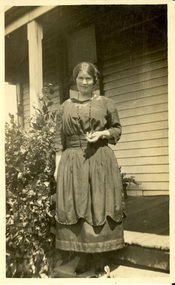
... South Street awards, and Frank as conductor won many awards in the Australian Band Championship contest. In 1933 Frank Wright sailed to England to conduct the famous St Hilda’s Band and was later appointed Musical Director of the London County Council, where he organized many amazing concerts in parks, in and around the London district. He was made Professor of Brass and Military Band Scoring and conducted at the Guildhall of Music and Drama. Frank was often invited to adjudicate Brass Band Championships around Europe...South Street awards, and Frank as conductor won many awards in the Australian Band Championship contest. In 1933 Frank Wright sailed to England to conduct the famous St Hilda’s Band and was later appointed Musical Director of the London County Council, where he organized many amazing concerts in parks, in and around the London district. He was made Professor of Brass and Military Band Scoring and conducted at the Guildhall of Music and Drama. Frank was often invited to adjudicate Brass Band Championships around Europe ...Frank Wright was a renown resident of Smeaton, where he was born. He lived at Laura Villa, and attended Smeaton State School. His father William was a gold miner and his mother's name was Sarah. Their family won many singing and instrumental awards. Frank was tutored by Percy Code and became the Australian Open Cornet Champion by the age of eighteen. A year later, Frank conducted the City of Ballarat Band, and later the Ballarat Soldiers’ Memorial Band. He formed the Frank Wright Frisco Band and Frank Wright and his Coliseum Orchestra. These bands won many South Street awards, and Frank as conductor won many awards in the Australian Band Championship contest. In 1933 Frank Wright sailed to England to conduct the famous St Hilda’s Band and was later appointed Musical Director of the London County Council, where he organized many amazing concerts in parks, in and around the London district. He was made Professor of Brass and Military Band Scoring and conducted at the Guildhall of Music and Drama. Frank was often invited to adjudicate Brass Band Championships around Europe, in Australia, including South Street and in New Zealand. The Frank Wright Medal at the Royal South Street competition is awarded to an individual recognized as making an outstanding contribution to brass music in Australia..1) black and white photograph of a woman dressed in a dark ankle length dress with a scalloped overskirt, wearing beads around her neck. She is standing on the steps of a cottage "Laura Villa" with a shrub to the left of her. The woman is Laura Wright. .2) black and white photograph of a woman wearing a long dark dress and a white cravat with a brooch, standing of the steps of a cottage. The woman is Sarah Wright and the cottage is "Laura Villa". .3) black and white photograph of a woman wearing a long dark dress and a white cravat with a brooch, standing of the steps of a cottage. The woman is Sarah Wright and the cottage is "Laura Villa"..1) Handwritten on back - Laura Wright, aged 25 years. Taken at Smeaton, January 28th 1922, by Frank Wright .2) Handwritten on back Mrs W. Wright, "Laura Villa" Smeaton. Taken by her son, Frank Wright on January 28th, 1922laura wright, sarah wright, laura villa, frank wright, smeaton -
 Federation University Historical Collection
Photograph - Photograph - black and white, Sarah Wright and family, 1928?
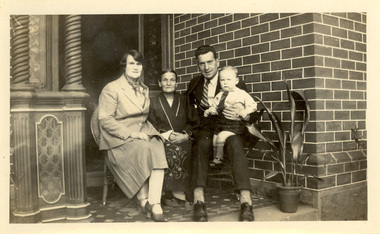
... South Street awards, and Frank as conductor won many awards in the Australian Band Championship contest. In 1933 Frank Wright sailed to England to conduct the famous St Hilda’s Band and was later appointed Musical Director of the London County Council, where he organized many amazing concerts in parks, in and around the London district. He was made Professor of Brass and Military Band Scoring and conducted at the Guildhall of Music and Drama. Frank was often invited to adjudicate Brass Band Championships around Europe...South Street awards, and Frank as conductor won many awards in the Australian Band Championship contest. In 1933 Frank Wright sailed to England to conduct the famous St Hilda’s Band and was later appointed Musical Director of the London County Council, where he organized many amazing concerts in parks, in and around the London district. He was made Professor of Brass and Military Band Scoring and conducted at the Guildhall of Music and Drama. Frank was often invited to adjudicate Brass Band Championships around Europe ...Frank Wright was a renown resident of Smeaton, where he was born. He lived at Laura Villa, and attended Smeaton State School. His father William was a gold miner and his mother's name was Sarah. Their family won many singing and instrumental awards. Frank was tutored by Percy Code and became the Australian Open Cornet Champion by the age of eighteen. A year later, Frank conducted the City of Ballarat Band, and later the Ballarat Soldiers’ Memorial Band. He formed the Frank Wright Frisco Band and Frank Wright and his Coliseum Orchestra. These bands won many South Street awards, and Frank as conductor won many awards in the Australian Band Championship contest. In 1933 Frank Wright sailed to England to conduct the famous St Hilda’s Band and was later appointed Musical Director of the London County Council, where he organized many amazing concerts in parks, in and around the London district. He was made Professor of Brass and Military Band Scoring and conducted at the Guildhall of Music and Drama. Frank was often invited to adjudicate Brass Band Championships around Europe, in Australia, including South Street and in New Zealand. The Frank Wright Medal at the Royal South Street competition is awarded to an individual recognized as making an outstanding contribution to brass music in Australia. As Sarah is in her dressing gown and slippers these photos could refer to a note on an envelope left by Frank which says 'Mother taken on the first day up out of bed - at Lauls on 13th May 1928'. .1) black and white photograph of a man and a woman sitting on a wicker chair which is on a tessellated floor of the front porch of a brick building. The woman is wearing a dressing gown and slippers. The man is Frank Wright and the woman is Sarah Wright, his mother. .2) black and white photograph of a woman sitting on a wicker armchair with a pillow behind her back. The chair is on a tessellated floor on the front porch of a brick building. The woman is Sarah Wright. .3) black and white photograph of a man, two women and a child sitting on a wicker chair which is on a tessellated floor on the front porch of a brick building. The man is Frank Wright and the older woman is his mother Sarah Wright. The younger woman is his sister Laura and her son, Frank Ritchie is sitting on Frank's lap.On the left hand side of the porch are ornate columns and on the right hand side is a potted plant.frank wright, sarah wright, laura wright, tessilated floor, wicker chair, ornate column, child -
 Federation University Historical Collection
Photograph - Photograph - black and white, Vernon Holt, Laura and Frank Wright, 9/4/22
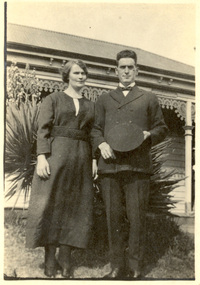
... South Street awards, and Frank as conductor won many awards in the Australian Band Championship contest. In 1933 Frank Wright sailed to England to conduct the famous St Hilda’s Band and was later appointed Musical Director of the London County Council, where he organized many amazing concerts in parks, in and around the London district. He was made Professor of Brass and Military Band Scoring and conducted at the Guildhall of Music and Drama. Frank was often invited to adjudicate Brass Band Championships around Europe...South Street awards, and Frank as conductor won many awards in the Australian Band Championship contest. In 1933 Frank Wright sailed to England to conduct the famous St Hilda’s Band and was later appointed Musical Director of the London County Council, where he organized many amazing concerts in parks, in and around the London district. He was made Professor of Brass and Military Band Scoring and conducted at the Guildhall of Music and Drama. Frank was often invited to adjudicate Brass Band Championships around Europe ...Frank Wright was a renown resident of Smeaton, where he was born. He lived at Laura Villa, and attended Smeaton State School. His father William was a gold miner and his mother's name was Sarah. Their family won many singing and instrumental awards. Frank was tutored by Percy Code and became the Australian Open Cornet Champion by the age of eighteen. A year later, Frank conducted the City of Ballarat Band, and later the Ballarat Soldiers’ Memorial Band. He formed the Frank Wright Frisco Band and Frank Wright and his Coliseum Orchestra. These bands won many South Street awards, and Frank as conductor won many awards in the Australian Band Championship contest. In 1933 Frank Wright sailed to England to conduct the famous St Hilda’s Band and was later appointed Musical Director of the London County Council, where he organized many amazing concerts in parks, in and around the London district. He was made Professor of Brass and Military Band Scoring and conducted at the Guildhall of Music and Drama. Frank was often invited to adjudicate Brass Band Championships around Europe, in Australia, including South Street and in New Zealand. The Frank Wright Medal at the Royal South Street competition is awarded to an individual recognized as making an outstanding contribution to brass music in Australia.Black and white photograph of a man and a woman standing in front of a house. The man is dressed in a band uniform with hat and the woman is dressed in a dark above the ankle length dress. The woman is Laura Wright and the man is Frank Wright. The house is "Dalbrao" at Northcote Hand written on back - Laura Wright 25, Frank Wright 20, "Dalbrae", St Georges Road, Northcote, Melbourne, Taken by Vernon Holt, 9/4/22laura wright, frank wright, dalbrae, vernon holt, cornet, band -
 Federation University Historical Collection
Photograph - black and white, Sarah Wright at the Ballarat Botanical Gardens
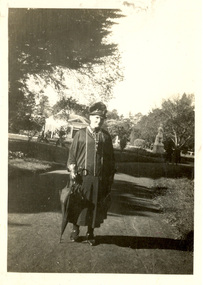
... South Street awards, and Frank as conductor won many awards in the Australian Band Championship contest. In 1933 Frank Wright sailed to England to conduct the famous St Hilda’s Band and was later appointed Musical Director of the London County Council, where he organized many amazing concerts in parks, in and around the London district. He was made Professor of Brass and Military Band Scoring and conducted at the Guildhall of Music and Drama. Frank was often invited to adjudicate Brass Band Championships around Europe...South Street awards, and Frank as conductor won many awards in the Australian Band Championship contest. In 1933 Frank Wright sailed to England to conduct the famous St Hilda’s Band and was later appointed Musical Director of the London County Council, where he organized many amazing concerts in parks, in and around the London district. He was made Professor of Brass and Military Band Scoring and conducted at the Guildhall of Music and Drama. Frank was often invited to adjudicate Brass Band Championships around Europe ...Sarah Wright was the mother of Frank Wright who was a renown resident of Smeaton, where he was born. He lived at Laura Villa, and attended Smeaton State School. His father William was a gold miner. Their family won many singing and instrumental awards. Frank was tutored by Percy Code and became the Australian Open Cornet Champion by the age of eighteen. A year later, Frank conducted the City of Ballarat Band, and later the Ballarat Soldiers’ Memorial Band. He formed the Frank Wright Frisco Band and Frank Wright and his Coliseum Orchestra. These bands won many South Street awards, and Frank as conductor won many awards in the Australian Band Championship contest. In 1933 Frank Wright sailed to England to conduct the famous St Hilda’s Band and was later appointed Musical Director of the London County Council, where he organized many amazing concerts in parks, in and around the London district. He was made Professor of Brass and Military Band Scoring and conducted at the Guildhall of Music and Drama. Frank was often invited to adjudicate Brass Band Championships around Europe, in Australia, including South Street and in New Zealand. The Frank Wright Medal at the Royal South Street competition is awarded to an individual recognized as making an outstanding contribution to brass music in Australia.Black and white photograph of a woman in a dark dress and hat and carrying an umbrella. She is standing on a path set within the grounds of the Ballarat Botanical Gardens, with the Statue Pavillion, a statue, shrubs and large trees in the background. The woman is Sarah Wright.sarah wright, frank wright, ballarat botanical gardens, statue pavillion -
 Federation University Historical Collection
Photograph - Photograph - black and white, Laura Wright-Ritchie (probably)
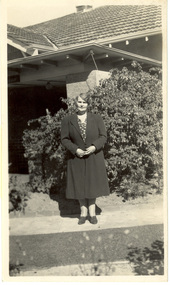
... South Street awards, and Frank as conductor won many awards in the Australian Band Championship contest. In 1933 Frank Wright sailed to England to conduct the famous St Hilda’s Band and was later appointed Musical Director of the London County Council, where he organized many amazing concerts in parks, in and around the London district. He was made Professor of Brass and Military Band Scoring and conducted at the Guildhall of Music and Drama. Frank was often invited to adjudicate Brass Band Championships around Europe...South Street awards, and Frank as conductor won many awards in the Australian Band Championship contest. In 1933 Frank Wright sailed to England to conduct the famous St Hilda’s Band and was later appointed Musical Director of the London County Council, where he organized many amazing concerts in parks, in and around the London district. He was made Professor of Brass and Military Band Scoring and conducted at the Guildhall of Music and Drama. Frank was often invited to adjudicate Brass Band Championships around Europe ...Laura Wright-Ritchie was gifted on the viola and was a music teacher. She was the sister of Frank Wright, who was a renown resident of Smeaton, where he was born. He lived at Laura Villa, and attended Smeaton State School. His father William was a gold miner and his mother's name was Sarah. Their family won many singing and instrumental awards. Frank was tutored by Percy Code and became the Australian Open Cornet Champion by the age of eighteen. A year later, Frank conducted the City of Ballarat Band, and later the Ballarat Soldiers’ Memorial Band. He formed the Frank Wright Frisco Band and Frank Wright and his Coliseum Orchestra. These bands won many South Street awards, and Frank as conductor won many awards in the Australian Band Championship contest. In 1933 Frank Wright sailed to England to conduct the famous St Hilda’s Band and was later appointed Musical Director of the London County Council, where he organized many amazing concerts in parks, in and around the London district. He was made Professor of Brass and Military Band Scoring and conducted at the Guildhall of Music and Drama. Frank was often invited to adjudicate Brass Band Championships around Europe, in Australia, including South Street and in New Zealand. The Frank Wright Medal at the Royal South Street competition is awarded to an individual recognized as making an outstanding contribution to brass music in Australia. Black and white photograph of a woman standing on the driveway in front of a house. Behind her is a flowering bush. She is dressed in a dress and overcoat. The woman is Laura Wright-Ritchie and the house is situated in Gregory Street, Wendouree.Printed - Selo; written in pencil on back - 694Blaura wright-ritchie, laura wright, viola, music teacher, frank wright, gregory street, -
 Federation University Historical Collection
Photograph - Photograph - black and white, Lin Jenkins, Frank Wright at Doveton Street South, Ballarat, 23/07/1921
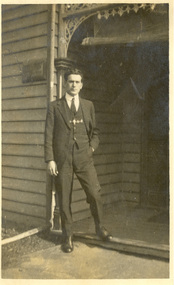
... South Street awards, and Frank as conductor won many awards in the Australian Band Championship contest. In 1933 Frank Wright sailed to England to conduct the famous St Hilda’s Band and was later appointed Musical Director of the London County Council, where he organized many amazing concerts in parks, in and around the London district. He was made Professor of Brass and Military Band Scoring and conducted at the Guildhall of Music and Drama. Frank was often invited to adjudicate Brass Band Championships around Europe...South Street awards, and Frank as conductor won many awards in the Australian Band Championship contest. In 1933 Frank Wright sailed to England to conduct the famous St Hilda’s Band and was later appointed Musical Director of the London County Council, where he organized many amazing concerts in parks, in and around the London district. He was made Professor of Brass and Military Band Scoring and conducted at the Guildhall of Music and Drama. Frank was often invited to adjudicate Brass Band Championships around Europe ...Frank Wright was a renown resident of Smeaton, where he was born. He lived at Laura Villa, and attended Smeaton State School. His father William was a gold miner and his mother's name was Sarah. Their family won many singing and instrumental awards. Frank was tutored by Percy Code and became the Australian Open Cornet Champion by the age of eighteen. A year later, Frank conducted the City of Ballarat Band, and later the Ballarat Soldiers’ Memorial Band. He formed the Frank Wright Frisco Band and Frank Wright and his Coliseum Orchestra. These bands won many South Street awards, and Frank as conductor won many awards in the Australian Band Championship contest. In 1933 Frank Wright sailed to England to conduct the famous St Hilda’s Band and was later appointed Musical Director of the London County Council, where he organized many amazing concerts in parks, in and around the London district. He was made Professor of Brass and Military Band Scoring and conducted at the Guildhall of Music and Drama. Frank was often invited to adjudicate Brass Band Championships around Europe, in Australia, including South Street and in New Zealand. The Frank Wright Medal at the Royal South Street competition is awarded to an individual recognized as making an outstanding contribution to brass music in Australia.Black and white photograph of a man with one hand in the pocket of his suit trousers, standing before the front porch of a timber house. There is some wrought iron over the entrance to the porch. The man is Frank Wright and the house is at 118 Doveton Street South, Ballarat.Handwritten on the back - Frank Wright, at the age of 19 years taken at 118 Doveton St Sth, Ballarat, by Lin Jenkins, 23-7-1921frank wright, lin jenkins, timber house, wrought iron, ballarat -
 Federation University Historical Collection
Photograph - Photograph - black and white, Kodak Australia, Sarah Wright and son Alex, circa mid - late 1920's
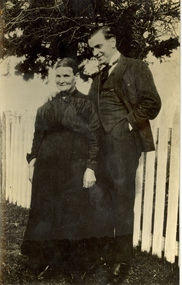
... South Street awards, and Frank as conductor won many awards in the Australian Band Championship contest. In 1933 Frank Wright sailed to England to conduct the famous St Hilda’s Band and was later appointed Musical Director of the London County Council, where he organized many amazing concerts in parks, in and around the London district. He was made Professor of Brass and Military Band Scoring and conducted at the Guildhall of Music and Drama. Frank was often invited to adjudicate Brass Band Championships around Europe...South Street awards, and Frank as conductor won many awards in the Australian Band Championship contest. In 1933 Frank Wright sailed to England to conduct the famous St Hilda’s Band and was later appointed Musical Director of the London County Council, where he organized many amazing concerts in parks, in and around the London district. He was made Professor of Brass and Military Band Scoring and conducted at the Guildhall of Music and Drama. Frank was often invited to adjudicate Brass Band Championships around Europe ...Alex Wright was the brother ofFrank Wright who was a renown resident of Smeaton. He lived at Laura Villa, and attended Smeaton State School. His father William was a gold miner and his mother's name was Sarah. Their family won many singing and instrumental awards. Frank was tutored by Percy Code and became the Australian Open Cornet Champion by the age of eighteen. A year later, Frank conducted the City of Ballarat Band, and later the Ballarat Soldiers’ Memorial Band. He formed the Frank Wright Frisco Band and Frank Wright and his Coliseum Orchestra. These bands won many South Street awards, and Frank as conductor won many awards in the Australian Band Championship contest. In 1933 Frank Wright sailed to England to conduct the famous St Hilda’s Band and was later appointed Musical Director of the London County Council, where he organized many amazing concerts in parks, in and around the London district. He was made Professor of Brass and Military Band Scoring and conducted at the Guildhall of Music and Drama. Frank was often invited to adjudicate Brass Band Championships around Europe, in Australia, including South Street and in New Zealand. The Frank Wright Medal at the Royal South Street competition is awarded to an individual recognized as making an outstanding contribution to brass music in Australia..1) Black and white photograph of a man and a woman standing in front of a picket fence, with a large tree in the background. The man is wearing a suit and is Frank Wright. The woman is wearing a long dark skirt and long sleeved blouse with a brooch at the neckline. She is his mother Sarah Wright. The man is wearing a suit and is Sarah's son Alex. The picket fence surrounds "Laura Villa". .2) Glass plate for this photographPrinted on the back - Post Card, Kodak Australiafrank wright, sarah wright, picket fence, laura villa, smeaton, cornet -
 Federation University Historical Collection
Photograph - Photograph - black and white, St Joseph's Orphanage Brass Band, 1924, 1924
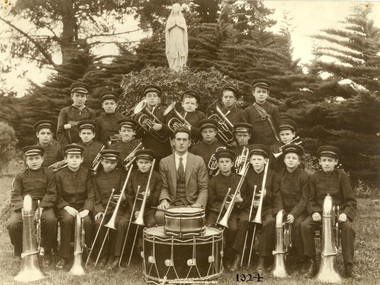
... South Street awards, and Frank as conductor won many awards in the Australian Band Championship contest. In 1933 Frank Wright sailed to England to conduct the famous St Hilda’s Band and was later appointed Musical Director of the London County Council, where he organized many amazing concerts in parks, in and around the London district. He was made Professor of Brass and Military Band Scoring and conducted at the Guildhall of Music and Drama. Frank was often invited to adjudicate Brass Band Championships around Europe...South Street awards, and Frank as conductor won many awards in the Australian Band Championship contest. In 1933 Frank Wright sailed to England to conduct the famous St Hilda’s Band and was later appointed Musical Director of the London County Council, where he organized many amazing concerts in parks, in and around the London district. He was made Professor of Brass and Military Band Scoring and conducted at the Guildhall of Music and Drama. Frank was often invited to adjudicate Brass Band Championships around Europe ...Frank Wright was a renown resident of Smeaton. He lived at Laura Villa, and attended Smeaton State School. His father William was a gold miner and his mother was Sarah Wright. Their family won many singing and instrumental awards. Frank was tutored by Percy Code and became the Australian Open Cornet Champion by the age of eighteen. A year later, Frank conducted the City of Ballarat Band, and later the Ballarat Soldiers’ Memorial Band. He formed the Frank Wright Frisco Band and Frank Wright and his Coliseum Orchestra. These bands won many South Street awards, and Frank as conductor won many awards in the Australian Band Championship contest. In 1933 Frank Wright sailed to England to conduct the famous St Hilda’s Band and was later appointed Musical Director of the London County Council, where he organized many amazing concerts in parks, in and around the London district. He was made Professor of Brass and Military Band Scoring and conducted at the Guildhall of Music and Drama. Frank was often invited to adjudicate Brass Band Championships around Europe, in Australia, including South Street and in New Zealand. The Frank Wright Medal at the Royal South Street competition is awarded to an individual recognized as making an outstanding contribution to brass music in Australia. St Joseph's home was later known as Nazareth House.Black and white photograph of a group of boys dressed in a band uniform all carrying brass instruments. The conductor is seated centre front with two drums, one on top of the other placed in front of him. The group is arranged in front of shrubbery and a statue of Mary. The conductor is Frank Wright and the grounds are the boys orphanage, St Joseph's Home - now Blythewood GrangeWritten in ink on front - '1924'frank wright, brass band, catholic, mary statue, orphanage, st joseph's home, sebastopol, st joseph's orphanage band -
 Federation University Historical Collection
Photograph - Photograph - black and white, Press & Publicity, Photographic Co, Florence Restaurant, Piccadilly, London, 1933, 1933
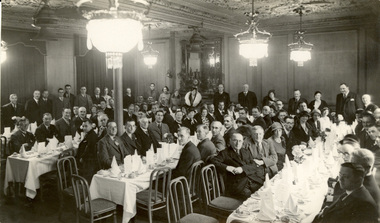
... South Street awards, and Frank as conductor won many awards in the Australian Band Championship contest. In 1933 Frank Wright sailed to England to conduct the famous St Hilda’s Band and was later appointed Musical Director of the London County Council, where he organized many amazing concerts in parks, in and around the London district. He was made Professor of Brass and Military Band Scoring and conducted at the Guildhall of Music and Drama. Frank was often invited to adjudicate Brass Band Championships around Europe...South Street awards, and Frank as conductor won many awards in the Australian Band Championship contest. In 1933 Frank Wright sailed to England to conduct the famous St Hilda’s Band and was later appointed Musical Director of the London County Council, where he organized many amazing concerts in parks, in and around the London district. He was made Professor of Brass and Military Band Scoring and conducted at the Guildhall of Music and Drama. Frank was often invited to adjudicate Brass Band Championships around Europe ...This photograph was one of Frank Wright's collection. Frank Wright was a renown resident of Smeaton, where he was born. He lived at Laura Villa, and attended Smeaton State School. His father William was a gold miner and his mother's name was Sarah. Their family won many singing and instrumental awards. Frank was tutored by Percy Code and became the Australian Open Cornet Champion by the age of eighteen. A year later, Frank conducted the City of Ballarat Band, and later the Ballarat Soldiers’ Memorial Band. He formed the Frank Wright Frisco Band and Frank Wright and his Coliseum Orchestra. These bands won many South Street awards, and Frank as conductor won many awards in the Australian Band Championship contest. In 1933 Frank Wright sailed to England to conduct the famous St Hilda’s Band and was later appointed Musical Director of the London County Council, where he organized many amazing concerts in parks, in and around the London district. He was made Professor of Brass and Military Band Scoring and conducted at the Guildhall of Music and Drama. Frank was often invited to adjudicate Brass Band Championships around Europe, in Australia, including South Street and in New Zealand. The Frank Wright Medal at the Royal South Street competition is awarded to an individual recognized as making an outstanding contribution to brass music in Australia.Black and white photograph of a large ornate room with men and women seated at four long tables, set with flatware, silverware and ornately folded napkins. Other men and women are standing around the edges of the room. They are all formally dressed. The room has ornate cornice, ceilings and light fixtures and a large mirror on the back wall. The place is the Florence Restaurant, Piccadilly London.Written in pencil on the back - 'Dinner at Florence Restaurant Piccadilly London after Crystal Palace 1933'frank wright, florence restaurant piccadilly london -
 Federation University Historical Collection
Photograph - Photograph, Black and White, Frank Wright Sails the Red Sea, 1940
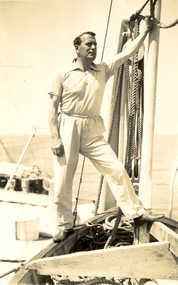
... South Street awards, and Frank as conductor won many awards in the Australian Band Championship contest. In 1933 Frank Wright sailed to England to conduct the famous St Hilda’s Band and was later appointed Musical Director of the London County Council, where he organized many amazing concerts in parks, in and around the London district. He was made Professor of Brass and Military Band Scoring and conducted at the Guildhall of Music and Drama. Frank was often invited to adjudicate Brass Band Championships around Europe...South Street awards, and Frank as conductor won many awards in the Australian Band Championship contest. In 1933 Frank Wright sailed to England to conduct the famous St Hilda’s Band and was later appointed Musical Director of the London County Council, where he organized many amazing concerts in parks, in and around the London district. He was made Professor of Brass and Military Band Scoring and conducted at the Guildhall of Music and Drama. Frank was often invited to adjudicate Brass Band Championships around Europe ...Frank Wright was a renown resident of Smeaton, where he was born. He lived at Laura Villa, and attended Smeaton State School. His father William was a gold miner and his mother's name was Sarah. Their family won many singing and instrumental awards. Frank was tutored by Percy Code and was awarded a gold medal for the highest marks in the ALCM examinations in the British Colonies at the age of seventeen years. He became the Australian Open Cornet Champion by the age of eighteen. A year later, Frank conducted the City of Ballarat Band, and later the Ballarat Soldiers’ Memorial Band. He formed the Frank Wright Frisco Band and Frank Wright and his Coliseum Orchestra. These bands won many South Street awards, and Frank as conductor won many awards in the Australian Band Championship contest. In 1933 Frank Wright sailed to England to conduct the famous St Hilda’s Band and was later appointed Musical Director of the London County Council, where he organized many amazing concerts in parks, in and around the London district. He was made Professor of Brass and Military Band Scoring and conducted at the Guildhall of Music and Drama. Frank was often invited to adjudicate Brass Band Championships around Europe, in Australia, including South Street and in New Zealand. The Frank Wright Medal at the Royal South Street competition is awarded to an individual recognized as making an outstanding contribution to brass music in Australia.Frank Wright Sails the Red Sea. Sepia photograph of a man dressed in whites standing aboard a boat, with his left arm outstretched and holding onto the mast. The man is Frank Wright. A further two photographs shows Frank Wright in a darker suit, on what is thought to be the same deck.Frank Wright on board "Remo", Red Sea, Jan 1940frank wright, ballarat, cornet, red sea, sailing boat -
 Federation University Historical Collection
Photograph - Photograph - Black and White, Scotts Pharmacy, Frank Wright and Friend
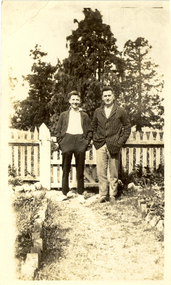
... South Street awards, and Frank as conductor won many awards in the Australian Band Championship contest. In 1933 Frank Wright sailed to England to conduct the famous St Hilda’s Band and was later appointed Musical Director of the London County Council, where he organized many amazing concerts in parks, in and around the London district. He was made Professor of Brass and Military Band Scoring and conducted at the Guildhall of Music and Drama. Frank was often invited to adjudicate Brass Band Championships around Europe...South Street awards, and Frank as conductor won many awards in the Australian Band Championship contest. In 1933 Frank Wright sailed to England to conduct the famous St Hilda’s Band and was later appointed Musical Director of the London County Council, where he organized many amazing concerts in parks, in and around the London district. He was made Professor of Brass and Military Band Scoring and conducted at the Guildhall of Music and Drama. Frank was often invited to adjudicate Brass Band Championships around Europe ...Frank Wright was a renown resident of Smeaton, where he was born. He lived at Laura Villa, and attended Smeaton State School. His father William was a gold miner and his mother's name was Sarah. Their family won many singing and instrumental awards. Frank was tutored by Percy Code and was awarded a gold medal for the highest marks in the ALCM examinations in the British Colonies at the age of seventeen years. He became the Australian Open Cornet Champion by the age of eighteen. A year later, Frank conducted the City of Ballarat Band, and later the Ballarat Soldiers’ Memorial Band. He formed the Frank Wright Frisco Band and Frank Wright and his Coliseum Orchestra. These bands won many South Street awards, and Frank as conductor won many awards in the Australian Band Championship contest. In 1933 Frank Wright sailed to England to conduct the famous St Hilda’s Band and was later appointed Musical Director of the London County Council, where he organized many amazing concerts in parks, in and around the London district. He was made Professor of Brass and Military Band Scoring and conducted at the Guildhall of Music and Drama. Frank was often invited to adjudicate Brass Band Championships around Europe, in Australia, including South Street and in New Zealand. The Frank Wright Medal at the Royal South Street competition is awarded to an individual recognized as making an outstanding contribution to brass music in Australia.Black and white photograph of two men standing on a path inside a fenced garden. There are tall trees in the background. The men are Frank Wright and a friend, possibly at "Laura Villa" Smeaton.Stamped on the back - Printed at Scott's Pharmacy, (143) Sturt Street Ballaratfrank wright, cornet, conductor, ballarat, laura villa -
 Federation University Historical Collection
Photograph - Photograph - Black and White, Frank Wright and Friend, 03/1940
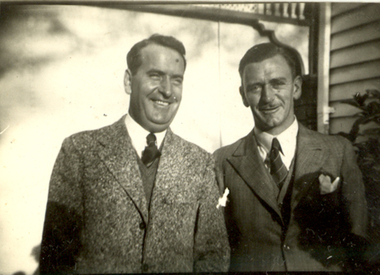
... South Street awards, and Frank as conductor won many awards in the Australian Band Championship contest. In 1933 Frank Wright sailed to England to conduct the famous St Hilda’s Band and was later appointed Musical Director of the London County Council, where he organized many amazing concerts in parks, in and around the London district. He was made Professor of Brass and Military Band Scoring and conducted at the Guildhall of Music and Drama. Frank was often invited to adjudicate Brass Band Championships around Europe...South Street awards, and Frank as conductor won many awards in the Australian Band Championship contest. In 1933 Frank Wright sailed to England to conduct the famous St Hilda’s Band and was later appointed Musical Director of the London County Council, where he organized many amazing concerts in parks, in and around the London district. He was made Professor of Brass and Military Band Scoring and conducted at the Guildhall of Music and Drama. Frank was often invited to adjudicate Brass Band Championships around Europe ...Frank Wright was a renown resident of Smeaton, where he was born on 2 August 1901. He lived at Laura Villa, and attended Smeaton State School. His father William was a gold miner and his mother's name was Sarah. Their family won many singing and instrumental awards. Frank was tutored by Percy Code and was awarded a gold medal for the highest marks in the ALCM examinations in the British Colonies at the age of seventeen years. He became the Australian Open Cornet Champion by the age of eighteen. A year later, Frank conducted the City of Ballarat Band, and later the Ballarat Soldiers’ Memorial Band. He formed the Frank Wright Frisco Band and Frank Wright and his Coliseum Orchestra. These bands won many South Street awards, and Frank as conductor won many awards in the Australian Band Championship contest. In 1933 Frank Wright sailed to England to conduct the famous St Hilda’s Band and was later appointed Musical Director of the London County Council, where he organized many amazing concerts in parks, in and around the London district. He was made Professor of Brass and Military Band Scoring and conducted at the Guildhall of Music and Drama. Frank was often invited to adjudicate Brass Band Championships around Europe, in Australia, including South Street and in New Zealand. The Frank Wright Medal at the Royal South Street competition is awarded to an individual recognized as making an outstanding contribution to brass music in Australia.Small black and white photograph of the torsos of two men dressed in light suits. They are standing outside a weatherboard house. The man on the left is Frank Wright and the man on the right is possibly his friend Vernon Holt.Written in pencil on back - March 1940frank wright, vernon holt, conductor, brass band -
 Federation University Historical Collection
Photograph - Black and White, Frank Wright riding a camel, May 1940
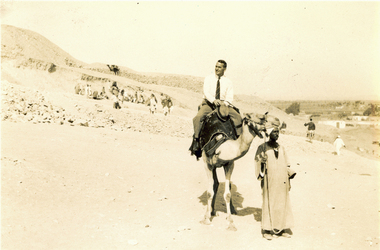
... South Street awards, and Frank as conductor won many awards in the Australian Band Championship contest. In 1933 Frank Wright sailed to England to conduct the famous St Hilda’s Band and was later appointed Musical Director of the London County Council, where he organized many amazing concerts in parks, in and around the London district. He was made Professor of Brass and Military Band Scoring and conducted at the Guildhall of Music and Drama. Frank was often invited to adjudicate Brass Band Championships around Europe...South Street awards, and Frank as conductor won many awards in the Australian Band Championship contest. In 1933 Frank Wright sailed to England to conduct the famous St Hilda’s Band and was later appointed Musical Director of the London County Council, where he organized many amazing concerts in parks, in and around the London district. He was made Professor of Brass and Military Band Scoring and conducted at the Guildhall of Music and Drama. Frank was often invited to adjudicate Brass Band Championships around Europe ...Frank Wright was a renown resident of Smeaton, where he was born. He lived at Laura Villa, and attended Smeaton State School. His father William was a gold miner and his mother's name was Sarah. Their family won many singing and instrumental awards. Frank was tutored by Percy Code and was awarded a gold medal for the highest marks in the ALCM examinations in the British Colonies at the age of seventeen years. He became the Australian Open Cornet Champion by the age of eighteen. A year later, Frank conducted the City of Ballarat Band, and later the Ballarat Soldiers’ Memorial Band. He formed the Frank Wright Frisco Band and Frank Wright and his Coliseum Orchestra. These bands won many South Street awards, and Frank as conductor won many awards in the Australian Band Championship contest. In 1933 Frank Wright sailed to England to conduct the famous St Hilda’s Band and was later appointed Musical Director of the London County Council, where he organized many amazing concerts in parks, in and around the London district. He was made Professor of Brass and Military Band Scoring and conducted at the Guildhall of Music and Drama. Frank was often invited to adjudicate Brass Band Championships around Europe, in Australia, including South Street and in New Zealand. The Frank Wright Medal at the Royal South Street competition is awarded to an individual recognized as making an outstanding contribution to brass music in Australia.Black and white photograph of a man riding a camel and being led by a dark skinned man in flowing robes.In the background are other more indistinct people and animals. The man is Frank Wright and the place is near the Pyramids in Egypt.Handwritten on back - Near Pyramids, May 1940frank wright, cornet, conductor, camel, pyramid, egypt -
 Federation University Historical Collection
Photograph - Black and White, Frank Wright and Friend, circa late 1920's
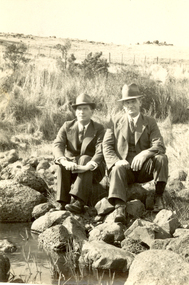
... South Street awards, and Frank as conductor won many awards in the Australian Band Championship contest. In 1933 Frank Wright sailed to England to conduct the famous St Hilda’s Band and was later appointed Musical Director of the London County Council, where he organized many amazing concerts in parks, in and around the London district. He was made Professor of Brass and Military Band Scoring and conducted at the Guildhall of Music and Drama. Frank was often invited to adjudicate Brass Band Championships around Europe...South Street awards, and Frank as conductor won many awards in the Australian Band Championship contest. In 1933 Frank Wright sailed to England to conduct the famous St Hilda’s Band and was later appointed Musical Director of the London County Council, where he organized many amazing concerts in parks, in and around the London district. He was made Professor of Brass and Military Band Scoring and conducted at the Guildhall of Music and Drama. Frank was often invited to adjudicate Brass Band Championships around Europe ...Frank Wright was a renown resident of Smeaton, where he was born. He lived at Laura Villa, and attended Smeaton State School. His father William was a gold miner and his mother's name was Sarah. Their family won many singing and instrumental awards. Frank was tutored by Percy Code and was awarded a gold medal for the highest marks in the ALCM examinations in the British Colonies at the age of seventeen years. He became the Australian Open Cornet Champion by the age of eighteen. A year later, Frank conducted the City of Ballarat Band, and later the Ballarat Soldiers’ Memorial Band. He formed the Frank Wright Frisco Band and Frank Wright and his Coliseum Orchestra. These bands won many South Street awards, and Frank as conductor won many awards in the Australian Band Championship contest. In 1933 Frank Wright sailed to England to conduct the famous St Hilda’s Band and was later appointed Musical Director of the London County Council, where he organized many amazing concerts in parks, in and around the London district. He was made Professor of Brass and Military Band Scoring and conducted at the Guildhall of Music and Drama. Frank was often invited to adjudicate Brass Band Championships around Europe, in Australia, including South Street and in New Zealand. The Frank Wright Medal at the Royal South Street competition is awarded to an individual recognized as making an outstanding contribution to brass music in Australia.Black and white photograph of two men dressed in suits and hats, sitting on rocks beside a creek in a grassy paddock, with a post a wire fence in the background. The man on the left is Frank Wright. The man on the right is unknown.Printed on back - SELOfrank wright, ballarat, cornet, conductor, smeaton -
 Federation University Historical Collection
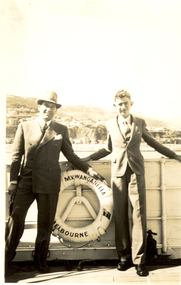
Photograph, Black and White, 13.2.1940
... South Street awards, and Frank as conductor won many awards in the Australian Band Championship contest. In 1933 Frank Wright sailed to England to conduct the famous St Hilda’s Band and was later appointed Musical Director of the London County Council, where he organized many amazing concerts in parks, in and around the London district. He was made Professor of Brass and Military Band Scoring and conducted at the Guildhall of Music and Drama. Frank was often invited to adjudicate Brass Band Championships around Europe...South Street awards, and Frank as conductor won many awards in the Australian Band Championship contest. In 1933 Frank Wright sailed to England to conduct the famous St Hilda’s Band and was later appointed Musical Director of the London County Council, where he organized many amazing concerts in parks, in and around the London district. He was made Professor of Brass and Military Band Scoring and conducted at the Guildhall of Music and Drama. Frank was often invited to adjudicate Brass Band Championships around Europe ...Frank Wright was a renown resident of Smeaton, where he was born. He lived at Laura Villa, and attended Smeaton State School. His father William was a gold miner and his mother's name was Sarah. Their family won many singing and instrumental awards. Frank was tutored by Percy Code and was awarded a gold medal for the highest marks in the ALCM examinations in the British Colonies at the age of seventeen years. He became the Australian Open Cornet Champion by the age of eighteen. A year later, Frank conducted the City of Ballarat Band, and later the Ballarat Soldiers’ Memorial Band. He formed the Frank Wright Frisco Band and Frank Wright and his Coliseum Orchestra. These bands won many South Street awards, and Frank as conductor won many awards in the Australian Band Championship contest. In 1933 Frank Wright sailed to England to conduct the famous St Hilda’s Band and was later appointed Musical Director of the London County Council, where he organized many amazing concerts in parks, in and around the London district. He was made Professor of Brass and Military Band Scoring and conducted at the Guildhall of Music and Drama. Frank was often invited to adjudicate Brass Band Championships around Europe, in Australia, including South Street and in New Zealand. The Frank Wright Medal at the Royal South Street competition is awarded to an individual recognized as making an outstanding contribution to brass music in Australia.Frank Wright on the M.V. Wanganella .1) Black and white photograph of two men standing against the rails of a boat. In the background is the hilly shoreline of Wellington. the boat is the M.V.Wanganella and the man on the left is Frank Wright. .2) Frank Wright on the M.V. WanganellaHandwritten on back - On board Wanganella, Wellington 13-2-40; 15 B frank wright, cornet, conductor, wellington, m.v.wanganella, boat -
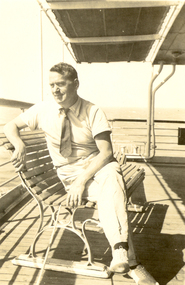 Federation University Historical Collection
Photograph - Black and White, Frank Wright on the Remo, 4/1/1040
... South Street awards, and Frank as conductor won many awards in the Australian Band Championship contest. In 1933 Frank Wright sailed to England to conduct the famous St Hilda’s Band and was later appointed Musical Director of the London County Council, where he organized many amazing concerts in parks, in and around the London district. He was made Professor of Brass and Military Band Scoring and conducted at the Guildhall of Music and Drama. Frank was often invited to adjudicate Brass Band Championships around Europe...South Street awards, and Frank as conductor won many awards in the Australian Band Championship contest. In 1933 Frank Wright sailed to England to conduct the famous St Hilda’s Band and was later appointed Musical Director of the London County Council, where he organized many amazing concerts in parks, in and around the London district. He was made Professor of Brass and Military Band Scoring and conducted at the Guildhall of Music and Drama. Frank was often invited to adjudicate Brass Band Championships around Europe ...Frank Wright was a renown resident of Smeaton, where he was born. He lived at Laura Villa, and attended Smeaton State School. His father William was a gold miner and his mother's name was Sarah. Their family won many singing and instrumental awards. Frank was tutored by Percy Code and was awarded a gold medal for the highest marks in the ALCM examinations in the British Colonies at the age of seventeen years. He became the Australian Open Cornet Champion by the age of eighteen. A year later, Frank conducted the City of Ballarat Band, and later the Ballarat Soldiers’ Memorial Band. He formed the Frank Wright Frisco Band and Frank Wright and his Coliseum Orchestra. These bands won many South Street awards, and Frank as conductor won many awards in the Australian Band Championship contest. In 1933 Frank Wright sailed to England to conduct the famous St Hilda’s Band and was later appointed Musical Director of the London County Council, where he organized many amazing concerts in parks, in and around the London district. He was made Professor of Brass and Military Band Scoring and conducted at the Guildhall of Music and Drama. Frank was often invited to adjudicate Brass Band Championships around Europe, in Australia, including South Street and in New Zealand. The Frank Wright Medal at the Royal South Street competition is awarded to an individual recognized as making an outstanding contribution to brass music in Australia.Black and white photograph of a man sitting on the deck of a boat beside the railings. The boat, which is the 'Remo', is sailing on the Mediterranean Sea and the man is Frank Wrightfrank wright, cornet, conductor, remo, mediterranean sea, boat
