
Showing 62 items matching " victorian defence forces"
-
 Montmorency–Eltham RSL Sub Branch
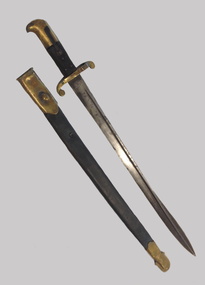
Weapon - 1855 Pattern Sappers and Miners Lancaster Sword Bayonet, Carl Reinhard KIRSCHBAUM, 1855 Pattern Sapper and Miners Lancaster Sword Bayonet, 1855
... ...victorian defence forces...Pattern 1855 bayonets were issued to some volunteer units of the Victorian defence forces in the late 1850s, ...Pattern 1855 bayonets were issued to some volunteer units of the Victorian defence forces in the late 1850s, bayonet victorian defence forces lancaster carbine Knight's Head stamping of the German Solingen-based firm Carl Reinhard KIRSCHBAUM Stylised beaked-brass pommel with T- shaped attachment slot. ...This bayonet and scabbard was made for the Charles Lancaster .577 calibre Oval Bore Carbine and was known as the Pattern 1855 'Sappers and Miners' bayonet because they were designed for use by the Corps of British Royal Sappers & Miners. The first model Sappers and Miners bayonet appeared in 1841 and differs significantly from this type. Pattern 1855 bayonets were issued to some volunteer units of the Victorian defence forces in the late 1850s, Stylised beaked-brass pommel with T- shaped attachment slot. A steel press stud operates the locking catch via a steel leaf spring on right side of hilt. Two-piece black chequered leather grips. Left grip has four small steel rivets, right grip three rivets and the leaf spring securing screw. Brass cross-guard with formed muzzle ring. Long single-edged, pipe backed, quill pointed 24 inch (615mm) steel blade. Original leather scabbard with brass locket and chape.Knight's Head stamping of the German Solingen-based firm Carl Reinhard KIRSCHBAUM bayonet, victorian defence forces, lancaster carbine -
 Bendigo Historical Society Inc.
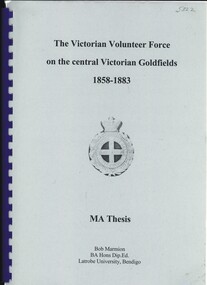
Book - THE VICTORIAN VOLUNTEER FORCE ON THE CENTRAL VICTORIAN GOLDFIELDS 1858-1883
... ... Victorian defence forces...GOLD Goldfields volunteer force victoria history Victoria Goldfields Victorian volunteer force Victorian defence forces Bendigo and District history Bob Marmion The Victorian Volunteer Force on the central Victorian Goldfields 1858-1883, MA Thesis. ...The Victorian Volunteer Force on the central Victorian Goldfields 1858-1883, MA Thesis. Publisher: Latrobe University, Bendigo. Produced post 2003. Imperial and Colonial defence, Volunteers of Victoria's defences, British army's role, social structure, changing of the guard on the goldfields. Photographs, illustrations & graphs. 144 pages.Bob Marmiongold, goldfields, volunteer force, victoria, history victoria goldfields, victorian volunteer force, victorian defence forces, bendigo and district history -
 Flagstaff Hill Maritime Museum and Village
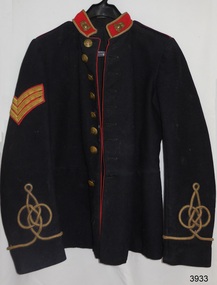
Uniform - Tunic, 1899-1903
... forces were established to strengthen the British Imperial troops posted here. A battery of artillery was raised in Victoria as well as in other Australian states. In 1870 Australia became responsible for its own naval and military defence. The Volunteer Corps and Victorian...This original uniform tunic of the pre-Federation Victorian Permanent Artillery is significant for its association with Australia's military defence and the fortifications of our district, state and country. The tunic is also significant, representing part of the history and evolution of uniforms in the Australian military forces. ...This original tunic or jacket is part of the full dress uniform of the pre-Federation Victorian Permanent Artillery regiment. Its owner had the rank of Sergeant, as indicated by the three inverted chevrons. The Artillery design of the badges and buttons indicate the date of the tunic to be from 1893 to 1903. However the maker of the tunic, W. Moncton, began manufacture in Melbourne in 1899, so this the tunic can be dated between 1899 and 1903. The donor's grandfather was given this tunic but not the name of the original owner. It has since been suggested to the family that the tunic was worn by a local Western District Light Horse member. This could very well have been the case because mounted troops were officially referred to as the Light Horse in the late 19th to early 20th century. Several local men were involved in the Light Horse during the First World War. The donor's grandfather wore this tunic in the local district when riding a penny farthing bicycle. The donor's father also wore the tunic when dressed as a 'Captain' hosting a local disco dance. BRIEF MILITARY HISTORY- The Crimean War began In 1854 and many people in colonial Australia were afraid of a Russian attack. Volunteer forces were established to strengthen the British Imperial troops posted here. A battery of artillery was raised in Victoria as well as in other Australian states. In 1870 Australia became responsible for its own naval and military defence. The Volunteer Corps and Victorian Navy shared the responsibility of defending the existing forts, assisted by volunteer coastal and mobile field batteries. The Permanent Victorian Artillery force was established. It was disbanded in 1880 then re-formed in 1882 as the Victorian Garrison Artillery Corps. In 1895 the Geelong, Warrnambool, Port Fairy and Portland Batteries became part of the Western District Garrison Artillery. Many of the volunteers who served in the Artillery were from rural areas. They belonged to rifle clubs and were experience horsemen as well. Australia's defence at this time relied on these mounted troops, or Light Horse men. In 1899 the Victorian Garrison Artillery Corps amalgamated with the New South Wales and Queensland Permanent Artillery to become the Victorian Regiment of the Royal Australian Artillery (RAA). Then prior to Federation, the RAA and the Permanent Artillery of South Australia, Western Australia and Tasmania all combined, becoming the Royal Australian Artillery Regiment with two Batteries of Field Artillery; Battery A from Sydney and Battery B from Melbourne.This original uniform tunic of the pre-Federation Victorian Permanent Artillery is significant for its association with Australia's military defence and the fortifications of our district, state and country. The tunic is also significant, representing part of the history and evolution of uniforms in the Australian military forces. The tunic is also significant in its representation of Australia's independence in forming its own defences. The tunic has local significance in its connection with local social events.Tunic or jacket, part of the full dress uniform of the pre-Federation Victorian Permanent Artillery operating from 1893 to 1903. Original, single-breasted tunic of dark blue wool, red piping trim, black cotton lining in body. Sleeves lined with blue striped, white cotton. Front closure has eight brass buttons. Red band-style collar with hook-and-eye closure has gold bullion braid trim and a brass badge pinned each side at the front. Upper right sleeve has three inverted chevrons on red fabric with gold bullion braid trim (rank of Sergeant). Both sleeves have gold bullion braid 'Austrian knot' emblems stitched onto lower arm, with ends finishing on the inner sleeve. Shoulder epaulettes have red piping and smaller brass buttons. Closed back vent has vertical scalloped design with six brass buttons, in two columns of three, and red piping trim. Brass belt hook is attached to the left back waist, close to the seam (right side has a mark indicating a previous similar clip). Inside left breast is a concealed pocket. Tunic has both machine and hand stitching. All brass shank-style buttons have matching Artillery emblems with inscriptions on the back. The two brass collar badges have additional artillery emblems of exploding grenade and star as well as an inscription. Buttons were made for W. Moncton, of Melbourne and marked with his name. He traded from 1899, dating the tunic to between 1899 and 1903.Button front: Artillery emblem on front (field cannon facing left, in front of a muzzle-loading ram rod). Button back: engraved "W. MONCTON . MELBOURNE ." Collar badges: Artillery emblem (field cannon facing right | stars | exploding grenade | "AUSTRALIA")flagstaff hill, warrnambool, shipwrecked coast, flagstaff hill maritime museum, maritime museum, shipwreck coast, flagstaff hill maritime village, great ocean road, uniform jacket, uniform tunic, garrison volunteer uniform, fortifications in victoria, victorian permanent artillery, pre-federation military uniform, sergeant's uniform, jacket, militia, victoria, victorian volunteer forces, victorian regiment, royal australian artillery, raa, field gun, sergeant, w. moncton, garrison, dress uniform, tunic, scarlet collar, red collar, scarlet piping, red piping, gold bullion, artillery emblem, light horse, artillery, mounted troops, victorian garrison artillery corps -
 Learmonth and District Historical Society Inc.
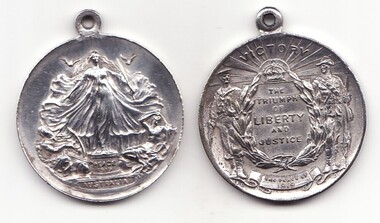
Peace 1919 Medal, Medal Peace 1919, 1919
... forces). The medal was designed by Charles Douglas Richardson, better known for his work as a sculptor. Time constraints as well as pressure from the production of other victory medals meant that no single manufacturer could make the 1,670,000 medals. Six were therefore selected: Amor, Stokes, Schlank, Parkes, Angus & Coote (who later withdrew) and Platers. The medals were silvered bronze, with silver issues for special presentations. The Defence Department supplied a red, white and blue striped ribbon and pin. Distribution began in March 1919. Victorian...forces). The medal was designed by Charles Douglas Richardson, better known for his work as a sculptor. Time constraints as well as pressure from the production of other victory medals meant that no single manufacturer could make the 1,670,000 medals. Six were therefore selected: Amor, Stokes, Schlank, Parkes, Angus & Coote (who later withdrew) and Platers. The medals were silvered bronze, with silver issues for special presentations. The Defence Department supplied a red, white and blue striped ribbon and pin. Distribution began in March 1919. Victorian ...Awarded to: School Children of the Commonwealth of Australia Other Details: Of the commemorative medals issued to mark the end of the First World War, the most common was the so-called 'Peace' or 'Victory' medal issued to every child in Australia aged 0-14 years (and aged up to 16 if parents were in the armed forces). The medal was designed by Charles Douglas Richardson, better known for his work as a sculptor. Time constraints as well as pressure from the production of other victory medals meant that no single manufacturer could make the 1,670,000 medals. Six were therefore selected: Amor, Stokes, Schlank, Parkes, Angus & Coote (who later withdrew) and Platers. The medals were silvered bronze, with silver issues for special presentations. The Defence Department supplied a red, white and blue striped ribbon and pin. Distribution began in March 1919. Victorian school children received their medals on Friday 18 July and on 'Peace Day' on Saturday 19 July.To commemorate the end of World War 1.Round white metal medals issued to mark the end of WW1. On the front "PEACE 1919", and on the reverse, "VICTORY", middle of the medal "THE TRIUMPH OF LIBERTY AND JUSTICE". on the bottom "THE PEACE OF 1919". With a plain edge.Peace with two flying doves on pedestal inscribed, PEACE / 1919 below AUSTRALIA; figure in chains on left and another entangled in bush to right (obverse) Australian sailor and soldier support wreath; above, VICTORY; within, THE / TRIUMPH / OF / LIBERTY / AND / JUSTICE; below on plaque, THE PEACE OF 1919(reverse)world war 1, peace, victory medal australia -
![Photograph - Mounted Rifles at Mortlake Racecourse circa1900 Boer War, Late 19th Century: [ c. 1885?]](/media/collectors/4f729f5b97f83e0308601618/items/4f72ac3397f83e030860386e/item-media/4f72ac3397f83e0308603870/item-fit-380x285.jpg?cb=6) Mortlake and District Historical Society
Mortlake and District Historical SocietyPhotograph - Mounted Rifles at Mortlake Racecourse circa1900 Boer War, Late 19th Century: [ c. 1885?]
... defence forces from the colonies in 1870, so the States had to provide their own. District defence groups were common at this time, meeting regularly for training. This un-named and un-dated photo appears to be a local (Mortlake) unit of the Victorian Mounted Rifles c. 1885,[A local expert on weaponry believes they are from the 'Victorian Rangers' judging from their rifles.] ...This informally posed photo was taken in front of the old grandstand at Mortlake's recreation (football) oval. It shows 17 troopers in uniform, holding rifles. There are 7 horses, one trooper is mounted. All wear an early version of the slouch hat. An interested group of mainly boys and a few men, including a policeman, watch from the grandstand. Shows early preparation for national defence or conflict, at a local level. Britain had withdrawn its defence forces from the colonies in 1870, so the States had to provide their own. District defence groups were common at this time, meeting regularly for training. This un-named and un-dated photo appears to be a local (Mortlake) unit of the Victorian Mounted Rifles c. 1885,[A local expert on weaponry believes they are from the 'Victorian Rangers' judging from their rifles.] They were precursors of the Light Horse regiments of the Boer and First World Wars. Mortlake has its own Boer War Memorial (1902) in Mortlake Botanic Gardens. Rectangular sepia photograph on cardboard backingDavis Brosi inscription bottom left corner, with Mortlake and District Historical Society Stamp on backhorse, victorian, australian, australia, defence, war, rifles, memorial, mounted, light, mortlake, boer -
 Flagstaff Hill Maritime Museum and Village
Uniform - Bicorn Hat and Hat Box, late 19th - early 20th century
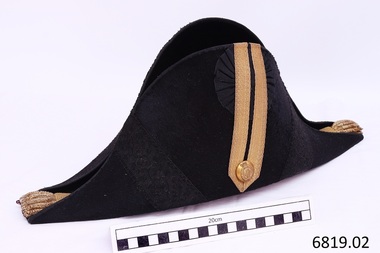
... Victorian Colonial Military Forces”. That hat is different in that it has a plume and the braid and button are silver. Berry MdDade, the donor, has used the hat many times as a dress-up hat but doesn’t know the origin of it. The hat seems to fit the design of the Staff Officers in Victorian Volunteers in Colonial times, but the button on this hat was used for unranked volunteers. Also, military uniforms usually have very clear manufacturer’s labels, as they are made by reputable companies under contract to the Defence...Victorian Colonial Military Forces”. That hat is different in that it has a plume and the braid and button are silver. Berry MdDade, the donor, has used the hat many times as a dress-up hat but doesn’t know the origin of it. The hat seems to fit the design of the Staff Officers in Victorian Volunteers in Colonial times, but the button on this hat was used for unranked volunteers. Also, military uniforms usually have very clear manufacturer’s labels, as they are made by reputable companies under contract to the Defence ...This hat and hat box was donated to Flagstaff Hill Maritime Village by the family of Doctor William Roy Angus, Surgeon and Oculist. It is part of the “W.R. Angus Collection” which includes historical medical equipment, surgical instruments and material once belonging to Dr Edward Ryan and Dr Thomas Francis Ryan, (both of Nhill, Victoria) as well as Dr Angus’ belongings. The Collection’s history spans the medical practices of the two Doctors Ryan, from 1885-1926 plus that of Dr Angus, up until 1969. McDade is the surname of Dr Angus’ daughter Berry (Berenice) McDade nee Angus. This had belonged to her father Dr William Roy Angus, Surgeon and Oculist (1901 –1970), who wore it on the ship T.S.S. LARGS BAY when travelling from Australia to Scotland for extended studies to be a “Fellow” of the Royal College of Surgeons in Edinburgh in 1929. This bicorn, cocked hat was worn with narrow points towards the front and back. It is decorated with flat gold braid or ‘lace’ with a geometrical design. Regimental lace was worn on the uniform and headdress of regimental officers in the 19th century. Gold lace chevrons were worn on coats to signify rank. Drummers and Foot Guards also wore regimental lace to distinguish them from other military personnel. In the late 19th century the English and Welsh infantry officers’ uniforms displayed a rose-pattern lace. The gold bullion and underlying crimson ‘eyes’ have been used to signify the rank of the owner. Crimson eyes were used for military personnel, and blue eyes were used for naval personnel. Different numbers and colours of the bullion and eyes may have been used to represent different military ranks. The Regulations specify nine tassels and eleven underlying eyes but there could have been variations. We have not yet identified the rank for this particular hat but hats such as this were part of the Australian and British naval uniforms in the early 20th century. The gold button’s emblem features a cross with five stars, a crown, and the motto “AUT PACE AUT BELLO,” which translates as “either in peace or in war.” Museum Victoria has a similar button and writes that buttons with this design were used by the Victorian Volunteers in the nineteenth century. The Australian War Memorial Curator of Military Heraldry advised Museum Victoria that these buttons dated from 1880 to 1892 and were worn by regular, unranked soldiers. Tasmanian Midshipman Alan Casey, who served the British and Australian Navy from 1919 to 1933 and retired as a Lieutenant Commander, owned a similar officer's bicorn hat. His hat and epaulettes are in the Tasmanian Maritime Museum's collection. The Australian War Memorial has a hat that is very similar in design, described as an “Artillery Staff Officer’s cocked had with plume, worn by Volunteer Artillery Staff in the Victorian Colonial Military Forces”. That hat is different in that it has a plume and the braid and button are silver. Berry MdDade, the donor, has used the hat many times as a dress-up hat but doesn’t know the origin of it. The hat seems to fit the design of the Staff Officers in Victorian Volunteers in Colonial times, but the button on this hat was used for unranked volunteers. Also, military uniforms usually have very clear manufacturer’s labels, as they are made by reputable companies under contract to the Defence Department. The manufacturer’s mark is not discernible on this hat. The origin, original wearer and use of this particular hat is unclear. The military bicorn cockade hat belonged to Dr William Roy Angus and is part of the W.R. Angus Collection. It is significant for still being located at the site connected to Doctor Angus being the last Port Medical Officer in Warrnambool. The collection of medical instruments and other equipment is culturally significant, as an historical example of medicine from late 19th to mid-20th century. Dr Angus assisted Dr Tom Ryan, a pioneer in the use of X-rays and in ocular surgery. Black bicorn cocked hat and case. It appears to be part of a 19th-century Colonial full-dress naval officer's uniform. The long, narrow crescent-shaped hat is made of beaver fabric and the crown is lined with crimson silk and finished with a hand-stitched leather sweatband. On one flat side is a pleated black silk, lace cockade woven in the pattern of oak leaves and acorns. The cockade is overlaid with a double row of gold lace braiding secure with a Victorian Volunteer’s gold button. Wide diagonal bands of black lace braid trim are on each side of the gold braiding. The other side of the hat is plain. The front and back points of the hat each have seven gold bullion tassels with nine underlying twists of crimson ‘eyes’. The fitted metal carry case has a catch and a plaque on one side. The button bears a crown and cross with five stars and a motto. Inside the hat is a white name tag with clear adhesive over it, with black printed text with the name “Mc Dade”. The hat is part of the W.R. Angus Collection.The hat has no maker’s marks although there is a darker colour in the centre where there could have been a label. Inside the hat is taped a printed label; “Mc DADE 801 1032” Button’s emblem- a cross with five stars, under a crown, all within a buckled belt with the motto “AUT PACE AUT BELLO” [either in peace or in war] The plaque on the case has no legible marks.flagstaff hill, warrnambool, shipwrecked coast, flagstaff hill maritime museum, maritime museum, shipwreck coast, flagstaff hill maritime village, great ocean road, dr w r angus, t.s.s. largs bay, berry mcdade, 19th century colonial military uniform, artillery staff officer’s cocked had, victorian volunteers, victorian colonial military forces, colonial militia, aut pace aut bello, cocked hat, cockade hat, bicorn hat, military bullion, oak leaves and acorns pattern, gold bullion tassels, military heraldry, w.r. angus collection., australian navy, british navy, uniform -
 Flagstaff Hill Maritime Museum and Village
Award - Trophy, c. 1886
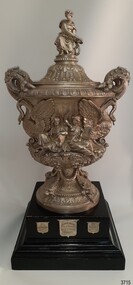
... defence services with prizes for competitions among both military and naval forces. In colonial Australia in the 1880s, there was an increase in the size of the colonial military forces, rising from 8,000 in 1883 to 22, 000 in 1885. In 1885, there was a return of unpaid volunteer soldiers, along with a fear of a Russian attack on Australia. As a result, the Sir W.J. Clarke's Trophy was given as a prize in 1885 to Victorian...defence services with prizes for competitions among both military and naval forces. In colonial Australia in the 1880s, there was an increase in the size of the colonial military forces, rising from 8,000 in 1883 to 22, 000 in 1885. In 1885, there was a return of unpaid volunteer soldiers, along with a fear of a Russian attack on Australia. As a result, the Sir W.J. Clarke's Trophy was given as a prize in 1885 to Victorian ...This silver trophy is named "Sir W. Clarke's Trophy" after its donor. Sir William John Clarke, Baronet, who was a citizen and philanthropist, well known in Melbourne and throughout Victoria. He gave donations to many public projects, including Melbourne University and was a patron of many and varied sports. He encouraged the defence services with prizes for competitions among both military and naval forces. In colonial Australia in the 1880s, there was an increase in the size of the colonial military forces, rising from 8,000 in 1883 to 22, 000 in 1885. In 1885, there was a return of unpaid volunteer soldiers, along with a fear of a Russian attack on Australia. As a result, the Sir W.J. Clarke's Trophy was given as a prize in 1885 to Victorian Militia Garrison Battery competition winners, for artillery firing target accuracy. On 12th December 1885, the conclusion of the first artillery competition for Sir W. Clarke's Trophy was held at the Williamstown battery. The first winner of the Sir W. Clarke's Trophy was the Geelong Garrison Battery, with the prize Sir W. Clark's Trophy presented to them in 1886. In 1887, Warrnambool Garrison Artillery, under the command of Major W.S. Helpman, was the proud winner of the 'Sir W. Clarke Trophy'. The contest was held at Point Gellibrand, with the trophy formally unveiled at the Warrnambool orderly-room on 3rd August 1887. In June 1892, the annual competition was held at the Gellibrand battery in Williamstown. The canvas targets were moored at sea and fired upon from three breech-loading guns mounted on disappearing carriages. Each team was allowed 4 shots fired from each of the 3 guns. An article in the Portland Guardian stated that "the Warrnambool team is certainly looked upon as the certain winners." The same article reported that in this particular year, the Government withdrew its previous award of 10-pound cash to the men of the winning team, described in the Portland Guardian as a petty economy of the Government. As the Warrnambool Militia Garrison Artillery had won the Trophy, for the third time, they became Absolute Possessors of the prize. On 11th August 2016, during a ceremony at Flagstaff Hill, the Australian Army handed over guardianship of two very significant historical items, the 1885 W. Clarke Trophy and the 1861 Warrnambool Ladies Silver Bugle, to Warrnambool City Council for display at Flagstaff Hill Maritime Museum. Both heritage-listed items are strongly connected to the city of Warrnambool and form an integral part of the history of the Warrnambool Garrison.The Sir W. Clarke Trophy is locally significant to the community of Warrnambool for its connection to the Warrnambool Volunteer Rifle Corps - part of the original Warrnambool Garrison – which was formed to protect the Warrnambool Harbour. The site of the 1888 Warrnambool Garrison and Fortifications is Victorian State Heritage-listed. It is significant for its intact and operational nature, and is one of the best-preserved pieces of Victoria's early colonial heritage.This is the Sir W. Clarke's Trophy for the Victorian Militia Garrison Artillery, first presented in 1886. The silver trophy with a conical lid rests on a square black timber base that displays award shields on each vertical side. Inside the hollow trophy is a removable copper alloy bowl with a wide edge. The inner walls of the trophy are unpolished, and there is a metal bracing plate between the sides, and fitted metal bolts, nuts and washers near the base. The large, elaborately decorated, silver bowl has a conical pedestal, two handles on the top edge of the bowl and a matching fitted lid. Much of the decoration is three-dimensional. Fine, detailed decoration includes a semi-kneeling figure with an upturned face on top of the lid, vine-like handles resting on necks of swans with outspread wings, figures seated on a ridge, two on each side, with ends of limbs hanging over the ridge, two holding lyres, patterns of leaves, flowers and draped ribbons. The timber base is painted black on the outside. The engraved silver shields around its sides have inscriptions of trophy winners and the name of the trophy. There is a handwritten, pencil inscription of the date 1887 under the timber base. The first award was made in 1886 and the last in 1892. The Warrnambool Garrison won this trophy three times, including the last award given.Front centre large shield; “VICTORIAN MILITIA / GARRISON ARTILLERY / SIR W. CLARKE’S / TROPHY” Left side, right shield; “1886 / WON BY / GEELONG / GARRISON BATTERY / Major J PRICE / COMMANDING OFFICER” Front, right shield; ” 1887 / WON BY / WARRNAMBOOL / GARRISON ARTILLERY / Major W.S. Helpman / COMMANDING OFFICER” Left side shield: “1888 / WON BY / NORTH MELBOURNE / Garrison Battery / Major F.R.Y. Goldstein / Commanding Officer” Right side, left shield; “1889. / WON BY / WARRNAMBOOL / Garrison Battery / Major W.S. Helpman / Commanding Officer” Right side, centre shield; “1890 / WON BY / HARBOUR TRUST / BATTERY / Major J.H. Haydon / Commanding Officer” Right side, right shield; “1891 / WON BY / WILLIAMSTOWN / BATTERY /l Major W.H. Hall / Commanding Officer” Back, left shield; “1892 / WON BY / WARRNAMBOOL / Garrison Battery / Major W.S. Helpman / Commanding Officer” In pencil underneath timber base “1887”flagstaff hill, warrnambool, shipwrecked coast, flagstaff hill maritime museum, maritime museum, shipwreck coast, flagstaff hill maritime village, great ocean road, sir w. clarke's trophy, warrnambool volunteer rifle corps, statistics of warrnambool volunteer rifle corps, warrnambool volunteer rifle company, warrnambool rifle volunteers, warrnambool garrison, 1886, 1887, 1888, 1889, 1890, 1891, 1892, trophy, garrison, competition, prize, winners, sir w. clarke, w. clarke trophy, sir w. clarke trophy -
 Bendigo Military Museum
Manual - VOLUNTEER DEFENCE CORP TRAINING, Victorian Railway Workshops, 1942
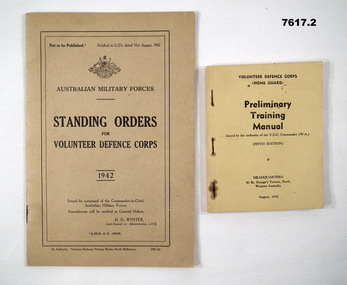
... FORCES. Standing orders for Volunteer Defence Corps 1942. At the bottom is a line stating: By Authority Victorian Railways Printing Works, North Melbourne. ...Defence Corps (V.D.C.) 1. THIS IS A MEDIUM SIZED MANUAL. THE COVER IS A STIFF CARDBOARD OF KHAKI COLOUR. TOP CENTRE IS THE AUSTRALIAN CREST. AUSTRALIAN MILITARY FORCES. Standing orders for Volunteer Defence Corps 1942. At the bottom is a line stating: By Authority Victorian ...1. THIS IS A MEDIUM SIZED MANUAL. THE COVER IS A STIFF CARDBOARD OF KHAKI COLOUR. TOP CENTRE IS THE AUSTRALIAN CREST. AUSTRALIAN MILITARY FORCES. Standing orders for Volunteer Defence Corps 1942. At the bottom is a line stating: By Authority Victorian Railways Printing Works, North Melbourne. Inside are 24 pages of orders and a couple of loose amendments. 2. Pocket size Manual. Khaki Cover. Printing on front in black ink. Title - VOLUNTEER DEFENCE CORPS (HOME GUARD) "Preliminary Training Manual" 5th Edition. Headquarters Perth W.A. August 1942. The manual has 128 pages of text and drawings. It is bound with 3 rusty staples.ww2, volunteer defence corps (v.d.c.) -
 Bendigo Military Museum
Award - MEDAL SET, WW2, KOREA, Post 1945
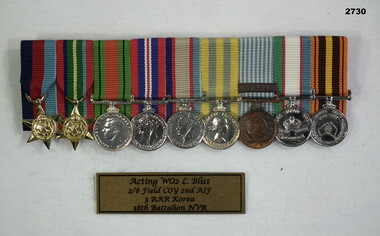
... After that he served with the 38th Batt North Victorian Regiment. medals military history Passchendaele barracks trust Medal set, miniatures, court mounting, set of (9) Re L.BLISS. 1. 1939 - 45 Star 2. Pacific Star 3. Defence Medal 4. War Medal 1939 - 45 5. Australian Service Medal 1939 - 45 6. Korea Medal 7. UN Medal with clasp "KOREA" 8. British commonwealth occupation forces ...Leonard Edwin Bliss VX59955 enlisted in the 2nd AIF on 22.7.41 age 19 years. At discharge from the Army on 5.12.45 he was a Sapper in 2/8th Field Company. He re enlisted later No 3/400361 and served with 3 RAR in Korea. After that he served with the 38th Batt North Victorian Regiment. Medal set, miniatures, court mounting, set of (9) Re L.BLISS. 1. 1939 - 45 Star 2. Pacific Star 3. Defence Medal 4. War Medal 1939 - 45 5. Australian Service Medal 1939 - 45 6. Korea Medal 7. UN Medal with clasp "KOREA" 8. British commonwealth occupation forces medal Japan 9. Atomic tests medal 1952 - 1958medals, military, history, passchendaele barracks trust -
 4th/19th Prince of Wales's Light Horse Regiment Unit History Room
Medal, Australian Peace Medal 1919
... forces). The medal was designed by Charles Douglas Richardson, better known for his work as a sculptor. Time constraints as well as pressure from the production of other victory medals meant that no single manufacturer could make the 1,670,000 medals. Six were therefore selected: Amor, Stokes, Schlank, Parkes, Angus & Coote (who later withdrew) and Platers. The medals were silvered bronze, with silver issues for special presentations. The Defence Department supplied a red, white and blue striped ribbon and pin. Distribution began in March 1919. Victorian...forces). The medal was designed by Charles Douglas Richardson, better known for his work as a sculptor. Time constraints as well as pressure from the production of other victory medals meant that no single manufacturer could make the 1,670,000 medals. Six were therefore selected: Amor, Stokes, Schlank, Parkes, Angus & Coote (who later withdrew) and Platers. The medals were silvered bronze, with silver issues for special presentations. The Defence Department supplied a red, white and blue striped ribbon and pin. Distribution began in March 1919. Victorian ...Awarded to: School Children of the Commonwealth of Australia Other Details: Of the commemorative medals issued to mark the end of the First World War, the most common was the so-called 'Peace' or 'Victory' medal issued to every child in Australia aged 0-14 years (and aged up to 16 if parents were in the armed forces). The medal was designed by Charles Douglas Richardson, better known for his work as a sculptor. Time constraints as well as pressure from the production of other victory medals meant that no single manufacturer could make the 1,670,000 medals. Six were therefore selected: Amor, Stokes, Schlank, Parkes, Angus & Coote (who later withdrew) and Platers. The medals were silvered bronze, with silver issues for special presentations. The Defence Department supplied a red, white and blue striped ribbon and pin. Distribution began in March 1919. Victorian school children received their medals on Friday 18 July and on 'Peace Day' on Saturday 19 July.White metal, circular. Peace with two flying doves on pedestal inscribed, PEACE / 1919 below AUSTRALIA; figure in chains on left and another entangled in bush to right (obverse) Australian sailor and soldier support wreath; above, VICTORY; within, THE / TRIUMPH / OF / LIBERTY / AND / JUSTICE; below on plaque, THE PEACE OF 1919(reverse)peace medal, world war 1 -
4th/19th Prince of Wales's Light Horse Regiment Unit History Room
Medal
... Defence Department to school children throughout Australia to commemorate the signing of the Versailles Peace Treaty in 1919. The medals were originally suspended from a narrow piece of red, white and blue striped cotton ribbon. This medalet is associated with one of the children of Lance Corporal Giles Daniel, 1st AIF. Born in Ballarat, western Victoria on 16 December 1870, Giles Felix Daniel moved to Oakleigh, Victoria aged 15. A member of the Victorian permanent forces...Defence Department to school children throughout Australia to commemorate the signing of the Versailles Peace Treaty in 1919. The medals were originally suspended from a narrow piece of red, white and blue striped cotton ribbon. This medalet is associated with one of the children of Lance Corporal Giles Daniel, 1st AIF. Born in Ballarat, western Victoria on 16 December 1870, Giles Felix Daniel moved to Oakleigh, Victoria aged 15. A member of the Victorian permanent forces ...Title Peace of 1919 medalet issued to Australian schoolchildren Object type Medalet Place made Australia: Victoria, Melbourne Date made 1919 Summary Designed by C Douglas Richardson, 'The Peace of 1919' medalet was issued by the Defence Department to school children throughout Australia to commemorate the signing of the Versailles Peace Treaty in 1919. The medals were originally suspended from a narrow piece of red, white and blue striped cotton ribbon. This medalet is associated with one of the children of Lance Corporal Giles Daniel, 1st AIF. Born in Ballarat, western Victoria on 16 December 1870, Giles Felix Daniel moved to Oakleigh, Victoria aged 15. A member of the Victorian permanent forces, he served as a corporal (regimental number 8) with the First Victorian Mounted Infantry Company, part of the first Victorian Contingent to the war in South Africa in 1899. This unit was one of the first Australian formations to see action during the Boer War. It was largely drawn from serving members of the Victorian forces. Demoted to private following a Court Martial on 19 November 1900, Daniel returned to Australia in December of the same year. During the First World War, he was again one of the first to enlist, joining the AIF on 19 August 1914, and becoming Lance Corporal number 32 with the First Divisional Signals Company. He served with this unit during the Gallipoli campaign and until his return to Australia on 11 April 1916. Silver-plated brass Circular medalet with a plain edge and integral suspension loop. The obverse features a symbolic female figure of Peace, holding a sword and standing on a plinth marked 'PEACE 1919'. Behind her flies a dove, and at her left and right feet are two figures freed from their shackles. The reverse features a central panel surrounded by laurel leaves, surmounted by the King's Crown with the word 'VICTORY' over the rays of the rising sun. A sailor and a digger stand at ease on either side of the panel on which is cast 'THE / TRIUMPH / OF / LIBERTY / AND / JUSTICE'. Below the leaves is a very small panel with the words 'THE PEACE OF 1919' and the manufacturer's name.peace medal 1919 -
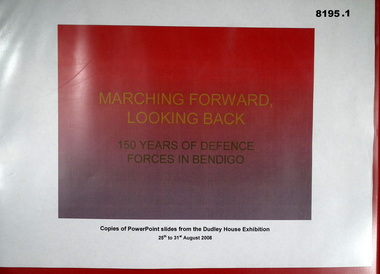 Bendigo Military Museum
Album - FOLDERS, 150 YEARS
... The Exhibition led up to the 150 years Anniversary Dinner of Defence Forces in Bendigo held re Cat No’s 8193 & 8194.5P The source of the images came from Multiple places including; The Bendigo Advertiser, Bendigo Military Museum, Passchendaele Barracks Military Historical Society, Victorian State Library, Victorian Govt Gazette, City of Greater Bendigo, Victorian Colonial Infantry Association, 15 Transport Sqd and multiple personal files. ...The Exhibition led up to the 150 years Anniversary Dinner of Defence Forces in Bendigo held re Cat No’s 8193 & 8194.5P The source of the images came from Multiple places including; The Bendigo Advertiser, Bendigo Military Museum, Passchendaele Barracks Military Historical Society, Victorian State Library, Victorian Govt Gazette, City of Greater Bendigo, Victorian Colonial Infantry Association, 15 Transport Sqd and multiple personal files. ...The images are ones that were used in a Power Point exhibition at Dudley House Bendigo from August 25th - 31st August 2008. The Exhibition led up to the 150 years Anniversary Dinner of Defence Forces in Bendigo held re Cat No’s 8193 & 8194.5P The source of the images came from Multiple places including; The Bendigo Advertiser, Bendigo Military Museum, Passchendaele Barracks Military Historical Society, Victorian State Library, Victorian Govt Gazette, City of Greater Bendigo, Victorian Colonial Infantry Association, 15 Transport Sqd and multiple personal files. These were part of the research by Murray Poustie for the 150 year event..1)Folder A4 4 ring Binder with plastic inserts each holding two A4 white paper sheets with images, 79 inserts making total 158 images. .2) Folder same as .1) has 80 insert sheets with articles, old photos newspapers relating to units, Wars during 150 years of Defence Forces in Bendigo..1)On front cover, “Marching Forward, Looking Back - 150 years of Defence Forces in Bendigo”. .2) At top, “The Organising Committee - 150 Years of Defence Forces in Bendigo”brsl, smirsl, 150 -
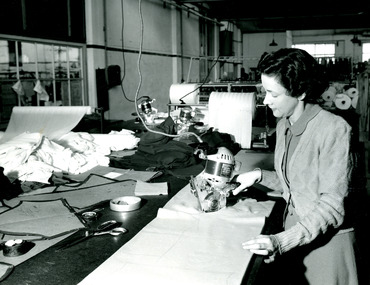 Bendigo Historical Society Inc.
Photograph - HANRO COLLECTION: PROMOTIONAL PHOTOGRAPHS, 1940's
... Forces. Lieutenant-Colonel in 1927, he retired as honorary colonel in 1942 after having organized the north-west Victorian group of the Volunteer Defence Corps early in World War II. ...Forces. Lieutenant-Colonel in 1927, he retired as honorary colonel in 1942 after having organized the north-west Victorian group of the Volunteer Defence Corps early in World War II. ...Sir George Victor Lansell (1883-1959), businessman, politician and philanthropist, was born on 3 October 1883 in London, elder son of George Lansell, the Bendigo 'Quartz King', and his second wife Harriet Edith, née Bassford. George was educated at St Andrew's College, Bendigo, and Melbourne Church of England Grammar School. On 20 January 1910 at All Saints Pro-Cathedral, Bendigo, he married a skiing champion, Edith Florence Gwendoline Frew; they had three daughters. As a young man Lansell excelled in revolver shooting, boxing and swimming but his militia interests endured longest. First commissioned in the 8th Australian Infantry Regiment in 1904, he was a captain in 1909. In May 1916 he was commissioned captain in Bendigo's 38th Battalion, Australian Imperial Force. Entering the front line in France on 1 December he was wounded two days later and invalided back to Australia next March for discharge in August. After the war he rose in 1923 to major commanding the 38th Battalion, Australian Military Forces. Lieutenant-Colonel in 1927, he retired as honorary colonel in 1942 after having organized the north-west Victorian group of the Volunteer Defence Corps early in World War II. Lansell's major contribution was his service to returned soldiers. He was president of the Bendigo sub-branch of the Returned Sailors' and Soldiers' Imperial League of Australia for nearly thirty years. His work extended beyond grand gesture and he is remembered affectionately for his personal generosity to ex-servicemen and their dependants. Lansell was director of the powerful Sandhurst Trustees' Co., the Bendigo Mutual Permanent Land & Building Society and many other local companies. In 1926 he brought to Bendigo the overseas-based Hanro Knitting Mills (Hanro comes from the Swiss firm Handschin and Ronus which made high quality underwear and knitwear at Liestal, Switzerland) and the Australian Swiss Watch Co. Early in his business career he acquired the Bendigo Independent and amalgamated it with the Bendigo Advertiser in 1918. He had interests in the Riverine Herald, the Rochester Irrigator, the Stock and Station Journal and Central Victorian Broadcasters Ltd, and was a delegate to Empire press conferences in Canada (1920), England (1923) and Australia (1925).Lever arch folder containing Hanro black and white promotional photographs. 53 studio photographs of women's knitwear and lingerie 20.5cm x 25.2cm. 1 studio photograph of men's knitwear 19cm x 23.5cm. 2 x photo's 19cm x 23.3cm Photographer Reg Brock. 27 black and white photo's 15cm x 21cm of men's knitwear, womenswear and lingerie, were donated by Ann Peters.Reg Brock Studios Bendigo. Labels or stamps on back of photographs.business, retail, hanro promotional photographs, george victor lansell, bendigo hanro, ralph birrell collections -
Glen Eira Historical Society
Newspaper - CAULFIELD RSL
... Forces... Caulfield Returned Sailors’ Soldiers’ and Airmen’s Imperial League of Australia (RSSAILA)... Elsternwick Bowling Club... Caulfield City Council... Victorian Amateur Turf Club... Depression 1929-1939... World War 1939-1945... London Bombing Appeal... Fags for Fighters... Parcels for Britain... Comfort Funds... Caulfield Central Returned Servicemen League (RSL)... Hawthorn Road... Soldiers... Aged People... Senior Citizens Centres... St. George’s Road... Elsternwick... Military History... Hughes W. W. ‘Billie’... World War 1914-1918... Volunteer Defence...Included is a black-and-white photograph of five men and a young boy (unidentified, but referred to as ‘veterans and their families at a 1920s social afternoon’). 2/A pamphlet published by the Caulfield RSL (undated, although presumably published in 1979) announcing a toast, and containing a precis of the Club’s history from its foundation in 1919 to 1979 Caulfield Caulfield Returned Servicemen League (RSL) Ex-Service Organisations Clubs and Associations Returned Service people Armed Forces Caulfield Returned Sailors’ Soldiers’ and Airmen’s Imperial League of Australia (RSSAILA) Elsternwick Bowling Club Caulfield City Council Victorian Amateur Turf Club Depression 1929-1939 World War 1939-1945 London Bombing Appeal Fags for Fighters Parcels for Britain Comfort Funds Caulfield Central Returned Servicemen League (RSL) Hawthorn Road Soldiers Aged People Senior Citizens Centres St. George’s Road Elsternwick Military History Hughes W. W. ‘Billie’ World War 1914-1918 Volunteer Defence ...This file contains two items pertaining to the history of the Caulfield RSL: 1/A newspaper clipping (source unknown, undated) announcing the RSL’s intention to release a history on its 90th anniversary, and its request for residents of Caulfield to provide any information they might possess about former servicemen for purposes of compiling it. Included is a black-and-white photograph of five men and a young boy (unidentified, but referred to as ‘veterans and their families at a 1920s social afternoon’). 2/A pamphlet published by the Caulfield RSL (undated, although presumably published in 1979) announcing a toast, and containing a precis of the Club’s history from its foundation in 1919 to 1979caulfield, caulfield returned servicemen league (rsl), ex-service organisations, clubs and associations, returned service people, armed forces, caulfield returned sailors’ soldiers’ and airmen’s imperial league of australia (rssaila), elsternwick bowling club, caulfield city council, victorian amateur turf club, depression 1929-1939, world war 1939-1945, london bombing appeal, fags for fighters, parcels for britain, comfort funds, caulfield central returned servicemen league (rsl), hawthorn road, soldiers, aged people, senior citizens centres, st. george’s road, elsternwick, military history, hughes w. w. ‘billie’, world war 1914-1918, volunteer defence corps, rsl war comforts fund, hostels, holland george sir, home help, hall william brigadier sir -
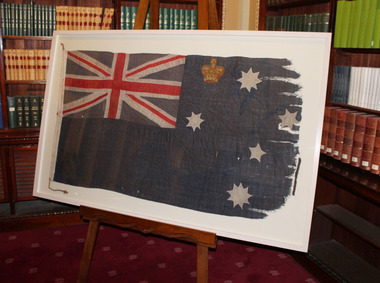 Parliament of Victoria
Victorian Ensign, c.1870
... Victorian Naval Forces since 1897. In around 1901, Captain Tickell presented the ensign to Frederick Thomas Sargood [1834-1903] who had been Minister of Defence and Education for the Colony of Victoria and was a Senator in Federal Parliament. ...Victorian Naval Forces since 1897. In around 1901, Captain Tickell presented the ensign to Frederick Thomas Sargood [1834-1903] who had been Minister of Defence and Education for the Colony of Victoria and was a Senator in Federal Parliament. ...An ensign is a national flag used within a naval or military context. A naval ensign is usually required to be flown when entering and leaving harbour, when sailing through foreign waters, and when a ship is signalled to do so by a warship. They are also flown during battles and when the ensign is lowered, the ship is said to have surrendered. This Victorian Naval Ensign was used by the Victorian Naval Contingent in the Boxer Rebellion in China in 1900. The contingent was led by Captain Frederick Tickell who had commanded the Victorian Naval Forces since 1897. In around 1901, Captain Tickell presented the ensign to Frederick Thomas Sargood [1834-1903] who had been Minister of Defence and Education for the Colony of Victoria and was a Senator in Federal Parliament. In September 1986 the ensign was stolen from Parliament House. The suspect was described as a young man wearing 'a beret and bow tie' ("The Age" 26 September 1986). Fortunately the ensign was recovered a week later. Victorian Ensign wool flag with Union Jack, Southern Cross and crown emblem. Hand written ink inscription on white linen sleeve. Rope attached. Framed.Handwritten black ink on flag header: "This Victorian Ensign (the first on active service) was used by the Victorian Contingent during service in 1900 in China. It was presented to Senator Sir F.T. Sargood K.C.M.G. by Captain Tickell C.M.B. Lieut. Col."colony of victoria, boxer rebellion, victorian navy -
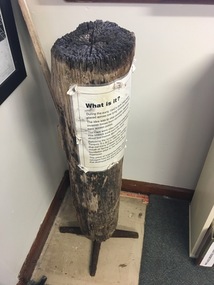 Torquay and District Historical Society
Functional object - Timber pole, salvaged
... defence strategy during WW2. In the 1940s 'Tank Traps' were placed across low lying Victorian Beaches to stop potential invading Japanese forces. ...defence strategy during WW2. In the 1940s 'Tank Traps' were placed across low lying Victorian Beaches to stop potential invading Japanese forces. ...This pole was used in the construction of the first Torquay Lifesaving Club clubhouse in 1945. it was dug up by club members from the mouth of Spring Creek, where it had been laid as part of defence strategy during WW2. In the 1940s 'Tank Traps' were placed across low lying Victorian Beaches to stop potential invading Japanese forces. This pole was salvaged from the ashes of the fire which destroyed the first TLSC clubhouse in 1970.This wooden pole was used in the foundations of the first Torquay Surf Life saving Club club house. Timber pole associated with WW2 and Torquay SLSC, damaged by fire in 1970.torquay lifesaving club, 'tank traps', local war defences, world war 2 -
Clunes Museum
Ephemera - BADGE, c1880
... Victorian Volunteer Forces (1854)-1884. The Victorian Volunteer Forces became the primary defence forces of the Colony of Victoria after the withdrawal of the Imperial troops in 1870. ...Victorian Volunteer Forces (1854)-1884. The Victorian Volunteer Forces became the primary defence forces of the Colony of Victoria after the withdrawal of the Imperial troops in 1870. ...Victorian Volunteer Forces (1854)-1884. The Victorian Volunteer Forces became the primary defence forces of the Colony of Victoria after the withdrawal of the Imperial troops in 1870. The Victorian Volunteer Forces were disbanded in 1884 - 5 year white metal badge for Victorian Local Forces, issued to W. Bennett. CIRCULAR BADGE WITH WREATH AROUND OUTSIDE, CROWN ON TOP, DIAGONAL CROSS WITH STARS ON EACH POINT. LARGE CIRCLE INSCRIBED "LOCAL FORCES", CENTRE DOMW HAS 2 GUNS, CROSSED, ISSUED 1880 OUTER CIRCLE: "FIVE YEARS BADGE" SMALL CIRCLE: "LOCAL FORCES"w bennett, policing, service recognition, colony of victoria -
Hume City Civic Collection
Book, War Service Record 1939 - 1945, 1959
... War Service Records Teachers Victorian Education Department The book is a record of teachers employed by the Victorian Education Department, who enlisted in the defence forces during World War 2. ...The book is a record of teachers employed by the Victorian Education Department, who enlisted in the defence forces during World War 2.A bound book with a navy blue cloth cover with a coat of arms and lettering in gold. non-fictionThe book is a record of teachers employed by the Victorian Education Department, who enlisted in the defence forces during World War 2.war service records, teachers, victorian education department -
 8th/13th Victorian Mounted Rifles Regimental Collection
Flag - Guidon 8th LH, 1980 circa
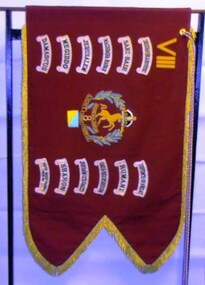
... In 1948, the 8th Light Horse was linked with 13th and 20th Regiments to form the 8/13 Victorian Mounted Rifles in the Citizen Military Forces. guidon 8th light horse battle honours Battle honours: "South Africa 1899-1902, Sari Bair, Maghdaba-Rafah, Jerusalem, Megiddo, Damascus, Defence of ANZAC, Rumani, Gaza-Beersheba, Jordan (Es Salt), Sharon, South West Pacific 1943-1944" Guidon of the 8th Light Horse Regiment. ...A guidon is the regimental banner or flag carried by a regiment of light cavalry or light horse. The 8th light Horse (Indi) Regiment was presented with the guidon circa 1927. The actual date is not certain. The guidon carries the battle honours accorded to the regiment for service in the South African War (1899-1902), World War One (!914-1918) and World War Two (1939-1945). The guidon passed into the custody of the 8th/13th Victorian Mounted Rifles Regiment when it was raised on 1 May 1948. At Federation, the Victorian Mounted Rifles companies in North East Victoria were reorganised into the 8th Light Horse Regiment. In 1912 the regiment was renumbered 16th Light Horse. The 8th Light Horse Regiment AIF was raised at Broadmeadows Victoria in September 1914 under the command of Lieutenant Colonel Alexander White and formed part of the 3rd Light Horse Brigade. The regiment served at Gallipoli where in a courageous but ill-fated charge at the Nek on 7 August 1915 it suffered horrendous casualties including Lieutenant Colonel White. Rebuilt in Egypt under the command of Lieutenant Colonel Leslie Maygar VC the regiment went on the serve throughout the Middle East Campaign. Colonel Maygar died of wounds at Beersheba when the regiment was attacked by enemy aircraft while waiting to follow up the successful charge of the 4th LH Brigade on 30 October 1917. The 8th Light Horse AIF was disbanded in 1919, but soon after re-raised as the 8th (Indi) Light Horse in the Citizen Military Forces, superseding 16th (Indi) Light Horse. It had its headquarters at Benalla with sub-units throughout the Upper Murray and Northeast Victoria. In December 1941, the regiment converted from horse to mechanised, initially as 8th Reconnaissance Battalion then in July 1942 it became 8th Cavalry Regiment and served in Northern Territory. As Japanese threat to the mainland declined the regiment was disbanded. In 1948, the 8th Light Horse was linked with 13th and 20th Regiments to form the 8/13 Victorian Mounted Rifles in the Citizen Military Forces. Guidon of the 8th Light Horse Regiment. Maroon corded cotton double thickness fabric with gold metal thread fringe, gold embroidered regimental number in Roman numerals, regimental badge and battle honours; colour patch below badge. Braided corded with tassels.Battle honours: "South Africa 1899-1902, Sari Bair, Maghdaba-Rafah, Jerusalem, Megiddo, Damascus, Defence of ANZAC, Rumani, Gaza-Beersheba, Jordan (Es Salt), Sharon, South West Pacific 1943-1944"guidon, 8th light horse, battle honours -
 8th/13th Victorian Mounted Rifles Regimental Collection
Uniform - Honorary Colonel Hammer, 1950 circa
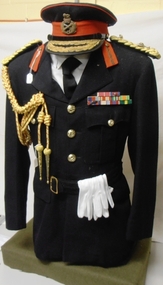
... After the war, Hammer became Commissioner for Repatriation in Victoria and continued his military career in the Citizens Military Forces, commanding the 2nd Armoured Brigade and later 3rd Division. 8/13 vmr military Hammer honorary colonel general World War Two WWII CMF Open-neck officer's 'Blues' tunic with gold braided general's epaulettes and Major General's embroidered badges of rank; gilt general's buttons; red and gold braided aiguillette and white gloves. Uniform worn by Major General H H (Tack) Hammer when appointed as Honorary colonel of 8th/13th Victorian Mounted Rifles. Medals awarded to Major General Hammer are Commander of the British Empire (CBE), Distinguished Service Order (DSO), Mentioned in Despatches (MID), 1939-45 Star, Africa Star, Pacific Star, Defence ...This tunic and cap were worn by Major General H H (Tack) Hammer CBE DSO & Bar, ED when Honorary Colonel 8th/13th Victorian Mounted Rifles Regiment 1959-1960 Hammer had pre-WWII service with 8th Battalion and 17th Light Horse (Machine Gun) Regiment. He served with the 6th Division in North Africa and Greece before becoming Commanding Officer of 2nd/48th Battalion. On return from the Middle East, Hammer commanded the 15th Brigade throughout two years of fighting in New Guinea and Bougainville. After the war, Hammer became Commissioner for Repatriation in Victoria and continued his military career in the Citizens Military Forces, commanding the 2nd Armoured Brigade and later 3rd Division. Open-neck officer's 'Blues' tunic with gold braided general's epaulettes and Major General's embroidered badges of rank; gilt general's buttons; red and gold braided aiguillette and white gloves. Uniform worn by Major General H H (Tack) Hammer when appointed as Honorary colonel of 8th/13th Victorian Mounted Rifles. Medals awarded to Major General Hammer are Commander of the British Empire (CBE), Distinguished Service Order (DSO), Mentioned in Despatches (MID), 1939-45 Star, Africa Star, Pacific Star, Defence Medal 1939-45, British War Medal, Australian Service Medal 39-45, Queen Elizabeth Coronation Medal, Efficiency Decoration (ED). General's peak cap with gold bullion hat badge and double row of oak leaves on peak. Medals on display are replica.8/13 vmr, military, hammer, honorary, colonel, general, world war two, wwii, cmf -
 8th/13th Victorian Mounted Rifles Regimental Collection
Born digital image, September 1993
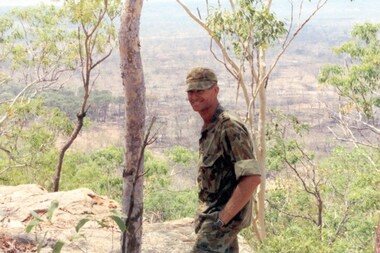
... forces for offensive operations. Dibb also pointed out that this defined role would result in a huge lift in Ares morale. In June 1988, the 3rd Division (3Div) conducted a Tactical Exercise without Troops (TEWT), Exercise ‘Distant Trumpet’ in the Katherine- Darwin area to study problems associated with defence against low level incursions against Tindal RAAF Base. Exercise ‘Northern Explorer’ followed in October of that year when units of the 3Div including A Squadron 8/13 Victorian...forces for offensive operations. Dibb also pointed out that this defined role would result in a huge lift in Ares morale. In June 1988, the 3rd Division (3Div) conducted a Tactical Exercise without Troops (TEWT), Exercise ‘Distant Trumpet’ in the Katherine- Darwin area to study problems associated with defence against low level incursions against Tindal RAAF Base. Exercise ‘Northern Explorer’ followed in October of that year when units of the 3Div including A Squadron 8/13 Victorian ...The Dibb Report into mainland defence of Australia,1986, among other things identified the requirement for protection of key assets in Northern Australia and the possibility of involving Army Reserve (Ares) units in this thus releasing regular forces for offensive operations. Dibb also pointed out that this defined role would result in a huge lift in Ares morale. In June 1988, the 3rd Division (3Div) conducted a Tactical Exercise without Troops (TEWT), Exercise ‘Distant Trumpet’ in the Katherine- Darwin area to study problems associated with defence against low level incursions against Tindal RAAF Base. Exercise ‘Northern Explorer’ followed in October of that year when units of the 3Div including A Squadron 8/13 Victorian Mounted Rifles sent patrol groups to get a first taste of environment and conditions. Post-Exercise reports had to include recommendations re: health, equipment and adaptation of Standing Operating Procedures (SOPs) in preparation for the new role deploying to Northern Australia. The first deployment by 8/13 Vistorian Mounted Rifles was in 1988. Deployments continued i following years. In September 1993, 3 Troop (Wangaratta) VMR Squadron 4/19 PWLH commanded by Captain Kelvin Robertson deployed to NT. The training began with airfield defence at Tindal followed by a 1000km recon into Arnhem Land in four Landrovers. The troop reported on the conditions of the roads, airfields, bridges (mainly causeways) resources such as fuel supplies in the towns and infrastructure. Each troop taking different route. 3 Troop had the Northern route through Kakadu National park across the East Alligator River to Oenpelli then to Maningrida and Ramangining and south to the Central Arnhem Road and back to Tindal Air force Base. Kelvin Robertson enlisted on 6 April 1981 at Cobram where Lieutenant Dan Wyborn was the troop leader at 2 Troop A Squadron 8th/13th Victorian Mounted Rifles (2TP A SQN 8/13 VMR). He completed the Initial Employment Training Course (IET) and then an M113A1 driver’s course in March 1982. Course Senior Instructor (SI) was Captain (CAPT) John McLean and wing instructor Warrant Officer Class 2 (WO2) Mick Baxter (ex-Driving & Servicing Wing instructor at the School of Armour). He served with 2TP at Cobram as a trooper Driver/Signaller until June 1982 when he was selected for officer training. He served two years as an Officer Cadet in Course 21 at Officer Cadet Training Unit (OCTU) graduating in June 1984. He returned to 8/13 VMR and completed the 1/85 Army Reserve (ARES) Regimental Officers Basic Course (ROBC Reconnaissance), then was posted immediately as 1 TP LDR for the Hay Booligal Annual Field Exercise (AFX). In 1985 he took command of 2TP at Cobram until Nov 1987 when he transferred to C Squadron First Armoured Regiment (CSQN 1AR). This began six months full time duty in which Lieutenant (LT) Robertson completed the regular army 1/88 (ROBC Tank), and then served as CSQN's first and only ARES Leopard Tank TP LDR until the next ARES LT was trained up as 2TP LDR. He later served as the CSQN Liaison Officer (LO) on the First Brigade (1 Bde) exercise ‘Predators Advance’ and as a staff officer on a Second Division (2Div) exercise. In Jan 1991 he studied at the Reserve Command and Staff College (RCSC). Upon completion of Grade 3 he was promoted to CAPT and transferred back to a reconnaissance troop, 3TP VMR SQN 4th/19th Prince of Wales’s Light Horse (4/19PWLH) at Wangaratta. CAPT Robertson transferred to the Inactive List in 1994, but in 2011 returned to the Active List serving as Operations Captain (OPS CAPT) at Regimental Headquarters (RHQ) 12th/16th Hunter River Lancers (12/16 HRL)and later Second-In-Command (2IC) Tamworth-based Operations Support Squadron (OPSPT SQN), and at 9 day exercises at Singleton range and an exercise at Townville High Range in Protective Mobility Vehicle (PMV) Bushmasters. In 2013 after completing the ARES Grade 3 Staff Officers course in Brisbane he returned home to Jerilderie and served as 2IC A SQN 4/19 PWLH based at Latchford Barracks Bonegilla. He was awarded the Defence Long Service Medal (DLSM) in 2014. Highlights of his career included being Parade Commander for the 75th anniversary Beersheba parade in Canberra on 31 October 1992. The guard, drawn from the VMR SQN 4/19 PWLH represented the 4th Light Horse Regiment, a participant of the Charge. Then twenty years later, 2012, he was invited to speak at the Quirindi Anzac Day ceremony. On this occasion he was serving with 12/16 HRL, so in two ceremonies, 20 years apart, he had represented both the 4th LHR and the 12th LHR, the two lead Regiments that charged Beersheba. CAPT Robertson was placed on the Inactive List again in 2015. Illustrates Reserve training in NT.Colour image of soldier with landscape in background being Captain Kelvin Robertson 3 Troop Leader (Wangaratta) VMR Squadron 4th/19th Prince of Wales’s Light Horse Regiment looking out over the Arafura swamp near the Maningrida to Ramingining road in Arnhem Land during exercise in the Northern Territory, September 1993.tindal, robertson -
 8th/13th Victorian Mounted Rifles Regimental Collection
Photograph
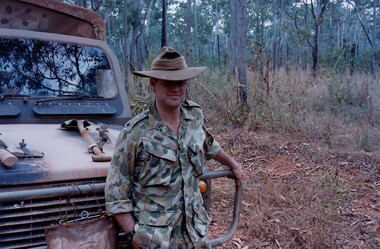
... forces for offensive operations. Dibb also pointed out that this defined role would result in a huge lift in Ares morale. In June 1988, the 3rd Division (3Div) conducted a Tactical Exercise without Troops (TEWT), Exercise ‘Distant Trumpet’ in the Katherine- Darwin area to study problems associated with defence against low level incursions against Tindal RAAF Base. Exercise ‘Northern Explorer’ followed in October of that year when units of the 3Div including A Squadron 8/13 Victorian...forces for offensive operations. Dibb also pointed out that this defined role would result in a huge lift in Ares morale. In June 1988, the 3rd Division (3Div) conducted a Tactical Exercise without Troops (TEWT), Exercise ‘Distant Trumpet’ in the Katherine- Darwin area to study problems associated with defence against low level incursions against Tindal RAAF Base. Exercise ‘Northern Explorer’ followed in October of that year when units of the 3Div including A Squadron 8/13 Victorian ...The Dibb Report into mainland defence of Australia,1986, among other things identified the requirement for protection of key assets in Northern Australia and the possibility of involving Army Reserve (Ares) units in this thus releasing regular forces for offensive operations. Dibb also pointed out that this defined role would result in a huge lift in Ares morale. In June 1988, the 3rd Division (3Div) conducted a Tactical Exercise without Troops (TEWT), Exercise ‘Distant Trumpet’ in the Katherine- Darwin area to study problems associated with defence against low level incursions against Tindal RAAF Base. Exercise ‘Northern Explorer’ followed in October of that year when units of the 3Div including A Squadron 8/13 Victorian Mounted Rifles sent patrol groups to get a first taste of environment and conditions. Post-Exercise reports had to include recommendations re: health, equipment and adaptation of Standing Operating Procedures (SOPs) in preparation for the new role deploying to Northern Australia. The first deployment by 8/13 Victorian Mounted Rifles was in 1988. Deployments continued in following years. In September 1993, 3 Troop (Wangaratta) VMR Squadron 4/19 PWLH commanded by Captain Kelvin Robertson deployed to NT. The training began with airfield defence at Tindal followed by a 1000km recon into Arnhem Land in four Landrovers. The troop reported on the conditions of the roads, airfields, bridges (mainly causeways) resources such as fuel supplies in the towns and infrastructure. Each troop taking different route. 3 Troop had the Northern route through Kakadu National park across the East Alligator River to Oenpelli then to Maningrida and Ramangining and south to the Central Arnhem Road and back to Tindal Air force Base Major Annett later commanded 4/19 Prince of Wales's Light Horse, and later again 4th Brigade 2nd Division.. Colour photograph of Major M. Annett, Officer Commanding VMR Squadron 4/19Prince of Wales's Light Horse during annual exercise Northern Territory 1994. -
 8th/13th Victorian Mounted Rifles Regimental Collection
Photograph
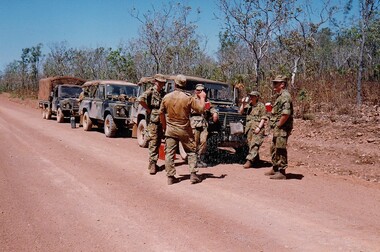
... forces for offensive operations. Dibb also pointed out that this defined role would result in a huge lift in Ares morale. In June 1988, the 3rd Division (3Div) conducted a Tactical Exercise without Troops (TEWT), Exercise ‘Distant Trumpet’ in the Katherine- Darwin area to study problems associated with defence against low level incursions against Tindal RAAF Base. Exercise ‘Northern Explorer’ followed in October of that year when units of the 3Div including A Squadron 8/13 Victorian...forces for offensive operations. Dibb also pointed out that this defined role would result in a huge lift in Ares morale. In June 1988, the 3rd Division (3Div) conducted a Tactical Exercise without Troops (TEWT), Exercise ‘Distant Trumpet’ in the Katherine- Darwin area to study problems associated with defence against low level incursions against Tindal RAAF Base. Exercise ‘Northern Explorer’ followed in October of that year when units of the 3Div including A Squadron 8/13 Victorian ...The Dibb Report into mainland defence of Australia,1986, among other things identified the requirement for protection of key assets in Northern Australia and the possibility of involving Army Reserve (Ares) units in this thus releasing regular forces for offensive operations. Dibb also pointed out that this defined role would result in a huge lift in Ares morale. In June 1988, the 3rd Division (3Div) conducted a Tactical Exercise without Troops (TEWT), Exercise ‘Distant Trumpet’ in the Katherine- Darwin area to study problems associated with defence against low level incursions against Tindal RAAF Base. Exercise ‘Northern Explorer’ followed in October of that year when units of the 3Div including A Squadron 8/13 Victorian Mounted Rifles sent patrol groups to get a first taste of environment and conditions. Post-Exercise reports had to include recommendations re: health, equipment and adaptation of Standing Operating Procedures (SOPs) in preparation for the new role deploying to Northern Australia. The first deployment by 8/13 Victorian Mounted Rifles was in 1988. Deployments continued in following years. In September 1993, 3 Troop (Wangaratta) VMR Squadron 4/19 PWLH commanded by Captain Kelvin Robertson deployed to NT. The training began with airfield defence at Tindal followed by a 1000km recon into Arnhem Land in four Landrovers. The troop reported on the conditions of the roads, airfields, bridges (mainly causeways) resources such as fuel supplies in the towns and infrastructure. Each troop taking different route. 3 Troop had the Northern route through Kakadu National park across the East Alligator River to Oenpelli then to Maningrida and Ramangining and south to the Central Arnhem Road and back to Tindal Air force Base. Colour photograph of five soldiers and three vehicles of VMR Squadron,4/19 Prince of Wales's Light Horse on roadside during annual exercise in Northern Territory 1994.military, vehicles, soldiers, northern territory, training, vmr -
 8th/13th Victorian Mounted Rifles Regimental Collection
Photograph
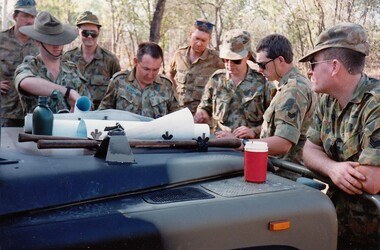
... forces for offensive operations. Dibb also pointed out that this defined role would result in a huge lift in Ares morale. In June 1988, the 3rd Division (3Div) conducted a Tactical Exercise without Troops (TEWT), Exercise ‘Distant Trumpet’ in the Katherine- Darwin area to study problems associated with defence against low level incursions against Tindal RAAF Base. Exercise ‘Northern Explorer’ followed in October of that year when units of the 3Div including A Squadron 8/13 Victorian...forces for offensive operations. Dibb also pointed out that this defined role would result in a huge lift in Ares morale. In June 1988, the 3rd Division (3Div) conducted a Tactical Exercise without Troops (TEWT), Exercise ‘Distant Trumpet’ in the Katherine- Darwin area to study problems associated with defence against low level incursions against Tindal RAAF Base. Exercise ‘Northern Explorer’ followed in October of that year when units of the 3Div including A Squadron 8/13 Victorian ...The Dibb Report into mainland defence of Australia,1986, among other things identified the requirement for protection of key assets in Northern Australia and the possibility of involving Army Reserve (Ares) units in this thus releasing regular forces for offensive operations. Dibb also pointed out that this defined role would result in a huge lift in Ares morale. In June 1988, the 3rd Division (3Div) conducted a Tactical Exercise without Troops (TEWT), Exercise ‘Distant Trumpet’ in the Katherine- Darwin area to study problems associated with defence against low level incursions against Tindal RAAF Base. Exercise ‘Northern Explorer’ followed in October of that year when units of the 3Div including A Squadron 8/13 Victorian Mounted Rifles sent patrol groups to get a first taste of environment and conditions. Post-Exercise reports had to include recommendations re: health, equipment and adaptation of Standing Operating Procedures (SOPs) in preparation for the new role deploying to Northern Australia. The first deployment by 8/13 Victorian Mounted Rifles was in 1988. Deployments continued in following years. In September 1993, 3 Troop (Wangaratta) VMR Squadron 4/19 PWLH commanded by Captain Kelvin Robertson deployed to NT. The training began with airfield defence at Tindal followed by a 1000km recon into Arnhem Land in four Landrovers. The troop reported on the conditions of the roads, airfields, bridges (mainly causeways) resources such as fuel supplies in the towns and infrastructure. Each troop taking different route. 3 Troop had the Northern route through Kakadu National park across the East Alligator River to Oenpelli then to Maningrida and Ramangining and south to the Central Arnhem Road and back to Tindal Air force Base. Colour photograph of group of soldiers of VMR Squadron 4/19Prince of Wales's Light Horse studying maps on bonnet of Land Rover during annual exercise in Northern Territory 1994.Major M. Annett wearing slouch hat, Sergeant Gary Wynn,without hat,,on his left. -
 8th/13th Victorian Mounted Rifles Regimental Collection
Photograph
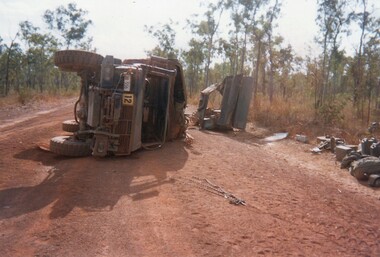
... forces for offensive operations. Dibb also pointed out that this defined role would result in a huge lift in Ares morale. In June 1988, the 3rd Division (3Div) conducted a Tactical Exercise without Troops (TEWT), Exercise ‘Distant Trumpet’ in the Katherine- Darwin area to study problems associated with defence against low level incursions against Tindal RAAF Base. Exercise ‘Northern Explorer’ followed in October of that year when units of the 3Div including A Squadron 8/13 Victorian...forces for offensive operations. Dibb also pointed out that this defined role would result in a huge lift in Ares morale. In June 1988, the 3rd Division (3Div) conducted a Tactical Exercise without Troops (TEWT), Exercise ‘Distant Trumpet’ in the Katherine- Darwin area to study problems associated with defence against low level incursions against Tindal RAAF Base. Exercise ‘Northern Explorer’ followed in October of that year when units of the 3Div including A Squadron 8/13 Victorian ...The Dibb Report into mainland defence of Australia,1986, among other things identified the requirement for protection of key assets in Northern Australia and the possibility of involving Army Reserve (Ares) units in this thus releasing regular forces for offensive operations. Dibb also pointed out that this defined role would result in a huge lift in Ares morale. In June 1988, the 3rd Division (3Div) conducted a Tactical Exercise without Troops (TEWT), Exercise ‘Distant Trumpet’ in the Katherine- Darwin area to study problems associated with defence against low level incursions against Tindal RAAF Base. Exercise ‘Northern Explorer’ followed in October of that year when units of the 3Div including A Squadron 8/13 Victorian Mounted Rifles sent patrol groups to get a first taste of environment and conditions. Post-Exercise reports had to include recommendations re: health, equipment and adaptation of Standing Operating Procedures (SOPs) in preparation for the new role deploying to Northern Australia. The first deployment by 8/13 Victorian Mounted Rifles was in 1988. Deployments continued in following years. In September 1993, 3 Troop (Wangaratta) VMR Squadron 4/19 PWLH commanded by Captain Kelvin Robertson deployed to NT. The training began with airfield defence at Tindal followed by a 1000km recon into Arnhem Land in four Landrovers. The troop reported on the conditions of the roads, airfields, bridges (mainly causeways) resources such as fuel supplies in the towns and infrastructure. Each troop taking different route. 3 Troop had the Northern route through Kakadu National park across the East Alligator River to Oenpelli then to Maningrida and Ramangining and south to the Central Arnhem Road and back to Tindal Air force Base. Two colour photographs of vehicle mishap during VMR Squadron 4/19Prince of Wales's Light Horse annual exercise in Northern Territory 1994.Second photo shows driver receiving medical attention. -
 8th/13th Victorian Mounted Rifles Regimental Collection
Photograph
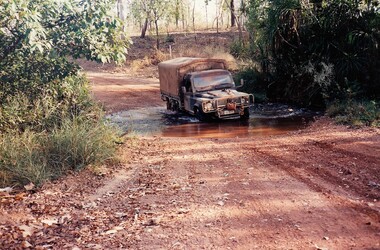
... forces for offensive operations. Dibb also pointed out that this defined role would result in a huge lift in Ares morale. In June 1988, the 3rd Division (3Div) conducted a Tactical Exercise without Troops (TEWT), Exercise ‘Distant Trumpet’ in the Katherine- Darwin area to study problems associated with defence against low level incursions against Tindal RAAF Base. Exercise ‘Northern Explorer’ followed in October of that year when units of the 3Div including A Squadron 8/13 Victorian...forces for offensive operations. Dibb also pointed out that this defined role would result in a huge lift in Ares morale. In June 1988, the 3rd Division (3Div) conducted a Tactical Exercise without Troops (TEWT), Exercise ‘Distant Trumpet’ in the Katherine- Darwin area to study problems associated with defence against low level incursions against Tindal RAAF Base. Exercise ‘Northern Explorer’ followed in October of that year when units of the 3Div including A Squadron 8/13 Victorian ...The Dibb Report into mainland defence of Australia,1986, among other things identified the requirement for protection of key assets in Northern Australia and the possibility of involving Army Reserve (Ares) units in this thus releasing regular forces for offensive operations. Dibb also pointed out that this defined role would result in a huge lift in Ares morale. In June 1988, the 3rd Division (3Div) conducted a Tactical Exercise without Troops (TEWT), Exercise ‘Distant Trumpet’ in the Katherine- Darwin area to study problems associated with defence against low level incursions against Tindal RAAF Base. Exercise ‘Northern Explorer’ followed in October of that year when units of the 3Div including A Squadron 8/13 Victorian Mounted Rifles sent patrol groups to get a first taste of environment and conditions. Post-Exercise reports had to include recommendations re: health, equipment and adaptation of Standing Operating Procedures (SOPs) in preparation for the new role deploying to Northern Australia. The first deployment by 8/13 Victorian Mounted Rifles was in 1988. Deployments continued in following years. In September 1993, 3 Troop (Wangaratta) VMR Squadron 4/19 PWLH commanded by Captain Kelvin Robertson deployed to NT. The training began with airfield defence at Tindal followed by a 1000km recon into Arnhem Land in four Landrovers. The troop reported on the conditions of the roads, airfields, bridges (mainly causeways) resources such as fuel supplies in the towns and infrastructure. Each troop taking different route. 3 Troop had the Northern route through Kakadu National park across the East Alligator River to Oenpelli then to Maningrida and Ramangining and south to the Central Arnhem Road and back to Tindal Air force Base. Two colour photographs of creek crossings, one more challenging than the other,during the annual exercise in Northern Territory, conducted by VMR Squadron 4/19 Prince of Wales's Light horse, 1994. -
 8th/13th Victorian Mounted Rifles Regimental Collection
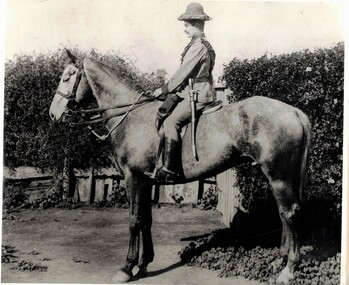
Photograph - VMR trooper
... The Victorian Mounted Rifles was raised in 1885 as the mounted arm of Victoria’s colonial defence forces. ...The Victorian Mounted Rifles was raised in 1885 as the mounted arm of Victoria’s colonial defence forces. ...The Victorian Mounted Rifles was raised in 1885 as the mounted arm of Victoria’s colonial defence forces. Companies were recruited in rural centres across the State, members of country rifle clubs forming a significant component. They were semi-professional: only a small allowance was paid to members. Members were required to provide their own mount. Mounted riflemen were not cavalry, not being equipped with lance or sword. They were trained to fight with rifle and bayonet after dismounting. Horses enabled rapid and far reaching manoeuvrability. Upon Federation, the VMR companies became Australian Light Horse regiments.Rare photograph of mounted Victorian colonial soldier.Black and white photograph of Victorian Mounted Rifles trooper mounted on his horse. His side arm is a Yataghan sword bayonet indicating he would be armed with a Martini-Henry rifle.victorian mounted rifles, vmr, uniform, bayonet, horse, military, colonial -
 8th/13th Victorian Mounted Rifles Regimental Collection
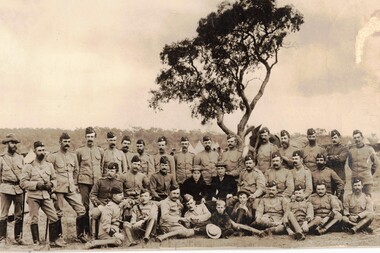
Photograph - VMR group
... The Victorian Mounted Rifles was raised in 1885 as the mounted arm of Victoria’s colonial defence forces. ...The Victorian Mounted Rifles was raised in 1885 as the mounted arm of Victoria’s colonial defence forces. ...The Victorian Mounted Rifles was raised in 1885 as the mounted arm of Victoria’s colonial defence forces. Companies were recruited in rural centres across the State, members of country rifle clubs forming a significant component. They were semi-professional: only a small allowance was paid to members. Members were required to provide their own mount. Mounted riflemen were not cavalry, not being equipped with lance or sword. The were trained to fight with rifle and bayonet after dismounting. Horses enabled rapid and far reaching manoeuvrability. Upon Federation, the VMR companies became Australian Light Horse regiments.Rare photograph showing the social aspect of pre-Federation militia.Black and white photograph of large group of soldiers of the Victorian Mounted Rifles together with two women and two children. There are tents in the background suggesting the occasion was an open day during an annual encampment.victoria, mounted rifles, colonial, uniform, military -
 8th/13th Victorian Mounted Rifles Regimental Collection
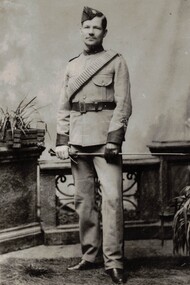
Photograph - VMR soldier
... The Victorian Mounted Rifles was raised in 1885 as the mounted arm of Victoria’s colonial defence forces. ...The Victorian Mounted Rifles was raised in 1885 as the mounted arm of Victoria’s colonial defence forces. ...The Victorian Mounted Rifles was raised in 1885 as the mounted arm of Victoria’s colonial defence forces. Companies were recruited in rural centres across the State, members of country rifle clubs forming a significant component. They were semi-professional: only a small allowance was paid to members. Members were required to provide their own mount. Mounted riflemen were not cavalry, not being equipped with lance or sword. The were trained to fight with rifle and bayonet after dismounting. Horses enabled rapid and far reaching manoeuvrability. Upon Federation, the VMR companies became Australian Light Horse regiments.Fine study of pre-Federation soldier showing uniform.Black and white photograph of a soldier of the pre-Federation Victorian Mounted Rifles.victoria, mounted rifles, uniform, military -
 8th/13th Victorian Mounted Rifles Regimental Collection
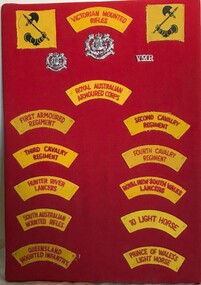
Memorabilia - Shoulder titles
... Victorian, Queensland, New South Wales, Hunter River, South Australian, Prince of Wales's and 10th Light Horse. Australia’s defence plans and priorities changed after the Second World War. Decolonisation coupled with competing ideologies created an unstable situation in the Asia-Pacific region. Australia recognised it needed both regular and citizen forces...Victorian, Queensland, New South Wales, Hunter River, South Australian, Prince of Wales's and 10th Light Horse. Australia’s defence plans and priorities changed after the Second World War. Decolonisation coupled with competing ideologies created an unstable situation in the Asia-Pacific region. Australia recognised it needed both regular and citizen forces ...Embroidered shoulder titles were worn on the upper sleeves of uniform prior to the introduction of colour patches c.1990. Regular regiments used the numerical designations First, Second, Third and Fourth. CMF regiments used their territorial designation: Victorian, Queensland, New South Wales, Hunter River, South Australian, Prince of Wales's and 10th Light Horse. Australia’s defence plans and priorities changed after the Second World War. Decolonisation coupled with competing ideologies created an unstable situation in the Asia-Pacific region. Australia recognised it needed both regular and citizen forces. Six Armoured Corps regiments were formed in 1948, all with territorial titles reflecting their Light Horse heritage. In Victoria they were 4th/19th Prince of Wales’s Light Horse and 8th/13th Victorian Mounted Rifles. The 1st Armoured Regiment, formed July 1949, was the first regular RAAC regiment, followed by 2nd, 3rd and 4th Cavalry Regiments decades later. Unique collection of regimental titles worthy of preservation and display.Display board containing the badge and shoulder title of 8/13 Victorian Mounted Rifles flanked by the formation signs of 2nd Armoured Brigade. These are followed by the shoulder titles of Royal Australian Armoured Corps and eight other RAAC regiments.military, titles, uniform, ara, cmf
