
Showing 5 items matching "1. spirituality"
-
 The Celtic Club
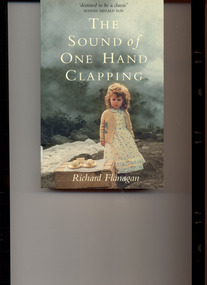
Book, Richard Flanagan, The Sound of One Hand Clapping, 1997
... 1. Spirituality...1. Spirituality 2. Redemption A poetic account of the underbelly of Australia, the barbarism of Europe, and the destiny of those in the country beyond hope who seek to redeem themselves through love. p.425. ...A poetic account of the underbelly of Australia, the barbarism of Europe, and the destiny of those in the country beyond hope who seek to redeem themselves through love.p.425.fictionA poetic account of the underbelly of Australia, the barbarism of Europe, and the destiny of those in the country beyond hope who seek to redeem themselves through love.1. spirituality, 2. redemption -
 The Celtic Club
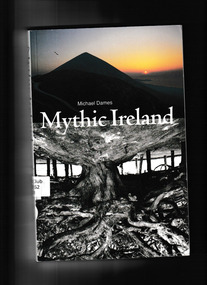
Book, Michael Dames, Mythic Ireland, 1992
... 1. Spirituality...1. Spirituality 2. Irish myths. Ireland, more than any other country in Europe, has retained its mythological heritage, which lives today in the oral tradition of folk tales, in literature, in place-names and language, in ceremonies and monuments. ...Ireland, more than any other country in Europe, has retained its mythological heritage, which lives today in the oral tradition of folk tales, in literature, in place-names and language, in ceremonies and monuments. Mountains and loughs are the homes of gods and goddesses, of saints and monsters, and pattern, beauty and cyclical logic are revealed in their stories. Michael Dames, whose previous works have won him a wide and enthusiastic following, has walked through each.Index, bib,notes, maps, plates, ill, p.258.non-fictionIreland, more than any other country in Europe, has retained its mythological heritage, which lives today in the oral tradition of folk tales, in literature, in place-names and language, in ceremonies and monuments. Mountains and loughs are the homes of gods and goddesses, of saints and monsters, and pattern, beauty and cyclical logic are revealed in their stories. Michael Dames, whose previous works have won him a wide and enthusiastic following, has walked through each.1. spirituality, 2. irish myths. -
 Koorie Heritage Trust
Booklet, Baxter, Bruce [et al.]. (Aboriginal History Program), Matakupat : the Aboriginal history of the Swan Hill area, 1990
... 1. Aborigines Australian -- Victoria -- Swan Hill -- History -- Juvenile literature. 2. Aborigines Australian -- Victoria -- Swan Hill -- Social life and customs -- Juvenile literature. I. Baxter Bruce. II. Title. Other: Wemba Wemba Tribe -- Wathi Wathi Tribe -- Aboriginal Educators. Traditional Aboriginal Society was an oral culture so that the history, stories, and songs and knowledge of Spirituality ...Traditional Aboriginal Society was an oral culture so that the history, stories, and songs and knowledge of Spirituality, Laws, Customs and Values were communicated verbally for thousands of years. The invasion of Europeans caused destruction of tribal groups by disease and killings. It limited the use of language, exchange of stories, land use and the important performance of rituals and ceremonies. Europeans used their world view as a mirror and through their observations, documents, diaries, reports and stories were full of racist comments and ignorant opinions of a lifestyle and culture of which they had little understanding. This book was the result of many months of research by a group of Swan Hill Aboriginal Educators. It is an attempt to present limited information about the history and lifestyles of the Wemba Wemba and Wathi Wathi people, the Tribes of the Swan Hill and Lake Boga areas.20 p. : ill., map ; 21 cm.Traditional Aboriginal Society was an oral culture so that the history, stories, and songs and knowledge of Spirituality, Laws, Customs and Values were communicated verbally for thousands of years. The invasion of Europeans caused destruction of tribal groups by disease and killings. It limited the use of language, exchange of stories, land use and the important performance of rituals and ceremonies. Europeans used their world view as a mirror and through their observations, documents, diaries, reports and stories were full of racist comments and ignorant opinions of a lifestyle and culture of which they had little understanding. This book was the result of many months of research by a group of Swan Hill Aboriginal Educators. It is an attempt to present limited information about the history and lifestyles of the Wemba Wemba and Wathi Wathi people, the Tribes of the Swan Hill and Lake Boga areas.1. aborigines, australian -- victoria -- swan hill -- history -- juvenile literature. 2. aborigines, australian -- victoria -- swan hill -- social life and customs -- juvenile literature. i. baxter, bruce. ii. title., other: wemba wemba tribe -- wathi wathi tribe -- aboriginal educators. -
 City of Ballarat
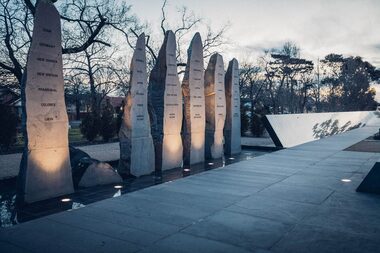
Artwork, other - Public Artwork, Ex-Prisoners of War Memorial by Peter Blizzard, 2004
... 1, World War 2 and the Korean War. This memorial honours and names them, the names are etched into the black granite wall adjacent to the pathway. Water springs from beneath the 'Lest We Forget' stone then flows down the wall into the narrow watercourse in front of the first group of names and into the reflective pool, then continues past the second group of names. Finally it disappears under the pathway, returning to its source under the 'Lest We Forget' stone to start the journey again. Water symbolizes the essential nature of man, sacrifice, suffering, spirituality...1, World War 2 and the Korean War. This memorial honours and names them, the names are etched into the black granite wall adjacent to the pathway. Water springs from beneath the 'Lest We Forget' stone then flows down the wall into the narrow watercourse in front of the first group of names and into the reflective pool, then continues past the second group of names. Finally it disappears under the pathway, returning to its source under the 'Lest We Forget' stone to start the journey again. Water symbolizes the essential nature of man, sacrifice, suffering, spirituality ...This memorial designed by Peter Blizzard is dedicated to more than 36,000 Australian men and women were held captive as prisoners by the enemy during the Boer War, World War 1, World War 2 and the Korean War. This memorial honours and names them, the names are etched into the black granite wall adjacent to the pathway. Water springs from beneath the 'Lest We Forget' stone then flows down the wall into the narrow watercourse in front of the first group of names and into the reflective pool, then continues past the second group of names. Finally it disappears under the pathway, returning to its source under the 'Lest We Forget' stone to start the journey again. Water symbolizes the essential nature of man, sacrifice, suffering, spirituality, healing, cleansing, birth and re-birth. The memorial is created from natural materials and is designed to be in harmony with the Ballarat Botanical Gardens, and to create a sense of timeless, dignity and respect. The long pathway of the monument is designed to create a visual perspective of the large distances that Australians travelled to the various conflicts. The paving is shaped like railway sleepers in recognition of the role that railways and railway journeys were relevant to many prisoners of war. The Memorial was declared the first military memorial of national significance located outside Canberra in 2008. Dedication services are held at the memorial on the Sunday closest to 6th of February, ANZAC day and on Remembrance Day. The memorial is of historical and aesthetic importance to the people of BallaratMonument made from carved bluestone, water feature and flagsInscribed with the names of 36,000 Australian men and women were held captive as prisoners by the enemy during the Boer War, World War 1, World War 2 and the Korean War. The listing is by surname and initials and shown by war.prisoners of war, boer war, world war 1, world war 2, korean war, lest we forget, peter blizzard -
 Returned Nurses RSL Sub-branch
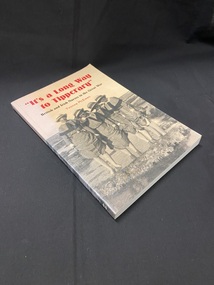
Book - Paperback book, Yvonne McEwan, "It's a long way to Tipperary" : British and Irish Nurses in the Great War, 2006
... 1 Overtures and Undertones : Britain, Ireland and Wider World 1901-1913 -- Ch.2 'Oh! We don't want to lose you but we think you ought to go' Dissent and Disaster 1914 -- Ch.3 'Good bye-ee' Men and Women of August 1914 -- Ch.4 'Keep he Home Fires Burning' Western and Home Fronts 1914 -- Ch.5 'Oh W4at a Lovely War' Living, Fighting, )ying and Nursing 1915 -- Ch.6 'Hanging on the Old Barbed Wire' Pro Patria: Right or Wrong 1916 -- Ch.7 'Pack up your Troubles' Spirituality, Inspiration and Esprit de Corps 1917 -- Ch.8 'When this Bloody War Is Over' Fortitude, Finale and Legacy 1918. ...Ch.1 Overtures and Undertones : Britain, Ireland and Wider World 1901-1913 -- Ch.2 'Oh! We don't want to lose you but we think you ought to go' Dissent and Disaster 1914 -- Ch.3 'Good bye-ee' Men and Women of August 1914 -- Ch.4 'Keep he Home Fires Burning' Western and Home Fronts 1914 -- Ch.5 'Oh W4at a Lovely War' Living, Fighting, )ying and Nursing 1915 -- Ch.6 'Hanging on the Old Barbed Wire' Pro Patria: Right or Wrong 1916 -- Ch.7 'Pack up your Troubles' Spirituality, Inspiration and Esprit de Corps 1917 -- Ch.8 'When this Bloody War Is Over' Fortitude, Finale and Legacy 1918. [contents note from Trove record]Peach coloured cover with a black and white image of four nurses wearing hats and holding the bottom of their dresses up while they stand ankle deep in the ocean. The title is printed above the image in red print with black subtitle. The author's name also appears in red text.non-fiction Ch.1 Overtures and Undertones : Britain, Ireland and Wider World 1901-1913 -- Ch.2 'Oh! We don't want to lose you but we think you ought to go' Dissent and Disaster 1914 -- Ch.3 'Good bye-ee' Men and Women of August 1914 -- Ch.4 'Keep he Home Fires Burning' Western and Home Fronts 1914 -- Ch.5 'Oh W4at a Lovely War' Living, Fighting, )ying and Nursing 1915 -- Ch.6 'Hanging on the Old Barbed Wire' Pro Patria: Right or Wrong 1916 -- Ch.7 'Pack up your Troubles' Spirituality, Inspiration and Esprit de Corps 1917 -- Ch.8 'When this Bloody War Is Over' Fortitude, Finale and Legacy 1918. [contents note from Trove record]military nursing, ww1, wwi, world war one, nurses - great britain, nurses - ireland
