
Showing 26 items matching "1163"
-
 Bay Steamers Maritime Museum
Book, Steam, 1988
... Red cloth hard cover with clear contact covering, 1163 pages...Red cloth hard cover with clear contact covering, 1163 pages Steam Book E.C. Reid and J. C. Renshaw ...Red cloth hard cover with clear contact covering, 1163 pagesFirst page, handwirtten in blue biro A Adams 1989 / 386,2770" Back page handwritten in blue biro A Adams, 1989 / 386 2770 ph. -
 Flagstaff Hill Maritime Museum and Village
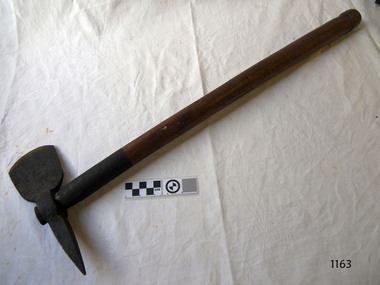
Axe
Hand made axe with spike on one side and blade on other. Has a wooden handle that has been carved.flagstaff hill, warrnambool, shipwrecked-coast, flagstaff-hill, flagstaff-hill-maritime-museum, maritime-museum, shipwreck-coast, flagstaff-hill-maritime-village -
 Lara RSL Sub Branch
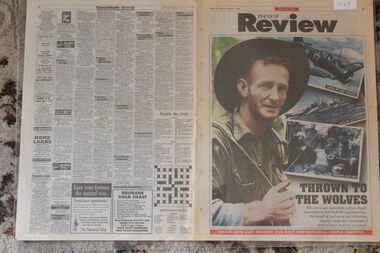
Newspaper - Herald Sun Dated 11/2/1995 50 Anniv. of Japanese Attacks Contiue Thru Java, New Guinea and Rabual
Herald Sun Newspaper Dated 11/2/1995 50 Anniversary of Japanese attacks along Java, New Guinea and Rabaul50 Anniversary of Japanese attacks along Java, New Guinea and RabaulHerald Sun Newspaper Dated 11/2/1995 50 Anniversary of Japanese attacked along Java, New Guinea and RabaulAustralian Troops continue to be Thrown To The Wolves by Disastrous Leadership, Thousands of Australian Troops captured and Die.australian troops continue to be thrown to the wolves by disastrous leadership -
 Greensborough Historical Society
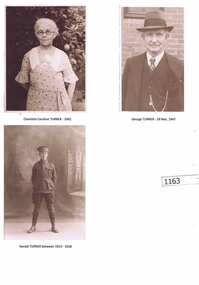
Photographs (copy), Turner family photographs, 1942o
Photographs of the Turner family: Sheet 1: Charlotte Caroline Turner (1942), George Turner (29/03/1947); Sheet 2: Harold and Francis Virginia Turner (2 photos, Feb/March 1955 and December 1942), Francis Virginia Turner (nee Smith) was publican of the Greensborough Hotel; Sheet 3: Wedding of Harold Law to Dorothy Turner (group photo) at Greensborough Methodist Church (24/02/1917) and Harold and Dorothy on their wedding day.3 photocopies of black and white photos.Photographs are named.turner family, greensborough hotel -
 Orbost & District Historical Society
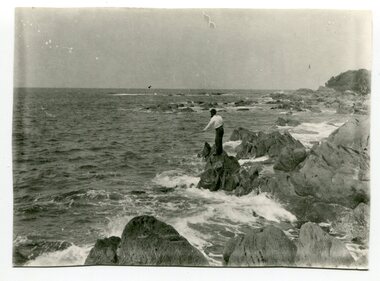
black and white photograph, first half 20th century
This is a photograph of a man fishing off the rocks at Cape Conran in Far East Gippsland.Cape Conran has always been a popular fishing destination for Orbost people. This photograph is a pictorial record of that recreational activity in the early 20th century. A black / white photograph of a man fishing from rocks into the ocean. -
Glenelg Shire Council Cultural Collection
Book, Victorian Government Gazette 2, 1888. 1 July - 31 December, 1889
Dark green marbled fabric over hard cardboard. Red leather corners and spine. Gold lettering on black band on spine. Gold crown & lettering on spine.local courts, government, gazette, victorian government -
 Ringwood and District Historical Society
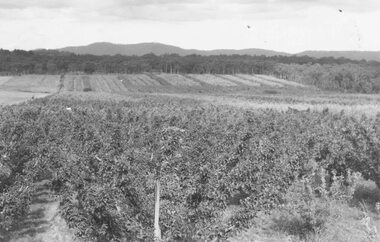
Photograph, Frank Pyke's apple orchard Ringwood. c1948/9
Black and white photographWritten on back of photograph- "Frank Pyke's apple orchard. See booklet 'Welcome to R/wood' 1948 or 1949. H. F. Pearson Mayor 1948 - 1949."agriculture -
 Bendigo Military Museum
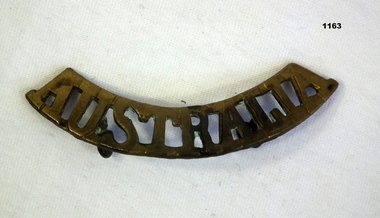
Badge - AUSTRALIA BADGE, C.1914 - 18
This one remaining of two AUSTRALIA shoulder badges belonged to, 2672, Archibald Clarkson Jones, 23rd Battalian AIF. Refer cat No 1040 Medals. Part of the William (Bill) Thomason collection, refer Cat No 4136P for more items.Badge, shoulder, curved shape, blackened brass, "AUSTRALIA". Rear has two lugs for attachment.“AUSTRALIA”numismatics - badges, military, australia, -
 4th/19th Prince of Wales's Light Horse Regiment Unit History Room
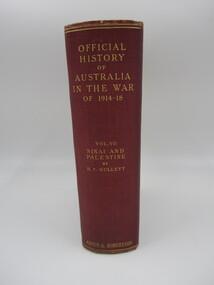
Book, H S Gullett, Official History of Australia in the War of 1914-18. Vol VII Sinai and Palestine. 4th Edition, 1937
Hard covered book, 844 pagesaif, sinai and palestine, book -
Eltham District Historical Society Inc
Folder, Joseph Candwell, 1871
Folder of information on Joseph Candwell, Panton Hill, 1871joseph candwell -
 Running Rabbits Military Museum operated by the Upwey Belgrave RSL Sub Branch
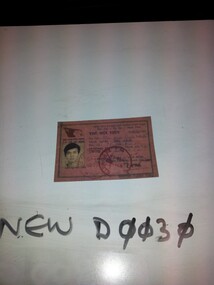
Identiity Cards
3 different identity cards from Vietnamdocuments, vietnam, general -
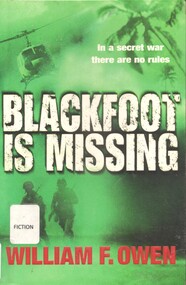 National Vietnam Veterans Museum (NVVM)
Book, Owen, William F, Blackfoot Is Missing: In a secret war there are no rules
Bobby Lake dropped out of Harvard to fight in Vietnam, because he wanted to be a hero. but how do you become a hero amongst men who only notice the cowards, where just the price of respect is high, and the cost of being a hero is hard to pay?fictionBobby Lake dropped out of Harvard to fight in Vietnam, because he wanted to be a hero. but how do you become a hero amongst men who only notice the cowards, where just the price of respect is high, and the cost of being a hero is hard to pay?united states. army. special forces - fiction, vietnam -
Moorabbin Air Museum
Manual (Item) - Prestwick Pioneer
Description: 231 pages. Published by Piper Aircraft Corporation. Published April 1966. Number 753 646. Piper PA-30 Twin Comanche Aircraft Parts Catalogue Level of Importance: World. -
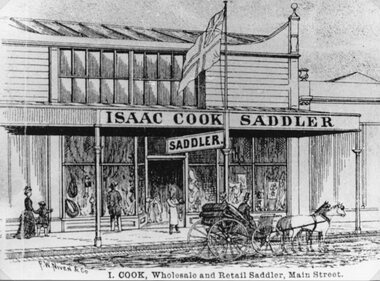 Stawell Historical Society Inc
Drawing, Mr Isaac Cook, Saddler in Main Street Stawell from the P.C. News Supplement 1888 -- Advert
Isaac Cook Saddler Main Street from P.C. News Supplement 1888stawell businesses -
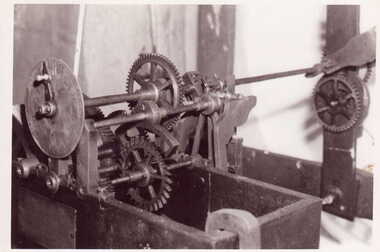 Clunes Museum
photograph
MECHANICALWORKINGS OF CLUNES TOWN HALL CLOCK.PHOTOGRAPH OF WORKINGS OF CLUNES TOWN HALL CLOCK.local history, photography, photographs, town hall -
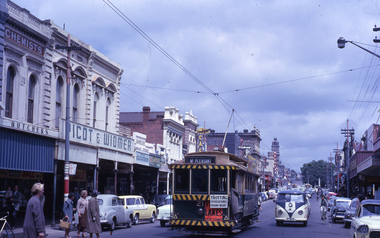 Ballarat Tramway Museum
Slide - 35mm slide/s - set of 2, Noel Simons, 24/11/1962 12:00:00 AM
Set of 2 Kodachrome transparencies taken on 24/11/1962. 1163.1 - No. 21 in Bridge St., with destination of "Mt Pleasant" with a Twin Lakes advert and "Trotting Showgrounds Friday Night" auxiliary board on front dash panel. Also Picot & Widmer, chemists shop alongside tram. Tram at a stop with people boarding. 1163.2 - No. 13 and 30 crossing at the end of the double track in Sturt. St, at Grenville St. Both trams have Twin Lakes signs. Photo shows buildings either side of Sturt St.1163.1 - "No. 21 in Bridge St. Ballarat" 1163.2 - "No. 13 and 30 at foot of Sturt St. Ballarat" All have date stamp of "24 Nov. 1962" in purple ink. All black ink unless otherwise noted.tramways, trams, ballarat, bridge st, grenville st., sturt st., tram 13, tram 21, tram 30 -
Hand Tool Preservation Association of Australia Inc
Compass
This item is part of the Thomas Caine Tool Collection, owned by The National Trust of Australia (Victoria) and curated by the Hand Tools Preservation Association of Australia.compass, arm, dip pen -
 Ballarat RSL Sub-Branch Inc.
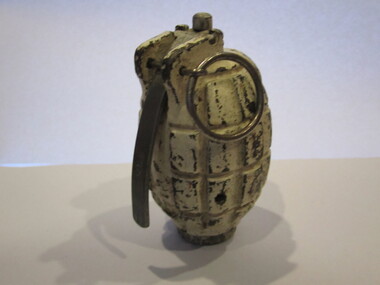
Hand Grenade - British
second world war (ww2), 1939 - 1945, weapons, ballarat rsl, ballarat -
 Mont De Lancey
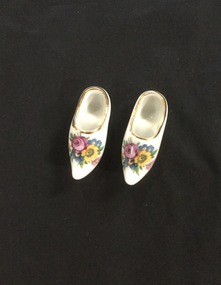
China - Ornament
Limoges porcelain is hard-paste porcelain produced by factories in and around the city of Limoges, France beginning in the late 18th century. Limoges had strong antecedents in the production of decorative objects. The city was the most famous European centre of vitreous enamel production in the 12th century. These shoes were bought by Mr. & Mrs. H. N. Lord in Paris in 1966.Pair of miniature porcelain Dutch shoes. White with floral design and gold trim.china, ornaments, clogs, footwear -
 Melbourne Tram Museum
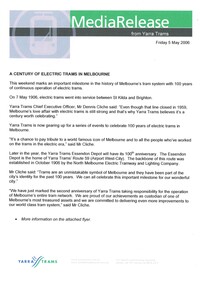
Document - Press Release, Yarra Trams, "A Century of Electric Trams in Melbourne", 5/05/2006 12:00:00 AM
Printed Press Release or Media Release, titled "A Century of Electric Trams in Melbourne", dated 5/5/2006 giving details of the event, the forthcoming weekend and quotes Mr. Dennis Cliche. Gives details of forthcoming events, and that Yarra Trams is celebrating its second anniversary of Yarra Trams taking responsibility for Melbourne's entire network. Included a flyer - same as Reg 841 - but included with this item.trams, tramways, yarra trams, centenary, 100 years of electric trams, st kilda, essendon, nmetl -
![Photograph - Framed Team Photograph, Heidelberg Golf Club Bowling Club, Heidelberg Golf Club Bowling Club: [Team to be identified, no date]](/media/collectors/62fc2e8d3b4c83fe7f279a1c/items/67848dd87361eb691d5639d8/item-media/67848e0a7361eb691d563bcd/item-fit-380x285.jpg?cb=6) Heidelberg Golf Club
Heidelberg Golf ClubPhotograph - Framed Team Photograph, Heidelberg Golf Club Bowling Club, Heidelberg Golf Club Bowling Club: [Team to be identified, no date]
Heidelberg Golf Club Bowling Club: Officials in the HGC clubhouse and two men on the Bowling Green.2 Colour photographs in timber frame, under glass.heidelberg golf club, heidelberg golf club bowling club -
 Sunshine and District Historical Society Incorporated
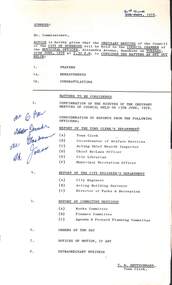
Administrative record - City of Sunshine - Commissioner Mr Alexander "Alex" George Gillon Collection 1976 - 1982 - Notice of Ordinary Meeting of The Council of The City of Sunshine 27th June 1978, City of Sunshine, 21st June 1978
Notice of Ordinary Meeting of The Council of The City of Sunshine 27th June 1978 Report of the Town Clerk's Department Report of the Town Clerk Proposal for Equalisation of Valuations Street Construction Schemes J.H. Wheelahan Pty Ltd Attempt for Settlement Melbourne Tourism Authority Membership by Council Claim for Consultants Fee Proposed Office Building Now Abandoned Financial Statement Year Ended 30th September 1977 and Auditor's Report Disposal of Garbage City Williamstown to Use Their Own Tip Within The City of Williamstown Transfer of Loan Funds not now Required for the Purpose for Which They Were Borrowed Either in Part or in Full Land Transfer from Melbourne & Metropolitan Board to Works for Road Construction Wright Street Bridge Separate Rate Off Street Parking Scheme Report of the Co-Ordinator of Welfare Services Health Insurance Changes Mordialloc Halfway House Sunshine West Community Health Services Report of the Acting Chief Health Inspector Mantoux Testing and B.C.G. Immunisation (Tuberculosis) Environment Protection Authority (Clean Air Matter) Animals By- Law Victorian Railways Tip Site Disused Quarry Hole Bounded by McDonalds Road, Somerville Road and Bunting Road Abattoir Proposal H.W. Greenham & Sons Pty Ltd Lots 7 & 8 Doherty Road Offensive Trades Prosecution Proceedings Sunshine Magistrates Court Report of the Chief By-Laws Officer Road Traffic Act Proposed Prohibited Parking Big Sam Market St. Albans Road St. Albans Prohibited Parking Martin Street Proposed Limited Parking Derrimut Street and Sydney Street Albion Report of the City Librarian Sunshine - Melton Regional Library Service Report of the City Engineer Land Use Permit Application Extractive Industry Lot 2 Somers Street Land Use Permit Application Grazing of Horses Furlong Road next to Proposed Sunshine Hospital Land Use Permit Application Illuminated Sky Sign 242 Hampshire Road Land Use Permit Application Extension to Bulk Meat Warehouse & Sales 159 - 161 Rosamond Road and 3 White Street Land Use Permit Application Alterations and Additions to United Social Cricket Club Rooms Scovell Reserve Scovell Crescent Land Use Permit Extension to T.A.B. Ballarat Road South West Corner Station Road Deer Park Land Use Permit Application Alteration and Addition to Existing Signs to Indicate Operation of Petrol Filling Station as Self-serve Main Road West South East Corner Station Road Land Use Permit Application Sky Sign Lots 8, 9, 10, 11, 13 and Part 12 Highpoint West Shopping Centre Rosamond Road Strata Subdivision 26 Burns Street Strata Subdivision Kodre Street Plan of Transfer and Consolidation Lots 201 & 202 Stevenage Crescent Deer Park Strata Subdivision Burke Street Plan of Subdivision 80 & 82 Rockbank Road Ardeer Albanvale Estate Stages 19 & 20 Contract Supply of Vehicles Heaths Motors Aust Pty Ltd Contract Dempster Park Tennis Courts Contract Supply of Vehicles Heaths Motors Aust Pty Ltd Contract Fencing Sunshine Tip Site Fourth Avenue Private Street Scheme 220kV Transmission Line Keilor Terminal Station to Brooklyn Terminal Station and Proposed Vehicle Wheelwash Sunshine Tip Proposed Culvert at Laverton Creek Boundary Road East of Robinsons Road Ballarat Road / Hampshire Road Junction Proposed Signalisation Load Limit of Roads Tottenham Area Mobil Oil Australia limited Altona to Somerton Pipeline Railway Lots 9 & 66 Anderson Road Sunshine Report of the Acting Building Surveyor Building Over Easements Delegation of Authority Dangerous Building 41 Wright Street Sunshine Report of the Director of Parks & Gardens Weedicide 245T and 24D Bon Thomas Reserve Development Orders of the Day Accounts Submitted for Payment as at 15th June 1978 Statement of Accounts for the Year Ended 30th September 1977 Submitted to be Finally Examined and Settled Confirmation of Loan with the Melbourne & Metropolitan Board of Works city of sunshine, alexander "alex" george gillon, wright street bridge, wright street, sunshine, victorian railways tip site, somerville road, mcdonalds road, doherty road, big sam market, st. albans road, st. albans, martin street, derrimut street, sydney street, albion, furlong road, hampshire road, rosamond road, white street, maribyrnong, united social cricket club, scovell reserve, scovell crescent, maidstone, ballarat road, station road, deer park, main road west, highpoint west shopping centre, burns street, stevenage crescent, burke street, braybrook, rockbank road, ardeer, dempster park, phoenix street, sunshine tip, fourth avenue, laverton creek, boundary road, robinsons road, anderson road, bon thomas reserve, quinn street, somers street -
 Melbourne Tram Museum
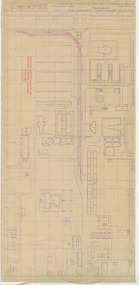
Drawing, Melbourne & Metropolitan Tramways Board (MMTB), "Explosive Factory Cordite Ave - Proposed Tramway Extension shown red", 1940's
... Original print from the Commonwealth of Australia, Dept of Munitions, Factory Board drawing number W-1163 titled "Explosives - Munitions Supply Laboratories Proof at Rest - Maribyrnong" and dated April 1933. ...Original print from the Commonwealth of Australia, Dept of Munitions, Factory Board drawing number W-1163 titled "Explosives - Munitions Supply Laboratories Proof at Rest - Maribyrnong" and dated April 1933. ...Drawing - red ink drawn on a print showing an extension to the single track, Maribyrnong tram line to run further into the Explosives Factory. Original print from the Commonwealth of Australia, Dept of Munitions, Factory Board drawing number W-1163 titled "Explosives - Munitions Supply Laboratories Proof at Rest - Maribyrnong" and dated April 1933. Marked in red ink is a "Explosive Factory Cordite Ave - Proposed Tramway Extension shown red". Not dated, possibly early 1940's. Also has pencil markings around the terminus showing an alternative loop.In blue pencil both edges on the rear "Cordite Ave" and in pencil on rear "Copy to Mr ?? to file"trams, tramways, footscray, maribyrnong, new tramway, explosives factory -
 Ballarat Tramway Museum
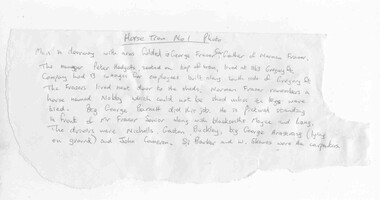
Document - Report, Dave Macartney, "Horse Tram No. 1 Photo", c1985
... The manager Peter Hodgetts, seated on top of tram, lived at 1163 Gregory St. Company had 13 cottages for employees building along south side of Gregory St. ...The manager Peter Hodgetts, seated on top of tram, lived at 1163 Gregory St. Company had 13 cottages for employees building along south side of Gregory St. ...Yields information about the people around the photograph of the Horse Tram at the depot with the Duncan and Fraser name board in front and has a strong association with the people named in the document.Piece of torn paper headed "Horse Tram No. 1 Photo" listing details of the men around the photograph of Horse Tram No. 1 at the depot with the Duncan and Fraser name board in the front. Handwritten by Dave Macartney c1985 as advised by Norman Fraser (a relation to Farser of the Duncan and Fraser family) See Reg Item 765. "Man in doorway with arms folded is George Fraser Snr, father of Norman Fraser. The manager Peter Hodgetts, seated on top of tram, lived at 1163 Gregory St. Company had 13 cottages for employees building along south side of Gregory St. The Frasers lived next door to the sheds. Norman Fraser remembers a horse named Nobby which could not be shod unless its legs were tied. Big George Barnett did the job. He is pictured standing in from of Mr Fraser Senior along with blacksmiths Moyce and Lang. The drivers were Nicholls, Gaston, Buckley, big George Armstrong (lying on the ground) and John Cameron. Si Barker and W. Skewes were the carpenters." trams, tramways, horse trams, duncan fraser, depot -
 Red Cliffs Military Museum
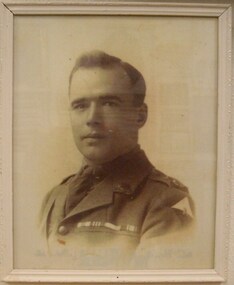
Framed Photograph, Lieutenant W.T. West, MM, MC, (estimated)
... ...1163...Throughout the day he led his platoon with skil and when the company commander was killed assumed charge and supervised the consolidation of the line with great activity and courage. of 1919 australia 1917 ww1 commonwealth gazette london walter thomas west mm mc page 2 collection july w t west gazettte 9 location 6839 8th nov 2937 position 104 april 4337 12 23 1163 45 Photo clearly shows unit insignia, ranks pips, service and valour ribbons. ...1789 Corporal Walter Thomas West was recommended for Military Medal 13th May 1917. Citation: For conspicous gallantry in action at the Hindenburg Line on 3rd May 1917. When he attacked with few bob=mbers an enemy post using MG fire against the right brigade. Having taken up the post he moved down the first trench and with 6 men engaged an enemy party who were resisting the 2nd attack of the tight brigade. Recommended by GOC 6th Australian Infantry Brigade. Lieutenant Walter Thomas West was recommended for MC 21st Ocrober 1918. Citation: During the attack on Montebrehain, east of Peronne on 5th Ocober, 1918, Lt West acted in a skilful and courageous manner when his platoon was held up by an enemy strong post, he rushed forward alone under heavy machine gun fire, threw a bomb at the post and captured the gun and crew of three. Later his flank was being held up by a strong post manned by the German guns in cemetary. Lt. West crawled round to the right and rushed the post. One ran he killed 3 of the nemy and took 3 prisoners. The men in the other post ran off with their gun and so escaped. Throughout the day he led his platoon with skil and when the company commander was killed assumed charge and supervised the consolidation of the line with great activity and courage. A framed black and white photgraph of Lieutenant West in dress uniform, showing Unit Insignia (colour Flash) service ribbons.Photo clearly shows unit insignia, ranks pips, service and valour ribbons.of, 1919, australia, 1917, ww1, commonwealth, gazette, london, walter, thomas, west, mm, mc, page, 2, collection, july, w t west, gazettte, 9, location, 6839, 8th, nov, 2937, position, 104, april, 4337, 12, 23, 1163, 45 -
 Flagstaff Hill Maritime Museum and Village
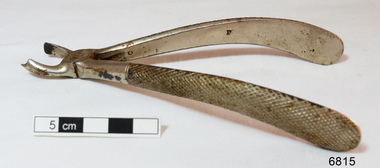
Equipment - Tooth Extractor, Late 19th - early 20th century
... Barbers handled the rest of the operations, especially blood letting and tooth extractions. In 1163 the Pope put a stop to all surgeries by monks and the field was left open to the barbers. ...Barbers handled the rest of the operations, especially blood letting and tooth extractions. In 1163 the Pope put a stop to all surgeries by monks and the field was left open to the barbers. ...Toothaches have been with us since the evolution of teeth and extracting teeth. I wonder what poor Homo erectus did when suffering with a toothache. He probably just suffered and probably became very bad tempered. Ancient Dentistry Significant tooth decay did not appear until hunter-gatherer societies became agrarian. The change in diet included a large increase in carbohydrates which then led to tooth decay. Early man was primitive but he was also pretty smart. Some time around 8000 years ago someone in the area that is now Pakistan was using a drill to remove tooth decay. Examination of Neolithic skulls have revealed the handiwork of at least one very early dentist. A Sumerian text in about 5000 B.C. taught that the cause of tooth decay was tooth worms. Proposed cures for toothache were numerous. Early Egyptians wore amulets. An Egyptian named Hesy-Re, is known as the first dentist. Praise for his dentistry is inscribed on his tomb. Unfortunately it doesn’t delineate what he did to earn the praise. Pliny, the Elder, recommended finding a frog at midnight and asking it to take away the pain. The doctor to Emperor Claudius around 50 A.D. had his toothache patients inhale smoke produced by scattering certain seeds on burning charcoal and then rinsing the mouth with hot water. This was to expel the tooth worms. On the more practical side Aristotle and Hippocrates both wrote about the treatment of tooth decay. A primitive forceps was used for extracting teeth. Some dentists at that time were able to weave wire in the teeth to stabilize loose teeth. Medieval Torture From about 500 A.D. to 1100 A.D. monks were well educated and well trained and did some of the surgical procedures of the time. Barbers handled the rest of the operations, especially blood letting and tooth extractions. In 1163 the Pope put a stop to all surgeries by monks and the field was left open to the barbers. Barbers were, after all, very skilled with knives and razors. In fact, the barber pole, red and white spiraling stripes, is a symbol of the blood letting; red for blood. white for bandages. In the 1300s a Barbers’ Guild was established which divided the barbers into two groups: those with the skills and training to do procedures and those who were relegated to blood letting and tooth extractions. Pliers from a blacksmith’s foundry were the only device available. Barbers would often go to fairs and advertise painless tooth pulling. A shill in the audience would come on the stage, feigning severe toothache. The barber would pretend to extract tooth, pulling out a bloody molar he had palmed earlier. The supposed sufferer would jump for joy. The barbers set up near the bands at the fairs so that the music would drown out the screams of their patients. If the tooth was loose enough, the barber would tie a string around the tooth and yank hard to extract the tooth. This was a much less painful and dangerous procedure than the pliers. The pliers often fractured other teeth and sometimes the jaw. The procedure was far from sterile and infection was a common problem and some people bled to death. The Renaissance and the Rise of Tooth Decay In the 1400s refined sugar was introduced into Europe but only reached the tables of the wealthy. While their betters were munching on sweets, the poorer folk suffered fewer toothaches. Queen Elizabeth I was known for her blackened teeth. George Washington had a tooth extraction every year after age 22. He supposedly had a set of wooden false teeth but his dentures were actually ivory. The earliest instrument designed for tooth extraction was the dental pelican, which was shaped something like a pelican’s beak. The pelican was replaced in the 1700s by the dental key, which was fitted down over the affected tooth and was better able to grip the tooth. Both still often caused more damage than relief. The Development of Modern Dentistry Modern dental equipment began to be introduced in the 1800s about the time when dentistry became a profession and dental schools began to open. Ether was used starting in 1846 to anesthetize the pain and local anesthetics were introduced in the early 1900s. Modern dentists no longer have to seat their patients on the floor and have helpers to hold them down. Dentistry is as close to painless as possible now. There is no excuse to suffer the agony of a toothache these days. And extracting teeth is no longer dangerous. https://arizonadentalspecialists.com/the-surprising-history-of-extracting-teeth/ This tooth extractor was donated to Flagstaff Hill Maritime Village by the family of Doctor William Roy Angus, Surgeon and Oculist. It is part of the “W.R. Angus Collection” that includes historical medical equipment, surgical instruments and material once belonging to Dr Edward Ryan and Dr Thomas Francis Ryan, (both of Nhill, Victoria) as well as Dr Angus’ own belongings. The Collection’s history spans the medical practices of the two Doctors Ryan, from 1885-1926 plus that of Dr Angus, up until 1969. ABOUT THE “W.R.ANGUS COLLECTION” Doctor William Roy Angus M.B., B.S., Adel., 1923, F.R.C.S. Edin.,1928 (also known as Dr Roy Angus) was born in Murrumbeena, Victoria in 1901 and lived until 1970. He qualified as a doctor in 1923 at University of Adelaide, was Resident Medical Officer at the Royal Adelaide Hospital in 1924 and for a period was house surgeon to Sir (then Mr.) Henry Simpson Newland. Dr Angus was briefly an Assistant to Dr Riddell of Kapunda, then commenced private practice at Curramulka, Yorke Peninsula, SA, where he was physician, surgeon and chemist. In 1926, he was appointed as new Medical Assistant to Dr Thomas Francis Ryan (T.F. Ryan, or Tom), in Nhill, Victoria, where his experiences included radiology and pharmacy. In 1927 he was Acting House Surgeon in Dr Tom Ryan’s absence. Dr Angus had become engaged to Gladys Forsyth and they decided he would take time to further his studies overseas in the UK in 1927. He studied at London University College Hospital and at Edinburgh Royal Infirmary and in 1928, was awarded FRCS (Fellow from the Royal College of Surgeons), Edinburgh. He worked his passage back to Australia as a Ship’s Surgeon on the on the Australian Commonwealth Line’s T.S.S. Largs Bay. Dr Angus married Gladys in 1929, in Ballarat. (They went on to have one son (Graham 1932, born in SA) and two daughters (Helen (died 12/07/1996) and Berenice (Berry), both born at Mira, Nhill ) Dr Angus was a ‘flying doctor’ for the A.I.M. (Australian Inland Ministry) Aerial Medical Service in 1928 . The organisation began in South Australia through the Presbyterian Church in that year, with its first station being in the remote town of Oodnadatta, where Dr Angus was stationed. He was locum tenens there on North-South Railway at 21 Mile Camp. He took up this ‘flying doctor’ position in response to a call from Dr John Flynn; the organisation was later known as the Flying Doctor Service, then the Royal Flying Doctor Service. A lot of his work during this time involved dental surgery also. Between 1928-1932 he was surgeon at the Curramulka Hospital, Yorke Peninsula, South Australia. In 1933 Dr Angus returned to Nhill where he’d previously worked as Medical Assistant and purchased a share of the Nelson Street practice and Mira hospital from Dr Les Middleton one of the Middleton Brothers, the current owners of what was once Dr Tom Ryan’s practice. Dr L Middleton was House Surgeon to the Nhill Hospital 1926-1933, when he resigned. [Dr Tom Ryan’s practice had originally belonged to his older brother Dr Edward Ryan, who came to Nhill in 1885. Dr Edward saw patients at his rooms, firstly in Victoria Street and in 1886 in Nelson Street, until 1901. The Nelson Street practice also had a 2 bed ward, called Mira Private Hospital ). Dr Edward Ryan was House Surgeon at the Nhill Hospital 1884-1902 . He also had occasions where he successfully performed veterinary surgery for the local farmers too. Dr Tom Ryan then purchased the practice from his brother in 1901. Both Dr Edward and Dr Tom Ryan work as surgeons included eye surgery. Dr Tom Ryan performed many of his operations in the Mira private hospital on his premises. He too was House Surgeon at the Nhill Hospital 1902-1926. Dr Tom Ryan had one of the only two pieces of radiology equipment in Victoria during his practicing years – The Royal Melbourne Hospital had the other one. Over the years Dr Tom Ryan gradually set up what was effectively a training school for country general-practitioner-surgeons. Each patient was carefully examined, including using the X-ray machine, and any surgery was discussed and planned with Dr Ryan’s assistants several days in advance. Dr Angus gained experience in using the X-ray machine there during his time as assistant to Dr Ryan. Dr Tom Ryan moved from Nhill in 1926. He became a Fellow of the Royal Australasian College of Surgeons in 1927, soon after its formation, a rare accolade for a doctor outside any of the major cities. He remained a bachelor and died suddenly on 7th Dec 1955, aged 91, at his home in Ararat. Scholarships and prizes are still awarded to medical students in the honour of Dr T.F. Ryan and his father, Dr Michael Ryan, and brother, John Patrick Ryan. ] When Dr Angus bought into the Nelson Street premises in Nhill he was also appointed as the Nhill Hospital’s Honorary House Surgeon 1933-1938. His practitioner’s plate from his Nhill surgery states “HOURS Daily, except Tuesdays, Fridays and Saturday afternoons, 9-10am, 2-4pm, 7-8pm. Sundays by appointment”. This plate is now mounted on the doorway to the Port Medical Office at Flagstaff Hill Maritime Village, Warrnambool. Dr Edward Ryan and Dr Tom Ryan had an extensive collection of historical medical equipment and materials spanning 1884-1926 and when Dr Angus took up practice in their old premises he obtained this collection, a large part of which is now on display at the Port Medical Office at Flagstaff Hill Maritime Village in Warrnambool. During his time in Nhill Dr Angus was involved in the merging of the Mira Hospital and Nhill Public Hospital into one public hospital and the property titles passed on to Nhill Hospital in 1939. In 1939 Dr Angus and his family moved to Warrnambool where he purchased “Birchwood,” the 1852 home and medical practice of Dr John Hunter Henderson, at 214 Koroit Street. (This property was sold in1965 to the State Government and is now the site of the Warrnambool Police Station. ). The Angus family was able to afford gardeners, cooks and maids; their home was a popular place for visiting dignitaries to stay whilst visiting Warrnambool. Dr Angus had his own silk worm farm at home in a Mulberry tree. His young daughter used his centrifuge for spinning the silk. Dr Angus was appointed on a part-time basis as Port Medical Officer (Health Officer) in Warrnambool and held this position until the 1940’s when the government no longer required the service of a Port Medical Officer in Warrnambool; he was thus Warrnambool’s last serving Port Medical Officer. (The duties of a Port Medical Officer were outlined by the Colonial Secretary on 21st June, 1839 under the terms of the Quarantine Act. Masters of immigrant ships arriving in port reported incidents of diseases, illness and death and the Port Medical Officer made a decision on whether the ship required Quarantine and for how long, in this way preventing contagious illness from spreading from new immigrants to the residents already in the colony.) Dr Angus was a member of the Australian Medical Association, for 35 years and surgeon at the Warrnambool Base Hospital 1939-1942, He served as a Surgeon Captain during WWII1942-45, in Ballarat, Victoria, and in Bonegilla, N.S.W., completing his service just before the end of the war due to suffering from a heart attack. During his convalescence he carved an intricate and ‘most artistic’ chess set from the material that dentures were made from. He then studied ophthalmology at the Royal Melbourne Eye and Ear Hospital and created cosmetically superior artificial eyes by pioneering using the intrascleral cartilage. Angus received accolades from the Ophthalmological Society of Australasia for this work. He returned to Warrnambool to commence practice as an ophthalmologist, pioneering in artificial eye improvements. He was Honorary Consultant Ophthalmologist to Warrnambool Base Hospital for 31 years. He made monthly visits to Portland as a visiting surgeon, to perform eye surgery. He represented the Victorian South-West subdivision of the Australian Medical Association as its secretary between 1949 and 1956 and as chairman from 1956 to 1958. In 1968 Dr Angus was elected member of Spain’s Barraquer Institute of Barcelona after his research work in Intrasclearal cartilage grafting, becoming one of the few Australian ophthalmologists to receive this honour, and in the following year presented his final paper on Living Intrasclearal Cartilage Implants at the Inaugural Meeting of the Australian College of Ophthalmologists in Melbourne In his personal life Dr Angus was a Presbyterian and treated Sunday as a Sabbath, a day of rest. He would visit 3 or 4 country patients on a Sunday, taking his children along ‘for the ride’ and to visit with him. Sunday evenings he would play the pianola and sing Scottish songs to his family. One of Dr Angus’ patients was Margaret MacKenzie, author of a book on local shipwrecks that she’d seen as an eye witness from the late 1880’s in Peterborough, Victoria. In the early 1950’s Dr Angus, painted a picture of a shipwreck for the cover jacket of Margaret’s book, Shipwrecks and More Shipwrecks. She was blind in later life and her daughter wrote the actual book for her. Dr Angus and his wife Gladys were very involved in Warrnambool’s society with a strong interest in civic affairs. Their interests included organisations such as Red Cross, Rostrum, Warrnambool and District Historical Society (founding members), Wine and Food Society, Steering Committee for Tertiary Education in Warrnambool, Local National Trust, Good Neighbour Council, Housing Commission Advisory Board, United Services Institute, Legion of Ex-Servicemen, Olympic Pool Committee, Food for Britain Organisation, Warrnambool Hospital, Anti-Cancer Council, Boys’ Club, Charitable Council, National Fitness Council and Air Raid Precautions Group. He was also a member of the Steam Preservation Society and derived much pleasure from a steam traction engine on his farm. He had an interest in people and the community He and his wife Gladys were both involved in the creation of Flagstaff Hill, including the layout of the gardens. After his death (28th March 1970) his family requested his practitioner’s plate, medical instruments and some personal belongings be displayed in the Port Medical Office surgery at Flagstaff Hill Maritime Village, and be called the “W. R. Angus Collection”. The W.R. Angus Collection is significant for still being located at the site it is connected with, Doctor Angus being the last Port Medical Officer in Warrnambool. The collection of medical instruments and other equipment is culturally significant, being an historical example of medicine from late 19th to mid-20th century. Dr Angus assisted Dr Tom Ryan, a pioneer in the use of X-rays and in ocular surgery. Tooth extractor, dental surgical instrument. Metal with cross hatched pattern on handle. Stamped with maker's mark on hinge. Other stamps inside handles. Part of the W.R. Angus Collection.Stamped on hinge 'CASH & SONS ENGLAND'. Inside handles are 'C', 'P' and '27'.flagstaff hill, warrnambool, shipwrecked coast, flagstaff hill maritime museum, maritime museum, shipwreck coast, flagstaff hill maritime village, great ocean road, dr w r angus, dr ryan, surgical instrument, t.s.s. largs bay, warrnambool base hospital, nhill base hospital, mira hospital, flying doctor, dental surgical instrument, tooth extractor
