
Showing 60 items matching "11th battalion"
-
 Beechworth RSL Sub-Branch
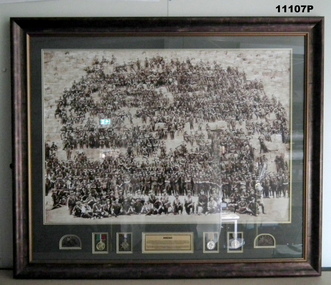
Print - Picture 11th Battalion Cheop Pyramid 1915, Contingent of the 1st Division Australian Imperial Force AIF / 11th Battalion Before Deployment to Gallipoli / Cheop Pyramid, Sunday 10th January 1915
... Picture 11th Battalion Cheop Pyramid 1915 ...Contingent of the 1st Division Australian Imperial Force AIF / 11th Battalion Before Deployment to Gallipoli / Cheop Pyramid, Sunday 10th January 1915...Apart form being a a very famous picture of the 11th Battalion on the Pyramid Cheop. The 11 battalion was formed in Western Australia has no connection to the people of Beechworth...A wooden framed collage of the print of 11th Battalion Before Deployment to Gallipoli on Cheop Pyramid, Egypt, Sunday 10th January 1915. ...Contingent of the 1st Division Australian Imperial Force AIF / 11th Battalion Before Deployment to Gallipoli / Cheop Pyramid, Sunday 10th January 1915"...Apart form being a a very famous picture of the 11th Battalion on the Pyramid Cheop. The 11 battalion was formed in Western Australia has no connection to the people of Beechworth https://11btn.wags.org.au/ Contingent of the 1st Division Australian Imperial Force AIF / 11th Battalion Before Deployment to Gallipoli / Cheop Pyramid, Sunday 10th January 1915" A wooden framed collage of the print of 11th Battalion Before Deployment to Gallipoli on Cheop Pyramid, Egypt, Sunday 10th January 1915. ...This item was either purchased or donated to the Sub Branch. Apart form being a a very famous picture of the 11th Battalion on the Pyramid Cheop. The 11 battalion was formed in Western Australia has no connection to the people of BeechworthA wooden framed collage of the print of 11th Battalion Before Deployment to Gallipoli on Cheop Pyramid, Egypt, Sunday 10th January 1915. Top centre is the AIF Badge, bottom left is the Battalion Patch, Bottom right is a miniature set of the three medals and centre is the Title " Contingent of the 1st Division Australian Imperial Force AIF / 11th Battalion Before Deployment to Gallipoli / Cheop Pyramid, Sunday 10th January 1915"Contingent of the 1st Division Australian Imperial Force AIF / 11th Battalion Before Deployment to Gallipoli / Cheop Pyramid, Sunday 10th January 1915"https://11btn.wags.org.au/ -
 Bendigo Military Museum
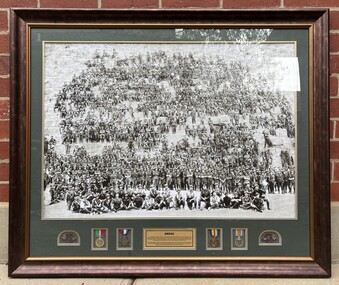
Photograph - 11th BATTALION, WW1
... 11th BATTALION, WW1......11th Battalion...Photograph - sepia toned, on paper, a large group of soldiers on the stone blocks of a pyramid. The 11th Battalion, AIF taken at the Great Pyramid of Cheops on 28th February 1915. ...On 10th January 1915, prior to leaving Egypt, a photograph of more than 800 original officers and men of the/ 11th Battalion was taken at the Great Pyramid of Cheops on 28th February 1915"....Framed item Photograh 11th Battalion Egypt Information from name plate - black coloured print "ANZAC". ...This type of item were generally created for purchase.Photograph, framed with campaign medals. Photograph - sepia toned, on paper, a large group of soldiers on the stone blocks of a pyramid. The 11th Battalion, AIF taken at the Great Pyramid of Cheops on 28th February 1915. Below photograph within mount - information name plate, gold coloured metal. Four campaign medals with ribbons and two Rising Sun Badges. Mount - dark green coloured cardboard. Frame - dark brown coloured timber with decorative moulding. Glass front, MDF backing board.Information from name plate - black coloured print "ANZAC". "After arriving in Egypt, the battalion camped and trained at Mena, ten miles from Cairo, at the foot of the Greatr Pyramid of/ Cheops. On 10th January 1915, prior to leaving Egypt, a photograph of more than 800 original officers and men of the/ 11th Battalion was taken at the Great Pyramid of Cheops on 28th February 1915".framed item, photograh, 11th battalion, egypt -
 Lara RSL Sub Branch
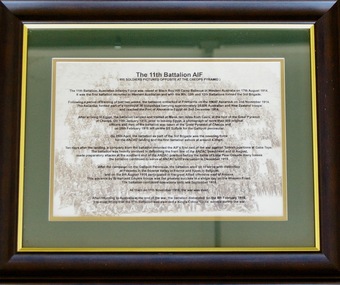
Picture, The 11th Battalion AIF at Cheops
... The 11th Battalion AIF at Cheops...11th battalion cairo cheops blackboy hill cheops cairo egypt ypres somme...Rectangular framed print which describes the famous photo of the 11th AIF Battalion posing on the cheops pyramid (Catalogue item 807)...Famous photo of the 11th Battalion (800 men) posing on the Cheops Pyramid on the 10th of January 1915. 11th battalion cairo cheops blackboy hill cheops cairo egypt ypres somme Printed details of the famous 11 Battalion photo posing on the Cheops Pyramid at Mena 10 miles from Cairo. ...Details of the famous 11 Battalion photo posing on the Cheops Pyramid at Mena 10 miles from Cairo. Also includes a brief history of the Battalion campaigns. Background watermark of the photo of troops on the pyramid. The Battalion returned to Australia at the end of war and was disbanded on 6th of February 1919. Awarded a Kings colour for its service.Famous photo of the 11th Battalion (800 men) posing on the Cheops Pyramid on the 10th of January 1915.Rectangular framed print which describes the famous photo of the 11th AIF Battalion posing on the cheops pyramid (Catalogue item 807)Printed details of the famous 11 Battalion photo posing on the Cheops Pyramid at Mena 10 miles from Cairo. Also includes a brief history of the Battalion campaigns. Background watermark of the photo of troops on the pyramid11th battalion cairo cheops blackboy hill cheops cairo egypt ypres somme -
 Sunshine and District Historical Society Incorporated
Photograph - 11th Battalion Infantry at base of the Great Pyramid of Cheops Egypt 28th Feb 1915
... 11th Battalion Infantry at base of the Great Pyramid of Cheops Egypt 28th Feb 1915...11th Battalion Infantry at base of the Great Pyramid of Cheops Egypt 28th Feb 1915...World War 1914 - 1918 Eqypt Pyramid 11th Battalion Infantry at base of the Great Pyramid of Cheops Egypt 28th Feb 1915 Framed picture with medals mounted at the bottom Photograph 11th Battalion Infantry at base of the Great Pyramid of Cheops Egypt 28th Feb 1915 ...11th Battalion Infantry at base of the Great Pyramid of Cheops Egypt 28th Feb 1915world war 1914 - 1918 , eqypt, pyramid -
 Wangaratta RSL Sub Branch
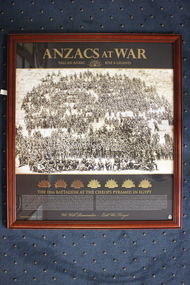
Print - Framed print, ANZACS at War
... This picture of the 11th Battalion at the Cheops pyramid in Egypt in 1915 was taken just before the landing at Anzac Cove. ...Burgundy frame, black mounting, gold writing with a photo of 11th Battalion soldiers standing and sitting on the Cheops pyramid in Egypt. ...Fall an ANZAC Rise a legend. The 11th Battalion at the Cheops pyramid in Egypt. ...This picture of the 11th Battalion at the Cheops pyramid in Egypt in 1915 was taken just before the landing at Anzac Cove. ...The 11th Australian Infantry Battalion AIF was among the first infantry units raised for the AIF during the First World War It was first raised at Black Boy Hill Camp in Western Australia on 17 August 1914 and recruited from militia units. This picture of the 11th Battalion at the Cheops pyramid in Egypt in 1915 was taken just before the landing at Anzac Cove. Not many of the soldiers in this picture survived the 8 month campaign. After the Campaign on the Gallipoli Peninsula, the 11th Battalion went on to serve with distinction in France and Belgium from 1916-18. They returned to Australia at the end of the war and disbanded on the 5 February 1919. The Battalion was awarded a Kings Colour for its service during the war which was held in the of custody the Militia 2/11th Battalion. Prior to leaving Egypt, a photograph of more than 800 original officers and men of the battalion was undertaken at the great pyramid of Cheops This picture was taken just before the landing at Anzac Cove during the First World War. Not many of the soldiers in this picture survived the 8 month campaign. This now famous picture of the 11th Battalion AIF at the Cheops pyramid in Egypt in 1915 is shown throughout military history displays and books the world over.Burgundy frame, black mounting, gold writing with a photo of 11th Battalion soldiers standing and sitting on the Cheops pyramid in Egypt. There are seven rising sun badges beneath photo.ANZACS at War. Fall an ANZAC Rise a legend. The 11th Battalion at the Cheops pyramid in Egypt. We will remember - Lest we forget. Limited edition 4438 of 5000.anzac, wwi, world war 1, cheops, pyramid, soldiers -
Charlton RSL Sub Branch
Photograph - Large framed group photo, Large group photo on pyramids WW1
... Large framed group photo 11th Battalion...Large framed photo of 11th battalion in Egypt. Photo taken on Pyramid Cheops, 10th January, 1915. ...Large framed photo of 11th battalion in Egypt. Photo taken on Pyramid Cheops, 10th January, 1915. ...Large framed group photo 11th BattalionLarge framed photo of 11th battalion in Egypt. Photo taken on Pyramid Cheops, 10th January, 1915. Prior to Galipoli. -
 Australian Army Museum of Western Australia
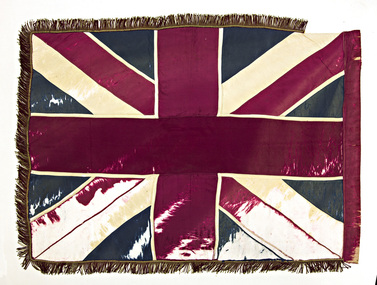
King's Banner - 1st Battalion, 11th Australian Infantry Regiment (Perth Regiment)
... King's Banner - 1st Battalion, 11th Australian Infantry Regiment (Perth Regiment)...This banner was subsequently inherited by successor units to the 11th Australian Infantry Regiment (Perth Regiment), including 88th (Perth) Infantry, 11th Battalion (The Perth Regiment) and 11th/16th Battalion. ...A silver plate attached to lower portion of pike inscribed as follows: "Presented by His Most Gracious Majesty The King Emperor to 1st Battalion, 11th Australian Infantry Regiment Perth Regiment formerly 1st and 2nd Battalions Western Australian Infantry in recognition of services rendered to the Empire in South Africa 1899-1902". ...This banner was subsequently inherited by successor units to the 11th Australian Infantry Regiment (Perth Regiment), including 88th (Perth) Infantry, 11th Battalion (The Perth Regiment) and 11th/16th Battalion. ...In 1909 His Majesty King Edward VII directed that honorary banners be presented to the Australian Infantry Regiments in commemoration of the services of their members who had volunteered for the South African War 1899-1902. (Promulgated under Military Order 132/1909). These would be similar to those presented to Australian Light Horse Regiments, Royal Australian Artillery and Australian Army Medical Corps in 1904. This Banner was presented to 1st Battalion, 11th Australian Infantry Regiment (Perth Regiment) by HE the Governor of WA Sir Gerald Strickland, KCMG, at a parade held on the Esplanade, Perth, 18 February 1911. Consecrated by the Right Reverend COL. Riley, DD, VD, Senior Chaplain of the Australian Commonwealth Military Forces. This banner was subsequently inherited by successor units to the 11th Australian Infantry Regiment (Perth Regiment), including 88th (Perth) Infantry, 11th Battalion (The Perth Regiment) and 11th/16th Battalion. The banner was handed over to the Perth City Council at a special parade of the 11th/16th Battalion held in Forrest Place on 2 June 1930, and was laid up in the Council Chambers in Murray Street. Together with the other historic colours handed over at the time (see Reference items 1 and 3), this banner later went into storage when Council moved premises in the early 1960's. Perth City Council had some restoration work carried out on these colours in 1975 and later had them on display in their display room at Council House, St Georges Terrace. They were subsequently placed in storage again. Following negotiations by the Army Museum of WA Perth City Council passed on these Colours to the Museum in November 1993. Plain Union flag with red and gold fringe. Red and gold chord and tassels. Pike with Royal Crest pike head. A silver plate attached to lower portion of pike inscribed as follows: "Presented by His Most Gracious Majesty The King Emperor to 1st Battalion, 11th Australian Infantry Regiment Perth Regiment formerly 1st and 2nd Battalions Western Australian Infantry in recognition of services rendered to the Empire in South Africa 1899-1902". -
 Australian Army Museum of Western Australia
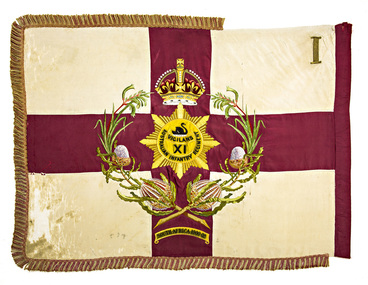
Regimental Colour - 1st Battalion, 11th Australian Infantry Regiment (Perth Regiment)
... Regimental Colour - 1st Battalion, 11th Australian Infantry Regiment (Perth Regiment)...This colour was subsequently inherited by successor units to the 11th Australian Infantry Regiment (Perth Regiment), including 88th (Perth) Infantry, 11th Battalion (The Perth Regiment) and 11th/16th Battalion. ...This colour was subsequently inherited by successor units to the 11th Australian Infantry Regiment (Perth Regiment), including 88th (Perth) Infantry, 11th Battalion (The Perth Regiment) and 11th/16th Battalion. ...Purchased from Regimental funds in 1910 and presented by HE the Governor of WA Sir Gerald Strickland, KCMG, at a parade held on the Esplanade, Perth, 18 February 1911. Consecrated by the Right Reverend COL. Riley, DD, VD, Senior Chaplain of the Australian Commonwealth Military Forces. This colour was subsequently inherited by successor units to the 11th Australian Infantry Regiment (Perth Regiment), including 88th (Perth) Infantry, 11th Battalion (The Perth Regiment) and 11th/16th Battalion. The colour was handed over to the Perth City Council at a special parade of the 11th/16th Battalion held in Forrest Place on 2 June 1930, and was laid up in the Council Chambers in Murray Street. Together with the other historic colours handed over at the time, this colour later went into storage when Council moved premises in the early 1960's. Perth City Council had some restoration work carried out on these colours in 1975 and later had them on display in their display room at Council House, St Georges Terrace. They were subsequently placed in storage again. Following negotiations by the Army Museum of WA Perth City Council passed on these colours to the Museum in November 1993 Red George Cross on a white background with red and white fringe. In the centre the regimental badge in gold within a wreath of Western Australian kangaroo paw and banksia, surmounted by the Crown. Below the wreath is the Battle Honour "SOUTH AFRICA 1900-02". In the upper canton is the roman numeral "I" (Note:- The official Battle Honour for South Africa granted to 11th Australian Infantry Regiment under Military Order 123/1908 and subsequently published in the Australian Army List, was "South Africa 1899-1902") regimental colour, military heraldry, battle honour -
 Bendigo Military Museum
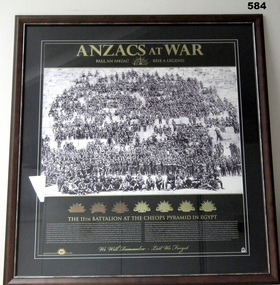
Poster - POSTER, FRAMED WW1, 10 jAN 1915
... Title to Poster "ANZACS AT WAR/FALLEN ANZACS RISE A LEGEND/ THE 11th BATTALION AT THE CHEOPS PYRAMID IN EGYPT." ...Illustrated with large black and white photograph of the the 11th Battalion standing and seated at the Cheops pyramid in Egypt. ...Illustrated with large black and white photograph of the the 11th Battalion standing and seated at the Cheops pyramid in Egypt. ...Title to Poster "ANZACS AT WAR/FALLEN ANZACS RISE A LEGEND/ THE 11th BATTALION AT THE CHEOPS PYRAMID IN EGYPT." Poster - Gold and white print on black background. Illustrated with large black and white photograph of the the 11th Battalion standing and seated at the Cheops pyramid in Egypt. On leaving Eqypt. Below photograph - seven examples of Rising Sun Badges in gold and information (white print) on the 11th Battalion AIF. Frame - brown stain colour timber with moulding. Black with white colour highlight, cardboard mount, glass front.photography-photographs, frame accessories, military history, middle east, ww1, anzac -
 Bendigo Military Museum
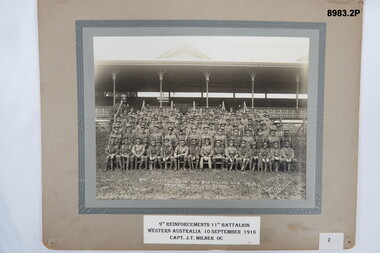
Photograph - WW1 PHOTOGRAPHS, The Carlisle Studio, 1915
... Photograph of 6 ranks of 9th Reinforcements, 11th Battalion on parade 1915....Handwritten on photograph "9th Reinforcements, 11th Battalion W.A. 10/9/15. Capt J.T. Milner, Officer Commanding "The Carlisle Studio, Blackboy Hill. ...Handwritten on photograph "9th Reinforcements, 11th Battalion W.A. 10/9/15. Capt J.T. Milner, Officer Commanding "The Carlisle Studio, Blackboy Hill. ...Two black and white photographs mounted on card backing. 1. Photograph of 6 ranks of standing and seated troops of 9th Reinforcements, 11th Battalion 1916, in front of a grandstand. 2. Photograph of 6 ranks of 9th Reinforcements, 11th Battalion on parade 1915.1. Handwritten on photograph "9th Reinforcements, 11th Battalion W.A. 10/9/15. Capt J.T. Milner, Officer Commanding "The Carlisle Studio, Blackboy Hill. On reverse "Dear Mother, This is the 9th, 11th or as "The Boys" call it "The Ragtime Unit". With Best Love from Roy, 4/5/1915. 2. Handwritten on photograph "9 Reinforcement, 11 Battalion W.A. 10/9/15 Capt. J.T. Milner. Officer Commanding. Handwritten on from "The Carlisle Studio, Blackboy Hill". On rear "Dear Mother. Another view of the famous 9th, 11th Roy, 25/9/15. Passchendaele Barracks Trust on back of 1. & 2. passchendaele barracks trust, pbt2to3, photographs -
 Running Rabbits Military Museum operated by the Upwey Belgrave RSL Sub Branch
Photograph
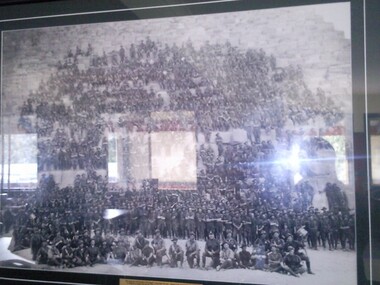
... 11th Battalion in Egypt 1914...Picture WW1 Army 11th Battalion in Egypt 1914 Photograph ...11th Battalion in Egypt 1914picture, ww1, army -
 Running Rabbits Military Museum operated by the Upwey Belgrave RSL Sub Branch
Picture
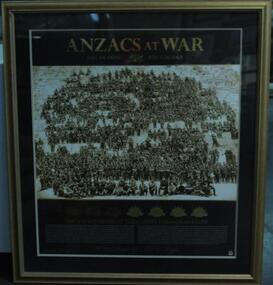
... Anzacs at War - 11th Battalion at the Cheops Pyramid in Eygpt 1915...Photo WW1 Army Anzacs at War - 11th Battalion at the Cheops Pyramid in Eygpt 1915 Picture ...Anzacs at War - 11th Battalion at the Cheops Pyramid in Eygpt 1915photo, ww1, army -
 Clunes Museum
Photograph, CIRCA 1914/18
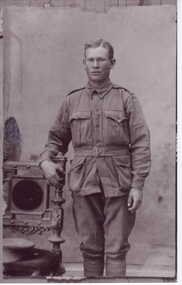
... GEORGE WILTON PARKINSON 11TH BATTALION KEEP THIS...GEORGE WILTON PARKINSON 11TH BATTALION KEEP THIS ORIGINAL PHOTOGRAPH OF PTE. ...ORIGINAL PHOTOGRAPH OF PTE. GEORGE WILTON PARKINSON WEARING ARMY UNIFORM OF WORLD WAR 1- NO BADGES OR CAP.PTE. GEORGE WILTON PARKINSON 11TH BATTALION KEEP THISlocal history, photography, photographs, military -
 Frankston RSL Sub Branch
Card
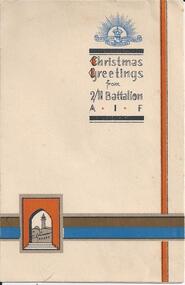
... ...2nd 11th battalion...christmas middle east 2nd aif army aif ww2 world war 2 2nd 11th battalion The front cover has the Australian 'Rising Sun' badge printed above the following words "Christmas Greetings from 2/11 Battalion A. ...Christmas card which was sent to a family in Australia by Australian Army serviceman, Lewis Jones who served during World War 2. The card is in the form of a small folded card. The front cover has the Australian 'Rising Sun' badge printed above the following words "Christmas Greetings from 2/11 Battalion A. I. F.". There is some ornate artwork on this cover and a small illustration which appears to be of a middle east village scene. The inside cover page has the following (apparently written by the serviceman) "To Alice & Family Wishing You all a Merry Xmas and a Happy New Year With best of luck From Lewis"christmas, middle east, 2nd aif, army, aif, ww2, world war 2, 2nd 11th battalion -
 Bendigo Military Museum
Photograph - PHOTOGRAPH, BOARD MOUNTED
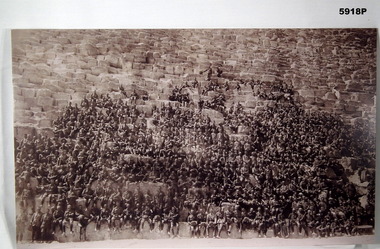
... Possibly the 11th Battalion. WW1....Possibly the 11th Battalion. WW1. Photograph PHOTOGRAPH, BOARD MOUNTED ...Photograph - black and white photograph on paper, a large group of soldiers on the stone blocks of a pyramid. Possibly the 11th Battalion. WW1.photographs, mounted, ww1 -
 RSL Victoria - Anzac House Reference Library and Memorabilia Collection
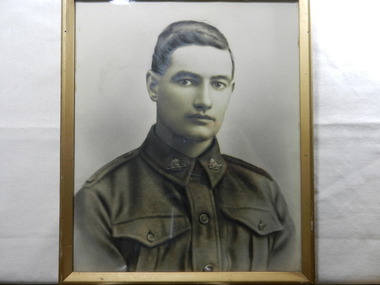
Letters of Edward John Coleman, Edward John Coleman, 1913 and 1914
... Letters, postcard, photographs, medals and notebook of Edward Coleman (647 - 11th Battalion, F Company). Notebook contains sketches and three poems....He was killed at Gallipoli on 25th April 1915. photographs ww1 gallipoli letters edward john coleman 11 battalion ascanius Letters, postcard, photographs, medals and notebook of Edward Coleman (647 - 11th Battalion, F Company). Notebook contains sketches and three poems. ...Coleman embarked from Fremantle on HMAT Ascanius on 2nd November 1914. He was killed at Gallipoli on 25th April 1915.Letters, postcard, photographs, medals and notebook of Edward Coleman (647 - 11th Battalion, F Company). Notebook contains sketches and three poems.photographs, ww1, gallipoli, letters, edward john coleman, 11 battalion, ascanius -
 Lilydale RSL Sub Branch
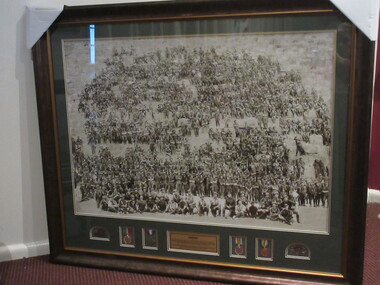
Photograph - Framed colourised version of the original photograph Titled ANZAC, ANZAC, Original photograph dated 10 January 1915
... Photograph of all the original Officers and men of the 11th. Battalion 3rd Brigade AIF. The group of over 685 soldiers are spread out over the side of the Great Pyramid of Khufu Cheops near Mina Camp....Inscribed Plate reads - "The 11th Battalion, Australian Infantry Force was raised at Black Boy Hill in Western Australia on 17th August 1914. ...Inscribed Plate reads - "The 11th Battalion, Australian Infantry Force was raised at Black Boy Hill in Western Australia on 17th August 1914. ...Photograph of all the original Officers and men of the 11th. Battalion 3rd Brigade AIF. The group of over 685 soldiers are spread out over the side of the Great Pyramid of Khufu Cheops near Mina Camp.Framed colourised version of Original photograph titled ANZAC with inscribed plate describing the Scene. Inscribed Plate reads - "The 11th Battalion, Australian Infantry Force was raised at Black Boy Hill in Western Australia on 17th August 1914. Following a period of training of just two weeks, the Battalion embarked at Freemantle on the HMAT Ascanius on 2nd November 1914. The Ascanius formed part of a convoy of 38 Troopships carrying approximately 35,000 Australian and New Zealand troops and reached the Port of Alexandria Egypt on 2nd December 1914. After arriving in Egypt, the Battalion camped and trained at Mena, ten miles from Cairo, at the foot of the Great Pyramid Cheops. On 10th January 1915, prior to leaving Egypt a photograph of more than 800 original Officers and Men of the Battalion was taken at the Great Pyramid of Cheops on the 28th February 1915." -
 Dandenong/Cranbourne RSL Sub Branch
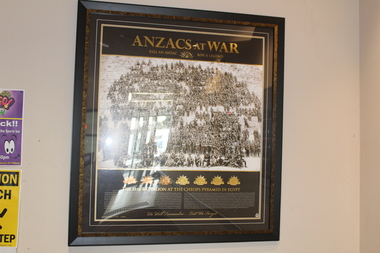
Print - ANZACS At War
... Bottom of print " The 11th Battalion at the Cheops pyramid in Egypt"....Bottom of print " The 11th Battalion at the Cheops pyramid in Egypt". ...Framed print Anzacs at War.Inscribed at top of print "Anzacs at War". Below " Fall an Anzac Rise a Hero". Bottom of print " The 11th Battalion at the Cheops pyramid in Egypt". -
 Bendigo Military Museum
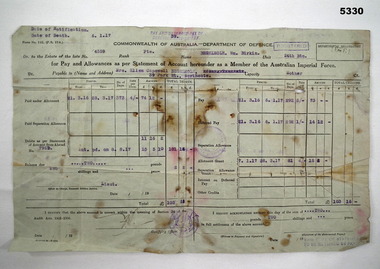
Financial record - PAY & ALLOWANCES STATEMENT
... 4359 Private Begelhole William Berkin, 11th Reinforcements, 24th Battalion AIF. Form No. 11E (PR 17A). ...4359 Private Begelhole William Berkin, 11th Reinforcements, 24th Battalion AIF. Form No. 11E (PR 17A)....4359 Private Begelhole William Berkin, 11th Reinforcements, 24th Battalion AIF. Form No. 11E (PR 17A). ...4359 Private Begelhole William Berkin, 11th Reinforcements, 24th Battalion AIF. Form No. 11E (PR 17A). KIA 6 January 1917 France."Pay and deferred pay record of deceased soldier A.I.T.", Bluish paper with purple carbon typing, printed in black ink.4359 Private Begelhole William Berkin, 11th Reinforcements, 24th Battalion AIF. Form No. 11E (PR 17A).pay record, ww1, allowance -
 National Vietnam Veterans Museum (NVVM)
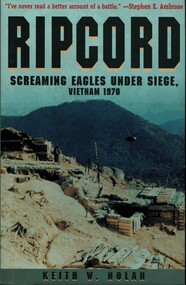
Book, Nolan, Keith W, Ripcord: Screaming Eagles Under Seige, Vietnam 1970, 2000
... ...2d Battalion...11th...Airborne Division 101st. 155mm Howitzer A Battery 2d Battalion 11th Field Artillery I.ve never read a better account of a battle. ...I.ve never read a better account of a battle.I.ve never read a better account of a battle. 1961-1975 - united states, vietnamese conflict, 1961-1975 - regimental histories - united states, united states. army. airborne division, 101st., 155mm howitzer, a battery, 2d battalion, 11th field artillery -
 Australian Army Museum of Western Australia
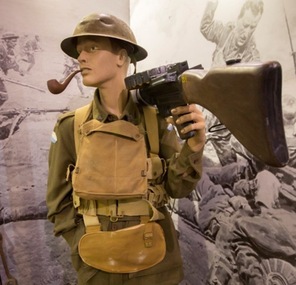
Diorama, 2015
... 1:1 scale diorama showing a Lewis gunner of 44th Battalion, 11th Brigade, 3rd Division, Australian Imperial Force in May 1918...The offensive capabilities of an infantry battalion was therefore generally maintained but with 700 men instead of 1100 when fully manned . amiens, last 100 days, lewis gun, spring offensive 1:1 scale diorama showing a Lewis gunner of 44th Battalion, 11th Brigade, 3rd Division, Australian Imperial Force in May 1918 Diorama ...This diorama is the introductory feature in the World War 1 Gallery - 1918 experience. The figure shows details of the Lewis gun and webbing including the documented but irregular positioning of the entrenching tool.The diorama text discusses the transition from manpower to firepower with the restructure of infantry battalions to incorporate more light machine guns and to give the platoon an all round versus specialist capability. The increase in firepower and the reduction to three from four battalions in an infantry regiment in part offset the decline in voluntary recruitment. The offensive capabilities of an infantry battalion was therefore generally maintained but with 700 men instead of 1100 when fully manned .1:1 scale diorama showing a Lewis gunner of 44th Battalion, 11th Brigade, 3rd Division, Australian Imperial Force in May 1918amiens, last 100 days, lewis gun, spring offensive -
 Australian Army Museum of Western Australia
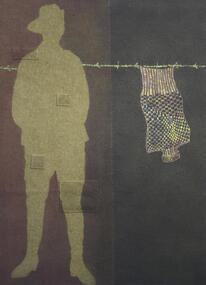
Mixed Media, Hung out to Dry, 2015
... The Artist in Residence program enabled research of the Museum's collection of artefacts relating to 11th Battalion AIF. Access was provided to the behind the scenes storerooms of uniforms, banners, photographs, artefacts and diaries. ...The Artist in Residence program enabled research of the Museum's collection of artefacts relating to 11th Battalion AIF. Access was provided to the behind the scenes storerooms of uniforms, banners, photographs, artefacts and diaries. ...The Artist in Residence program enabled research of the Museum's collection of artefacts relating to 11th Battalion AIF. Access was provided to the behind the scenes storerooms of uniforms, banners, photographs, artefacts and diaries. Michele summarised her experience with the project as follows: "It was an interesting experience and a topic I would not probably have considered had I not been asked. The mixture of history and the people who lived through these times has been an absorbing and rewarding journey for my art practice."Mixed media / textile art from Department of Culture and the Arts, Artist in Residence program 2015 by Michele Eastwood. The hand knitted sleeveless jumper in the Museum, made by Sergeant John Ellwood Rudd of the 48th Battalion was the inspiration behind this work. With great ingenuity John Rudd unwound the knitted socks sent by the women back home. Creating knitting needles fashioned from the barbed wire surrounding the POW camp he was incarcerated in, he knitted a jumper to help him through the freezing winters of Germany in the First World War. Original artefact was inspiration for this artistic interpretation. -
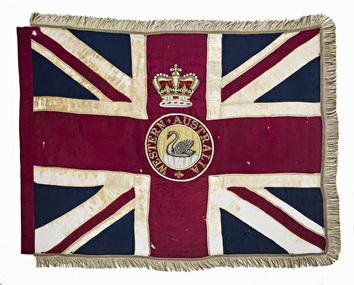 Australian Army Museum of Western Australia
Queen's Colour - 1st Infantry Regiment (WA Volunteer Forces), 1895-96
... (A detailed description of this colour appeared in "The West Australian" of 23 May 1896) This colour was subsequently inherited by successor Militia units to the 1st Infantry Regiment, including 11th Australian Infantry Regiment (Perth Regiment), 88th (Perth) Infantry, 11th Battalion (The Perth Regiment) and 11th/16th Battalion. ...(A detailed description of this colour appeared in "The West Australian" of 23 May 1896) This colour was subsequently inherited by successor Militia units to the 1st Infantry Regiment, including 11th Australian Infantry Regiment (Perth Regiment), 88th (Perth) Infantry, 11th Battalion (The Perth Regiment) and 11th/16th Battalion. ...Presented to 1st Infantry Regiment (WA Volunteer Forces) by HE the Governor of WA, Lt-Colonel Sir Gerard Smith, KCMG at a Queen's Birthday parade held on the Recreation Ground, Bazaar Terrace, Perth (now where the Esplanade is situated), on 28 May 1896. Consecrated by Senior Chaplain of the Forces, the Very Reverend Dean Goldsmith. Purchased by the WA Government, with the sanction of the Home Authorities, the colour was manufactured at the Pimlico Army Clothing Depot, London. It was the first Queen's Colour to be presented to a Western Australian Army unit. (A detailed description of this colour appeared in "The West Australian" of 23 May 1896) This colour was subsequently inherited by successor Militia units to the 1st Infantry Regiment, including 11th Australian Infantry Regiment (Perth Regiment), 88th (Perth) Infantry, 11th Battalion (The Perth Regiment) and 11th/16th Battalion. The colour was handed over to the Perth City Council at a special parade of the 11th/16th Battalion held in Forrest Place on 7 June 1930, and was laid up in the Council Chambers in Murray Street. Together with the other historic colours handed over at the time, this colour later went into storage when Council moved premises in the early 1960's. Perth City Council had some restoration work carried out on these colours in 1975 and later had them on display in their display room at Council House, St Georges Terrace. They were subsequently placed in storage again. Following negotiations by the Army Museum of WA Perth City Council passed on these Colours to the Museum in November 1993. Purchased by the WA Government, with the sanction of the Home Authorities, this was the first Queen's Colour to be presented to a Western Australian Army unit. (A detailed description of this colour appeared in "The West Australian" of 23 May 1896)Union flag with red and gold fringe. In the centre a circle inscribed "Western Australia", surmounted by a crown. Within the circle a black swan on gold background.military heraldry -
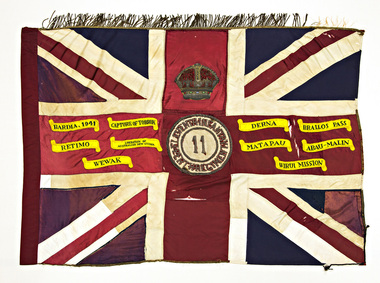 Australian Army Museum of Western Australia
Queen's Colour - 11th Australian Infantry Regiment (Perth Regiment)
... This former King's Colour was originally authorised by King George V in 1919 in recognition of services of 11th Battalion (AIF) during the Great War. Presented by HE the Governor General Sir Ronald Munro-Ferguson, PC, CGMG at a parade in King's Park on 2 October 1920 and handed over to 2nd Battalion, 11th Infantry Regiment (Perth Regiment) of the Citizen Forces. ...This former King's Colour was originally authorised by King George V in 1919 in recognition of services of 11th Battalion (AIF) during the Great War. Presented by HE the Governor General Sir Ronald Munro-Ferguson, PC, CGMG at a parade in King's Park on 2 October 1920 and handed over to 2nd Battalion, 11th Infantry Regiment (Perth Regiment) of the Citizen Forces. ...This former King's Colour was originally authorised by King George V in 1919 in recognition of services of 11th Battalion (AIF) during the Great War. Presented by HE the Governor General Sir Ronald Munro-Ferguson, PC, CGMG at a parade in King's Park on 2 October 1920 and handed over to 2nd Battalion, 11th Infantry Regiment (Perth Regiment) of the Citizen Forces. In 1921 this unit became re-designated 11th Battalion (The Perth Regiment) (The title was changed to "The City of Perth Regiment" in 1933). Subsequently consecrated by the Chaplain General, Archbishop COL Riley, OBE, VD, DD at a parade on the Esplanade, Perth, 15 November 1924. At the time of presentation this colour was a plain union flag with no central devices or other distinctions included on it. Following Military Board approval given in 1925 the centre circle and Crown were later added, in accordance with the approved design for a King's Colour. With the re-activation of the Citizen Military Forces (CMF) following the Second World War, the 11th/44th Infantry Battalion (The City of Perth Regiment) was raised as a linked battalion in 1948 to carry on the identity and traditions of the pre-war 11th and 44th Battalions respectively. The King's and Regimental Colours formerly held by these two battalions were passed on to the new battalion who paraded them in rotation on ceremonial occasions. With the accession of HM Queen Elizabeth II to the throne in 1953, all Colours that had originally been presented as King's Colours, and were still carried by units on the current Order of Battle, were automatically deemed to be Queen's Colours. Under major reorganisation of the CMF in 1960, all individual infantry battalions that existed at the time within each State were amalgamated to form State regiments, taking effect from 1 July 1960. Thus from that date the 11/44th, 16th and 28th Infantry Battalions were amalgamated to form The Royal Western Australia Regiment. In September 1960, at a ceremonial parade held at Northam Camp, the Colours carried by all former battalions were handed over for safe keeping by the new regiment. Battle Honours for the Second World War were promulgated under Australian Army Order 135/1961 and the 10 selected honours approved for emblazoning on the Queen's Colour were subsequently added in 1962 These former colours were subsequently laid up in the undercroft at the State War Memorial, King's Park on 29 November 1964. These were transferred to the Army Museum of WA in 1988 as part of the Bicentenary Colours Project. Union flag with gold fringes. In the centre the Arabic numeral "11" on a red background within a gold circle inscribed "ELEVENTH INFANTRY - PERTH REGIMENT", surmounted by the Crown. Emblazoned on the colour are the following Second World War Battle Honours:- BARDIA 1941, CAPTURE OF TOBRUK, DERNA, BRALLOS PASS, RETIMO, LIBERATION OF AUSTRALIAN NEW GUINEA, MATAPAU, ABAU-MALIN, WEWAK, WIRUI MISSION -
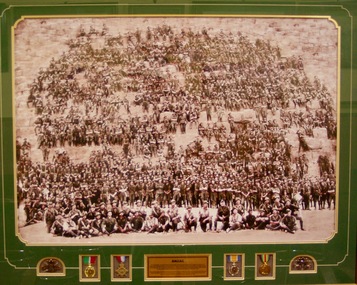 Lara RSL Sub Branch
Framed Print, Original photo 28/2/1915
... The 11th Battalion, Australian Infantry was raised at Blackboy Hill Camp Bellevue in Western Australia on the 17th of August 1914. ...The 11th Battalion, Australian Infantry was raised at Blackboy Hill Camp Bellevue in Western Australia on the 17th of August 1914. ...The 11th Battalion, Australian Infantry was raised at Blackboy Hill Camp Bellevue in Western Australia on the 17th of August 1914. Following a period of training of just 2 weeks the Battalion embarked at Fremantle on the HMAS Ascantius on the 11th of November 1918. The Ascantius formed part of a convoy 38 troop ships carrying approximately 35,000 Australians and New Zealanders and reached the port of Alexandria Egypt on the 3rd of December 1914. After arriving in Egypt, the Battalion camped and trained at Mena, ten miles from Cairo at the foot of the great pyramid Cheops. On the 10th of January 1915 prior to leaving Egypt, a photograph of more than 800 original officers and men of the battalion was undertaken at the great pyramid of Cheops on the 28th of February 1915Historical photograph of the 11th Infantry Btn taken on the Cheops Pyramid Mena Egypt on the 28/2/1914Plastic framed print behind glass with plaque medals and two rising sun badgesAnzac and plaque describing the historical significance.11 battalion aif cheop pyramid egypt photo pegan anzac mena hmas ascantius -
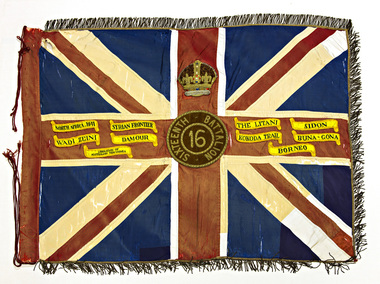 Australian Army Museum of Western Australia
Queen's Colour - 16th Battalion (The Cameron Highlanders of Western Australia)
... In order to maintain the identity of 16th Battalion as a Citizen Force unit, in 1930 11th Battalion (The Perth Regiment) was reformed as a linked battalion under the designation 11th/16th Battalion. ...In order to maintain the identity of 16th Battalion as a Citizen Force unit, in 1930 11th Battalion (The Perth Regiment) was reformed as a linked battalion under the designation 11th/16th Battalion. ...With the re-activation of the Citizen Military Forces (CMF) following the Second World War, the 16th/28th Infantry Battalion (The Cameron Highlanders of Western Australia) was raised in 1948 to carry on the identity and traditions of the pre-war 16th and 28th Battalions respectively. The King's and Regimental Colours formerly held by these two battalions were passed on to the new battalion who paraded them in rotation on ceremonial occasions It was decided in 1950 that a new set of Colours would be presented to 16th Battalion. For reasons that still remain unclear, these were manufactured under local arrangement by "cannibalising" the original 1933 set of colours and transferring the devices and battle honours (in the case of the Regimental Colour) to the new Colours. (Reported by Western Command to the Adjutant General -reference file A 107/1/11 dated 30 April 1952). These new colours were presented by Major-General JS Whitelaw, CB, CBE at a parade of the 16th/28th Infantry Battalion held on the Esplanade, Perth, 26 August 1951. (For details of Colours previously presented to 16th Battalion see separate section below). 16th/28th Infantry Battalion became unlinked in March 1952 with both 16th and 28th becoming independent battalions within their own right. With the accession of HM Queen Elizabeth II to the throne in 1953, all Colours that had originally been presented as King's Colours, and were still carried by units on the current Order of Battle, were automatically deemed to be Queen's Colours. Under major reorganisation of the CMF in 1960, all individual infantry battalions that existed at the time within each State were amalgamated to form State regiments, taking effect from 1 July 1960. Thus from that date the 11/44th, 16th and 28th Infantry Battalions were amalgamated to form The Royal Western Australia Regiment. In September 1960, at a ceremonial parade held at Northam Camp, the Colours carried by all former battalions were handed over for safe keeping by the new regiment. Battle Honours for the Second World War were promulgated under Australian Army Order 135/1961 and the 10 selected honours approved for emblazoning on the Queen's Colour were subsequently added in 1962 These former colours were subsequently laid up in the undercroft at the State War Memorial, King's Park on 29 November 1964. These were transferred to the Army Museum of WA in 1988 as part of the Bicentenary Colours Project Previous Colours presented to 16th Battalion The designation "16th" was allocated to several different infantry battalions that had been raised at different stages during changes to organisational structure of the Citizen Forces during the 1920's and 1930's. The original King's Colour awarded for service of 16th Battalion (AIF) and received in 1920 by the Citizen Force unit 2nd Battalion, 16th Infantry Regiment was later passed on to 16th Battalion (The Goldfields Regiment) which had been raised in the Kalgoorlie area in 1921. This unit became inactive and this Colour was later laid up in the Kalgoorlie Council Chambers. In order to maintain the identity of 16th Battalion as a Citizen Force unit, in 1930 11th Battalion (The Perth Regiment) was reformed as a linked battalion under the designation 11th/16th Battalion. As the 11th Battalion had already received its set of colours in the 1920's, it was decided that a set of King's and Regimental Colours be presented for 16th Battalion. These were presented by HE the Lieutenant-Governor Sir James Mitchell, KCMG at a parade of 11th/16th Battalion held at Perth Oval on 15 October 1933. The colours were consecrated by the Chaplain General, Archbishop COL Riley, OBE, VD, DD. In 1936 16th Battalion was re-established as a separate battalion within its own right, being formed as 16th Battalion (The Cameron Highlanders of Western Australia). The colours presented in 1933 were passed on to this new battalion and were also initially carried by the post-World War Two unit 16th/28th Infantry Battalion (The Cameron Highlanders of Western Australia) as already mentioned. Union flag with gold fringe. In the centre the Arabic numeral "16" on a red background within a circle inscribed "SIXTEENTH BATTALION", surmounted by the Crown. Emblazoned on the colour are the following Second World War Battle Honours:- NORTH AFICA 1941, SYRIAN FRONTIER, THE LITANI, SIDON, WADI ZEINI, DAMOUR, KOKODA TRAIL, BUNA-GONA, LIBERATION OF AUSTRALIAN NEW GUINEA, BORNEO -
 Bendigo Military Museum
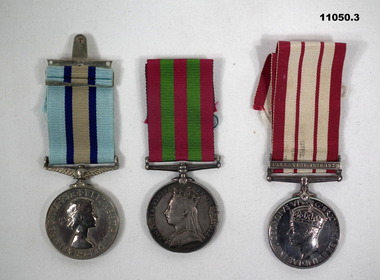
Award - MEDALS, U.K, Pre 2015
... Pte Davey was in 2nd Battalion, 11th Reg, Devonshire. 3. Navy General Service Medal - Recognised Minor Warlike Actions with no separate Campaign Medals....Pte Davey was in 2nd Battalion, 11th Reg, Devonshire. 3. Navy General Service Medal - Recognised Minor Warlike Actions with no separate Campaign Medals. ...1. Royal Observer Corps Medal - Awarded for faithful service of 12 Years (PT) or 24 years (Full-time) - ROC was a Civil Defence Organisation tied to RAF to track aircraft. 2. Afghanistan Medal - For Service in Afghanistan by British Forces 1878-80. Pte Davey was in 2nd Battalion, 11th Reg, Devonshire. 3. Navy General Service Medal - Recognised Minor Warlike Actions with no separate Campaign Medals.Three medals with ribbons, unmounted. 1. The Royal Observer Corps Medal - UK - with clasp. 2. British Afghanistan Medal 1878 - 80. 3. Navy General Service Medal 1915-62.1. Named "OBS J.A. Wiltshire". 2. Named "196 Pte J. Davey 2/11 Regt". 3. Named to "MX 4627 A.W. Gould 1 R.N."ron mills collection, medals -
 Australian Army Museum of Western Australia
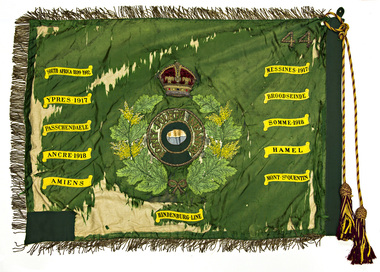
Regimental Colour - 44th Battalion (The West Australian Rifles)
... With the re-activation of the Citizen Military Forces (CMF) following the Second World War, the 11th/44th Infantry Battalion (The City of Perth Regiment) was raised as a linked battalion in 1948 to carry on the identity and traditions of the pre-war 11th and 44th Battalions respectively. ...With the re-activation of the Citizen Military Forces (CMF) following the Second World War, the 11th/44th Infantry Battalion (The City of Perth Regiment) was raised as a linked battalion in 1948 to carry on the identity and traditions of the pre-war 11th and 44th Battalions respectively. ...Presented by Lieutenant-General Sir JJ Talbot Hobbs, KCB, KCMG, VD, LLD at a parade held on the Esplanade, Perth, 22 October 1927. With the re-activation of the Citizen Military Forces (CMF) following the Second World War, the 11th/44th Infantry Battalion (The City of Perth Regiment) was raised as a linked battalion in 1948 to carry on the identity and traditions of the pre-war 11th and 44th Battalions respectively. The King's and Regimental Colours formerly held by these two battalions were passed on to the new battalion who paraded them in rotation on ceremonial occasions. Under major reorganisation of the CMF in 1960, all individual infantry battalions that existed at the time within each State were amalgamated to form State regiments, taking effect from 1 July 1960. Thus from that date the 11/44th, 16th and 28th Infantry Battalions were amalgamated to form The Royal Western Australia Regiment. In September 1960, at a ceremonial parade held at Northam Camp, the Colours carried by all former battalions were handed over for safe keeping by the new regiment. These former colours were subsequently laid up in the undercroft at the State War Memorial, King's Park on 29 November 1964. These were transferred to the Army Museum of WA in 1988 as part of the Bicentenary Colours Project. Dark green with gold fringes. In the centre the battalion colour patch of a white over blue oval within a circle inscribed "FORTY FOURTH INFANTRY", the whole within a wreath of Australian wattle and surmounted by the Imperial Crown. In the upper canton the Arabic numeral "44". The following battle honours are emblazoned on the Colour: SOUTH AFRICA 1899-1902, MESSINES 1917, YPRES 1917, BROODSEINDE, PASSCHENDAELE, SOMME 1918, ANCRE 1918, HAMEL, AMIENS, MONT ST QUENTIN, HINDENBURG LINE -
 Australian Army Museum of Western Australia
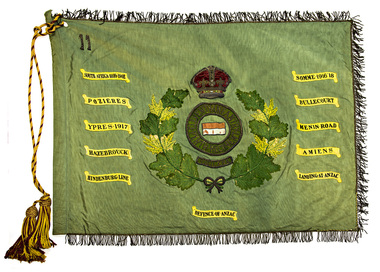
Regimental Colour - 11th Australian Infantry Regiment (Perth Regiment)
... With the re-activation of the Citizen Military Forces (CMF) following the Second World War, the 11th/44th Infantry Battalion (The City of Perth Regiment) was raised in 1948 as a linked battalion to carry on the identity and traditions of the pre-war 11th and 44th Battalions respectively. ...With the re-activation of the Citizen Military Forces (CMF) following the Second World War, the 11th/44th Infantry Battalion (The City of Perth Regiment) was raised in 1948 as a linked battalion to carry on the identity and traditions of the pre-war 11th and 44th Battalions respectively. ...Presented by the Honourable Lord Mayor JT Franklin, CMG, MLC, JP, at a parade held at Karrakatta Camp on 7 April 1929. Consecrated by the Chaplain General COL Riley, OBE, VD, DD. With the re-activation of the Citizen Military Forces (CMF) following the Second World War, the 11th/44th Infantry Battalion (The City of Perth Regiment) was raised in 1948 as a linked battalion to carry on the identity and traditions of the pre-war 11th and 44th Battalions respectively. The King's and Regimental Colours formerly held by these two battalions were passed on to the new battalion who paraded them in rotation on ceremonial occasions. Under major reorganisation of the CMF in 1960, all individual infantry battalions that existed at the time within each State were amalgamated to form State regiments, taking effect from 1 July 1960. Thus from that date the 11/44th, 16th and 28th Infantry Battalions were amalgamated to form The Royal Western Australia Regiment. In September 1960, at a ceremonial parade held at Northam Camp, the Colours carried by all former battalions were handed over for safe keeping by the new regiment These former colours were subsequently laid up in the undercroft at the State War Memorial, King's Park on 29 November 1964. These were transferred to the Army Museum of WA in 1988 as part of the Bicentenary Colours Project. Dark green with gold fringe. In the centre the battalion colour patch of a brown over blue rectangle within a circle inscribed "ELEVENTH INFANTRY - PERTH REGIMENT". Beneath the circle a scroll inscribed with the regimental motto "VIGILANS". The whole surrounded with a wreath of Australian wattle and surmounted by the Crown. In the upper canton the Arabic numeral "11". Battle Honours emblazoned on the colour:- SOUTH AFRICA 1899-1902, SOMME 1916-18, POZIERES, BULLECOURT, YPRES 1917, MENIN ROAD, HAZEBROUCK, AMIENS, HINDENBURG LINE, LANDING AT ANZAC, DEFENCE OF ANZAC -
 Australian Army Museum of Western Australia
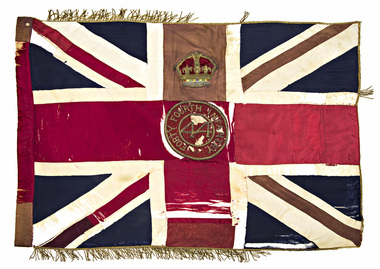
Queen's Colour - 44th Battalion (The West Australian Rifles)
... With the re-activation of the Citizen Military Forces (CMF) following the Second World War, the 11th/44th Infantry Battalion (The City of Perth Regiment) was raised as a linked battalion in 1948 to carry on the identity and traditions of the pre-war 11th and 44th Battalions respectively. ...With the re-activation of the Citizen Military Forces (CMF) following the Second World War, the 11th/44th Infantry Battalion (The City of Perth Regiment) was raised as a linked battalion in 1948 to carry on the identity and traditions of the pre-war 11th and 44th Battalions respectively. ...This former King's Colour was originally authorised by King George V in 1919 in recognition of services of 44th Battalion (AIF) during the Great War. Presented by HE the Governor General Sir Ronald Munro-Ferguson, PC, CGMG at a parade in King's Park on 2 October, 1920, however was not passed on to any AMF counterpart unit of the Citizen Forces, as one did not exist at the time. 44th Battalion (AMF) was formed in 1921 from elements of 16th and 51st Infantry Regiments and was presented with this colour by the Governor of Western Australia Sir Robert Furse McMillan at the Anzac Day parade on the Esplanade, Perth on 25 April 1922. The colour was subsequently consecrated by the Chaplain General, Archbishop COL Riley, OBE, VD, DD at a parade on the Esplanade, Perth, 15 November 1924. At the time of presentation this colour was a plain union flag with no central devices or other distinctions included on it. Following Military Board approval given in 1925 the centre circle and Crown were later added, in accordance with the approved design for a King's Colour. With the re-activation of the Citizen Military Forces (CMF) following the Second World War, the 11th/44th Infantry Battalion (The City of Perth Regiment) was raised as a linked battalion in 1948 to carry on the identity and traditions of the pre-war 11th and 44th Battalions respectively. The King's and Regimental Colours formerly held by these two battalions were passed on to the new battalion who paraded them in rotation on ceremonial occasions. With the accession of HM Queen Elizabeth II to the throne in 1953, all Colours that had originally been presented as King's Colours, and were still carried by units on the current Order of Battle, were automatically deemed to be Queen's Colours. Under major reorganisation of the CMF in 1960, all individual infantry battalions that existed at the time within each State were amalgamated to form State regiments, taking effect from 1 July 1960. Thus from that date the 11/44th, 16th and 28th Infantry Battalions were amalgamated to form The Royal Western Australia Regiment. In September 1960, at a ceremonial parade held at Northam Camp, the Colours carried by all former battalions were handed over for safe keeping by the new regiment. These former colours were subsequently laid up in the undercroft at the State War Memorial, King's Park on 29 November 1964. These were transferred to the Army Museum of WA in 1988 as part of the Bicentenary Colours Project. Union flag with gold fringes. In the centre the Arabic numeral "44" on a red background within a circle inscribed "FORTY FOURTH INFANTRY ", surmounted by the Imperial Crown.
