
Showing 14 items matching "1824 - 1856"
-
 Narre Warren and District Family History Group
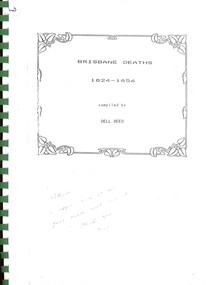
Book, Dell Deed, Brisbane deaths, 1824-1856, 1988
... Brisbane deaths, 1824-1856......1824 - 1856...Brisbane Deaths 1824 - 1856 Queensland Genealogy Brisbane Deaths 1824 - 1856 Brisbane deaths, 1824-1856 Book Dell Deed ...Brisbane Deaths 1824 - 1856non-fiction Brisbane Deaths 1824 - 1856 brisbane deaths, 1824 - 1856, queensland genealogy -
 Narre Warren and District Family History Group
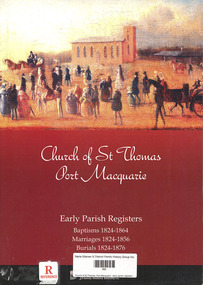
Book, Port Macquarie & District Family History Society Inc, Church of St Thomas, Port Macquarie : early parish registers : baptisms 1824-1864, marriages 1824-1856, burials 1824-1876, 2013
... Church of St Thomas, Port Macquarie : early parish registers : baptisms 1824-1864, marriages 1824-1856, burials 1824-1876...New South Wales Genealogy parish registers Parish records of St Thomas Church, Port Macquarie, covering the years 1824-1864 (baptisms), 1824-1856 (marriages), 1824-1876 (deaths) Church of St Thomas, Port Macquarie : early parish registers : baptisms 1824-1864, marriages 1824-1856, burials 1824-1876 Book Port Macquarie & District Family History Society Inc ...Parish records of St Thomas Church, Port Macquarie, covering the years 1824-1864 (baptisms), 1824-1856 (marriages), 1824-1876 (deaths)non-fiction Parish records of St Thomas Church, Port Macquarie, covering the years 1824-1864 (baptisms), 1824-1856 (marriages), 1824-1876 (deaths) new south wales genealogy, parish registers -
 Flagstaff Hill Maritime Museum and Village
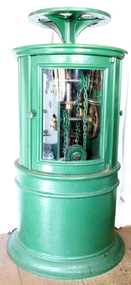
Machine - Dioptric Apparatus, mid 19th century
... 1824. The company specialised in making crown window glass, the company ran into difficulty and its survival was guaranteed in 1832 by investment from Chance's brother, William (1788 – 1856). ...1824. The company specialised in making crown window glass, the company ran into difficulty and its survival was guaranteed in 1832 by investment from Chance's brother, William (1788 – 1856). ...Before the introduction of electricity, lighthouses had a clockwork mechanism that caused the lens to rotate with a light source inside that was either powered by Kerosene or Colza oil. The mechanism consisted of a large weight attached by a cable through the centre of the lighthouse to the top where the cable wrapped around a barrel, drum or wheels that controlled the speed of the lights rotation by a clockwork mechanism. The keeper would crank the clockwork mechanism, which would lift the weight ready for the next cycle similar to an old grandfather clock mechanism. Once the weight lifted to its apex at the bottom of the first landing, the keeper would let it fall, which would pull on the cable, which would, in turn, operate a series of gears activating the rotation of the Fresnel optical lens, which would then rotate to create the lighthouse’s unique light speed of rotation characteristic. Creating a specific characteristic required a way to regulate the speed of the rotation, and was important as sailors could identify a particular light by its speed and time between flashes. The weight had to fall at a certain rate to create the proper rotation speed of the lens and a regulator within the mechanism accomplished this. History: From 1851, Chance Brothers became a major lighthouse engineering company, producing optical components, machinery, and other equipment for lighthouses around the world. James Timmins Chance pioneered placing lighthouse lamps inside a cage surrounded by Fresnel lenses to increase the available light output these cages, are known as optics and they revolutionised lighthouse design. Another important innovation from Chance Brothers was the introduction of rotating optics, allowing adjacent lighthouses to be distinguished from each other by the number of times per revolution the light flashes. The noted English physicist and engineer, John Hopkins invented this system while employed at Chance Brothers. Chance Brothers and Company was a glass works and originally based in Spon Lane, Smethwick, West Midlands England. The company became a leading glass manufacturer and a pioneer of British glass making technology. The Chance family originated in Bromsgrove as farmers and craftsmen before setting up a business in Smethwick near Birmingham in 1824. They took advantage of the skilled workers, canals and many other industrial advances taking place in the West Midlands at the time. Robert Lucas Chance (1782–1865), known as 'Lucas', bought the British Crown Glass Company's works in Spon Lane in 1824. The company specialised in making crown window glass, the company ran into difficulty and its survival was guaranteed in 1832 by investment from Chance's brother, William (1788 – 1856). William owned an iron factoring business in Great Charles Street, Birmingham. After a previous partnership that Lucas had dissolved in 1836, Lucas and William Chance became partners in the business which was renamed, Chance Brothers and Company. Chance Brothers invented many innovative processes and became known as the greatest glass manufacturer in Britain. In 1848 under the supervision of Georges Bontemps, a French glass maker from Choosy-le-Roi, a new plant was set up to manufacture crown and flint glass for lighthouse optics, telescopes and cameras. Bontemps agreed to share his processes that up to then had been secret with the Chance Brothers and stayed in England to collaborate with them for six years. In 1900 a baronetcy was created for James Timmins Chance (1814–1902), a grandson of William Chance, who had started the family business in 1771 with his brother Robert. Roberts grandson, James became head of Chance Brothers until his retirement in 1889 when the company became a public company and its name changed to Chance Brothers & Co. Ltd. Additional information: Lighthouses are equipped with unique light characteristic or flashing pattern that sailors can use to identify specific lighthouses during the night. Lighthouses can achieve distinctive light characteristics in a few different ways. A lighthouse can flash, which is when brief periods of light interrupt longer moments of darkness. The light can occult, which is when brief periods of darkness interrupt longer moments of light. The light can be fixed, which is when the light never goes dark. A lighthouse can use a combination of flashing, oscillating, or being fixed in a variety of combinations and intervals to create individual light characteristics. It is a common misconception that a lighthouse's light source changes the intensity to create a light characteristic. The light source remains constant and the rotating Fresnel lens creates the various changes in appearance. Some Fresnel lenses have "bulls-eye" panels create beams of light that, when rotated between the light and the observer, make the light appear to flash. Conversely, some lenses have metal panels that, when rotated between the light and the observer, make the light appear to go dark. This Dioptric clockwork apparatus used to turn a lighthouse optical lens is very significant as it is integral to a lighthouses operation, we can also look at the social aspect of lighthouses as being traditionally rich with symbolism and conceptual meanings. Lighthouses illustrate social concepts such as danger, risk, adversity, challenge and vigilance but they also offers guidance, salvation and safety. The glowing lamp reminds sailors that security and home are well within reach, they also symbolize the way forward and help in navigating our way through rough waters not just on the oceans of the world but in our personal lives be it financial, personal, business or spiritual in nature. Nothing else speaks of safety and security in the face of adversity and challenge quite the way a lighthouse does. Revolving dioptric clockwork apparatus used to turn a Fresnel optical lighthouse lens. A cylindrical cast metal pillar and cabinet painted green with 3 glass doors enclosing the top section. Inside the pillar/cabinet is a large clockwork mechanism used to turn and regulate a lighthouse light by means of weights and a chain attached to same. One door has the name "Adams Mare" in metallic dots similar to "Braille" to the inside edge of door frame. shipwrecked-coast, flagstaff-hill, flagstaff-hill-maritime-museum, flagstaff hill, maritime-museum, shipwreck-coast, warrnambool, flagstaff-hill-maritime-village, revolving dioptric mechanism, dioptric mechanism for lighthouse, lighthouse clockwork timing mechanism, acetylene lighthouse light mechanism, 19th century lighthouse mechanism, kerosene light, fresnel lenses, colza oil, chance brothers -
 Bendigo Historical Society Inc.
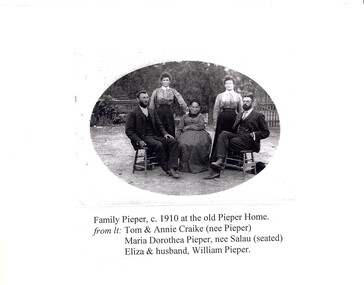
Photograph - STRAUCH COLLECTION: PIEPER FAMILY
... 1824-26/7/1873) married Marie Dorothea Salau (1829 -1/8/1908). They had the following children:- Ernest Louis Fritz (1848-1939) m. Mary Boyd in 1884; Otto Emil Christian (1850 - 1930) m. Amelia Boundy; Gustav Adolphe (1852 - 1937); Frederick Herman (1854 - 1917); Mathilde Agnes (1856...1824-26/7/1873) married Marie Dorothea Salau (1829 -1/8/1908). They had the following children:- Ernest Louis Fritz (1848-1939) m. Mary Boyd in 1884; Otto Emil Christian (1850 - 1930) m. Amelia Boundy; Gustav Adolphe (1852 - 1937); Frederick Herman (1854 - 1917); Mathilde Agnes (1856 ...Friedrich Otto Pieper(1824-26/7/1873) married Marie Dorothea Salau (1829 -1/8/1908). They had the following children:- Ernest Louis Fritz (1848-1939) m. Mary Boyd in 1884; Otto Emil Christian (1850 - 1930) m. Amelia Boundy; Gustav Adolphe (1852 - 1937); Frederick Herman (1854 - 1917); Mathilde Agnes (1856 - 1940) m. George Edwin Allen in 1888; Hermann (1858 - 1859); Agnes Clara Bertha ( Clara)(1860-1861); Louisa Amelia (1862 -1948) m. Jochim Kahland in 1891; Henry (1865 - 1937); Anna Marie (1867- 1955) m. Thomas Craike in 1888. Following Thomas' death in 1900, Anna remarried Phillip Sherzinger in Perth in 1916.; William Archibald (1869- 1959 ).. Thomas Craike was a councillor and President of the Strathfieldsaye Council. Copy of photograph of the Pieper family c.1910 at the old Pieper home. Tom & Annie Craike (nee Pieper) Maria Dorothea Pieper (nee Salau) seated Eliza & husband William Pieper. photograph, person, pieper, genealogy-pieper-craike-salau-german -
 Flagstaff Hill Maritime Museum and Village
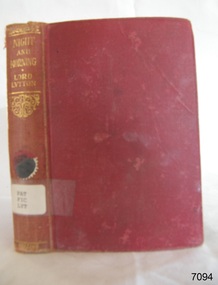
Book - A Fictional Story, Victor Prout (Illustrator) et al, Night And Morning, 1905 or 1913
... 1824 had produced the firm's first dictionary, the Greek and English Lexicon. By 1841 the company was established as a printer of Bibles, and in 1846 William Collins retired, with his son Sir William Collins taking over the business. In 1848 the firm expanded into publishing proper, specialising in religious and educational books, and in 1856...1824 had produced the firm's first dictionary, the Greek and English Lexicon. By 1841 the company was established as a printer of Bibles, and in 1846 William Collins retired, with his son Sir William Collins taking over the business. In 1848 the firm expanded into publishing proper, specialising in religious and educational books, and in 1856 ...Night and Morning is a novel by Edward Bulwer-Lytton (later Lord Lytton), originally published in three volumes in 1841, although the preface reproduced in most later editions, including the subject volume, is dated 1845 and refers to a revised edition. The story centres on two orphaned siblings, Philip and Sidney, who are separated by misfortune and a scheming relative after their father's death, and who endure hardship and social injustice as they fight to reclaim their family's name and honour. The novel explores social justice, moral dilemmas and class distinctions, opening in a small Welsh village where Reverend Caleb Price grapples with his own failures, before a mysterious stranger arrives revealing plans for a secret marriage he wants kept quiet because of his wealthy uncle's likely disapproval. The plot turns heavily on inheritance law and the legitimacy of the brothers' birth; Lytton reportedly consulted a real lawyer on the legal plot points to get the details right in his novel.Hard cover book. Night and Morning Author: Lord Lytton Illustrator: Victor Prout Publisher: Collins Clear-Type Press Date: 1890s–1910s Further Information: Red Cloth plain hardcover with lettering and patterning to spine in gilt. The spine has a Library label with an inscription. fiction Night and Morning is a novel by Edward Bulwer-Lytton (later Lord Lytton), originally published in three volumes in 1841, although the preface reproduced in most later editions, including the subject volume, is dated 1845 and refers to a revised edition. The story centres on two orphaned siblings, Philip and Sidney, who are separated by misfortune and a scheming relative after their father's death, and who endure hardship and social injustice as they fight to reclaim their family's name and honour. The novel explores social justice, moral dilemmas and class distinctions, opening in a small Welsh village where Reverend Caleb Price grapples with his own failures, before a mysterious stranger arrives revealing plans for a secret marriage he wants kept quiet because of his wealthy uncle's likely disapproval. The plot turns heavily on inheritance law and the legitimacy of the brothers' birth; Lytton reportedly consulted a real lawyer on the legal plot points to get the details right in his novel. warrnambool, shipwrecked-coast, flagstaff-hill, flagstaff-hill-maritime-museum, maritime-museum, shipwreck-coast, flagstaff-hill-maritime-village, shipwrecked-artefact, book, night and morning, lord lytton, victor william prout, edward george earle bulwer-lytton -
 Flagstaff Hill Maritime Museum and Village
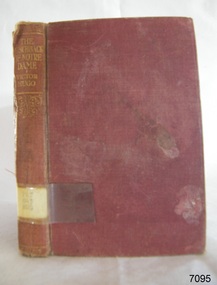
Book - A Fictional Story, Collins Clear Type Press et al, The Hunchback of Notre Dame, 1910-1925
... 1824 had produced the firm's first dictionary, the Greek and English Lexicon. By 1841 the company was established as a printer of Bibles, and in 1846 William Collins retired, with his son Sir William Collins taking over the business. In 1848 the firm expanded into publishing proper, specialising in religious and educational books, and in 1856...1824 had produced the firm's first dictionary, the Greek and English Lexicon. By 1841 the company was established as a printer of Bibles, and in 1846 William Collins retired, with his son Sir William Collins taking over the business. In 1848 the firm expanded into publishing proper, specialising in religious and educational books, and in 1856 ...The Hunchback of Notre-Dame is Victor Hugo's 1831 historical novel set in fifteenth-century Paris. It follows Quasimodo, the deformed bell-ringer of Notre-Dame Cathedral; Esmeralda, a beautiful Romani street dancer; Claude Frollo, the tormented archdeacon obsessed with her; and Captain Phoebus, the soldier she loves. The novel is as much a portrait of the cathedral itself and medieval Paris as it is a story of its characters. Hugo used the book partly as a plea for the preservation of Gothic architecture, which was being neglected and demolished in his own era. The novel's success is credited with sparking renewed public interest in Notre-Dame and Gothic buildings generally, which contributed to the eventual restoration campaign led by Eugène Viollet-le-Duc in the 1840s.Hard cover book. The Hunchback of Notre Dame Author: Victor Hugo Illustrator: Arthur A Dixon Publisher: Collins Clear-Type Press Date: 1910-1925 Further Information: Red Cloth plain hardcover with lettering and patterning to spine in gilt. The spine has a Library label with an inscription. fiction The Hunchback of Notre-Dame is Victor Hugo's 1831 historical novel set in fifteenth-century Paris. It follows Quasimodo, the deformed bell-ringer of Notre-Dame Cathedral; Esmeralda, a beautiful Romani street dancer; Claude Frollo, the tormented archdeacon obsessed with her; and Captain Phoebus, the soldier she loves. The novel is as much a portrait of the cathedral itself and medieval Paris as it is a story of its characters. Hugo used the book partly as a plea for the preservation of Gothic architecture, which was being neglected and demolished in his own era. The novel's success is credited with sparking renewed public interest in Notre-Dame and Gothic buildings generally, which contributed to the eventual restoration campaign led by Eugène Viollet-le-Duc in the 1840s. warrnambool, shipwrecked-coast, flagstaff-hill, flagstaff-hill-maritime-museum, maritime-museum, shipwreck-coast, flagstaff-hill-maritime-village, shipwrecked-artefact, book, the hunchback of notre dame, victor hugo -
 Flagstaff Hill Maritime Museum and Village
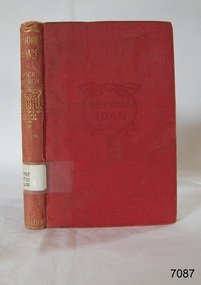
Book - A Fictional Story, Jack London, Before Adam, 1910s–1920s
... 1824 had produced the firm's first dictionary, the Greek and English Lexicon. By 1841 the company was established as a printer of Bibles, and in 1846 William Collins retired, with his son Sir William Collins taking over the business. In 1848 the firm expanded into publishing proper, specialising in religious and educational books, and in 1856...1824 had produced the firm's first dictionary, the Greek and English Lexicon. By 1841 the company was established as a printer of Bibles, and in 1846 William Collins retired, with his son Sir William Collins taking over the business. In 1848 the firm expanded into publishing proper, specialising in religious and educational books, and in 1856 ...Before Adam (1906–07) is one of Jack London's more unusual novels. It's narrated by a modern man who is a "freak of heredity" through recurring, vivid dreams, he relives the memories of a prehistoric ancestor he calls "Big-Tooth." The story was first serialised in Everybody's Magazine before being published as a book, and tells of a man who dreams he lives the life of an early hominid. Most of the narrative unfolds through the eyes of Big-Tooth, one of the more primitive "Cave People," set against the more advanced "Fire People" and the animal-like "Tree People." Supporting characters include the hominid's father, a love interest, and Red-Eye, a savage "atavism" who terrorises the Cave People, with a sabre-toothed cat also playing a role.Hard cover book. Before Adam Author: Jack London Publisher: Collins Clear-Type Press Date: 1910s–1920s Further Information: A plain volume bound in red cloth, with a stuck-on library classification label ("PAT FIC LON") on the spine and no visible date, edition statement, or printer's imprint on the pages shown the copyright/date page. Gilt decoration and lettering to spine, no illustrated boards, and no dust jacket. fiction Before Adam (1906–07) is one of Jack London's more unusual novels. It's narrated by a modern man who is a "freak of heredity" through recurring, vivid dreams, he relives the memories of a prehistoric ancestor he calls "Big-Tooth." The story was first serialised in Everybody's Magazine before being published as a book, and tells of a man who dreams he lives the life of an early hominid. Most of the narrative unfolds through the eyes of Big-Tooth, one of the more primitive "Cave People," set against the more advanced "Fire People" and the animal-like "Tree People." Supporting characters include the hominid's father, a love interest, and Red-Eye, a savage "atavism" who terrorises the Cave People, with a sabre-toothed cat also playing a role. shipwrecked-coast, flagstaff-hill, flagstaff-hill-maritime-museum, warrnambool, maritime-museum, shipwreck-coast, flagstaff-hill-maritime-village, shipwrecked-artefact, book, pattison collection, warrnambool library, warrnambool mechanics’ institute, ralph eric pattison, corangamite regional library service, warrnambool city librarian, mechanics’ institute library, victorian library board, warrnambool books and records, warrnambool children’s library, before adam, jack london -
 Flagstaff Hill Maritime Museum and Village
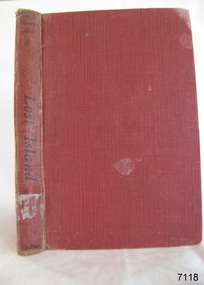
Book - Fictional Novel, James Norman Hall, Lost Island, 1945
... 1824 had produced the firm's first dictionary, the Greek and English Lexicon. By 1841 the company was established as a printer of Bibles, and in 1846 William Collins retired, with his son Sir William Collins taking over the business. In 1848 the firm expanded into publishing proper, specialising in religious and educational books, and in 1856...1824 had produced the firm's first dictionary, the Greek and English Lexicon. By 1841 the company was established as a printer of Bibles, and in 1846 William Collins retired, with his son Sir William Collins taking over the business. In 1848 the firm expanded into publishing proper, specialising in religious and educational books, and in 1856 ...Lost Island is a short novel about a Polynesian atoll untouched by World War II. George Dodd, an American engineer from Detroit, lands on the island with a blueprint in his pocket. Seabees and bulldozers follow him to turn the atoll into a coral-built base for American bombers. One reader describes the book as a bitter account of an American military base corrupting a traditional island culture, focused more on island society than on the war. Another notes that Hall had made clear in earlier works that he detested the automobile and the machine age, a theme that runs through the book.Hard cover book. Lost Island Author: James Norman Hall Publisher: William Collins, Sons & Co. Date: 1945 Further Information: Red Cloth hardcover with lettering and patterning to spine in black. The spine has a Library label with an inscription. fiction Lost Island is a short novel about a Polynesian atoll untouched by World War II. George Dodd, an American engineer from Detroit, lands on the island with a blueprint in his pocket. Seabees and bulldozers follow him to turn the atoll into a coral-built base for American bombers. One reader describes the book as a bitter account of an American military base corrupting a traditional island culture, focused more on island society than on the war. Another notes that Hall had made clear in earlier works that he detested the automobile and the machine age, a theme that runs through the book. flagstaff-hill-maritime-museum, book, lost island, james norman hall, shipwrecked-coast, flagstaff-hill, warrnambool, maritime-museum, shipwreck-coast, flagstaff-hill-maritime-village, shipwrecked-artefact, pattison collection, warrnambool library, warrnambool mechanics’ institute, ralph eric pattison, corangamite regional library service, warrnambool city librarian, mechanics’ institute library, victorian library board, warrnambool books and records, warrnambool children’s library, great ocean road -
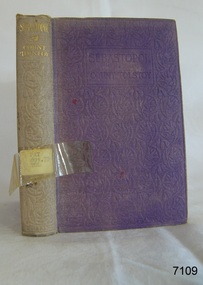 Flagstaff Hill Maritime Museum and Village
Book - Short Story Collection, Count Leo Tolstoy, Sebastopol, Circa 1932
... 1824 had produced the firm's first dictionary, the Greek and English Lexicon. By 1841 the company was established as a printer of Bibles, and in 1846 William Collins retired, with his son Sir William Collins taking over the business. In 1848 the firm expanded into publishing proper, specialising in religious and educational books, and in 1856...1824 had produced the firm's first dictionary, the Greek and English Lexicon. By 1841 the company was established as a printer of Bibles, and in 1846 William Collins retired, with his son Sir William Collins taking over the business. In 1848 the firm expanded into publishing proper, specialising in religious and educational books, and in 1856 ..."Sebastopol" is the English title given to Tolstoy's Sevastopol Sketches, which consist of three connected short stories: "Sevastopol in December," "Sevastopol in May," and "Sevastopol in August." These stories record Tolstoy's own experiences during the 1854–55 siege of Sevastopol in Crimea, published in 1855. Tolstoy served as an artillery officer at the siege, and the sketches move from a second-person guided "tour" of the besieged city through an increasingly unsentimental, often brutal picture of battle. The second sketch examines the senselessness and vanity of war, and Tolstoy famously closes by declaring truth itself the only hero of the account.Hard cover book. Sebastopol Author: Leo Tolstoy Editor/Translator: Ivan Lepinski Publisher: Collins Clear-Type Press Date: Circa 1932 Further Information: Mauve Cloth hardcover & brown spine with lettering and patterning to spine in gilt. The spine has a Library label with an inscription. fiction "Sebastopol" is the English title given to Tolstoy's Sevastopol Sketches, which consist of three connected short stories: "Sevastopol in December," "Sevastopol in May," and "Sevastopol in August." These stories record Tolstoy's own experiences during the 1854–55 siege of Sevastopol in Crimea, published in 1855. Tolstoy served as an artillery officer at the siege, and the sketches move from a second-person guided "tour" of the besieged city through an increasingly unsentimental, often brutal picture of battle. The second sketch examines the senselessness and vanity of war, and Tolstoy famously closes by declaring truth itself the only hero of the account. book, sebastopol, tolstoy, shipwrecked-coast, flagstaff-hill, flagstaff-hill-maritime-museum, warrnambool, maritime-museum, shipwreck-coast, flagstaff-hill-maritime-village, shipwrecked-artefact, pattison collection, warrnambool library, warrnambool mechanics’ institute, ralph eric pattison, corangamite regional library service, warrnambool city librarian, mechanics’ institute library, victorian library board, warrnambool books and records, warrnambool children’s library, great ocean road -
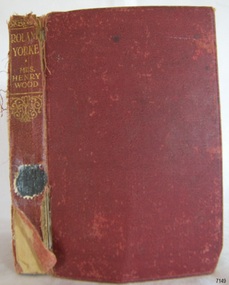 Flagstaff Hill Maritime Museum and Village
Book - A Fictional Story, Ellen (Mrs Henry) Wood, Roland Yorke, 1903-1920s
... 1824 had produced the firm's first dictionary, the Greek and English Lexicon. By 1841 the company was established as a printer of Bibles, and in 1846 William Collins retired, with his son Sir William Collins taking over the business. In 1848 the firm expanded into publishing proper, specialising in religious and educational books, and in 1856...1824 had produced the firm's first dictionary, the Greek and English Lexicon. By 1841 the company was established as a printer of Bibles, and in 1846 William Collins retired, with his son Sir William Collins taking over the business. In 1848 the firm expanded into publishing proper, specialising in religious and educational books, and in 1856 ...Roland Yorke is a Victorian sensation and mystery novel. It was written as a sequel to Wood’s The Channings (1862), which contrasts the virtuous Channing siblings with the unprincipled Yorkes. The sequel focuses on Roland, the irrepressible second Yorke boy, and shows him making good after the theft of a cheque in the earlier novel. The main interest lies in the murder sub-plot. John Ollivera, a young barrister, is shot through the heart while lodging at Mrs Jones’s house in Helstonleigh. The detective Butterby, who also appears in The Channings, investigates. One reviewer described the book as a murder mystery in which several characters are suspected in turn. It ran monthly in Wood’s magazine The Argosy throughout 1869.Hard cover book. Roland Yorke Author: Ellen (Mrs Henry) Wood Illustrator: Joseph Finnemore Publisher: Collins Clear-Type Press Date: 1903-1920s Further Information: Red Cloth hardcover with lettering and patterning to spine in gilt. The spine has a Library label with an inscription. fiction Roland Yorke is a Victorian sensation and mystery novel. It was written as a sequel to Wood’s The Channings (1862), which contrasts the virtuous Channing siblings with the unprincipled Yorkes. The sequel focuses on Roland, the irrepressible second Yorke boy, and shows him making good after the theft of a cheque in the earlier novel. The main interest lies in the murder sub-plot. John Ollivera, a young barrister, is shot through the heart while lodging at Mrs Jones’s house in Helstonleigh. The detective Butterby, who also appears in The Channings, investigates. One reviewer described the book as a murder mystery in which several characters are suspected in turn. It ran monthly in Wood’s magazine The Argosy throughout 1869. shipwrecked-coast, flagstaff-hill, flagstaff-hill-maritime-museum, warrnambool, maritime-museum, shipwreck-coast, flagstaff-hill-maritime-village, shipwrecked-artefact, book, pattison collection, warrnambool library, warrnambool mechanics’ institute, ralph eric pattison, corangamite regional library service, warrnambool city librarian, mechanics’ institute library, victorian library board, warrnambool books and records, warrnambool children’s library, roland yorke, mrs henry wood -
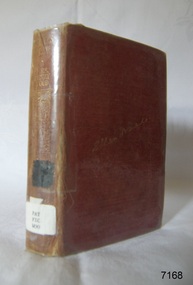 Flagstaff Hill Maritime Museum and Village
Book - A Fictional Story, Ellen (Mrs Henry) Wood, Verners Pride, 1900s–1910s
... 1824 had produced the firm's first dictionary, the Greek and English Lexicon. By 1841 the company was established as a printer of Bibles, and in 1846 William Collins retired, with his son Sir William Collins taking over the business. In 1848 the firm expanded into publishing proper, specialising in religious and educational books, and in 1856...1824 had produced the firm's first dictionary, the Greek and English Lexicon. By 1841 the company was established as a printer of Bibles, and in 1846 William Collins retired, with his son Sir William Collins taking over the business. In 1848 the firm expanded into publishing proper, specialising in religious and educational books, and in 1856 ...Verner’s Pride is a Victorian domestic novel published in 1863. It opens with the mysterious death of a young servant in the small town of Deerham. Stephen Verner, owner of the estate, then suspects his nephew Lionel, the designated heir. Stephen’s stepsons, John and Frederick Massingbird, also have a stake in the estate, but Lionel is his favourite. Fred dies in Australia and Lionel takes over the estate. Fred’s widow, Sibylla, then arrives, and Lionel proposes to her in a moment of passion. The marriage that follows is a strained one. The book explores gender relations, money and the role of wealth in a community, including quarrels over a milliner’s bill and a French novel. The opening murder mystery fades, and the story becomes mainly about the estate changing hands.Hard cover book. Verners Pride Author: Ellen (Mrs Henry) Wood Illustrator: Harold Piffard Publisher: Collins Clear-Type Press Date: 1900s–1910s. Further Information: Red Cloth hardcover with lettering and patterning to spine in gilt. The spine has a Library label with an inscription. fiction Verner’s Pride is a Victorian domestic novel published in 1863. It opens with the mysterious death of a young servant in the small town of Deerham. Stephen Verner, owner of the estate, then suspects his nephew Lionel, the designated heir. Stephen’s stepsons, John and Frederick Massingbird, also have a stake in the estate, but Lionel is his favourite. Fred dies in Australia and Lionel takes over the estate. Fred’s widow, Sibylla, then arrives, and Lionel proposes to her in a moment of passion. The marriage that follows is a strained one. The book explores gender relations, money and the role of wealth in a community, including quarrels over a milliner’s bill and a French novel. The opening murder mystery fades, and the story becomes mainly about the estate changing hands. verners pride, mrs henry wood, ellen price, shipwrecked-coast, flagstaff-hill, flagstaff-hill-maritime-museum, warrnambool, maritime-museum, shipwreck-coast, flagstaff-hill-maritime-village, shipwrecked-artefact, book, pattison collection, warrnambool library, warrnambool mechanics’ institute, ralph eric pattison, corangamite regional library service, warrnambool city librarian, mechanics’ institute library, victorian library board, warrnambool books and records, warrnambool children’s library, great ocean road -
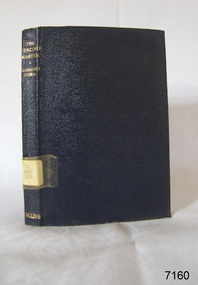 Flagstaff Hill Maritime Museum and Village
Book - A Fictional Story, Alexandre Dumas, The Fencing Master, 1959
... 1824 had produced the firm's first dictionary, the Greek and English Lexicon. By 1841 the company was established as a printer of Bibles, and in 1846 William Collins retired, with his son Sir William Collins taking over the business. In 1848 the firm expanded into publishing proper, specialising in religious and educational books, and in 1856...1824 had produced the firm's first dictionary, the Greek and English Lexicon. By 1841 the company was established as a printer of Bibles, and in 1846 William Collins retired, with his son Sir William Collins taking over the business. In 1848 the firm expanded into publishing proper, specialising in religious and educational books, and in 1856 ...The novel is set in Russia and draws on the 1825 Decembrist revolt, along with behind-the-scenes court stories that the government preferred to keep hidden. It is narrated in the first person by Augustin Grisier, a friend of Dumas who goes to Russia to make his fortune as a swordsman. He teaches young aristocrats in the capital and becomes entangled in the Decembrist plot of the time. The love story is the best-known thread, a well-born young Frenchwoman, Pauline, travels to Russia and falls in love with a Decembrist officer (Ivan Annenkov, called Waninkoff in the novel). After the rebellion is crushed, she follows him to Siberian exile and eventually marries him. The book was based on notes from Dumas’s own fencing teacher, Grisier, and Dumas borrowed much of his Russian scenery and court detail from Ancelot’s Six mois en Russie. It first appeared serialised in the Revue de Paris in 1840 and then in book form the same year.Hard cover book. The Fencing Master Author: Alexandre Dumas Translator: Alfred Richard Allinson Illustrator: Alan J. Bowyer Publisher: Collins Clear Type Press Date: 1959 Further Information: Black embossed patterning Cloth hardcover with lettering and patterning to spine in gilt. The spine has a Library label with an inscription. fiction The novel is set in Russia and draws on the 1825 Decembrist revolt, along with behind-the-scenes court stories that the government preferred to keep hidden. It is narrated in the first person by Augustin Grisier, a friend of Dumas who goes to Russia to make his fortune as a swordsman. He teaches young aristocrats in the capital and becomes entangled in the Decembrist plot of the time. The love story is the best-known thread, a well-born young Frenchwoman, Pauline, travels to Russia and falls in love with a Decembrist officer (Ivan Annenkov, called Waninkoff in the novel). After the rebellion is crushed, she follows him to Siberian exile and eventually marries him. The book was based on notes from Dumas’s own fencing teacher, Grisier, and Dumas borrowed much of his Russian scenery and court detail from Ancelot’s Six mois en Russie. It first appeared serialised in the Revue de Paris in 1840 and then in book form the same year. shipwrecked-coast, flagstaff-hill, flagstaff-hill-maritime-museum, warrnambool, maritime-museum, shipwreck-coast, flagstaff-hill-maritime-village, shipwrecked-artefact, book, pattison collection, warrnambool library, warrnambool mechanics’ institute, ralph eric pattison, corangamite regional library service, warrnambool city librarian, mechanics’ institute library, victorian library board, warrnambool books and records, warrnambool children’s library, the fencing master, alexandre dumas -
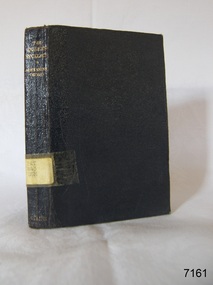 Flagstaff Hill Maritime Museum and Village
Book - A Fictional Story, Alexandre Dumas et al, The Queens Necklace, 1910-1920s
... 1824 had produced the firm's first dictionary, the Greek and English Lexicon. By 1841 the company was established as a printer of Bibles, and in 1846 William Collins retired, with his son Sir William Collins taking over the business. In 1848 the firm expanded into publishing proper, specialising in religious and educational books, and in 1856...1824 had produced the firm's first dictionary, the Greek and English Lexicon. By 1841 the company was established as a printer of Bibles, and in 1846 William Collins retired, with his son Sir William Collins taking over the business. In 1848 the firm expanded into publishing proper, specialising in religious and educational books, and in 1856 ...The novel is loosely based on the Affair of the Diamond Necklace, a fraud and royal scandal at the court of Louis XVI in the 1780s. It was published in 1849–50, just after the French Revolution of 1848, and first appeared as a serial in La Presse. The story is set in 1784–85 and follows the impoverished Countess Jeanne de La Motte, a descendant of the Valois dynasty, who catches Queen Marie-Antoinette’s attention. Jeanne senses that the queen secretly wants a necklace made by the jewellers Boehmer and Bossange, and persuades Cardinal de Rohan that giving it to her would win the queen’s favour. The cardinal, believing himself the queen’s secret admirer, is drawn into the deceit. The mysterious Count Cagliostro pulls the strings behind the fraud and intrigue. The prologue is borrowed from La Harpe’s ‘Prophétie de Cazotte’, but Dumas gave it much more life. The book is a sequel to Joseph Balsamo (Memoirs of a Physician) in Dumas’s Marie Antoinette cycle.Hard cover book. The Queens Necklace Author: Alexandre Dumas Co Author: Auguste Maquet Editor: Alfred Thomas Baker Translator: Henry Llewellyn Williams Illustrator: Paul Hardy Publisher: Collins Clear Type Press Date: 1910-1920s Further Information: Black embossed patterning Cloth hardcover with lettering and patterning to spine in gilt. The spine has a Library label with an inscription. fiction The novel is loosely based on the Affair of the Diamond Necklace, a fraud and royal scandal at the court of Louis XVI in the 1780s. It was published in 1849–50, just after the French Revolution of 1848, and first appeared as a serial in La Presse. The story is set in 1784–85 and follows the impoverished Countess Jeanne de La Motte, a descendant of the Valois dynasty, who catches Queen Marie-Antoinette’s attention. Jeanne senses that the queen secretly wants a necklace made by the jewellers Boehmer and Bossange, and persuades Cardinal de Rohan that giving it to her would win the queen’s favour. The cardinal, believing himself the queen’s secret admirer, is drawn into the deceit. The mysterious Count Cagliostro pulls the strings behind the fraud and intrigue. The prologue is borrowed from La Harpe’s ‘Prophétie de Cazotte’, but Dumas gave it much more life. The book is a sequel to Joseph Balsamo (Memoirs of a Physician) in Dumas’s Marie Antoinette cycle. shipwrecked-coast, flagstaff-hill, flagstaff-hill-maritime-museum, warrnambool, maritime-museum, shipwreck-coast, flagstaff-hill-maritime-village, shipwrecked-artefact, book, pattison collection, warrnambool library, warrnambool mechanics’ institute, ralph eric pattison, corangamite regional library service, warrnambool city librarian, mechanics’ institute library, victorian library board, warrnambool books and records, warrnambool children’s library, the queens necklace, alexandre dumas -
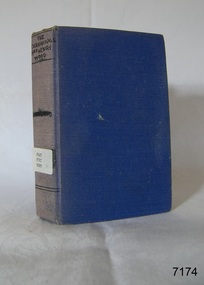 Flagstaff Hill Maritime Museum and Village
Book - A Fictional Story, Ellen (Mrs Henry) Wood, The Channings, 1900-1910
... 1824 had produced the firm's first dictionary, the Greek and English Lexicon. By 1841 the company was established as a printer of Bibles, and in 1846 William Collins retired, with his son Sir William Collins taking over the business. In 1848 the firm expanded into publishing proper, specialising in religious and educational books, and in 1856...1824 had produced the firm's first dictionary, the Greek and English Lexicon. By 1841 the company was established as a printer of Bibles, and in 1846 William Collins retired, with his son Sir William Collins taking over the business. In 1848 the firm expanded into publishing proper, specialising in religious and educational books, and in 1856 ...The Channings is an 1862 novel by Ellen Wood, in which a man takes responsibility for a theft he believes his brother committed. The brother is actually innocent, and the real culprit is caught later. A reissue synopsis describes it as a blend of mystery, Gothic and romance that follows the Channing boys into adulthood in a society grounded in faith and perseverance. A blogger specialising in 19th-century fiction sums it up as an exemplary family struggling against misfortune in a cathedral town. The frontispiece plate in the subject copy, captioned ‘But you cannot be guilty, Arthur’, illustrates the central accusation plot.Hard cover book. The Channings Author: Ellen (Mrs Henry) Wood Illustrator: Arthur H. Buckland Publisher: Collins Clear-Type Press Date: 1900s–1910s. Further Information: Blue Cloth hardcover with lettering and patterning to spine in black hand written text. The spine has a Library label with an inscription. fiction The Channings is an 1862 novel by Ellen Wood, in which a man takes responsibility for a theft he believes his brother committed. The brother is actually innocent, and the real culprit is caught later. A reissue synopsis describes it as a blend of mystery, Gothic and romance that follows the Channing boys into adulthood in a society grounded in faith and perseverance. A blogger specialising in 19th-century fiction sums it up as an exemplary family struggling against misfortune in a cathedral town. The frontispiece plate in the subject copy, captioned ‘But you cannot be guilty, Arthur’, illustrates the central accusation plot. shipwrecked-coast, flagstaff-hill, flagstaff-hill-maritime-museum, warrnambool, maritime-museum, shipwreck-coast, flagstaff-hill-maritime-village, shipwrecked-artefact, book, pattison collection, warrnambool library, warrnambool mechanics’ institute, ralph eric pattison, corangamite regional library service, warrnambool city librarian, mechanics’ institute library, victorian library board, warrnambool books and records, warrnambool children’s library, great ocean road, the channings, mrs henry wood
