
Showing 2636 items matching "1914 - 1918"
-
 Sunshine and District Historical Society Incorporated
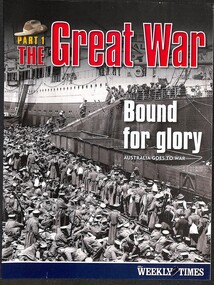
Newspaper - The Great War 1914 - 1918, Herald & Weekly Times - Peter Flaherty
... The Great War 1914 - 1918...The Great War 1914 - 1918...Wordl War 1914 - 1918...Weekly Times 6 Part Series of the History of ANZACS The Great War 1914 - 1918 Supplement...2350.01 - Part 1 The Great War 1914 - 1918 Bound For Glory Australia Goes To War|2350.02 - Part 2 The Great War 1914 - 1918 Gallipoli|2350.03 - Part 3 The Great War 1914 - 1918 Sinai & Palestine|2350.04 - Part 4 The Great War 1914 - 1918 The Somme|2350.05 - Part 5 The Great War 1914 - 1918 Flanders|2350.06 - Part 6 The Great War 1914 - 1918 Year Of Victory...Wordl War 1914 - 1918 2350.01 - Part 1 The Great War 1914 - 1918 Bound For Glory Australia Goes To War|2350.02 - Part 2 The Great War 1914 - 1918 Gallipoli|2350.03 - Part 3 The Great War 1914 - 1918 Sinai & Palestine|2350.04 - Part 4 The Great War 1914 - 1918 The Somme|2350.05 - Part 5 The Great War 1914 - 1918 Flanders|2350.06 - Part 6 The Great War 1914 - 1918 Year Of Victory Weekly Times 6 Part Series of the History of ANZACS The Great War 1914 - 1918 Supplement The Great War 1914 - 1918 Newspaper The Great War 1914 - 1918 Herald & Weekly Times - Peter Flaherty Kahren Richardson ...Weekly Times 6 Part Series of the History of ANZACS The Great War 1914 - 1918 Supplementwordl war 1914 - 1918 -
 Waverley RSL Sub Branch
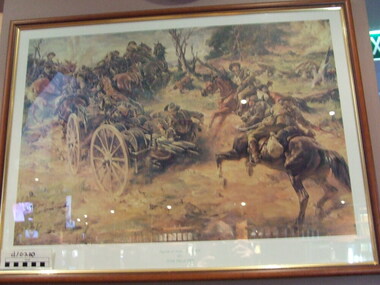
Print Signals in Action 1914 -1918, Signals in Action 1914 -1918
... Print Signals in Action 1914 -1918...Signals in Action 1914 -1918...Print in wooden frame under glass Signals in Action 1914 -1918...Signals in action 1914 -1918 By Ivor HELE CBE...Signals in action 1914 -1918 By Ivor HELE CBE Print in wooden frame under glass Signals in Action 1914 -1918 Signals in Action 1914 -1918 Print Signals in Action 1914 -1918 ...Print in wooden frame under glass Signals in Action 1914 -1918Signals in action 1914 -1918 By Ivor HELE CBE -
 Warrnambool RSL Sub Branch
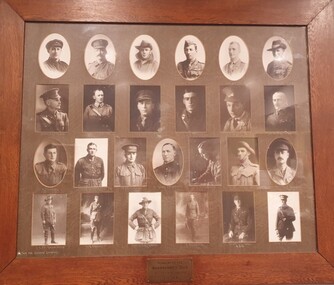
Artwork, other - Members of Warrnambool Club 1914 - 1918, Framed Photos of Members of Warrnambool Club 1914 - 1918 who served in the great war
... Members of Warrnambool Club 1914 - 1918...Framed Photos of Members of Warrnambool Club 1914 - 1918 who served in the great war...Wooden Frame Containing photos of Members of the Warrnamboo Club of 1914 - 1918...Plaque on front of Framed Picture: Members of Warrnambool Club 1914 - 1918 who served in the Great War. Each image is named. ...Wooden Frame Containing photos of Members of the Warrnamboo Club of 1914 - 1918 Framed Photos of Members of Warrnambool Club 1914 - 1918 who served in the great war Artwork, other Members of Warrnambool Club 1914 - 1918 ...Wooden Frame Containing photos of Members of the Warrnamboo Club of 1914 - 1918Plaque on front of Framed Picture: Members of Warrnambool Club 1914 - 1918 who served in the Great War. Each image is named. Asterisk 'Paid the Supreme Sacrifice', in left corner of frame. -
 Lara RSL Sub Branch
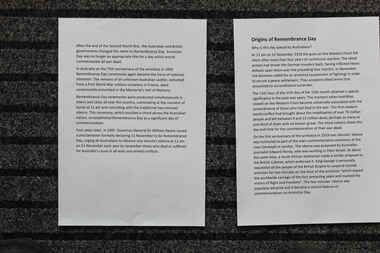
Work on paper - Research Material - Lara Rememberance gates , Rememberance Day Poppies - Fundraising Button = When The Guns Stopped, Research Material 1914 - 1918 Rememberance Day Poppies and Wreaths
... Research Material 1914 - 1918 Rememberance Day Poppies and Wreaths...1914-1918 remembrance...research material for 1914-1918 Remembrance...Research Material 1914 - 1918 Remembrance Day...Papers and research Materials for 1914 - 1918 Remembrance Day...research material for 1914-1918 Remembrance 1914-1918 remembrance Papers and research Materials for 1914 - 1918 Remembrance Day Research Material 1914 - 1918 Remembrance Day Research Material 1914 - 1918 Rememberance Day Poppies and Wreaths Work on paper Research Material - Lara Rememberance gates , Rememberance Day Poppies - Fundraising Button = When The Guns Stopped. ...research material for 1914-1918 RemembranceResearch Material 1914 - 1918 Remembrance DayPapers and research Materials for 1914 - 1918 Remembrance Day1914-1918 remembrance -
 Sunshine and District Historical Society Incorporated
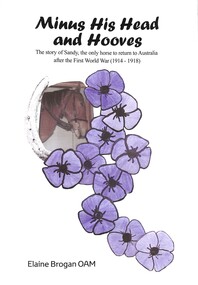
Book - Minus His Head and Hooves The Story of Sandy the only horse to return to Australia after the First War 1914 to 1918, Elaine Brogan OAM
... Minus His Head and Hooves The Story of Sandy the only horse to return to Australia after the First War 1914 to 1918...Minus His Head and Hooves The Story of Sandy the only horse to return to Australia after the First War 1914 to 1918...World War 1914 - 1918...Minus His Head and Hooves The Story of Sandy the only horse to return to Australia after the First War 1914 to 1918...3001.01 - Minus His Head and Hooves The Story of Sandy the only horse to return to Australia after the First War 1914 to 1918|3001.02 - Newspaper Article The Star Weekly War Horse Elaine Brogan OAM...Puchased by SDHS directly off Elaine Brogan OAM World War 1914 - 1918 3001.01 - Minus His Head and Hooves The Story of Sandy the only horse to return to Australia after the First War 1914 to 1918|3001.02 - Newspaper Article The Star Weekly War Horse Elaine Brogan OAM Minus His Head and Hooves The Story of Sandy the only horse to return to Australia after the First War 1914 to 1918 Minus His Head and Hooves The Story of Sandy the only horse to return to Australia after the First War 1914 to 1918 Book Minus His Head and Hooves The Story of Sandy the only horse to return to Australia after the First War 1914 to 1918 Elaine Brogan OAM ...Minus His Head and Hooves The Story of Sandy the only horse to return to Australia after the First War 1914 to 1918world war 1914 - 1918 -
 Chiltern Athenaeum Trust
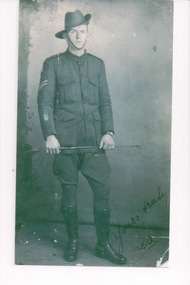
Reproduction photograph of Leslie Norman Peel WW1 Soldier in the Great War 1914-1918
... Reproduction photograph of Leslie Norman Peel WW1 Soldier in the Great War 1914-1918.......The Great War 1914-1918...WW1 soldier in the Great War 1914-1918 Corporal Leslie Norman Peel. Chiltern Resident, ...reproduction photograph of WW1 soldier in the Great War 1914-1918 Leslie Norman Peel. ...WW1 soldier in the Great War 1914-1918 Corporal Leslie Norman Peel. Chiltern Resident, WW1 The Great War 1914-1918 WW1 soldier Leslie Norman Peel Chiltern Resident The Great War 1914-1918 Shire of Chiltern Roll of Honour reproduction photograph of WW1 soldier in the Great War 1914-1918 Leslie Norman Peel. ...WW1 soldier in the Great War 1914-1918 Corporal Leslie Norman Peel. Chiltern Resident, WW1 The Great War 1914-1918reproduction photograph of WW1 soldier in the Great War 1914-1918 Leslie Norman Peel. ww1 soldier, leslie norman peel, chiltern resident, the great war 1914-1918, shire of chiltern roll of honour -
 Learmonth and District Historical Society Inc.
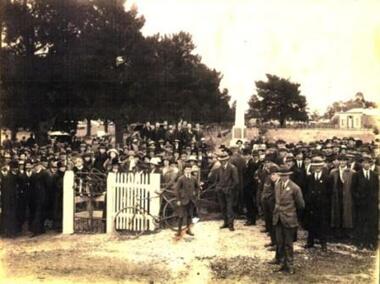
Photo, 1923 Miners Rest - Unveiling of 1914 - 1918 War Memorial, 1923
... 1923 Miners Rest - Unveiling of 1914 - 1918 War Memorial.......1914 1918 war memorial...This photo was taken in 1923 at the unveiling of the 1914 - 1918 War Memorial at Miners Rest,on the corner of Howe and Albert Streets and shows the large crowd in attendance....Sepia photo of the crowd at the unveiling of the 1914-1918 War Memorial at Miners Rest. ...Memorial commemoration of W.W.11. miners rest 1914 1918 war memorial none Sepia photo of the crowd at the unveiling of the 1914-1918 War Memorial at Miners Rest. 1923 Miners Rest - Unveiling of 1914 - 1918 War Memorial. ...This photo was taken in 1923 at the unveiling of the 1914 - 1918 War Memorial at Miners Rest,on the corner of Howe and Albert Streets and shows the large crowd in attendance.Memorial commemoration of W.W.11. Sepia photo of the crowd at the unveiling of the 1914-1918 War Memorial at Miners Rest. noneminers rest, 1914 1918 war memorial, -
 City of Moorabbin Historical Society (Operating the Box Cottage Museum)
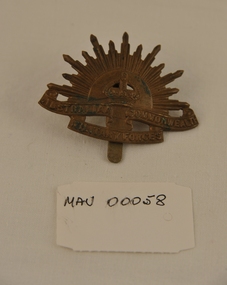
Uniform - World War 1 1914-1918, Hat Badge Rising Sun, c1914
... World War 1 1914-1918, Hat Badge Rising Sun......ww1 1914-1918...World War1 1914-1918, soldier’s, rising sun hat badge, made of oxidised copper....- May 1904 - was worn on the Slouch hats of soldiers serving in the Australian Commonwealth Military Forces during World War 1 1914-1918 australian military uniforms military insignia badges city of moorabbin bentleigh cheltenham major general sir edward hutton anzac gallipoli australian imperial forces ww1 1914-1918 Rising Sun with central Crown AUSTRALIAN COMMONWEALTH / MILITARY FORCES World War1 1914-1918, soldier’s, rising sun hat badge, made of oxidised copper Uniform World War 1 1914-1918, Hat Badge Rising Sun Australian Army ...Proudly worn by soldiers of the 1st and 2nd Australian Imperial Force in both World Wars, the 'Rising Sun' badge has become an integral part of the digger tradition. The distinctive shape of the badge, worn on the upturned side of a slouch hat, is commonly identified with the spirit of ANZAC formed at the Gallipoli landings 1915 There are seven patterns of the Rising Sun. 1902 - 1991. The Rising Sun has evolved over time and today Australian Army soldiers wear the seventh pattern Rising Sun. The Third Pattern Rising Sun Badge. May 1904 The third pattern Rising Sun badge carried a scroll inscribed with the words ‘Australian Commonwealth Military Forces’ and was worn throughout both World Wars. There were, however, a number of variations of the badge; a special version was struck for the coronation of King Edward VII in 1902 and there were badges of the Commonwealth Horse and the Australian Instructional Corps, each with its respective title on the scrolls. This pattern badge formed the template for all subsequent General Service badges. The most widely accepted version of the origin of this badge is the one that attributes the selection of its design, c1902, to a British Officer, Major General Sir Edward Hutton, the newly appointed Commander-in-Chief of the Australian Forces. Hutton had earlier received as a gift from Brigadier General Joseph Gordon, a military acquaintance of long standing, a ‘Trophy-of-Arms’ composed of mounted cut and thrust swords and triangular Martini-Henry bayonets that were arranged in a semi-circle around the Crown. To General Hutton, the shield was symbolic of the cooperation between the naval and military forces of the Empire. This Third Pattern Rising Sun Badge.- May 1904 - was worn on the Slouch hats of soldiers serving in the Australian Commonwealth Military Forces during World War 1 1914-1918World War1 1914-1918, soldier’s, rising sun hat badge, made of oxidised copperRising Sun with central Crown AUSTRALIAN COMMONWEALTH / MILITARY FORCES australian military uniforms, military insignia, badges, city of moorabbin, bentleigh, cheltenham, major general sir edward hutton, anzac, gallipoli, australian imperial forces, ww1 1914-1918 -
 Williamstown Historical Society Inc
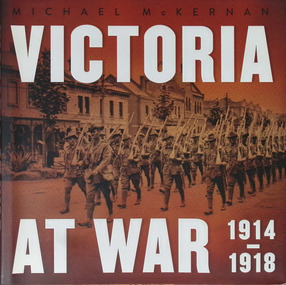
Book - Book - Victoria at War 1914 - 1918, Mckernan, Michael (1945, Victoria at war : 1914-1918 / Michael McKernan, 2014
... Book - Victoria at War 1914 - 1918...Victoria at war : 1914-1918 / Michael McKernan...Bestselling military historian Michael McKernan tells stories from the home front and battlefield that commemorates the generosity, devotion, sacrifice and spirit of a community pushed towards breaking point" -- from dust jacket. 230 pages : illustrations (some colour), portraits (some colour), colour maps ; 26 x 27 cm. cartographic image Victoria at war : 1914-1918 / Michael McKernan Book Book - Victoria at War 1914 - 1918 Mckernan, Michael (1945 - New South Publishing: University of New South Wales Press Ltd. ..."During the First World War, in Melbourne and communities throughout Victoria, schoolchildren knitted socks for the troops serving in Gallipoli, the Middle East and on the Western Front. Their families set up Red Cross branches to support the 91,000 Victorian servicemen and women overseas. Victoria at War records the achievements of the state's soldiers, nurses and their families - including the Whitelaws from Gippsland with six sons enlisting, 'Bert' Jacka, the first Australian to be awarded the Victoria Cross in the First World War, and commander Sir John Monash. By the end of the war 19,000 Victorian service people were dead and 42,000 wounded. Bestselling military historian Michael McKernan tells stories from the home front and battlefield that commemorates the generosity, devotion, sacrifice and spirit of a community pushed towards breaking point" -- from dust jacket.230 pages : illustrations (some colour), portraits (some colour), colour maps ; 26 x 27 cm. cartographic imagenon-fiction"During the First World War, in Melbourne and communities throughout Victoria, schoolchildren knitted socks for the troops serving in Gallipoli, the Middle East and on the Western Front. Their families set up Red Cross branches to support the 91,000 Victorian servicemen and women overseas. Victoria at War records the achievements of the state's soldiers, nurses and their families - including the Whitelaws from Gippsland with six sons enlisting, 'Bert' Jacka, the first Australian to be awarded the Victoria Cross in the First World War, and commander Sir John Monash. By the end of the war 19,000 Victorian service people were dead and 42,000 wounded. Bestselling military historian Michael McKernan tells stories from the home front and battlefield that commemorates the generosity, devotion, sacrifice and spirit of a community pushed towards breaking point" -- from dust jacket.world war 1, victoria at war -
 Moorabbin Air Museum
Book - BRITISH AEROPLANES 1914-1918, JOHN MCINTOSH BRUCE, 1957
... BRITISH AEROPLANES 1914-1918...BRITISH AEROPLANES 1914-1918...BRITISH AEROPLANES 1914-1918 Book BRITISH AEROPLANES 1914-1918 JOHN MCINTOSH BRUCE PUTMAN & CO LTD ... -
Moorabbin Air Museum
Book - Echoes of War FLYING CORPS HEADQUARTERS 1914-1918, Maurice Baring, 1985
... Echoes of War FLYING CORPS HEADQUARTERS 1914-1918...Echoes of War FLYING CORPS HEADQUARTERS 1914-1918...Echoes of War FLYING CORPS HEADQUARTERS 1914-1918 Book Echoes of War FLYING CORPS HEADQUARTERS 1914-1918 Maurice Baring Buchan & Enright Publishers Limited ... -
 Woodend RSL
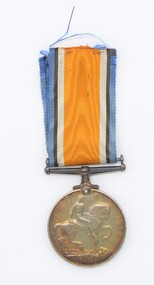
Medal - 1914-1918 WW1 medal, 1919
... 1914-1918 WW1 medal...1914-1918 WW1 medal...The reverse is a horseman astride his steed. 1914-1918 WW1 medal Medal 1914-1918 WW1 medal ...This medal was awarded, posthumously to Pte. Dash. He was born in Burwood(a small town near Sydney). He joined the Army 12/6/1915. Strangely, he did his medical inspection in May. He is listed as being in 1st Battalion from 18 May until 5 August. 6th August he arrived at the Battalion (on the Gallipoli Peninsular). He was wounded 7 August, whilst delivering ammunition, by machine gun with wounds to the neck and shoulder. From there, there was no record of him and was catergorised as Missing in Action". His father received notification with scroll 21/12/21. He received his Victory Medal Jan 18 1923. Pte Dash is interred in the Lone Pine cemetery, in Turkey. He was originally interred in Brown's Dip cemetery, but this site was deemed unsuitable for cemetery due to the changing landscape due to flood waters. Pte Dash was discovered in Lemnos, convalesencing after being hospitalised, 1st October 1915. However the board of inquiry made no mention of his sighting in Lemnos. He was interred in Gallipoli, so the sighting in Lemnos appears to be a mistake.British World War 1 Medal issued to Australians Round 36 mm Ribbon Royal Blue/Black/White/16 mm orange/White/Black/Royal Blue The Observse side is a bust of the King (George V). The reverse is a horseman astride his steed.2220 PTE F N DASH 1 BN AIF -
Warrnambool RSL Sub Branch
Photograph - Warrnambool & District Men who served for King and Country 1914-1918
... Warrnambool & District Men who served for King and Country 1914-1918...Warrnambool & District Men who served for King and Country 1914-1918...Warrnambool & District Men who served for King and Country 1914-1918 Photograph Warrnambool & District Men who served for King and Country 1914-1918 ...Large frame with dark wood frame. many photos if local servicemen. wording in the centre on a blue backgroung.Warrnambool and Districe men who served for the King and country. -
 Flagstaff Hill Maritime Museum and Village
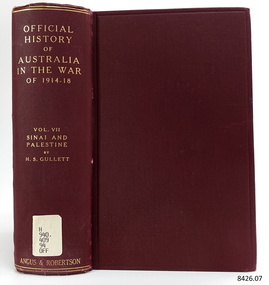
Book, Official History of Australia in the War of 1914-1918 Vol 7
... Official History of Australia in the War of 1914-1918 Vol 7...Official History of Australia in the War of 1914-1918 Vol 7...Official History of Australia in the War of 1914-1918 Vol 7 Author: C.E.W. Bean Publisher: Angus & Robertson Ltd Date: 1941 Further Information: In Sinai and Palestine 1914 - 1918...Official History of Australia in the War of 1914-1918 Vol 7 Author: C.E.W. Bean Publisher: Angus & Robertson Ltd Date: 1941 Further Information: In Sinai and Palestine 1914 - 1918 Official History of Australia in the War of 1914-1918 Vol 7 Book ...This book was part of a large group of books referred to as the Pattison Collection, which belonged to the Warrnambool Public Library, part of the Warrnambool Mechanics’ Institute. About RALPH ERIC PATTISON and the ‘PATTISON COLLECTION’ The ‘Pattison Collection’ is a collection of books and records that was originally owned by the Warrnambool Mechanics’ Institute, founded in Warrnambool in 1853. By 1886 the Warrnambool Mechanics’ Institute (WMI) had grown to have a Library, Museum and Fine Arts Gallery, with a collection of “… choice productions of art and valuable specimens in almost every branch and many wonderful national curiosities, are now to be seen there, including historic relics of the town and district.” It later included a School of Design. Although it was very well patronised, the WMI was led to ask the City Council to take it over in 1911 due to a lack of financial support. In 1935 Ralph Pattison was appointed as City Librarian to establish and organise the Warrnambool Public Library as it was then called. Ralph Eric Pattison was born in Rockhampton, Queensland, in 1891. He married Maude Swan from Warrnambool in 1920 and they set up a home in Warrnambool. In 1935 when Pattison accepted the position as City Librarian for the Warrnambool City Council his huge challenge was to make a functional library within two rooms of the Mechanics’ Institute. He tirelessly cleaned, cleared and sorted a disarrayed collection of old books, jars of preserved specimens and other items reserved for exhibition in the city’s museum. He developed and updated the library with a wide variety of books for all tastes, including reference books for students; a difficult task to fulfil during the years following the Depression. He converted all of the lower areas of the building into a library, reference room and reading room for members and the public. The books were sorted and stored using a cataloguing and card index system that he had developed himself. He also prepared the upper floor of the building and established the Art Gallery and later the Museum, a place to exhibit the many old relics that had been stored for years for this purpose. One of the treasures he found was a beautiful ancient clock, which he repaired, restored and enjoyed using in his office during the years of his service there. Ralph Pattison was described as “a meticulous gentleman whose punctuality, floorless courtesy and distinctive neat dress were hallmarks of his character, and ‘his’ clock controlled his daily routine and his opening and closing of the library’s large heavy doors to the minute.” Pattison took leave from 1942 to 1945 to serve in the Royal Australian Navy, Volunteer Reserve as Lieutenant. A few years later he converted one of the Museum’s rooms into a Children’s Library, stocking it with suitable books for the younger generation. This was an instant success. In the 1950’s he had the honour of being appointed to the Victorian Library Board and received more inspiration from the monthly conferences in Melbourne. He was sadly retired in 1959 after over 23 years of service, due to the fact that he had gone over the working age of council officers. However, he continued to take a very keen interest in the continual development of the Library until his death in 1969. THE NEW WARRNAMBOOL LIBRARY When the WMI building was pulled down in 1963 a new civic building was erected on the site and the new Warrnambool Library, on behalf of the City Council, took over all the holdings of the WMI. At this time some of the items were separated and identified as the ‘Pattison Collection’, named after Pattison. Eventually, the components of the WMI were distributed from the Warrnambool Library to various places, including the Art Gallery, Historical Society and Flagstaff Hill. Later some were even distributed to other regional branches of Corangamite Regional Library and passed to and fro. It is difficult now to trace just where all of the items have ended up. The books at Flagstaff Hill Maritime Village generally display stamps and markings from Pattison as well as a variety of other institutions including the Mechanics’ Institute itself. The Pattison Collection, along with other items at Flagstaff Hill Maritime Village, was originally part of the Warrnambool Mechanics' Institute’s collection. The Warrnambool Mechanics’ Institute Collection is primarily significant in its totality, rather than for the individual objects it contains. Its contents are highly representative of the development of Mechanics' Institute libraries across Australia, particularly Victoria. A diversity of publications and themes has been amassed, and these provide clues to our understanding of the nature of and changes in the reading habits of Victorians from the 1850s to the middle of the 20th century. The collection also highlights the Warrnambool community’s commitment to the Mechanics’ Institute, reading, literacy and learning in the regions, and proves that access to knowledge was not impeded by distance. These items help to provide a more complete picture of our community’s ideals and aspirations. The Warrnambool Mechanics Institute book collection has historical and social significance for its strong association with the Mechanics Institute movement and the important role it played in the intellectual, cultural and social development of people throughout the latter part of the nineteenth century and the early twentieth century. The collection of books is a rare example of an early lending library and its significance is enhanced by the survival of an original collection of many volumes. The Warrnambool Mechanics' Institute’s publication collection is of both local and state significance. Official History of Australia in the War of 1914-1918 Vol 7 Author: C.E.W. Bean Publisher: Angus & Robertson Ltd Date: 1941 Further Information: In Sinai and Palestine 1914 - 1918The label on the spine cover with typed text H 940.40994 OFF Paste down front end paper has a sticker from Corangamite Regional Library Service.flagstaff hil, warrnambool, flagstaff hill maritime museum, maritime museum, shipwreck coast, flagstaff hill maritime village, great ocean road, book, pattison collection, warrnambool library, warrnambool mechanics’ institute, ralph eric pattison, corangamite regional library service, warrnambool city librarian, mechanics’ institute library, victorian library board, warrnambool books and records, warrnambool children’s library, official history of australia in the war of 1914-1918 vol 7, c.e.w. bean -
 Flagstaff Hill Maritime Museum and Village
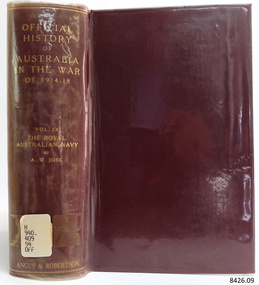
Book, Official History of Australia in the War of 1914-1918 Vol 9
... Official History of Australia in the War of 1914-1918 Vol 9...Official History of Australia in the War of 1914-1918 Vol 9...Official History of Australia in the War of 1914-1918 Vol 9 Author: Arthur W. Jose Publisher: Angus & Robertson Ltd Date: 1941 Further Information: The Royal Australian Navy 1914 - 1918...Official History of Australia in the War of 1914-1918 Vol 9 Author: Arthur W. Jose Publisher: Angus & Robertson Ltd Date: 1941 Further Information: The Royal Australian Navy 1914 - 1918 Official History of Australia in the War of 1914-1918 Vol 9 Book ...This book was part of a large group of books referred to as the Pattison Collection, which belonged to the Warrnambool Public Library, part of the Warrnambool Mechanics’ Institute. About RALPH ERIC PATTISON and the ‘PATTISON COLLECTION’ The ‘Pattison Collection’ is a collection of books and records that was originally owned by the Warrnambool Mechanics’ Institute, founded in Warrnambool in 1853. By 1886 the Warrnambool Mechanics’ Institute (WMI) had grown to have a Library, Museum and Fine Arts Gallery, with a collection of “… choice productions of art and valuable specimens in almost every branch and many wonderful national curiosities, are now to be seen there, including historic relics of the town and district.” It later included a School of Design. Although it was very well patronised, the WMI was led to ask the City Council to take it over in 1911 due to a lack of financial support. In 1935 Ralph Pattison was appointed as City Librarian to establish and organise the Warrnambool Public Library as it was then called. Ralph Eric Pattison was born in Rockhampton, Queensland, in 1891. He married Maude Swan from Warrnambool in 1920 and they set up a home in Warrnambool. In 1935 when Pattison accepted the position as City Librarian for the Warrnambool City Council his huge challenge was to make a functional library within two rooms of the Mechanics’ Institute. He tirelessly cleaned, cleared and sorted a disarrayed collection of old books, jars of preserved specimens and other items reserved for exhibition in the city’s museum. He developed and updated the library with a wide variety of books for all tastes, including reference books for students; a difficult task to fulfil during the years following the Depression. He converted all of the lower areas of the building into a library, reference room and reading room for members and the public. The books were sorted and stored using a cataloguing and card index system that he had developed himself. He also prepared the upper floor of the building and established the Art Gallery and later the Museum, a place to exhibit the many old relics that had been stored for years for this purpose. One of the treasures he found was a beautiful ancient clock, which he repaired, restored and enjoyed using in his office during the years of his service there. Ralph Pattison was described as “a meticulous gentleman whose punctuality, floorless courtesy and distinctive neat dress were hallmarks of his character, and ‘his’ clock controlled his daily routine and his opening and closing of the library’s large heavy doors to the minute.” Pattison took leave from 1942 to 1945 to serve in the Royal Australian Navy, Volunteer Reserve as Lieutenant. A few years later he converted one of the Museum’s rooms into a Children’s Library, stocking it with suitable books for the younger generation. This was an instant success. In the 1950’s he had the honour of being appointed to the Victorian Library Board and received more inspiration from the monthly conferences in Melbourne. He was sadly retired in 1959 after over 23 years of service, due to the fact that he had gone over the working age of council officers. However, he continued to take a very keen interest in the continual development of the Library until his death in 1969. THE NEW WARRNAMBOOL LIBRARY When the WMI building was pulled down in 1963 a new civic building was erected on the site and the new Warrnambool Library, on behalf of the City Council, took over all the holdings of the WMI. At this time some of the items were separated and identified as the ‘Pattison Collection’, named after Pattison. Eventually, the components of the WMI were distributed from the Warrnambool Library to various places, including the Art Gallery, Historical Society and Flagstaff Hill. Later some were even distributed to other regional branches of Corangamite Regional Library and passed to and fro. It is difficult now to trace just where all of the items have ended up. The books at Flagstaff Hill Maritime Village generally display stamps and markings from Pattison as well as a variety of other institutions including the Mechanics’ Institute itself. The Pattison Collection, along with other items at Flagstaff Hill Maritime Village, was originally part of the Warrnambool Mechanics' Institute’s collection. The Warrnambool Mechanics’ Institute Collection is primarily significant in its totality, rather than for the individual objects it contains. Its contents are highly representative of the development of Mechanics' Institute libraries across Australia, particularly Victoria. A diversity of publications and themes has been amassed, and these provide clues to our understanding of the nature of and changes in the reading habits of Victorians from the 1850s to the middle of the 20th century. The collection also highlights the Warrnambool community’s commitment to the Mechanics’ Institute, reading, literacy and learning in the regions, and proves that access to knowledge was not impeded by distance. These items help to provide a more complete picture of our community’s ideals and aspirations. The Warrnambool Mechanics Institute book collection has historical and social significance for its strong association with the Mechanics Institute movement and the important role it played in the intellectual, cultural and social development of people throughout the latter part of the nineteenth century and the early twentieth century. The collection of books is a rare example of an early lending library and its significance is enhanced by the survival of an original collection of many volumes. The Warrnambool Mechanics' Institute’s publication collection is of both local and state significance. Official History of Australia in the War of 1914-1918 Vol 9 Author: Arthur W. Jose Publisher: Angus & Robertson Ltd Date: 1941 Further Information: The Royal Australian Navy 1914 - 1918The label on the spine cover with typed text H 940.40994 OFF Paste down front end paper has a sticker from Corangamite Regional Library Service.flagstaff hil, warrnambool, flagstaff hill maritime museum, maritime museum, shipwreck coast, flagstaff hill maritime village, great ocean road, book, pattison collection, warrnambool library, warrnambool mechanics’ institute, ralph eric pattison, corangamite regional library service, warrnambool city librarian, mechanics’ institute library, victorian library board, warrnambool books and records, warrnambool children’s library, official history of australia in the war of 1914-1918 vol 9, arthur w. jose -
 Lara RSL Sub Branch
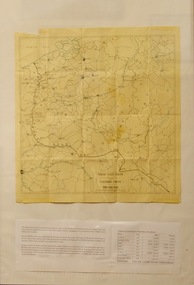
Map, Framed Map of the western front 1914-1918, Map made by G.F.Trudgion R.A.E. circa 1916
... Framed Map of the western front 1914-1918...Map of the western front 1914-1918...North West Europe Shewing the Western Front 1914-1918 War. Below is description of Australian ANZAC's on Western Front and a graph on Comparison of Casualties from Major Western Front Battles...Map showing position of western front line in 1914 at the start of WW1 Map is from circa 1916 showing battle area of the Western Front during WW1 map g.f.trudgion r.a.e. western front ww1 world war one north west europe 1914 1916 ww1 casulaties North West Europe Shewing the Western Front 1914-1918 War. Below is description of Australian ANZAC's on Western Front and a graph on Comparison of Casualties from Major Western Front Battles Map of the western front 1914-1918 Framed Map of the western front 1914-1918 Map Map ...Map showing position of western front line in 1914 at the start of WW1Map is from circa 1916 showing battle area of the Western Front during WW1Map of the western front 1914-1918North West Europe Shewing the Western Front 1914-1918 War. Below is description of Australian ANZAC's on Western Front and a graph on Comparison of Casualties from Major Western Front Battlesmap, g.f.trudgion, r.a.e., western front, ww1, world war one, north west europe, 1914, 1916, ww1 casulaties -
 Flagstaff Hill Maritime Museum and Village
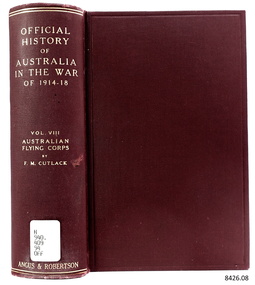
Book, Official History of Australia in the War of 1914-1918 Vol 8
... Official History of Australia in the War of 1914-1918 Vol 8...Official History of Australia in the War of 1914-1918 Vol 8...Official History of Australia in the War of 1914-1918 Vol 8 Author: F. M. Cutlack Publisher: Angus & Robertson Ltd Date: 1942 Further Information: The Australian Flying Corps in the Western and Eastern Theatres of the War 1914 - 1918...Official History of Australia in the War of 1914-1918 Vol 8 Author: F. M. Cutlack Publisher: Angus & Robertson Ltd Date: 1942 Further Information: The Australian Flying Corps in the Western and Eastern Theatres of the War 1914 - 1918 Official History of Australia in the War of 1914-1918 Vol 8 Book ...This book was part of a large group of books referred to as the Pattison Collection, which belonged to the Warrnambool Public Library, part of the Warrnambool Mechanics’ Institute. About RALPH ERIC PATTISON and the ‘PATTISON COLLECTION’ The ‘Pattison Collection’ is a collection of books and records that was originally owned by the Warrnambool Mechanics’ Institute, founded in Warrnambool in 1853. By 1886 the Warrnambool Mechanics’ Institute (WMI) had grown to have a Library, Museum and Fine Arts Gallery, with a collection of “… choice productions of art and valuable specimens in almost every branch and many wonderful national curiosities, are now to be seen there, including historic relics of the town and district.” It later included a School of Design. Although it was very well patronised, the WMI was led to ask the City Council to take it over in 1911 due to a lack of financial support. In 1935 Ralph Pattison was appointed as City Librarian to establish and organise the Warrnambool Public Library as it was then called. Ralph Eric Pattison was born in Rockhampton, Queensland, in 1891. He married Maude Swan from Warrnambool in 1920 and they set up a home in Warrnambool. In 1935 when Pattison accepted the position as City Librarian for the Warrnambool City Council his huge challenge was to make a functional library within two rooms of the Mechanics’ Institute. He tirelessly cleaned, cleared and sorted a disarrayed collection of old books, jars of preserved specimens and other items reserved for exhibition in the city’s museum. He developed and updated the library with a wide variety of books for all tastes, including reference books for students; a difficult task to fulfil during the years following the Depression. He converted all of the lower areas of the building into a library, reference room and reading room for members and the public. The books were sorted and stored using a cataloguing and card index system that he had developed himself. He also prepared the upper floor of the building and established the Art Gallery and later the Museum, a place to exhibit the many old relics that had been stored for years for this purpose. One of the treasures he found was a beautiful ancient clock, which he repaired, restored and enjoyed using in his office during the years of his service there. Ralph Pattison was described as “a meticulous gentleman whose punctuality, floorless courtesy and distinctive neat dress were hallmarks of his character, and ‘his’ clock controlled his daily routine and his opening and closing of the library’s large heavy doors to the minute.” Pattison took leave from 1942 to 1945 to serve in the Royal Australian Navy, Volunteer Reserve as Lieutenant. A few years later he converted one of the Museum’s rooms into a Children’s Library, stocking it with suitable books for the younger generation. This was an instant success. In the 1950’s he had the honour of being appointed to the Victorian Library Board and received more inspiration from the monthly conferences in Melbourne. He was sadly retired in 1959 after over 23 years of service, due to the fact that he had gone over the working age of council officers. However, he continued to take a very keen interest in the continual development of the Library until his death in 1969. THE NEW WARRNAMBOOL LIBRARY When the WMI building was pulled down in 1963 a new civic building was erected on the site and the new Warrnambool Library, on behalf of the City Council, took over all the holdings of the WMI. At this time some of the items were separated and identified as the ‘Pattison Collection’, named after Pattison. Eventually, the components of the WMI were distributed from the Warrnambool Library to various places, including the Art Gallery, Historical Society and Flagstaff Hill. Later some were even distributed to other regional branches of Corangamite Regional Library and passed to and fro. It is difficult now to trace just where all of the items have ended up. The books at Flagstaff Hill Maritime Village generally display stamps and markings from Pattison as well as a variety of other institutions including the Mechanics’ Institute itself. The Pattison Collection, along with other items at Flagstaff Hill Maritime Village, was originally part of the Warrnambool Mechanics' Institute’s collection. The Warrnambool Mechanics’ Institute Collection is primarily significant in its totality, rather than for the individual objects it contains. Its contents are highly representative of the development of Mechanics' Institute libraries across Australia, particularly Victoria. A diversity of publications and themes has been amassed, and these provide clues to our understanding of the nature of and changes in the reading habits of Victorians from the 1850s to the middle of the 20th century. The collection also highlights the Warrnambool community’s commitment to the Mechanics’ Institute, reading, literacy and learning in the regions, and proves that access to knowledge was not impeded by distance. These items help to provide a more complete picture of our community’s ideals and aspirations. The Warrnambool Mechanics Institute book collection has historical and social significance for its strong association with the Mechanics Institute movement and the important role it played in the intellectual, cultural and social development of people throughout the latter part of the nineteenth century and the early twentieth century. The collection of books is a rare example of an early lending library and its significance is enhanced by the survival of an original collection of many volumes. The Warrnambool Mechanics' Institute’s publication collection is of both local and state significance. Official History of Australia in the War of 1914-1918 Vol 8 Author: F. M. Cutlack Publisher: Angus & Robertson Ltd Date: 1942 Further Information: The Australian Flying Corps in the Western and Eastern Theatres of the War 1914 - 1918The label on the spine cover with typed text H 940.40994 OFF Paste down front end paper has a sticker from Corangamite Regional Library Service.flagstaff hil, warrnambool, flagstaff hill maritime museum, maritime museum, shipwreck coast, flagstaff hill maritime village, great ocean road, book, pattison collection, warrnambool library, warrnambool mechanics’ institute, ralph eric pattison, corangamite regional library service, warrnambool city librarian, mechanics’ institute library, victorian library board, warrnambool books and records, warrnambool children’s library, official history of australia in the war of 1914-1918 vol 8, f. m. cutlack -
 Flagstaff Hill Maritime Museum and Village
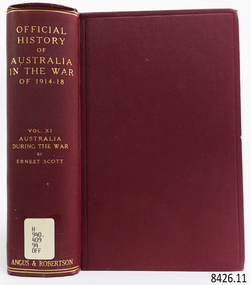
Book, Official History of Australia in the War of 1914-1918 Vol 11
... Official History of Australia in the War of 1914-1918 Vol 11...Official History of Australia in the War of 1914-1918 Vol 11...Official History of Australia in the War of 1914-1918 Vol 11 Author: Ernest Scott Publisher: Angus & Robertson Ltd Date: 1943 Further Information: Australia During The War...Official History of Australia in the War of 1914-1918 Vol 11 Author: Ernest Scott Publisher: Angus & Robertson Ltd Date: 1943 Further Information: Australia During The War Official History of Australia in the War of 1914-1918 Vol 11 Book ...This book was part of a large group of books referred to as the Pattison Collection, which belonged to the Warrnambool Public Library, part of the Warrnambool Mechanics’ Institute. About RALPH ERIC PATTISON and the ‘PATTISON COLLECTION’ The ‘Pattison Collection’ is a collection of books and records that was originally owned by the Warrnambool Mechanics’ Institute, founded in Warrnambool in 1853. By 1886 the Warrnambool Mechanics’ Institute (WMI) had grown to have a Library, Museum and Fine Arts Gallery, with a collection of “… choice productions of art and valuable specimens in almost every branch and many wonderful national curiosities, are now to be seen there, including historic relics of the town and district.” It later included a School of Design. Although it was very well patronised, the WMI was led to ask the City Council to take it over in 1911 due to a lack of financial support. In 1935 Ralph Pattison was appointed as City Librarian to establish and organise the Warrnambool Public Library as it was then called. Ralph Eric Pattison was born in Rockhampton, Queensland, in 1891. He married Maude Swan from Warrnambool in 1920 and they set up a home in Warrnambool. In 1935 when Pattison accepted the position as City Librarian for the Warrnambool City Council his huge challenge was to make a functional library within two rooms of the Mechanics’ Institute. He tirelessly cleaned, cleared and sorted a disarrayed collection of old books, jars of preserved specimens and other items reserved for exhibition in the city’s museum. He developed and updated the library with a wide variety of books for all tastes, including reference books for students; a difficult task to fulfil during the years following the Depression. He converted all of the lower areas of the building into a library, reference room and reading room for members and the public. The books were sorted and stored using a cataloguing and card index system that he had developed himself. He also prepared the upper floor of the building and established the Art Gallery and later the Museum, a place to exhibit the many old relics that had been stored for years for this purpose. One of the treasures he found was a beautiful ancient clock, which he repaired, restored and enjoyed using in his office during the years of his service there. Ralph Pattison was described as “a meticulous gentleman whose punctuality, floorless courtesy and distinctive neat dress were hallmarks of his character, and ‘his’ clock controlled his daily routine and his opening and closing of the library’s large heavy doors to the minute.” Pattison took leave from 1942 to 1945 to serve in the Royal Australian Navy, Volunteer Reserve as Lieutenant. A few years later he converted one of the Museum’s rooms into a Children’s Library, stocking it with suitable books for the younger generation. This was an instant success. In the 1950’s he had the honour of being appointed to the Victorian Library Board and received more inspiration from the monthly conferences in Melbourne. He was sadly retired in 1959 after over 23 years of service, due to the fact that he had gone over the working age of council officers. However, he continued to take a very keen interest in the continual development of the Library until his death in 1969. THE NEW WARRNAMBOOL LIBRARY When the WMI building was pulled down in 1963 a new civic building was erected on the site and the new Warrnambool Library, on behalf of the City Council, took over all the holdings of the WMI. At this time some of the items were separated and identified as the ‘Pattison Collection’, named after Pattison. Eventually, the components of the WMI were distributed from the Warrnambool Library to various places, including the Art Gallery, Historical Society and Flagstaff Hill. Later some were even distributed to other regional branches of Corangamite Regional Library and passed to and fro. It is difficult now to trace just where all of the items have ended up. The books at Flagstaff Hill Maritime Village generally display stamps and markings from Pattison as well as a variety of other institutions including the Mechanics’ Institute itself. The Pattison Collection, along with other items at Flagstaff Hill Maritime Village, was originally part of the Warrnambool Mechanics' Institute’s collection. The Warrnambool Mechanics’ Institute Collection is primarily significant in its totality, rather than for the individual objects it contains. Its contents are highly representative of the development of Mechanics' Institute libraries across Australia, particularly Victoria. A diversity of publications and themes has been amassed, and these provide clues to our understanding of the nature of and changes in the reading habits of Victorians from the 1850s to the middle of the 20th century. The collection also highlights the Warrnambool community’s commitment to the Mechanics’ Institute, reading, literacy and learning in the regions, and proves that access to knowledge was not impeded by distance. These items help to provide a more complete picture of our community’s ideals and aspirations. The Warrnambool Mechanics Institute book collection has historical and social significance for its strong association with the Mechanics Institute movement and the important role it played in the intellectual, cultural and social development of people throughout the latter part of the nineteenth century and the early twentieth century. The collection of books is a rare example of an early lending library and its significance is enhanced by the survival of an original collection of many volumes. The Warrnambool Mechanics' Institute’s publication collection is of both local and state significance. Official History of Australia in the War of 1914-1918 Vol 11 Author: Ernest Scott Publisher: Angus & Robertson Ltd Date: 1943 Further Information: Australia During The WarThe label on the spine cover with typed text H 940.40994 OFF Paste down front end paper has a sticker from Corangamite Regional Library Service.flagstaff hil, warrnambool, flagstaff hill maritime museum, maritime museum, shipwreck coast, flagstaff hill maritime village, great ocean road, book, pattison collection, warrnambool library, warrnambool mechanics’ institute, ralph eric pattison, corangamite regional library service, warrnambool city librarian, mechanics’ institute library, victorian library board, warrnambool books and records, warrnambool children’s library, official history of australia in the war of 1914-1918 vol 11, ernest scott -
 Flagstaff Hill Maritime Museum and Village
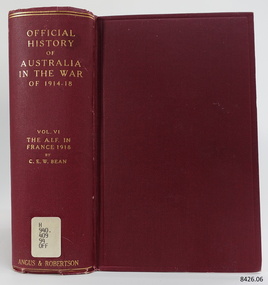
Book, Official History of Australia in the War of 1914-1918 Vol 6
... Official History of Australia in the War of 1914-1918 Vol 6...Official History of Australia in the War of 1914-1918 Vol 6...Official History of Australia in the War of 1914-1918 Vol 6 Author: C.E.W. Bean Publisher: Angus & Robertson Ltd Date: 1942 Further Information: During The Allied Offensive 1919...Official History of Australia in the War of 1914-1918 Vol 6 Author: C.E.W. Bean Publisher: Angus & Robertson Ltd Date: 1942 Further Information: During The Allied Offensive 1919 Official History of Australia in the War of 1914-1918 Vol 6 Book ...This book was part of a large group of books referred to as the Pattison Collection, which belonged to the Warrnambool Public Library, part of the Warrnambool Mechanics’ Institute. About RALPH ERIC PATTISON and the ‘PATTISON COLLECTION’ The ‘Pattison Collection’ is a collection of books and records that was originally owned by the Warrnambool Mechanics’ Institute, founded in Warrnambool in 1853. By 1886 the Warrnambool Mechanics’ Institute (WMI) had grown to have a Library, Museum and Fine Arts Gallery, with a collection of “… choice productions of art and valuable specimens in almost every branch and many wonderful national curiosities, are now to be seen there, including historic relics of the town and district.” It later included a School of Design. Although it was very well patronised, the WMI was led to ask the City Council to take it over in 1911 due to a lack of financial support. In 1935 Ralph Pattison was appointed as City Librarian to establish and organise the Warrnambool Public Library as it was then called. Ralph Eric Pattison was born in Rockhampton, Queensland, in 1891. He married Maude Swan from Warrnambool in 1920 and they set up a home in Warrnambool. In 1935 when Pattison accepted the position as City Librarian for the Warrnambool City Council his huge challenge was to make a functional library within two rooms of the Mechanics’ Institute. He tirelessly cleaned, cleared and sorted a disarrayed collection of old books, jars of preserved specimens and other items reserved for exhibition in the city’s museum. He developed and updated the library with a wide variety of books for all tastes, including reference books for students; a difficult task to fulfil during the years following the Depression. He converted all of the lower areas of the building into a library, reference room and reading room for members and the public. The books were sorted and stored using a cataloguing and card index system that he had developed himself. He also prepared the upper floor of the building and established the Art Gallery and later the Museum, a place to exhibit the many old relics that had been stored for years for this purpose. One of the treasures he found was a beautiful ancient clock, which he repaired, restored and enjoyed using in his office during the years of his service there. Ralph Pattison was described as “a meticulous gentleman whose punctuality, floorless courtesy and distinctive neat dress were hallmarks of his character, and ‘his’ clock controlled his daily routine and his opening and closing of the library’s large heavy doors to the minute.” Pattison took leave from 1942 to 1945 to serve in the Royal Australian Navy, Volunteer Reserve as Lieutenant. A few years later he converted one of the Museum’s rooms into a Children’s Library, stocking it with suitable books for the younger generation. This was an instant success. In the 1950’s he had the honour of being appointed to the Victorian Library Board and received more inspiration from the monthly conferences in Melbourne. He was sadly retired in 1959 after over 23 years of service, due to the fact that he had gone over the working age of council officers. However, he continued to take a very keen interest in the continual development of the Library until his death in 1969. THE NEW WARRNAMBOOL LIBRARY When the WMI building was pulled down in 1963 a new civic building was erected on the site and the new Warrnambool Library, on behalf of the City Council, took over all the holdings of the WMI. At this time some of the items were separated and identified as the ‘Pattison Collection’, named after Pattison. Eventually, the components of the WMI were distributed from the Warrnambool Library to various places, including the Art Gallery, Historical Society and Flagstaff Hill. Later some were even distributed to other regional branches of Corangamite Regional Library and passed to and fro. It is difficult now to trace just where all of the items have ended up. The books at Flagstaff Hill Maritime Village generally display stamps and markings from Pattison as well as a variety of other institutions including the Mechanics’ Institute itself. The Pattison Collection, along with other items at Flagstaff Hill Maritime Village, was originally part of the Warrnambool Mechanics' Institute’s collection. The Warrnambool Mechanics’ Institute Collection is primarily significant in its totality, rather than for the individual objects it contains. Its contents are highly representative of the development of Mechanics' Institute libraries across Australia, particularly Victoria. A diversity of publications and themes has been amassed, and these provide clues to our understanding of the nature of and changes in the reading habits of Victorians from the 1850s to the middle of the 20th century. The collection also highlights the Warrnambool community’s commitment to the Mechanics’ Institute, reading, literacy and learning in the regions, and proves that access to knowledge was not impeded by distance. These items help to provide a more complete picture of our community’s ideals and aspirations. The Warrnambool Mechanics Institute book collection has historical and social significance for its strong association with the Mechanics Institute movement and the important role it played in the intellectual, cultural and social development of people throughout the latter part of the nineteenth century and the early twentieth century. The collection of books is a rare example of an early lending library and its significance is enhanced by the survival of an original collection of many volumes. The Warrnambool Mechanics' Institute’s publication collection is of both local and state significance. Official History of Australia in the War of 1914-1918 Vol 6 Author: C.E.W. Bean Publisher: Angus & Robertson Ltd Date: 1942 Further Information: During The Allied Offensive 1919The label on the spine cover with typed text H 940.40994 OFF Paste down front end paper has a sticker from Corangamite Regional Library Service.flagstaff hil, warrnambool, flagstaff hill maritime museum, maritime museum, shipwreck coast, flagstaff hill maritime village, great ocean road, book, pattison collection, warrnambool library, warrnambool mechanics’ institute, ralph eric pattison, corangamite regional library service, warrnambool city librarian, mechanics’ institute library, victorian library board, warrnambool books and records, warrnambool children’s library, official history of australia in the war of 1914-1918 vol 6, c.e.w. bean -
 Flagstaff Hill Maritime Museum and Village
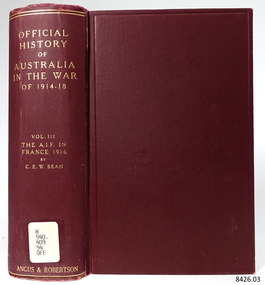
Book, Official History of Australia in the War of 1914-1918 Vol 3
... Official History of Australia in the War of 1914-1918 Vol 3...Official History of Australia in the War of 1914-1918 Vol 3...Official History of Australia in the War of 1914-1918 Vol 3 Author: C.E.W. Bean Publisher: Angus & Robertson Ltd Date: 1942 Further Information: The Australian Imperial Force in France 1916...Official History of Australia in the War of 1914-1918 Vol 3 Author: C.E.W. Bean Publisher: Angus & Robertson Ltd Date: 1942 Further Information: The Australian Imperial Force in France 1916 Official History of Australia in the War of 1914-1918 Vol 3 Book ...This book was part of a large group of books referred to as the Pattison Collection, which belonged to the Warrnambool Public Library, part of the Warrnambool Mechanics’ Institute. About RALPH ERIC PATTISON and the ‘PATTISON COLLECTION’ The ‘Pattison Collection’ is a collection of books and records that was originally owned by the Warrnambool Mechanics’ Institute, founded in Warrnambool in 1853. By 1886 the Warrnambool Mechanics’ Institute (WMI) had grown to have a Library, Museum and Fine Arts Gallery, with a collection of “… choice productions of art and valuable specimens in almost every branch and many wonderful national curiosities, are now to be seen there, including historic relics of the town and district.” It later included a School of Design. Although it was very well patronised, the WMI was led to ask the City Council to take it over in 1911 due to a lack of financial support. In 1935 Ralph Pattison was appointed as City Librarian to establish and organise the Warrnambool Public Library as it was then called. Ralph Eric Pattison was born in Rockhampton, Queensland, in 1891. He married Maude Swan from Warrnambool in 1920 and they set up a home in Warrnambool. In 1935 when Pattison accepted the position as City Librarian for the Warrnambool City Council his huge challenge was to make a functional library within two rooms of the Mechanics’ Institute. He tirelessly cleaned, cleared and sorted a disarrayed collection of old books, jars of preserved specimens and other items reserved for exhibition in the city’s museum. He developed and updated the library with a wide variety of books for all tastes, including reference books for students; a difficult task to fulfil during the years following the Depression. He converted all of the lower areas of the building into a library, reference room and reading room for members and the public. The books were sorted and stored using a cataloguing and card index system that he had developed himself. He also prepared the upper floor of the building and established the Art Gallery and later the Museum, a place to exhibit the many old relics that had been stored for years for this purpose. One of the treasures he found was a beautiful ancient clock, which he repaired, restored and enjoyed using in his office during the years of his service there. Ralph Pattison was described as “a meticulous gentleman whose punctuality, floorless courtesy and distinctive neat dress were hallmarks of his character, and ‘his’ clock controlled his daily routine and his opening and closing of the library’s large heavy doors to the minute.” Pattison took leave from 1942 to 1945 to serve in the Royal Australian Navy, Volunteer Reserve as Lieutenant. A few years later he converted one of the Museum’s rooms into a Children’s Library, stocking it with suitable books for the younger generation. This was an instant success. In the 1950’s he had the honour of being appointed to the Victorian Library Board and received more inspiration from the monthly conferences in Melbourne. He was sadly retired in 1959 after over 23 years of service, due to the fact that he had gone over the working age of council officers. However, he continued to take a very keen interest in the continual development of the Library until his death in 1969. THE NEW WARRNAMBOOL LIBRARY When the WMI building was pulled down in 1963 a new civic building was erected on the site and the new Warrnambool Library, on behalf of the City Council, took over all the holdings of the WMI. At this time some of the items were separated and identified as the ‘Pattison Collection’, named after Pattison. Eventually, the components of the WMI were distributed from the Warrnambool Library to various places, including the Art Gallery, Historical Society and Flagstaff Hill. Later some were even distributed to other regional branches of Corangamite Regional Library and passed to and fro. It is difficult now to trace just where all of the items have ended up. The books at Flagstaff Hill Maritime Village generally display stamps and markings from Pattison as well as a variety of other institutions including the Mechanics’ Institute itself. The Pattison Collection, along with other items at Flagstaff Hill Maritime Village, was originally part of the Warrnambool Mechanics' Institute’s collection. The Warrnambool Mechanics’ Institute Collection is primarily significant in its totality, rather than for the individual objects it contains. Its contents are highly representative of the development of Mechanics' Institute libraries across Australia, particularly Victoria. A diversity of publications and themes has been amassed, and these provide clues to our understanding of the nature of and changes in the reading habits of Victorians from the 1850s to the middle of the 20th century. The collection also highlights the Warrnambool community’s commitment to the Mechanics’ Institute, reading, literacy and learning in the regions, and proves that access to knowledge was not impeded by distance. These items help to provide a more complete picture of our community’s ideals and aspirations. The Warrnambool Mechanics Institute book collection has historical and social significance for its strong association with the Mechanics Institute movement and the important role it played in the intellectual, cultural and social development of people throughout the latter part of the nineteenth century and the early twentieth century. The collection of books is a rare example of an early lending library and its significance is enhanced by the survival of an original collection of many volumes. The Warrnambool Mechanics' Institute’s publication collection is of both local and state significance. Official History of Australia in the War of 1914-1918 Vol 3 Author: C.E.W. Bean Publisher: Angus & Robertson Ltd Date: 1942 Further Information: The Australian Imperial Force in France 1916The label on the spine cover with typed text H 940.40994 OFF Paste down front end paper has a sticker from Corangamite Regional Library Service.flagstaff hil, warrnambool, flagstaff hill maritime museum, maritime museum, shipwreck coast, flagstaff hill maritime village, great ocean road, book, pattison collection, warrnambool library, warrnambool mechanics’ institute, ralph eric pattison, corangamite regional library service, warrnambool city librarian, mechanics’ institute library, victorian library board, warrnambool books and records, warrnambool children’s library, official history of australia in the war of 1914-1918 vol 3, c.e.w. bean -
 Flagstaff Hill Maritime Museum and Village
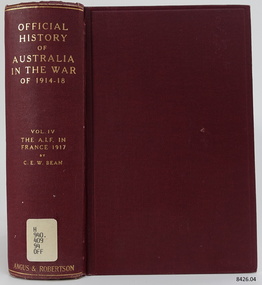
Book, Official History of Australia in the War of 1914-1918 Vol 4
... Official History of Australia in the War of 1914-1918 Vol 4...Official History of Australia in the War of 1914-1918 Vol 4...Official History of Australia in the War of 1914-1918 Vol 4 Author: C.E.W. Bean Publisher: Angus & Robertson Ltd Date: 1941 Further Information: The Australian Imperial Force in France 1917...Official History of Australia in the War of 1914-1918 Vol 4 Author: C.E.W. Bean Publisher: Angus & Robertson Ltd Date: 1941 Further Information: The Australian Imperial Force in France 1917 Official History of Australia in the War of 1914-1918 Vol 4 Book ...This book was part of a large group of books referred to as the Pattison Collection, which belonged to the Warrnambool Public Library, part of the Warrnambool Mechanics’ Institute. About RALPH ERIC PATTISON and the ‘PATTISON COLLECTION’ The ‘Pattison Collection’ is a collection of books and records that was originally owned by the Warrnambool Mechanics’ Institute, founded in Warrnambool in 1853. By 1886 the Warrnambool Mechanics’ Institute (WMI) had grown to have a Library, Museum and Fine Arts Gallery, with a collection of “… choice productions of art and valuable specimens in almost every branch and many wonderful national curiosities, are now to be seen there, including historic relics of the town and district.” It later included a School of Design. Although it was very well patronised, the WMI was led to ask the City Council to take it over in 1911 due to a lack of financial support. In 1935 Ralph Pattison was appointed as City Librarian to establish and organise the Warrnambool Public Library as it was then called. Ralph Eric Pattison was born in Rockhampton, Queensland, in 1891. He married Maude Swan from Warrnambool in 1920 and they set up a home in Warrnambool. In 1935 when Pattison accepted the position as City Librarian for the Warrnambool City Council his huge challenge was to make a functional library within two rooms of the Mechanics’ Institute. He tirelessly cleaned, cleared and sorted a disarrayed collection of old books, jars of preserved specimens and other items reserved for exhibition in the city’s museum. He developed and updated the library with a wide variety of books for all tastes, including reference books for students; a difficult task to fulfil during the years following the Depression. He converted all of the lower areas of the building into a library, reference room and reading room for members and the public. The books were sorted and stored using a cataloguing and card index system that he had developed himself. He also prepared the upper floor of the building and established the Art Gallery and later the Museum, a place to exhibit the many old relics that had been stored for years for this purpose. One of the treasures he found was a beautiful ancient clock, which he repaired, restored and enjoyed using in his office during the years of his service there. Ralph Pattison was described as “a meticulous gentleman whose punctuality, floorless courtesy and distinctive neat dress were hallmarks of his character, and ‘his’ clock controlled his daily routine and his opening and closing of the library’s large heavy doors to the minute.” Pattison took leave from 1942 to 1945 to serve in the Royal Australian Navy, Volunteer Reserve as Lieutenant. A few years later he converted one of the Museum’s rooms into a Children’s Library, stocking it with suitable books for the younger generation. This was an instant success. In the 1950’s he had the honour of being appointed to the Victorian Library Board and received more inspiration from the monthly conferences in Melbourne. He was sadly retired in 1959 after over 23 years of service, due to the fact that he had gone over the working age of council officers. However, he continued to take a very keen interest in the continual development of the Library until his death in 1969. THE NEW WARRNAMBOOL LIBRARY When the WMI building was pulled down in 1963 a new civic building was erected on the site and the new Warrnambool Library, on behalf of the City Council, took over all the holdings of the WMI. At this time some of the items were separated and identified as the ‘Pattison Collection’, named after Pattison. Eventually, the components of the WMI were distributed from the Warrnambool Library to various places, including the Art Gallery, Historical Society and Flagstaff Hill. Later some were even distributed to other regional branches of Corangamite Regional Library and passed to and fro. It is difficult now to trace just where all of the items have ended up. The books at Flagstaff Hill Maritime Village generally display stamps and markings from Pattison as well as a variety of other institutions including the Mechanics’ Institute itself. The Pattison Collection, along with other items at Flagstaff Hill Maritime Village, was originally part of the Warrnambool Mechanics' Institute’s collection. The Warrnambool Mechanics’ Institute Collection is primarily significant in its totality, rather than for the individual objects it contains. Its contents are highly representative of the development of Mechanics' Institute libraries across Australia, particularly Victoria. A diversity of publications and themes has been amassed, and these provide clues to our understanding of the nature of and changes in the reading habits of Victorians from the 1850s to the middle of the 20th century. The collection also highlights the Warrnambool community’s commitment to the Mechanics’ Institute, reading, literacy and learning in the regions, and proves that access to knowledge was not impeded by distance. These items help to provide a more complete picture of our community’s ideals and aspirations. The Warrnambool Mechanics Institute book collection has historical and social significance for its strong association with the Mechanics Institute movement and the important role it played in the intellectual, cultural and social development of people throughout the latter part of the nineteenth century and the early twentieth century. The collection of books is a rare example of an early lending library and its significance is enhanced by the survival of an original collection of many volumes. The Warrnambool Mechanics' Institute’s publication collection is of both local and state significance. Official History of Australia in the War of 1914-1918 Vol 4 Author: C.E.W. Bean Publisher: Angus & Robertson Ltd Date: 1941 Further Information: The Australian Imperial Force in France 1917The label on the spine cover with typed text H 940.40994 OFF Paste down front end paper has a sticker from Corangamite Regional Library Service.flagstaff hil, warrnambool, flagstaff hill maritime museum, maritime museum, shipwreck coast, flagstaff hill maritime village, great ocean road, book, pattison collection, warrnambool library, warrnambool mechanics’ institute, ralph eric pattison, corangamite regional library service, warrnambool city librarian, mechanics’ institute library, victorian library board, warrnambool books and records, warrnambool children’s library, official history of australia in the war of 1914-1918 vol 4, c.e.w. bean -
 Flagstaff Hill Maritime Museum and Village
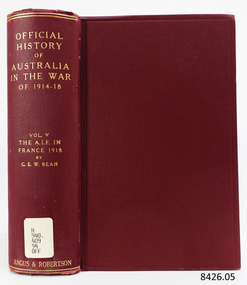
Book, Official History of Australia in the War of 1914-1918 Vol 5
... Official History of Australia in the War of 1914-1918 Vol 5...Official History of Australia in the War of 1914-1918 Vol 5...Official History of Australia in the War of 1914-1918 Vol 5 Author: C.E.W. Bean Publisher: Angus & Robertson Ltd Date: 1941 Further Information: During The Main German Offensive 191...Official History of Australia in the War of 1914-1918 Vol 5 Author: C.E.W. Bean Publisher: Angus & Robertson Ltd Date: 1941 Further Information: During The Main German Offensive 191 Official History of Australia in the War of 1914-1918 Vol 5 Book ...This book was part of a large group of books referred to as the Pattison Collection, which belonged to the Warrnambool Public Library, part of the Warrnambool Mechanics’ Institute. About RALPH ERIC PATTISON and the ‘PATTISON COLLECTION’ The ‘Pattison Collection’ is a collection of books and records that was originally owned by the Warrnambool Mechanics’ Institute, founded in Warrnambool in 1853. By 1886 the Warrnambool Mechanics’ Institute (WMI) had grown to have a Library, Museum and Fine Arts Gallery, with a collection of “… choice productions of art and valuable specimens in almost every branch and many wonderful national curiosities, are now to be seen there, including historic relics of the town and district.” It later included a School of Design. Although it was very well patronised, the WMI was led to ask the City Council to take it over in 1911 due to a lack of financial support. In 1935 Ralph Pattison was appointed as City Librarian to establish and organise the Warrnambool Public Library as it was then called. Ralph Eric Pattison was born in Rockhampton, Queensland, in 1891. He married Maude Swan from Warrnambool in 1920 and they set up a home in Warrnambool. In 1935 when Pattison accepted the position as City Librarian for the Warrnambool City Council his huge challenge was to make a functional library within two rooms of the Mechanics’ Institute. He tirelessly cleaned, cleared and sorted a disarrayed collection of old books, jars of preserved specimens and other items reserved for exhibition in the city’s museum. He developed and updated the library with a wide variety of books for all tastes, including reference books for students; a difficult task to fulfil during the years following the Depression. He converted all of the lower areas of the building into a library, reference room and reading room for members and the public. The books were sorted and stored using a cataloguing and card index system that he had developed himself. He also prepared the upper floor of the building and established the Art Gallery and later the Museum, a place to exhibit the many old relics that had been stored for years for this purpose. One of the treasures he found was a beautiful ancient clock, which he repaired, restored and enjoyed using in his office during the years of his service there. Ralph Pattison was described as “a meticulous gentleman whose punctuality, floorless courtesy and distinctive neat dress were hallmarks of his character, and ‘his’ clock controlled his daily routine and his opening and closing of the library’s large heavy doors to the minute.” Pattison took leave from 1942 to 1945 to serve in the Royal Australian Navy, Volunteer Reserve as Lieutenant. A few years later he converted one of the Museum’s rooms into a Children’s Library, stocking it with suitable books for the younger generation. This was an instant success. In the 1950’s he had the honour of being appointed to the Victorian Library Board and received more inspiration from the monthly conferences in Melbourne. He was sadly retired in 1959 after over 23 years of service, due to the fact that he had gone over the working age of council officers. However, he continued to take a very keen interest in the continual development of the Library until his death in 1969. THE NEW WARRNAMBOOL LIBRARY When the WMI building was pulled down in 1963 a new civic building was erected on the site and the new Warrnambool Library, on behalf of the City Council, took over all the holdings of the WMI. At this time some of the items were separated and identified as the ‘Pattison Collection’, named after Pattison. Eventually, the components of the WMI were distributed from the Warrnambool Library to various places, including the Art Gallery, Historical Society and Flagstaff Hill. Later some were even distributed to other regional branches of Corangamite Regional Library and passed to and fro. It is difficult now to trace just where all of the items have ended up. The books at Flagstaff Hill Maritime Village generally display stamps and markings from Pattison as well as a variety of other institutions including the Mechanics’ Institute itself. The Pattison Collection, along with other items at Flagstaff Hill Maritime Village, was originally part of the Warrnambool Mechanics' Institute’s collection. The Warrnambool Mechanics’ Institute Collection is primarily significant in its totality, rather than for the individual objects it contains. Its contents are highly representative of the development of Mechanics' Institute libraries across Australia, particularly Victoria. A diversity of publications and themes has been amassed, and these provide clues to our understanding of the nature of and changes in the reading habits of Victorians from the 1850s to the middle of the 20th century. The collection also highlights the Warrnambool community’s commitment to the Mechanics’ Institute, reading, literacy and learning in the regions, and proves that access to knowledge was not impeded by distance. These items help to provide a more complete picture of our community’s ideals and aspirations. The Warrnambool Mechanics Institute book collection has historical and social significance for its strong association with the Mechanics Institute movement and the important role it played in the intellectual, cultural and social development of people throughout the latter part of the nineteenth century and the early twentieth century. The collection of books is a rare example of an early lending library and its significance is enhanced by the survival of an original collection of many volumes. The Warrnambool Mechanics' Institute’s publication collection is of both local and state significance. Official History of Australia in the War of 1914-1918 Vol 5 Author: C.E.W. Bean Publisher: Angus & Robertson Ltd Date: 1941 Further Information: During The Main German Offensive 191The label on the spine cover with typed text H 940.40994 OFF Paste down front end paper has a sticker from Corangamite Regional Library Service.flagstaff hil, warrnambool, flagstaff hill maritime museum, maritime museum, shipwreck coast, flagstaff hill maritime village, great ocean road, book, pattison collection, warrnambool library, warrnambool mechanics’ institute, ralph eric pattison, corangamite regional library service, warrnambool city librarian, mechanics’ institute library, victorian library board, warrnambool books and records, warrnambool children’s library, official history of australia in the war of 1914-1918 vol 5, c.e.w. bean -
 Flagstaff Hill Maritime Museum and Village
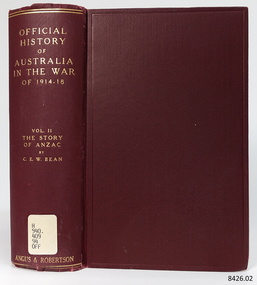
Book, Official History of Australia in the War of 1914-1918 Vol 2
... Official History of Australia in the War of 1914-1918 Vol 2...Official History of Australia in the War of 1914-1918 Vol 2...Official History of Australia in the War of 1914-1918 Vol 2 Author: C.E.W. Bean Publisher: Angus & Robertson Ltd Date: 1941 Further Information: The Story of ANZAC From May 4, 1915, to the Evacuation of the Gallipoli Peninsula...Official History of Australia in the War of 1914-1918 Vol 2 Author: C.E.W. Bean Publisher: Angus & Robertson Ltd Date: 1941 Further Information: The Story of ANZAC From May 4, 1915, to the Evacuation of the Gallipoli Peninsula Official History of Australia in the War of 1914-1918 Vol 2 Book ...This book was part of a large group of books referred to as the Pattison Collection, which belonged to the Warrnambool Public Library, part of the Warrnambool Mechanics’ Institute. About RALPH ERIC PATTISON and the ‘PATTISON COLLECTION’ The ‘Pattison Collection’ is a collection of books and records that was originally owned by the Warrnambool Mechanics’ Institute, founded in Warrnambool in 1853. By 1886 the Warrnambool Mechanics’ Institute (WMI) had grown to have a Library, Museum and Fine Arts Gallery, with a collection of “… choice productions of art and valuable specimens in almost every branch and many wonderful national curiosities, are now to be seen there, including historic relics of the town and district.” It later included a School of Design. Although it was very well patronised, the WMI was led to ask the City Council to take it over in 1911 due to a lack of financial support. In 1935 Ralph Pattison was appointed as City Librarian to establish and organise the Warrnambool Public Library as it was then called. Ralph Eric Pattison was born in Rockhampton, Queensland, in 1891. He married Maude Swan from Warrnambool in 1920 and they set up a home in Warrnambool. In 1935 when Pattison accepted the position as City Librarian for the Warrnambool City Council his huge challenge was to make a functional library within two rooms of the Mechanics’ Institute. He tirelessly cleaned, cleared and sorted a disarrayed collection of old books, jars of preserved specimens and other items reserved for exhibition in the city’s museum. He developed and updated the library with a wide variety of books for all tastes, including reference books for students; a difficult task to fulfil during the years following the Depression. He converted all of the lower areas of the building into a library, reference room and reading room for members and the public. The books were sorted and stored using a cataloguing and card index system that he had developed himself. He also prepared the upper floor of the building and established the Art Gallery and later the Museum, a place to exhibit the many old relics that had been stored for years for this purpose. One of the treasures he found was a beautiful ancient clock, which he repaired, restored and enjoyed using in his office during the years of his service there. Ralph Pattison was described as “a meticulous gentleman whose punctuality, floorless courtesy and distinctive neat dress were hallmarks of his character, and ‘his’ clock controlled his daily routine and his opening and closing of the library’s large heavy doors to the minute.” Pattison took leave from 1942 to 1945 to serve in the Royal Australian Navy, Volunteer Reserve as Lieutenant. A few years later he converted one of the Museum’s rooms into a Children’s Library, stocking it with suitable books for the younger generation. This was an instant success. In the 1950’s he had the honour of being appointed to the Victorian Library Board and received more inspiration from the monthly conferences in Melbourne. He was sadly retired in 1959 after over 23 years of service, due to the fact that he had gone over the working age of council officers. However, he continued to take a very keen interest in the continual development of the Library until his death in 1969. THE NEW WARRNAMBOOL LIBRARY When the WMI building was pulled down in 1963 a new civic building was erected on the site and the new Warrnambool Library, on behalf of the City Council, took over all the holdings of the WMI. At this time some of the items were separated and identified as the ‘Pattison Collection’, named after Pattison. Eventually, the components of the WMI were distributed from the Warrnambool Library to various places, including the Art Gallery, Historical Society and Flagstaff Hill. Later some were even distributed to other regional branches of Corangamite Regional Library and passed to and fro. It is difficult now to trace just where all of the items have ended up. The books at Flagstaff Hill Maritime Village generally display stamps and markings from Pattison as well as a variety of other institutions including the Mechanics’ Institute itself. The Pattison Collection, along with other items at Flagstaff Hill Maritime Village, was originally part of the Warrnambool Mechanics' Institute’s collection. The Warrnambool Mechanics’ Institute Collection is primarily significant in its totality, rather than for the individual objects it contains. Its contents are highly representative of the development of Mechanics' Institute libraries across Australia, particularly Victoria. A diversity of publications and themes has been amassed, and these provide clues to our understanding of the nature of and changes in the reading habits of Victorians from the 1850s to the middle of the 20th century. The collection also highlights the Warrnambool community’s commitment to the Mechanics’ Institute, reading, literacy and learning in the regions, and proves that access to knowledge was not impeded by distance. These items help to provide a more complete picture of our community’s ideals and aspirations. The Warrnambool Mechanics Institute book collection has historical and social significance for its strong association with the Mechanics Institute movement and the important role it played in the intellectual, cultural and social development of people throughout the latter part of the nineteenth century and the early twentieth century. The collection of books is a rare example of an early lending library and its significance is enhanced by the survival of an original collection of many volumes. The Warrnambool Mechanics' Institute’s publication collection is of both local and state significance. Official History of Australia in the War of 1914-1918 Vol 2 Author: C.E.W. Bean Publisher: Angus & Robertson Ltd Date: 1941 Further Information: The Story of ANZAC From May 4, 1915, to the Evacuation of the Gallipoli PeninsulaThe label on the spine cover with typed text H 940.40994 OFF Paste down front end paper has a sticker from Corangamite Regional Library Service.flagstaff hil, warrnambool, flagstaff hill maritime museum, maritime museum, shipwreck coast, flagstaff hill maritime village, great ocean road, book, pattison collection, warrnambool library, warrnambool mechanics’ institute, ralph eric pattison, corangamite regional library service, warrnambool city librarian, mechanics’ institute library, victorian library board, warrnambool books and records, warrnambool children’s library, official history of australia in the war of 1914-1918 vol 2, c.e.w. bean -
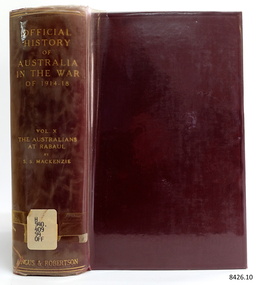 Flagstaff Hill Maritime Museum and Village
Book, Official History of Australia in the War of 1914-1918 Vol 10
... Official History of Australia in the War of 1914-1918 Vol 10...Official History of Australia in the War of 1914-1918 Vol 10...Official History of Australia in the War of 1914-1918 Vol 10 Author: S. S. MacKenzie Publisher: Angus & Robertson Ltd Date: 1942 Further Information: The Australians At Rabual The Capture and Administration of the German Possessions in the South Pacicic...MacKenzie Publisher: Angus & Robertson Ltd Date: 1942 Further Information: The Australians At Rabual The Capture and Administration of the German Possessions in the South Pacicic Official History of Australia in the War of 1914-1918 Vol 10 Book ...This book was part of a large group of books referred to as the Pattison Collection, which belonged to the Warrnambool Public Library, part of the Warrnambool Mechanics’ Institute. About RALPH ERIC PATTISON and the ‘PATTISON COLLECTION’ The ‘Pattison Collection’ is a collection of books and records that was originally owned by the Warrnambool Mechanics’ Institute, founded in Warrnambool in 1853. By 1886 the Warrnambool Mechanics’ Institute (WMI) had grown to have a Library, Museum and Fine Arts Gallery, with a collection of “… choice productions of art and valuable specimens in almost every branch and many wonderful national curiosities, are now to be seen there, including historic relics of the town and district.” It later included a School of Design. Although it was very well patronised, the WMI was led to ask the City Council to take it over in 1911 due to a lack of financial support. In 1935 Ralph Pattison was appointed as City Librarian to establish and organise the Warrnambool Public Library as it was then called. Ralph Eric Pattison was born in Rockhampton, Queensland, in 1891. He married Maude Swan from Warrnambool in 1920 and they set up a home in Warrnambool. In 1935 when Pattison accepted the position as City Librarian for the Warrnambool City Council his huge challenge was to make a functional library within two rooms of the Mechanics’ Institute. He tirelessly cleaned, cleared and sorted a disarrayed collection of old books, jars of preserved specimens and other items reserved for exhibition in the city’s museum. He developed and updated the library with a wide variety of books for all tastes, including reference books for students; a difficult task to fulfil during the years following the Depression. He converted all of the lower areas of the building into a library, reference room and reading room for members and the public. The books were sorted and stored using a cataloguing and card index system that he had developed himself. He also prepared the upper floor of the building and established the Art Gallery and later the Museum, a place to exhibit the many old relics that had been stored for years for this purpose. One of the treasures he found was a beautiful ancient clock, which he repaired, restored and enjoyed using in his office during the years of his service there. Ralph Pattison was described as “a meticulous gentleman whose punctuality, floorless courtesy and distinctive neat dress were hallmarks of his character, and ‘his’ clock controlled his daily routine and his opening and closing of the library’s large heavy doors to the minute.” Pattison took leave from 1942 to 1945 to serve in the Royal Australian Navy, Volunteer Reserve as Lieutenant. A few years later he converted one of the Museum’s rooms into a Children’s Library, stocking it with suitable books for the younger generation. This was an instant success. In the 1950’s he had the honour of being appointed to the Victorian Library Board and received more inspiration from the monthly conferences in Melbourne. He was sadly retired in 1959 after over 23 years of service, due to the fact that he had gone over the working age of council officers. However, he continued to take a very keen interest in the continual development of the Library until his death in 1969. THE NEW WARRNAMBOOL LIBRARY When the WMI building was pulled down in 1963 a new civic building was erected on the site and the new Warrnambool Library, on behalf of the City Council, took over all the holdings of the WMI. At this time some of the items were separated and identified as the ‘Pattison Collection’, named after Pattison. Eventually, the components of the WMI were distributed from the Warrnambool Library to various places, including the Art Gallery, Historical Society and Flagstaff Hill. Later some were even distributed to other regional branches of Corangamite Regional Library and passed to and fro. It is difficult now to trace just where all of the items have ended up. The books at Flagstaff Hill Maritime Village generally display stamps and markings from Pattison as well as a variety of other institutions including the Mechanics’ Institute itself. The Pattison Collection, along with other items at Flagstaff Hill Maritime Village, was originally part of the Warrnambool Mechanics' Institute’s collection. The Warrnambool Mechanics’ Institute Collection is primarily significant in its totality, rather than for the individual objects it contains. Its contents are highly representative of the development of Mechanics' Institute libraries across Australia, particularly Victoria. A diversity of publications and themes has been amassed, and these provide clues to our understanding of the nature of and changes in the reading habits of Victorians from the 1850s to the middle of the 20th century. The collection also highlights the Warrnambool community’s commitment to the Mechanics’ Institute, reading, literacy and learning in the regions, and proves that access to knowledge was not impeded by distance. These items help to provide a more complete picture of our community’s ideals and aspirations. The Warrnambool Mechanics Institute book collection has historical and social significance for its strong association with the Mechanics Institute movement and the important role it played in the intellectual, cultural and social development of people throughout the latter part of the nineteenth century and the early twentieth century. The collection of books is a rare example of an early lending library and its significance is enhanced by the survival of an original collection of many volumes. The Warrnambool Mechanics' Institute’s publication collection is of both local and state significance. Official History of Australia in the War of 1914-1918 Vol 10 Author: S. S. MacKenzie Publisher: Angus & Robertson Ltd Date: 1942 Further Information: The Australians At Rabual The Capture and Administration of the German Possessions in the South PacicicThe label on the spine cover with typed text H 940.40994 OFF flagstaff hil, warrnambool, flagstaff hill maritime museum, maritime museum, shipwreck coast, flagstaff hill maritime village, great ocean road, book, pattison collection, warrnambool library, warrnambool mechanics’ institute, ralph eric pattison, corangamite regional library service, warrnambool city librarian, mechanics’ institute library, victorian library board, warrnambool books and records, warrnambool children’s library, official history of australia in the war of 1914-1918 vol 10, s. s. mackenzie -
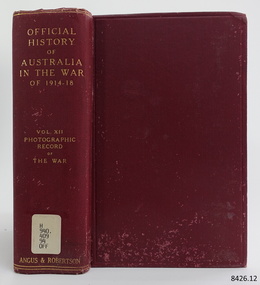 Flagstaff Hill Maritime Museum and Village
Book, Official History of Australia in the War of 1914-1918 Vol 12
... Official History of Australia in the War of 1914-1918 Vol 12...Official History of Australia in the War of 1914-1918 Vol 12...Official History of Australia in the War of 1914-1918 Vol 12 "Annotated by C.E.W.Bean and H.S Gullett" Publisher: Angus & Robertson Ltd Date: 1943 Further Information: Photographic Record of the War Reproductions of the Pictures taken by the Australian official Photographers ...Official History of Australia in the War of 1914-1918 Vol 12 "Annotated by C.E.W.Bean and H.S Gullett" Publisher: Angus & Robertson Ltd Date: 1943 Further Information: Photographic Record of the War Reproductions of the Pictures taken by the Australian official Photographers Official History of Australia in the War of 1914-1918 Vol 12 Book ...This book was part of a large group of books referred to as the Pattison Collection, which belonged to the Warrnambool Public Library, part of the Warrnambool Mechanics’ Institute. About RALPH ERIC PATTISON and the ‘PATTISON COLLECTION’ The ‘Pattison Collection’ is a collection of books and records that was originally owned by the Warrnambool Mechanics’ Institute, founded in Warrnambool in 1853. By 1886 the Warrnambool Mechanics’ Institute (WMI) had grown to have a Library, Museum and Fine Arts Gallery, with a collection of “… choice productions of art and valuable specimens in almost every branch and many wonderful national curiosities, are now to be seen there, including historic relics of the town and district.” It later included a School of Design. Although it was very well patronised, the WMI was led to ask the City Council to take it over in 1911 due to a lack of financial support. In 1935 Ralph Pattison was appointed as City Librarian to establish and organise the Warrnambool Public Library as it was then called. Ralph Eric Pattison was born in Rockhampton, Queensland, in 1891. He married Maude Swan from Warrnambool in 1920 and they set up a home in Warrnambool. In 1935 when Pattison accepted the position as City Librarian for the Warrnambool City Council his huge challenge was to make a functional library within two rooms of the Mechanics’ Institute. He tirelessly cleaned, cleared and sorted a disarrayed collection of old books, jars of preserved specimens and other items reserved for exhibition in the city’s museum. He developed and updated the library with a wide variety of books for all tastes, including reference books for students; a difficult task to fulfil during the years following the Depression. He converted all of the lower areas of the building into a library, reference room and reading room for members and the public. The books were sorted and stored using a cataloguing and card index system that he had developed himself. He also prepared the upper floor of the building and established the Art Gallery and later the Museum, a place to exhibit the many old relics that had been stored for years for this purpose. One of the treasures he found was a beautiful ancient clock, which he repaired, restored and enjoyed using in his office during the years of his service there. Ralph Pattison was described as “a meticulous gentleman whose punctuality, floorless courtesy and distinctive neat dress were hallmarks of his character, and ‘his’ clock controlled his daily routine and his opening and closing of the library’s large heavy doors to the minute.” Pattison took leave from 1942 to 1945 to serve in the Royal Australian Navy, Volunteer Reserve as Lieutenant. A few years later he converted one of the Museum’s rooms into a Children’s Library, stocking it with suitable books for the younger generation. This was an instant success. In the 1950’s he had the honour of being appointed to the Victorian Library Board and received more inspiration from the monthly conferences in Melbourne. He was sadly retired in 1959 after over 23 years of service, due to the fact that he had gone over the working age of council officers. However, he continued to take a very keen interest in the continual development of the Library until his death in 1969. THE NEW WARRNAMBOOL LIBRARY When the WMI building was pulled down in 1963 a new civic building was erected on the site and the new Warrnambool Library, on behalf of the City Council, took over all the holdings of the WMI. At this time some of the items were separated and identified as the ‘Pattison Collection’, named after Pattison. Eventually, the components of the WMI were distributed from the Warrnambool Library to various places, including the Art Gallery, Historical Society and Flagstaff Hill. Later some were even distributed to other regional branches of Corangamite Regional Library and passed to and fro. It is difficult now to trace just where all of the items have ended up. The books at Flagstaff Hill Maritime Village generally display stamps and markings from Pattison as well as a variety of other institutions including the Mechanics’ Institute itself. The Pattison Collection, along with other items at Flagstaff Hill Maritime Village, was originally part of the Warrnambool Mechanics' Institute’s collection. The Warrnambool Mechanics’ Institute Collection is primarily significant in its totality, rather than for the individual objects it contains. Its contents are highly representative of the development of Mechanics' Institute libraries across Australia, particularly Victoria. A diversity of publications and themes has been amassed, and these provide clues to our understanding of the nature of and changes in the reading habits of Victorians from the 1850s to the middle of the 20th century. The collection also highlights the Warrnambool community’s commitment to the Mechanics’ Institute, reading, literacy and learning in the regions, and proves that access to knowledge was not impeded by distance. These items help to provide a more complete picture of our community’s ideals and aspirations. The Warrnambool Mechanics Institute book collection has historical and social significance for its strong association with the Mechanics Institute movement and the important role it played in the intellectual, cultural and social development of people throughout the latter part of the nineteenth century and the early twentieth century. The collection of books is a rare example of an early lending library and its significance is enhanced by the survival of an original collection of many volumes. The Warrnambool Mechanics' Institute’s publication collection is of both local and state significance. Official History of Australia in the War of 1914-1918 Vol 12 "Annotated by C.E.W.Bean and H.S Gullett" Publisher: Angus & Robertson Ltd Date: 1943 Further Information: Photographic Record of the War Reproductions of the Pictures taken by the Australian official Photographers The label on the spine cover with typed text H 940.40994 OFF Paste down front end paper has a sticker from Corangamite Regional Library Service.flagstaff hil, warrnambool, flagstaff hill maritime museum, maritime museum, shipwreck coast, flagstaff hill maritime village, great ocean road, book, pattison collection, warrnambool library, warrnambool mechanics’ institute, ralph eric pattison, corangamite regional library service, warrnambool city librarian, mechanics’ institute library, victorian library board, warrnambool books and records, warrnambool children’s library, official history of australia in the war of 1914-1918 vol 12, c.e.w.bean, h.s gullett -
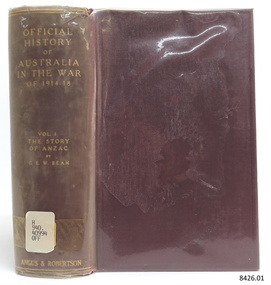 Flagstaff Hill Maritime Museum and Village
Book, Official History of Australia in the War of 1914-1918 Vol 1
... Official History of Australia in the War of 1914-1918 Vol 1...Official History of Australia in the War of 1914-1918 Vol 1...Official History of Australia in the War of 1914-1918 Vol 1 Author: C.E.W. Bean Publisher: Angus & Robertson Ltd Date: 1941 Further Information: From the Outbreak of war to the end of the first phase of the Gallipoli campaign May 4 1915...Official History of Australia in the War of 1914-1918 Vol 1 Author: C.E.W. Bean Publisher: Angus & Robertson Ltd Date: 1941 Further Information: From the Outbreak of war to the end of the first phase of the Gallipoli campaign May 4 1915 Official History of Australia in the War of 1914-1918 Vol 1 Book ...This book was part of a large group of books referred to as the Pattison Collection, which belonged to the Warrnambool Public Library, part of the Warrnambool Mechanics’ Institute. About RALPH ERIC PATTISON and the ‘PATTISON COLLECTION’ The ‘Pattison Collection’ is a collection of books and records that was originally owned by the Warrnambool Mechanics’ Institute, founded in Warrnambool in 1853. By 1886 the Warrnambool Mechanics’ Institute (WMI) had grown to have a Library, Museum and Fine Arts Gallery, with a collection of “… choice productions of art and valuable specimens in almost every branch and many wonderful national curiosities, are now to be seen there, including historic relics of the town and district.” It later included a School of Design. Although it was very well patronised, the WMI was led to ask the City Council to take it over in 1911 due to a lack of financial support. In 1935 Ralph Pattison was appointed as City Librarian to establish and organise the Warrnambool Public Library as it was then called. Ralph Eric Pattison was born in Rockhampton, Queensland, in 1891. He married Maude Swan from Warrnambool in 1920 and they set up a home in Warrnambool. In 1935 when Pattison accepted the position as City Librarian for the Warrnambool City Council his huge challenge was to make a functional library within two rooms of the Mechanics’ Institute. He tirelessly cleaned, cleared and sorted a disarrayed collection of old books, jars of preserved specimens and other items reserved for exhibition in the city’s museum. He developed and updated the library with a wide variety of books for all tastes, including reference books for students; a difficult task to fulfil during the years following the Depression. He converted all of the lower areas of the building into a library, reference room and reading room for members and the public. The books were sorted and stored using a cataloguing and card index system that he had developed himself. He also prepared the upper floor of the building and established the Art Gallery and later the Museum, a place to exhibit the many old relics that had been stored for years for this purpose. One of the treasures he found was a beautiful ancient clock, which he repaired, restored and enjoyed using in his office during the years of his service there. Ralph Pattison was described as “a meticulous gentleman whose punctuality, floorless courtesy and distinctive neat dress were hallmarks of his character, and ‘his’ clock controlled his daily routine and his opening and closing of the library’s large heavy doors to the minute.” Pattison took leave from 1942 to 1945 to serve in the Royal Australian Navy, Volunteer Reserve as Lieutenant. A few years later he converted one of the Museum’s rooms into a Children’s Library, stocking it with suitable books for the younger generation. This was an instant success. In the 1950’s he had the honour of being appointed to the Victorian Library Board and received more inspiration from the monthly conferences in Melbourne. He was sadly retired in 1959 after over 23 years of service, due to the fact that he had gone over the working age of council officers. However, he continued to take a very keen interest in the continual development of the Library until his death in 1969. THE NEW WARRNAMBOOL LIBRARY When the WMI building was pulled down in 1963 a new civic building was erected on the site and the new Warrnambool Library, on behalf of the City Council, took over all the holdings of the WMI. At this time some of the items were separated and identified as the ‘Pattison Collection’, named after Pattison. Eventually, the components of the WMI were distributed from the Warrnambool Library to various places, including the Art Gallery, Historical Society and Flagstaff Hill. Later some were even distributed to other regional branches of Corangamite Regional Library and passed to and fro. It is difficult now to trace just where all of the items have ended up. The books at Flagstaff Hill Maritime Village generally display stamps and markings from Pattison as well as a variety of other institutions including the Mechanics’ Institute itself. The Pattison Collection, along with other items at Flagstaff Hill Maritime Village, was originally part of the Warrnambool Mechanics' Institute’s collection. The Warrnambool Mechanics’ Institute Collection is primarily significant in its totality, rather than for the individual objects it contains. Its contents are highly representative of the development of Mechanics' Institute libraries across Australia, particularly Victoria. A diversity of publications and themes has been amassed, and these provide clues to our understanding of the nature of and changes in the reading habits of Victorians from the 1850s to the middle of the 20th century. The collection also highlights the Warrnambool community’s commitment to the Mechanics’ Institute, reading, literacy and learning in the regions, and proves that access to knowledge was not impeded by distance. These items help to provide a more complete picture of our community’s ideals and aspirations. The Warrnambool Mechanics Institute book collection has historical and social significance for its strong association with the Mechanics Institute movement and the important role it played in the intellectual, cultural and social development of people throughout the latter part of the nineteenth century and the early twentieth century. The collection of books is a rare example of an early lending library and its significance is enhanced by the survival of an original collection of many volumes. The Warrnambool Mechanics' Institute’s publication collection is of both local and state significance. Official History of Australia in the War of 1914-1918 Vol 1 Author: C.E.W. Bean Publisher: Angus & Robertson Ltd Date: 1941 Further Information: From the Outbreak of war to the end of the first phase of the Gallipoli campaign May 4 1915The label on the spine cover with typed text H 940.40994 OFF Paste down front end paper has a sticker from Corangamite Regional Library Service. flagstaff hil, warrnambool, flagstaff hill maritime museum, maritime museum, shipwreck coast, flagstaff hill maritime village, great ocean road, book, pattison collection, warrnambool library, warrnambool mechanics’ institute, ralph eric pattison, corangamite regional library service, warrnambool city librarian, mechanics’ institute library, victorian library board, warrnambool books and records, warrnambool children’s library, official history of australia in the war of 1914-1918 vol 1, c.e.w. bean -
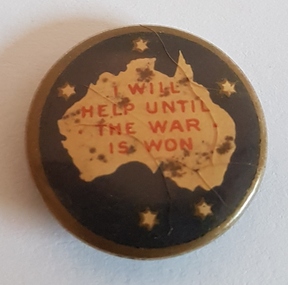 Linton and District Historical Society Inc
Badge, I Will Help Until the War is Won, 1914-1918
... I Will Help Until the War is Won, 1914-1918 ...Badge was worn by civilians during World War I, 1914-1918....Badge was worn by civilians during World War I, 1914-1918....Badge was worn by civilians during World War I, 1914-1918. I Will Help Until the War is Won, 1914-1918 Badge Badge ...Badge was worn by civilians during World War I, 1914-1918.Black and gold circular badge with map of Australian continent (no Tasmania), surrounded by stars of the Southern Cross. Badge was worn by civilians during World War I, 1914-1918.Text: ' I WILL / HELP UNTIL / THE WAR / IS WON. 'world war i -
 Returned Nurses RSL Sub-branch
Book - Hardcover book, Marianne Barker, Nightingales in the mud : the Digger Sisters of the Great War 1914-1918, 1989
... Nightingales in the mud : the Digger Sisters of the Great War 1914-1918......World War One 1914-1918...Above the image the title is printed in blue, with 1914-1918 printed in smaller red print....Above the image the title is printed in blue, with 1914-1918 printed in smaller red print. Nightingales in the mud : the Digger Sisters of the Great War 1914-1918 Book Hardcover book Marianne Barker Allen & Unwin ...'Draws on many first-hand and previously unpublished accounts of the work of Australian nurses in the Great War to tell an extraordinary story of courage and companionship under conditions of great hardship - in the mud of Flanders, among the cholera cases in India, on the hospital ships during the Gallipoli campaign, on Afghanistan border, in Vladivostok, in mosquito infested Macedonia, and in the Sinai Desert. - from inside dustjacket. Contents note: pt. 1. The Middle East -- 1. Enlistment -- 2. Egypt -- 3. Hospital ships -- 4. Lemnos -- 5. Malta -- 6. Palestine -- 7. Mesopotamia -- 8. India -- 9. Serbia and Salonika -- pt. 2. The Western Front -- 10. The Australian base hospitals in France -- 11. The casualty clearing stations -- 12. Transport in France -- 13. Home hospitals in England -- 14. Repatriation -- Epilogue -- Appendix: Roll of Nurses. - from Trove record.Blue hardcover book with a yellow dustjacket. The title is printed down the spine in blue text. The front cover shows an image of an oil painting of nurses tending the beds of the wounded, it is surrounded by a dark red border. Above the image the title is printed in blue, with 1914-1918 printed in smaller red print.non-fiction'Draws on many first-hand and previously unpublished accounts of the work of Australian nurses in the Great War to tell an extraordinary story of courage and companionship under conditions of great hardship - in the mud of Flanders, among the cholera cases in India, on the hospital ships during the Gallipoli campaign, on Afghanistan border, in Vladivostok, in mosquito infested Macedonia, and in the Sinai Desert. - from inside dustjacket. Contents note: pt. 1. The Middle East -- 1. Enlistment -- 2. Egypt -- 3. Hospital ships -- 4. Lemnos -- 5. Malta -- 6. Palestine -- 7. Mesopotamia -- 8. India -- 9. Serbia and Salonika -- pt. 2. The Western Front -- 10. The Australian base hospitals in France -- 11. The casualty clearing stations -- 12. Transport in France -- 13. Home hospitals in England -- 14. Repatriation -- Epilogue -- Appendix: Roll of Nurses. - from Trove record.history of nursing, world war one 1914-1918, ww1, wwi, nurses australia, great war nurses -
 Returned Nurses RSL Sub-branch
Book - Hardcover book, Marianne Barker, Nightingale in the mud : the Digger Sisters of the Great War 1914-1918, 1989
... Nightingale in the mud : the Digger Sisters of the Great War 1914-1918......World War One 1914-1918...Above the image the title is printed in blue, with 1914-1918 printed in smaller red print....Above the image the title is printed in blue, with 1914-1918 printed in smaller red print. Nightingale in the mud : the Digger Sisters of the Great War 1914-1918 Book Hardcover book Marianne Barker Allen & Unwin ...'Draws on many first-hand and previously unpublished accounts of the work of Australian nurses in the Great War to tell an extraordinary story of courage and companionship under conditions of great hardship - in the mud of Flanders, among the cholera cases in India, on the hospital ships during the Gallipoli campaign, on Afghanistan border, in Vladivostok, in mosquito infested Macedonia, and in the Sinai Desert. - from inside dustjacket. Contents note: pt. 1. The Middle East -- 1. Enlistment -- 2. Egypt -- 3. Hospital ships -- 4. Lemnos -- 5. Malta -- 6. Palestine -- 7. Mesopotamia -- 8. India -- 9. Serbia and Salonika -- pt. 2. The Western Front -- 10. The Australian base hospitals in France -- 11. The casualty clearing stations -- 12. Transport in France -- 13. Home hospitals in England -- 14. Repatriation -- Epilogue -- Appendix: Roll of Nurses. - from Trove record.Blue hardcover book with a yellow dustjacket. The title is printed down the spine in blue text. The front cover shows an image of an oil painting of nurses tending the beds of the wounded, it is surrounded by a dark red border. Above the image the title is printed in blue, with 1914-1918 printed in smaller red print.non-fiction'Draws on many first-hand and previously unpublished accounts of the work of Australian nurses in the Great War to tell an extraordinary story of courage and companionship under conditions of great hardship - in the mud of Flanders, among the cholera cases in India, on the hospital ships during the Gallipoli campaign, on Afghanistan border, in Vladivostok, in mosquito infested Macedonia, and in the Sinai Desert. - from inside dustjacket. Contents note: pt. 1. The Middle East -- 1. Enlistment -- 2. Egypt -- 3. Hospital ships -- 4. Lemnos -- 5. Malta -- 6. Palestine -- 7. Mesopotamia -- 8. India -- 9. Serbia and Salonika -- pt. 2. The Western Front -- 10. The Australian base hospitals in France -- 11. The casualty clearing stations -- 12. Transport in France -- 13. Home hospitals in England -- 14. Repatriation -- Epilogue -- Appendix: Roll of Nurses. - from Trove record.history of nursing, world war one 1914-1918, ww1, wwi, nurses australia, great war nurses -
 Ballan Shire Historical Society
Book, We Remember 1914 - 1918
... We Remember 1914 - 1918...To commemorate the Centenary of the Great War of 1914-1918, a number of Society Members decided to compile a list of all those who served (in the various conflicts) and were either born, worked or lived in the Ballan Shire at the time. ...We Remember 1914-1918 Vol.*...We Remember 1914 - 1918 Book ...To commemorate the Centenary of the Great War of 1914-1918, a number of Society Members decided to compile a list of all those who served (in the various conflicts) and were either born, worked or lived in the Ballan Shire at the time. It was noted that the existing Cenotaph outside the Ballan Post Office was not entirely accurate as some names were missing and others were not from the area, thus there was a need to correct the record. Thousands of hours of research resulted in as complete a list as possible of 810 names and the printing of this book. Two copies (each of three volumes) were printed. One is held by the Ballan RSS&AILA, the other is in the archives of this Society, and both are available for research purposes.Three substantial A4 size bound books with red leatherette covers.We Remember 1914-1918 Vol.*ballan shire, ww1 servicemen
