
Showing 18 items matching "1933 flood"
-
 Charlton Golden Grains Museum Inc
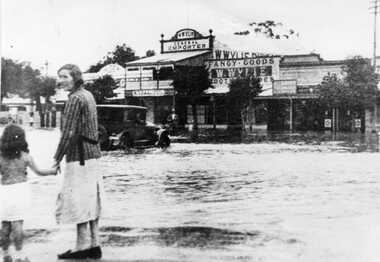
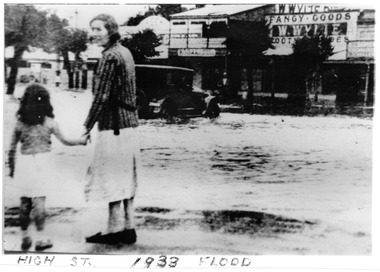
Photograph - 1933 Flood High Street Charlton Vic 3525, 13/05/2025
... 1933 Flood High Street Charlton Vic 3525...1933 flood...1933 flood High Street Charlton 3525. Mrs Barber & daughter standing in front of Wylie's general store....1933 flood photo taken by Mr Barber 1933 flood High Street Charlton 3525. ...1933 flood High Street Charlton 3525. Mrs Barber & daughter standing in front of Wylie's general store.photo taken by Mr Barber1933 flood -
 Charlton Golden Grains Museum Inc
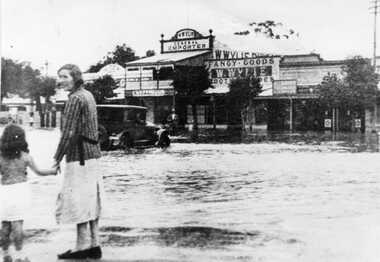
Photograph - 1933 Flood High Street Charlton Vic 3525, 01/05/2008
... 1933 Flood High Street Charlton Vic 3525...1933 flood...1933 flood High Street Charlton, Mrs Barber & daughter standing in front of Wylie's General Store. ...1933 flood Wylie's General Store 1933 flood High Street Charlton, Mrs Barber & daughter standing in front of Wylie's General Store. ...1933 flood High Street Charlton, Mrs Barber & daughter standing in front of Wylie's General Store. Photo taken by Mr Barber.1933 flood, wylie's general store -
 Charlton Golden Grains Museum Inc
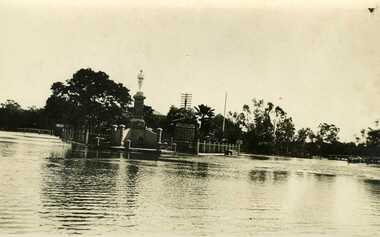
Photograph, War Memorial 1933 Flood
... War Memorial 1933 Flood...1933 Flood, War Memorial Charlton with Mechanics Institute behind....War Memorial 1933 flood with Mechanics Institute in background...1933 Flood, War Memorial Charlton with Mechanics Institute behind. ...1933 Flood, War Memorial Charlton with Mechanics Institute behind.War Memorial 1933 flood with Mechanics Institute in backgroundcharlton, mechanics institure, war memorial, floods -
 Charlton Golden Grains Museum Inc
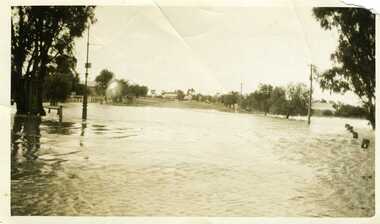
Photograph - 1933 Flood Streetscape looking towards Clifton Hill, 01/05/2008
... 1933 Flood Streetscape looking towards Clifton Hill...1933 Flood Streetscape looking towards Clifton Hill - Unframed whate border landscape photo...1933 Floods Clifton Hill 1933 Flood Streetscape looking towards Clifton Hill - Unframed whate border landscape photo Photograph 1933 Flood Streetscape looking towards Clifton Hill ...1933 Flood Streetscape looking towards Clifton Hill - Unframed whate border landscape photo1933, floods, clifton hill -
 Charlton Golden Grains Museum Inc
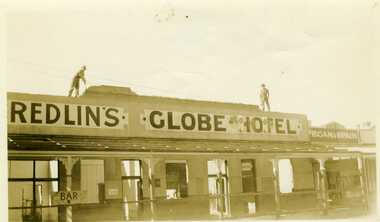
Photograph - 1933 Flood - Credlins Globe Hotel, 01/05/2008
... 1933 Flood - Credlins Globe Hotel...1933 Flood - Credlins Globe Hotel, High Street, Charlton Vic 3525. ...The Old Globe Hotel Credlins Globe Hotel Floods 1933 1933 Flood - Credlins Globe Hotel, High Street, Charlton Vic 3525. ...1933 Flood - Credlins Globe Hotel, High Street, Charlton Vic 3525. Two men on top of building. Unframed Landscape photothe old globe hotel, credlins globe hotel, floods, 1933 -
 Charlton Golden Grains Museum Inc
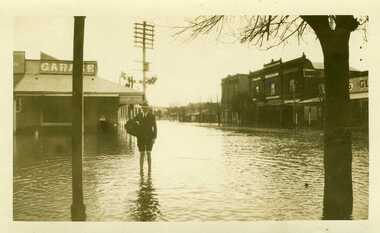
Photograph - 1933 Flood, 01/05/2008
... 1933 Flood...1933 Flood (Cnr High Street & Armstrong Street Charlton) man standing in middle of street with trousers rolled up to knees. ...Floods 1933 Kodak print F163 1933 Flood (Cnr High Street & Armstrong Street Charlton) man standing in middle of street with trousers rolled up to knees. ...1933 Flood (Cnr High Street & Armstrong Street Charlton) man standing in middle of street with trousers rolled up to knees. Unframed photo with white borderKodak print F163floods, 1933 -
 Charlton Golden Grains Museum Inc
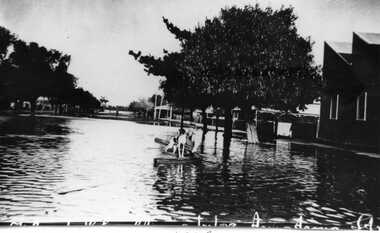
Photograph, Barber, Mr, c. 1933
... 1933 Flood, in Armstrong Street, Mr Barber and dog in boat....1933 flood in Armstrong Street. Mr Barber and dog in boat....1933 Flood, in Armstrong Street, Mr Barber and dog in boat. ...1933 Flood, in Armstrong Street, Mr Barber and dog in boat.1933 flood in Armstrong Street. Mr Barber and dog in boat.charlton, floods -
 Charlton Golden Grains Museum Inc
Photograph, c.1923
... 1933 flood at War Memorial corner of Mrs Barber and daughter ...Unframed B/W Photograph of 1933 flood at War Memorial corner of Mrs Barber and daughter ...1933 flood at War Memorial corner of Mrs Barber and daughter Charlton Charlton War Memorial Floods Unframed B/W Photograph of 1933 flood at War Memorial corner of Mrs Barber and daughter Photograph Photograph ...1933 flood at War Memorial corner of Mrs Barber and daughter Unframed B/W Photograph of 1933 flood at War Memorial corner of Mrs Barber and daughter charlton, charlton war memorial, floods -
 Federation University Historical Collection
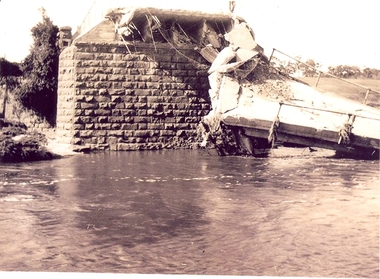
Photograph - Photographs, Richard Vincent, Washed Away Bridge at Garibaldi, c1933
... Newspaper clipping documents deputations to the Minister of Public Works for grants to be made available for repairs to bridges and roads damaged by heavy flooding in 1933, in particular, the replacement of a stone and concrete bridge over the Leigh River at Garibaldi in the Buninyong Shire. ...Three black and white photographs showing flood damage to the bridge over the Leigh River at Garibaldi, plus a photocopy of a newspaper clipping from The Argus December 1933 describing the extent of the flood damage. .1) shows blue stone buttress and collapsed bridge/road. .2) mirror image of above .3) unknown man waling an a girder of the Garibaldi bridge .4) photocopy of newspaper clipping about flood damage from The Argus December 1933...Damage by Floods: Bridges washed away (The Argus December 1933)...Newspaper clipping documents deputations to the Minister of Public Works for grants to be made available for repairs to bridges and roads damaged by heavy flooding in 1933, in particular, the replacement of a stone and concrete bridge over the Leigh River at Garibaldi in the Buninyong Shire. ...Newspaper clipping documents deputations to the Minister of Public Works for grants to be made available for repairs to bridges and roads damaged by heavy flooding in 1933, in particular, the replacement of a stone and concrete bridge over the Leigh River at Garibaldi in the Buninyong Shire. The concrete slabs were still in the water in the 1960s/70s or even later. Three black and white photographs showing flood damage to the bridge over the Leigh River at Garibaldi, plus a photocopy of a newspaper clipping from The Argus December 1933 describing the extent of the flood damage. .1) shows blue stone buttress and collapsed bridge/road. .2) mirror image of above .3) unknown man waling an a girder of the Garibaldi bridge .4) photocopy of newspaper clipping about flood damage from The Argus December 1933Damage by Floods: Bridges washed away (The Argus December 1933)leigh river, garibaldi, buninyong shire, richard vincent, garibaldi bridge -
 Upper Yarra Museum
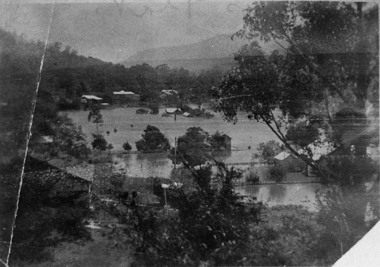
Negative Photographic Reproduction, Floods at Kelly’s flat 1933, Warburton
... Floods at Kelly’s flat 1933, Warburton Negative Black white Scanned at 600 dpi...Floods at Kelly’s flat 1933, Warburton Negative Black white Scanned at 600 dpi Floods at Kelly’s flat 1933, Warburton Negative Photographic Reproduction Sandy Ross ...Floods at Kelly’s flat 1933, Warburton Negative Black white Scanned at 600 dpi -
 Federation University Historical Collection
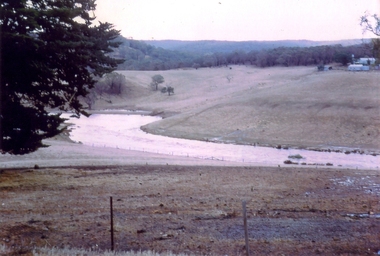
Photograph - Colour, Leigh River near Garibaldi Bridge
... (https://en.wikipedia.org/wiki/Leigh_River_(Victoria) Relates to historical information about flooding of the Leigh River in 1933. Relevant to the history of Garibaldi and Durham Lead. leigh river garibaldi garibaldi bridge durham lead vincent family A number of colour photographs showing the Leigh River between Garibaldi and Durham Lead, Victoria, .1 - .3) photographs of the Leigh River in flood .4 - .18) general photos of the Leigh River and surrounding countryside .19) broad angle photograph of the Leigh River and surrounding countryside Leigh River near Garibaldi Bridge Photograph - Colour ...The Leigh River is a major tributary and catchment of the Barwon River. Fed by the Yarrowee River that rises near Ballarat, the Yarrowee reaches its confluence to form the Leigh in the vicinity of Cambrian Hill and Golden Plains Shire. The Leigh River rises below Mount Mercer and flows generally south, joined by three minor tributaries before reaching its confluence with the Barwon River, southeast of the central business district of Inverleigh. The river descends 265 metres (869 ft) over its 61-kilometre (38 mi) course. (https://en.wikipedia.org/wiki/Leigh_River_(Victoria)Relates to historical information about flooding of the Leigh River in 1933. Relevant to the history of Garibaldi and Durham Lead.A number of colour photographs showing the Leigh River between Garibaldi and Durham Lead, Victoria, .1 - .3) photographs of the Leigh River in flood .4 - .18) general photos of the Leigh River and surrounding countryside .19) broad angle photograph of the Leigh River and surrounding countryside leigh river, garibaldi, garibaldi bridge, durham lead, vincent family -
 Eltham District Historical Society Inc
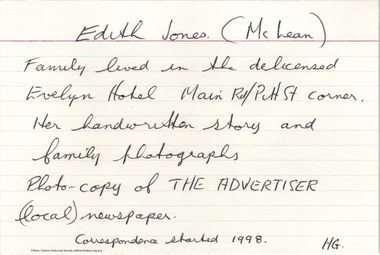
Document - Folder, McLean, 1984-1999
... 1933-1986) - Family mentioned “Outstanding in Eltham's History” (1934, December 21). Advertiser (Hurstbridge, Vic. : 1922 - 1939), p. 1. Retrieved June 20, 2022, from http://nla.gov.au/nla.news-article56747552 1934 Flood Ballroom Baptism Barber shop Bittern Boy Scouts Bremner's Flat Burgoyne's Shop Cable Tram Cemetery Road Centenary Celebrations Centenary Parade Christening Coach House Collis Grocery Dalton Street depression Dole Dorothy Jean McLean Edith Jones (nee McLean) eltham fire brigade Eltham High School Eltham Higher Elementary School Eltham Lower Park Eltham Railway Station Eltham State School No. 209 Evelyn Hotel Fire Damage - Buildings Flinders Naval Depot Fordham Gladys Evelyn Mclean Gold mining Gwenneth Mae McLean Gwladys Evelyn McLean Headmistress Hector John McLean Isherwood House and shop Louisa Frances McLean (nee Green) Metery Road Methodist Church Miss Finnin Miss Grant cottage Motor bike races Mrs Barrett Mrs Bremner Mrs Hurley Olive Isabel Mclean Parade Phoebe Lillian Mclean Picnic Pioneers of Eltham Pitt Street Research Fire Brigade Rev. ...References to McLean family, Hector John McLean and Louisa Frances (nee Green) and six daughters who lived in Eltham during the period 1930 to 1934 inclusive. Lived in the former Evelyn Hotel at the time it was destroyed by fire and being part of the Centenary Parade in 1934 where the family won the Group Section for their entry “Pioneers of Eltham” Reminiscences provided by Edith Jones (nee M1934 flood, ballroom, baptism, barber shop, bittern, boy scouts, bremner's flat, burgoyne's shop, cable tram, cemetery road, centenary celebrations, centenary parade, christening, coach house, collis grocery, dalton street, depression, dole, dorothy jean mclean, edith jones (nee mclean), eltham fire brigade, eltham high school, eltham higher elementary school, eltham lower park, eltham railway station, eltham state school no. 209, evelyn hotel, fire damage - buildings, flinders naval depot, fordham, gladys evelyn mclean, gold mining, gwenneth mae mclean, gwladys evelyn mclean, headmistress, hector john mclean, isherwood house and shop, louisa frances mclean (nee green), metery road, methodist church, miss finnin, miss grant cottage, motor bike races, mrs barrett, mrs bremner, mrs hurley, olive isabel mclean, parade, phoebe lillian mclean, picnic, pioneers of eltham, pitt street, research fire brigade, rev. r.g. arthur, shed, shops, st margarets church hall, st margaret's church, stables, state savings bank of victoria, susso books, todaro, vinnie willet, warrandyte bridge, warrandyte, wingrove park, yarra river -
 Eltham District Historical Society Inc
Document - Folder, North, Edley
... 1933, she married Tralford Norman whose parents owned 62 acres of land including Meruka Park. Marjorie and Tralford lived in Looker Road, Montmorency; she died 7 February 2003. Contents Newspaper article: "When life centred on a weekender", Diamond Valley News, 25 September 1984, memories of Montmorency of Marjorie North. Newspaper article: "Worse floods...1933, she married Tralford Norman whose parents owned 62 acres of land including Meruka Park. Marjorie and Tralford lived in Looker Road, Montmorency; she died 7 February 2003. Contents Newspaper article: "When life centred on a weekender", Diamond Valley News, 25 September 1984, memories of Montmorency of Marjorie North. Newspaper article: "Worse floods ...Joseph Benjamin North was a well-known professional musician in Melbourne in late 1800 to mid 1900s, teaching music and playing in what became the Melbourne Symphony Orchestra. He married Lucinda Matilda and their children were Tralford E and Camille D. With friend Leon Lambert, North purchased 60 acres of land around Karingal Drive and Sherbourne Road and built two houses; they paid for a wooden bridge for access. North eventually sold his house to a family named Green but later the land was sold to the Shire of Eltham, and it is now known as Meruka Park, and the house, Meruka House; Alan Gardner named the park. After Lambert's death, his property was bought by Fred Warne. Edley North was born in 1835, and died 26 March 1923; he married Caroline North, born 1835, died 23 July 1922. Edley's family migrated from England in 1859, settling in Adelaide. He was granted an allotment of 221 acres on Phillip Island 1868-1870. on 7 April 1874 he travelled to Pine Lodge and later moved his wife and five children. He and Caroline later moved to a small farm, Willow Grove in Eltham, purchased between 1905 and 1910 (first mentioned in the rate book in 1908 as being a house and 10 acres on Susan Street, and would also have had frontage on Brougham Street); Their daughter Violet Alice inherited it; she married Walter J Dobson around 1921; he died on 25 March 1948 aged 77 and Violet on 4 January 1947. Willow Grove was later purchased by A George and P Audrey Hester April/May 1947. Edley, Caroline and Violet are all buried in Eltham Cemetery. Marjorie Mary North was born in 1909 ; the family travelled in a horse-drawn waggon from Fitzroy to spend weekends in their little holiday house in Sherbourne Road on 10 acres of land. In 1933, she married Tralford Norman whose parents owned 62 acres of land including Meruka Park. Marjorie and Tralford lived in Looker Road, Montmorency; she died 7 February 2003. Contents Newspaper article: "When life centred on a weekender", Diamond Valley News, 25 September 1984, memories of Montmorency of Marjorie North. Newspaper article: "Worse floods seem likely", Diamond Valley News, 25 September 1984, floods in Eltham Handwritten notes: Information by Marjorie North's about her grandmother, September 1989. Handwritten and typed transcript: "J. B. North", by Marjorie North, history of Joseph Benjamin North. Letter: From Monash University to Marjorie North, 15 November 1989, being unable to assist with her enquiry about the meaning of name [unspecified in the letter but possibly Meruka] Letter: June Stanton (nee Hester) to Eltham District Historical Society, 17 February 1993, seeking information on her great grandfather Edley North and wife Caroline. Christmas card [attached to letter from June Stanton]: Line drawing Eltham Primary School 1856, text history of school Letter: Eltham Historical Society to June Hester, 11 June 1993, providing information held by the Society. Letter: Nancy Chandler (nee Williamson) to Jo McCormick 18 March 2001, providing information about Edley and Carline North, her great grandparents. Email: Patsy Moppett to Eltham District Historical Society October 2010: A photograph of Edley and Caroline North found, wish to return it to family. Family tree: North/Dobson family. Death notice: Marjorie May North, died 7 February 2003.Newspaper clippings, A4 photocopies, etcmarjorie north, tralford norman, sherbourne road montmorency, looker road montmorency, briar hill, montmorency, catholic ladies college, merton hall, melbourne girls grammar school, ivanhoe girls grammar school, wesley college, meruka park, st helena road, st faith's anglican church montmorency, william sapsford, floods in eltham, joseph benjamin north, leon lambert, melbourne symphony orchestra, karingal drive, meruka house, alan gardner, lucinda matilda north, tralford e north, camille d north, montmorency cricket club, diamond creek, eltham railway station, judge book village, fred warne, edley north, caroline north, eltham cemetery., violet alice dobson (nee north), willow farm eltham, edley north family tree, walter john dobson family tree, nancy chandler (nee williamson), pine lodge, elijah north -
 Whitehorse Historical Society Inc.
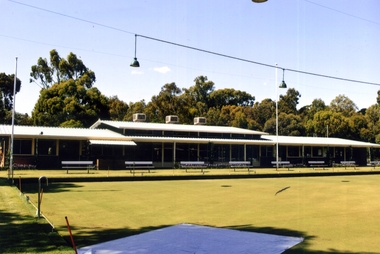
Photograph, Blackburn Bowling Club, 2012
... 1933 the green was officially opened by Robert Menzies. The clubhouse was finally completed in the late 1940's. By the 1960's membership had risen to the extent that a new site was needed. A site on the east side of Pakenham Street, south of the creek, was proposed but it was subject to flooding...1933 the green was officially opened by Robert Menzies. The clubhouse was finally completed in the late 1940's. By the 1960's membership had risen to the extent that a new site was needed. A site on the east side of Pakenham Street, south of the creek, was proposed but it was subject to flooding ...First games played 1926. The Club was then situated in South Parade. Ladies were invited to join in 1927. The yearly fee was 1.10 sterling. In 1933 the green was officially opened by Robert Menzies. The clubhouse was finally completed in the late 1940's. By the 1960's membership had risen to the extent that a new site was needed. A site on the east side of Pakenham Street, south of the creek, was proposed but it was subject to flooding. In 1966, after the flooding of the creek was managed, the South Parade property was acquired and the new greens were ready by September 1966.Coloured photograph of the Blackburn Bowling Club, Pakenham Street Blackburn. Photograph shows rinks in front of the club house - 2012blackburn bowling club, sporting clubs, pakenham street, blackburn -
 Wodonga & District Historical Society Inc
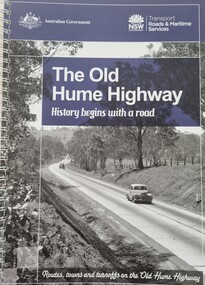
Book - The Old Hume Highway - History begins with a Road, 2014
... One of these deviations was completed in 1933 at Table Top north of Albury between Ettamogah and Mullengandra due to the construction of the Hume Weir which flooded the existing highway. ...The Hume Highway was officially named in 1928, when both the New South Wales and Victorian governments agreed to give the unified inland route between Sydney and Melbourne the name, honouring explorer Hamilton Hume who, with William Hovell, first found the overland path in 1824. Much of the original highway followed their overland route wherever the landscape allowed. The road connected many small communities and rural properties, although in many parts was narrow and unsurfaced. Over the following years alterations and some deviations occurred with changing transport needs and heavier traffic loads. One of these deviations was completed in 1933 at Table Top north of Albury between Ettamogah and Mullengandra due to the construction of the Hume Weir which flooded the existing highway. Gradually sections of the road were converted to a dual carriageway. In 1961 the first modern freeway-standard, four-lane section was completed in Victoria at Craigieburn. The Hume Highway was also rerouted in Albury to avoid the town centre. Many major bypasses and duplications in New South Wales were completed throughout the 1980s and 1990s. In 1994 the last section of the Hume Highway in Victoria was duplicated with the completion of the Wangaratta bypass. The Albury-Wodonga bypass was opened in 2007 and in 2013 the final section, the Holbrook Bypass in NSW, was opened to traffic on August 7, completing the full Sydney-Melbourne dual carriageway link. In the course of this gigantic engineering achievement, many small, historic towns throughout Victoria and New South Wales were bypassed and often forgotten by passing commuters in a rush to reach their destination. This publication includes maps and information about the sites and landmarks in these towns. It encourages travellers to venture of the modern highway and rediscover the Old Hume Highway and the stories it holds about out past.A spiral bound volume of 122 pages including maps, photographs and illustrations prepared as a travel guide to the Old Hume Highway. It includes a Foreword by Peter FitzSimons.The Hume Highway was officially named in 1928, when both the New South Wales and Victorian governments agreed to give the unified inland route between Sydney and Melbourne the name, honouring explorer Hamilton Hume who, with William Hovell, first found the overland path in 1824. Much of the original highway followed their overland route wherever the landscape allowed. The road connected many small communities and rural properties, although in many parts was narrow and unsurfaced. Over the following years alterations and some deviations occurred with changing transport needs and heavier traffic loads. One of these deviations was completed in 1933 at Table Top north of Albury between Ettamogah and Mullengandra due to the construction of the Hume Weir which flooded the existing highway. Gradually sections of the road were converted to a dual carriageway. In 1961 the first modern freeway-standard, four-lane section was completed in Victoria at Craigieburn. The Hume Highway was also rerouted in Albury to avoid the town centre. Many major bypasses and duplications in New South Wales were completed throughout the 1980s and 1990s. In 1994 the last section of the Hume Highway in Victoria was duplicated with the completion of the Wangaratta bypass. The Albury-Wodonga bypass was opened in 2007 and in 2013 the final section, the Holbrook Bypass in NSW, was opened to traffic on August 7, completing the full Sydney-Melbourne dual carriageway link. In the course of this gigantic engineering achievement, many small, historic towns throughout Victoria and New South Wales were bypassed and often forgotten by passing commuters in a rush to reach their destination. This publication includes maps and information about the sites and landmarks in these towns. It encourages travellers to venture of the modern highway and rediscover the Old Hume Highway and the stories it holds about out past.old hume highway, hume highway, travel guide hume highway, \ -
City of Melbourne Libraries
Photograph, The Age (Melbourne, Vic. : 1854 - 1954), The Age, Tue 26 December 1933, 1933
... 1933. In the morning, swimmers flocked to the St Kilda foreshore to cool off during a heatwave. By five o’clock, thunder and a hailstorm were breaking over the city, leaving the streets flooded. ...1933. In the morning, swimmers flocked to the St Kilda foreshore to cool off during a heatwave. By five o’clock, thunder and a hailstorm were breaking over the city, leaving the streets flooded. ...The Age: Christmas 1933 weather pictorial Three photographs from the McKenzie Collection appear in this Age Boxing Day pictorial, documenting the weather conditions in Melbourne on Christmas Day, 1933. In the morning, swimmers flocked to the St Kilda foreshore to cool off during a heatwave. By five o’clock, thunder and a hailstorm were breaking over the city, leaving the streets flooded. Also featured on this page: Important visitors at the Children’s Hospital and The Nurses’ Christmas. Large scale prints of all three images feature below. Discovering this page via the digitised newspapers on Trove was a crucial step in unlocking the provenance of the slides. Published: The Age 26 December 1933, page 9 (1933, December 26). The Age (Melbourne, Vic. : 1854 - 1954), p. 9. Retrieved October 10, 2025, from http://nla.gov.au/nla.news-page19054271 Featured in "Newsworthy : Melbourne in photographs 1933-1936" exhibition held at East Melbourne Library from October to December 2023. The Newsworthy exhibition developed out of a local history digitisation project. Fifty images from a collection of 240 glass plate negatives were selected and printed at large scale for public display at East Melbourne Library. The exhibition was very well-received. The McKenzie Collection of glass plate negatives unlocks glimpses of our city not seen for almost 100 years. In the 1990s, renowned architectural photographer Ian McKenzie (1939-2014) picked up 240 glass plate negatives at a local market. Believed to be from a Victorian news archive, they dated back to the 1930s. The slides lay dormant in a dusty garage until 2020 when Ian’s wife Louise decided it was time to bring them back into the light. Louise McKenzie, and two other history-lovers, Ernie Ward and Fiona Collyer, signed up as City of Melbourne volunteers and joined forces with City of Melbourne Libraries Community Heritage Team Leader, Linda Longley and Local History Librarian, Fiona Campbell. Together, the project team has devoted more than three years to unlocking the mysteries of the collection. What began as a simple digitization exercise swiftly morphed into a wild journey of discovery and kismet. Intensive detective sessions and discussions with fellow historical networks ensued, gradually unearthing our photojournalistic history and technologies, the merits of volunteer work, and astonishing stories from 1930s Victoria. From the domestic to the dramatic, the celebratory to the solemn, these fascinating images capture a fleeting yet significant period in Interwar, Depression-era Melbourne. Above all, the McKenzie Collection project has brought about a powerful and sustained sense of engagement, connection and celebration between people across decades and places.the age newspaper, photography, 1930-1939, christmas -
 City of Melbourne Libraries
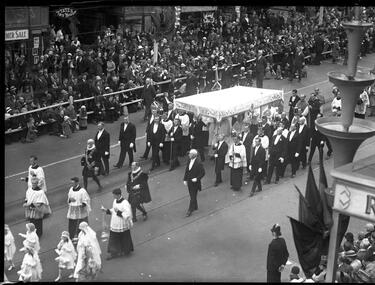
Photograph, Bull, Hugh Jones, 1897-1993, Eucharistic Congress Procession, Collins Street, Melbourne
... flooded with light externally from three lamps concealed in the one below it. There is also a painted coat of arms from which spring a trophy of flags.” – Australian Home Beautiful Featured in "Newsworthy: Melbourne in photographs 1933-1936" exhibition at East Melbourne Library, October to December 2023. ...flooded with light externally from three lamps concealed in the one below it. There is also a painted coat of arms from which spring a trophy of flags.” – Australian Home Beautiful Featured in "Newsworthy: Melbourne in photographs 1933-1936" exhibition at East Melbourne Library, October to December 2023. ...Published: The Age 10 December 1934 Published title: RELIGIOUS PAGEANTRY AND FERVOR MARKED CLOSE OF EUCHARISTIC CONGRESS. Published caption: Thousands of men and women marched in the Eucharistic procession yesterday which brought the Congress to a close. The picture above shows the procession headed by the Children of Mary in Bourke-street and turning into Spring-street, in front of Parlia ment House. Right (top) — The procession leaving the starting point at St. Patrick's Cathedral and below, the Papal Legate carrying the Host under a canopy borne by a guard of laymen and preceded by white-clad girls scattering rose leaves, incense bearers and the Papal Chamberlains in their Spanish uniforms. The end of the procession in front of Mount St. Evin’s Hospital from which the final benediction was given by Cardi nal MacRory from an altar on the bal cony. The Papal Legate carrying the Host is passing through the assemblage of surpliced priests. On the left is an aerial picture taken just as the Children of Mary at the head of the procession are taking up their places for the final assembling. In the left top corner of the picture is St Patrick's Cathedral, from which the procession started, and in the right lower corner is Mount St. Evin’s Hospital. The space immediately in front of the hospital was reserved for the processionists while on either side is the crowd that assembled to take part in the final service. Trove article identifier: http://nla.gov.au/nla.news-article205067634 Religious pageantry and fervour The National Eucharistic Congress took place from Sunday 2 to Sunday 9 December 1934. An initiative of the Roman Catholic Church, it was their contribution to Melbourne’s Centenary Celebrations. 200,000 Catholics resided in Melbourne at this time – one quarter of the city’s population. While the Congress was aimed at Catholics, and acted as an opportunity to reinforce their living faith and homage, it contained a variety of events of splendour, solemnity and significance designed to appeal to Melbournians, and would additionally provide incentive for people to travel to Victoria, thereby creating an economic benefit to the state. The Procession of the Blessed Sacrament concluded the week-long Congress. Commencing at St Patrick’s Cathedral, it covered a two-mile route via Gisborne, Collins, Elizabeth and Bourke streets, then to Victoria Parade, where a final benediction was pronounced by Cardinal MacRory from the balcony of Mount St. Evin’s Hospital (today the site of St Vincent’s Private Hospital). An estimated 100,000 took part. Onlookers line Swanston Street, some standing at the entrance to Tate’s Tea House – a well-known Melbourne landmark located in the basement of the Manchester Unity Building. The white-veiled Children of Mary Sodalists strew rose petals in the path of the canopy, covering the jewelled Monstrance containing the Blessed Sacrament of consecrated Host (bread) and carried by the Cardinal. Church hierarchy in scarlet robes walk alongside, followed by incense bearers, the Papal Chamberlains in their Spanish uniforms, and a guard of honour of laymen of the city and country parishes. In the foreground is a tiered pole. This is one of 800 “Venetian Lights” specifically installed for the Centenary along all principal thoroughfares. “The poles are painted white, the superstructure resembling three trumpet lilies are made of durable fibro-cement, and their colour scheme deepens from clear yellow on the top cone to orange on the lowest, with slender rims of vermilion and white. Each cone is flooded with light externally from three lamps concealed in the one below it. There is also a painted coat of arms from which spring a trophy of flags.” – Australian Home Beautiful Featured in "Newsworthy: Melbourne in photographs 1933-1936" exhibition at East Melbourne Library, October to December 2023. Exhibition caption by project volunteer, Louise McKenzie. Research by project volunteer, Louise McKenzie: This photo was taken on Sunday 9 December 1934, looking from the Melbourne Town Hall (corner of Swanston and Collins streets) across the road to the Manchester Unity Building. This is the afternoon procession concluding the Catholic Church’s National Eucharistic Congress in Melbourne - a procession of the Blessed Eucharist through the Melbourne city. It commenced at St Patrick’s Cathedral, and covered a two mile route via Gisborne, Collins, Elizabeth and Bourke streets, then to Victoria Parade where a final benediction was pronounced by the Cardinal from the balcony of Mount St. Evin’s Hospital (present day St Vincent’s Private Hospital). An estimated 100,000 took part in the march. The people lining the streets a men in suits and hats, women in coats and hats, and children in their “Sunday best”, kneeling beside the road, many with their hands clasped in front of them. The small girls ahead of the canopy covering the Host are pale-blue clad, white veiled Children of Mary Sodalists, who strew rose petals to pave the way of the Cardinal carrying the jewelled Monstrance (Blessed Sacrament of consecrated Host (bread)), together with church heirarchy wearing scarlet robes. Behind came incense bearers and the Papal Chamberlains in their Spanish uniforms, followed by a guard of honour of laymen of the city and country parishes. The Children of Mary Sodalities was a religious body which aimed at fostering in its members an ardent devotion, reverence, and filial love towards the Blessed Virgin Mary, initially embracing the pupils and orphans of the schools and institutions of the Sisters of Charity of St Vincent de Paul. In 1847, Blessed Pius IX affiliated them to the Jesuit Roman Sodality. They were distinguished by a medal suspended from a blue ribbon, and once a fully-fledged a Child of Mary wore a distinctive blue cape. On the extreme right foreground of the photo can be seen an intriguing piece of artistic design – a tiered pole. This is one of the 800 “Venetian Lights” specifically installed for Melbourne’s Centenary along all principal thoroughfares. “The poles are painted white, the superstructure resembling three trumpet lilies are made of durable fibro-cement, and their colour scheme deepens from clear yellow on the top cone to orange on the lowest, with slender rims of vermilion and white. Each cone is flooded with light externally from three lamps concealed in the one below it. There is also a painted coat of arms from which spring a trophy of flags.” Note the sign for Tates Tea House - a well-known Melbourne landmark, located in the basement of the Manchester Unity Building. References: RELIGIOUS PAGEANTRY AND FERVOR MARKED CLOSE OF EUCHARISTIC CONGRESS. (1934, December 10). The Age (Melbourne, Vic. : 1854 - 1954), p. 11. Retrieved September 14, 2023, from http://nla.gov.au/nla.news-article205067634 Eucharistic Congress (1934, December 1). The Argus (Melbourne, Vic. : 1848 - 1957), p. 11. Retrieved January 23, 2024, from http://nla.gov.au/nla.news-article10997817 National Eucharistic Congress, Melbourne. (1934, December 6). The Catholic Press (Sydney, NSW : 1895 - 1942), p. 28. Retrieved January 23, 2024, from http://nla.gov.au/nla.news-article104371824 'The year of the Melbourne Eucharistic Congress: 1934.' The Campion Society, https://campion.australiancardijninstitute.org/ch-7-the-year-of-the-melbourne-eucharistic-congress-1934/ 'Melbourne Eucharistic Congress 1934.' Panoramic photograph, https://emhs.org.au/catalogue/emdf0123 The National Eucharistic Congress, Melbourne, Australia December 2nd-9th, 1934. Edited by Rev. J.M. Murphy and Rev. F. Moynihan, The Advocate Press, Melbourne. 'Children of Mary Sodalists', Wikipedia, https://en.wikipedia.org/wiki/Sodality_of_Our_Lady 'Dressing Melbourne for the Duke' (1934, October 1). The Australian home beautiful : a journal for the home builder, p. 21, 58. Retrieved September 14, 2023, from http://nla.gov.au/nla.obj-2950922209 Photographer notations on slide: "Eucharistic Congress Procession on Swanston St B61" [sic - actually Collins Street].events, religion, parades, catholic church -
![Photograph, Bull, Hugh Jones, 1897-1993, View looking along St Kilda Road [completed Centenary pylons on Princes Bridge]](/media/collectors/68524623ad73480cc6fce59f/items/68f089892b74709eaf6d30e8/item-media/68f089af2b74709eaf6d372a/item-fit-380x285.jpg?cb=6) City of Melbourne Libraries
City of Melbourne LibrariesPhotograph, Bull, Hugh Jones, 1897-1993, View looking along St Kilda Road [completed Centenary pylons on Princes Bridge]
... 1933, and aged just 27. The State Electricity Commission sponsored the work and The Argus reported that the pylons were “illuminated from within to give the effect of soft radiance”. Australia Home Beautiful reported that the taller pylons were 48 feet high. Timber-framed and faced with fibrous plaster and galvanised sheet iron, each structure was bolted to a concrete foundation three feet in depth. Panels of glass were indirectly lit by forty 100 watt lamps, and the upper bank of lamps were dyed so as to flood...1933, and aged just 27. The State Electricity Commission sponsored the work and The Argus reported that the pylons were “illuminated from within to give the effect of soft radiance”. Australia Home Beautiful reported that the taller pylons were 48 feet high. Timber-framed and faced with fibrous plaster and galvanised sheet iron, each structure was bolted to a concrete foundation three feet in depth. Panels of glass were indirectly lit by forty 100 watt lamps, and the upper bank of lamps were dyed so as to flood ...Princes Bridge Centenary pylons complete Even though this is a street scene, it feels very intimate; we are instantly immersed in the activity of a Melbourne afternoon, looking down St Kilda Road from a viewpoint near today’s Federation Square. The focus is on the Centenary Pylons, erected on Princes Bridge to mark Melbourne’s Centenary in 1934. The sixteen plastered pylons were designed by Roy Prentice, the second person to qualify as an architect at the University of Melbourne in 1933, and aged just 27. The State Electricity Commission sponsored the work and The Argus reported that the pylons were “illuminated from within to give the effect of soft radiance”. Australia Home Beautiful reported that the taller pylons were 48 feet high. Timber-framed and faced with fibrous plaster and galvanised sheet iron, each structure was bolted to a concrete foundation three feet in depth. Panels of glass were indirectly lit by forty 100 watt lamps, and the upper bank of lamps were dyed so as to flood them with a deep red light. The shields and flagpoles were illuminated by three 200 watt concealed projectors, part of an electric night light decoration scheme involving 28 miles of wire to supply more than 20,000 lights. Melbourne was converted into “a coloured fairyland by night”. Featured in "Newsworthy: Melbourne in photographs 1933-1936" exhibition at East Melbourne Library, October to December 2023. Exhibition caption by project volunteer, Louise McKenzie Photographer notations on slide: "View looking along St Kilda Road C57" Published: (1934, September 5). The Age (Melbourne, Vic. : 1854 - 1954), p. 11. Published title: DECORATIONS -- THEN AND NOW. Published caption: "The second picture shows one of the Princes-bridge pylons completed..." Trove article identifier: http://nla.gov.au/nla.news-article205880269 Research by project volunteer, Louise McKenzie: Even though this is a street scene, it feels very intimate; we are instantly immersed in the activity of a Melbourne afternoon, looking down St Kilda Road from a viewpoint near today’s Federation Square. The focus is on the Centenary Pylons, erected on Princes Bridge to mark Melbourne’s Centenary in 1934. The sixteen plastered pylons were designed by Roy Prentice, the second person to qualify as an architect at the University of Melbourne in 1933, and aged just 27. The State Electricity Commission sponsored the work and The Argus reported that the pylons were “illuminated from within to give the effect of soft radiance”. Australia Home Beautiful reported that the taller pylons were 48 feet high. Timber-framed and faced with fibrous plaster and galvanised sheet iron, each structure was bolted to a concrete foundation three feet in depth. Panels of glass were indirectly lit by forty 100 watt lamps, and the upper bank of lamps were dyed so as to flood them with a deep red light. The shields and flagpoles were illuminated by three 200 watt concealed projectors, part of an electric night light decoration scheme involving 28 miles of wire to supply more than 20,000 lights. Melbourne was converted into “a coloured fairyland by night”. References: DECORATIONS -- THEN AND NOW. (1934, September 5). The Age (Melbourne, Vic. : 1854 - 1954), p. 11. Retrieved September 21, 2023, from http://nla.gov.au/nla.news-article205880269 'Dressing Melbourne for the Duke', The Australian home beautiful: a journal for the home builder. Vol 12 No. 10 (1 October 1934), page 21, 58. Retrieved September 14, 2023, from http://nla.gov.au/nla.obj-2950922209 28 Miles of Wire (1934, October 18). The Argus (Melbourne, Vic. : 1848 - 1957), p. 1 (The Junior Argus). Retrieved September 21, 2023, from http://nla.gov.au/nla.news-article10977836Photographer notations on slide: "View looking along St Kilda Road C57".centenaries, 1930-1939, bridges
