
Showing 20 items matching "38th australian infantry battalion"
-
 Eltham District Historical Society Inc
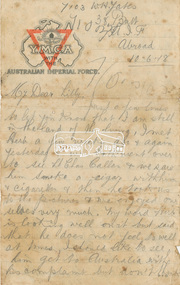
Letter, Letter to Lily Howard from Walter Henry Yates (7103), 38th Batt., 10 June 1918, 1918
... 38th Australian Infantry Battalion, AIF, First World War, Hurstbridge, Letters, Lew Howard Collection, Walter Henry Yates, WW1...She would write to the servicemen. 38th Australian Infantry Battalion, AIF, First World War, Hurstbridge, Letters, Lew Howard Collection, Walter Henry Yates, WW1 Digital file only - scanned by EDHS from item on loan Letter to Lily Howard from Walter Henry Yates (7103), 38th Batt., 10 June 1918 Letter ...First World War letters and postcards from various (unknown) servicemen written to Lily Thompson (Lew Howard's aunty). She would write to the servicemen.Digital file only - scanned by EDHS from item on loan 38th australian infantry battalion, aif, first world war, hurstbridge, letters, lew howard collection, walter henry yates, ww1 -
 Bendigo Historical Society Inc.
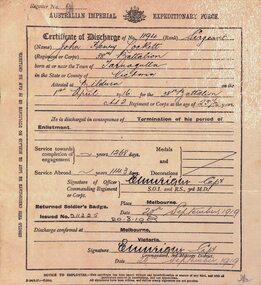
Document - Jack Lockett Collection: Army Certificate of Discharge
... ...38th Australian Infantry Battalion...Jack Lockett Mabel Ingwersen 38th Australian Infantry Battalion W.W.1 Mallee Farming An off-white coulored document with black print and black handwriting headed AUSTRALIAN IMPERIAL EXPEDITIONARY FORCE Certificate of Discharge No 1194 Sergeant John Henry Lockett 38th Battalion, born Tarnagulla Victoria Attested at Mildura 1st April 1916for the 38th Battalion at the age of 25 1/2 years Total service 1268 days Service abroad 1143 days Discharge confirmed at Melbourne Victoria 20th September 1919 On the reverse V/B 60883 No 177770 Description of the above named Soldier on discharge Age 28 1/2 years Height 5' 10", complexion Medium, Eyes Blue, Hair Brown, Trade Farmer, Intended place of Residence Ouyen P.O. ...John Henry Lockett OAM (22 January 1891 – 25 May 2002) was the oldest man ever in Australia when he died aged 111 years, 123 days. As one of the last surviving veterans of World War I, he was acclaimed as a national hero during the last decade of his life. Lockett was born in the small Victorian town of Waanyarra, near Bendigo. He left school aged nine to work on a local farm. Later, he worked for his uncles in the Mallee. On 24 March 1916, he travelled to Mildura to enlist in the Australian Imperial Force. He served in France with the 38th Battalion, earning promotion to sergeant and was discharged on 20 September 1919. https://en.wikipedia.org/wiki/Jack_Lockett The 38th Battalion was formed on 1 March 1916 at a camp established on the Epsom Racecourse at Bendigo in Victoria. After training in both Australia and Britain, the 38th Battalion crossed to France in late November 1916 and moved into the trenches of the Western Front for the first time on 1 December.The 38th fought in its first major battle at Messines, in Belgium, between 7-9 June 1917. It fought in another two major attacks in this sector - the battle of Broodseinde on 4 October, and the battle of Passchendaele on 12 October. Belgium remained the focus of the 38th Battalion's activities for the next five months, until it was rushed south to France in late March 1918 to meet the German Army's Spring Offensive. The 38th participated in its last major action of the war between 29 September and 2 October 1918 as part of the Australian-American operation that breached the formidable defences of the Hindenburg Line along the St Quentin Canal. It was disbanded in April 1919. Source, Australian War Memorial https://www.awm.gov.au/collection/U51478 After the war, Jack returned to The Mallee and selected a 640 acres (260 ha) block of land in Linga, Victoria, deciding to make his living as a farmer. In 1923, he married Maybell Ingwerson and they had four children together. In 1963, the couple retired to Bendigo, leaving the farmland (which now covered more than 130,000 acres (53,000 ha), in the care of their children and grandchildren. An off-white coulored document with black print and black handwriting headed AUSTRALIAN IMPERIAL EXPEDITIONARY FORCE Certificate of Discharge No 1194 Sergeant John Henry Lockett 38th Battalion, born Tarnagulla Victoria Attested at Mildura 1st April 1916for the 38th Battalion at the age of 25 1/2 years Total service 1268 days Service abroad 1143 days Discharge confirmed at Melbourne Victoria 20th September 1919 On the reverse V/B 60883 No 177770 Description of the above named Soldier on discharge Age 28 1/2 years Height 5' 10", complexion Medium, Eyes Blue, Hair Brown, Trade Farmer, Intended place of Residence Ouyen P.O. Victoria Singed J H Lockett jack lockett, mabel ingwersen, 38th australian infantry battalion, w.w.1, mallee farming -
 Bendigo Historical Society Inc.
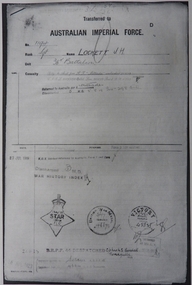
Document - Jack Lockett Collection: Copies of Army Service documents
... ...38th Australian Infantry Battalion...Jack Lockett Mabel Ingwersen 38th Australian Infantry Battalion W.W.1 Mallee Farming Thirteen photocopies relating to Jack Lockett's service in the Australian Imperial Force Document Jack Lockett Collection: Copies of Army Service documents ...John Henry Lockett OAM (22 January 1891 – 25 May 2002) was the oldest man ever in Australia when he died aged 111 years, 123 days. As one of the last surviving veterans of World War I, he was acclaimed as a national hero during the last decade of his life. Lockett was born in the small Victorian town of Waanyarra, near Bendigo. He left school aged nine to work on a local farm. Later, he worked for his uncles in the Mallee. On 24 March 1916, he travelled to Mildura to enlist in the Australian Imperial Force. He served in France with the 38th Battalion, earning promotion to sergeant and was discharged on 20 September 1919. https://en.wikipedia.org/wiki/Jack_Lockett The 38th Battalion was formed on 1 March 1916 at a camp established on the Epsom Racecourse at Bendigo in Victoria. After training in both Australia and Britain, the 38th Battalion crossed to France in late November 1916 and moved into the trenches of the Western Front for the first time on 1 December.The 38th fought in its first major battle at Messines, in Belgium, between 7-9 June 1917. It fought in another two major attacks in this sector - the battle of Broodseinde on 4 October, and the battle of Passchendaele on 12 October. Belgium remained the focus of the 38th Battalion's activities for the next five months, until it was rushed south to France in late March 1918 to meet the German Army's Spring Offensive. The 38th participated in its last major action of the war between 29 September and 2 October 1918 as part of the Australian-American operation that breached the formidable defences of the Hindenburg Line along the St Quentin Canal. It was disbanded in April 1919. Source, Australian War Memorial https://www.awm.gov.au/collection/U51478 After the war, Jack returned to The Mallee and selected a 640 acres (260 ha) block of land in Linga, Victoria, deciding to make his living as a farmer. In 1923, he married Maybell Ingwerson and they had four children together. In 1963, the couple retired to Bendigo, leaving the farmland (which now covered more than 130,000 acres (53,000 ha), in the care of their children and grandchildren. Thirteen photocopies relating to Jack Lockett's service in the Australian Imperial Force jack lockett, mabel ingwersen, 38th australian infantry battalion, w.w.1, mallee farming -
 Bendigo Historical Society Inc.
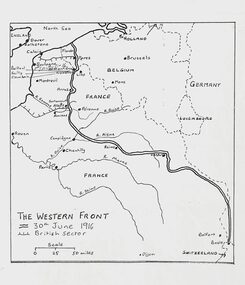
Map - Jack Lockett Collection: Copies of two maps of WW1 Battles
... ...38th Australian Infantry Battalion...Jack Lockett Mabel Ingwersen 38th Australian Infantry Battalion W.W.1 Mallee Farming Pozieres 1916 The Western Front 1916 Two photocopies of hand drawn maps on one A4 sheet of paper. ...John Henry Lockett OAM (22 January 1891 – 25 May 2002) was the oldest man ever in Australia when he died aged 111 years, 123 days. As one of the last surviving veterans of World War I, he was acclaimed as a national hero during the last decade of his life. Lockett was born in the small Victorian town of Waanyarra, near Bendigo. He left school aged nine to work on a local farm. Later, he worked for his uncles in the Mallee. On 24 March 1916, he travelled to Mildura to enlist in the Australian Imperial Force. He served in France with the 38th Battalion, earning promotion to sergeant and was discharged on 20 September 1919. https://en.wikipedia.org/wiki/Jack_Lockett The 38th Battalion was formed on 1 March 1916 at a camp established on the Epsom Racecourse at Bendigo in Victoria. After training in both Australia and Britain, the 38th Battalion crossed to France in late November 1916 and moved into the trenches of the Western Front for the first time on 1 December.The 38th fought in its first major battle at Messines, in Belgium, between 7-9 June 1917. It fought in another two major attacks in this sector - the battle of Broodseinde on 4 October, and the battle of Passchendaele on 12 October. Belgium remained the focus of the 38th Battalion's activities for the next five months, until it was rushed south to France in late March 1918 to meet the German Army's Spring Offensive. The 38th participated in its last major action of the war between 29 September and 2 October 1918 as part of the Australian-American operation that breached the formidable defences of the Hindenburg Line along the St Quentin Canal. It was disbanded in April 1919. Source, Australian War Memorial https://www.awm.gov.au/collection/U51478 After the war, Jack returned to The Mallee and selected a 640 acres (260 ha) block of land in Linga, Victoria, deciding to make his living as a farmer. In 1923, he married Maybell Ingwerson and they had four children together. In 1963, the couple retired to Bendigo, leaving the farmland (which now covered more than 130,000 acres (53,000 ha), in the care of their children and grandchildren. Two photocopies of hand drawn maps on one A4 sheet of paper. One side labeled THE WESTERN FRONT 30th June 1916 British Sector Scale 1 inch to 50 miles. The Western Front spans from the North Sea to Switzerland. The other side is labeled POZIERES scale 1 inch to 500 yards. July to September 1916. There are numerous roads and trench lines. jack lockett, mabel ingwersen, 38th australian infantry battalion, w.w.1, mallee farming, pozieres 1916, the western front 1916 -
 Bendigo Historical Society Inc.
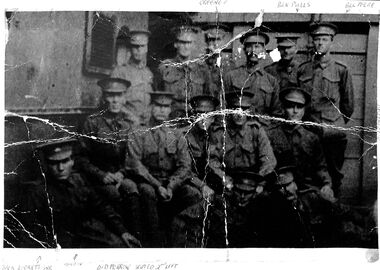
Postcard - Jack Lockett Collection:
... ...38th Australian Infantry Battalion...Jack Lockett Mabel Ingwersen 38th Australian Infantry Battalion W.W.1 Mallee Farming An A4 size copy of a postcard with a black and white photograph of 14 men in army uniforms with some men identified - Greeno, Ben Pulls, Bill McCae, Jack Lockett Snr, Maldon, Dad Morrow. ...John Henry Lockett OAM (22 January 1891 – 25 May 2002) was the oldest man ever in Australia when he died aged 111 years, 123 days. As one of the last surviving veterans of World War I, he was acclaimed as a national hero during the last decade of his life. Lockett was born in the small Victorian town of Waanyarra, near Bendigo. He left school aged nine to work on a local farm. Later, he worked for his uncles in the Mallee. On 24 March 1916, he travelled to Mildura to enlist in the Australian Imperial Force. He served in France with the 38th Battalion, earning promotion to sergeant and was discharged on 20 September 1919. https://en.wikipedia.org/wiki/Jack_Lockett The 38th Battalion was formed on 1 March 1916 at a camp established on the Epsom Racecourse at Bendigo in Victoria. After training in both Australia and Britain, the 38th Battalion crossed to France in late November 1916 and moved into the trenches of the Western Front for the first time on 1 December.The 38th fought in its first major battle at Messines, in Belgium, between 7-9 June 1917. It fought in another two major attacks in this sector - the battle of Broodseinde on 4 October, and the battle of Passchendaele on 12 October. Belgium remained the focus of the 38th Battalion's activities for the next five months, until it was rushed south to France in late March 1918 to meet the German Army's Spring Offensive. The 38th participated in its last major action of the war between 29 September and 2 October 1918 as part of the Australian-American operation that breached the formidable defences of the Hindenburg Line along the St Quentin Canal. It was disbanded in April 1919. Source, Australian War Memorial https://www.awm.gov.au/collection/U51478 After the war, Jack returned to The Mallee and selected a 640 acres (260 ha) block of land in Linga, Victoria, deciding to make his living as a farmer. In 1923, he married Maybell Ingwerson and they had four children together. In 1963, the couple retired to Bendigo, leaving the farmland (which now covered more than 130,000 acres (53,000 ha), in the care of their children and grandchildren. An A4 size copy of a postcard with a black and white photograph of 14 men in army uniforms with some men identified - Greeno, Ben Pulls, Bill McCae, Jack Lockett Snr, Maldon, Dad Morrow. On the back there is a copy of the back of the postcard with handwriting - Dear Boys this a group of my cobbers No 1 section ............Dont loose it, Jack jack lockett, mabel ingwersen, 38th australian infantry battalion, w.w.1, mallee farming -
 Bendigo Historical Society Inc.
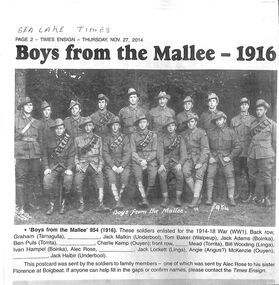
Memorabilia - Jack Lockett Collection: Boys from the Mallee 1916
... ...38th Australian Infantry Battalion...Jack Lockett Mabel Ingwersen 38th Australian Infantry Battalion W.W.1 Mallee Farming A photocopy of an article and photograph headed - PAGE 2 TIMES ENSIGN - THURSDAY, NOV. 2014 (Sea Lake Times?) ...John Henry Lockett OAM (22 January 1891 – 25 May 2002) was the oldest man ever in Australia when he died aged 111 years, 123 days. As one of the last surviving veterans of World War I, he was acclaimed as a national hero during the last decade of his life. Lockett was born in the small Victorian town of Waanyarra, near Bendigo. He left school aged nine to work on a local farm. Later, he worked for his uncles in the Mallee. On 24 March 1916, he travelled to Mildura to enlist in the Australian Imperial Force. He served in France with the 38th Battalion, earning promotion to sergeant and was discharged on 20 September 1919. https://en.wikipedia.org/wiki/Jack_Lockett The 38th Battalion was formed on 1 March 1916 at a camp established on the Epsom Racecourse at Bendigo in Victoria. After training in both Australia and Britain, the 38th Battalion crossed to France in late November 1916 and moved into the trenches of the Western Front for the first time on 1 December.The 38th fought in its first major battle at Messines, in Belgium, between 7-9 June 1917. It fought in another two major attacks in this sector - the battle of Broodseinde on 4 October, and the battle of Passchendaele on 12 October. Belgium remained the focus of the 38th Battalion's activities for the next five months, until it was rushed south to France in late March 1918 to meet the German Army's Spring Offensive. The 38th participated in its last major action of the war between 29 September and 2 October 1918 as part of the Australian-American operation that breached the formidable defences of the Hindenburg Line along the St Quentin Canal. It was disbanded in April 1919. Source, Australian War Memorial https://www.awm.gov.au/collection/U51478 After the war, Jack returned to The Mallee and selected a 640 acres (260 ha) block of land in Linga, Victoria, deciding to make his living as a farmer. In 1923, he married Maybell Ingwerson and they had four children together. In 1963, the couple retired to Bendigo, leaving the farmland (which now covered more than 130,000 acres (53,000 ha), in the care of their children and grandchildren. A photocopy of an article and photograph headed - PAGE 2 TIMES ENSIGN - THURSDAY, NOV. 2014 (Sea Lake Times?) Boys from the Mallee- 1916. A photograph of a postcard of17 men in Australian Army Uniforms, 10 standing and seven sitting. Names listed Graham (Tarnagulla), Jack Malkin (Underbol), Tom Baker (Walpeup), Jack Adams (Binka), Ben Puls Torria), Charlie Kemp (Ouyen), Mead (Torrita), Bill Wooding (Linga), Ivan Hampel (Boinka), Alec Rose, Jack Locket (Linga) Angus McKenzie (Ouyen), Jack Halbir (Underbool) This postcard was sent by Alec Rose to his sister Florence. dge and Rheola. jack lockett, mabel ingwersen, 38th australian infantry battalion, w.w.1, mallee farming -
 Bendigo Historical Society Inc.
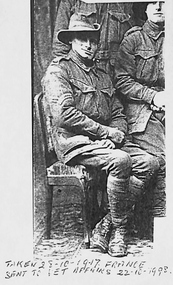
Photograph - Jack Lockett Collection: Five W.W.1 photographs
... ...38th Australian Infantry Battalion...Jack Lockett Mabel Ingwersen 38th Australian Infantry Battalion W.W.1 Mallee Farming H.M.A.T. ...John Henry Lockett OAM (22 January 1891 – 25 May 2002) was the oldest man ever in Australia when he died aged 111 years, 123 days. As one of the last surviving veterans of World War I, he was acclaimed as a national hero during the last decade of his life. Lockett was born in the small Victorian town of Waanyarra, near Bendigo. He left school aged nine to work on a local farm. Later, he worked for his uncles in the Mallee. On 24 March 1916, he travelled to Mildura to enlist in the Australian Imperial Force. He served in France with the 38th Battalion, earning promotion to sergeant and was discharged on 20 September 1919. https://en.wikipedia.org/wiki/Jack_Lockett The 38th Battalion was formed on 1 March 1916 at a camp established on the Epsom Racecourse at Bendigo in Victoria. After training in both Australia and Britain, the 38th Battalion crossed to France in late November 1916 and moved into the trenches of the Western Front for the first time on 1 December.The 38th fought in its first major battle at Messines, in Belgium, between 7-9 June 1917. It fought in another two major attacks in this sector - the battle of Broodseinde on 4 October, and the battle of Passchendaele on 12 October. Belgium remained the focus of the 38th Battalion's activities for the next five months, until it was rushed south to France in late March 1918 to meet the German Army's Spring Offensive. The 38th participated in its last major action of the war between 29 September and 2 October 1918 as part of the Australian-American operation that breached the formidable defences of the Hindenburg Line along the St Quentin Canal. It was disbanded in April 1919. Source, Australian War Memorial https://www.awm.gov.au/collection/U51478 After the war, Jack returned to The Mallee and selected a 640 acres (260 ha) block of land in Linga, Victoria, deciding to make his living as a farmer. In 1923, he married Maybell Ingwerson and they had four children together. In 1963, the couple retired to Bendigo, leaving the farmland (which now covered more than 130,000 acres (53,000 ha), in the care of their children and grandchildren. Five photographs including Jack Lockett a. A photocopy of part of a group photograph, Jack sitting on a chair wearing an Australian Army Uniform. Written underneath - Teken 25-10-1917 France sent to Vet affairs 22-10-1998 b. A black and white photograph of a ship crowed with people on deck with printing - H.M.A.T. "RUNIC" (copyright) 20/6/16 written on the back in blue ink - Private Jack Locket No 1194 D Company 38th Battalion A.I.F. left Port Melbourne pier on Tues 20 June 1916 aboard H.M.A.T. RUNIC bound for England via South Africa. He was below deck peering out of a porthole when the boat pulled away from the pier, as he had the job of guarding some supplies. the arrived in England on (sic) Returning to Australia on Miltides on Mon 17th Feb 1919 as a Sargent Discharged 20 SEPT 1919 c. A very faded sepia tone photograph of four men in Army Uniforms without hats. three sitting and Jack Lockett lying on the man in the middle. Written on the back - JACK LOCKETT LYING ON ONE of His 3 MATES NAMES UNKNOWN FIRST AIF 1914 -1918 GREAT WAR d. A black and white postcard of Jack Lockett in an Australian Army Uniform sitting cross legged in a chair with an image of a forest behind him. Written on the back J H LOCKETT D COY 38 BATT 3DIV NO1194 1stAIF FRANCE e. c. A very faded sepia tone photograph of nine men in Army Uniforms wearing gas masks, six men standing, four men Kneeling in front. Behind them there is a corrugated-iron building. Written on the back - FIRST GAS MASKS W.W. 1 JACK LOCKET 2nd RIGHT STANDING jack lockett, mabel ingwersen, 38th australian infantry battalion, w.w.1, mallee farming, h.m.a.t. runic, gas masks -
 Bendigo Historical Society Inc.
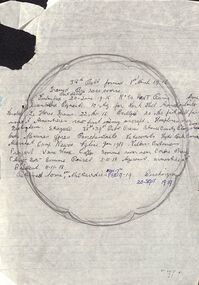
Journal - Jack Lockett Collection: Brief handwritten 38th Battalion Histroy
... ...38th Australian Infantry Battalion...Jack Lockett Mabel Ingwersen 38th Australian Infantry Battalion W.W.1 Mallee Farming H.M.A.T. ...John Henry Lockett OAM (22 January 1891 – 25 May 2002) was the oldest man ever in Australia when he died aged 111 years, 123 days. As one of the last surviving veterans of World War I, he was acclaimed as a national hero during the last decade of his life. Lockett was born in the small Victorian town of Waanyarra, near Bendigo. He left school aged nine to work on a local farm. Later, he worked for his uncles in the Mallee. On 24 March 1916, he travelled to Mildura to enlist in the Australian Imperial Force. He served in France with the 38th Battalion, earning promotion to sergeant and was discharged on 20 September 1919. https://en.wikipedia.org/wiki/Jack_Lockett The 38th Battalion was formed on 1 March 1916 at a camp established on the Epsom Racecourse at Bendigo in Victoria. After training in both Australia and Britain, the 38th Battalion crossed to France in late November 1916 and moved into the trenches of the Western Front for the first time on 1 December.The 38th fought in its first major battle at Messines, in Belgium, between 7-9 June 1917. It fought in another two major attacks in this sector - the battle of Broodseinde on 4 October, and the battle of Passchendaele on 12 October. Belgium remained the focus of the 38th Battalion's activities for the next five months, until it was rushed south to France in late March 1918 to meet the German Army's Spring Offensive. The 38th participated in its last major action of the war between 29 September and 2 October 1918 as part of the Australian-American operation that breached the formidable defences of the Hindenburg Line along the St Quentin Canal. It was disbanded in April 1919. Source, Australian War Memorial https://www.awm.gov.au/collection/U51478 After the war, Jack returned to The Mallee and selected a 640 acres (260 ha) block of land in Linga, Victoria, deciding to make his living as a farmer. In 1923, he married Maybell Ingwerson and they had four children together. In 1963, the couple retired to Bendigo, leaving the farmland (which now covered more than 130,000 acres (53,000 ha), in the care of their children and grandchildren. An A blue-lined A4 page with black ink handwriting. A brief history of the 38th Battalion A.I.F. from when it was formed 1st March 1916 until returning home on 17th February 1919. A decorated circle is drawn with pencil over the handwriting jack lockett, mabel ingwersen, 38th australian infantry battalion, w.w.1, mallee farming, h.m.a.t. runic, gas masks -
 Bendigo Historical Society Inc.
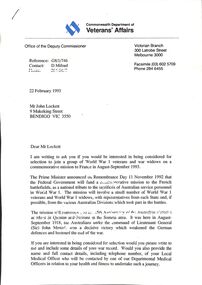
Letter - Jack Lockett Collection: Letter Re Mission to France 1993
... ...38th Australian Infantry Battalion...Jack Lockett Mabel Ingwersen 38th Australian Infantry Battalion W.W.1 Mallee Farming Commemorative Mission to France 1993 Brian Flynn A typed letter on two A4 pages to Jack Lockett Sent from the Commonwealth Department of Veterans Affairs, Office of the Deputy Commissioner, 22 February asking Jack if he wished to be considered for selection to join a commemorative mission to France in August - September 1993. ...John Henry Lockett OAM (22 January 1891 – 25 May 2002) was the oldest man ever in Australia when he died aged 111 years, 123 days. As one of the last surviving veterans of World War I, he was acclaimed as a national hero during the last decade of his life. Lockett was born in the small Victorian town of Waanyarra, near Bendigo. He left school aged nine to work on a local farm. Later, he worked for his uncles in the Mallee. On 24 March 1916, he travelled to Mildura to enlist in the Australian Imperial Force. He served in France with the 38th Battalion, earning promotion to sergeant and was discharged on 20 September 1919. https://en.wikipedia.org/wiki/Jack_Lockett The 38th Battalion was formed on 1 March 1916 at a camp established on the Epsom Racecourse at Bendigo in Victoria. After training in both Australia and Britain, the 38th Battalion crossed to France in late November 1916 and moved into the trenches of the Western Front for the first time on 1 December.The 38th fought in its first major battle at Messines, in Belgium, between 7-9 June 1917. It fought in another two major attacks in this sector - the battle of Broodseinde on 4 October, and the battle of Passchendaele on 12 October. Belgium remained the focus of the 38th Battalion's activities for the next five months, until it was rushed south to France in late March 1918 to meet the German Army's Spring Offensive. The 38th participated in its last major action of the war between 29 September and 2 October 1918 as part of the Australian-American operation that breached the formidable defences of the Hindenburg Line along the St Quentin Canal. It was disbanded in April 1919. Source, Australian War Memorial https://www.awm.gov.au/collection/U51478 After the war, Jack returned to The Mallee and selected a 640 acres (260 ha) block of land in Linga, Victoria, deciding to make his living as a farmer. In 1923, he married Maybell Ingwerson and they had four children together. In 1963, the couple retired to Bendigo, leaving the farmland (which now covered more than 130,000 acres (53,000 ha), in the care of their children and grandchildren. A typed letter on two A4 pages to Jack Lockett Sent from the Commonwealth Department of Veterans Affairs, Office of the Deputy Commissioner, 22 February asking Jack if he wished to be considered for selection to join a commemorative mission to France in August - September 1993. Signed Brian Flynn DEPUTY COMMISSIONER jack lockett, mabel ingwersen, 38th australian infantry battalion, w.w.1, mallee farming, commemorative mission to france 1993, brian flynn -
 Bendigo Historical Society Inc.
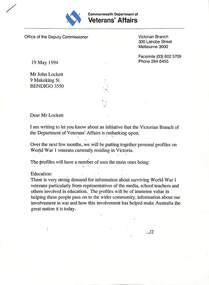
Letter - Jack Lockett Collection: Letter Re Person profiles of W.W.1 veterans
... ...38th Australian Infantry Battalion...Jack Lockett Mabel Ingwersen 38th Australian Infantry Battalion W.W.1 Mallee Farming Profile of W.W.1 Veterans Brian Flynn A typed letter on two A4 pages to Jack Lockett sent from the Commonwealth Department of Veterans Affairs, Office of the Deputy Commissioner, 19 May 1994. ...John Henry Lockett OAM (22 January 1891 – 25 May 2002) was the oldest man ever in Australia when he died aged 111 years, 123 days. As one of the last surviving veterans of World War I, he was acclaimed as a national hero during the last decade of his life. Lockett was born in the small Victorian town of Waanyarra, near Bendigo. He left school aged nine to work on a local farm. Later, he worked for his uncles in the Mallee. On 24 March 1916, he travelled to Mildura to enlist in the Australian Imperial Force. He served in France with the 38th Battalion, earning promotion to sergeant and was discharged on 20 September 1919. https://en.wikipedia.org/wiki/Jack_Lockett The 38th Battalion was formed on 1 March 1916 at a camp established on the Epsom Racecourse at Bendigo in Victoria. After training in both Australia and Britain, the 38th Battalion crossed to France in late November 1916 and moved into the trenches of the Western Front for the first time on 1 December.The 38th fought in its first major battle at Messines, in Belgium, between 7-9 June 1917. It fought in another two major attacks in this sector - the battle of Broodseinde on 4 October, and the battle of Passchendaele on 12 October. Belgium remained the focus of the 38th Battalion's activities for the next five months, until it was rushed south to France in late March 1918 to meet the German Army's Spring Offensive. The 38th participated in its last major action of the war between 29 September and 2 October 1918 as part of the Australian-American operation that breached the formidable defences of the Hindenburg Line along the St Quentin Canal. It was disbanded in April 1919. Source, Australian War Memorial https://www.awm.gov.au/collection/U51478 After the war, Jack returned to The Mallee and selected a 640 acres (260 ha) block of land in Linga, Victoria, deciding to make his living as a farmer. In 1923, he married Maybell Ingwerson and they had four children together. In 1963, the couple retired to Bendigo, leaving the farmland (which now covered more than 130,000 acres (53,000 ha), in the care of their children and grandchildren. A typed letter on two A4 pages to Jack Lockett sent from the Commonwealth Department of Veterans Affairs, Office of the Deputy Commissioner, 19 May 1994. It's asking if he would be part of program putting together personal profiles on World War 1 veterans currently residing in Victoria. Signed Brian Flynn, DEPUTY COMMISSIONER jack lockett, mabel ingwersen, 38th australian infantry battalion, w.w.1, mallee farming, profile of w.w.1 veterans, brian flynn -
 Bendigo Historical Society Inc.
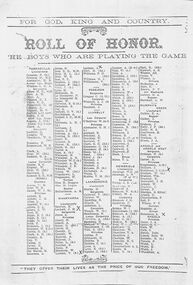
Memorabilia - Jack Lockett Collection: Copy of Roll of Honor
... ...38th Australian Infantry Battalion...Jack Lockett Mabel Ingwersen 38th Australian Infantry Battalion W.W.1 Mallee Farming An A4 photocopy of a ROLL OF HONOR for people who served in World War 1, with names from the towns of TARNAGULLA, WAANYARRA including (marked with a X) Lockett J.H., Lockett T., Lockett J., LLANELLY, LAAANECOORIE, NEWBRIDGE, MURPHY'S CREEK, ARNOLD and ARNOLD WEST including (marked with a X) Metelman J.C., Metelman A and RHEOLA Memorabilia Jack Lockett Collection: Copy of Roll of Honor ...John Henry Lockett OAM (22 January 1891 – 25 May 2002) was the oldest man ever in Australia when he died aged 111 years, 123 days. As one of the last surviving veterans of World War I, he was acclaimed as a national hero during the last decade of his life. Lockett was born in the small Victorian town of Waanyarra, near Bendigo. He left school aged nine to work on a local farm. Later, he worked for his uncles in the Mallee. On 24 March 1916, he travelled to Mildura to enlist in the Australian Imperial Force. He served in France with the 38th Battalion, earning promotion to sergeant and was discharged on 20 September 1919. https://en.wikipedia.org/wiki/Jack_Lockett The 38th Battalion was formed on 1 March 1916 at a camp established on the Epsom Racecourse at Bendigo in Victoria. After training in both Australia and Britain, the 38th Battalion crossed to France in late November 1916 and moved into the trenches of the Western Front for the first time on 1 December.The 38th fought in its first major battle at Messines, in Belgium, between 7-9 June 1917. It fought in another two major attacks in this sector - the battle of Broodseinde on 4 October, and the battle of Passchendaele on 12 October. Belgium remained the focus of the 38th Battalion's activities for the next five months, until it was rushed south to France in late March 1918 to meet the German Army's Spring Offensive. The 38th participated in its last major action of the war between 29 September and 2 October 1918 as part of the Australian-American operation that breached the formidable defences of the Hindenburg Line along the St Quentin Canal. It was disbanded in April 1919. Source, Australian War Memorial https://www.awm.gov.au/collection/U51478 After the war, Jack returned to The Mallee and selected a 640 acres (260 ha) block of land in Linga, Victoria, deciding to make his living as a farmer. In 1923, he married Maybell Ingwerson and they had four children together. In 1963, the couple retired to Bendigo, leaving the farmland (which now covered more than 130,000 acres (53,000 ha), in the care of their children and grandchildren. An A4 photocopy of a ROLL OF HONOR for people who served in World War 1, with names from the towns of TARNAGULLA, WAANYARRA including (marked with a X) Lockett J.H., Lockett T., Lockett J., LLANELLY, LAAANECOORIE, NEWBRIDGE, MURPHY'S CREEK, ARNOLD and ARNOLD WEST including (marked with a X) Metelman J.C., Metelman A and RHEOLA jack lockett, mabel ingwersen, 38th australian infantry battalion, w.w.1, mallee farming -
 Bendigo Military Museum
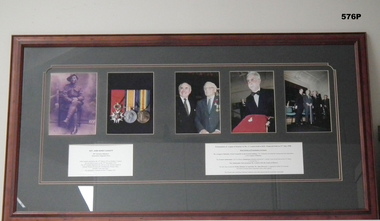
Photograph - PHOTOGRAPHS, FRAMED, 1998
... SGT JOHN HNERY LOCKETT, 38th Infantry Battalion, Australian Imperial Force. Enlisted on 24th March 1916 in Mildura. ...SGT JOHN HNERY LOCKETT, 38th Infantry Battalion, Australian Imperial Force. Enlisted on 24th March 1916 in Mildura. ...SGT JOHN HNERY LOCKETT, 38th Infantry Battalion, Australian Imperial Force. Enlisted on 24th March 1916 in Mildura. Arrived France 22nd November 1916. Returned to Australia 5th August 1919.Photographs - collection of 5 photographs in a frame, black & white and colour. L - R , Left; a) a full portrait of Sgt. John Henry Lockett. b) 3 medals and ribbons. c) PM John Howard and JH Lockett, d) French Ambassador with Legion of Honour. e) Presentation Ceremony group. Black print on card - two information below photographs. Frame - brown stain timber frame with decorative moulding, dark green cardboard mount with dark red inner edge and 2nd mount, glass front.Black print on white card - 1. "SGT JOHN HENRY LOCKETT" -WITH SERVICE INFORMATION. 2. "Presentation of Legion of Honour to Mr J. Lockett at RSL Memorial Hall on 21st July 1998". with further ceremony information.photography-photographs, frame accessories, military history-army -
 Bendigo Military Museum
Memorabilia - CENTENARY of EAGLEHAWK ANZACS, FRAMED, Eaglehawk Heritage Society, ELLIOTT BROTHERS, C2014
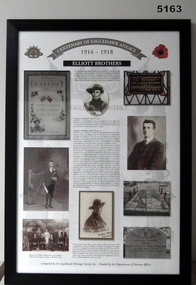
... PRIVATE SYDNEY HAROLD RICHARD ELLIOTT, No 782, 7th Infantry Battalion, Killed in Action, Gallipoli Peninsula 26th April 1915. PRIVATE STANLEY VICTOR ELLIOTT No 11488, 38th Infantry Battalion - Returned to Australia 26 September 1917 with Shell Shock....PRIVATE SYDNEY HAROLD RICHARD ELLIOTT, No 782, 7th Infantry Battalion, Killed in Action, Gallipoli Peninsula 26th April 1915. PRIVATE STANLEY VICTOR ELLIOTT No 11488, 38th Infantry Battalion - Returned to Australia 26 September 1917 with Shell Shock. ...PRIVATE SYDNEY HAROLD RICHARD ELLIOTT, No 782, 7th Infantry Battalion, Killed in Action, Gallipoli Peninsula 26th April 1915. PRIVATE STANLEY VICTOR ELLIOTT No 11488, 38th Infantry Battalion - Returned to Australia 26 September 1917 with Shell Shock.Memorabilia - framed story of a two brothers, soldiers, in colour using memorabilia of the soldiers and their lives. aPrinted on Paper. Frame - Black extruded plastic, glass front, cardboard backing."ELLIOTT BROTHERS" framed item, anzacs, eaglehawk -
 Bendigo Military Museum
Photograph - PHOTOGRAPHS, 38TH POST WW2, 1) c.1950's; .2) 1952; .3) 1954
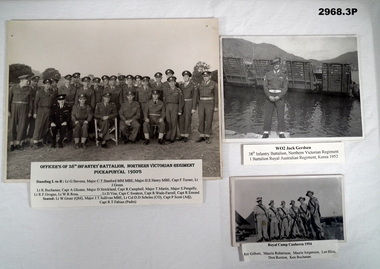
... 38th Infantry Battalion, Northern Victorian Regiment Puckapunyal 1950's. Includes Officer's names” .2) “WO2 Jack Gerdsen 38th Infantry Battalion, Northern Victoria Regiment, 1 Battalion Royal Australian Regiment, Korea 1952” .3) “Royal Camp Canberra 1954, Ray Gilbert, Maurie Robertson, Maurie Jorgenson, Len Bliss Don Ruxton, Ken Buchanan”...38th Infantry Battalion, Northern Victorian Regiment Puckapunyal 1950's. Includes Officer's names” .2) “WO2 Jack Gerdsen 38th Infantry Battalion, Northern Victoria Regiment, 1 Battalion Royal Australian Regiment, Korea 1952” .3) “Royal Camp Canberra 1954, Ray Gilbert, Maurie Robertson, Maurie Jorgenson, Len Bliss Don Ruxton, Ken Buchanan” .1) Black & white group photo of the Officers of 38th Infantry Battalion in uniform. ....1) Black & white group photo of the Officers of 38th Infantry Battalion in uniform. Officers are seated & standing with a number of trees in the background. Attached printed label includes the office's names. Dated 1950's. Photo mounted on cardboard. .2) Black & white photo of WO2 Jack Gerdsen in uniform, standing in front of a water landing craft & mountains. .3) Black & white photo of 6 soldiers in uniform, tents in background.On printed labels: .1) “ Officers of 38th Infantry Battalion, Northern Victorian Regiment Puckapunyal 1950's. Includes Officer's names” .2) “WO2 Jack Gerdsen 38th Infantry Battalion, Northern Victoria Regiment, 1 Battalion Royal Australian Regiment, Korea 1952” .3) “Royal Camp Canberra 1954, Ray Gilbert, Maurie Robertson, Maurie Jorgenson, Len Bliss Don Ruxton, Ken Buchanan”photograpy - photographs-mount accessories, military history - army, passchendaele barracks trust -
 Bendigo Military Museum
Badge - VARIOUS MILITARY BADGES, Unknown
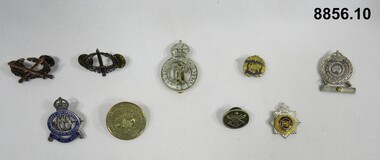
... Infantry combat. 3. 38th Battalion Lapel (Bendigo Regiment). 4. Palestine Police Hat (Post WW2). 5. WW2 Female relative - bar with one star. 6. WW1 nearest female relative. 7. Volunteered for Active Service. 8. Tri Service Lapel. 9. Royal Australian...Infantry combat. 3. 38th Battalion Lapel (Bendigo Regiment). 4. Palestine Police Hat (Post WW2). 5. WW2 Female relative - bar with one star. 6. WW1 nearest female relative. 7. Volunteered for Active Service. 8. Tri Service Lapel. 9. Royal Australian ...Military badges either gold, silver or brass colour with or without a backing mounting plate, pins. Sizes vary. 1. Army Combat. 2. Infantry combat. 3. 38th Battalion Lapel (Bendigo Regiment). 4. Palestine Police Hat (Post WW2). 5. WW2 Female relative - bar with one star. 6. WW1 nearest female relative. 7. Volunteered for Active Service. 8. Tri Service Lapel. 9. Royal Australian Army Service Corps - collar. 10. Missing. 5. A100333. 6. No.150802. 7. No. 84151.passchendaele barracks trust, pbt131to140, badges -
 Bendigo Military Museum
Badge - VARIOUS MILITARY BADGES, Unknown
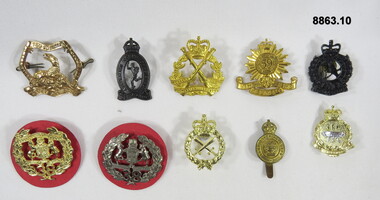
... Infantry Regt. (Ballarat) hat. 2. Australian Corps of Signals hat. 3. Royal Australian Infantry Corps hat. 4. 59th Battalion, The Hume Regiment hat. 5. 51st Battalion hat. 6. 38th Battalion hat. 7. 38th Battalion hat (Silver). 8. ...Infantry Regt. (Ballarat) hat. 2. Australian Corps of Signals hat. 3. Royal Australian Infantry Corps hat. 4. 59th Battalion, The Hume Regiment hat. 5. 51st Battalion hat. 6. 38th Battalion hat. 7. 38th Battalion hat (Silver). 8. ...Military badges either gold, silver or brass colour with or without a backing mounting plate, pins. Sizes vary. 1. 70th Infantry Regt. (Ballarat) hat. 2. Australian Corps of Signals hat. 3. Royal Australian Infantry Corps hat. 4. 59th Battalion, The Hume Regiment hat. 5. 51st Battalion hat. 6. 38th Battalion hat. 7. 38th Battalion hat (Silver). 8. Royal Australian Corps of Military Police hat. 9. Army Catering Corps hat. 10. Australian Army Catering Corps hat. passchendaele barracks trust, pbt201to210, badges -
 Bendigo Historical Society Inc.
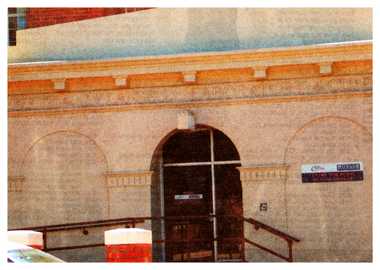
Newspaper - Fortuna Article - "Lansell's Impressive Legacy", Mar 06 2008
... Commissioned in the 8th Australian Infantry Regiment in 1904; captain by 1909. He served in France during World War I with the 38th Battalion; wounded but returned to service. ...Commissioned in the 8th Australian Infantry Regiment in 1904; captain by 1909. He served in France during World War I with the 38th Battalion; wounded but returned to service. ...George Victor Lansell was Born in London in 1883, eldest son of George Lansell ('Quartz King') and Edith. Educated at St Andrew's College, Bendigo, and Melbourne Grammar. Married Edith, a skiing champion, in 1910; honeymooned overseas and visited Egypt. Named his Bendigo home 'Denderah' after an Egyptian archaeological site. The house featured art nouveau architecture and a Widow's Walk for astronomy. Commissioned in the 8th Australian Infantry Regiment in 1904; captain by 1909. He served in France during World War I with the 38th Battalion; wounded but returned to service. George organized the northwest Victorian Volunteer Defence Corps in WWII; retired as honorary colonel in 1942. Served as a Nationalist Party member for Bendigo in the Legislative Council, later joined the Country Party.President of the Bendigo branch of the Returned Sailors' and Soldiers' Imperial League of Australia for nearly 30 years. Led fundraising for the Soldiers' Memorial Hall and its brass honour rolls. Director of several local companies, including Sandhurst Trustees Co. and Bendigo Mutual Permanent Land and Building Society. Introduced Hanro Knitting Mills and the Australian Swiss Watch Co. to Bendigo.Acquired and merged the Bendigo Independent with The Bendigo Advertiser. Built a clinic at Bendigo Hospital with his mother; donated medical equipment and supported local institutions like the Benevolent Home, art gallery, School of Mines, and YMCA.Recognition and Legacy. Knighted in 1951.Remembered for personal generosity, especially to ex-servicemen and their families.Described as shy and retiring, but a major figure in Bendigo's history.His funeral in 1959 was one of the largest in Bendigo, reflecting his impact on the community.Fortuna Restoration Article - "Lansell's Impressive Legacy" - The Bendigo Miner Tuesday March 06 2008- Author Jim Evans This item contains the following: 11217.10a Colour Photo of The Edith and G. V. Lansell Laboratory Clinic at the Bendigo Hospital 11217.10b Part of page 23 - Lansell's Impressive Legacynon-fictionbendigo, fortuna, george lansell, the edith and g. v. lansell laboratory clinic -
 Bendigo Historical Society Inc.
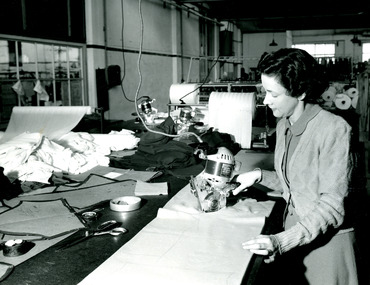
Photograph - HANRO COLLECTION: PROMOTIONAL PHOTOGRAPHS, 1940's
... First commissioned in the 8th Australian Infantry Regiment in 1904, he was a captain in 1909. In May 1916 he was commissioned captain in Bendigo's 38th Battalion, Australian Imperial Force. ...First commissioned in the 8th Australian Infantry Regiment in 1904, he was a captain in 1909. In May 1916 he was commissioned captain in Bendigo's 38th Battalion, Australian Imperial Force. ...Sir George Victor Lansell (1883-1959), businessman, politician and philanthropist, was born on 3 October 1883 in London, elder son of George Lansell, the Bendigo 'Quartz King', and his second wife Harriet Edith, née Bassford. George was educated at St Andrew's College, Bendigo, and Melbourne Church of England Grammar School. On 20 January 1910 at All Saints Pro-Cathedral, Bendigo, he married a skiing champion, Edith Florence Gwendoline Frew; they had three daughters. As a young man Lansell excelled in revolver shooting, boxing and swimming but his militia interests endured longest. First commissioned in the 8th Australian Infantry Regiment in 1904, he was a captain in 1909. In May 1916 he was commissioned captain in Bendigo's 38th Battalion, Australian Imperial Force. Entering the front line in France on 1 December he was wounded two days later and invalided back to Australia next March for discharge in August. After the war he rose in 1923 to major commanding the 38th Battalion, Australian Military Forces. Lieutenant-Colonel in 1927, he retired as honorary colonel in 1942 after having organized the north-west Victorian group of the Volunteer Defence Corps early in World War II. Lansell's major contribution was his service to returned soldiers. He was president of the Bendigo sub-branch of the Returned Sailors' and Soldiers' Imperial League of Australia for nearly thirty years. His work extended beyond grand gesture and he is remembered affectionately for his personal generosity to ex-servicemen and their dependants. Lansell was director of the powerful Sandhurst Trustees' Co., the Bendigo Mutual Permanent Land & Building Society and many other local companies. In 1926 he brought to Bendigo the overseas-based Hanro Knitting Mills (Hanro comes from the Swiss firm Handschin and Ronus which made high quality underwear and knitwear at Liestal, Switzerland) and the Australian Swiss Watch Co. Early in his business career he acquired the Bendigo Independent and amalgamated it with the Bendigo Advertiser in 1918. He had interests in the Riverine Herald, the Rochester Irrigator, the Stock and Station Journal and Central Victorian Broadcasters Ltd, and was a delegate to Empire press conferences in Canada (1920), England (1923) and Australia (1925).Lever arch folder containing Hanro black and white promotional photographs. 53 studio photographs of women's knitwear and lingerie 20.5cm x 25.2cm. 1 studio photograph of men's knitwear 19cm x 23.5cm. 2 x photo's 19cm x 23.3cm Photographer Reg Brock. 27 black and white photo's 15cm x 21cm of men's knitwear, womenswear and lingerie, were donated by Ann Peters.Reg Brock Studios Bendigo. Labels or stamps on back of photographs.business, retail, hanro promotional photographs, george victor lansell, bendigo hanro, ralph birrell collections -
 Bendigo Military Museum
Badge - VARIOUS MILITARY BADGES, Unknown
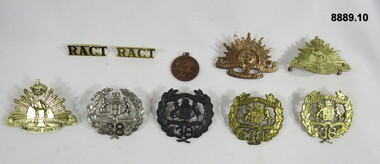
... Australian Camel Corps Rising Sun hat. 7. 38th Infantry Battalion Hat (silver 53-60. 8. 38th Infantry Battalion hat (anodised). 9. 38th Infantry Battalion Hat (Brass). 10. 38th Infantry Battalion hat (Brass). ...Australian Camel Corps Rising Sun hat. 7. 38th Infantry Battalion Hat (silver 53-60. 8. 38th Infantry Battalion hat (anodised). 9. 38th Infantry Battalion Hat (Brass). 10. 38th Infantry Battalion hat (Brass). ...Military badges either gold, silver or brass colour with or without a backing mounting plate, pins, sizes vary. 1. Royal Australian Corps of Transport shoulder (a). 2. Royal Australian Corps of Transport shoulder (b). 3. Victory medal medallion 1945. 4. Brass Australian Rising Sun Hat (circa WW1). 5. Australian Camel Corps Rising Sun hat. 6. Australian Camel Corps Rising Sun hat. 7. 38th Infantry Battalion Hat (silver 53-60. 8. 38th Infantry Battalion hat (anodised). 9. 38th Infantry Battalion Hat (Brass). 10. 38th Infantry Battalion hat (Brass). passchendaele barracks trust, pbt441to450, badges -
 Bendigo Military Museum
Badge - VARIOUS MILITARY BADGES, Unknown
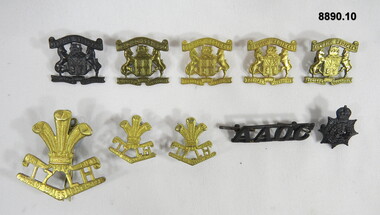
... Sizes vary. 1. 38th Infantry Battalion collar, anodised. 2. 38th Infanttry Battalion collar (a). 3. 38th Infantry Battalion collar (b). 4. 38th Infantry Battalion collar (c). 5. 38th Infantry Battalion collar (d). 6. 17th Light Horse hat. 7. 17th Light Horse collar. 8. 17th Light Horse collar (a). 9. Australian...Sizes vary. 1. 38th Infantry Battalion collar, anodised. 2. 38th Infanttry Battalion collar (a). 3. 38th Infantry Battalion collar (b). 4. 38th Infantry Battalion collar (c). 5. 38th Infantry Battalion collar (d). 6. 17th Light Horse hat. 7. 17th Light Horse collar. 8. 17th Light Horse collar (a). 9. Australian ...Military Badges either gold, silver or brass colour with or without a backing mounting plate, pins. Sizes vary. 1. 38th Infantry Battalion collar, anodised. 2. 38th Infanttry Battalion collar (a). 3. 38th Infantry Battalion collar (b). 4. 38th Infantry Battalion collar (c). 5. 38th Infantry Battalion collar (d). 6. 17th Light Horse hat. 7. 17th Light Horse collar. 8. 17th Light Horse collar (a). 9. Australian Army Ordnance Corps Brass shoulder circa WW1. 10. Army Service Corps collar anodised. passchendaele barracks trust, pbt451to460, badges
