
Showing 61 items matching "around bendigo area."
-
 Bendigo Historical Society Inc.
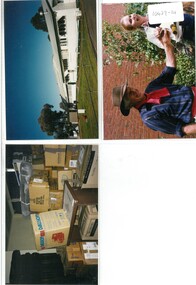
Photograph - DUDLEY HOUSE COLLECTION: PHOTOGRAPHS, 1990's
... ...Around Bendigo area....PHOTOGRAPH Building Around Bendigo area. Photographs. Six coloured photographs. (15 cms x 10 cms ) a. ...Photographs. Six coloured photographs. (15 cms x 10 cms ) a. White weatherboard building. Unknown location. b. Gordon Glover and Felicity Kingerlee. c. Bendigo Historical Society collection items stored in boxes. Possibly packing up to move out of Dudley House in 1999. d. Bendigo Historical Society collection items stored in boxes. Possibly packing up to move out of Dudley House in 1999. e. Bendigo Court House 1997 (Donated by Estelle Hewson). f. Bendigo Court House 1997 (Donated by Estelle Hewson)photograph, building, around bendigo area. -
 Bendigo Historical Society Inc.
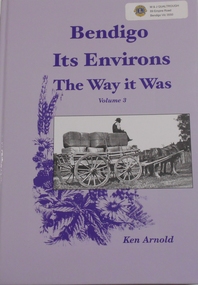
Book - Bendigo Its Environs the Way it Was Volume 3, 2013
... Purple front and back covers with B&W photos. 400 pages Bendigo Its Environs The Way it Was Volume 3 by Ken Arnold A brief history of the areas around Bendigo illustrated with B&W photos and maps. ...Purple front and back covers with B&W photos. 400 pages Bendigo Its Environs The Way it Was Volume 3 by Ken Arnold A brief history of the areas around Bendigo illustrated with B&W photos and maps. ...Ken Arnold is an author and publisher of books about the history of various facets of Bendigo history. His first book was published in 1978.Hardcover book. Purple front and back covers with B&W photos. 400 pages Bendigo Its Environs The Way it Was Volume 3 by Ken Arnold A brief history of the areas around Bendigo illustrated with B&W photos and maps. Published in 2013 by Crown Castleton Publishers, Bendigo. Printed by Trojan Press, Port Melbourne, Victoria 'M & J Qualtrough' sticker on front cover. Signed in ink by Ken Arnold, June 2023 on title page.bendigo environs, history -
 Bendigo Military Museum
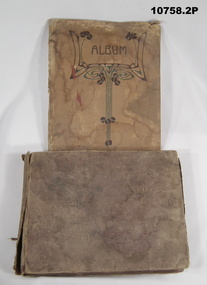
Album - PHOTOGRAPH & POSTCARD ALBUMS WW1
... Many of the Soldiers come from around the Bendigo area notably White Hills and Epsom. ...Many of the Soldiers come from around the Bendigo area notably White Hills and Epsom. ...Both Albums contain the Thomas & May Staley Collection WW1. Besides photos & postcards there are numerous other cards, articles from Newspapers, certificates covering numbers of people. There are photos re Soldiers with no identification, others with names & Regimental Numbers easily identifiable and can be matched to other photos and postcards. Easily identified are Thomas Staley (served in WW1 & WW2) May Staley (Maiden name “EVERY”) Her 3 brothers Francis, George and Ernest Every. Miss Thomas (Janey) is May Staleys Auntie. George and Ernest served in WW1. Many of the Soldiers come from around the Bendigo area notably White Hills and Epsom. Many are in the same Unit notably the 29th BN AIF. Thomas’s two sons WW2 are in the collection as well. Due to the content range of the Albums and local area the collection has been sorted into different categories as much as possible. There are 46 Catalogue No's, refer Catalogue No 10758.2P for all the collection to come up..1) Album. The front and back covers have newspaper articles glued in, they cover Poetry re the War eg: “A bit of Khaki”, “Here comes a Soldier”, “Bravo Australia”, “The wail of Belgium”, “The Prince of Peace”, “Our fallen heroes”. There are 3 articles re Pte George Every titled, A true Comrade”, “Welcome Home”, “Citizens Welcome”. The majority of the photos were related to WW1. .2) This album has space for 2 photos per page, there are 87postcards in place which relate to holidays in France and England mostly pre WW1. There are 21 lose photos and cards relating the same. Other items and various cards re WW1 were also in the album.photos, postcards, tmstaleycollection -
 Bendigo Historical Society Inc.
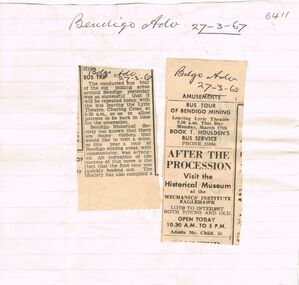
Newspaper - BENDIGO MINES TOUR
... Two small newspaper clippings: -1, Bus tour of Bendigo Mining, leaving the Lyric Theatre 9.30 am. This day, Monday, March 27th. 2. The conducted bus tour of the old mining areas around Bendigo yesterday was so successful that it will be repeated today. ...BENDIGO Mining tours Bendigo Advertiser Gold mines Tours Two small newspaper clippings: -1, Bus tour of Bendigo Mining, leaving the Lyric Theatre 9.30 am. This day, Monday, March 27th. 2. The conducted bus tour of the old mining areas around Bendigo yesterday was so successful that it will be repeated today. ...Two small newspaper clippings: -1, Bus tour of Bendigo Mining, leaving the Lyric Theatre 9.30 am. This day, Monday, March 27th. 2. The conducted bus tour of the old mining areas around Bendigo yesterday was so successful that it will be repeated today. Leaving the Lyric Theatre Charing Cross. At 9.30am so as to allow patrons to be back in time for the procession. These have been glued on to a page out of an exercise book.bendigo, mining, tours, bendigo advertiser , gold mines, tours -
 Federation University Historical Collection
Newspaper - Newsclippings, Tantanoola Tiger Newsclippings
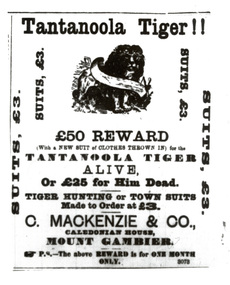
... area started, with many describing the animal as the missing tiger, or a large dog. One eye witness claimed to have seen the animal carrying a full grown sheep in its mouth. The reports grew in number and exaggeration with sightings from Robe to Bendigo. In the Tantanoola district children were escorted with shotgun guards to and from school, with many homes keeping guns at the ready in case the tiger suddenly appeared. In August 1895 Tom Donovan shot the "Tantanoola Tiger" on Mt Salt Station, around...area started, with many describing the animal as the missing tiger, or a large dog. One eye witness claimed to have seen the animal carrying a full grown sheep in its mouth. The reports grew in number and exaggeration with sightings from Robe to Bendigo. In the Tantanoola district children were escorted with shotgun guards to and from school, with many homes keeping guns at the ready in case the tiger suddenly appeared. In August 1895 Tom Donovan shot the "Tantanoola Tiger" on Mt Salt Station, around ...In the early 1880s a small circus travelled between Millicent and Mt Gambier, South Australia. After camping overnight they discovered their Bengal Tiger at escaped and disappeared into dense scrub. After searching for hours they continued to Mt Gambier and reported the loss of the tiger to police. Police and local volunteers continued the search for the escaped tiger, but no sighting were made. In the early 1890s sheep in the Tantanoola area started to disappear with the still unsighted tiger being blamed. In 1893 reports of an unusual animal in the Tantanoola area started, with many describing the animal as the missing tiger, or a large dog. One eye witness claimed to have seen the animal carrying a full grown sheep in its mouth. The reports grew in number and exaggeration with sightings from Robe to Bendigo. In the Tantanoola district children were escorted with shotgun guards to and from school, with many homes keeping guns at the ready in case the tiger suddenly appeared. In August 1895 Tom Donovan shot the "Tantanoola Tiger" on Mt Salt Station, around 20 kms south of Tantanoola. The corpse was taken to Marks, a Mount Gambier taxidermist, at which time the animal was identified as an Assyrian or Northern Russian Wolf. Donovan displayed the animal far and wide. Despite the animal's death sheep continued to disappear from properties in the district over many years. It was of particular concern between 1909 and 1910. At that time Herbert Allchurch, an Adelaide detective, was sent to solve the mystery. A few days after his arrival Allchruch went to the front bar of the Tiger Hotel and arrested local rabbit shooter and trapper, Charlie Edmunson, with sheep stealing. After his 1911 trial Edmunson admitted to stealing over 4,000 sheep during the previous 20 years. He was gaoled for six years with hard-labour in January 1911. Edmunson had been selling the skins of the stolen sheep, leaving the carcusses to rot. He earned around five pounds per week during the 1990s and early 1900s, a time when the economy was depressed. It is not known had the animal known as the Tantanoola Tiger came to Australia, but it is believed it survived one of three ships wrecked of the coast between 1890 and 1893, making it to shore along with some of the shipwrecked passengers. (From a card produced by the Tantanoola Tiger Hotel, where the 'tiger' is on display.)A collection of Newsclippings from 1892 - 1895 photocopied onto A4 white paper. The clippings relate to the Tantanoola Tiger. Clippings include: * Border Watch 1892 - Tantanoola Tiger Reward * Sydney Morning Herald, 04/07/1857 - Animals in Zoological Gardens, including a number of large cats. * Claims the Tantanoola Tiger was an escaped circus animal (ie The Advertiser [Adelaide], 31 October 1893) * Search parties for the Tantanoola Tiger (ie Barrier Miner 19/05/1893; Barrier Miner 03/1081893) * Thylacine claim (ie Morning Bulletin [Rockhampton] 11/03/1895 * Afghan and Indian Hunters (ie Barrier Miner 07/02/1895) * Sighting by John Bird of Scarsdale - Wanganui Herald 15/12/1900. " ... Mr Bird was travelling on foot along a lonely track through very dense scrub, when he was stricken with amazement to see a full-grown tiger standing in a small dam about 30ft away, and holding in its jaws the carcass of a newly-killed lamb. He remained long enough to thoroughly take in the animals appearance, and then beat a hasty retreat unmolested. His description of the animal is as follows: A tawny-coloured creature, with a dirty mottled skin; in general appearance like an immense cat; body 4ft long, and of a uniform thickness from shoulder to hindquarters; in bulk equal to a very large pig. The legs were hidden in the water. A similar animal is reported to gave been seen near Canico, some miles away. ..." * Victorian country sightings # Bullarto - Argus 06/05/1905 # Dean - Launceston Examiner 28/01/1895 # Bendigo - Hobart Mercury 15/03/1895 # Ballan - Launceston Examiner 03/08/1895 * South Australian register 17/06/1885 " There is a tiger or panther wandering at large in Victoria, according to a rumour. It has taken the place of the Bunyip, whom hundreds have seen but none captured. This tiger is supposed to have broken loose from a travelling menagerie in the North-eastern district. At the beginning we should like it roved that such an escape ever took place. Perhaps the showmen were afraid to report the fact to the police; at any rate they did not do so. The first story about the tiger being seen came from the neighborhood of Wangaratta, 60 miles from the place where it is said to have commenced business on its own account. He was followed, but vanished among trees. Next we hear of a strange animal, bigger than a St Bernard's dog, but shorter legged, having appeared at least 150 miles from Wangaratta. Between Lilydale and Wangaratta there is a dividing range 2,000 feet high in the lowest past, besides several large rivers. An finally, the tiger - changed from a panther - is reported as having been seen within the suburban circle, about 8 miles from the general Post Office. They show you footprints, and point to the carcasses of mangled cows and calves. Casts have been taken of the footprints for examination by scientific men, who pronounce them doglike, and yet not doglike, but panther-like, which gives a nervous turn, for the panther may take up killing children and grown-up people. One tiger will not account for so many apparitions. There must have been a general strike among the menageries, and a breaking-up companies. ... * Research article by Philip A. Clarke "Indigenous Spirit and Ghost Folklore of 'Settled' Australia. australian animal folklore collection, tantanoola tiger, tom donovan, herbert allchurch, charles edmunson, sheep, charlie edmunson, mythical, myth, folklore -
 The Beechworth Burke Museum
Geological specimen - Ventifact (wind- or ice-shaped) pebble
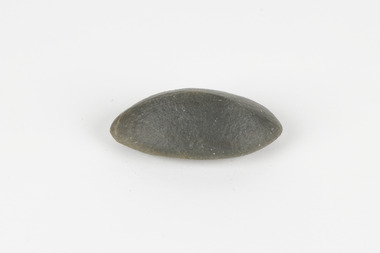
... The Geological Survey of Victoria was instigated in response to the Victorian Gold Rush which began around 1851 in the Beechworth, Castlemaine, Daylesford, Bendigo and Ballarat areas. ...Ventifacts are sand-blasted rocks that are typically faceted and often display parallel grooves carved by wind-blown sand. They are useful indicators of wind direction and strength in environments such as deserts, mountains, and coastal areas because they are usually not hidden by later sediment, soil or vegetation cover. In Antarctica ventifaction is strongly related to the composition or type of rock. Ventifacts are important because they provide evidence for abraders such as sand, dust or snow and ice crystals, and offer a unique understanding of past wind processes that are effective in the reconstruction of past wind flow conditions and can provides clues to weather and climate changes in the past. Interestingly ventifacts have also been found on the surface of Mars. They were a threat to the NASA rover due to the sharp angles of the facets, created by the Martian wind over the course of millions of years. These Martian ventifacts act like weathervanes for past wind and weather patterns on the red planet in a similar manner to those found on earth.The Geological Survey of Victoria was instigated in response to the Victorian Gold Rush which began around 1851 in the Beechworth, Castlemaine, Daylesford, Bendigo and Ballarat areas. The survey was conducted by Alfred Richard Cecil Selwyn from his arrival in December 1852 until his resignation in 1869and during this time he trained many notable geologists, e.g. Aplin, Wilkinson, Daintree, who went on to other State survey senior positions. This specimen was among those donated to the Burke Museum in 1868.A hand-sized solid mineral specimen in shades of dark and light browns with light lines visible in all configurations and a groove on configuration 2.light lines visible in all configurations and a groove on configuration 2burke museum, beechworth, geological, geological specimen, ventifact, antarctic region, antarctic, alfred richard cecil selwyn, alfred selwyn, wind direction, wind strength, abraders, wind flow, climate change, reconstruction of wind flow conditions, weather change, mars -
 The Beechworth Burke Museum
Photograph
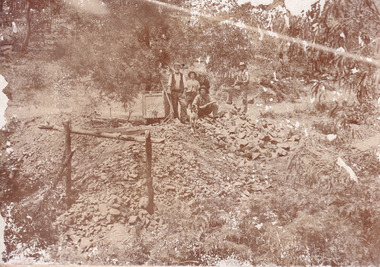
... around 1892, working the site for more than two decades. An emigrant from Cornwall with experience in the tin mining industry, 19 year old Roger Williams senior sailed to New Zealand in 1840, then to Australia where he spent time in the Bendigo Gold Fields before settling in Beechworth in the early 1860s. Mr Williams senior worked on various mining activities in the district, including the Rocky Mountain Tunnel project. Conversant with the character of gold-bearing reefs in the area...around 1892, working the site for more than two decades. An emigrant from Cornwall with experience in the tin mining industry, 19 year old Roger Williams senior sailed to New Zealand in 1840, then to Australia where he spent time in the Bendigo Gold Fields before settling in Beechworth in the early 1860s. Mr Williams senior worked on various mining activities in the district, including the Rocky Mountain Tunnel project. Conversant with the character of gold-bearing reefs in the area ...This image is a reproduction of an 1899 original depicting the 'Williams Good Luck Mine' on the Mopoke Reef (also called 'Morepork Gully') in the Dingle Ranges, approximately three miles from Beechworth. A large opening to a mine can be seen behind the men in the photograph, with a wheeled cart on a track leading to the men's position, where the soil and rocks have been hauled away. This photograph interestingly contains dogs alongside the miners. While dogs have been recorded as deterrents to thieves in the Victorian goldfields, these dogs appear as companions to these men. Following the discovery of gold at Beechworth in 1852, rushes quickly followed at surrounding creeks and gullies in the district. In the late nineteenth and early twentieth centuries, small syndicates of miners continued to work old or abandoned quartz reefs, often persisting without the assistance of heavy machinery to remove the large amounts of rock, in order to obtain yields at ever greater depths. The group of miners in this photograph are Mr. Roger Williams and Sons, who revived operations at the ‘Old Good Luck’ mine on the Mopoke Reef in the Dingle Range near Beechworth around 1892, working the site for more than two decades. An emigrant from Cornwall with experience in the tin mining industry, 19 year old Roger Williams senior sailed to New Zealand in 1840, then to Australia where he spent time in the Bendigo Gold Fields before settling in Beechworth in the early 1860s. Mr Williams senior worked on various mining activities in the district, including the Rocky Mountain Tunnel project. Conversant with the character of gold-bearing reefs in the area, the syndicate dug an eight hundred foot tunnel, digging down as far down as two hundred feet with little capital save their labour, to connect and provide better working access to the mass of reefs and veins in the vicinity. Progress was hampered by poor air quality charged with fumes from dynamite and large quantities of rock had to be crushed to obtain payable yields. The Victorian Goldfields are filled with ruins and remnants of the area's rich mining history, ranging from small alluvial diggings to the remains of huge mining companies. Site names often changed several times throughout the nineteenth and twentieth centuries. Some sites were abandoned and forgotten, others were worked continuously over many decades. The names of mines were often repeated at different locations throughout the Victorian Goldfields. For example, there is a Mopoke Gully heritage mine near Fryers Creek, Victoria. 'Mopoke' is a common onomatopoeic name for Morepork and Australian Boobook owls.This image has historical, social and research significance for patterns of emigration during of the Victorian Gold Rush, and the historical, social and environmental impacts of mining at Beechworth at the turn of the nineteenth and twentieth centuries. As gold became scarce and government support and large company investment waned, poor hard-working miners laboured intensively to make a living through periods of high unemployment. This image can be compared and studied alongside other historical mining photographs and objects in the Burke Museum Collection. It has potential to improve our understanding of miners working conditions and the shifting character of mining in the Beechworth district.Sepia coloured rectangular photograph printed on gloss photographic paper mounted on card. Obverse: Williams/ Good/ Luck Reverse: A02498/ 1997. 2498/ Good Luck/ Mine/ 1899/ Mopoke. burke museum, beechworth museum, beechworth, gold fields, gold rush, victorian gold rush, gold ming history, colonial australia, australian gold rushes, mining technology, beechworth historic district, indigo gold trail, migration, indigo shire, good luck gold mine, victorian goldfields, mining syndicates, gold fever, quartz-mining, small-scale mining, old good luck mine, mopoke gully, quartz reefs beechworth -
 Bendigo Military Museum
Map - MAP - PUCKAPUNYAL RANGE AREA, Royal Australian Survey Corps, Bendigo, 1958
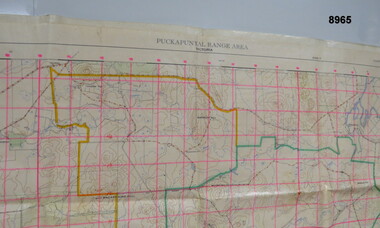
... around Puckapunyal area. Map MAP - PUCKAPUNYAL RANGE AREA Royal Australian Survey Corps, Bendigo ...Military Survey, First Edition 1958.Large waterproof map of Puckapunyal Range area compiled by the Royal Australian Survey Corps in 1958 detailing Reference locations in and around Puckapunyal area.”Puckapunyal Range Area Military Survey Australia 1.25,000. First Edition”passchendaele barracks trust, pbt?, military map -
 Bendigo Military Museum
Award - BADGE, LADIES AUXILIARY LIFE MEMBERSHIP, Pre 1982
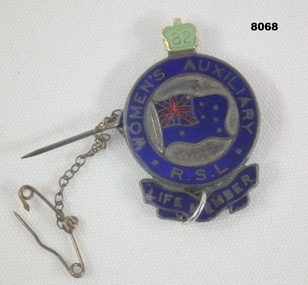
... Bendigo Branch. brsl smirsl award life member Wabrsl "Womens Auxiliary - RSL - LIFE MEMBER". On rear raised, "Swann & Hudson" Badge, metals, colours are blue and red, top has a crown with a membership clip on for the year "1982". Centre is a circular shape with text around, centre is the flag, under is a scroll with the words "LIFE MEMBER". A small gold chain is attached through the scroll area ...The recipient is not known and there is no name etc engraved on the rear. There were 6 Life Members of the Bendigo Branch.Badge, metals, colours are blue and red, top has a crown with a membership clip on for the year "1982". Centre is a circular shape with text around, centre is the flag, under is a scroll with the words "LIFE MEMBER". A small gold chain is attached through the scroll area, rear has a pin attachment."Womens Auxiliary - RSL - LIFE MEMBER". On rear raised, "Swann & Hudson"brsl, smirsl, award, life member, wabrsl -
 Bendigo Historical Society Inc.
Document - Kangaroo Flat Gold Mine: operations report, Gill Reef
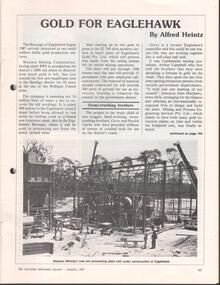
... Historical context: Bendigo Mining was preparing to trial mine and process ore from the Gill Reef around 2008 as part of a plan to restart gold production in the area. ...Historical context: Bendigo Mining was preparing to trial mine and process ore from the Gill Reef around 2008 as part of a plan to restart gold production in the area. ...Gill Reef is a high-grade gold reef located within the Bendigo Goldfield, specifically on the Garden Gully line of reef. In the mid-2000s, Bendigo Mining planned to undertake trial mining and processing of ore from this reef to restart gold production in the region. While it showed promising indicators, the success of commercial production depended on the trial results and the economics of the time. Location: The Gill Reef is part of the broader Bendigo Goldfield and is located on the Garden Gully line of reef. Geology: It is a quartz reef with an estimated grade of 10–15 g/t gold. News reports from 2008 also describe it as a high-grade reef with promising signs of gold. Historical context: Bendigo Mining was preparing to trial mine and process ore from the Gill Reef around 2008 as part of a plan to restart gold production in the area. Trial mining: The company conducted trial processing of ore from the Gill Reef to gather more detailed information about its shape and grade.Three page photocopy of information taken from Bendigo Mining Operations Report. Report details Trial Mining on the Gill Reef. bendigo, gold mining, exploration, bendigo goldfield, bendigo mining, gill reef, processing plant -
 Bendigo Historical Society Inc.
Magazine - Our Own Magazine Vol. 1 - No. 6 (published 1 October 1897), 1 October 1897
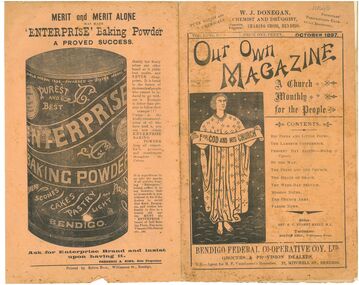
... around the world. These issues related to how the Christian gospel was and should be expressed in different cultures... Over successive Lambeth Conferences the mind of the bishops was expressed through published resolutions. These resolutions have touched on every area of the life and mission of the church... It has encouraged and enabled significant decisions to be made by the member churches" The 1897 conference resulted in 62 resolutions including the desire and establishment of regular conferences every ten years. Reverand Richard Charles Nugent Kelly All Saints Cathedral Bendigo ...The magazine was edited by Reverand R.C. Nugent Kelly as an Anglican Church publication. Reverend Kelly: Born in 1858 to Robert George and Mary Kelly (nee. Walker) of Birkenhead, England. Married Emma Louisa Edith Cremer in 1882 in England Died 11 Oct 1936 in Hornsby Shire, New South Wales, Australia Kelly joined All Saints Bendigo in 1896 where he edited the 'Our Own Magazine' and established a reputation for effective financial management. He left Bendigo in 1901. Much of his life was spent dedicated to church work which was documented as early as 1890. Now known as Old All Saints Cathedral, the church is located on the Northern corner of Mackenzie Street and Forest Street. The church was closed in 2015 and has remained abandoned. The church is located across the street from Bendigo Historical Society on Mackenzie Street. The Lambeth Conference: "The first Lambeth Conference took place in 1867 when the Archbishop of Canterbury, Charles Thomas Longley, invited the bishops of what would become the Anglican Communion to gather for a conference at Lambeth Palace.... There were two main issues that led to this invitation: First, a growing desire, expressed by many bishops around the world, to gather in order to pray, to study scripture and to confer together and, second, to address difficult pastoral and theological issues that were causing divisions between bishops around the world. These issues related to how the Christian gospel was and should be expressed in different cultures... Over successive Lambeth Conferences the mind of the bishops was expressed through published resolutions. These resolutions have touched on every area of the life and mission of the church... It has encouraged and enabled significant decisions to be made by the member churches" The 1897 conference resulted in 62 resolutions including the desire and establishment of regular conferences every ten years.1 October 1897 Edition of 'Our Own Magazine: A Church Monthly for the People'. The front cover contains the phrasing "registered as a newspaper" directly under the 'O' of "Our" though has been categorised as a magazine. Printed in black and white, the 10 page (not including covers) contains several advertisements for local Bendigo businesses. The cover showcases a hand drawn image of a robed man holding a ribbon "For God and His Church". The back cover shows a large black and white image of Enterprise Baking Powder. Other images include logos for local business and an ornate header on the front page. There are also ornate drop caps throughout the publication. The magazine includes articles pertaining to The Pope, the Lambeth Conference, Alexander Mackay of Uganda, the death of W. Walsham How (Bishop of Wakefield, C of E), the establishment of a press committee by the Anglican church, summaries of important sermons, mission notes, Parish news, baptisms, marriages and deaths. Centre fold and stapled together, each page is presented in a two-column layout. There is only one staple in the spine. Some pages extend past the edge of the cover. Printed on orange paper.reverand richard charles nugent kelly, all saints cathedral, bendigo, anglican church, lambeth conference, 1897, old all saints curch, local businesses -
 Bendigo Historical Society Inc.
Document - BENDIGO AND DISTRICT WALKING TOURS - THREE BROCHURES
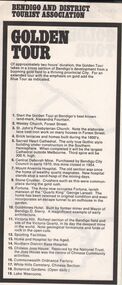
... Three walking tours of Bendigo Produced by Bendigo and District Tourist Association a) Golden Tour - a two hour tour takes in a cross section of Bendigo's development from a booming gold field to a thriving provincial city (Fortuna to White Hills botanic gardens) b) Blue Tour - an extension to the Golden Tour to include the mining areas of Eaglehawk c) Walking tour - a leisurely stroll around the perimeter of Rosiland Park...Bendigo Tour Bendigo and District Tourist Association Bendigo and District Tourist Association Three walking tours of Bendigo Produced by Bendigo and District Tourist Association a) Golden Tour - a two hour tour takes in a cross section of Bendigo's development from a booming gold field to a thriving provincial city (Fortuna to White Hills botanic gardens) b) Blue Tour - an extension to the Golden Tour to include the mining areas of Eaglehawk c) Walking tour - a leisurely stroll around the perimeter of Rosiland Park Document BENDIGO AND DISTRICT WALKING TOURS - THREE BROCHURES ...Three walking tours of Bendigo Produced by Bendigo and District Tourist Association a) Golden Tour - a two hour tour takes in a cross section of Bendigo's development from a booming gold field to a thriving provincial city (Fortuna to White Hills botanic gardens) b) Blue Tour - an extension to the Golden Tour to include the mining areas of Eaglehawk c) Walking tour - a leisurely stroll around the perimeter of Rosiland ParkBendigo and District Tourist Associationbendigo tour, bendigo and district tourist association -
 Bendigo Historical Society Inc.
Document - The Pitcher Dressers, W.G. O'Neill, Unknown
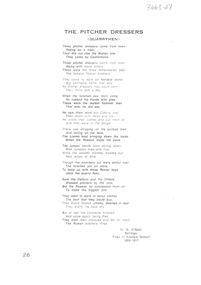
... Ingham continued his quarry works and business dealings in the Brunswick area for a few years and, around 1872, was contracting for the City of Bendigo. ...Ingham continued his quarry works and business dealings in the Brunswick area for a few years and, around 1872, was contracting for the City of Bendigo. ...Axedale is well known for its Bluestone. Early on the quarries employed a large number of people. In the 1860’s Napthali Ingham selected land in Axedale and opened a bluestone quarry beside the river later known as Ingham Hill. The quarry produced dressed curbing and pitchers for use in Bendigo and Melbourne. This bluestone can be seen throughout Axedale in the churches, the bridge over the Campaspe River and guttering in the township. The quarry also supplied bluestone products further afield, for example road metal. Napthali Ingham, the owner of one of the first quarries in Axedale, arrived in Victoria from Lancashire, England, some time before 1860, and settled in Brunswick, Victoria. He may have been building his home in Ewen[sic] Street in 1860, at approximately 31 years of age, when he placed two advertisements in The Argus, October 10. One called for tenders for carting "upwards of 100 perches of rubbish to Sandridge." The other calls for tenders to supply "800 bushels of Geelong Roche Lime." His address, given for the purpose of the advertisements, is Ewen Street, Brunswick. There were a number of quarries and clay pits in Brunswick at this time and by July 9, 1861, Ingham was operating a quarry and contracting services to local councils and boroughs for road works, including Sydney Road. He also operated the True Briton Hotel in Ewen Street. Ingham continued his quarry works and business dealings in the Brunswick area for a few years and, around 1872, was contracting for the City of Bendigo. He eventually moved to Axedale, between Bendigo and Heathcote, where he took up land and opened a bluestone quarry on the east bank of the Campaspe River. As he had difficulty transporting bluestone to Bendigo, he wrote a letter to The Bendigo Advertiser, suggesting a tramway be laid between Sandhurst (Bendigo) and Axedale. Over the next ten years or so, he modified this suggestion to a rail line connecting Sandhurst, Axedale and Heathcote to the North East line at Seymour. This suggestion did not materialise in its entirety, but it eventually resulted in what became the Wandong, Heathcote and Sandhurst Rail Line, the first sections, Bendigo-Heathcote and Wandong-Kilmore, opening October 1, 1888. In the 1870s, Ingham built the Quarry Hotel which is now the crumbling ruins adjoining Ingham Road on the east side of the Campaspe River.. Its condition is worsening as time passes. Ingham intended to have a tramline constructed from his Axedale bluestone quarry to the new rail line. This also did not happen but he was successful in getting a wood siding provided at the location that is today's Hanson's Quarry. Evidence of the rail siding are still evident at the site in 2025. Ingham's quarry is now owned by Hansen Quarries Ingham died in 1909 and the rail line that grew out of his suggestion lasted until 1958 when it was closed from Bendigo to Heathcote. The Heathcote Junction section was closed in 1968. Another quarry was owned and operated by Brasier, Riley and Nelson. 'This well known firm of contractors have a most extensive plant and all the latest improved machinery required for the supply of kerbstone, pitchers, monumental work and dressed bluestone metal for road making. ('Bendigo & District, 1902') 1. One page typed poem, written by W.G. O'Neill, titled 'The Pitcher Dressers, (Quarrymen). The poem tells the story of three Rowan brothers who came to the Axedale Quarry: 'They came to work on Axedale stone, Big contracts came that way, As pitcher dressers they could earn, Their thirty bob a day.' 2. Three copies of newspaper articles relating to quarry work and employees attached to poem: information regarding Brasier, Riley and Nelson, contractors (Bendigo and District 1902); 'The Stone Quarry Grievance' (Bendigo Advertiser, 15 June, 1959, p2); 'A Restriction Upon Industry' (Bendigo Advertiser, 2 June, 1859). Article 'A Restriction Upon Industry" details the anomalies that exist between working the quartz reefs for gold and quarrying for building stone. The cost of obtaining a license to 'quarry stone is 50 pounds sterling which must be paid down in order to merely prospect the ground. Some people who took out a lease to work a reef were actually 'looking for building stone'. On bottom of poem, W.G. O'Neill, Bendigo. Pupil of Axedale School, 1908-1917.axedale, quarry, napthali ingham, pitchers, pitcher dressers, bluestone, campaspe river, quarry hotel, rowan brothers -
 Bendigo Historical Society Inc.
Document - National Trust Collection: Forest Street, Bendigo, 1970 to 1990s
... area. Thomas Hawkey lived at the address from at least 1866, with family events recorded there through the 1870s. His financial success later enabled him to build another house in 1882. Other owners and tenants, such as William Weeks Barker, could be further researched through probate papers for more details about the property. 55 FOREST STREET Bendigo The house was likely built around 1864 for George Vibert, as indicated by rate book records showing payments starting in 1863 and increasing in 1865, suggesting construction just before that date. ...area. Thomas Hawkey lived at the address from at least 1866, with family events recorded there through the 1870s. His financial success later enabled him to build another house in 1882. Other owners and tenants, such as William Weeks Barker, could be further researched through probate papers for more details about the property. 55 FOREST STREET Bendigo The house was likely built around 1864 for George Vibert, as indicated by rate book records showing payments starting in 1863 and increasing in 1865, suggesting construction just before that date. ...51 FOREST STREET Bendigo The house was under construction in 1860 and completed by the next rate assessment. George Wright likely purchased the land and house from John Melerson, demolished the original building, and constructed a new one. "Old Law" memorials can provide details on the date of transfer and purchase price. Notable alterations occurred in 1871 and 1917, inferred from £10 rate increases, though the specific improvements are speculative.Additional rate increases in 1864 and between 1921–1931 matched general valuation rises in the area. Thomas Hawkey lived at the address from at least 1866, with family events recorded there through the 1870s. His financial success later enabled him to build another house in 1882. Other owners and tenants, such as William Weeks Barker, could be further researched through probate papers for more details about the property. 55 FOREST STREET Bendigo The house was likely built around 1864 for George Vibert, as indicated by rate book records showing payments starting in 1863 and increasing in 1865, suggesting construction just before that date. The survey was conducted to support the building's classification as a heritage site and includes correspondence verifying construction dates and historical significance. The property is a six-roomed brick cottage from circa 1864.Notable features include arched door and window openings, French windows, and a timber front verandah (though the original trim is missing).The roof is constructed with massive King posts and Butt purlins, considered architecturally interesting. Most windows, woodwork, floors, and two mantlepieces are original.Structural changes have been minimal, limited to the extension and enclosure of the back verandah.3084.45c 51 Forest Street Bendigo Heritage Research Report and Certificate of Title (1993). 113 Forest Street Letter to the Bendigo Council in 1992 from the National Trust Bendigo (Apply to the Society for Details). 3084.45e This letter refers to the historical and architectural survey of the heritage-listed building at 55 Forest Street, Bendigo, prepared for the National Trust of Australia (Victoria). Contact BHS for more details.history, national trust bendigo collection, bendigo, forest street -
 Bendigo Historical Society Inc.
Textile - Bendigo Y's Menettes cotton tablecloth
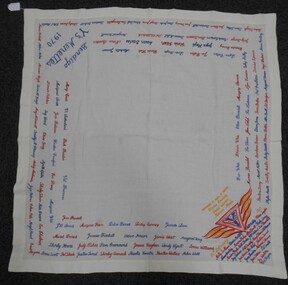
... area and the year it was established are embroidered in one corner. The names of all club members are embroidered around the edges of the tablecloth. The logo of the International Y's Menettes is embroidered in one corner along with the date the club was founded. The logo colours are red, yellow and blue. Textile Bendigo ...The Bendigo Y's Menettes Declaration of Association was made on the 17th of February 1954. This Y's Menettes club was one of four in Bendigo. The other clubs were Eaglehawk, Lansell and Kangaroo Flat. The Y's Menettes were originally an offshoot of the Y's Men's Clubs. They are linked to the YMCA and aim to promote Christian principles, Youth activities, international good will, community needs, personal development, enjoyment of life and information sharing within the network. Monthly meetings were held in members' homes and later on in YMCA meeting rooms. The tablecloths were used when new members were inducted and their names were added to the cloth. The tablecloths were used at the monthly meetings. They were used at the yearly changeover of office bearers.Cream cotton square tablecloth. The tablecloth has one row of decorative machine embroidery on the hems. The club's area and the year it was established are embroidered in one corner. The names of all club members are embroidered around the edges of the tablecloth. The logo of the International Y's Menettes is embroidered in one corner along with the date the club was founded. The logo colours are red, yellow and blue.service clubs, women, ymca, y's menettes -
Bendigo Historical Society Inc.
Newspaper - Bendigo Advertiser Collection: Small Town With Big Hearts Article on Marong, June 30 1993
... around 580 and growing, as more people move from nearby urban areas. Ongoing development includes new housing and community facilities. The town is a notable stop for interstate truck drivers due to a sharp bend requiring them to slow down, leading to a gathering spot outside the hotel. The presence of palm trees throughout the town is a distinctive feature, with some believed to have spread from the hotel’s original palms. NEWSPAPER Bendigo ...This document is a personal reflection on life in the small town of Marong. The reasons for living in Marong are described as deeply personal and sometimes hard to define, often tied to a sense of belonging and community.Tess Rule, a long-time resident, expresses genuine affection for Marong and its people, emphasizing the friendliness and strong social ties within the town. The document features a vivid description of Marong's picturesque landscape, including sunsets, Bullock Creek, gum trees, and local wildlife, capturing the town's rural charm. Tess values supporting local businesses and prefers to shop in Marong whenever possible, only traveling to nearby Bendigo for items unavailable locally. Marong is often overlooked by travelers who only see the main highway and intersection, missing the town's true character.Overall, the document conveys a deep appreciation for Marong's community spirit, natural beauty, and the importance of supporting local life. The creek is not permanent, but it is a significant natural feature, especially near the town's sporting grounds. The town is characterized by a strong sense of community and high levels of volunteer involvement, particularly in maintaining sporting grounds and organizing local events. Community members actively participate in fundraising and improvement projects, such as raising money for a new hall and restoring the historic shire hall. The Marong Hotel, built around 1917, is a central landmark and was once one of three hotels in town. The town has a history of gold mining and is located on the edge of the Golden Triangle.The old shire hall is being restored to its original 1908 condition, reflecting pride in local heritage. Marong supports a wide range of sports clubs (footy, tennis, swimming, shooting, riding, trotting, cricket, and more), which are central to community life. The hotel serves as a hub for both locals and travelers, with regulars including sports club members and truck drivers who stop for food. The population is around 580 and growing, as more people move from nearby urban areas. Ongoing development includes new housing and community facilities. The town is a notable stop for interstate truck drivers due to a sharp bend requiring them to slow down, leading to a gathering spot outside the hotel. The presence of palm trees throughout the town is a distinctive feature, with some believed to have spread from the hotel’s original palms.Small Towns With Big Hearts Maiden Gully. Series of photos and information about Marong. Pictures by Peter Hyett. Written by Wayne Gregson. This item contains the following documents newspaper articles and black and white photos: 8091.603a Part of Page 10, the Bendigo Advertiser Wednesday June 30 1993 8091.603b Part of Page 10, the Bendigo Advertiser Wednesday June 30 1993 8091.603c Church in Marong - Contact BHS for details 8091.603d Church in Marong - Contact BHS for details 8091.603e Holy Trinity Church in Marong - Contact BHS for details 8091.603f Former Shire of Marong Hall undergoing renovations - Contact BHS for details 8091.603g Calder Highway sign - Contact the BHS for details 8091.603h Picnic Table and Golf Course - Contact the BHS for details 8091.603i The Marong Hotel - Contact the BHS for details 8091.603j The Marong Hotel and Old Shire Hall from the railway crossing - Contact the BHS for details 8091.603k Rural City of Marong Chief Executive Officer Graeme Elvey inspects the $120,000 Shire of Marong Hall undergoing renovations - Contact BHS for details 8091.603l Rural City of Marong Chief Executive Officer Graeme Elvey inspects the $120,000 Shire of Marong Hall undergoing renovations - Contact BHS for details 8091.603m Truck entering Marong from the Calder Highway - Contact BHS for details 8091.603n The Post Mistress - Contact BHS for details 8091.603o Bar and patrons of the Marong Hotel - Contact BHS for detailsnewspaper, bendigo advertiser, marong -
Bendigo Historical Society Inc.
Document - History Notes - Information on Mining, statistics and early development of Bendigo, 1840-1990 approx
... Located Bendigo is in central Victoria, north of the Dividing Range, between Campaspe Valley and Loddon flats; 100 miles from Melbourne. The City area is 8,030 acres; population around...Located Bendigo is in central Victoria, north of the Dividing Range, between Campaspe Valley and Loddon flats; 100 miles from Melbourne. The City area is 8,030 acres; population around ...Saddle, Fault, and Spur reefs are the main types, found in Ordovician slates and sandstones folded into anticlines and synclines. Major Productive Reefs: Hustlers, Garden Gully, Paddy's Gully, Sheepshead, New Chum, Nell Gwynne, and Carshalton.Mining Process: Gold is found in quartz lodes, extracted, crushed, and separated using mercury amalgamation. From 1851–1949, over 21 million ounces of gold were produced, valued at approximately £323 million (1964 prices). Located Bendigo is in central Victoria, north of the Dividing Range, between Campaspe Valley and Loddon flats; 100 miles from Melbourne. The City area is 8,030 acres; population around 40,000 (city), 47,000 (district).Climate is temperate, with average rainfall of 20 inches, and 320 sunny days per year. Gold First discovered in 1851 at Golden Square. Bendigo Became a municipal district in 1855, a town in 1861, a city in 1871, and changed its name from Sandhurst to Bendigo in 1891. Key Events: Establishment of hospital, police court, churches, schools, and infrastructure like railways and water supply.Governance and Civic Structure. Council Structure: 3 wards, each with 3 councillors serving 3-year terms; mayor elected by councillors. Main revenue from rates and property; principal duties include public works, health, parks, and enforcement of by-laws. Major Projects: Olympic swimming pool, market extensions, park improvements, road and drainage works.Economy and IndustryCommerce: 730 retail shops, 260 factories, and a major livestock market.Principal Industries: Meat processing, manufacturing (including ordnance, textiles, engineering), fruit and food processing, and egg production. Bendigo is Noted for sheep, lamb, fruit (especially tomatoes and apples), and dairy. Major rail and road hub with connections across Victoria and to New South Wales; tram and bus services.Education: Institute of Technology, Teachers College, multiple secondary and primary schools, and special education facilities. Several hospitals, aged care homes, and health services. 486 acres of parks and gardens, extensive sports facilities, and Lake Eppalock for water sports. Wide range of community, cultural, and sporting organizations. Regional library, art gallery, music and drama societies. Notable Figures and HeritageGeorge Lansell: Known as the "Gold King," a key figure in Bendigo's mining history. Transformation: From a sheep run to a major goldfield and then to a modern city with significant infrastructure and cultural assets. Motto Coat of Arms: Features symbols representing gold mining, agriculture, pioneering, and fruit growing.Motto: "Progress" in gold on a purple ribbon.Bendigo's history is marked by rapid growth from gold discovery, strong civic development, and a diverse economy, making it a significant regional center in Victoria.History Notes - Information on Mining, statistics and early development of Bendigo - author unknown This item contains the following document: 11217.65a Twelve Foolscap typed pages with information on Bendigonon-fictionbendigo, fortuna, george lansell, development of bendigo -
 Bendigo Historical Society Inc.
Document - Fortuna Articles - Restoration of the gardens, and Scope of Works, Oct 1988
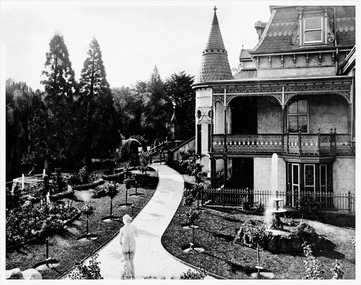
... around 1900. The Scope of Works included removal of existing shrubs and a section of bitumen pathway; installation of the fountain and necessary plumbing. Also to replant the area with lawn and appropriate plants. The restoration focused on the main approach area to the Fortuna mansion, which was currently in need of renovation. The proposal references plans and photographs (in Annexes A, B, and C ) to illustrate the intended restoration area and its current condition. bendigo ...The Army Survey Regiment, formerly the Royal Australian Survey Corps, was the Australian Army’s primary military mapping and charting capability. Operating out of the historic Fortuna Villa in Bendigo from 1942 until its disbandment in 1996, it was the largest mapping entity in the Southern Hemisphere. In October 1988 the commanding officer Lieutenant Colonel J.W. Winzar outlined a proposal by the Australian Army's Historical Committee to restore part of the grounds surrounding the Fortuna mansion to their approximate 1900 appearance. The main objective was to Install a cast iron fountain with water recirculating equipment and pool; also to re-establish lawns and flower beds to match the historical layout from around 1900. The Scope of Works included removal of existing shrubs and a section of bitumen pathway; installation of the fountain and necessary plumbing. Also to replant the area with lawn and appropriate plants. The restoration focused on the main approach area to the Fortuna mansion, which was currently in need of renovation. The proposal references plans and photographs (in Annexes A, B, and C ) to illustrate the intended restoration area and its current condition.Fortuna Articles - Restoration of the gardens, and Scope of Works from the Australian Army. This item contains the following documents: 11217.71a An 8 x 6 inch black and white photo of Fortuna and its gardens (as it was in 1900) including the fountain and pathways. 11217.71b A quote from Plants and Sculptures, 10 High St Glen Iris for a cast iron fountain for $2,200 and includes hand-written letter and product release pictures from B and C Foundries Co. Pty Ltd 11217.71c Letter and Scope of Works from Lieutenant Colonel J W Winzar Commanding Officer of Fortuna to the Secretary, third Military District Historical Committee, Headquarters Third Military District, Victoria Barracks, Melbourne - Proposal to restore a portion of the Fortuna grounds. 11217.71d Photograph of the location for the fountain in 1988 11217.71e Sketch of new fountain, and restored pathways (5 copies of the sketch plus the original tracing) 11217.71f Plan of the works for the new landscaping. (7 copies) 11217.71g Plan - A3 Side elevation showing the new fountain 11217.71h Letters to suppliers and information (product catalogs) re the fountain and accessories 11217.71i Letter to the Chief Engineer HQ Third Military District - progress report as at May 1989 11217.71j Letters to Billman's Foundry Castlemaine for quote on lamp pole and fitting and seat ends; and to Ajax Foundry Kyneton for seat ends, included coloured photosnon-fictionbendigo, fortuna, george lansell, army survey regiment, fortuna fountain, lieutenant colonel j w winzar -
 Bendigo Historical Society Inc.
Administrative record - FOREST COMMISSION BEE RANGES
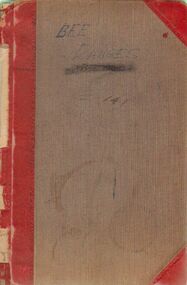
... around 1963. Bee-ranges issued include name and address of apiarist along with allotment, parish, district and area size. Districts include Bendigo...BENDIGO History bee-keeping Apiary Grey cover leather bound alphabet tabbed Forest Commission record book handwritten title 'Bee Ranges' 141. Numerous entries under various names date from around 1/8/06 indicating commencement of bee-site issue in Victoria. Last dated entry around 1963. Bee-ranges issued include name and address of apiarist along with allotment, parish, district and area ...Grey cover leather bound alphabet tabbed Forest Commission record book handwritten title 'Bee Ranges' 141. Numerous entries under various names date from around 1/8/06 indicating commencement of bee-site issue in Victoria. Last dated entry around 1963. Bee-ranges issued include name and address of apiarist along with allotment, parish, district and area size. Districts include Bendigo, Lyal, Walmer, Inglewood, Murrabit, Tarnagulla, Rheola, Bullarto.bendigo, history, bee-keeping, apiary -
 Bendigo Historical Society Inc.
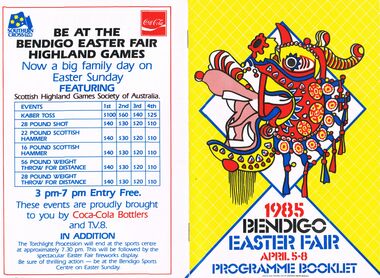
Document - BENDIGO EASTER FAIR 1985, 5 April 1985
... Bendigo City Area During Easter (listings for Thursday, Good Friday, Eater Saturday, Easter Day). The Bendigo & District Tourism Association Welcomes you to Victoria's Premier Town. Listing of events over Easter with map to guide all around...Bendigo City Area During Easter (listings for Thursday, Good Friday, Eater Saturday, Easter Day). The Bendigo & District Tourism Association Welcomes you to Victoria's Premier Town. Listing of events over Easter with map to guide all around ...Bendigo Easter Fair 1985, April 5-8. Programme Booklet. Friday: Sun Loon Display, Easter Bowling Carnival, Rotary Easter Art Show, Book Bazaar, Model Railroaders Exhibition, Dudley House, Exhibition of Dolls, Embroiderers Guild, Art Gallery. Saturday: Mardi-Gras Street Carnival, Busking, Outdoor Theatre, Arts & Music, Bendigo Theatre Company, Cynthia Holland & Bendigo Talent Club Sun Loong Display, Rotary Art Show, Handcraft Bazaar, Motorcycle Show-Sandhurst Historic Vehicle Club Trams, Central Deborah, Dudley House, Exhibition Dolls, Antique Fair, Model Railroaders, Fire Brigades' Carnival for Children, Horse & Harness Parade, Book Bazaar, Bowling Carnival, Football, Photographic Exhibition, Family Activities, Cinema 180, Exhibition of Paintings silver furniture & porcelain, Embroiders Guild. Sunday: Horse Spectacular, Model Railroaders, Rotary Art Show, Handcraft Bazaar, Antique & Historical Display of Arms Weapons & Military, Antique Fair, Torchlight Procession, Awakening of Dragon, Exhibition of Dolls, Dudley House, Trams, Central Deborah, Book Bazaar, Mardi-Gras Street Carnival, Hargreaves Mall, Motorcycle Show, Photographic Exhibition, Family Activities, Cinema 180, Art Gallery, Embroiderers Guild. Monday: Philatelic Society Exhibition, Rotary Art Show, Handcraft Bazaar, Antique Fair, Model Railroaders, Bendigo District Bowling Assn. Easter Bowling Carnival, Exhibition of Dolls, Dudley House Bendigo Branch Royal Historical Society, Trams, Central Deborah, Motorcycle Show, Antique and Historical Display of Arms Weapons & Militaria, Mardi-Gras Street Carnival, Hargreaves Mall, Gala Street Procession, Carnival For Children, Sun Loong on Display, Photographic Exhibition, Fusion, Cinema 180, Art Gallery, Embroiders Guild. Church Services in Bendigo City Area During Easter (listings for Thursday, Good Friday, Eater Saturday, Easter Day). The Bendigo & District Tourism Association Welcomes you to Victoria's Premier Town. Listing of events over Easter with map to guide all around. Bendigo Easter Fair Incorporated Phone: (054) 43 9191Bendigo Easter Fair Inc. would like to thank the Ministry for the Arts for its continued assistance over the past 11 years. 3 1/2 pages of information on the Bendigo Easter Fair and its rich history dating back to 1871. The first Fair was held to aid 2 charities: Bendigo Base Hospital and the Home and Hospital for the Aged (Benevolent Asylum). Gone are the days of the Fancy Bazaar, Fat Baby Contest and the greasy Pig Chase, many tradition remain the same. Links to the Chinese community date back to when the first settlers arrived seeking gold. This gives the Fair its unique quality and Brings visitors in their thousands each Easter. The Monday Procession has always been the most famous as many old photographs show. Some photos taken before the turn of the century. Many made the journey to Bendigo from Melbourne and outlying districts. Visitors line the route to see floats, bands, and the once a year appearance of the Chinese Dragon, ''Sun Loong'' or ''New Dragon''. The longest Imperial Dragon in the World; 300ft plus in length. His predecessor, ''Long'', is acclaimed as the worlds oldest Imperial Dragon. Easter Saturday Procession has taken form of a Horse and Harness Parade, attracting and immense variety of entrants. The torchlight Procession on Sunday evening includes fireworks, Fire Brigades, Fire Trucks, firemen, marching girls and illuminated floats. The Army has helped with the procession since around the time of Federation. 15th Transport Squadron (15 Tpt. Sqdn.), processions are assembled & dispatched with Army efficiency. Marshalling the Monday Procession this year will be done by the Army as well as our own Easter Fair marshalls with a new communications system.1930 the Popular Girl contest was introduced. The four main streets of Bendigo, Pall Mall, Mitchell Street, Hargreaves Street and Williamson Street (formerly View Street), sponsored their particular girl by means of raffles, street stalls and a variety of fund raising. The winner was the one that raised the most money, and was announced from the balcony of the Shamrock Hotel, by the Mayor of Bendigo on Easter Saturday Night. The Popular girl contest is still held with a lot of the fund raising now done by service clubs and voluntary organizations. 1984 fund raising efforts, in excess of $50,000 was distributed to charities in our area. The combined Bendigo Brigades' record support for the Easter Fair goes back of many years in a variety of ways. Bendigo people are known for their love of sport and the choice in the city is very wide. There will be no Easter Sports Carnival this year but Easter Fair will still be holding functions at the Bendigo Sports Centre in Park Road. Bendigo city centre will be alive with stalls, raffles and rides of every description over the three days of sports, Sat-Sun. Hargreaves Mall will be the focus of relaxation, buskers, community theatre, arts with craft activity & musical entertainment. The Rotary Club of Bendigo and the Easter Fair Society had had independent Arts Shows but in 1981amalgamate their shows. 1981 Rotary Club of Bendigo added the Antique Fair to the Easter Program, held in the RSL Memorial Hall, Pall Mall. Last year some event were cancelled, but last year's Fair was quite a success. With many outdoor activities, the weather plays a vital role. It has been necessary to alter some venues in the past years, with Easter being a week early in April this year we are looking forward to fine conditions. The Chinese and Bendigo Easter Fair, The First Chinese arrived on the goldfields in mid 1850's in teams or groups to work the rich alluvial gold fields of Dai Gum San (Big Gold Mountain). Most were of poorer class from the district of See Yup, an area of four villages near the provincial capital Canton (Kwangchow). By far the largest group came from the village of Toi Shan. The alluvial gold quickly petered out so by the time of the first Bendigo Easter Fair in 1871 most Chinese had either left for richer fields or turned to other pursuits such as stores, market gardens, laundries, herbalists etc.. Many of course had died on the fields from the rigors of mining of diseases not encountered in their homeland. The Benevolent Asylum (Home & Hospital for the age) and Bendigo Base Hospital had become places of rest, help and haven for old, sick and lonely Chinese. SO when the idea was mooted to hold a charity fair to raise money for these worthy establishments, the Chinese were only too happy to join with the Easter Fair Society in this charitable work. It has for over 113 years. Chinese showed their costumes, scenery, and weapons of warfare, but it was not until 1892, that the first of the 5 loongs (dragons) appeared.. . The pageant was marshalled by Mr T Chapman and headed by Mr Moody, attired in habiliments of a most gorgeous character on a gaily caparisoned horse, and his get up as a Chinese grandee was perfect. . . Tom toms , bagpipes. . Wind instrument resembling a clarinet. . Bagpipes,.. The Weekly Advertiser, Friday, April 22,1892. . . Today the Chinese Association, made up of descendants and families of the early Chinese and associate members, carries on the charitable works of their predecessors. A Little Of Dragons, We have all heard of St. George Bendigo dragons (loongs) have none of these characteristics, in fact they have only brought good to Bendigo. There are 3 chief species of Chinese Dragons of which ''The Lung'' (Loong) is the most powerful. It is also the spiritual dragon which produces wind and rain. It has 9 resemblances, the head of a camel, horns of a deer, eyes of a rabbit ears of a cow, neck of a snake, belly of a frog, scales of a carp, claws of a hawk and palm of a tiger. Loong is a vegetarian, favourite food pomelo (ooluk), the father of our modern grapefruit. The abode, according to legend is the sky or water. He is also deaf, thus requiring loud noises to awaken him and to keep him awake. . . Number of claws they have represent rank. Dragons have 2, 3, 4 or 5 claws, the latter being reserved for the Emperor. Loong and Sun Loong have both five claw dragons. Bendigo has had 5 or 6 dragons, the number being confused by the fact each dragon was called 'Loong'. Today Three dragons remain in Bendigo, Loong, Sun Loong, and Yar Loong. Loong is the oldest Imperial Dragon in the world. He continued his walk through the streets of Bendigo til his retirement in 1970. He was created in Fat Shan in the Peoples Republic of China. Built of. . . Sun Loong replaced Loong after the 2 dragon procession of 1970. Created by Mr Law On, . . Yar Loong is a night dragon, came in 1930's. . . Long history of dragons. . The Birth Of A Dragon. . . To awaken A Dragon. . . The Easter Monday Chinese Procession. . . Procession divided into 6 sections,.. The Easter Monday Procession comprises,… over 350 people. Conclusion It is hoped that in the near future a museum can be built to house the priceless regalia gathered together over the last century and a half by the Bendigo Chinese Association. Advertisements; Historic Bendigo Pottery, Mim's Restaurant, Antique Fair (Rotary), The Copper Pot, Sandhurst Town (Develop Victoria Council Tourism Award 1983-1985), Bendigo Motor Co. (Mazda), Diggers, Chaplin's, Bendigo's Dunny Diner, Arakoon, Quin's Bluebird, Allara Motor Lodge, Lakeview Motor Inn, The Armoured Car Company, Gillies, Mardi Gras Street Carnival, Handcraft Bazaar, Art Show (Rotary) Bendigo Model Railroaders (Easter Exhibition), Bendigo Easter Fair Highland Games brought to you by TV8 and Coca-Cola Bottlers. Design and Finished Art By Graphics Group, Bendigo.Graphics Group Bendigoevent, easter fair, bendigo easter fair incorporated, bendigo easter fair 1985, april 5-8. programme. friday: sun loon display, easter bowling carnival, rotary easter art show, book bazaar, model railroaders exhibition, dudley house, exhibition of dolls, embroiderers guild, art gallery. saturday: mardi-gras street carnival, busking, outdoor theatre, arts & music, bendigo theatre company, cynthia holland & bendigo talent club sun loong display, rotary art show, handcraft bazaar, motorcycle show-sandhurst historic vehicle club trams, central deborah, dudley house, exhibition dolls, antique fair, model railroaders, fire brigades' carnival for children, horse & harness parade, book bazaar, bowling carnival, football, photographic exhibition, family activities, cinema 180, exhibition of paintings silver furniture & porcelain, embroiders guild. sunday: horse spectacular, model railroaders, rotary art show, handcraft bazaar, antique & historical display of arms weapons & military, antique fair, torchlight procession, awakening of dragon, exhibition of dolls, dudley house, trams, central deborah, book bazaar, mardi-gras street carnival, hargreaves mall, motorcycle show, photographic exhibition, family activities, cinema 180, art gallery, embroiderers guild. monday: philatelic society exhibition, rotary art show, handcraft bazaar, antique fair, model railroaders, bendigo district bowling assn. easter bowling carnival, exhibition of dolls, dudley house bendigo branch royal historical society, trams, central deborah, motorcycle show, antique and historical display of arms weapons & militaria, mardi-gras street carnival, hargreaves mall, gala street procession, carnival for children, sun loong on display, photographic exhibition, fusion, cinema 180, art gallery, embroiders guild. church services bendigo city easter , eater saturday bendigo & district tourism association victoria's premier town. bendigo easter fair incorporated bendigo easter fair rich history 1871. base hospital and the home and hospital for the aged (benevolent asylum). fancy bazaar, fat baby contest greasy pig chase, many old photographs floats, bands, chinese dragon, ''sun loong'' or ''new dragon''. the longest imperial dragon in the world; 300ft plus in length easter saturday procession horse harness parade. torchlight procession on sunday evening includes fireworks, fire brigades, fire trucks, firemen, marching girls and illuminated floats. army helped federation. 15th transport squadron (15 tpt. sqdn). monday procession by the army 1930 popular girl contest introduced. four main streets, pall mall, mitchell street, hargreaves street williamson street. winner announced shamrock hotel, easter saturday night. popular girl contest fund raising service clubs voluntary organizations. 1984 fund raising efforts, in excess $50, 000 distributed to charities. combined bendigo brigades'. no easter sports carnival holding functions bendigo sports centre in park road. stalls, raffles three days sports, sat-sun. relaxation, buskers, community theatre, arts with craft activity & musical rotary club of bendigo easter fair society independent arts shows in 1981amalgamate antique fair, held last year some event cancelled. with many outdoor activities, weather plays vital role. alter some venues in the past, easter being a week early first chinese arrived goldfields in mid 1850's dai gum san (big gold mountain). see yup, canton (kwangchow). toi shan. first easter fair in 1871 for richer fields other pursuits stores, market gardens, laundries, herbalists etc. benevolent asylum (home & hospital for the age) bendigo base hospital had become places of rest, help and haven for old, chinese. charity fair to raise money, chinese join easter fair society in this charitable work. costumes, scenery, weapons of warfare, 1892, the first of the 5 loongs. marshalled by mr t chapman by mr moody, caparisoned horse, chinese grandee. tom toms, wind instrument. bagpipes, advertiser, april 22, 1892. chinese association, descendants chinese and associate charitable works. st. george ''the lung'' most powerful. spiritual dragon wind rain. 9 resemblances, camel, deer, rabbit cow, snake, frog, carp, hawk tiger. a vegetarian, pomelo (ooluk), the abode, legend is the sky or water. deaf loud noises to keep him awake. claws represent rank. 2, 3, 4 or 5 claws, reserved for emperor. had 5 or 6 dragons called 'loong'. three dragons loong, sun loong, yar loong. loong oldest imperial dragon in the world. retirement 1970. created in fat shan peoples republic of china. built of. sun loong, loong 2 dragon procession 1970. created mr law on, yar loong a night dragon1930's.history dragons. birth of a dragon. awaken a dragon. easter monday chinese procession divided 6 sections 350 people. priceless regalia last century bendigo chinese association. advertisements; historic bendigo pottery, mim's restaurant, antique fair (rotary), the copper pot, sandhurst town (develop victoria council tourism award 1983-1985), bendigo motor co. (mazda), diggers, chaplin's, bendigo's dunny diner, arakoon, quin's bluebird, allara motor lodge, lakeview motor inn, armoured car company, gillies, mardi gras street carnival, handcraft bazaar, art show model railroaders highland games tv8 coca-cola. art by graphics group -
 Bendigo Historical Society Inc.
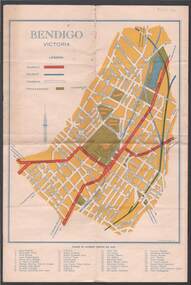
Map - BILL ASHMAN COLLECTION: MAP OF BENDIGO
... Contains street of Bendigo with Places of Interest marked, Map of the Bendigo Area with Places of Interest marked, and on the centre page is Bendigo the Golden Gateway to the North. There is a map with circles around Bendigo and their distance from centre Bendigo. ...Contains street of Bendigo with Places of Interest marked, Map of the Bendigo Area with Places of Interest marked, and on the centre page is Bendigo the Golden Gateway to the North. There is a map with circles around Bendigo and their distance from centre Bendigo. ...Map of Bendigo. Contains street of Bendigo with Places of Interest marked, Map of the Bendigo Area with Places of Interest marked, and on the centre page is Bendigo the Golden Gateway to the North. There is a map with circles around Bendigo and their distance from centre Bendigo. Circles go to a distance of 20 miles. Information includes General Information, Scenic Attractions, Industrial Activities, Industries already Established, Sporting Facilities - Bendigo and District, and Cultural Organizations. JCI shield on the left under the map. Also some brief information about Bendigo.sciences, instruments - general, scalebuoy, bill ashman collection - correspondence, map of bendigo, cambridge press, a r mcconnachie, bendigo junior chamber of commerce, bendigo city council -
 Bendigo Historical Society Inc.
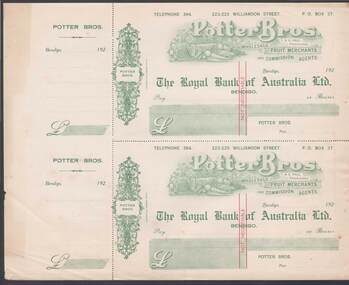
Document - CAMBRIDGE PRESS COLLECTION: CHEQUES - POTTER BROS
... Around this area are drawings of fruit and vegetables. The Royal Bank of Australia Ltd. Bendigo...Around this area are drawings of fruit and vegetables. The Royal Bank of Australia Ltd. Bendigo ...Sheet of two cheques with cheque butts. Printed at the top is Potter Bros. I & G Hall, Proprietors, Wholesale Fruit Merchants and Commission Agents. Around this area are drawings of fruit and vegetables. The Royal Bank of Australia Ltd. Bendigo is printed in the centre. On the left is a decorative area with Potter Bros. in the centre. Date line ends in 192-. Printed in green with red Not Negotiable across the centre.business, printers, cambridge press, cambridge press collection, potter bros, i & g hall, the royal bank of australia ltd, cambridge press -
 Bendigo Historical Society Inc.
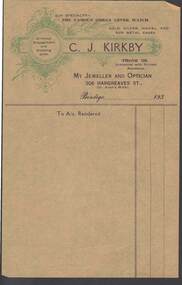
Document - CAMBRIDGE PRESS COLLECTION: ACCOUNT - C. J. KIRBY
... Bendigo. Printed in dark blue with green around the name and a decorative area around a circle with Birthday Engagement, and Wedding Gifts printed inside. ...Bendigo. Printed in dark blue with green around the name and a decorative area around a circle with Birthday Engagement, and Wedding Gifts printed inside. ...Account page printed on yellow tissue-like paper from C. J. Kirkby, My Jeweller and Optician, 306 Hargreaves St., (Cr. Allan's Walk) Bendigo. Printed in dark blue with green around the name and a decorative area around a circle with Birthday Engagement, and Wedding Gifts printed inside. Date line ending 193-.business, printers, cambridge press, cambridge press collection, c j kirkby, omega lever watch -
 Bendigo Historical Society Inc.
Slide - FLEMING COLLECTION: 1950S BENDIGO SLIDE, 1950s
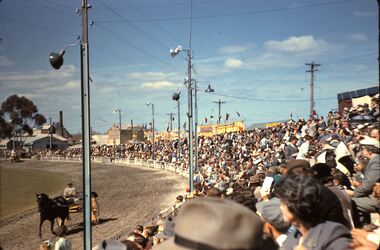
... Bendigo Easter Procession. Easter Monday was 7 April 1958. Horse and gig going around outside of arena. Spectators area...Bendigo Easter Procession. Easter Monday was 7 April 1958. Horse and gig going around outside of arena. Spectators area...Bendigo Easter Procession. Easter Monday was 7 April 1958. Horse and gig going around outside of arena. Spectators area ...Bendigo 1950s. Bendigo Easter Procession. Easter Monday was 7 April 1958. Horse and gig going around outside of arena. Spectators area appears full and more spectators standing at the back. The shed behind the pavilion is the old Ice Works building with cooling towerKodachromeevent, easter fair, bendigo easter fair, bendigo 1950s. bendigo easter procession. easter monday was 7 april 1958. horse and gig going around outside of arena. spectators area appears full and more spectators standing at the back. shed behind pavilion old ice works building cooling tower -
 Bendigo Historical Society Inc.
Document - LONG GULLY HISTORY GROUP COLLECTION: SOME HISTORICAL INFORMATION
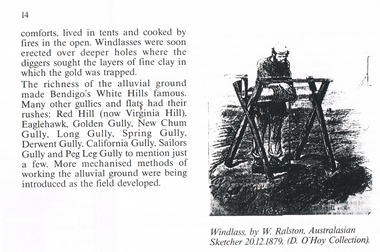
... Around the Boree Log the Rev Dean hayes St Kilian's Bendigo Amalgamated Goldfields (B.A.G.) Edward Clarence Dyason R H S Abbott Hercules and Energetic South New Moon New Chum Goldfields Central Red White and Blue Consolidated Brown John the Life and Times of Long Gully Bendigo Press Val White Megan Snoop 12 photocopied pages. Page four has acknowledgements, Page five mentions Pen-Portraist by Raly Wallace and Kevin Vallence, Page 14 mentions some rich areas ...BHS Collection12 photocopied pages. Page four has acknowledgements, Page five mentions Pen-Portraist by Raly Wallace and Kevin Vallence, Page 14 mentions some rich areas: White Hills, Red Hill (now Virginia Hill), Eaglehawk, Golden Gully, New Chum Gully, Long Gully, Spring Gully, Derwent Gully, California Gully, Sailors Gully and Peg Leg Gully. There are two sketches on the page: Windless, by W. Ralston, Australasian Sketcher 20/12/1879 (D O'Hoy Collection) and a sketch of some miners in a tent with some mining equipment in front of it. There are two men in front of a fire at the front of the tent. Page 16 has a sketch of an old brick house with iron lace on the veranda and a picket fence at the front. Page 17 mentions the school and some Friendly Societies and Church. Page 22 mentions Quartz Mining. There is a Lithograph of a Quartz outcrop, New Chum Gully 1852 by George Rowe and a View of Surface Workings 1861, a Batchelder Photo. Page 23 mentions Edward Nucella Emmett, a pioneer gold digger who became involved in many important public issues. Page 25 mentions Company Mining and Crushing. It has a sketch of a Primitive Quart Crusher. Page 37 Mentions Richard Pope, a Miner who tramped from job to job in Bendigo and eventually followed the rush to Broken Hill. Page 38 mentions the Eaglehawk Brass Band and Friendly Societies in Eaglehawk. Page 39 is headed Miner's Cottage. It mentions stone miners' cottages. Page 40 has a sketch of a Georgian Style Sandstone Cottage Harvey Town. Page 41 mentions men sweeping the road to get gold, Bull Family grocery shop and a blacksmith. Page 42 is headed St. Augustine's. Page 43 has a sketch of St. Augustine's Church. Page 59 is headed Bendigo Amalgamated Goldfields (B.A.G.) Edward Clarence Dyason was largely behind a new company set up in 1917 to work the Bendigo field in an entirely new way. (B.A.G.) wished to take over all existing mining companies, and place them under a single management structure.bendigo, history, long gully history group, the long gully history group - some historical information, mr l hooley, mr l bennetts, mr w watson, mr w heraud, mr d m davies, mr w perry, mr h harvey, mr a llewellyn, mr e oates, chook temple by mr alan llewellyn, mr f cusack, tracey ipsen, ray wallace, bendigo field naturalists' club, eaglehawk tree lovers' society, bendigo historical society, university of melbourne, kevin vallence, monash university, bendigo technical college, south australian writer's fellowship, windlass, w ralston, australasian sketcher 20.12.1879, d o'hoy, mechanics institute, california gully school, bell topper hill, i.o.r. (rechabites), cobden tent, refuge tent, sutton tent, m.u.i.o.o.f.'s loyal darling, bible christian church, california hill wesleyan methodist church, saint jude's anglican church, quartz mining, e n emmett, jonathan harris, haris' claim, j hustler, george rowe, batchelder, la trobe library, cave, amos, new chum line of reef, edward nucella emmett, bendigo city council, all saints, william westgarth, latham and watson, hustler's line of reef, bell and irons, ballerstedt and son, young and company, nicholas and bassit, ensor, thomas carpenter, quartz crusher, goldfields and mineral districts of victoria, richard pope, daniel webster mine, isaac dyason, old chum mine, north old chum mine, young chum mine, george lansell, lazarus, silicosis of the lungs, eaglehawk brass band, victoria hotel, mr williams, eaglehawk branch of the australian natives association, loyal catherine lodge, mr james, odd fellows in the loyal catherine lodge branch no 4935, richard harvey, thomas harvey, moonta copper mines, harvey town, national trust of australia, eaglehawk tree lovers society, saint mungo's methodist church, clark's beehive battery, world war 1, kee-young, lady barkly hotel, prankhurst, bull family, cousin jack, st augustine's, myers, nicholls, john o'brien, around the boree log, the rev dean hayes, st kilian's, bendigo amalgamated goldfields (b.a.g.), edward clarence dyason, r h s abbott, hercules and energetic, south new moon, new chum goldfields, central red white and blue consolidated, brown john, the life and times of long gully, bendigo press, val white, megan snoop -
 Bendigo Historical Society Inc.
Document - RALH BIRRELL COLLECTION: OLD MINING SITES WHITE HILLS, Dr. Ralph Birrell (now deceased)
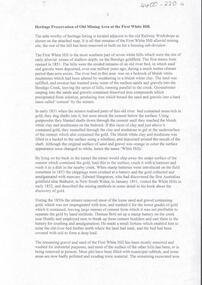
... area adjacent to the old Railway Workshops as shown on attached map'. A further addition (slip of paper, typed) to the paper describes the location of the Whiter Hills of White Hills: 1st White Hill is east of Lake Weeroona The 2nd and 3rd White Hills are around Strickland Road, former East Bendigo Primary School, Baden/Powell Streets The 4th and 5th White Hills are east of Napier and Grace Street The 6th White Hill is east of Plumridge Street The 7th White Hill is east of Bosquet Street....area adjacent to the old Railway Workshops as shown on attached map'. A further addition (slip of paper, typed) to the paper describes the location of the Whiter Hills of White Hills: 1st White Hill is east of Lake Weeroona The 2nd and 3rd White Hills are around Strickland Road, former East Bendigo Primary School, Baden/Powell Streets The 4th and 5th White Hills are east of Napier and Grace Street The 6th White Hill is east of Plumridge Street The 7th White Hill is east of Bosquet Street. ...4-page typed document, prepared by Dr. Ralph Birrell, on the significance of the former mining sites on the White Hills. Document describes the 'area adjacent to the old Railway Workshops as shown on attached map'. A further addition (slip of paper, typed) to the paper describes the location of the Whiter Hills of White Hills: 1st White Hill is east of Lake Weeroona The 2nd and 3rd White Hills are around Strickland Road, former East Bendigo Primary School, Baden/Powell Streets The 4th and 5th White Hills are east of Napier and Grace Street The 6th White Hill is east of Plumridge Street The 7th White Hill is east of Bosquet Street. -
Bendigo Historical Society Inc.
Photograph - FORTUNA COLLECTION: AERIAL PHOTOGRAPH OF FORTUNA VILLA
... BENDIGO Streetscape fortuna Colour aerial photograph of Fortuna Villa, with Victoria Hill visible in background. Chum Street in foreground of image. Many cars parked in areas around ...Colour aerial photograph of Fortuna Villa, with Victoria Hill visible in background. Chum Street in foreground of image. Many cars parked in areas around Fortuna Villa, probably indicating that his photo was taken during the occupation of Fortuna by the Cartographic Division of the Department of Defence.bendigo, streetscape, fortuna -
 Bendigo Historical Society Inc.
Book - Out and About around Bendigo. Volume 2
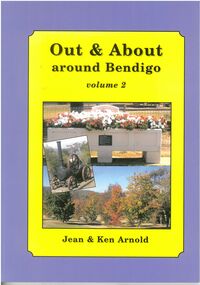
... Bendigo scenes. Back cover has a map of the area covered. Book Out and About around Bendigo. ...BHS CollectionSoft cover book with purple and green colours. Front cover has a photo collage of Bendigo scenes. Back cover has a map of the area covered.plaques, monuments -
 Bendigo Historical Society Inc.
Book - Out & About in Bendigo
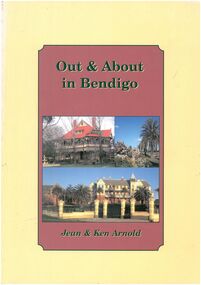
... Historical markers plaques stones tabulets and photos from an area covering Huntly across to Junortoun to Strathfieldsaye , Mandurang , Big Hill, Maiden Gully and around Eaglehawk Black and White photos Maps Out & About in Bendigo - Jean & Ken Arnold Cream outer edge with plum coloured insert with black writing. ...Historical markers plaques stones tabulets and photos from an area covering Huntly across to Junortoun to Strathfieldsaye , Mandurang , Big Hill, Maiden Gully and around EaglehawkOut & About in Bendigo - Jean & Ken Arnold Cream outer edge with plum coloured insert with black writing. Front cover Photo Langley Hall Botanical gardens and former Orphanage building Back cover various photos. Pages 80. black and white photos, maps -
 Bendigo Historical Society Inc.
Book - Out & About around Bendigo Volume 3
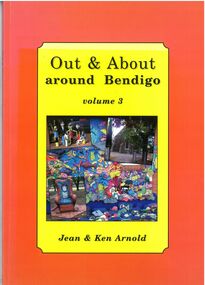
... area and various photos. Author Jean and Ken Arnold - 96 Pages Book Out & About around Bendigo Volume 3 ...BHS CollectionOrange outer edge with yellow insert black writing inset of photos Lockwood State School, Maldon photos and Kangaroo Chair Tarnagulla. Back page map of area and various photos. Author Jean and Ken Arnold - 96 Pagesblack and white photos plaques, maps
