
Showing 15 items matching "assistant protectors"
-
 Federation University Historical Collection
Document, Zelda Martin, Central Victorian Goldmining towns - Boom Towns or Ghost Towns?, c1996
... ...assistant protectors...Parker Edward Stone Parker Edgar Morrison Mount Franklin Protectorate Dja Dja Wurrung Memorial Cairn Franklinford Mt Franklin Memorial Cairn jajowurrong dja dja wurung tjaowarong wothowurong assistant protectors daylesford museum buluk rock art - grampians aboriginal mythology - grampians aborigines first nations people mount franklin aboriginal artifacts lake burrumbeet native police force central board of aborigines yandoit Commissioners' Reports Wardens' Reports Port Phillip/Victoria Directories 1839-1867 Local Government - Victoria 1853/1854 Surveyor General's Department - 1850's Victorian Schools 1850's A.B.Orlebar Haines Land Bill William Charles Haines Wilson Gray Land Tenure Land Leagues Victorian Gazetteer The Tarrangower Times and Maldon Advertiser - 1858-1867 The Mount Alexander Mail 1854-1866 The Tarnagulla Courier 1864 Dunolly and Burnt Creek Express 1862-1871 Bryce Rose's Diggings Directory The Castlemaine Directory 1862-1863 " [.1] 4th item in light blue display book titled Research Approach/Overview of Chapters/Confirmation of Canditure/Chapters1,2,3&4 of proposed thesis. ...Zelda Martin was a PhD candidate at the University of Melbourne.[.1] 4th item in light blue display book titled Research Approach/Overview of Chapters/Confirmation of Canditure/Chapters1,2,3&4 of proposed thesis. *Twenty-seven page article on Victorian goldfields towns titled: Central Victorian Goldmining Towns - Boom Towns or Ghost Towns. The article was written during the author's PhD study. It outlines the context methodology, and resources and the chapters of the proposed thesis: (1) Central Victorian Goldmining Towns - The Context (2) Contemporary Views of the Factors Necessary for Town Growth (3) Outward Manifestations of Town Growth (4) The Trappings of Government (5-9) The Main Towns and Their Hinterland. [.2] 5th item in Light Blue display book as above item. *Chapter 1 of proposed thesis titled 'Pick, Shovel and Tin Dish Mining.' Covers in Section A: Central Victoria - Pre 1851: Aborigines in Central Victoria, Squatters, and Government. Section B: The years 1851-1854: The Early Gold Rushes, Government Reaction, Township Surveys, Legislation, Town Development, Local Government and Early Settlement. [.3] 6th item in Light Blue display book as above item. *2A of proposed thesis titled 'Contemporary Views of the Factors Necessary for Town Growth'. Similar information to Chapter 1 plus extra re towns and maps. Sections: Introduction, Context of Place - Geographical Towns Listed, The Context of Time - Pre1851 Aborigines, Governance of Port Phillip, The Squatters, The Villages of Central Victorian Highlands, Conclusion, Condensed Version of Chapter2B. [.4] 7th item in Light Blue display book as above item. *Chapter2B of proposed thesis. Sections: Area of Research, Schools, Banks, Newspapers, Progress Association, Town Development - Sandhurst (Bendigo), Ballarat, Castlemaine,, Maryborough, Ararat and Stawell. [.5] 8th item in Light Blue display book as above item. *Chapter 3 of proposed thesis titled 'Outward Manifestations of Town Growth'. Sections: Introduction, Contemporary Writing, Educationalists, The Bankers, The Townsfolk, Current Theory, General Theories of Urban Development, and Conclusion. [.6] 9th item in Light Blue display book as above item. *Chapter 4 of proposed thesis titled 'Trappings of Government' Sections: Introduction, Early Government Attitudes to Mining and Town Development, Law and Order, Township Surveys, Legislation, Local Government, Transport and Communication, The People and Lobbyists. [.7] 10th item in Light Blue display book as above item. *'The Rise and Fall of Central Victorian Goldmining Towns'. Includes a map showing main Goldfields, a table showing towns and villages at two points in time - 1857 and 1871; a Bibliography of Primary and Secondary Sources. [.8] Resource No1. Black display book titled Local Towns 1 : Alma: *Brief history *Directory *Maps Amphitheatre / Mountain Hut: *Brief History Post Office Directory Ararat: *Brief History *Post Office Directory 1869 - Alphabetical Listing by Occupation *Ararat - Prominent Citizens of 1858 *Langi-Morgala Museum Avoca: *Brief History *Excerpts from 'Avoca The Early Years', Margery and Betty Beavis; pg1 - Beginnings; pg11 - The Midas Touch; pg25 - Local Gold Escorts; pg27 - A Town is Born; pg51- The Administration of Justice; pg53 - The Ways of the Law; pg61 - News of the Day; pg65 - A Time to Play; pg72 - Land Ownership *Post Office Directory (Bailliere's) 1869 *Tourism Map and Information of area *Historic Avoca - A 5.5km Tour *Avoca & the Pyrenees Region - information pamphlet Ballarat: *Early History of Ballarat - Ballarat Historical Society, Publication No.1: origin of the name; Ballaarat - the Beginning; Fabulous Yields from the Ballaarat Goldfield; *Streetscape Lydiard Street. *Hand drawn map showing Leigh River, Old Portland Bay Road, plaque on road to Colac; etc. *Newspaper article re 'The Theatre Royal' ( which stood in the vicinity of the current Owen Williams store) - 'The News'15/04/1998 *Article - 'Ballarat's Mechanics' Institute Lives On' Ballarat Courier, 14/09/1985 *Article - Standing the Test of Time' The News 17/11/1993 re The Mechanics Institute & picture of the Reading Room *'Ballarat a Study of a City, Phyllis Reichl, pub. Nelson, 1968; no.3 place, time and people field studies series *Investigator Vol.33 No.2, 1998 Geelong Historical Society. Article on pg75 describes Ballarat in 1861 *Folded poster - 'Ballarat 100' a history of telegraph communication, pub. Telecom. Beaufort (Fiery Creek): *Brief history *Post Office Directory [.9] Resource No.2 Black Folder Titled Towns cont.No2 Bendigo (Sandhurst): *'Family & Local History at the Bendigo Library - 1851-2001 150 years of gold'. *Bendigo Government Camp in 1853 illustration; key to sketch and names of Government officers stationed there *Excerpts from 'Bendigo and Vicinity' Adolph Haman *The Bendigo Goldfield Registry - pgs 1-7 Introduction *Excerpt: 'Breaking the Grip' *Excerpt: The Most Go-Ahead Place *Excerpts from 'History of Bendigo' - anti license agitation; laying out of town; proposed railway; gold calls and dividends; the Sandhurst Municipality; journalism *Bibliography Blackwood: *Excerpts from 'Aspects of Early Blackwood - The Goldfield, the Landmarks, the Pioneers' Alan J Buckingham and Margaret F Hitchcock, JG Publishing,1980 Buninyong: *A Brief History *Investigator Vol1 No.2 Feb 1966 Geelong Historical Society. Pg3 - Article re gold escort route - Mt Alexander to Adelaide - (see a simple monument on the Western Highway a few miles out of Horsham. Pg 15 - Ballarat Excursion - re the finding of gold. *Three articles published by Buninyong and District Historical Society Inc: (Magpie Exploration; Finding Gold In The Green Hills; Magpie Exploration; Burnt Bridge to Cargarie to Mt Mercer) *Copies of newspaper articles/items *Buninyong Street Directory Carisbrook: *In the Beginning There Was Carisbrook *The History of the Carisbrook Racecourse Carngham / Snake Valley: *Brief History *Directory Castlemaine: *Directory 1865-1866 - Alphabetical and Street *Poster - Castlemaine A Contemporary Guide "The Great Centre" 1866 - A Contemporary Guide to the Fascinating Past *Pamphlet - Castlemaine District Community Hospital *Map - Castlemaine, Maldon & Surrounding Districts *Map and Information - The Dry Diggings Track - a 55kl walk among historic goldfields relics ( Castlemaine Fryerstown Vaughan Mt Franklin Hepburn Daylesford) *Postcard - Former Court House *Directory 1867 - Alphabetical, Trade [.10] Resource No.3 Grey folder Titled Towns 3 Creswick to Maryborough Creswick: *Brief History *Booklet - "Creswick Cemetery Walk" *Booklet - The Buried Rivers of Gold Heritage Trail Creswick *Creswick Historical Museum Information Sheet *Chronological History of Creswick *Alphabetical Directory of the Borough of Creswick *Creswick's Creek Directory 1856 *Historic Creswick Walking Tour *A Brief Account of the Schools of Creswick - Past and Present *100 Years of Railway Travel in Creswick *The Berry Deep Leads *The Spence Home at Jackass Gully in the Creswick State Forest ( William Guthrie Spence - Pioneer) *The New Australian Mine and the 1882 Disaster *Creswick District News, Issue 7, July August 1999 *The Creswick Miners Walk - Information and Map *Maps Chewton: *Brief History *Directory Clunes: *Brief History *Clunes Street Directory Daylesford: *Brief History *Notable Bushfires in Daylesford District Over More Than a Century - "Black Thursday" 1851; 1862; 1899; the Disastrous Hepburn Fire of 1906; 1939; 1944; 1969. *Post Office Directory -Daylesford and Hepburn Dunolly / Inkerman: *Brief History *Directory *Pamphlet - Goldfields Historical Museum *Pamphlet - Historic Dunolly - Victoria's Best Kept Secret *Map of Gold Workings at Dunolly Area - showing where the main gold rushes occurred *Brief History - Inglewood *Directory - Inglewood - Name Occupation, Dwelling Kingower: *Brief History *Directory - Name / Ocupation / Dwelling Linton / Happy Valley / Piggoreet: *Brief History *Directory - Lintons McIvor: *"A History of the Shire and the Township of Heathcote" by J.O. Randell Majorca: *Brief History *Official Post Office Directory 1869 - Name / Occupation/ Address Maldon (Tarrangower): *Brief History Part 1 *Brief History Part 2 *Post Office Directory *List - Alphabetical Order by Names plus Business and Trade (Tarrangower Times Oct/1858) *List - Alphabetical Order by Trade plus Name and Business *Directory - Name / Occupation / Dwelling Maryborough: *Worsley Cottage - built by Arthur Worsley, a contractor in stonework in 1894 [.11] Resource No. 4 Blue Display Book titled Towns 4 Moliagul to Stawell Moliagul: *Brief History *Moligul Legislative Assembly (Voting?) List - Names and Occupations *Moliagul Victorian Post Office Directory 1868 - Name / Ocupation / Address / Comments *"The Welcome Stranger" gold nugget *The Sunday School *The Welcome Stranger Discovery Walk - information and map Moonambel (Mountain Creek) Redbank *Brief History *List of names extracted from advertisments of the Pioneer and Mountain Creek Advertiser 16/02/1861. *Bailliere's Directory 1869 - Alphabetical List of Name / Occupation / Place St Arnaud: *Brief History Sebastapol: *Brief History *Directory 1869 - Alphabetical by Name; plus occupation and address. Browns and Scarsdale: *Brief History *Browns Street Directory - Name and Occupation Smythesdale: *Brief Description *Smythesdale Street Directory -Name and Occupation Stawell (Pleasant Creek) *Brief History *Victorian Official Post Office Directory - Name /Occupation / Dwelling *Chronology - 1841-1920 *Production of gold statistics - 1879 - 1900 *Big Hill *Extracts from "The Golden Years of Stawell". Chapt 1 - Stawell's Coming Out. Capt. 2 - The Gold Rush. Caapt.3 - Cradle of Democracy. Chapt.4 - The Reefs Becomes Stawell. Chapt. 5 - Rushing In. Chapt.6 - The Pioneers. Chapt 7 - The Decade of Optimism. [.12] Resource No. 5: Blue Display Book titled 'Towns Steiglitz to the The Golden Triangle. Steiglitz: Brief History Victorian Post Office Directory 1869 *Map of Steiglitz *List of maps relevant to Steiglitz history *Information 6 tables of data from "Reports of Mining Surveyors Talbot (Back Creek) Brief History Taradale: Post office Directory 1869 - Name/Occupation/Street. Also list in alphabetical order by Occupation Taradale *Chronological Reference to Taradale Mines *Water - The Coliban System of Waterworks *Joseph Brady *The Syphon Tarnagulla (Sandy Creek) *Brief History *Tarnagulla Businessmen Cameos to give depth to advertisments in 'The Tarnagulla Courier' various issues 1864-1871 *Directory - Name/Occupation /Address *List - Name/Business/Trade Wedderburn (Koorong) *Brief History *List - Name/Occupation The Golden Triangle: *The Early Rushes - Wedderburn / Moliagul / Sandy Creek - Tarnagulla / Jones Creek - Waanyarra / Kingower / Dunolly - Goldsborough / Inglweood *Census of 1857 - Population / Occupations *1858-1871 - A Time of Consolidation- Wedderburn / Moliagul / Sandy Creek- Tarnagulla / Arnold *Census 1871 - Population *Information gleaned from the census data - Demographics / Population / Occupations / marital / Birthplace / Religion / Literacy/ Occupation and Housing Cameos *Graphs - Birthplace of settlers /Male-Female Ratio / Married males / Children under 15 as Percentage of Population / Religion *Census 1857 - Statistical data *Maps *Bibliography [.13] Resource No. 6 - Black Display Book Information and Research in Central Victoria including: *Banking - Research from ANZ Bank Archives *Institutions - also includes articles listed from the Ballarat Times Newspaper *Australian mining History Association - A.M.H.A. Bibliography *Australia's Mining History * Bibliography - Land Surveys Victoria - *1853 Administration (Statistics and Other) includes: schools / ministers of religion / police / military / local administration / licences for sale of spirits / distances between various Victorian gold fields. * Victoria Government Gazette (Copy) - N0. 116, 12/12/1854 includes: Gold Felds Commission of Enquiry & No. 85, 15/09/1854 - Addresses presented to the Lieutenant Governor (Sir Charles Hotham) during his tour through the Gold Fields of Victoria,1854. Addresses on behalf of : the people of Bendigo; Members of the Church of England, Bendigo; Members of the Wesleyan Church on the Bendigo Gold Fields; Bendigo Gold District General Hospital; the Bendigo Prospecting Association; Committee of the Bendigo Local Exhibition; Bendigo District Medical Association; Coloured Americans Resident at Bendigo; German Inhabitants of Bendigo; Landowners, Inhabitants, and Miners of Castlemaine; Inhabitants of Forest Creek; Inhabitants of Heathcote and Gold Miners of McIvor; Residents and landholders of the District of Bacchus Marsh; Inhabitants of Kilmore and Vicinity. *Gold Fields Correspondence 1853: letter from Lieutenant Colonel Valiant, (Officer commanding the Troops in Victoria) to the Lieutenant Governor re threatened disturbance at Sandhurst (Bendigo) regarding the Gold License Fee. * Extracts from a book "Victoria" re Gold Fields Commission of Enquiry involving mainly Ballarat and Castlemaine and a chapter titled 'A Tour to the Victorian Gold-Fields' *Lists of central Victorian newspapers - listed by date published 1851to 1874; by first date available to State Library. *A list of cities and towns showing County, population in 1861 &1871, and municipal status. [.14] Resource no.7. Black display book. *Reference: Papers presented to Parliament Victoria - 1859-1860 4 volumes - relevant sections copied. Contains information on Branches of Government. General / Finance / Gold / Gazette / Commission and Warrant / Statistic. *Gold Fields Act. In accordance with the Act the gold fields are divided into six districts - Ballaarat, Castlemaine , Sandhurst, Avoca, Ararat, and Beechworth.. Official staff in each gold district consists of a Resident Warden, Wardens, Wardens' Clerks, Bailiffs, Chinese Protectors, Chinese Interpreters, and Mining Surveyors. *Gold Receiver *Gaols *Police magistrates and Clerks of Petty Sessions, etc. *Field Branch *Immigration and Emigration Overland - Chinese - 1859 *Population on the Goldfields *The Geological Survey - The Government Geologist is assisited by staff from four branches - the office Branch; the Publishing Branch; the Field Branch and the Museum Branch. *Commission to Enquire Into Sludge dated 10/02/1859 (Some sections copied) - Report to the Honorable Chief Commissioner of Public Works, Melbourne re the mode of carrying the sludge from the puddling mills in Sandhurst without interfering with the drainage of the town and the roads in the neighbourhood. [.15] Resource No.8: Camel display book titled Resource No. 8. Aborigines *Lists of book titles - +"Readings in Victorian prehistory" +"The Aborigines of Port Phillip" +Aboriginal languages and clans" +"A History of the Port Phillip District" +"Langi Ghiran 1: Aboriginal Rock...." +"Koorie History: sources for aboriginal studies in the State Library of Victoria", ed. Tom Griffiths, Melb. Friends of the State Library, 1989 +"The Public Lands of Australia Felix"; settlement and land appraisal in Victoria1834-91 with special reference to the Western Plains", J.M.Powell, Melb. Oxford University Press 1970 +*Bibliography of the Victorian Aborigines' from the earliest manuscripts to 31st December 1970, Massoa, Aldo, Melb. Hawthorn Press, 1971 +"Aborigines in Colonial Victoria, 1836-1886", M.F. Christie, Sydney University Press, 1979 +"Urban and Industrial Australia: readings in Human Geography" ed J.M. Powell, Melb. Sorrett Pub. 1974 *Extracts: -Processes of Pioneer Settlement - The Squatting Occupation of Victoria, 1834-60. J.M. Powell -Areal Variations in the Class Structure of the Central-Place Hierarchy. P. Scott - Volume1 and Volume 2: Notes Relating to the Habits of the Natives of Other Parts of Australia and Tasmania. Compiled from various sources for the Government of Victoria by R Brough Smyth. John Curry, O'Neil, Melb. 1st pub. Melb. 1876. p31-45 - Numbers and Distribution of the Aborigines in Victoria -Victorian Aborigines 1835-1901 - A Resource Guide to the Holdings of the Public Record Office, Victoria; published by the Government Information Centre 1984. *History of the Aboriginal Artefacts Displayed in the Daylesford Museum. F. G. Powell (4 page pamphlet) *Letter to Zelda Martin from Peter Lovett, Cultural Officer, Ballarat & District Aboriginal Co- Operative, 05/02/1997 *Map: Ian Clarke Victorian Tribunal Boundary Map - Clans of Central Victoria. *Victorian Rock Art and Mythology - Article about Mount Langhi Ghiran and myths of the Tjapwarong people. *Two Aboriginal myths relating to the Grampians - 'The Monster Emu' / 'The Aquisition of Fire', by the Aborigines in the Grampians Areas *Article titled (chapter 8) Ballarat - information re camping sites in the region. Lake Wendouree / Lake Burrumbeet (includes a myth) / Mt Bunninyong / Lal Lal / Pitfield / Mount Elephant / Mount Egerton / Meredith / Lake Goldsmith / Lake Learmonth / Ercildoune *Notes on the Aborigines of the Wider Ballarat Region plus European names=Aboriginal names. John Morris 26/07/1995 *Role of Aborigines in Town Development in Central Victoria. Mentions Native Police Force est. in Port Phillip 1842 and Central Board for Aborigines est. 1860 *The Grave of King Billy. (Frank Wilson) Pamphlet. *Camping Places in Central and Northern Victoria. Article re Lake Burrumbeet site. *Programme for the Unveiling of Memorial Cairn for Edward Stone Parker 1802-1865. Note portrait not accurate. Accurate portrait is available in the book "A Successful Failure A Trilogy The Aborigines and Early Settlers", Edgar Morrison, Graffiti Publications, 2002. * Large envelope addressed to Mr G Netherway containing newspaper cuttings regarding the life of Edward Stone Parker, the unveiling of the Memorial Cairn as mentioned above, articles titled 'Episodes from Our Early Days' (Edgar Morrison, Yandoit)- The Black's School, A School At Last and The Final years. Also a typed page titled 'Historical Background to E.S.Parker's Career. Includes an interesting tale titled 'When the cat lay doggo' re laying power leads for the unveiling ceremony at the memorial site. [.16] green display folder titled 'Research Aids' *List of references to Commissioners' & W'ardens' Reports (formerly held at La Trobe Library Archives, now at Public Records Office [PRO]). Indicates town referred to / date of report / name of camp if different to town. * Archive information re Anglican Records *Movement around the Goldfields - Miners and Storekeepers - usefulness of newspapers in providing information - areas covered - Castlemaine, Maldon, Ararat, Stawell, Tarnagulla, Dunolly. *Port Phillip /Victoria Directories 1839/1867 - Chronological list of Directories included in this series. *"Notes on the History of Local Government in Victoria" A.W. Greig Melb. University Press 1925 - Photo-copied extract p5-p40. (Source - Deakin University Library) - Introduction by W.Harrison Moore. Section 1 - Development in New South Wales Before Separation. Section 2 - Development in Victoria After Its Separation from New South Wales. Hand written notations: 'roads, markets, and local government 1855 on' ;'opportunity of squatters in parliament' and 'opportunities of matters in parliament p33' * Notes on the Establishment of Surveyor General's Department 1851and Commissioner of Crown Lands and Survey. * Newspaper articles from The Argus, 1849, re the discovery of gold in the Pyrenees region. * Excerpt - a report on schools - A.B.Orlebar, Inspector; re the need for permanent school buildings rather than tents. *Excerpt from - 'Approaches to Urban History', Sean Glynn: The Case for Caution * Except from - 'The Urban Sprinkle', Weston Bate: Country Towns and Australian Regional History *Reference- 'The History of Land Tenure in the Colony of Victoria', John Quick. References the Haines Land Bill, land tenure and Land Leagues. [.17] Light blue envelope folder titled 'Birtchnell's Ballarat, etc. Directory 1862 *Contains various directories for Smythesdale, Buninyong, Clunes, Brown's and Creswick. [.18] Red envelope folder no.2 titled Victorian Gazetteer *Selected pages from 1869 Victorian Gazetteer on A4 paper (with a handwritten note questioning if some pages are from 1868 Victorian Gazetteer as appears to be different sizes - A3 pages.) Information includes locations and descriptions of towns, hotels, banks, communications and populations. (Does not include names, residences and occupations) [.19] Red Envelope folder titled Bailliere's Official Post Office Directory 1868 (or1869 or a mixture of both?) *Preface *Contains a selection of pages of towns highlighted in yellow in the the index *Work on this directory was commenced in 1867. *Information includes: Municipalities - mayors and councilors; lists of towns naming male inhabitants and their occupations. [.20]Yellow manila folder titled Post Grad Seminar Presentation 1996 *Gives some background to Zelda Martin's proposed thesis and why she chose the topic Gold Mining Towns Boom or Bust [.21] A3 display book - No. 1A * A list of 'Relevant Newspapers collected: The Tarrangower Times and Maldon Advertiser (first published 1858) Includes dates 1858-1867. The Mount Alexander Mail. Includes dates 1854-1866 The Tarnagulla Courier. Includes dates from1864-1871 Dunolly and Burnt Creek Express. Includes dates from 1862-1871 * Selection of newspaper pages from The Mount Alexander Mail 1854 to 1856, mostly showing advertisements for businesses and services provided to that community. [.22] A3 display book - No. 1B * Selection of newspaper pages from The Mount Alexander Mail 1857 to 1866, mostly showing advertisements for businesses and services provided to that community. [.23] A3 display book -No. 2 * Selection of newspaper pages from The Tarnagulla Courier 1864 to 1871, mostly showing advertisements for businesses and services provided to that community. [.24] A3 display book - No. 3 *Selection of newspaper pages from The Tarrangower Times (and Maldon and Newstead) Advertiser 1858 to1867, mostly showing advertisements for businesses and services provided to that community. [.25] A3 display book - No.4 * Selection of newspaper pages from The Dunolly and Burnt Creek Express; and The Dunolly and Betbetshire Express 1862 to 1871, mostly showing advertisements for businesses and services provided for that community. [.26] A3 display book - No.5 Includes: * Bryce Ross's Diggings Directory. Includes instructions for using this directory. This directory was used by "all persons having connexion or desiring to communicate with 'working parties, private friends, or Stores at the Diggings." As a directory for each area wwas completed it was published in each month's issue of Bonwick's "Digger's Magazine." Years c1852/1853. This Directory commences first at the head of Forest Creek. Includes a directory for Bendigo and Ballarat. Of interest at the end of the Bendigo and Ballarat directory is a list of the number of storekeepers, butchers, doctors, smiths, eating houses, lemonade sellers and chapels. * The Castlemaine Directory and Book of General Information Comprehending Glass's Model Calendar for the Two Years 1862 and1863. "zelda martin, victorian goldfield towns, bendigo, castlemaine, ballarat, maldon, stawell, ararat, maryborough, creswick, avoca, heathcote, banks, bank of australasia, union bank of australia, government camp, sandhurst, water supply, tarnagulla, talbot, back creek, mountain creek, police court, carisbrook, dunolly, thompson's foundry, charles clacy, anthony trollope, robert cecil, mount alexander, urbanisation, national schools, education, govenrment, industry, railway, transport, settlement, land settlement in central victoria, steiglitz, joseph brady, the new australian mine, berry deep leads, william guthrie spence, creswick state forest, arthur worsley, worsley cottage, the welcome stranger, moliagul, moonambel, redbank, st arnaud, sebastapol, brown's, scarsdale, clunes, chewton, daylesford, bushfires, inkerman, inglewood, kingower, lintons, happy valley, piggoreet, mcivor, majorca, tarrangower, taradale, the coliban system, the syphon, sandy creek, wedderburn, koorong, arnold, jones creek, waanyarra, the golden triangle, census 1857, blackwood, buninyong, durham lead, magpie, carngham, snake valley, alma, amherst, daisy hill, amphitheatre, mountain hut, beaufort, fiery creek, counties, population, gold fields commission of enquiry1854, william westgarth, gold license fee, lieutenant colonel valiant, administration of the victorian gold fields, commission to enquire into sludge 1859, e.s. parker, edward stone parker, edgar morrison, mount franklin protectorate, dja dja wurrung, memorial cairn, franklinford, mt franklin memorial cairn, jajowurrong, dja dja wurung, tjaowarong, wothowurong, assistant protectors, daylesford museum, buluk, rock art - grampians, aboriginal mythology - grampians, aborigines, first nations people, mount franklin, aboriginal artifacts, lake burrumbeet, native police force, central board of aborigines, yandoit, commissioners' reports, wardens' reports, port phillip/victoria directories 1839-1867, local government - victoria 1853/1854, surveyor general's department - 1850's, victorian schools 1850's, a.b.orlebar, haines land bill, william charles haines, wilson gray, land tenure, land leagues, victorian gazetteer, the tarrangower times and maldon advertiser - 1858-1867, the mount alexander mail 1854-1866, the tarnagulla courier 1864, dunolly and burnt creek express 1862-1871, bryce rose's diggings directory, the castlemaine directory 1862-1863 -
Koorie Heritage Trust
Document - Printed Sheets, Public Records Office, Copies of Correspondence relating to the establishment of the Aboriginal Protectorate - 1838 - 1839
... ...Assistant Protectors...Correspondence-Port Philip Aboriginal Protectorate 1838 - 1839 Assistant Protectors Port Phillip-Parker Edward; Dredge James; Thomas William; Seivewright George. ...10 items; records description; 30 cm.port phillip aboriginal protectorate - establishment., correspondence-port philip aboriginal protectorate 1838 - 1839, assistant protectors, port phillip-parker, edward; dredge, james; thomas, william; seivewright, george., robinson, george - correspondence. -
 Victorian Interpretive Projects Inc.
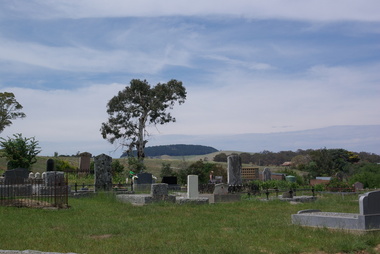
Photograph - Colour, Clare Gervasoni, Mount Franklin From Franklinford Cemetery, 2015, 25/10/2015
... Edward Stone Parker, the Assistant Protector of Aborigines in charge of the Mt Franklin Protectorate is buried in the Mt franklin Cemetery, along with a number of the Aboriginal people from the protectorate....Edward Stone Parker, the Assistant Protector of Aborigines in charge of the Mt Franklin Protectorate is buried in the Mt franklin Cemetery, along with a number of the Aboriginal people from the protectorate. ...The Mt Franklin Aboriginal Protectorate was in the shadow of Mt Franklin. Edward Stone Parker, the Assistant Protector of Aborigines in charge of the Mt Franklin Protectorate is buried in the Mt franklin Cemetery, along with a number of the Aboriginal people from the protectorate.Two images showing the pine covered Mount Franklin from Mount Franklin Cemetery.mount franklin, mt franklin, mt franklin aboriginal protectorate, edward stone parker, e.s. parker, mount franklin protectorate -
 Victorian Aboriginal Corporation for Languages
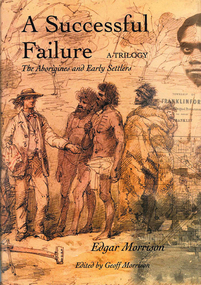
Book, Edgar Morrison, A successful failure, a trilogy : the Aborigines and early settlers, 2002
... This story traces the times of Edward Stone Parker, Assistant Aboriginal Protector in the Loddon region of Victoria....This story traces the times of Edward Stone Parker, Assistant Aboriginal Protector in the Loddon region of Victoria. ...Tells of the Aboriginal Protectorate System in Colonial Victoria during the period 1838 to 1852. The system was designed to be a buffer between the original inhabitants and the influx of white squatters. That the system failed is of little wonder. This story traces the times of Edward Stone Parker, Assistant Aboriginal Protector in the Loddon region of Victoria.maps, b&w photograph, colour photographs -
 Bendigo Historical Society Inc.
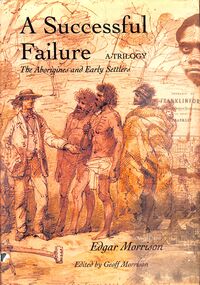
Book - "A Successful Failure", 2002
... One of these men was Edward Stone Parker, assistant Aboriginal Protector in the Loddon region of Victoria. ...One of these men was Edward Stone Parker, assistant Aboriginal Protector in the Loddon region of Victoria. ...Tells of the Aboriginal Protectorate System in Colonial Victoria during the period 1838 to 1852. This system was designed as a buffer between the white squatters and the indigenous original inhabitants. Designed by Colonial administrators in England who appointed men to travel across the globe to live with the indigenous population and keep the peace, the system failed. One of these men was Edward Stone Parker, assistant Aboriginal Protector in the Loddon region of Victoria. Long before Land Rights and Reconciliation become common terms, Parker advocated land ownership between Europeans and indigenous people. Parker did his best to fulfill his role as he saw it and his work has been described as a "successful failure"."A Successful Failure" published by Graffiti Publications for Geoff Morrison. Forward by Geoff Morrison, Harcourt. Written by Edgar Morrison. Introduction by T. Maxwell O'Connor. Published in 2002. Hard cover book which is colored dark green. No writing on spine, front or back cover. Dust jacket sepia in color. Has both drawn and photographic images of people on dust jacket in sepia. Title and text in black. Printed in Maryborough, Australia. 312 pp. This book tells of the Aboriginal Protectorate System in Colonial Victoria. Contains both text and black and white images. ISBN 0949398829. central highlands, aboriginal protectorate, aboriginal, edward stone parker -
 Victorian Aboriginal Corporation for Languages
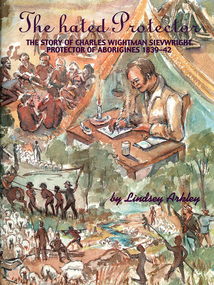
Book, Lindsey Arkley, The hated protector : the story of Charles Wightman Sievwright, protector of Aborigines 1839-42, 2000
... "The hated Protector" tells for the first time the real story behind the extraordinary experiences of Charles Sievwright, Assistant Aboriginal Protector from 1839-42 in what was then part of the British colony of New South Wales, but is now the Western District of the Australian state of Victoria. ...Charles Wightman Sievwright racial policies British colonial history race relations Victorian history maps, document reproductions, b&w photographs, colour photographs, b&w illustrations "The hated Protector" tells for the first time the real story behind the extraordinary experiences of Charles Sievwright, Assistant Aboriginal Protector from 1839-42 in what was then part of the British colony of New South Wales, but is now the Western District of the Australian state of Victoria. ..."The hated Protector" tells for the first time the real story behind the extraordinary experiences of Charles Sievwright, Assistant Aboriginal Protector from 1839-42 in what was then part of the British colony of New South Wales, but is now the Western District of the Australian state of Victoria. Sievwright, an Edinburgh-born former British army officer, lived in the bush with his young family as he tried to save the Aborigines of the District from extinction. In doing so, he would isolate himself from the rest of his fellow whites. The hated Protector tells of this process. The book should appeal to anyone interested in British colonial and Australian history, particularly in the years of first contact between British settlers and the Aborigines. More broadly, it should also appeal to anyone interested a story of one man's battle against overwhelming odds, where the price of failure was numerous deaths. It is a story of hatred, prejudice, courage, determination, and hope. In telling Sievwright's story, Lindsey Arkley draws largely on original archival material, including official reports, journals and letters, found in Melbourne, Sydney, Hobart, Edinburgh and London. Most has never before been published. The archival material is supplemented by contemporary newspaper accounts, and some oral history. Full notes are given to all sources, and the book is indexed and lavishly illustrated with drawings by Joan Bognuda, as well as about 80 paintings and samples of documents. Contents: 1. In the bush 2. "Equal and indiscriminate justice" 3. "A few doses of lead" 4. "A curse to the land" 5. "The most unpopular man" 6. Retaliation 7. A hostage debate 8. Hallucinations 9. A mass escape 10. Possessors of the soil 11. Move to Keilambete 12. Bureaucratic 13. "A hideous pandemonium" 14. Divine visitations 15. Pay backs 16. Explanations 17. A squatter on trial 18. Claptrap and deceit 19. The black cap - 20. To Mt Rouse 21. "The impending evil" 22. In the balance 23. An arrest at Mt Rouse 24. A fair moral name 25. Roger's trial 16. Intensified evidence 27. A declaration of war 28. Mr Cold Morning 29. Holding ranks 30. To rags 31. Fightback 32. Return to London 33. The inquiry 34. Judgement 35. And what remains.maps, document reproductions, b&w photographs, colour photographs, b&w illustrationscharles wightman sievwright, racial policies, british colonial history, race relations, victorian history -
Marysville & District Historical Society
Article (item) - Book Extract, Aboriginal History, Unknown
... ...assistant protector thomas...The extract also covers current (1991) status of Aboriginal affairs and European settlement of the area. kulin nation woiworung taungurong bunurong watherong jajowrong wurrundjeri-willam waring-ilam-balluk goulburn valley acheron valley upper goulburn district eildon-thornton eildon homestead o'rourke thornton assistant protector thomas yarra valley kilmore mount william jt gellibrand william buckley major mitchell port phillip murray river yorta yorta yowung-illam-balluk waring-illam-balluk ngurai-illam-wurrung kurnai nation protectorate system victoria george robinson chief protector willam thomas james dredge edward parker charles sievewright central board for the protection of aborigines presbyterian mission anglican mission moravian mission wonga munnarin beaning murrin murrin parugean baruppin koo-gurrin acheron river little river acheron run peter snodgrass stephen jones barak dividing range black spur watts river badger creek healesville coranderrk victorian christmas bush aboriginal and torres strait islander heritage protection act 1984 archaelological and aboriginal relics preservation act 1972 camp jungai rubicon warrawa college victorian archaeological survey hume and hovell molesworth broadford william hamilton alexandra mansfield avenel tallarook worrough john cotton trawool valley seymour pyalong gold mining central victoria strath creek reedy creek yea jamieson marysville jordan goldfields comet mine wandong melbourne-albury railway rabbit plague narbethong lord kitchener puckapunyal military camp 1944 decentralisation policy eildon weir hume freeway bypass timber industry australian paper manufacturers mill An extract from a book regarding a brief history of the Kulin nation of the North Central district of Victoria. ...An extract from a book regarding a brief history of the Kulin nation of the North Central district of Victoria.An extract from a book regarding a brief history of the Kulin nation of the North Central district of Victoria. This history covered is both prior to European history and post-European history. The extract also covers current (1991) status of Aboriginal affairs and European settlement of the area.kulin nation, woiworung, taungurong, bunurong, watherong, jajowrong, wurrundjeri-willam, waring-ilam-balluk, goulburn valley, acheron valley, upper goulburn district, eildon-thornton, eildon homestead, o'rourke, thornton, assistant protector thomas, yarra valley, kilmore, mount william, jt gellibrand, william buckley, major mitchell, port phillip, murray river, yorta yorta, yowung-illam-balluk, waring-illam-balluk, ngurai-illam-wurrung, kurnai nation, protectorate system, victoria, george robinson, chief protector, willam thomas, james dredge, edward parker, charles sievewright, central board for the protection of aborigines, presbyterian mission, anglican mission, moravian mission, wonga, munnarin, beaning, murrin murrin, parugean, baruppin, koo-gurrin, acheron river, little river, acheron run, peter snodgrass, stephen jones, barak, dividing range, black spur, watts river, badger creek, healesville, coranderrk, victorian christmas bush, aboriginal and torres strait islander heritage protection act 1984, archaelological and aboriginal relics preservation act 1972, camp jungai, rubicon, warrawa college, victorian archaeological survey, hume and hovell, molesworth, broadford, william hamilton, alexandra, mansfield, avenel, tallarook, worrough, john cotton, trawool valley, seymour, pyalong, gold mining, central victoria, strath creek, reedy creek, yea, jamieson, marysville, jordan goldfields, comet mine, wandong, melbourne-albury railway, rabbit plague, narbethong, lord kitchener, puckapunyal military camp, 1944 decentralisation policy, eildon weir, hume freeway bypass, timber industry, australian paper manufacturers mill -
 Eltham District Historical Society Inc
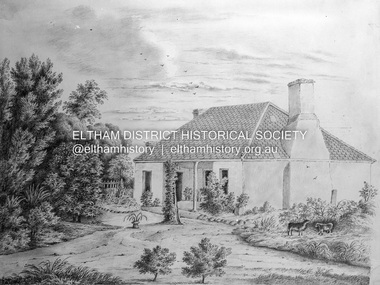
Negative - Photograph, Charles Bertie, Sketch; Sweeney's Cottage, Culla Hill, Eltham (n.d.), c.1905
... The chief protector, George Robinson, and his four assistants, were given instructions to care for the aged and sick, to provide blankets and rations for all who lived there, to train the able-bodied men in agriculture and other trades and to find them jobs. ...The chief protector, George Robinson, and his four assistants, were given instructions to care for the aged and sick, to provide blankets and rations for all who lived there, to train the able-bodied men in agriculture and other trades and to find them jobs. ...In the early 1900s, Mary Sweeney commissioned artist Charles Bertie to paint the main house at Culla Hill. He charged her 5 shillings for the picture and 18 pence for the frame She took this painting with her when she married Michael Carrucan in 1910 and it hung in the Dalton Street farmhouse for many years. At a later time (1960s), the Burstons (the then owners of Culla Hill) had a card printed from the painting. The original sketch was photographed in 1970 for reproduction in the Shire history publication Pioneers & Painters (1971). The very fragile original was kept in the Council strongroom and suffered significant damage to its edges over the years, no doubt it has also yellowed. A comparison of the original as digitised (2022) with the negative taken 50 years earlier also reveals that the left 20% of the sketch has been cut off, probably due to damage. In June 1842 Thomas Sweeney applied to the Superintendent, C.J. La Trobe, asking permission to purchase a portion of the recently surveyed ‘Parish of Nillumbik'. His request was allowed and handed to the sub-treasurer and Land Board. He paid £110 for 110 acres and called the land 'Culla Hill'. He first built a temporary house, a slab hut 12 feet by 10 feet, in which he lived with his wife, an Irish girl whom he had married in 1838. (His first wife had been drowned at Port Jackson.) Some time later he built a permanent residence on the model of a Tipperary farmhouse. It was a rectangular building of hand-made bricks and stone quarried from the Western Hill with a recessed verandah in front, and bore a slate roof. The out-buildings consisted of a detached kitchen, stable and a barn. It was in this house that succeeding generations of Sweeneys were reared. The original slab hut became a washhouse and survived till recent years. 'Culla Hill' became a social centre for the district, church services being held there on various occasions. The first wheat crop in the district was planted by Sweeney who also supplied the first grain for a mill that later was built at Eltham. He took an active interest in the development of the district. At this time travelling people--many of them runaway sailors or convicts--often passed the settlement, and some of them stayed and worked with Sweeney. A tribe of aborigines living on the river below 'Culla Hill' were apparently on good terms with Sweeney, for it is said that they helped him with the building of his house. Very little is known about the aborigines who originally lived in the Eltham district. There must have been many of them; their stone axes, grinding stones, and anvil stones have been found in the gullies around Research and canoe trees and artifacts were found on the Kangaroo Ground hills. Early settlers remembered a tribe that camped on the site of the present railway bridge at Eltham. They held corroborees there and visited settlers for hand-outs of 'flour and bacca’. There was an aboriginal reserve on the Yarra, upstream from Eltham, but most of those who had collected there later went to live on the Pound Reserve at Warrandyte, where the last aborigines in the area finally ended their days. The Pound Reserve, of 1,103 acres, was established at Pound Bend in 1841. The chief protector, George Robinson, and his four assistants, were given instructions to care for the aged and sick, to provide blankets and rations for all who lived there, to train the able-bodied men in agriculture and other trades and to find them jobs. The Yarra blacks, who later came under the protection of William Thomas, have been described as a 'fine race, well made and above the average height'. Thomas Sweeney died on 6 September 1867 and was buried in the Eltham Cemetery. To his wife Margaret and his son John, he left the entire property of 'Culla Hill'. To his other son Patrick, he left 150 acres, including a small two-roomed wooden cottage. He had five daughters: Kate and Margaret (twins) who were born in 1842, Ellen 1846, Annie 1848 and Johanna 1851. John Sweeney farmed 'Culla Hill' until his death in 1909. He had ten children; one of them, Mary, became Mrs M. Carrucan whose son, Mr John Carrucan, still lives at Eltham. 'Culla Hill' passed out of the Sweeneys possession in 1939 and was renamed by its new owners, 'Sweeneys', in memory of its pioneers. - Pioneers & Painters: One Hundred Years of Eltham and its Shire, Alan Marshall 1971, pp10-12 Original colour sketch artwork 4 x 5 inch black and white negative of original colour sketchculla hill, art, charles bertie, drawing, mary carrucan (nee sweeney), sketches, sweeney's cottage -
 Victorian Aboriginal Corporation for Languages
Book, Marguerita Stephens, The journal of William Thomas : assistant protector of the Aborigines of Port Phillip &? guardian of the Aborigines of Victoria 1839 - 1867 : volume one : 1839 to 1843, 2014
... The journal of William Thomas : assistant protector of the Aborigines of Port Phillip &? ...The journal of William Thomas : assistant protector of the Aborigines of Port Phillip &? ...This series presents 28 years of Thomas' journals, transcribed and annotated by Dr Marguerita Stephens (Vols 1-3). Vol 4 provides a substantial collection of Thomas' records of Kulin language - some reworked from earlier transcriptions by Dr Stephen Morey. For nearly three decades William Thomas chronicled his life and work with Aboriginal Victorians through his daily journal entries. Now this four volume set, comprehensively indexed and extensively annotated, shines new light on the history of race relations in Australia. Thomas' detailed observations give a rare insight into the process of cultural continuity and collapse, and the agency of Victorian Aboriginal leaders in social and economic interactions with settlers and colonial administrations in a time of great social upheaval. This first-hand account repopulates Victorian history, paying respect to the work, play and lives of the Aboriginal men and women who emerge from the pages of Thomas' journal.document reproductions, b&w illustrationswurundjeri, woiwurrung, woi wurrung, yarra, waverong, wavarong, waborong, warwarong, warworong, waworong, wa woo rong, wouvarong, wavorong, port phillip, boon wurrung, mount macedon, bacchus marsh, backhouse marsh, boonurrong, boonurong, boonmerong, bonwarong, boomerong, boonvarong, boonerong, bunurong, boonrong, boonworng, boonurong, boonwrung, boonurgs, taungurung, goulbourn, tongorong, devils river tribe, wathaurong, wadawurrung, barrabool, barabool, wattowrong, william thomas, geelong, ballarat, mount buninyong, booningong, leigh river tribe, dja dja wurrung, avoca, loddon river, bangerang, pangerang, pangeran, pangarran, pangarans, parngarangs, ovens river tribe, broken river tribe, gunai kurnai, omeo, monaro -
 Victorian Aboriginal Corporation for Languages
Book, Marguerita Stephens, The journal of William Thomas : assistant protector of the Aborigines of Port Phillip &? guardian of the Aborigines of Victoria 1839 - 1867 : volume two: 1844 to 1853, 2014
... The journal of William Thomas : assistant protector of the Aborigines of Port Phillip &? ...The journal of William Thomas : assistant protector of the Aborigines of Port Phillip &? ...This series presents 28 years of Thomas' journals, transcribed and annotated by Dr Marguerita Stephens (Vols 1-3). Vol 4 provides a substantial collection of Thomas' records of Kulin language - some reworked from earlier transcriptions by Dr Stephen Morey. For nearly three decades William Thomas chronicled his life and work with Aboriginal Victorians through his daily journal entries. Now this four volume set, comprehensively indexed and extensively annotated, shines new light on the history of race relations in Australia. Thomas' detailed observations give a rare insight into the process of cultural continuity and collapse, and the agency of Victorian Aboriginal leaders in social and economic interactions with settlers and colonial administrations in a time of great social upheaval. This first-hand account repopulates Victorian history, paying respect to the work, play and lives of the Aboriginal men and women who emerge from the pages of Thomas' journal.document reproductionswurundjeri, woiwurrung, woi wurrung, yarra, waverong, wavarong, waborong, warwarong, warworong, waworong, wa woo rong, wouvarong, wavorong, port phillip, boon wurrung, mount macedon, bacchus marsh, backhouse marsh, boonurrong, boonurong, boonmerong, bonwarong, boomerong, boonvarong, boonerong, bunurong, boonrong, boonworng, boonurong, boonwrung, boonurgs, taungurung, goulbourn, tongorong, devils river tribe, wathaurong, wadawurrung, barrabool, barabool, wattowrong, william thomas, geelong, ballarat, mount buninyong, booningong, leigh river tribe, dja dja wurrung, avoca, loddon river, bangerang, pangerang, pangeran, pangarran, pangarans, parngarangs, ovens river tribe, broken river tribe, gunai kurnai, omeo, monaro -
 Victorian Aboriginal Corporation for Languages
Book, Marguerita Stephens, The journal of William Thomas : assistant protector of the Aborigines of Port Phillip &? guardian of the Aborigines of Victoria 1839 - 1867 : volume three: 1854 to 1867, 2014
... The journal of William Thomas : assistant protector of the Aborigines of Port Phillip &? ...The journal of William Thomas : assistant protector of the Aborigines of Port Phillip &? ...Annotation. This series presents 28 years of Thomas' journals, transcribed and annotated by Dr Marguerita Stephens (Vols 1-3). Vol 4 provides a substantial collection of Thomas' records of Kulin language - some reworked from earlier transcriptions by Dr Stephen Morey. For nearly three decades William Thomas chronicled his life and work with Aboriginal Victorians through his daily journal entries. Now this four volume set, comprehensively indexed and extensively annotated, shines new light on the history of race relations in Australia. Thomas' detailed observations give a rare insight into the process of cultural continuity and collapse, and the agency of Victorian Aboriginal leaders in social and economic interactions with settlers and colonial administrations in a time of great social upheaval. This first-hand account repopulates Victorian history, paying respect to the work, play and lives of the Aboriginal men and women who emerge from the pages of Thomas' journal.document reproductionswurundjeri, woiwurrung, woi wurrung, yarra, waverong, wavarong, waborong, warwarong, warworong, waworong, wa woo rong, wouvarong, wavorong, port phillip, boon wurrung, mount macedon, bacchus marsh, backhouse marsh, boonurrong, boonurong, boonmerong, bonwarong, boomerong, boonvarong, boonerong, bunurong, boonrong, boonworng, boonurong, boonwrung, boonurgs, taungurung, goulbourn, tongorong, devils river tribe, wathaurong, wadawurrung, barrabool, barabool, wattowrong, william thomas, geelong, ballarat, mount buninyong, booningong, leigh river tribe, dja dja wurrung, avoca, loddon river, bangerang, pangerang, pangeran, pangarran, pangarans, parngarangs, ovens river tribe, broken river tribe, gunai kurnai, omeo, monaro -
 Victorian Aboriginal Corporation for Languages
Book, Victorian Aboriginal Corporation for Languages, The journal of William Thomas : assistant protector of the Aborigines of Port Phillip &? guardian of the Aborigines of Victoria 1839 - 1867 : volume four : Kulin Language, 2014
... The journal of William Thomas : assistant protector of the Aborigines of Port Phillip &? ...The journal of William Thomas : assistant protector of the Aborigines of Port Phillip &? ...This is the fourth volume in the series presenting 28 years of Thomas' journals, transcribed and annotated by Dr Marguerita Stephens (Vols 1-3). This volume provides a substantial collection of Thomas' records of Kulin Language - some reworked from earlier transcriptions by Dr Stephen Morey.b&w illustrations, word liststaungurung, boon wurrung, kulin, eastern kulin, wurundjeri, dja dja wurrung, wathaurung, wathaurong, bangerang, gunaikurnai, language revival -
Koorie Heritage Trust
Book, Byrt, Pauline, The Thomas papers in the Mitchell Library : a comprehensive index, 2004
... William 1793-1867 - Assistant Protector of Aborigines...Thomas William 1793-1867 - Assistant Protector of Aborigines Indexes - Thomas William-papers-Mitchell Library collection | Victoria-History-Aboriginals-1838-1867. ...The CD-ROM contains the Index and also selected transcriptions by Pauline Byrt Centre for Australian Indigenous Strudies Monash University, and transcriptions of Linguistic Data relating to the language of the Melbourne area by Stephen D. Morey Research Centre for Linguistic Typology, La Trobe University.251 p. ; 30 cm. + 1 CD-ROM.The CD-ROM contains the Index and also selected transcriptions by Pauline Byrt Centre for Australian Indigenous Strudies Monash University, and transcriptions of Linguistic Data relating to the language of the Melbourne area by Stephen D. Morey Research Centre for Linguistic Typology, La Trobe University.thomas, william 1793-1867 - assistant protector of aborigines, indexes - thomas william-papers-mitchell library collection |, victoria-history-aboriginals-1838-1867. -
 Ballarat Heritage Services
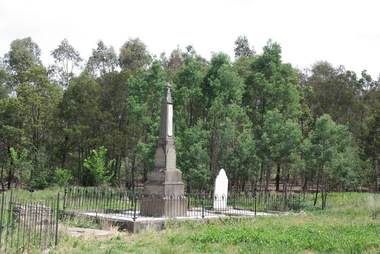
Photograph - Photograph - Colour, Clare Gervasoni, Edward Stone Parker Gravestone in the Franklinford Cemetery, 2015, 25/10/2015
... Edward Stone Parker was an Assistant Protector of Aborigines on the Loddon or Mt Frankin Protectorate. edward stone parker e.s. parker franklinford cemetery aboriginal protector mary parker joseph parker Mt Franklin Protectorate Loddon Protectorate The Parker cemetery plot at Franklinford Cemetery, Victoria. ...Gravestone of Edward Stone Parker and family in the Franklinford Cemetery, Victoria.Edward Stone Parker was an Assistant Protector of Aborigines on the Loddon or Mt Frankin Protectorate.The Parker cemetery plot at Franklinford Cemetery, Victoria. edward stone parker, e.s. parker, franklinford cemetery, aboriginal protector, mary parker, joseph parker, mt franklin protectorate, loddon protectorate -
 Bacchus Marsh & District Historical Society
Book, Early Days in the Loddon Valley: Memoirs of Edward Stone Parker
... Edward Stone Parker 1802-1865 Mount Franklin Aboriginal Protectorate Mount Franklin Mission Aboriginal Australians Loddon Valley Region Dja Dja Wurrung People Edward Stone Parker (1802–1865) was a Methodist preacher and assistant Protector of Aborigines in the Aboriginal Protectorate established in the Port Phillip District of colonial New South Wales under George Augustus Robinson in 1838. ...Edward Stone Parker (1802–1865) was a Methodist preacher and assistant Protector of Aborigines in the Aboriginal Protectorate established in the Port Phillip District of colonial New South Wales under George Augustus Robinson in 1838. In 1841 he established the Franklinford Aboriginal Protectorate Station in the territory of the Dja Dja Wurrung people in the Loddon Valley region of Central Victoria. He administered the Franklinford Station from January 1841 to the end of 1848. Parker remained in the Mount Franklin area near Daylesford until his death in 1865. This work was originally published in 1865. This edition was published in 1966. It contains an introduction by Edgar Morrison. Annotated selections by Morrison from Parker's journals form the majority of this work.Printed book. Some black and white photographs. Maps and subject index. 99 pages. BMDHS Location: AR/SU14/Pamphlets Box 1non-fictionEdward Stone Parker (1802–1865) was a Methodist preacher and assistant Protector of Aborigines in the Aboriginal Protectorate established in the Port Phillip District of colonial New South Wales under George Augustus Robinson in 1838. In 1841 he established the Franklinford Aboriginal Protectorate Station in the territory of the Dja Dja Wurrung people in the Loddon Valley region of Central Victoria. He administered the Franklinford Station from January 1841 to the end of 1848. Parker remained in the Mount Franklin area near Daylesford until his death in 1865. This work was originally published in 1865. This edition was published in 1966. It contains an introduction by Edgar Morrison. Annotated selections by Morrison from Parker's journals form the majority of this work. edward stone parker 1802-1865, mount franklin aboriginal protectorate, mount franklin mission, aboriginal australians loddon valley region, dja dja wurrung people
